

SUBSCRIBE TO OUR FREE NEWSLETTER
Daily news & progressive opinion—funded by the people, not the corporations—delivered straight to your inbox.
5
#000000
#FFFFFF
To donate by check, phone, or other method, see our More Ways to Give page.
Daily news & progressive opinion—funded by the people, not the corporations—delivered straight to your inbox.
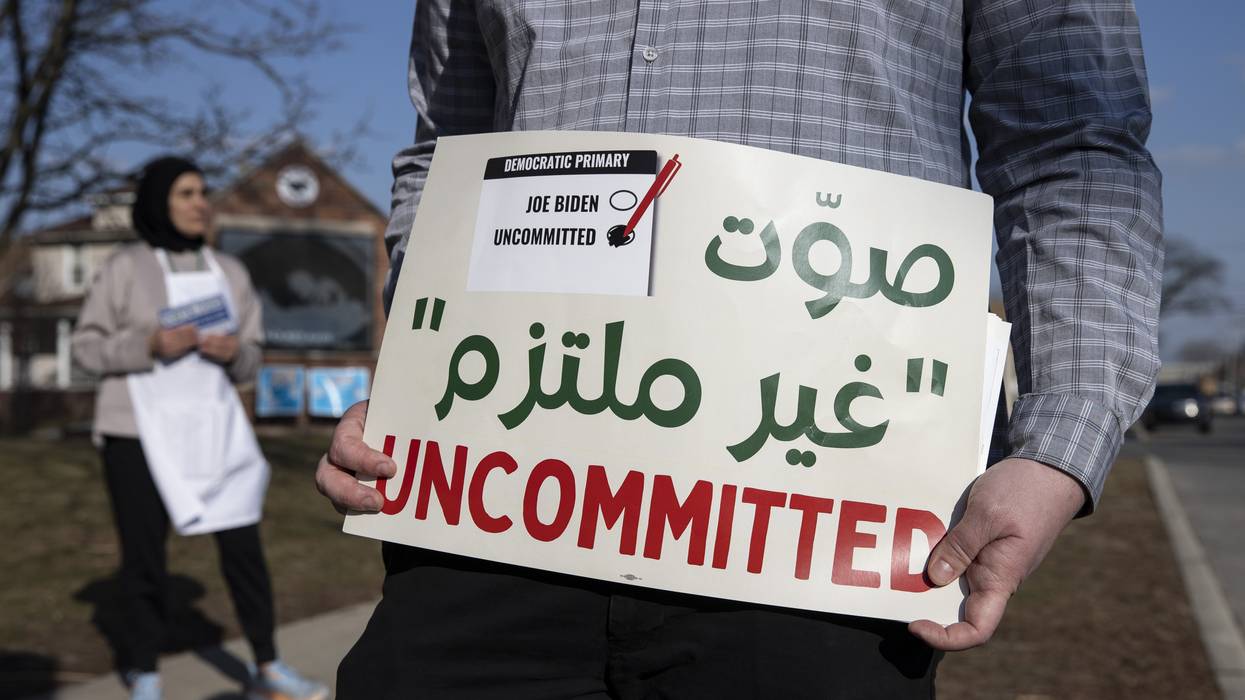
Despite attempts to smear and silence them for supporting Palestinian human rights, a new generation of Arab Americans is having an impact.
I’ve always known my Arab culture is worth celebrating.
I heard it in Syrian tenor Sabah Fakhri’s powerful voice reverberating in my mom’s car on the way to piano lessons and soccer practice during my youth. I smelled it in the za’atar, Aleppo pepper, allspice, and cumin permeating the air in the family kitchen.
I saw it in the intricate embroidery on my grandma’s silk robe. And in the determination etched in the faces of my immigrant parents, who raised seven children in Southern California without relinquishing our rich Syrian traditions.
How can Arab American life and culture be celebrated when fellow Arabs are facing erasure in Gaza?
April is National Arab American Heritage Month. It should be a time to celebrate the contributions of the over 3.5 million Arab Americans who strengthen our proud nation.
We have Ralph Nader to thank for consumer protections like automobile safety. We have the late Sen. James Abourezk (D-S.D.)—the first Arab American elected to the U.S. Senate—to credit for landmark legislation championing Indigenous rights. Dr. Mona Hanna-Attisha, a pediatrician, first exposed the Flint, Michigan, water crisis.
There are countless others. But right now, it’s impossible to feel celebratory. My community is reeling from the immense pain and horror of an unfolding genocide against the 2.3 million Palestinians of Gaza.
Palestinian Americans have lost family members in Gaza from Israel’s unrelenting bombardment and mass starvation of civilians. Adding insult to injury, Israel is using U.S.-supplied weapons to commit these atrocities.
Palestinian Americans—along with other Arabs—have also been on the receiving end of increased hate crimes, harassment, racist rhetoric, and discrimination, belying the message that they, too, are an integral part of this nation. The American-Arab Anti-Discrimination Committee received 2,500 reports of anti-Arab hate from October to March.
During this period, Wadea Al-Fayoume, a six-year-old Palestinian American boy from Illinois, was fatally stabbed. Three Palestinian college students were shot in Vermont.
In his proclamation marking this year’s heritage month, President Joe Biden was forced to reckon with Gaza. Instead of announcing a long overdue, permanent cease-fire and an end to U.S. military support for Israel, he offered empty words.
How can Arab American life and culture be celebrated when fellow Arabs are facing erasure in Gaza? Nearly 35,000 Palestinians have been killed in Gaza so far, including nearly 14,000 children. Thousands more remain missing. And at least 576,000 Palestinians are on the brink of famine.
Homes filled with family heirlooms and memories have been systematically destroyed. The ancient olive trees that symbolize Palestinians’ deep-rooted connection to their land haven’t been spared.
It’s easy to feel despair. But what brings me hope is the new generation of Arab Americans organizing, marching, and working with other communities to demand a permanent cease-fire. We are reminded that dissent is the highest form of “patriotism.”
Despite attempts to smear and silence them for supporting Palestinian human rights, their efforts are having an impact. A March 27 Gallup poll showed a significant drop in American public support for Israel’s conduct of the war, from 50% in November 2023 to 36% now.
Meanwhile, Arab Americans have emerged as a new and powerful voting bloc. Spearheaded by Arab Americans in Michigan, hundreds of thousands of Americans voted “uncommitted” in recent primary elections in Michigan, Minnesota, North Carolina, Massachusetts, and elsewhere to protest U.S. policy in Gaza.
This represents a real shift from the days after 9/11, when Arab Americans faced blanket demonization without any pushback. This is progress, although much more must be done.
We know we belong in America even if we’re not always treated that way. We need enduring collaboration between Arab Americans and policymakers, educators, and community members to defend our rights, create a more equal America, and promote more just U.S. policies abroad—starting with a cease-fire in Gaza.
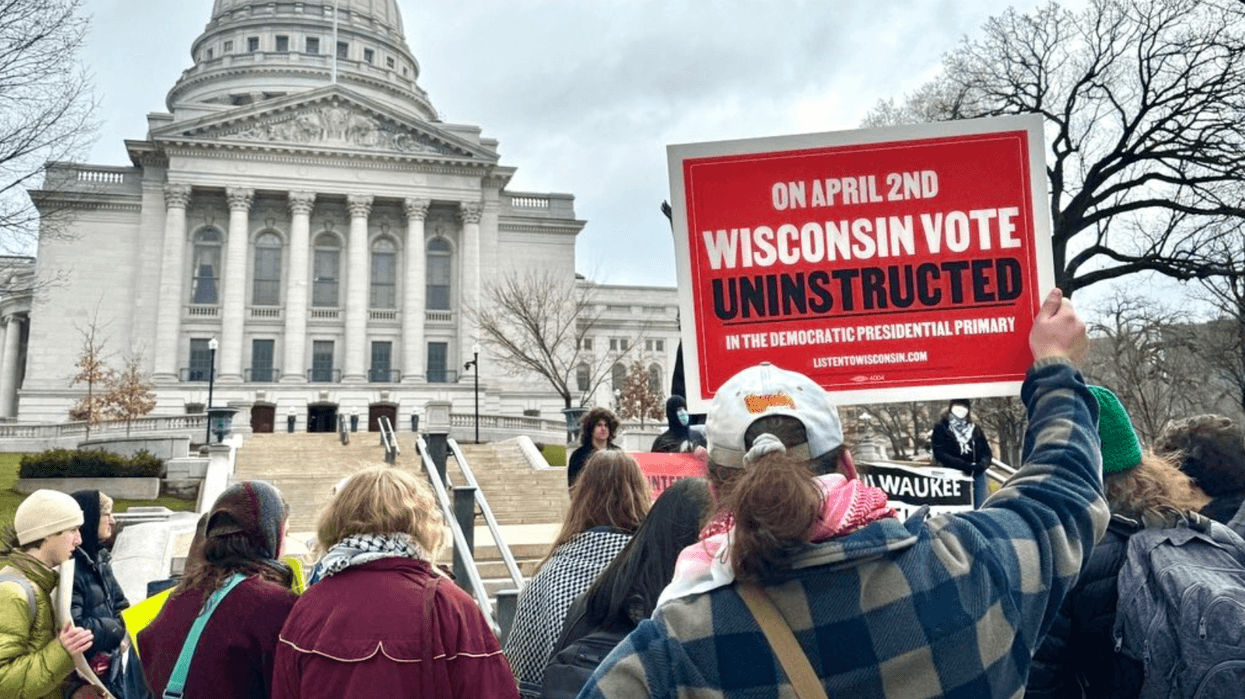
"How our leaders invest our tax dollars across the globe should reflect our core values and voter interests," said one organizer.
Warning that U.S. President Joe Biden must listen to the demands of voters in a key state that he won by less than 1%, a coalition in Wisconsin on Tuesday urged Democratic voters to use their primary ballots to pressure the president to decisively push for an end to Israel's war in Gaza.
"Wisconsinites: It's up to us to take a stance against injustice," said Freedom Action Now, one of several groups supporting the Listen to Wisconsin campaign, which is calling on voters to mark the "uninstructed delegation" option on their primary ballots.
The "vote uninstructed" push is the state's version of campaigns in a number of states where organizers have called on voters to vote for the uncommitted option, to write in "cease-fire," or to leave their ballots blank in lieu of voting for Biden in the primary.
With 71% of Wisconsin Democrats supporting an immediate and permanent cease-fire in Israel's U.S.-backed bombardment of Gaza, according to a poll released Monday by Poll Progressive Strategies, organizers said Tuesday that Biden cannot afford to ignore the demand.
"Families right here in Wisconsin have lost innocent loved ones in Gaza and thousands of American troops have been moved to the region as Israel continues to escalate toward potential regional warfare," reads the FAQ on Listen to Wisconsin's official website. "While our families face rising prices, our government has sent billions of dollars in military aid to Israel and prepared our troops to backstop a war that most Americans do not support. How our leaders invest our tax dollars across the globe should reflect our core values and voter interests."
In the same poll, more than 1 in 5 Democratic voters said Biden's policy in Israel and Gaza would impact their vote in the November general election. One hundred percent of respondents under age 29 said they strongly or somewhat support an immediate and permanent cease-fire, and 65% of voters in that age group said they strongly disapprove of Biden's handling of the war.
In addition to a permanent cease-fire, Listen to Wisconsin is calling on the U.S. to reinstate aid to the United Nations Relief and Works Agency for Palestine Refugees in the Near East (UNRWA), for which the government suspended funding in January over unsubstantiated Israeli claims of Hamas links within the group's ranks and which Congress voted last month to cut funding for until March 2025. Organizers also called for "the full entry of humanitarian aid" into Gaza and "an end to U.S. military aid to Israel."
The nationwide uncommitted movement began in February as campaigners established Listen to Michigan with the aim of convincing at least 10,000 Democratic voters in the crucial swing state to vote uncommitted in the state primary. More than 100,000 voters, or 13%, ultimately cast uncommitted ballots.
Nineteen percent of Minnesota Democrats also voted uncommitted, as well as 13% of North Carolina primary voters and 10% of voters in Washington state.
Listen to Wisconsin said it hopes to convince 20,000 Democratic voters in the state to mark "uninstructed delegate," which would be roughly equal to Biden's narrow margin of victory over former Republican President Donald Trump—now the presumptive GOP nominee—in 2020.
"The margins of our elections are so incredibly close—less than 1% in the last two presidential election cycles—so I think it would behoove the administration to pay attention," Reema Ahmad, lead organizer with the group, told NPR on Tuesday.
If Biden doesn't use his leverage as the biggest international funder of Israel's military to demand a permanent cease-fire, Ahmad added, "he needs to understand that his chances of winning in November are very bleak."
State Rep. Francesca Hong (D-76) pledged her support Tuesday for the "vote uninstructed" push.
"We stand for democracy, for human rights, and safety for everyone, and we deserve leaders who reflect our values," said Hong.
In Tuesday's Democratic primaries, voters in Rhode Island and Connecticut will have the option of voting uncommitted, and campaigners in New York are urging Democratic voters to leave their ballots blank to signal that Biden cannot yet count on their support in November.
In Wisconsin, groups including Voces de la Frontera Action—the state's largest network of Latino voters—and Black Leaders Organizing Communities have backed the Listen to Wisconsin campaign, along with the Sunrise Movement, which said the war in Gaza has emerged as a "climate voter issue."
"Sunrise Movement is fighting for clean air, drinkable water, and safe communities," said Aru Shiney-Ajay, executive director of the group. "We believe the people of Palestine deserve that too. There has been more emissions produced by U.S.-financed bombs in Gaza than the emissions of 20 small countries. We need Biden to fight for peace so that we can collectively fight for more climate wins in the future."
Michelle Wiendling, political director of Sunrise Movement, said Biden is "hemorrhaging the support of young voters by aiding in the destruction of people's lives and homes in Gaza."
"Biden's best chance to succeed in November is by supporting an immediate and permanent cease-fire and ending unconditional military aid to the Israeli government," said Wiendling. "If President Biden wants to defeat Trump, he must listen to young people, people of color, and the working class who put him in office in 2020 and immediately change course."
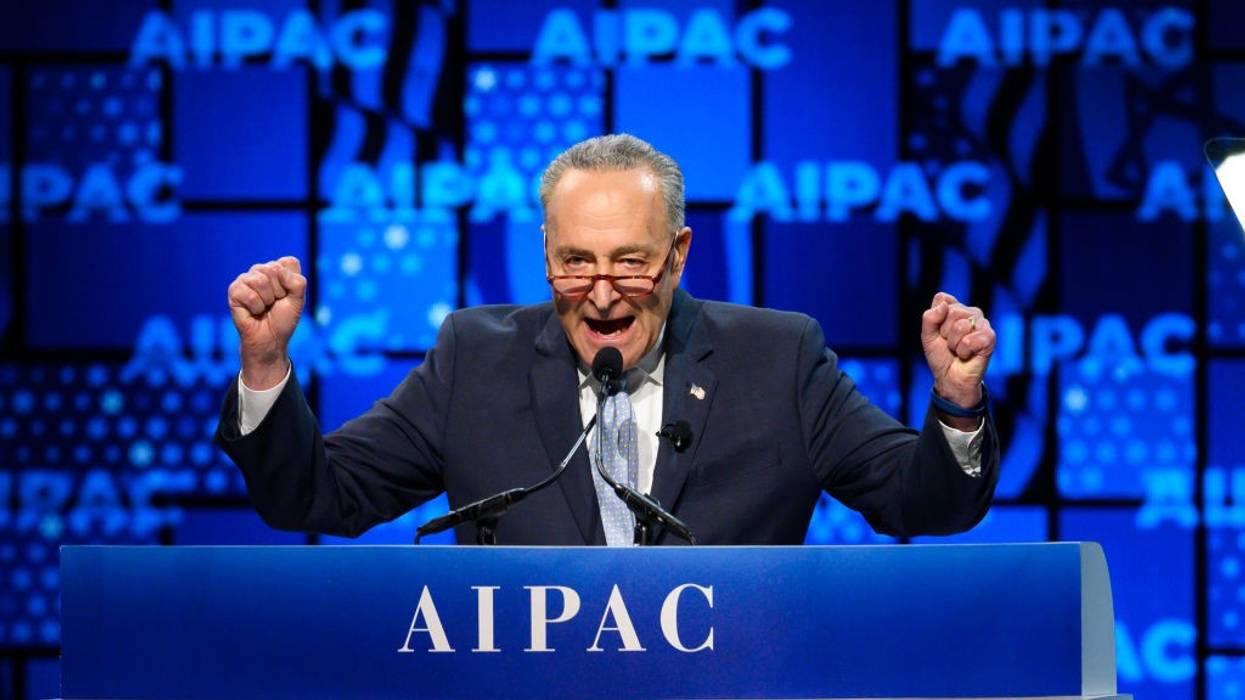
"What we want to see is actual change in policy," stressed Dearborn, Michigan Mayor Abdullah Hammoud.
While welcoming remarks by U.S. Senate Majority Leader Chuck Schumer calling Israeli Prime Minister Benjamin Netanyahu an obstacle to peace and hinting at a possible shift in policy if far-right extremists continue to run the Middle Eastern country, Palestine defenders on Thursday stressed the need for Democrats to push for the Biden administration to stop arming Israel's genocide in Gaza.
Speaking on the Senate floor on Thursday, Schumer (D-N.Y.) said he believes Netanyahu—who is facing corruption, bribery, and fraud charges—"has lost his way by allowing his political survival to take precedence over the best interests of Israel."
Schumer, the highest-ranking Jewish American elected official, criticized Netanyahu for including far-right extremists such as National Security Minister Itamar Ben-Gvir and Finance Minister Bezalel Smotrich in his Cabinet, and said that "as a result, he has been too willing to tolerate the civilian toll in Gaza, which is pushing support for Israel worldwide to historic lows."
Sen. Chuck Schumer Calls for ‘New Elections’ in Israel: ‘There Needs To Be a Fresh Debate About the Future of Israel’
"The U.S. Government should demand that Israel conduct itself with a future two-state solution in mind. We should not be forced into a position of unequivocally… pic.twitter.com/Ibwv2D1Ga7
— KanekoaTheGreat (@KanekoaTheGreat) March 14, 2024
"Israel cannot survive if it becomes a pariah," the senator said. "If Prime Minister Netanyahu's current coalition remains in power after the war begins to wind down and continues to pursue dangerous and inflammatory policies that test existing U.S. standards for assistance, then the United States will have no choice but to play a more active role in shaping Israeli policy by using our leverage to change the present course."
Responding to Schumer's speech, former Democratic Ohio state Sen. Nina Turnerattributed Schumer's "narrative shift" to "every organizer and activist working tirelessly for peace and humanity."
Abdullah Hammoud, the Democratic mayor of Dearborn, Michigan—the largest U.S. city with a majority Arab population—said on CNN that "words are not enough, what we want to see is actual change in policy."
"It's extremely important for President [Joe] Biden to utilize the leverage that he currently has in restricting military aid... and call not for a temporary cease-fire, but a permanent and lasting cease-fire... that can make a difference today," added Hammoud, who backed the campaign urging Michiganders to vote "uncommitted" in the key swing state's Democratic presidential primary last month.
NEW: Dearborn, Michigan Mayor @AHammoudMI on Schumer's speech and Biden's shifts: "Words are not enough, what we want to see is actual change in policy."
"While the elections could be called...that doesn't change what's happening on the ground today. This is why it's extremely… pic.twitter.com/xWH1omeVQG
— Waleed Shahid 🪬 (@_waleedshahid) March 14, 2024
Layla Elabed, campaign manager of Listen to Michigan—the group behind the "uncommitted" effort—said that "we are looking for action from Democrats, not words."
"Schumer is beginning to shift but far too slowly and with little substance for what actions Biden can take now to stop the outrageous civilian death toll in Gaza," she continued. "Schumer hints at using U.S. leverage against Israel's dangerous policies, yet Netanyahu already violates American policies and values under Biden's watch. How many children in Gaza will be killed by Israeli bombs before Schumer demands an end to U.S. weapons aid?"
Trita Parsi, executive vice president of the Quincy Institute for Responsible Statecraft, wondered, "What's the strategy here?"
"First, you arm Israel to the teeth, protect it when it commits war crimes, shield it from all international pressure, and NOW you worry it has become a pariah?" he said.
Schumer's remarks are a stark departure from his message in a speech earlier this week at the American Israel Public Affairs Committee (AIPAC) Congressional Summit, when the senator—who has taken more than $1.7 million in cumulative campaign contributions from the pro-Israel lobby— called supporting Israel "an obligation I feel deep within my soul."
"We will always have Israel's back," he added.
Following Schumer's Thursday remarks, AIPACsaid on social media that "Israel is an independent democracy that decides for itself when elections are held and chooses its own leaders."
Israeli Ambassador to the United States Michael Herzog also
addressed Schumer's comments, without explicitly mentioning the senator: "Israel is a sovereign democracy. It is unhelpful, all the more so as Israel is at war against the genocidal terror organization Hamas, to comment on the domestic political scene of a democratic ally. It is counterproductive to our common goals."
Sen. Minority Leader Mitch McConnell (R-Ky.)—who has
taken nearly $2 million in career campaign contributions from AIPAC and other pro-Israel groups—called Schumer's remarks "grotesque and hypocritical."
However, Israeli opposition leader Yair Lapid said the senator's speech "is proof that Netanyahu is losing our best supporters in the U.S."
Schumer's shift comes amid Israel's 160-day assault on Gaza, which has killed or maimed more than 111,000 Palestinians, including thousands of people believed dead and buried beneath rubble. Most of the dead are women and children. Around 90% of the besieged strip's 2.3 million people have been displaced, and disease and deadly starvation are spreading as Israel blocks humanitarian aid from entering Gaza. Palestine advocates say Israel is failing to obey a January order from the International Court of Justice to avoid genocidal acts in Gaza.
"Time is running out for Israelis and Palestinians and also for Biden's chances at reelection."
Groups like Listen to Michigan have warned Biden and congressional Democrats of the electoral risks of failing to use U.S. leverage to push Israeli leaders more forcefully for a Gaza cease-fire. Hundreds of thousands of Democratic primary voters have selected "uncommitted" or similar language on their ballots, including in key swing states narrowly won by Biden in 2020.
"Time is running out for Israelis and Palestinians and also for Biden's chances at reelection," warned Elabed. "Uncommitted voters have been demanding that Democratic Party leaders like Schumer call for a permanent cease-fire and an end to weapons aid to a far-right Israeli government that bombs Palestinian civilians and has already violated decades of U.S. policy and international law by expanding settlements into Palestinian territory."
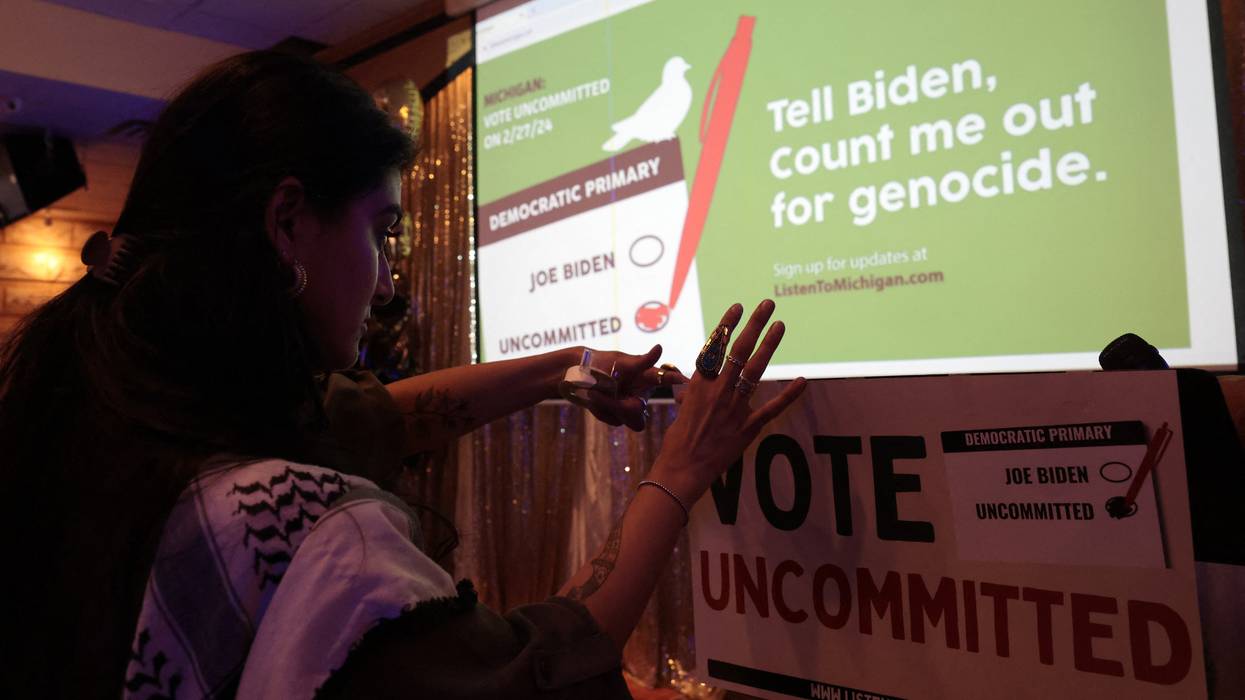
The 13.3% of Michigan Democrats who voted uncommitted sent a strong message to the president: “Listen to us and give us a reason to vote for you, or you’re putting your re-election at risk.”
The message sent last Tuesday by more than 100,000 Michigan Democrats who cast their ballots for “uncommitted” was crystal clear. They were telling President Joe Biden to call for a permanent cease-fire in Gaza and make dramatic changes in policy because they were having a problem voting for him or encouraging others to do so.
Make no mistake, this was a big deal. In the first place, it’s always hard to mobilize people to vote “uncommitted” as a protest. It’s much easier to win votes for an alternative candidate like Jesse Jackson or Bernie Sanders because supporters want to help them win. Getting voters to turn out for “uncommitted” is more difficult because the inclination of those in this camp is to not vote at all.
It should be recognized that turning out over 101,000 “uncommitted” votes was a massive undertaking that far exceeded expectations. The Michigan-based organizers had set a low goal of 10,000 (the vote margin that gave Donald Trump a victory over Hillary Clinton in 2016). I was hoping for uncommitted to receive 5% of the total—a percentage that would represent the percentage of the Arab American vote in Michigan plus some allies. When the final tally showed that 13.3% of the total vote went to uncommitted, it was clear that it wasn’t just a substantial portion of the Arab community turned out in large numbers. To get to 13.3% other groups—including young, Black, Muslim, and progressive voters—turned out as well.
It’s dangerous and shortsighted to dismiss any groups of voters when we know from current polls and the 2020 election that a combined total of 70,000 votes in key toss-up states could shift the election’s outcome.
To appreciate why Democrats place so much emphasis on Michigan, it’s important to understand that U.S. presidents aren’t elected by the number of overall votes they receive in the national tally, but by the collection of states they win. Each state is given a number of electoral votes equal to the number of members of Congress apportioned to each state (based on its population) plus two (for its number of Senators). A state’s electoral votes go to the candidate who wins that state’s popular vote.
In recent years, states like New York and California have predictably voted for Democrats, while others like Texas, Alabama, and Mississippi have been locked in as Republican. As a result, the candidates won’t expend campaign resources to compete in these states. Because some states like Michigan can go either way, they are heavily contested. Because it’s difficult for Democrats to create a configuration of states giving them a winning majority that doesn’t include Michigan, that state has greater importance than states that are predictably Democratic or Republican. It also gives Arab Americans, who comprise at least 3.5% of Michigan’s voters, an opportunity to play a greater role in shaping the outcome of national elections.
The 13.3% of Michigan Democrats who voted uncommitted, therefore, sent a strong message to President Biden: “Listen to us and give us a reason to vote for you, or you’re putting your re-election at risk.”
One would think that the message is clear enough to be understood. But, to date, the Biden campaign hasn’t appeared to get it. Their approach to the Arab community before the vote was, at best, ham-fisted. They had no meetings with national Arab American leaders to discuss policy, making do instead with failed attempts to meet with Michigan Arab Americans trying to secure their votes. Most community leaders refused to participate in these meetings absent real changes in policy.
Biden representatives tried to assuage Michigan’s Arab community anger by offering some half measures. One Biden official apologized for the White House not being more sympathetic to Palestinian suffering. But when asked when the president would back a cease-fire, another official chimed in that wasn’t going to happen.
There were other administration gestures in the lead up to the Michigan vote: sanctioning of a handful of Israeli settlers for their role in anti-Palestinian violence; hints that they might offer a plan for a “pathway to an eventual Palestinian state;” pressing the Israelis not to invade Rafah; and, a day before the vote, Biden off-handedly remarked that he believed there’d be a temporary cease-fire in a week or so. These lures were unconvincing to members of the Arab community.
Simultaneous with these transparent gestures, Democratic operatives were spreading counter-messaging: The uncommitted vote would be too small to matter, and no matter how many were upset with Biden now, in November when Arab Americans were faced with the choice of Trump versus Biden, they’d choose Biden. Finally, there were those who argued that what Arab Americans want the president to do to win their votes would be difficult because pressuring Israel might alienate Jewish voters.
These arguments are hollow and easily dismissed. First, the uncommitted protest vote was one of the largest ever recorded and clearly enough to make a difference in November. Second, it’s dangerous and shortsighted to dismiss any groups of voters when we know from current polls and the 2020 election that a combined total of 70,000 votes in key toss-up states could shift the election’s outcome. And finally, it’s deeply insulting for the Biden campaign to ask Arab Americans to swallow their feelings of pain and anger in order to spare the feelings of another group from which nothing is being asked at all.
What Michigan’s “uncommitted” voters have done is put down a marker—“Read the room. We want you to change policy to save lives. If you don’t, you risk losing our votes and key groups who support a cease-fire and justice for Palestinians.”

"We are organizing our neighbors across the state to tell Joe Biden: permanent cease-fire now!"
On the eve of Super Tuesday, Minnesota Democratic primary voters are looking to replicate Michigan's success with their own "uncommitted" campaign to protest President Joe Biden's support for Israel's unrelenting assault on the people of Gaza.
The uncommitted vote in Michigan earned more than 100,000 votes—well beyond the campaign's 10,000-vote goal—and secured at least two delegates for the Democratic National Convention in Chicago in August.
While Minnesota is not a swing state, and therefore may not have the same leverage over the Biden campaign as Michigan, organizers hope they can still send a message and inspire voters in other states.
"We're hoping that what we do here will just continue to push the wave of uncommitted across the United States," Amanda Purcell of MN Families for Palestinetold The Guardian.
"Voting uncommitted is a chance for Minnesotans to ask the president we fought for to change course, and recommit to all of us."
Progressive voters hope to use the uncommitted campaigns to persuade Biden to back a permanent cease-fire in Gaza, something that 68% of U.S. voters support, including 80% of Democrats. The campaigns seek to persuade the Biden administration that funding and arming an assault that the International Court of Justice has ruled a plausible genocide is not only immoral, but also a political liability as Biden prepares to face off against former President Donald Trump in November.
"We are organizing our neighbors across the state to tell Joe Biden: permanent cease-fire now!" reads the Vote Uncommitted MN website. "With his approval ratings bottoming-out and a tight race for re-election, we know he is paying close attention to what happens at the ballot box."
Minnesota is not the only state to pick up the uncommitted call. It is, however, the Super Tuesday state with the most prominent campaign to date. Other Super Tuesday primaries that have an uncommitted or equivalent line are Alabama, Colorado, Iowa, Massachusetts, North Carolina, Tennessee, and American Samoa.
The Colorado Palestine Coalition along with local chapters of the Democratic Socialists of America (DSA), launched a "Vote Noncommitted Colorado" campaign last Wednesday, though more than 762,000 people have already returned their ballots by mail.
"We figured if there's a way to make some waves and let our discontent be known, we might as well," organizer Grace Thorvilson told Axios Denver.
However, organizers in Minnesota say an uncommitted campaign is primed to make an impact in the state because of its history of progressive, democratic engagement and its large Muslim and immigrant population.
"We vote in Minnesota. Number one in the country for turnout," Abandon Biden campaign in Minnesota co-chair Jaylani Hussein told The Guardian. "And when it comes to minorities and immigrants, we also have historically high, record turnout."
Campaigners have scrambled to get the word out in the wake of Michigan's success.
"Y'all Michigan had three weeks. Minnesota now has four and a half days," organizer Asma Mohammed said on a conference call last week reported by Minnesota Public Radio.
The campaign has received backing from local politicians, including St. Paul City Council President Mitra Jalali and Minneapolis City Council President Aisha Chughtai.
"When you elect leaders, you commit to navigating difficult decisions with them while holding them accountable and standing up for your communities," the pair wrote in an op-ed Monday in Sajan Journal. "Our communities deserve better than the idea that 'anyone is better than Trump'—we deserve real leadership that invites accountability. Voting uncommitted is a chance for Minnesotans to ask the president we fought for to change course, and recommit to all of us."
Some members of the coalition, such as the Abandon Biden movement, want to ensure that Biden does not win the general election in order to impose consequences for his position on Gaza. Others, however, see the primaries as a chance to pressure Biden to reverse course before the general in order to strengthen his position against Trump.
"I'm hoping that President Biden listens, because I don't want to have to organize my community out of becoming Republicans or just sitting at home," Mohammed said. "And it's not just my community."
Abou Amara, who has previously worked on campaigns for the Minnesota Democratic-Farmer-Labor Party—the state's Democratic Party affiliate—said that the primary was exactly the right time to put intra-party pressure on candidates.
"The Democratic primaries and the Republican primaries are the moment to exercise political power and to have your voice heard," Amara told Minnesota Now. "And you're seeing the Biden administration continue to respond, to say I have to listen to various aspects of my coalition."
On Sunday, for example, Vice President Kamala Harris gave a speech in Selma in which she called for an immediate cease-fire and said Israel was not doing enough to stop a "humanitarian catastrophe" in Gaza. While Harris only backed a temporary, six-week cease-fire to facilitate a hostage exchange, her rhetoric reflects growing pressure on the party.
AJ+ media critic Sana Saeed said on social media that it was a "blatant attempt to put Harris as sober to Biden's zeal in the wake of Michigan and polls showing his unpopularity."
"They know they are in trouble," she added, "so this is pure PR bait, and it seems some people are falling for it."
Organizers of the Uncommitted MN campaign hope the pressure will keep up beyond Super Tuesday. Already the United Food and Commercial Workers Local 3000, the largest union in Washington State, has endorsed the uncommitted campaign in that state's primary on March 12. Efforts are also underway in states including Wisconsin, Arizona, and Pennsylvania.
"This is a national movement," Mohammed told The Guardian. "It doesn't stop with Michigan. It doesn't stop with Minnesota. All of us have to be all in to get the attention of the president."
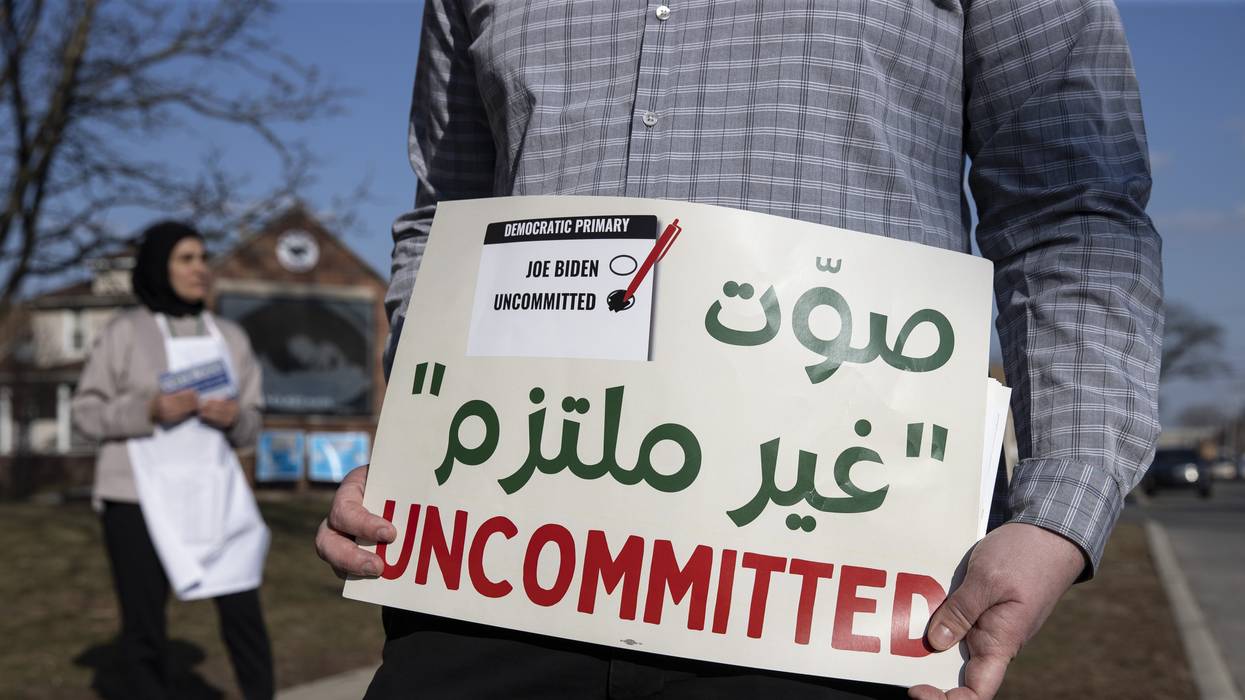
"This issue of Gaza is not just a Michigan issue, it is an issue across the United States," said one organizer.
With more than 100,000 Michigan voters having cast primary ballots letting U.S. President Joe Biden know they are "uncommitted" to supporting him in the general election due to his continued support for Israel's genocidal violence in Gaza, organizers of the effort said Wednesday that the Listen to Michigan campaign is spreading to other states.
Voters in Colorado, Minnesota, and North Carolina are among the Americans whose primary votes will be tallied next week on Super Tuesday, and all three states have "uncommitted" or similar language as an option on their ballots.
The Listen to Michigan campaign started organizing less than a month in advance, gathering support from leaders including Dearborn Mayor Abdullah Hammoud, Rep. Rashida Tlaib (D-Mich.), and former congressman Andy Levin in hopes that it could convince at least 10,000 voters to mark "uncommitted" on their primary ballots to warn Biden that he must end military funding for Israel and push the country to agree to a permanent cease-fire.
With more than three-quarters of Democrats in the U.S. backing a cease-fire, the campaign drew more than 10 times the amount of support it expected, with more than 13% of Michigan Democrats who took part in Tuesday's primary voting "uncommitted."
"We are going to be talking to other states that are looking for a unifying vehicle to send the same message to Joe Biden," Layla Elabed, campaign manager for Listen to Michigan, told reporters on Wednesday. "This issue of Gaza is not just a Michigan issue, it is an issue across the United States. So our plan is to work with other coalitions like Listen to Michigan."
According to Hammoud, organizers in other states with upcoming primaries have reached out to Listen to Michigan "to follow their strategy."
As Common Dreams reported last week, campaigners in Washington state are urging voters to write "cease-fire" on their primary ballots ahead of the March 12 election.
In Colorado, concerns about Biden's support for Israel, which has now killed more than 30,000 people in Gaza and decimated civilian infrastructure across the enclave even as it claims to be targeting Hamas fighters, helped push the state Democratic Party's executive committee to vote unanimously in December in favor of including a "noncommitted" line on primary ballots.
Abed Ayoub, national executive director of the American-Arab Anti-Discrimination Committee, said Thursday that Armenian-American campaigners in key states including Wisconsin, Arizona, and Pennsylvania are leading efforts to push people to vote "uncommitted."
More than 206,000 Armenian-Americans in swing states "are perfectly positioned to play a high-impact role," said the Armenian National Committee of America.
"Over 100,000 sent Biden a clear message in Michigan," said Yonah Lieberman, co-founder of the Jewish-led Palestinian rights group IfNotNow. "Now the fight moves on."

Progressive Caucus chair said the "lack of attention and empathy" on Gaza is "breaking apart the fragile coalition we built to elect Joe Biden in 2020."
The chair of the Congressional Progressive Caucus said late Tuesday that stronger-than-expected support for the grassroots uncommitted campaign in Michigan's Democratic presidential primary must be taken seriously by President Joe Biden if he hopes to defeat presumptive GOP nominee Donald Trump in November—and prevent further atrocities in Gaza.
"The war on Gaza is a deep moral issue, and the lack of attention and empathy for this perspective from the administration is breaking apart the fragile coalition we built to elect Joe Biden in 2020," Rep. Pramila Jayapal (D-Wash.) told CNN's Manu Raju after it was clear that a significant percentage of primary voters marked "uncommitted" on their ballots.
Jayapal, a co-sponsor of a Gaza cease-fire resolution in the U.S. House, said that Biden still has a "little bit of time to change this dynamic" but argued a "dramatic policy and rhetorical shift" is needed from the president, whose administration has unconditionally supported Israel's latest assault on Gaza since it began in the wake of a Hamas-led attack on October 7.
"The results in Michigan are clear: Voters are not happy with the U.S's handling of the war in Gaza," Jayapal wrote on social media. "This is a profound moral issue—and it's time to listen."
As of this writing, more than 101,000 votes have been tallied for the "uncommitted" line, exceeding organizers' stated goal and far surpassing the 11,000-vote margin by which Trump defeated former Secretary of State Hillary Clinton in 2016.
In 2020, Biden beat Trump in Michigan by 150,000 votes.
Biden's reelection team was reportedly surprised by the strength of the uncommitted campaign in Michigan, even though local leaders and organizers warned the president that his unwavering support for Israel's war on Gaza has profoundly angered a large swath of Democratic voters in the state, many of whom have lost family members in the assault.
The president visited Michigan in early February but did not return to the state in the days leading up to Tuesday's contest. The New York Times reported Tuesday that some of the president's surrogates "were asked to travel to Michigan and declined because they did not want to engage with Gaza protesters."
Politico reported Wednesday that Biden aides "continue to believe that today's 'uncommitted' voters will be November's Biden voters once they have a stark choice in front of them."
"We really need actual change in policy, and I think we sent that message strongly last night."
Former U.S. Rep. Andy Levin (D-Mich.), an outspoken supporter of the Listen to Michigan campaign, said in an appearance on Democracy Now! Wednesday morning that "uncommitted" voters don't just want better messaging from Biden, who has mildly criticized Israel's blatant lack of regard for civilian life in Gaza.
"The message from us to the president yesterday was, 'You must change course. You must change course for the sake of your political reelection and because it's the right and necessary thing to do, from every point of view,'" said Levin. "You've got to move towards an immediate and permanent cease-fire and an end to this carnage. Free all the hostages, free political prisoners among the Palestinians."
"We really need actual change in policy," Levin added, "and I think we sent that message strongly last night."
Over 100,000 Michigan voters cast their ballots for "uncommitted" in the state's Democratic primary on Tuesday. Former Democratic Congressmember @Andy_Levin, who supported the protest campaign, says it sent a strong message to the administration to "change course" on Gaza. pic.twitter.com/xC62YI57vC
— Democracy Now! (@democracynow) February 28, 2024
Ahead of Tuesday's primary contest, which Biden won with just over 81% of the vote, Biden ally and cease-fire supporter Rep. Ro Khanna (D-Calif.) visited Michigan and came away warning that the president "cannot win Michigan with status quo policy" and implored the president to substantially shift his approach to Israel's war on Gaza in "a matter of weeks, not months."
Sam Rosenthal, political director of the progressive advocacy group RootsAction, echoed that message in an op-ed for Common Dreams on Wednesday, writing that the strength of the "uncommitted" vote in Michigan should be a "wake-up call" for the president and those working for his reelection.
"If even a significant percentage of the primary electorate that voted uncommitted in Michigan either does not vote, votes third party, or, God forbid, chooses Trump over Biden in November, then Biden will surely lose the state," Rosenthal wrote. "If Biden loses Michigan, as Hillary Clinton lost it to Trump in 2016, his path to electoral victory becomes exceedingly difficult."
"Simply put, Biden needs to come up with votes, and quickly, at a time when he only seems to be capable of losing them," Rosenthal added. "His administration's unflinching support for Israel's scorched earth campaign in Gaza has alienated core constituencies that Biden needed to win in 2020."
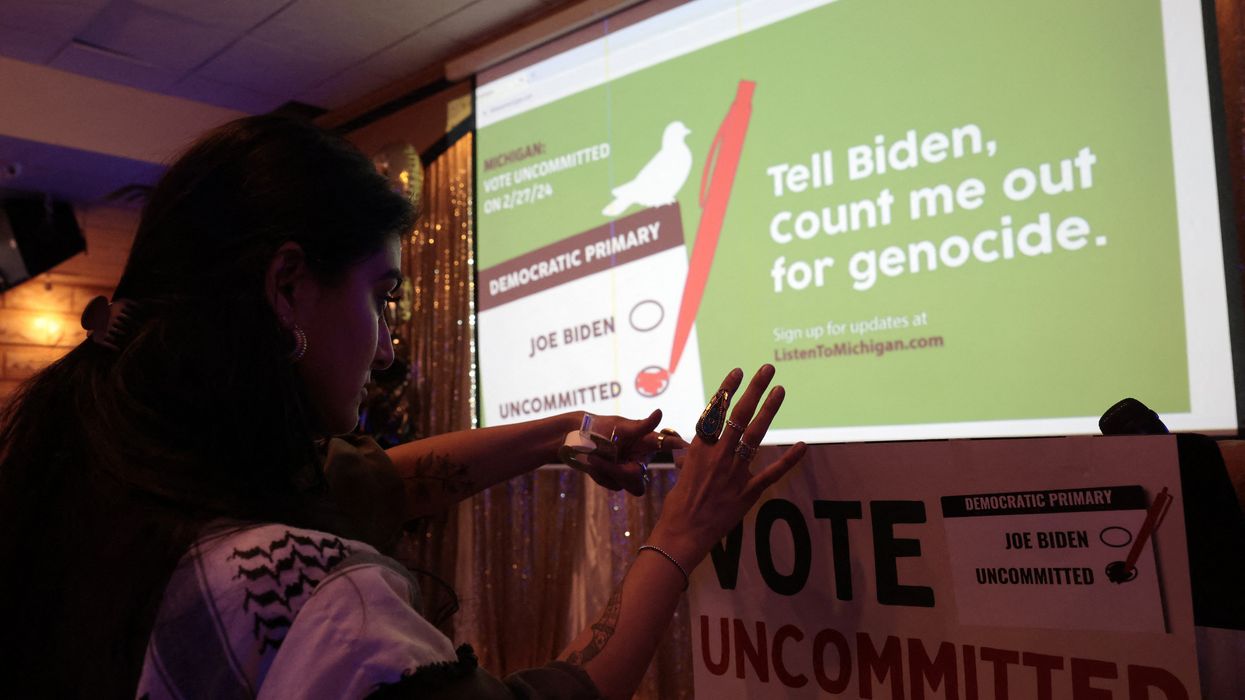
The results "represent a historic inflection point for creating a Democratic Party that aligns with the majority of its voters who want a cease-fire," said one organizer.
More than 100,900 Michigan voters marked "uncommitted" on their ballots during the swing state's Democratic presidential primary on Tuesday, a signal to President Joe Biden that his continued support for Israel's war on Gaza is angering key elements of his base and potentially threatening his reelection chances.
Leaders and supporters of the Listen to Michigan campaign made clear that their goal was not to harm Biden's general election prospects, but rather to convince him to change course on Gaza, where the U.S.-armed Israeli military has killed nearly 30,000 people in less than five months.
In 2020, Biden defeated former President Donald Trump—his likely general election opponent in November—by 150,000 votes in Michigan, and Trump defeated former Secretary of State Hillary Clinton four years earlier by roughly 11,000 votes.
"We need Joe Biden to listen to the voice of Michiganders," Layla Elabed, campaign manager for Listen to Michigan and the sister of Rep. Rashida Tlaib (D-Mich.), told reporters late Tuesday. "Listen to the voice of his core constituents and demand a permanent cease-fire now and the ending of this unconditional, unchecked funding to Israel."
Biden handily won Michigan's primary on Tuesday with just over 81% of the vote. But "uncommitted" garnered the support of over 13% of primary voters, beating Marianne Williamson—who suspended her campaign before the contest—and Rep. Dean Phillips (D-Minn.) and far surpassing organizers' expectations. By comparison, fewer than 20,000 Michigan voters chose "uncommitted" in the 2020 Democratic primary.
In Hamtramck and Dearborn—cities with strong Arab American and Muslim populations—the incumbent Democratic president lost to "uncommitted" by significant margins on Tuesday. Many Michigan residents have lost family members to Israel's war on Gaza, which the Biden administration has fueled with weapons and diplomatic support.
"Tens of thousands of Michigan Democrats, many of whom voted for Biden in 2020, are uncommitted to his reelection due to the war in Gaza," the Listen to Michigan campaign wrote on social media. "President Biden has funded the bombs falling on the family members of people who live right here in Michigan. People who voted for him, who now feel completely betrayed. President Biden, listen to Michigan. Count us out, Joe."
"Count Michigan uncommitted for funding of war and genocide in Gaza," the campaign continued. "While we've noticed a small shift in language from Biden as a direct result of this campaign’s pressure, we know that his words are not enough. This isn't a messaging problem, this is a funding bombs problem."
Stressing that "we don't want a Trump presidency," the campaign said Biden "has put [Israeli Prime Minister Benjamin] Netanyahu ahead of American democracy."
"The only way to achieve freedom and justice for Palestinians surviving a genocide is through an immediate and permanent cease-fire. The only way to ensure the safe return of all hostages and prisoners is through an immediate and permanent cease-fire," Listen to Michigan continued. "Our delegation plans to hold the Democratic nominee accountable to our community's anti-war agenda at the Democratic National Convention in Chicago. See you there."
"Quite frankly, none of us want Trump to win, which is exactly why we're doing this."
Organizers said late Tuesday that they expect "uncommitted" to receive at least one delegate to the Democratic convention. The New York Times noted that "under Michigan's Democratic primary rules, candidates can receive delegates by earning at least 15% of the vote in a specific congressional district."
In a statement on the primary results, Biden thanked "every Michigander who made their voice heard today" but did not specifically acknowledge the "uncommitted" campaign, which faced last-minute attacks from a billionaire-funded AIPAC ally that is also working to unseat progressive Democratic lawmakers who have backed a cease-fire in Gaza.
A survey released Tuesday by Data for Progress found that 57% of likely U.S. voters disapprove of Biden's handling of the Israel-Palestine conflict and 67%—including 77% of Democrats—support a permanent cease-fire in Gaza.
Elabed said Tuesday that the primary results "represent a historic inflection point for creating a Democratic Party that aligns with the majority of its voters who want a cease-fire and end to unrestricted weapons funding for Israel's war and occupation against the Palestinian people."
Gaby Santiago-Romero, a member of the Detroit City Council and supporter of the Listen to Michigan campaign, told the Times that "we are no longer in a position to beg Democrats to listen to us."
"Quite frankly, none of us want Trump to win, which is exactly why we're doing this," said Santiago-Romero. "This is the only way we can raise a flag to Democrats that you are going to lose unless you call for an ultimate cease-fire."

"Use our democratic process to speak up about your core values, where you want to see our country go," said Rep. Rashida Tlaib, the only Palestinian American in Congress.
The Listen to Michigan campaign made its final appeals as the swing state's Democrats headed to polling stations for the primary on Tuesday, urging them to vote "uncommitted" to pressure President Joe Biden into supporting an immediate and permanent cease-fire in Israel's U.S.-backed war on the Gaza Strip.
Since launching just three weeks ago, Listen to Michigan has picked up support from key figures across the state and beyond, from Our Revolution and Dearborn Mayor Abdullah Hammoud to former U.S. Rep. Andy Levin (D-Mich.) and current Rep. Rashida Tlaib (D-Mich.), the only Palestinian American in Congress.
Tlaib—whose sister, Dearborn community organizer Layla Elabed, is leading Listen to Michigan—shared a video circulated by the campaign on social media after she cast her vote.
"We must protect our democracy. We must make sure that our government is about us, about the people, when 74% of Democrats in Michigan support a cease-fire, yet President Biden is not hearing us," Tlaib said. "This is the way we can use our democracy to say, listen. Listen to Michigan, listen to the families right now that have been directly impacted, but also listen to the majority of Americans who are saying enough. No more wars, no more using our dollars to fund a genocide, no more."
"So please, take your family members," she urged Michigan residents, noting that she was joined at the polls by her 18-year-old son. "Use our democratic process to speak up about your core values, where you want to see our country go."
Elabed said in a statement that "with an ambitious yet critical goal of garnering 10,000 'uncommitted' votes, we aim to demonstrate that a significant voting bloc within Michigan is uncommitted to President Biden's reelection efforts."
The campaign leader pointed out that 10,000 votes is about the same margin that former President Donald Trump—the likely Republican nominee for this cycle—had over Hillary Clinton, the Democratic candidate, in the state in 2016.
"Voting uncommitted isn't just symbolic; it represents the electoral margins that could determine President Biden's electoral fate in November 2024," Elabed stressed. "The path to the White House runs through Michigan and Michigan runs through Dearborn and Detroit. Michigan Democrats and our diverse, multifaith coalition have already made our demands for cease-fire and ending funding for war and occupation clear."
Asked about the effort during a televised NBC News interview on Monday, Democratic Michigan Gov. Gretchen Whitmer, who is serving as a co-chair for Biden's reelection campaign, said, "I think there will be a sizable number of votes for uncommitted," and 10,000 is "possible."
While acknowledging the right of voters to make their voices heard and that "there's a lot of pain" in Michigan's Arab, Palestinian, Muslim, and Jewish communities, she also urged voters to support Biden at the polls, warning that "anything other than that makes it more likely we see a second Trump term."
That tracks with messaging guidance that the Biden campaign issued ahead of the primary, according to Politico. One unnamed elected official said: "The Biden campaign wants me to tell you that any vote not for Biden is a vote for Donald Trump... I'm not gonna go that hard... I mean, they're like, 'Donald Trump never killed us, Joe Biden killed our families.'"
Since the Hamas-led October 7 attack on Israel, Israeli forces have killed around 30,000 Palestinians in Gaza, displaced most of the enclave's 2.3 million residents, and devastated civilian infrastructure—provoking widespread allegations of genocide that are currently before the International Court of Justice.
While negotiating for a temporary pause in fighting and exchange of prisoners and hostages, the Biden administration has also blocked and opposed United Nations cease-fire resolutions, bypassed Congress to arm Israeli forces, and sought more than $14 billion on top of the nearly $4 billion that Israel gets in annual military aid from the U.S.
As The New York Times reported Tuesday:
The White House did dispatch a high-ranking team to meet in private this month with Arab American officials in Dearborn, at which a senior foreign policy aide acknowledged "missteps" on the administration's foreign policy and public messaging about the conflict in Gaza.
Other would-be Biden surrogates were asked to travel to Michigan and declined because they did not want to engage with Gaza protesters, according to people familiar with the negotiations. The Biden campaign declined to comment for this article.
The newspaper also noted that "for some context, there were about 20,000 votes for 'uncommitted' in each of the last two Democratic presidential primaries in Michigan that featured robust and competitive fields."
Elabed pointed out that "uncommitted voters in Dearborn have already reported being given independent ballots instead of Democratic Party ballots from poll workers when saying: 'We want to vote uncommitted.'"
"This confusion could likely dampen turnout," the Listen to Michigan leader warned. "We're watching closely."
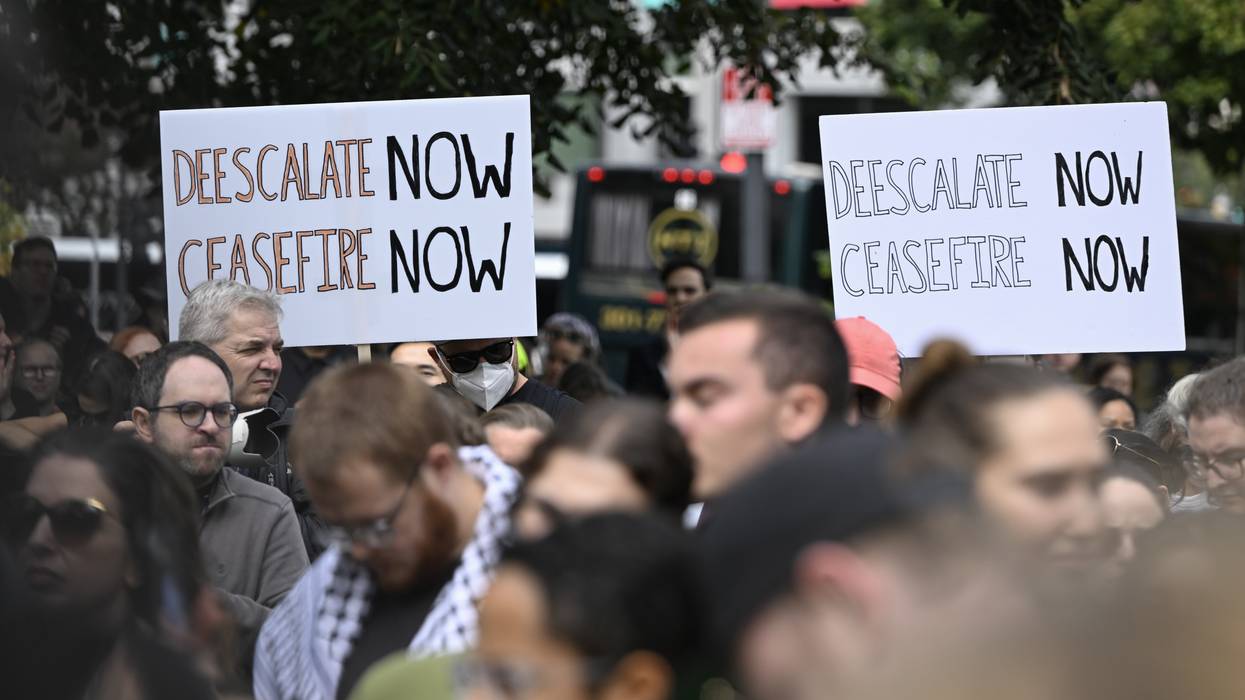
"Politicians listen to votes, and the people want a cease-fire," said Vote Cease-Fire.
The push for Americans to use their leverage as primary voters and demand a cease-fire in Gaza has spread to Washington state, where the grassroots campaign Vote Cease-Fire on Thursday urged residents to write "cease-fire" on their ballots.
Ballots will be mailed to voters starting Friday, and Washington residents have until March 12 to vote.
Vote Cease-Fire called on voters to write "cease-fire" on the blank lines below candidates' names on their primary ballots in order to make it clear to President Joe Biden that more than three-quarters of Democratic voters want him to demand that Israel stop its bombardment of Gaza and halt funding for the Israel Defense Forces.
The campaign came to Washington a month after more than 1% of New Hampshire Democratic voters wrote "cease-fire" on their primary ballots, after Vote Cease-Fire had had just a week to organize the effort.
Early voting is already underway in Michigan and next week, some voters in the key swing state—home to about 200,000 Muslim voters and 300,000 people with Middle Eastern and North African ancestry—plan to vote "uncommitted" in the primary, signaling to Biden that they will not commit to supporting him in the general election in November unless he takes action to save the lives of Palestinians in Gaza.
Vote Cease-Fire pointed out that the campaigns "will not inherently empower [former President Donald] Trump or a Republican."
"This is a primary, not the general," said the group. "Politicians listen to votes, and the people want a cease-fire. Biden and elected leadership have not heard our calls, rallies, and demands for a cease-fire. It's possible that a change of heart may make him a stronger candidate in November. Opinions differ, but many folks voting 'cease-fire' in the primary are thinking of this as a one-off action, and hoping that it pushes Biden to make the change we want to see."
Despite widespread public support for a cease-fire, the U.S. vetoed a United Nations resolution demanding a humanitarian cessation of hostilities in Gaza this week for the third time—an act which "only serves those who think an obscene death count will somehow further 'soften up' Hamas to accept a one-sided solution," Bill Maddocks of New Hampshire Peace Action said Thursday.
Vote Cease-Fire organizer Joy Dworkin, who lives in Tacoma, Washington, said it was "difficult to believe President Biden is unaware that 63% of the national electorate and more than three-quarters of Democrats support a permanent cease-fire."
"Like many Washingtonians, for months I have been raising my voice, shouting 'Cease-fire Now!'" said Dworkin. "Our current policy of saying we care about civilian Palestinian life while funding ongoing indiscriminate bombing makes no sense. Because it is moral, because it is humane, because it is politically imperative, and because it is in the interests of U.S. standing in the world, we need a cease-fire! When we use the ballot box to say this, perhaps President Biden will finally listen!"