

5
#000000
#FFFFFF
To donate by check, phone, or other method, see our More Ways to Give page.
Daily news & progressive opinion—funded by the people, not the corporations—delivered straight to your inbox.
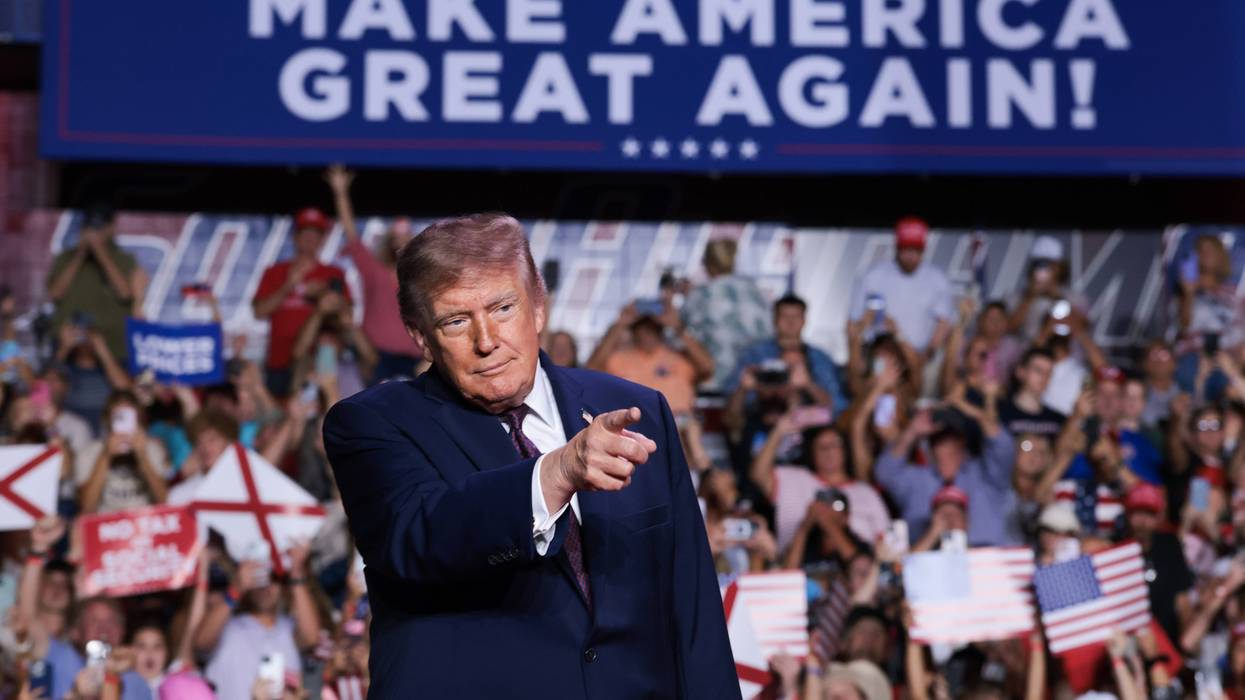
"At this point, Trump’s economic policy is starting to look less like governing and more like Publishers Clearing House with a campaign logo."
With the midterm elections just weeks away, President Donald Trump announced on Friday that more than 20 million Medicare Part B beneficiaries will receive a one-time $90 payment this month.
Trump, who declared on Truth Social that his administration would send out "checks," said the money will come from the $2 billion Medicare Improvement Fund and is expected to appear in seniors' bank accounts around October 8.
The $90 payment is not even enough to cover half of the standard monthly Medicare Part B premium payment, which is about $202. But Trump described the comparatively small payment as proof that Americans could trust his promise of a much heftier windfall if Republicans prevail in next month's elections.
"Because I delivered on this very important issue for the American people, they can also rest assured the highly popular $5,000 Trump Dividend will be distributed to every U.S. Citizen if, and when, the Republicans win the Midterm Elections!" Trump said.
Americans have reason to be skeptical that they will ever see such a payout. Although roughly 1 million unsubsidized Affordable Care Act enrollees are currently receiving $500 payments, Trump has on several other occasions floated or promised Americans larger sums of free money that never materialized.
In February 2025, he proposed $5,000 "DOGE dividend" checks for Americans, purportedly funded by savings generated by Elon Musk's Department of Government Efficiency, but the payments were never authorized by the GOP-controlled Congress.
That November, he promised that most Americans would receive tariff payments of "at least $2,000 a person," but Congress has still not authorized them nearly a year later.
Sending all 240 million adult citizens a $5,000 check, as Trump has promised to do if the GOP wins the midterms, would cost an estimated $1.2 trillion.
"At this point Trump’s economic policy is starting to look less like governing and more like Publishers Clearing House with a campaign logo," remarked the Indiana-based political commentator Mike Young.
Sen. Ron Wyden (D-Ore.) described the payments as "Trump's latest attempt to bribe the American public," arguing that $90 amounts to a pittance compared with the higher costs seniors are facing under Trump's policies.
"This year, Trump handed seniors a $200 monthly Medicare premium for the first time ever, and he also shoveled $20 billion in extra payments to insurance companies selling private Medicare plans,” Wyden said. “This is another desperate attempt by a failed president to escape Americans’ revulsion with his failed agenda, amounting to one tank of Trump-inflated gas.”
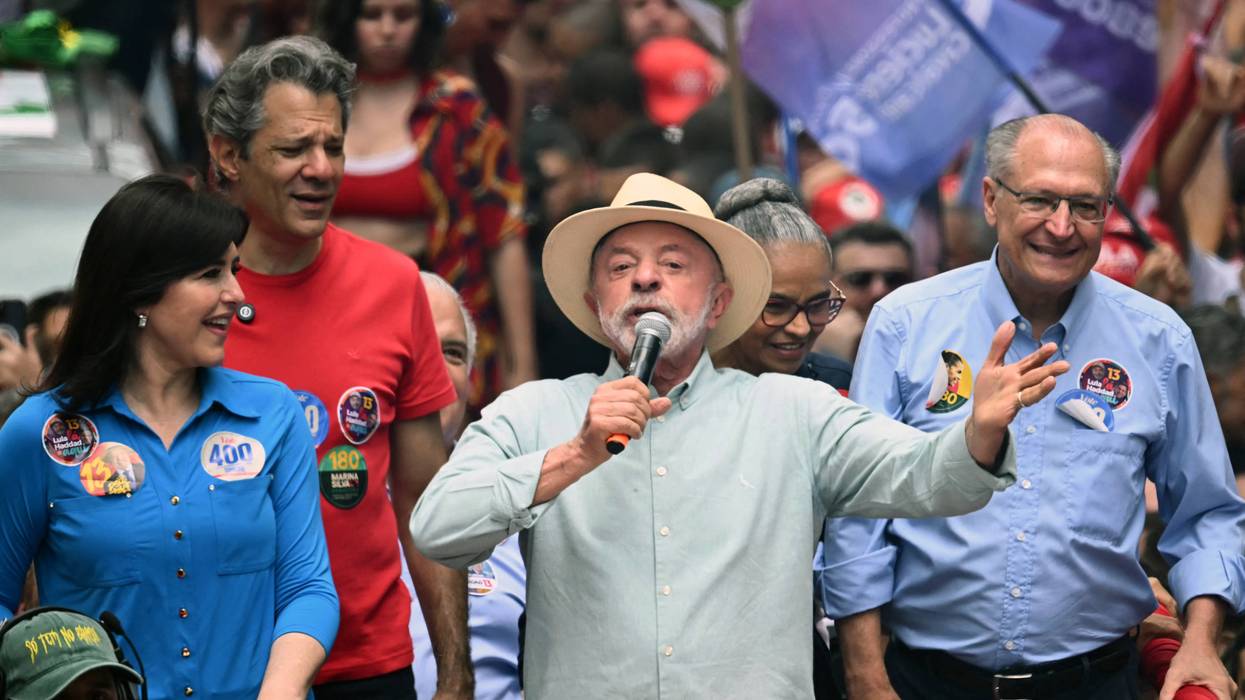
"Often at the request of the Bolsonaro family, the US has engaged in a pressure campaign to weaken the Lula government," explained one analyst.
Just two days before Brazil's closely watched presidential election, the campaign of its left-wing president, Luiz Inácio Lula da Silva, has asked the nation's top election court to examine the sudden shutdown of US consular services as part of a broader investigation into alleged election "interference" by the Trump administration.
On Friday night, the US suspended in-person consular services at its embassy and consulates across Brazil on Friday and advised Americans to avoid US diplomatic facilities, citing unspecified "security concerns."
In a petition filed to Brazil's Superior Electoral Court, Lula's campaign said taking such an action just days before Brazilians vote "projects instability over the electoral environment," something it said was part of a larger "infrastructure of external intervention in the Brazilian electoral process.”
In recent days, Brazil's intelligence agency said it confirmed the existence of interference by the US in Brazil's election to support Sen. Flavio Bolsonaro, the son of former far-right President Jair Bolsonaro—who is currently serving a 27-year prison sentence under house arrest for orchestrating a coup attempt in 2022.
"Although Trump has not formally endorsed him, Bolsonaro is undoubtedly Washington’s preferred candidate," explained Nick Cleveland-Stout, a research associate at the Quincy Institute for Responsible Statecraft, on Friday. "Often at the request of the Bolsonaro family, the US has engaged in a pressure campaign to weaken the Lula government, sparking fears of further interference."
Trump responded with hostility to the prosecution of the disgraced ex-president—imposing tariffs of up to 50% on Brazilian imports in retaliation, sanctioning the Supreme Court justice overseeing the case, and threatening to use American "military might" against Brazil.
He's also designated two Brazilian crime groups as "narcoterrorist" organizations, invoking a similar pretext Trump used to justify his invasion of Venezuela to kidnap its leader Nicolás Maduro in January.
As the election has approached, Trump has appeared to put his thumb on the scale in an effort to stop Lula from achieving what would be an unprecedented fourth term.
In July, the US consulate in São Paulo invited right-wing pro-Bolsonaro social media influencers to a closed-door roundtable meeting to discuss “freedom of expression and the digital environment.”
The Guardian reported on Thursday that the State Department was also diverting $1 million from its human rights fund to oppose "judicial overreach and censorship" by Brazil’s Supreme Court, an apparent reference to the court's actions against Bolsonaro and his allies.
The Brazilian government has denied visas to two State Department officials whom it said were seeking to discuss "election integrity," which it perceived as an effort to “undermine the electoral system.”
Trump and his allies have previously spread baseless conspiracy theories to cast doubt upon Lula's victory in 2022, which helped to fuel the failed coup. They've done the same with the victories of other left-wing candidates in Latin American elections—including Bolivia's Evo Morales in 2019 and Guatemala's Bernardo Arévalo in 2023.
Lula's campaign said the sudden US suspension of consular services was "yet another extremely serious development in the interference in Brazilian elections by the US government," alleging that it was "coordinated, by all indications, directly by the brothers Flávio and Eduardo Bolsonaro.”
The filing noted that even “the legislative branch of the foreign state itself… recognizes the pattern of external pressure." It pointed to a letter sent earlier this week by Democratic US Sens. Jeanne Shaheen (NH), Peter Welch (Vt.), and Tim Kaine (Va.) to Secretary of State Marco Rubio, which said that "the administration’s most recent actions point toward an effort to interfere with, and potentially undermine, Brazil’s general election in October."
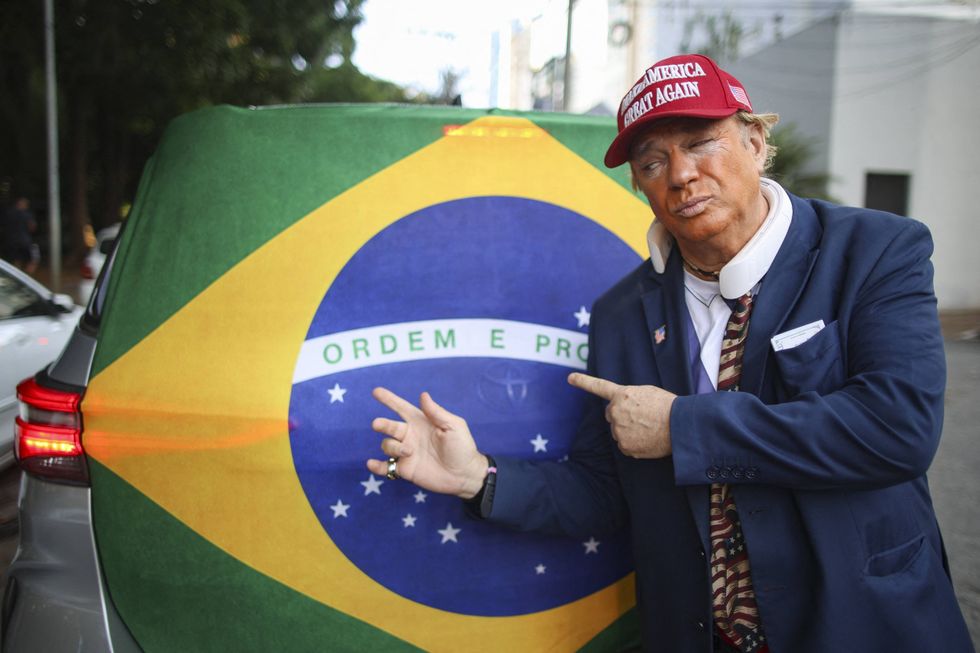 A man wearing a mask depicting US President Donald Trump attends a rally of Brazilian right-wing presidential candidate Flavio Bolsonaro in Goiania, Brazil, on September 27, 2026. (Photo by Sergio Lima/AFP via Getty Images)
The first round of Brazil's election will begin on Sunday. Should neither candidate receive 50% of the vote, a runoff between the top two candidates will be held on October 25. Several major polls show Lula with a narrow first-round lead entering Sunday, although others have the race effectively tied or Bolsonaro slightly ahead.
But Lula has also seized upon Trump's meddling to portray Bolsonaro as a tool of foreign powers, drawing on a history of US-backed coups and election interference that have undermined Brazilian democracy.
“Flávio Bolsonaro is Trump’s candidate and what Trump wants is to colonize Brazil, take our riches, steal our future and leave us in the dust," said a campaign ad that began airing last week.
The Trump administration, for its part, has continued to double down on public overtures toward imperialist ambition. On Thursday, an official US State Department social media account reposted a video created in August glorifying the 19th-century Monroe Doctrine and declaring that "American dominance in the Western Hemisphere will never be questioned again."
Dov H. Levin, a political scientist at the University of Hong Kong who recently published research on the effects of foreign election interference, told the Brazilian newspaper Folha de S. Paulo that, if too overt, Trump's intervention could backfire.
"There are cases of failure," he said, "and cases where the reaction provoked by the intervention harms precisely the side it intended to help."
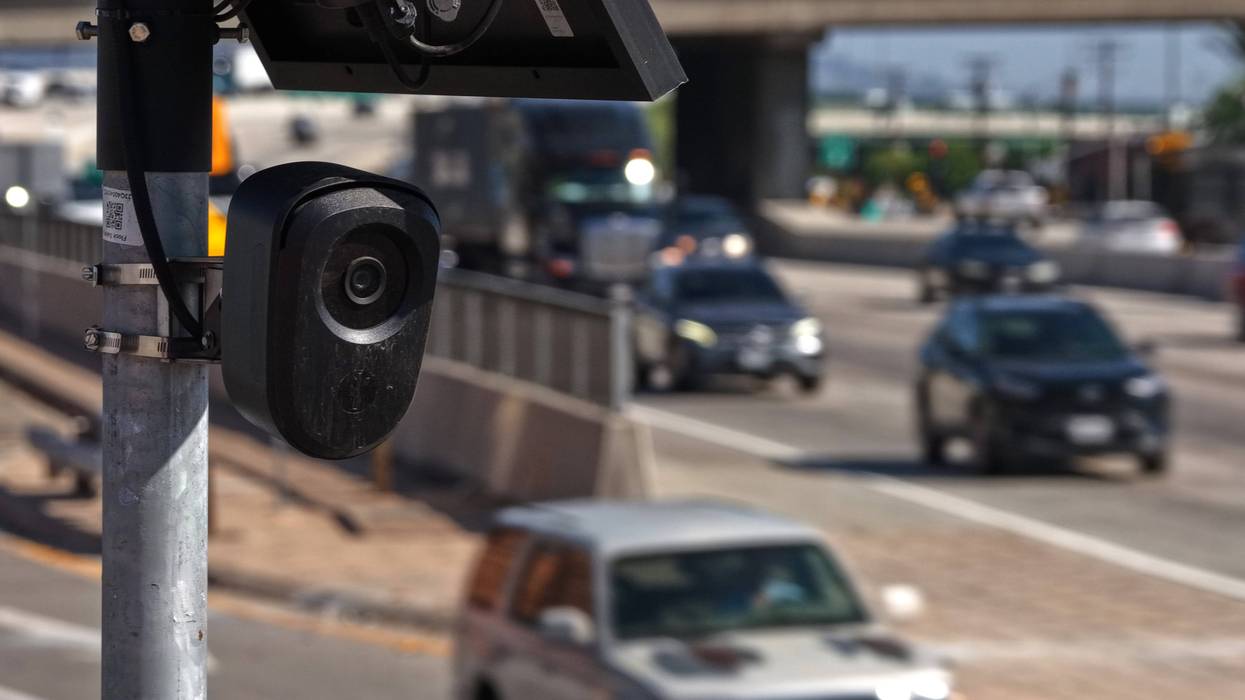
"AI-powered cameras are keeping track of our every move and weaponizing this data against working people to make record profits," said Rep. Alexandria Ocasio-Cortez.
Sen. Bernie Sanders and Rep. Alexandria Ocasio-Cortez introduced legislation on Friday that would crack down on artificial intelligence-powered Flock cameras increasingly used—and abused—by law enforcement agencies across the United States to track and log vehicle data.
Sanders (I-Vt.) said in an interview with The Washington Post, which was first to report on the new legislation, that the US is "moving toward a surveillance state where a handful of giant companies make huge profits by giving the government, by selling to the government, the power to track our every move."
According to a summary released by Sanders' office the Ban Flock Act would bar the federal government from using automatic license plate readers (ALPR) or accessing the information that they gather. The legislation would also halt federal grant funding to state and local governments that use ALPRs and allow Americans to "sue the federal government for violation of their rights through the use of automatic license plate readers."
Sen. Jeff Merkley (D-Ore.), who joined Sanders and Ocasio-Cortez (D-NY) in sponsoring the legislation, said in a statement that the maker of Flock cameras, Flock Safety, is "selling its cameras nationwide, laying the groundwork for a surveillance state while enriching corporate executives."
"Your right to privacy includes the freedom to move around your community without every move being monitored,” said Merkley. "No one should have this unchecked surveillance power at their fingertips, which is why I’m teaming up with Sen. Sanders to rein in this dangerous technology."
Ocasio-Cortez warned that "across the country, Big Tech companies like Flock Safety have built a mass surveillance system to harvest Americans’ private and personal data without their consent."
"AI-powered cameras are keeping track of our every move and weaponizing this data against working people to make record profits. The widespread integration of this technology into American society is unconscionable," she added. "I am proud to introduce the Ban Flock Act with Sen. Sanders to enforce our constitutional right to privacy and protect Americans from both corporate and government surveillance."
The new bill comes after President Donald Trump and his FBI director, Kash Patel, defended Flock cameras as useful tools for law enforcement, even as investigations showed significant abuses. One such investigation, published by the libertarian Institute for Justice in August, "identified well over 100 incidents of ALPR abuse, including romantic stalking, wrongful stops and detentions, non-law enforcement use, and other types of misconduct."
Trump nevertheless told reporters in September that "I sort of like them... because of law enforcement, but some people don’t."
"They think it’s an infringement," said of the cameras' critics. "I like them."
According to the ACLU, Flock operates more than 120,000 ALPRs nationwide.
"Flock's ALPR cameras aren't like your normal traffic cameras," the group noted. "This surveillance technology records and tracks every car that comes into view, and then an AI algorithm catalogs the make, model, color, license plate number, bumper stickers, and even scratches. This personal information is then uploaded into a nationwide database that any law enforcement agency with a Flock contract can search—with few regulations or oversight on how they use what they find."
Sanders said in a statement Friday that "at a time of growing concern about the unchecked power of artificial intelligence, Flock is eviscerating the very notion of privacy by installing tens of thousands of cameras in communities across America without their consent."
"Going to the doctor? Flock knows. Dropping your kid off at school? Flock is tracking you. Flock is always watching," the senator said. "We cannot allow America to become a surveillance state where a handful of AI oligarchs profit by giving the government the power to track our every movement."
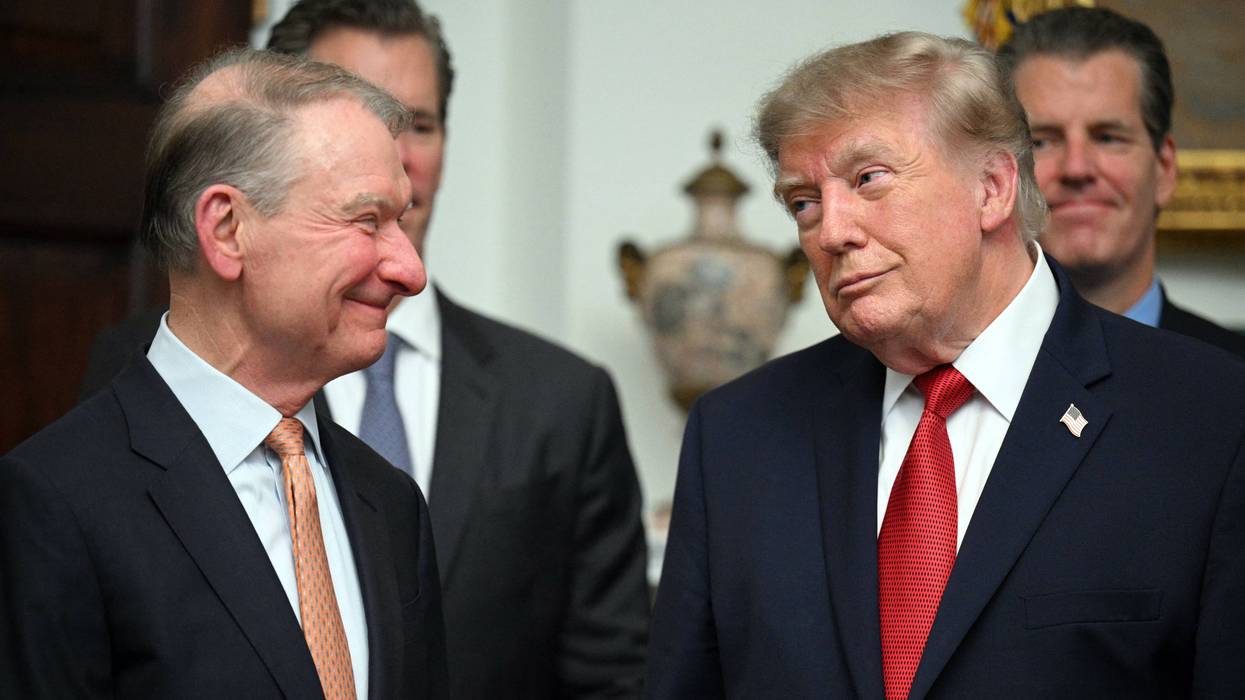
"The most exclusive dinner in the world with the most corrupt president in American history," said one congressional Democrat.
The company behind US President Donald Trump's meme coin has launched a competition giving participants an opportunity to attend "the most exclusive dinner in the world"—all they have to do is buy a digital token with no inherent value that has lost investors billions of dollars while further enriching the president.
The Washington Sun reported Thursday that winners of the competition, held by CIC Digital and Fight Fight Fight LLC, "will be chosen based on a formula that seems designed in part to increase sales of $TRUMP in the next two months." The event invite promises the top 185 holders of the meme coin an evening with three unidentified "legends" and Trump, "plus a private meet and greet with a legend yet to be announced," at the president's golf club in Virginia.
The November 22 dinner will mark the second exclusive event for holders of Trump's meme coin, which has netted the president at least $635 million, according to recent financial disclosures.
Investors in the digital token haven't fared nearly as well: The cryptocurrency analytics firm Nansen has estimated that nearly a million people who purchased the meme coin through the end of June 2026 had combined losses of around $4 billion.
NEWS: Trump to host "most EXCLUSIVE DINNER IN THE WORLD" for top 185 purchasers of his meme crypto
Buying $1M (or less!) worth of $TRUMP coin should get you in Nov 22
Trump has pocketed $635 million
Investors down +$4 billion on Trump crypto
Invite ⬇️https://t.co/u8ck5DDR8v pic.twitter.com/ZUnBRCnN9g
— Jeff Stein (@jstein_sun) October 1, 2026
Last May, the top buyers of Trump's meme coin—including Chinese billionaire Justin Sun, who has poured tens of millions of dollars into the president's crypto ventures—attended an exclusive dinner at Trump's Virginia golf club and received a VIP tour of the White House. Ethics experts and other critics described the event as "corruption embodied."
News of the second dinner sparked similar outcry. "This is the most brazenly corrupt shit I have ever seen in politics and it's not even close," wrote Tommy Vietor, a podcast host and former spokesperson for Barack Obama.
Rep. Greg Landsman (D-Ohio) characterized the event as "the most exclusive dinner in the world with the most corrupt president in American history."
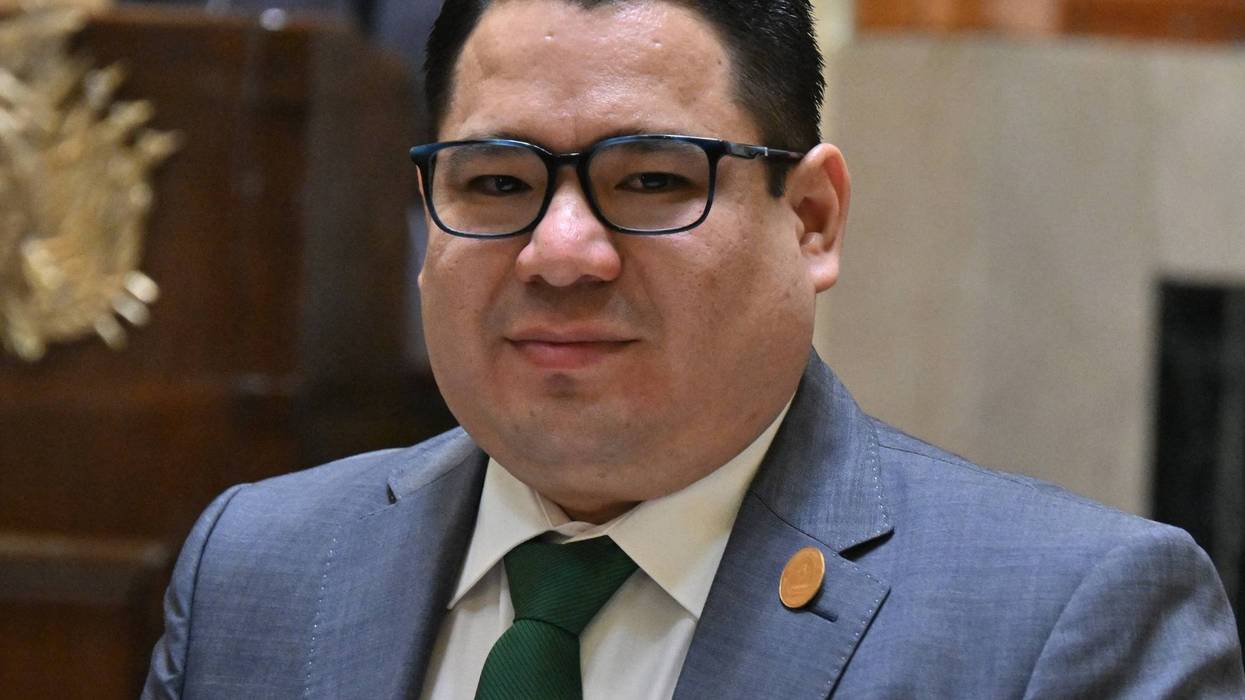
"We denounce before the entire Bolivian population this intervention that is being carried out illegally," said an official from Attorney General Roger Mariaca's office.
The Bolivia Public Prosecutor's Office on Thursday denounced “the kidnapping of our attorney general” after the country's top law enforcement official, Roger Mariaca, was intercepted and detained at Viru Viru International Airport in Santa Cruz, along with a prosecutor from the city.
Observers were quick to note that the arrests took place weeks after Mariaca's office arrested Fernando Cerimedo, a political operative with ties to right-wing campaigns across Latin America.
Cerimedo also has a business partnership with President Donald Trump's former campaign manager, Brad Parscale—a connection that helped earn Cerimedo the nickname "MAGA's Man in LatAm."
Marco Antonio Oviedo, Bolivia's interior minister, said the two officials were arrested on suspicion of criminal organization, money laundering, and drug trafficking.
The arrests were carried out with the "cooperation of the US government" as part of the "fight against terrorism," said Oviedo.
They were detained days after the Trump administration revoked their visas and those of more than a dozen other people from Bolivia, Colombia, and Ecuador.
The US State Department had accused them of corruption and having ties to drug trafficking, similar to allegations against Venezuelan President Nicolás Maduro, who was abducted by US military forces in January.
Trump, Secretary of State Marco Rubio, and other officials have taken numerous actions that they say are aimed at combating drug trafficking in Latin America, including bombing dozens of alleged drug boats, partnering with countries across the region on military operations, and creating the Shield of the Americas, an alliance with right-wing governments including that of Bolivian President Rodrigo Paz that is ostensibly aimed at defeating drug cartels and organized crime.
The Trump administration claimed Mariaca had taken "bribes to facilitate drug trafficking and help violent criminals evade justice." Mariaca denied the accusations on Monday and said his visa had been revoked as part of an effort at "interference" and "political pressure" due to his investigation into Cerimedo.
Cerimedo's arrest in August was in connection with the attempted murder of a lawyer and activist with whom he reportedly had a relationship.
"He's also being investigated for collusion in drug trafficking and other activities during his time as a presidential adviser to Rodrigo Paz," reported journalist Ollie Vargas.
On social media, Ryan Grim of Drop Site News called the detention of Mariaca "fallout from the arrest of Cerimedo," while another observer replied, "That's your Marco Rubio pulling the strings."
After the arrests, a special police unit reportedly searched the Santa Cruz Departmental Prosecutor’s Office, Mariaca's office, and the attorney general's home.
"We denounce before the entire Bolivian population this intervention that is being carried out illegally," Claudia Pardo, the head of communications at the Public Prosecutor's Office, told the press.
Journalist Joseph Bouchard noted that while claiming to fight drug trafficking in Latin America, the Trump administration is "actively protecting allied drug traffickers and criminals," such as former Honduran President Juan Orlando Hernández, who was convicted in 2024 of helping the Sinaloa Cartel import hundreds of tons of drugs into the US. Trump pardoned Hernández last November, weeks before his administration invaded Venezuela and abducted Maduro.
The administration "bankrolled Fernando Cerimedo, who is now jailed in Bolivia for ties to drug trafficking," said Bouchard, "and the US forced Bolivia to jail his prosecutor."
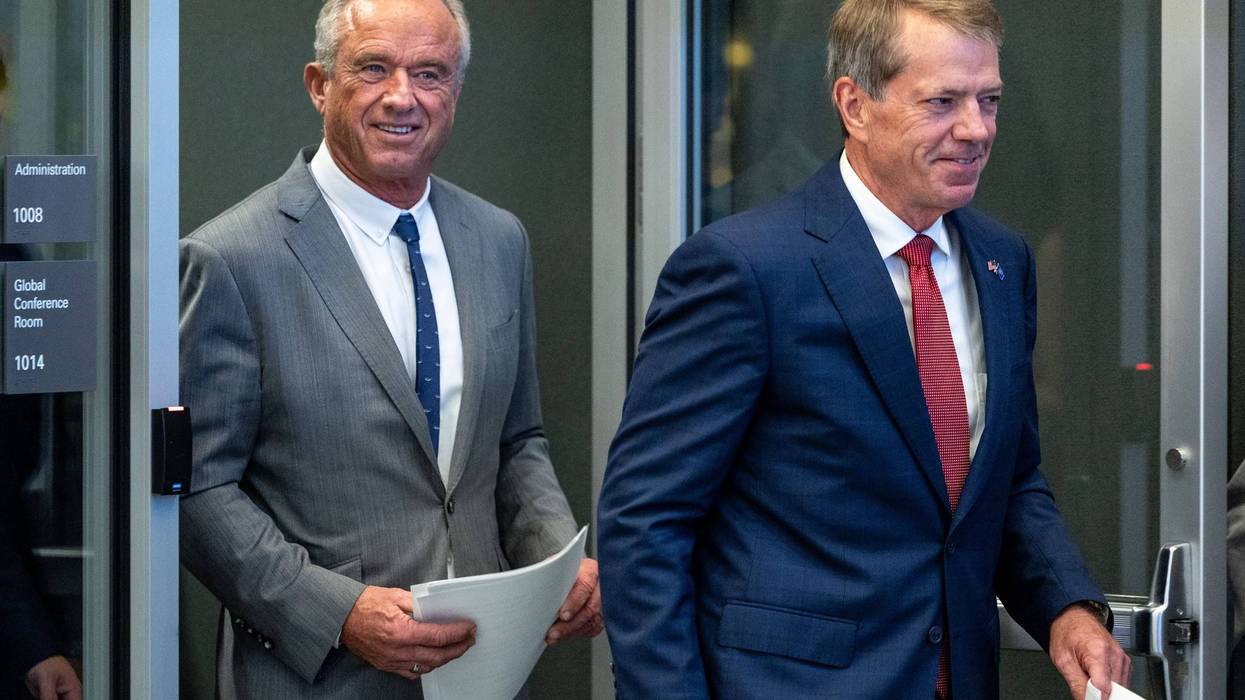
"Medicaid work reporting requirements are a flawed policy if the goal really is to incentivize work, but they are very effective at taking Medicaid coverage away by tangling folks up in red tape," said one expert.
Human rights organizations said Thursday that Nebraska should be seen as a bright red warning sign of what's to come for states across the US as they implement the draconian Medicaid work requirements included in the budget legislation that President Donald Trump signed into law last year.
In early May, Nebraska became the first state to implement the new work reporting mandates, which require certain Medicaid recipients to document at least 80 hours of work or other qualifying activities per month to remain enrolled in the program. Republican Gov. Jim Pillen, announced the state's fast-tracked implementation of the requirements at a celebratory press conference late last year alongside Mehmet Oz, head of the Centers for Medicare and Medicaid Services.
Human Rights Watch (HRW), Oxfam America, and Nebraska Appleseed said in a joint report released Thursday that the rush to impose the mandates has had the predicted results of mass confusion and bureaucratic chaos, previewing what millions of Medicaid recipients across the country can expect in the months ahead.
“Nebraska is the canary in the coal mine for issues that most states will face when they begin implementing these work requirements,” said Matt McConnell, a US researcher on economic, social, and cultural rights at HRW. "As they do, they should make sure red tape doesn’t strip people of healthcare."
The trio of advocacy groups interviewed a dozen Nebraskans who have directly experienced or witnessed the unruly rollout of the expanded work requirements. One 64-year-old man "said he lost his Medicaid coverage while undergoing treatment for kidney cancer and multiple chronic health conditions," the groups noted.
"He said a representative of the health plan that managed his Medicaid coverage informed him he lost access because he was not working, even though he is unable to work due to his condition," the groups added. The man said the loss of Medicaid coverage disrupted his care, including an appointment with a cancer specialist.
The Trump administration has said even people with terminal cancer are not necessarily exempt from the new work reporting requirements.
One Medicaid eligibility worker from the Nebraska Department of Health and Human Services told HRW, Oxfam, and Nebraska Appleseed that "poor training, vague and inconsistent guidance, and technical issues, including unprepared software systems, had caused stress and uncertainty for applicants and for state employees."
“We just sometimes don’t know what we’re doing,” the worker said. "I wish the people who make policies knew what they were doing."
It's unclear exactly how many people have lost Medicaid in Nebraska as a result of the new requirements. Sarah Maresh, healthcare access program director at Nebraska Appleseed, said Thursday that obtaining data from the state has been "like pulling teeth."
"Nebraskans deserve access to this information," said Maresh. "You can’t fix problems you refuse to measure."
Earlier this week, following relentless pressure from advocates, Nebraska's health department released preliminary data showing that more than 1,000 Nebraskans have been deprived of Medicaid coverage due to the expanded work requirements—a figure that's believed to be a significant undercount.
"I have been saying for years that Medicaid work reporting requirements are a flawed policy if the goal really is to incentivize work, but they are very effective at taking Medicaid coverage away by tangling folks up in red tape," Joan Alker, executive director of Georgetown University's Center for Children and Families, wrote in a blog post earlier this week. "Unfortunately, Nebraska’s data only reinforces this point."
Nationwide, millions of people have lost Medicaid coverage since Trump signed the GOP budget package, which includes around $800 billion in cuts to Medicaid over the next decade.
States face a January 1, 2027 deadline to implement the expanded work requirements—though states are allowed to move more quickly. Montana and Arkansas have joined Nebraska in implementing the mandates ahead of the federal deadline, resulting in similar chaos and confusion.
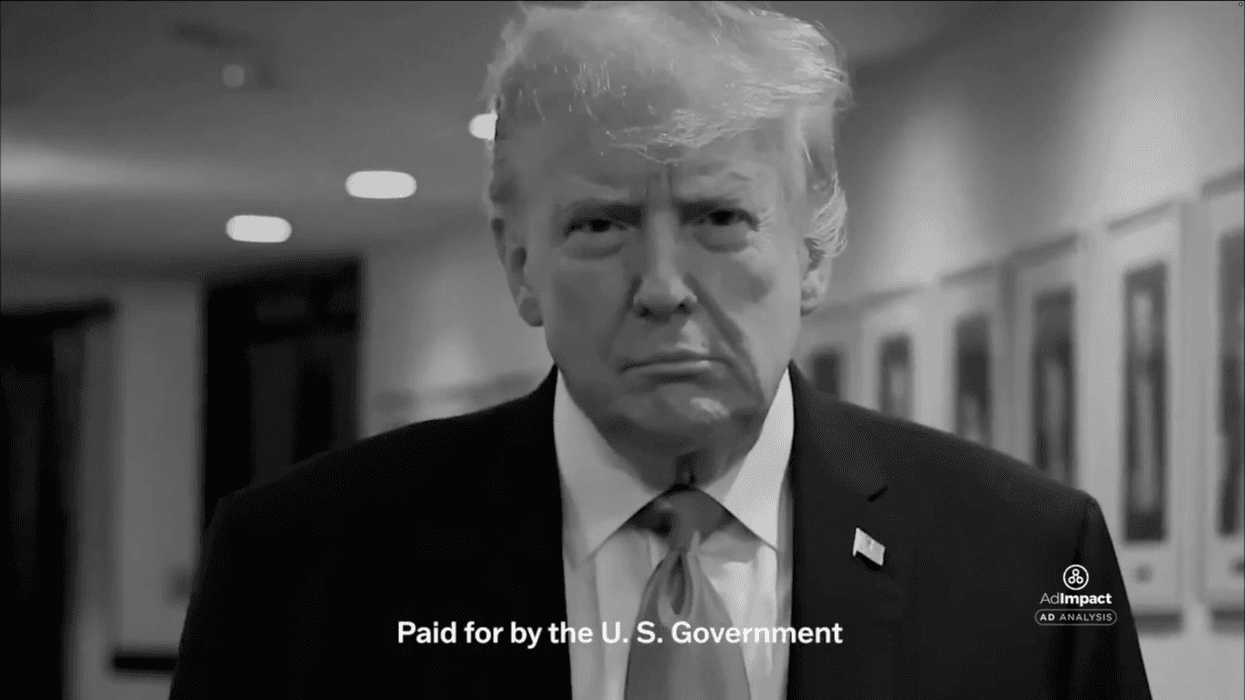
"So your hosts are on air all day saying this is illegal while you are taking the money and running the ads? Just gross," said one MS NOW critic.
CNN and MS NOW are both airing taxpayer-funded ads that promote President Donald Trump, who last month tried to ban the cable news networks from White House grounds.
As The Washington Post reported on Wednesday, two pro-Trump ads have aired on MS NOW and CNN this week in select markets, even though legal experts and government watchdogs say the ads violate laws prohibiting taxpayer funds for political propaganda.
In a statement provided to the Post, MS NOW spokesperson Richard Hudock defended the decision to run the ads.
"We know the size, engagement, and influence of the MS NOW audience, and apparently the White House does, too," said Hudock. "The decision to spend taxpayer dollars to reach our audience speaks for itself."
The MS NOW spokesperson also emphasized that "accepting an advertisement is not an endorsement of its message, and purchasing airtime will never purchase favorable coverage."
This justification drew an angry rebuke from Ron Filipkowski, editor-in-chief of MeidasTouch.
"This is just despicable by MS NOW, which has accepted stolen taxpayers dollars for 38 illegal ads," Filipkowski wrote in a Thursday social media post. "Give me a break with this bullshit statement too. So your hosts are on air all day saying this is illegal while you are taking the money and running the ads? Just gross."
According to a Wednesday report from Status, some MS NOW insiders are "pissed" about the decision to air the Trump ads, with some noting that the network's viewers will "hate" seeing them.
Government watchdog Public Citizen on Tuesday filed complaints with the Federal Communications Commission (FCC) and the Federal Trade Commission (FTC) demanding that the government-funded Trump ads be taken off the air.
However, Trump-appointed Trump FCC Chairman Brendan Carr told reporters on Wednesday that he is not planning any investigation into the ads, which he described as "public service announcements" despite the fact that they feature audio of the president personally vowing to "defeat communism, socialism, and Marxism in America."
"I don’t think there’s anything unique or different about it," said Carr. "There’s nothing in there that strikes me that merit any sort of FCC review."

Rep. Greg Casar said progressives' effort to make a leading artificial intelligence super PAC "as toxic as AIPAC" is having an impact.
The chair of the Congressional Progressive Caucus on Wednesday urged all Democrats to reject campaign cash from billionaires whose wealth stems from the artificial intelligence industry, following news that the president of OpenAI abandoned plans to donate millions more to a super PAC that has funneled money to members of both parties.
The OpenAI executive, Greg Brockman, wrote in an internal message obtained by The New York Times that the super PAC, Leading the Future (LTF), "keeps reflecting on the company and [has] become so much of a distraction for people here." Brockman noted that he and his wife have donated $25 million to the super PAC—which opposes strong AI safety regulations—but "have no plans to donate more at this time."
Rep. Greg Casar (D-Texas), a leading supporter of AI regulation in Congress, said in response to Brockman's message that "the pressure is working."
"Progressives have worked hard to make LTF as toxic as AIPAC," Casar wrote, referring to the American Israel Public Affairs Committee. "Now one of its biggest donors is backing out. Democrats need to stand with the people and reject AI billionaires' money."
Super PACs bankrolled by AI companies and billionaires have become some of the biggest spenders in the 2026 midterms amid widespread voter backlash against the construction of resource-draining AI data centers—and against the industry more broadly.
The Times reported on Tuesday that LTF and Public First Action, which is aligned with the AI firm Anthropic, have spent a combined $52.6 million on "safe seats—those that are unlikely to change party hands but that often feature intense intraparty contests."
"The big AI players have also spent more heavily for Democrats than Republicans," the Times noted. "They have boosted candidates who align with their agendas, helped defeat those they see as hostile to it and ingratiated themselves with front-runners who are likely to be in positions of power in the next Congress to make decisions critical to their bottom lines."
"The Times analysis of federal advertising and campaign outreach expenditures made by the four major super PACs during this cycle showed that they have spent far more money in support of Democrats—$28 million to back 21 Democrats and nearly $19 million to boost 30 Republicans—and that the candidates they backed almost always won," the newspaper added.
The Lever reported last month that a five-person commission on AI convened by House Minority Leader Hakeem Jeffries (D-NY) "is filled with Democrats who have received outsized financial support this election cycle from AI-linked super PACs, executives, and investors."
Reps. Ted Lieu (D-Calif.), Valerie Foushee (D-NC), Josh Gottheimer (D-NJ), Frank Pallone Jr. (D-NJ), and Zoe Lofgren (D-Calif.) are the commission's members.
"The spending seems intended to shape the party’s policy response to AI, particularly if Democrats win a majority in November," The Lever observed.
Earlier this week, US President Donald Trump met with leading AI industry executives who have collectively donated more than $220 million to his super PAC and other projects associated with the president, according to a new analysis by the advocacy group Public Citizen. Trump said following the meeting that the AI industry shouldn't have any government guardrails and should be allowed to police itself because "they love our country."
"Big Tech executives have effectively bought themselves a seat at the AI regulatory table," said Robert Weissman, co-president of Public Citizen. "Actually, they have bought the table. As a result, as public anxieties about AI risks—to children, political integrity, jobs, the environment—skyrocket, and as revelations mount of AI company failures to impose adequate safeguards on their own technologies, the Trump administration delivers meaningless agreements that impose no restraints on the out-of-control tech oligarchs."
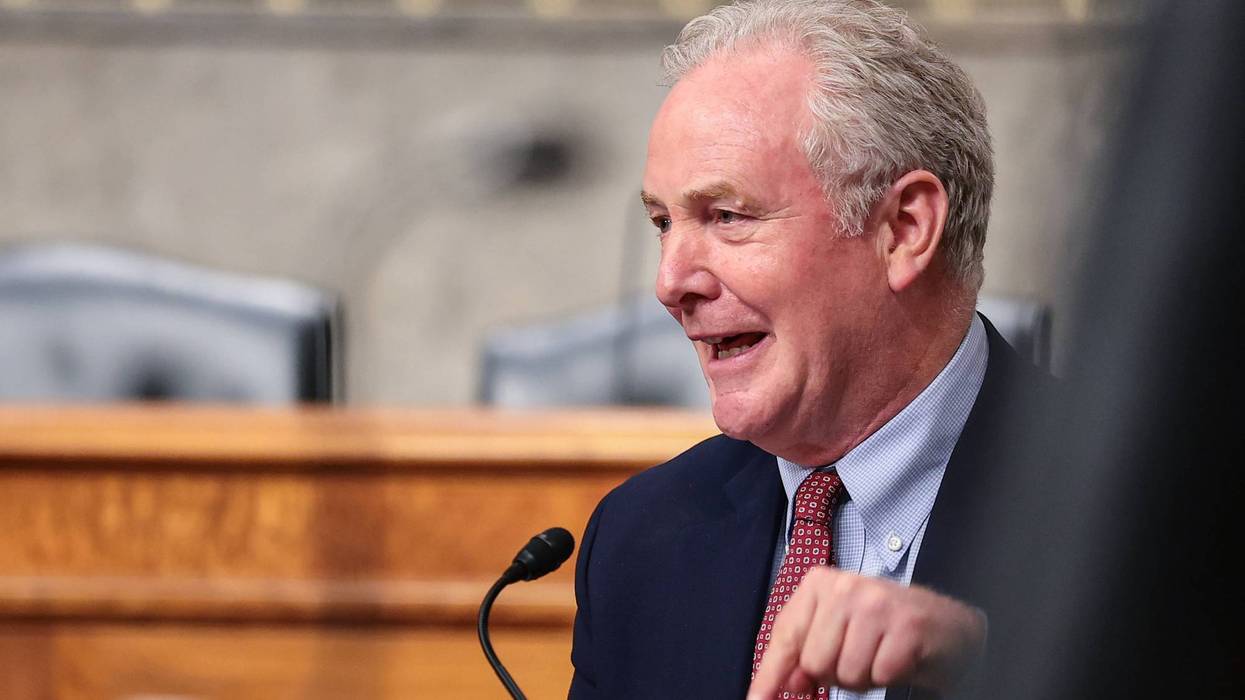
"This measure was a ruse, promoted by House Speaker Mike Johnson, to make it appear that congressional Republicans were tackling an ethical quagmire when, in fact, it would have accomplished very little."
Democrats in the Senate have blocked what they described as a loophole-laden Republican-led bill to ban members of Congress from purchasing stocks.
Sen. Tom Cotton (R-Ark.) blasted his Democratic colleagues on Wednesday after they declined to give the votes necessary to advance the bill—known as the Stop Insider Trading Act—past the Senate filibuster.
"The Democrats who blocked it went back on their word to protect their own wallets—they should be ashamed of themselves," Cotton said.
But Democrats described the bill, which passed the Republican-controlled House of Representatives in July, as a sham. Sen. Dick Durbin (D-Ill.) said the bill "does not adequately ban congressional stock trading," and described it as "meaningless messaging."
While the bill would have prohibited members of Congress, their spouses, and dependent children from buying stocks, it would not have required them to divest the hundreds of millions of dollars worth of stock they already own.
It also would have exempted President Donald Trump and other executive branch employees. During his second term in office, Trump has made around 30,000 securities trades since returning to office. Bloomberg estimated, based on public disclosures, that he'd made more than 21,000 trades worth between $600 million and $1.86 billion in 2025 alone.
The bill passed by House Republicans also attached a national photo ID requirement for voting as well as additional identification requirements for vote-by-mail, which voting rights advocates argued could disenfranchise millions of eligible voters who do not possess a valid photo ID.
"This measure was a ruse, promoted by House Speaker Mike Johnson (R-La.), to make it appear that congressional Republicans were tackling an ethical quagmire when, in fact, it would have accomplished very little," said Craig Holman, government affairs lobbyist for Public Citizen.
Democrats have argued that the watered-down Republican proposal was meant to sap momentum from stronger bills, amid broad public demand for a stock trading ban.
Holman noted that "there was serious legislation to stop congressional insider trading, but Johnson would not bring up any of the serious proposals for a floor vote."
A bipartisan bill that has stalled in the House would have required members of Congress to divest stock they currently own. Meanwhile, the GOP-controlled House Rules Committee blocked a Democratic proposal that would have made the president and vice president subject to the ban.
"Let’s be clear: I support a total ban on Congress members trading stock," said Sen. Chris Van Hollen (D-Md.) on Wednesday. "But Republicans are trying to package a fraudulent version of that with a bill to disenfranchise American voters."
"This is politics at its worst," he said. "Put a real ban on the floor if you’re serious."
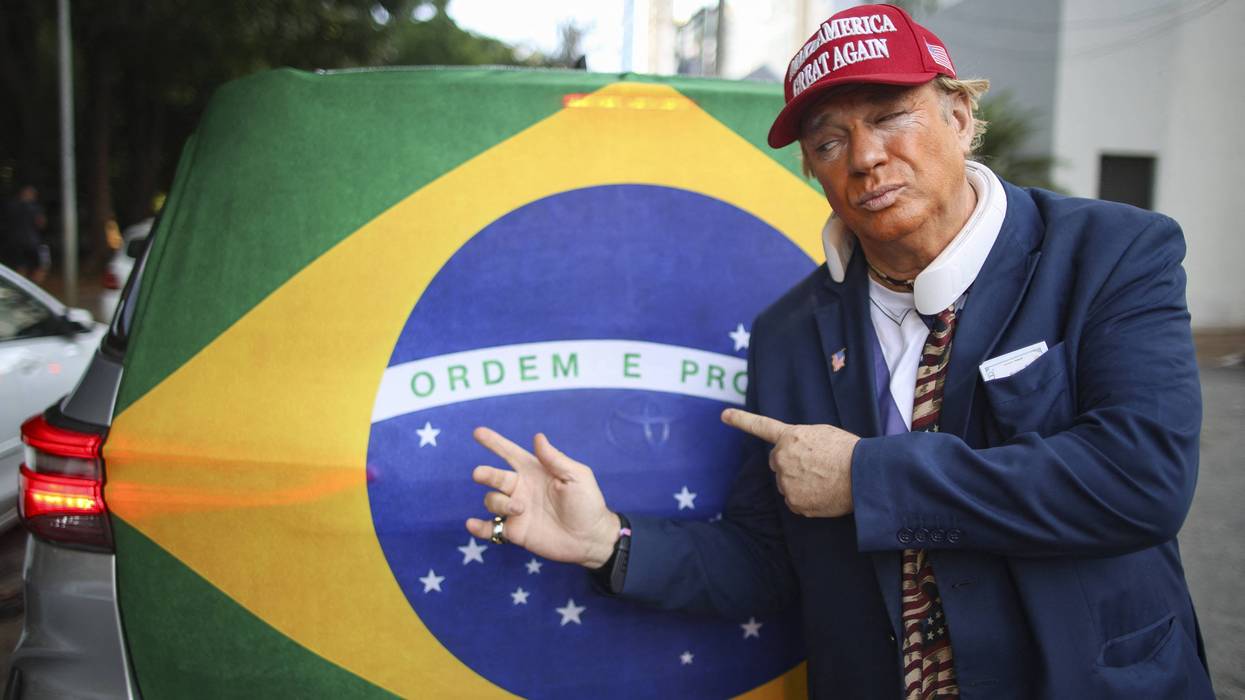
"The Trump-Rubio interventions, with the collaboration of the Bolsonaro clan, have made the Flávio campaign into another US regime change operation. This should be defeated."
Brazilian officials, pro-democracy advocates, and US lawmakers are growing increasingly concerned about apparent efforts by President Donald Trump and Secretary of State Marco Rubio to interfere in the Latin American country's upcoming election.
Reuters reported Wednesday that Brazil's spy agency "confirmed the existence of interference from the United States as well as Russia" in the presidential election, the first round of which will take place on October 4. Brazilian President Luiz Inácio Lula da Silva is running for reelection against Sen. Flavio Bolsonaro, the son of former far-right President Jair Bolsonaro—who is currently serving a 27-year prison sentence under house arrest for orchestrating a coup attempt in 2022.
Democratic lawmakers in the US have raised alarm about the Trump administration's election meddling in Brazil in recent days as the contest approaches. Earlier this week, Democratic Sens. Jeanne Shaheen (NH), Peter Welch (Vt.), and Tim Kaine (Va.) wrote in a letter to Rubio that "over the course of President Trump’s second term, we have seen US officials engage in a campaign of interference and destabilization in Brazil."
"The administration’s most recent actions point toward an effort to interfere with, and potentially undermine, Brazil's general election in October," the lawmakers wrote. "Senator and presidential candidate Flávio Bolsonaro’s recent Oval Office meeting with President Trump, undertaken while attempting to mitigate a domestic political scandal, underscores the administration's willingness to insert itself in the election."
The senators' letter followed a separate demand by more than 30 Democrats in the US House that Rubio "confirm whether the administration will commit to respecting Brazil’s electoral process and to recognizing its certified outcome." The House Democrats demanded a response from the Trump administration by October 1.
"Particularly given the tragic history of US involvement in the 1964 military coup against Brazil’s democratically elected government at the time, as well as subsequent US support for the resulting military dictatorship," the lawmakers wrote, "the United States has a responsibility to support the democratic institutions that so many Brazilians, across generations, struggled to build."
Trump has been a vocal defender of Flávio Bolsonaro's father, saying he is "not guilty of anything" and describing his prosecution as a "witch hunt"—echoing Trump's attack on investigations into his own effort to subvert the 2020 election in the US. Last year, Trump hit Brazil with a 40% tariff, accusing the country's leaders of "persecuting former President of Brazil Jair Bolsonaro."
"It was not just a trade maneuver," political scientist Octavio Amorim Neto said of the tariff in an interview published Thursday, noting that "Bolsonarism explicitly applauded [Trump's economic attack], while Brazil’s traditional right did not vigorously defend national sovereignty, saying that everything was Lula’s fault."
Over the summer, Brazil denied visas to two top US State Department officials "whom the Trump administration planned to dispatch on a mission to cast doubt on the fairness and integrity of the country’s electoral system," The Washington Post reported in July.
Mark Weisbrot, co-director of the Center for Economic and Policy Research, wrote in an op-ed for The Los Angeles Times earlier this week that Trump’s intervention in Brazil's electoral process "undermines a basic and generally cherished right to self-determination, as well as the right to democracy itself."
"It is even clearly illegal under the Charter of the Organization of American States, to which the United States is a signatory," wrote Weisbrot. "The Trump-Rubio interventions, with the collaboration of the Bolsonaro clan, have made the Flávio campaign into another US regime change operation. This should be defeated, for the sake of Brazil and the whole hemisphere."
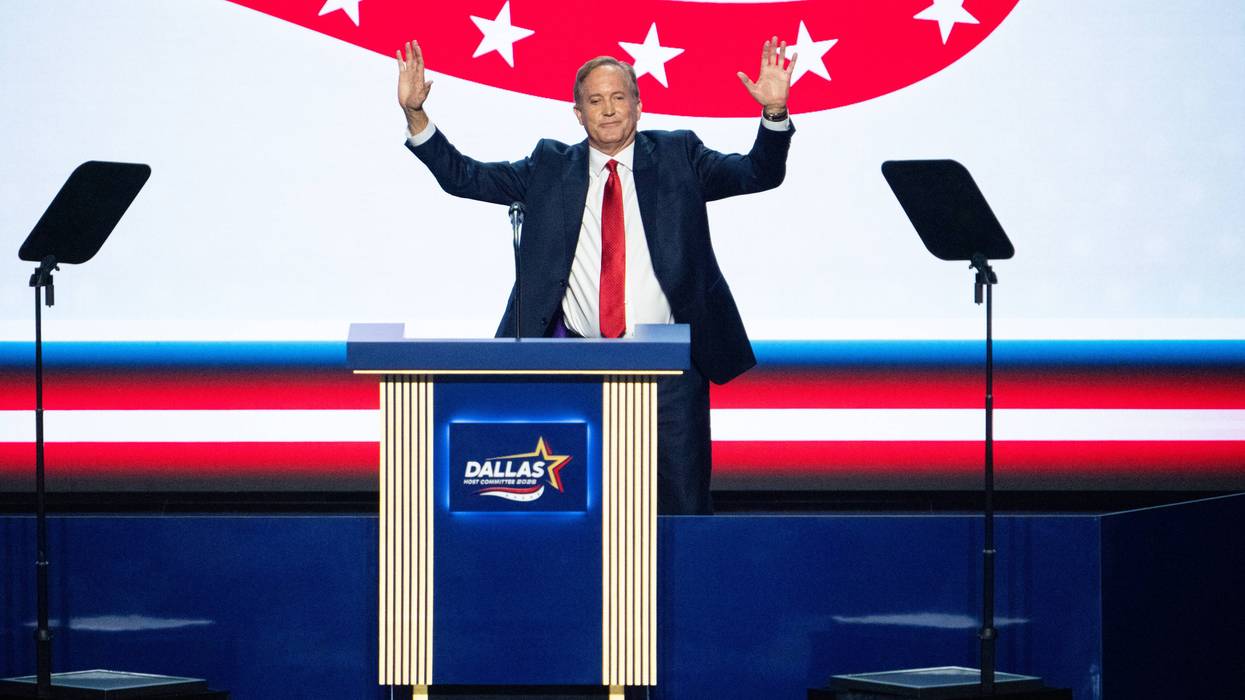
"If there’s one big no-no with Donald Trump, it’s insulting a big ostentatious event that he puts on," said one observer.
Texas Republican US Senate nominee Ken Paxton privately conceded that President Donald Trump's big "Trumpapalooza" midterm convention in the state backfired politically.
The New York Times on Wednesday published a leaked recording of Paxton telling right-wing donors and lobbyists last week that Trump's convention, held earlier this month in Dallas, was a net negative for his campaign.
"The numbers—when we did that convention—it dropped our numbers," Paxton said at one point. "Everybody’s numbers dropped. Right now, yeah, not good."
Delicious 🤣🍿 pic.twitter.com/iE3mT6gGEF https://t.co/63G5gBO1wl
— Wu Tang is for the Children (@WUTangKids) September 30, 2026
The Times report noted that Paxton not only attended the Dallas convention, but featured prominently in it, occupying a "prime seat" in the arena.
Paxton, who will face Democratic nominee James Talarico in November, is also receiving significant help from Trump's MAGA Inc. super political action committee, which is spending $20 million to boost his candidacy.
Jake Sherman, founder of Punchbowl News, remarked in a social media post that the leaked audio is "not good for Paxton," as the Texas Republican is not only "trashing Trump in a fundraiser," but "also trying to shift blame for his bad numbers."
Zenith Polls founder Adam Carlson similarly predicted that Paxton's remarks would get him into hot water with Trump.
"If there’s one big no-no with Donald Trump, it’s insulting a big ostentatious event that he puts on," Carlson explained. "Whether or not this draws his direct public ire, Paxton needs Trump, Trump-aligned super PAC money, and die-hard Trump voters to pull off the win. This could jeopardize all of that."
The social media account of the Texas Democratic Party jumped on the story, arguing that "Paxton has a history of defrauding and betraying Texans," and thus "it was only a matter of time before he betrayed Trump."
Democratic National Committee Chair Ken Martin took the opportunity to ridicule Republicans for basing their 2026 midterm campaign around the president, whom polls show has a job approval rating under 40%.
"They put Trump on full display and now they’re shocked voters noticed," Martin wrote. "We told you the guy was an anchor. Thanks for insisting on tying him around the neck of every Republican on the ballot."
Sen. Adam Schiff (D-Calif.) also took a dig at the president, writing that the leaked Paxton audio shows "the Emperor has no coattails."