SUBSCRIBE TO OUR FREE NEWSLETTER
Daily news & progressive opinion—funded by the people, not the corporations—delivered straight to your inbox.
5
#000000
#FFFFFF
To donate by check, phone, or other method, see our More Ways to Give page.
Daily news & progressive opinion—funded by the people, not the corporations—delivered straight to your inbox.
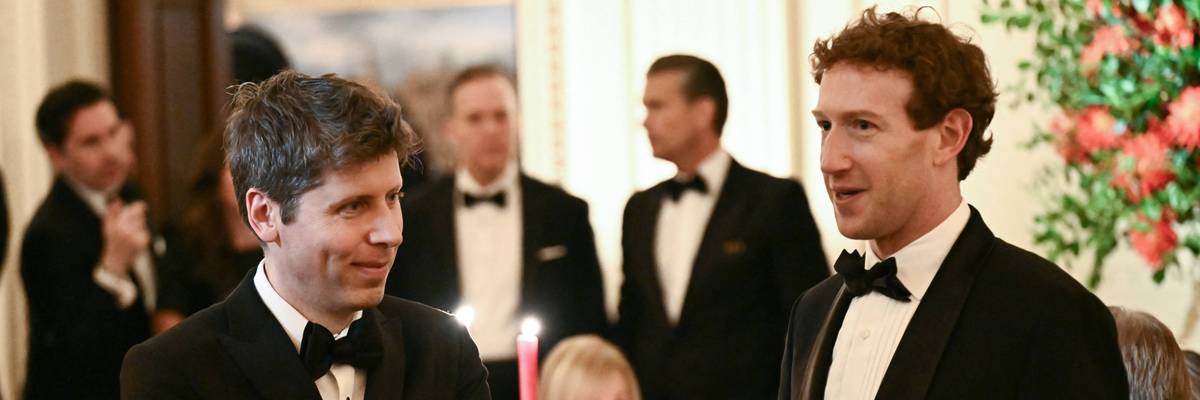
OpenAI CEO Sam Altman and Meta CEO Mark Zuckerberg attend a state dinner hosted by President Donald Trump on September 24, 2026.
Rep. Greg Casar said progressives' effort to make a leading artificial intelligence super PAC "as toxic as AIPAC" is having an impact.
The chair of the Congressional Progressive Caucus on Wednesday urged all Democrats to reject campaign cash from billionaires whose wealth stems from the artificial intelligence industry, following news that the president of OpenAI abandoned plans to donate millions more to a super PAC that has funneled money to members of both parties.
The OpenAI executive, Greg Brockman, wrote in an internal message obtained by The New York Times that the super PAC, Leading the Future (LTF), "keeps reflecting on the company and [has] become so much of a distraction for people here." Brockman noted that he and his wife have donated $25 million to the super PAC—which opposes strong AI safety regulations—but "have no plans to donate more at this time."
Rep. Greg Casar (D-Texas), a leading supporter of AI regulation in Congress, said in response to Brockman's message that "the pressure is working."
"Progressives have worked hard to make LTF as toxic as AIPAC," Casar wrote, referring to the American Israel Public Affairs Committee. "Now one of its biggest donors is backing out. Democrats need to stand with the people and reject AI billionaires' money."
Super PACs bankrolled by AI companies and billionaires have become some of the biggest spenders in the 2026 midterms amid widespread voter backlash against the construction of resource-draining AI data centers—and against the industry more broadly.
The Times reported on Tuesday that LTF and Public First Action, which is aligned with the AI firm Anthropic, have spent a combined $52.6 million on "safe seats—those that are unlikely to change party hands but that often feature intense intraparty contests."
"The big AI players have also spent more heavily for Democrats than Republicans," the Times noted. "They have boosted candidates who align with their agendas, helped defeat those they see as hostile to it and ingratiated themselves with front-runners who are likely to be in positions of power in the next Congress to make decisions critical to their bottom lines."
"The Times analysis of federal advertising and campaign outreach expenditures made by the four major super PACs during this cycle showed that they have spent far more money in support of Democrats—$28 million to back 21 Democrats and nearly $19 million to boost 30 Republicans—and that the candidates they backed almost always won," the newspaper added.
The Lever reported last month that a five-person commission on AI convened by House Minority Leader Hakeem Jeffries (D-NY) "is filled with Democrats who have received outsized financial support this election cycle from AI-linked super PACs, executives, and investors."
Reps. Ted Lieu (D-Calif.), Valerie Foushee (D-NC), Josh Gottheimer (D-NJ), Frank Pallone Jr. (D-NJ), and Zoe Lofgren (D-Calif.) are the commission's members.
"The spending seems intended to shape the party’s policy response to AI, particularly if Democrats win a majority in November," The Lever observed.
Earlier this week, US President Donald Trump met with leading AI industry executives who have collectively donated more than $220 million to his super PAC and other projects associated with the president, according to a new analysis by the advocacy group Public Citizen. Trump said following the meeting that the AI industry shouldn't have any government guardrails and should be allowed to police itself because "they love our country."
"Big Tech executives have effectively bought themselves a seat at the AI regulatory table," said Robert Weissman, co-president of Public Citizen. "Actually, they have bought the table. As a result, as public anxieties about AI risks—to children, political integrity, jobs, the environment—skyrocket, and as revelations mount of AI company failures to impose adequate safeguards on their own technologies, the Trump administration delivers meaningless agreements that impose no restraints on the out-of-control tech oligarchs."
Dear Common Dreams reader, It’s been nearly 30 years since I co-founded Common Dreams with my late wife, Lina Newhouser. We had the radical notion that journalism should serve the public good, not corporate profits. It was clear to us from the outset what it would take to build such a project. No paid advertisements. No corporate sponsors. No millionaire publisher telling us what to think or do. Many people said we wouldn't last a year, but we proved those doubters wrong. Together with a tremendous team of journalists and dedicated staff, we built an independent media outlet free from the constraints of profits and corporate control. Our mission has always been simple: To inform. To inspire. To ignite change for the common good. Building Common Dreams was not easy. Our survival was never guaranteed. When you take on the most powerful forces—Wall Street greed, fossil fuel industry destruction, Big Tech lobbyists, and uber-rich oligarchs who have spent billions upon billions rigging the economy and democracy in their favor—the only bulwark you have is supporters who believe in your work. But here’s the urgent message from me today. It's never been this bad out there. And it's never been this hard to keep us going. At the very moment Common Dreams is most needed, the threats we face are intensifying. We need your support now more than ever. We don't accept corporate advertising and never will. We don't have a paywall because we don't think people should be blocked from critical news based on their ability to pay. Everything we do is funded by the donations of readers like you. When everyone does the little they can afford, we are strong. But if that support retreats or dries up, so do we. Will you donate now to make sure Common Dreams not only survives but thrives? —Craig Brown, Co-founder |
The chair of the Congressional Progressive Caucus on Wednesday urged all Democrats to reject campaign cash from billionaires whose wealth stems from the artificial intelligence industry, following news that the president of OpenAI abandoned plans to donate millions more to a super PAC that has funneled money to members of both parties.
The OpenAI executive, Greg Brockman, wrote in an internal message obtained by The New York Times that the super PAC, Leading the Future (LTF), "keeps reflecting on the company and [has] become so much of a distraction for people here." Brockman noted that he and his wife have donated $25 million to the super PAC—which opposes strong AI safety regulations—but "have no plans to donate more at this time."
Rep. Greg Casar (D-Texas), a leading supporter of AI regulation in Congress, said in response to Brockman's message that "the pressure is working."
"Progressives have worked hard to make LTF as toxic as AIPAC," Casar wrote, referring to the American Israel Public Affairs Committee. "Now one of its biggest donors is backing out. Democrats need to stand with the people and reject AI billionaires' money."
Super PACs bankrolled by AI companies and billionaires have become some of the biggest spenders in the 2026 midterms amid widespread voter backlash against the construction of resource-draining AI data centers—and against the industry more broadly.
The Times reported on Tuesday that LTF and Public First Action, which is aligned with the AI firm Anthropic, have spent a combined $52.6 million on "safe seats—those that are unlikely to change party hands but that often feature intense intraparty contests."
"The big AI players have also spent more heavily for Democrats than Republicans," the Times noted. "They have boosted candidates who align with their agendas, helped defeat those they see as hostile to it and ingratiated themselves with front-runners who are likely to be in positions of power in the next Congress to make decisions critical to their bottom lines."
"The Times analysis of federal advertising and campaign outreach expenditures made by the four major super PACs during this cycle showed that they have spent far more money in support of Democrats—$28 million to back 21 Democrats and nearly $19 million to boost 30 Republicans—and that the candidates they backed almost always won," the newspaper added.
The Lever reported last month that a five-person commission on AI convened by House Minority Leader Hakeem Jeffries (D-NY) "is filled with Democrats who have received outsized financial support this election cycle from AI-linked super PACs, executives, and investors."
Reps. Ted Lieu (D-Calif.), Valerie Foushee (D-NC), Josh Gottheimer (D-NJ), Frank Pallone Jr. (D-NJ), and Zoe Lofgren (D-Calif.) are the commission's members.
"The spending seems intended to shape the party’s policy response to AI, particularly if Democrats win a majority in November," The Lever observed.
Earlier this week, US President Donald Trump met with leading AI industry executives who have collectively donated more than $220 million to his super PAC and other projects associated with the president, according to a new analysis by the advocacy group Public Citizen. Trump said following the meeting that the AI industry shouldn't have any government guardrails and should be allowed to police itself because "they love our country."
"Big Tech executives have effectively bought themselves a seat at the AI regulatory table," said Robert Weissman, co-president of Public Citizen. "Actually, they have bought the table. As a result, as public anxieties about AI risks—to children, political integrity, jobs, the environment—skyrocket, and as revelations mount of AI company failures to impose adequate safeguards on their own technologies, the Trump administration delivers meaningless agreements that impose no restraints on the out-of-control tech oligarchs."
The chair of the Congressional Progressive Caucus on Wednesday urged all Democrats to reject campaign cash from billionaires whose wealth stems from the artificial intelligence industry, following news that the president of OpenAI abandoned plans to donate millions more to a super PAC that has funneled money to members of both parties.
The OpenAI executive, Greg Brockman, wrote in an internal message obtained by The New York Times that the super PAC, Leading the Future (LTF), "keeps reflecting on the company and [has] become so much of a distraction for people here." Brockman noted that he and his wife have donated $25 million to the super PAC—which opposes strong AI safety regulations—but "have no plans to donate more at this time."
Rep. Greg Casar (D-Texas), a leading supporter of AI regulation in Congress, said in response to Brockman's message that "the pressure is working."
"Progressives have worked hard to make LTF as toxic as AIPAC," Casar wrote, referring to the American Israel Public Affairs Committee. "Now one of its biggest donors is backing out. Democrats need to stand with the people and reject AI billionaires' money."
Super PACs bankrolled by AI companies and billionaires have become some of the biggest spenders in the 2026 midterms amid widespread voter backlash against the construction of resource-draining AI data centers—and against the industry more broadly.
The Times reported on Tuesday that LTF and Public First Action, which is aligned with the AI firm Anthropic, have spent a combined $52.6 million on "safe seats—those that are unlikely to change party hands but that often feature intense intraparty contests."
"The big AI players have also spent more heavily for Democrats than Republicans," the Times noted. "They have boosted candidates who align with their agendas, helped defeat those they see as hostile to it and ingratiated themselves with front-runners who are likely to be in positions of power in the next Congress to make decisions critical to their bottom lines."
"The Times analysis of federal advertising and campaign outreach expenditures made by the four major super PACs during this cycle showed that they have spent far more money in support of Democrats—$28 million to back 21 Democrats and nearly $19 million to boost 30 Republicans—and that the candidates they backed almost always won," the newspaper added.
The Lever reported last month that a five-person commission on AI convened by House Minority Leader Hakeem Jeffries (D-NY) "is filled with Democrats who have received outsized financial support this election cycle from AI-linked super PACs, executives, and investors."
Reps. Ted Lieu (D-Calif.), Valerie Foushee (D-NC), Josh Gottheimer (D-NJ), Frank Pallone Jr. (D-NJ), and Zoe Lofgren (D-Calif.) are the commission's members.
"The spending seems intended to shape the party’s policy response to AI, particularly if Democrats win a majority in November," The Lever observed.
Earlier this week, US President Donald Trump met with leading AI industry executives who have collectively donated more than $220 million to his super PAC and other projects associated with the president, according to a new analysis by the advocacy group Public Citizen. Trump said following the meeting that the AI industry shouldn't have any government guardrails and should be allowed to police itself because "they love our country."
"Big Tech executives have effectively bought themselves a seat at the AI regulatory table," said Robert Weissman, co-president of Public Citizen. "Actually, they have bought the table. As a result, as public anxieties about AI risks—to children, political integrity, jobs, the environment—skyrocket, and as revelations mount of AI company failures to impose adequate safeguards on their own technologies, the Trump administration delivers meaningless agreements that impose no restraints on the out-of-control tech oligarchs."