

SUBSCRIBE TO OUR FREE NEWSLETTER
Daily news & progressive opinion—funded by the people, not the corporations—delivered straight to your inbox.
5
#000000
#FFFFFF
To donate by check, phone, or other method, see our More Ways to Give page.
Daily news & progressive opinion—funded by the people, not the corporations—delivered straight to your inbox.
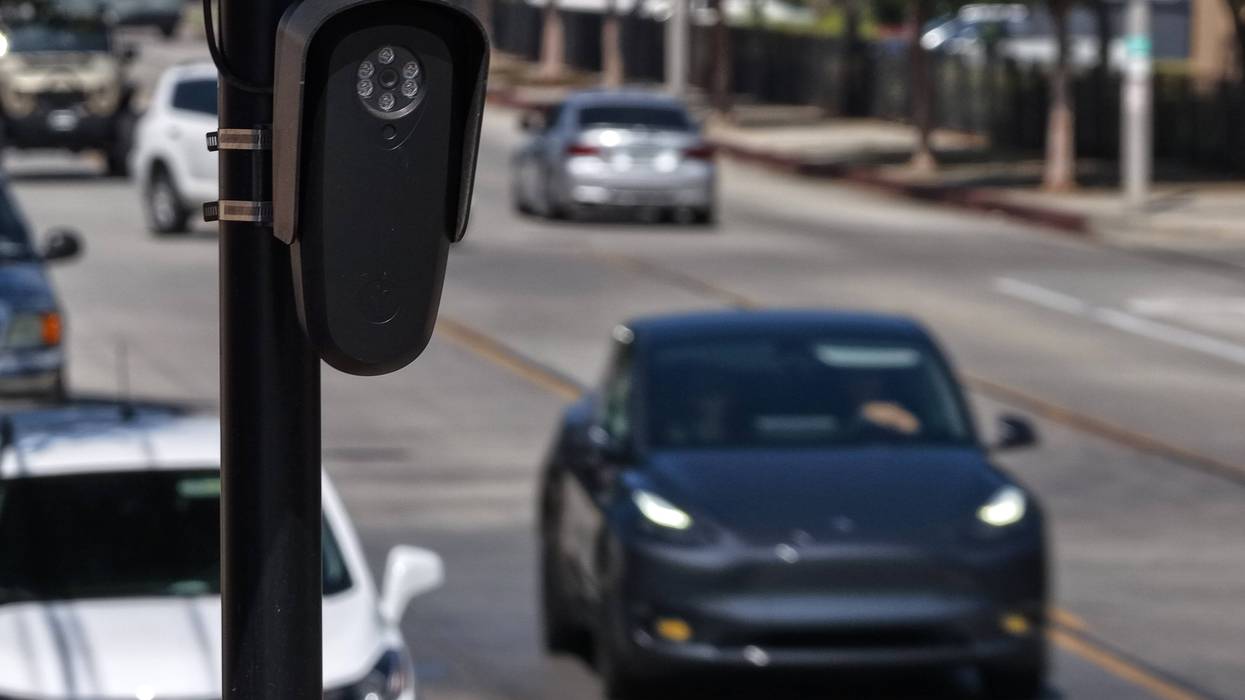
“Flock’s technology isn’t making us safer," the Michigan congresswoman said. "Instead, it has been used to stalk people, misidentify and arrest innocent people, surveil protestors, and wrongfully record our neighbors."
Amid what she called a "mass surveillance crisis," US Rep. Rashida Tlaib announced legislation on Wednesday to ban the use of federal funds for powerful dragnet spying systems—including the automated license plate-reading cameras manufactured by Flock Safety.
Flock has quickly grown into a massive nationwide surveillance network with more than 120,000 of its artificial intelligence-powered cameras installed across 49 states, allowing law enforcement agencies to track and reconstruct Americans' movements, often without warrants.
While supporters describe Flock cameras as a tool to help police solve crimes, there is little evidence that they actually reduce it. There are also many documented cases of cops using the technology to stalk romantic partners, track women who've had abortions, monitor First Amendment-protected protests, and surveil people on behalf of US Immigration and Customs Enforcement (ICE) as part of its mass deportation push.
“Flock’s technology isn’t making us safer," Tlaib (D-Mich.) said in a statement on Wednesday. "Instead, it has been used to stalk people, misidentify and arrest innocent people, surveil protesters, and wrongfully record our neighbors. My bill would prevent our government on all levels from selling us out to Big Tech companies that trample our civil rights for profit.”
The bill, titled the Get the Flock Out of Our Communities Act, is co-sponsored by Reps. Sylvia Garcia (D-Texas), Summer Lee (D-Pa.), Ilhan Omar (D-Minn.), Delia Ramirez (D-Ill.), Nydia Velázquez (D-NY), and Bonnie Watson Coleman (D-NJ).
It is part of a growing wave of bipartisan efforts to restrict the use of Flock cameras and other surveillance tech. Reps. Thomas Massie (R-Ky.) and Greg Steube (R-Fla.), along with Rep. Alexandria Ocasio-Cortez, have introduced legislation to limit government use or funding of automated license plate readers, while Sen. Josh Hawley (R-Mo.) has proposed limits on data collection.
Tlaib's legislation would go further. Its restrictions would also extend beyond license plate readers to other "mass surveillance systems," such as those that employ facial recognition technology and biometric tracking.
It would not only prohibit federal, state, and local governments from using federal funds to purchase, operate, or access automated mass surveillance systems; it would also make state and local governments ineligible for certain federal law enforcement grants unless they stop operating or accessing mass surveillance networks that already exist.
Federal agencies would also be barred from using data derived from these systems, and they'd be required to delete certain data that has already been gathered.
The full extent to which Flock cameras are funded with federal dollars is unknown. But the company itself has identified several federal grant programs that local police departments can apply for to purchase the cameras.
"Federal funds should be used to invest in our communities in real safety solutions. We need good jobs, affordable homes, clean water, and reliable electricity. That’s what’s going to make us safer," Tlaib said at a news conference Wednesday. "Instead, our government is sacrificing our rights to big tech companies that care more about their profits, selling our data, than about our safety."
Tlaib's bill comes as backlash to Flock cameras grows around the country. A recent Data for Progress poll showed 52% of voters viewed Flock cameras unfavorably, while more than 200 cities and counties have canceled their contracts with the company.
“People everywhere are starting to recognize that conflating surveillance with safety makes communities less safe,” said Tawana Petty, a digital and data justice organizer from Detroit. “The persistent abuse of Flock cameras and other surveillance systems by law enforcement agencies across the United States, and the lack of transparency by the companies that market them, has caused an awakening among residents and city government agencies who are ridding themselves of the technologies."
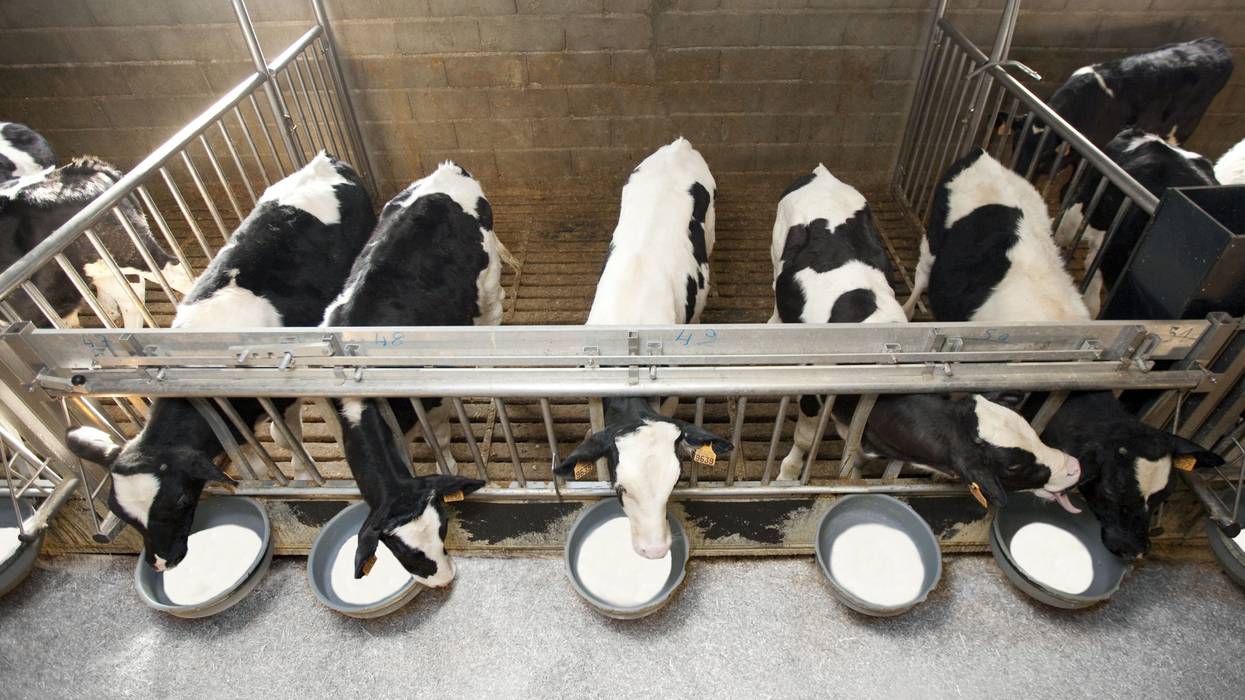
Federal agencies are protecting abusive industries while monitoring decent members of the public, hoping that we turn a blind eye to their assault on democracy and civil liberties.
The US government is rapidly installing Flock cameras and expanding the use of drones to follow the movements of ordinary people. A recent YouGov survey reveals that more Americans oppose such surveillance than support it, and yet, the government continues to track its citizens—while simultaneously bowing to Big Ag’s demands to ban drone footage and undercover investigations on factory farms.
Federal agencies are protecting abusive industries while monitoring decent members of the public, hoping that we turn a blind eye to their assault on democracy and civil liberties.
We have a right to personal privacy and to information that directly impacts our daily lives, including the truth about the food on our tables. In addition to animal agriculture’s irresponsible use of antibiotics, which contributes to the development of more virulent strains of pathogens, diet-related diseases cost our nation hundreds of billions of dollars every year. We could alleviate immense suffering by holding agribusiness accountable for the harm it causes and making needed reforms.
Instead of surveilling the everyday lives of Americans, our government should focus its cameras on industries that cause harm.
Americans are told that Flock cameras can be used to apprehend animal abusers, yet the industries responsible for the suffering of billions of animals are granted immunity. The majority of Americans are opposed to many of the cruel and painful practices routinely inflicted upon animals in our food system, and yet these practices are allowed to continue behind the closed doors of factory farms. We are told that constant monitoring is necessary for “public safety,” and yet the companies responsible for environmental destruction, worker exploitation, and threats to public health remain shielded from scrutiny. These double standards undermine transparency and erode trust, and it’s especially concerning when powerful individuals and institutions whose conduct is an affront to societal values are allowed to weaponize surveillance against their critics.
Flock cameras and emerging technologies could be used to manipulate narratives, confuse citizens, and silence critics, but factory farm operatives have been doing this for decades. It’s revealing to consider how much time and effort they’ve invested in concealing their misdeeds. They’ve passed “Ag-Gag” laws to criminalize whistleblowing and investigations that have exposed their cruelty. They’ve sued individuals, including Oprah Winfrey, for expressing concerns about irresponsible agricultural practices. And, they’ve labeled well-meaning animal rights and environmental advocates as “terrorists,” including in federal legislation entitled “The Animal Enterprise Terrorism Act.”
Powerful interests wield immense influence in the government and through technology and media platforms. These can be used to distract our attention and also to manipulate public opinion. They make it difficult to obtain factual information, and actively work to marginalize, scapegoat, and punish those who ask questions. This is not how civil society should work. Democratic institutions are supposed to value transparency and accountability and uphold basic standards that prevent abuses of power.
As digital tools become more central in daily life, we’re seeing shifts in how people connect, with stories shared through our phones increasingly shaping our beliefs and behavior. The recent interest in ever-increasing protein consumption, coupled with negative impressions people have of “fake” meat, is not a coincidence. The truth is that real meat comes from real animals who experience real suffering in intolerable conditions that are kept hidden from us.
Instead of surveilling the everyday lives of Americans, our government should focus its cameras on industries that cause harm, so at the very least, we can make informed decisions.
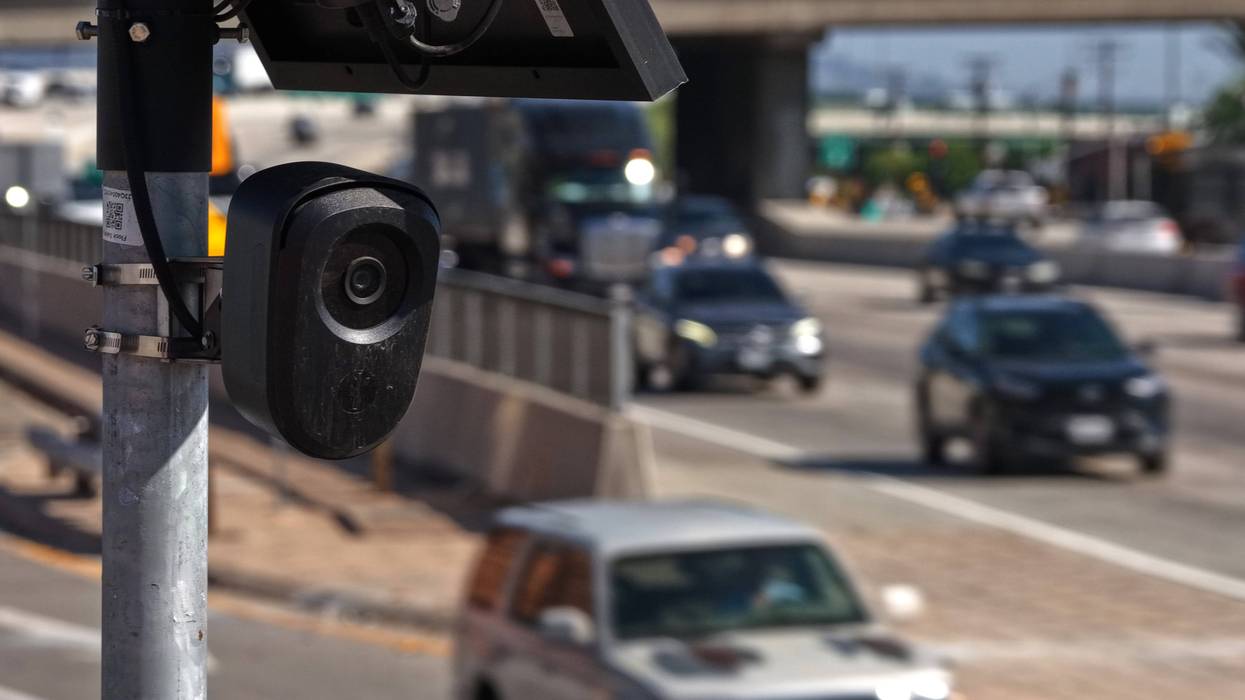
"AI-powered cameras are keeping track of our every move and weaponizing this data against working people to make record profits," said Rep. Alexandria Ocasio-Cortez.
Sen. Bernie Sanders and Rep. Alexandria Ocasio-Cortez introduced legislation on Friday that would crack down on artificial intelligence-powered Flock cameras increasingly used—and abused—by law enforcement agencies across the United States to track and log vehicle data.
Sanders (I-Vt.) said in an interview with The Washington Post, which was first to report on the new legislation, that the US is "moving toward a surveillance state where a handful of giant companies make huge profits by giving the government, by selling to the government, the power to track our every move."
According to a summary released by Sanders' office the Ban Flock Act would bar the federal government from using automatic license plate readers (ALPR) or accessing the information that they gather. The legislation would also halt federal grant funding to state and local governments that use ALPRs and allow Americans to "sue the federal government for violation of their rights through the use of automatic license plate readers."
Sen. Jeff Merkley (D-Ore.), who joined Sanders and Ocasio-Cortez (D-NY) in sponsoring the legislation, said in a statement that the maker of Flock cameras, Flock Safety, is "selling its cameras nationwide, laying the groundwork for a surveillance state while enriching corporate executives."
"Your right to privacy includes the freedom to move around your community without every move being monitored,” said Merkley. "No one should have this unchecked surveillance power at their fingertips, which is why I’m teaming up with Sen. Sanders to rein in this dangerous technology."
Ocasio-Cortez warned that "across the country, Big Tech companies like Flock Safety have built a mass surveillance system to harvest Americans’ private and personal data without their consent."
"AI-powered cameras are keeping track of our every move and weaponizing this data against working people to make record profits. The widespread integration of this technology into American society is unconscionable," she added. "I am proud to introduce the Ban Flock Act with Sen. Sanders to enforce our constitutional right to privacy and protect Americans from both corporate and government surveillance."
The new bill comes after President Donald Trump and his FBI director, Kash Patel, defended Flock cameras as useful tools for law enforcement, even as investigations showed significant abuses. One such investigation, published by the libertarian Institute for Justice in August, "identified well over 100 incidents of ALPR abuse, including romantic stalking, wrongful stops and detentions, non-law enforcement use, and other types of misconduct."
Trump nevertheless told reporters in September that "I sort of like them... because of law enforcement, but some people don’t."
"They think it’s an infringement," said of the cameras' critics. "I like them."
According to the ACLU, Flock operates more than 120,000 ALPRs nationwide.
"Flock's ALPR cameras aren't like your normal traffic cameras," the group noted. "This surveillance technology records and tracks every car that comes into view, and then an AI algorithm catalogs the make, model, color, license plate number, bumper stickers, and even scratches. This personal information is then uploaded into a nationwide database that any law enforcement agency with a Flock contract can search—with few regulations or oversight on how they use what they find."
Sanders said in a statement Friday that "at a time of growing concern about the unchecked power of artificial intelligence, Flock is eviscerating the very notion of privacy by installing tens of thousands of cameras in communities across America without their consent."
"Going to the doctor? Flock knows. Dropping your kid off at school? Flock is tracking you. Flock is always watching," the senator said. "We cannot allow America to become a surveillance state where a handful of AI oligarchs profit by giving the government the power to track our every movement."
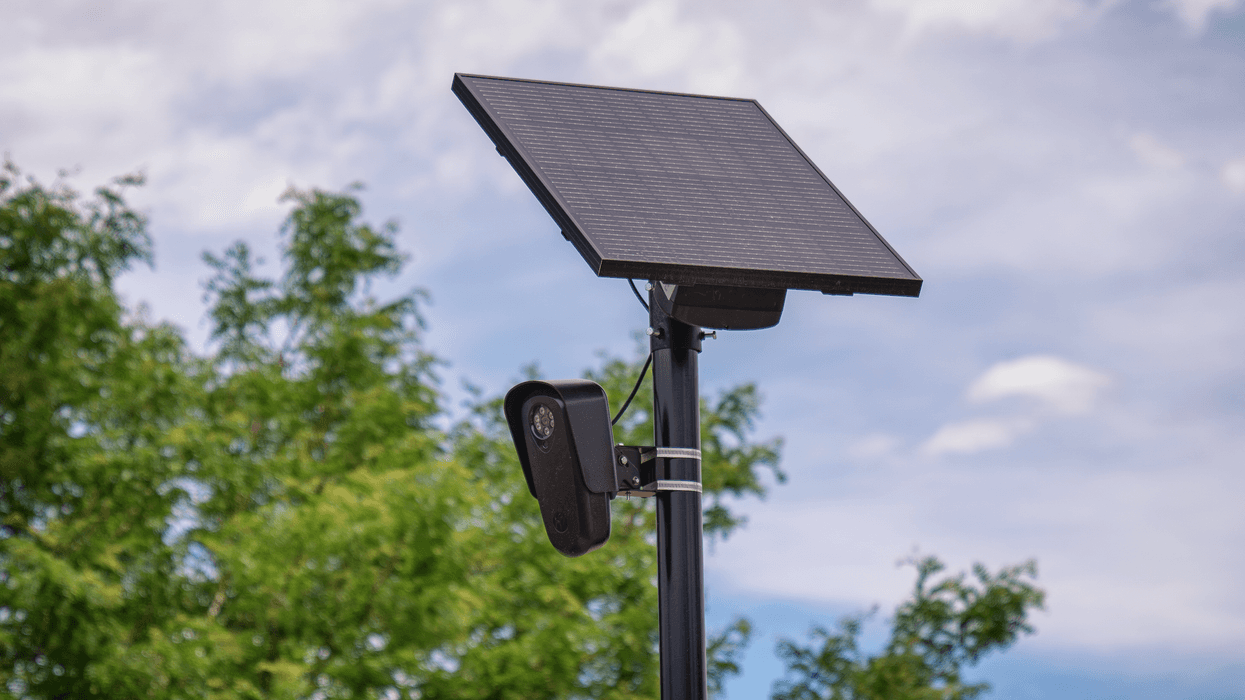
As spying becomes big business, more people are mobilizing to resist mass surveillance.
For many, Labor Day signifies a time of transition, the end of summer and the return to business as usual, whether it be school or work. But the holiday weekend was born out of a more radical past, and at a place charged with a history of protest and free expression.
On September 5, 1882, more than 10,000 workers sacrificed a day’s pay to march on Union Square and demand an eight-hour workday and an end to child labor. The success of their protest paved the way for Labor Day to become a federal holiday in 1894.
Initially a gated garden enclave for New York’s wealthiest, architects Frederick Law Olmsted and Calvert Vaux redesigned Union Square in 1872 as an open plaza for public assembly and patriotic demonstration.
By the beginning of the 20th century, Union Square became the epicenter of radical American politics, a setting for protests by anarchists and socialists. Noted activist Emma Goldman frequently used the public plaza to challenge government censorship and advocate for women’s reproductive rights and free speech.
Today, however, Union Square has been fenced in by a barricade of a different sort. Ringing the plaza is a spiky array of cameras, installed on streetlights by a New York Police Department seeking to surveil New Yorkers and anyone else who happens by the square.
The cameras include automatic license-plate recognition technology, which captures data on every car that passes the square down Broadway or across busy 14th Street.
Whether you’re driving to the grocery store for a quart of milk or attending a local No Kings protest, odds are that law enforcement has recorded, processed, and archived your activities for future reference.
Such setups are so ubiquitous to cities and major intersections that they’re easy to dismiss as normal features of a busy streetscape. But that’s changing.
The company that produces many of these surveillance cameras—Flock Group Inc.—has become a focus of concern among activists, advocates, and people of every political stripe who don’t want law enforcement documenting and archiving their every activity.
But Flock is not alone. Surveilling everyday Americans is now a multibillion-dollar business that’s growing fast.
Flock has struck license-plate reading camera contracts with 7,000 law-enforcement agencies, accounting for 40% of all such departments nationwide. There are more than 130,000 of these cameras deployed across 49 states, likely at a busy intersection or gathering point near you.
Whether you’re driving to the grocery store for a quart of milk or attending a local No Kings protest, odds are that law enforcement has recorded, processed, and archived your activities for future reference.
The philosophy behind such mass surveillance is that authorities need to capture data on everyone’s movements to identify those few who step out of line. It’s as though you need to know the habits of every blade of grass in the haystack to cull out the one wayward needle.
If that’s not disturbing enough, there have also been extensive reports of abuse, including local police officers deploying department surveillance technology to stalk romantic interests—including strangers—while innocent people have been thrown in jail based on a misread license plate or an inaccurate biometric scan.
“The constant and ongoing surveillance of people in public places raises serious First and Fourth Amendment concerns,” says Jenna Ruddock, Free Press’ advocacy director. “Even decisions about where to install these cameras map onto well-established practices of racist policing, aside from the fact that facial-detection technology has an alarming track record when attempting to identify people of color.”
Still, more major tech companies are getting in on the expanding surveillance business. Powerful artificial intelligence companies are marketing AI-enabled video analytics with facial-recognition capacities for real-time threat detection (think Minority Report).
And while Meta doesn’t directly market its Ray-Ban smart glasses to law enforcement, local police departments and immigration agencies have been buying them in bulk via Amazon.
For its part, Amazon is chasing multimillion-dollar contracts to provide law enforcement with cloud infrastructure for data storage, analytics, and biometric systems, including more than $250 million from the Department of Homeland Security to host many of the databases and systems used to track, monitor, and deport immigrants.
Though he once promised that he wouldn’t allow anyone to use company technology to harm people, Google CEO Sundar Pichai is now seeking to profit from mass surveillance. The company is already doing business with Immigration and Customs Enforcement while vying with Amazon and other tech giants for government cloud-computing contracts. Google is also under contract to provide the tech at the center of federal projects to upgrade the “virtual wall” that surveils US borders.
As more cameras sprout up in more locations, the movement to oppose such government spying is spreading. Dozens of cities across the country have cut ties with Flock over their residents’ data-privacy concerns. People have flocked to public hearings and city council meetings to pressure local elected officials to turn the cameras off. Some have taken matters into their own hands, covering nearby Flock and other surveillance cameras with trash bags—or even cutting down camera-attached light poles with electric saws.
DeFlock, an anti-surveillance activist group, has been mapping locations of Flock and other cameras nationwide. (This author used this tool to identify the many non-Flock surveillance cameras surrounding Union Square).
In August, privacy advocates organized the DeFlock National Week of Action, which featured a series of protests, town halls, and informational events to oppose automated license-plate readers and other mass surveillance technology.
The pushback against local surveillance cameras is occurring alongside the fast-spreading movement to stop the unchecked construction of data centers. There’s a common culprit in both popular uprisings: the unholy alliances struck between Big Tech and government. Others are rightfully suspicious of the billionaire class pushing the rapid, reckless development of advanced AI and surveillance tools without first seeking the consent of surrounding communities.
In Union Square on a recent Monday, I asked local busker Lawrence Kidwell whether he knew what all of the nearby police cameras were about. “The NYPD just wants to listen to my music,” he said.
Perhaps. But the cameras are also in place to discourage other forms of expression and muzzle voices of dissent. Something that Union Square has long welcomed may become lost to the new deprivations of the surveillance state.
This piece was originally published at Pressing Issues.