SUBSCRIBE TO OUR FREE NEWSLETTER
Daily news & progressive opinion—funded by the people, not the corporations—delivered straight to your inbox.
5
#000000
#FFFFFF
To donate by check, phone, or other method, see our More Ways to Give page.
Daily news & progressive opinion—funded by the people, not the corporations—delivered straight to your inbox.
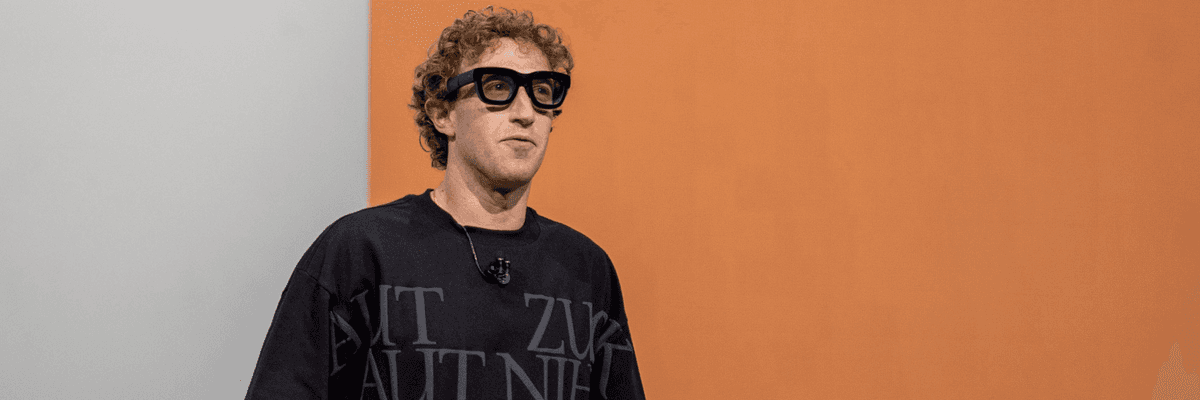
Meta CEO Mark Zuckerberg shows a prototype of computer glasses in Menlo Park, California on September 25, 2024.
Anthropic CEO Dario Amodei said on Sunday that Americans distrust Big Tech because they "always suspect that we are cooking up some new way to screw them over."
Opposition to artificial intelligence data centers has exploded across the US in 2026, as a recent Annenberg Public Policy Center poll showed that more than 60% of Americans say they are against building AI facilities in their areas.
However, a new survey highlighted by Futurism on Sunday shows that the AI industry has bigger problems than just the unpopularity of data centers.
As Futurism noted, the poll by CNBC found widespread distrust of artificial intelligence CEOs among Americans between the ages of 18 and 34.
In fact, more than two-thirds of respondents said they did not trust Palantir CEO Alex Karp, Alphabet CEO Sundar Pichai, Anthropic CEO Dario Amodei, OpenAI CEO Sam Altman, Meta CEO Mark Zuckerberg, Nvidia CEO Jensen Huang, or SpaceX CEO Elon Musk to responsibly expand the use of AI.
"Those are some appalling approval ratings," commented Futurism, "reflecting the massive swing in popularity the tech industry has experienced over the last decade, driven by concerns around data privacy, the purposeful decay of once-useful platforms, and the erosion of democracy."
The survey comes amid signs that the AI industry knows it faces a significant deficit in public opinion.
Anthropic boss Amodei wrote a social media post on Sunday acknowledging that "the public has a negative view of AI," which he said was "fundamentally a crisis of trust."
"I think that ordinary people don't trust companies, governments, or the tech industry and always suspect that we are cooking up some new way to screw them over," wrote Amodei. "The causes of this go back decades and AI is just the latest iteration of it."
The Anthropic CEO added that he didn't think any positive public relations campaign could turn around people's perception of the industry, and he said that one of the few ways it could gain trust was "actually curing cancer."
The rapid expansion of AI data centers, pushed by President Donald Trump, has provoked grassroots campaigns in communities across the country, with people loudly opposing the facilities that have been linked to high household electricity bills, massive water consumption, and few, if any, long-term job opportunities.
Amodei's musings about AI's unpopularity came days after Zuckerberg published a 6,500-word manifesto, in which he pushed back on AI developers who believe the technology will "eliminate most jobs and much of humanity's relevance," while insisting that Meta would develop "personal superintelligence for everyone" that would put "power in people's hands" rather than taking it away.
However, Zuckerberg's promises of a benevolent AI future drew skepticism from TechCrunch AI editor Russell Brandom, who argued in an essay published last week that the Meta chief's manifesto would fall on deaf ears given his own toxic reputation. Meta was recently ordered to pay nearly $1 billion in fines due to its products' harms to children and teens.
"Suffice it to say, Facebook as a product and Zuckerberg as a person are both unpopular with the US public," wrote Brandom. "A recent survey found that 64% of Americans believe social media has been harmful to democracy and a similar percentage believe it should be more heavily regulated, numbers that cut evenly across partisan lines."
People's own past experience with social media, Brandom continued, is a big reason why they are revolting against Big Tech's ambitions to use AI to remake society.
"The public does not trust tech executives to make sure new technologies like this have a positive impact on society," Brandom explained. "Instead of acknowledging that and trying to win back their trust, this essay demonstrates over and over again how the trust was lost in the first place."
Brandom cited Zuckerberg's discussion of human lawyers eventually being replaced by AI as particularly problematic, given that enabling chatbots to engage in litigation could result in a wave of nuisance lawsuits that would clog up the legal system.
"It’s hard to feel calm about any of this stuff," commented Brandom, "and the fact that Zuckerberg isn’t worried makes me more worried."
Dear Common Dreams reader, It’s been nearly 30 years since I co-founded Common Dreams with my late wife, Lina Newhouser. We had the radical notion that journalism should serve the public good, not corporate profits. It was clear to us from the outset what it would take to build such a project. No paid advertisements. No corporate sponsors. No millionaire publisher telling us what to think or do. Many people said we wouldn't last a year, but we proved those doubters wrong. Together with a tremendous team of journalists and dedicated staff, we built an independent media outlet free from the constraints of profits and corporate control. Our mission has always been simple: To inform. To inspire. To ignite change for the common good. Building Common Dreams was not easy. Our survival was never guaranteed. When you take on the most powerful forces—Wall Street greed, fossil fuel industry destruction, Big Tech lobbyists, and uber-rich oligarchs who have spent billions upon billions rigging the economy and democracy in their favor—the only bulwark you have is supporters who believe in your work. But here’s the urgent message from me today. It's never been this bad out there. And it's never been this hard to keep us going. At the very moment Common Dreams is most needed, the threats we face are intensifying. We need your support now more than ever. We don't accept corporate advertising and never will. We don't have a paywall because we don't think people should be blocked from critical news based on their ability to pay. Everything we do is funded by the donations of readers like you. When everyone does the little they can afford, we are strong. But if that support retreats or dries up, so do we. Will you donate now to make sure Common Dreams not only survives but thrives? —Craig Brown, Co-founder |
Opposition to artificial intelligence data centers has exploded across the US in 2026, as a recent Annenberg Public Policy Center poll showed that more than 60% of Americans say they are against building AI facilities in their areas.
However, a new survey highlighted by Futurism on Sunday shows that the AI industry has bigger problems than just the unpopularity of data centers.
As Futurism noted, the poll by CNBC found widespread distrust of artificial intelligence CEOs among Americans between the ages of 18 and 34.
In fact, more than two-thirds of respondents said they did not trust Palantir CEO Alex Karp, Alphabet CEO Sundar Pichai, Anthropic CEO Dario Amodei, OpenAI CEO Sam Altman, Meta CEO Mark Zuckerberg, Nvidia CEO Jensen Huang, or SpaceX CEO Elon Musk to responsibly expand the use of AI.
"Those are some appalling approval ratings," commented Futurism, "reflecting the massive swing in popularity the tech industry has experienced over the last decade, driven by concerns around data privacy, the purposeful decay of once-useful platforms, and the erosion of democracy."
The survey comes amid signs that the AI industry knows it faces a significant deficit in public opinion.
Anthropic boss Amodei wrote a social media post on Sunday acknowledging that "the public has a negative view of AI," which he said was "fundamentally a crisis of trust."
"I think that ordinary people don't trust companies, governments, or the tech industry and always suspect that we are cooking up some new way to screw them over," wrote Amodei. "The causes of this go back decades and AI is just the latest iteration of it."
The Anthropic CEO added that he didn't think any positive public relations campaign could turn around people's perception of the industry, and he said that one of the few ways it could gain trust was "actually curing cancer."
The rapid expansion of AI data centers, pushed by President Donald Trump, has provoked grassroots campaigns in communities across the country, with people loudly opposing the facilities that have been linked to high household electricity bills, massive water consumption, and few, if any, long-term job opportunities.
Amodei's musings about AI's unpopularity came days after Zuckerberg published a 6,500-word manifesto, in which he pushed back on AI developers who believe the technology will "eliminate most jobs and much of humanity's relevance," while insisting that Meta would develop "personal superintelligence for everyone" that would put "power in people's hands" rather than taking it away.
However, Zuckerberg's promises of a benevolent AI future drew skepticism from TechCrunch AI editor Russell Brandom, who argued in an essay published last week that the Meta chief's manifesto would fall on deaf ears given his own toxic reputation. Meta was recently ordered to pay nearly $1 billion in fines due to its products' harms to children and teens.
"Suffice it to say, Facebook as a product and Zuckerberg as a person are both unpopular with the US public," wrote Brandom. "A recent survey found that 64% of Americans believe social media has been harmful to democracy and a similar percentage believe it should be more heavily regulated, numbers that cut evenly across partisan lines."
People's own past experience with social media, Brandom continued, is a big reason why they are revolting against Big Tech's ambitions to use AI to remake society.
"The public does not trust tech executives to make sure new technologies like this have a positive impact on society," Brandom explained. "Instead of acknowledging that and trying to win back their trust, this essay demonstrates over and over again how the trust was lost in the first place."
Brandom cited Zuckerberg's discussion of human lawyers eventually being replaced by AI as particularly problematic, given that enabling chatbots to engage in litigation could result in a wave of nuisance lawsuits that would clog up the legal system.
"It’s hard to feel calm about any of this stuff," commented Brandom, "and the fact that Zuckerberg isn’t worried makes me more worried."
Opposition to artificial intelligence data centers has exploded across the US in 2026, as a recent Annenberg Public Policy Center poll showed that more than 60% of Americans say they are against building AI facilities in their areas.
However, a new survey highlighted by Futurism on Sunday shows that the AI industry has bigger problems than just the unpopularity of data centers.
As Futurism noted, the poll by CNBC found widespread distrust of artificial intelligence CEOs among Americans between the ages of 18 and 34.
In fact, more than two-thirds of respondents said they did not trust Palantir CEO Alex Karp, Alphabet CEO Sundar Pichai, Anthropic CEO Dario Amodei, OpenAI CEO Sam Altman, Meta CEO Mark Zuckerberg, Nvidia CEO Jensen Huang, or SpaceX CEO Elon Musk to responsibly expand the use of AI.
"Those are some appalling approval ratings," commented Futurism, "reflecting the massive swing in popularity the tech industry has experienced over the last decade, driven by concerns around data privacy, the purposeful decay of once-useful platforms, and the erosion of democracy."
The survey comes amid signs that the AI industry knows it faces a significant deficit in public opinion.
Anthropic boss Amodei wrote a social media post on Sunday acknowledging that "the public has a negative view of AI," which he said was "fundamentally a crisis of trust."
"I think that ordinary people don't trust companies, governments, or the tech industry and always suspect that we are cooking up some new way to screw them over," wrote Amodei. "The causes of this go back decades and AI is just the latest iteration of it."
The Anthropic CEO added that he didn't think any positive public relations campaign could turn around people's perception of the industry, and he said that one of the few ways it could gain trust was "actually curing cancer."
The rapid expansion of AI data centers, pushed by President Donald Trump, has provoked grassroots campaigns in communities across the country, with people loudly opposing the facilities that have been linked to high household electricity bills, massive water consumption, and few, if any, long-term job opportunities.
Amodei's musings about AI's unpopularity came days after Zuckerberg published a 6,500-word manifesto, in which he pushed back on AI developers who believe the technology will "eliminate most jobs and much of humanity's relevance," while insisting that Meta would develop "personal superintelligence for everyone" that would put "power in people's hands" rather than taking it away.
However, Zuckerberg's promises of a benevolent AI future drew skepticism from TechCrunch AI editor Russell Brandom, who argued in an essay published last week that the Meta chief's manifesto would fall on deaf ears given his own toxic reputation. Meta was recently ordered to pay nearly $1 billion in fines due to its products' harms to children and teens.
"Suffice it to say, Facebook as a product and Zuckerberg as a person are both unpopular with the US public," wrote Brandom. "A recent survey found that 64% of Americans believe social media has been harmful to democracy and a similar percentage believe it should be more heavily regulated, numbers that cut evenly across partisan lines."
People's own past experience with social media, Brandom continued, is a big reason why they are revolting against Big Tech's ambitions to use AI to remake society.
"The public does not trust tech executives to make sure new technologies like this have a positive impact on society," Brandom explained. "Instead of acknowledging that and trying to win back their trust, this essay demonstrates over and over again how the trust was lost in the first place."
Brandom cited Zuckerberg's discussion of human lawyers eventually being replaced by AI as particularly problematic, given that enabling chatbots to engage in litigation could result in a wave of nuisance lawsuits that would clog up the legal system.
"It’s hard to feel calm about any of this stuff," commented Brandom, "and the fact that Zuckerberg isn’t worried makes me more worried."