

SUBSCRIBE TO OUR FREE NEWSLETTER
Daily news & progressive opinion—funded by the people, not the corporations—delivered straight to your inbox.
5
#000000
#FFFFFF
To donate by check, phone, or other method, see our More Ways to Give page.
Daily news & progressive opinion—funded by the people, not the corporations—delivered straight to your inbox.

Dan Radmacher, Appalachian Voices, dan@appvoices.org
Morgan Caplan, The Sierra Club, morgan.caplan@sierraclub.org
Jared Margolis, Center for Biological Diversity, jmargolis@biologicaldiversity.org
The 4th U.S. Circuit Court of Appeals temporarily halted the Mountain Valley Pipeline today, issuing a stay of the biological opinion and incidental take statement under the Endangered Species Act. The massive pipeline project threatens imperiled species like the candy darter and Roanoke logperch.
The court’s order means construction should not move forward along any portion of the 304-mile pipeline route as lawsuits challenging it continue. The court has twice rejected the U.S. Fish and Wildlife Service’s authorizations for the pipeline project, finding that the agency failed to adequately analyze the project’s potential environmental harms.
The federal appeals court also granted a stay Monday of the U.S. Forest Service’s decision allowing the pipeline to be constructed through the Jefferson National Forest while the court considers The Wilderness Society’s challenge to that decision. The Wilderness Society is represented by the Southern Environmental Law Center.
“This decision shows that corporations with deep pockets and political influence aren’t above the law,” said Jared Margolis, a senior attorney at the Center for Biological Diversity. “The court stepped up to protect imperiled wildlife and sensitive streams from a disastrous project that should never be built.”
“This stay is necessary to prevent the irreparable harm that would be caused by allowing Mountain Valley Pipeline to resume construction while important legal issues are decided,” said Peter Anderson, Virginia policy director at Appalachian Voices. “We are pleased that the 4th Circuit seems to recognize that Congress overreached with its Mountain Valley Pipeline provisions in the Fiscal Responsibility Act.”
“Congress’s unprecedented end run around the courts attempted to forgo proper checks and balances and declare the sinking ship that is the Mountain Valley Pipeline a winner,” said Ben Jealous, executive director of Sierra Club. “This, as we know, was wrong from the start. Congress cannot mandate that federal regulators throw caution to the wind — environmental laws are more than just mere suggestions, and must be adhered to. We expect Mountain Valley Pipeline to halt all construction along the entire route.”
“This ill-conceived pipeline poses serious threats to animals, plants, and people,” said Anne Havemann, general counsel for Chesapeake Climate Action Network. “This is the third time this court has found fatal flaws in Mountain Valley’s Endangered Species Act permit. Regulators that are supposed to protect the environment have once again failed and construction should be halted along the entire route.”
“All we’ve ever asked is that our basic environmental protection laws, including the Endangered Species Act, be enforced,” said David Sligh, conservation director at Wild Virginia. “Federal officials have not yet lived up to that basic requirement on this project and the courts have had to step in. Construction on this harmful project must be ended now.”
The motion to stay the biological opinion was filed by lawyers from the Sierra Club, Appalachian Mountain Advocates and the Center for Biological Diversity on behalf of Appalachian Voices, Wild Virginia, Indian Creek Watershed Association, Preserve Bent Mountain, Preserve Giles County, West Virginia Highlands Conservancy, West Virginia Rivers Coalition, Chesapeake Climate Action Network, Sierra Club and the Center for Biological Diversity.
Mountain Valley Pipeline and the Fish and Wildlife Service claimed the court lacked jurisdiction to issue the stay under provisions of the Fiscal Responsibility Act about the pipeline. In issuing the stay, the 4th Circuit appears to have rejected that argument.
At the Center for Biological Diversity, we believe that the welfare of human beings is deeply linked to nature — to the existence in our world of a vast diversity of wild animals and plants. Because diversity has intrinsic value, and because its loss impoverishes society, we work to secure a future for all species, great and small, hovering on the brink of extinction. We do so through science, law and creative media, with a focus on protecting the lands, waters and climate that species need to survive.
(520) 623-5252
"You don't have healthcare or a living wage," said one critic who lamented the proposed $2.8 billion, taxpayer-funded transfer, "but hey, more war crimes!"
The Trump administration is preparing to send Israel tens of thousands of 2,000-pound bombs, The Washington Post reported Tuesday—a move that would rank as the largest single sale of the highly destructive munitions, which the Israel Defense Forces have used in some of the deadliest US-backed airstrikes on Gaza and Lebanon.
According to the Post, the proposed $2.8 billion package includes 20,000 MK-84 bombs and 20,000 BLU-117 bombs, as well as 20,000 I-2000 penetrator warheads. The munitions would be purchased with US taxpayer funds through the Foreign Military Financing program. The proposal has been informally presented to congressional committees that review major arms transfers.
The MK-84 is among the largest conventional bombs in the US arsenal. The Post reported that its blast can propel metal fragments thousands of feet, penetrate thick concrete and metal, and create large craters.
“If Hezbollah or whoever is in a building, an MK-84 will bring down the whole building," Trevor Ball, a former US Army explosive ordnance disposal technician, told the Post.
Following the Hamas-led attack of October 7, 2023, the Israel Defense Forces (IDF) loosened rules of engagement to effectively allow the killing of an unlimited number of civilians when targeting even a single low-ranking Hamas member in an airstrike.
Combined with the utilization of cutting-edge artificial intelligence technology to select targets at a far faster rate than humans alone could, IDF use of 1,000- and 2,000-pound bombs has contributed heavily to the staggering casualty toll in Gaza, where officials say that more than 250,000 Palestinians have been killed or wounded since October 2023.
That month, Israeli forces struck Gaza's Jabalia refugee camp with such munitions, killing at least 126 Palestinians in a bid to assassinate a single Hamas commander.
Michael Lynk, who served as the United Nations special rapporteur on human rights in the Palestinian territories from 2016 to 2022, said early in the war that “the scale of Palestinian civilian deaths in such a short period of time appears to be the highest such civilian casualty rate in the 21st century."
In December 2023, University of Chicago military historian Robert Pape called Israel's bombing "one of the most intense civilian punishment campaigns in history.”
Classified IDF intelligence data leaked last year revealed that 5 in 6 Palestinians killed by the IDF through the first 19 months of the US-backed war were civilians.
Israel continues to kill Palestinians with US-supplied 2,000-pound bombs, despite a nearly yearlong supposed ceasefire. Last week, the IDF reportedly massacred two young girls and their parents when it bombed their home in northern Gaza.
A South Africa-led case backed by nearly 20 nations that is currently before the International Court of Justice (ICJ) accuses Israel of genocide in Gaza. The International Criminal Court has also issued warrants for the arrest of Israeli Prime Minister Benjamin Netanyahu and former Defense Minister Yoav Gallant for alleged crimes against humanity and war crimes in the strip, including murder and forced starvation.
“[President] Donald Trump is sending bombs paid for by American taxpayers to a government led by a wanted war criminal—all while the Netanyahu government continues to bomb Gaza and Lebanon, and block justice and accountability for Americans killed on its watch,” US Sen. Chris Van Hollen (D-Md.) said Tuesday, according to the Post. “This is not putting Americans first. We will work to stop it."
Israel denies all accusations against it. Netanyahu and other Israeli leaders and supporters have repeatedly claimed that the IDF is the "world's most moral army."
The IDF has also dropped 2,000-pound bombs in Lebanon. In September 2024, it launched a massive strike on Beirut's southern suburbs that killed Hezbollah leader Hassan Nasrallah and destroyed multiple residential buildings. Analyses subsequently indicated that US-made 2,000-pound bombs were likely used in the attack.
In another IDF strike on Beirut the following month, at least 22 people were killed and more than 115 wounded. Human Rights Watch and a former US military explosives expert identified remnants from the attack as coming from a US-made Joint Direct Attack Munition guidance kit compatible with MK80-series bombs weighing between 500 and 2,000 pounds.
The United States has nevertheless supplied Israel with thousands of the weapons during both the Biden and Trump administrations. Reuters reported in June 2024 that the Biden administration had sent Israel more than 10,000 2,000-pound bombs since the October 2023 Hamas-led attack, along with thousands of other munitions.
In May 2024, then-President Joe Biden paused delivery of a shipment containing 1,800 2,000-pound bombs and 1,700 500-pound bombs amid concerns that Israel could use them during its assault on Rafah, where more than a million displaced Palestinians were sheltering, and where the ICJ ordered Israel to immediately halt its offensive and prevent genocidal acts. Israel ignored the order.
That pause became a rare instance in which Washington explicitly withheld a major category of offensive weaponry from Israel over concerns about civilian casualties. Trump reversed the policy almost immediately after returning to office in January 2025, ordering the release of the withheld 2,000-pound bombs.
When asked why, Trump replied: “Because they bought them.”
But with American taxpayers often footing the bill for such transfers, critics again lashed out at the practically unconditional US support for Israel.
"We don’t have universal healthcare because our government prioritizes money for bombs," leftist commentator and activist Sabrina Salvati said Tuesday on social media, lamenting that the "$2.8 billion bomb sale [is] going to Israel to slaughter more babies."
Author and leftist podcaster Wajahat Ali also took to social media to blast the proposed transfer, writing: "Congrats, MAGA. Trump is using our money to give bombs to Israel to kill civilians."
"You don't have healthcare or a living wage," he added, "but hey, more war crimes!"
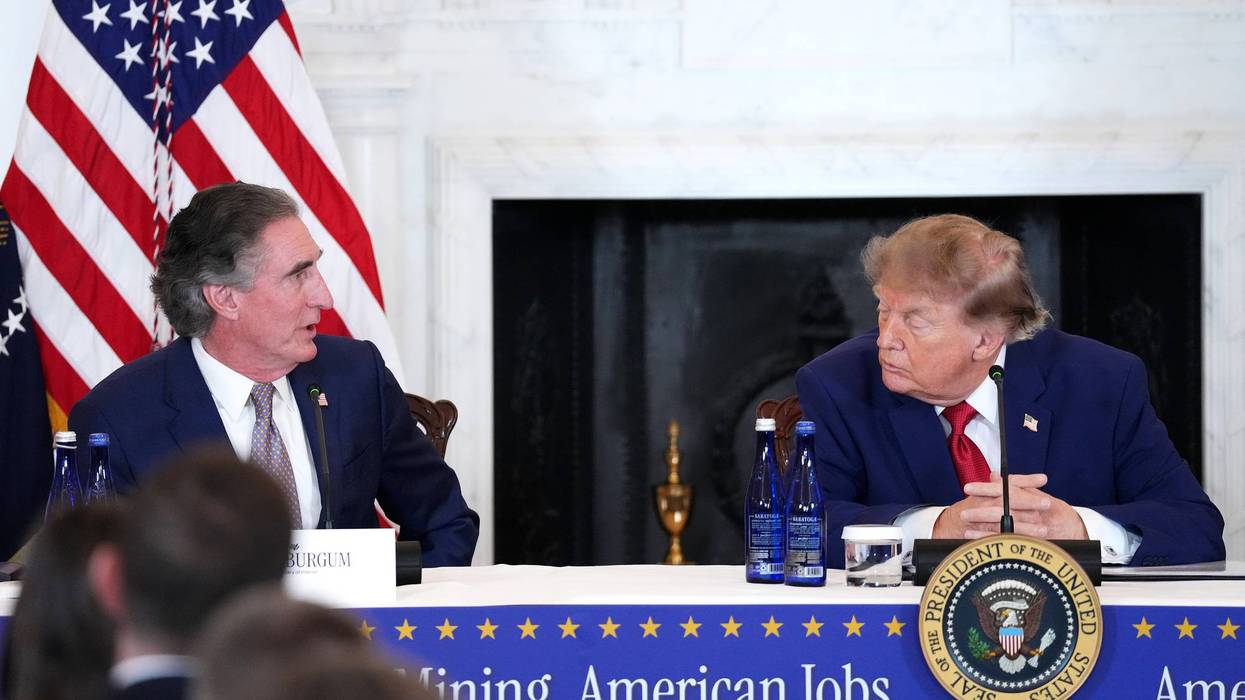
"The federal government should be protecting our national parks, not parceling them out behind closed doors to benefit the wealthy and politically connected," said one campaigner.
Hundreds of advocacy groups and members of Congress on Tuesday called on President Donald Trump's administration to reject a proposal to hand over part of Yosemite National Park in California to a private developer.
The Washington Sun—formerly known as NOTUS—revealed late last month that federal staffers were under political pressure to keep working on a possible land swap for a quarter-mile strip of the famed park with "a company that, through a web of limited liability companies, is operated by real-estate developer and investment firm Kingsbarn Realty Capital."
California's Democratic US senators, Alex Padilla and Adam Schiff, partnered with two other Democrats from the state, House Natural Resources Committee Ranking Member Jared Huffman and Congressman Jim Costa, to spearhead a Tuesday letter to Trump's interior secretary, Doug Burgum, about the future of the park.
Yosemite "is a cornerstone of the National Park System and is one of California's crown jewels," wrote the bipartisan group of over 150 lawmakers. "We are extremely concerned that the Department of the Interior is considering selling off portions of the park to private development, and we strongly oppose the proposed land transfer."
According to the Sun, the developer owns 83 acres west of the park and wants "to build a short road connecting the property to one of Yosemite's central thoroughfares," providing "the land exceptionally rare private access to a park that is otherwise almost entirely buffered by national forests."
The lawmakers noted similar previous efforts that were blocked in court and argued that "at its core, this proposal appears to provide a private benefit at the expense of land that belongs to all Americans."
"This transaction does not seek to expand public access to Yosemite, improve visitor services, or address transportation deficiencies in park access," they emphasized. "Rather, this land exchange seeks to merely cut down on driving time for a select few on private property. Any decision to relinquish public land to private ownership should be supported by a clear and compelling public benefit, not merely the economic interests of a private party."
"We were alarmed that the Department submitted to Congress a proposal to use money from the Land and Water Conservation Fund (LWCF) authority to facilitate this exchange. That fund exists to acquire and protect public lands for the benefit of the American public—not sell them off to corporate developers," the lawmakers wrote, noting that a Senate subcommittee has not agreed to move forward.
The lawmakers also pointed out that "in response to inquiries from Congress, the department indicated that it has not identified any land to be exchanged for the parcel of Yosemite National Park that the department is seeking to sell to the private developer. This gives further credence to the notion that this exchange is not being done in the public interest, but rather solely to benefit a private developer."
"Public lands belong in public hands. Protection of public lands is a bipartisan issue, overwhelmingly supported by the American people from all walks of life," they concluded. "We oppose any effort to privatize, sell off, give away, or otherwise undermine the continued existence of public lands, in Yosemite or across the country. We ask that you honor congressional objections and abandon this effort to sell off a piece of Yosemite National Park."
Separately on Tuesday, a coalition of over 150 advocacy organizations—led by the Center of Biological Diversity—sent a similar letter to Burgum.
"Trump wants to carve off a chunk of Yosemite so a private equity firm can turn it into a playground for billionaires," said Laiken Jordahl, national public lands advocate at the center. "The federal government should be protecting our national parks, not parceling them out behind closed doors to benefit the wealthy and politically connected. If Yosemite can be chopped apart, no national park in America is safe."
The center was joined by groups including the American River Conservancy, California Environmental Justice Coalition, Greenpeace USA, Public Citizen, Public Lands Conservancy, Save Our Parks, Sierra Club, and Yosemite Rivers Alliance.
The coalition described Yosemite as "sacrosanct—the cradle of American conservation, and the first land the federal government protected purely for its scenic value," and warnd that "ceding national park land to a developer sets a dangerous precedent: America's parks are for sale to whomever has the money and power to take them."
Highlighting that "Kingsbarn CEO Jeff Pori is a donor to Trump's campaign... and the firm is represented by politically connected lawyer Lanny Davis," the groups stressed that "deals like this undercut the public's faith in government."
"In your confirmation hearing," the coalition reminded Burgum, "you said 'we need to support and protect every single inch' of our national parks. Yosemite is invaluable, and no portion of it should end up on Kingsbarn's ledger. We expect you to keep your promise and to abide by your statements to Congress."
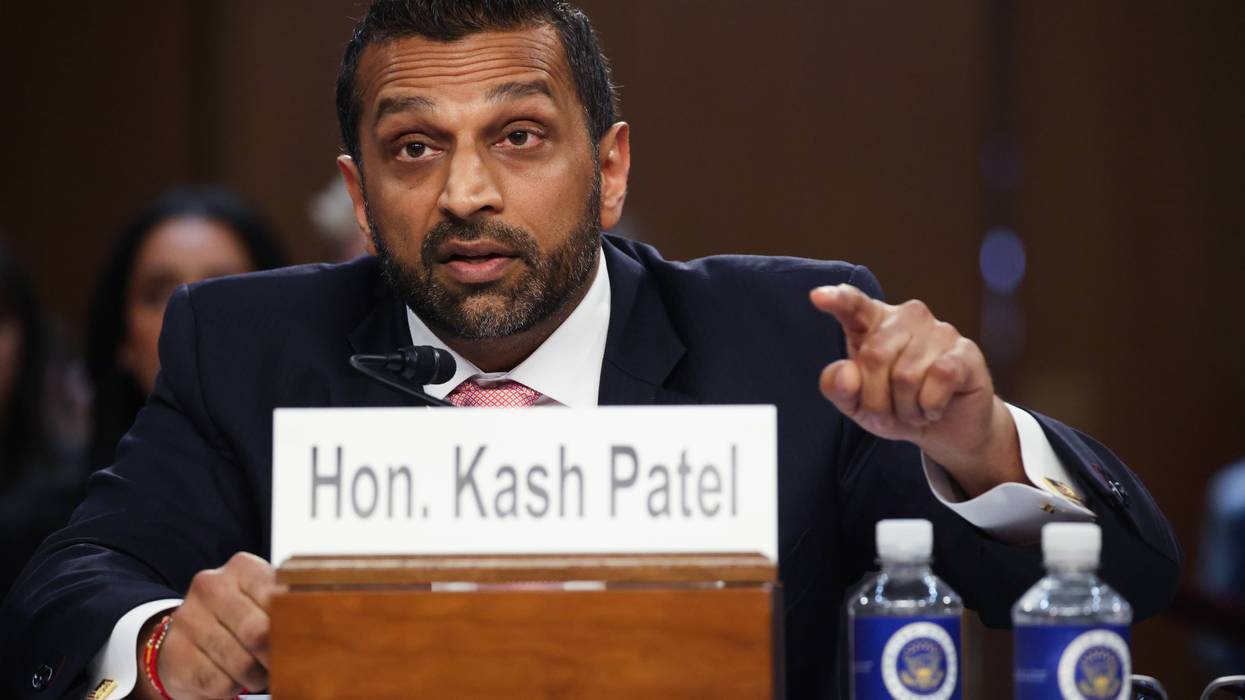
One critic said his comments made clear that "Patel’s leadership at the FBI has been plagued by inappropriate politicization, rampant mismanagement of funds and resources, and a lack of regard for public safety."
The US Senate Judiciary Committee's Tuesday oversight hearing for the Federal Bureau of Investigation covered a wide range of topics, from alcoholism and bestiality to a snorkeling tour of Pearl Harbor and President Donald Trump's persistent but baseless claims that he won in 2020—and FBI Director Kash Patel came under fire for bolstering the Republican's election lies.
Sen. Peter Welch (D-Vt.) pointed out that just a few days ago, Trump said: "We had a rigged election, as you know. It was totally rigged. Because I won three times. I didn't win twice. I won three times."
The senator then asked Patel if he agreed with Trump's declaration that he won the 2020 election. Although the president's attempts to abuse the US courts to cling to power affirmed his loss, the FBI director responded that "there are many ongoing investigations surrounding that matter, so I'm not gonna comment on it and stylize the evidence."
After giving Patel another opportunity to answer, which the agency leader used to effectively repeat his response, Welch highlighted the FBI's January raid of an election hub in Fulton County, Georgia—which critics, at the time, condemned as an ominous signal that Trump and his allies would do whatever they could to interfere with this November's midterms.
Welch stressed that the raid occurred despite two recounts in Georgia following the 2020 contest—including one by hand, which showed that Trump lost the state by 11,779 votes—"and no investigation has found any evidence of wrongdoing."
Patel refused to even confirm that there haven't yet been any related indictments, saying, "That matter is ongoing."
Asked by Welch if he would promise to "not in any way interfere in the will of the American people when they go to the polls" this November, Patel said, "I pledge unequivocally that I will not participate in your charade of lies," and signaled that FBI agents would be present at some polling stations for the midterms.
Welch also cited Trump's claims that this year's elections are rigged if Republicans lose and Democrats can only win if they cheat. The senator asked Patel if he agreed with the latter, and the bureau chief again refused to comment on what he called "ongoing investigations."
Watch the full hearing below:
Lisa Gilbert, co-president of the watchdog group Public Citizen, said in a statement that "while under oath today, Kash Patel peddled dangerous conspiracy theories and misinformation in order to appease Donald Trump's ego."
"His cowardly statement supporting Trump's claim that the only way Democrats could possibly win in November is if the party cheats is particularly rich given Trump's attempt to overturn the results of the 2020 election and his more recent offer to pay $5k to each American if his own party wins the upcoming election," she continued.
"These sycophantic statements and his testimony throughout the hearing make it clear that Patel’s leadership at the FBI has been plagued by inappropriate politicization, rampant mismanagement of funds and resources, and a lack of regard for public safety," she added. "With Patel at the helm of the agency, dedicated career officers have been dumped over loyalty tests, child predators have been protected, and taxpayer dollars have been wasted going after Trump's personal enemies. Every day Patel remains in charge of the FBI is a day too long."
In addition to Welch, several other Democrats had testy exchanges with Patel throughout the hearing—including Sen. Cory Booker (NJ), who blasted the director as an "incompetent lackey" and said: "He's like an 18-year-old kid who wants to join a fraternity that he could never be a member of, doing keg stands and chugging with friends. He's an embarrassment to the agency and wouldn't qualify even to be an FBI agent."
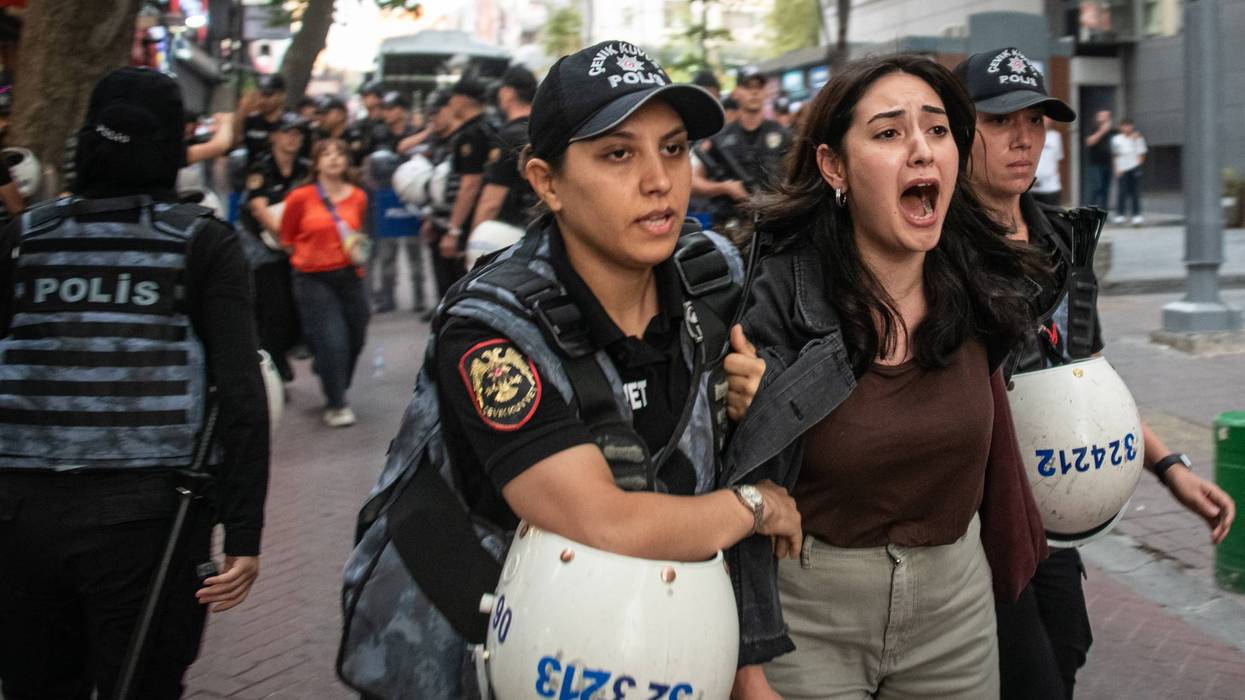
"When authorities abuse the criminal justice system to silence lawful expression, they undermine the rule of law for everyone," said Human Rights Watch.
Amnesty International on Tuesday joined Turkish and other global human rights advocates urging the Justice and Development Party government of longtime President Recep Tayyip Erdoğan to end its persecution campaign against Türkiye's LGBTQ+ community and immediately free the scores of activists arrested during the ongoing crackdown.
Police in Istanbul detained at least dozens more demonstrators outside the Çağlayan Courthouse on Tuesday as the protesters demanded the release of the more than 60 people arrested across 15 provinces during and after recent raids on LGBTQ+ rights groups.
Turkish Justice Minister Akın Gürlek said the operation, dubbed "My Family Is Safe," targeted 162 people, nine organizations, and 13 businesses.
“We will show no tolerance for any criminal organization targeting the institution of the family, the future of our youth, and social order,” Gürlek declared at the start of the operation.
More than 180 websites and social media accounts belonging to LGBTQ+ organizations and activists, journalists, media outlets, and others have been blocked or restricted, including Amnesty International Türkiye’s X account.
“This appalling escalation in Türkiye’s crackdown amounts to a full-scale assault on LGBTI rights and those who defend them," Amnesty International deputy regional director for Europe Esther Major said Tuesday in a statement. "The relentless raids, arrests, and demonization of LGBTI people under the spurious guise of ‘protecting the families’ demonstrates why defending LGBTI rights in Türkiye is more important than ever."
“This sweeping crackdown, in which scores of people have been arrested, has nothing to do with protecting families and everything to do with further harming and stigmatizing a community that has battled decades of discrimination and intimidation," Major added.
“This appalling escalation in Türkiye’s crackdown amounts to a full-scale assault on LGBTI rights and those who defend them."
Amnesty is one of dozens of groups that signed a declaration calling on the Turkish government to "stop criminalizing LGBTI+ organizations and human rights defenders."
Human Rights Watch (HRW) noted Monday on social media that "the arrests are allegedly for offenses such as 'obscenity,' prostitution, and drug use, effectively conflating defense of LGBT rights with criminal conduct—all under the pretext of a government campaign to 'protect families.'"
"In fact the arrests have nothing to do with making families safer," HRW said. "Instead, they weaponize the rhetoric of 'family values' to pursue discrimination, stigma, and state repression. Everyone in Türkiye should be concerned: When authorities abuse the criminal justice system to silence lawful expression, they undermine the rule of law for everyone."
"The government should end its crackdown on LGBT rights groups, immediately release detained activists, and end discriminatory targeting of LGBT people and their advocates," the group added.
At the United Nations, Special Rapporteur on Human Rights Defenders Andrea Bolaos Vargas said on Sunday that she was "deeply concerned by reports of mass raids and detention of LGBTIQ+ human rights defenders across Türkiye, alongside searches of LGBTIQ+ associations and seizure of digital equipment."
"I urge the authorities to ensure the immediate release of all those detained solely for their legitimate human rights work and to guarantee that LGBTIQ+ defenders and associations can exercise their rights without criminalization, intimidation, or reprisals," she added.
Turkish rights groups and activists were the first to condemn the crackdown. A coalition of more than 110 women's groups issued a joint statement against the arrests, noting they came on the anniversary of the September 12, 1980 military coup and subsequent evisceration of human rights.
"Today, on the anniversary of September 12th, we woke up with reports of the arrest of activists and independent rights defenders from LGBTI+ associations for the LGBTI+ movement," the groups wrote. "These operations are nothing more than the actual implementation of efforts to criminalize LGBTI+ organizing."
"It is not a crime to make and organize policies on gender identity and sexual orientation," they continued. "As women, we are against these operations, which are carried out under the name of 'keeping the family safe.'"
“We know that pressures on our bodies, our lives, our identities, and the right to organize are part of the same authoritarian politics," the groups added. "Let our detainees be released immediately, and the raids on LGBTI+ organizations, access barriers, and criminalization policies be put down. We, as women's organizations, are in solidarity with the LGBTI+ movement; we will not give up our joint struggle against male-dominated and authoritarian policies!"
Numerous officials in Western nations also condemned the crackdown, including Council of Europe Human Rights Commissioner Michael O'Flaherty, who on Tuesday asserted that “mere references to ‘family values’ or ‘protection of children’ cannot serve as legal justification for human rights restrictions."
Leftist Barcelona Mayor Jaume Collboni said Monday: “I condemn the unacceptable wave of pressure targeting LGBTI+ people and organizations in Türkiye. We demand that these operations be terminated immediately and that everyone who has been detained will be released."
"We will not take a step back from defending civil rights in the face of attacks on LGBTI [people] in Türkiye and around the world," he added. "Barcelona will always be with [them]."
“Mere references to ‘family values’ or ‘protection of children’ cannot serve as legal justification for human rights restrictions."
Under Erdoğan and his Justice and Development Party (AKP), Turkey has undergone a major shift from relative tolerance of LGBTQ+ public life toward increasingly systematic state repression.
While homosexuality—which was decriminalized by the Ottoman Empire in 1858—remains legal, the government has increasingly used restrictions on assembly, speech, civil society, and public expression to marginalize LGBTQ+ people. The AKP is currently weighing proposals that could criminalize LGBTQ+ identity and activism outright.
Erdoğan has repeatedly demonized LGBTQ+ people, especially during elections, during which he has used homophobia in his appeals to an overwhelmingly Muslim electorate.
As one protester outside Çağlayan Courthouse told The Associated Press on Tuesday, “We are going through a period where there is an attempt by the ruling power to portray LGBT+ people as the cause of every problem in this society."

"The need for responsible cryptocurrency regulation remains," said one anti-corruption advocate.
The US Senate voted not to advance a major cryptocurrency bill on Tuesday, heeding warnings from critics that it would fail to regulate the volatile financial asset effectively and would allow President Donald Trump to continue profiting lavishly from it with little oversight.
Earlier reports indicated that crypto industry darling Sen. Kirsten Gillibrand (D-NY) was trying to rally enough Democrats to support the GOP-led Digital Asset Market Clarity Act to get the 60 votes necessary to break the filibuster.
But by Tuesday afternoon, even Gillibrand herself had jumped ship. In what turned out to be a 50-49 vote against the legislation, she joined every other member of the Democratic caucus to vote against the Clarity Act. So did four Republicans—Sen. Susan Collins (Maine), Josh Hawley (Mo.), Jerry Moran (Kan.), and Thom Tillis (NC).
Democrats who voted against the legislation said that a revised version presented by Republicans on Sunday failed to meet their demands for rules to prevent Trump and other high-ranking officials from profiting from their cryptocurrency ventures while in office.
In 2025, Trump reported roughly $1.4 billion in crypto-related income, including hundreds of millions from his family’s crypto exchange World Liberty Financial (WLF) and from sales of his $TRUMP meme coin.
"President Trump, his children, and his Cabinet are making billions of dollars in the crypto space, in part from bilking everyday Americans out of their hard-earned money," said Sen. Elissa Slotkin (D-Mich.) in a post to social media. "I cannot in good conscience vote for any legislation that codifies that behavior from public officials."
Sen. Ruben Gallego (D-Ariz.), who negotiated the bill's ethics language with Tillis, said in a statement that "instead of spending their time twisting themselves into knots to appease President Trump, Republicans should have worked more closely with Senate Democrats to craft a bill that could pass with strong ethics provisions.”
Reuters reported in August that crypto-aligned super political action committees have spent nearly $190 million during this election cycle to support industry-friendly candidates.
"It’s no secret that they are seeking to ram a bill through Congress based upon not the merits of the bill, but the threat that they will spend even more money in elections against people who vote against it,” said Sen. Chris Murphy (D-Conn.), who voted against the bill.
Ella Fanger, corporate power policy adviser for the progressive activist group Demand Progress, said in a statement that Democrats "dodged a bullet by refusing to go along with the dangerously weak bill that Trump and the crypto industry have asked for," though she questioned why Gillibrand was advocating for the measure up to the last minute, "particularly at a time when she is claiming to oppose Trump's corruption."
The Clarity Act is stalled for now and likely won't be revived until after the November midterms. But Scott Greytak, deputy executive director of Transparency International US, said that "the need for responsible cryptocurrency regulation remains."
"Before bringing it back, Congress must confront two fundamental failures of the legislation," he said in a statement. "First, it must stop President Trump—and future presidents and other public officials—from profiting from the crypto industry while shaping and enforcing its rules. President Trump’s crypto interests make the stakes clear: Public officials who write or enforce the rules for crypto shouldn’t be allowed to cash in on it."
"Second, Congress must ensure that law enforcement can follow the money wherever it moves," he continued. "Unless the bill applies strong anti-money laundering and sanctions rules across the crypto market, scammers, drug cartels, terrorist financiers, sanctions evaders, and corrupt officials will exploit the weakest parts of the system to move and hide their money."
Sen. Elizabeth Warren (D-Mass.), one of the Clarity Act's most outspoken critics, said, “Let’s make sure that we do not pass a crypto bill that will let Donald Trump continue to rake in billions of dollars in crypto profits while working families across this country struggle to deal with higher prices and an economy that gets worse by the day."
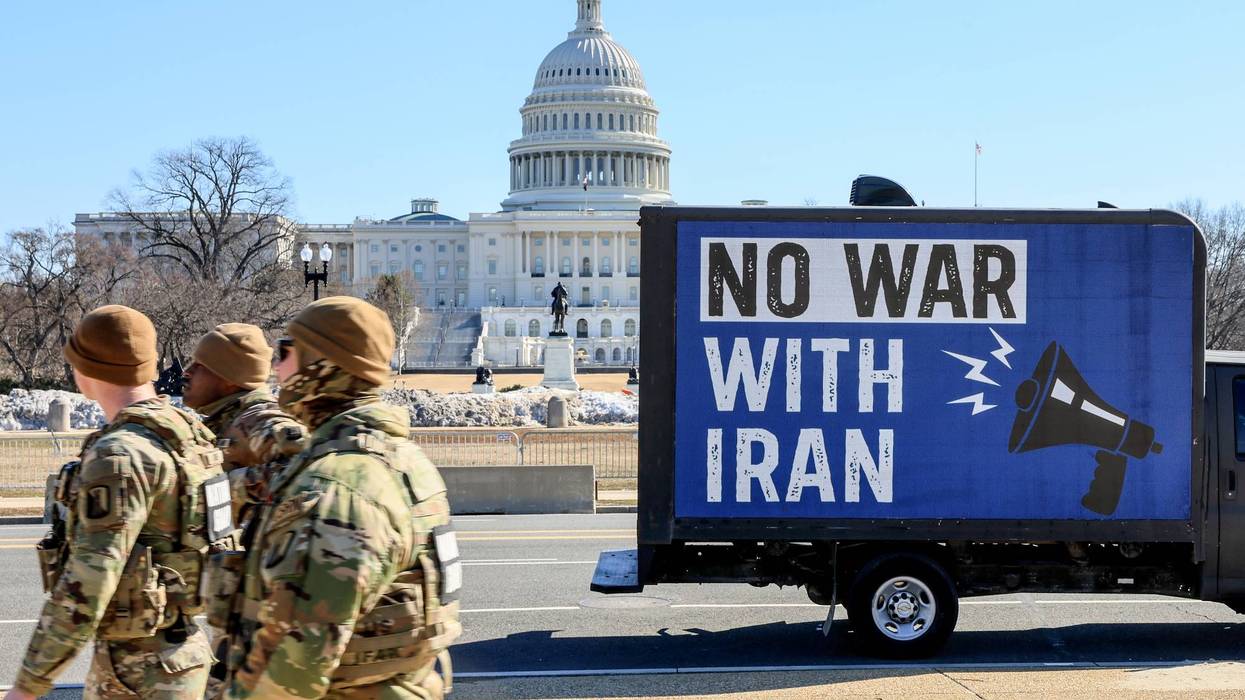
"Trump and Republicans have spent years telling Americans that we cannot afford to help families here at home, but apparently they can find tens of billions of dollars... for a reckless war," said US Rep. Brendan Boyle.
President Donald Trump's illegal war with Iran has already cost US taxpayers almost $40 billion, according to a report released Tuesday by the Congressional Budget Office.
In total, the CBO report estimates that, by the end of July, the US Department of Defense had already spent $38 billion in operational, logistical, and sustainment costs related to the war.
CBO said this estimate reflects "the costs of replacing expended munitions and equipment lost in battle, increased flying hours, other operations, and increased fuel costs" for the department, as well as the fact that "the initial, intense phase of the conflict lasted just over a month... and that relatively few US forces have been involved compared with the much larger and longer US operations."
The office pointed out that it had to rely on government databases and public reports for data because the Pentagon didn't comply with its requests for more information about the war.
The report finds that the Iran War has also drained the military of missile defense interceptors, noting that the conflict "will leave the United States with a reduced inventory of interceptors for several years."
CBO's analysis also tries to measure the macroeconomic impact of the war, and concludes that it has made goods more expensive for US consumers by drastically raising the price of energy.
"In CBO's assessment, the effects of those higher energy prices will put upward pressure on consumer prices," the report explains. "As a result, in the first quarter of 2027, inflation (measured year over year) in the price index for personal consumption expenditures (PCE) is now estimated to be 0.5 percentage points higher than... projected in February 2026."
According to the most recent estimate from Brown University’s Watson School for International Public Affairs, the Iran War has now cost nearly $107 billion in additional fuel expenses for the public, averaging more than $776 per US household.
Rep. Brendan Boyle (D-Pa.), who requested the CBO estimate as ranking member of the House Budget Committee, ripped the Trump administration for blowing billions of dollars on an illegal war while insisting on taking an ax to the federal safety net via steep cuts to Medicaid and the Supplemental Nutrition Assistance Program (SNAP).
"Donald Trump and Republicans have spent years telling Americans that we cannot afford to help families here at home," said Boyle, "but apparently they can find tens of billions of dollars, and potentially much more, for a reckless war that is leaving Americans to pay the price."
Sen. Elizabeth Warren (D-Mass.) wrote in a social media post that the CBO's estimate of the war's costs was likely "conservative" because it excludes "damage to US bases, destroyed munition supplies, and higher costs like gas and groceries."

While Sheeran claimed to be adhering to his apolitical brand, one critic argued he was really just "letting a pro-Israel billionaire choose his politics for him."
Singer Ed Sheeran attempted damage control on Tuesday as he faces outrage following news that the rapper Macklemore had been kicked off his US tour over his pro-Palestine remarks at the behest of a pro-Israel NFL owner.
The "Thrift Shop" rapper had generated outrage from supporters of Israel earlier this month after he shouted "Free Palestine" during a performance at MetLife Stadium in New Jersey and performed "Hind’s Hall," a song honoring Hind Rajab, a 5-year-old Palestinian girl who was killed by Israeli forces in Gaza.
New England Patriots owner Robert Kraft, a billionaire with a long history of donating to pro-Israel causes, took credit for blackballing Macklemore on Monday, describing the rapper's Palestine tributes as "hate speech."
The decision to remove Macklemore has been widely criticized, including by the sister of the late country music icon Dolly Parton, Stella, who wrote on social media Tuesday that "We are in a dire situation when a performer is pulled from a tour for simply calling out genocide in Gaza."
In an Instagram post, Sheeran confirmed that Kraft had indeed rallied other NFL stadium owners to give an ultimatum that their shows would be canceled unless Macklemore was dropped. Sheeran said the decision ultimately did not belong to him, but to the Messina Touring Group, which is promoting the tour.
"I spoke with the venues at length all week to try and build a bridge," Sheeran said. "One of those people was Robert Kraft. I was also involved in direct talks with promoters, along with activists on both sides, to try to find a mutual resolution for all, but the venue's and promoter's decision was final."
The singer-songwriter, who had not previously spoken publicly about the Israel-Palestine conflict, also addressed criticism that he was effectively taking a side and offering tacit support to Israel, whose military campaign in Gaza has been described as a genocide by major human rights groups and has resulted in the deaths of at least 73,000 Palestinians, including more than 20,000 children, according to official estimates.
"I am appalled by the conflict between Israel and Palestine," Sheeran said. "The suffering and pain caused on both sides is a human tragedy. There are too many wars across the world causing immeasurable pain, none of which should be tolerated."
"I am not complicit," he added. "I have my personal views on this devastating conflict. Just because I choose not to speak publicly doesn't mean I don't have them, and it doesn't mean I don't care. Nor does it mean I don't support causes in my own, personal way."
Sheeran did not specify which particular causes he supports or whether any of them relate to the humanitarian crisis in Palestine.
"There is a reason I do not use my professional platform for politics," Sheeran continued. "My audience includes young people, often children, of all backgrounds. Those who come to my shows do not expect a political forum. I respect Macklemore's strength of purpose to stand up and shout for what he believes. However, there is room for multiple approaches to the same end: peace."
In a post on Monday addressing his removal from the tour, Macklemore said that his longtime friend Sheeran was put in "a fucked up position" in which "his typical apolitical stance was being challenged in a way it never had been before."
But critics argued that if there was anyone with the clout to take a stand against the censorious stadium owners, it would be Sheeran. According to PollStar, he is the third-most-popular touring act of the 21st century by worldwide ticket sales through 2025, and he has regularly sold out NFL stadiums, grossing several million dollars per show.
In a social media post, Will Menaker, a co-host of the popular left-wing podcast Chapo Trap House, ridiculed Sheeran's claim that canning Macklemore was "the promoter's decision" rather than his own.
"Sheeran is a big enough artist that he could easily tell the promoters to go fuck themselves if he wanted to," Menaker said, describing the singer as a "lowlife coward whose music sounds exactly like he is."
Media and cultural critic Kaivan Shroff argued in Zeteo that Sheeran was not actually acting apolitically as he claimed, but rather "letting a pro-Israel billionaire choose his politics for him."
"Kraft imposed a political condition on his tour, and then Sheeran enforced it," Shroff wrote. "He did not remain above the dispute; he allowed the billionaire who owned the building to resolve it for him."
"That is what the language of being 'apolitical' conceals," he continued. "It treats the status quo as neutral and resistance to it as political. Kraft can decide that support for Palestinian freedom is beyond the boundaries of acceptable speech; venue owners can threaten a tour; corporate affiliates can calculate the financial exposure and draw their lines in the sand. None of that is described as activism. Politics supposedly only enters the room when Macklemore says those two words onstage."
Shroff wrote that the saga demonstrated "how the ultrawealthy exercise political power without accepting political responsibility."
"They translate an ideological demand into a business necessity, then leave everyone beneath them to describe compliance as unavoidable," he said. "Kraft did not have to answer Macklemore’s argument about Gaza or persuade an audience that saying 'Free Palestine' constituted hate. He could simply threaten the tour instead. Once the money was put in jeopardy, all of a sudden, the unacceptable viewpoint disappeared."

"As the world watched a genocide unfold in Gaza while AIPAC and Trump cheered it on, it has officially lost the PR battle."
The most powerful pro-Israel lobby group in the US has "lost the PR battle," said one progressive campaigner Tuesday as new polling in Michigan—where the American Israel Public Affairs Committee poured roughly $30 million into a failed attempt to defeat Abdul El-Sayed in the Democratic Senate primary this year—found that a majority of voters there disapprove of the organization.
Progress Michigan and Public Policy Polling found that with more than half of Michiganders expressing an unfavorable opinion of AIPAC and just 1-in-5 supporting the group, AIPAC is even less popular than President Donald Trump and the National Rifle Association (NRA) in the crucial swing state.
Forty-seven percent of respondents to the Michigan poll said they have an unfavorable view of the NRA, which has come to be seen as increasingly "politically toxic" as it's opposed broadly supported gun control measures and has come to be associated with an epidemic of gun violence, including mass shootings, in the US in recent decades.
“For years, pundits and political analysts have warned AIPAC to avoid receiving a similar fate to the NRA after Parkland and other avoidable tragedies from gun violence,” said Levi Teitel, communications director of Progress Michigan. “But as the world watched a genocide unfold in Gaza while AIPAC and Trump cheered it on, it has officially lost the PR battle."
While the NRA "is under legal investigations, AIPAC continues to have bipartisan influence in Michigan politics," said Teitel, as Progress Michigan suggested that its power over voters appears to be significantly waning two years into Israel's US-backed assault on Gaza, as well as attacks on free expression regarding Israel and Palestine in the US.
"AIPAC is simply out of touch with the majority of Michiganders, and this polling confirms that.”
Fifty-three percent of Michiganders said they have a "very unfavorable" view of Trump, and another 5% said their opinion of him is somewhat unfavorable, in a midterm election year in which Democratic candidates and campaigners are tying Republicans' to the president's anti-immigrant agenda, his war on Iran, and his commitment to boosting corporate profits for tech and fossil fuel companies.
AIPAC, said Teitel, "promotes an agenda that is indistinguishable" from that of Trump and Israeli Prime Minister Benjamin Netanyahu.
"Michiganders are deeply frustrated by endless wars in the Middle East that the two governments are facilitating," he added. "AIPAC is simply out of touch with the majority of Michiganders, and this polling confirms that.”
It's not the first time candidates and lawmakers who continue to align with AIPAC have received a clear warning that the group is not aligned with a majority of voters.
Nearly a year ago, the Democratic polling firm Upswing Strategies found that almost half of voters in swing districts in Michigan, Illinois, Pennsylvania, and Minnesota said they would "never" support a candidate who received funding from the group.
A clear majority of voters also told Quinnipiac University pollsters last year that they opposed the US continuing to send weapons to Israel.

"By directing the Department of Defense in a manner that foreseeably dismantled the safeguards necessary to distinguish civilian objects from military objectives, Secretary Hegseth thereby effected the murder of civilians."
Rep. Thomas Massie on Tuesday filed articles of impeachment against US Defense Secretary Pete Hegseth for his roles in waging an illegal war against Iran and conducting a spree of boat bombings that many human rights groups and international law experts consider acts of murder.
Massie (R-Ky.), who earlier this year lost a Republican primary election to a challenger endorsed by President Donald Trump, accused Hegseth of a wide variety of misconduct across a set of eight impeachment articles.
The most prominent allegedly impeachable conduct highlighted by Massie involves the Iran War, which was launched in February without any congressional authorization.
Massie argued that, in carrying out the war, Hegseth violated the War Powers Resolution of 1973, which specified that the president cannot send the US military into combat operations absent "a declaration of war, specific statutory authorization, or a national emergency created by attack upon the United States, its territories or possessions, or its armed forces."
Congress, Massie noted, did not declare war against Iran, nor enact "any specific statutory authorization" for the use of force against the country. Additionally, Massie wrote, "no national emergency had been created by an attack by the Islamic Republic of Iran upon the United States, its territories or possessions, or its armed forces."
Massie said that Hegseth "nevertheless knowingly executed and implemented the order to commence such hostilities," which he described as an abuse of his powers.
The GOP lawmaker argued in a separate impeachment article that Hegseth further violated the law by ignoring a war powers resolution passed earlier this year by both chambers of the US Congress that compelled him to end hostilities with Iran.
In a fourth impeachment article, Hegseth is accused of "ignoring laws that minimize civilian casualties" by tearing up rules of engagement that the defense secretary has openly derided as "stupid."
It was this recklessness, Massie alleged, that led to the deadly US attack on the Shajareh Tayyebeh Elementary School in the city of Minab, Iran, which killed more than 150 schoolchildren and dozen teachers.
"By directing the Department of Defense in a manner that foreseeably dismantled the safeguards necessary to distinguish civilian objects from military objectives," Massie wrote, "Secretary Hegseth thereby effected the murder of civilians and abused the trust of the men and women under his command by requiring them to conduct military operations within a targeting and legal-review system that he had deliberately degraded."
The fifth article of impeachment accuses Hegseth of conducting an unlawful campaign of extrajudicial killings by bombing alleged drug-trafficking vessels in international waters.
Massie said that this campaign sentenced people to death merely on the suspicion of criminal conduct, "without judicial process, without congressional authorization, and without establishing a lawful basis for treating such persons or vessels as military targets."
The result of this, Massie continued, is that Hegseth has anointed himself "the roles of judge, jury, and executioner and asserted a unilateral power to determine who may live and who may die."
"Such a power is foreign to the rule of law," Massie continued, "repugnant to the legal traditions and fundamental values of the United States and the Western world, and contrary to United States law and customary international law."
At least 225 people so far have been killed because of the boat bombing spree.
Other articles of impeachment accuse Hegseth of attempting to suppress free speech by threatening to court marshal Sen. Mark Kelly (R-Ariz.) after he reminded US military personnel that they should not carry out illegal orders; of illegally kidnapping a foreign leader by having the military abduct Venezuelan President Nicolás Maduro; and of launching unauthorized combat operations in Yemen.
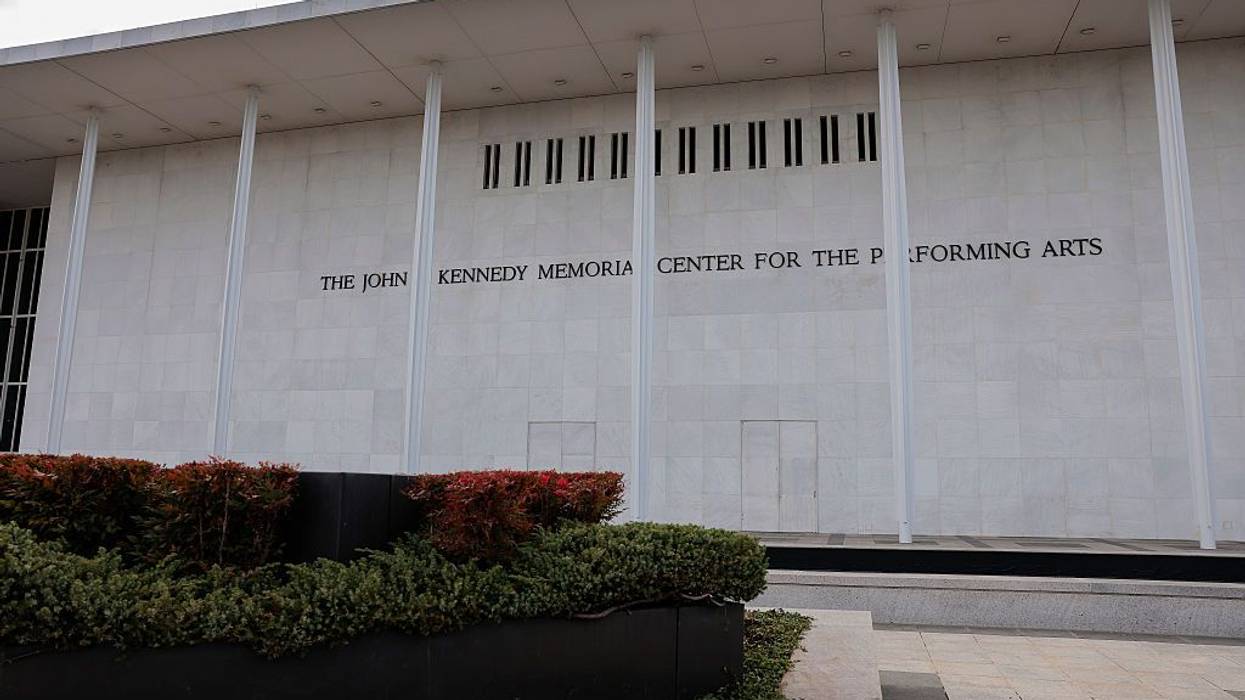
"Linguistic gymnastics cannot extricate the Kennedy Center’s board from an operative judicial order or the governing statute it was designed to enforce," said US District Judge Christopher Cooper.
President Donald Trump declared that the John F. Kennedy Memorial Center for the Performing Arts is "destined to doom" on Tuesday shortly after a federal judge once against blocked the president from slapping his name on the side of the building.
US District Judge Christopher Cooper ruled that the Kennedy Center board's effort to restore Trump's name to the outside of the performing arts center was still unlawful, even if being purportedly done to "recognize and honor President Trump's current and future existential and unprecedented contributions" to the building.
Trump responded to the ruling with a lengthy social media post where he said that the center is "in a virtual state of collapse," while blaming Cooper for the building's purportedly imminent demise.
"A very hostile and conflicted Judge (What else is new?) seems like he won’t let that happen, in which case, unfortunately, the Building is destined to doom," Trump wrote. "Isn’t that too bad?"
Last year, the board voted to rename the center as the "Donald J. Trump and John F. Kennedy Memorial Center for the Performing Arts," despite having no congressional authorization to do so.
After a court ruled that Trump's name must be removed from the building, the board subsequently passed a resolution to add signage to the building informing visitors that it has been "renovated and restored by President Donald J. Trump."
Additionally, the board voted to rename the campus on which the building sits as the "President Donald J. Trump Plaza."
Cooper said that both of these actions were in violation of an injunction granted earlier this year that prevented the board from taking unilateral action to rename the Kennedy Center or its properties without congressional approval.
"Simply put, defendants cannot install memorials for President Trump or anyone or anything else at the Kennedy Center without Congress’ blessing," the judge emphasized. "The board resolution bucks a federal court order and a statute Congress enacted."
The judge accused the administration of playing "word games" by trying to deny that the proposed additional signage was not a "memorial" to Trump but rather a "recognition" or an "acknowledgement."
"Common sense dictates that the words 'renovated and restored by President Donald J. Trump' establish a memorial," wrote Cooper. "Defendants themselves define a 'memorial' as 'anything meant to help people remember some person or event, as a statute, holiday, etc.'"
"Linguistic gymnastics," Cooper added, "cannot extricate the Kennedy Center’s board from an operative judicial order or the governing statute it was designed to enforce."
Cooper also slapped down warnings from the Kennedy Center board that the building "will face financial peril" and could even be forced to shut down unless Trump's name is restored outside.
Under the board members' theory, putting Trump's name back on the building would lead to a surge in donations to the center that could revive its dire fiscal outlook.
Cooper, however, didn't buy this claim in the slightest.
"In fact, evidence before the court pointed in the opposite direction," the judge wrote. "The renaming of the center coincided with declines in revenue and contributions, as artists canceled performances, the Washington National Opera ended its 50-year residency, and ticket sales and viewership of the Kennedy Center Honors broadcast dropped precipitously."
According to a Sunday report in The Washington Post, Kennedy Center board members have said that the performing arts center could close as soon as Tuesday without the restoration of Trump's name.
In a Tuesday afternoon social media post, Trump revealed that the board had voted to close the Kennedy Center indefinitely to undergo "renovation and reconstruction."
However, the president also warned that fixes to the building would not be made unless courts allowed him to put his name on the side.