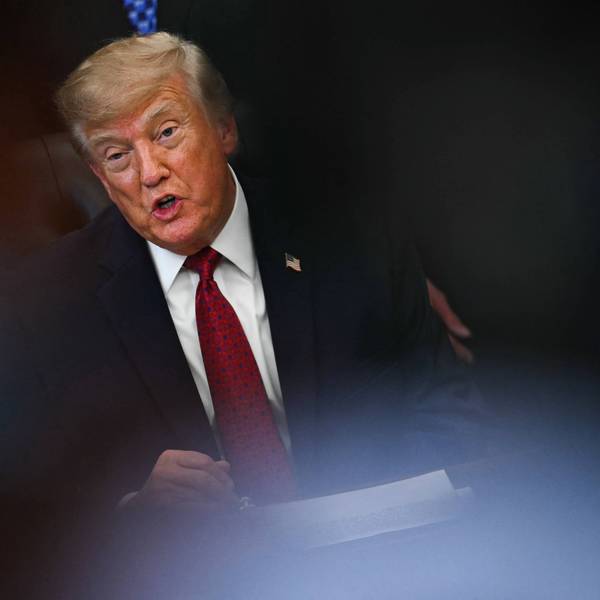

US Secretary of War Pete Hegseth speaks during a ceremony commemorating the 25th anniversary of the September 11 terrorist attacks in the courtyard of the Pentagon on September 11, 2026, in Arlington, Virginia.
Exploiting Tragedy to Promote War, Hegseth Falsely Claims That Iran 'Cheered on 9/11'
"What haunts me," said one anti-war activist, "is how little accountability there has been for those who lied us into war—and how those same lies are now recycled to justify the attack on Iran."
Twenty-five years later, Republican politicians are still using 9/11 to justify war in the Middle East. And they're still lying shamelessly.
During remarks outside the Pentagon on Friday commemorating the 25th anniversary of the terrorist attack, President Donald Trump and Defense Secretary Pete Hegseth portrayed their deeply unpopular war in Iran as part of the lineage of the global War on Terror, which was marked by a pair of lengthy military engagements in Iraq and Afghanistan that cost well over $2 trillion and millions of lives.
Trump declared that he was prosecuting his new war with Iran to fulfill the "sacred oath" sworn in the names of the nearly 3,000 people whose lives were lost that day, that "we will never, ever forget."
Hegseth seems to have forgotten quite a lot. Attempting to draw a link between the ideology of the al-Qaeda hijackers who committed the attack and the current Iranian government, the defense secretary said, "Our warriors have fought an Islamic theocracy that has wished us death for nearly half a century, that cheered on 9/11."
However, the claim that Iran "cheered on 9/11" is at odds with the historical record of how the nation's government and people reacted.
On September 19, 2001, The Washington Post reported that:
Despite two decades of official hostility, the people and government of Iran have offered vivid messages of sympathy and condemnations of terrorism in the aftermath of last week's attacks on New York and Washington...
Hard-line conservative Iranians and moderate reformers, top government and religious officials, Friday prayer leaders, and citizens on the street have uniformly denounced the plane hijackings and suicide crashes of September 11. Some, including President Mohammad Khatami, have offered to join an international campaign against terrorism under certain circumstances, including United Nations sponsorship.
On the day of the attacks in 2001, Khatami issued a swift condemnation over Iranian state TV of what he called "the terrorist operations of hijacking and attacking public places in American cities, which have resulted in the death of a large number of defenseless American people."
Khatami later decried the attacks as “the ugliest form of terrorism ever seen." According to later congressional testimony by a State Department official, he also asked to visit ground zero to light a candle out of respect for the victims, a request that was denied by the administration of then-US President George W. Bush.
Days after the attacks, Supreme Leader Ali Khamenei—who was killed this past February during the opening salvo of the joint US-Israeli war against Iran—agreed at the time that “mass murder of human beings is condemned," though he also suggested that "expansionist" US foreign policy had played a role in provoking the attacks.
The US-funded Radio Free Europe reported that, far from celebrating in the streets, around 2,000 Iranians had gathered in Tehran for a candlelight vigil a week after the attacks, at which participants "chanted against terrorism and expressed their sympathy with America." Days earlier, the Post reported that about 50,000 spectators at a World Cup qualifying match in Tehran observed a minute of silence in recognition of the attacks.
Iran's support for the US following the attack also went beyond words. While still describing Iran as the world's leading "state sponsor of terrorism," a May 2002 State Department report emphasized Iran's cooperation with US operations against al-Qaeda and the Taliban.
This included offering search-and-rescue assistance for downed US air crews, diplomatic cooperation at the 2001 Bonn Conference to build Afghanistan's post-Taliban government, and promising border controls to prevent fleeing Taliban and al-Qaeda members from escaping.
Though Trump promised at the outset that it would last only a matter of weeks, his war with Iran has now lumbered into its sixth month with no sign of stopping. It has spilled out into a wider Middle Eastern conflict that has taken the lives of about 8,000 people, displaced millions, and wreaked financial chaos.
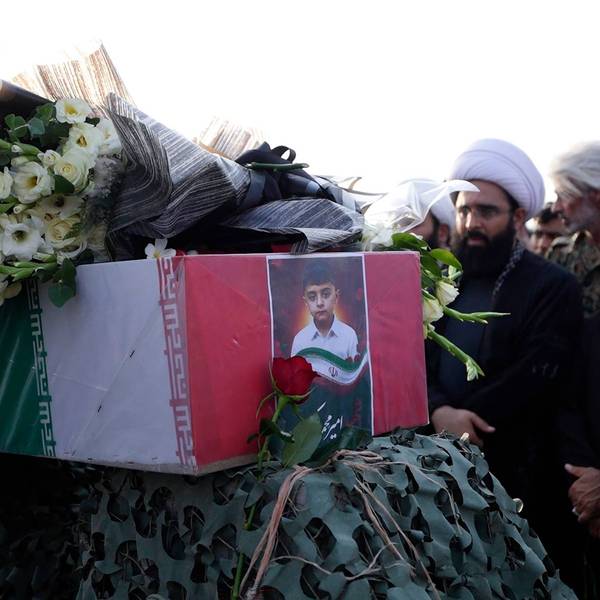
The war has included US attacks on civilians that have had a similar resonance with Iranians that 9/11 has for Americans, most infamously the bombing of an elementary school that killed at least 150 people, most of them children.
According to one economist's recent estimate, the war has conservatively cost the average American household about $1,200 over six months, combining the direct cost to taxpayers with the knock-on effects of spiking oil prices and broader inflation.
Though around two-thirds of Americans say they oppose the war and Congress has ordered Trump to bring it to an end, recent reports indicate that the administration is considering expanding it following this November's midterm elections.
Trump described the war as a grim necessity on Friday, in part to honor those who perished on September 11, 25 years earlier.
“That’s why we fight today," Trump said. "We don’t have a choice. There can only be victory. We fight hard. We fight to win.”
Medea Benjamin, the co-founder of the anti-war group CodePink, reflected earlier this week on how the tragedy is still being used to this day to justify endless wars overseas.
"What haunts me today is not only the devastation of the invasion, but how little accountability there has been for those who lied us into war—and how those same lies are now recycled to justify the attack on Iran," Benjamin said. "The War on Terror did not end."
"The same impunity that has shielded the architects of the global War on Terror," she added, "now emboldens the war criminals behind the genocide in Gaza and the Minab school massacre in Iran."
We are at a crossroads
This country and this world are at a monumental crossroads. In a few short weeks, US voters will have an opportunity to beat back the forces of fascism and confront the billionaires who are rigging the economy, our media system, and our democracy, making it increasingly impossible for ordinary people to get by. We’re not just talking about the election. We’re talking about what must be done once these fascist elements are vanquished from power. We need a bolder set of solutions than what either major party has so far been willing to offer and a working-class movement ready to fight like hell for it. Trump didn't emerge from nowhere. The conditions that fueled MAGA authoritarianism were created by decades of radical neoliberal economic policies and a corrupt political system dominated by corporate interests. They slashed taxes on the super-rich, promising that the benefits would trickle down. They said giveaways to the corporate titans would make life more affordable for the rest of us. It was all bullshit. And when a bitter, betrayed populace searches for someone to blame, right-wing demagogues have little trouble finding scapegoats. People know when they're being lied to, but you won't hear any of this from the corporate media. Only independent journalism—powered and funded by people who believe in building a better world—can deliver truly trustworthy daily news. Our Fall Campaign is underway, and we need your help. To power our newsroom through the rest of the year, we need to raise $125,000 by midnight on October 31. So if you share our vision, please contribute whatever you can to sustain our work. |
Twenty-five years later, Republican politicians are still using 9/11 to justify war in the Middle East. And they're still lying shamelessly.
During remarks outside the Pentagon on Friday commemorating the 25th anniversary of the terrorist attack, President Donald Trump and Defense Secretary Pete Hegseth portrayed their deeply unpopular war in Iran as part of the lineage of the global War on Terror, which was marked by a pair of lengthy military engagements in Iraq and Afghanistan that cost well over $2 trillion and millions of lives.
Trump declared that he was prosecuting his new war with Iran to fulfill the "sacred oath" sworn in the names of the nearly 3,000 people whose lives were lost that day, that "we will never, ever forget."
Hegseth seems to have forgotten quite a lot. Attempting to draw a link between the ideology of the al-Qaeda hijackers who committed the attack and the current Iranian government, the defense secretary said, "Our warriors have fought an Islamic theocracy that has wished us death for nearly half a century, that cheered on 9/11."
However, the claim that Iran "cheered on 9/11" is at odds with the historical record of how the nation's government and people reacted.
On September 19, 2001, The Washington Post reported that:
Despite two decades of official hostility, the people and government of Iran have offered vivid messages of sympathy and condemnations of terrorism in the aftermath of last week's attacks on New York and Washington...
Hard-line conservative Iranians and moderate reformers, top government and religious officials, Friday prayer leaders, and citizens on the street have uniformly denounced the plane hijackings and suicide crashes of September 11. Some, including President Mohammad Khatami, have offered to join an international campaign against terrorism under certain circumstances, including United Nations sponsorship.
On the day of the attacks in 2001, Khatami issued a swift condemnation over Iranian state TV of what he called "the terrorist operations of hijacking and attacking public places in American cities, which have resulted in the death of a large number of defenseless American people."
Khatami later decried the attacks as “the ugliest form of terrorism ever seen." According to later congressional testimony by a State Department official, he also asked to visit ground zero to light a candle out of respect for the victims, a request that was denied by the administration of then-US President George W. Bush.
Days after the attacks, Supreme Leader Ali Khamenei—who was killed this past February during the opening salvo of the joint US-Israeli war against Iran—agreed at the time that “mass murder of human beings is condemned," though he also suggested that "expansionist" US foreign policy had played a role in provoking the attacks.
The US-funded Radio Free Europe reported that, far from celebrating in the streets, around 2,000 Iranians had gathered in Tehran for a candlelight vigil a week after the attacks, at which participants "chanted against terrorism and expressed their sympathy with America." Days earlier, the Post reported that about 50,000 spectators at a World Cup qualifying match in Tehran observed a minute of silence in recognition of the attacks.
Iran's support for the US following the attack also went beyond words. While still describing Iran as the world's leading "state sponsor of terrorism," a May 2002 State Department report emphasized Iran's cooperation with US operations against al-Qaeda and the Taliban.
This included offering search-and-rescue assistance for downed US air crews, diplomatic cooperation at the 2001 Bonn Conference to build Afghanistan's post-Taliban government, and promising border controls to prevent fleeing Taliban and al-Qaeda members from escaping.
Though Trump promised at the outset that it would last only a matter of weeks, his war with Iran has now lumbered into its sixth month with no sign of stopping. It has spilled out into a wider Middle Eastern conflict that has taken the lives of about 8,000 people, displaced millions, and wreaked financial chaos.
The war has included US attacks on civilians that have had a similar resonance with Iranians that 9/11 has for Americans, most infamously the bombing of an elementary school that killed at least 150 people, most of them children.
According to one economist's recent estimate, the war has conservatively cost the average American household about $1,200 over six months, combining the direct cost to taxpayers with the knock-on effects of spiking oil prices and broader inflation.
Though around two-thirds of Americans say they oppose the war and Congress has ordered Trump to bring it to an end, recent reports indicate that the administration is considering expanding it following this November's midterm elections.
Trump described the war as a grim necessity on Friday, in part to honor those who perished on September 11, 25 years earlier.
“That’s why we fight today," Trump said. "We don’t have a choice. There can only be victory. We fight hard. We fight to win.”
Medea Benjamin, the co-founder of the anti-war group CodePink, reflected earlier this week on how the tragedy is still being used to this day to justify endless wars overseas.
"What haunts me today is not only the devastation of the invasion, but how little accountability there has been for those who lied us into war—and how those same lies are now recycled to justify the attack on Iran," Benjamin said. "The War on Terror did not end."
"The same impunity that has shielded the architects of the global War on Terror," she added, "now emboldens the war criminals behind the genocide in Gaza and the Minab school massacre in Iran."
- Opinion | Never Forget Is Bad Spiritual Advice | Common Dreams ›
- Opinion | Bush's Post-9/11 Policies Are Doing Further Damage in Trump's Hands | Common Dreams ›
- In Defiant UN Speech, Iranian President Says US and Israel Are the Real Terrorists | Common Dreams ›
- Senator Says Hegseth Barred Him From Gulf Base to 'Cover Up the True Cost' of Iran War | Common Dreams ›
Twenty-five years later, Republican politicians are still using 9/11 to justify war in the Middle East. And they're still lying shamelessly.
During remarks outside the Pentagon on Friday commemorating the 25th anniversary of the terrorist attack, President Donald Trump and Defense Secretary Pete Hegseth portrayed their deeply unpopular war in Iran as part of the lineage of the global War on Terror, which was marked by a pair of lengthy military engagements in Iraq and Afghanistan that cost well over $2 trillion and millions of lives.
Trump declared that he was prosecuting his new war with Iran to fulfill the "sacred oath" sworn in the names of the nearly 3,000 people whose lives were lost that day, that "we will never, ever forget."
Hegseth seems to have forgotten quite a lot. Attempting to draw a link between the ideology of the al-Qaeda hijackers who committed the attack and the current Iranian government, the defense secretary said, "Our warriors have fought an Islamic theocracy that has wished us death for nearly half a century, that cheered on 9/11."
However, the claim that Iran "cheered on 9/11" is at odds with the historical record of how the nation's government and people reacted.
On September 19, 2001, The Washington Post reported that:
Despite two decades of official hostility, the people and government of Iran have offered vivid messages of sympathy and condemnations of terrorism in the aftermath of last week's attacks on New York and Washington...
Hard-line conservative Iranians and moderate reformers, top government and religious officials, Friday prayer leaders, and citizens on the street have uniformly denounced the plane hijackings and suicide crashes of September 11. Some, including President Mohammad Khatami, have offered to join an international campaign against terrorism under certain circumstances, including United Nations sponsorship.
On the day of the attacks in 2001, Khatami issued a swift condemnation over Iranian state TV of what he called "the terrorist operations of hijacking and attacking public places in American cities, which have resulted in the death of a large number of defenseless American people."
Khatami later decried the attacks as “the ugliest form of terrorism ever seen." According to later congressional testimony by a State Department official, he also asked to visit ground zero to light a candle out of respect for the victims, a request that was denied by the administration of then-US President George W. Bush.
Days after the attacks, Supreme Leader Ali Khamenei—who was killed this past February during the opening salvo of the joint US-Israeli war against Iran—agreed at the time that “mass murder of human beings is condemned," though he also suggested that "expansionist" US foreign policy had played a role in provoking the attacks.
The US-funded Radio Free Europe reported that, far from celebrating in the streets, around 2,000 Iranians had gathered in Tehran for a candlelight vigil a week after the attacks, at which participants "chanted against terrorism and expressed their sympathy with America." Days earlier, the Post reported that about 50,000 spectators at a World Cup qualifying match in Tehran observed a minute of silence in recognition of the attacks.
Iran's support for the US following the attack also went beyond words. While still describing Iran as the world's leading "state sponsor of terrorism," a May 2002 State Department report emphasized Iran's cooperation with US operations against al-Qaeda and the Taliban.
This included offering search-and-rescue assistance for downed US air crews, diplomatic cooperation at the 2001 Bonn Conference to build Afghanistan's post-Taliban government, and promising border controls to prevent fleeing Taliban and al-Qaeda members from escaping.
Though Trump promised at the outset that it would last only a matter of weeks, his war with Iran has now lumbered into its sixth month with no sign of stopping. It has spilled out into a wider Middle Eastern conflict that has taken the lives of about 8,000 people, displaced millions, and wreaked financial chaos.
The war has included US attacks on civilians that have had a similar resonance with Iranians that 9/11 has for Americans, most infamously the bombing of an elementary school that killed at least 150 people, most of them children.
According to one economist's recent estimate, the war has conservatively cost the average American household about $1,200 over six months, combining the direct cost to taxpayers with the knock-on effects of spiking oil prices and broader inflation.
Though around two-thirds of Americans say they oppose the war and Congress has ordered Trump to bring it to an end, recent reports indicate that the administration is considering expanding it following this November's midterm elections.
Trump described the war as a grim necessity on Friday, in part to honor those who perished on September 11, 25 years earlier.
“That’s why we fight today," Trump said. "We don’t have a choice. There can only be victory. We fight hard. We fight to win.”
Medea Benjamin, the co-founder of the anti-war group CodePink, reflected earlier this week on how the tragedy is still being used to this day to justify endless wars overseas.
"What haunts me today is not only the devastation of the invasion, but how little accountability there has been for those who lied us into war—and how those same lies are now recycled to justify the attack on Iran," Benjamin said. "The War on Terror did not end."
"The same impunity that has shielded the architects of the global War on Terror," she added, "now emboldens the war criminals behind the genocide in Gaza and the Minab school massacre in Iran."
- Opinion | Never Forget Is Bad Spiritual Advice | Common Dreams ›
- Opinion | Bush's Post-9/11 Policies Are Doing Further Damage in Trump's Hands | Common Dreams ›
- In Defiant UN Speech, Iranian President Says US and Israel Are the Real Terrorists | Common Dreams ›
- Senator Says Hegseth Barred Him From Gulf Base to 'Cover Up the True Cost' of Iran War | Common Dreams ›