SUBSCRIBE TO OUR FREE NEWSLETTER
Daily news & progressive opinion—funded by the people, not the corporations—delivered straight to your inbox.
5
#000000
#FFFFFF
To donate by check, phone, or other method, see our More Ways to Give page.


Daily news & progressive opinion—funded by the people, not the corporations—delivered straight to your inbox.
"They want civil chaos in this country," said one journalist of Israel's military plans in Lebanon.
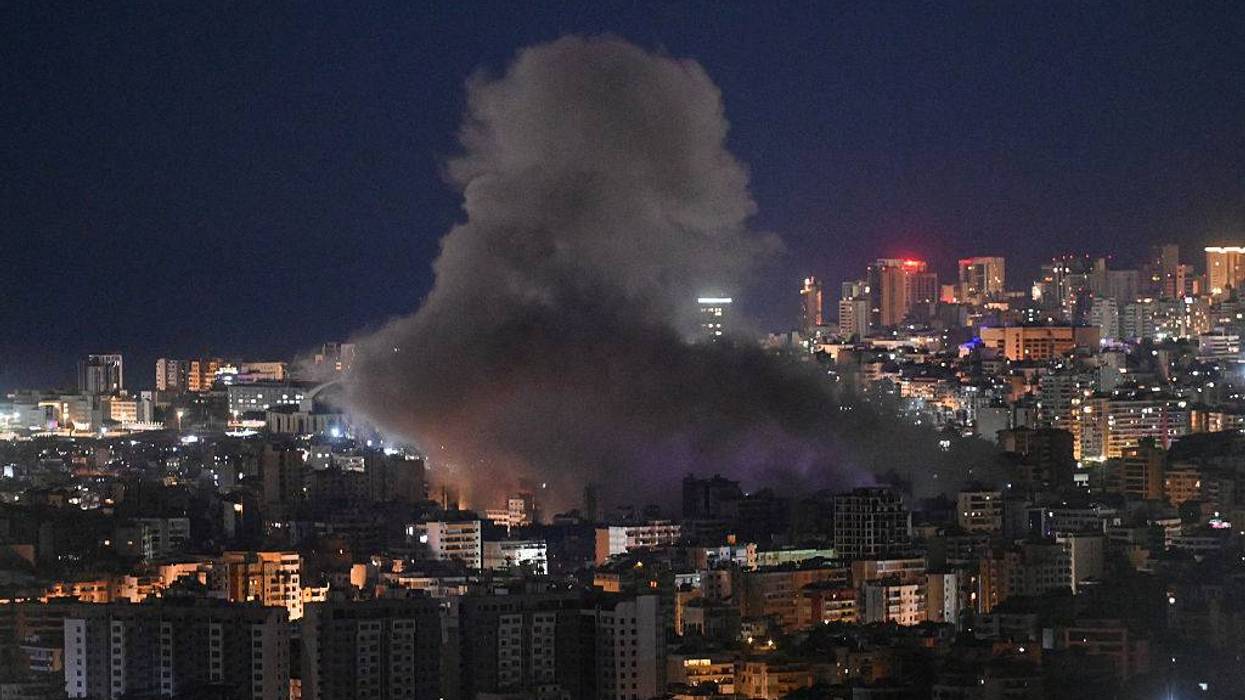
The Israeli military on Thursday issued what the Times of Israel described as an "unprecedented" evacuation warning to residents in Beirut's southern suburbs ahead of planned strikes against Hezbollah.
According to the Times of Israel, the warning "covers four major neighborhoods in the southern suburbs" of the Lebanese capital, and represents a marked difference from past evacuation warnings that have typically covered specific locations where Israel intended to launch strikes.
In the warning, Israeli Army spokesman Col. Avichay Adraee told residents of the four neighborhoods to "save your lives and evacuate your homes immediately," and warned that any movement southward toward the Israeli border "may endanger your lives."
Israel has deployed soldiers and conducted airstrikes in Lebanon as its military also joins the US in attacking Iran in an operation they began late last week. The US and Israeli attacks have led to a widening conflict in the region, with the Iran-backed Hezbollah launching missiles at Israel in retaliation.
Maha Yahya, director of the Malcolm H. Kerr Carnegie Middle East Center, said in a Thursday social media post that the Israeli warning has caused "total panic across the city," as the area being targeted by Israel is home to "at least a half million people."
Lebansese-Australian journalist Rania Abouzeid similarly described "widespread panic" across Beirut in the wake of the order.
"Traffic is choked, people rushing to leave and head north," Abouzeid wrote. "Drones in the air. WhatsApp messages urging people to crack windows open to avoid shattering from expected blasts."
Ariel Oseran, senior Middle East correspondent for i24News English, posted video on social media showing packed streets filled with cars of people trying to escape the impending Israeli attack.
Residents of Beirut’s southern suburbs seen fleeing shortly after the IDF issued an evacuation warning for the entire area. https://t.co/V34p1mhCW6 pic.twitter.com/LCQfOxO59J
— Ariel Oseran أريئل أوسيران (@ariel_oseran) March 5, 2026
Mohamad Safa, executive director of PVA Patriotic Vision, an international multilateral organization with special consultative status at the United Nations Economic and Social Council, said that the evacuation order was making a dangerous situation on the ground in Lebanon even worse.
"Our teams have been on the ground assisting [internally displaced peoples] since day one," he wrote. "The humanitarian situation in Lebanon is going from bad to worse. Shelters are overcrowded, and there are no apartments available for rent. Emergency relief is insufficient. People are sleeping on the ground without blankets or mattresses in the bitter cold."
Journalist Rania Khalek of BreakThrough News said that Israel "is trying to empty out huge portions of the country," and she speculated that it was being done in a way to maximize chaos on the ground.
"The Israelis are telling Lebanese they are displacing from Shia neighborhoods to take roads to what will inevitably land them in Christian and Sunni areas," she wrote. "They want civil chaos in this country."
Philippe Lazzarini, commissioner-general of the United Nations Relief and Works Agency for Palestine Refugees in the Near East (UNRWA) said that his agency "has opened emergency shelters for displaced people—Palestine refugees, Lebanese, and Syrians alike" in the wake of Israel's evacuation warning.
Lazzarini also emphasized that "Lebanon needs peace, not more destruction, displacement, and death."
"The Biden-Harris administration gave Israel at least 3,000 of these munitions from October-December 2023 alone," noted one expert.
At least one U.S.-supplied bomb was used by Israel in a Thursday night airstrike that killed at least 22 people and wounded over 115 more in the Lebanese capital of Beirut, according to a Guardian analysis published on Friday.
The crisis, conflict, and arms division of Human Rights Watch and a former U.S. military explosives expert analyzed shrapnel from a bomb used by Israel in the strike on an apartment complex in the densely populated Basta neighborhood near central Beirut and concluded it came from a joint direct attack munition (JDAM) manufactured by Boeing.
"The bolt pattern, its position, and the shape of the remnant are consistent with the tail fin of a U.S.-made JDAM guidance kit for MK80-series air-dropped munitions," HRW senior researcher Richard Weir told The Guardian.
MK80-series JDAMs are attached to so-called "dumb" bombs ranging from 500 to 2,000 pounds to convert them into GPS-guided "smart" munitions.
"The use of these weapons in densely populated areas, like this one, places civilians and civilian objects in the immediate area at grave risk of immediate and lasting harm," Weir said.
In May, the Biden administration—which has approved tens of billions of dollars in armed aid to Israel, even as the key ally is on trial for genocide at the International Court of Justice— suspended transfers of 500- and 2,000-pound bombs over fears that the devastating munitions would be used in airstrikes on Rafah, the southern Gaza city where more than a million Palestinians had sought refuge.
By that time, Israel had already dropped hundreds of 2,000-pound bombs—which the U.S. military avoids using in civilian areas because they can destroy entire city blocks—on Gaza, including in an October 31 attack on the densely populated Jabalia refugee camp that killed more than 120 civilians.
The United Nations Human Rights Office said in June that Israel's use of 2,000-pound bombs and other U.S.-supplied weapons likely violated international law by deliberately targeting civilians in disproportionate attacks. Israeli military commanders have also been criticized for using artificial intelligence-based target selection to approve bombings they know will cause high civilian casualties.
The Biden administrationresumed shipments of 500-pound bombs to Israel in July, while keeping the temporary proscription on 2,000-pound munitions in place.
While Israeli forces and Hezbollah have been engaged in cross-border attacks since the armed wing of the Lebanon--based political and paramilitary group began firing rockets and other weapons at Israel in solidarity with Gaza after the Hamas-led October 7, 2023 attack, the intensity of Israel's assault has increased dramatically since last month.
Since then, two waves of Israeli-engineered detonations targeting thousands of pagers and other communication devices killed dozens of people including Hezbollah members and civilians, two of them children. Later in September, Israeli forces unleashed an aerial bombing campaign in Lebanon, including the September 27 strike that assassinated Hezbollah political leader Hassan Nasrallah and other senior members of the group.
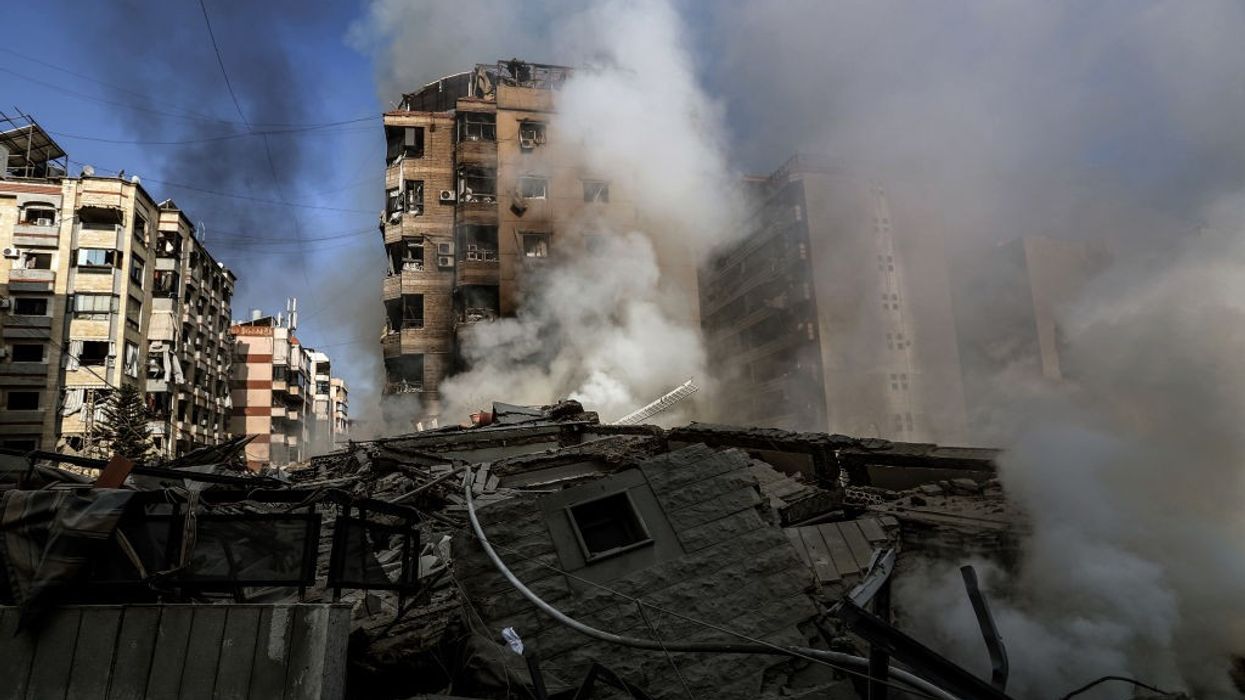
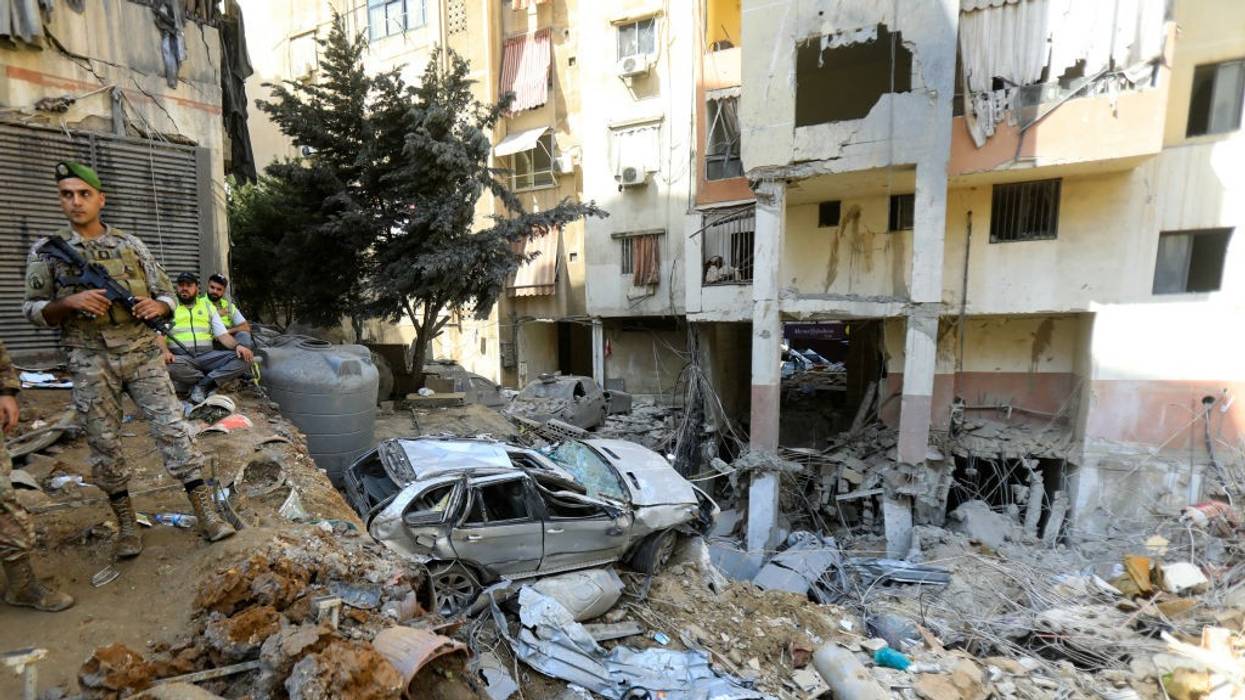
Expert analysis concluded that Israel used U.S.-supplied 2,000-pound bombs in the strike on a densely populated suburb of Beirut, which flattened several residential buildings.
Lebanon's Ministry of Public Health says that more than 2,200 people—including at least 127 children—have been killed and over 10,000 others wounded by Israeli forces since last October. Hezbollah attacks have killed 28 civilians and 39 soldiers in Israel over the same period.
On Friday, United Nations Secretary-General António Guterres joined foreign ministers from countries including China, France, Italy, Indonesia, and Turkey, as well as human rights organizations around the world, in condemning Israeli attacks on U.N. personnel in southern Lebanon after two Indonesian U.N. peacekeepers were wounded by Israeli tank fire.
"Israel is committing crimes against humanity and waging regional war (while dragging international states to it) all in order to maintain its control of resources in the region," said one West Bank journalist.
Further elevating fears of a full-scale regional war in the Middle East, Hezbollah on Saturday confirmed the death of Hassan Nasrallah, who led the political and paramilitary group, after Israel's massive overnight assault on Lebanon.
Hezbollah
did not say how Nasrallah was killed but said in a statement that "the leadership of Hezbollah vows to the highest, most sacred, and dearest martyr in our journey filled with sacrifices and martyrs to continue its struggle against the enemy, supporting Gaza and Palestine, and defending Lebanon and its steadfast, honorable people."
The confirmation from the Iran-backed group came after the Israel Defense Forces (IDF) claimed that it had killed Nasrallah—and multiple other members of Hezbollah leadership.
As of Saturday morning, at least 1,030 people in Lebanon are confirmed dead, and 6,352 people have been injured, though Lebanese Health Minister Firas Abiad highlighted that "there are still martyrs under the rubble, missing persons, and scattered remains."
Israel escalated its attacks on Lebanon this week after trading fire with Hezbollah for nearly a year over the Israeli war on the Gaza Strip, which has killed more than 41,000 Palestinians and left many more displaced and starving. This week's death toll in Lebanon was over 700 even before the "
apocalyptic" bombing campaign that began Friday, while Israeli Prime Minister Benjamin Netanyahu was in New York City to address the United Nations General Assembly.
After
leveling several residential buildings in Beirut's southern suburbs, targeting Hezbollah's headquarters in Dahiyeh, Israel continued "conducting strikes on strategic terrorist targets" around the Lebanese capital, the IDF said, including "weapons production facilities, buildings used to store advanced weapons, and key command centers."
In response to the IDF's description of the Friday attack as a "precise strike," Adil Haque, a professor at Rutgers Law School in New Jersey, said, "Reminder that the location of military objectives in civilian areas, even when illegal, does not relieve the opposing party of its obligations under international humanitarian law."
Fellow Rutgers professor and human rights attorney Noura Erakat
stressed that "Israel transforms residential areas into targets by saying 'terrorist' once [because] of work of racism and colonialism. These are attacks on civilians [without] regard to distinction [between] civilian and militants."
Mariam Barghouti, a Palestinian American journalist and policy analyst based in the occupied West Bank,
said on social media that "in a single night Israeli military carpet-bombed Lebanon, carpet-bombed Gaza, invaded Jenin and Tulkarem in the West Bank."
"Israel is committing crimes against humanity and waging regional war (while dragging international states to it) all in order to maintain its control of resources in the region, while annexing Palestinian lands unabated," Barghouti added. "Israel's violence is in order to defend its ethnoreligous supremacy."
According to Reuters:
Residents have fled Dahiyeh, seeking shelter in downtown Beirut and other parts of the city.
"Yesterday's strikes were unbelievable. We had fled before and then went back to our homes, but then the bombing got more and more intense, so we came here, waiting for Netanyahu to stop the bombing," said Dalal Daher, speaking near Beirut's Martyrs Square, where some of the displaced were camping out.
The Associated Press reported that "on Saturday morning, the Israeli military carried out more than 140 airstrikes in southern Beirut and eastern Lebanon's Bekaa Valley," while "Hezbollah launched dozens of projectiles across northern and central Israel and deep into the Israel-occupied West Bank, damaging some buildings in the northern town of Safed."
Iran's supreme leader, Ayatollah Ali Khamenei,
said in a series of social media posts on Saturday that "all the Resistance forces in the region stand with and support Hezbollah."
"The Resistance forces will determine the fate of this region with the honorable Hezbollah leading the way," he continued. "The Lebanese haven't forgotten there was a time when the soldiers of the occupying regime were advancing toward Beirut, and Hezbollah stopped them and made Lebanon proud. Today too, by the grace and power of God, Lebanon will make the transgressing, malicious enemy regret its actions."
"It is an obligation for all Muslims to stand with the people of Lebanon and the honorable Hezbollah, offering their resources and assistance as Hezbollah confronts the usurping, cruel, malicious Zionist regime," he added.
Greek economist and politician Yanis Varoufakispointed out that the intense bombing by Israel—which receives billions of dollars in military support from the United States—came shortly after U.S. President Joe Biden and French President Emmanuel Macron "tabled a joint U.S.-French comprehensive cease-fire initiative to end the carnage" in Gaza and Lebanon.
"Today Israel killed Nasrallah," he said. "Can there be a greater humiliation for Biden-Macron? Can't they see they are a laughingstock?"
Just hours before Israel toppled residential buildings in Lebanon on Friday, Human Rights Watch director of crisis advocacy Akshaya Kumar wrote that her group "is calling on Israel's key allies, including the United States, to suspend military assistance and arms sales to Israel, given the real risk that they will be used to commit grave abuses."
"Instead, the U.S. has done the opposite, and continues to approve weapons transfers and military aid without conditions," she noted. "World leaders gathered in New York held an emergency meeting on Lebanon, but words alone will not be enough to shift the Israeli government's plans. Leaders need to act."
Early Saturday afternoon, Biden released a statement on Israel killing Nasrallah. In it, Biden "praises not just his killing but how it was done—calling Israel's strike on an area full of civilians 'a measure of justice,'" said HuffPost's Akbar Shahid Ahmed. "Striking."
Biden also said that "the United States fully supports Israel's right to defend itself against Hezbollah, Hamas, the Houthis, and any other Iranian-supported terrorist groups. Just yesterday, I directed my secretary of defense to further enhance the defense posture of U.S. military forces in the Middle East region to deter aggression and reduce the risk of a broader regional war."
"Ultimately, our aim is to de-escalate the ongoing conflicts in both Gaza and Lebanon through diplomatic means," Biden claimed—though, as Ahmed emphasized, his call to reduce hostilities came "without changes to U.S. policy that's battered both."
While Hezbollah's leader Hassan Nasrallah reportedly survived the attack on the densely populated area of Lebanon's capitol, one observer warned that Israel may still "get the regional war it has sought."
Israel's dropping of massive bombs in Beirut on Friday sparked a fresh wave of global condemnation against Israeli Prime Minister Benjamin Netanyahu, with critics accusing him of trying to drag the Middle East into an even bloodier conflict that could engulf the entire region.
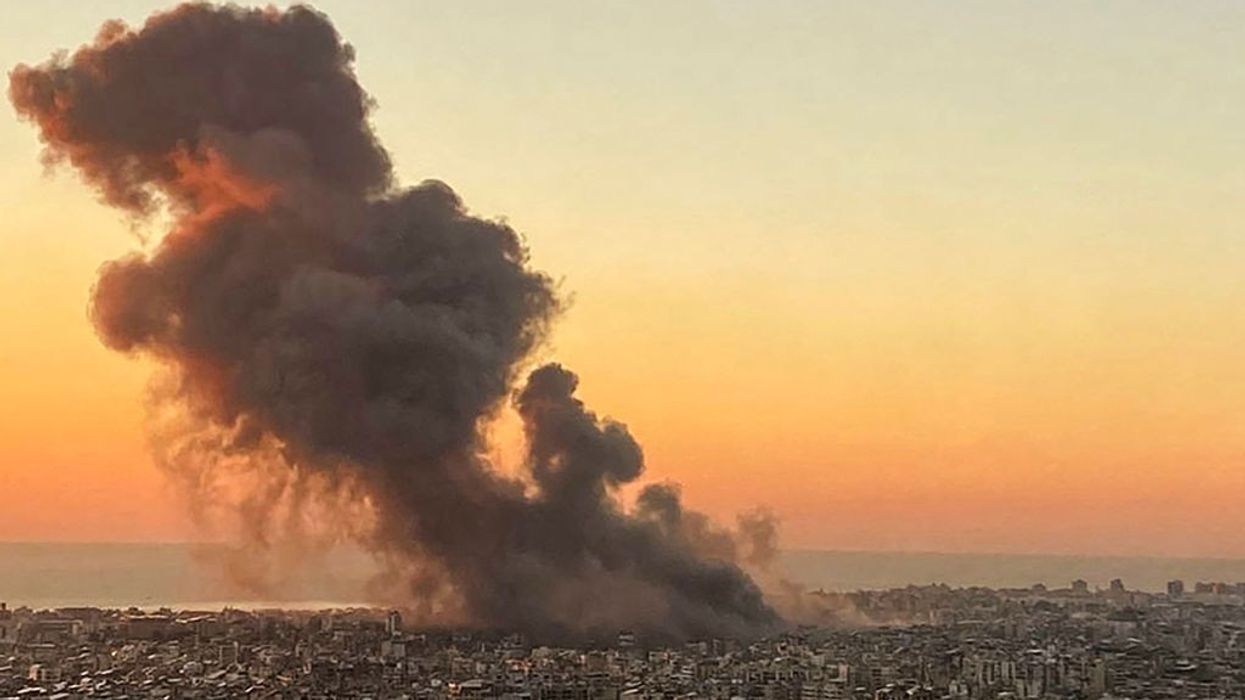
The Israeli attack supposedly targeted Hassan Nasrallah, head of the political and paramilitary group Hezbollah. Multiple media outlets reported that the leader survived, though hundreds of others are feared dead in the "complete carnage" from the bombing that leveled several buildings. While the death toll from Friday is not yet clear, over 700 people have been killed in Israel's strikes in Lebanon since Monday.
As The New York Times reported:
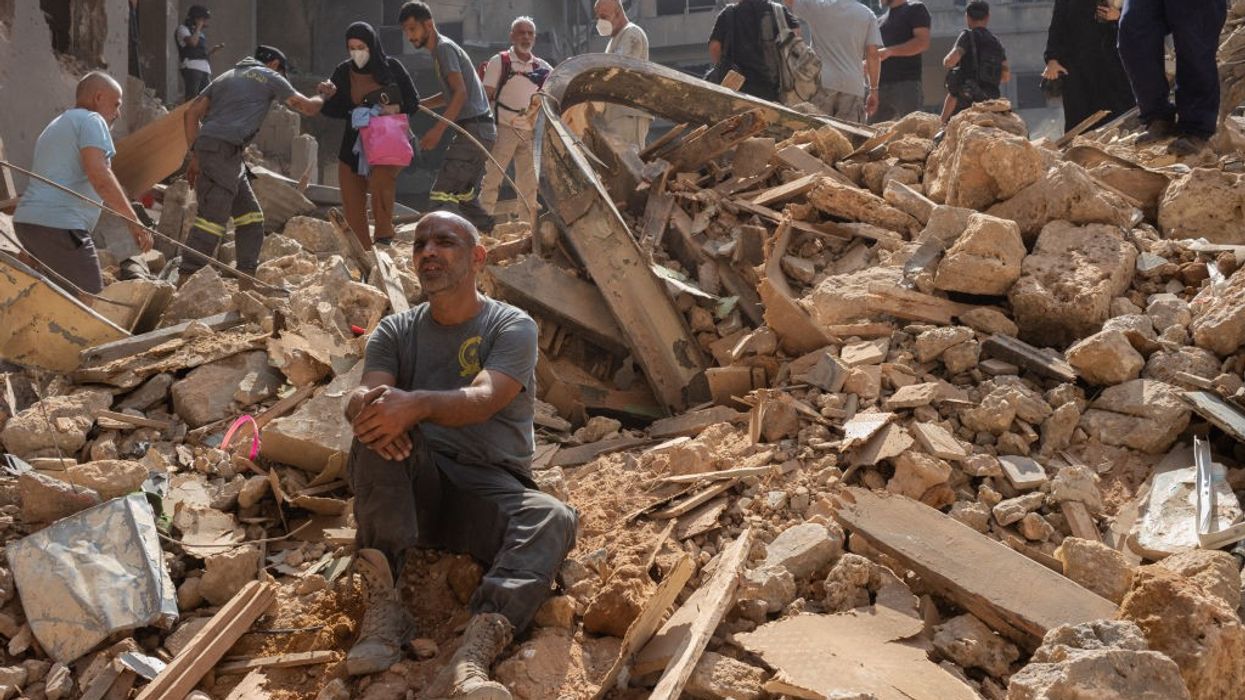
Lebanon's health minister, Firass Abiad, said that there had been a "complete decimation" of four to six residential buildings as a result of the Israeli strikes. He said that the number of casualties in hospitals was low so far because people were still trapped under the rubble. "They are residential buildings. They were filled with people," Mr. Abiad said. "Whoever is in those buildings is now under the rubble."
Social media and news sites quickly filled with photos and videos of massive plumes of smoke and smoldering rubble.
Jeanine Hennis-Plasschaert, the United Nations special coordinator for Lebanon, said Friday that she was "deeply alarmed and profoundly worried about the potential civilian impact of tonight's massive strikes on Beirut's densely populated southern suburbs. The city is still shaking with fear and panic widespread. All must urgently cease fire."
However, the bombing is widely expected to worsen this week's escalation, which came after nearly a year of the Israel Defense Forces (IDF) trading strikes with Hezbollah over the Israeli assault on the Gaza Strip, which has killed over 41,000 Palestinians.
"For Israel, it may not matter if Nasrallah was killed. Either way, it believes it'll get the regional war it has sought," Trita Parsi, executive vice president of the Quincy Institute for Responsible Statecraft, said of the Friday attack.
Citing an unnamed Israeli official, NBC News reported that "Israel expects Hezbollah will attempt to mount a major retaliatory attack" in response to Friday's bombing of the group's command center.
As Reuters detailed:
Israel has struck the Hezbollah-controlled southern suburbs of Beirut, known as Dahiyeh, four times over the last week, killing at least three senior Hezbollah military commanders.
But Friday's attack was far more powerful, with multiple blasts shaking windows across the city, recalling Israeli airstrikes during the war it fought with Hezbollah in 2006.
In a video posted on social media, IDF Spokesperson Rear Adm. Daniel Hagari described the Friday attack as "a precise strike" on what "served as the epicenter of Hezbollah's terror," adding that the group's headquarters "was intentionally built under residential buildings."
During Netanyahu's United Nations General Assembly speech on Friday—which was met with a walkout from several diplomats and other officials—the prime minister said that Hezbollah has stored rockets "in schools, in hospitals, in apartment buildings, and in the private homes of the citizens of Lebanon. They endanger their own people. They put a missile in every kitchen, a rocket in every garage."
In response, Middle East expert Assal Rad said, "So he's claiming there's no civilian spaces in Lebanon and Israel has a right to destroy all of it."
Jason Hickel, who has positions at multiple European universities, also sounded the alarm over those lines from the Israeli leader's speech.
Netanyahu is "effectively arguing all homes are a military target," he said. "This is 100% genocidal and this maniac must be stopped."
Hours before the attack in suburban Beirut, the Democracy in Europe Movement 2025 (DiEM25) strongly condemned "Israel's brutal bombardment of Lebanon, another reckless escalation in the Middle East on behalf of the Benjamin Netanyahu regime that risks further destabilization in an already fragile region."
"The Israeli bombardment of Lebanon is the latest dark chapter in a series of disproportionate displays of force. Its ongoing genocide in Palestine over the last year has proven beyond any doubt that its willingness to commit horrific acts knows no bounds," DiEM25 said. "Rather than seeking a peaceful and just resolution, Israel's government has consistently chosen the path of militarism, often with international support from the European Union and the United States."
"The international community, including the E.U., has a critical role to play in promoting peace rather than enabling violence," the group added. "Peace and security in the Middle East will not come through bombs and military strength. It will come through diplomacy. We remain committed to working towards that aim and stand in solidarity with the Lebanese people, as well as all others suffering from this violent escalation."
However, there was no hint of de-escalation as Israeli warplanes bombed Beirut, killing dozens of people including senior Hezbollah commanders and women and children.
As Israel followed up its remote bombings of communications devices in Lebanon with airstrikes on Beirut, the United Nations Security Council held an emergency session Friday during which officials urgently called for an immediate cease-fire and warned that the Middle East is on "the brink of catastrophe."
"We risk seeing a conflagration that could dwarf even the devastation and suffering witnessed so far," U.N. Under-Secretary-General for Political and Peacebuilding Affairs Rosemary DiCarlo told representatives of the 15-member Security Council (UNSC) during the session.
"It is not too late to avoid such folly. There is still room for diplomacy," DiCarlo stressed. "I also strongly urge member states with influence over the parties to leverage it now."
"It is not too late to avoid such folly. There is still room for diplomacy."
Officials voiced alarm over this week's remote bombings of pagers, walkie-talkies, and other devices Israel said belonged to members of Hezbollah, the Lebanese political and paramilitary group, which killed at least 37 people including two children and wounded thousands more. While Israel has not claimed responsibility for the attacks, U.S. officials have attributed the attacks to their key ally.
"These attacks represent a new development in warfare, where communication tools become weapons," U.N. High Commissioner for Human Rights Volker Türk told the council.
"This has unleashed widespread fear, panic, and horror among people in Lebanon, already suffering in an increasingly volatile situation since October 2023 and crumbling under a severe and longstanding economic crisis," Türk added. "This cannot be the new normal."
Speaking during the meeting, Lebanese Foreign Minister Abdallah Bou Habib said the "unfathomable" Israeli electronic attacks "represent a serious unprecedented event in the history of wars" and warned that "no one in this world is safe anymore."
Habib demanded the council condemn Israel's "terrorist attack" and asserted that "accepting what happened amounts to opening a Pandora's box," with countries and militant groups carrying out similar bombings around the world.
"This is the moment of truth," he added.
French U.N. Ambassador Nicolas de Rivière told the Security Council that "the risk of an open war with potentially tragic consequences is growing every day."
"Such a prospect must be avoided at all costs," he added. "It is urgent that all parties work towards de-escalation."
Deputy U.S. U.N. Ambassador Robert Wood defended Israel, asserting that "no member of this council facing a terrorist organization on its border would tolerate daily rocket attacks on its territory."
However, some experts
said that the Israeli device bombings were acts of terrorism under international law.
There was no hint of de-escalation as Israeli warplanes bombed a residential area of Beirut on Friday, killing at least 31 people, including multiple Hezbollah commanders, and wounding at least dozens of others. Lebanon's Ministry of Health said that the dead include three women and seven children.
During a Saturday television interview, Israeli Minister of Education Yoav Kisch falsely proclaimed that "there is no difference between Hezbollah and Lebanon."
"The way things are progressing at the moment, Lebanon will be annihilated," he vowed. Pressed on the genocidal implications of the word "annihilated," Kisch said, "Lebanon as we know it will not exist."
Hezbollah and Israeli forces have traded limited—yet deadly and destructive—cross-border fire since October 7, when Israel retaliated for Hamas-led attacks by launching a war for which it is currently on trial for genocide at the U.N. International Court of Justice in The Hague.
According to the Gaza Ministry of Health, Israel's bombs, bullets, and blockade have killed and maimed more than 147,000 Palestinians in Gaza over the past 351 days. Nearly all of Gaza's 2.3 million people have been forcibly displaced by Israel's bombardment and invasion, which, along with the "
complete siege" on the coastal enclave, has fueled widespread and sometimes deadly starvation and disease.
One group responded to Israel's bombing of "a densely populated civilian area in Beirut" by urging governments to "condemn this dangerous escalation and immediately suspend arms sales to Israel."
This is a developing story… Please check back for possible updates...
The Israel Defense Forces confirmed Tuesday that it "carried out a targeted strike in Beirut," elevating fears of an all-out war with Lebanon or a larger regional conflict as Israel continues a monthslong assault on the Gaza Strip.
Israel has blamed Hezbollah, a militia and political party in Lebanon, for the recent rocket attack on a soccer field in Majdal Shams, a town in the Israeli-occupied Golan Heights. Hezbollah has denied responsibility.
The IDF said on social media that its strike in the Lebanese capital targeted an unnamed "commander responsible for the murder of the children in Majdal Shams and the killing of numerous additional Israeli civilians."
BREAKING NEWS: The Israeli army has launched a "precision strike" on Beirut, targeting a Hezbollah commander. This operation comes in retaliation for an attack on the Israeli-occupied Golan Heights on Saturday. pic.twitter.com/CI0ZOW04Lg
— Mondoweiss (@Mondoweiss) July 30, 2024
Reuters reported that "a senior Lebanese security source said a senior Hezbollah commander had been the target of the air strike and his fate remained unclear."
The Israeli strike "targeted the area around Hezbollah's Shura Council in the Haret Hreik neighborhood of the capital," Reuters added, citing Lebanon's state-run national news agency.
Since the Israeli assault on Gaza began over the Hamas-led October 7 attack, cross-border strikes have killed hundreds of Hezbollah fighters and approximately 100 civilians.
The Peace & Justice Project—founded by Jeremy Corbyn, an Independent member of the United Kingdom's Parliament—said Tuesday that "in the last few moments, Israel has bombed a densely populated civilian area in Beirut. The U.K. and U.S. governments must condemn this dangerous escalation and immediately suspend arms sales to Israel."
Sarah Leah Whitson, executive director of Democracy for the Arab World Now (DAWN), urged U.S. President Joe Biden—who has enabled the Israeli assault on Gaza with diplomatic and weapons support—to put pressure on Israel to prevent war with Lebanon.
"In the days after October 7, President Biden had a message for Hezbollah: 'Don't.' Now it's time for Biden to send the same message to Israel: Don't launch a new war in Lebanon, don't keep evading a permanent cease-fire in Gaza, don't assume American support if you start a regional war," she said. "The U.S. government should be doing everything it can to stop the escalation of the conflict and the only way to accomplish that is to exert enough pressure on Israel to reach a permanent cease-fire in Gaza."
Like DAWN's leader, Win Without War executive director Sara Haghdoosti also connected the airstrike to peace in Gaza.
"The latest round of strikes between the Israeli military and Hezbollah puts the region at the edge of a major war," Haghdoosti warned. "Win Without War is alarmed by the escalation over the last several days. We call on the Biden administration to redouble diplomatic efforts to calm tensions and prevent further violence."
"A cease-fire in Gaza remains the most crucial step in ending this devastating cycle of violence," she added. "We urge the Biden administration to use all the leverage at its disposal to secure a deal that returns hostages held in Gaza, ends the killing and horrific humanitarian crisis in Gaza, and averts a regional war."
"If Israel wants to kick-start a major war with Hezbollah, bombing a target in Beirut is exactly the way to do it," said one analyst.
Fears of an all-out war between Israel and Hezbollah intensified Tuesday after an Israeli drone strike reportedly killed a senior Hamas official in the Lebanese capital of Beirut, an attack likely to further enflame a region reeling from Israel's catastrophic assault on Gaza.
Citing three unnamed security sources and Lebanese news outlets, Reuters reported that an Israeli drone attack on an office building in the suburbs of Dahiyeh killed Saleh Arouri, the deputy head of Hamas' political wing and one of the founders of the group's military arm. The strike also killed several others, with Reuters observing that "limbs and other pieces of flesh could be seen on the roadside."
One Hamas official, Bassem Naim, confirmed to The Associated Press that Arouri was killed in the alleged Israeli drone strike. Israel has thus far declined to say whether it carried out the attack.
"If Israel wants to kick-start a major war with Hezbollah, bombing a target in Beirut is exactly the way to do it," Firas Maksad, a senior fellow at the Middle East Institute, wrote in response to the blast. "Hezbollah will now have to go up the escalation ladder and respond in kind."
AP noted that "Hezbollah leader Sayyed Hassan Nasrallah has vowed to retaliate against any Israeli targeting of Palestinian officials in Lebanon."
Israel and Hezbollah have been exchanging fire with growing frequency and intensity since October 7, when a Hamas-led attack on southern Israel was met with one of the most destructive bombing campaigns in modern history, devastating Gaza.
Middle East analyst Omar Baddar argued that Israel's alleged strike in Beirut marks "an extremely serious escalation."
"Bombing Beirut or its suburbs had long been declared a red line by Hezbollah that would necessitate significant retaliation," Baddar wrote. "All eyes on Lebanon now."
Lebanese Prime Minister Hassan Diab and his entire cabinet resigned Monday amid widespread anger and mass protests over a massive warehouse explosion in Beirut last week that killed more than 150 people, wounded thousands, and left hundreds of thousands homeless.
In an address to the nation Monday as street demonstrations raged, Diab blamed the catastrophic explosion on the "chronic corruption" of Lebanon's political class and announced he is stepping aside at the behest of the public. The outgoing prime minister described the explosion as a "crime" and demanded that those responsible be held accountable.
"I said that corruption is rooted in every part of the state," said Diab, who took office less than eight months ago following the resignation of former Prime Minister Saad Hariri. "But I found out that corruption is greater than the state. A political class is using all their dirty tricks to prevent real change."
The deadly blast is believed to have occurred after a fire ignited a 2,750-ton stockpile of ammonium nitrate, a chemical compound that is commonly used in fertilizers and explosives.
As the Wall Street Journal reported last week:
The 2,750 metric tons of ammonium nitrate sailed into the city nearly seven years ago. The ship's captain at the time called it a "powder keg."
The cargo, a chemical compound used for blasting mines and building car bombs, was seized when the ship carrying it was found unseaworthy and its owner failed to pay certain fees, according to the ship's captain and the International Transport Workers' Federation, a global trade union. It ended up in a warehouse as Lebanese officials, lawyers, judges, and a Russian shipper bickered over what to do next.
Over the next three years, attempts to get rid of the cargo became mired in the country's bureaucracy, according to correspondence between Lebanese officials. Port officials didn't heed court orders to safely store the ammonium nitrate, but instead sought permission to unload the chemicals... Other officials simply stopped responding to proposals.
The explosion was quickly followed by massive demonstrations in the streets Beirut as protesters blamed the negligence of their political representatives for the devastating blast, which prompted calls for an independent international probe.
"Our first reaction after the explosion was that we wanted to clean, to help the people that have been affected," said one protester. "We cleaned the first day, the second day, the third day. And then, that's it. We wanted to make our voices heard. What happened is not something new; it has been like this for years. This is unacceptable. It has to end."
Will 2020 be as explosive as the year that is coming to an end? This is the anxiety that embraces governments around the world, still destabilized by massive and unexpected popular uprisings. In Chile, where I come from, but also in Ecuador, Venezuela, Bolivia, France, Iraq, Lebanon, and Egypt, among others, we have seen millions of people invade the streets this year, paralyzing all activities in their countries. The contexts are different, but everywhere we can see the echoes of a global revolt against extreme inequalities and the degradation of living standards.
Ironically, on 10 December 1948 - 71 years ago - all these countries enthusiastically supported the Universal Declaration of Human Rights. According to this document, which remains visionary, they committed themselves to respecting not only civil and political rights (e.g. the rights to life, freedom of expression and religion), but also economic, social and cultural rights (e.g. to equitable and adequate remuneration, periodic paid holidays, and access to education, health care, and necessary social services). All rights that are increasingly being violated in an increasingly unequal world. Last year, according to Oxfam, 82% of global wealth generated went to the richest 1% of the world's population, while the poorest 50% - 3.7 billion people - did not benefit from this growth in the least.
Faced with popular demands, discredited governments excuse themselves by arguing that their coffers are empty. They tell us that they are forced to take austerity measures, they want to convince us that they do not have the money to finance quality public services, that they lack the means to provide their elderly with decent pensions, and that they cannot cope with the climate crisis.
However, the evidence shows that austerity measures are not the solution. They only aggravate gender and racial disparities, plunge people into and keep them in poverty, and deprive them of access to health care, education, or housing. Citizens in the streets demand a progressive increase in tax revenues in order to provide the population with the goods and services necessary for a dignified life.
In the United States, 60 of the 500 largest companies, including Amazon, Netflix, and General Motors, did not pay any taxes in 2018, despite an accumulated profit of US $79 billion. Developing countries are thus deprived of at least US $100 billion annually, which is diverted to tax havens. This sum is greater than all the money spent by rich countries on development assistance.
There are several public policy options that would allow even the poorest countries to increase their fiscal coffers. Within those solutions, it becomes more imperative for countries to change the international tax system, which is not only obsolete, but also unfair. The current system allows for systematic tax evasion by multinationals. They can declare their profits in the countries of their choice by manipulating transactions between their subsidiaries. In this way, they are able to be loss-making where taxes are high - even if it is in these countries where they generate more economic activity - and to declare high profits in jurisdictions where taxes are very low or even nil - even though they do not actually produce or have any clients there.
This is no small problem. For example, in the United States, 60 of the 500 largest companies, including Amazon, Netflix, and General Motors, did not pay any taxes in 2018, despite an accumulated profit of US $79 billion. Developing countries are thus deprived of at least US $100 billion annually, which is diverted to tax havens. This sum is greater than all the money spent by rich countries on development assistance.
If multinationals - and the super-rich - do not pay their fair share of taxes, governments cannot invest in access to education, health care, and decent pensions, or take measures to mitigate and adapt to the climate crisis. The impact is even greater for developing countries, as they rely more on corporate taxes. They account for 15% of total tax revenues in Africa and Latin America, compared to 9% in rich countries. Furthermore, the tax burden is shifted to the poorest, usually through taxes regressive to consumption, such as value-added tax (VAT).
This is what recently led the Organisation for Economic Co-operation and Development (OECD) to pronounce itself for the first time in favour of a change in international tax rules. However, as we have pointed out at ICRICT - an international tax reform commission of which I am a part - its proposal is neither ambitious nor fair enough. OECD wants to distribute only a very limited part of international taxes, and according to criteria that will benefit the rich countries first and foremost, at the expense of the others.
It is therefore imperative that the governments of developing countries mobilize. For the first time, they have the opportunity to make themselves heard. While richer nations have more power in the negotiations, OECD has invited 135 countries to speak on the issue in the coming weeks. If some governments have not yet understood the importance of the issues at stake, it is we, organized civil society and ordinary citizens, who must intervene to put pressure on our governments.
On this International Human Rights Day, it is incumbent on all of us to make a clear commitment to the issue of international taxation, no longer considering it as a technical issue to be discussed behind closed doors. We must work collectively to put the interests of the majority of citizens above the often unreasonable profits of a small group of shareholders. From Santiago to Beirut, the streets remind us: the fight for human rights is also the fight for a dignified life, without the fear of hunger and poverty.
Could Donald Trump end the Afghan war someday? I don't know if such a possibility has been on your mind, but it's certainly been on the mind of this retired U.S. Army major who fought in that land so long ago. And here's the context in which I've been thinking about that very possibility.
Back in the previous century, it used to be said that "only Nixon could go to China." In other words, only a longtime cold warrior and red-baiter like President Richard Nixon had the necessary tough-guy credentials to break with a tradition more than two decades old in February 1972. It was then that he and National Security Advisor Henry Kissinger traveled to Beijing and met with Communist leader Mao Zedong. In that way, they began a process of reestablishing relations with China (now again being impairedby Donald Trump) broken when the Communists won a civil war against the American-backed nationalists led by Chiang Kai-Shek and came to power in 1949.
"In a sense, the situation isn't complicated: the U.S. war in Afghanistan cannot be won."
By the same token, perhaps no one but Nixon could have eventually -- after hundreds of thousands more Vietnamese, Laotians, Cambodians, and Americans died -- extracted the United States from what was then (but is no longer) America's longest war, the one in Vietnam. After all, in 1973, it was hard to imagine just about any Democrat agreeing to the sort of unseemly concessions at the negotiating table in Paris that resulted in an actual peace accord with a crew of Communists. But Nixon did so.
After those "peace" talks and the withdrawal of U.S. troops from that land, the corrupt, battered U.S.-backed South Vietnamese government barely held on for another two gruesome years before a massive Communist offensive finally took Saigon, the capital of the American-backed half of that country in April 1975. Images of U.S. military helicopters hastily evacuating American diplomats and others from Saigon would prove embarrassing indeed. Yet, in the end, little could have altered the ultimate outcome of that war.
Nixon, a cynic's cynic, evidently sensed just that. Yes, he would prolong the war to the tune of more than 20,000 additional U.S. troop deaths and seek to create a politically palatable pause between the withdrawal of American troops and the unavoidable Communist victory to come (at the cost of god knows how many more dead Vietnamese). It was what he called "breathing space." In the end, in other words, in the bloodiest way imaginable, he finally accepted both his presidential, and Washington's, limitations in what was, after all, a Vietnamese civil war.
Fellow TomDispatch regular Andrew Bacevich has referred to such realities as "the limits of power." As a longtime military man who once carried water for the American empire in both Afghanistan and Iraq, let me assure you that, almost two decades into the twenty-first century, those limits still couldn't be more real.
Recently, I got to thinking about Vietnam and Bacevich -- himself a veteran of that war -- while following the strange pace of the Trump administration's peace talks with the Taliban. It struck me that the president, his negotiators, and his loyally "deplorable" backers might (gulp!) just be America's best hope for striking a deal, 18 years late, to conclude the U.S. military's role in Afghanistan. If so, he would end the war that replaced Vietnam as this country's longest -- and that's without even counting the first Afghan War Washington fought there against the Red Army of the now-defunct Soviet Union from 1979 to 1989.
An Unwinnable War
For someone like me who long ago turned his back on America's never-ending wars on terror, it's discomfiting to imagine the process that might finally lead to a U.S. military withdrawal from Afghanistan, especially one negotiated by The Donald and his strange team of hawks. Of one thing, rest assured: bad things will happen afterward. Afghans whom Americans are sympathetic to, especially women, will suffer under the heel of the kind of extreme Islamism that will be in command in significant parts of the country. And getting there could be no less grim. After all, President Trump, that self-proclaimed "deal-maker," has so far shown himself to be anything but impressive in striking deals. Nevertheless, he has, at least, regularly criticized the ill-advised Afghan War for years and his instincts, when it comes to that conflict, though unsophisticated and ill-informed, seem sound.
In a sense, the situation isn't complicated: the U.S. war in Afghanistan cannot be won. The Kabul-based government's gross domestic product can't even support its own military budget, leaving it endlessly reliant on aid from Washington and its allies. Its security forces have been taking what, last December, the American general about to become the head of U.S. Central Command termed "unsustainable" casualties -- 45,000 battle deaths since 2014. Those security forces simply can't recruit enough new members to replace such massive losses.
Today, the U.S.-backed regime controls less of Afghanistan than at any point in the nearly two-decade-long war, despite all the American bombs dropped and troops deployed these past 18 years. Rather than grapple with that inconvenient fact, the U.S. military simply stopped counting how much of the country the Taliban now contests or controls. For these and a plethora of other reasons, that military and its Afghan proxies won't be able to change the ultimate outcome of the Taliban's war in Afghanistan. Forgive me, then, for placing some hope in President Trump and his negotiators.
The disconcerting truth is that the brutal, venal, medieval Taliban movement is popular in the ethnic-Pashtun-dominated south and the mountainous east of Afghanistan. In 2011-2012, as a lowly company commander in a sub-district of Kandahar, the province that birthed the Taliban, I saw firsthand just how much sympathy villagers seemed to have for that Islamist cause. Sure, many -- so, at least, they said -- were opposed to that movement's violent campaign to control the province and the country, but culturally and religiously in some fashion many of them seemed to agree with the group's basic agenda and worldview.
Most of the Taliban foot soldiers I faced were little more than impoverished farm boys with guns drawn to the movement as much by patriotic opposition to the American military occupation of their country as by any desire for the application of sharia law. In addition, many in the region were making at least modest sums off Afghanistan's record-breaking opium trade, something the U.S. was never truly capable of controlling or suppressing. The bottom line: the American war in Afghanistan was essentially over then. It's over now, a defeat that neither politicians in Washington nor Pentagon officials have been able to accept to date.
A Brief Litany of Messy Wars and Their Endings Since 1945
The certainty of imperial failure in anticolonial and counterinsurgency conflicts has defined the era of war making since at least 1945. So it shall be in Afghanistan. Nevertheless, it's worth considering some of those oft-forgotten conflicts.
In the favored American version of war, endings involve unconditional surrender by a defeated enemy, whether Robert E. Lee at Appomattox Courthouse in 1865 or imperial Japanese officials on the deck of the USS Missouri in 1945. But such moments, historically speaking, couldn't be more rare in "the American century." After World War II, as the last colonial wars of the European powers ended in defeat or the withdrawal of imperial forces, the U.S. military went to war globally with Third World "Communism" -- and victory became a thoroughly outmoded word. In the Korean War (1950-1953), which never officially ended, the U.S. finally settled for a status quo truce with its North Korean and Chinese opponents. Tens of thousands of American troops and millions of Koreans died in what essentially amounted to a negotiated draw. Vietnam, as noted, ended in the negotiated version of an outright defeat.
"The Afghan war should never have been fought for these last almost 18 years, never could have been won, never will be won, and should be ended in some fashion, even a Trumpian one, as soon as possible."
Meanwhile, the French, already booted out of Vietnam in the First Indochina War (1954-1962), tried to torture and kill their way to victory in colonial Algeria before accepting defeat there, too. (A coup attempt by disgruntled right-wing military officers during that counterinsurgency almost cost France its democracy.) Nor could a declining Great Britain kill its way out of the last of its colonial wars, the "Troubles" in Northern Ireland (1969-1998). That 30-year war with the quasi-socialist, nationalist Irish Republican Army (IRA) only ended when London demonstrated a willingness to negotiate with that group and draw it into electoral politics. Not only was there no military victory to be had, but Britons had to swallow the embarrassing spectacle of former IRA bombers being released from prison and onetime IRA commanders entering parliament at Westminster.
In smaller conflicts and interventions, the American military withdrew from Lebanon in 1983 after some 220 Marines (and 20 other service personnel) were killed in a suicide bombing and the until-then hawkish President Ronald Reagan realized he'd stepped into an unwinnable morass. In 1994, President Bill Clinton did the same in Somalia after 18 U.S. troops were killed in a chaotic shootout the previous year with a warlord militia in a local civil war. (Twenty-five years later, however, U.S. drones and special operators are still battling it out in that chronically war-ravaged society.)
One lesson to draw from such an abbreviated version of American and allied morasses and military defeats at the hands of nationalist militants, left and right, is that suppressing people's movements has historically proven difficult indeed. Most of the insurgencies of the long Cold War era were led by vaguely Marxist or, at least, leftist groups. In this century, however, similar insurgencies are led by right-wing Islamist groups. Either way the results have generally been the same. The insurgents, not the governments the U.S. imposed and/or backed, are almost invariably seen by local populations as the more popular, legitimate fighting forces.
Marxism (and its Soviet communist variant) ran its course in local societies as the Cold War wound to its conclusion, but such movements were never truly defeated by the U.S. military and its brutal right-wing proxies, even in the Americas (as in Nicaragua in the 1980s). Islamist theocracy is undoubtedly abhorrent, but it, too, must run its course and (hopefully) sooner or later be defeated by forces within the societies where it's now conducting its terror wars. Just as in Vietnam, the U.S. military occupation of Afghanistan in this century has only served as an accelerant for what might be thought of as political and military arson.
A Messy End
Predictions are tricky when it comes to war, but here's a safe enough bet: in the wake of any Trump administration "peace" deal with the Taliban, like the South Vietnamese government of the Nixon era, a corrupt, scarcely legitimate U.S.-backed Afghan government and its badly battered security forces will, sooner or later, find themselves back at war. And they will be fighting an ever more confident Taliban. The Kabul-based regime could perhaps hold onto the biggest cities (except possibly Kandahar) and significant parts of the country's north and west where there are Tajik, Uzbek, and Hazara minority enclaves long opposed to the Islamist insurgents. The Taliban would then dominate much of the south and east, leaving Afghanistan divided and still violent indeed until, perhaps, like the South Vietnamese government, the one in Kabul collapsed.
Still, it's unlikely the Taliban will ever again risk harboring large numbers of transnational terrorists or stand by as a bin Laden-style attack is planned in Afghanistan's mountains or valleys. After all, its goals have always been Afghan-centric, not global. What's more, it appears that its negotiators have tacitly promised not to protect or ally with al-Qaeda or its newer offshoot, the Islamic State branch in Afghanistan (which, in any case, is anything but a prospective ally of theirs).
Of course, transnational terrorists have never needed Afghanistan to hatch attacks on the West. Much of the planning and logistics for the actual 9/11 attacks occurred in Germany and even in the United States itself. In addition, partially thanks to America's never-ending war on terror, there are increasing numbers of ungoverned spaces and tumultuous regions in dozens of countries in a band stretching from West Africa to Central Asia. Should the U.S. military really station tens of thousands of troops in all those locales? Of course not. Among other things, leaving aside the expense of it to the American taxpayer, U.S. soldiers would only inflame local passions and empower local terror outfits.
So here we are knowing there is little the U.S. can do to change the ultimate outcome in Afghanistan. The only question of consequence is: Could Donald Trump be the twenty-first century's Richard Nixon? Could he do what no one in his position over the last 18 years has had the political courage to do and end -- his phrase -- a "stupid" war that has come to seem eternal? If "only Nixon could go to China," is it possible that only Trump can extract the U.S. military from Afghanistan? God help us, but that seems conceivable.
Now, some in the foreign policy establishment will balk at any eventual Trumpian peace agreement. Army General Mark Milley, the president's nominee for chairman of the Joint Chiefs of Staff, for instance, recently bucked his boss during confirmation hearings. He told senators that withdrawing from Afghanistan "too soon," according to the New York Times, would be a "strategic mistake." Likewise, Michael O'Hanlon of the Brookings Institution, a typical Washington foreign policy pundit, has already complained that the current U.S. peace talks with the Taliban in Doha will only lead to a Vietnam-style denouement where U.S. negotiators use a negotiated agreement as a fig leaf to save face, declaring "victory," while essentially accepting future defeat. And, in this case, O'Hanlon is probably right on the mark, even if wrong to reject such an approach.
Count on this: the end of the American military mission in Afghanistan will be unfulfilling and likely tragic. Still -- and here's where O'Hanlon and his ilk couldn't be more off the mark -- like Vietnam before it, the Afghan war should never have been fought for these last almost 18 years, never could have been won, never will be won, and should be ended in some fashion, even a Trumpian one, as soon as possible.