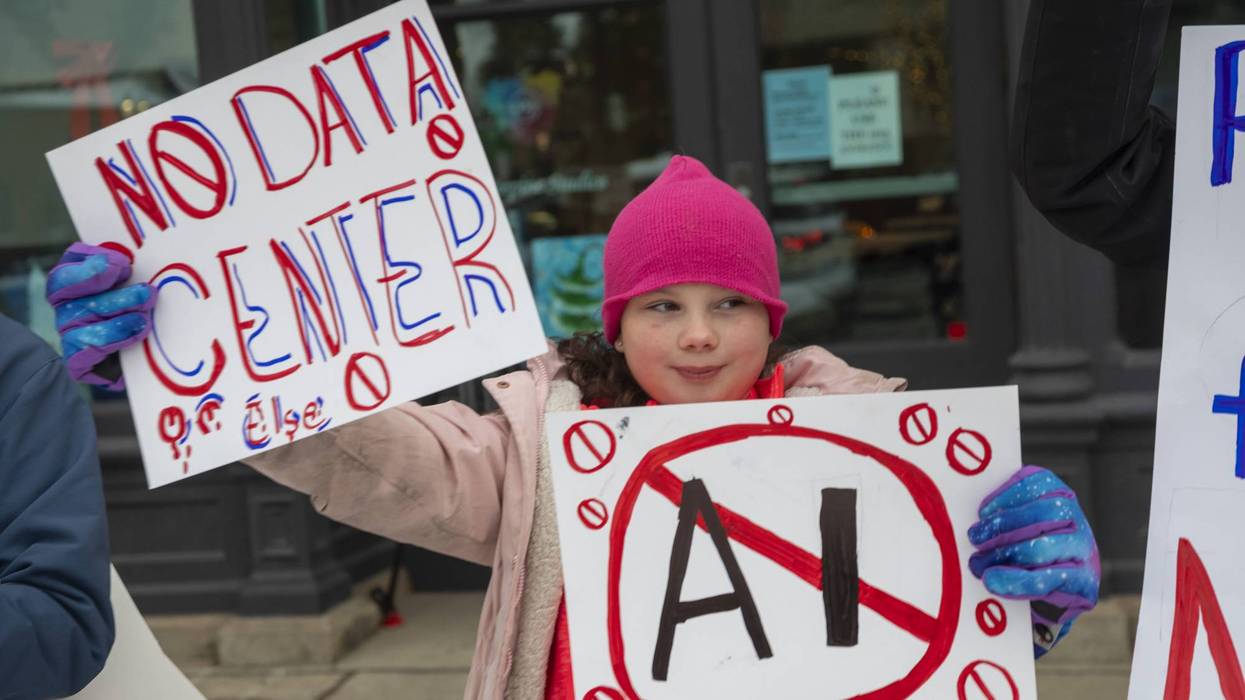
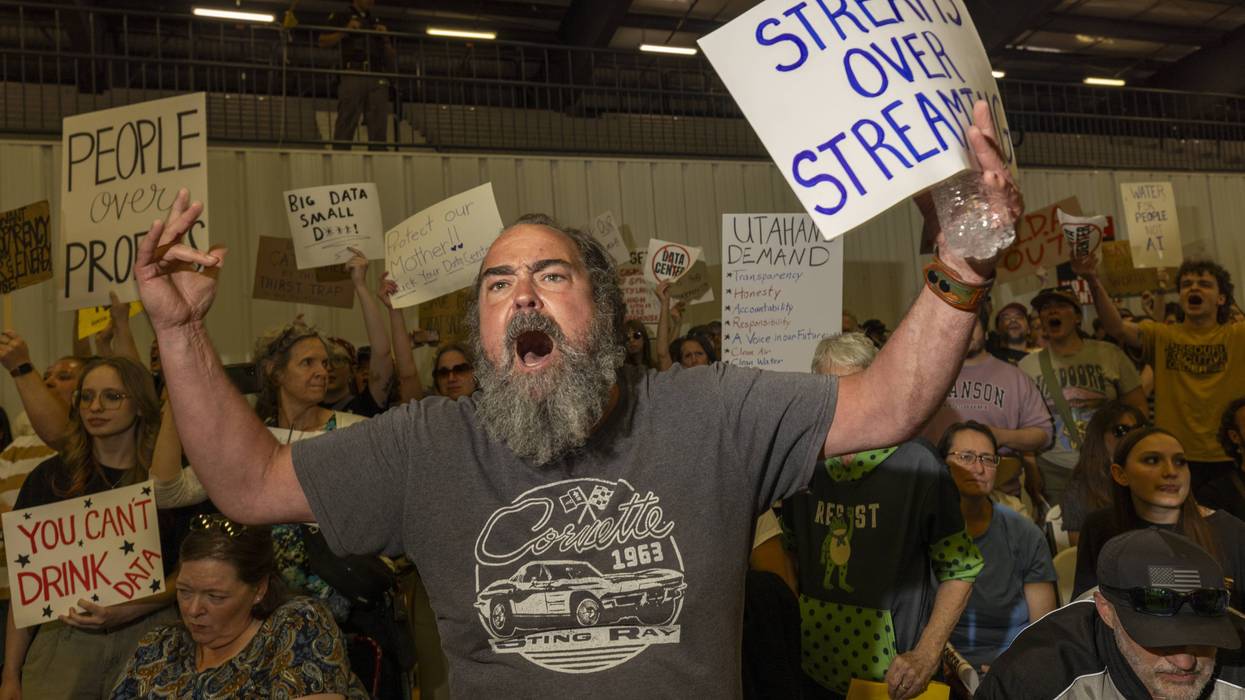
There are signs that Americans across the political spectrum have had enough of this degradation, notably the growing opposition across the country to artificial intelligence (AI) data centers, a development that we have not seen since the environmental movement of the 1960s. We will know very soon how much voters care in the upcoming midterm elections if they put Democrats back in charge of at least one chamber of Congress to stand up against this administration. Otherwise, it could take years if not decades to recover from Trump’s onslaught.
No More Benefit in Cost-benefit
The Environmental Protection Agency (EPA) is now such a shell of its former self that it is no longer worthy of its name. Trump’s EPA administrator, Lee Zeldin, has slashed the agency’s ranks to fewer than 12,500 people, roughly 30% less than when Bill Clinton, George W. Bush, and Barack Obama were in office. The combined number of scientists, engineers, data crunchers, lawyers, investigators, emergency responders, and administrative staffers generally ran between 17,000 and 18,000 from 1992 to 2012 before Republican-led budget cuts in Congress during Obama’s second term began eroding the agency.
At the same time Zeldin has cut his staff, he has continued where the first Trump administration left off, reversing President Joe Biden’s efforts to address climate change, boost renewable energy, and include environmental justice in federal policy. Zeldin’s most consequential disruption so far, however, was when he changed how the agency determines the costs and benefits of regulations. Instead of conducting standard cost-benefit analyses, which historically considered the benefits of avoiding illnesses and premature deaths, the agency now only calculates the cost to industrial polluters to cut emissions. This callous approach upends the 1997 decision by the EPA, after a long process that began during the George H. W. Bush administration, to compare the “health, welfare, ecological, and economic benefits” of Clean Air Act regulations with the cost of industry compliance and public sector implementation.
The EPA found that the cost of Clean Air Act compliance from 1970 to 1990 was $523 billion in 1990 dollars. Its median estimate of health benefits over the same two decades was $22 trillion. “First and foremost,” the report concluded, “these results indicate that the benefits of the Clean Air Act and associated control programs substantially exceeded costs.”
Since then, every administration, regardless of how hard it tried to rein in pollution, enacted regulations based on how many lives would be saved and the economic value of avoiding sickness, death, and lost productivity. Not anymore.
Pushing Fossil Fuels
The two most recent examples of Trump EPA backsliding are its repeal of the Biden administration’s limits on power plant carbon emissions and its weakening of the Biden vehicle fuel-efficiency standards.
By eliminating the power plant rule, Zeldin, Interior Secretary Doug Burgum, and Energy Secretary Chris Wright boasted that they would save the nation $310 billion by “unleashing” coal production they expect to increase by more than 10 times. Nary a word was uttered about electric power plants being the second leading source of global warming emissions, nor about the harm to public health unleashing all that coal would cause.
Any alleged savings from buying a slightly cheaper fossil-fuel vehicle would be small change compared to how much an electric vehicle owner would save in gas and maintenance costs, especially with Trump’s Iran war driving the price of gasoline to more than $4 a gallon and diesel to more than $6 a gallon.
The Biden EPA calculated that its carbon pollution standard for fossil-fuel power plants would result in $390 billion in climate and public health benefits compared with just $19 billion in compliance costs. The benefits would include avoiding as many as 1,200 premature deaths, 360,000 asthma cases, 48,000 school absences, and 57,000 lost workdays in the year 2035 alone.
Similarly, the rollback of Biden’s 50.4-miles-per-gallon standard to 34.9 mpg came with all kinds of wild claims of cost savings by Transportation Secretary Sean Duffy and a rare Trump administration claim of health benefits. Duffy maintained that newer gas-powered vehicles with driver-assist technology would avoid 300,000 serious injuries and save 1,900 lives.
Economists and health experts dismissed Duffy’s claims out of hand. They pointed out that the EPA itself states on its website that electric cars “must meet the same safety standards as conventional vehicles” and there is no reason why they can’t have driver-assisted technology. Moreover, any alleged savings from buying a slightly cheaper fossil-fuel vehicle would be small change compared to how much an electric vehicle owner would save in gas and maintenance costs, especially with Trump’s Iran war driving the price of gasoline to more than $4 a gallon and diesel to more than $6 a gallon.
The transportation sector is the country’s main source for carbon pollution and fine particulate matter, commonly known as soot. The Biden administration estimated that its 50.4 mpg standard, scheduled to be phased in from 2027 to 2031, would cut gasoline consumption by nearly 70 billion gallons through 2050, saving Americans more than $23 billion at the pump and preventing more than 710 million metric tons of carbon emissions. It also projected it would provide $13 billion in annual public health benefits due to improved air quality, preventing asthma and heart attacks and as many as 2,500 premature deaths in the year 2055.
Soot Standard Still Stands (For Now)
Soot, one of the nation’s leading killers, is largely out of sight and mind. While polls show Americans think the biggest health threats are guns, opioids, obesity, cancer, and heart disease, soot prematurely kills 91,000 people a year according to an August 2025 study in the journal Science Advances—more than guns and motor vehicle accidents combined.
The Biden administration finalized a rule tightening the soot standard for the transportation sector, power plants, oil and gas operations, factories, and ports that it calculated would avoid an estimated 4,500 premature deaths, 800,000 cases of asthma, and 290,000 lost workdays in 2032. That standard would have provided many other benefits for children. Studies show that soot has a demonstrable impact on children’s cognitive development, tying particulate exposure to lower intelligence quotient (IQ) and school test scores.
Amid the Trump administration’s dismantling of the Clean Air Act piece by piece, lower federal courts have thus far upheld the Biden national soot standard. But that victory may not last long. In August, lobbyists for polluting industries, including the American Petroleum Institute, National Association of Manufacturers, and the US Chamber of Commerce, petitioned the Supreme Court to overturn those rulings. And earlier this month, the Competitive Enterprise Institute, Heartland Institute, and other anti-regulation, polluter-friendly think tanks filed an amicus brief in support of that effort.
Open Season on Wildlife
When it comes to water, wildlife, and wetlands, the Trump administration has turned back the clock to 1962, when Rachel Carson opened the eyes of the nation to the biological threat posed by the pesticide dichlorodiphenyltrichloroethane (DDT) in her seminal book Silent Spring. Carson, a marine biologist at the US Fish and Wildlife Service, wrote, “To destroy the homes and food of wildlife is perhaps worse in the long run than direct killing.”
Destroying wildlife habitat is exactly what the Trump administration is encouraging.
For decades, federal law made it illegal to directly and deliberately harass, harm, or kill protected wildlife. Likewise, it has been illegal for individuals, industries, developers, loggers, and farmers to indirectly decimate species through “significant habitat modification or degradation.” The Trump administration wants to remove those prohibitions so killing an endangered species in its habitat would essentially have to be premeditated to be illegal, notwithstanding the fact that the federal government has acknowledged that the current rate of wildlife extinction “is much higher” today than in the past mainly due to habitat loss.
With two years left in Trump’s term, there is plenty of time for his administration to follow through on its scorched-earth campaign against environmental safeguards.
The administration is tearing the very concept of habitat to shreds. The latest example is the EPA proposal to protect water bodies under the Clean Water Act only if they have “surface water flowing continuously year-round,” eliminating nearly all wetlands and intermittent and ephemeral streams from federal protection. Such an ill-advised move would defy all federal water science research, particularly studies conducted during the George W. Bush and Obama administrations.
Wetlands sequester carbon and provide a fundamental nursery for biodiversity, a filter for pollution, and a barrier for major storms and floods. According to the National Oceanic and Atmospheric Administration (NOAA), more than a third of threatened and endangered species live only in wetlands, and nearly half use wetlands at some point during their life cycle.
In many cases, the water feeding wetlands flows underground, invisible to the naked eye. Likewise, intermittent streams, which are mainly in the arid Southwest, run only when it rains, but they are still biologically connected to downstream rivers. According to a 2015 EPA report, “All tributary streams, including perennial, intermittent, and ephemeral streams are physically, chemically, and biologically connected to downstream rivers.”
Regardless, the Trump-packed Supreme Court ruled in 2023 that a wetland must have a continuous surface connection to a larger body of water to qualify for protection. That decision was both scientifically and economically indefensible. Healthy wetlands, which amount to less than 6% of the land in the contiguous United States, helped support 1.7 million jobs and $319 billion in sales for the commercial and recreational fishing industry in 2023, according to a NOAA report. A 2022 Resources for the Future study estimated that wetlands are worth as much as $2.9 trillion in flood mitigation alone.
Will Data-Center Opponents Lead the Charge?
With two years left in Trump’s term, there is plenty of time for his administration to follow through on its scorched-earth campaign against environmental safeguards. But the pushback against AI data centers, which increase local electricity rates, deplete water supplies, and drive residents mad with noise and dirty air, may be a sign of things to come.
According to the International Energy Agency, a typical AI data center currently uses enough electricity to light up 100,000 homes, but it says newer, bigger ones will require 20 times more. As for water use, the Environmental and Energy Study Institute (EESI) estimates that a large data center can consume as much water for cooling as a town with 10,000 to 50,000 residents.
EESI also found that noise is a major problem. It reported earlier this year that high noise levels from a data center’s construction as well as its continuous operation can raise blood pressure, increase stress levels, and cause sleep deprivation.
Finally, a February study by a Harvard School of Public Health researcher found that just one gas-powered data center in Loudoun County, Virginia, was responsible for $53-$99 million in annual health damages. Echoing the findings of that study, an April study by the National Bureau of Economic Research concluded that the economic value of shortened life expectancy, primarily from being exposed to fine particulates from data center sites, costs the economy $25 billion annually.
Instead of reining in data centers, EPA Administrator Zeldin has proposed to allow them to begin construction before obtaining pollution permits and exempt data centers that generate their own electricity from acid rain emissions rules. Zeldin even wants to go so far as to release states from the Clean Air Act mandate to notify the public about data center proposals in their communities and provide a public comment period.
Meanwhile, data centers are tanking in public opinion polls, even among Republicans. Last month, a Pew Research Center survey found that half of US adults believe data centers are bad for the environment, home energy costs, and quality of life. The percentage of Republicans who say data centers are bad for their quality of life nearly doubled from 24% in January to 42% in September, Pew found, and 54% now say they would be uncomfortable with a new local data center. Sixty-eight percent of Democrats feel the same way.
As a result, moratoriums on new data center construction have been enacted or proposed in more than 480 municipalities across 46 states, according to the US Data Center Moratorium Tracker. Heatmap News, a climate news site, recently reported that $260 billion worth of data center projects have been cancelled so far in 2026 in response to local opposition.
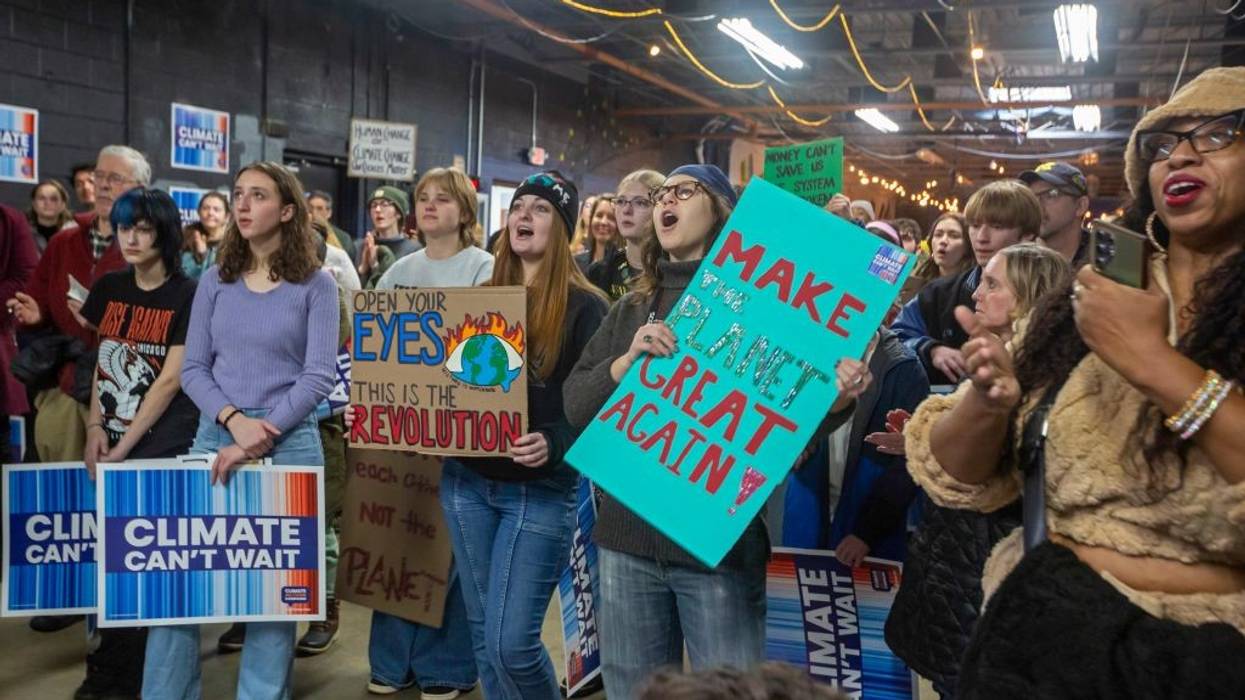
Many political analysts see data centers as a top issue in the midterms. If the opposition to them helps Democrats regain control of at least one chamber of Congress, could this not-in-my-backyard movement morph into a new national crusade to protect the environment? In the 1960s, Rachel Carson’s warning—along with smog-filled cities, filthy waterways, a burning river in Cleveland, and a massive oil spill off the California coast—galvanized the public to pressure Congress and a reluctant Richard Nixon to create the EPA and enact a string of environmental laws. The midterms may provide a further indication that the public wants an end to Trump’s unparalleled assault on the environment and a government that truly protects public health.
This article first appeared at the Money Trail blog and is reposted here at Common Dreams with permission.