

SUBSCRIBE TO OUR FREE NEWSLETTER
Daily news & progressive opinion—funded by the people, not the corporations—delivered straight to your inbox.
5
#000000
#FFFFFF
To donate by check, phone, or other method, see our More Ways to Give page.
Daily news & progressive opinion—funded by the people, not the corporations—delivered straight to your inbox.
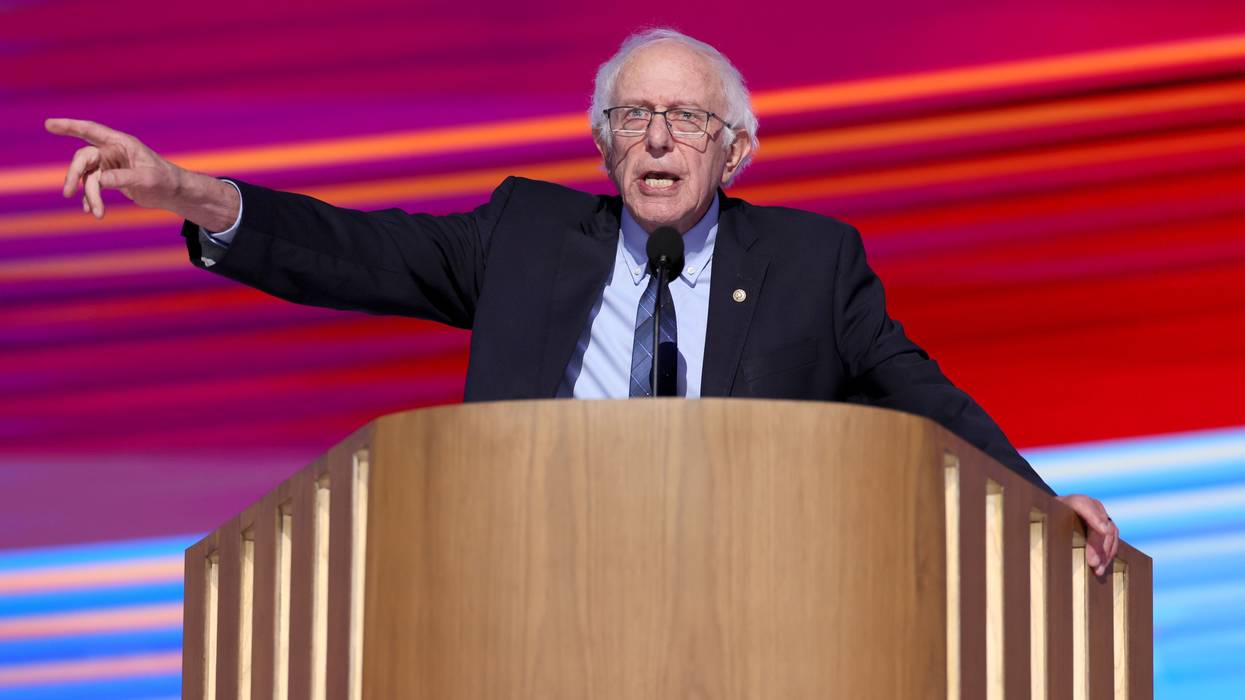
"Trump is an authoritarian, does not believe in the rule of law, and for 100 reasons is unfit to be president of the United States," Sanders told NBC's "Meet the Press."
Independent Vermont Senator Bernie Sanders issued a strong warning against a second Trump administration on Sunday, portraying him as an authoritarian who might let billionaire Elon Musk control his government and would be even worse than the Biden-Harris administration when it comes to enabling Israel's war on Gaza.
Speaking on NBC's "Meet the Press," Sanders agreed that it was accurate to describe former U.S. President Donald Trump as a fascist.
"Clearly he has a strong, strong tendency toward authoritarianism, and to undermining American democracy," Sanders said.
"What really interests me is if, God forbid, Trump were to win, whether it would be Elon Musk running the government, and Trump working for him, or the other way around."
Sanders' remarks came when host Kristen Welker asked him if he agreed with recent statements by Vice President Kamala Harris and former Trump White House Chief of Staff John Kelly that Trump was a fascist.
At first, Sanders said he didn't like to use that phrasing, but when pressed further said, "You can describe him as a fascist."
Sanders emphasized Trump's role in inciting the January 6, 2021 insurrection to prevent the peaceful transfer of power, and said there was a reason why his former Vice President Mike Pence and former Republican presidential candidate Mitt Romney would not support his 2024 election bid.
"It is because they understand that Trump is an authoritarian, does not believe in the rule of law, and for 100 reasons is unfit to be president of the United States," Sanders explained.
Welker then showed Sanders a video clip from Uncommitted National Movement co-founder Layla Elabed, in which Elabed said that Harris had not earned her vote because she had refused to adopt a more humanitarian approach to Israel's assault on Gaza, which has killed nearly 43,000 and wounded over 100,000 according to official figures.
"It seems the signal we've gotten from her and her campaign is that she is willing to risk a battleground state like Michigan by continuing to alienate young people, Arab Americans, and Muslim Americans," Elabed said.
Sanders acknowledged the devastation wrought by Israel in Gaza as well as his disagreements with the Biden administration's approach.
"My own view has been that the United States should not continue to provide financial aid or offensive weapons to [Israeli Prime Minister Benjamin] Netanyahu's right-wing, extremist government," Sanders said.
However, he continued, "Trump is even worse on this issue."
"I can tell you we are desperately trying at the very least to get humanitarian aid, to feed starving children, into Gaza," he said.
While Harris and President Joe Biden support sending aid, Sanders added, "We can't even get Republicans to feed the kids who are in desperate shape."
Finally, Welker asked Sanders about revelations from The Wall Street Journal this week that Trump supporter and richest man in the world Elon Musk is in regular contact with Russian President Vladimir Putin, despite having access to classified U.S. government information as a federal contractor.
Sanders said Musk's communication with Putin was "inappropriate," but had a deeper concern about Musk's role in a potential Trump administration.
"What really interests me is if, God forbid, Trump were to win, whether it would be Elon Musk running the government, and Trump working for him, or the other way around," Sanders said.
He continued: "The idea that you have somebody like Musk who has massive amounts of federal contracts, campaigning hard, putting huge amounts of money into Trump's campaign, man if there's ever been a conflict of interest, that's it."
Sanders' warning about Musk's influence comes the same day as the Tesla CEO is scheduled to headline a Trump rally in New York City's Madison Square Garden. Musk has recently come under fire for offering to pay $1 million a day to a select registered voter in a swing state who signs a petition hosted by his super PAC, which one legal expert described as "clearly illegal vote-buying."

Outrage over Biden administration’s Middle East policy, and Harris’s support for it, is fully warranted. Full stop. It is also obvious that Trump would be no friendlier, no kinder, and no more interested in bringing an end to Palestinian suffering.
I have never subscribed to the idea that citizens who refuse to vote for a Democratic candidate in a tight race are somehow morally responsible for the election of a Republican, however bad that Republican might be.
If we are serious about liberal democracy, then we must recognize that every citizen has the legal, moral, and civic right to cast their vote as they choose, and that every single vote for every candidate must be earned. I may regret that many people voted for Ralph Nader in 2000 or Jill Stein in 2016. But it is wrong to presume that I can think or choose for others. The bottom line is that, given the arcane U.S. Electoral College system, the Gore campaign failed to win enough votes in 2000, and the Clinton campaign failed in 2016. It is not the fault of those progressives who refused to support them.
It is in this spirit that I write now.
I say that “some” should consider voting for Harris-Walz because I know that “Uncommitted” includes many thousands of individuals, each of whom has their own reasons—some of whom simply cannot in good conscience vote Harris-Walz—but I am hoping that many of these people might be persuaded to reconcile their conscience with such a vote. I say that such people “should consider” rather than “must” because the latter formulation is presumptuously categorical, and to speak in this way is both wrong and, quite frankly, more likely to turn people off than to persuade them.
In what follows, I will further explain why many “Uncommitted” voters should consider voting for Harris-Walz, by distinguishing between different kinds of “Uncommitted” voters and the different sorts of moral and political commitments that might lead them to be electorally “uncommitted,” and that also might lead them to commit the singular act of casting a vote for Kamala Harris.
My hope is that this will persuade at least some readers that the defeat of Trumpism is an urgent moral and political imperative that should be important even to many who are understandably outraged by the Biden administration’s deafness to the demands of “Uncommitted” citizens.
In a way, what I am saying is very similar to what leaders of the “Uncommitted” initiative have themselves said, by publicly refusing to “endorse Harris” but declaring that their movement “opposes a Donald Trump presidency, and urging supporters “to vote against him and avoid third-party candidates that can inadvertently boost his changes.” Indeed, Ilhan Omar, one of the strongest pro-Palestinian advocates in the U.S. government, has even endorsed Harris, even as she continues to support “Uncommitted” demands. Those leaders obviously have more credibility than I do, and what they are saying strikes me as wise. In what follows I simply elaborate on some of the reasons why others might consider it wise.
Those who are Palestinian-American or Arab-American and who have relatives or friends or friends of friends living in Gaza, or the West Bank, or Lebanon, or Israel proper, have every reason to be sickened by the war crimes daily committed by Israel’s Netanyahu government, by this government’s racist policies towards Palestinians, and by the Biden administration’s continued support of this government and its awful policies. If I were such a person, I would be outraged, and I would find it incredibly hard to justify doing anything to support the Harris-Walz ticket right now. I imagine I would feel a deep, perhaps even tribalistic, sense of frustration and anger towards anyone associated with current U.S. policy in Gaza, the occupied West Bank, Lebanon, or the greater Middle East.
Even here, I think there is a “lesser evil” argument to be made, as I will explain below. But I must first concede that no such argument is likely to convince many Arab-American citizens, and I understand that, and would never presume to tell them that their sense of identity is less important than any other. Arab-American fellow citizens have a right to feel outraged and ignored and to act accordingly.
Biden has been so obstinately “pro-Israel,” and so feckless in his occasional efforts to rein in Netanyahu, that it is easy to think that “it can’t get any worse.” But it can get worse, and it will, if Trump is returned to the White House.
At the same time, some of those Arab-American fellow citizens might feel outraged and ignored and at the same time, upon consideration, rethink their refusal to vote Harris-Walz.
One reason is because they are fellow citizens, Arab-Americans with hybrid identities—as most of us have—and while their “Arab” affinities are very real and should be honored, many of them also deeply experience their Americanness, as people who live and work and raise families in the U.S. and share a common fate with all fellow citizens, and who care about what happens here because here is where they are and here is where they want to be. Even if, on balance, there is no difference between Trump and Harris on the Middle East—and I think there is a difference—there are other ways that there are huge differences, and these might matter to many Arab-Americans because they are Arab but also American.
And this leads to the second reason: the differences between Trump and Harris are huge, in domestic and foreign policy. The former is obvious. For those who care about civil rights broadly, or women’s rights or worker rights, or climate change, or democracy, or are revolted by fascistic rhetoric and outright racist targeting of immigrants, Blacks, and Muslims, there is a world of difference between Donald Trump and Kamala Harris. This difference will impact the lives of all fellow Americans including Arab-Americans, who have no reason to imagine that a Trump administration will show any respect at all for the rights of minorities—and Arab-Americans are an especially vulnerable minority.
Indeed, the differences are significant even in the realm of foreign policy. This is admittedly knotty, and Joe Biden has been so obstinately “pro-Israel,” and so feckless in his occasional efforts to rein in Netanyahu, that it is easy to think that “it can’t get any worse.”
But it can get worse, and it will, if Trump is returned to the White House.
Because if Biden has been deplorably supportive of the IDF, and fecklessly critical of Netanyahu, he has been sometimes critical, and he has tried, weakly, to exercise a modicum of restraint, in words and deeds, just as he has given at least lip service to the idea of Palestinian self-determination and even a Palestinian state. Netanyahu is playing a despicable long game, and part of his game is to make Biden look weak, because Netanyahu and Trump are ideological soulmates and political allies. And Trump has made very clear that if he is elected President, he will simply green light Netanyahu’s war efforts—efforts that involve not just the destruction and subjection of Gaza but the further repression and dispossession of Palestinians living on the West Bank. Netanyahu seeks to Make Greater Israel Great Again. He is the Israeli Trump, and he knows it, and Trump knows it.
Biden has been bad for Palestinians and all who care about their plight.
But Trump would be much worse, and emphatically so.
How can this be a good consequence for those who have been “Uncommitted?”
Further, Kamala Harris is not Joe Biden. It is perfectly understandable that most “Uncommitted” voters would be deeply disappointed by Harris’s refusal to do more to emphasize differences with Biden. It is equally understandable that they would be outraged that the Harris-controlled DNC would not even reserve time to a single Palestinian-American this past July. This was wrong and stupid, and Harris deserves to pay a political price. But if Trump wins, the biggest price on this score will be paid by Palestinians and their Arab-American relatives and allies.
Harris is navigating a very fine line. “Uncommitted voters” have every reason to take seriously their commitment—to refuse to vote for Harris unless she does something to earn their votes. But it is obvious that the race is incredibly tight, and Harris is afraid to make statements that will offend the millions of “pro-Israel voters” who are also strategically important in swing states. Many of these voters are linked to AIPAC and other Jewish groups. Many are Christian Zionists. Many are simply centrists who have long taken for granted the core foreign policy commitments of the U.S., one of which is the twisted idea that Israel is the preeminent U.S. ally in the Middle East. And however mistaken is this idea, it has a hold on many Americans.
Using the “Uncommitted” label to win primary delegates and place pressure on the DNC was a brilliant effort, and it is a shame that it did not bring better results. Loudly demanding more from Harris in the months following the DNC, and continually keeping the pressure on, has been a sensible strategy for effecting a change. And promising to continue such efforts until real results are achieved is praiseworthy.
But the primary season is over, the campaign is in its home stretch and the election is a dead heat. And in the coming weeks the symbolic value of votes will be overshadowed by their practical impact. And one thing above all will be decided by votes: whether the next president is Donald Trump or Kamala Harris.
I would think that many Arab-American fellow citizens who are sickened by the Biden-Harris administration can still appreciate that this choice is hugely consequential for the very things they care about. And while some will feel conscience-bound to abstain or cast a protest vote, others might reconsider, and think of their vote less as a moral statement than as a simple instrument that can at least help to prevent a very bad thing from coming to pass.
In the coming weeks the symbolic value of votes will be overshadowed by their practical impact. And one thing above all will be decided by votes: whether the next president is Donald Trump or Kamala Harris.
Many “Uncommitted” voters, of course, are not Arab-Americans motivated by a sense of a direct “stake” in the Middle East. They are fellow citizens motivated by a strong sense of justice, outrage at the terrible violence and destruction being exacted on Palestinian civilians by the IDF, and indignation at the hypocrisy of U.S. policy. Such a politics of solidarity is to be admired, and of course every citizen has the right to vote their conscience, whatever the basis of their commitment to a cause.
At the same time, “solidarity” is not a simple thing. For if there are Arab-Americans who are adamantly against any show of support for Harris, there are others who are not, either because Harris is a “lesser” evil or because there are actually some things about her candidacy that they like. From which “pro-Palestinian” Arab-Americans should allies take their bearings? Identity groups do not practice groupthink. Solidarity involves real judgments.
Indeed, for those who are motivated by a sense of justice, a deeper question arises: should one, uncompromising version of “pro-Palestinian” solidarity, automatically trump other forms of solidarity?
Abiding outrage at the suffering of Palestinians is laudable. And disappointment, and even outrage, at the Biden administration’s Middle East policy, and Harris’s support for it, is fully warranted. Full stop.
It is also obvious that Trump would be no friendlier, no kinder, and no more interested in bringing an end to Palestinian suffering. His hostility to human rights defenders and progressive voices is well documented.
And, however lame the Democratic party establishment has been in pushing back against threats to civil liberties—and however much some leading Democrats have even supported awful crackdowns on pro-Palestinian protest last year—there is no comparison between Harris and Trump when it comes to the Constitution and to constitutional democracy itself. Trump has targeted Haitian immigrants; promised to deport over ten million immigrants through an elaborate regime of detention and forced expulsion; and called for periodic “rough days” in which police brutality would be encouraged. He has indeed called liberal and left opponents “vermin” and “enemies from within,” and expressed an open ess to using the National Guard or the U.S. Army to shut down critics—a group that obviously includes everyone active in the “Uncommitted” movement.
For those who are motivated by a sense of justice, a deeper question arises: should one, uncompromising version of “pro-Palestinian” solidarity, automatically trump other forms of solidarity?
Trump is indeed so dangerous that General Mark Milley—who served as Trump’s appointed Chief of the Joint Chiefs of Staff—and General John Kelly—who served as Trump’s first Secretary of Homeland Security and then his Chief of Staff—have both recently stated that he is a “fascist.”
To be sure, Pro-Palestinian solidarity politics--and the politics of social justice and solidarity more generally--faces a huge uphill climb should the federal government be controlled by the Democrats. Many Democrats are no allies of such a politics. But the Trump-led, MAGA Republican party is the enemy of such a politics and all who practice it. Indeed, Trumpism is above all fueled by being against what the left is for, and by using the power of the state to actively support what the left is against—racism, xenophobia, militarism, and authoritarianism. I doubt that anyone who has admirably defined themselves as “Uncommitted” is truly undecided when it comes to everything that the toxic politics of Trumpism represents, or uncommitted when it comes to opposing these things.
It is with these things in mind that “Uncommitted” voters should at least consider voting for Harris-Walz.
The commitments of the “Uncommitted” are morally praiseworthy, deep, and involve sustained efforts that far exceed this year’s election. At the same time, in the coming weeks, how one chooses to vote will have major consequences on the very possibility of future activism. “Uncommitted” voters in some swing states, especially Michigan and Arizona, can turn the election for Trump or against him, and thus for racist authoritarianism or against it. Such voters can have an outsized influence on the future of American politics and thus the future of the world. There is an enormous political responsibility in this, a point recognized in an open letter circulated this week by Arizona Palestinian, Arab, Muslim, and progressive Democrats and community leaders, which emphasizes that “voting for Harris is not a personal endorsement of her or of the policy decisions of the administration in which she served. It’s an assessment of the best possible option to continue fighting for an end to the genocide, a free Palestine, and all else that we hold dear.”
The commitments of the “Uncommitted” are morally praiseworthy, deep, and involve sustained efforts that far exceed this year’s election. At the same time, in the coming weeks, how one chooses to vote will have major consequences on the very possibility of future activism.
I hope that many “Uncommitted” voters will think hard about this, and then decide to cast their individual votes for Harris-Walz, while continuing to do all the other things they do collectively to advance the causes of Palestinian rights and justice more broadly. As Waleed Shaheed has recently said on X: “Voting isn’t about a declaration of faith—it’s about finding the coalition that can carry your struggle forward. It’s about leveraging what you have to make the change you seek, even when the choices feel flawed.”
Casting a vote for Harris-Walz might feel bad. But the election of Donald Trump as president would be bad. Very, very bad.
And it would be a pretty good thing if everyone who cares about justice, human rights, and simple human decency did what they could to prevent that from happening. And there is only one way to do this: by voting for the Harris-Walz ticket.
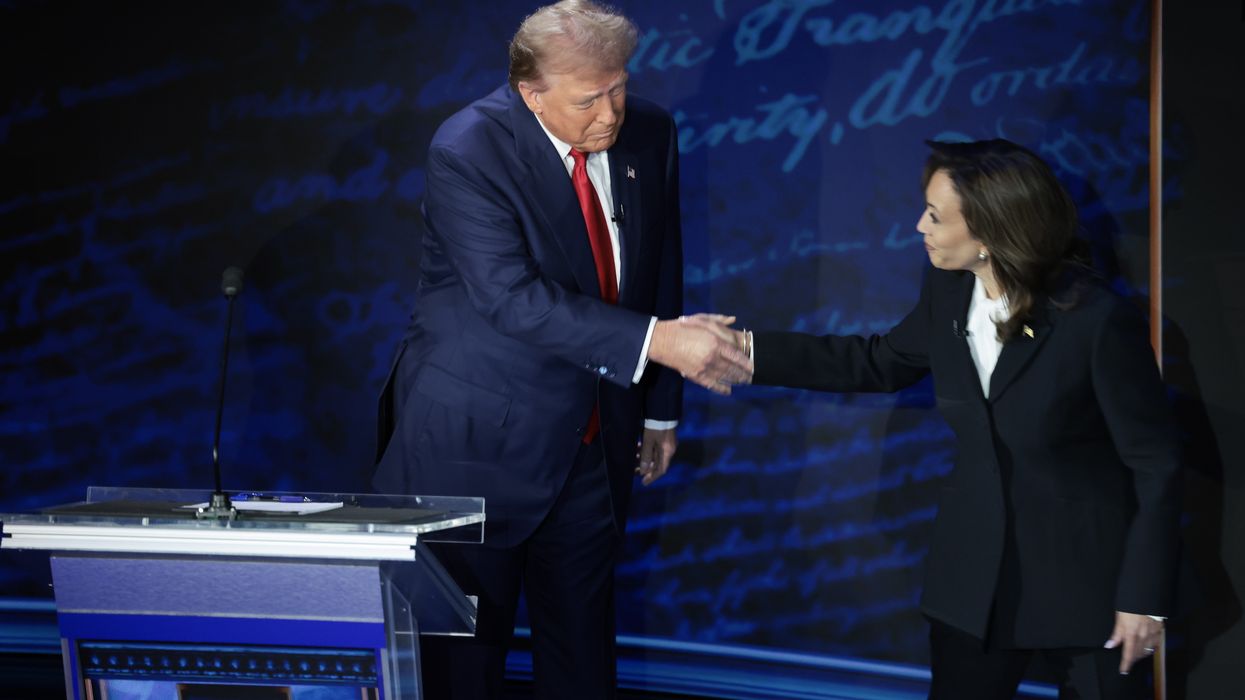
The policy that Harris has defended for the war on Gaza is despicable, yet she is the only candidate who can spare us from another Trump presidency, which—from all indications—would be far worse than the first one.
With Election Day just three weeks off and voting already underway in some states, the race for president is down to the wire. Progressives could make the difference.
While no one in their left mind plans to vote for the fascistic and unhinged former U.S. President Donald Trump, some say they won’t vote for Vice President Kamala Harris because of her loyalty to President Joe Biden’s support for the Israeli war on Gaza. That might enable Trump to win with enough electoral votes from swing states—Arizona, Georgia, Michigan, Nevada, North Carolina, Pennsylvania, and Wisconsin.
Those seven states are where progressives may well hold the future in their voting hands.
If it becomes a reality, the Trump-Vance administration will force progressives back on their heels, necessarily preoccupied with trying to mitigate the onslaught of massive damage being inflicted by right-wing zealots with vast government power.
The policy that Harris has defended for the war on Gaza is despicable. At the same time, she is the only candidate who can spare us from another Trump presidency, which—from all indications—would be far worse than the first one.
The need is urgent for dialectics—“a method of examining and discussing opposing ideas in order to find the truth”—in this case, the truth of what’s most needed at this electoral crossroads of fateful history.
“The harms of the other options” mean that the best course of action is to vote for Harris, 25 Islamic clerics said in a letter released last week. They focused on an overarching truth: “Particularly in swing states, a vote for a third party could enable Trump to win that state and therefore the election.” The U.S. clerics called such a vote “both a moral and a strategic failure.”
Personally, as a resident of solid-blue California, I have no intention of voting for Harris. But if I lived in one of the seven swing states, I wouldn’t hesitate to join in voting for her as the only way to defeat Trump.
Some speak of the need to exercise conscience rather than voting for Harris. Yet in swing states, what kind of “conscience” is so self-focused that it risks doing harm to others as a result of a Trump presidency?
If it becomes a reality, the Trump-Vance administration will force progressives back on their heels, necessarily preoccupied with trying to mitigate the onslaught of massive damage being inflicted by right-wing zealots with vast government power.
On domestic policies—involving racism, reproductive rights, civil liberties, the environment, climate, labor rights, the social safety net, civil rights, voting rights, LGBTQ rights, freedom of speech and the right to organize, the judicial system, and so much more—the differences between the Trump and Harris forces are huge. To claim that those differences are insignificant is a nonsensical version of elitism, no matter how garbed in leftist rhetoric.
On foreign policy, Harris is the vice president in an administration fully on board with bipartisan militarism that keeps boosting the Pentagon budget, bypassing diplomacy for ending the Ukraine war while stoking the cold war, and—with vast arms shipments to Israel—literally making possible the ongoing genocide in Gaza.
At the same time, anyone who thinks that Trump (“finish the job”) wouldn’t be even worse for Palestinian people—hard as that is to imagine—doesn’t grasp why Israel’s Prime Minister Benjamin Netanyahu is so eager for Trump to win.
The leadership of the Uncommitted Movement has sorted out the political options. The terrain was well described by Uncommitted leader Abbas Alawieh, who said last month: “At this time, our movement opposes a Donald Trump presidency whose agenda includes plans to accelerate the killing in Gaza while intensifying the suppression of anti-war organizing. And our movement is not recommending a third-party vote in the presidential election, especially as third-party votes in key swing states could help inadvertently deliver a Trump presidency, given our country’s broken Electoral College system.”
As his frequent collaborator C.J. Polychroniou noted last month, Noam Chomsky “has repeatedly made the argument that voting for a third-party or independent candidate in a swing state would accomplish nothing but increase the possibility of the most extreme and positively nuts candidate winning the election.”
In an interview with Jacobin a few weeks ago, Alawieh had this to say:
As someone who has family who lives in South Lebanon right now—who are living under the terror of U.S. weapons raining down on them from the Israeli military—I do not have the luxury of giving up on the only one of the two major parties where there is room for this debate. To be clear, there’s room for this debate not because the Democratic Party is friendly to Palestinian human rights. There’s room for this debate because A) the Republican Party is not the party where we can have this conversation; not a single federal elected official on the Republican side even supports a cease-fire as this genocide has raged on, and B) the Democratic Party speaks of being the party of justice and inclusion, and there are more and more of us within the party who are insisting that the party change its immoral and illegal support of sending weapons to harm and kill civilians.
Similarly, another prominent Uncommitted Movement leader, Palestinian American Layla Elabed, said: “We urge Uncommitted voters to register anti-Trump votes and vote up and down the ballot. Our focus remains on building this anti-war coalition, both inside and outside the Democratic Party.”
This is certainly not the presidential election that we want, but it’s the one we have. The immediate task is to prevent a Trump victory. His defeat is essential to keep doors open for progressive change that a new Trump presidency would slam shut with extreme right-wing power.
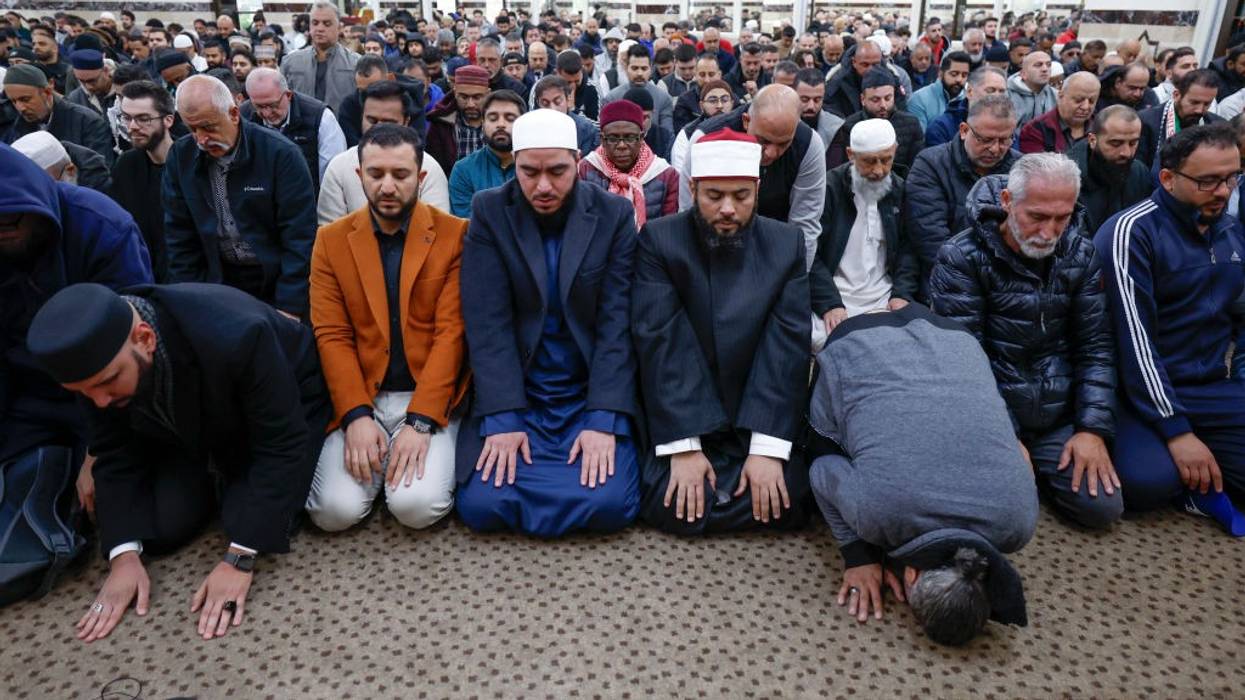
"Knowingly enabling someone like Donald Trump to return to office, whether by voting directly for him or for a third-party candidate, is both a moral and a strategic failure."
Balancing grave concerns over the Biden-Harris administration's support for Israel's yearlong assault on Gaza against the dire prospects of a potential second administration of former Republican President Donald Trump, a group of 25 U.S. Islamic clerics on Sunday urged American Muslims to "consider the broad picture" and vote for Democratic Vice President Kamala Harris.
"We are all heartbroken and in deep pain over the war in Gaza and the escalation in Lebanon. We stand with the global-wide outcry to immediately stop the continued genocide against the Palestinian people," the religious leaders, who include numerous imams, wrote in a letter to Muslim voters. "The collective conscience, inherent soul, and sense of justice of all humanity [are] assaulted, disturbing the peace of all. We are all one in our frustration to the point of anger."
"What's popular is not always right and what's right is not always popular. In our estimation, the present-future benefits of voting for Vice President Harris far outweighs the harms of the other options."
"We are taught by our beloved Prophet Muhammad to 'resist becoming angry,' for it eats up goodness and overrides rational thinking," the letter states. "Our lives in these United States of America are not in a vacuum, and as such the election choices, the decisions that we make are not either. They don't just affect us, but all American citizens for years, maybe decades to come."
"We are to be future-oriented, strategic, and rational rather than just focus on the present," the clerics asserted. "Thus, it is an imperative that we elect leaders who have committed to a cease-fire, an independent Palestine, stabilizing our democracy, and who stand with our community."
The letter continues:
In assessing the candidates for president, for us it's not the lesser of two evils. For us, as people of faith, specifically as Muslims, it's the measure or estimate (Qadar) of the Harm (Sharr or Darri) and the Benefit (Khayr or naf'ee). When faced with a choice, we are expected to carefully assess the potential benefits and harm involved, prioritizing actions that bring better and minimize negative consequences...
What's popular is not always right and what's right is not always popular. In our estimation, the present-future benefits of voting for Vice President Harris far outweighs the harms of the other options. Let's consider the broad picture in addition to the one in our immediate vision.
Turning their attention to Trump, the clerics said that "our community is in pain, but we must also remember that we cannot allow our country to return to Jim Crow America, this is not a reality our community can afford."
"Knowingly enabling someone like Donald Trump to return to office, whether by voting directly for him or for a third-party candidate, is both a moral and a strategic failure," they stressed. "Particularly in swing states, a vote for a third party could enable Trump to win that state and therefore the election."
"In 2016, Trump won Michigan by merely 11,000 votes mainly because of votes cast for third-party candidates. This enabled Trump to inflict great harm on our communities and country in numerous ways," the letter says. "Trump is funded by pro-settlement donors who support Israeli annexation of the West Bank, he has promised to give [Israeli Prime Minister Bemjamin] Netanyahu what he needs to 'finish the job' in Gaza, and even promised to deport pro-Palestinian students and activists who he refers to as 'jihadists.' Jared Kushner, his son-in-law, has promised to turn Gaza into 'lucrative beachfront properties.'"
"Given his well-documented history of harming our communities and country, as well as what he has promised he will do to Muslims and Palestinians should he return, it is incumbent upon us not to allow our high emotions to dictate our actions to our detriment," the clerics argued.
Trump's anti-Muslim animus far predates his presidency. In 2011 he said the U.S. "absolutely" has a "Muslim problem." While campaigning in 2016 he said that "Islam hates us" and that it is "very hard" to differentiate between "radical Islam" and the entire Muslim faith.
As president, Trump ordered multiple bans on people from predominantly Muslim countries. The U.S. Supreme Court—three of whose right-wing members were appointed by Trump—upheld a version of the ban. On the international stage, Trump followed through on his campaign promise to "bomb the shit out of" the so-called Islamic State and "take out their families." Thousands of civilians were killed in U.S. attacks on seven predominantly Muslim nations, matching the number of countries bombed by former President Barack Obama and exceeding the six nations attacked during the presidency of George W. Bush.
"We cannot turn our backs on our diverse Muslim community at home and those abroad who are impacted by U.S. policies in our moment of pain and anger," the letter contends. "And we have a responsibility, an amana, not to place our community in harm's way."
The clerics said that Harris and her Democratic running mate, Minnesota Gov. Tim Walz, "see a new way forward and are not going back."
"We stand with moving forward," they concluded, "and call on other imams and our communities to move forward with us."
The letter stands in stark contrast with the stance of Abandon Harris, a swing state, Muslim-led coalition that says it seeks to hold the Biden-Harris administration "accountable for the Gaza genocide." The campaign endorsed Green Party candidate Jill Stein on Monday.
While the Uncommitted National Movement—a coalition of pro-Palestine, peace, and progressive groups that urged people to vote "uncommitted" in Democratic primaries in a bid to pressure the Biden administration to push Israel for a Gaza cease-fire—is not endorsing Harris, the group stressed that it opposes Trump and that voting third-party "is a mistake."

"The polls are tight and the Electoral College is rigged to give Trump an edge, but Our Revolution can turn the tide by turning out progressive voters in key battleground states."
Just over a month away from the U.S. general election, the largest progressive political organizing group in the country announced Friday that it is aiming to encourage 5 million voters in seven battleground states to vote against former Republican President Donald Trump.
Our Revolution hopes to reach voters in Arizona, Georgia, Michigan, North Carolina, Nevada, Pennsylvania, and Wisconsin via door-knocking, phone calls, and text messages ahead of the November election, in which Trump is facing Democratic Vice President Kamala Harris.
The get-out-the-vote effort comes after surveying over 1,400 Our Revolution members who live in swing states. The results, the group said, "present worrying signs for the Harris campaign" and "suggest that the Trump campaign is actively engaging young and progressive voters."
Joseph Geevarghese is the executive director of Our Revolution, which grew out of U.S. Sen. Bernie Sanders' (I-Vt.) 2016 campaign for the Democratic presidential nomination. The group leader said Friday that "the polls are tight and the Electoral College is rigged to give Trump an edge, but Our Revolution can turn the tide by turning out progressive voters in key battleground states."
In the 2020 election, President Joe Biden "narrowly beat Trump by less than 300,000 votes in these states four years ago, which means that our 1.2 million supporters in the swing states could be the margin of victory in 2024," Geevarghese noted.
"After hearing from progressive swing state residents and our organizers on the ground, we are sounding the alarm on the lack of enthusiasm amongst this key voting bloc," he added. "In the coming weeks, Our Revolution will continue urging the Harris campaign to release bold policy plans aimed at motivating the party's progressive base, and we are committed to doing everything we can to mobilize support against another disastrous Trump presidency."
As the group detailed Friday, its polling—first reported by Semafor—found:
Since the president passed the torch to Harris this summer following a disastrous debate performance against Trump, she has racked up endorsements from leading groups, including People's Action, Popular Democracy, and the Working Families Party. Harris won the first-ever endorsement of the youth-led gun violence prevention movement March for Our Lives and has support from various reproductive rights, labor, and climate organizations—even some that declined to back Biden.
However, the International Brotherhood of Teamsters declined to endorse for the first time since 1996, and the Uncommitted National Movement—which is critical of U.S. support for Israel's annihilation of Gaza—announced last month that "Harris' unwillingness to shift on unconditional weapons policy or to even make a clear campaign statement in support of upholding existing U.S. and international human rights law has made it impossible for us to endorse her."
Uncommitted also made clear that it "opposes a Donald Trump presidency, whose agenda includes plans to accelerate the killing in Gaza while intensifying the suppression of anti-war organizing," and "is not recommending a third-party vote in the presidential election, especially as third-party votes in key swing states could help inadvertently deliver a Trump presidency given our country's broken Electoral College system."
Despite recent polling that suggests U.S. voter support for Harris would grow if she backed an arms embargo against the Israeli military, Harris is not making clear attempts to win over Uncommitted voters. Leaders from the movement told Reuters that they were not invited to her Friday meeting with Arab American and Muslim leaders in Flint, Michigan.
Efforts to convince Michigan voters to support Harris will continue this weekend. Sanders and United Auto Workers president Shawn Fain—whose union endorsed her this summer—have three events in the state in the coming days. They plan to talk about corporate greed, healthcare, and manufacturing in the state.
Meanwhile, Harris this weekend plans to head to North Carolina, which was just devastated by Hurricane Helene.
The Sunrise Movement—a youth-led climate group that launched a campaign to defeat Trump and reach 1.5 million young swing state voters in August—intends to boost efforts to elect Harris in the weeks ahead, specifically focusing on North Carolina.
"Young climate voters could decide the election in North Carolina and put Harris over the edge," Sunrise organizer Paul Campion said in a statement Friday. "We're focused on reaching a group of 84,000 young voters between the ages of 18 and 26 who are very concerned about climate change but aren't regular voters. We're talking with them about the devastation of Helene and how Donald Trump's Project 2025 agenda would worsen the climate crisis, making disasters like Helene more frequent and severe."
Shiva Rajbhandari, a North Carolina student organizer, said that "people are angry. We're watching homes be swept away, entire towns consumed by floodwaters, and Donald Trump is joking about how climate change will create more waterfront property."
"Big Oil just murdered 200 people," the 20-year-old declared. "People know who's responsible for the climate crisis, and we're going to hold them accountable in November."

"If you're going to continue sending weapons aimed at our family members, say it to our faces," said Abbas Alawieh.
The co-founder of the Uncommitted National Movement said Wednesday that U.S. President Joe Biden and Vice President Kamala Harris—the 2024 Democratic nominee—have "repeatedly" declined requests to meet with Americans with family members living under U.S.-backed Israeli assaults in Lebanon and the occupied Palestinian territories.
"If you're going to continue sending weapons aimed at our family members, say it to our faces," Abbas Alawieh, who lives in Michigan but has family in Lebanon, wrote on social media, linking to a clip of his Wednesday appearance on CNN.
In that interview, Alawieh said it is a "simple ask" for Harris to meet with people whose families are impacted by U.S. support for Israel's deadly military campaigns in Lebanon and Gaza, both of which have been ravaged by American-made weaponry. Harris has said she opposes calls for an arms embargo—one of the factors the Uncommitted National Movement cited last when it announced in a nuanced statement last month that it would not endorse the vice president.
"There are tangible steps that Harris can take right now to build with this community that the Democratic Party has abandoned, has betrayed, in order for us to reengage these voters," said Alawieh. "It requires looking them in the face as you send weapons to kill their family members."
"Vice President Harris, why won't you sit down with Lebanese Americans and Palestinian Americans who have family in Gaza?" he continued. "We've asked repeatedly. Why are you saying no? I would recommend that as a first step to coming into this community and asking them for their vote."
Watch:
Why won’t Vice President Harris meet with Palestinian and Lebanese American families impacted by US-supplied Israeli bombs? #NotAnotherBomb pic.twitter.com/HUROhkaFQh
— Uncommitted National Movement 🌺 (@uncommittedmvmt) October 2, 2024
Alawieh's remarks came amid mounting fears that the Biden administration's unwavering support for the Israeli military's wars on Gaza and Lebanon is damaging Harris' hopes of winning the key battleground state of Michigan, which has a large Arab and Muslim population.
Alawieh, who served at the Democratic National Convention as an uncommitted delegate from Michigan, told CNN that he is "very concerned about Michigan specifically, and we have made the campaign offer after offer: come out with a statement talking about your commitment to international human rights."
"They've refused," he continued. "One ask that we specifically made, and I will reiterate it now for President Biden and for Vice President Harris: The Uncommitted Movement has asked them repeatedly, and people all across our country are asking them not only to stop sending weapons, but we've repeatedly asked that they meet with Americans who have family members experiencing the terror of American bombs right now."
Alawieh said that while his family "at this moment is physically safe to the extent that they can be," he is receiving messages "asking that we choose nice photos of them for their death notices should they become among the over a thousand civilians that the Israeli military has killed using U.S. bombs."
"I'm working with everything that I've got as a Democrat, as someone who worked on Capitol Hill for a long time, worked closely with President Biden's team, with Vice President Harris's team, to urge them to choose a different approach that saves my family's lives," said Alawieh. "That approach would require stopping the sending of weapons that are harming and killing civilians. It's really, really urgent."

Want a cease-fire to end or prevent humanitarian disaster? Stop providing the fire.
Israel’s violence toward its neighbors, long out of control in its destruction of Gaza, now threatens to open new fronts, involve new nations, and even drag the United States into direct conflict. Promises of a cease-fire from the Biden administration have come to nothing. Soft behind-the-scenes diplomacy has failed to achieve peace.
In response, “Cease-fire,” the first demand of the peace movement since Israel’s destruction of Gaza began, has evolved. The actions of the Israeli military and government, the indiscriminate killing of women and children with U.S. weapons, and appropriate frustration from activists in the street have created a new demand: an American arms embargo against Israel. For U.S. President Joe Biden and his administration, it may be the only way out of a new quagmire in the Middle East.
But instead of deescalating the war and reaching a lasting peace with the Palestinian people, Prime Minister Benjamin Netanyahu’s Israeli government is expanding the war to new fronts. On September 23, the Israel Defense Forces launched a barrage of attacks on Lebanon, killing over 600 people and wounding thousands. It is now threatening a ground invasion. The previous week it simultaneously detonated electronic devices across Lebanon, killing dozens and maiming thousands, including civilians and children. Commenting on that attack, former CIA Director and Secretary of Defense Leon Panetta said, “I don’t think there’s any question that it’s a form of terrorism.” These terror attacks in Lebanon were perpetrated just one day after a senior Biden adviser warned Netanyahu not to expand the war.
President Biden’s strategy to achieve a cease-fire and end the destruction of Gaza has, so far, failed. His strategy to prevent a wider war in the Middle East is currently failing. It’s time for a tougher, clearer tack.
These are only the latest examples of a pattern of escalation by Israel. In January an Israeli strike killed a top Hezbollah commander in Beirut, Lebanon. In April Israel destroyed the Iranian embassy in Damascus, Syria. In late July they assassinated the political leader of Hamas, and lead negotiator in the cease-fire talks, in Tehran, while he was attending the inauguration of Iran’s new president. Israel has also escalated the scale of violence in the West Bank, killing over 500 civilians in the past year and launching a major military operation there in August.
Israeli officials have recently described their strategy of expanding the war to include Lebanon as “deescalation by escalation”—an oxymoron that flies in the face of the Biden administration’s long-stated goal to prevent a wider, regional war. This diplomatic failure on the part of President Biden and his foreign policy team threatens to drag the United States into another war in the Middle East. The Pentagon announced that the U.S. is sending additional forces, adding to the 40,000 U.S. servicemen and women already in the region. Another aircraft carrier, the USS Truman, and accompanying ships is now headed to the area to join the USS Abraham Lincoln, sending thousands more sailors to the region as well, at considerable expense.
More direct U.S. involvement in Israel’s wars threatens not only those U.S. personnel, but also the political situation at home. A major foreign policy failure so close to the November presidential election could have the effect of bolstering former President Donald Trump’s bid to retake the White House. Trump has consistently criticized Biden for not supporting Israel enough, saying he should let them “finish the job” in Gaza. No friend to the Palestinians, Trump even used the term “Palestinian” as an insult and slur on the debate stage with Biden. Despite repeated signs that the Israeli PM is not a trustworthy partner for peace, President Biden has failed to use his leverage to rein him in. In a recent statement Netanyahu declared he will not entertain diplomatic ideas on Lebanon and will not engage in cease-fire talks for 45 days. The fact that the statement came 45 days before the U.S. presidential election is a clear signal of Netanyahu’s political desires and motivations.
So what can Mr. Biden, his administration, and presidential hopeful VP Kamala Harris do? They can change course and finally put their foot down with Netanyahu and his right-wing government. The introduction of Joint Resolutions of Disapproval by Senator Bernie Sanders of Vermont provides an opportunity to do so. These privileged resolutions requires the U.S. Senate to take a vote on the sale of $20 billion dollars of military equipment to Israel. Over $18 billion comes in the form of high tech F-15 fighter-bombers, but the sale also includes tank munitions, mortar shells, and precision bombs. Biden could preempt the vote by announcing a pause to at least some weapons to Israel in light of the expanding war he has long opposed publicly. This move could also shield the Biden administration from forthcoming reports from inspectors general investigating human rights violations committed by Israel using U.S. weapons, a breach of US law.
Israeli Prime Minister Benjamin Netanyahu has certainly given President Biden cause to stop sending U.S. arms to his right-wing government. The assault on the people of Gaza is nearing its one year anniversary. Tens of thousands of Israelis are protesting their government’s failure to get back hostages taken by Hamas during its attack on Israel on October 7, 2023. Former Israeli Prime Ministers Ehud Barak and Ehud Olmert have criticized Netanyahu’s prosecution of the war and blamed him for strategic failures that led to October 7. President Biden could embrace these more reasonable forces in Israel, framing his arms stoppage as a message to Netanyahu personally and an effort to retrieve the hostages.
He’s done it before. In one of President Biden’s first foreign policy moves as president he announced a pause in offensive weapons to Saudi Arabia. The kingdom had been using such weapons to destroy its neighbor to the south, Yemen, since 2015. Biden’s move helped pave the way for negotiations leading to a cease-fire in Yemen that has largely held since 2022. His example of presidential leadership, while not perfect, illustrates a clear road map. There’s historical precedent too. Presidents Dwight D. Eisenhower, Ronald Reagan, and George H.W. Bush also leveraged U.S. arms to Israel. Want a cease-fire to end or prevent humanitarian disaster? Stop providing the fire.
President Biden’s strategy to achieve a cease-fire and end the destruction of Gaza has, so far, failed. His strategy to prevent a wider war in the Middle East is currently failing. It’s time for a tougher, clearer tack. There is still time to prevent the complete destruction of Gaza and to avert another disastrous regional war. There is time for Biden to avoid a political blunder that will permanently damage his legacy as president. There is time to energize young voters and Arab-American and Muslim-American voters who fear a return of Trumpism but can’t stomach a vote for an administration they see as complicit in genocide.
But there isn’t much time.
The Not Another Bomb Campaign, launched by the Uncommitted movement that successfully mobilized over 700,000 voters to express their discontent with Mr. Biden’s Gaza policy in the Democratic Primary, has the correct framing. “It is crystal clear: In order to achieve a ceasefire in Gaza, the U.S. must immediately stop arming Israel.” Satisfying this new demand can also stop the expansion of violence into Lebanon, Syria, and Iran, preventing the loss of American lives. Heeding it might be the only way to stop the horror.
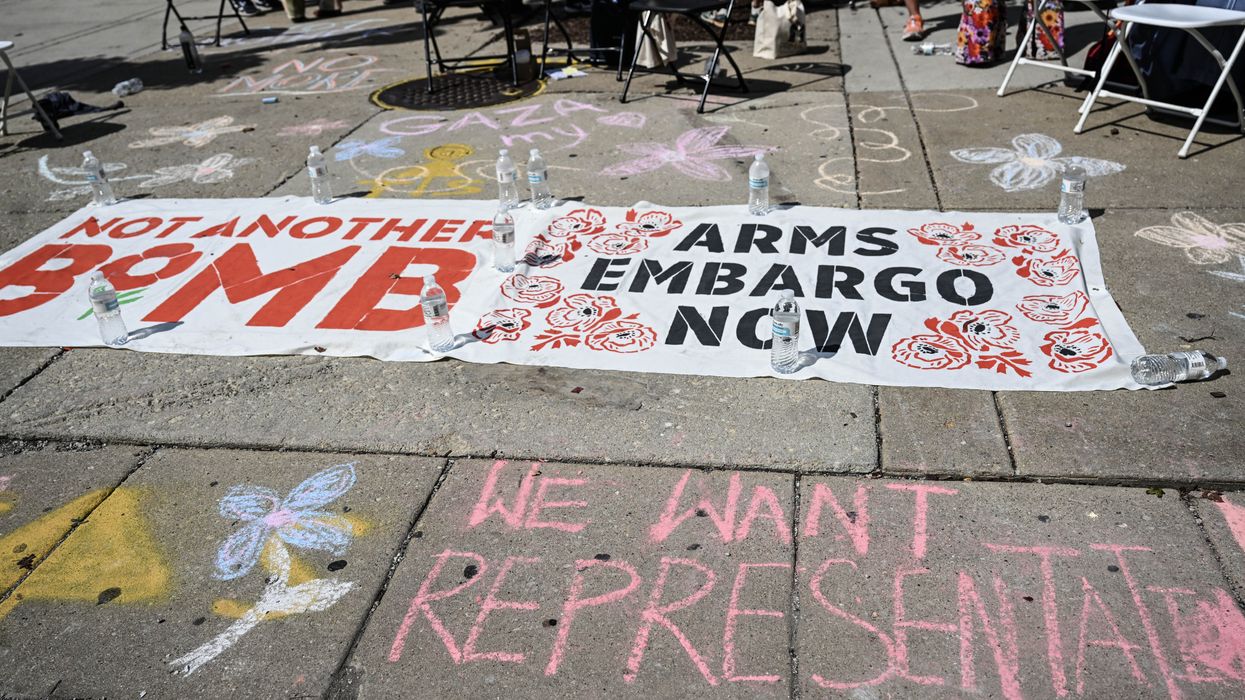
Our movement's best hope for change lies in growing our anti-war organizing power, and that power would be severely undermined by a Trump administration. Pro-war forces like AIPAC may want to drive us out of the Democratic Party, but we’re here to stay.
Note: At the conclusion of our historic sit-in at the Democratic National Convention in Chicago, we at the Uncommitted National Movement asked Vice President Harris to respond by September 15 to requests to meet with Palestinian American families in Michigan who lost loved ones to U.S.-supplied bombs in Gaza and to discuss their demands for halting arms to Israel and securing a permanent ceasefire. In response to the campaign’s failure to address these requests, Uncommitted National Movement leaders released the following statement on Thursday, Sept. 19, 2024.
The Uncommitted National Movement was born out of historic anti-war organizing by people across our country witnessing a genocide unfold in Gaza against Palestinians whose humanity we recognize as no different than our own. We came together, first in Michigan, and then in state after state to insist that even through our pain and grief, we must organize to save lives, advance policies that build rather than destroy, and create a future where not another bomb from our country drops on a civilian anywhere in our world. We are proud to have grown our movement, even as our government continues to send bombs that destroy families. Our organizing around the presidential election was never about endorsing a specific candidate; it has always been about building a movement that saves lives.
Our organizing around the presidential election was never about endorsing a specific candidate; it has always been about building a movement that saves lives.
Today, the Uncommitted National Movement announces that as we continue advocating for lifesaving policy change which ends the bombing of Gaza and ends U.S. support for the Israeli military's war crimes, Vice President Harris’s unwillingness to shift on unconditional weapons policy or to even make a clear campaign statement in support of upholding existing U.S. and international human rights law has made it impossible for us to endorse her. At this time, our movement 1) cannot endorse Vice President Harris; 2) opposes a Donald Trump presidency, whose agenda includes plans to accelerate the killing in Gaza while intensifying the suppression of anti-war organizing; and 3) is not recommending a third-party vote in the Presidential election, especially as third party votes in key swing states could help inadvertently deliver a Trump presidency given our country’s broken electoral college system.
For months, we have urged Vice President Harris to shift her Gaza policy so we could mobilize voters in key states to save lives and our democracy. The DNC and the Vice President’s campaign fumbled even a small gesture to unite our party ahead of November by rejecting the simple request for a Palestinian American speaker. Now, the Vice President’s campaign is courting Dick Cheney while sidelining disillusioned anti-war voices, pushing them to consider third-party options or to sit this important election out.
The Uncommitted movement began in Michigan with 1.5 million voter contacts in three weeks, delivering 101,000 anti-war votes and was one of the first organized efforts to spotlight Biden’s electability issues. Nationally, we grew to 740,000 pro-peace voters, securing a historic 30 delegates to the DNC. Since then, we’ve expanded to over 300 “Ceasefire Delegates”—Harris supporters who have joined our fight to end Democratic Party leadership’s policy of backing bombs. Their efforts have been supported by our Not Another Bomb campaign, which has brought together dozens of organizations and mobilized over 100,000 people in 35 states nationwide.
We must block Donald Trump, which is why we urge Uncommitted voters to vote against him and avoid third-party candidates that could inadvertently boost his chances, as Trump openly boasts that third parties will help his candidacy.
In our assessment, our movement’s best hope for change lies in growing our anti-war organizing power, and that power would be severely undermined by a Trump administration. Seventy-seven percent of Democrats and 61% of Americans oppose weapons aid for Israel's assault on Gaza, which is preventing a ceasefire and blocking the reunification of Palestinian and Israeli captives with their families. Trump himself has bragged about accelerating the genocide against Palestinians and promised to intensify the suppression of pro-Palestinian activism in the U.S. We must block Donald Trump, which is why we urge Uncommitted voters to vote against him and avoid third-party candidates that could inadvertently boost his chances, as Trump openly boasts that third parties will help his candidacy.
We urge Uncommitted voters to register anti-Trump votes and vote up and down the ballot. Our focus remains on building a broad anti-war coalition both inside and outside the Democratic Party. Pro-war forces like AIPAC may want to drive us out of the Democratic Party, but we’re here to stay. Movements have long worked to rid the Democratic Party of hateful forces—segregationists, anti-union, anti-choice, and anti-LGBTQ proponents, the NRA, and Big Oil—and we will work in that legacy to rid our party of AIPAC’s pro-war extremism.
Building on the work of ‘Uncommitted,’ we invite stakeholders in the Democratic Party coalition—progressives, civil rights, labor, racial justice, reproductive rights, climate, immigrant rights, disability justice, people of faith, young people and more—to join us in our campaign to push our Democratic Party leadership to align with the majority of Democratic voters who support the urgent call for a stop to illegal and morally reprehensible weapons transfers through our campaign, "Not Another Bomb," both now and in the next administration.
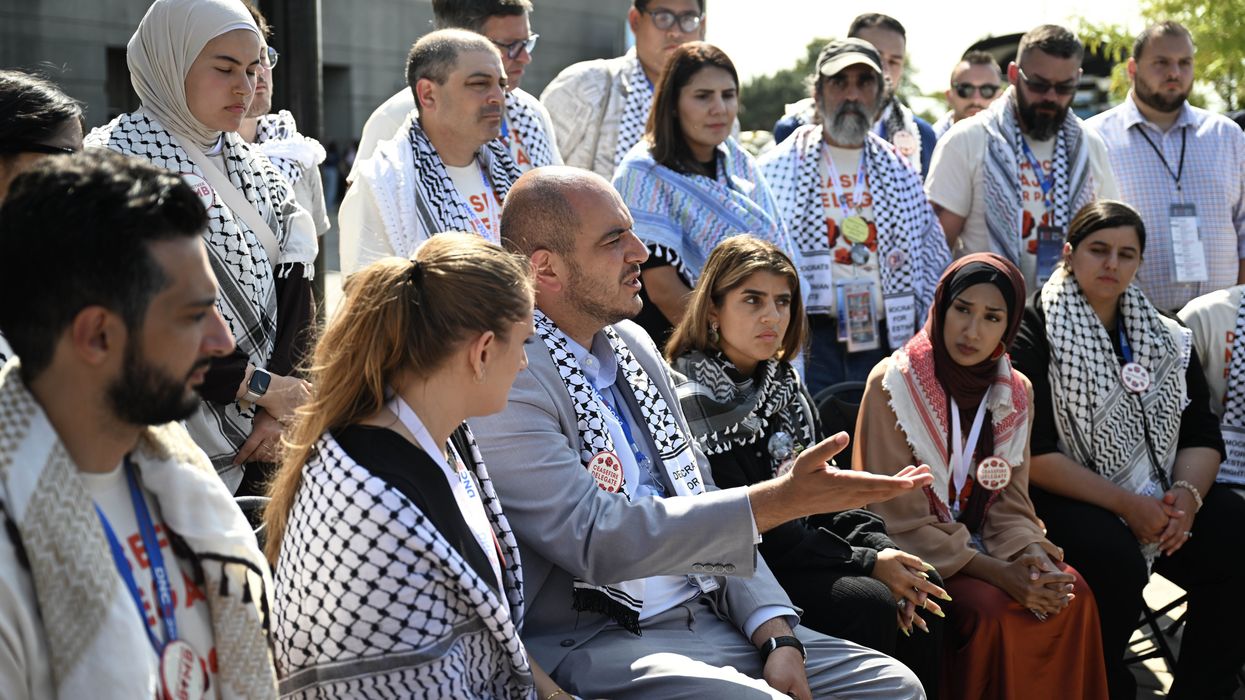
What voters opposed to the war on the people of Gaza want most is what U.S. law already requires: an arms embargo on the Israeli government that forces an end to the slaughter and starvation.
Before sparking outrage by refusing to let any Palestinian Americans speak at the Democratic National Convention last month, U.S. Vice President Kamala Harris was on her way to winning back at least some of the voters who had rejected President Joe Biden's candidacy over the war on Gaza.
The vice president had spent weeks taking several small but positive steps that gave hope to young people as well as American Muslims, Arabs, Palestinians, and other voters opposed to U.S. support for the war on Gaza.
She first refused to preside over Israeli Prime Minister Benjamin Netanyahu's predictably dishonest and dangerous speech to Congress. She also gave him a cold reception when they met one-on-one: She avoided smiling or shaking his hand during the standard post-meeting photo op and spoke alone to the press afterward.
Kamala Harris still has a very narrow opening to win over some of the voters who abandoned Biden but do not want to see Trump return to the White House.
During her remarks that day and in multiple campaign speeches, she has explicitly called for a cease-fire as part of a hostage deal and acknowledged Palestinian suffering in an empathetic way that President Biden rarely used.
She appointed a well-known and respected American Muslim attorney to serve as her liaison to Arab and Muslim voters and then stood by that official when she faced predictable attacks from pro-Israel groups.
She met with some Palestinian-American and Muslim community members on the sidelines of campaign events and gave the clear impression that she was far more sympathetic to the plight of Palestinians than her public remarks would indicate.
She initially deflected questions about whether she would support an arms embargo on the Israeli government, which was itself actually a positive sign given that any Democratic presidential candidate in years past would have responded to that question by simply saying, "No, I do not and never will support conditioning or limiting arms to Israel."
When leaders of the Uncommitted Movement later revealed that Harris had privately expressed a willingness to discuss an arms embargo, her national security adviser's cleanup statement said that she "does not support" an arms embargo in the present tense without making any pronouncements about the future.
She picked Minnesota Gov. Tim Walz as vice president instead of Pennsylvania Gov. Josh Shapiro, who had repeatedly gone out of his way to demonize college student protesters, Ben & Jerry's, and other advocates for Palestinian human rights in ways that no other VP candidate had.
Most recently, Harris approved a first-ever panel at the DNC focused on Palestinian human rights, allowing mainstream Arab and Palestinian leaders to speak freely to a packed audience about the genocide in Gaza.
Of course, none of these steps were enough. What voters opposed to the war on the people of Gaza want most is what U.S. law already requires: an arms embargo on the Israeli government that forces an end to the slaughter and starvation.
Although Vice President Harris had not been willing to break with President Biden or spark a backlash from her pro-Israel supporters by supporting an arms embargo, she had sent signals that she would at least be more open to discussing the various demands of anti-genocide voters than Biden—or Trump, for that matter.
Until, that is, the Democratic National Convention.
First, the party platform regurgitated most of the same pro-Israel talking points that AIPAC and Democratic Majority for Israel demand of candidates in their position papers, including dishonest attacks on the South Africa-inspired Boycott, Divest, and Sanctions movement; saber-rattling against Iran; and clear commitments to billions in promised funding for the Israeli government.
Second, the DNC gave a prime-time speaking slot to Israeli-American parents of hostages held captive in Gaza but then refused to give any speaking slot at all to any Palestinian Americans while making plenty of room for Republican politicians.
Even when prominent members of Congress, activists, and major unions called for the DNC and the Harris campaign to reconsider their decision, they refused. This decision insulted and infuriated Palestinian Americans and their supporters.
It also raised a very real policy concern: If supporters of Palestinian human rights could not even convince the Harris campaign to give one measly three-minute speaking spot to a Palestinian-American Democrat who would have endorsed Harris, how can we expect a Harris White House to listen when we lobby for changes in government policy?
In the weeks since the DNC speaker fiasco, the campaign has not expressed any regret for what happened. In a CNN interview, Harris also seemed to explicitly rule out supporting an embargo on even "some" arms to the Israeli government. This is remarkable given that even President Biden belatedly suspended shipments of 2,000-pound bombs.
Long story short, the Harris campaign has squandered much of the goodwill it initially built up with voters concerned about Gaza. For example, a new poll of American Muslim registered voters conducted from August 25 to 27 showed Harris winning only 29% of the vote. Jill Stein received identical support while 17% were undecided.
Despite these bleak numbers, all is not lost for Harris—yet.
Donald Trump is going out of his way to antagonize Americans who support Palestinian human rights: using Palestinian as a racist slur, promising to let Netanyahu finish the job in Gaza, speculating about ways to make Israel even larger and pledging to weaponize the federal government against college students and others who stand up for Palestine. Trump even implied that he might attack Gaza himself if the American hostages have not been released by the time he takes office.
That means Kamala Harris still has a very narrow opening to win over some of the voters who abandoned Biden but do not want to see Trump return to the White House.
What, if anything, can her campaign do now?
First, apologize for not including a Palestinian-American speaker at the convention and feature Palestinian-American speakers at a prominent campaign event.
Second, sit down with and listen to representatives of the Muslim, Palestinian, Arab, Jewish, Black, and other organizations that oppose the genocide in Gaza and use the upcoming presidential debate as an opportunity to clearly reject anti-Palestinian racism and Islamophobia here at home.
Third, pledge to enforce U.S. laws that already forbid arms sales and transfers to any foreign human rights violators, including the Israeli government.
Perhaps most importantly, Vice President Harris must convince President Biden to force Netanyahu to agree to the cease-fire deal that he keeps sabotaging. Harris says that she and President Biden are working around the clock to secure a cease-fire deal, but the truth is that the main barrier to a deal is Netanyahu's opposition to a permanent cease-fire and his insistence on partially occupying Gaza.
With nothing left to lose politically, Biden should leverage U.S. military aid to force Netanyahu to accept a permanent cease-fire deal that frees all hostages and political prisoners.
Taking these steps might allow the Harris-Walz campaign to win back some of the disillusioned voters in Michigan, Pennsylvania, Georgia, and other swing states where every vote counts.
Time is running out, the path is narrow, and the missteps of recent weeks have made her journey all the more difficult. If Vice President Harris is going to do the right thing, the time to act is now.
"Harris called for a cease-fire in Gaza, but she failed to commit to the change in policy that would secure a cease-fire: ending weapons transfers to Israel," said one Palestinian rights group.
During her speech Thursday night accepting the Democratic Party's 2024 nomination, Vice President Kamala Harris decried the "heartbreaking" suffering that Gazans are experiencing after 10 consecutive months of Israeli bombardment.
But Harris didn't acknowledge, let alone condemn, the central role the United States has played in fueling the humanitarian emergency in the Palestinian enclave, where civilians face indiscriminate bombings daily as well as famine and appalling disease outbreaks—including a possible polio epidemic.
Instead, Harris repeated a line that has become commonplace for the White House and its allies, declaring that "President [Joe] Biden and I are working around the clock" to secure a cease-fire in the Gaza Strip.
Nor did Harris explicitly denounce Israel's actions in Gaza, which have included atrocities committed with U.S. weaponry.
"Harris wanted to portray herself as strong and brave, but when she had to switch to passive voice ("What has happened in Gaza") to avoid calling out Israel's war crimes, she showed stunning cowardice," said Palestinian American political analyst Yousef Munayyer.
Declining to break with the administration in which she currently serves, the vice president did not express support for a policy shift that would pressure Israel's far-right government to accept a cease-fire agreement, such as an arms embargo of the kind supported by United Nations experts, leading human rights groups, and a majority of U.S. voters.
"I will always stand up for Israel's right to defend itself, and I will always ensure Israel has the ability to defend itself," said Harris, condemning the Hamas-led October 7 attack.
"If you really wanted a cease-fire, you'd just stop sending the weapons. It is that simple."
Abbas Alawieh, a co-founder of the Uncommitted National Movement, told Reuters following the vice president's speech that she did not deliver what was badly needed as the disaster in Gaza worsens by the minute: "courageous leadership that breaks from the current approach."
The IMEU Policy Project, an affiliate of the Institute for Middle East Understanding, echoed Alawieh's assessment, saying in a statement that "with Vice President Kamala Harris' nomination, the party had an opportunity to move in a new direction."
"Tonight Harris called for a cease-fire in Gaza, but she failed to commit to the change in policy that would secure a cease-fire: ending weapons transfers to Israel," the group said. "To be clear: There is no way to end this bloodshed while supplying Israel with billions of dollars in weapons as it indiscriminately bombs Palestinian families, schools, hospitals, refugee shelters, and places of worship."
"It must be noted that Harris' call for 'dignity, security, freedom, and self-determination' for the Palestinian people received thunderous applause," the organization added. "However, words are not enough. Democratic voters are increasingly united in their demand for a change in policy on Gaza and in support of Palestinian safety and freedom broadly; it is time for the Democratic Party leadership to catch up."
Denied a speaking slot on the convention stage, Palestinian American delegates and their allies made their voices heard in the hallways of Chicago's United Center and outside of the facility, where they held a sit-in to protest the DNC's rejection of their demands.
Calls for a Palestinian American speaker on the DNC stage drew broad support from Democratic lawmakers and their allies, including Chicago Mayor Brandon Johnson and the United Auto Workers.
Lily Greenberg Call, a Jewish Biden political appointee who resigned in May over the administration's Gaza policy, said late Thursday that she was "so sad and disappointed" that the DNC chose to "silence Palestinian American voices and exclude them from the convention stage."
"VP, I want you to win in November," Call added. "You must do better."
Layla Elabed, a co-founder of the Uncommitted National Movement and the sister of Rep. Rashida Tlaib (D-Mich.), said Thursday that "Michigan voters want to vote for Harris, but we need to shift policy."
"Many of us know the impact of U.S.-funded bombs firsthand," said Elabed.
Rep. Ilhan Omar (D-Minn.), one of the lawmakers who showed solidarity with uncommitted delegates as they staged a sit-in outside of the DNC earlier this week, clearly articulated the U.S. Palestinian rights movement's position during a press conference on Wednesday, a day before Harris took the stage in Chicago.
"If you really wanted a cease-fire, you'd just stop sending the weapons," said Omar. "It is that simple."