

SUBSCRIBE TO OUR FREE NEWSLETTER
Daily news & progressive opinion—funded by the people, not the corporations—delivered straight to your inbox.
5
#000000
#FFFFFF
To donate by check, phone, or other method, see our More Ways to Give page.
Daily news & progressive opinion—funded by the people, not the corporations—delivered straight to your inbox.
"President Trump talks 'tough on crime,' but his administration is once again betraying a preference for going soft on corporations that break the law."
U.S. President Donald Trump "is handing out 'get out of jail free' cards to corporate lawbreakers," declared Rick Claypool, author of a Tuesday report about the administration ending probes and enforcement actions against dozens of companies.
Claypool is a research director for the watchdog Public Citizen. His report "covers 429 separate investigations and cases against 361 corporations over alleged lawbreaking—including at least 25 involving allegations of criminal misconduct."
During the first six weeks since the inauguration, the researcher found, the Trump administration halted or moved to dismiss actions against 89 corporations—or 25% of the companies in Public Citizen's tracker of prominent cases.
"The consequences for the public when corporations face a diminished threat of enforcement are disastrous," Claypool warned in a statement. "Meanwhile, honest businesses that are not Trump administration insiders—or that refuse to play along with the ultra-MAGA ideological agenda—may face serious disadvantages from Trump's politicized approach to enforcement."
As his report, Corporate Clemency, details, the beneficiaries of the recent dismissals are:
"Additionally, firings of National Labor Relations Board (NLRB) members and EEOC commissioners mean these regulators lack the quorum needed for finalizing enforcement decisions, including NLRB cases against 100 corporations included in the tracker," the report explains. "There are nearly 27,000 open NLRB cases in total."
The corporations that began the Trump administration with the greatest number of probes or cases in the Public Citizen tracker are Musk's Tesla (eight) and SpaceX (four), billionaire Jeff Bezos' Amazon (seven), Big Pharma's Pfizer (five), banking giant Wells Fargo (four), and the insurance company UnitedHealthcare (four).
The report highlights that "of the 361 corporations facing federal enforcement actions, 56 have close ties with the Trump administration," 17 of which "are benefiting from the enforcement pauses that have halted investigations and cases."
The document also identifies 34 companies that collectively gave at least $34 million toward Trump inaugural festivities.
Amazon and Pfizer each gave $1 million, as did many others: Adobe, Apple, AT&T, Boeing, Coinbase, ExxonMobil, Ford Motor Company, General Motors, Goldman Sachs, Google, Hyundai and its affiliate, Johnson & Johnson, Kraken, Lockheed Martin, Meta, Microsoft, OpenAI, Stanley Black & Decker, Stellantis, and Toyota.
Ripple, Robinhood Markets, and Uber gave even more, while Abbott Laboratories, Bank of America, Citibank, Coca-Cola, CoreCivic, Ericsson, Hewlett Packard, and Syngenta gave less or an undisclosed amount.
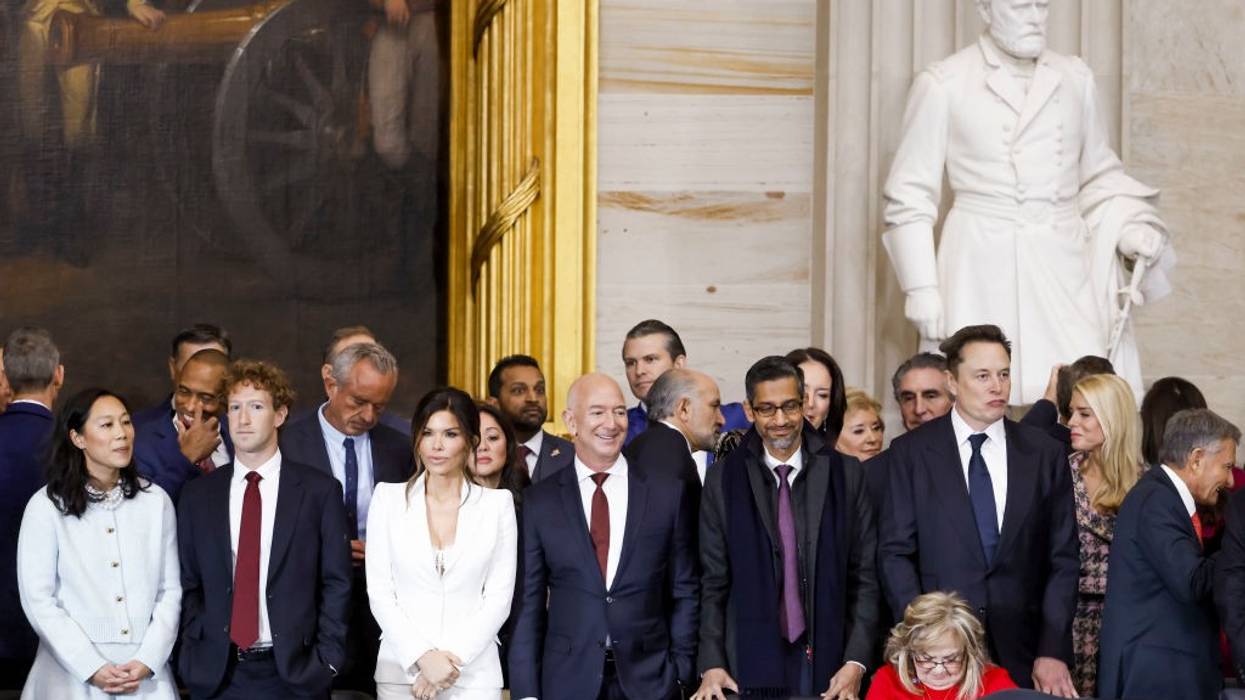
Apple and OpenAI's contributions came from the companies' chief executives, Tim Cook and Sam Altman, while Uber had a corporate donation and one from CEO Dara Khosrowshahi. All three of them appear on the report's list of "Big Tech oligarchs seeking corporate clemency from the Trump administration," alongside Musk, Bezos, TikTok's Shou Zi Chew, Mark Zuckerberg of Meta—which owns Instagram and Facebook—and Sundar Pichai of Alphabet, the parent company of Google.
"President Trump talks 'tough on crime,'" the report says, "but his administration is once again betraying a preference for going soft on corporations that break the law."
Public Citizen co-president Robert Weissman similarly called out not only Trump—who was convicted of 34 felonies—but also Attorney General Pam Bondi and Federal Bureau of Investigation Director Kash Patel, who all "bloviate about how tough they are on crime."
"The reality is the Trump administration by its actions is inviting a corporate crime spree," Weissman said in a statement. "Not only does the wholesale abandonment of cases against alleged corporate wrongdoers let bad actors off the hook, it invites—and virtually guarantees—a surge in consumer rip offs, endangerment of workers, poisoning of the air and water, discriminatory employment practices, and more."
Public Citizen's analysis comes amid mounting alarm over Trump's so-called Department of Government Efficiency, led by Musk, the richest person on Earth. As Common Dreams reported Monday, the Center for Biological Diversity noted in a new lawsuit that Trump's executive order establishing the government-gutting initiative requires all federal agencies to form DOGE teams.
The center's complaint stresses that "Mr. Musk and other billionaire and tech executives working with DOGE stand to benefit personally and financially from the DOGE teams' work, including by securing government contracts, slashing environmental rules that apply to their companies, and reducing the government's regulatory capacity and authority, including by targeting specific agencies, statutes, and spending decisions that affect their businesses."
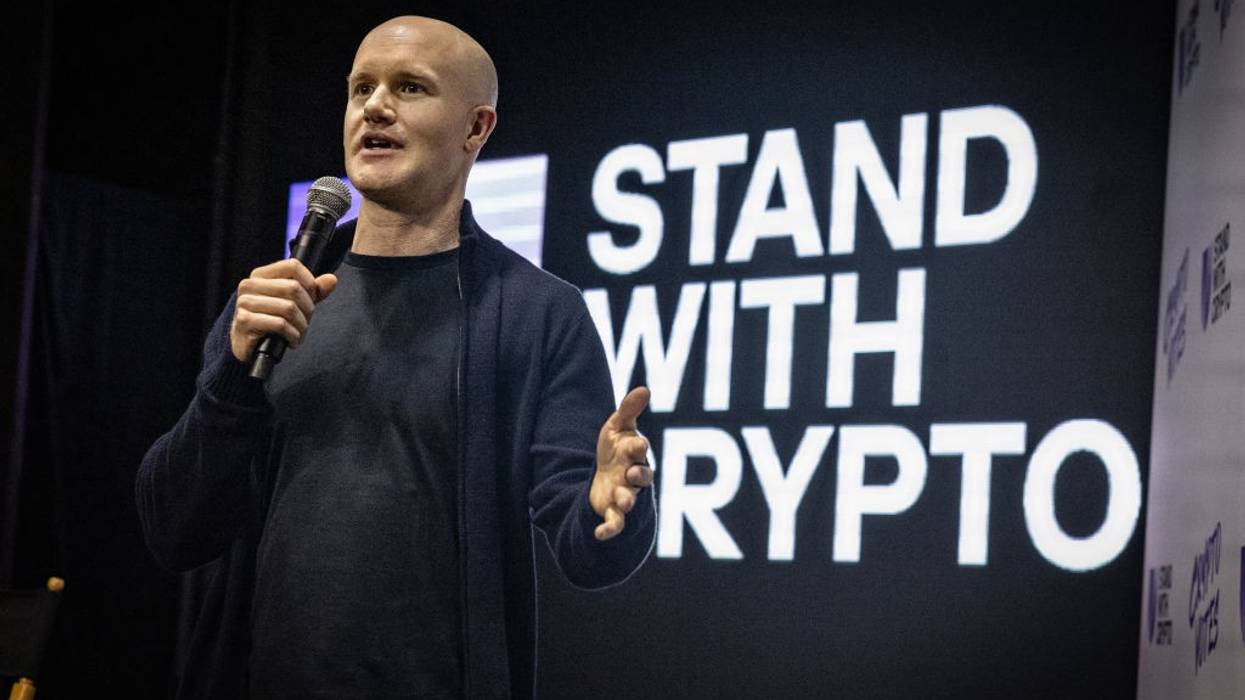
The Securities and Exchange Commission's decision to drop its legal action against Coinbase was called "proof positive that the crypto industry's flood of campaign spending has paid off."
U.S. President Donald Trump's Securities and Exchange Commission has delivered a significant victory to the cryptocurrency industry by agreeing to drop a major lawsuit against Coinbase, a crypto exchange platform company that spent heavily on the 2024 election and donated a million dollars to President Donald Trump's inauguration.
The SEC's decision, announced Friday by Coinbase's chief legal officer, marks the latest evidence of the nascent industry's growing political influence and the current administration's readiness to ditch corporate enforcement efforts. The New York Times noted Friday that the SEC under the Biden administration sued Coinbase in 2023 "on the grounds that the digital currencies sold on its platform constituted unregistered securities that put consumers at risk of financial harm."
Robert Weissman, co-president of the consumer advocacy group Public Citizen, said in a statement that "the SEC abandonment of its case against Coinbase is proof positive that the crypto industry's flood of campaign spending has paid off."
"The now-abandoned lawsuit against Coinbase involved the most basic assertion of SEC authority: Coinbase cryptocurrency offerings are actually securities and must be registered and regulated as such," said Weissman. "Retreat from this basic assertion is a massive gift to the industry, which can only be understood in light of its massive political spending in the last election."
According to the campaign finance watchdog OpenSecrets, Coinbase spent over $46 million trying to influence the 2024 election, part of a broader wave of spending from the cryptocurrency industry.
A trio of pro-crypto super PACs spent over $130 million in an effort to "elect a crypto-friendly president and members of Congress," OpenSecrets noted in a blog post just days before the 2024 contest.
Public Citizen argued ahead of the 2024 election that Coinbase's campaign spending appeared to be illegal because the company is a federal contractor.
BREAKING: The SEC has dropped its enforcement case against Coinbase. Coinbase spent $46 million to influence the outcome of the election. Now they're already getting their payoff.
— More Perfect Union (@moreperfectunion.bsky.social) February 21, 2025 at 9:34 AM
The SEC is currently led by Acting Chair Mark Uyeda, whom Trump appointed to the post following the resignation of former Chair Gary Gensler, a proponent of tough crypto regulation.
Following the November election, Coinbase CEO Brian Armstrong met privately with Trump, who has profited massively from his own foray into crypto. The two discussed personnel appointments, according to The Wall Street Journal.
Since taking office last month, Trump has moved to stock his administration with crypto enthusiasts, including some with glaring conflicts of interest.
The Coinbase CEO's sister, Kathryn Armstrong Loving, has been identified as a member of the Elon Musk-led Department of Government Efficiency. Coinbase, meanwhile, "brought on Trump's campaign co-manager Chris LaCivita as a member of its Global Advisory Council," Sludge reported.
Weissman of Public Citizen warned Friday that "when the crypto crash happens," the SEC's decision to drop its lawsuit against Coinbase "will go down as one that made it far worse than it would have been."
"The SEC decision is also an important marker in the Trump administration's rush to abandon prosecution and enforcement actions against corporate criminals and wrongdoers," he added. "This is not just an abandonment of those already wronged by corporate wrongdoers, it is an invitation to a corporate crime spree and epidemic of corporate wrongdoing. Americans, watch your head, watch your wallet, and watch your back."

"Americans should understand exactly what this is: A giant gift to the corporate class and a Trumpian power grab."
U.S. President Donald Trump on Tuesday signed an executive order aimed at bringing the nation's independent agencies—including the Federal Trade Commission and Securities and Exchange Commission—under his control, a sweeping power grab that's expected to spark a legal fight with enormous stakes for the country.
The new executive order, titled "Ensuring Accountability for All Agencies," laments that previous administrations "have allowed so-called 'independent regulatory agencies' to operate with minimal presidential supervision" and states that, going forward, "the president and the attorney general, subject to the president's supervision and control, shall provide authoritative interpretations of law for the executive branch."
The order goes on to require that "all executive departments and agencies"—including those granted some independence from the presidency by Congress—"shall submit for review all proposed and final significant regulatory actions to the Office of Information and Regulatory Affairs (OIRA) within the Executive Office of the President before publication in the Federal Register."
OIRA is part of the Office of Management and Budget, which is run by Project 2025 architect and far-right extremist Russell Vought.
In a fact sheet released alongside the order, the White House specifically names the FTC, the SEC, and the Federal Communications Commission (FCC) as agencies it claims have "exercised enormous power over the American people without presidential oversight."
The new order exempts from its far-reaching mandates the "monetary policy functions of the Federal Reserve."
"Not incidentally, both the FTC and SEC have ongoing investigations or enforcement actions against companies owned by Elon Musk."
Robert Weissman, co-president of Public Citizen, said in a statement that the executive order marks an "illegal" attempt to "shield corporations from accountability and centralize more power with Trump and his minions."
"This is a profoundly dangerous idea for the nation's health, safety, environment, and economy—and for our democracy," he added. "Congress made independent agencies independent of the White House for good reason."
Weissman noted that the independence of agencies such as the FTC and SEC is "designed to enable them to perform these duties without undue political pressure from giant corporations, the super-rich and the super-connected."
"Trump's EO would dissolve that independence and put the agencies under Trump's thumb, ensuring they turn a blind eye to wrongdoing by favored corporations and leave consumers and investors out to dry," Weissman continued. "Not incidentally, both the FTC and SEC have ongoing investigations or enforcement actions against companies owned by Elon Musk. Americans should understand exactly what this is: A giant gift to the corporate class and a Trumpian power grab."
The Washington Post reported that Trump's order sets the stage for "a potential Supreme Court fight that could give him significantly more power over those agencies' decisions, budgets, and leadership." Trump has already trampled decades of legal precedent by firing protected officials without cause, including the former chair of the National Labor Relations Board (NLRB).
"Courts have blocked or limited the reach of some of Trump's executive actions, but legal observers expect that the conservative-dominated Supreme Court may be open to broadening presidential power in at least some of the cases," the Post observed. "The justices are already considering a case regarding the scope of Trump's power over independent agencies, and Tuesday's executive order seems sure to prompt additional legal challenges."
Deborah Pearlstein, a constitutional scholar at Princeton University, told the newspaper that the White House is "deliberately teeing up a major question of constitutional law that will go to the Supreme Court for review."
The Supreme Court is currently controlled by a right-wing supermajority that includes three Trump-appointed justices.
Prior to Trump's order, the U.S. Justice Department—headed by Attorney General Pam Bondi—indicated that it would no longer defend the independence of the NLRB, FTC, and other agencies and would ask the Supreme Court to reverse precedent that has shielded independent agency leaders from termination without cause.
Reuters reported that "about two dozen companies, including Amazon and Elon Musk's SpaceX, have filed lawsuits since last year claiming the president should have the power to fire NLRB members at will."
"Several companies sued by the FTC have filed similar challenges against that agency," the outlet added. "They include Meta Platforms, Walmart, and Cigna's Express Scripts."
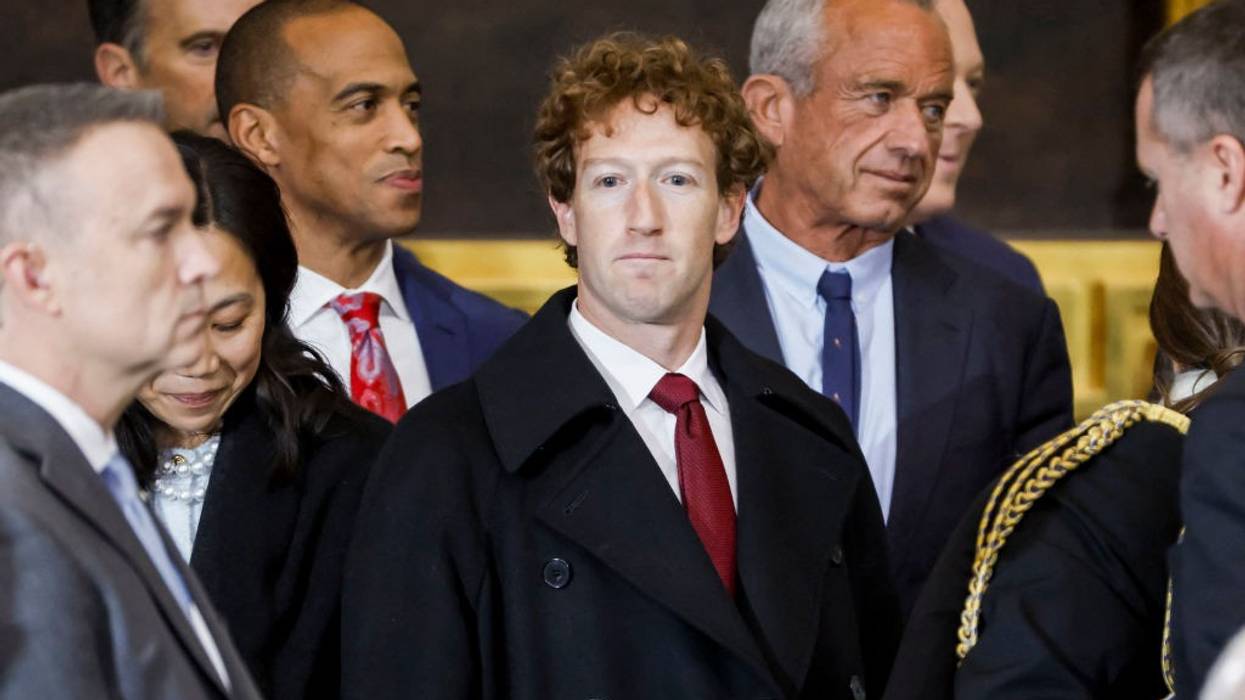
"Rather than learning from its reckless contributions to mass violence in countries including Myanmar and Ethiopia, Meta is instead stripping away important protections that were aimed at preventing any recurrence of such harms."
An expert on technology and human rights and a survivor of the Rohingya genocide warned Monday that new policies adopted by social-media giant Meta, which owns Facebook and Instagram, could incite genocidal violence in the future.
On January 7, Meta CEO Mark Zuckerberg announced changes to Meta policies that were widely interpreted as a bid to gain approval from the incoming Trump administration. These included the replacement of fact-checkers with a community notes system, relocating content moderators from California to Texas, and lifting bans on the criticisms of certain groups such as immigrants, women, and transgender individuals.
Zuckerberg touted the changes as an anti-censorship campaign, saying the company was trying to "get back to our roots around free expression" and arguing that "the recent elections also feel like a cultural tipping point toward, once again, prioritizing speech."
"With Zuckerberg and other tech CEOs lining up (literally, in the case of the recent inauguration) behind the new administration's wide-ranging attacks on human rights, Meta shareholders need to step up and hold the company's leadership to account to prevent Meta from yet again becoming a conduit for mass violence, or even genocide."
However, Pat de Brún, head of Big Tech Accountability at Amnesty International, and Maung Sawyeddollah, the founder and executive director of the Rohingya Students' Network who himself fled violence from the Myanmar military in 2017, said the change in policies would make it even more likely that Facebook or Instagram posts would inflame violence against marginalized communities around the world. While Zuckerberg's announcement initially only applied to the U.S., the company has suggested it could make similar changes internationally as well.
"Rather than learning from its reckless contributions to mass violence in countries including Myanmar and Ethiopia, Meta is instead stripping away important protections that were aimed at preventing any recurrence of such harms," de Brún and Sawyeddollah wrote on the Amnesty International website. "In enacting these changes, Meta has effectively declared an open season for hate and harassment targeting its most vulnerable and at-risk people, including trans people, migrants, and refugees."
Past research has shown that Facebook's algorithms can promote hateful, false, or racially provocative content in an attempt to increase the amount of time users spend on the site and therefore the company's profits, sometimes with devastating consequences.
One example is what happened to the Rohingya, as de Brún and Sawyeddollah explained:
We have seen the horrific consequences of Meta's recklessness before. In 2017, Myanmar security forces undertook a brutal campaign of ethnic cleansing against Rohingya Muslims. A United Nations Independent Fact-Finding Commission concluded in 2018 that Myanmar had committed genocide. In the years leading up to these attacks, Facebook had become an echo chamber of virulent anti-Rohingya hatred. The mass dissemination of dehumanizing anti-Rohingya content poured fuel on the fire of long-standing discrimination and helped to create an enabling environment for mass violence. In the absence of appropriate safeguards, Facebook's toxic algorithms intensified a storm of hatred against the Rohingya, which contributed to these atrocities. According to a report by the United Nations, Facebook was instrumental in the radicalization of local populations and the incitement of violence against the Rohingya.
In late January, Sawyeddollah—with the support of Amnesty International, the Open Society Justice Initiative, and Victim Advocates International—filed a whistleblower's complaint against Meta with the Securities and Exchange Commission (SEC) concerning Facebook's role in the Rohingya genocide.
The complaint argued that the company, then registered as Facebook, had known or at least "recklessly disregarded" since 2013 that its algorithm was encouraging the spread of anti-Rohingya hate speech and that its content moderation policies were not sufficient to address the issue. Despite this, it misrepresented the situation to both the SEC and investors in multiple filings.
Now, Sawyeddollah and de Brún are concerned that history could repeat itself unless shareholders and lawmakers take action to counter the power of the tech companies.
"With Zuckerberg and other tech CEOs lining up (literally, in the case of the recent inauguration) behind the new administration's wide-ranging attacks on human rights, Meta shareholders need to step up and hold the company's leadership to account to prevent Meta from yet again becoming a conduit for mass violence, or even genocide," they wrote. "Similarly, legislators and lawmakers in the U.S. must ensure that the SEC retains its neutrality, properly investigate legitimate complaints—such as the one we recently filed, and ensure those who abuse human rights face justice."
The human rights experts aren't the only ones concerned about Meta's new direction. Even employees are sounding the alarm.
"I really think this is a precursor for genocide," one former employee told Platformer when the new policies were first announced. "We've seen it happen. Real people's lives are actually going to be endangered. I'm just devastated."

"If Atkins is confirmed by the Senate, crypto grifters will surely rejoice at their newfound freedom to swindle, but most investors in the U.S. will be much less safe," wrote one researcher.
The price of a single Bitcoin topped $100,000 Wednesday—a major milestone for the cryptocurrency—mere hours after President-elect Donald Trump selected crypto advocate Paul Atkins to lead the Securities and Exchange Commission.
Atkins previously served as the SEC commissioner from 2002 to 2008 and then went on to found a financial consulting company, Patomak Global Partners, which included failed cryptocurrency exchange FTX among its clients, according to The Wall Street Journal. Atkins is expected to adopt a warmer approach to crypto.
On a podcast last year, Atkins noted that "if the SEC were more accommodating and would deal straightforwardly with these various [crypto] firms, I think it would be a lot better to have things happen here in the United States rather than outside," according to The Washington Post.
"[Atkins] believes in the promise of robust, innovative capital markets that are responsive to the needs of Investors, and that provide capital to make our Economy the best in the world. He also recognizes that digital assets and other innovations are crucial to Making America Greater than Ever Before," wrote Trump on Truth Social when announcing the pick.
Trump on Thursday claimed credit for Bitcoin reaching new heights: "CONGRATULATIONS BITCOINERS!!! $100,000!!! YOU'RE WELCOME!!! Together, we will Make America Great Again!"
Crypto leaders cheered the Atkins news.
"Paul Akins is an excellent choice for the new SEC chair!" wrote Brian Armstrong, the co-founder and CEO of the cryptocurrency exchange Coinbase. Brad Garlinghouse, CEO of the cryptocurrency firm Ripple, called Atkins an "outstanding choice."
Current SEC Chair Gary Gensler has pursued legal action against a number of crypto companies, including FTX, and drawn the ire of the crypto world for maintaining that by and large the crypto industry should be governed by the same SEC rules that oversee stock and bond trading.
Meanwhile, critics of the Atkins pick warned that investors could be less safe if he is confirmed to helm of the SEC.
"Donald Trump's nomination of Paul Atkins to chair the Securities and Exchange Commission is a huge gift to the crypto industry, as evidenced by the immediate jump in Bitcoin's stock price... If Atkins is confirmed by the Senate, crypto grifters will surely rejoice at their newfound freedom to swindle, but most investors in the U.S. will be much less safe," wrote Kenny Stancil, senior researcher at Revolving Door Project, a watchdog group.
Bartlett Naylor, financial policy advocate for Public Citizen, added that "any sentient being—let alone a securities markets expert—should understand that bitcoin is 'thin air,' as Trump himself once put it. That Paul Atkins has made a living promoting such a scam doesn't bode well for his reflexes as a shepherd for investor protection."

Decision in SEC v. Jarkesy decried as a "victory for the wealthy and powerful" delivered by a right-wing majority that once again put "corporations, Wall Street, and billionaire benefactors over everyday Americans."
The U.S. Supreme Court on Thursday ruled along ideological lines that the Securities and Exchange Commission cannot use in-house legal proceedings to civilly penalize fraudsters, a decision that could strike a devastating blow to federal agencies' ability to fight corporate crime.
In the 6-3 decision, the high court's conservative supermajority deemed the SEC's in-house proceedings unconstitutional, siding with the U.S. Chamber of Commerce and other big business-aligned organizations that weighed in on the side of the plaintiff—conservative radio host and hedge fund manager George Jarkesy, who was accused by the SEC of defrauding investors and ordered to pay a $300,000 civil penalty.
Jarkesy argued the SEC proceedings violated his Seventh Amendment right to a jury trial. But as Vox's Ian Millhiser observed, "the Constitution treats civil trials very differently from criminal proceedings."
"While the Sixth Amendment provides that 'in all criminal prosecutions' the defendant is entitled to a jury trial," Millhiser wrote, "the Seventh Amendment provides a more limited jury trial right, requiring them 'in suits at common law.'"
Millhiser argued that with its ruling in SEC v. Jarkesy, the high court effectively "lit a match and tossed it into dozens of federal agencies."
The Supreme Court's three liberal judges dissented from Thursday's decision, with Justice Sonia Sotomayor denouncing the ruling as "a power grab" with potentially "momentous consequences."
"Today's ruling is part of a disconcerting trend: When it comes to the separation of powers, this court tells the American public and its coordinate branches that it knows best," Sotomayor wrote, warning that the decision "means that the constitutionality of hundreds of statutes may now be in peril, and dozens of agencies could be stripped of their power to enforce laws enacted by Congress."
Congress would have to give a bunch of federal agencies VASTLY more money and personnel to handle all the jury trials they would need to conduct to patch the hole that SCOTUS just blew in their enforcement powers. It won't happen. This case will just let lawbreakers off the hook.
— Mark Joseph Stern (@mjs_DC) June 27, 2024
Consumer advocates and watchdog organizations warned the high court's decision in SEC v. Jarkesy could have implications that extend well beyond the Securities and Exchange Commission, given that other key agencies—including the Federal Trade Commission, the Federal Mine Safety and Health Review Commission, and the Environmental Protection Agency—use internal legal proceedings overseen by an administrative law judge.
The Associated Press noted Thursday that the SEC "had already reduced the number of cases it brings in administrative proceedings pending the Supreme Court's resolution of the case."
"Today's decision is another step in the long-term corporate project of neutering federal agencies' ability to protect the public from fraudsters, rip-offs, dangerous products, carbon polluters, and more," Robert Weissman, president of Public Citizen, said in a statement. "The decision will have near-term consequences for the financial system, as it hinders the SEC's ability to seek critical penalties."
As a result of Thursday's ruling, said Weissman, some federal agencies "will need new authority from Congress, which is not doing much legislating, in order to be able to enforce the law."
"The decision extols the Seventh Amendment, but shows little respect for the separation of powers that is at the heart of our constitutional system," Weissman added. "There's also more than a little irony in this court touting the right to access the court system, when it has broadly allowed companies to require consumers to use arbitration rather than protecting their right to access the courts."
"In gutting the federal government's ability to enforce laws enacted by Congress, this ruling gives special interests even more power to set the rules for the rest of us."
As Politico reported last month, an "alliance of tech billionaires, conservative legal activists, and the business lobby" joined the fight to strip the SEC of the key enforcement tool.
The outlet noted that "since Jarkesy was filed, companies including Meta, SpaceX, and Amazon have escalated it into a broader fight against federal power by suing other agencies over their own courts—a way of fighting unfavorable judgments by attacking the system that delivered it."
The Revolving Door Project noted in an analysis released Thursday that at least 13 organizations with "ties to court-whisperers and judicial gift-givers like Leonard Leo, Charles Koch, Paul Singer, Harlan Crow, and wealthy elites in the Horatio Alger Association in which Clarence Thomas is a key member" submitted amicus briefs supporting Jarkesy's fight against the SEC.
"Some of the organizations that supported the weakening of the SEC have direct ties to the powerful friends and benefactors of the court," the group said. "The very same people who are flying Clarence Thomas and Samuel Alito to vacation destinations on private jets are closely tied to organizations that are urging the court through amicus briefs to rule in a manner favorable to corporate wrongdoers."
Caroline Ciccone, president of the watchdog group Accountable.US, said in a statement Thursday that the Supreme Court's decision "is a victory for the wealthy and powerful, delivered by a Supreme Court conservative majority all too used to putting corporations, Wall Street, and billionaire benefactors over everyday Americans."
"In gutting the federal government's ability to enforce laws enacted by Congress, this ruling gives special interests even more power to set the rules for the rest of us," said Ciccone. "Let's be clear: This is a power grab that will ultimately harm ordinary people by making it harder for federal agencies to hold corporations accountable for misdeeds."
One promising possible consequence that U.S. lawmakers could pursue is a tax hike on corporations that pay their CEOs at 50 times or more than what they pay their most typical employees.
Some 87% of Americans, polling tells us, consider today’s growing gap between U.S. CEO and worker pay a serious cause for national concern.
That gap has become a cause for global concern as well. CEO-worker pay gaps in the United States, as data in a new Altrata report make clear, are essentially cementing in place our world’s current “colossal” maldistribution of income and wealth.
In the decade ahead, the Altrata report forecasts, more than a quarter of the world’s wealthy worth at least $5 million will be passing on “almost $31 trillion” to their nearest and dearest. Some 64% of that $31 trillion will be coming from the world’s richest of the rich, those “ultra wealthy” deep pockets individually worth over $30 million.
We need more than disclosure, posit advocates for fairer corporate compensation. We need consequences.
Corporate executives, Altrata calculates, will make up over 71% of those global “ultra wealthy.” Another 21% of these ultras will be entrepreneurs who either founded or co-founded their own business empires. And nearly half of all these corporate execs and entrepreneurs, add Altrata’s researchers, will be deep-pocketed souls who call the United States home, “a testament” to America’s continuing status as the nation with by far the “world’s largest” population of ultra wealthy.
In other words, the world will see over the next 10 years “the transfer of a staggering level of wealth,” and American top corporate execs will be sitting right in the center of that transfer. The billions these execs have amassed since the early 1980s—the years when CEO pay started soaring—will be vastly expanding the ranks of those who hold massive amounts of inherited wealth.
None of this, of course, should come as much of a surprise. CEO pay levels in the United States have now been making headlines for well over four decades. And this year those executive pay stats are showing what The New York Times has dubbed a “new wrinkle.”
Over the past half-dozen years, under the authority of the 2010 Dodd-Frank Act, the federal Securities and Exchange Commission has been requiring publicly traded corporations to annually disclose the ratio of their CEO pay to their median employee pay. The value of the stock rewards in that CEO pay has up until now reflected the share value of those stock rewards when the CEOs received them.
Share values can, of course, increase substantially over time. The original SEC pay-ratio regulations didn’t require corporations to figure those increased stock values into their CEO-worker pay ratios. The new SEC rules do require companies to “disclose how much CEO stock holdings increase when the market rises.”
The difference between the original and “new wrinkle” approaches can be substantial.
Under the original approach, America’s 10 most highly paid CEOs last year collected between 510 and 3,769 times what their company’s most typical employee earned, with the year’s top-paid chief exec collecting $199 million.
Under the SEC’s “new wrinkle” accounting approach, all the 10 highest-paid U.S. chief execs in 2023 saw their compensation run over $199 million, with 4 of the top 10, analysts at Equilar calculate, making over $600 million and two more making over $300 million.
By either calculation, of course, contemporary U.S. CEOs are making fantastically more than their CEO counterparts back in the middle of the 20th century. In the 1960s, the Economic Policy Institute has pointed out, chief execs at major U.S. corporations seldom pocketed much more than 20 times the pay that went to their workers. Since then, the CEO-worker pay gap has quadrupled—and then quadrupled again.
The “new wrinkle” approach the SEC has added into the annual pay disclosure mix aims to give the American public a more accurate sense of just how outrageously wide the CEO-worker pay gap now stretches. The new numbers, disclosure advocates seem to believe, will do a better job of shaming corporate boards into more compensation common sense.
The original SEC approach to disclosure certainly didn’t do much shaming. Corporations that have disclosed their CEO-worker pay ratios under that original approach have not seen “any significant change in the level of CEO pay,” notes the University of Colorado business school’s Bryce Schonberger, a co-author of a recent chief executive pay study.
But the “new wrinkle” approach, unfortunately, doesn’t seem at all likely to produce much “significant change” either. We need more than disclosure, posit advocates for fairer corporate compensation. We need consequences. What might those consequences be? Some of the nation’s top CEO pay experts explored that question earlier this week at the U.S. Senate Budget Committee’s first-ever hearing on executive pay overreach.
Among the witnesses: Sarah Anderson, the Institute For Policy Studies Global Economy Program director. One national poll last month, Anderson told the Senate panel, asked likely voters about a promising possible consequence that lawmakers could pursue: a tax hike on corporations that pay their CEOs at 50 times or more than what they pay their most typical employees.
Some 80% of those polled, noted Anderson, supported that idea, “including large majorities in every political group.”
Taxes on corporations with outrageously wide CEO-worker pay differentials, Anderson added, give corporations with huge internal pay disparities two basic choices: either narrow their pay gaps or face a bigger IRS bill at tax time.
“A company where half of employees earn less than $60,000, for instance, would have to limit CEO compensation to no more than $3 million or raise worker pay to avoid higher taxes,” Anderson explained in her testimony. “In 2022, average S&P 500 CEO pay hit $16.7 million.”
Could moves like taxing corporations that pay their top execs far more than their workers gain any traction in Congress? Maybe. Some lawmakers already back that notion. Count the chair of the Senate Budget Committee, Rhode Island’s Sheldon Whitehouse, as one of those lawmakers.
“Our tax code is corrupted and rotten, turned upside down for special interests,” the senator charged at his panel’s June 12 hearing.
What can we do about that corruption? Whitehouse advanced a number of fixes. Among them: Raise taxes on “companies that pay their CEOs more than 50 times what they pay their average worker.”

Sen. Ron Wyden warns that "if a data broker could track Americans' cellphones to help extremists" send ads to clinic visitors, "a right-wing prosecutor could use that same information to put women in jail."
U.S. Sen. Ron Wyden and privacy rights advocates this week are sounding the alarm about an anti-abortion group using cellphone location data to send misinformation to people who visited hundreds of Planned Parenthood clinics across the country.
"If a data broker could track Americans' cellphones to help extremists target misinformation to people at hundreds of Planned Parenthood locations across the United States, a right-wing prosecutor could use that same information to put women in jail," Wyden (D-Ore.) said in a statement Tuesday.
"Federal watchdogs should hold the data broker accountable for abusing Americans' private information," he added. "And Congress needs to step up as soon as possible to ensure extremist politicians can't buy this kind of sensitive data without a warrant."
"That data brokers can track people visiting Planned Parenthood is terrifying enough. That law enforcement agencies can simply buy this type of sensitive data—rather than getting a warrant—is even worse."
Since the right-wing U.S. Supreme Courtreversed Roe v. Wade with its June 2022 decision in Dobbs v. Jackson Women's Health Organization, anti-choice state policymakers have ramped up attacks on abortion rights, elevating concerns about patient privacy.
Wyden explained in a Tuesday letter that his office launched an investigation after The Wall Street Journal reported last May that the Veritas Society, a nonprofit established by Wisconsin Right to Life, hired the advertising agency Recrue Media for an anti-abortion ad campaign targeting clinic visitors, whose locations were tracked by the data broker Near Intelligence.
As Wyden wrote to Federal Trade Commission (FTC) Chair Lina Khan and U.S. Securities and Exchange Commission (SEC) Chair Gary Gensler:
My staff spoke with Steven Bogue, the co-founder and managing principal of Recrue Media on May 19, 2023, who revealed that to target these ads, his employees used Near's website to draw a line around the building and parking lot of each targeted facility. On May 26, 2023, my staff spoke with Near's chief privacy officer, Jay Angelo, who confirmed that, until the summer of 2022, the company did not have any technical controls in place to prevent its customers targeting people who visited sensitive facilities, such as reproductive health clinics.
On a webpage that has since been taken down, but was saved by the Internet Archive, the Veritas Society stated that in 2020 in Wisconsin alone, it delivered 14.3 million ads to people who visited abortion clinics, and "served ads to those devices across the women's social pages, Facebook, Instagram, and Snapchat." The scale of this invasive surveillance-enabled ad campaign remains unknown, however, Mr. Bogue told my staff that the company used Near to target ads to people who had visited 600 Planned Parenthood locations in the lower 48 states.
Justin Sherman, who studies data brokers at Duke University, told Politico that "this is the largest targeting campaign we've seen to date against reproductive health clinics based on brokered data."
Wyden also highlighted Journal reporting from October about Near selling location data to defense contractors that resold it to U.S. Defense Department and intelligence agencies. He wrote that Angelo, the privacy officer, "confirmed that the company had for three years sold location data to the defense contractor AELIUS Exploitation Technologies."
"Mr. Angelo revealed that after joining Near in June of 2022, he conducted a review of the company's practices and discovered that the company was facilitating the sale of location data to the U.S. government that had been obtained without user consent," the senator continued, noting the removal of "misleading statements" from Near's website.
"The former executives that led Near during the period in which it engaged in these egregious violations of Americans' privacy are now under criminal investigation, according to a statement made by the company's lawyer during a December 11, 2023, bankruptcy hearing. But prosecuting those individuals for engaging in financial fraud will not address Near's corporate abuses," Wyden argued, urging the FTC and SEC to take various actions over the company's "outrageous conduct" that "recklessly harmed the public and investors."
Wyden's letter comes as the Republican-controlled U.S. House plans to take up the Reforming Intelligence and Securing America Act, which would reform Section 702 of the Foreign Intelligence Surveillance Act (FISA), spying powers temporarily extended late last year that agencies—especially the Federal Bureau of Investigation (FBI)—have abused.
Section 702 only allows warrantless surveillance targeting foreigners located outside the United States, but Americans' data is also swept up, and privacy advocates within and outside of Congress—including Wyden—have long been pushing for warrant protections, a key issue in this week's debates about the Republican-led reform bill.
Responding to Wyden's letter, Rep. Zoe Lofgren (D-Calif.) said Wednesday that "this is outrageous. Americans' most personal private health data is being bought and sold for politics. Major surveillance changes are needed. i.e. If Congress acts, reforms from our Fourth Amendment Is Not For Sale Act must be part of a FISA reform."
Reintroduced by Lofgren, Wyden, and a bipartisan coalition of lawmakers last July, that bill would require the U.S. government to get a court order compelling data brokers to disclose information as well as bar law enforcement and intelligence agencies from buying data on people in the U.S. and Americans abroad if it was obtained from a user's account or device, or deceptive practices.
Privacy rights campaigners and experts also responded to Wyden's letter with renewed calls for closing the
data broker loophole.
"That data brokers can track people visiting Planned Parenthood is terrifying enough. That law enforcement agencies can simply buy this type of sensitive data—rather than getting a warrant—is even worse,"
said Ashley Gorski, senior staff attorney at the ACLU's National Security Project. "This Thursday, Congress must vote to close the loophole for law enforcement purchases from data brokers. The government shouldn't be able to buy its way around the Fourth Amendment."
The organizations
Demand Progress and EPIC concurred in social media posts sharing Politico's reporting on the letter.
"The continued sale of our most sensitive information to and by shady data brokers not only fuels harmful surveillance advertising systems, but enables government agencies—from local police departments to state attorneys general to the FBI—to sidestep the Fourth Amendment,"
said EPIC counsel Sara Geoghegan in a statement. "We urgently need to rein in data brokers and enact comprehensive privacy rules to protect us from these grave harms in the post-Roe era we live in."
After the Chamber of Commerce successfully challenged one version of a disclosure regulation in court, the commission should come back with a revised, stronger proposal.
The corporate flacks over at the U.S. Chamber of Commerce are clearly fretting about the growing movement to crack down on stock buybacks—and for good reason.
For years now, public outrage has been growing over rampant corporate spending on buybacks, a financial maneuver that generates huge windfalls for CEOs while siphoning resources from worker wages and productive investments. In response, federal officials have taken a series of whacks at this shady form of stock manipulation.
In 2020, Congress banned airlines that got pandemic relief aid from spending funds on stock buybacks. In 2022, federal lawmakers adopted a new excise tax on buybacks. That same year, the Biden administration announced plans to make it hard for buyback-spending companies to win a cut of new mega-billion-dollar semiconductor subsidies.
Then, in 2023, the Securities and Exchange Commission (SEC) issued a new rule that arguably poses the most direct threat to CEOs who’ve been milking the buyback scam. The regulation requires companies to increase buyback activity reporting from monthly to daily and to reveal whether top executives or directors bought or sold company shares during the four days before or after a buyback announcement.
None of these companies want to see their executives in the headlines for unloading boatloads of stock after a buyback announcement. At best, it would be embarrassing. At worst, it could be the beginning of the end of the buyback bonanza.
To be clear, this is just a disclosure regulation. No company would pay more in taxes or lose a lucrative government contract as a result of it. But America’s top corporate executives are not stupid when it comes to protecting their own paychecks. Stock-based pay makes up the vast bulk of their compensation. And they know what could happen if these reports show a pattern of executives timing their trades to profit from buyback-fueled bumps in share values. This damning data could build the case for restoring the effective ban on stock buybacks that existed until 1982, when President Ronald Reagan’s SEC legalized the maneuver. Not that we don’t already have ample evidence indicating that CEOs are opportunistically timing their trades around buybacks. A 2018 SEC investigation found that executives cash out much more of their personal stock immediately after announcing a buyback than on an ordinary day.
But that SEC study relied on non-public data. The new regulation would shine a bright light on individual corporate insiders who appear to be gaming buybacks to pad their own pockets.
The Chamber of Commerce Board of Directors is stacked with representatives of companies that have spent billions on buybacks in recent years, including Chevron, ConocoPhillips, Comcast, Hilton, Cognizant, and Pfizer. None of these companies want to see their executives in the headlines for unloading boatloads of stock after a buyback announcement. At best, it would be embarrassing. At worst, it could be the beginning of the end of the buyback bonanza.
Immediately after the SEC issued the new regulation, the Chamber of Commerce sued to block it. Of course their lawsuit downplays their self-centered concerns and instead focuses on legal technicalities, mostly related to the SEC’s cost-benefit analysis of the regulation.
In perhaps the lobby group’s most imaginative argument, they assail the commission for insufficiently analyzing the impact of the new excise tax, which went into effect in 2023. If this tax reduces buyback activity, the chamber reasons, companies would still bear the administrative costs of disclosure but the benefits would be lower. Less buybacks, less need for transparency. This would be like arguing that if federal fines are effective in reducing industrial pollution, then companies no longer need to report their toxic emissions data.
The Chamber has never been afraid of putting forth absurd arguments to shield greedy executives. For five years, they hurled one ridiculous claim after another against a provision in the 2010 Dodd-Frank financial reform law requiring disclosure of the gap between CEO and median worker pay. In one particularly hilarious “report,” they claimed that accountants would need an average of 1,825 number-crunching hours to figure out the median salary in their own company’s payroll.
Fortunately, the SEC stood up to the Chamber on the CEO-worker pay ratio disclosure regulation, and companies have been reporting that information since 2018. But the battle over buybacks disclosure has been rockier.
On October 31 of last year, the Fifth Circuit Court of Appeals partially sided with the chamber and gave the SEC 30 days to correct supposed “defects” of the regulation. The commission requested a 60-day extension, but the court refused and struck down the rule in December.
The question now: jill the SEC simply roll over and let the Chamber of Commerce call the shots on buybacks? In a joint petition to the agency, Americans for Financial Reform and several other groups are calling on the SEC to forge ahead with a revised, stronger proposal.
Without strong action from our regulators, stock buyback abuse will only escalate.

"SVB officials showed a pattern of risky and questionable decision-making that may have contributed to the bank's instability," wrote Sens. Elizabeth Warren and Richard Blumenthal.
Sens. Elizabeth Warren and Richard Blumenthal demanded Tuesday that the Biden Justice Department and Securities and Exchange Commission investigate whether Silicon Valley Bank executives "violated civil or criminal law" in the lead-up to the firm's collapse, which sent shockwaves through the entire U.S. financial system.
"This was a colossal failure in asset liability risk management," the Democratic senators in a letter to SEC Chairman Gary Gensler and Attorney General Merrick Garland. The letter was first reported by CNBC on Wednesday morning.
The lawmakers pointed to recent reporting detailing how "SVB officials showed a pattern of risky and questionable decision making that may have contributed to the bank's instability and collapse and the ripple effects being felt throughout the economy."
Warren and Blumenthal asked the Biden administration to launch a probe to determine "whether senior bank executives and other key officials involved in the collapse met their statutory and regulatory responsibilities or violated civil or criminal law."
"One of the enduring failures in the aftermath of the 2008 financial crisis was the inability or unwillingness of DOJ and bank regulators to hold bank executives accountable for behavior that destroyed millions of lives and cost trillions of dollars of wealth," they wrote. "The nation's bank regulators cannot make the same mistake twice."
The fallout from SVB's collapse has brought intense scrutiny to the venture capital lender's ill-considered investment moves as well as the conduct of its top executives, who sold tens of millions of dollars worth of stock in the two years leading up to the bank's failure last week—raising questions about possible insider trading.
Greg Becker, SVB's former CEO, sold millions of dollars of shares as recently as late last month.
The bank's leadership has also come under fire for dishing out bonuses hours before federal regulators took over on Friday.
"You have nobody to blame for the failure at your bank but yourself and your fellow executives."
In a letter to Becker earlier this week, Warren—a member of the Senate Banking Committee—slammed SVB for lobbying against bank regulations in recent years and argued that "you have nobody to blame for the failure at your bank but yourself and your fellow executives."
"SVB failed—while its chief risk officer position sat vacant for eight months as its financial standing deteriorated—because it failed to address two key risks: concentration in your client base, and rising interest rates," the Massachusetts Democrat wrote. "This is a failure of 'Banking 101'—what one analyst called 'sheer incompetence.' Had SVB been subject to Dodd-Frank rules undone by [a 2018 GOP law], the bank would have been required to maintain stronger liquidity and capital requirements and conduct regular stress tests that would have required SVB to shore up its business to weather the type of stress it experienced last week."
"You lobbied for weaker rules, got what you wanted, and used this opportunity to abdicate your basic responsibilities to your clients and the public—facilitating a near-economic disaster," Warren added.
The Wall Street Journal reported Tuesday that the DOJ and SEC have both opened investigations into the SVB failure, which was the second-largest bank collapse in U.S. history.
"The separate probes are in their preliminary phases and may not lead to charges or allegations of wrongdoing," the Journal noted. "The investigations are... examining stock sales that SVB Financial's officers made days before the bank failed."