SUBSCRIBE TO OUR FREE NEWSLETTER
Daily news & progressive opinion—funded by the people, not the corporations—delivered straight to your inbox.
5
#000000
#FFFFFF
To donate by check, phone, or other method, see our More Ways to Give page.


Daily news & progressive opinion—funded by the people, not the corporations—delivered straight to your inbox.
Discussing the post-2008 financial rules, Trump's Treasury chief told a Fox host that "we have to take the financial system out of this straitjacket."
President Donald Trump's administration "wants to turn the clock back to 2008 and let Wall Street run wild."
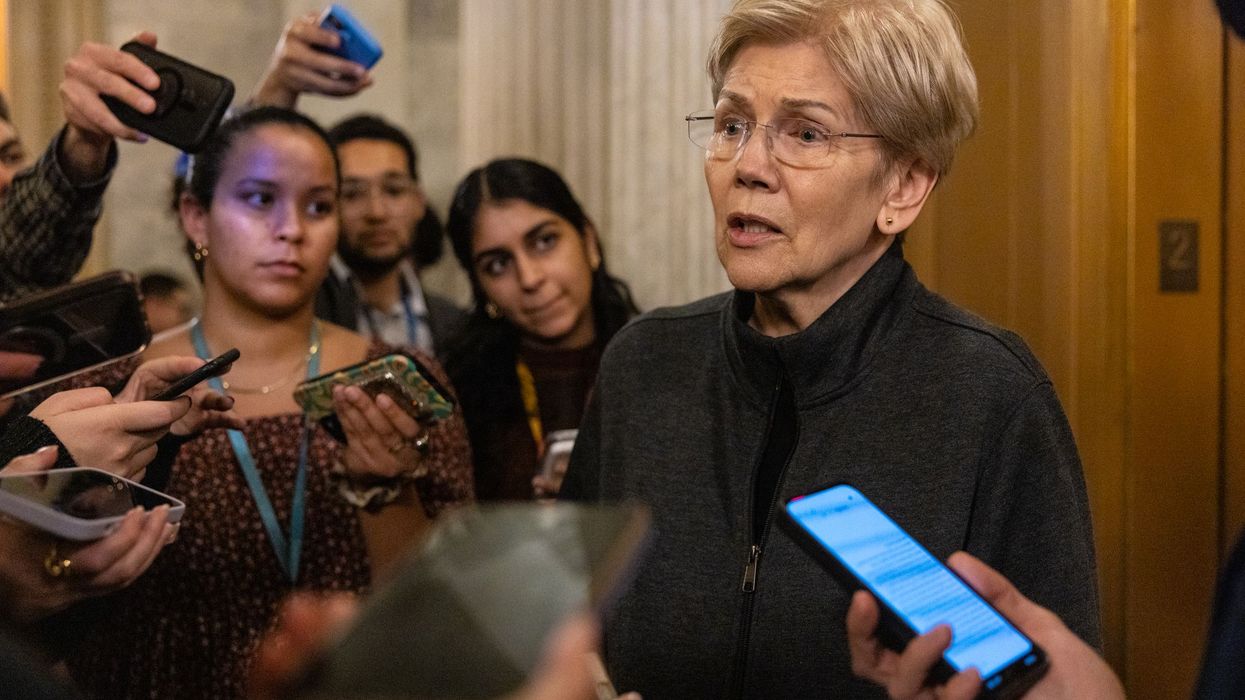
That's how US Sen. Elizabeth Warren (D-Mass.) responded on Wednesday to Treasury Secretary Scott Bessent's comments to Fox Business Network host Maria Bartiromo about the administration's deregulatory push.
Without naming it, Bessent took aim at the Dodd-Frank Wall Street Reform and Consumer Protection Act, a 2010 law that Warren, then a longtime Harvard University professor, fought for in the wake of the 2008 financial crisis.
Recalling that era, Warren said: "We all know how that ended—with taxpayers bailing out Wall Street while millions lost their homes and got fired from their jobs. Donald Trump could be setting the stage for the next crash."
Warren was far from alone in calling out Bessent after journalist Aaron Rupar noted that during the Fox interview, the ex-hedge fund manager said: "I chair something called FSOC, the Financial Stability Oversight Council, and these 2008, 2009, 2010 financial rules were too tight. They have hamstrung the American financial system. It was time for a change. We're gonna be safe, smart, and sound in terms of our deregulation. But we have to take the financial system out of this straitjacket."
University of Michigan business law professor Jeremy Kress said: "Fact check: The decade following the Dodd-Frank Act marked the longest period of economic growth in US history. The main problem with the post-2008 reforms is that they did not do nearly enough to limit the nonbank risk-taking that Bessent and his allies have enabled."
Progressive political commentator and YouTuber Kyle Kulinski declared, "These people are hell-bent on creating a new Great Depression."
Dean Baker, senior economist at the Center for Economic and Policy Research, said, "Remember BLEAT: Bessent Lies about Everything All the Time."
The Fox appearance on Tuesday came after Bessent earlier this month announced an overhaul to the structure of FSOC—which was established by Dodd-Frank—and wrote in the introduction letter to the council's annual report that it "would shift its focus from 'prophylactic' regulatory and supervisory policies to an approach aimed at removing red tape in areas like artificial intelligence, in a bid to spur economic growth," as Politico summarized at the time.
As Politico also reported:
Markets groups and members of Congress expressed their concern over the changes. In a letter to Bessent... Sen. Elizabeth Warren (D-Mass.) expressed concern that the FSOC has met fewer times this year than in any past year of its existence and that the council is "sabotaging its own authorities." Dennis Kelleher, CEO of Better Markets, an advocacy group focused on regulation, stated that "undermining the FSOC is undermining the economy and the financial system."
Sharing the Politico report on social media earlier this month, Kress said that "this is a dereliction of duty by the Financial Stability Oversight Council. But if there is a silver lining, it is that the Trump administration now unequivocally owns whatever crisis lies ahead."
C. J. Polychroniou speaks with progressive economist Gerald Epstein about why alternative banking is possible and urgently needed.
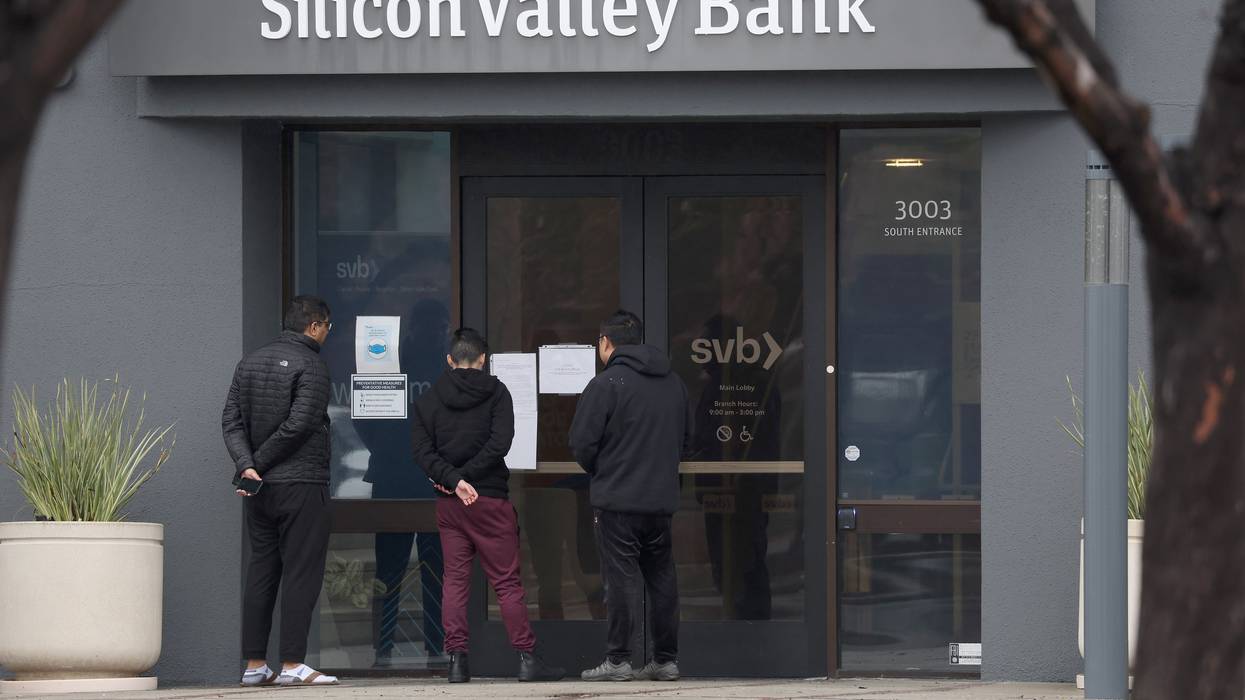
It’s been almost a year since the banking crisis kicked off last March. On Friday, March 10, 2023, Silicon Valley Bank, or SVB, a state-chartered commercial bank based in Santa Clara, California, collapsed after facing a sudden bank run and capital crisis. SVB’s collapse was the second largest bank failure in U.S. history since Washington Mutual in 2008. Two days later, New York-based Signature Bank also collapsed due to yet another bank run. But that was not the end of bank failures in 2023. On May 1, the San Francisco-based First Republic Bank, plagued by many of the same problems as those that doomed SVB and Signature Bank, also went under and was seized in turn by regulators who promptly sold all of its deposits and most assets to JP Morgan Chase. Two more banks would go on to declare insolvency later in the year, bringing the number of failed banks to a total of five.
Indeed, 2023 was the worst year for U.S. banks since 2008. But why do U.S. banks continue to fail after the reforms that were implemented in the aftermath of the 2008 global financial crisis? Why does the business model of commercial banks remain so fragile? World renowned progressive economist Gerald Epstein, author of the recently published book
Busting the Bankers’ Club: Finance for the Rest of Us, tackles these questions in the interview that follows. Epstein is professor of economics and co-director of the Political Economy Research Institute (PERI) at the University of Massachusetts Amherst.
C. J. Polychroniou: Jerry, in your new book Busting the Bankers’ Club, you describe the business model of commercial banks in the age of neoliberalism as “roaring banking” and you juxtapose it with that of “boring banking,” which prevailed from the New Deal era right through the Reagan era. Under “boring banking,” banks were prohibited from many of today’s financial engineering practices and financial shenanigans. The result was relative financial stability and economic growth. Obviously, bankers hated this business model, but what factors made possible the transition from “boring banking” to “roaring banking?” Was it simply because of the “logic” of the free-enterprise system at work, or did it happen because of actual intervention in the realm of policymaking?
Gerald Epstein: Like much historical change, the evolution from “boring banking” to “roaring banking” was the outcome of the underlying dynamics and pressures of the economic system and specific historical conjunctures, all with plenty of involvement of actual human beings and classes.
The major Wall Street bankers were never happy with the New Deal financial regulatory rules that made it harder for them to charge excessively high interest rates, make highly leveraged bets, or engineer fraudulent Ponzi or “pump and dump” frauds against customers. The numbers on Wall Street bankers’ incomes show why. As The Bankers’ Club reports, prior to 1929, bankers scarfed down incomes almost twice as high as the average wage in the economy; but after the Depression and up until the late 1970s, their incomes were about average for the whole economy. As my colleague James Crotty put it, these bankers wanted to break out of their New Deal cages to restore their superior incomes and power.
So, starting in the 1960s the major Wall Street banks organized “the Bankers’ Club,” an army of politicians, lawyers, economists, regulators, and fellow business associates to incrementally poke holes, then ditches and finally massive canals through the wall of New Deal financial regulations. According to Robert Weissman, now president of Public Citizen, these financial firms spent over $5 billion, just counting from the early 80s, on the club and its activities. This effort led, most famously, to the repeal of the Glass-Steagall Act in 1999 under the Clinton administration, which then officially ended the separation of commercial from investment banking.
The Bankers’ Club had a different idea: Tear down the New Deal model and usher in a new era in banking, the “roaring banking” system of mega financial institutions and high-risk banking strategies.
These efforts, carried out by real (mostly) men, were aided by underlying dynamic changes in the U.S. and world economies. The U.S. experienced phenomenal economic growth in the aftermath of World War II, and the world also witnessed the resurrection of the European and Asian economies. In due time, competition facing the U.S. in trade and finance intensified, leading to the demise of the Bretton Woods system of fixed exchange rates and relatively stable interest rates. Massive military spending by the U.S. government on the war in Vietnam from 1964 to 1973 combined with the effects of the geopolitics of energy driven by the formation of OPEC led in the 1970s to large increases in commodity prices and inflation, again putting upward pressure on interest rates to keep up with inflation. Then-Fed Chair Paul Volcker jacked up interest rates in an attempt to break the inflationary pressure, once again destabilizing the interest rate structure in banking. All of these forces put enormous pressure on the New Deal framework, partly because the system depended on relatively stable interest rates. The New Deal model chose to stabilize interest rates in order to try to stabilize bank profits and promote borrowing and investment in non-speculative activities.
Thus, something had to give. In principle, the government could have reformed the system. But the Bankers’ Club had a different idea: Tear down the New Deal model and usher in a new era in banking, the “roaring banking” system of mega financial institutions and high-risk banking strategies.
CJP: The neoliberal era is replete with financial crises and bank failures. In 2008, the world experienced the worst economic disaster since the Great Depression because of a financial crisis that originated in the U.S. There was a sharp decline in economic activity which led to a loss of more than $2 trillion from the global economy while millions of people lost their homes and unemployment skyrocketed. Yet, the regulations that followed in the aftermath of the 2008 global financial crisis were essentially cosmetic, as evidenced by the collapse of five major banks in 2023. What were the reasons that SVB, Signature Bank, and First Republic Bank failed, especially since the Board of Governors of the Federal Reserve System insisted at the time that the banking system was “sound and resilient”?
GE: It is good that you bring up the collapse of SVB and the failures of Signature Bank and First Republic, since we are about to reach the one-year anniversary of these important events which occurred in early March 2023.
The Dodd-Frank Act, signed into law by then-President Barack Obama in 2010, was supposed to bring about the end of the “too-big-to-fail” (TBTF) banks and government bailouts. But a year ago when these banks got into trouble, the turmoil threatened to spread panic into the broader U.S. financial markets, signaling a possible series of bank runs in It’s a Wonderful Life style throughout the system. The Dodd-Frank Act had tried to forestall these types of events by making larger banks (those with assets of at least $50 billion) be subject to more careful monitoring by the Federal Reserve, requiring them to hold more capital of their own so that they could withstand larger shocks, and have greater liquidity (cash or cash-like assets) in order to help forestall bank runs. But during the Trump administration, these “medium-sized banks” lobbied to be exempt from the tougher rules. A major player in the fight was Silicon Valley Bank.
The Fed was still acting as chairman of the Bankers’ Club rather than steward of the public interest.
But on March 10, 2023, after a major bank run hit Silicon Valley Bank, it was forced to close. The Fed did not bail out the bank’s executives, but guaranteed the deposits of its remaining depositors even when these were far above the $250,000 amount covered by Federal Deposit Insurance Corporation insurance. When contagion spread to other banks in the U.S., the Fed guaranteed all deposits, no matter how big.
In April, the Federal Reserve published a major exercise of “self-crit” in its handling of SVB, prior to and after the crisis. It’s pretty accurate assessment included the following four problems:
Though accurate as far as they go, these criticisms miss a crucial point: These are essentially the same problems that allowed bigger banks to instigate the Great Financial Crisis in 2008-2009. The Fed itself had done much to block more fundamental reforms during the Dodd-Frank negotiations and afterward as the rules were finalized. And the Fed under Jerome Powell supported the weakening of rules for the medium-sized banks.
In other words, the Fed was still acting as chairman of the Bankers’ Club rather than steward of the public interest. This, the Fed’s post-mortem would not admit.
CJP: Speaking of the Federal Reserve, in your book you do label it as the “chairman” of the Bankers’ Club. Briefly explain what you mean by that, and does the Fed actually have any input in regulatory reforms proposed by lawmakers?
GE: The Federal Reserve, the central bank of the United States, has two main functions. It is in charge of U.S. monetary policy, which includes trying to manage short-term interest rates and the overall supply of money and credit in the economy. And it also has a major role to play in regulating and supervising banks, including the mega banks or what I call the “roaring banks.” The Federal Reserve has been delegated these powers by the U.S. Congress, which, along with the president, establishes the mandates, or major goals, which the Federal Reserve is supposed to try to achieve. The question of the Fed’s mandates or goals has been a subject of long-term political fights in the United States, which explains why the Federal Reserve is a “contested terrain.” I say that the Fed is the “chairman” of the Bankers’ Club because history shows that, for most of the time, the big banks and the capitalist class at large win the contest for dominance of the Fed, both with respect to its monetary policy and regulatory policy. For example, after a long political battle, the Federal Reserve was given by Congress a dual mandate: to achieve high employment and stable prices (steady and low inflation). In addition, more recently, the Federal Reserve was given a mandate to maintain financial stability. But if one studies the Fed’s record, we find that when there is a conflict between keeping inflation very low (which finance normally prefers) and achieving full employment (which workers tend to prefer) the Fed almost always chooses low inflation. And when it comes to regulating banks tightly in order to maintain financial stability, or bailing them out after they get into trouble, the Fed has preferred to simply bail them out. More generally, the Fed offers significant favors to the banks, and in return expects the banks to protect its operations from the intrusive hands of Congress and the president.
To answer your question more directly, the Fed has a big influence on the regulations that Congress eventually passes, as one can see from the inordinate influence that Alan Greenspan had in the legislation to gut Glass-Steagall, and the inordinate role that Ben Bernanke and the Fed had in ensuring that Dodd-Frank regulations were riddled with loopholes.
CJP: The Dodd-Frank Wall Street Reform and Consumer Protection Act has been treated as one of the most significant U.S. regulatory reforms since the Great Depression. But it does remain a highly flawed regulatory framework, and even plugging all the holes in it won’t do the job, you argue in your book. What are the strategic shortcomings of the Dodd-Frank approach to financial regulation?
GE: To identify the flaws in Dodd-Frank, one can start by identifying the causes of the major financial crises we have experienced as well as the rocks and hard places the regulators found themselves between in responding to these crises. These causes are:
Dodd-Frank did not really address these problems, and the Trump administration weakened the Dodd-Frank rules even further. As such, these problems are still very much with us.
CJP: What measures do you propose for improving financial regulation, so we won’t have bank failures and severe recessions triggered by financial crises?
GE: At a minimum, we must address these “causes” of the problems that I identified above:
This last point touches on an important and more general issue. Financial regulation, at least since the New Deal, has been a negative screen: a list of things banks should NOT do. However, we have many crucial societal problems that the financial system should be taking a more proactive role to help solve. These include, for example, helping to build a green energy economy and ending our reliance on fossil fuels. Also, and this is equally important, contributing to the economic development of marginalized communities. Financial institutions that get government support—and that means ALL of them—should not only avoid crashing our economy but also contribute to our society’s important needs.
CJP: In Busting the Bankers’ Club, you advocate the establishment of banks without bankers because financial regulation alone will not be sufficient to address the plethora of problems (poverty, inequality, discrimination, climate change) facing the contemporary United States. How far can public banking go in addressing these problems, and how do we overcome the resistance of the political system to radical proposals that aim toward the making of a democratic economy?
GE: Yes. Private banks, no matter how regulated, or how incentivized to do socially useful activities, will not be sufficiently motivated to provide many of the key long-term social goods that we need: green energy, healthy communities for all, sufficient financial resources for the development of our rural areas. The reason is that these banks focus on maximizing profits in the short to medium term. Many of these other activities are socially profitable but might not be sufficiently privately profitable, at least in the short to medium term. As a result, we need more publicly oriented financial institutions, such as public banks that are dedicated to broader social goals.
There are activist groups in more than 20 states across the U.S. who are pushing for public banks of various kinds. The most successful ones so far are located in California, but New Jersey is also moving closer to establishing a public bank and there is a strong public bank campaign underway in Massachusetts.
The Federal Reserve should give the same level of support to public banking organizations as it has to private banks.
Still, there are several general obstacles to implementing an ecosystem of public banks adequate to face the problems we have. One is the intense opposition of the Bankers’ Club even though most of these public bank initiatives are structured to minimize competition with the private banks. For example, they do not take deposits; they do not lend directly to customers but rather to other banks who then lend to final customers, etc. Apparently, the Bankers’ Club simply does not want to legitimize any competitive sources of finance that could undercut their power.
Moreover, even if you add up all the public banking initiatives, they would still not be large enough or widespread enough to make a huge dent in the problems we are facing. What we need are national public banking institutions. For example, the Inflation Reduction Act (IRA) created a small Green Development Bank that, with support, could grow and thrive. A more activist and socially oriented Federal Reserve could play an important role here. The Federal Reserve should give the same level of support to public banking organizations as it has to private banks. And it should broaden its tools to promote key social goals: For example, the Fed could buy Green Bonds. It has already bought asset backed securities to bailout the banks.
How do we overcome resistance from the Bankers’ Club and right-wingers to these kinds of reforms? Two things: Join the Club Busters, those activists who are trying to block the Bankers’ Club and promote more socially useful institutions; and protect democracy by helping to get money out of the financial system (eg. repeal
Citizen’s United), expand voting rights, and fight against fascism.
In the last chapter of my book, I suggest that we all bite off what we can chew. Look around and join others who are fighting one of more of these battles. Join them and pitch in. As our forces gather, we will have impacts that build on each other. If some of our initiatives get blocked, other initiatives will move forward.
There are many Club Busters around the country, and indeed the world. In the U.S. we have public banking organizations,
Americans for Financial Reform, Better Markets, Rainforest Action Network, and many others. Support politicians who fight for these issues, including Elizabeth Warren, Sherrod Brown, Jeff Merkley, and Alexandria Ocasio-Cortez.
There are plenty of places to join others and take a stand. That’s how we fight the Bankers’ Club.
"We urge the commission to continue to focus on its vital work preserving market integrity and protecting the public, uphold the letter and spirit of the Dodd-Frank Act, and withdraw the proposed rule."
A trio of Democratic U.S. senators on Monday wrote to Commodity Futures Trading Commission Chair Rostin Behnam expressing their "serious reservations" with the agency's proposed rule on seeded funds and money market funds, a policy the lawmakers warned would "undermine the goals of Dodd-Frank" by rolling back the already weakened financial oversight law.
Passed in the wake of the 2008 global financial meltdown, the Dodd-Frank Wall Street Reform and Consumer Protection Act—which was partially rolled back during the Trump administration—overhauled federal financial regulation. In a letter to Behnam, Sens. John Fetterman (Pa.), Sherrod Brown (Ohio), and Tina Smith (Minn.) assert that the CFTC's proposed rule is a "step in the wrong direction" that would increase market instability by decreasing collateral requirements for certain transactions.
The Global Markets Advisory Committee, largely made up of finance industry insiders, recommended the proposed rule in 2020 during the Trump administration.
As the letter explains:
The proposed rule would reduce or eliminate initial margin requirements for up to three years for a subset of swap market participants. "Initial margin" is the collateral that participants must set aside when entering swap agreements. Initial margin requirements, along with "variation margin" and other capital requirements, protect counterparties to a swap in the event of a default. Dodd-Frank set up comprehensive rules for swap agreements after they significantly contributed to the 2008 financial crisis and the federal government was forced to bail out Wall Street.
"The 2008 financial crisis showed the dangers that swaps can pose to economic stability, and Dodd-Frank directed regulators, including the CFTC, to require initial margin for uncleared swaps specifically to reduce those risks," the senators wrote. "It is vital for the CFTC to continue upholding its Dodd-Frank mandate and to maintain high standards and safeguards for this important market."
"We urge the commission to continue to focus on its vital work preserving market integrity and protecting the public, uphold the letter and spirit of the Dodd-Frank Act, and withdraw the proposed rule," the lawmakers added.
The collapse earlier this year of Silicon Valley Bank and Signature Bank—both of which benefited from regulatory relief thanks to the 2018 rollback—brought renewed scrutiny on Dodd-Frank's Republican-engineered shortcomings. Sen. Mike Crapo (R-Idaho), who wrote the 2018 banking deregulation law, insisted in March that "there is no need for regulatory reform" in the wake of the banks' failures.
Robert Weissman, president of the consumer advocacy group Public Citizen, responded to Crapo's assertion by writing that "you have to be hard-core committed to mindless free-market fundamentalism—or truly in thrall to your donors—to insist there's no need for new regulations after Silicon Valley Bank."
Last month, Sen. Elizabeth Warren (D-Mass.) also wrote a letter to Behman sharing her concerns about the proposed rule. Noting the policy's 2020 introduction, Warren said in her October 10 letter that "it is unclear why the commission is choosing to propose these rules now, three years later, without conducting its own additional analyses of whether the changes are necessary or will strengthen the stability of the domestic financial system."
"I strongly urge the commission not to loosen the existing rules and not to roll back important Dodd-Frank Act reforms," Warren added.
"The total bonus pool for 190,800 New York City-based Wall Street employees in 2022 was $33.7 billion—enough to pay for 771,520 jobs that pay $15 per hour with benefits for a year."
The federal minimum wage in the United States would be more than $42 an hour today if it rose at the same rate as the average Wall Street bonus over the past four decades, according to an analysis released Thursday by the Institute for Policy Studies.
Citing newly released data from the New York State Comptroller, IPS noted that the average Wall Street bonus has increased by 1,165% since 1985, not adjusted for inflation.
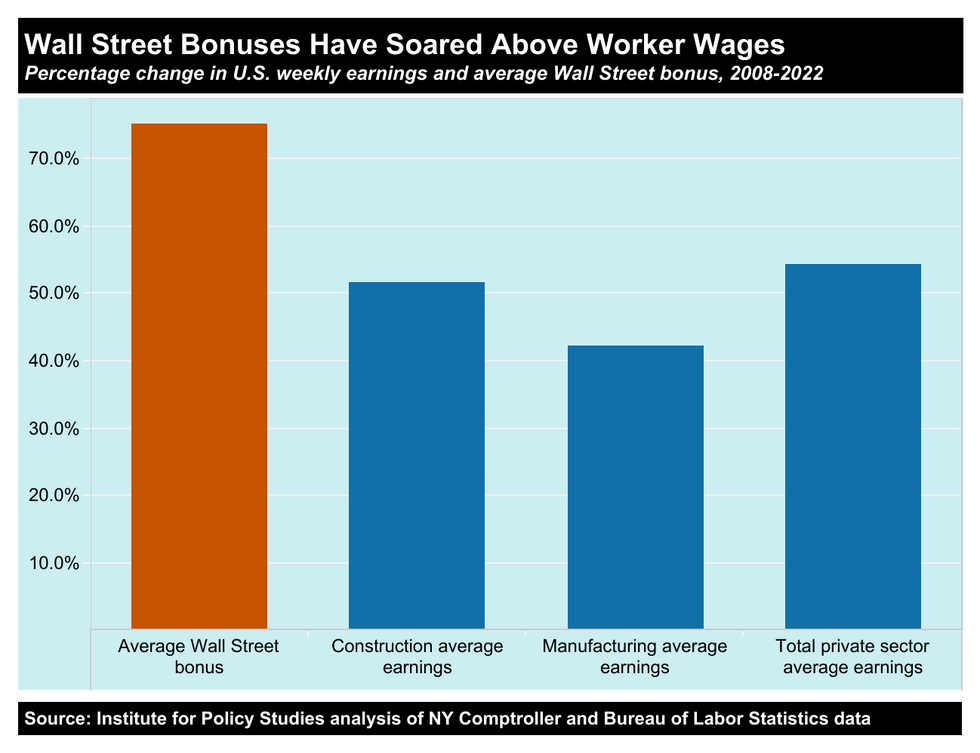
Last year, the average cash bonus paid to Wall Street employees was $176,700—75% higher than in 2008 but slightly lower than the 2021 level of $240,400.
The federal minimum wage, meanwhile, has been completely stagnant since 2009, when it was bumped up to $7.25 from $5.15. While many states and localities have approved substantial pay increases in recent years, 20 states have kept their hourly wage floors at the federal minimum.
Sarah Anderson, director of the Global Economy Project at IPS and the author of the new analysis, wrote Thursday that "average weekly earnings for all U.S. private sector workers increased by only 54.4%" between 2008 and 2022—a significantly slower pace than inequality-fueling Wall Street bonuses.
Anderson argued that there are a number of straightforward steps lawmakers and regulators can take to curb exorbitant Wall Street compensation and bonuses.
In the wake of the 2008 financial crisis, Congress passed several provisions aimed at reining in bankers' compensation as part of the Dodd-Frank Wall Street Reform and Consumer Protection Act.
But as The American Prospect's David Dayen pointed out last week, "bank regulators hip-pocketed one of those rules that Congress mandated in 2010—the one that would prohibit banker compensation that is specifically tied to taking inappropriate risks."
"The last time there was even a proposed rule on this was nearly seven years ago," Dayen continued. "And in 2018, when Federal Reserve Chair Jerome Powell was asked whether he would abide by Congress' wishes and finish the rule, he blandly replied, 'We tried for many years' and 'we were not able to achieve consensus'—just thumbing his nose at a congressional mandate."
Anderson urged the Biden administration's financial regulators to stop deferring to Wall Street lobbyists and "swiftly—and rigorously—enact the Dodd-Frank Wall Street pay restrictions that were supposed to have been enacted by May 2011."
Any new regulation, Anderson wrote, can and should include "a ban on stock options at Wall Street banks" and mandates requiring Wall Street executives to "set aside significant compensation for 10 years to pay potential misconduct fines."
"If such a regulation had been in place before the [Silicon Valley Bank] collapse," Anderson noted, "top executives would've automatically forfeited this deferred pay to help cover the cost of their recklessness."
The American Bankers Association, whose PAC has donated to Sen. Steve Daines, welcomed the Republican's defense of a 2018 law that weakened post-financial crisis regulations.
Republican Sen. Steve Daines of Montana garnered applause from a room full of bankers on Tuesday after he dismissed calls for tougher regulations following the collapse of Silicon Valley Bank and Signature Bank.
"There are a lot of talking heads out there who are saying that the solution is more regulation, and I strongly disagree," Daines said in remarks to the American Bankers Association's Washington Summit, an annual gathering of bank CEOs and other top executives.
The Montana Republican went on to defend a 2018 law that progressive lawmakers and experts have said is at least partly responsible for the recent bank failures. That measure, known as S.2155, weakened post-financial crisis regulations for banks with between $50 billion and $250 billion in assets, subjecting firms such as SVB—which lobbied for the changes—to less stringent oversight and paving the way for more risk-taking and industry consolidation.
Daines, a member of the Senate Banking Committee and a major recipient of securities industry donations, called the stricter liquidity requirements and other rules gutted by the 2018 law "overreaching regulations" and claimed that efforts to revive the safeguards are creating "more worry" in the banking sector.
"This was not the cause of this failure," Daines said of S.2155, which former President Donald Trump signed into law after it passed with bipartisan support.
Watch the senator's remarks, which begin at the 1:32:04 mark:
It's unsurprising that Daines' defense of S.2155 was received favorably by a gathering of the American Bankers Association, which was one of many industry groups that lobbied aggressively for the measure.
"The lobbyists were everywhere. You couldn't throw an elbow without running into one," Sen. Elizabeth Warren (D-Mass.), who vocally opposed S.2155, told reporters last week.
Warren and Rep. Katie Porter (D-Calif.) have introduced legislation that would repeal a critical section of the 2018 law.
The Associated Press reported Tuesday that in the hours before Congress approved the measure, Sen. Jon Tester (D-Mont.)—one of the legislation's top Democratic supporters—"huddled with executives from Bank of America, Citigroup, Discover, and Wells Fargo, who were there on behalf of the American Bankers Association."
"The American Bankers Association, which helped lead the push, later paid $125,000 for an ad campaign thanking Tester for his role in the bill's passage," the Associated Press noted.
The banking group's PAC spent more than $2.6 million on campaign contributions during the 2018 election cycle, with more than 76% of the donations going to Republicans, according to OpenSecrets.
Daines, who won reelection in 2020, received $10,000 from the American Bankers Association PAC during that year's campaign.
Dodd-Frank includes Wall Street pay restrictions that could've held executives like SVB's Greg Becker accountable for their dangerous short-sightedness. But regulators consistently fail to implement this part of the law.
Greg Becker, the deposed chief executive of Silicon Valley Bank, is facing growing demands to cough up the millions of dollars he raked in from stock sales soon before the bank’s sudden demise.
On March 17, the White House called on Congress to pass legislation to claw back compensation, including gains from stock sales, from Becker and other executives at SVB, as well as at Signature Bank SBNY.
Greg Becker, the deposed chief executive of SVB, is facing growing demands to cough up the millions of dollars he raked in from stock sales soon before the bank’s sudden demise.
On March 17, the White House called on Congress to pass legislation to claw back compensation, including gains from stock sales, from Becker and other executives at SVB, as well as at Signature Bank SBNY .
President Joe Biden’s statement came on top of demands by Sen. Elizabeth Warren, Rep. Ro Khanna, and other officials that the disgraced SVB CEO voluntarily fork over compensation pocketed before the bank’s collapse, particularly the $3.6 million he garnered from a stock sale in late February.
For Becker, digging into his own pockets to help cover the costs of his disastrous mismanagement would be the moral thing to do. But under current law, he faces no such legal obligation.
The 2002 Sarbanes-Oxley act, adopted in response to the Enron collapse, allows clawbacks of executive bonuses if a company is caught cooking its books. The 2010 Dodd-Frank financial reform law goes a bit further to require repayment of bonuses at the largest banks when they are based on erroneous financial statements.
Since neither of these existing clawback law seems to apply to SVB’s case, Becker could get off scot-free while shareholders are wiped out and the federal government backstops $175 billion in deposits.
It didn’t have to be this way. Dodd-Frank includes Wall Street pay restrictions that could’ve held Becker accountable for his dangerous short-sightedness — and might have even helped prevent the bank’s collapse. But regulators consistently fail to implement this part of the law.
How might these restrictions have altered the Silicon Valley Bank story?
The relevant provisions in Dodd-Frank, Section 956, prohibit Wall Street pay that encourages “inappropriate risk.” As I and others have argued for many years, regulators tasked with implementing this law could require Wall Street executives to set aside a significant portion of their compensation for 10 years to cover the costs of any misconduct fines against their bank — or the costs of a solvency crisis like SVB’s.
Former New York Federal Reserve Bank President William Dudley first proposed such collective funds in 2014, arguing they would help change Wall Street’s dangerously risky culture by making executives pay personally for the costs of their own recklessness.
Had such rules been enforced, this past week Becker would’ve had no choice but to forfeit a large chunk of the compensation he accumulated over the past decade.
Regulators also could use the Dodd-Frank provisions to crack down on forms of executive compensation that encourage recklessness, including stock options and stock grants tied to return on equity.
According to the bipartisan 2011 Financial Crisis Inquiry Commission, these pay structures create “incentives to increase both risk and leverage, which could lead to larger jumps in a company’s stock price.”
With regulators failing to do their job, that’s exactly how it turned out at SVB. The board loaded up Becker’s compensation packages with stock-based pay and he pursued risky strategies, overly relying on a single, volatile industry — technology — and then locking up cash from largely uninsured deposits in long-term bonds, without preparing for interest rate hikes.
Becker’s strategies drove SVB’s stock price into the stratosphere in the years leading up to the collapse, and he cashed in while the going was good. Between 2019 and 2022, according to company proxy statements, Becker pocketed $58 million just in payouts from options and stock grants — not including salary and cash bonuses.
His largest payday came in 2021 when SVB stock was trading as high as $700 per share. That year Becker cashed in $19 million in options and $6.7 million in stock grants he’d received in the mid-2010s when the stock was only worth about $100 per share.
The failures of SVB and Signature Bank are far from the only examples of excessive financial risk-taking since the 2008 crash, as Public Citizen has extensively documented.
New Wall Street accountability legislation covering a broad range of reforms, from higher capital standards to more equitable deposit insurance, should be a no-brainer. Will this divided Congress take it on? Unlikely.
But financial regulators don’t have to wait for Capitol Hill to enforce pay restrictions that have been in the law since 2010. The Biden administration should seize this moment to change the incentives for banking executives. For too long, Wall Street recklessness has generated huge windfalls for the rich and huge costs for the rest of us.
"You have to be hard-core committed to mindless free-market fundamentalism—or truly in thrall to your donors—to insist there's no need for new regulations after Silicon Valley Bank," said one critic.
Republican Sen. Mike Crapo, the lead author of a 2018 bank deregulation law that weakened key guardrails designed to prevent another financial crisis, insisted this week that there is "no need" to impose more strict rules following two of the largest bank collapses in U.S. history.
"There is no need for regulatory reform," said Crapo, who chaired the Senate Banking Committee when Congress passed the 2018 law despite vocal warnings from experts that it would destabilize the banking sector. Dozens of Democrats supported the measure.
In a Fox Business appearance on Tuesday, the Idaho Republican deflected blame for the failures of Silicon Valley Bank and Signature Bank, both of which were in the category of firms that saw regulatory relief thanks to the 2018 law.
"The fact is that President Biden—through all of the spending that he did in the last Congress and the last two years—has driven inflation up to the point where wage earners have to get a 14.8% wage increase just to hold even with this kind of inflation," said Crapo. "And when the Fed responded to push interest rates up, that's what caused a liquidity crisis for these two banks."
While analysts agree that the Fed's aggressive interest rate hikes are at least partly to blame for the collapse of SVB and Signature Bank, they also argue that the 2018 law's removal of enhanced capital requirements and stress tests for banks with between $50 billion and $250 billion in assets—reforms implemented by the post-financial crisis Dodd-Frank Act—also played a significant role.
"You have to be hard-core committed to mindless free-market fundamentalism—or truly in thrall to your donors—to insist there's no need for new regulations after Silicon Valley Bank," wrote Robert Weissman, the president of Public Citizen. (Crapo received more than $880,000 in donations from the securities and investment industry between 2017 and 2022, according to OpenSecrets.)
In effect, the 2018 law ( S.2155) removed the "systemically important" designation and the associated regulations from SVB and Signature Bank—a change that didn't stop the Fed and the Biden administration from rushing in to backstop the financial system and prevent "contagion" after the firms collapsed.
"Congress gave regulators permission to take their eyes off of these mid-sized regional banks."
SVB's announcement last week that it sold its bond portfolio at a major loss and was trying to raise funds led venture capitalists to advise startups—SVB's primary clientele—to withdraw their money, setting off a bank run that ultimately resulted in the firm's failure and takeover by regulators.
"The federal government then stepped in to guarantee the deposits, a dramatic move designed to prevent the panic from spreading to other banks," HuffPost's Arthur Delaney noted Wednesday. "But this kind of intervention... was not supposed to be necessary. The enhanced prudential standards under Dodd-Frank include liquidity requirements that would have automatically covered Silicon Valley Bank if Congress hadn't relaxed the law in 2018."
As former FDIC attorney Todd Phillips told The Washington Post earlier this week, "Congress gave regulators permission to take their eyes off of these mid-sized regional banks."
Hilary Allen, a law professor at American University, similarly observed that the 2018 law "did indeed reduce regulatory requirements for banks like Silicon Valley Bank."
"While it is impossible to say categorically that legislative rollback equals the bank’s collapse," Allen added, "it does seem that it made it more likely."
The Fed, as then-central bank governor Lael Brainard lamented in 2019, proceeded to take the Republican-authored law and run with it, further weakening safeguards against financial chaos.
"I see little benefit to the banks or the system from the proposed reduction in core resilience that would justify the increased risk to financial stability in the future," Brainard said in a statement at the time.
On Tuesday, dozens of lawmakers led by Sen. Elizabeth Warren (D-Mass.) and Rep. Katie Porter (D-Calif.) introduced legislation that would repeal the section of the 2018 law that relaxed regulations for banks with less than $250 billion in assets.
In a floor speech, Warren said that "both SVB and Signature Bank suffered from a toxic mix of poor risk management and weak supervision."
"If Congress and the Federal Reserve had not rolled back key provisions of Dodd-Frank, these banks would have been subject to stronger liquidity and capital requirements to help withstand financial shocks," Warren continued. "These threats never should have been allowed to materialize. Now, we must prevent them from occurring again by reversing the dangerous bank deregulation of the Trump era."
"SVB officials showed a pattern of risky and questionable decision-making that may have contributed to the bank's instability," wrote Sens. Elizabeth Warren and Richard Blumenthal.
Sens. Elizabeth Warren and Richard Blumenthal demanded Tuesday that the Biden Justice Department and Securities and Exchange Commission investigate whether Silicon Valley Bank executives "violated civil or criminal law" in the lead-up to the firm's collapse, which sent shockwaves through the entire U.S. financial system.
"This was a colossal failure in asset liability risk management," the Democratic senators in a letter to SEC Chairman Gary Gensler and Attorney General Merrick Garland. The letter was first reported by CNBC on Wednesday morning.
The lawmakers pointed to recent reporting detailing how "SVB officials showed a pattern of risky and questionable decision making that may have contributed to the bank's instability and collapse and the ripple effects being felt throughout the economy."
Warren and Blumenthal asked the Biden administration to launch a probe to determine "whether senior bank executives and other key officials involved in the collapse met their statutory and regulatory responsibilities or violated civil or criminal law."
"One of the enduring failures in the aftermath of the 2008 financial crisis was the inability or unwillingness of DOJ and bank regulators to hold bank executives accountable for behavior that destroyed millions of lives and cost trillions of dollars of wealth," they wrote. "The nation's bank regulators cannot make the same mistake twice."
The fallout from SVB's collapse has brought intense scrutiny to the venture capital lender's ill-considered investment moves as well as the conduct of its top executives, who sold tens of millions of dollars worth of stock in the two years leading up to the bank's failure last week—raising questions about possible insider trading.
Greg Becker, SVB's former CEO, sold millions of dollars of shares as recently as late last month.
The bank's leadership has also come under fire for dishing out bonuses hours before federal regulators took over on Friday.
"You have nobody to blame for the failure at your bank but yourself and your fellow executives."
In a letter to Becker earlier this week, Warren—a member of the Senate Banking Committee—slammed SVB for lobbying against bank regulations in recent years and argued that "you have nobody to blame for the failure at your bank but yourself and your fellow executives."
"SVB failed—while its chief risk officer position sat vacant for eight months as its financial standing deteriorated—because it failed to address two key risks: concentration in your client base, and rising interest rates," the Massachusetts Democrat wrote. "This is a failure of 'Banking 101'—what one analyst called 'sheer incompetence.' Had SVB been subject to Dodd-Frank rules undone by [a 2018 GOP law], the bank would have been required to maintain stronger liquidity and capital requirements and conduct regular stress tests that would have required SVB to shore up its business to weather the type of stress it experienced last week."
"You lobbied for weaker rules, got what you wanted, and used this opportunity to abdicate your basic responsibilities to your clients and the public—facilitating a near-economic disaster," Warren added.
The Wall Street Journal reported Tuesday that the DOJ and SEC have both opened investigations into the SVB failure, which was the second-largest bank collapse in U.S. history.
"The separate probes are in their preliminary phases and may not lead to charges or allegations of wrongdoing," the Journal noted. "The investigations are... examining stock sales that SVB Financial's officers made days before the bank failed."
Sen. Elizabeth Warren said a 2018 law backed by Republicans and dozens of Democrats allowed banks to "load up on risk to boost their profits," endangering "our entire economy."
Sen. Elizabeth Warren and Rep. Katie Porter unveiled legislation Tuesday to repeal the section of a Trump-era law that weakened regulations for banks with between $50 billion to $250 billion in assets, a move that experts and lawmakers have blamed for the collapse of Silicon Valley Bank and the resulting turmoil.
"In 2018, I rang the alarm bell about what would happen if Congress rolled back critical Dodd-Frank protections: banks would load up on risk to boost their profits and collapse, threatening our entire economy—and that is precisely what happened," Warren (D-Mass.) said in a statement. "President Biden called on Congress to strengthen the rules for banks, and I'm proposing legislation to do just that by repealing the core of Trump's bank law."
That law, authored by Sen. Mike Crapo (R-Idaho) and backed by dozens of Democrats, raised the asset threshold for more stringent regulations to $250 billion or higher, exempting firms such as Silicon Valley Bank (SVB)—a major venture capital lender that controlled around $212 billion—from enhanced liquidity requirements and more frequent federal stress tests imposed on banks considered "systemically important."
SVB's leadership specifically lobbied for the higher threshold, insisting the tougher regulations were unnecessary even as experts and lawmakers raised concerns that gutting them would increase the risk of bank failures and cascading effects on the financial system.
"Americans deserve to know their money is safe when they deposit it in the bank," Porter (D-Calif.) said Tuesday. "In 2018, politicians rolled back critical regulations protecting Americans' deposits—ignoring warnings from financial experts in favor of Wall Street special interests. I'm calling on Congress to restore commonsense guardrails that keep corporate greed in check and restore confidence in our financial system."
Titled the Secure Viable Banking (SVB) Act, Warren and Porter's legislation would place more stringent regulations on institutions like Silicon Valley Bank by reviving safeguards for firms with between $50 billion and $250 billion in assets.
Facing backlash from Warren and others for glaring oversight failures, the Federal Reserve is considering stronger regulations for banks with between $100 billion and $250 billion in assets, Reuters reported late Tuesday.
Warren and Porter introduced their bill with the support of 31 Democrats in the House and 17 members of the Senate Democratic caucus, including Sens. Bernie Sanders (I-Vt.) and Ed Markey (D-Mass.).
"Taxpayers should not have to pay for the mistakes and mismanagement of big bank executives," Markey said in a statement. "The American people should have confidence in their financial institutions, and that starts with undoing Trump-era deregulation so that we can ensure a collapse like we saw last week never happens again."
Notably absent from the list of co-sponsors were the Democrats who helped Republicans usher the bill through Congress in 2018, often misleadingly arguing that the measure was chiefly about providing relief for "community banks."
In the Senate, 16 Democrats and Sen. Angus King (I-Maine) supported the bill, giving Republicans the votes they needed to overcome the chamber's legislative filibuster.
One of the Democratic supporters, Mark Warner of Virginia, defended the 2018 law over the weekend, telling ABC News that he believes it "put in place an appropriate level of regulation on mid-sized banks" and that "these mid-sized banks needed some regulatory relief."
The Lever reported last week that SVB chief Greg Becker held a fundraiser for Warner in 2016.
"The bank’s political action committee also donated a total of $10,000 to Warner’s campaigns in the 2016 and 2018 election cycles," the outlet noted.
Sen. Jon Tester (D-Mont.), another major backer of the 2018 law, held a fundraiser in Silicon Valley earlier this week, just days after SVB collapsed.
"When bank lobbyists asked me to weaken bank regulations, I said no. When they asked Sen. Sinema, she asked how much—and voted yes," said the Democratic Arizona congressman, who is running for Sinema's Senate seat.
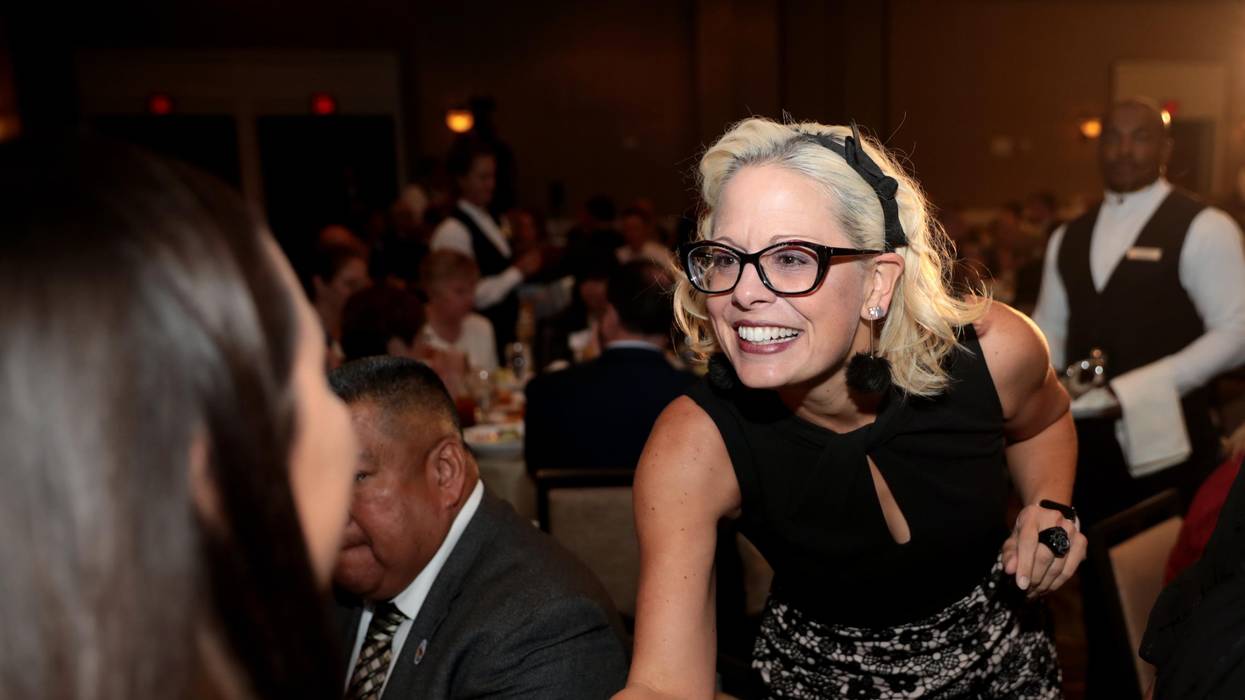
Democratic Arizona Congressman Ruben Gallego on Tuesday accused Sen. Kyrsten Sinema—who he hopes to oust from the U.S. Senate next year—of playing a major role in the Silicon Valley Bank collapse by taking campaign contributions from lobbyists that represented the bank and then voting to deregulate it.
Politico reports that Sinema (I-Ariz.) was one of numerous members of Congress to take campaign donations from Franklin Square Group, which once counted Silicon Valley Bank (SVB) among its clients. In 2018, Sinema—then a Democrat serving in the U.S. House of Representatives—received more than $8,000 from the lobbyists before she voted for Sen. Mike Crapo's (R-Idaho) Economic Growth, Regulatory Relief, and Consumer Protection Act.
"Before voting to loosen bank safeguards, Sinema received over $100,000 from big banks. And among those who bought Sinema's vote were three Silicon Valley Bank lobbyists that maxed out," Ruben said in a campaign email. "Simply put, she voted to give the banks free rein. And I did not."
"The SVB collapse is a direct result of Kyrsten Sinema's choice to side with big banks over everyday Arizonans."
Dubbed the Bank Lobbyist Act by critics, the law rolled back the Dodd-Frank Act—which was passed in the wake of the 2007-08 global financial meltdown—and exempted banks with between $50 billion and $250 billion in assets from rigorous stress-testing and capital requirements. Both SVB and Signature Bank, which are both now under federal government control, qualified for the "medium-sized bank" exemption.
Sinema argued at the time that "these important reforms will help protect the financial security of Arizonans young and old as they plan for homeownership, a college education, or a stable retirement."
Gallego asked Monday: "What's the difference between Sen. Sinema and me? When bank lobbyists asked me to weaken bank regulations, I said no. When they asked Sen. Sinema, she asked how much—and voted yes. Now we are all going to pay for her mistake."
On Twitter Tuesday, Gallego wrote that "the SVB collapse is a direct result of Kyrsten Sinema's choice to side with big banks over everyday Arizonans."
"FEC records and public lobbying reports show that three SVB lobbyists maxed out donations to Sinema ahead of 2018 Dodd-Frank rollback which led to the collapse," Gallego continued, referring to the Federal Election Commission. "Sinema is in the pocket of Wall Street and her vote put hardworking Arizonans, their families, and their small business, at risk of another 2008-like meltdown."
"Arizonans deserve a leader in the Senate who will fight for them, not Wall Street," he added. "Sinema is not that person and Arizonans know it."
Sinema was far from alone in taking campaign cash from SVB's lobbyists and political action committee.
As Politico's Hailey Fuchs, Jessica Piper, and Holly Otterbein noted:
Between 2017 and 2022, Silicon Valley Bank's PAC gave more than $50,000 to the campaigns of nearly two dozen senators and representatives, according to filings with the Federal Election Commission. The donations largely went to members—Republicans and Democrats—who served on relevant committees including the House Financial Services Committee or Senate Finance Committee. Sen. Mark Warner (D-Va.) and Rep. Patrick McHenry (R-N.C.) received the most from the PAC, each bringing in $7,500 over the six-year period.
SVB CEO Greg Becker "also made maximum individual donations to the campaigns of Warner and Senate Majority Leader Chuck Schumer (D-N.Y.) during the 2022 cycle," the reporters added, citing FEC records.
Sinema—who has been accused of "cartoonish-level corruption" for coziness with corporations and lobbyists—was excoriated in a Tuesday Daily Beast article by Michael Daly, who called the senator "a wolf for Wall Street."
Daly took aim at Sinema's Sunday statement asserting that "the federal government must now ensure those responsible [for the SVB collapse] are held accountable, while maintaining stability for all Americans who rely on our banking system."
"Sinema need only step in front of a mirror to find a prime suspect," wrote Daly. "Whether she's calling herself a Democrat or an independent, her voting record is the same. And it marks her a shill for the banking industry."