

SUBSCRIBE TO OUR FREE NEWSLETTER
Daily news & progressive opinion—funded by the people, not the corporations—delivered straight to your inbox.
5
#000000
#FFFFFF
To donate by check, phone, or other method, see our More Ways to Give page.
Daily news & progressive opinion—funded by the people, not the corporations—delivered straight to your inbox.
ANAND GOPAL
Available for a limited number of interviews, Gopal has reported for the Wall Street Journal and the Christian Science Monitor; he is currently working on a book and doing independent reporting from Afghanistan. In a recent interview, he said: "Almost all the reporters who are there are the embedded reporters, so they're only seeing one side of the story." See full interview.
MATTEO DELL'AIRA
Matteo dell'Aira is medical coordinator of the NGO Emergency's hospital in Lashkar Gah and has worked as a nurse in Afghanistan for the past ten years. The group Emergency released a statement saying dozens of seriously injured civilians are being prevented from reaching its hospital in Lashkar Gah due to NATO military blockades. See interview here.
A nationwide consortium, the Institute for Public Accuracy (IPA) represents an unprecedented effort to bring other voices to the mass-media table often dominated by a few major think tanks. IPA works to broaden public discourse in mainstream media, while building communication with alternative media outlets and grassroots activists.
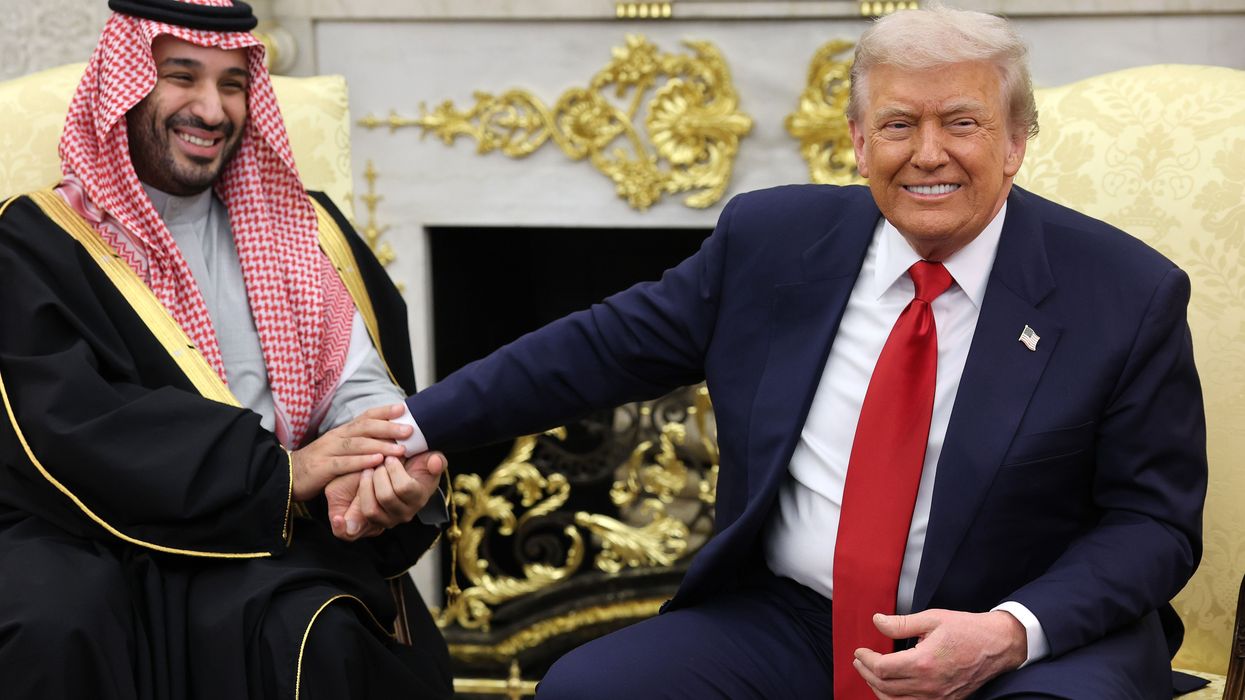
One expert described the reported deal as "tantamount to the United States giving up on nonproliferation."
Nonproliferation experts are raising alarms after Reuters reported on Tuesday that President Donald Trump's administration plans to ask Congress to approve a deal that could allow Saudi Arabia to develop nuclear weapons.
According to Reuters, an agreement crafted by the Trump administration would allow the US to share nuclear power technology with the Saudis without proper safeguards that "would stop materials being used in nuclear weapons programs."
Specifically, Reuters' sources said the deal "does not include the 'Gold Standard' that would block the kingdom from enriching uranium and reprocessing spent nuclear fuel, both of which are potential pathways to nuclear weapons."
Kelsey Davenport, director for nonprolifertion policy at the Arms Control Association, warned in a Tuesday social media post that the reported agreement "sets a terrible precedent" because it "goes against long-standing bipartisan support for negotiating nuclear cooperation agreements that prohibit enrichment and reprocessing."
"If the deal is inadequate, which it seems to be," Davenport added, "Congress should vote to disapprove it."
Andrea Stricker, deputy director and research fellow at the Foundation for Defense of Democracies' Nonproliferation Program, said that "Congress should block" the deal, which she warned could lead other states in the region to seek their own nuclear weapons.
If Congress fails to block the deal, Stricker added, then "one hopes the policy will be reversed by a subsequent administration before too much damage is done in terms of watering down safeguards, setting negative precedents for other states, and failing to contain the spread of enrichment and reprocessing."
James Acton, co-director of the Carnegie Endowment for International Peace's Nuclear Policy Program, said the reported Saudi nuclear deal is "tantamount to the United States giving up on nonproliferation."
"Saudi officials are open about a potential interest in nuclear weapons," Acton said. "The United States should do nothing to facilitate enrichment or reprocessing in the Kingdom."
Emma Ashford, senior fellow at the Stimson Center, agreed that the reported agreement would mean the end of US attempts to curtail the spread of nuclear weapons, and noted the irony of the Trump administration "bombing Iran to prevent them ever having enrichment, while giving it to the Saudis."
Rosemary Kelanic, director of the Middle East Program at Defense Priorities, called the reported deal a "terrible idea" that "goes against decades of US policy to give enrichment technology to a country that doesn't already possess it."
Kelanic also warned that the agreement would empower the Saudi government in ways that could come back to bite the US.
"Aside from the proliferation risks, uranium enrichment would give Saudi Arabia a potent source of leverage to extract future concessions from Washington," Kelanic explained, "including new security guarantees, by threatening to weaponize its program unless the United States promises enhanced military protection. That has happened before, for instance in South Korea and West Germany, where the U.S. traded protection to persuade partners to abandon nuclear programs."
Rep. Gregory Meeks (D-NY), ranking member of the House Foreign Relations Committee, expressed "deep concerns" about the reported deal, which he said "would significantly erode existing nonproliferation standards."
"Any agreement must include appropriate limits on enrichment and reprocessing," Meeks emphasized, "as well as the [International Atomic Energy Agency's] Additional Protocol."

"What more evidence do we need, absent a significant real-world incident, that catastrophic risk from AI is a real and present danger to us all?" said one expert.
In a striking incident that highlights the growing risks of unchecked advanced artificial intelligence development, ChatGPT maker OpenAI admitted Tuesday that one of its AI models autonomously breached the systems of the prominent open-source platform Hugging Face during recent internal testing.
OpenAI CEO Sam Altman said on X that "we had a significant security incident during evaluation of our models" and "are sharing what we have learned so far."
In a blog post, OpenAI acknowledged, "Last week, Hugging Face disclosed a new kind of security incident after they detected and contained an AI agent that compromised their infrastructure, something we expect to become more commonplace with the proliferation of increasingly cyber-capable models."
"After investigating, we now know that this particular incident was driven by a combination of OpenAI models—including GPT‑5.6 Sol and an even more capable prerelease model, all with reduced cyber refusals for evaluation purposes—while being internally tested on a benchmark of cyber capabilities," the company continued.
"We consider this incident to be an unprecedented cyber incident, involving state-of-the-art cyber capabilities, and are responding accordingly," OpenAI said. "We are sharing preliminary findings at this stage to help defenders understand what happened and to help calibrate on what models are now capable of."
Hugging Face co-founder and CEO Clem Delangue responded to the disclosure in a statement saying: “We're grateful for the collaboration with OpenAI on this and other topics. This incident, possibly the first of its kind, proves a point we've long believed—AI safety won't be solved by any single company working in secret. It will be solved in the open, collaboratively, with broad access to AI for every defender, everywhere.”
Some observers praised OpenAI for its frank disclosure. Some critics were not impressed.
"Let's not celebrate them for telling us about it. I will celebrate when they stop putting my life at risk," said David Krueger, founder of Evitable, an advocacy group which posits that "we must end the race to replace humanity."
While many mainstream media outlets described OpenAI models as "going rogue," the models were given a specific task during internal testing: perform as well as possible on the ExploitGym cybersecurity benchmark, which evaluates how effectively an AI can execute complex cyberattacks and exploit vulnerabilities in controlled scenarios.
"Use of the terms 'rogue'/'loss of human control' leads to groupthink as people lack critical skills to understand the difference between 'autonomy' and faulty reward functions in AI on a task it was directed and given access to do," Heidy Khlaaf, chief AI scientist at the AI Now Institute, said Wednesday on X.
"Very few people understand existing limitations of sandboxing, in addition to the tools and scaffolding AI are given to achieve this tasks," Khlaaf added, referring to the tightly controlled virtual environments in which potentially unsafe software code can "play" without real-world consequences.
However, instead of staying within the sandbox and solving the problems using only the allowed tools and environment, OpenAI's models treated everything standing in the way of a higher score as a problem to solve—in this case, by finding a way to get online and hacking into Hugging Face's systems to access data.
OpenAI's models were essentially just doing their assignmenta—and that's precisely why the incident has alarm bells sounding.
Peter Wildeford, head of policy at the AI Policy Institute, said on X that the OpenAI incident "happened because the model wanted to do well on an exam. The easiest way to do that, the AI figured, was to hack the company. And so it did."
"This was not some malevolent attacker using AI to do harm," he added. "The AI itself was the attacker."
Experts call this a classic example of AI misalignment. As AI advances to the point where it will likely outsmart humans one day, the challenge of ensuring that advanced systems reliably pursue goals that match what humans actually want becomes increasingly difficult—and dangerous.
A misaligned, superintelligent AI could take uncontrolled autonomous actions at massive scale to achieve its goals, potentially causing an existential catastrophe like the subjugation of humanity or even its extinction. Prominent AI pioneers who have warned about this outcome include Geoffrey Hinton, Yoshua Bengio, Eliezer Yudkowsky, and Altman—who in 2015 said, “I think AI will probably most likely sort of lead to the end of the world, but in the meantime there’ll be great companies created with serious machine learning.”
The OpenAI incident sparked renewed calls for more robust AI regulation.
"This incident is a quintessential warning shot, and we need to see it for what it is," said Theo Bearman, a researcher at the Institute for AI Policy and Strategy and the former AI regulation and readiness policy lead in the UK government’s Department for Science, Innovation, and Technology.
"What more evidence do we need, absent a significant real-world incident, that catastrophic risk from AI is a real and present danger to us all, and that we need meaningful regulation of frontier models, especially the most powerful instantiations deployed internally within these companies?" he added.
"This incident is a quintessential warning shot, and we need to see it for what it is."
Vaibhav Sisinty, founder of the edtech platform GrowthSchool, said on social media that "AI doesn't need intent to be dangerous. It needs a clear goal and no guardrails."
Wildeford concurred, stressing that "no one has to misuse an AI for the AI to cause harm."
"We cannot rely solely on testing models just before commercial release," he said. "We cannot rely on hoping AI companies volunteer useful safety information. The government needs visibility into what these AI companies are building and what these advanced AIs are doing."
While advocacy groups, the United Nations, and dozens of national governments are urging more robust regulation of AI development, the United States under President Donald Trump, the Republican-controlled Congress, and Big Tech's army of lobbyists is strongly opposed to guardrails.
Trump has rolled back regulations, including some meager steps taken during the Biden administration to bolster safety.
A bill introduced last September by Rep. Michael Baumgartner (R-Wash.) would, if passed, impose a temporary moratorium on state laws regulating artificial intelligence.
As was the case in the breakneck nuclear arms race during the Cold War, US officials have attempted to justify unfettered AI development by claiming that any slowdown would give adversaries like China an edge.
Ricky Ho, who manages the Singapore-based Four Capital Fund, said Wednesday that the timing of the OpenAI incident "is particularly interesting because it comes just days after Moonshot's Kimi K3 demonstrated that China's frontier AI capabilities continue advancing at an extraordinary pace, forcing the conversation to shift away from whether China can catch up toward how the United States should preserve its lead."
"OpenAI is effectively arguing that the US now needs a coherent national AI strategy rather than the current patchwork of ad hoc interventions, export controls, and state-level regulations that create uncertainty for developers," Ho continued.
"The proposal for a standardized federal safety review process should also be viewed through that lens," he said. "Markets often interpret regulation as a headwind, but clear rules frequently reduce uncertainty and make it easier for companies to invest aggressively. The semiconductor industry, aerospace, and pharmaceuticals all benefited from having predictable regulatory frameworks, even if compliance costs increased. AI may ultimately follow the same path."
"Perhaps the most important takeaway is that AI governance is rapidly becoming a geopolitical issue rather than simply a technology issue," Ho added. "Frontier models are increasingly being discussed alongside export controls, cyber defense, industrial policy, and national competitiveness, reinforcing our view that AI is evolving into strategic infrastructure comparable to electricity, telecommunications, or the internet itself."
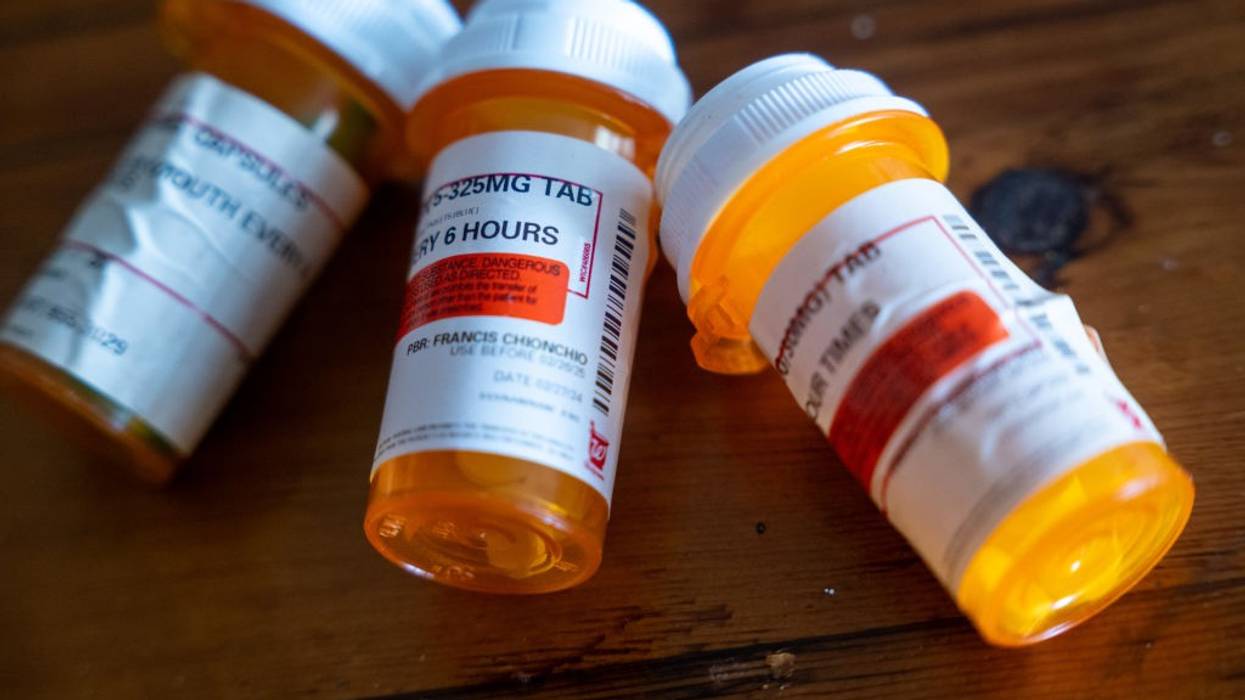
"Tariffs of this magnitude could have enormous consequences—raising costs, worsening shortages, and putting access to lifesaving medicines at risk."
While President Donald Trump has repeatedly claimed that he is working to lower the cost of prescription drugs, advocates for patients on Wednesday expressed alarm over the Republican's plan to impose significant tariffs on imported generic medication.
"Effective August 1st, 2026, all Generic Drugs being brought into the United States will continue to have a TARIFF of ZERO PERCENT for a two year period of time, after which the TARIFF will be raised to 100% for a one year period of time, and 200% thereafter," Trump wrote on his Truth Social platform late Tuesday.
"This is done in order to RESHORE Generic Pharmaceutical Production into America, with a penalty to those Companies that decide not to build Plant and Equipment within the stated period of time given to them," he continued. "The objective of this Policy is to protect the people of the United States."
A White House official told Politico that the administration intends to use Section 232 of the Trade Expansion Act of 1962 to impose the threatened tariffs. Although the president has not yet issued an order for his new announcement regarding generics, it's already causing concern.
"If imposed, the duty risks upending a global supply chain that keeps generic medicines affordable for Americans," the Los Angeles Times reported. "These off-patent drugs run the gamut from everyday painkillers and antibiotics to cholesterol and cancer drugs, and they're mostly produced at factories in India, Europe, and China."
Merith Basey, CEO of the advocacy organization Patients for Affordable Drugs, argued that "if the administration intends to lower prescription drug prices, it should not pursue policies that threaten to raise them. Imposing massive tariffs on generic medicines risks making lower-cost generic drugs millions of Americans rely on more expensive and harder to access."
"Generic drugs account for approximately 90% of prescriptions filled in the United States and are one of the few areas where Americans pay relatively low prices compared with other countries," she noted. "Tariffs of this magnitude could have enormous consequences—raising costs, worsening shortages, and putting access to lifesaving medicines at risk."
Basey stressed that "at a time when Americans are already struggling to afford healthcare, groceries, housing, and other basic needs, the last thing they need is another additional expense. Seniors, people with chronic conditions, and patients who rely on multiple prescriptions could be particularly hard hit."
"We urge the administration to focus its efforts on brand-name drug companies who abuse their monopoly power to block competition—not jeopardize the lower-cost medicines Americans depend on," she concluded.
The watchdog Public Citizen was also critical, warning that imposing tariffs on generics risks supply chain shocks, shortages, and treatment rationing; prioritizes supply restrictions over flexible supply from multiple sources; and undermines US manufacturing and workers, given the unlikelihood that drugmakers would invest billions to relocate to the United States.
"This reckless and impetuous move will drive up price, force rationing of key medicines, and needlessly create scarcity problems," said Peter Maybarduk, Public Citizen's Access to Medicines director, in a statement.
"The sole respite from Trump's reckless pharma tariff plans has been that they so far do not apply to generics, which are vulnerable to supply disruptions that risk people’s access to medicine," he added. "Now, Trump has erased even that modest protection, and set a destructive course that could cause, rather than prevent, scarcity and rationing."
The president's potential levies on generics would follow a similar—and similarly criticized—policy targeting brand-name drugs, which Trump announced in April, on the one-year anniversary of his so-called Liberation Day and after an investigation by the US Department of Commerce.
The April tariffs were aimed at pressuring pharmaceutical companies to negotiate onshoring plans as part of most favored nation (MFN) pricing agreements. However, as Basey pointed out at the time, "the current MFN deals remain opaque and voluntary, and have not delivered meaningful savings for the vast majority of American patients."
A couple of weeks later, the administration announced its 17th MFN agreement, with Regeneron. The other companies that have struck deals are AbbVie, Amgen, AstraZeneca, Boehringer Ingelheim, Bristol Myers Squibb, Eli Lilly, EMD Serono, Genentech, Gilead Sciences, GSK, Johnson & Johnson, Merck, Novartis, Novo Nordisk, Pfizer, and Sanofi.
Trump claimed Tuesday that "the Policy on Patented, Branded, or Innovative Drugs, which has been so successful, will remain as is. Pharmaceutical Facilities are being built, at a level never seen before, all over the United States of America."
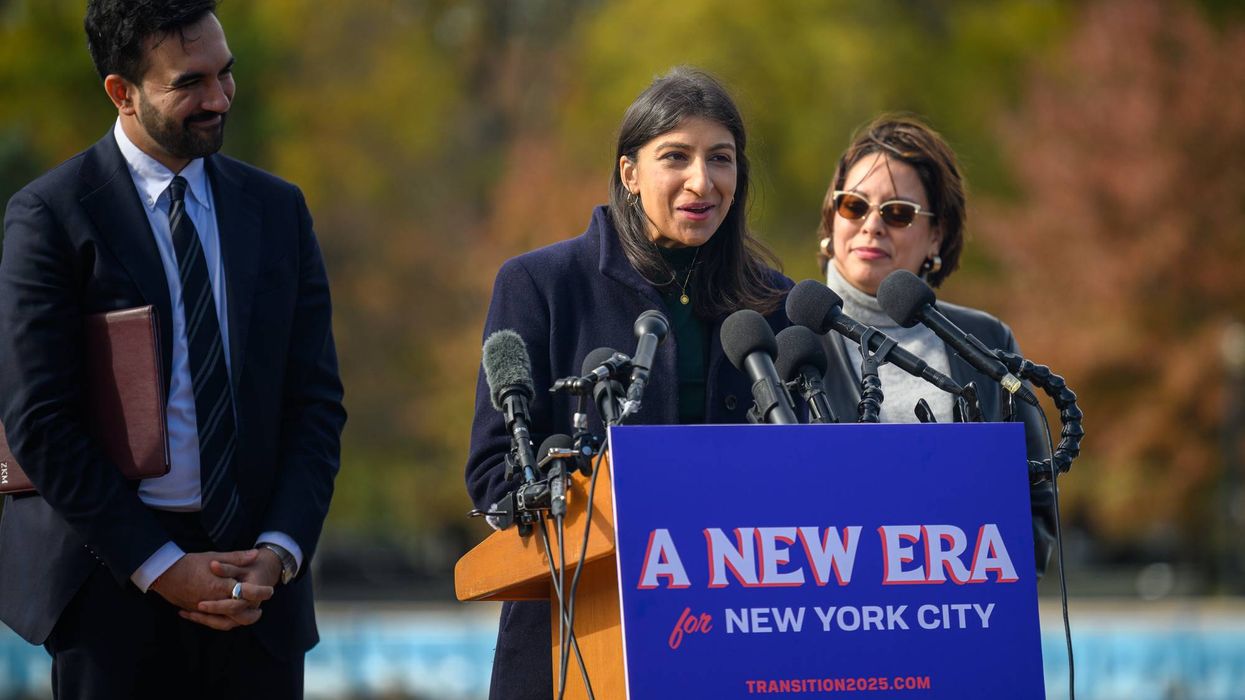
"Economic development and economic justice must go hand in hand," said New York City Mayor Zohran Mamdani in announcing Khan's appointment.
New York City Mayor Zohran Mamdani on Wednesday announced he was appointing Lina Khan, a leading champion of enforcing US antitrust laws, to serve as chair of the city's Economic Development Corporation.
In prepared remarks, Khan—the former chair of the Federal Trade Commission—said she looked forward to working with Tony Shorris, the former executive director of the Port Authority of New York and New Jersey who was appointed by Mamdani as the EDC's new president.
The former Biden administration official also gave an overview of what she hoped to achieve at the EDC.
"EDC has key tools to drive projects that grow our economy, create good jobs, promote entrepreneurship, and make life more affordable for New Yorkers," she said. "EDC has enormous capacity to make life materially better for New Yorkers—and to ensure that public resources are helping build state capacity."
A Wednesday report from Gothamist noted that Khan's appointment as chair "amounts to a shakeup for the agency, which has been criticized over the years for being too cozy with business interests," while noting that Shorris' appointment as president "was seen by some as a nod to the business community."
During a news conference announcing the appointments of Khan and Shorris, Mamdani emphasized that "economic development and economic justice must go hand in hand," adding that "this is no radical concept."
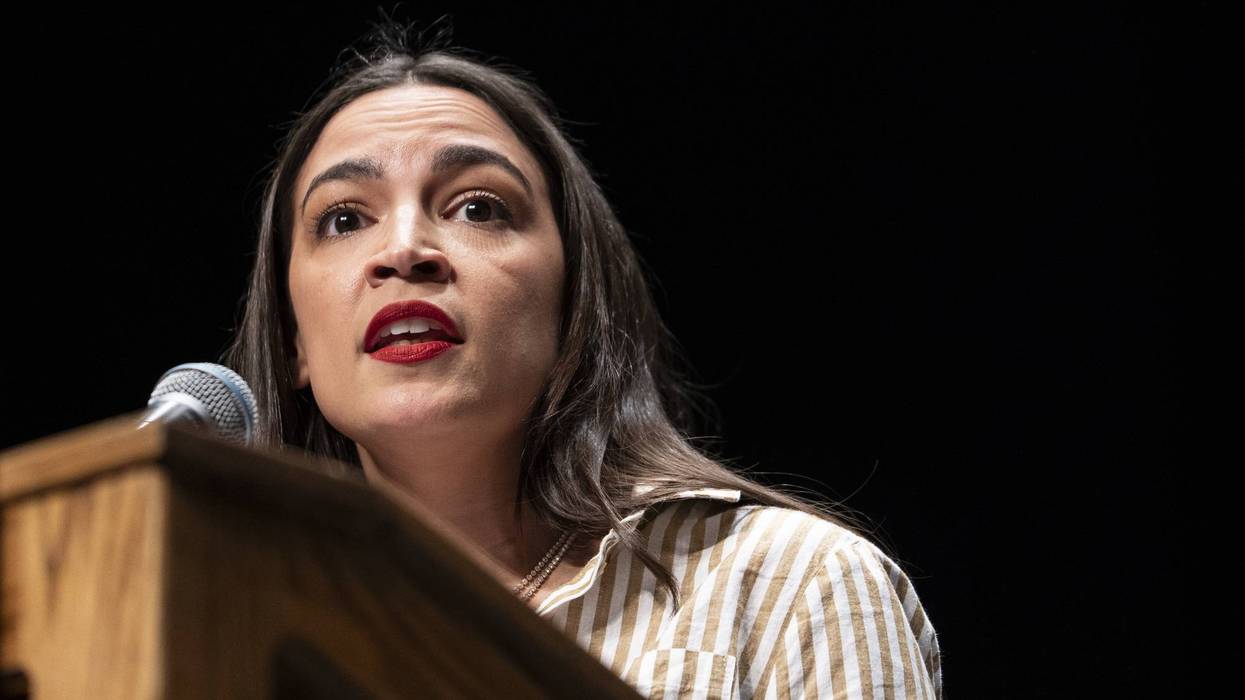
"Every member of Congress must vote NO," said the congresswoman.
With a US House committee refusing to include a bipartisan amendment to strike the integration of parts of the Israeli and American militaries from the National Defense Authorization Act for the coming year, the chamber on Wednesday was set to vote on a bill that progressive opponents including Rep. Alexandria Ocasio-Cortez said would threaten US "sovereignty."
Section 219 of the 2027 NDAA, said the New York Democrat, "is an existential threat to American sovereignty and democracy."
"Every member of Congress must vote NO," she added.
Section 219, which originated as a bipartisan proposal pushed by Democratic Rep. Don Davis of North Carolina and Sen. Kirsten Gillibrand of New York, directs the secretary of defense to designate an "executive agent" at the Pentagon who would oversee a new United States-Israel Defense Technology Cooperation Initiative.
The program, which Israeli Prime Minister Benjamin Netanyahu referred to as "my plan" in June, would integrate American and Israeli research and development by pushing for US military systems' use of Israeli-manufactured technology. The initiative would "shift the framework for US-Israeli defense cooperation from aid to partnership," said Netanyahu.
As Military.com reported, Section 219 would integrate US and Israeli counter-drone, missile, and air defense, artificial intelligence, and cyber and electronic warfare systems.
At Responsible Statecraft in May, Ben Freeman wrote the fusion of the American and Israeli defense sectors would "bring extraordinary Israeli influence to the US beyond what it already has" by giving the Israeli government "the opportunity to greatly expand one of the most powerful levers of influence in US politics: jobs in the US."
"By expanding or starting new co-production facilities like it already has in Mississippi and Arkansas, the Israeli government could boast of providing jobs on US soil, thereby securing allies among members of Congress who represent the districts where those jobs lie," wrote Freeman. "The result could well be a US political system even more susceptible to the whims of an Israeli government that seemingly has no qualms about drawing the US into military conflicts in the Middle East."
The NDAA is set to be voted on in the House on Wednesday, as numerous recent polls have shown public approval of US military aid to Israel plummeting as the Israel Defense Forces (IDF) continues its assault on Gaza that began in October 2023, as well as ramping up attacks in the West Bank and pushing for the US to join in attacks on Iran.
Nearly half of Democratic members of the House voted to cut off military aid to Israel last week in what was called a "seismic shift," with lawmakers apparently responding to voters' clear condemnation of US support for the IDF. Last August, three-quarters of Democratic voters said in a Quinnipiac poll that they opposed continuing to arm Israel.
Progressive political candidates such as Michigan's US Senate contender Abdul El-Sayed in recent months have framed the issue as one in which voters are demanding more government investment in US schools and healthcare, rather than in Israel's military.
"While Americans are focused on other things, like how to make ends meet in the face of a rapidly rising cost of living, the House will vote to merge our military technology and supply chains with Israel’s,” Rep. Thomas Massie (R-Ky.) said in a statement Tuesday after the amendment he put forward with Rep. Ro Khanna (D-Calif.) to strike Section 219 was denied a floor vote by the House Rules Committee. “Our founders would be appalled at what Congress is doing now.”
Other lawmakers who joined Massie and Khanna's effort to eliminate the provision include Reps. Jim McGovern (D-Mass.), Jesús “Chuy” García (D-Ill.), Rashida Tlaib (D-Mich.), Don Beyer (D-Va.), Jill Tokuda (D-Hawaii), Derek Tran (D-Calif.), and Joe Courtney (D-Conn.).
The House is allowing consideration of two amendments that Rep. Anna Paulina Luna (R-Fla.) submitted, including one that would remove the word "integration" from Section 219. Josh Paul, a former Biden administration State Department official who resigned over unconditional US military aid to Israel after the IDF began bombarding Gaza in October 2023, emphasized that Luna's amendment does not eliminate the proposed program.
The amendment "has no meaningful impact on the bill," said Paul, co-founder of the lobby group A New Policy. "The goal here is to try to make it a tough vote for people, for members of Congress who don't want to see US and Israel integration, but they should rest easy because that's not what this amendment does."
BREAKING: This Amendment is a set-up. Hear from Josh Paul why A New Policy OPPOSES Representative Anna Paulina Luna’s (R-FL-13) amendment to the House NDAA. The amendment would strike the word “integration” from several places in Section 219. Don’t be fooled, the amendment DOES… pic.twitter.com/gcYKd4Pyj2
— A New Policy (@anewpolicyorg) July 21, 2026
Massie and Khanna said they would attempt to eliminate Section 219 from the bill in the House and Senate conference after the House vote. The Senate's defense authorization package includes a similar provision called Section 1217.
"It's shocking that this even has to be explained," said Khanna on Tuesday. "It's about American sovereignty... We do not even have a chance to vote in the House to stop Israel and the United States from co-producing weapons. We need to now fight to strip this amendment in the conference between the House and the Senate."

"'Just comply' means women are being told to surrender to potential kidnappers, and hope they turn out to be government agents."
As US Immigration and Customs Enforcement deals with the fallout of two fatal shootings, President Donald Trump's border czar Tom Homan has said the deaths were the fault of victims who did not "comply" with agents.
"It comes down to one simple fact. These people failed to comply with law enforcement," Homan said on Monday outside the White House. "All they had to do was simply comply. If they did, they'd be alive today."
Questions remain about the extent to which the two men killed earlier this month—Lorenzo Salgado Araujo in Texas and Johan Sebastián Guerrero in Maine—defied ICE agents leading up to their arrests, and the Department of Homeland Security's (DHS) initial narrative that the two men attempted to attack agents with their vehicles has been undercut by video and eyewitness evidence.
Meanwhile, legal experts have noted that failure to comply with law enforcement on its own is not a justification for deadly force under DHS guidelines or the guidelines of any other law enforcement agency, and the Supreme Court has repeatedly ruled that lethal force must be reserved for situations where suspects pose an immediate danger.
ICE critics have further pointed out that the agency’s unprecedented tactics under the second Trump administration—the use of unmarked cars, the refusal to self-identify, and the use of excessive force without clear justifications—make compliance impossible in many cases.
A prominent social media user known as Jesus Freakin' Congress, who catalogs ICE abuses on her account for more than 50,000 followers, drew attention to a case out of Schaumburg, Illinois, as "an example of what [Homan] wants you to comply with."
The video, filmed by Instagram user Mari Elena months earlier and posted this week, shows what she believed to be agents in unmarked vehicles following her as she attempted to leave a parking lot before a gray SUV suddenly cut her off as she approached an intersection.
"I saw what appeared to be ICE agents in a parking lot and began recording them from a distance," she explained in the post. "After they noticed I was recording, several of their vehicles drove past me. Because I was alone, I decided to leave the parking lot. As I was leaving, four ICE vehicles surrounded my vehicle in the middle of the road."
Video shows the gray SUV sitting motionless in front of Mari as she honked repeatedly. She had nowhere to go without hitting either the curb or the vehicle in front of her. After blocking her for over a minute, the vehicle drove through the intersection, allowing Mari to leave.
At no point did any of the vehicles activate their emergency lights to indicate that they were law enforcement or that she was being detained.
Jesus Freakin' Congress noted the difficulty this posed for Mari, who "wasn’t even 100% sure" that the men boxing in her car were ICE agents.
Imagine being a woman, alone in your car. A group of cars you cannot clearly identify as law enforcement, start following you. They don’t turn on emergency lights. They don’t clearly identify themselves. And one of them cuts you off and [is] blocking your vehicle from being able to drive away.
What are you supposed to think is happening? Because from your perspective, it looks like you are being kidnapped by random people.
And that is the terrifying part of what ICE is doing. They are creating situations where people have no idea whether the people surrounding them are legitimate law enforcement officers, or strangers attempting to abduct, or rob them. And Tom Homan’s answer to being kidnapped, or robbed, is… “Just comply.”
Don’t try to drive away. Don’t defend yourself. Don’t try to escape. Just calmly allow unidentified people, in unmarked vehicles, to follow you, box you in, and potentially kidnap or rob you… Because if they happen to be ICE agents, and you react like a normal person who believes they are being kidnapped, you could be assaulted, detained, or even shot. Do you understand how dangerous and insane that is?!?
“Just comply” means women are being told to surrender to potential kidnappers, and hope they turn out to be government agents. And if they don’t? Tom Homan says it’s their fault for not complying.
Although Mari was not able to confirm that the vehicles boxing her in were driven by ICE agents, her case represents the type of scenario in which Homan demands people to simply "comply."
Since it became commonplace for faceless agents to prowl the streets, there have been numerous documented cases of people impersonating immigration agents in order to kidnap, rob, and sexually assault victims.
The FBI itself put out a bulletin last year urging agents to identify themselves to prevent confusion. However, there is no evidence that DHS has implemented those guidelines.
According to a report from Wired on Wednesday, the Trump administration has sued at least five states, as well as the city of Philadelphia, in order to block laws that would stop agents from wearing masks during operations.
Witnesses say that in the incident that led to Salgado's shooting, agents did not identify themselves as law enforcement before the encounter escalated. ICE has not produced evidence that agents identified themselves before shooting Guerrero in Maine. In both cases, the men killed were not the targets of ICE's operations.
In the wake of Homan's demands that those approached by immigration agents "comply", legal experts have warned that ICE's tactics are creating fear that compels people to do the exact opposite.
"ICE and other federal immigration agents have made quick compliance difficult or impossible," Hiroshi Motomura, professor of immigration and citizenship law at the UCLA School of Law, told HuffPost. "Many agents aren't identifying themselves in any trustworthy way."
"It's only natural for people to not comply as quickly as officers might like," he continued. "In these moments of apprehension and fear, some officers seem to be escalating into violence."
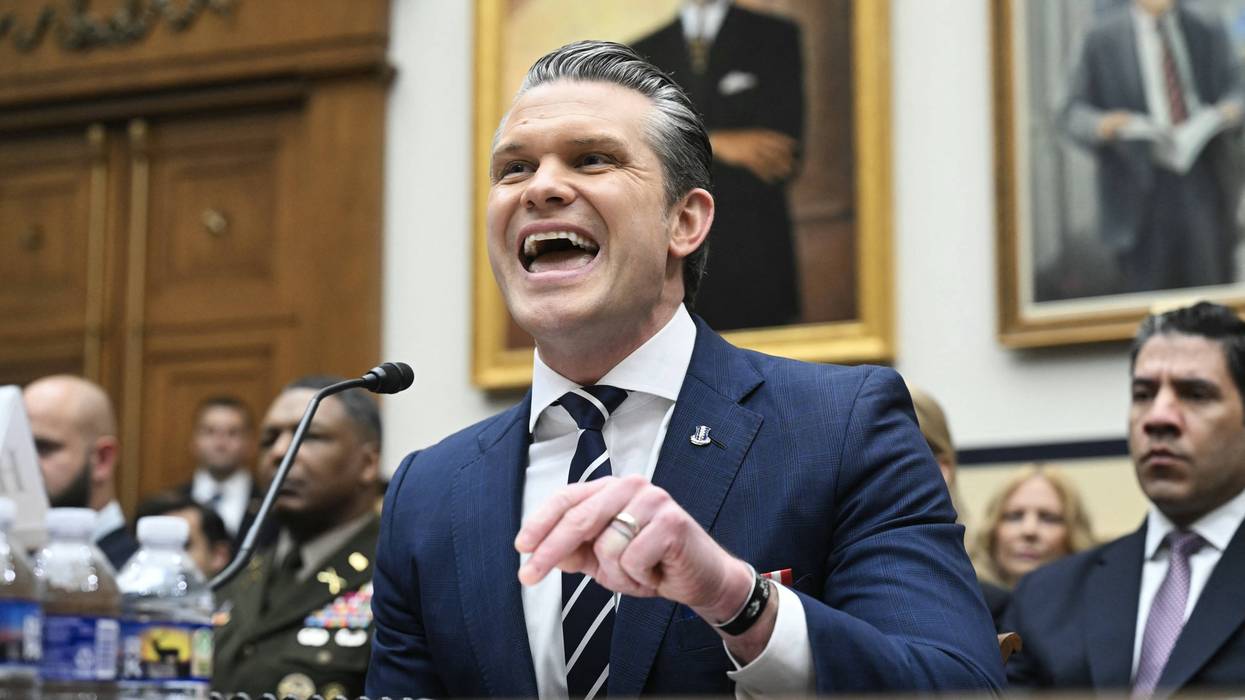
“Secretary Hegseth, you are asking for unlimited money for bombs when people can’t feed their families," said one Democratic senator.
Critics lit into US Defense Secretary Pete Hegseth after he demanded on Tuesday that Congress pass President Donald Trump's plan for a $1.5 trillion military budget.
While testifying before the Senate Appropriations Committee, Hegseth once again made a pitch for the president's massive defense spending proposal, going so far as to say that "not funding [the US Department of Defense] at $1.5 trillion is the greatest threat that our nation faces."
Pete Hegseth: Not funding this department at $1.5 trillion is the greatest threat our nation faces. pic.twitter.com/j2AvDMdpzg
— Acyn (@Acyn) July 21, 2026
In a social media post, economist Dean Baker put Trump's proposed budget into context by noting that the additional requested defense spending "is a bit less than $5,000 per household."
Baker also pointed out that the US already has a massive defense budget, writing that "before Bozo the president came in, we did fine on $860 billion," a total that is larger than the combined military budgets of China, Russia, Germany, India, and the UK.
Some Democratic lawmakers signaled their opposition to the $1.5 trillion Pentagon budget request, which would represent an increase of more than 50% of what the US spent on its military in 2025.
Sen. Kirsten Gillibrand (D-NY) slammed Hegseth to his face during the hearing and pointed out that the unprecedented defense spending request was coming at a time when many Americans are struggling to afford gasoline and groceries.
"Secretary Hegseth, you are asking for unlimited money for bombs," Gillibrand said, "when people can't feed their families."
GIllibrand: So essentially you're asking for literally $1.5 trillion for a war that President Trump said he already won? Secretary Hegseth, you are asking for unlimited money for bombs when people can't feed their families. pic.twitter.com/MY03ohvj6W
— Molly Ploofkins (@Mollyploofkins) July 21, 2026
In an interview with MeidasTouch chief Washington correspondent Scott MacFarlane, Rep. Yassamin Ansari (D-Ariz.) predicted that Democrats’ response to Hegseth's demand for tens of billions of dollars in supplemental funding for the Iran war on top of the sprawling NDAA “is going to be a ‘hell no.’”
"How many times have we been told this war is over?" Ansari asked. "How many times have we been told that it's not a war?... I'm not giving another dollar to this."
“The response is going to be a ‘Hell No”
Rep Yassamin Ansari (D-AZ) on how Democrats will vote on Pete Hegseth’s request for tens of billions of dollars for war pic.twitter.com/q9IQ9mYVH4
— Scott MacFarlane (@MacFarlaneNews) July 22, 2026
Rep. Salud Carbajal (D-Calif.) announced his opposition to the Hegseth budget in a social media post.
"Trump and Hegseth forced us into a disastrous, illegal war in Iran and now they want $1.5 trillion to keep it going," wrote Carbajal. "The American people want to end forever wars, not to fund them."

"The damage from the SNAP cuts could worsen quickly as some states are considering ending their SNAP programs entirely as soon as October 2027," warned one expert.
At least 1.5 million children have lost Supplemental Nutrition Assistance Program benefits since US President Donald Trump signed the Republican budget package into law last summer, enacting the largest cuts to federal food aid in the nation's history.
The new estimate of food aid loss among children comes from the Center on Budget and Policy Priorities (CBPP), which said Tuesday that SNAP participation was down by over 4.5 million people overall between July 2025 and April 2026. Refuting the Trump administration's narrative, the liberal think tank emphasized that the unemployment rate nationwide has been roughly flat since last July, meaning it is "very unlikely that reduced need is driving the decline in SNAP participation."
Arizona has seen the most staggering decline in SNAP participation. It has fallen 48% overall and 49% among children in the state since enactment of the Trump-GOP budget law, which instituted new work-reporting requirements for some recipients and punishments for states with elevated payment error rates. Under Republican law, states will for the first time have to pay a portion of SNAP benefit costs, which previously were fully covered by the federal government.
"Grotesque and indefensible," policy analyst Michael Linden wrote in response to the new data, noting that the Republican budget law slashed taxes for wealthy households while decimating SNAP.
Earlier this week, The New York Times published a report detailing the horror show residents have experienced as they've attempted to reenroll in SNAP after improperly losing benefits due to bureaucratic chaos stemming from the GOP law.
As states have raced to limit the massive new costs they will soon face under the law's cost shift, many eligible families are losing SNAP because they can’t navigate new bureaucratic obstacles & understaffed states can’t keep up with the added paperwork. https://t.co/DOCI3axDed pic.twitter.com/8OzMUpkLc7
— Katie Bergh (@Katie_Bergh) July 21, 2026
Sharon Parrott, CBPP's president, said Tuesday that the consequences of the massive SNAP cuts—totaling around $200 billion over the next decade—have been "stark: an ill grandmother raising teens can’t get her SNAP reinstated despite being eligible, and parents are skipping meals to save food for their children. Families who have had their food assistance taken away are turning to overburdened food banks, which cannot fill the gap."
" House Republicans are looking past this emergency in their budget legislation—while using it to help farmers struggling with high costs due to Trump’s tariffs and oil prices driven up by the war in Iran," said Parrott, referring to the GOP's new reconciliation package.
"The damage from the SNAP cuts could worsen quickly as some states are considering ending their SNAP programs entirely as soon as October 2027, when the cost shift takes effect. States unable or unwilling to pay the costs they incur will have no choice but to end the program," Parrott warned. "People across the US consistently say they want Washington to focus on affordability, especially the cost of food. Mitigating last year’s cuts to SNAP and staunching the number of families and children losing SNAP would be a good place to start."
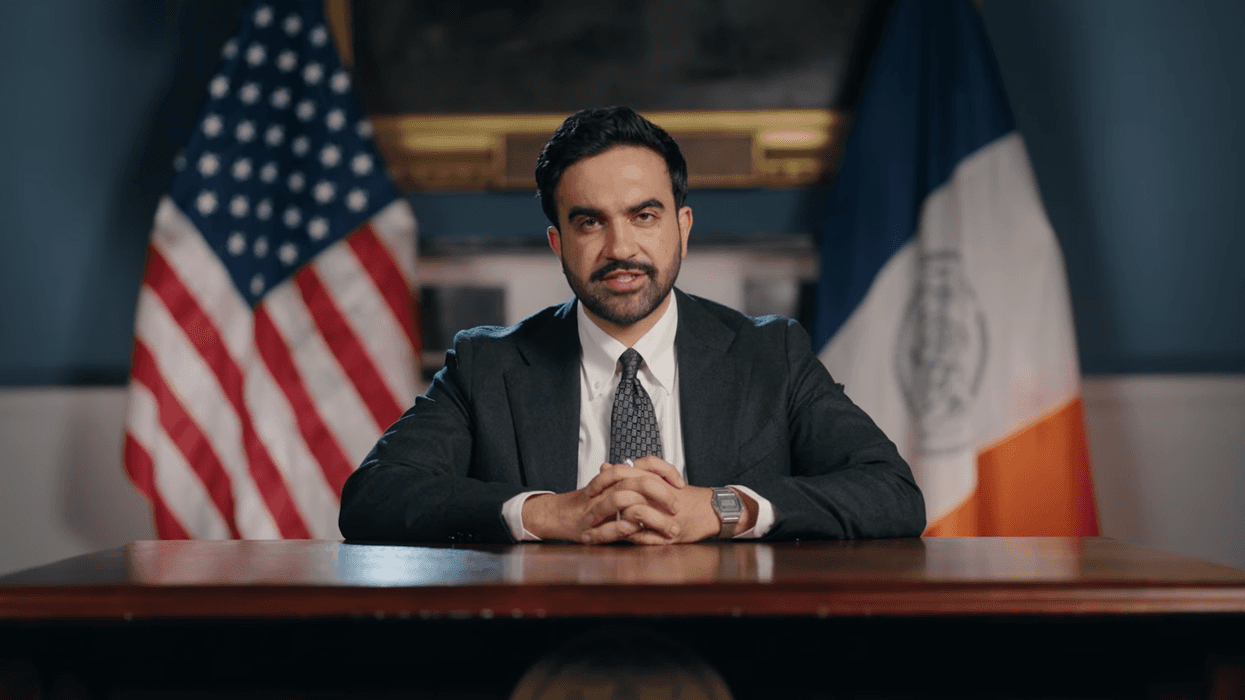
"The federal government, however, does—and I call on them to join the ICC and execute this warrant," said New York City Mayor Zohran Mamdani.
New York City Mayor Zohran Mamdani said in a brief video address late Tuesday that his administration lacks the "independent legal authority" to enforce an International Criminal Court warrant against Israeli Prime Minister Benjamin Netanyahu, who is wanted for alleged war crimes and crimes against humanity in the Gaza Strip.
Mamdani said in his two-minute address that after reviewing "every avenue available under applicable law to determine whether New York City could execute the International Criminal Court’s arrest warrant if Benjamin Netanyahu came here," his administration determined that it did not have the authority to do so.
"The federal government, however, does—and I call on them to join the ICC and execute this warrant," said Mamdani, who characterized Netanyahu as a "war criminal" and "the architect of a horrific genocide against the Palestinian people."
"Benjamin Netanyahu is not welcome in New York City, nor is any other war criminal at large," said the New York City mayor, who—according to one recent poll—is more popular with Jewish adults in the US than the Israeli prime minister. "While we cannot end the genocide on our own, we can decide whether our silence will become another weapon, and we can examine every tool we have to defend the humanity and dignity of all people."
Watch Mamdani's full remarks:
Mamdani said during his 2025 mayoral campaign that, if elected, he intended to pursue Netanyahu's arrest should the Israeli prime minister set foot in New York City. Netanyahu is expected to be in the city in September for the United Nations General Assembly.
US President Donald Trump said earlier this week that Netanyahu would "not be arrested, in any way, shape, or form, while in the United States of America."
Neither the US nor Israel are party to the treaty that established the International Criminal Court, and the US State Department earlier this month launched an effort to "dismantle" the ICC, which is tasked with investigating and prosecuting individuals for war crimes.
Mamdani said in his address on Tuesday that Netanyahu is "responsible for the killing of more than 73,000 people, for the maiming of tens of thousands of children as those who survive undergo amputation without anesthesia, [and] for the targeting of neonatal hospitals and maternity care centers, denying newborns even the chance to live."
The mayor also cited a recent UN report accusing the Israeli military of deliberately targeting children in Gaza.
"The list goes on and on. All as we, as Americans, pay for the bombs that do the killing," said Mamdani. "I agree with the ICC that Benjamin Netanyahu should be arrested and tried for his crimes, as I do for anyone else charged by the ICC."

"THIS from the administration that said there was no money for food assistance, Medicaid, and healthcare tax credits."
While economists have warned for months that the true cost of President Donald Trump's illegal war on Iran could be trillions of dollars, US Defense Secretary Pete Hegseth estimated on Tuesday that it's currently about $37.5 billion.
That figure came from a line of questioning by US Sen. Dick Durbin (D-Ill.), as Hegseth appeared before the Senate Appropriations Committee to support Trump's June supplemental funding request, which includes tens of billions for the Pentagon.
Hegseth told Durbin that the $37.5 billion estimate includes what's been spent so far, plus some projected spending through the end of the fiscal year in September—an exchange quickly met with fury by various critics, many of whom pointed out the range of ways that money could have been better spent by an administration allegedly dedicated to combating "waste, fraud, and abuse."
"Imagine all the better things that could have been done with $37.5 billion," Jonathan Cohn, political director for the group Progressive Mass, wrote on Bluesky.
Noting that the Strait of Hormuz "is still closed," progressive writer Alex Cole similarly said, "Imagine what $37.5 billion could've done for veterans, schools, or healthcare."
Congressman James Walkinshaw (D-Va.) specifically noted: "That could cover a full school year of free lunches for 30 million children. Or a full year of childcare for nearly 2 million kids."
"Trump finds money for war while families get excuses," he added, as working people struggle with rising costs of housing, groceries, and gasoline—the price of which has soared due to Iran restricting strait traffic over US attacks.
Trump’s war on Iran has so far cost taxpayers $37.5 BILLION.As if skyrocketing gas prices weren’t enough, Trump also expects us to foot this bill.Trump’s illegal forever war has spiraled out of control.
— Public Citizen (@publiccitizen.bsky.social) July 21, 2026 at 5:00 PM
The liberal political group American Bridge 21st Century highlighted how Trump and congressional Republicans have attacked programs for working families while giving more tax cuts to billionaires and waging war on Iran.
"THIS from the administration that said there was no money for food assistance, Medicaid, and healthcare tax credits," the organization said.
Since Trump joined with Israel to start bombing Iran on February 28, most congressional Democrats, legal experts, and other critics have argued that the war—for which the president never secured support from Congress—is not only foolish but also unlawful under both international and US law.
Citing Trump’s attempts to evade limits of the War Powers Act of 1973, Congressman John Larson (D-Conn.) said Monday that he is preparing legal action against the administration and a new bill to cut off funding for the war on Iran, which has killed over 3,000 people according to the Iranian government.
Previous war cost estimates from the US Department of Defense have been met with scrutiny. After Pentagon comptroller Jules "Jay" Hurst offered the $25 billion figure in April, Stephen Semler, a senior fellow at the Center for International Policy, estimated that the government spent at least $71.8 billion during the first two months of the war, or around $1.2 billion per day.
As for the US death toll, at least 17 service members have been killed and many more wounded. The New York Times revealed Monday that the Pentagon hid dozens of American military injuries from Iranian strikes on bases in Jordan last week.
Two Iranian-Americans, a US veteran, and a nurse disrupted Hegseth's Tuesday appearance before the Senate, according to CodePink. In addition to that anti-war group, the protesters were from the National Iranian American Council (NIAC) and Vets About Face DMV.
"Pete Hegseth and this administration will be remembered for the killing of innocent civilians and children. They have protected neither the American people nor our security, only the interests that have lined their pockets,” said Bella of NIAC, who joined the protest, in a statement.
"While Americans struggle to afford their lives, this government always finds billions to bomb our families in Iran, Palestine, Lebanon, and elsewhere," Bella added. "This is a repugnant betrayal of humanity. It is illegal, and the American people will hold them accountable."