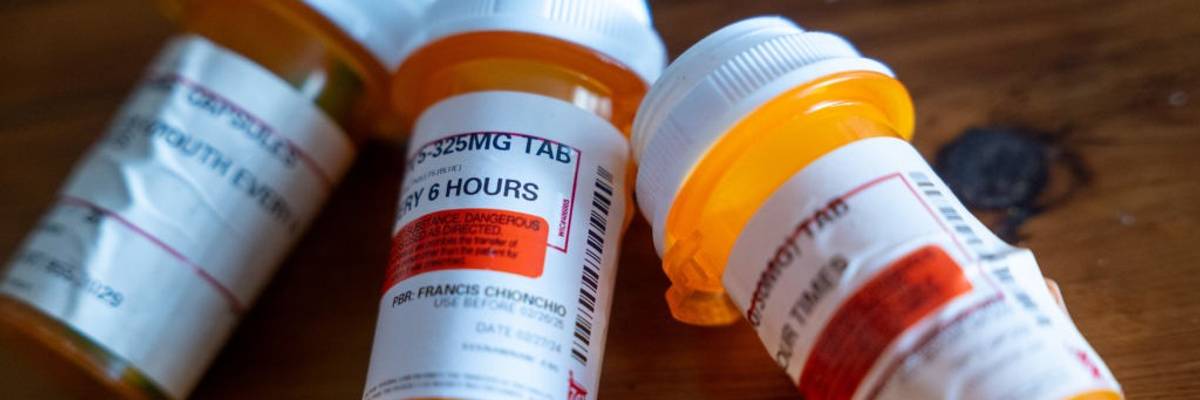
In a photo illustration, prescription drugs are seen in pill bottles on July 23, 2024 in New York City.
Patient Advocates Warn Trump Tariffs on Generic Drugs Could Drive Up Costs for Millions
"Tariffs of this magnitude could have enormous consequences—raising costs, worsening shortages, and putting access to lifesaving medicines at risk."
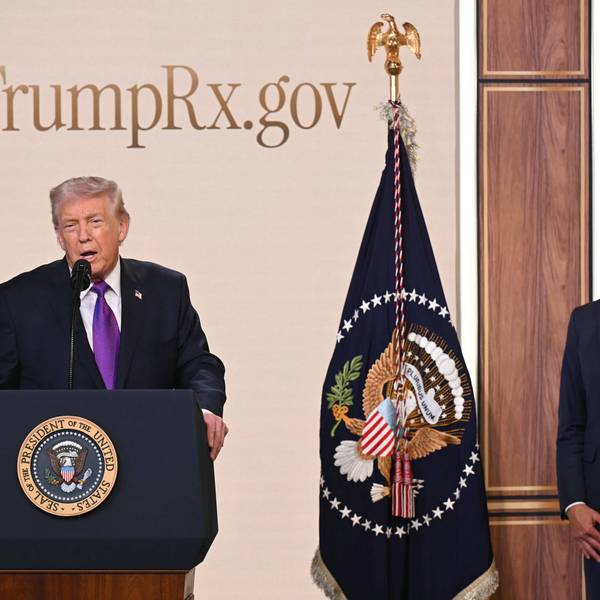
While President Donald Trump has repeatedly claimed that he is working to lower the cost of prescription drugs, advocates for patients on Wednesday expressed alarm over the Republican's plan to impose significant tariffs on imported generic medication.
"Effective August 1st, 2026, all Generic Drugs being brought into the United States will continue to have a TARIFF of ZERO PERCENT for a two year period of time, after which the TARIFF will be raised to 100% for a one year period of time, and 200% thereafter," Trump wrote on his Truth Social platform late Tuesday.
"This is done in order to RESHORE Generic Pharmaceutical Production into America, with a penalty to those Companies that decide not to build Plant and Equipment within the stated period of time given to them," he continued. "The objective of this Policy is to protect the people of the United States."
A White House official told Politico that the administration intends to use Section 232 of the Trade Expansion Act of 1962 to impose the threatened tariffs. Although the president has not yet issued an order for his new announcement regarding generics, it's already causing concern.
"If imposed, the duty risks upending a global supply chain that keeps generic medicines affordable for Americans," the Los Angeles Times reported. "These off-patent drugs run the gamut from everyday painkillers and antibiotics to cholesterol and cancer drugs, and they're mostly produced at factories in India, Europe, and China."
Merith Basey, CEO of the advocacy organization Patients for Affordable Drugs, argued that "if the administration intends to lower prescription drug prices, it should not pursue policies that threaten to raise them. Imposing massive tariffs on generic medicines risks making lower-cost generic drugs millions of Americans rely on more expensive and harder to access."
"Generic drugs account for approximately 90% of prescriptions filled in the United States and are one of the few areas where Americans pay relatively low prices compared with other countries," she noted. "Tariffs of this magnitude could have enormous consequences—raising costs, worsening shortages, and putting access to lifesaving medicines at risk."
Basey stressed that "at a time when Americans are already struggling to afford healthcare, groceries, housing, and other basic needs, the last thing they need is another additional expense. Seniors, people with chronic conditions, and patients who rely on multiple prescriptions could be particularly hard hit."
"We urge the administration to focus its efforts on brand-name drug companies who abuse their monopoly power to block competition—not jeopardize the lower-cost medicines Americans depend on," she concluded.
The watchdog Public Citizen was also critical, warning that imposing tariffs on generics risks supply chain shocks, shortages, and treatment rationing; prioritizes supply restrictions over flexible supply from multiple sources; and undermines US manufacturing and workers, given the unlikelihood that drugmakers would invest billions to relocate to the United States.
"This reckless and impetuous move will drive up price, force rationing of key medicines, and needlessly create scarcity problems," said Peter Maybarduk, Public Citizen's Access to Medicines director, in a statement.
"The sole respite from Trump's reckless pharma tariff plans has been that they so far do not apply to generics, which are vulnerable to supply disruptions that risk people’s access to medicine," he added. "Now, Trump has erased even that modest protection, and set a destructive course that could cause, rather than prevent, scarcity and rationing."
The president's potential levies on generics would follow a similar—and similarly criticized—policy targeting brand-name drugs, which Trump announced in April, on the one-year anniversary of his so-called Liberation Day and after an investigation by the US Department of Commerce.
The April tariffs were aimed at pressuring pharmaceutical companies to negotiate onshoring plans as part of most favored nation (MFN) pricing agreements. However, as Basey pointed out at the time, "the current MFN deals remain opaque and voluntary, and have not delivered meaningful savings for the vast majority of American patients."
A couple of weeks later, the administration announced its 17th MFN agreement, with Regeneron. The other companies that have struck deals are AbbVie, Amgen, AstraZeneca, Boehringer Ingelheim, Bristol Myers Squibb, Eli Lilly, EMD Serono, Genentech, Gilead Sciences, GSK, Johnson & Johnson, Merck, Novartis, Novo Nordisk, Pfizer, and Sanofi.
Trump claimed Tuesday that "the Policy on Patented, Branded, or Innovative Drugs, which has been so successful, will remain as is. Pharmaceutical Facilities are being built, at a level never seen before, all over the United States of America."
We are at a crossroads
This country and this world are at a monumental crossroads. In a few short weeks, US voters will have an opportunity to beat back the forces of fascism and confront the billionaires who are rigging the economy, our media system, and our democracy, making it increasingly impossible for ordinary people to get by. We’re not just talking about the election. We’re talking about what must be done once these fascist elements are vanquished from power. We need a bolder set of solutions than what either major party has so far been willing to offer and a working-class movement ready to fight like hell for it. Trump didn't emerge from nowhere. The conditions that fueled MAGA authoritarianism were created by decades of radical neoliberal economic policies and a corrupt political system dominated by corporate interests. They slashed taxes on the super-rich, promising that the benefits would trickle down. They said giveaways to the corporate titans would make life more affordable for the rest of us. It was all bullshit. And when a bitter, betrayed populace searches for someone to blame, right-wing demagogues have little trouble finding scapegoats. People know when they're being lied to, but you won't hear any of this from the corporate media. Only independent journalism—powered and funded by people who believe in building a better world—can deliver truly trustworthy daily news. Our Fall Campaign is underway, and we need your help. To power our newsroom through the rest of the year, we need to raise $125,000 by midnight on October 31. So if you share our vision, please contribute whatever you can to sustain our work. |
While President Donald Trump has repeatedly claimed that he is working to lower the cost of prescription drugs, advocates for patients on Wednesday expressed alarm over the Republican's plan to impose significant tariffs on imported generic medication.
"Effective August 1st, 2026, all Generic Drugs being brought into the United States will continue to have a TARIFF of ZERO PERCENT for a two year period of time, after which the TARIFF will be raised to 100% for a one year period of time, and 200% thereafter," Trump wrote on his Truth Social platform late Tuesday.
"This is done in order to RESHORE Generic Pharmaceutical Production into America, with a penalty to those Companies that decide not to build Plant and Equipment within the stated period of time given to them," he continued. "The objective of this Policy is to protect the people of the United States."
A White House official told Politico that the administration intends to use Section 232 of the Trade Expansion Act of 1962 to impose the threatened tariffs. Although the president has not yet issued an order for his new announcement regarding generics, it's already causing concern.
"If imposed, the duty risks upending a global supply chain that keeps generic medicines affordable for Americans," the Los Angeles Times reported. "These off-patent drugs run the gamut from everyday painkillers and antibiotics to cholesterol and cancer drugs, and they're mostly produced at factories in India, Europe, and China."
Merith Basey, CEO of the advocacy organization Patients for Affordable Drugs, argued that "if the administration intends to lower prescription drug prices, it should not pursue policies that threaten to raise them. Imposing massive tariffs on generic medicines risks making lower-cost generic drugs millions of Americans rely on more expensive and harder to access."
"Generic drugs account for approximately 90% of prescriptions filled in the United States and are one of the few areas where Americans pay relatively low prices compared with other countries," she noted. "Tariffs of this magnitude could have enormous consequences—raising costs, worsening shortages, and putting access to lifesaving medicines at risk."
Basey stressed that "at a time when Americans are already struggling to afford healthcare, groceries, housing, and other basic needs, the last thing they need is another additional expense. Seniors, people with chronic conditions, and patients who rely on multiple prescriptions could be particularly hard hit."
"We urge the administration to focus its efforts on brand-name drug companies who abuse their monopoly power to block competition—not jeopardize the lower-cost medicines Americans depend on," she concluded.
The watchdog Public Citizen was also critical, warning that imposing tariffs on generics risks supply chain shocks, shortages, and treatment rationing; prioritizes supply restrictions over flexible supply from multiple sources; and undermines US manufacturing and workers, given the unlikelihood that drugmakers would invest billions to relocate to the United States.
"This reckless and impetuous move will drive up price, force rationing of key medicines, and needlessly create scarcity problems," said Peter Maybarduk, Public Citizen's Access to Medicines director, in a statement.
"The sole respite from Trump's reckless pharma tariff plans has been that they so far do not apply to generics, which are vulnerable to supply disruptions that risk people’s access to medicine," he added. "Now, Trump has erased even that modest protection, and set a destructive course that could cause, rather than prevent, scarcity and rationing."
The president's potential levies on generics would follow a similar—and similarly criticized—policy targeting brand-name drugs, which Trump announced in April, on the one-year anniversary of his so-called Liberation Day and after an investigation by the US Department of Commerce.
The April tariffs were aimed at pressuring pharmaceutical companies to negotiate onshoring plans as part of most favored nation (MFN) pricing agreements. However, as Basey pointed out at the time, "the current MFN deals remain opaque and voluntary, and have not delivered meaningful savings for the vast majority of American patients."
A couple of weeks later, the administration announced its 17th MFN agreement, with Regeneron. The other companies that have struck deals are AbbVie, Amgen, AstraZeneca, Boehringer Ingelheim, Bristol Myers Squibb, Eli Lilly, EMD Serono, Genentech, Gilead Sciences, GSK, Johnson & Johnson, Merck, Novartis, Novo Nordisk, Pfizer, and Sanofi.
Trump claimed Tuesday that "the Policy on Patented, Branded, or Innovative Drugs, which has been so successful, will remain as is. Pharmaceutical Facilities are being built, at a level never seen before, all over the United States of America."
- As TrumpRx Scam Does Virtually Nothing, Big Pharma Jacks Up Prices on Cancer Drugs ›
- TrumpRx Denounced as Corrupt Scheme to Line Pockets of Big Pharma—and Don Jr. ›
- As Trump Claims He's Slashing Costs, Big Pharma Jacks Up Prices on 350 Drugs ›
- As Costs Soar for Millions, TrumpRx Scam Offers Savings on 'Exactly One' Drug: Analysis ›
- Sanders Report Shows Prices for 688 Prescription Drugs Rose Under Trump ›
- Trump Rescinds Biden Order Aimed at Lowering Prescription Drug Prices ›
While President Donald Trump has repeatedly claimed that he is working to lower the cost of prescription drugs, advocates for patients on Wednesday expressed alarm over the Republican's plan to impose significant tariffs on imported generic medication.
"Effective August 1st, 2026, all Generic Drugs being brought into the United States will continue to have a TARIFF of ZERO PERCENT for a two year period of time, after which the TARIFF will be raised to 100% for a one year period of time, and 200% thereafter," Trump wrote on his Truth Social platform late Tuesday.
"This is done in order to RESHORE Generic Pharmaceutical Production into America, with a penalty to those Companies that decide not to build Plant and Equipment within the stated period of time given to them," he continued. "The objective of this Policy is to protect the people of the United States."
A White House official told Politico that the administration intends to use Section 232 of the Trade Expansion Act of 1962 to impose the threatened tariffs. Although the president has not yet issued an order for his new announcement regarding generics, it's already causing concern.
"If imposed, the duty risks upending a global supply chain that keeps generic medicines affordable for Americans," the Los Angeles Times reported. "These off-patent drugs run the gamut from everyday painkillers and antibiotics to cholesterol and cancer drugs, and they're mostly produced at factories in India, Europe, and China."
Merith Basey, CEO of the advocacy organization Patients for Affordable Drugs, argued that "if the administration intends to lower prescription drug prices, it should not pursue policies that threaten to raise them. Imposing massive tariffs on generic medicines risks making lower-cost generic drugs millions of Americans rely on more expensive and harder to access."
"Generic drugs account for approximately 90% of prescriptions filled in the United States and are one of the few areas where Americans pay relatively low prices compared with other countries," she noted. "Tariffs of this magnitude could have enormous consequences—raising costs, worsening shortages, and putting access to lifesaving medicines at risk."
Basey stressed that "at a time when Americans are already struggling to afford healthcare, groceries, housing, and other basic needs, the last thing they need is another additional expense. Seniors, people with chronic conditions, and patients who rely on multiple prescriptions could be particularly hard hit."
"We urge the administration to focus its efforts on brand-name drug companies who abuse their monopoly power to block competition—not jeopardize the lower-cost medicines Americans depend on," she concluded.
The watchdog Public Citizen was also critical, warning that imposing tariffs on generics risks supply chain shocks, shortages, and treatment rationing; prioritizes supply restrictions over flexible supply from multiple sources; and undermines US manufacturing and workers, given the unlikelihood that drugmakers would invest billions to relocate to the United States.
"This reckless and impetuous move will drive up price, force rationing of key medicines, and needlessly create scarcity problems," said Peter Maybarduk, Public Citizen's Access to Medicines director, in a statement.
"The sole respite from Trump's reckless pharma tariff plans has been that they so far do not apply to generics, which are vulnerable to supply disruptions that risk people’s access to medicine," he added. "Now, Trump has erased even that modest protection, and set a destructive course that could cause, rather than prevent, scarcity and rationing."
The president's potential levies on generics would follow a similar—and similarly criticized—policy targeting brand-name drugs, which Trump announced in April, on the one-year anniversary of his so-called Liberation Day and after an investigation by the US Department of Commerce.
The April tariffs were aimed at pressuring pharmaceutical companies to negotiate onshoring plans as part of most favored nation (MFN) pricing agreements. However, as Basey pointed out at the time, "the current MFN deals remain opaque and voluntary, and have not delivered meaningful savings for the vast majority of American patients."
A couple of weeks later, the administration announced its 17th MFN agreement, with Regeneron. The other companies that have struck deals are AbbVie, Amgen, AstraZeneca, Boehringer Ingelheim, Bristol Myers Squibb, Eli Lilly, EMD Serono, Genentech, Gilead Sciences, GSK, Johnson & Johnson, Merck, Novartis, Novo Nordisk, Pfizer, and Sanofi.
Trump claimed Tuesday that "the Policy on Patented, Branded, or Innovative Drugs, which has been so successful, will remain as is. Pharmaceutical Facilities are being built, at a level never seen before, all over the United States of America."
- As TrumpRx Scam Does Virtually Nothing, Big Pharma Jacks Up Prices on Cancer Drugs ›
- TrumpRx Denounced as Corrupt Scheme to Line Pockets of Big Pharma—and Don Jr. ›
- As Trump Claims He's Slashing Costs, Big Pharma Jacks Up Prices on 350 Drugs ›
- As Costs Soar for Millions, TrumpRx Scam Offers Savings on 'Exactly One' Drug: Analysis ›
- Sanders Report Shows Prices for 688 Prescription Drugs Rose Under Trump ›
- Trump Rescinds Biden Order Aimed at Lowering Prescription Drug Prices ›