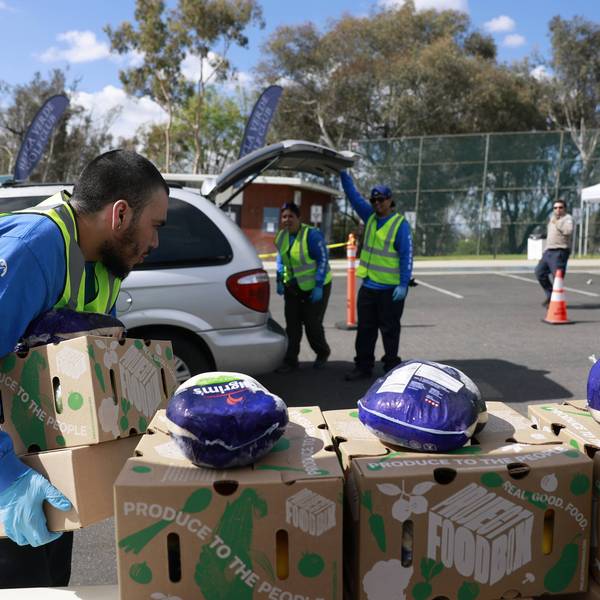
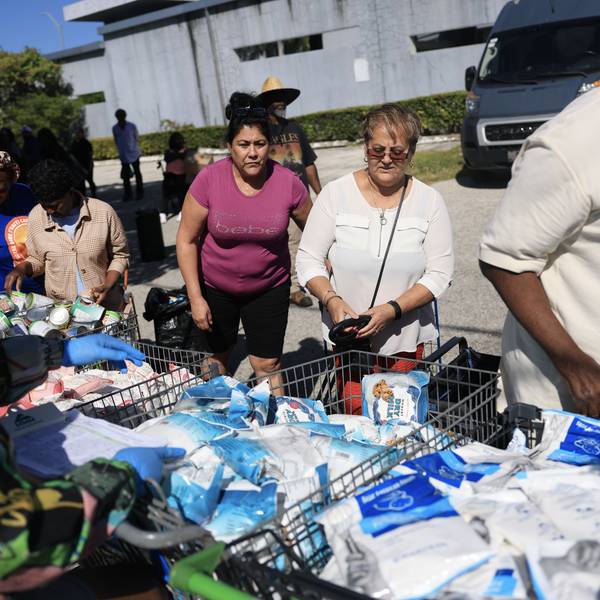
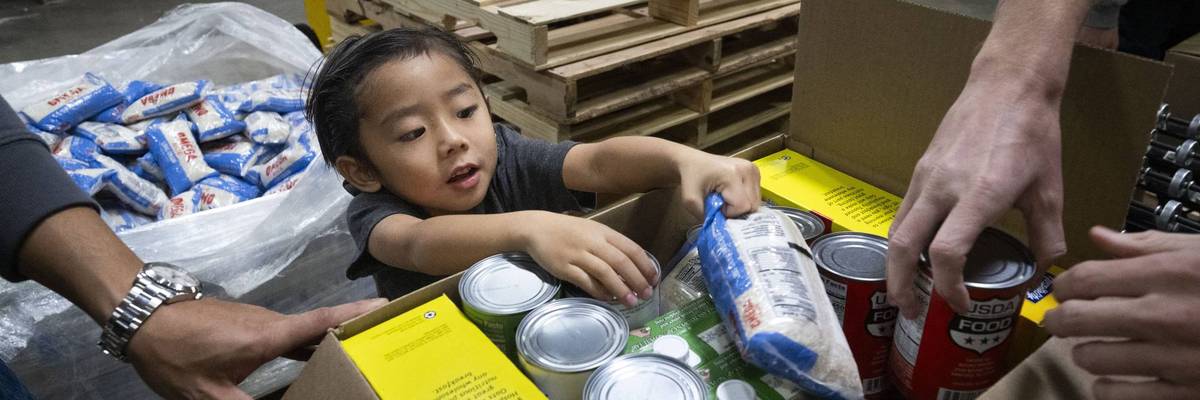
A child helps load food boxes at a food bank in Garden Grove, California on January 19, 2026.
'Grotesque and Indefensible': At Least 1.5 Million Kids Have Lost Food Aid Under GOP Budget Law
"The damage from the SNAP cuts could worsen quickly as some states are considering ending their SNAP programs entirely as soon as October 2027," warned one expert.
At least 1.5 million children have lost Supplemental Nutrition Assistance Program benefits since US President Donald Trump signed the Republican budget package into law last summer, enacting the largest cuts to federal food aid in the nation's history.
The new estimate of food aid loss among children comes from the Center on Budget and Policy Priorities (CBPP), which said Tuesday that SNAP participation was down by over 4.5 million people overall between July 2025 and April 2026. Refuting the Trump administration's narrative, the liberal think tank emphasized that the unemployment rate nationwide has been roughly flat since last July, meaning it is "very unlikely that reduced need is driving the decline in SNAP participation."
Arizona has seen the most staggering decline in SNAP participation. It has fallen 48% overall and 49% among children in the state since enactment of the Trump-GOP budget law, which instituted new work-reporting requirements for some recipients and punishments for states with elevated payment error rates. Under Republican law, states will for the first time have to pay a portion of SNAP benefit costs, which previously were fully covered by the federal government.
"Grotesque and indefensible," policy analyst Michael Linden wrote in response to the new data, noting that the Republican budget law slashed taxes for wealthy households while decimating SNAP.
Earlier this week, The New York Times published a report detailing the horror show residents have experienced as they've attempted to reenroll in SNAP after improperly losing benefits due to bureaucratic chaos stemming from the GOP law.
As states have raced to limit the massive new costs they will soon face under the law's cost shift, many eligible families are losing SNAP because they can’t navigate new bureaucratic obstacles & understaffed states can’t keep up with the added paperwork. https://t.co/DOCI3axDed pic.twitter.com/8OzMUpkLc7
— Katie Bergh (@Katie_Bergh) July 21, 2026
Sharon Parrott, CBPP's president, said Tuesday that the consequences of the massive SNAP cuts—totaling around $200 billion over the next decade—have been "stark: an ill grandmother raising teens can’t get her SNAP reinstated despite being eligible, and parents are skipping meals to save food for their children. Families who have had their food assistance taken away are turning to overburdened food banks, which cannot fill the gap."
" House Republicans are looking past this emergency in their budget legislation—while using it to help farmers struggling with high costs due to Trump’s tariffs and oil prices driven up by the war in Iran," said Parrott, referring to the GOP's new reconciliation package.
"The damage from the SNAP cuts could worsen quickly as some states are considering ending their SNAP programs entirely as soon as October 2027, when the cost shift takes effect. States unable or unwilling to pay the costs they incur will have no choice but to end the program," Parrott warned. "People across the US consistently say they want Washington to focus on affordability, especially the cost of food. Mitigating last year’s cuts to SNAP and staunching the number of families and children losing SNAP would be a good place to start."
We are at a crossroads
This country and this world are at a monumental crossroads. In a few short weeks, US voters will have an opportunity to beat back the forces of fascism and confront the billionaires who are rigging the economy, our media system, and our democracy, making it increasingly impossible for ordinary people to get by. We’re not just talking about the election. We’re talking about what must be done once these fascist elements are vanquished from power. We need a bolder set of solutions than what either major party has so far been willing to offer and a working-class movement ready to fight like hell for it. Trump didn't emerge from nowhere. The conditions that fueled MAGA authoritarianism were created by decades of radical neoliberal economic policies and a corrupt political system dominated by corporate interests. They slashed taxes on the super-rich, promising that the benefits would trickle down. They said giveaways to the corporate titans would make life more affordable for the rest of us. It was all bullshit. And when a bitter, betrayed populace searches for someone to blame, right-wing demagogues have little trouble finding scapegoats. People know when they're being lied to, but you won't hear any of this from the corporate media. Only independent journalism—powered and funded by people who believe in building a better world—can deliver truly trustworthy daily news. Our Fall Campaign is underway, and we need your help. To power our newsroom through the rest of the year, we need to raise $125,000 by midnight on October 31. So if you share our vision, please contribute whatever you can to sustain our work. |
At least 1.5 million children have lost Supplemental Nutrition Assistance Program benefits since US President Donald Trump signed the Republican budget package into law last summer, enacting the largest cuts to federal food aid in the nation's history.
The new estimate of food aid loss among children comes from the Center on Budget and Policy Priorities (CBPP), which said Tuesday that SNAP participation was down by over 4.5 million people overall between July 2025 and April 2026. Refuting the Trump administration's narrative, the liberal think tank emphasized that the unemployment rate nationwide has been roughly flat since last July, meaning it is "very unlikely that reduced need is driving the decline in SNAP participation."
Arizona has seen the most staggering decline in SNAP participation. It has fallen 48% overall and 49% among children in the state since enactment of the Trump-GOP budget law, which instituted new work-reporting requirements for some recipients and punishments for states with elevated payment error rates. Under Republican law, states will for the first time have to pay a portion of SNAP benefit costs, which previously were fully covered by the federal government.
"Grotesque and indefensible," policy analyst Michael Linden wrote in response to the new data, noting that the Republican budget law slashed taxes for wealthy households while decimating SNAP.
Earlier this week, The New York Times published a report detailing the horror show residents have experienced as they've attempted to reenroll in SNAP after improperly losing benefits due to bureaucratic chaos stemming from the GOP law.
As states have raced to limit the massive new costs they will soon face under the law's cost shift, many eligible families are losing SNAP because they can’t navigate new bureaucratic obstacles & understaffed states can’t keep up with the added paperwork. https://t.co/DOCI3axDed pic.twitter.com/8OzMUpkLc7
— Katie Bergh (@Katie_Bergh) July 21, 2026
Sharon Parrott, CBPP's president, said Tuesday that the consequences of the massive SNAP cuts—totaling around $200 billion over the next decade—have been "stark: an ill grandmother raising teens can’t get her SNAP reinstated despite being eligible, and parents are skipping meals to save food for their children. Families who have had their food assistance taken away are turning to overburdened food banks, which cannot fill the gap."
" House Republicans are looking past this emergency in their budget legislation—while using it to help farmers struggling with high costs due to Trump’s tariffs and oil prices driven up by the war in Iran," said Parrott, referring to the GOP's new reconciliation package.
"The damage from the SNAP cuts could worsen quickly as some states are considering ending their SNAP programs entirely as soon as October 2027, when the cost shift takes effect. States unable or unwilling to pay the costs they incur will have no choice but to end the program," Parrott warned. "People across the US consistently say they want Washington to focus on affordability, especially the cost of food. Mitigating last year’s cuts to SNAP and staunching the number of families and children losing SNAP would be a good place to start."
At least 1.5 million children have lost Supplemental Nutrition Assistance Program benefits since US President Donald Trump signed the Republican budget package into law last summer, enacting the largest cuts to federal food aid in the nation's history.
The new estimate of food aid loss among children comes from the Center on Budget and Policy Priorities (CBPP), which said Tuesday that SNAP participation was down by over 4.5 million people overall between July 2025 and April 2026. Refuting the Trump administration's narrative, the liberal think tank emphasized that the unemployment rate nationwide has been roughly flat since last July, meaning it is "very unlikely that reduced need is driving the decline in SNAP participation."
Arizona has seen the most staggering decline in SNAP participation. It has fallen 48% overall and 49% among children in the state since enactment of the Trump-GOP budget law, which instituted new work-reporting requirements for some recipients and punishments for states with elevated payment error rates. Under Republican law, states will for the first time have to pay a portion of SNAP benefit costs, which previously were fully covered by the federal government.
"Grotesque and indefensible," policy analyst Michael Linden wrote in response to the new data, noting that the Republican budget law slashed taxes for wealthy households while decimating SNAP.
Earlier this week, The New York Times published a report detailing the horror show residents have experienced as they've attempted to reenroll in SNAP after improperly losing benefits due to bureaucratic chaos stemming from the GOP law.
As states have raced to limit the massive new costs they will soon face under the law's cost shift, many eligible families are losing SNAP because they can’t navigate new bureaucratic obstacles & understaffed states can’t keep up with the added paperwork. https://t.co/DOCI3axDed pic.twitter.com/8OzMUpkLc7
— Katie Bergh (@Katie_Bergh) July 21, 2026
Sharon Parrott, CBPP's president, said Tuesday that the consequences of the massive SNAP cuts—totaling around $200 billion over the next decade—have been "stark: an ill grandmother raising teens can’t get her SNAP reinstated despite being eligible, and parents are skipping meals to save food for their children. Families who have had their food assistance taken away are turning to overburdened food banks, which cannot fill the gap."
" House Republicans are looking past this emergency in their budget legislation—while using it to help farmers struggling with high costs due to Trump’s tariffs and oil prices driven up by the war in Iran," said Parrott, referring to the GOP's new reconciliation package.
"The damage from the SNAP cuts could worsen quickly as some states are considering ending their SNAP programs entirely as soon as October 2027, when the cost shift takes effect. States unable or unwilling to pay the costs they incur will have no choice but to end the program," Parrott warned. "People across the US consistently say they want Washington to focus on affordability, especially the cost of food. Mitigating last year’s cuts to SNAP and staunching the number of families and children losing SNAP would be a good place to start."