

SUBSCRIBE TO OUR FREE NEWSLETTER
Daily news & progressive opinion—funded by the people, not the corporations—delivered straight to your inbox.
5
#000000
#FFFFFF
To donate by check, phone, or other method, see our More Ways to Give page.
Daily news & progressive opinion—funded by the people, not the corporations—delivered straight to your inbox.
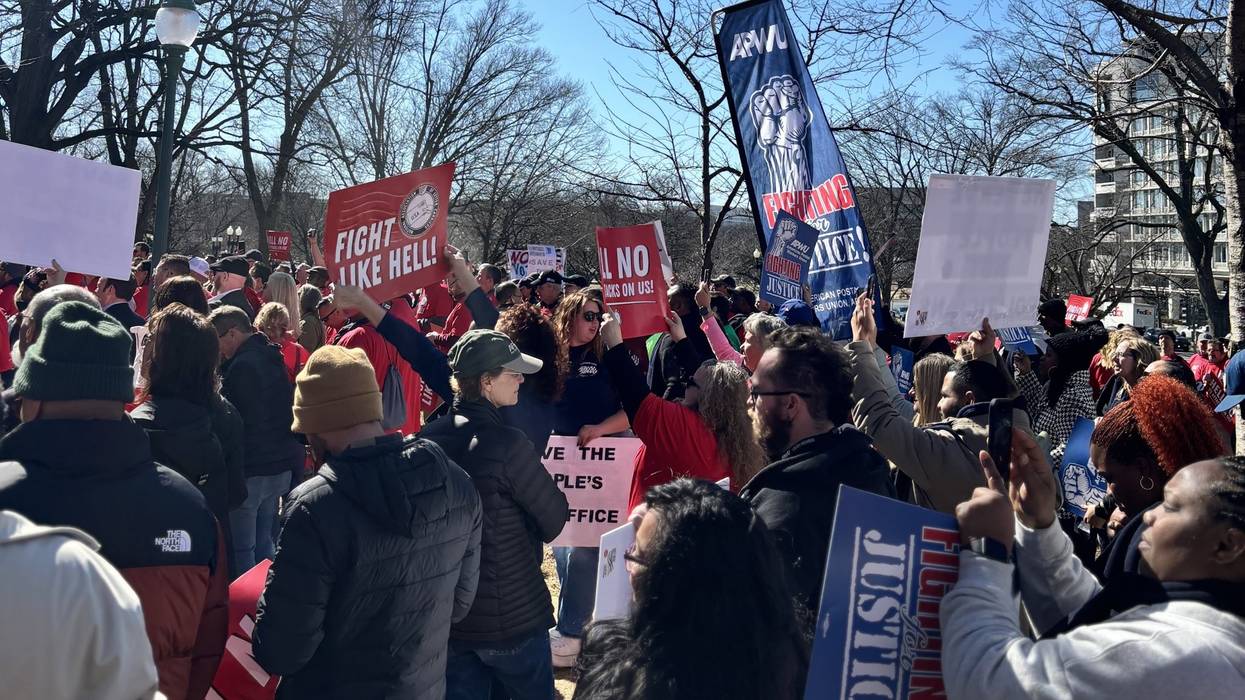
We need to hold lawmakers who make working people suffer to enrich the already wealthy accountable.
My mom worked harder than anyone I know. She wanted a good life for us. It was a hard life—I remember the Christmas she had to pawn our gifts to pay the light bill—but she made it special for us.
Now I have two kids of my own, and I want them to have every opportunity that other children have.
The landscape is tough out there. Like many Americans, I can’t afford childcare, and finding work that accommodates my need to care for my young children is hard. With inflation, the little income I have doesn’t go nearly as far as it used to.
I’m grateful to have assistance with food, housing, and healthcare through our social safety net programs.
Food programs like SNAP (also known as “food stamps”) and WIC (that’s the Special Supplemental Nutrition Program for Women, Infants, and Children) have literally saved our lives when we’ve been hungry. I wouldn’t be able to feed my children without them. And thanks to Medicaid, we have healthcare.
But I’m sick with worry about the cuts to SNAP and Medicaid that are barreling my way. The so-called “Big Beautiful Bill” slashed these programs last year so lawmakers could slash taxes for corporations and the wealthy, and some of the worst cuts will take place after this year’s midterms.
The uncertainty is causing so much stress. The first change I noticed is they cut off my eyeglasses subsidy. What’s next? Meanwhile, the cost of living keeps going up and up, outpacing wage gains for me and countless others. Our SNAP benefits cover much less than they did a year ago, and that’s before potential cuts take effect.
I feel like I’m waiting for a bomb to drop on me and my kids, and I’m not the only one.
“The average minimum-wage worker must work nearly 116 hours per week, nearly three full-time jobs, to afford a two-bedroom rental home,” the National Low Income Housing Coalition reports. That’s the truth—my own sister works three jobs and still has to live with roommates.
Lawmakers are telling us we can’t have healthcare now unless we work, even in areas with low wages. Yet those making the laws enjoy free government-socialized healthcare and high wages.
They say SNAP benefits can’t be used for a cake or soda for my child’s birthday. Yet no one would stop the wealthy from using their $1 trillion in tax cuts under the “Big Beautiful Bill” to buy their kid a yacht.
Poor and low-income people deserve to be happy too. We deserve healthcare, food, housing, and even a child’s small birthday party. It feels like we’re being punished for working regular jobs—and like lawmakers want to keep us down so we don’t fight back against this inequality.
But we are fighting back.
I’ve started attending our local town hall meetings and hearing the stories of injustice and poverty. I started volunteering with a non-profit organization in my community. I help get goods to people in need, even as I am also in need, because that’s what we do. Poor and low-income people help each other out, because we understand what it’s like to see our kids go without while we work our fingers to the bone.
But we can’t do it alone. We need to demand from lawmakers that instead of cutting our healthcare, food, and housing benefits, we need to expand them to meet the great need in this country. We need a livable wage so we can afford market rent and rising food prices.
And we need to hold lawmakers who make working people suffer to enrich the already wealthy accountable.
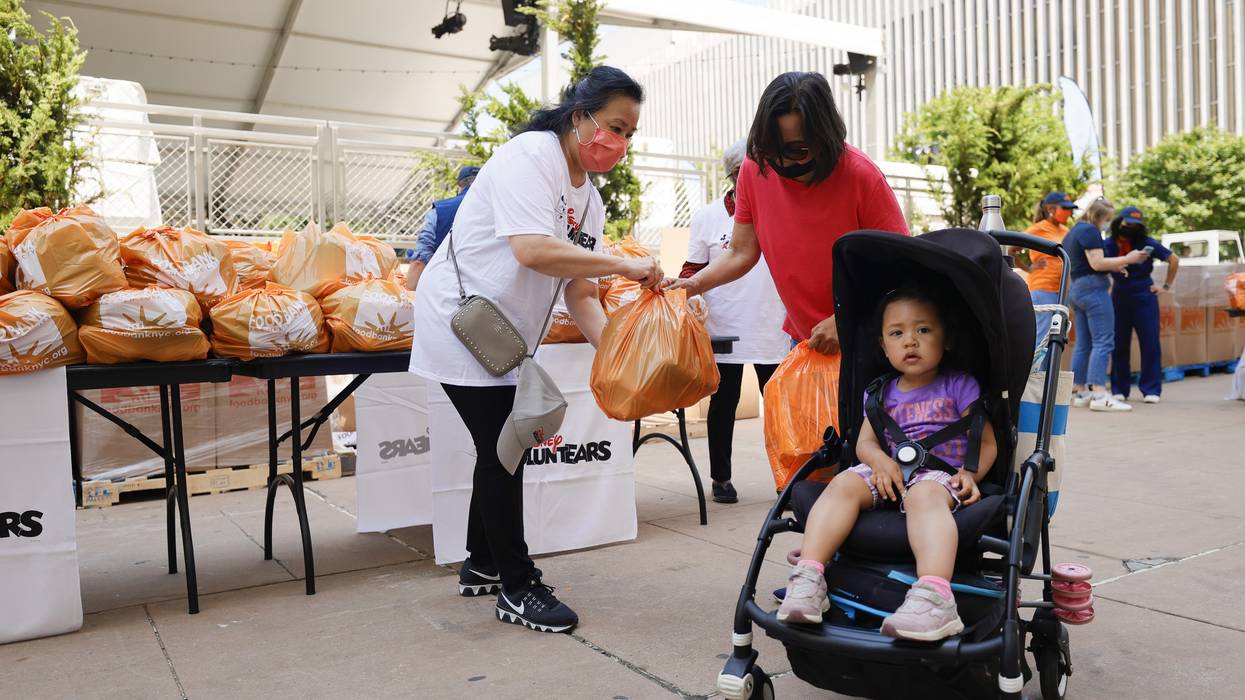
Such an immense issue as food insecurity cannot be wholly solved by one channel or one institution alone; it takes policy advocacy, community organizing, and self-reliance moving hand-in-hand.
Bread for the World recently held its annual Advocacy Summit in Washington, DC. As a board member, I was honored to be part of conversations on how public policies affect people experiencing hunger and poverty. People from all walks of life and all backgrounds united with the common goal of developing institutions that advance food security.
This moment was especially full of policy discussions as midterm season is in full swing across the country. Leaders are itching to advance on the campaign trail. They are more likely to be on the ground listening to what we have to say, so the opportunity is ripe to share what we care about. We can ask them what they will do to reduce hunger and improve food security for those in poverty. We can push for accountability.
But first, we must understand the current policies and context today that create and maintain food apartheid.
As of the 2017 Census, Black farmers were reported to own just 0.32% of US farmland, a number which has been continuously decreasing over the past century. They are denied grants disproportionately to their white counterparts and earn approximately one-seventh of the income that their white counterparts bring in. Land ownership is steadily being stripped from us.
Hunger is not inevitable. It is possible to make change.
In the last year and a half, the Supplemental Nutrition Assistance Program (SNAP) has been on the chopping block many times. Since July of 2025, well over 3.5 million people have been pushed out of the program as a result of cuts in the federal budget. Newly enacted work requirements unjustly require people to qualify themselves to eat.
SNAP’s program for Women, Infants, and Children (WIC) is facing even further underfunding. Recent cuts will take away over $141 million in funds to feed over 5 million new mothers and young children—particularly funds designated for fresh fruits and vegetables. They are literally taking food out of the mouths of children.
This says nothing of the centuries of racism, blocked resources, and stolen land that brought us here today. It barely scratches the surface of all the factors influencing security today. We are facing hateful rhetoric; regressive social policies; global instability; and widespread threats to Black, brown, and immigrant communities. All this uncertainty makes us feel vulnerable. It makes food security and, indeed, any economic stability more tenuous.
There is no question that we need change; now is the moment to demand it from our leaders. Just as there are policies that harm access to nutritious food, there are certainly policies that can expand access.
We can remove work requirements for SNAP that pick and choose who gets to eat without regard for what they are going through. We can expand funding and access so that no one is left without nutritious food to sustain them. We can enact reparations to return land and opportunities to Black communities, and we can support the Black farmers and organizations working to feed people.
But, as we raise our voices for policy change, we must not overlook actions in our own neighborhoods.
I will always fight for a more representative government which supports the needs of our people. However, the government is still imperfect to say the least; we cannot wait for them while hunger runs rampant. We can take matters into our own hands.
Community organizing and self-reliance offers security especially when our government fails us; this is what we work for at The Black Church Food Security Network. We meet people where they are. We grow the food ourselves and distribute it throughout the community. We work together to build autonomy within our own communities.
Such an immense issue as food insecurity cannot be wholly solved by one channel or one institution alone. It takes policy advocacy, community organizing, and self-reliance moving hand-in-hand. Progress is possible when we approach it as a united front.
As Bread for the World reminded us through the advocacy summit, hunger is not inevitable. It is possible to make change. If we come together to uplift our communities and advance essential policies, we can create an environment where people are not only fed, but they are in a better position to feed themselves.

"Without congressional action to reverse the SNAP cuts, children will lose critical food benefits that help families keep hunger at bay."
Millions of children across the United States are at risk of losing access to free school meals due to the unprecedented federal nutrition aid cuts that President Donald Trump signed into law last summer.
The 2025 Republican budget law enacted the largest cuts to the Supplemental Nutrition Assistance Program (SNAP) since its inception more than six decades ago. The cuts have already pushed SNAP enrollment to its lowest level in 17 years, with roughly five million people—including 1.5 million kids—losing aid. Because school districts across the US use SNAP participation rolls to automatically sign children up for free school meals, kids who lose federal aid are at risk of also losing access to free school-time meals.
“Cuts to SNAP are not going to stop at the grocery store,” Clarissa Hayes, deputy director of child nutrition programs and policy at the Food Research & Action Center (FRAC), told Stateline earlier this week. “They really are going to threaten children’s access to school meals, which is obviously going to increase hunger at home and in the classroom, and is going to have that negative ripple effect across children’s health and academic performance.”
FRAC estimated in a recent report that a record 55,362 schools nationwide "offered breakfast and lunch to all their students through the Community Eligibility Provision (CEP)" during the 2025-2026 school year.
But the number of children who are directly certified for free school meals determines schools' eligibility for CEP as well as the federal reimbursement schools receive under the program, meaning huge declines in SNAP participation could result in schools losing eligibility for CEP or leave them unable to afford it.
Students who are no longer automatically enrolled in free school meal programs will have to apply, an often confusing process that requires family income documentation and other paperwork hurdles.
“Without congressional action to reverse the SNAP cuts, children will lose critical food benefits that help families keep hunger at bay, and the progress we have made on Healthy School Meals for All could unravel,” said Crystal FitzSimons, the president of FRAC, which estimates that nearly 28 million children attended a CEP school during the 2025-2026 school year.
A survey released last month by the No Kid Hungry campaign found that close to 60% of parents said "their child wouldn’t have enough to eat if it weren’t for the meals they receive during the school day," underscoring the potentially devastating impact of a large-scale loss of access to school breakfast, lunch, and snacks.
"An overwhelming majority (89%) indicate that school meals take some pressure off their family when it comes to feeding their children," the campaign said.
Democratic members of Congress are increasingly sounding the alarm over the 2025 GOP budget law's impact on school meals as the new school year begins.
US Rep. Raja Krishnamoorthi (D-Ill.) wrote in a letter to the US Department of Agriculture last week that "no child should lose access to breakfast or lunch at school because a parent was unable to satisfy a new bureaucratic requirement for food assistance."
"And no school should be forced to jeopardize its meal program because federal policy has made it harder to identify children who qualify for assistance," Krishnamoorthi added.
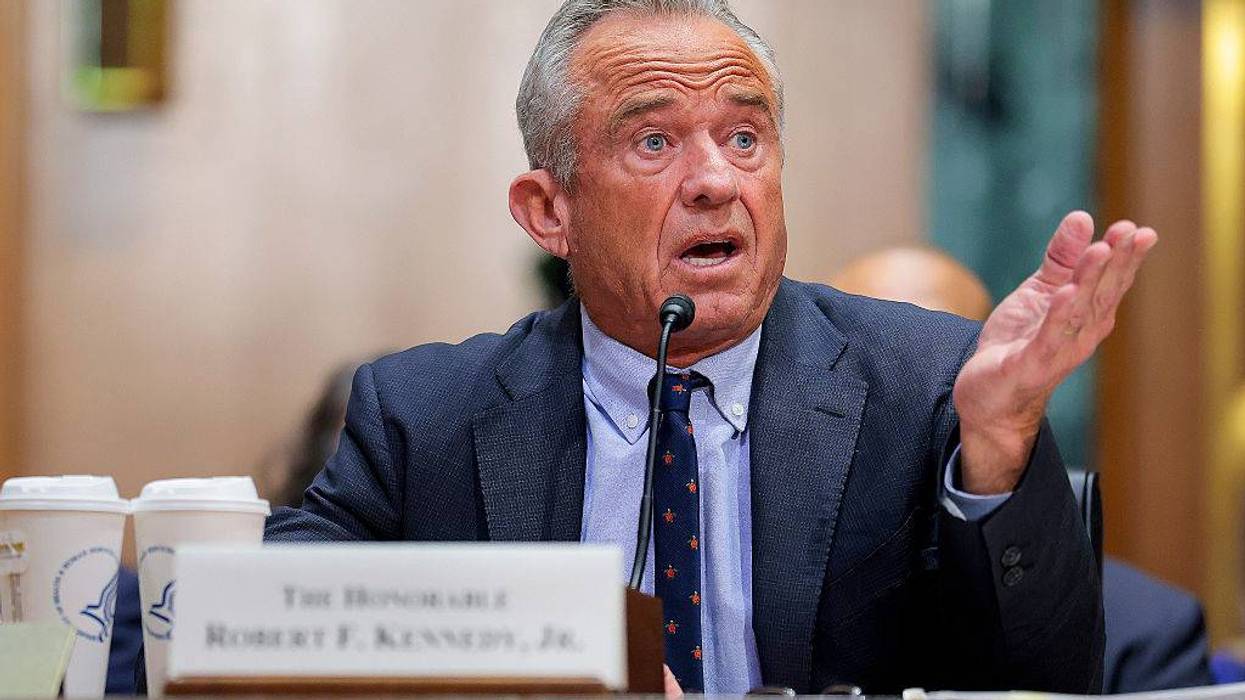
Robert F. Kennedy Jr., the head of the US Health and Human Services Department, said he doesn't think the Republican Party's unprecedented cuts to food aid would have "that much effect."
US Health and Human Services Secretary Robert F. Kennedy Jr. on Wednesday dismissed the impact of massive food aid cuts signed into law last summer by President Donald Trump, saying he doesn't believe the cuts will have "that much effect" as new data showed at least 5 million people have lost assistance so far—including roughly 1.5 million children.
Speaking at a news conference on children's nutrition in Florida, Kennedy falsely claimed that "the only people kicked off of" the Supplemental Nutrition Assistance Program (SNAP) under the GOP budget law signed by Trump "were people who were not eligible for it," either "because their income is too high or because they were illegal aliens."
Kennedy's remarks came as a new analysis by the Center on Budget and Policy Priorities (CBPP) found that SNAP enrollment nationwide has fallen to a 17-year low following enactment of the Trump-GOP budget law, which will cut the program by around $190 billion over the next decade, enact stricter work reporting mandates, and require states to contribute a portion of benefit costs for the first time.
"'Not much effect?' Based on available data from 25 states, we estimate that well over 1.5 million kids nationwide have lost SNAP in the wake of the unprecedented cuts in the Republican reconciliation law," Katie Bergh, a policy analyst at CBPP, wrote in response to Kennedy's remarks. "Many of those kids and their families lost SNAP despite still being eligible."
Watch Kennedy's comments:
Q: “Are either of you concerned that the reduction in funding for SNAP and the reduction in eligibility for SNAP will reduce access to food for children and families?”
Sec. Kennedy: “I don't think it's gonna have that much effect.” pic.twitter.com/1h97NP6rcN
— BulwarkClips (@BulwarkClips) August 26, 2026
News reports, anecdotal accounts from impacted families, and expert assessments contradict Kennedy's insistence that only those who were no longer eligible for SNAP due to income or immigration status have lost benefits. An explosion of red tape due to the new work reporting requirements imposed by the Trump-GOP budget law has made it more difficult for eligible beneficiaries to continue receiving SNAP, forcing many to seek aid from food banks and take desperate measures—such as skipping meals and doses of medication—to make ends meet.
CBPP warned that the impacts of the cuts are likely to intensify once the budget law's provision shifting benefit costs to states takes full effect next year.
"The magnitude of the cost shift and the urgency surrounding error rates may incentivize states to take drastic measures to reduce their payment error rates quickly and cut program costs, even if it means delaying or improperly denying benefits to eligible people," the think tank said on Wednesday. "We’re likely seeing some of those initial effects in SNAP participation data."
A report published last month by a pair of food policy experts argued that the unprecedented assault on SNAP undercuts Kennedy's so-called "Make America Healthy Again" initiative, which purports to place nutrition "at the center of health."
“If we are serious about improving Americans’ health, we need policies that make healthy food more accessible, not less,” said Priya Fielding-Singh of George Washington University’s Global Food Institute. “Cutting off food assistance for millions of families undermines MAHA’s stated goals of improving diet quality and preventing chronic disease. Food security and public health go hand in hand.”
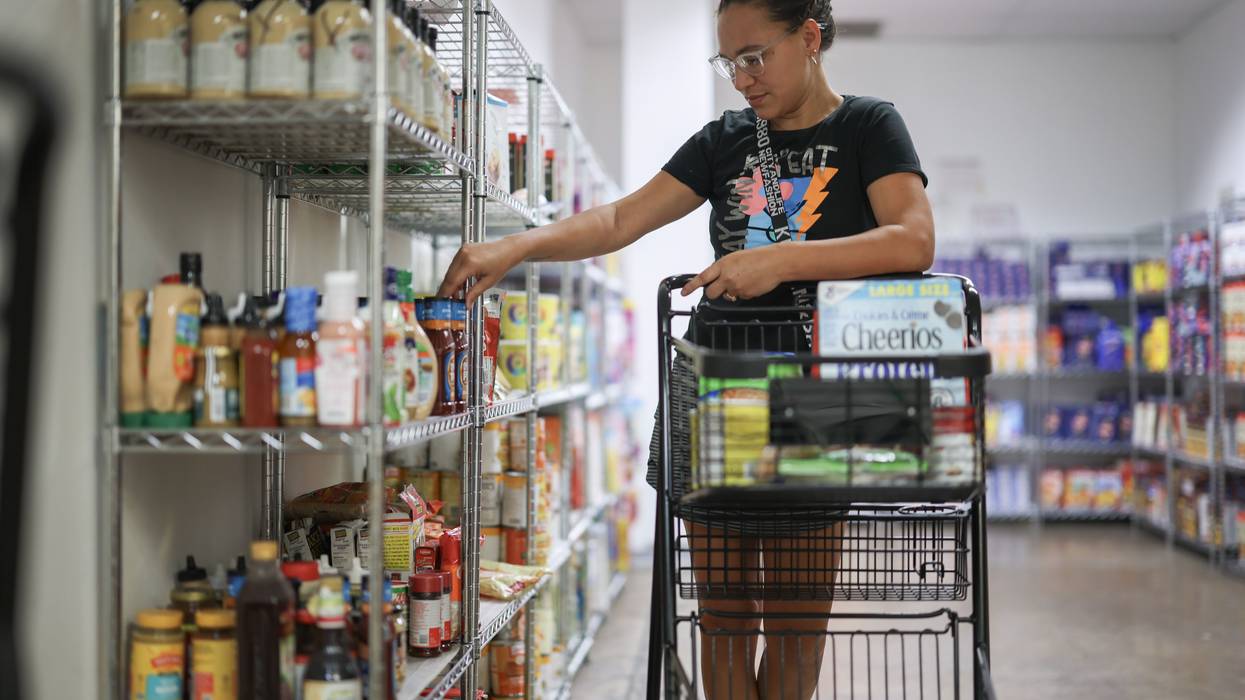
"These cuts are not filtering out 'waste, fraud, and abuse'... they are parents deciding between paying the electric bill and putting food on the table, or skipping meals."
Participation in the Supplemental Nutrition Assistance Program is now at its lowest point in 17 years thanks to cuts made in the Republican Party's One Big Beautiful Bill Act.
The Center for Budget and Policy Priorities (CBPP) on Wednesday published the latest update to its series of reports tracking the impact of SNAP cuts, and it found that there are roughly 5 million fewer people participating in SNAP thanks in large part to the cuts made in the 2025 GOP budget law.
Since the law's passage, enrollment in SNAP has decreased in every US state except Alaska.
While enrollment has fallen by an average of 12% across the US over the last year, eight states have seen participation plummet by 20% or higher. Arizona has seen the largest overall drop in participation, with 45% fewer people enrolled in the program over the last year.
"The declines started before the harmful 2025 Republican reconciliation law’s enactment, suggesting factors at play in addition to that law," CBPP explained. "But in almost all states, declines in SNAP participation accelerated after the 2025 Republican reconciliation law, and we expect that trend to continue."
CBPP also projected participation would fall even further in the next year given that the biggest changes made to SNAP funding won't fully kick in until 2027, when "most states will have to pay between 5% and 15% of SNAP benefit costs, totaling hundreds of millions of dollars a year in many states."
"The amount a state will have to pay will be based on current error rates, factoring in errors that states are making today," CBPP emphasized. "The magnitude of the cost shift and the urgency surrounding error rates may incentivize states to take drastic measures to reduce their payment error rates quickly and cut program costs, even if it means delaying or improperly denying benefits to eligible people."
CBPP's latest report on SNAP cuts comes after ParentsTogether Action released a survey of SNAP beneficiaries on Tuesday finding that two-thirds of families who rely on the program have already seen benefits decrease over the last year.
The survey shows 75% of SNAP beneficiaries also report that affording food is one of their biggest economic challenges, echoing earlier surveys showing that buying groceries has become a major source of stress for Americans overall.
SNAP recipients described to ParentsTogether Action how the SNAP cuts have impacted their finances.
"They took over $120 off our SNAP," said a Kansas mother named Brandi. "We have a hard time keeping up with bills. I get [Supplemental Security Income], and that is my only income for my daughter and myself."
An Oregon woman named Amanda, meanwhile, described seeing her benefits cut by more than half after she found a job.
"We were receiving $400 a month, but after I reported my new income and reapplied, our benefits dropped to just under $200," she said. "We also didn’t receive any benefits for one month during the process."
Ailen Arreaza, executive director of ParentsTogether Action, said the SNAP cuts are forcing families to make an "impossible choice" on whether to prioritize paying for food, healthcare, or their utility bills.
"These cuts are not filtering out 'waste, fraud, and abuse' like the administration would like us to believe," Arreaza explained, "they are parents deciding between paying the electric bill and putting food on the table, or skipping meals so their kids can eat. Families should not have to make these choices."

"We are feverishly fundraising and talking to the board about the need to provide grants, but in reality, we are limited," said the executive director of the Central Illinois Food Bank.
Food banks across the US, from New Mexico to Oregon to Illinois, are seeing massive increases in demand as the unprecedented federal nutrition aid cuts that President Donald Trump signed into law last summer take hold, stripping benefits from millions of Americans amid elevated grocery costs—a recipe for disaster.
"Our freezers are getting empty," Eddie Nelson, the manager of a food bank in Dallas, Oregon, told an Oregon Public Broadcasting reporter earlier this week. The outlet noted that the line for the food bank "stretches out the door and around the corner at the end of the month, when federal food stamp benefits dry up and families struggle to fill their pantries."
An estimated 4.5 million people, including roughly 1.5 million children, have lost Supplemental Nutrition Assistance Program (SNAP) benefits since the Trump-GOP budget law took effect last year, enshrining around $200 billion in cuts—the largest in the program's history—as well as new work reporting requirements that are expected to put millions more at risk of losing aid.
The large-scale loss of benefits and expectations of even more hardship in the near future have heavily strained local food banks.
Pam Molitoris, executive director of the Central Illinois Food Bank, said during a panel discussion last month that his organization "cannot absorb" the damage from the federal nutrition cuts, noting that "we are one meal to every nine meals provided by SNAP."
"We are feverishly fundraising and talking to the board about the need to provide grants, but in reality, we are limited," said Molitoris.
Roadrunner Food Bank in Albuquerque, New Mexico said it has seen a massive increase in demand this year as the combination of aid cuts and a worsening cost-of-living crisis forces families to seek out charities for assistance. More than 18,000 people lost SNAP benefits in New Mexico between July 2025 and April 2026, according to a tracker maintained by the Center on Budget and Policy Priorities.
“You could look at it like SNAP is the first line of defense against food insecurity in our country; food banks are the last line of defense," Jason Riggs, Roadrunner's director of advocacy, said earlier this week. "So the idea is we need both."
Feeding America, a nonprofit network of hundreds of food banks, says the Trump-GOP cuts to SNAP equate to up to 9 billion meals lost per year—"more than the entire Feeding America network of food banks, meal programs, and church pantries provided last year."
In the face of growing evidence of the damage their cuts have inflicted on communities across the US, Republican lawmakers have shown no inclination to seriously mitigate the impacts—much less reverse the funding reductions. GOP senators are currently working to advance a farm bill that would only delay for one year the Republican budget law's potentially catastrophic shift of a significant portion of SNAP costs to states.
Earlier this month, the Republican farm legislation failed to advance out of committee due to Democratic opposition and the absence of Sen. Mitch McConnell (R-Ky.).
"While it is a step in the right direction to give states more time to implement the benefit cost-share, increasing the SNAP cost for states in exchange for a one year delay only increases the unprecedented burden on states. Children will suffer as a result," said George Kelemen, senior vice president of the No Kid Hungry campaign. "Already, 4.5 million people, including over a million kids, have lost access to SNAP over the past year."
"Those families are now missing out on the nutritious food SNAP provides," Kelemen added, "and sadly that number will only grow under this proposal."

It cannot be cut into pieces without harming land and people.
Wanìshi means thank you in the Lenape language. This is the lyrical word we recently had the privilege of learning from a principal emissary from the Piscataway Indian Nation, and experiencing together. Wanìshi for the quiet moments between hard conversations and watching sunsets, where we shared in the spirit of collaboration, together with 18 other thinkers and doers who are deeply troubled by the trajectory of public agriculture policy, and its historically principal vehicle, the Farm Bill.
We embraced and shared in this collaborative mindset over the three days we spent with the America the Beautiful for All Coalition’s Legacy Lands workgroup in Maryland. The Farm Bill was one of the issues we discussed. A bill currently being treated by politicians as technical, as boring, as someone else's problem. When in our realities, it is none of those things. The Farm Bill decides who eats and who doesn't. It decides who is healthy and whose health is negotiable.
Between us, we have spent a combined five decades serving the communities this bill affects: rural families losing food, farmworkers losing protections, Black farmers losing land, tribal nations losing voice. So at that convening, and with this piece, we are expressing plainly a reality every farmer, rancher, and all of us who steward land intimately know. That land is a body and must be nourished. That we cannot cut it into fundable pieces and expect the pieces to bleed separately. The Farm Bill is a health bill. It cannot be cut into pieces without harming land and people. We do not view the content of the draft as a public health crisis because we have been trained to view it as agricultural policy. But it is, in fact, a public health crisis, and that crisis has a physical address: every community where conservation funding has been cut and every family living downstream of the farms and lands that lost it.
The One Big Beautiful Bill Act, signed on the Fourth of July last year, cut $187 billion from the Supplemental Nutrition Assistance Program (SNAP). More than 4.5 million people have lost their food assistance since then. In rural counties where the nearest grocery store is a 40-minute drive and the nearest doctor is farther, losing SNAP is not a policy change. It is a sentence. It means a child eating less, and then eating worse, and then showing up in an emergency room that is itself understaffed and underfunded. The Senate Farm Bill draft does not restore a single dollar.
That land is a body and must be nourished. That we cannot cut it into fundable pieces and expect the pieces to bleed separately. The Farm Bill is a health bill. It cannot be cut into pieces without harming land and people.
Both versions of the new bill cut funding for the conservation programs that keep farmland productive and water clean. The Senate draft alone slashes nearly $2 billion from EQIP, the program that helps small farmers put cover crops in, manage nutrients, and protect water. When those programs shrink, the runoff increases. Babies, adults, pets, and wildlife in the communities downstream all drink that water.
The agency responsible for delivering conservation to farmers is disappearing. The Natural Resources Conservation Service (NRCS) lost nearly a quarter of its staff in one year. One hundred and forty-one counties went from having NRCS employees to having none. These were the people who helped farmers manage nutrients, reduce fertilizer runoff, and protect water. In their absence, nitrate from agricultural runoff enters rural drinking water unchecked. Research links nitrate contamination to colorectal cancer, thyroid disease, and birth defects in newborns, at levels below what the Environmental Protection Agency considers safe. The communities drinking that water are the same small rural towns that just lost their NRCS offices. A beginning farmer in southern Georgia or a small rancher in northern New Mexico picks up the phone and no one answers. Their neighbors downstream drink what runs off the fields no one is helping them manage.
For Latino communities across the rural West, acequias, the community irrigation systems that have sustained families for centuries, depend on the conservation programs this bill is cutting. A farmer in the San Luis Valley who has irrigated land the way her family has for six generations does not experience a conservation cut as a line item. She experiences it as a ditch that doesn't flow, a garden that doesn't grow, a family that buys what it used to harvest.
Black families once farmed 16 million acres in this country. Today they hold barely over 1%. Heirs' property, land passed down without clear title, is one of the mechanisms through which that loss continues: A single partition sale can erase a century of family ownership in an afternoon. The families who lose their land don't just lose wealth. They lose the foundation for food sovereignty, the one asset that could have fed a family, a neighborhood, a generation. A deed problem becomes a health problem, passed down the same way the land was supposed to be.
As we watch this Farm Bill, we carry with us the word our Piscataway colleague shared. Wanìshi. Thank you. We offer it now in the spirit of collaboration.
We will offer it again, in the spirit of gratitude, when Congress writes this bill for all of us.
We are waiting.
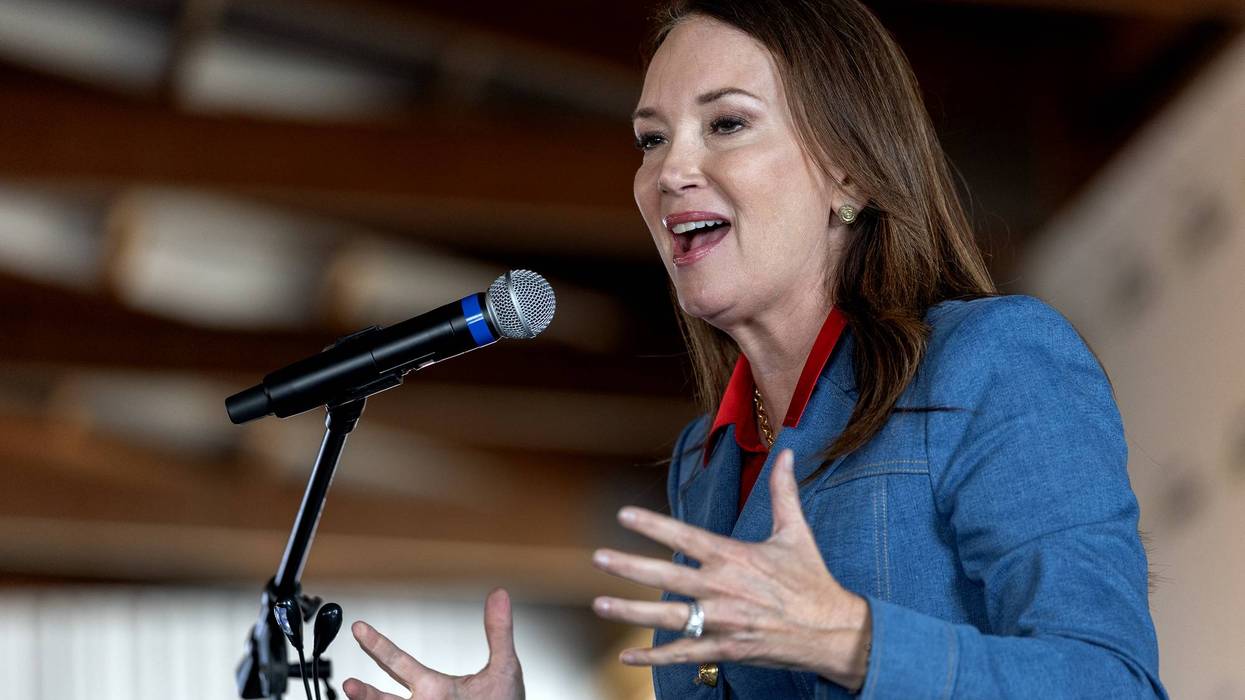
"The immense hardship these families are now facing is not, in fact, 'a pretty big win,'" said one policy expert.
US Agriculture Secretary Brooke Rollins bragged on Tuesday that the Trump administration has now "moved 5 million people off food stamps," an outcome that she hailed as a significant victory even amid mounting reports of families with children struggling to afford groceries after losing federal assistance.
"For those of us that love work and celebrate work and want people to work and not be on food stamps, it’s a pretty big win," Rollins said during an event in Minnesota, referring to the massive reduction in Supplemental Nutrition Assistance Program (SNAP) enrollment since passage of the 2025 Republican budget law, which enacted the largest food aid cuts in US history and expanded SNAP work requirements.
The Center on Budget and Policy Priorities (CBPP), a liberal think tank, has estimated that more than 4.5 million people have lost SNAP benefits since President Donald Trump signed the GOP budget package into law last summer. That total includes at least 1.5 million children.
Rollins: "For those who love work and celebrate work and want people to work and not be on food stamps, it's a pretty big win when we've moved 5 million people off food stamps, y'all." pic.twitter.com/kUrqVrvahI
— Aaron Rupar (@atrupar) August 4, 2026
Contrary to Rollins' claim that people are moving off SNAP because they found strong employment, CBPP noted in a recent analysis that "unemployment nationwide has been flat at about 4 percent since July 2025."
"At best, it’s down in 13 states and the District of Columbia by less than 1 percentage point," the think tank observed. "It’s very unlikely that reduced need is driving the decline in SNAP participation."
Katie Bergh, a senior policy analyst at CBPP, responded to Rollins' latest boast about large-scale loss of SNAP benefits by pointing to a July New York Times story featuring Dee McDonald, a cancer survivor and caregiver of three kids who recently lost federal assistance.
"The immense hardship these families are now facing is not, in fact, 'a pretty big win,'" Bergh wrote on social media.
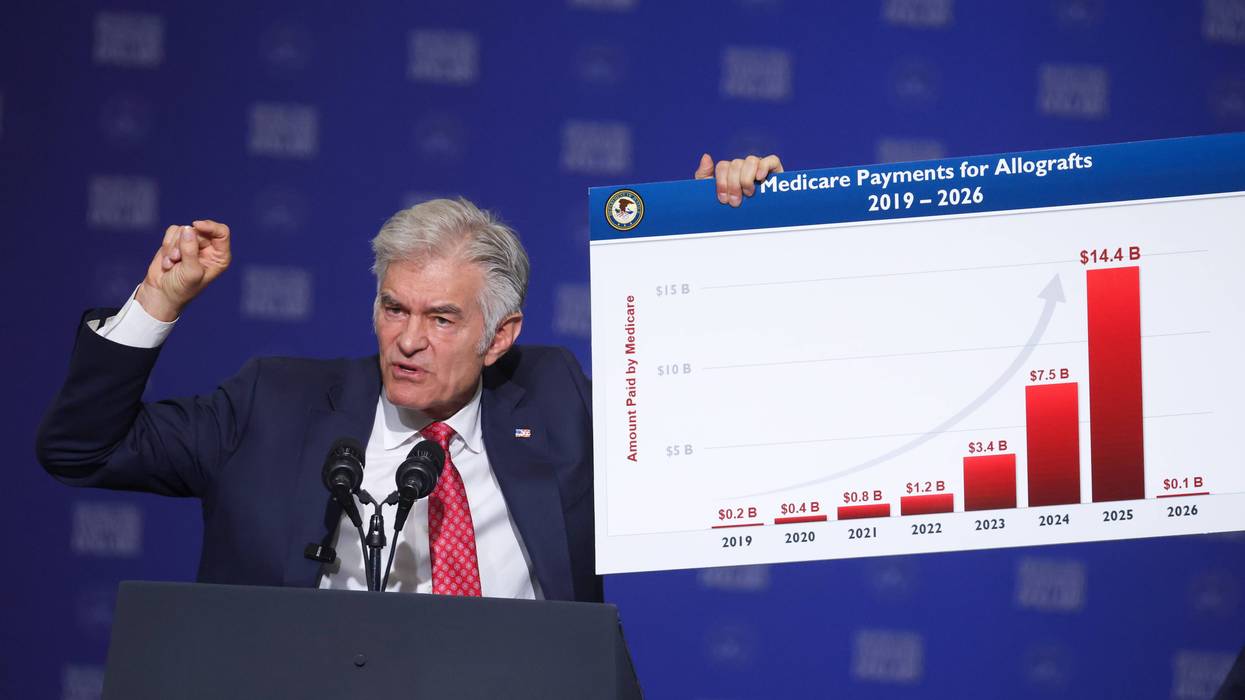
Under a new policy the administration is defending in court, low-income people with cancer, HIV, Parkinson's, and other life-threatening illnesses must prove they're too sick to work or risk losing their health insurance.
A federal judge on Thursday denied a request by more than two dozen Democratic states to halt a Trump administration policy announced last month that would require Medicaid recipients with terminal diseases to prove they are too sick to work in order to be exempt from new work requirements that go into effect this coming January.
While introducing over $1 trillion in tax cuts for the wealthiest 1% of Americans, last year's massive GOP tax and budget bill also imposed new 80-hour-per-month work requirements that states must implement for Medicaid expansion recipients, who receive government-subsidized insurance coverage at or below 138% of the poverty line.
The law specified that those who are “medically frail or otherwise have special medical needs” are excluded from the work requirement, and specifically listed people with a “serious or complex medical condition.” But it remained unclear what exact conditions met these criteria.
Earlier this month, the Centers for Medicare and Medicaid Services (CMS) introduced a new rule stating that even if a person receives a terminal diagnosis for a disease like cancer, HIV/AIDS, or Parkinson's, that is still not enough for them to be exempt from the work requirements.
Beginning on January 1, 2028, it says they must also demonstrate to states that their condition “significantly impairs” their ability to meet the work requirement.
Democratic attorneys general in 25 states and the District of Columbia filed a preliminary injunction over the rule late last month, arguing that CMS had rewritten the law to introduce a vague and needlessly restrictive new hurdle that vulnerable people will face in obtaining desperately needed care.
“This is one of those cases where it’s really hard to overstate how dire the consequences could be,” North Carolina’s Democratic attorney general, Jeff Jackson, told Politico. “You’re going to have 50 states doing 50 different things, and we’re all going to have to create a whole new bureaucracy... You are talking about a lot more paperwork, more evaluations, more doctor visits, and a lot more work for doctors themselves.”
The Democratic AGs argued that implementation of the work requirements should be paused because they lacked the staff or capacity to meet the timeline set by CMS, which requires states to communicate to enrollees how they'll be affected by the changes by the end of August.
US District Judge Richard Stearns on Thursday denied their initial request to immediately halt the implementation of the requirements while the lawsuit proceeds, but also did not rule on the lawsuit's merits, which are scheduled to be decided before the requirements go into effect on January 1.
Several medical associations, including the American Medical Association, the American College of Physicians, and the American Academy of Pediatrics, have come out against the rule, arguing that it would have dire consequences for people who suffer from severe illness.
"One of the most significant factors in whether someone survives a cancer diagnosis is whether they have health insurance coverage," Lisa Lacasse, president of the American Cancer Society Cancer Action Network, explained in June.
"The new restrictions link the definition of medical frailty to a person’s ability to work," she continued. "This would mean cancer patients and survivors who are suffering from debilitating side effects of the disease or treatment would have to officially prove they can’t work, in a process that is likely to be difficult and take a long time."
The nonpartisan Congressional Budget Office has projected that over the coming decade, changes to healthcare policy introduced by Republicans would increase the number of uninsured Americans by about 11.8 million.
Around 5.7 million of them are projected to be Medicaid recipients who either do not meet the 80-hour work requirement or are otherwise eligible but tripped up by one of the newly imposed paperwork hurdles.
Taya Graham and Stephen Janis argued earlier this week in a piece for The Real News Network that eligible people losing coverage is not an unfortunate side effect of the law, but a goal of the Republicans who passed it, who sought a way to thin the ranks of those who qualify for Medicaid without having to take the politically unpopular step of actually clawing back benefits.
They wrote that what has happened to recipients of the Supplemental Nutrition Assistance Program (SNAP) illustrates how burdensome these new requirements may become.
As The New York Times reported earlier this month, in Arizona, 440,000 people have already been dropped from SNAP after it enacted a formidable regime of paperwork for low-income recipients to prove eligibility, including requiring some people with panhandling income to obtain documentation from donors who drop them a buck on the street.
"If this is what people receiving SNAP benefits have been subjected to," Graham and Janis wrote, "imagine what’s going to happen to people who will need to navigate the new [Medicaid] requirements while struggling with a debilitating or terminal illness."
Medical issues are a leading cause of bankruptcy in the US. According to one study, over 4 in 10 cancer patients over 50 had depleted all their assets within two years of diagnosis.
Melanie D’Arrigo, a campaigner for single-payer healthcare in New York, said that President Donald Trump "cut cancer research, cut healthcare,” and with new Medicaid restrictions, “wants to make sure Americans continue to work as they go broke battling cancer.”
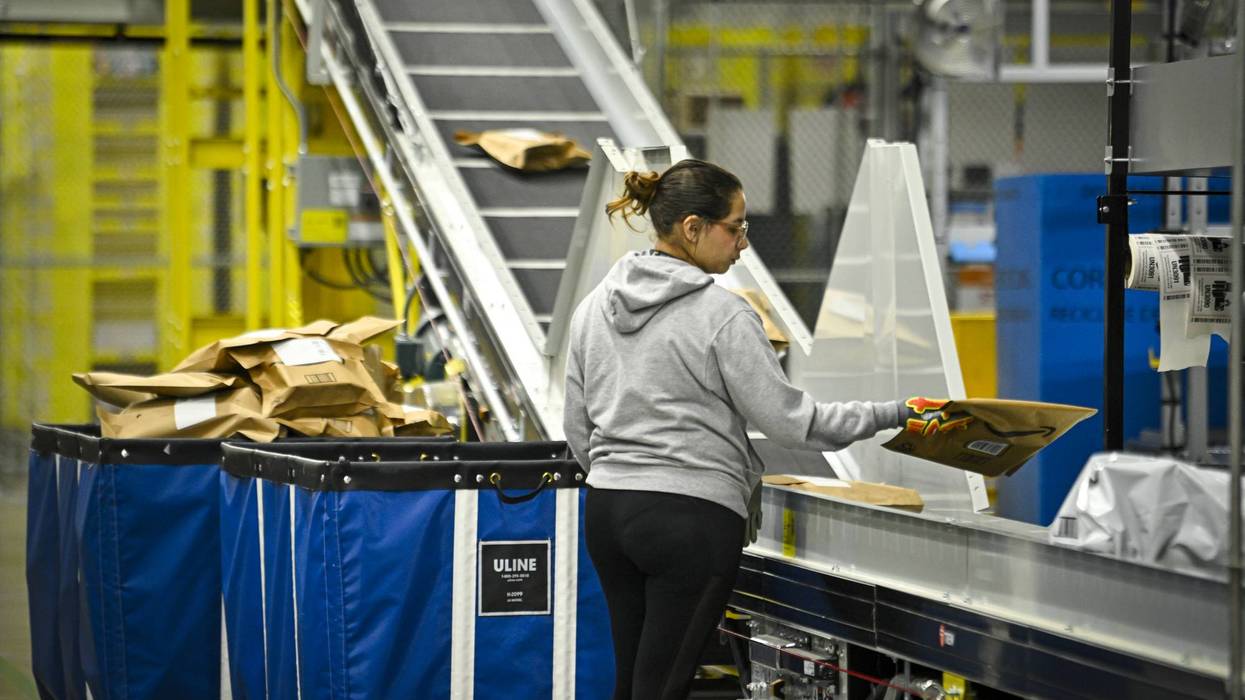
"No one who works for a company making billions in profits should be living in poverty," said Sen. Bernie Sanders.
US Sen. Bernie Sanders recently commissioned a government analysis of federal aid programs and how much employees of some of the largest and most politically influential corporations in the country are relying on food and healthcare benefits due to the chronically low wages paid by Amazon, Walmart, and other firms.
On Wednesday, the nonpartisan Government Accountability Office (GAO) released the results of its research, revealing trends that Sanders (I-Vt.), a longtime critic of economic inequality and poverty wages and the ranking member of the Senate Health, Education, Labor, and Pensions Committee, called "beyond unacceptable."
Six years after the GAO first analyzed low-wage workers' use of Medicaid and the Supplemental Nutrition Assistance Program (SNAP), the report found that the number of Amazon employees who required federal assistance has nearly tripled since 2020, despite the fact that the e-commerce giant has increased its annual profits from $11.59 billion to $77.67 billion in that time.
The analysis focused on 11 states—Arkansas, Georgia, Indiana, Maine, Massachusetts, Nebraska, North Carolina, Oklahoma, Rhode Island, Tennessee, and Washington—whose combined populations comprise about one-fifth of the US population.
Last year, 12,346 of Amazon's employees needed SNAP assistance, for which households must earn less than 130% of the federal poverty level to qualify. A family of three would have to make around $35,000 or less to qualify for the program. Millions of people were shut out of the crucial program by the One Big Beautiful Bill Act (OBBBA), which required states to impose strict limits on eligibility.
More than 11,000 Amazon workers also relied on Medicaid last year in the states surveyed.
"Corporations underpay workers, don't provide healthcare, and outsource core worker needs to the government," said the labor-focused media organization More Perfect Union.
While Walmart topped the list of corporations whose employees used Medicaid benefits, as it did in 2020, its share of workers who rely on the two federal programs went up only slightly over the five-year period, while Amazon's share grew significantly.
Amazon spokesperson Rachael Lighty told The Washington Post—owned by billionaire Amazon founder Jeff Bezos—that the company's hiring spree since the coronavirus pandemic contributed to its increased share of Medicaid and SNAP beneficiaries, and noted that Amazon offers "part-time options for those who want them," which makes more employees eligible for the benefits.
But the Post noted that many people who may want full-time employment and the higher wages it offers can only find part-time work. The Federal Reserve Bank of St. Louis has found an increase in part-time employment since the pandemic.
Sanders noted that Walmart increased its annual profits from $14.88 billion in 2020 to $21.89 billion in 2025, but the number of workers who relied on Medicaid grew by 55% to more than 16,000 people in the 11 states sampled by the GAO.
“American taxpayers should not be forced to subsidize the starvation wages of large corporations like Walmart and Amazon," said the senator. "These corporations are making record-breaking profits, paying their CEOs exorbitant compensation packages, and spending billions of dollars on stock buybacks to enrich their wealthy shareholders. It is beyond unacceptable that these corporations, owned by some of the wealthiest people on the planet, are receiving corporate welfare from the federal government."
Rideshare and delivery apps like Uber and DoorDash, which were not significantly featured in the GAO's 2020 report, are now the top employers of people who use SNAP benefits and are in the top three employers of workers on Medicaid.
Nicole Moore, president of Rideshare Drivers United, told the Post that gig workers across the country struggle to make ends meet with "absolutely precarious income."
The analysis comes a year after the passage of the OBBBA, which delivered $4.5 trillion in tax cuts to corporations and the rich and which Republican proponents said was partially focused on eliminating waste and fraud in government programs like Medicaid. The law includes work requirements for the program and is expected to slash $1 trillion from Medicaid over the next decade.
Republicans have intensified their fixation on "fraud" in social services in recent months after fraudulent payments were found in Minnesota's public programs.
Warren Gunnels, the minority staff director for the Senate HELP Committee, said the GAO analysis shows that "the problem isn't the single mom getting $6 a day in food stamps."
"The problem is Jeff Bezos, worth $269 billion, more than doubled his wealth since 2020 while paying wages so low the number of Amazon workers on food stamps and Medicaid nearly tripled," said Gunnels. "Bezos is the welfare queen."
Sanders called on Bezos and the Walton family, which owns Walmart, "to get off of welfare and pay their workers a living wage with good benefits."
"No one who works for a company making billions in profits should be living in poverty," said the senator. "This is especially true after these corporations and their multibillionaire owners received a massive tax break from President Trump’s so-called ‘Big, Beautiful Bill,’ paid for by the largest cuts to Medicaid and nutrition assistance in history.”