SUBSCRIBE TO OUR FREE NEWSLETTER
Daily news & progressive opinion—funded by the people, not the corporations—delivered straight to your inbox.
5
#000000
#FFFFFF
To donate by check, phone, or other method, see our More Ways to Give page.
Daily news & progressive opinion—funded by the people, not the corporations—delivered straight to your inbox.
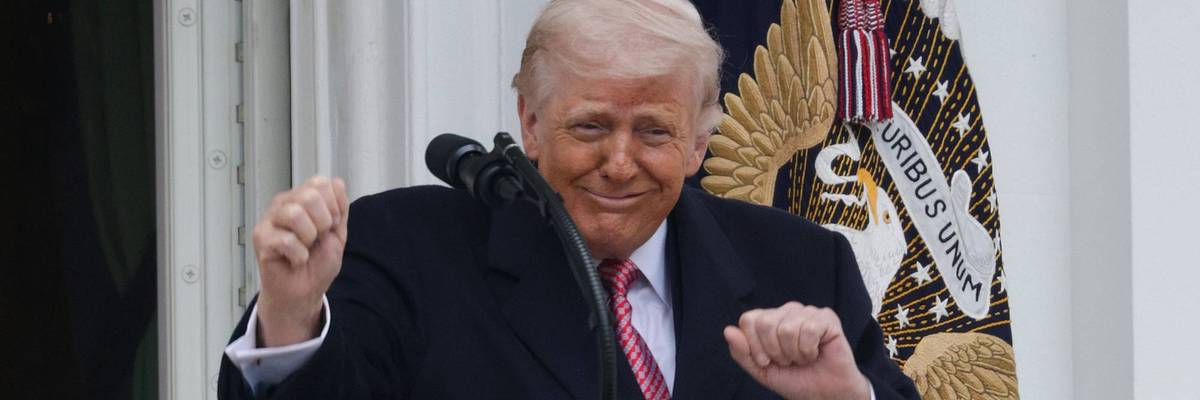
President Donald Trump dances after speaking during an event with farmers on the South Lawn of the White House on March 27, 2026 in Washington, DC.
One campaigner urged the administration to "focus on real solutions to support more transparent and diverse supply sources and make targeted investments for the supply of key medicines."
On Thursday, the one-year anniversary of President Donald Trump's so-called Liberation Day, US advocacy groups sounded the alarm about his new tariffs targeting "patented pharmaceuticals and their ingredients under Section 232 of the Trade Expansion Act of 1962 to bolster American national security and public health."
The administration announced a year ago that the US Department of Commerce would conduct a related investigation under that law. The resulting report was recently sent to the president, and although the findings have not been made public, Trump's executive order summarizes key takeaways and Secretary Howard Lutnick's recommended actions.
According to the order, the secretary's recommendations included "continuing to negotiate onshoring agreements related to most favored nation (MFN) pharmaceutical pricing agreements; imposing significant tariffs on pharmaceuticals and pharmaceutical ingredients, so that such imports will not threaten to impair the national security of the United States; and granting preferential treatment to those companies that commit to onshore production of pharmaceuticals and pharmaceutical ingredients."
Citing an unnamed Trump administration official, The Washington Post reported Thursday that "the White House has reached agreements with 13 drugmakers and expects to soon conclude an additional four." As part of these deals, companies are planning to invest at least $400 billion in new US plants.
The Post also pointed out that "some imported drugs will face much lower tariffs under trade deals Trump negotiated with five US trading partners. Goods from the European Union, Japan, South Korea, and Switzerland will face 15% levies, while drugs from the United Kingdom, which was the first to sign a deal with Trump, will be hit with a 10% tariff."
Thanks to Trump's new order, brand-name pharmaceuticals made in other countries could be hit with tariffs as high as 100%.
Merith Basey, CEO of Patients for Affordable Drugs, warned in a statement that "while these tariffs aim to pressure pharmaceutical corporations into US manufacturing and most favored nation agreements, the current MFN deals remain opaque and voluntary, and have not delivered meaningful savings for the vast majority of American patients. There's a real risk these tariffs will drive up costs and create more uncertainty for millions of patients already struggling to afford their medications."
Experts at Public Citizen, another advocacy group that has sued to expose the secretive MFN agreements, were similarly critical.
"By announcing these tariffs without even producing the evidence from the investigation that supposedly justifies them, Trump is continuing his pattern of grabbing headlines by using the word 'tariff' while engaging in secretive ongoing negotiations and opaque exemptions processes that are ripe for corporate corruption," said Public Citizen Global Trade Watch director Melinda St. Louis—who also wrote a broader takedown of Trump's trade policy published Thursday by Common Dreams.
"While strategic tariffs can be used to support domestic manufacturing and good jobs, they must be paired with real public investments and support for workers' rights, which Trump has systematically undermined," she said. "Instead, he's bullying other countries like the UK into paying more for medicines, which will lead to windfall profits for Big Pharma and do nothing to reduce US prices."
Peter Maybarduk, director of Access to Medicines at Public Citizen, stressed that "Trump's tariffs will be either ineffective or harmful for what people need, which is a reliable, plentiful, affordable supply of medicine."
Also taking aim at the "secretive arrangements that allow Trump to claim specious victories on manufacturing and high drug prices," Maybarduk explained that "in reality, many manufacturing commitments claimed under the deals were part of previously planned projects and the drug pricing commitments appear designed to largely spare drug company profits rather than earnestly address affordability concerns."
"Meanwhile the administration has given drugmakers perks like lucrative vouchers to accelerate FDA review of their medicines and a promise from the Trump administration that it will bully other countries into adopting higher prescription drug prices, using tariffs as leverage," he continued, referring to the Food and Drug administration.
"If the administration wants to fix problems like medicines shortages and fragile supply chains," he argued, "it should focus on real solutions to support more transparent and diverse supply sources and make targeted investments for the supply of key medicines."
Dear Common Dreams reader, It’s been nearly 30 years since I co-founded Common Dreams with my late wife, Lina Newhouser. We had the radical notion that journalism should serve the public good, not corporate profits. It was clear to us from the outset what it would take to build such a project. No paid advertisements. No corporate sponsors. No millionaire publisher telling us what to think or do. Many people said we wouldn't last a year, but we proved those doubters wrong. Together with a tremendous team of journalists and dedicated staff, we built an independent media outlet free from the constraints of profits and corporate control. Our mission has always been simple: To inform. To inspire. To ignite change for the common good. Building Common Dreams was not easy. Our survival was never guaranteed. When you take on the most powerful forces—Wall Street greed, fossil fuel industry destruction, Big Tech lobbyists, and uber-rich oligarchs who have spent billions upon billions rigging the economy and democracy in their favor—the only bulwark you have is supporters who believe in your work. But here’s the urgent message from me today. It's never been this bad out there. And it's never been this hard to keep us going. At the very moment Common Dreams is most needed, the threats we face are intensifying. We need your support now more than ever. We don't accept corporate advertising and never will. We don't have a paywall because we don't think people should be blocked from critical news based on their ability to pay. Everything we do is funded by the donations of readers like you. When everyone does the little they can afford, we are strong. But if that support retreats or dries up, so do we. Will you donate now to make sure Common Dreams not only survives but thrives? —Craig Brown, Co-founder |
On Thursday, the one-year anniversary of President Donald Trump's so-called Liberation Day, US advocacy groups sounded the alarm about his new tariffs targeting "patented pharmaceuticals and their ingredients under Section 232 of the Trade Expansion Act of 1962 to bolster American national security and public health."
The administration announced a year ago that the US Department of Commerce would conduct a related investigation under that law. The resulting report was recently sent to the president, and although the findings have not been made public, Trump's executive order summarizes key takeaways and Secretary Howard Lutnick's recommended actions.
According to the order, the secretary's recommendations included "continuing to negotiate onshoring agreements related to most favored nation (MFN) pharmaceutical pricing agreements; imposing significant tariffs on pharmaceuticals and pharmaceutical ingredients, so that such imports will not threaten to impair the national security of the United States; and granting preferential treatment to those companies that commit to onshore production of pharmaceuticals and pharmaceutical ingredients."
Citing an unnamed Trump administration official, The Washington Post reported Thursday that "the White House has reached agreements with 13 drugmakers and expects to soon conclude an additional four." As part of these deals, companies are planning to invest at least $400 billion in new US plants.
The Post also pointed out that "some imported drugs will face much lower tariffs under trade deals Trump negotiated with five US trading partners. Goods from the European Union, Japan, South Korea, and Switzerland will face 15% levies, while drugs from the United Kingdom, which was the first to sign a deal with Trump, will be hit with a 10% tariff."
Thanks to Trump's new order, brand-name pharmaceuticals made in other countries could be hit with tariffs as high as 100%.
Merith Basey, CEO of Patients for Affordable Drugs, warned in a statement that "while these tariffs aim to pressure pharmaceutical corporations into US manufacturing and most favored nation agreements, the current MFN deals remain opaque and voluntary, and have not delivered meaningful savings for the vast majority of American patients. There's a real risk these tariffs will drive up costs and create more uncertainty for millions of patients already struggling to afford their medications."
Experts at Public Citizen, another advocacy group that has sued to expose the secretive MFN agreements, were similarly critical.
"By announcing these tariffs without even producing the evidence from the investigation that supposedly justifies them, Trump is continuing his pattern of grabbing headlines by using the word 'tariff' while engaging in secretive ongoing negotiations and opaque exemptions processes that are ripe for corporate corruption," said Public Citizen Global Trade Watch director Melinda St. Louis—who also wrote a broader takedown of Trump's trade policy published Thursday by Common Dreams.
"While strategic tariffs can be used to support domestic manufacturing and good jobs, they must be paired with real public investments and support for workers' rights, which Trump has systematically undermined," she said. "Instead, he's bullying other countries like the UK into paying more for medicines, which will lead to windfall profits for Big Pharma and do nothing to reduce US prices."
Peter Maybarduk, director of Access to Medicines at Public Citizen, stressed that "Trump's tariffs will be either ineffective or harmful for what people need, which is a reliable, plentiful, affordable supply of medicine."
Also taking aim at the "secretive arrangements that allow Trump to claim specious victories on manufacturing and high drug prices," Maybarduk explained that "in reality, many manufacturing commitments claimed under the deals were part of previously planned projects and the drug pricing commitments appear designed to largely spare drug company profits rather than earnestly address affordability concerns."
"Meanwhile the administration has given drugmakers perks like lucrative vouchers to accelerate FDA review of their medicines and a promise from the Trump administration that it will bully other countries into adopting higher prescription drug prices, using tariffs as leverage," he continued, referring to the Food and Drug administration.
"If the administration wants to fix problems like medicines shortages and fragile supply chains," he argued, "it should focus on real solutions to support more transparent and diverse supply sources and make targeted investments for the supply of key medicines."
On Thursday, the one-year anniversary of President Donald Trump's so-called Liberation Day, US advocacy groups sounded the alarm about his new tariffs targeting "patented pharmaceuticals and their ingredients under Section 232 of the Trade Expansion Act of 1962 to bolster American national security and public health."
The administration announced a year ago that the US Department of Commerce would conduct a related investigation under that law. The resulting report was recently sent to the president, and although the findings have not been made public, Trump's executive order summarizes key takeaways and Secretary Howard Lutnick's recommended actions.
According to the order, the secretary's recommendations included "continuing to negotiate onshoring agreements related to most favored nation (MFN) pharmaceutical pricing agreements; imposing significant tariffs on pharmaceuticals and pharmaceutical ingredients, so that such imports will not threaten to impair the national security of the United States; and granting preferential treatment to those companies that commit to onshore production of pharmaceuticals and pharmaceutical ingredients."
Citing an unnamed Trump administration official, The Washington Post reported Thursday that "the White House has reached agreements with 13 drugmakers and expects to soon conclude an additional four." As part of these deals, companies are planning to invest at least $400 billion in new US plants.
The Post also pointed out that "some imported drugs will face much lower tariffs under trade deals Trump negotiated with five US trading partners. Goods from the European Union, Japan, South Korea, and Switzerland will face 15% levies, while drugs from the United Kingdom, which was the first to sign a deal with Trump, will be hit with a 10% tariff."
Thanks to Trump's new order, brand-name pharmaceuticals made in other countries could be hit with tariffs as high as 100%.
Merith Basey, CEO of Patients for Affordable Drugs, warned in a statement that "while these tariffs aim to pressure pharmaceutical corporations into US manufacturing and most favored nation agreements, the current MFN deals remain opaque and voluntary, and have not delivered meaningful savings for the vast majority of American patients. There's a real risk these tariffs will drive up costs and create more uncertainty for millions of patients already struggling to afford their medications."
Experts at Public Citizen, another advocacy group that has sued to expose the secretive MFN agreements, were similarly critical.
"By announcing these tariffs without even producing the evidence from the investigation that supposedly justifies them, Trump is continuing his pattern of grabbing headlines by using the word 'tariff' while engaging in secretive ongoing negotiations and opaque exemptions processes that are ripe for corporate corruption," said Public Citizen Global Trade Watch director Melinda St. Louis—who also wrote a broader takedown of Trump's trade policy published Thursday by Common Dreams.
"While strategic tariffs can be used to support domestic manufacturing and good jobs, they must be paired with real public investments and support for workers' rights, which Trump has systematically undermined," she said. "Instead, he's bullying other countries like the UK into paying more for medicines, which will lead to windfall profits for Big Pharma and do nothing to reduce US prices."
Peter Maybarduk, director of Access to Medicines at Public Citizen, stressed that "Trump's tariffs will be either ineffective or harmful for what people need, which is a reliable, plentiful, affordable supply of medicine."
Also taking aim at the "secretive arrangements that allow Trump to claim specious victories on manufacturing and high drug prices," Maybarduk explained that "in reality, many manufacturing commitments claimed under the deals were part of previously planned projects and the drug pricing commitments appear designed to largely spare drug company profits rather than earnestly address affordability concerns."
"Meanwhile the administration has given drugmakers perks like lucrative vouchers to accelerate FDA review of their medicines and a promise from the Trump administration that it will bully other countries into adopting higher prescription drug prices, using tariffs as leverage," he continued, referring to the Food and Drug administration.
"If the administration wants to fix problems like medicines shortages and fragile supply chains," he argued, "it should focus on real solutions to support more transparent and diverse supply sources and make targeted investments for the supply of key medicines."