LIVE COVERAGE

Monsters 'R Us
Most of Planet Earth now knows cruelty is the point of Trump 2. But if anyone implausibly needs more evidence, meet Rev. Edward Nalwamba, a 79-year-old, pro-democracy Ugandan priest who spent over a year in ICE detention. When he went in, he was fit; at his long-delayed release last week, fellow detainees had to carry him to a car because officials wouldn't let him take his wheelchair that far. To ICE, he charged, "You are an animal...They forget they are dealing with human beings."
In the last 18 months, the Trump regime has deported nearly a million people, and killed at least 60, including two U.S citizens in cold blood and broad daylight. The family of one, Renee Good, has filed two federal civil lawsuits over her Jan. 7 murder, alleging wrongful death, "negligent infliction of emotional distress," conspiracy to conceal evidence, and coordinated campaigns of "aggression and abduction" against ethnic communities and "intimidation and violence" against their allies. And of course it has detained, terrorized, traumatized or shattered the lives of untold thousands, the vast majority with no criminal history.
One was the good Rev. Nalwamba, who arrived in the U.S. in 2002 for a religious conference. Having publicly condemned human rights abuses by the Ugandan government, and subsequently heard from colleagues that government agents were pursuing him, he decided to stay in Colorado and apply for asylum. In 2010, after his application was denied, he began living peaceably in Lakewood under a 15-year ICE supervision order, reporting to immigration officials as required, working as a health aide for people with developmental disabilities, and serving as a pastor at nearby Resurrection Anglican Fellowship until he retired two years ago.
In September 2025 he was arrested by ICE; they charged he was under a removal order dating back to 2010, and that he'd failed to "cooperate with efforts to obtain travel documents" before a deadline, aka to help with his own deportation in a timely manner. He was taken to the GEO Group's private ICE detention facility in Aurora, where for over a year DHS repeatedly vowed to deport him and then didn't. On Oct. 20, after his lawyers filed a second habeas corpus petition, Judge Cyrus Chung ruled feds had exceeded a “presumptively reasonable” six months of holding time with "no concrete plan” to return him to Uganda, and ordered his release.
When he was detained, Nalwamba was a fit 77-year-old who regularly walked, exercised and played ping pong. Inside, his health quickly deteriorated. He caught pneumonia which persisted for weeks, lost over 30 pounds and the ability to walk, developed a stubborn cough, chest pain, scratchy throat, headache and fatigue that were never treated - and besides, "You don’t want to go to the hospital - they shackle you like a bull.” "He walked in. He can't walk now," noted Colorado Sen. John Hickenlooper. "They want the misery of one person to be known by others. It's a low-rent form of terrorism to make people so scared they'll self-deport."
Along with the barbaric cruelty, observers also blasted the "staggering hypocrisy" of a regime that simultaneously charged Biden et al "targeted" Christians yet in their voter intimidation efforts sent ICE into churches, interrogated church staff, and detained and abused a church elder. Last week, because they hadn't alienated Christians enough by picking a fight with the Pope, they also turned a supposed prayer gathering of Catholic bishops into a sleazy photo op, prompting two angry Archbishops to apologize, charge they'd been "manipulated," and clarify this was "in no way an endorsement of the president, his policies, or his party."
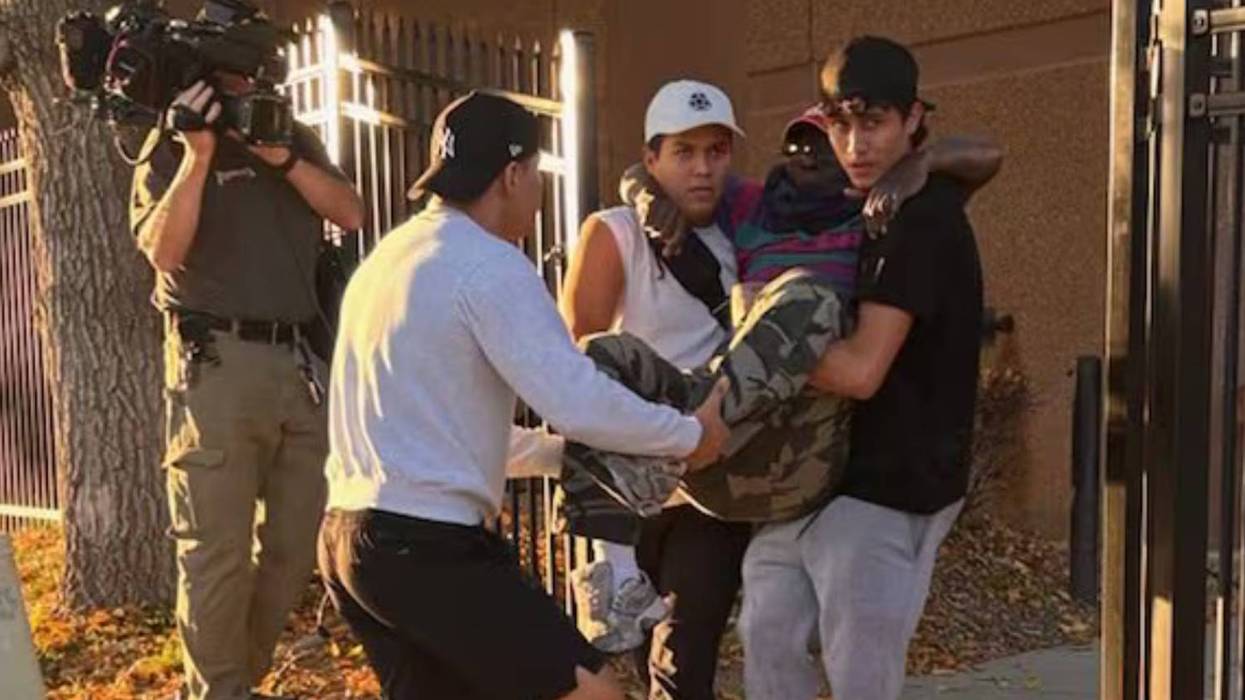
In the final, petty degradation meted out to Rev. Nalwamba, detention officials told his attorneys they would ensure his safe passage on release with a wheelchair and escort, and then reneged on it all. The wheelchair couldn't go out to the gate, they insisted, nor could vehicles approach it. Hickenlooper: "There is no excuse for this cruelty. None.” In the end - no surprise here - it was two young mensches also being released who hooked their arms together - one lawyer: "It was heartbreaking and it was infuriating" - carried the reverend to his waiting car, and went on their way: "They didn't even give me a chance to say thank you.".
After his release, a buoyant Nalwamba said he’s “in another world." He talked to his children, he's well fed, he’s staying with a family who lent him an electric scooter to get around. The next day, he visited a health clinic to get a chest X-ray, blood work, TB testing. He looks forward to physical therapy and reconnecting with his church community: "I am a happy man." Except for the monsters, still here. DHS said they were "forced" by "an activist judge" to release "an illegal alien" who "chose to overstay his welcome in violation of our nation's laws." Most vitally, "He remains in the country illegally," under a removal order, without legal status.
So much, or not yet for Obama's Michigan citing of "a decency we should expect from our public officials." Attorneys plan to reopen Nalwamba's asylum case; conditions in Uganda have seriously deteriorated with widespread crime, unrest and targeting of political opponents and a U.S. "Do not travel" advisory in effect. At the same time, says attorney Joy Athanasiou, she has never seen "this inhumanity and cruelty" over 20 years of working with detained clients. Before, there were under 1,000 habeas corpus petitions a year; now there are about 90,000, a demand "100 times greater than what we can provide.”
Nalwamba says his thoughts remain with those innocents still inside a callous, corrosive environment worse than any maximum security prison. He loves the America he has lived in for almost 26 years, he says, and has always thought African and other countries should aspire to be like the U.S. But no more, he adds, not without drastic change. Those other countries, he argues, treat their livestock better than he was treated. "It's as if they've gotten used to treating people that way, like they're taking care of goats or cows,” he said. “I have never imagined human beings treated like I saw in this place."
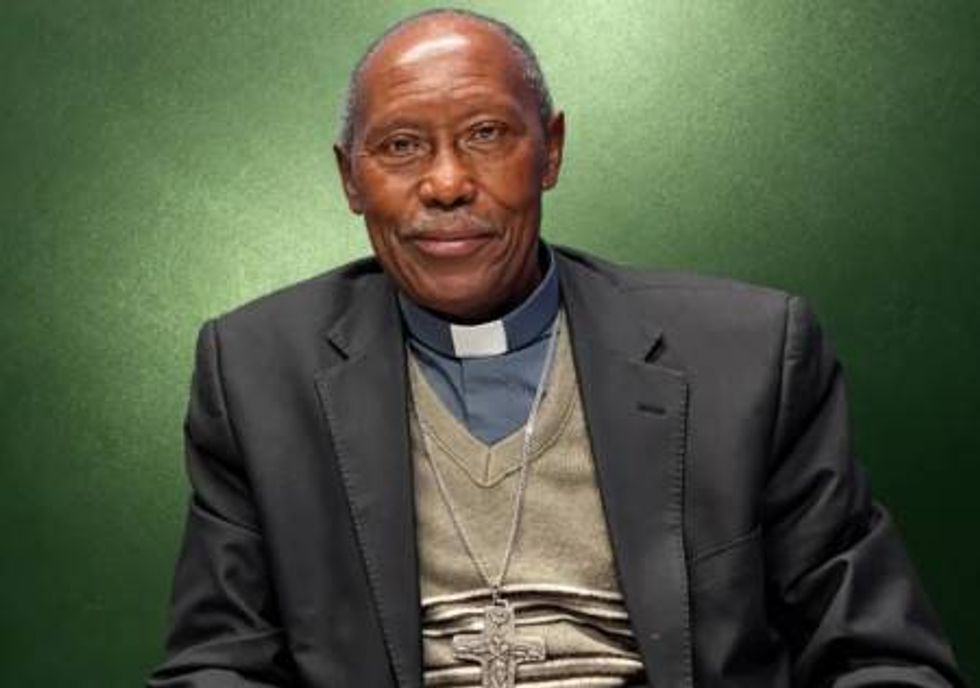 The Rev. Edward Nalwamba Photo by Resurrection Anglican Fellowship
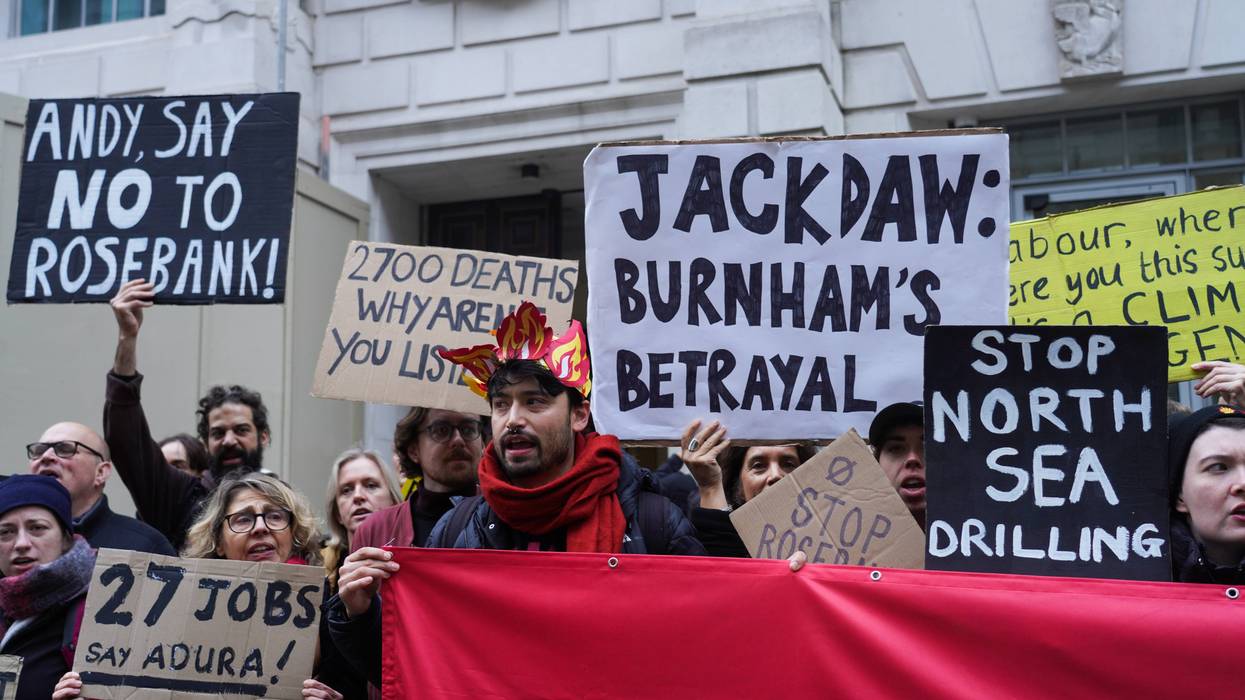
'Absolutely Maddening': UK Approves Jackdaw Gas Drilling in North Sea
With drilling in the Jackdaw gas field in the North Sea set to go forward following the United Kingdom's approval, announced on Wednesday, climate groups and progressive lawmakers demanded to know how Prime Minister Andy Burnham could declare the decision a "pragmatic" one, considering the meager job growth and energy savings and massive climate damage expected from the project.
“Is the prime minister living in a parallel universe?" asked Danny Gross, climate campaigner for Friends of the Earth (FOE). "One where we haven’t just endured our hottest summer on record, with droughts, wildfires and, in all likelihood, the most heat-related deaths on record?"
The approval of the oil and gas extraction from Jackdaw by Adura, a joint venture between Shell and Equinor, was announced as the United Nations warned that continued fossil fuel drilling has put the possibility of avoiding a global temperature rise that breaches the 1.5°C threshold out of reach, and emphasized that countries must take action to mitigate the damage and ensure the breach is temporary.
The UN said greenhouse gas emissions must be slashed by nearly one-fifth in the next four years to avoid the worst impacts of the climate crisis.
"Against this backdrop, there’s nothing that justifies giving the go-ahead to a colossal new fossil fuel project in North Sea. The disconnect is absolutely maddening," said Gross.
The Jackdaw approval was announced as the government said inflation had jumped to its highest level in almost a year, with US President Donald Trump's war on Iran and Russia's invasion of Ukraine driving up energy prices worldwide.
But an analysis by the UK climate action group Uplift, which compiled data from the public record, found that the Jackdaw project would provide enough gas to displace just 2% of the UK's current imports.
"This will not lower international gas prices paid by UK consumers," said Greenpeace, which also emphasized that Adura has admitted in an environmental statement that the project is projected to create just 27 full-time jobs—making little difference to the area surrounding Aberdeen, Scotland, the center of the UK oil industry where local officials have reported losses of 1,000 oil and gas jobs per month.
Zack Polanski, the leader of Britain's Green Party, said the projected impact of the Jackdaw project couldn't compare "to all the benefits of investing in renewables and insulating our homes."
CBI Economics found earlier this year that the UK's green economy employs more than 1 million people and is worth £100 billion ($133 billion) per year, with workers in the sector paid more than the national average.
“Jackdaw won’t make a jot of difference to our energy bills, but it will fuel the climate chaos already unfurling in front of us. The route to lower bills and true energy security lies in the UK’s vast capacity for cheap, homegrown renewable power and street-by-street home insulation programs," said Gross. “This decision makes Shell and its shareholders richer at the expense of ordinary people’s lives—a move that sees the prime minister turning his back on the very people he claims to be on the side of."
Richard Burgon, a member of Parliament who represents Burnham's Labour Party, called the approval "absolutely terrible" and urged the government not to "repeat the same mistake" with Rosebank oil field in the North Sea, which the prime minister said he would make a decision about at a later date.
Fossil fuel development in both the Jackdaw and Rosebank fields was blocked by a moratorium in 2024, imposed by the Labour government of former Prime Minister Keir Starmer. Drilling has previously been approved in 2022 and 2023 by the Conservative government. Supporters of oil and gas extraction in the North Sea have argued that since the fields were approved for exploration under the Conservatives, allowing drilling now does not violate the moratorium.
The climate impacts of the two projects are projected to cost each UK household £3,000 ($4,017) annually, according to Greenpeace, and gas production from Jackdaw is estimated to be equivalent to about 40 million barrels of oil, Adura has said.
"Using government calculations for climate harm, burning Jackdaw’s gas will cause an estimated £16.1 billion [$21.5 billion] in global damage and over 8,000 heat-related deaths," said Greenpeace.
This past summer, extreme heat across Europe helped ignite wildfires and was blamed for tens of thousands of excess deaths on the continent. The breakdown of a glacier in Nepal and Tibet also caused a flooding disaster that killed more than 1,000 people.
“It is a shame that one of the first big decisions for the new energy secretary, Miatta Fahnbulleh, has been to approve more fossil fuel drilling," said Rosemary Harris, North Sea senior campaigner for Oil Change International. "At a time where the impacts of climate breakdown are so clearly felt, from the loss of livelihoods, homes, and lives in the UK over the summer, to the devastating floods in Nepal, our government should look to the future, not cling to the past."
The approval also came weeks before Burnham is set to represent the UK at the UN Climate Change Conference (COP31) in Antalya, Türkiye.
While drilling in the Jackdaw field will "make no real difference to our energy bills or security," said Bob Ward, policy and communications director at the Grantham Research Institute on Climate Change and the Environment at the London School of Economics and Political Science, "it will signal to other fossil fuel producers that they too should carry on with business as usual, less than a month before the COP31 United Nations climate change summit.”
Harris said that following the approval, "all eyes are now on Rosebank, and the hope that Andy Burnham and his energy secretary have the courage and vision to push back against the industry and plot a path to an energy transition that provides more security, lower bills, and a safe climate."
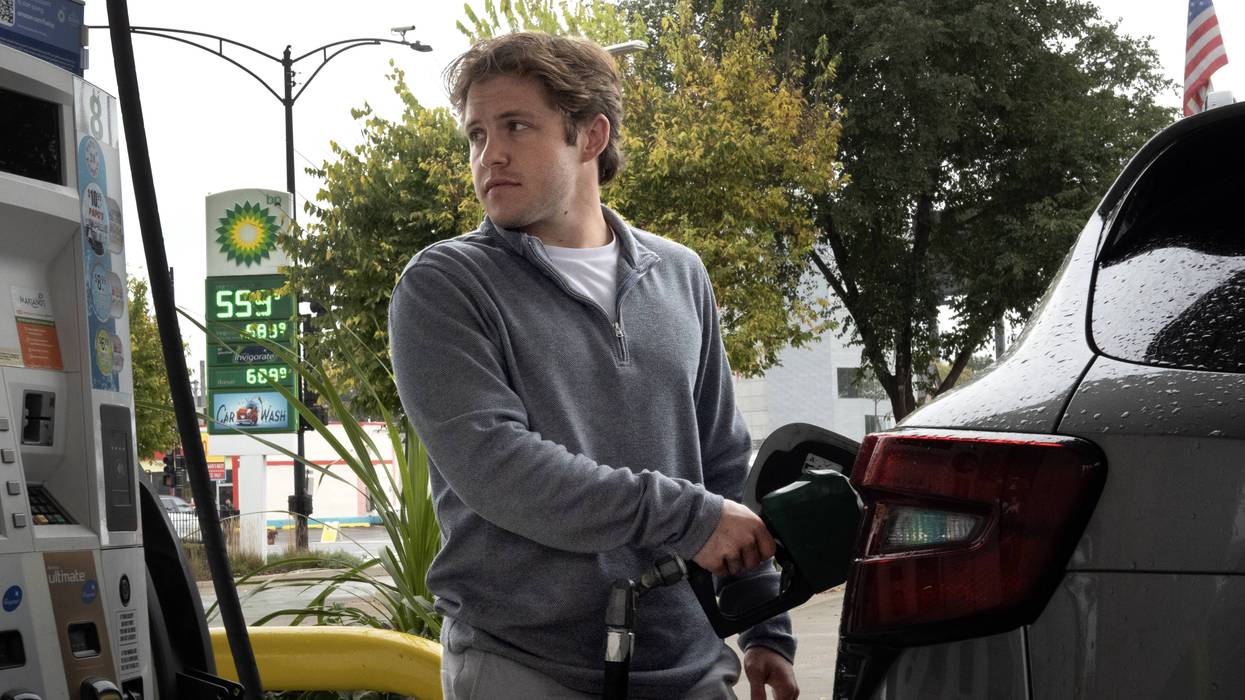
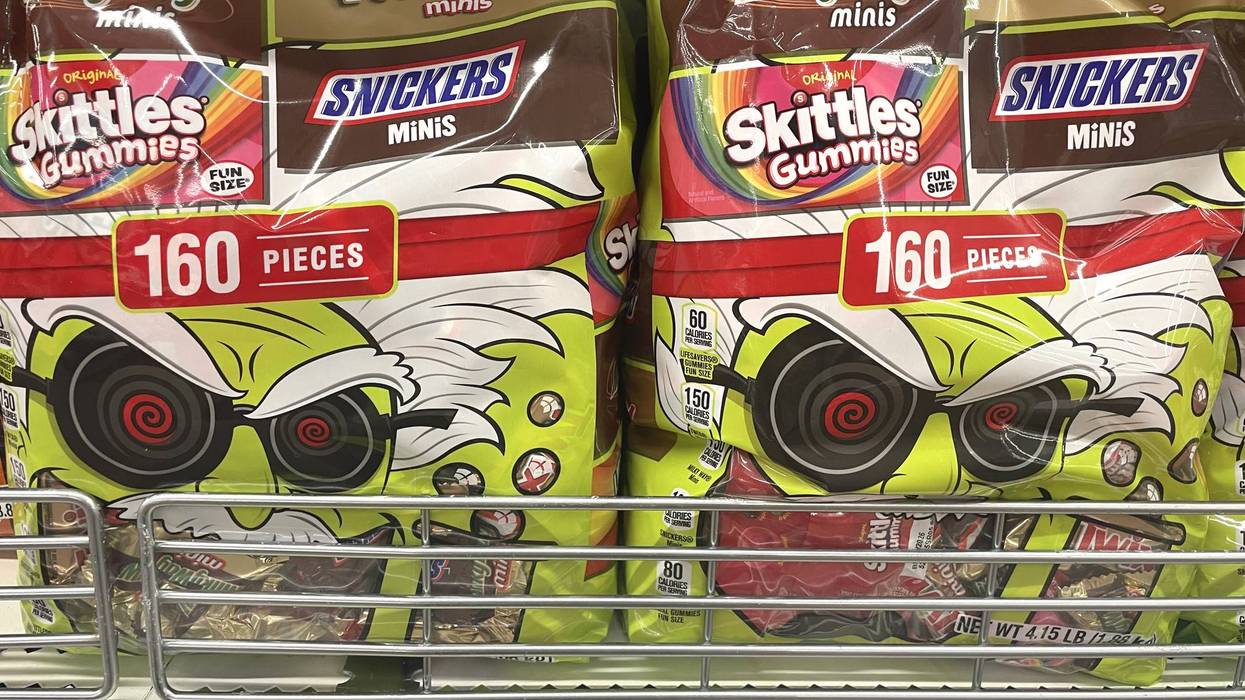
'Consumers Are Feeling Spooked': Trump's Failed Economic Policies Send Price of Halloween Candy Soaring
President Donald Trump's illegal war with Iran and his global tariffs have tag-teamed to jack up the price of Halloween candy, according to a report published Tuesday.
The new analysis by Groundwork Collaborative and The Century Foundation finds that the price of popular Halloween candy has increased by more than 15% during the last year, which is several times the overall rate of inflation over the same period.
The biggest jump in price came from candy maker Mondelez, whose sour gummy candy variety pack saw its price shoot up by more than 39% in the last year.
Other notable price hikes included the Hershey variety pack, which increased by nearly 20%; the Ferrero chocolate pack, which increased by 19%; the Mars chocolate variety pack, which increased by over 13%; and Tootsie seasonal lollipops, which increased by over 7%.
The report notes that Trump's illegal Iran War and his aluminum tariffs have had an impact on candy prices by driving up packaging costs for sweets.
However, the report also points the finger at the candy companies, which have continued to raise prices even after receiving a tariff exemption for cocoa and getting refunds for illegal tariffs Trump charged them last year.
"Hershey’s profit margin jumped 50% year over year, helped by pocketing a $9 million tariff refund that never made its way back to shoppers," the report notes, "while Mondelez saw a similar 30% bump in margins."
Kyle K. Moore, chief economist at The Century Foundation, said that Trump's policies had helped turn "a fun family tradition into another terrifying bill."
"With debt and high prices eating into families’ Halloween budgets," said Moore, "it's no wonder consumers are feeling spooked."
Elizabeth Pancotti, vice president of policy and advocacy at Groundwork Collaborative, pointed out that consumer sentiment recently hit record lows, as Americans are also struggling with the rising costs of gasoline and groceries.
"Trick-or-treaters will have to make due with miniature candy bars this year to accommodate Trump’s king-size price hikes," Pancotti said.
A Sunday report in The Cleveland Plain Dealer highlighted an additional reason for the high price of Halloween candy: The price of sugar, which has been affected by "poor weather and weaker production forecasts in several major sugar-producing regions."
A survey released earlier this month by Lending Tree found that Americans expect to spend significantly less on Halloween overall this year, with 23% saying they plan to buy fewer overall Halloween items compared to a year ago, while 24% said they expected to go into debt while celebrating the holiday.
Data released by the US Bureau of Labor Statistics last week showed inflation in September rising to its fastest level in six months, driven in large part by costs related to the Iran War.
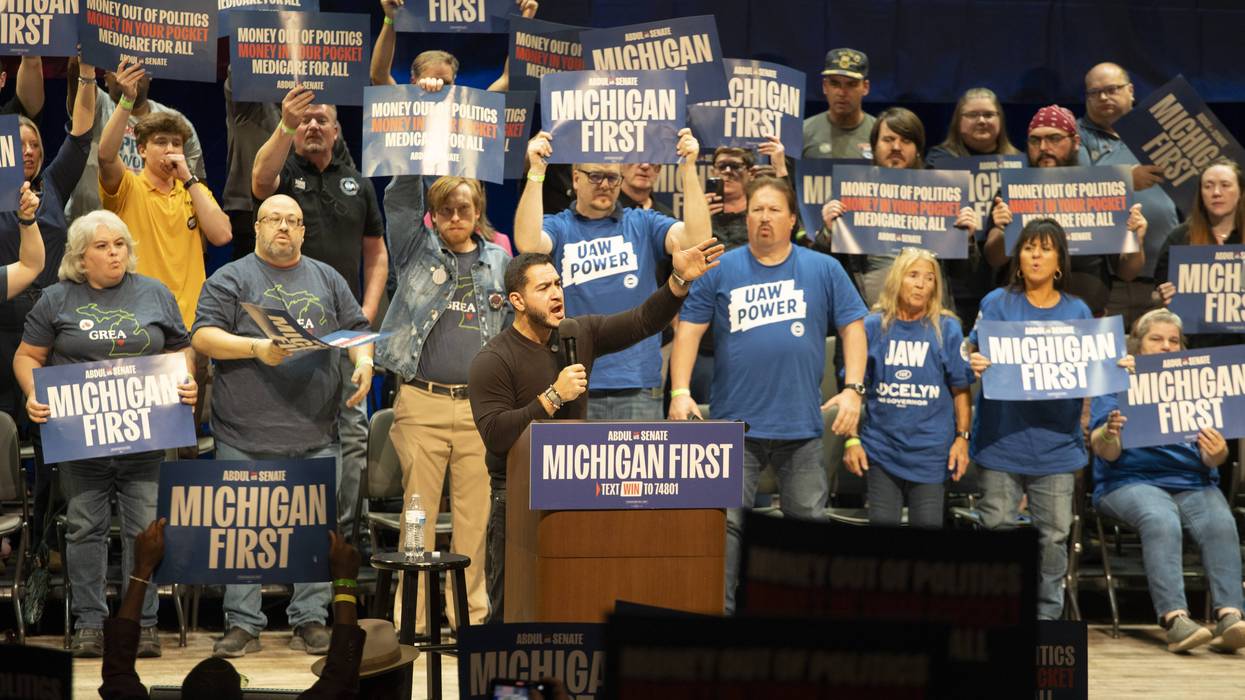
'I'll Be Senator Mohamed to You, Bro': El-Sayed Hits Back at Trump's Islamophobic Attacks
Abdul El-Sayed, the Democratic candidate for US Senate in Michigan, remained undeterred on Sunday night after President Donald Trump and his supporters ramped up their overt attacks on his Muslim faith at a rally earlier that day.
Continuing to refer to the former public health official by his middle name “Mohamed,” Trump told a frothing crowd in Port Huron on Sunday afternoon that El-Sayed—who would be the first Muslim elected to the Senate—was a “jihadist Muslim Brotherhood member,” escalating the false attacks made by his Republican opponent, former US Rep. Mike Rogers.
"I get that the president takes personal offense to my first name," El-Sayed said at his own rally in Grand Rapids later that evening. "He doesn't mind as much when it's the Saudis who are funding his son-in-law's private equity. Doesn't seem to mind as much when it's the Qataris who are giving them a $400 million private jet. He just seems to have trouble pronouncing it when it's my name."
"I don't care how he pronounces my name. I don't even care that he remembers my whole name. Because he can just go on and call me senator after November," he continued. "I'll be Senator Mohamed to you, bro."
The continued attacks on El-Sayed’s name and Muslim faith were part of a barrage of racist and Islamophobic remarks from Trump and his allies at the rally, which several observers on social media, including the prominent left-wing streamer Hasan Piker, compared to a “Klan rally.”
Portraying El-Sayed as a terrorist, Trump said the Democrat should not be allowed to fly on airplanes and, if elected, should be required to pass through a metal detector when entering the Senate.
Contrasting El-Sayed with Rogers, whom he described as American as “apple pie,” Trump said that El-Sayed, who has frequently emphasized his commitment to religious pluralism on the campaign trail, wanted to impose Sharia on the United States.
He also directed his ire at Jewish voters who may vote for El-Sayed, a frequent critic of US support for Israel.
“Any Jewish person that supports this guy should be ashamed of themselves,” Trump said, again invoking the antisemitic trope that Jewish Americans hold dual loyalty to both the US and Israel. “I’m polling 99% in Israel, and I cannot understand how anybody who’s Jewish can even think about voting for this guy.”
Trump compared stopping El-Sayed to stopping the 9/11 hijackers. Underscoring the point, he brought out David Beamer, whose son Todd died fighting the hijackers aboard Flight 93, to deliver more blood-and-soil invective.
"Mike Rogers is an American. Abdul has a birth certificate. The birth certificate says he's a citizen of America," Beamer said. "A birth certificate doesn't make you an American."
"He has a birth certificate, but he's not an American," he said of El-Sayed, who was born and raised in Michigan. "He had the choice. He had the choice to be an American or not. He has chosen otherwise. He has blood that's red. However, he has chosen to remove any strain of the white and blue part in his blood."
"We cannot, cannot allow this man to invade and occupy our country," Beamer said.
Though Rogers has attacked El-Sayed’s religious background relentlessly in the final months of the campaign, an average of polls from FiftyPlusOne shows El-Sayed with roughly a three-point lead just over a week before Election Day.
Rogers has struggled to defend Trump’s unpopular record as El-Sayed has hammered him over inflation, corruption, and the Iran war. El-Sayed, meanwhile, has stayed focused on a three-part pitch to Michiganders: “Money out of politics, money in your pocket, Medicare for All.”
Joining El-Sayed in Grand Rapids, Sen. Bernie Sanders (I-Vt.) suggested Republicans were resorting to Islamophobia because they had nothing of substance to offer voters on the economy.
“Mr. President, instead of slandering Abdul and his family, what are you going to do about the healthcare crisis in America? What are you going to do about the housing crisis? What are you going to do about income and wealth inequality?” Sanders asked. “These guys have nothing to say about the real issues impacting working families, and all they can do is foment hatred and divisiveness.”
"The reason that in many respects this race here in Michigan is... the race that people all over the world are looking at, is whether or not the people of Michigan are going to stand up to that vile racism," Sanders continued. "And I have every confidence in the world that's exactly what you're going to do."
Republican attacks seem to have alienated some of the Arab American voters who unexpectedly broke for Trump in 2024 over the Biden administration's support for Israel's genocide in Gaza.
"The remarks are out of line and crazy," said Bishara Bahbah, a founder of Arab Americans for Trump. "I mean, no sane individual would say these things."
"They are crossing a red line. They are racist," Bahbah told The Associated Press. "The president of the United States saying that about a person because of his religion, that is just not acceptable. And people are going to remember that on November 3."
‘This Is Assault’: Utah Woman Speaks Out After Cop Body Slammed Her at Data Center Protest
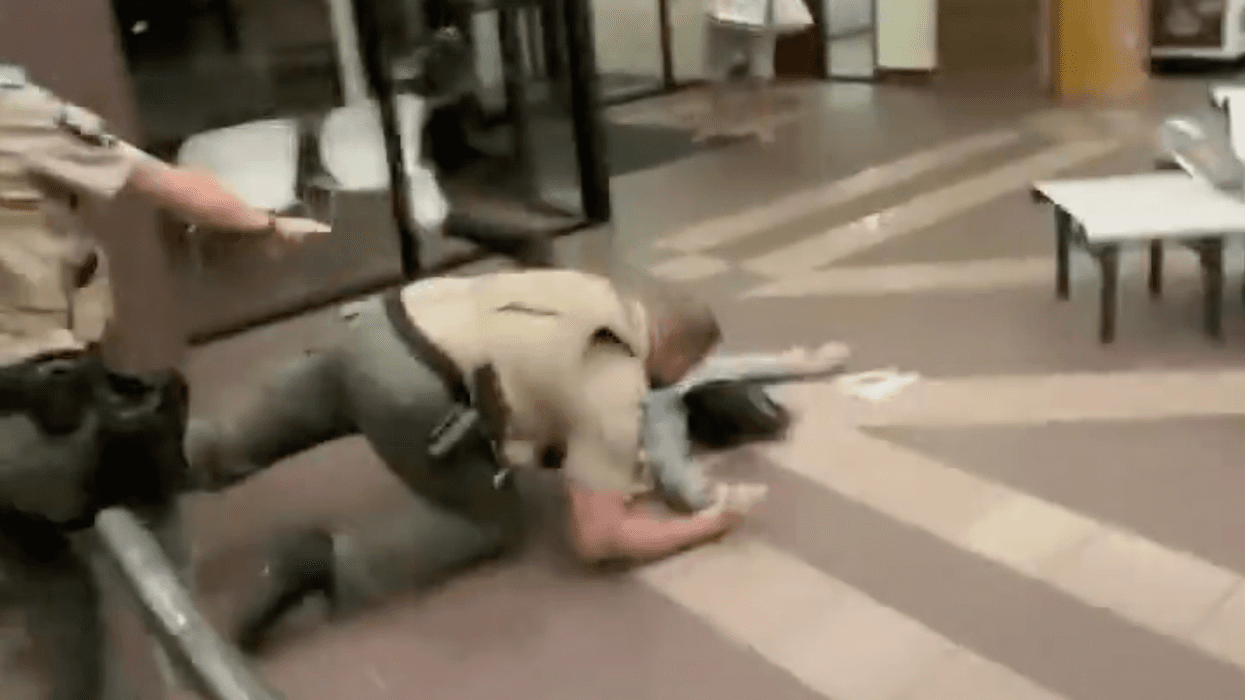
A Utah woman is speaking out after video showed a police officer slamming to the ground as she was protesting against the approval of an artificial intelligence data center.
In a Thursday interview with Fox 13 Salt Lake City, 27-year-old Aspen Azalea demanded the firing of Utah County Sheriff's Deputy Phillip Crawford after he was caught on video throwing her to the ground during a Wednesday night meeting of the Utah County Planning Commission in the city of Provo.
"Bare minimum, Phil Crawford needs to be fired, bare minimum,” Azalea said. “This is assault. He did throw me to the ground."
Video of the incident shows Crawford pulling Azalea out of her seat at the meeting and escorting her out of the main chamber. Shortly after bringing her into the lobby area, he slams her face-first onto the floor.
Utah county residents are demanding accountability after police forcibly removed a woman from a council meeting where officials unanimously approved a controversial data centre rule without public comment. The woman reportedly suffered a concussion and facial injuries. https://t.co/gq0zeLECZU
— Al Jazeera English (@AJEnglish) October 22, 2026
The Utah County Sheriff's Office claimed that Azalea kicked Crawford in the groin just before he slammed her to the ground, which Azalea denied.
“No, I never kicked him,” she told Fox 13 Salt Lake City. “I absolutely didn’t kick him."
The woman also noted that, had the deputy thrown her to the ground just a few feet further, she could have hit her head on a nearby bench.
“What really scares me about that situation is that he could have killed me because there was a bench,” she said. “If he threw me into that bench, I don't think I'd be here today."
In a separate interview published Thursday by The Salt Lake Tribune, Azalea said that she suffered a concussion, as well as bruises on her jaw, knee, and shoulder.
Azalea acknowledged to The Salt Lake Tribune that she shouted during the Wednesday meeting, as she has shouted at other meetings to protest the development of data centers.
“I have a habit of talking at data center meetings,” she told the newspaper. “But never have I been met with such excessive force.”
Azalea faces misdemeanor charges of assaulting a police officer, resisting arrest, and disrupting a meeting.
'We May Do Another Little Epic Fury,' Trump Says After Claiming Not to Know About Possible Strike on Iran
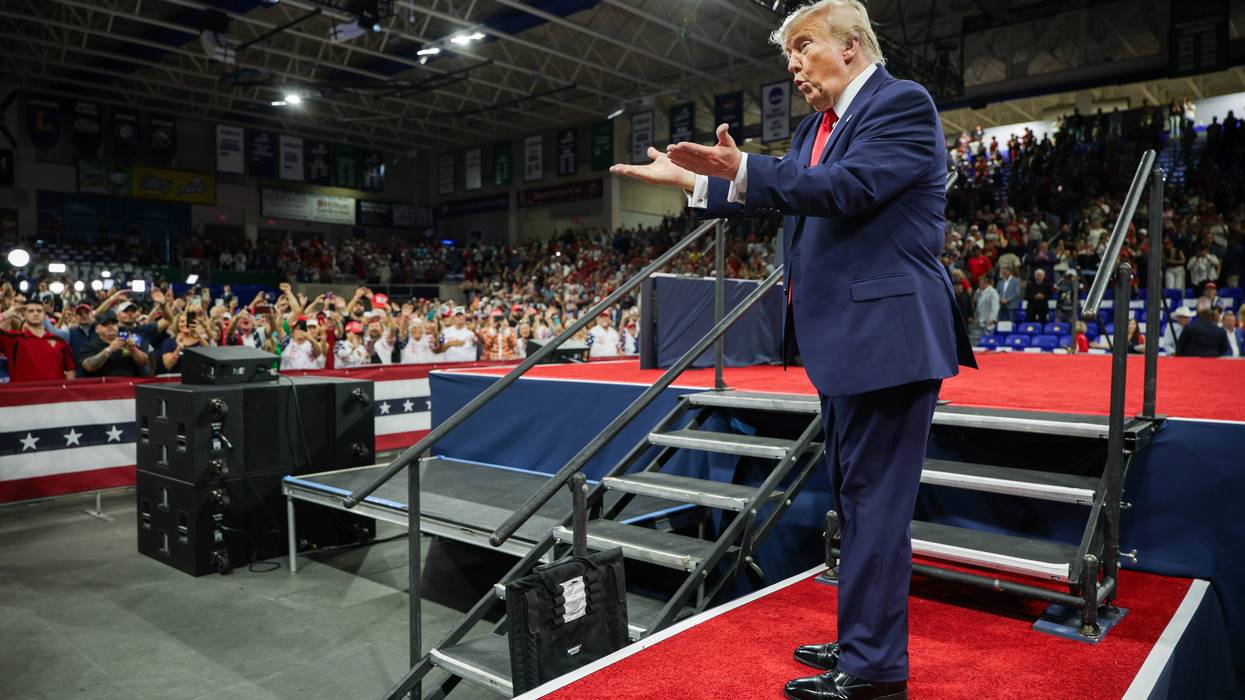
When President Donald Trump landed in Florida for a Friday campaign rally, he dismissed comments from one of his own ambassadors that the US could strike Iran this weekend as part of his illegal nearly eight-month war—but once the commander-in-chief took the stage, he changed his tune, threatening more bloodshed.
In an interview with online commentator Mario Nawfal published earlier Friday, US Ambassador to Turkey Tom Barrack, who is also Trump's special envoy to Syria and Iraq, said: "Could there be a strike this weekend? Absolutely."
"The president is very clear. He's open and available and accessible to a deal. And we've been at the table for months and months and months," he continued, noting that in addition to the nuclear priorities and aiming to reopen the Strait of Hormuz, the US is "in a bargain for unfreezing assets, releasing sanctions, no more kinetic engagement, [and] supplying the needed help to Israel, our ally."
Trump had said on his Truth Social platform earlier this month that "we are having productive discussions with the Islamic Republic of Iran. I want to make it clear to everybody that, while Iran is in very bad condition, both Economically and Militarily, and while the Blockade will remain in full force and effect, with Oil flowing in Record Numbers of Barrels through the Hormuz Strait (22 Million Barrels, last night alone, with not one barrel coming from, or going to, Iran!), we will not be attacking Iran at any time prior to the Midterm Elections to be held in the United States on November 3rd."
Asked about Barrack's suggestion that a US attack could come soon while on a Florida runway, and whether it meant Trump was rethinking that position, the president responded: "That was my ambassador? He's a pretty powerful man, I guess. Well, if that's the case, I don't know anything about it."
While replying to the reporter, Trump exchanged a glance with Republican Florida Gov. Ron DeSantis, who giggled at the president's answer.
Once Trump was onstage at Florida Gulf Coast University's Alico Arena, he bragged about ditching the Obama administration's Iran nuclear deal, and overseeing two military operations: Midnight Hammer, the June 2025 strike on Iranian nuclear facilities, and Epic Fury, the war he and Israel launched in February, in violation of the US Constitution and international law.
"We may do another little Epic Fury, or they'll agree," Trump told the crowd. "If they're smart, they'll just say, 'Let's get down to business.' But, you know, I doubt they'll do that because perhaps they're not smart—but we did a number on them."
Trump's illegal war—which has killed thousands of people across the Middle East—and its resulting economic impact have been key topics for Democrats hoping to reclaim control of both chambers of Congress, and potentially impeach him a historic third time.
After Silencing by NFL Owner, Macklemore Opens 'Free Palestine' Tour With Sold-Out Dublin Show
The concert garnered rave reviews, with The Guardian calling it a five-star "triumph," and The Irish Times praising the “courage of Macklemore's convictions.”
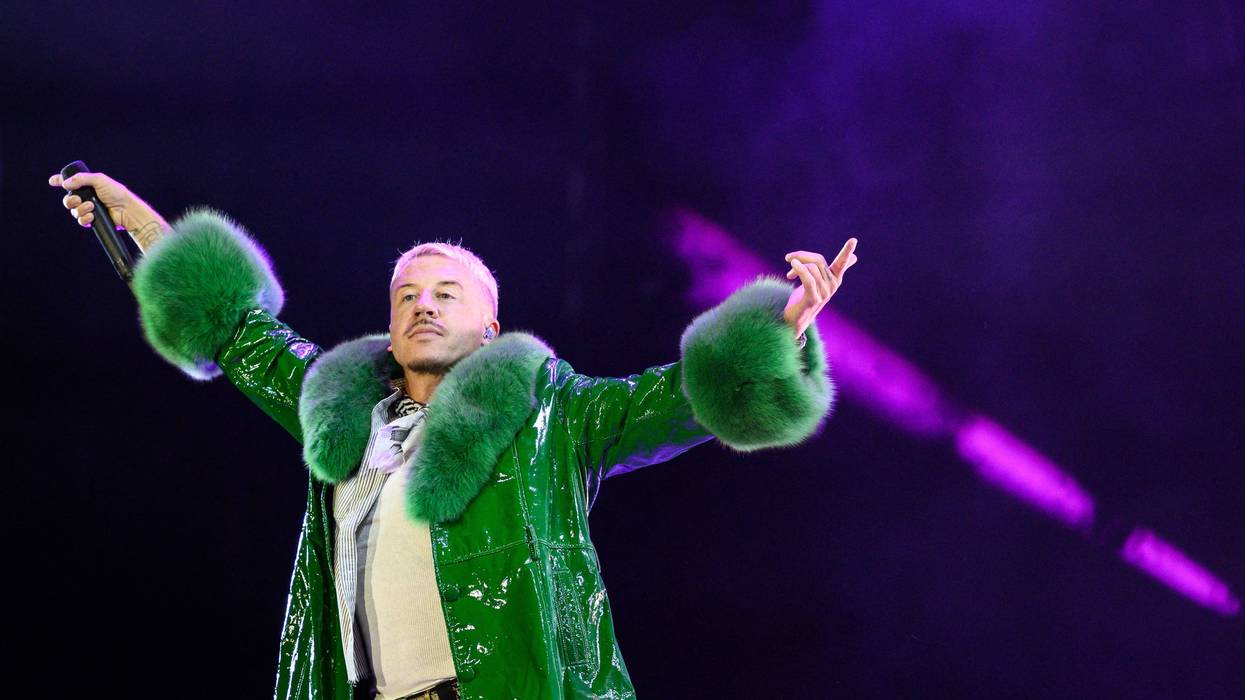
In a metaphorical middle finger to billionaire NFL owner Robert Kraft's effort to get Macklemore booted from Ed Sheeran’s US stadium tour over his outspoken support for Palestinian liberation, the rapper opened his "Free Palestine" benefit tour Monday with a critically acclaimed sold-out show in Dublin.
More than 13,000 fans packed Dublin's 3Arena, waving Palestinian flags and wearing keffiyehs as the crowd repeatedly chanted “Free Palestine" throughout the show.
“I am proud to stand here on stage in solidarity with the Palestinian people,” Macklemore told the audience. “We will continue to fight for collective liberation until our last breath."
"Six weeks ago, it was two words. Two words is all that it took. Two words that are rooted in love and liberation. Not against anybody, not divisive, not a call for hatred, but a call to recognize our shared humanity. 'Free Palestine.' I said 'Free Palestine,'" the Seattle native said.
He was referring to his removal from Sheeran's Loop Tour amid pressure from Kraft—who owns the New England Patriots and Gillette Stadium in Foxborough, Massachusetts—after the rapper condemned Israel's genocidal assault on Gaza and illegal occupation and apartheid in the West Bank during a September performance at MetLife Stadium in New Jersey.
"While the world debates those words, we see the videos, we see the footage, we see parents pulling their children out of the rubble, families erased, devastation beyond our imagination," Macklemore, whose real name is Benjamin Hammond Haggerty, continued.
"And somehow," he added, "those words have become more controversial than the suffering that made them necessary."
Kraft's pressure backfired spectacularly as every other opening artist on Sheeran's tour withdrew in solidarity with Macklemore, while the rapper launched his own benefit shows in larger European venues than he had played on his previous tour.
In addition to Macklemore—who rose to prominence in 2012 with his multiplatinum hit "Thrift Shop"—the concert featured performances by Irish artist Hozier, trio Kneecap, and folk band Beoga; Palestinian singer Lina Makoul; Palestinian American DJ Habibeats; and US political hip-hop duo Dead Prez.d
Actors Mark Ruffalo and Cynthia Nixon and Strokes frontman Julian Casablancas also appeared via video messages.
Macklemore has paid more than just lip service to the Palestinian cause, pledging $1 million to aid groups. Children's educator and YouTube star Ms. Rachel subsequently vowed to match the donation, declaring, “We have a moral obligation to use our privilege and platforms to protect children and human rights.”
The proceeds of the "Free Palestine" tour—which also has scheduled shows in London and Paris—will support organizations providing Palestinians with medical care, humanitarian assistance, education, and community services.
The tour's opening show garnered rave reviews, with The Guardian calling it a five-star "triumph," and The Irish Times giving the concert four stars and praising the “courage of Macklemore's convictions.”
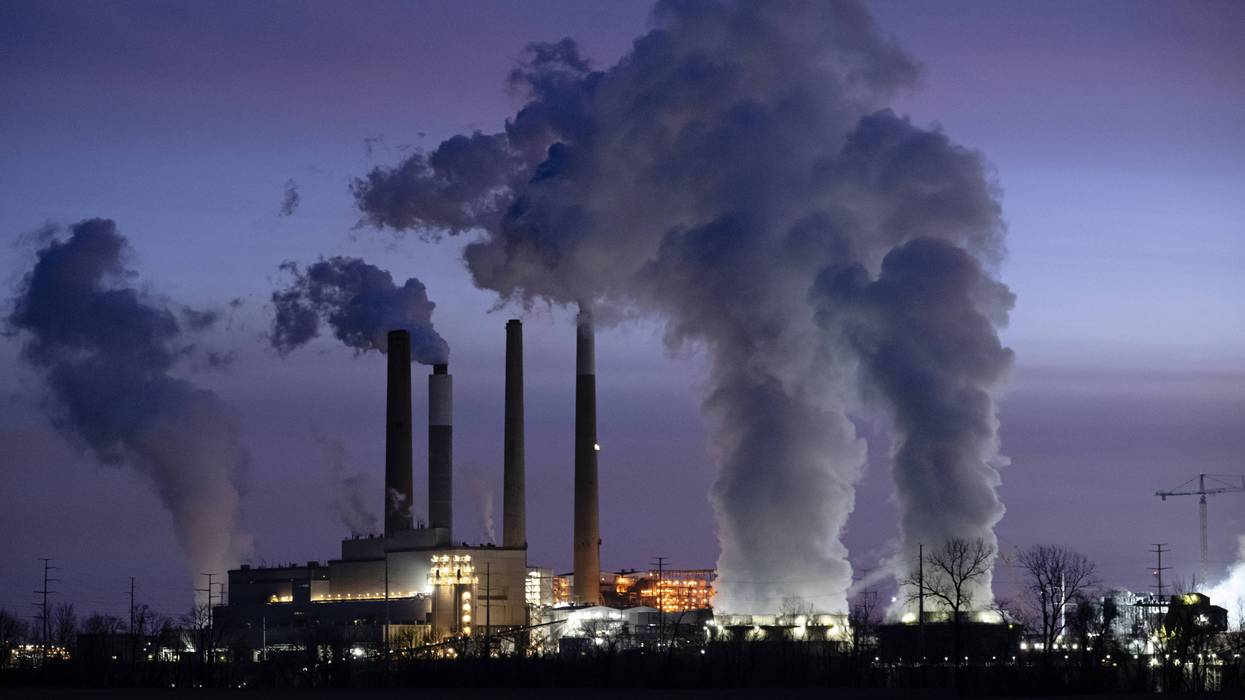
'Another Year, Another New Record': UN Highlights Rising Greenhouse Gas Levels Ahead of COP31
"We are supercharging the ocean and the atmosphere," said one WMO leader. "That means that heatwaves, tropical cyclones, and rainstorms are intensifying faster than our historical baselines prepared us for."
With the next United Nations Climate Change Conference less than two weeks away, a UN agency confirmed Tuesday that levels of three key greenhouse gases in the atmosphere "reached unprecedented highs in 2025, locking in more long-term temperature increase for the planet."
“Another year, another new record," World Meteorological Organization (WMO) Deputy Secretary-General Ko Barrett said in a statement. "The past 11 years have been the warmest on record, and this trend is set to continue."
"The big three are carbon dioxide, methane, and nitrous oxide. Since the 1960s, growth rates of CO2 have tripled," Barrett told journalists during a press briefing about the "Greenhouse Gas Bulletin of 2025," which is published annually.
Global greenhouse gas concentrations reach record highs in 2025. The unprecedented atmospheric levels of carbon dioxide and methane lock in severe climate impacts and temperature increases for centuries ahead of the upcoming United Nations climate summit in Turkey.www.france24.com/en/live-news...
[image or embed]
— Flingjore (@flingjore.com) October 27, 2026 at 11:12 AM
"When the bulletin was first published in 2004, the annual level of carbon dioxide was 377.5 parts per million. In 2025, it was 426.8 parts per million," Barrett noted. Methane, or CH4, hit 1,948 parts per billion, while nitrous oxide, or N2O, was 339.1 ppb.
"Every additional part per million matters because it traps additional heat," she stressed. "In effect, we are supercharging the ocean and the atmosphere. That means that heatwaves, tropical cyclones, and rainstorms are intensifying faster than our historical baselines prepared us for."
While carbon dioxide is "the most abundant long-lived gas," Barrett also addressed "gases which are present in much lower concentrations but are of potential concern," such as sulfur hexafluoride, or SF6—which "is closely related to electricity production and distribution, and has been rising over the past three decades because of the switch to global electrification."
"Sulfur hexafluoride concentration in 2025 have increased by 249% relative to 1995 levels. They are measured in parts per trillion—not million. So why should we be concerned?" she said. "Because SF6 has an atmospheric lifetime of up to 3,200 years. Its global warming potential is more than 24,000 times that of CO2."
"The energy transition is essential and welcome," Barrett added. "But as with every transition, it has to be done in a smart way and informed by environmental observations."
The WMO bulletin follows a series of recent UN reports showing the Paris Agreement's goal of limiting global temperature rise this century to 1.5°C above preindustrial levels is no longer possible without an overshoot, but getting back to that level is, with ambitious action to phase out fossil fuels.
Additionally, before the ongoing biodiversity summit in Yerevan, Armenia, the UN warned that the world is not on track to meet any of the targets from the Kunming-Montreal Global Biodiversity Framework, or the "Paris Agreement for Nature."
While that event on the global biodiversity crisis—which is linked to the worsening climate emergency—is set to conclude in a few days, world leaders are scheduled to convene again on November 9 in Antalya, Türkiye for the next climate conference, or COP31.
Although the United States is the world's biggest historical climate polluter, and one of the recently released UN reports repeatedly calls out US emissions, Big Oil-backed President Donald Trump has ditched the Paris Agreement, again, and is not expected to send a delegation to Antalya.
"The rest of the world is exhausted when it comes to counting the damage that the US is willingly doing to allies, multilateral structures, economic cooperation, disaster relief," Australian climate scientist Malte Meinshausen told The Associated Press earlier this month. "The rest of the world should probably continue to focus even less on the US."
There is hope in the elections taking place around the world and how they may usher in new leadership in many countries. Even with those changes, we all are in for a warm ride filled with climate shocks until we stabilize the concentrations of greenhouse gases in the atmosphere.
— Dana R. Fisher (aka the Apocalyptic Optimist) (@fisherdanar.bsky.social) October 27, 2026 at 6:37 AM
In the United States, University of Pennsylvania professor Michael Mann said Tuesday that "there is a lot of support among the public for a clean energy transition. The problem is that the fossil fuel industry currently owns our government. But there are reasons for optimism that we might begin to turn the corner, with the midterm elections" on November 3.
"If they return one or both houses of Congress to the Democrats, there will be the possibility of Congress acting as a check on the destructive policies of the Trump administration and in a couple of years, with new leadership at the presidential level, the US could once again reassert leadership on climate," the climatologist told writer Brian McHugh.
"We have to transition rapidly away from fossil fuel burning," Mann emphasized. "There's simply no other way. Without regulating them and imposing an incentive structure that leads them to move toward clean energy, nothing else is really going to matter."
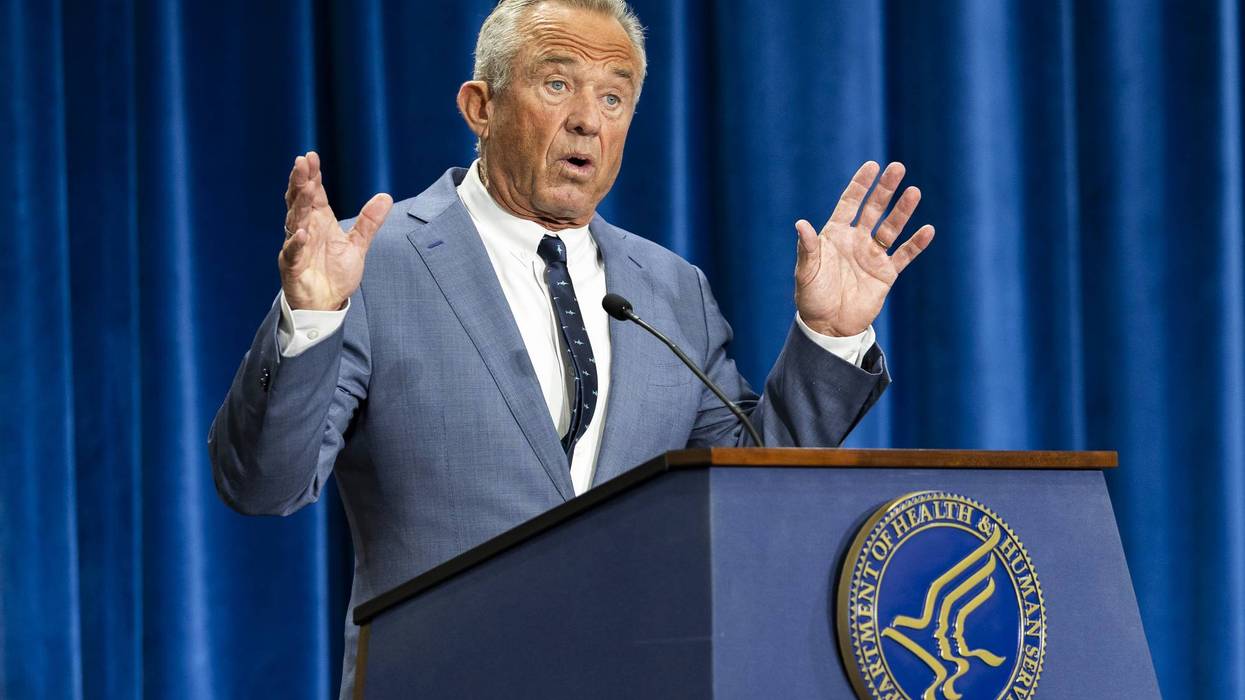
RFK Jr. Condemned Over Baseless and 'Nakedly Racist' Anti-Arab Rant at Rogers Event in Michigan
"Every day, a prominent Republican... says something insanely racist about Muslims or Arabs," said one journalist, while many Democrats are silent about "out-of-control Islamophobia from the GOP."
Visiting the state with the highest percentage of Arab Americans to campaign for the Republican US Senate candidate, a week before the midterm elections during a campaign in which people from across the political spectrum have recoiled at the GOP's racist, misogynist rhetoric, the Trump administration's top health official opted to share a fact-free non sequitur about hundreds of millions of Arabs across the globe.
Apparently trying to sell voters in Michigan on Republican former Rep. Mike Rogers, who was behind Democratic candidate Abdul El-Sayed by two points in a recent Marist poll—and by six points among independents—Health and Human Services Secretary Robert F. Kennedy Jr. opined on "500 million Arabs in the world," a vast population that he suggested contributes little to the global community.
"They don’t produce science, they don’t win the Nobel Prize, they don’t win the Fields prize, they don’t win the Wolf Prize, they don’t produce literature," declared Kennedy at a campaign event in Grand Rapids.
RFK: "There's five hundred million Arabs in the world. And yet they don't produce science. They don't win the Novel Prize. They don't win the Fields Prize. They don't win the Wolf Prize. They don't produce literature." https://t.co/ikZHqklQjE
— Bulwark Clips (@BulwarkClips) October 26, 2026
The comments provoked horror among numerous Democratic lawmakers, advocacy groups, scientists, and journalists, many of whom were quick to point out that Kennedy's racist rant had no basis in reality.
"Besides being nakedly racist and bigoted, this is just hilariously wrong on all levels," said Justin Baragona of Zeteo News.
Baragona was among the observers who did not have reach far back in history to prove Kennedy, who has been widely condemned for his rejection of scientific evidence as he has questioned the safety of vaccines, entirely wrong about Arab people's contributions to the field.
Just last year, Omar Yaghi won the Nobel Prize in chemistry for the development of metal-organic frameworks. Yaghi was born in Jordan to Palestinian refugee parents. He also won the Wolf Prize, an international award for achievements in sciences and the arts, in 2018, for his contributions to the field of reticular chemistry.
Vaccine scientist Peter Hotez expressed relief that his late colleague and "brilliant co-US Science Envoy," the Egyptian-American chemist Ahmed Zewail, "didn’t have to endure" listening to Kennedy's comments. Zewail won the Nobel Prize in chemistry in 1999.
Entrepreneur Saad Mohseni listed a number of other "Arab science giants" who came to mind.
Baragona also pointed to two winners of the National Book Award just last year—the Lebanese writer and painter Rabih Alameddine and Egyptian-American journalist Omar El Akkad.
But US Sen. Chris Murphy (D-Conn.) suggested that beyond debunking Kennedy's wholly inaccurate claim, "everyone needs to pay attention" to what his comments were part of: a "coordinated campaign to delegitimize Muslim Americans—not just as citizens but as humans."
"These increasingly hysterical attacks are a prelude to Republicans bringing us to a very, very dark place after the election," said Murphy.
The Council on American Islamic Relations demanded that Kennedy be removed from his Cabinet position in light of the remarks, which they called "a textbook display of unvarnished racism and bigotry."
"To stand on a public stage as a sitting US Cabinet official and dehumanize half a billion people—and millions of Muslim and Christian Arab Americans—with fabricated, white supremacist talking points is utterly disqualifying for public office," said the group. "His sweeping erasure of Arab contributions to humanity is not only maliciously false, but it also fans the flames of anti-Arab and anti-Muslim hate at a time when communities are already vulnerable to bigoted attacks from other public officials nationwide. Anyone who holds such blatant contempt for an entire ethnicity has no business leading a federal agency meant to serve all Americans."
Journalist Mehdi Hasan, the founder of Zeteo News, suggested that the Democratic Party and liberal commentators deserve a large share of the blame for a political environment in which a top US official felt comfortable openly degrading hundreds of millions of people of Arab descent, including an estimated 3.7 million Arab Americans, as non-contributing members of society.
"Every day, a prominent Republican—the president, a Cabinet official, a primetime Fox host, the Michigan Senate candidate—says something insanely racist about Muslims or Arabs. Meanwhile, my timeline is full of prominent Democrats and liberals getting mad about a random ad attacking Israel and screaming about antisemitism," he said, referring to an ad recently released by Rebellion political action committee, which criticized US aid to Israel and tied it to Americans' struggles with the rising cost of living.
From many liberal commentators, said Hasan, he has heard "crickets... on the out-of-control Islamophobia from the GOP."
Kennedy's anti-Arab comments were hardly an outlier in the Michigan Senate campaign. Rogers and President Donald Trump have both accused El-Sayed of supporting the Muslim Brotherhood, despite the fact that in 2012, as a congressman, Rogers himself said he was willing to work with the movement. The president has openly called the Michigan-born El-Sayed a "jihadist," and a speaker at one Rogers rally over the weekend said the candidate's birth certificate did not make him an American.
But prominent Democrats have also had a hand in pushing the narrative that El-Sayed is a risky choice for Michiganders. Former state Democratic Party chair Lon Johnson accused El-Sayed of “extremism” last week and said his criticism of Israel threatens Jewish communities, calling on Democrats in the state to “leave the Senate race blank." During the primary, the centrist think tank Third Way spent months attacking El-Sayed for campaigning with popular streamer Hasan Piker, who once said that the US "deserved" the September 11 attacks—a comment he later clarified and apologized for.
At Protect Our Care, an advocacy group that typically focuses on Kennedy's attacks on public health, president Brad Woodhouse said Tuesday that with his remarks in Grand Rapids, the health secretary had "laid bare how small and ignorant he really is."
“Fear and racism are the crutch of pathetic political hacks with absolutely nothing to offer or progress to point to," said Woodhouse. "This is his closing argument for why Republicans need more power, smearing an entire people with gross and instantly disprovable lies? Really?"
"Secretary Kennedy thinks spewing hate will distract people from his multiple corruption scandals and starring role in the historic measles and food-borne illness crises Americans have suffered through this year," he added. "This wasn’t the first time RFK Jr has trafficked in racism, but it may be his ugliest episode yet. It’s an indictment of both Mike Rogers and [Republican US Rep.] John James that they haven’t condemned the remarks. They’d rather clap like seals and hope RFK’s racist ‘hail mary’ pays off for them politically. That makes them just as weak, pathetic, and un-American.”
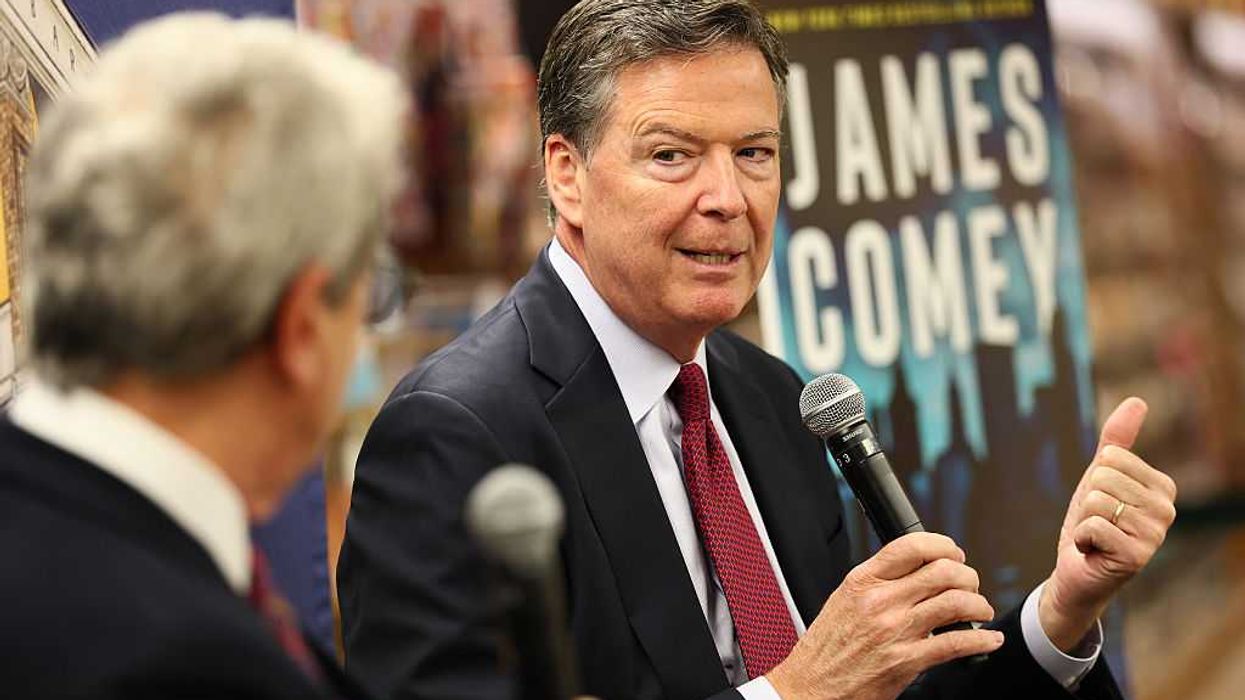
Trump DOJ Charges Ex-FBI Chief James Comey a Third Time
"It would almost be funny if it weren't such an appalling abuse of the Department of Justice—one that we cannot become numb to," said James Comey.
President Donald Trump's administration has charged former Federal Bureau of Investigation Director James Comey a third time, according to documents unsealed on Monday—the same day a US judge ruled that the administration unlawfully fired Comey's prosecutor daughter, who worked on the sex crimes case against the president's dead ex-friend Jeffrey Epstein.
Comey, a former Republican fired during Trump's first term, and various critics have condemned all of the cases against him and others who publicly call out the administration as weaponization of the US Department of Justice (DOJ) against the president's political enemies. The latest case relates to a New York Times article from over a decade ago, when he was still FBI chief.
The case, in which he's accused of unlawfully disclosing classified information, "has played out under seal since October 5. Comey's defense attorneys filed a motion 10 days ago to dismiss the charges against him. He has not been indicted in the case," NBC News reported. "The charges that were filed are a criminal information—essentially a charge filed by prosecutors—and not a grand jury indictment."
Elie Honig, a former federal prosecutor and CNN's senior legal analyst, was among the experts who highlighted that "this is a bizarre, and likely improper, use of a criminal 'information' to end-run the statute of limitations."
"Typically an information must be agreed to by a defendant—and Comey did not consent here," Honig explained. "It therefore likely cannot extend the statute of limitations, which would have expired on October 5, 2026."
The DOJ Rapid Response account on X said that "the department filed a waiverless criminal information to toll the statute of limitations as it relates to allegations concerning former FBI Director Comey. Filing a criminal information to toll the statute of limitations is a widely recognized practice in federal court and has been approved by multiple circuit courts of appeals. This is an ongoing criminal investigation, and we will not comment further."
Comey's attorney, Pat Fitzgerald, said that he "steadfastly maintains his innocence" and noted some details from all cases: "In September 2025, the Department of Justice used a person who was not actually a United States attorney to seek an indictment that was not actually shown to the grand jury. And it charged Mr. Comey with crimes that he did not commit. That case was promptly and properly dismissed. In April 2026, the Department of Justice filed charges in the Eastern District of North Carolina concerning Mr. Comey's posting of a photograph of seashells spelling '8647.' We will not comment beyond our filings in that case."
"This most recent case involves an October 5, 2016 New York Times article that two different teams of prosecutors investigated during the first Trump administration," Fitzgerald continued. "Both times the government determined that no charges should be brought against anyone. Now, 10 years after the article was published, the government filed an 'information' against Mr. Comey that was not approved by a judge nor issued by a grand jury. It purports to charge Mr. Comey with crimes that he did not commit. We are gratified that United States District Judge Trevor McFadden has ordered this matter unsealed. Mr. Comey will fight these charges vigorously and in the open."
Comey also directly declared his innocence and vowed to fight back in a video he posted on Substack, saying that "it would almost be funny if it weren't such an appalling abuse of the Department of Justice—one that we cannot become numb to."
Yet another case in DC by James Comey
Read on SubstackThe documents were unsealed shortly after US District Judge Jesse M. Furman—appointed to the Southern District of New York by former President Barack Obama—sided with Maurene Comey, concluding that the DOJ "violated the separation of powers, federal administrative law and Ms. Comey’s due process rights when it fired her in July 2025," as the Times detailed Monday.
A spokesperson for the DOJ—which is now led by Attorney General Todd Blanche, who previously served as the president's personal lawyer—said that "the department disagrees with this decision and will appeal in due course."
Sharing news of that ruling on X, Sen. Sheldon Whitehouse (D-RI) predicted, "This will drive 'Ranting Man' Trump even crazier!!"
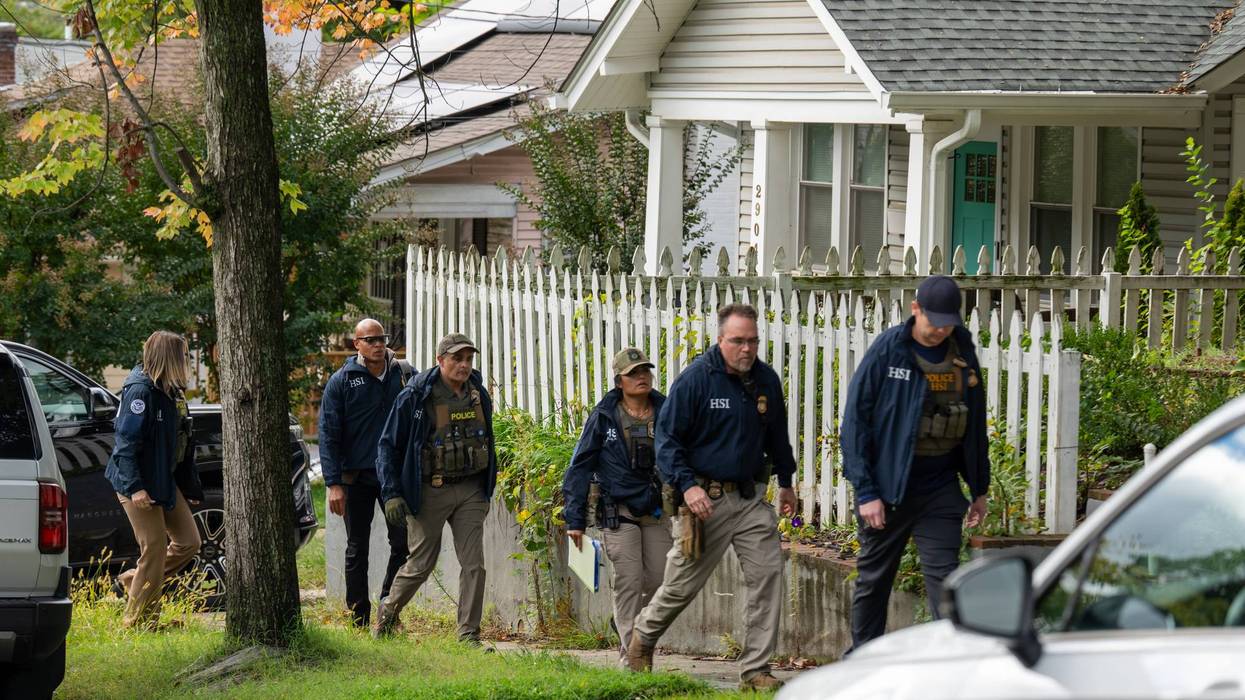
175 House Democrats Decry Omar Raid as Dangerous 'Attempt to Influence an Election'
"This weaponization of law enforcement to harass a sitting member of Congress 22 days before an election is unprecedented and unacceptable."
While Congresswoman Ilhan Omar calls out the "fascist" Trump administration's recent raid on her home in fundraising emails as she seeks reelection in a solidly Democratic Minnesota district, over three-quarters of the progressive's fellow Democrats in the US House of Representatives came together on Monday to condemn the "weaponization of federal law enforcement against her."
As part of what the White House and US Department of Justice (DOJ) have confirmed is an ongoing criminal investigation, Department of Homeland Security (DHS) agents executed a search warrant on Omar's Washington, DC home on October 12, and "were seen carrying out boxes of documents from the home, and reportedly obtained her DNA, personal phone, and passport," notes House Democrats' letter to Attorney General Todd Blanche and DHS Secretary Markwayne Mullin.
President Donald Trump has a long history of attacking the Somali-American lawmaker with "baseless lies and smear campaigns," and during this probe, Mullin, Vice President JD Vance, and White House adviser Stephen Miller and his wife, Katie Miller, have piled on. The letter calls the warrant "a dramatic escalation of an almost decade-long campaign of attacks on Congresswoman Omar."
The persecution of @repilhan.bsky.social just days before an election is vile and politically-motivated.I'm leading 175 House Democrats in denouncing this. When we retake power, we have to seriously look at how we can stop these abuses of power — starting with the power of the purse.
[image or embed]
— Congresswoman Pramila Jayapal (@jayapal.house.gov) October 26, 2026 at 4:12 PM
"This weaponization of law enforcement to harass a sitting member of Congress 22 days before an election is unprecedented and unacceptable," argued the Democrats, led by Reps. Greg Casar (Texas), Yvette Clarke (NY), Robert Garcia (Calif.), Pramila Jayapal (Wash.), Jamie Raskin (Md.), and Bennie Thompson (Miss.), who are all congressional committee ranking members or caucus chiefs.
The four-term congresswoman is running again in Minnesota's 5th District, which earlier this year was targeted in Trump's Operation Metro Surge. That was part of his mass detention and deportation agenda, which has involved sending armed immigration agents into various communities, where they have killed, injured, and violated the rights of US citizens and noncitizens alike.
Early voting began in Minnesota just days after the raid. The members of Congress wrote that "news of the search warrant, whether properly predicated or not, could affect voters' decisions, which is exactly why federal law enforcement should not engage in such conduct when voters are casting their ballots. This type of interference strips Minnesotans of their right to a free and fair election guaranteed to them under the Constitution."
"Your actions are clearly driven by a pre-determined political outcome rather than an objective pursuit of justice," the lawmakers told Blanche and Mullin. "Your probe into the congresswoman reportedly concerns her late father's filing of immigration paperwork after she fled Somalia's civil war at age 8, making her a US citizen at age 17. This does not justify a pre-dawn raid on her home for paperwork her father filed when she was a minor."
Citing previous cases in which Trump's second administration "has prioritized retribution over its responsibility to apply the laws without fear or favor," the lawmakers added that "your unprecedented attempt to influence an election through federal law enforcement will also fail but the attempt itself is incompatible with our democracy."
We stand with @repilhan.bsky.social against Trump's baseless attacks and the continuing weaponization of the federal government.
[image or embed]
— The Progressive Caucus (@usprogressives.bsky.social) October 26, 2026 at 3:16 PM
"Political disagreements never justify intimidation, and no president should use the power of the federal government to threaten, silence, or intimidate political opponents," the Democrat stressed. "You have already disgraced the offices you hold, and we demand you refrain from taking any further actions that could affect the outcome of the upcoming election."
Democrats are aiming to reclaim majorities in both chambers of Congress in the November 3 elections—and if they do, House Minority Leader Hakeem Jeffries (D-NY), who could become the next speaker, made clear last month that party members "are preparing a vast oversight agenda" and "we haven't ruled anything out," including impeachment.
UN Report Details Israeli Crimes Against Humanity in Palestine, Including Extermination, Rape, and Torture
The UN-mandated commission of inquiry found that Israel's genocidal acts are ultimately aimed at "blocking any viable attempts to realize Palestinians’ right to self-determination."
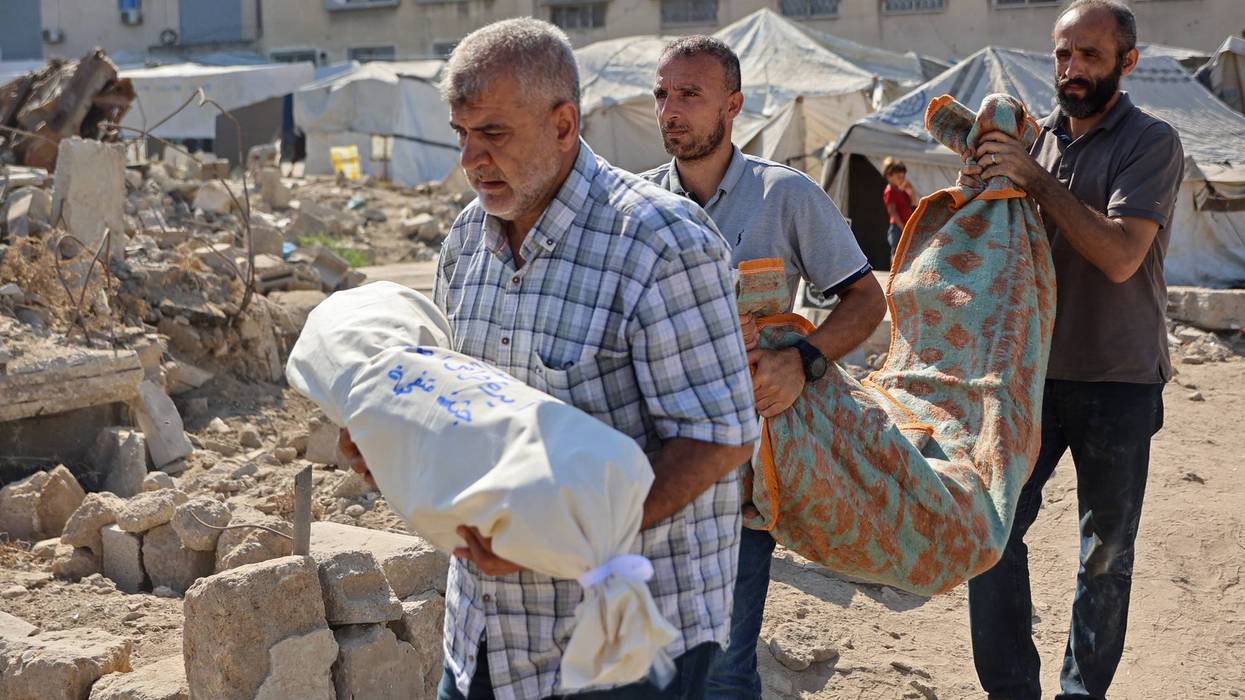
A United Nations-mandated commission of inquiry on Monday issued a report detailing Israeli crimes against humanity in the occupied Palestinian territories, while also affirming that Israel's genocide continues in Gaza, despite a nominal yearlong ceasefire.
"Israel has committed war crimes and the crimes against humanity of extermination, persecution, torture, rape, and other forms of sexual violence in the Occupied Palestinian Territory, intentionally targeting Palestinian civilians as it continues to commit genocide in Gaza," the UN Office of the High Commissioner for Human Rights (OHCHR) said in a summary of the 19-page report.
"In Gaza... Israeli authorities and forces continue to commit genocidal acts even after the so-called ceasefire agreement, with the intent to destroy the Palestinian people, in whole or in part," OHCHR saids of the report, which was authored by the UN-mandated Independent International Commission of Inquiry on the Occupied Palestinian Territory, including East Jerusalem, and Israel.
"Israeli forces have also deliberately killed and inflicted serious bodily and mental harm against children in the West Bank—as they have in Gaza—committing age-based persecution against Palestinian children," the report found. More than 21,500 Palestinian children, including over 1,000 infants, have been killed in Gaza over the past three years.
The commission documented cases of rape and sexual assault of Palestinians, including at the notorious Sde Teiman prison in Israel, where, according to the report, a prisoner "was raped with a stick and forced to insert it into his mouth until he vomited."
Previous reporting, including by The New York Times, detailed sexual violence against Palestinian prisoners, including one man who died after allegedly being sodomized by an electric baton.
The commission's report also affirmed that Israeli forces sexually abused Global Sumud Flotilla activists who were seized upon the high seas and abducted to Israel, including one male activist who was raped with a metal detector.
The report comes as Israeli forces intensify a military lockdown and ethnic cleansing in the occupied West Bank, including expulsions and home demolitions in Hebron, following the killing of two Israel Defense Forces (IDF) soldiers by Palestinians resisting the nearly half-century occupation, and ahead of Tuesday's Israeli elections.
Israeli Prime Minister Benjamin Netanyahu—who is wanted by the International Criminal Court for alleged crimes against humanity and war crimes in Gaza—is trying to shore up support for his far-right coalition ahead of the elections. Netanyahu and other senior officials, including Defense Minister Israel Katz, National Security Minister Itamar Ben-Gvir, and Finance Minister Bezalel Smotrich have vowed to annex parts or all of the West Bank and to ethnically cleanse Gaza.
Netanyahu and members of his Cabinet have also said that Israel is planning to launch the biggest military operation in the West Bank since it was captured and occupied during the 1967 Six-Day War. Both the occupation and colonization of the West Bank are illegal under international law.
More than 250,000 Palestinians have been killed or wounded in Gaza since the Hamas-led attack of October 2023. Roughly 1.9 million others have been forcibly displaced, often multiple times. Israel's conduct in Gaza is the subject of a genocide case filed by South Africa at the International Court of Justice. A ruling is not expected until at least 2029.
The new report shows how the scale of deadly violence has increased dramatically in the West Bank. Six Palestinians were killed in Israeli airstrikes there between 2008 and October 6, 2023, compared with 254 killed in aerial bombardments between October 7, 2023 and September 30, 2026.
OCHCR has documented 1,143 Palestinians killed in the occupied West Bank, including East Jerusalem, between October 7, 2023 and October 9, 2026. At least 250 of those killed were children.
“The intentional killing and injuring of Palestinian civilians and destruction of homes in the West Bank combined with Israel’s persistent denial of responsibility form part of a broader strategy to exterminate and displace Palestinians and impose conditions of life that are unliveable,” Srinivasan Muralidhar, who chairs the commission of inquiry, said in a statement. “Meanwhile, Israel’s expansion of territorial control in Gaza continues to result in the killing and harming of Palestinian civilians."
The commission also faulted the Palestinian Authority for targeting Palestinians for voicing dissent to its policies and actions and for its failure "to conduct effective and impartial investigations into incidents of killings and to ensure effective remedy, including financial compensation to victims and their family members."
The report found that Israel's actions ultimately are designed to thwart any possibility of an independent Palestinian state.
“Seizing maximum land while minimizing the Palestinian population in relation to size, autonomy, and viability stems from Israel’s colonizing policies and is rooted in historical practices and patterns of action, resulting in the excessive and discriminatory application of lethal force, displacing, injuring, and killing Palestinians over generations,” said Muralidhar.
“Attempting to equate Palestinian statehood with a threat to the existence of Israel is blocking any viable attempts to realize Palestinians’ right to self-determination," he added.
Israel Bars International Delegation From West Bank Amid Attacks on Palestinian Olive Harvesters
"It is clear that Israel is trying to erase Palestinian life in the West Bank and Gaza with minimum fuss and attention—cutting off support and solidarity from the outside world."
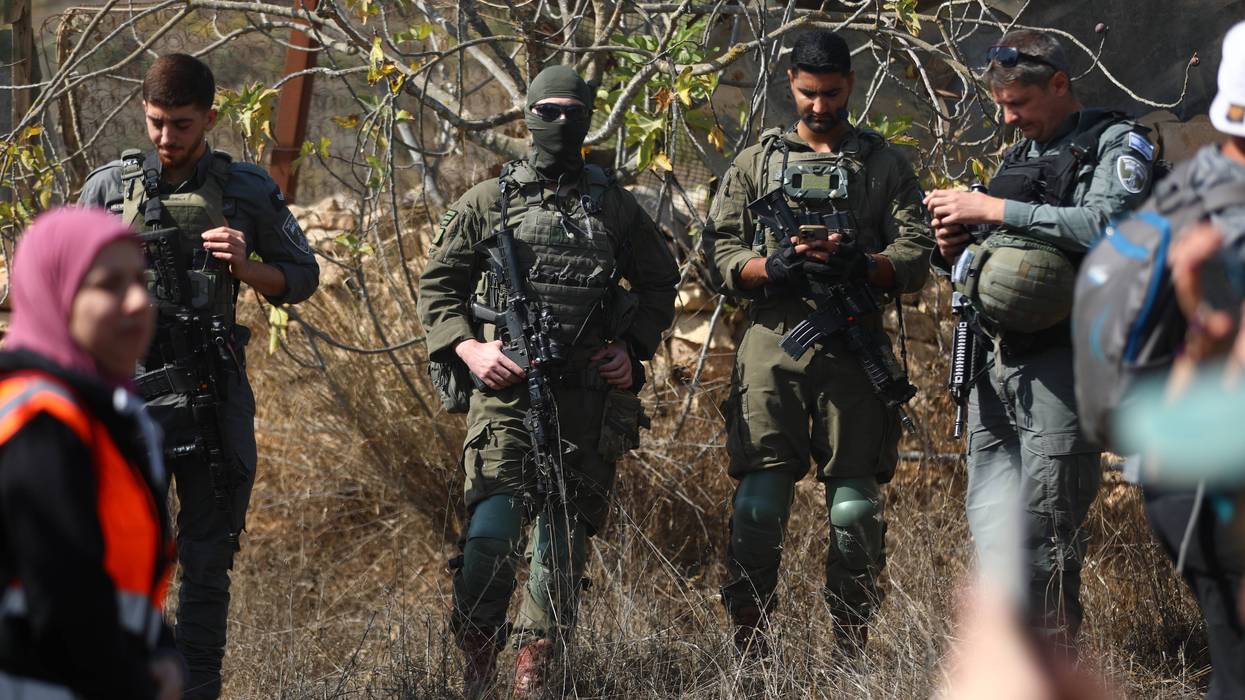
Amid international outcry over escalating settler terrorism against Palestinian farmers, the Israeli government on Monday blocked a group of European legislators seeking to observe the olive harvest in the occupied West Bank.
The group denied entry to the West Bank from Jordan included British Labour Member of Parliament Clive Lewis, Scottish National Party MP Lara Bird, Scottish Green lawmaker Kate Nevens, former Labour MP Sam Tarry, and Spanish Sen. Josu Estarrona Elizondo of EH Bildu, along with other international activists.
The lawmakers were set to join Palestinian olive harvesters on October 31 at the Qamar al-Balad Farm in the village of Farkha in the central West Bank. Earlier this month, Israeli settlers attacked the farm and attempted to burn its poultry shed before being repelled by local residents.
“I came to stand alongside Palestinians being attacked for harvesting olives on their own land. Instead, we were turned away at the border with no reason given,” Bird said. “More than ever, Palestinians are being subject to terror and violence by the [Israel Defense Forces] and illegal settlers. Increased blockades, demolitions, and unthinkable violence have become the norm for Palestinians in the West Bank.”
The United Nations has documented at least 272 attacks since September 1, eclipsing the full-season totals for 2024 and 2025, including assaults by armed Israeli settlers against farmers, journalists, and European diplomats. Last week, Israeli authorities detained around 80 volunteers accompanying Palestinian farmers, including US House candidate Brad Lander, a Jewish New York Democrat.
“For more than eight hours, we were held, interrogated, and made to feel as though we had done something wrong simply by attempting to enter,” Lewis said. “The simple truth is we had done nothing wrong. We went to show our support for the Palestinian people and highlight the terrible injustice and violence being perpetrated against them. We want to ensure that people back home do not look away from the reality of what is happening.”
The Israeli government has promised to crack down on violence by settlers, but the military has often aided them. Meanwhile, Defense Minister Israel Katz has pursued removal orders against activists seeking to protect Palestinian olive harvesters.
“We are dismayed that Israel has barred our entry to Palestine,” said Nick Dearden, director of Global Justice Now, which participated in the delegation. “But this is clearly part of a much wider campaign in which Israel is increasingly stopping politicians, observers, and even aid workers from entering the West Bank to witness or provide support to Palestinians.”
In retaliation for a UK policy cutting off trade with the settlements, which are considered illegal under international law, Israel placed 11 members of the UK Parliament on a “ban” list—including Your Party MP Jeremy Corbyn, Labour MP Diane Abbott, and Green MP Carla Denyer.
American activists who’ve traveled to Israel and the occupied territories to provide support for Palestinians at risk of settler attacks have also had their legal status revoked, including several Jewish Americans—even though Jewish Americans are generally encouraged to migrate to Israel.
The exclusion of international observers comes just before a highly visible national election on Tuesday, in which Israeli Prime Minister Benjamin Netanyahu is at risk of having his government toppled.
Netanyahu has ramped up military assaults on Palestinians in the West Bank in recent days, particularly after an attack that killed two Israeli soldiers Friday in Hebron. In what has been decried by the United Nations human rights office as "collective punishment," nearly 4,000 Palestinians have been forced from their homes while houses and businesses have been raided and demolished by the military.
While the surge in settler violence has drawn global condemnation and heightened Israel's pariah status, Netanyahu has praised Israel's "heroic settlers" in the final days of his campaign and vowed to expand settlements.
"It is clear that Israel is trying to erase Palestinian life in the West Bank and Gaza with minimum fuss and attention—cutting off support and solidarity from the outside world," Dearden said. "In this context, it is more essential than ever that the UK and other governments act with extreme urgency and courage to deter Israel’s attacks on Palestinians. This can’t wait.”
Former Biden Official With AIPAC Ties Tapped for Trump's 'Corrupt, Anti-Palestinian' Board of Peace
"Democrats should firmly oppose it regardless of how many former AIPAC employees the Trump administration sends up to the Hill to sell it," said one policy expert of the Board of Peace.
As President Donald Trump's Board of Peace, the organization that is tasked with overseeing a peace plan in Gaza, looks to boost its bipartisan appeal ahead of the midterm elections, in which Democrats could take control of one if not both chambers of Congress, the board announced Monday that it had appointed a former Biden administration official to help smooth the effort.
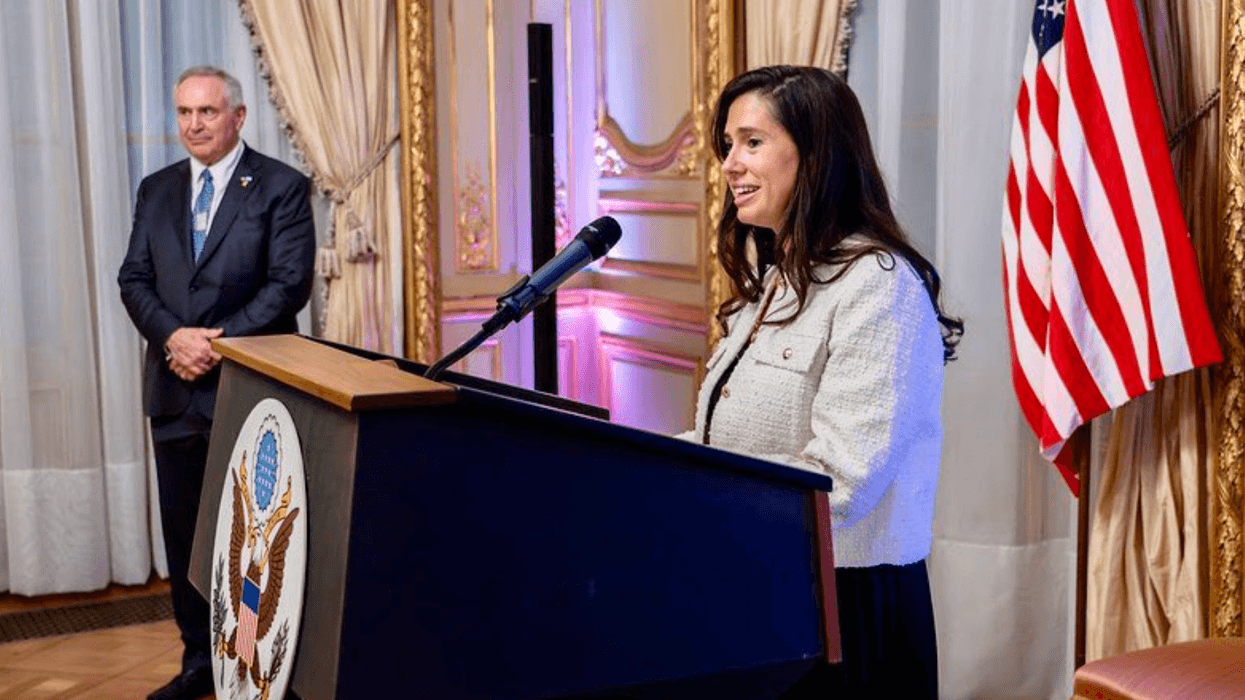
Shelley Greenspan, who served in the State Department and then as the White House liaison to the Jewish community for two years under President Joe Biden, was selected to lead external affairs, including outreach to members of Congress and think tanks in Washington, DC.
Greenspan has previously worked for Amazon in global innovation policy, for the Hillary Clinton presidential campaign in 2016, and as a legislative manager for the powerful pro-Israel lobbying group, the American Israel Public Affairs Committee (AIPAC).
Her appointment comes just before the US elections, but also legislative elections in Israel, which have held up the peace process as Prime Minister Benjamin Netanyahu has refused to take steps on the peace plan before the country goes to the polls Tuesday.
Recent polling has projected that a bloc of opposition parties could win more seats than Netanyahu's far-right nationalist alliance.
Greenspan has promoted Trump's 20-point peace plan as one that could bring "practical results" to Palestinians in Gaza.
In a statement to Axios on Monday, she said that in her last federal government role at the State Department, "I saw how the president's 20-Point Plan can tangibly deliver for the peoples of Gaza and Israel. I look forward to continuing that work with the Board."
But rights groups have warned the Board of Peace has failed to deliver safety to Palestinians. In May, five months after the board was established at the World Economic Forum in Davos, Switzerland—where Trump's son-in-law, Jared Kushner, presented a vision for a "new Gaza" complete with data centers and luxury high-rises—Human Rights Watch found that 865 Palestinians had been killed by Israeli forces since the October 2025 ceasefire and humanitarian aid was still "far below required levels."
The Board of Peace was given a mandate by the United Nations Security Council to oversee the reconstruction of Gaza, with Trump serving as "chairman for life." Last month, it unveiled a $2.45 billion recovery plan, including 66 projects.
But as Eric Reidy wrote at The New Humanitarian last week, the board "has put forward grand visions for redevelopment that are entirely disconnected from Gaza’s past and present as well as preliminary plans for stabilization that lack any viable path for implementation."
Meanwhile, Israel has continued to wage deadly attacks on Palestinians and daily life in the exclave has been "suspended in an intolerable state of limbo," he wrote.
"Trump’s 20-point peace plan says that Israel 'will not occupy or annex Gaza,' but it makes no mention of the West Bank," Reidy added. "The question of Palestinian self-determination is kicked indefinitely down the line to some point in the future when 'the conditions may finally be in place.' There is no mention of Palestinian rights or of justice and restitution, let alone recognition of Israeli crimes. Can there really be a path forward in Gaza that would benefit its people without addressing, or even acknowledging, the underlying causes of their suffering, namely Israel’s colonization and subjugation of Palestinians?"
Meanwhile, allegations of corruption have emerged, with Trump pledging $10 billion in taxpayer funds to the Board of Peace.
Matt Duss, executive vice president at the Center for International Policy, urged Democrats in Congress to oppose to board despite its attempt to cast itself as a bipartisan operation by appointing Greenspan.
"There's no 'fixing' the Board of Peace, and it's doing exactly what the world expects of it: serving as a Trump slush fund while validating continued Israeli control of Gaza, at the expense of Palestinian lives and rights," said Duss. "That is its purpose. No one should pretend otherwise."
Greenspan's appointment, said Akbar Shahid Ahmed of The Washington Sun, "underscores continuity in Biden-Trump policy for ongoing Palestinian suffering," and the "reluctance to pressure Israel even for stated US goals" such as an end to Israeli attacks on Gaza.
The Board of Peace, said progressive organizer Melissa Byrne, "is war and subjugation by another name."
Over a Million Seniors Sent Scrambling as Medicare Advantage Giants Slash Plans Under Trump
Medicare Advantage giants are seeking to boost their profits by cutting benefits and exiting counties across the US—despite receiving a big payment boost from the Trump administration.
Seniors across the United States are scrambling to find alternative health coverage as Humana, UnitedHealthcare, and other private insurance giants slash Medicare Advantage benefits and cancel some plans entirely—despite receiving a major payment increase from the Trump administration for the coming fiscal year.
Humana and UnitedHealthcare's plan cancellations are expected to impact more than 1 million seniors nationwide, forcing people to find new plans in the current open enrollment period that runs until December 7. Both companies have signaled that they are trying to boost their bottom lines by exiting unprofitable Medicare Advantage markets and cutting benefits such as routine dental coverage, which is not offered by traditional Medicare.
"My biggest challenge for picking a plan next year is the cost of dental plans and vision are going up," one Medicare Advantage enrollee told PBS last week.
The health policy nonprofit KFF noted in an analysis earlier this month Humana and UnitedHealthcare are withdrawing their Medicare Advantage prescription drug plans from more US counties than they are entering in 2027. UnitedHealthcare is exiting 228 counties and entering nine new ones, while Humana is leaving 62 counties and entering four new ones, KFF found.
Blue Cross Blue Shield is also eliminating some of its Medicare Advantage plans, which are funded by the federal government—at a massive cost to US taxpayers—and run by private companies. The Boston Globe reported on Monday that "about 20,000 seniors in Massachusetts will be forced to find new health insurance plans" due to the Blue Cross Blue Shield cuts.
In Minnesota, an analysis by the Star Tribune found that around two-thirds of state residents enrolled in Medicare Advantage—around 340,000 people—will have to find new coverage for the coming year due to private insurers' cuts.
"Fifteen counties are losing their remaining Medicare Advantage options next year. In 12 of those counties, though, insurers will sell a different kind of privatized Medicare coverage called a Cost plan," the Star Tribune reported last week. "Cost plans sell at typically higher monthly premiums than Medicare Advantage plans."
Nationwide, more than half of the Medicare-eligible population is enrolled in Medicare Advantage plans, which are notorious for overbilling the federal government and denying coverage for necessary care—increasingly using artificial intelligence technology.
Medicare Payment Advisory Commission estimated in a report published earlier this year that the federal government will pay roughly $76 billion more to cover seniors on Medicare Advantage plans than it would have if those same people were on traditional Medicare. Over the next decade, according to the nonpartisan Congressional Budget Office, Medicare Advantage overpayments could cost the federal government around $1 trillion.
Earlier this year, the Trump administration gave the Medicare Advantage industry a significant boost by hiking federal payments to private insurers by roughly 2.5%—a sizeable increase compared to the 0.9% raise that the administration previously floated. Reuters reported in April that the industry will also receive a "2.5% benefit from a change to risk assessment payments related to health status, for a total increase of about 5%."
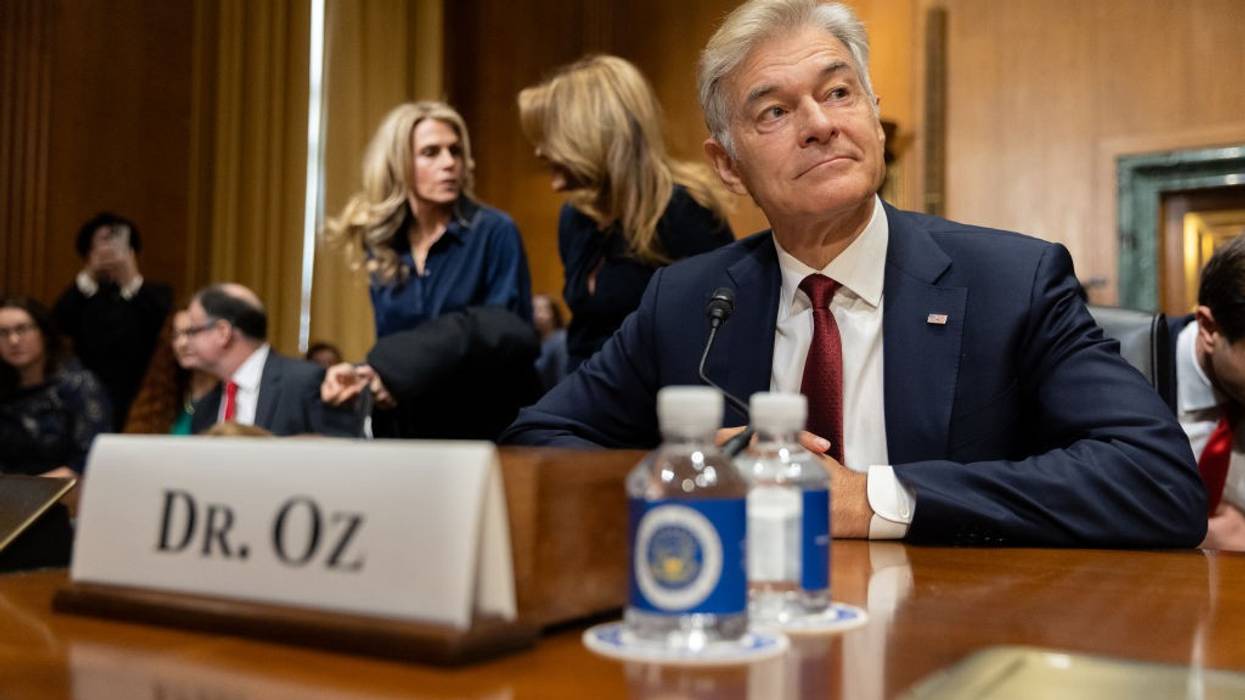
The Centers for Medicare & Medicaid Services, which announced the payment boost, is currently headed by Mehmet Oz, who once proposed a healthcare plan dubbed "Medicare Advantage for All."
The advocacy group Families USA called the 2027 payment increase for Medicare Advantage insurers "a big giveaway" that could have gone toward "bolstering benefits in Medicare for all seniors and people with disabilities."
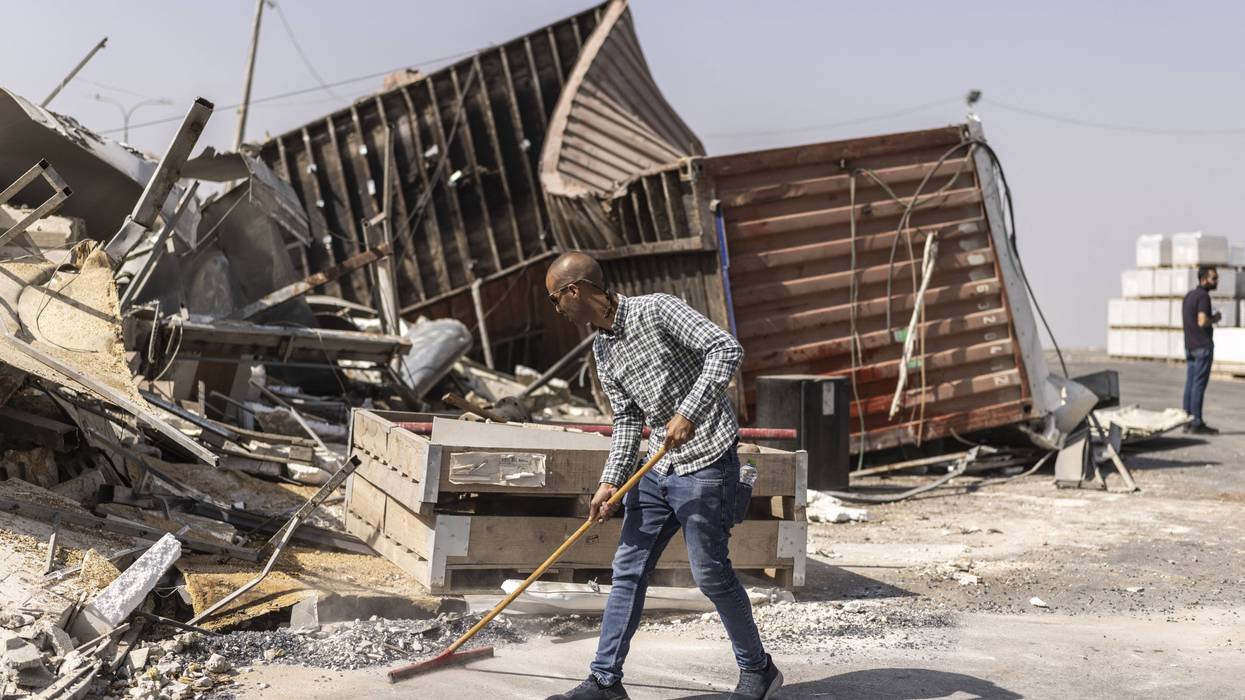
Israel's Intensified Ethnic Cleansing of West Bank Spurs Calls for 'Urgent Action'
“The world cannot stand by as Israel continues its assault on Palestinians, waiting for yet more neighborhoods to be emptied and erased before intervening,” said the Israeli rights group B'Tselem.
Human rights groups on Monday implored the international community to act in the face of Israel's accelerating ethnic cleansing of West Bank Palestinians following a resistance attack that killed two Israel Defense Forces soldiers and ahead of Tuesday's Israeli elections.
Al Jazeera reported that more than 3,000 Palestinians have been forced from their homes in Hebron in the illegally occupied West Bank, a city long beset by Israeli settlement expansion and displacement. In addition to a military lockdown, Israeli occupation forces have detained scores of Palestinians since two IDF soldiers were shot dead on Friday.
Israeli Prime Minister Benjamin Netanyahu—whose far-right coalition is trying to shore up support ahead of Tuesday's elections—and other senior officials have openly indicated plans to ramp up the ethnic cleansing of the area. Israeli Defense Minister Israel Katz and Finance Minister Bezalel Smotrich have vowed to treat the West Bank like Gaza, where more than 250,000 Palestinians have been killed or wounded and around 1.9 million others have been forcibly displaced amid a "complete siege" since the Hamas-led attack of October 2023.
“This is not only a humanitarian crisis but a deliberate assault on the economic foundations of Palestinian life, as families lose their homes and livelihoods," Mustafa Tamaizeh, Oxfam International's West Bank response lead, said Monday. "The destruction of factories, workshops, and business premises is wiping out years of investment and hard work."
"These illegal actions amount to collective punishment and are accelerating the forced displacement of Palestinian communities across the West Bank," Tamaizeh continued. "They come during the olive harvest, one of the most important sources of income for Palestinian farming families."
“In recent days, high-ranking Israeli officials have openly acknowledged they are considering plans for the largest military operation in the West Bank since 1967, with calls for operations in the West Bank to be conducted like those in Gaza," he added. "Against this backdrop Oxfam is calling for urgent action by the international community to stop Israel’s campaign of mass forced displacement, demolitions, and state-backed settler violence, which amount to a policy of ethnic cleansing.”
The International Commission to Support Palestinian Rights (ICSPR) said Monday that it "strongly condemns the escalation of Israeli occupation crimes across the occupied Palestinian territory, including the siege, raids, home demolitions, and forced displacement of residents in Hebron and other areas of the West Bank."
"These violations coincide with raids on more than 15 towns and cities in the northern West Bank, the arrest of numerous Palestinians, escalating settler attacks, and road closures, alongside the continued mass killings and war crimes against civilians in the Gaza Strip," ICSPR continued.
"ICSPR calls on the United Nations and the states parties to the Geneva Conventions to take immediate and binding measures to halt Israeli occupation crimes and provide international protection for civilians in Gaza, the West Bank, and occupied East Jerusalem," the group added. "It calls for an end to forcible evictions, home demolitions, settler attacks, and settler terrorism."
United Nations Secretary-General António Guterres weighed in Monday, invoking the "specter of ethnic cleansing" and calling for "the realization of the legitimate rights of the Palestinian people to self-determination."
Community Peacemaker Teams (CPT), a Christian human rights group, also condemned Israel's actions, issuing a statement Monday asserting that “families should never have to live in fear of being forced out of their homes or separated from the places where they have built their lives."
CPT stressed that "every Palestinian has the right to live safely and with dignity in their own home." The group urged the international community "and diplomatic missions to act now to protect civilians in Hebron," and "people of faith and conscience to contact their elected representatives and call for action to protect Palestinian civilians."
At least one Israeli rights group also condemned the government's and IDF actions.
“The world cannot stand by," B'Tselem said, "as Israel continues its assault on Palestinians, waiting for yet more neighborhoods to be emptied and erased before intervening."