SUBSCRIBE TO OUR FREE NEWSLETTER
Daily news & progressive opinion—funded by the people, not the corporations—delivered straight to your inbox.
5
#000000
#FFFFFF
To donate by check, phone, or other method, see our More Ways to Give page.
Daily news & progressive opinion—funded by the people, not the corporations—delivered straight to your inbox.
Despite the specious swapping out of fascist ICE leaders seeking to quell public fury, the gutted, steadfast denizens of Minneapolis continue to show up in frigid weather to demand "ICE Out" and "Stop Killing Us." Honoring their righteous struggle, Friday sees the city nominated for the Nobel Peace Prize by The Nation, which cites its "moral leadership" for those fighting fascism on "a troubled planet." Likewise moved, The Boss just wrote them a song. Minnesota, says one patriot, "taught us to be brave."
Writing to "the distinguished members of the Norwegian Nobel Committee," the editors of The Nation magazine nominated the city of Minneapolis and its people for the 2026 Nobel Peace "as longtime observers of struggles to establish peace and justice" and as the editors of a magazine that's proudly included "several Nobel laureates on our editorial board and masthead - including the Rev. Dr. Martin Luther King Jr." With their "resistance to violent authoritarianism," they argue, "the people of Minneapolis have renewed the spirit of Dr. King’s call for the positive affirmation of peace.” No municipality has ever been recognized for the award, they acknowledge, but "in these unprecedented times," they believe Minneapolis "has met and exceeded the committee’s standard of promoting 'democracy and human rights, (and) creating (a) more peaceful world."
To the Committee, they offer a brief, harrowing history: The Trump regime deploying thousands of armed, masked federal goons targeting the city's immigrant communities in a campaign more about terrorizing people of color than safety; the abuses of harassment, detention, deportation, injury, and the murders of Renee Nicole Good and Alex Jeffrey Pretti; the call by elected officials, labor leaders and clergy for nonviolent protest; the people answering that call by the tens of thousands in the streets in sub-zero conditions, with mutual support and care for vulnerable neighbors, "through countless acts of courage and solidarity." Quoting Renee Good’s widow - “They have guns; we have whistles" - they argue the whistles have both alerted residents to the presence ofICE and "awakened Americans to the threat of violence (from) governments (that) target their own people."
The Rev. Martin Luther King Jr., they note, served as The Nation’s civil rights correspondent from 1961 to 1966. When he received the Peace Prize in 1964, he declared it recognizes those "moving with determination and a majestic scorn for risk and danger to establish a reign of freedom and a rule of justice." King believed it is vital to show nonviolence as "not sterile passivity, but a powerful moral force which makes for social transformation...Sooner or later all the people of the world will have to discover a way to live together in peace (and) transform this pending cosmic elegy into a creative psalm of brotherhood...The foundation of such a method is love." "We believe that the people of Minneapolis have displayed that love," the editors conclude. "That is why we are proud to nominate them and their city for the Nobel Peace Prize."
They don't mention any possible response by a mad, vengeful, impossibly petty king. But they do reflect the respect and gratitude of countless Americans who have watched the people of Minnesota endure "in the face of immense and continuing tragedy," and maintain their courage, dignity and humanity. One of those Americans was Springsteen, who explains in a brief note that he wrote, recorded and released Streets of Minneapolis within days "in response to the state terror being visited on the city." He dedicates it to "the people of Minneapolis, our innocent immigrant neighbors and in memory of Alex Pretti and Renee Good," and signs off, "Stay free, Bruce Springsteen." On Wednesday, in hours, it soared to the top of the iTunes chart ranking bestselling individual tracks in the country.
The song is both classic Springsteen - potent, lyrical, with "a sense of urgency and genuine fury" - but atypically direct. It names names, crimes, this specific moment in history: "A city aflame fought fire and ice/‘Neath an occupier’s boots/King Trump’s private army from the DHS/Guns belted to their coats/Came to Minneapolis to enforce the law/Or so their story goes." There is rage: "It's our blood and bones/And these whistles and phones/Against Miller's and Noem's dirty lies." Resolve: "Our city’s heart and soul persists / Through broken glass and bloody tears." Tragedy: "And there were bloody footprints/Where mercy should have stood/And two dead left to die on snow-filled streets/Alex Pretti and Renee Good." Thank you to The Nation, to The Boss, to all those ordinary, extraordinary Americans standing strong against the monsters among us.
Oh our Minneapolis, I hear your voice
Singing through the bloody mist
We’ll take our stand for this land
And the stranger in our midst
Oh our Minneapolis, I hear your voice
Crying through the bloody mist
We’ll remember the names of those who died
On the streets of Minneapolis
We’ll remember the names of those who died
On the streets of Minneapolis
- YouTube www.youtube.com

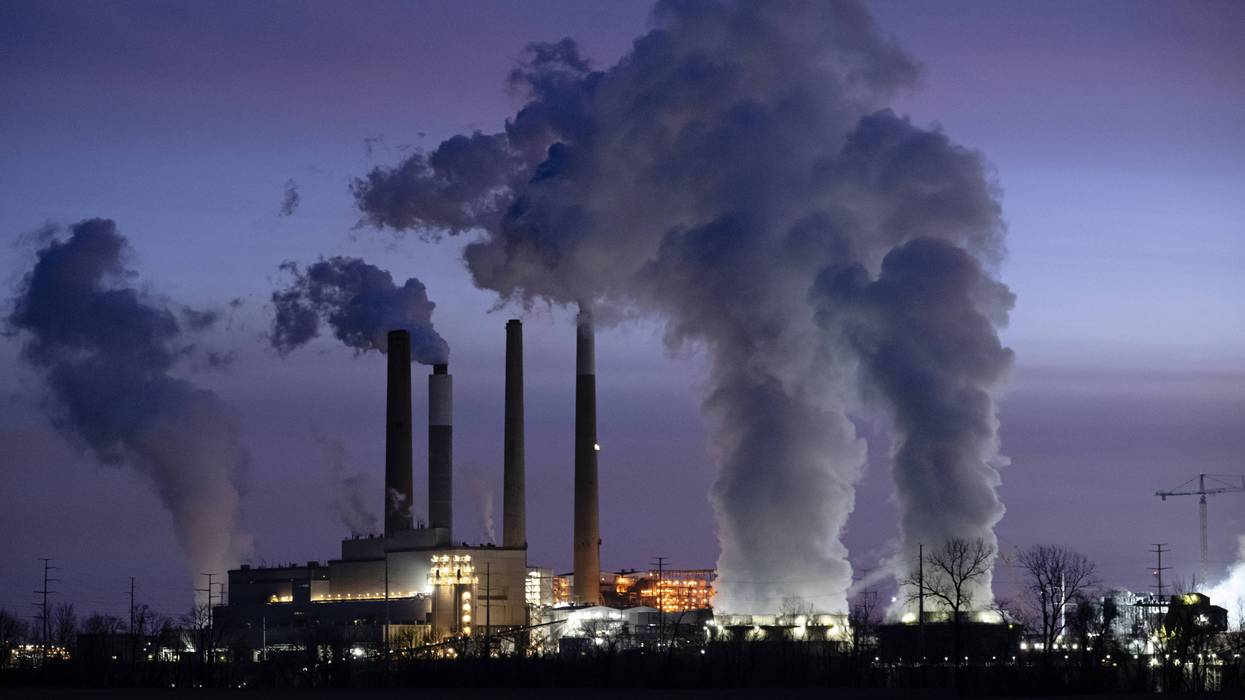
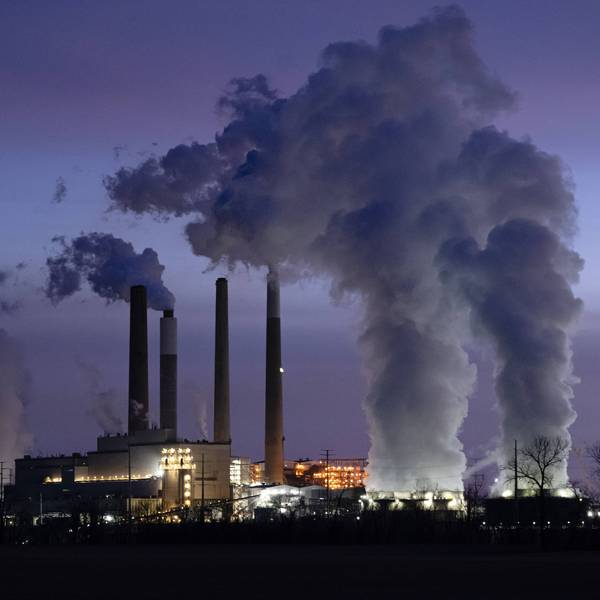
President Donald Trump faced a fresh flood of fury on Tuesday as he formally withdrew the United States from the Paris Agreement a second time, part of the broader anti-climate agenda he's pursued since returning to power.
The US initially completed the one-year withdrawal process in November 2020, as ballots from the general election were still being counted. After winning the race, former President Joe Biden swiftly rejoined the climate treaty, but Trump reclaimed the White House four years later—with help from Big Oil—and moved to abandon the pact again on his first day back in the Oval Office.
"Thanks to President Trump, the US has officially escaped from the Paris Climate Agreement, which undermined American values and priorities, wasted hard-earned taxpayer dollars, and stifled economic growth," a White House spokesperson, Taylor Rogers, said in a Tuesday statement celebrating the "America First victory."
Advocates for ambitious action on the fossil fuel-driven climate emergency struck a much different tone about the president exiting the 2015 deal, which aims to limit global temperature rise this century to 1.5ºC, relative to preindustrial levels. Oil Change International US campaign manager Allie Rosenbluth declared that "Trump's withdrawal from the Paris Agreement is a betrayal of the communities at risk from climate disaster, especially those on the frontlines of the crisis in the Global South."
"Trump is entrenching petro imperialism and enriching his fossil fuel CEO donors, at the cost of a livable planet," she said. "The US is the largest historic emitter and the current planet-wrecker-in chief, responsible for a greater increase in oil and gas extraction than any other country since the Paris Agreement. Now, Trump is pulling out of the agreement that commits it to help solve a crisis it largely created—deepening global risk of climate-fueled hurricanes, wildfires, droughts, and floods."
Rosenbluth argued that "under Trump, the US is becoming a pariah on the world stage and should be treated as such by the countries claiming to defend climate multilateralism and international cooperation. It is clinging to fossil fuel dependency as many other nations embrace the clean, affordable energy sources of the future. Trump is trying to drag the rest of the world backwards by launching conflicts for oil and bullying other countries into deepening their reliance on dirty, dangerous fossil fuels."
"Trump can withdraw the US from the Paris Agreement, but can't change that millions of people will fight for climate justice, including leaders from the Global South and US states and localities," she added. "While Trump turns the US into a rogue state, we must redouble global efforts to end the fossil era and fight for safety and dignity for all."
In an interview with the Guardian, Basav Sen, climate justice project director at the Institute for Policy Studies, suggested that US disengagement has already encouraged others to take action.
At the United Nations Climate Change Conference (COP30) in Brazil last November—which the Trump administration did not attend—Colombia, the Netherlands, and Pacific Island nations announced plans to host historic talks on phasing out fossil fuels. Sen said, "I have to believe that the reactionary position of the US acted as further impetus for those countries to step up."
Still, the Trump administration's position means "it will be that much harder for low-income countries, who are very dependent on fossil fuel production and exports, to be able to make their transitions with the US saying that we won't fund any of it," he said. Sen also stressed that "if the domestic market in the US continues to be dominated by fossil fuels through the fiat of an authoritarian government, that will continue to have an impact on the rest of the world."
In the lead-up to COP30, Amnesty International secretary general Agnès Callamard urged other governments "to resist aligning with the Trump administration's denial of the accelerating climate crisis and instead demonstrate true climate leadership."
On Tuesday, Marta Schaaf, Amnesty's program director for climate, economic and social justice, and corporate accountability, said that "the US withdrawal from the Paris Agreement sets a disturbing precedent that seeks to instigate a race to the bottom, and, along with its withdrawal from other major global climate pacts, aims to dismantle the global system of cooperation on climate action."
Despite "increasingly deadly and expensive" weather disasters, Trump has left not only the Paris Agreement but also dozens of other international treaties and organizations intended to coordinate on key issues, including human rights and the climate crisis.
"The US is one of several powerful anti-climate actors," Schaaf acknowledged, "but as an influential superpower, this decision, along with acts of coercion and bullying of other countries and powerful actors to double down on fossil fuels, causes particular harm and threatens to reverse more than a decade of global climate progress under the agreement."
"While the US may no longer be a party to the Paris Agreement, it still has legal obligations to protect humanity from the worsening impacts of climate change as confirmed by the International Court of Justice in its landmark 2025 advisory opinion," she emphasized. "US-based climate advocates and activists now find themselves on the frontlines of a fight with implications for current and future generations everywhere."
"Global solidarity and support to ensure accelerating momentum to address climate change has never been more urgent," Schaaf added. "Those who witness the harms caused by climate change and who can speak safely—must speak up. Other governments too must push back against all coercive efforts by the US. Ceding ground now risks losing it for years. Neither the planet nor the people living on the frontlines of proliferating unnatural disasters have that much time."
Tesla, the electric car company led by former Trump administration special government employee Elon Musk, released its annual financial report Thursday, showing that it doubled its yearly income in 2025 over the previous year and brought in $5.7 billion.
The company, whose CEO spent several months rooting out what he claimed was fraud and waste across the federal government, reported "precisely zero current federal income tax" on the billions it made, according to an analysis by the Institute on Taxation and Economic Policy (ITEP).
The group explained that Tesla used accelerated depreciation, reducing the value of its capital assets, while also slashing its tax bill with tax breaks for its executive stock options.
Research and development tax credits netted $352 million in additional tax savings, and the company used "net operating losses stored up from previous years to offset current year income, although it’s hard to know how much of that affects US income rather than foreign income," said ITEP.
Analyzing the financial report, ITEP found that Tesla received over $1.1 billion in federal income tax breaks, paid for by US taxpayers, last year alone—after paying 0.4% of its US profits in federal income taxes over the previous three years.
Over that time period, said ITEP, "the Elon Musk-led company reported $12.58 billion of U.S. income on which its current federal tax was just $48 million... The company reported an effective federal income tax rate of 0.4%. This is a tiny fraction of the 21% tax rate profitable corporations are supposed to pay under the law."
The most it paid in taxes over the past three years was in 2023, when Tesla paid $48 million, at the federal effective tax rate of 1.2%. That was still just a fraction of the $823 million it would have paid if it had paid the federal corporate tax rate. In 2023, the company enjoyed $775 million in tax breaks.
The company's income tax payments worldwide in 2025 totaled $1.2 billion, with more than $1 billion going to China and other foreign governments. Tesla paid $28 million to the US government, "presumably related to tax years before 2025," said ITEP.
The organization noted that the "billion-dollar tax break" enjoyed by Tesla does not appear to be illegal.
However, ITEP said, it illustrates how the Trump administration and Republicans in Congress, by passing changes to corporate tax laws in the One Big Beautiful Bill Act (OBBBA) last summer, "have allowed a hugely profitable corporation to avoid paying even a dime of federal income tax on their 2025 US profits."
The organization warned last summer that special business tax breaks included in the OBBBA, including a reinstatement of bonus depreciation and new international rules, would cost the US government $165 billion in revenue in 2026.
A bombshell Saturday report from the Wall Street Journal revealed that a member of the Abu Dhabi royal family secretly backed a massive $500 million investment into the Trump family's cryptocurrency venture months before the Trump administration gave the United Arab Emirates access to highly sensitive artificial intelligence chip technology.
According to the Journal's sources, lieutenants of Abu Dhabi royal Sheikh Tahnoon bin Zayed Al Nahyan signed a deal in early 2025 to buy a 49% stake in World Liberty Financial, the startup founded by members of the Trump family and the family of Trump Middle East envoy Steve Witkoff.
Documents reviewed by the Journal showed that the buyers in the deal agreed to "pay half up front, steering $187 million to Trump family entities," while "at least $31 million was also slated to flow to entities affiliated with" the Witkoff family.
Weeks after green lighting the investment into the Trump crypto venture, Tahnoon met directly with President Donald Trump and Witkoff in the White House, where he reportedly expressed interest in working with the US on AI-related technology.
Two months after this, the Journal noted, "the administration committed to give the tiny Gulf monarchy access to around 500,000 of the most advanced AI chips a year—enough to build one of the world’s biggest AI data center clusters."
Tahnoon in the past had tried to get US officials to give the UAE access to the chips, but was rebuffed on concerns that the cutting-edge technology could be passed along to top US geopolitical rival China, wrote the Journal.
Many observers expressed shock at the Journal's report, with some critics saying that it showed Trump and his associates were engaging in a criminal bribery scheme.
"This was a bribe," wrote Melanie D’Arrigo, executive director of the Campaign for New York Health, in a social media post. "UAE royals gave the Trump family $500 million, and Trump, in his presidential capacity, gave them access to tightly guarded American AI chips. The most powerful person on the planet, also happens to be the most shamelessly corrupt."
Jesse Eisinger, reporter and editor at ProPublica, argued that the Abu Dhabi investment into the Trump cypto firm "should rank among the greatest US scandals ever."
Democratic strategist David Axelrod also said that the scope of the Trump crypto investment scandal was historic in nature.
"In any other time or presidency, this story... would be an earthquake of a scandal," he wrote. "The size, scope and implications of it are unprecedented and mind-boggling."
Tommy Vietor, co-host of "Pod Save America," struggled to wrap his head around the scale of corruption on display.
"How do you add up the cost of corruption this massive?" he wondered. "It's not just that Trump is selling advanced AI tech to the highest bidder, national security be damned. Its that he's tapped that doofus Steve Witkoff as an international emissary so his son Zach Witkoff can mop up bribes."
Former Rep. Tom Malinkowski (D-NJ) warned the Trump and his associates that they could wind up paying a severe price for their deal with the UAE.
"If a future administration finds that such payments to the Trump family were acts of corruption," he wrote, "these people could be sanctioned under the Global Magnitsky Act, and the assets in the US could potentially be frozen."
A group of Democratic lawmakers on Tuesday demanded the termination of US Homeland Security Secretary Kristi Noem, as new footage emerged in Minneapolis of federal immigration officers drawing guns on unarmed observers.
More than a dozen Democrats serving in the US House of Representatives stood outside the Washington, DC headquarters of US Immigration and Customs Enforcement (ICE) on Tuesday and demanded that President Donald Trump fire Noem, who has taken heat for making false claims in recent weeks about Minneapolis residents Renee Good and Alex Pretti, both of whom were gunned down by federal agents last month.
Rep. Ilhan Omar (D-Minn.) delivered a brief speech at the event where she described her home city of Minneapolis as being under "occupation" by federal agents sent by Trump and Noem.
"We do not exaggerate when we say we have schools where two-thirds of the students are afraid to go to school," she said. "We do not exaggerate when we say we have people who are afraid to go to the hospital because our hospitals have occupying paramilitary forces. We do not exaggerate when we say our restaurants are shutting down because there are not enough people to drive the employees to work and from work."
Omar went on to reiterate her past calls to abolish ICE, which she described as "not just rogue, but unlawful." She also said that “Democrats are ready and willing to impeach" Noem if Trump doesn't fire her.
Later in the event, Rep. Joaquin Castro (D-Texas) spoke of his meeting last week with Liam Ramos, a 5-year-old boy from Minneapolis who had been detained at a Texas ICE facility before a judge last weekend ordered his release.
"While detained, he became lethargic and sick," Castro said, speaking of Ramos. "His father said that he'd become depressed. He was asking about his mother and his classmates, and most of all, he wanted to go home. But he also said that he was scared of the guards... he had clearly been traumatized."
Castro emphasized that, even though Ramos and his father have been freed from detention, there are still too many children being held at the facility, including at least one as young as two years old
"This is a machinery of cruelty and viciousness that Secretary Noem has overseen, the Trump administration has built, and people like Texas Gov. Greg Abbott have been complicit in upholding," he said. "We must not allow ICE to kidnap children and bring them to prisons where they profit off their pain, misery, and suffering."
As Democrats were making their case for Noem's removal, new footage emerged of federal immigration officers in Minneapolis pulling legal observers out of their cars at gun point.
In a video posted on social media by independent journalist Ford Fischer, agents can be seen swarming a vehicle with their guns drawn and demanding and its passengers exit the car.
Just now: ICE agents pull handguns and arrest observers who had been following them this morning in Minneapolis. pic.twitter.com/s3uIwWS3AA
— Ford Fischer (@FordFischer) February 3, 2026
After the observers were pulled from the vehicle and detained by officers on the scene, one officer in the video claims that the people in question had been threatening them with "hand guns."
An observer then asks the officer if he means that the people being taken into custody were waving firearms at them, and he replies that they were making fake guns with their fingers, not brandishing actual weapons.
As the officers left the scene, they were heckled by protesters.
"Put away your weapons you douchebag, nobody is threatening you!" yelled one.
Senior officials in the US military have told a key Middle East ally that President Donald Trump may strike Iran as soon as this weekend, as part of an operation that may seek to decapitate the Islamic Republic's government, according to a report published Friday by Drop Site News.
While the Trump administration reportedly envisions attacks against nuclear, ballistic, and other military sites around Iran, a former senior US intelligence official who is acting as an informal advisor to Trump told the outlet: "This isn’t about the nukes or the missile program. This is about regime change."
As Iran has been roiled by the largest wave of protests since the Islamic Revolution in 1979, Trump has repeatedly threatened to launch strikes, which he has claimed would be in retaliation for the nation's security forces killing demonstrators.
While counts vary widely, the US-based Human Rights Activists News Agency reported Friday that Iranian security forces have killed more than 6,000 protesters in a brutal crackdown that has largely quelled the unrest seen earlier this month.
According to the senior official, who has worked as a consultant for Arab governments, Trump's war planners hope that a strike on the Islamic Revolutionary Guard Corps (IRGC) would galvanize Iranians to return to the streets and eventually deliver a knockout blow to their government.
He said that Israeli Prime Minister Benjamin Netanyahu, who has long sought to push the US to engage in direct conflict with Iran, “is hoping for an attack,” and is “assuring Trump that Israel can help put in place a new government that is friendly with the West.”
In the Oval Office on Friday, Trump told reporters that the US has a “large armada, flotilla, call it whatever you want, heading towards Iran right now." He said that the armada was "larger than Venezuela," referring to the buildup of ships leading up to the US invasion of the Latin American country earlier this month to overthrow its president, Nicolás Maduro.
According to Drop Site, two senior intelligence officials from an unnamed Arab country said they received word that a US attack could come “imminently," potentially as soon as Sunday.
Brigadier General Mohammad Akraminia, Iran’s military spokesperson, in an interview on Iranian TV on Thursday, said that a strike against Iran would likely play out very differently from the one launched in June against three Iranian nuclear sites. Iran's response was limited: an attack on a single US military base in Qatar, which it telegraphed beforehand.
“If such a miscalculation is made by the Americans, it will certainly not unfold the way Trump imagines—carrying out a quick operation and then, two hours later, tweeting that the operation is over,” Akraminia said.
“The scope of war will certainly extend across the entire region, he added. "From the Zionist regime to countries that host American military bases, all will be within range of our missiles and drones.”
Trump has said "time is running out" for Iran to come to the table to negotiate a new nuclear agreement with the United States, one with much more stringent restrictions than the one the president ripped up in 2018.
According to the New York Times:
US and European officials say that in talks, they have put three demands in front of the Iranians: a permanent end to all enrichment of uranium and disposal of its current stockpiles, limits on the range and number of their ballistic missiles, and an end to all support for proxy groups in the Middle East, including Hamas, Hezbollah and the Houthis operating in Yemen.
As the Times pointed out, "Notably absent from those demands... was any reference to protecting the protesters."
Iranian Foreign Minister Abbas Araghchi stated on Friday that Tehran would “welcome negotiations that ensure Iran’s right to peaceful nuclear activity” and that it would not “negotiate anything related to our conventional arms, including missiles. This is something we cannot risk.”
He said Iran would not agree to any deal that halts uranium enrichment on its soil, which it has said it has the right to pursue under the terms of the Nuclear Nonproliferation Treaty (NPT). "We do not want to enter into any kind of negotiation that is doomed to failure and can then be used as another pretext for another war," he told Al-Monitor.
Speaking to reporters at the White House on Friday, Trump said Iran “wants to make a deal” but did not elaborate on what that meant. “We’ll see what happens. I can say this: They do want to make a deal."
Mohamed ElBaradei, former director general of the United Nations' International Atomic Energy Agency, has condemned Trump's threats.
"The continued unilateral threats of a military strike against Iran in the absence of any clear and present danger and in violation of international law, bring to mind the same grim scene before the illegal and immoral Iraq war with its lies and horrifying consequences," he wrote on social media. "Human life and regional destruction don’t seem to matter."
"Students can't learn, and educators can't teach, when there are armed, masked federal agents stationed within view of classroom windows, sometimes for days on end," said the Education Minnesota president.
Just days after an educational leader in Minnesota said that "our families feel hunted" because of President Donald Trump's "Operation Metro Surge," two school districts and a teachers union on Wednesday sued to block immigration agents from targeting people in and around public schools.
"For decades, administrations of both parties recognized that schools are different—places where children learn, where families gather, and where fear has no place," noted June Hoidal of Zimmerman Reed LLP, one of the firms behind the new lawsuit filed in the District of Minnesota.
However, shortly after Trump returned to office last year, his Department of Homeland Security (DHS) revoked the rule barring agents from arresting undocumented immigrants in or around "sensitive" locations like schools, places of worship, and hospitals, as part of his pursuit of mass deportations.
"When enforcement moves into school zones, the harm isn't theoretical," Hoidal stressed. "Attendance drops, instruction stops, and school communities lose the stability public education depends on. Districts across the country are watching how courts draw the line around spaces dedicated to children."
Over the past year, members of DHS and its agencies—including Customs and Border Protection (CBP) and Immigration and Customs Enforcement (ICE)—have flooded various communities, including in Minnesota. The districts in this case serve students in Fridley, a suburb of the Twin Cities, and Duluth, about 150 miles northeast of Minneapolis and Saint Paul.
"The removal of long-standing protections around schools has had immediate and real consequences for our learning community," said John Magas, superintendent of Duluth Public Schools. "We've seen increased anxiety among students, disruptions to attendance, and families questioning whether school remains a safe and predictable place for their children. Schools function best when families trust that education can happen without fear, and that stability has been undermined."
His counterpart in Fridley, Brenda Lewis, similarly said that "as superintendent, my responsibility is the safety, dignity, and education of every child entrusted to our schools. When immigration enforcement activity occurs near schools, it undermines trust and creates fear that directly interferes with students' ability to learn and feel safe. Schools depend on stability, and that stability has been disrupted."
As Common Dreams reported earlier this week, Lewis has recently spoken at a press conference and to media outlets about the flood of federal agents—and it's come at a cost. The superintendent said she was tailed by agents multiple times while driving to and from the district office, and three of the six school board members have spotted ICE vehicles outside of their homes.
"It is my responsibility to ensure that our students and staff and families are safe, and if that means [agents are] going to target me instead of them, then that's what we need to do, and then they can leave our families alone," Lewis said. "But at the end of the day, are they trying to intimidate me to stop? Yes. Will I stop? No."
In addition to the two districts, Education Minnesota, a labor union of more than 84,000 state educators, is part of the suit against DHS, CBP, ICE, and agency leaders. The group's president, Monica Byron, declared that "students can't learn, and educators can't teach, when there are armed, masked federal agents stationed within view of classroom windows, sometimes for days on end."
"ICE and Border Patrol need to stay away from our schools so students can go there safely each day to learn without fear," she continued, "and so that our members can focus on teaching instead of constantly reacting to the shocking and unconstitutional actions of federal agents."
Last February, a federal judge in Maryland blocked the Trump administration from conducting immigration enforcement actions at Baptist, Quaker, and Sikh places of worship that sued over the repeal of protections for sensitive locations. The new suit asks the court to throw out the 2025 policy and restore protections to all such places.
The legal group Democracy Forward is involved in both cases and several others challenging Trump policies. The organization's president and CEO, Skye Perryman, said Wednesday that "the trauma being inflicted on children in America by this president is horrific and must end. The Trump-Vance administration's decision to abandon long-standing protections for schools has injected fear into classrooms, driven families into hiding, and thrown entire school communities into chaos."
"This is unlawful, reckless, and legally and morally indefensible," Perryman added. "We are in court because children should never have to look over their shoulders at school or worry that their loved ones could be taken away at the schoolhouse gate, and because the government cannot undermine decades of settled policy without regard for students, educators, or the law."
The suit was filed as Tom Homan, Trump's "border czar" and one of the named defendants, announced that 700 immigration agents are departing from Minnesota, which will leave around 2,000 there. The move comes amid incredible pressure on the administration to end Operation Metro Surge. Protests in the state, and in solidarity around the country, have ramped up since agents fatally shot legal observers Renee Good and Alex Pretti in Minneapolis.
The deadly operation in Minnesota has also impacted federal spending decisions in Congress. On Tuesday, lawmakers passed and Trump signed a bill to end a short-term government shutdown, but the measure funds DHS for only two weeks. However, even if future funding for the department isn't resolved in that time, ICE can continue its operations thanks to an extra $75 billion for the agency that Republicans put in last year's budget package.
“The United States and Russia already have enough deployed nuclear weapons to kill tens of millions of people in an hour and devastate the world," said one expert, warning a lapse will "only make the world less safe."
If New START expires on Thursday, it will be the first time in decades that the United States and Russia don't have a nuclear arms control treaty, and experts have been sounding the alarm about the arms race that likely lies ahead.
“The expiration of New START would be massively destabilizing and potentially very costly both in terms of economics and security," said Jennifer Knox, a research and policy analyst at the Union of Concerned Scientists' (UCS) Global Security Program, in a Tuesday statement.
"The United States and Russia already have enough deployed nuclear weapons to kill tens of millions of people in an hour and devastate the world," Knox pointed out. "Letting New START lapse would erase decades of hard-won progress and only make the world less safe."
New START was signed in April 2010, under the Obama administration, and entered into force the following February. A decade later, just days into the Biden administration, it was renewed for five years. In 2022, Russia invaded neighboring Ukraine—an ongoing conflict—and the next year, Russian President Vladimir Putin suspended his country's participation in the treaty, though he has not withdrawn.
"The global security environment facing the United States is very different from when New START was first negotiated, but it remains true that bounding an open-ended, costly arms race will still require some form of agreement between Washington and Moscow," said Ankit Panda, the Stanton senior fellow in the Carnegie Endowment for International Peace's Nuclear Policy Program, in a statement.
"The public and lawmakers alike must recognize that we are on the cusp of a fundamentally new nuclear age—one that is more unpredictable, complex, and dangerous than anything we've witnessed post-Cold War," warned Panda, one of the experts participating in a Wednesday briefing about the treaty. "A big risk is that without any quantitative limits or hands-on verification, we'll end up with compounding worst-case-scenario thinking in both capitals, as during the Cold War."
While Putin has halted US inspections of Russian nuclear facilities, he has still proposed extending the treaty for a year. Tara Drozdenko, director of the UCS Global Security Program, said that "abiding by New START for another year would be a win-win-win for the United States, Russia, and the rest of the world... The Trump administration should take swift action to publicly acknowledge that the United States will continue to abide by New START in the interim."
However, US President Donald Trump—who fancies himself as a deal-maker—hasn't expressed an interest in fighting for the pact, telling the New York Times last month that "if it expires, it expires," and "I'd rather do a new agreement that's much better."
Trump has called for China—which has the most nuclear weapons after Russia and the United States, and is building up its arsenal—to be part of a new deal, but Beijing hasn't signaled it will do so. Putin has proposed participation from France and the United Kingdom. The other nuclear-armed nations are India, Israel, North Korea, and Pakistan.
Noting Trump's comments to the Times and aspiration for the Chinese government to join, Jennifer Kavanagh, director of military analysis at the think tank Defense Priorities, declared that "this is wishful thinking–if the administration thinks getting a new 'better' treaty after this one lapses will be easy, they are mistaken."
"New START's end brings few benefits and lots of risks to the United States, especially as Washington tries to stabilize relations with rivals like Russia and China," she said, suggesting that Trump "would be better off hanging on to the agreement he has a little longer before trying to get a better one."
Dmitry Medvedev, a Putin ally who signed the treaty while serving as president and is now deputy chairman of the Russian Security Council, said in a Monday interview with Reuters, TASS, and the WarGonzo project that "our proposal remains on the table, the treaty has not yet expired, and if the Americans want to extend it, that can be done."
"For almost 60 years, we haven't had a situation where strategic nuclear potentials weren't limited in some way. Now such a situation is possible," he noted. "I spent almost my entire life, starting from 1972, under the umbrella of the Strategic Arms Limitation Treaty."
"In some ways, even with all the costs, it is still an element of trust," Medvedev said. "When such a treaty exists, there is trust. When it doesn't, that trust is exhausted. The fact that we are now in this situation is clear evidence of a crisis in international relations. This is absolutely obvious."
Considering New START's potential expiration this week, the Russian leader said that "I don't want to say that this immediately means a catastrophe and a nuclear war, but it should still alert everyone. The clock that is ticking will, in this case, undoubtedly accelerate again."
According to Reuters, he was referencing the Doomsday Clock. Last week, the Bulletin of the Atomic Scientists' Science and Security Board set the symbolic clock at 85 seconds to midnight, the closest it has ever been to global catastrophe, citing various developments, including a failure to extend the treaty, Russian weapons tests, and China's growing arsenal.
"In 2025, it was almost impossible to identify a nuclear issue that got better," Jon B. Wolfsthal, a board member and director of global risk at the Federation of American Scientists (FAS), said last week. "More states are relying more intently on nuclear weapons, multiple states are openly talking about using nuclear weapons for not only deterrence but for coercion. Hundreds of billions are being spent to modernize and expand nuclear arsenals all over the world, and more and more non-nuclear states are considering whether they should acquire their own nuclear weapons or are hedging their nuclear bets."
"Instead of stoking the fires of the nuclear arms competition, nuclear states are reducing their own security and putting the entire planet at risk. Leaders of all states must relearn the lessons of the Cold War—no one wins a nuclear arms race, and the only way to reduce nuclear dangers is through binding agreement to limit the size and shape of their nuclear arsenals," he argued. "Nuclear states and their partners need to invest now in proven crisis communication and risk reduction tools, recommit to preventing the spread of nuclear weapons, refrain from nuclear threats, and pursue a more predictable and stable global security system."
Regarding New START specifically, FAS Nuclear Information Project associate director Matt Korda stressed this week that "we are about to enter an era of unconstrained nuclear competition without any guardrails. Not only will there no longer be anything stopping the nuclear superpowers from nearly doubling their deployed nuclear arsenals, but they would now be doing so in an environment of mutual distrust, opacity, and worst-case thinking."
"While New START was a bilateral agreement between Russia and the United States, its expiration will have far-reaching consequences for the world," he said. "There are no benefits from a costly arms buildup that brings us right back to where we started, but there would be real advantages in pursuing transparency and predictability in an otherwise unpredictable world."
As some Democrats suggest compromising in order to reform the agency, Rep. Rashida Tlaib said that “ICE was built on violence and is terrorizing neighborhoods. It will not change.”
President Donald Trump on Tuesday signed a bill to end a brief government shutdown after the US House of Representatives narrowly passed the $1.2 trillion funding package.
While the bill keeps most of the federal government funded until the end of September, lawmakers sidestepped the question of funding for US Immigration and Customs Enforcement (ICE), which Democrats have vowed to block absent reforms to rein in its lawless behavior after the shootings of Renee Good and Alex Pretti in Minneapolis and a rash of other attacks on civil rights.
The bill, which passed on Tuesday by a vote of 217-214, extends funding for ICE's parent agency, the Department of Homeland Security (DHS), for just two weeks, setting up a battle in the coming weeks on which the party remains split.
While most Democrats voted against Tuesday's measure, 21 joined the bulk of Republicans to drag it just over the line, despite calls from progressive activists and groups, such as MoveOn, which Axios said peppered lawmakers with letters urging them to use every bit of "leverage" they can to force drastic changes at the agency.
House Appropriations Committee Ranking Member Rosa DeLauro (D-Conn.), who voted for the bill, acknowledged that it was "a leverage tool that people are giving up," but said funding for the rest of the government took precedence.
The real fight is expected to take place over the next 10 days, with DHS funding set to run out on February 14.
ICE will be funded regardless of whether a new round of DHS funding passes, since Republicans already passed $170 billion in DHS funding in last year's One Big Beautiful Bill Act.
Democrats in both the House and Senate have laid out lists of reforms they say Republicans must acquiesce to if they want any additional funding for ICE, including requirements that agents nationwide wear body cameras, get judicial warrants for arrests, and adhere to a code of conduct similar to those for state and local law enforcement.
Rep. Pramila Jayapal (D-Wash.), the chair emerita of the Congressional Progressive Caucus who voted against Tuesday's bill reiterated that in order to pass longterm DHS funding, "there must be due process, a requirement for judicial warrants and bond hearings; every agent must not only have a bodycam but also be required to use it, take off their masks, and, in cases of misconduct, undergo immediate, independent investigations."
Some critics have pointed out that ICE agents already routinely violate court orders and constitutional requirements, raising questions about whether new laws would even be enforceable.
A memo issued last week, telling agents they do not need to obtain judicial warrants to enter homes, has been described as a blatant violation of the Fourth Amendment. Despite this, House Speaker Mike Johnson (R-La.) said on Tuesday that Republicans will not even consider negotiating the warrant requirement, calling it "unworkable."
"We cannot trust this DHS, which has already received an unprecedented funding spike for ICE, to operate within the bounds of our Constitution or our laws," Jayapal said. "And for that reason, we cannot continue to fund them without significant and enforceable guardrails."
According to recent polls, the vast majority of Democratic voters want to go beyond reforms and push to abolish ICE outright. In the wake of ICE's reign of terror in Minneapolis, it's a position that nearly half the country now holds, with more people saying they want the agency to be done away with than saying they want it preserved.
"The American people are begging us to stop sending their tax dollars to execute people in the streets, abduct 5-year-olds, and separate families," said Rep. Rashida Tlaib (D-Mich.), who gathered with other progressive lawmakers in the cold outside DHS headquarters on Tuesday. "ICE was built on violence and is terrorizing neighborhoods. It will not change... No one should vote to send another cent to DHS."
Rep. Ilhan Omar (D-Minn.), who comes from the Minnesota Somali community targeted by Trump's operation there, agreed: "This rogue agency should not receive a single penny. It should be abolished and prosecuted."