

SUBSCRIBE TO OUR FREE NEWSLETTER
Daily news & progressive opinion—funded by the people, not the corporations—delivered straight to your inbox.
5
#000000
#FFFFFF
To donate by check, phone, or other method, see our More Ways to Give page.
Daily news & progressive opinion—funded by the people, not the corporations—delivered straight to your inbox.

Kate Fried, Food & Water Watch, (202) 683-4905, kfried@fwwatch.org
As the U.S. Senate Judiciary Committee meets today to examine consolidation in the agriculture seed and chemical industry, nine groups have submitted petitions signed by 708,000 people urging the Department of Justice and elected officials to block several pending mergers that would further consolidate the market for seeds and agricultural chemicals. The pending mergers between Dow-DuPont, Syngenta-ChemChina and Bayer-Monsanto would further increase the control that just a few companies maintain over seeds - the basic building blocks of the food system.
As the U.S. Senate Judiciary Committee meets today to examine consolidation in the agriculture seed and chemical industry, nine groups have submitted petitions signed by 708,000 people urging the Department of Justice and elected officials to block several pending mergers that would further consolidate the market for seeds and agricultural chemicals. The pending mergers between Dow-DuPont, Syngenta-ChemChina and Bayer-Monsanto would further increase the control that just a few companies maintain over seeds - the basic building blocks of the food system.
The organizations point out that allowing additional mergers among the biggest players in the already consolidated seed and chemical market will stifle innovation in seed development and worsen the problem of limited diversity and resilience in our seed supply, leaving farmers with fewer options and higher costs.
The organizations joining the call to block these mega-mergers include SumofUs, Food & Water Watch, Sierra Club, Pesticide Action Network, Friends of the Earth, Center for Food Safety, Organic Seed Alliance, Rural Advancement Foundation International and Clif Bar Family Foundation/Seed Matters.
"The shocking consolidation in the biotech seed and agrochemical industry turns our food system over to a cabal of chemical companies, undermining family farmers and consumers. We urge federal regulators to block these pending mergers to prevent further corporate control of our food system," said Food & Water Watch Executive Director Wenonah Hauter.
"More than 500,000 people around the world have spoken out against dangerous deal between Bayer and Monsanto. The new mega corporation would be the world's biggest seed maker and pesticide company, defying important antitrust protections due to its unacceptable market concentration. U.S. and EU regulators should recognize the significant risks posed by a Bayer-Monsanto merger and move swiftly to reject this proposal," said Anne Isakowitsch, Senior Campaigner with SumOfUs, an international consumer watchdog.
"This merger would be disastrous for people, pollinators, and the planet. It will give the pesticide industry even greater influence over policy, compromising independent science and the public interest," said Tiffany Finck-Haynes of Friends of the Earth.
"Just six corporations already dominate worldwide seed and pesticide markets. Additional consolidation will increase prices and further limit choices for farmers, while allowing Monsanto and friends to continue pushing a model of agriculture that has given us superweeds, superbugs and health-harming pesticides. Instead, we need to invest in agroecological, resilient and productive farming," said Marcia Ishii-Eiteman, senior scientist with Pesticide Action Network.
"The Bayer-Monsanto merger is a clear danger to society. One corporation should not be able to control both the seed and pesticide markets--it's the fox guarding the hen house. Farmers and consumers alike are raising the alarm that this deal would reduce competition, risk the environment and raise prices--to the sole benefit of Bayer. Antitrust regulators have a clear path to deny this fiasco," said Alexander Rony, Senior Campaigner for the Sierra Club.
"The continuing consolidation of seed and pesticide companies essentially creates a monopoly of toxicity in control of the world's seed market and food supply. These agrichemical giants threaten the availability and genetic diversity of seeds that are critical to a sustainable food system and to our ability to respond to the impacts of climate change," said Andrew Kimbrell, Executive Director of Center for Food Safety.
"All farmers experience the negative consequences of seed consolidation. Organic farmers in particular are already underserved by the industry because the dominant players only invest in seed technologies and chemical production systems that are in conflict with organic farming practices. Furthermore, these firms aggressively protect their intellectual property rights on seeds, which means less innovation and more restrictions on how seed is used and exchanged, including for research purposes and seed saving," said Kiki Hubbard, Director of Advocacy for Organic Seed Alliance.
"The last thing that U.S. agriculture needs now is more concentration. What farmers need is more regionally and locally-adapted seeds choices and more biodiversity. Concentration lead to higher seed prices for farmers and lower take home pay," says Michael Sligh, of the Rural Advancement Foundation International.
Food & Water Watch mobilizes regular people to build political power to move bold and uncompromised solutions to the most pressing food, water, and climate problems of our time. We work to protect people's health, communities, and democracy from the growing destructive power of the most powerful economic interests.
(202) 683-2500
The report comes as Trump considers a "wider war" including a ground invasion that could require hundreds of thousands of US troops.
After months of downplaying the number of American casualties from President Donald Trump's war in Iran, The New York Times revealed that the Pentagon once again hid dozens of US military injuries from Iranian strikes on bases in Jordan last week.
As the Times reported on Monday:
In the week leading up to the Iranian attack on Friday that killed two US soldiers and left one service member missing in Jordan, Iran carried out three other strikes against US forces in the country.
Those attacks injured dozens of US service members and damaged several helicopters, according to several US officials, who spoke on the condition of anonymity to discuss operational matters.
But the Pentagon did not disclose the earlier strikes, nor the casualties and damage they inflicted.
The Pentagon's failure to disclose full information about US casualties is not a new development.
In the early days of the war, Defense Department officials said fewer than a dozen American troops had been injured before abruptly acknowledging that more than 140 had been wounded after Reuters obtained the full figures.
After six American soldiers were killed during the war's opening salvo, Defense Secretary Pete Hegseth derided the press's inquiries about the number of casualties, claiming they were only seeking "to make the president look bad."
The Intercept's Nick Turse found in April that US Central Command (CENTCOM) had repeatedly sent outdated and incomplete casualty figures to journalists in what one defense official referred to as a "casualty cover-up."
As of April 1, Turse reported that more than 520 US troops had been injured, including more than 200 sailors being treated for smoke inhalation, without acknowledgment from the government.
Last week—prior to the deaths of two US soldiers in Jordan—CENTCOM said that a total of 414 service members had been injured since the war began, mostly from traumatic brain injuries. In total, 17 US personnel have now been killed, according to official counts.
CENTCOM spokesperson Maj. Emma Thompson said last week that she had no update on how many troops were seriously wounded, but claimed that "almost all" of those injured had returned to duty. She also did not say how many troops had been wounded enough to be evacuated from the region.
The Times report notes that CENTCOM is not required to disclose information about injured US service members publicly. And one military official argued that doing so would provide Iran with free information that would leave the US vulnerable to further attacks.
However, it does speak to the Trump administration's ever-growing secrecy as it threatens to dramatically expand the unpopular conflict.
As the Times noted, the Pentagon has provided little information about the war in recent months, and the last major press briefing on the war took place in early May.
The administration has blown past its initial promises to end its operation against Iran in a matter of weeks and avoid a "forever war." The conflict is now into its fifth month with no end in sight.
The Washington Post and Wall Street Journal reported this weekend that in an effort to break Iran's control of the Strait of Hormuz—where it began to restrict travel in response to the US-Israeli war—Trump is planning a "wider war" that may include a possible ground invasion of Kharg Island and other Iranian territory along the strait.
Experts have estimated that efforts to capture and occupy Iran's coastline would likely require hundreds of thousands of troops.
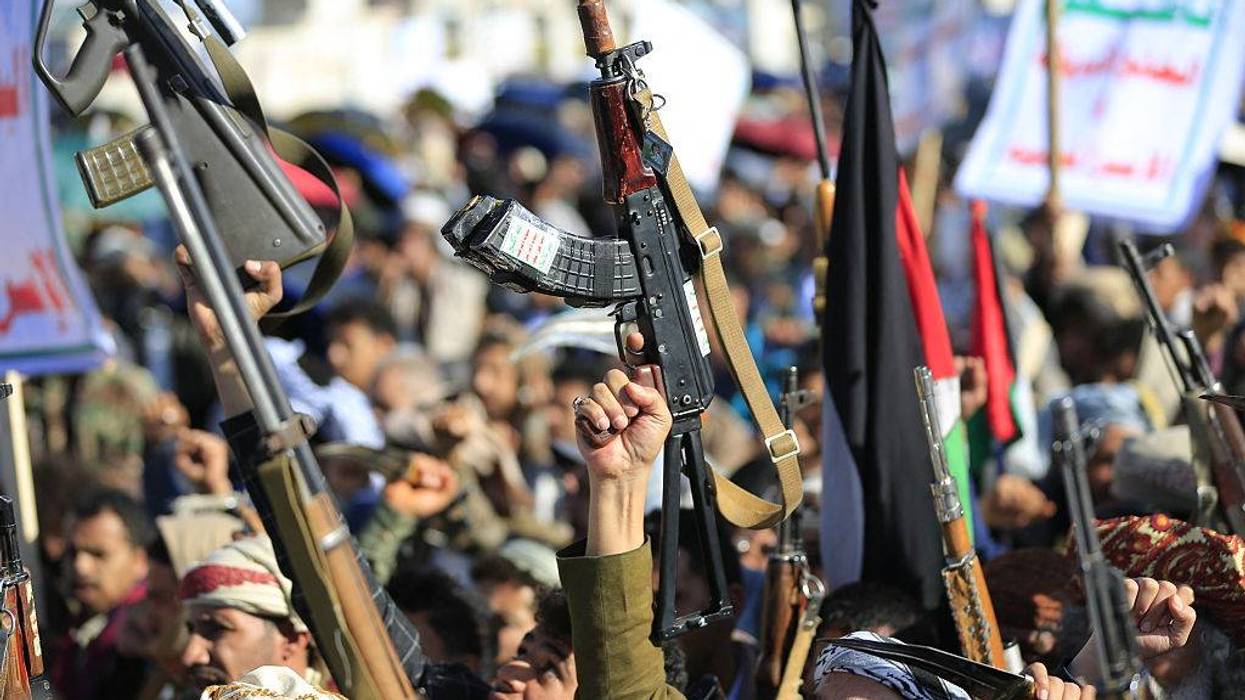
"The Titanic is now hitting the iceberg and there are not enough lifeboats for the world economy," said one observer.
Houthi rebels in Yemen on Monday announced they were imposing a maritime embargo against Saudi Arabia in yet another threat to global petroleum supplies amid the US war on Iran.
Yahya Saree, spokesperson for the Houthis, said in a video announcement that the militia would be enforcing the shipping embargo in retaliation for last week's bombing of Sanaa Airport, which the group blamed on the Saudis.
BREAKING: Yemen's Houthis announce 'sea navigation ban' on Saudi Arabia. pic.twitter.com/HDzghEi9Ct
— Clash Report (@clashreport) July 20, 2026
After Iran shut down the Strait of Hormuz in response to US President Donald Trump's illegal war of choice earlier this year, global oil markets became even more dependent on shipping supplies through the Strait of Bab al-Mandeb, a waterway adjacent to the coast of Yemen.
According to Javier Blas, energy and commodities columnist at Bloomberg, Saudi Arabia has been shipping roughly 4.5 million barrels of oil per day through shipping channels in the Red Sea, with "most of it" traveling through the Strait of Bab al-Mandeb.
The Houthis' announcement of an embargo against the Saudis comes as the US has continued burning through its crude inventories.
Data released by US Energy Information Administration revealed that US crude inventories fell by 1.7 million barrels over the week ending July 10, leaving stocks at their lowest level since 1983.
University of Chicago political scientist Robert Pape warned that the Houthis shutting down another vital global shipping lane could be a disaster for the global economy given that it could mean a "loss of another 4 to 5 million [oil] barrels a day."
"The Titanic is now hitting the iceberg," Pape added, "and there are not enough lifeboats for the world economy."
Nicholas Grossman, professor of international relations at the University of Illinois, noted that there are now multiple factors throttling global energy shipments.
"Iran blocking Strait of Hormuz," Grossman wrote. "US blocking Iranian shipping. Iran bombing energy facilities in Gulf Arab states. US bombing energy facilities in Iran. Ukraine bombing energy facilities in Russia. Houthis disrupting Red Sea shipping. Oil and gas reserves running dry. It's a lot, and adding up."
Juliette Kayyem, senior lecturer at Harvard's Kennedy School and a former Obama administration official, wrote that the potential shutdown of global energy supplies should make US policymakers rethink what they can achieve using American military force.
"A bunch of military and conventional wisdom analysts assured the American public that our air dominance was unparalleled," wrote Kayyem. "The 'never right but always certain' crowd didn’t realize the war was going to be fought on water."
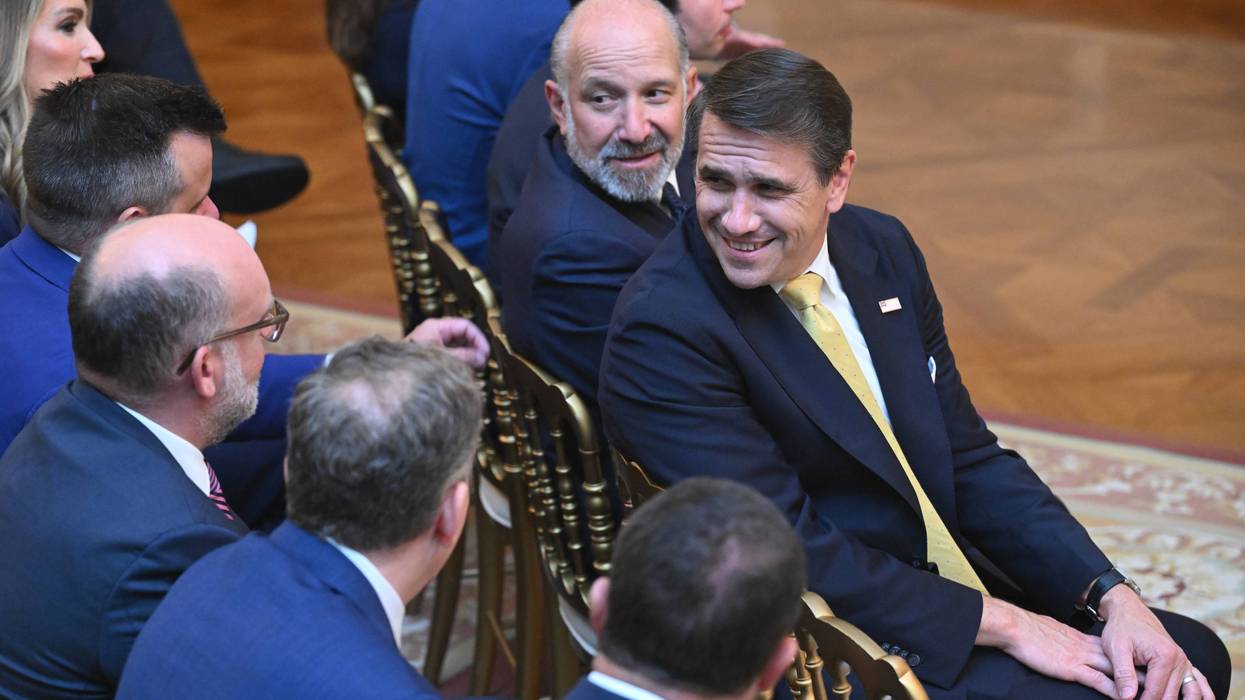
"The Trump DOJ’s grotesque retreat from corporate crime enforcement leaves Americans increasingly vulnerable to tainted food, workplace exploitation, environmental destruction, widespread ripoffs, and all-around illegal corporate predation."
US President Donald Trump's Justice Department is systematically taking a softer approach to corporate crime, letting companies and executives that have admitted to wrongdoing off the hook with no charges.
The Wall Street Journal reported over the weekend that "so far this year, 12 companies have pleaded guilty to federal criminal charges. At least six companies have reached deferred prosecution agreements, including refiner Phillips 66 and medical-waste specialist Stericycle, acquired by Waste Management in 2024." The Journal added that while Acting US Attorney General Todd Blanche and other officials have signaled that the Justice Department is "focusing on prosecuting employees rather than companies, it has also granted leniency or dropped charges against people it accused of wrongdoing."
"The Trump DOJ’s grotesque retreat from corporate crime enforcement leaves Americans increasingly vulnerable to tainted food, workplace exploitation, environmental destruction, widespread ripoffs, and all-around illegal corporate predation," said Rick Claypool, a researcher at the consumer advocacy group Public Citizen who has been tracking the fall of corporate enforcement during Trump's second White House term—which has been rife with corruption and profiteering at the very top.
Claypool called the Trump Justice Department's lenient approach to corporate criminals "an absolute outrage" and that the trend is "going from bad to worse."
The Journal lays out several examples of the Justice Department abandoning enforcement efforts against prominent companies. "In matters involving Alibaba, EagleBank, and Abbott Laboratories, the department declined to charge companies even when prosecutors thought executives or managers were involved in the wrongdoing," the newspaper reported. "In those cases, the department didn’t charge any individuals."
"The Justice Department this year dropped its long-running prosecution of Turkish state-owned lender Halkbank for allegedly evading US sanctions on Iran," the Journal added. "And last year, the Trump administration dropped charges against Boeing. The aerospace giant had been set to plead guilty to misleading air-safety regulators but instead paid a $243 million fine and received a nonprosecution agreement. That is the same form of leniency that prosecutors granted to Alibaba and EagleBank, which requires them to admit wrongdoing but spares them from being charged."
Trump's DOJ has also shown lenience toward corporate executives. "The department in January gave a deferred prosecution agreement to the chief executive of a technology contractor who had been charged with defrauding the Securities and Exchange Commission," the Journal reported.
Bloomberg reported last week that the Justice Department plans to drop charges against "alleged mastermind of a cryptocurrency Ponzi scheme that prosecutors said defrauded investors of $722 million."
According to Public Citizen's tracker, the second Trump administration has canceled or frozen enforcement actions against more than 170 US corporations so far—including dozens of companies that donated to the president's inaugural fund.
“The Trump administration is canceling accountability for corporate predators that cheat consumers, exploit workers, and illegally abuse their power at home and abroad,” Claypool said earlier this year. “The ‘law enforcement’ claims the White House uses as pretext for authoritarian anti-immigrant crackdowns, city occupations, and imperial resource seizures abroad lose all credibility when cast against the lawlessness Trump allows for the pursuit of corporate profits."

"We may be approaching the most significant escalation in the US-Iran confrontation since February," warned one analyst.
US President Donald Trump is reportedly planning to expand his illegal, historically unpopular war in Iran as the prospects of a diplomatic resolution crumble, with the American military bombarding the Middle East nation for the ninth consecutive night on Sunday.
An unnamed US official told The Washington Post on Sunday that the Trump administration is "planning for a wider war" in Iran, though the official warned that US forces likely lack the weapons capacity to "safely sustain operations." The official said they don't believe that "the White House is aware of that."
The anonymous official's comments corroborated reporting last week indicating that Trump, who has not sought or received congressional authorization for the Iran war, is leaning toward expanding the assault, possibly with ground forces.
"Trump hosted a Situation Room meeting Tuesday evening to discuss the potential seizure of Kharg Island and other territory along the Strait of Hormuz using US troops, as well as the potential bombing of a tunnel complex at Pickaxe Mountain, a nuclear-linked site the US has yet to target," The Wall Street Journal reported. "Expanding airstrikes against more targets in Iran, including energy sites, also remains a possibility."
Trump, who claimed in late March that the war was just "two or three weeks" away from being over, has repeatedly declined to rule out deploying American ground forces to Iran. Over the weekend, three US troops were killed in the region—two by an Iranian ballistic missile attack in Jordan, and another during a "controlled detonation of unexploded ordnance" in Iraq.
"We feel very badly," Trump said of the deaths, which brought the total number of US personnel killed during the Iran war to 17. Thousands of Iranians have been killed and millions displaced by the US-led assault.
Pentagon leaders have not publicly briefed the American people or the press on the status of the war in over two months. Earlier this month, Trump declared that a ceasefire deal with Iran which sought to pave the way for a negotiated resolution to the war was "over."
The US Central Command said late Sunday that American forces "targeted Iranian military command centers, air defense and coastal surveillance sites, maritime capabilities, missile and drone launch sites, and communications networks" during its latest wave of airstrikes. The US military has also targeted bridges, power facilities, and other civilian infrastructure during recent attacks, prompting Iranian retaliatory strikes on American installations in the region.
"This dynamic creates the possibility of dangerous strategic miscalculation on all sides," the National Iranian American Council warned on Sunday. "Policymakers in Washington and regional capitals may underestimate Iran’s willingness to absorb sustained losses. Conversely, Iranian leaders may underestimate the willingness of the United States and its partners to sustain a prolonged military campaign if they conclude that Tehran is deliberately regionalizing the conflict."
Hamidreza Azizi, a visiting fellow at the German Institute for International and Security Affairs, argued that recent US attacks along Iran's southern coastline "increasingly suggest a gradual but persistent US movement toward a possible ground operation in southern Iran."
"If such an approach exists, it would go well beyond earlier ideas centered on seizing Kharg Island to cut off Iran’s oil exports or occupying islands overlooking the Strait [of Hormuz] to secure maritime traffic," Azizi wrote. "However, given the length of Iran’s southern coastline—roughly 1,800 kilometers—and the country’s considerable strategic depth, establishing comprehensive control would likely require hundreds of thousands of troops."
"Current indicators suggest that we may be approaching the most significant escalation in the US-Iran confrontation since February," Azizi added.
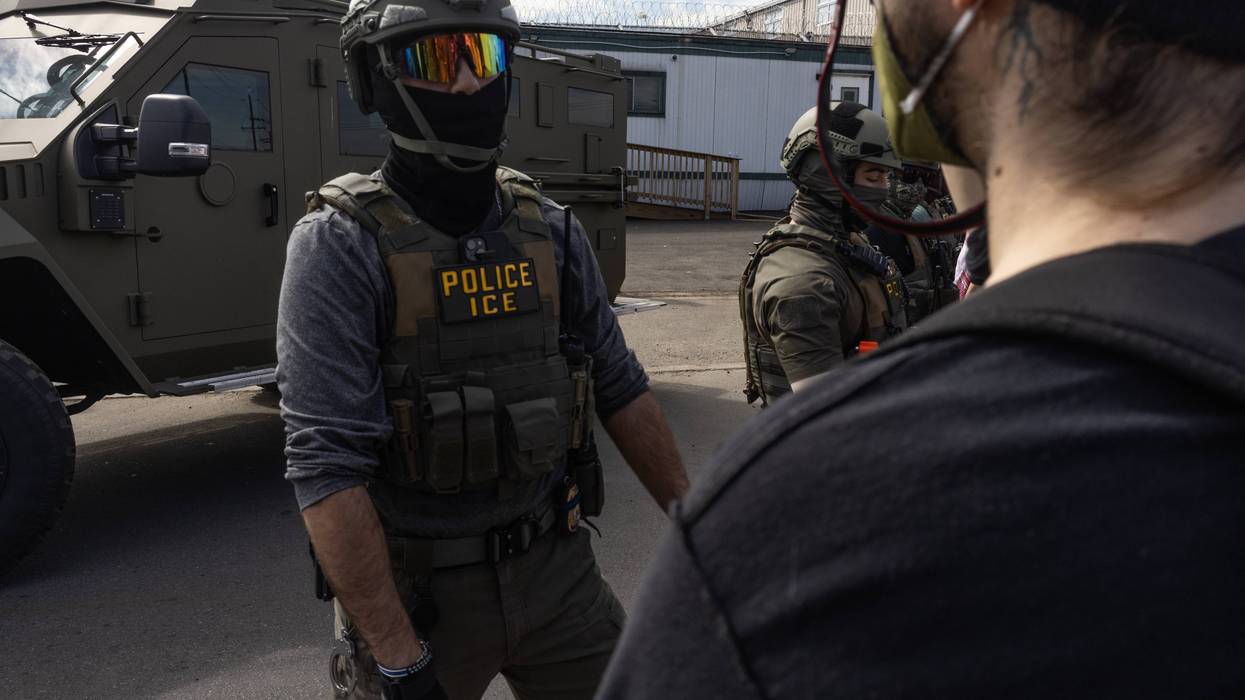
The reported change would grant "pure impunity for ICE to do horrible things," said one journalist.
New guidance distributed to US Immigration and Customs Enforcement agents across the country in recent days said that the FBI will no longer investigate confrontations that officers have with protesters or people who are subjected to immigration enforcement—leaving the agency to investigate its own violent encounters with the public following at least two recent killings by ICE agents.
The guidance pertained to claims of assault against Department of Homeland Security (DHS) officers, but FBI investigations have gathered evidence that implicated agents themselves after they claimed to have been attacked.
According to the message sent to ICE officers, Homeland Security Investigations, which operates under ICE, would begin examining incidents in which an agent claimed they were assaulted.
HSI does not have jurisdiction to investigate allegations of civil rights allegations, so in cases in which a confrontation escalates to a use of force by an officer, the unit would be unlikely to investigate whether the agent violated the victim's rights, The New York Times reported.
"The fox is guarding the hen house," said American Immigration Council senior fellow Aaron Reichlin-Melnick of the reported change.
Despite the guidance that was circulated to agents, the US Department of Justice, which oversees the FBI, released a joint statement with DHS denying that the change would take place.
“The relationship between DHS and DOJ in investigating assault on federal officer cases has not changed, and FBI will continue to investigate in accordance with agency policy,” the statement said. “This administration has been clear, anyone who assaults law enforcement will be prosecuted to the fullest extent of the law.”
According to a New York Times investigation, the Trump administration filed charges against more than 550 people who it said assaulted federal immigration officers. More than 400 of the cases had been resolved, and in nearly half of them, charges of assault had been thrown out or withdrawn, or the defendants had been acquitted.
As it's filed such charges, the Trump administration has frequently repeated its assertion that federal agents are regularly facing violent attacks from the public—including in cases in which agents have killed US citizens and immigrants, including Renee Good, Alex Pretti, and earlier this month, Lorenzo Salgado Araujo.
The reported change was also made public less than a week after an ICE agent fatally shot Johan Sebastián Guerrero in Biddeford, Maine.
Journalist Sam Stein said the guidance that was given to federal agents could grant "pure impunity for ICE to do horrible things."
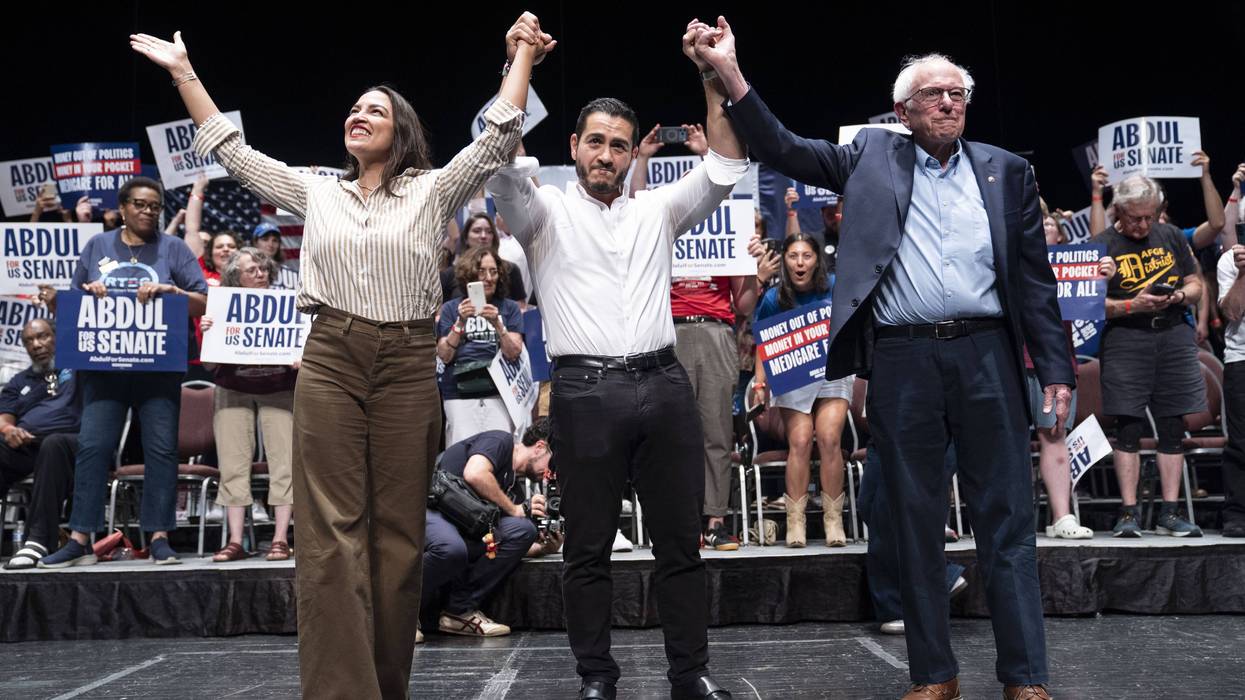
"When the stakes are so high," said Rep. Alexandria Ocasio-Cortez, "is the answer to our problems to turn to the same playbook over and over again?"
Ahead of early voting in Michigan's Democratic US Senate primary, candidate and Medicare for All advocate Abdul El-Sayed was joined in Detroit Saturday evening by progressive leaders, including Sen. Bernie Sanders and Reps. Alexandria Ocasio-Cortez and Rashida Tlaib, for a rally titled: "The People vs. The Powerful."
The senator declared to 1,600 attendees that the choice in the primary is not simply between El-Sayed and his opponent, Rep. Haley Stevens.
"In all due respect to Congresswoman Stevens, everyone knows that this is not an election between her and Abdul El-Sayed," said the Vermont Independent senator. "This is an election between Abdul and the billionaire class."
Sanders: In all due respect to Congresswoman Stevens, everyone knows that this is not an election between her and Abdul El-Sayed. This is an election between Abdul and the billionaire class. That is what this election is about.
A billionaire class which has already—and there are… pic.twitter.com/BPZ9NSar4d
— Acyn (@Acyn) July 18, 2026
The final weeks of the primary, in which Michigan voters will go to the polls on August 4, have been marked by reports of massive outside spending in favor of Stevens and against El-Sayed, who has made the refrain, "Money out of politics, money in your pocket, and Medicare for All" the central message of his campaign.
As Common Dreams reported last week, El-Sayed led the way in fundraising in the second quarter of 2026, bringing in $4.6 million while Stevens raised $2.2 million.
But Federal Election Commission (FEC) campaign finance filings showed that outside spending by people and groups supporting Stevens has soared to an estimated $50 million, according to an analysis by Punchbowl News.
"More than half of the total ($28.4 million) is coming from United Democracy Project (UDP)," said congressional reporter Ally Mutnick, referring to the super political action committee (PAC) affiliated with the American Israel Public Affairs Committee (AIPAC), which has also backed the vehemently pro-Israel Stevens in the past.
UDP acknowledged last week that it had spent nearly $15 million on the Michigan Senate primary race so far, including $9.3 million in support of Stevens and $5.7 million against El-Sayed.
El-Sayed is a strong supporter of Palestinian rights and—like a growing majority of Democratic voters after more than two years of Israel's assault on Gaza—has called for the US to end military aid to Israel.
In recent weeks he has responded to reporters' frequent questions on his views about whether Israel has a "right to exist," by asking whether Palestine has a right to exist and, in a Sunday interview with CNN's Jake Tapper, saying that a more pertinent question for American voters is whether Israel has "a right to our tax dollars."
Does Michigan Senate candidate Abdul El-Sayed think there’s room in the Democratic Party for both supporters and opponents of Israel?
EL-SAYED: “There's always room in the tent for folks. And I'm for human rights. I'm for equal rights to peace, dignity, and self-determination.… pic.twitter.com/Amfvsnmx6J
— State of the Union (@CNNSOTU) July 19, 2026
At the rally on Saturday night, Sanders said that AIPAC's focus on funding Stevens' campaign "has everything to do with the fact that they understand that Abdul and I, and the vast majority of the American people, want a foreign policy that is based on morality and decency."
"This is an election that will show the nation whether AIPAC and other billionaire-funded super PACs can spend tens and tens and tens of millions of dollars to buy a US Senate seat, or whether, within a corrupt campaign finance system, the voices of ordinary Americans—the people of Michigan—can prevail," said Sanders. "That is what this campaign is all about. It is about democracy versus oligarchy, and we are on the side of democracy."
Sanders: Why is the whole country looking at this election? In fact, people all over the world are watching what’s going on here in Michigan.
And the answer is that this is an election that will show the nation whether AIPAC and other billionaire-funded super PACs can spend tens… pic.twitter.com/ALMk10YzJu
— Acyn (@Acyn) July 18, 2026
Ocasio-Cortez noted that the contest between El-Sayed and Stevens comes as Americans are struggling to afford groceries, gas, and other essentials while President Donald Trump continues his war against Iran, dismisses working families' financial struggles, and insists the federal government cannot afford to provide universal public services.
"When the stakes are so high, when more people than ever are living so close to the bone, eventually we have to ask ourselves: Is the answer to our problems to turn to the same playbook over and over again?" said Ocasio-Cortez. "A playbook that says, in order to win, Democrats must rely on the same dark money—$50 million and counting—from the same people who backed 35 election deniers to Congress who voted to overturn the 2020 election?"
"I believe Michiganders—Democrats, Republicans, and independents—believe that good leadership swings for the fences," said the congresswoman, who has been named as a potential presidential or US Senate candidate in 2028. "Good leadership gets big money out of our system. It takes on the corruption that blocks commonsense solutions that lift working people. And, by the way, it helps not to take their money in the first place."
AOC: When the stakes are so high, when more people than ever are living so close to the bone, eventually we have to ask ourselves:
Is the answer to our problems to turn to the same playbook over and over again? A playbook that says, in order to win, Democrats must rely on the… pic.twitter.com/oqIaQzSQfH
— Acyn (@Acyn) July 18, 2026
"We can choose to reward the $50 million in dark money by voting their way—which, by the way Michigan—do you think that $50 million is for free?" continued Ocasio-Cortez. "Do you think it’s an act of charity? We know how this works. There’s $50 million in this race because they’re expecting a return. It’s an investment... So we can choose that or we can choose Dr. Abdul El-Sayed for the United States Senate."
On Sunday, as El-Sayed and his high-profile supporters in Congress prepared to rally more voters in Grand Rapids and Lansing, CNN reported that House Minority Leader Hakeem Jeffries (D-NY) and Rep. Gregory Meeks (D-NY) had confronted Sanders in a phone call, complaining about his "meddling" in primary elections.
"The candidates we are supporting are candidates who are representing working people, and I think it's a long time overdue for the Democratic Party to stop worrying about their wealthy campaign funders and start worrying about the needs of working people," Sanders told CNN.
CNN correspondent Seung Min Kim suggested that Stevens is seen by Democratic leaders as a safer bet to win the general election in Michigan in a crucial election year. But recent polls have shown her views on Israel and her support from AIPAC, as well as her donations from the for-profit health insurance industry and her opposition to Medicare for All, could harm, not help, Stevens.
Along with big spending from the pro-Israel lobby, the primary race has been characterized in recent weeks by El-Sayed's call for social media users to refrain from mocking and making personal attacks against Stevens and to focus instead on the issues at the center of the campaign, as well as recent Islamophobic vitriol against El-Sayed, including from Sen. John Fetterman (D-Penn.).
Fetterman told Fox News Saturday that El-Sayed is "essentially, a pro-Hamas candidate that's been anti-American and deeply anti-Israel," adding that "44% of Muslims, you know, they have positive views of Hamas."
Journalist Prem Thakker of Zeteo News called on Stevens to "condemn this racist and Islamophobic rhetoric coming from your allies," as El-Sayed had earlier called for civility from his own supporters.
El-Sayed pointed to the recent attacks at the rally, saying his opponents "have taken to calling me 'dangerous.'"
"If you're a worker who wants our economy to work for you, I'm not dangerous," said El-Sayed. "If you're someone sitting in medical debt, wondering what your financial future is because you deigned to see a doctor in the richest, most powerful country in the world, if you're that person, I'm not dangerous."
El-Sayed: They’ve taken to calling me dangerous.
If you’re a worker who wants our economy to work for you, I’m not dangerous.
If you’re AIPAC and want to send our money abroad, you damn well better believe I’m dangerous.
If you’re Chuck Schumer and want to keep doling out… pic.twitter.com/S7HhzThsST
— Acyn (@Acyn) July 18, 2026
"But if you're Blue Cross Blue Shield shareholders, yep, I'm dangerous!" he added. "If you’re AIPAC and want to send our money abroad, you damn well better believe I’m dangerous. If you’re Chuck Schumer and want to keep doling out corporate money to elect people who are going to do your bidding, I am so damn dangerous!"
"If you're somebody who wants government to work for you," El-Sayed said, "I aim to be the best friend you ever had."

"We're well on our way to getting the government that we deserve," said Jackson.
As Democratic US Senate candidate Troy Jackson pulled far ahead of his opponents in the race to replace Graham Platner as the party's nominee on Saturday, one commentator credited the former state Senate president's campaign with an "extremely impressive organizational feat"—one that was focused on nominating a working-class champion.
Eight of Maine's 16 counties held in-person and virtual delegate nominating meetings on Saturday, deciding on the first 319 of 500 total delegates who will vote for the Democratic nominee at next weekend's convention, which was rapidly organized after Platner dropped out of the race last week following rape allegations that he denied.
At least 290 of the delegates who were chosen in the first eight counties backed Jackson, the Bangor Daily News reported. The former logger, who previously ran for governor, has deep union ties, and has been endorsed by Sen. Bernie Sanders (I-Vt.), won at least 148 of the 149 delegates in Cumberland County, all 44 delegates in Penobscot, and 22 of 23 in Hancock, dominating in several other counties as well.
The rest of the state's counties will vote on delegates at similar meetings on Sunday, but as one election watcher said, "Troy Jackson will almost certainly be the next Democratic nominee for Maine's 2026 US Senate election."
Jackson appeared confident enough in Saturday's results to announce a celebratory tailgate planned for Sunday in York County as voters there would be selecting delegates. The Maine State Nurses Association also announced its endorsement of the candidate on Sunday morning.
After Saturday's county meetings, Jackson addressed some of his supporters virtually, giving his volunteer network credit for quickly organizing on his behalf after many had previously expected to be campaigning for Platner, who spent nearly a year mobilizing Mainers from across the political spectrum with a platform focused on taxing billionaires, ending US "forever wars" and military aid for Israel, and passing Medicare for All.
"I can't tell you how much I appreciate all the hard, hard work. I've been getting text messages all day about what a great job I did. I didn't do a goddamn thing, all of you just smoked it," said Jackson in a video posted on social media. "It's really, really incredible, so thank you so much. We're well on our way to getting the government that we fucking deserve, and that's what I'm excited about."
Organized volunteers attended some of the county conventions, some wearing "Jackson for Maine" t-shirts leftover from the candidate's gubernatorial run and passing out flyers with the names of the pro-Jackson delegate slate—supporters whom volunteers had spent the past week calling to secure their commitment to the progressive candidate.
The eight remaining counties will select 181 more delegates on Sunday. Another 101 Democratic state committee members have already been chosen to attend the statewide convention on July 25. Together they make up the 601 delegates who will vote for the party's nominee.
The party's nominee will face five-term Republican Sen. Susan Collins, whom Jackson has condemned in recent days for voting to fund US Immigration and Customs Enforcement, which he has called to abolish. An ICE agent fatally shot 25-year-old Johan Sebastián Guerrero in Biddeford, Maine last week.
A poll by Wedgewood earlier this month found Jackson leading Collins in a hypothetical matchup, 48-43, with 9% of voters undecided.
Ahead of Saturday's meetings, Jackson addressed a crowd of about 100 supporters in Portland.
"I'm running for the logger in Allagash who does not think that anyone in Washington knows about them," said Jackson. "I'm running for the nurse that's working another double shift because their hospital is understaffed, and all the while billionaires and massive corporations are making record profits, buying influence in Washington, and telling the rest of us that there is just nothing that we can do."
“I’m asking for your vote, but I’m also asking for more than that,” he added. “I’m asking you to organize... I’m asking you to talk to your neighbors. I’m asking you to show up at your county meetings, make the calls, send the texts, and bring even more people into this movement.”
Writer Cole Sandick suggested that despite the excitement that Platner's campaign had generated, many of his supporters appeared to have quickly pivoted toward Jackson, also a Medicare for All supporter and opponent of military aid for Israel, in an effort to ensure progressive priorities are represented in the Senate.
"Working-class organizing wins," said one Maine-based writer.

The mayor said he is in "an active conversation with our legal department" on the matter.
In a wide-ranging interview with The New York Times Saturday, New York City Mayor Zohran Mamdani made clear that he plans to take any action available to him to ensure the city complies with the International Criminal Court's warrant for the arrest of Israeli Prime Minister Benjamin Netanyahu if the opportunity arises.
Netanyahu, said Mamdani, "belongs in The Hague," and he is currently examining whether his government has the authority to arrest the prime minister if he visits the city for the United Nations General Assembly in September.
"He’s a war criminal who has been charged by the International Criminal Court," said the mayor. "I will follow the laws that we have here in New York City because I believe that there is an importance in following the law as a leader who presides over our city."
He then clarified that "whatever the law allows me to do in New York City, that’s what we will do, but we won’t be writing our own laws to that end."
WATCH: NYC Mayor Zohran Mamdani said he is in "an active conversation" with the city's Law Department about whether he has the authority to order the arrest of Israeli Prime Minister Benjamin Netanyahu if he visits New York for the U.N. General Assembly.
"I believe that Prime… pic.twitter.com/GZJAfbvWGU
— Clash Report (@clashreport) July 18, 2026
The mayor told Lulu Garcia-Navarro, host of the newspaper's "The Interview," that he is having "an active conversation with our legal department" to determine the scope of Mamdani's authority on the matter.
In November 2024, the ICC issued a warrant for Netanyahu, former Israeli Defense Minister Yoav Gallant, and Hamas leader Mohammed Diab Ibrahim Al-Masri, who was killed by Israeli forces. Netanyahu was accused of crimes against humanity and war crimes in Gaza, where Israel began a relentless assault in 2023 in retaliation for a Hamas-led attack.
Israel and its top military funder, the US government, have insisted that the Israel Defense Forces (IDF) have been targeting Hamas in attacks that are still continuing in Gaza despite a ceasefire that was reached last October.
But evidence has steadily mounted that children, aid workers, refugee camps, schools, and hospitals have been attacked, and experts found last year that Israel was intentionally starving Palestinians in Gaza as a method of warfare.
More than 73,000 Palestinians have been killed in Gaza, and more than 173,000 people have been wounded. Israeli attacks have made Gaza home to the largest number of child amputees in the world, and have decimated over 90% of housing units in the exclave.
Garcia-Navarro questioned Mamdani on the "political weight" he gives to the issue of Israel and Palestine, which has seen a marked shift in US public opinion since Israel began its latest US-backed assault on Gaza. More than half of Democratic voters and nearly a third of all voters told The Associated Press last month that they viewed the war in Gaza as a genocide against Palestinians.
Three-quarters of respondents to a New York Times poll in May said they opposed continuing to send military aid to Israel, compared to 45% three years ago.
"It’s hard to explain to a New Yorker why their needs are not even being discussed, and yet we have billions of dollars to kill civilians halfway across the world," said Mamdani, who has been laser-focused during his term and his campaign last year on lowering the cost of living for New Yorkers and passing universal public programs.
"I think what we have seen from New Yorkers, what we’ve seen from Americans, when we talk about this hunger for a new kind of politics, it’s a hunger to move beyond the bankruptcy that characterizes a lot of politics today," said Mamdani. "And it is hard to find a more bankrupt policy approach than what our country has done to Gaza and to Palestine and how it hasn’t been specific to any one party. It’s been, again and again, an insistence to tell New Yorkers, and to tell Americans, that what they are seeing is not something they should in fact either be concerned by or believe in. It is hard to then turn to another issue and say, Believe me here."
Israel's ambassador to the United Nations said Saturday that Netanyahu will be at the UN meeting in New York City in September, despite Mamdani's threats—which date back to his mayoral campaign—while the prime minister said on a radio show this week that the mayor "hates America" and champions Hamas.
Journalist Mehdi Hasan said it was "pretty amazing to hear" Mamdani repeat his earlier conviction that Netanyahu should be arrested under the ICC warrant, given that he first publicly remarked on the issue "when he was polling at 1% in the Democratic primary polls and no one expected him to actually be mayor."
Netanyahu has thus far evaded arrest when traveling to countries that recognize the ICC's authority under the Rome Statute. The court opened an inquiry into Hungary last year when it failed to detain the prime minister when he visited. France also said it would not execute the warrant for Netanyahu because Israel is not a party to the Rome Statute.
UN Ambassador Michael Waltz responded to Mamdani's interview on Saturday, saying the US is also not party to the Rome Statute.
Journalist Zaid Jilani said that although the mayor of New York likely lacks the authority to arrest Netanyahu, "he can certainly troll him."

Iranian officials said the country was suspending its commitments to June's memorandum of understanding following repeated US attacks.
About 10,000 people in nearly two dozen villages in southern Iran were without drinking water while the region was under an excessive heat warning on Saturday, after the US struck a water desalination plant in the village of Bonji in one of its latest attacks on Iranian civilian infrastructure.
Islamic Republic of Iran Broadcasting said the drinking water supply was expected to be restored within a week, and emergency supply operations had begun.
Drop Site News reported comments from the deputy governor for political and security affairs in Hormozgan province, who said several missiles had hit power infrastructure and water desalination plants in the region near the Strait of Hormuz, which President Donald Trump has demanded control over as he's ramped up attacks on Iran in recent days, despite a ceasefire and a memorandum of understanding (MOU) to end hostilities that was agreed to in June.
On Saturday, Iranian officials said the country was suspending its commitments to the MOU after the US violated the agreement repeatedly over the past week.
“The US has violated and suspended all its commitments within the framework of the Islamabad MOU," said Deputy Foreign Minister Kazem Gharibabadi. “We also likewise have suspended all of our commitments as a result; we are no longer implementing those commitments."
He added that Tehran is now "busy defending the country."
A representative for Hormozgan province, Ahmad Moradi, told Iran's Tasnim news agency that over the past two nights, "about seven to eight people" have been killed in US attacks, all of whom were civilians. One attack targeted a bridge and hit two family cars. The neighborhood of Tappeh Allaho Akbar in Bandar Abbas was also hit, killing a woman and injuring a one-year-old, whose wounds required doctors to amputate.
At least 116 telecommunication towers were out of service in southern Iran Saturday, Al Jazeera reported.
The Iranian Embassy in India posted a video of the destruction of a bridge and also condemned the US attack on a maritime surveillance tower at the Chabahar Port, which US Secretary of Defense Pete Hegseth boasted about on social media on Thursday.
"For a state that once cast itself as the global champion of order, liberalism, and the war on terrorism, proudly displaying images of destroyed bridges and civilian infrastructure has become its only remaining 'victory,'" said Esmaeil Baqaei, a spokesperson for Iran's Ministry of Foreign Affairs, on Saturday. "Yet with the collapse of every bridge, every tower, and every civilian facility, it is not merely steel and concrete that is being reduced to rubble. It is America’s moral standing—along with the entire architecture of international law and the civilizational claims of the West—that is crumbling before the world’s eyes."
According to Drop Site, US attacks have targeted nine bridges, two airports, a railroad junction, and a road tunnel since Wednesday. At least 41 Iranians have been killed and 408 have been wounded in US attacks so far this month, with Iranian authorities reporting that at least three women and one child are among those killed.
In a letter to United Nations Secretary General António Guterres, Amir-Saeid Iravani, Iran's permanent UN representative, wrote on Saturday that US attacks had “targeted and caused extensive damage to ports, transportation networks, communications facilities, logistics hubs, radar installations, coastal defense systems and other infrastructure indispensable to the civilian population, and to the functioning of the national economy."
“The continued commission of these unlawful armed attacks poses a grave threat to international peace and security, freedom of navigation, regional stability, and the security of the Persian Gulf and the Strait of Hormuz,” wrote Iravani.
Iran has retaliated against the US this week by striking American allies, including Kuwait, Bahrain, and Jordan. Kuwait's government Saturday said a power plant and water treatment plant had been attacked for the second time in two days, as well as an oil facility.
Two US soldiers were killed and a third was missing after an Iranian attack on a US military base in Jordan—the first American service members to be killed from hostile fire since an initial ceasefire was brokered in April.
Roxane Farmanfarmian, a professor of Middle East politics at the University of Cambridge, told Al Jazeera that Iranian forces are "using Kuwait, in particular, as an example of what they can do in retaliation."
“The US is clearly hitting the south in Iran and hitting airports, desalination plants, and bridges, and so the same kinds of things are being hit now in Kuwait to show what kind of effect Iran really can have on those countries that are hosting American bases," she said.
Kenneth Roth, former executive director of Human Rights Watch, echoed Iranian officials' condemnation of the US attack on the southern water desalination plant on Saturday, saying it was "not a legitimate military target."
"It is a war crime to target it," he said.
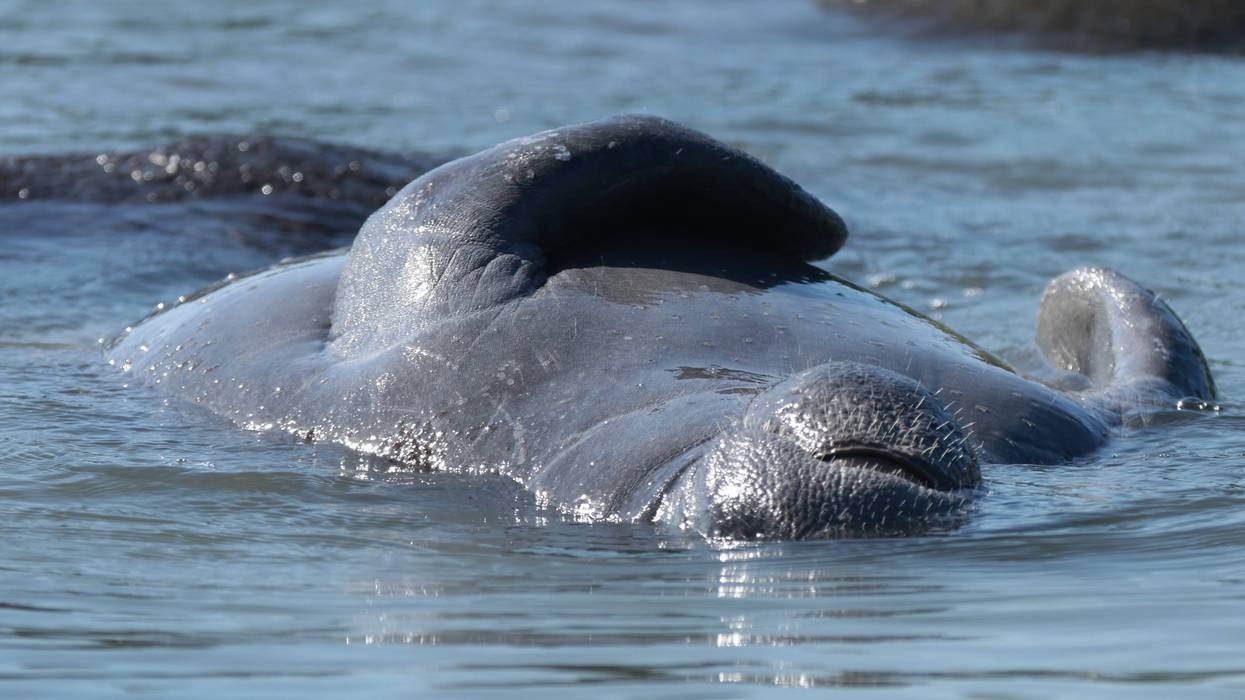
“In the midst of an extinction crisis," said one advocate, "the Trump administration is gutting protections to benefit industry interests."
“Yet again, the Trump administration has sold out our endangered wildlife to the highest bidder,” said one biodiversity advocate after the US Department of Interior, in a Friday news dump, issued two new policy changes that would weaken the Endangered Species Act and make it easier for corporate polluters to prioritize their own bottom lines over habitat protection.
The US Fish and Wildlife Service (FWS) rescinded a policy that has been known as the "blanket rule" since 1975, which has given threatened species the same protections from illegal killing, trapping, harassment, and other forms of "take" under the ESA, as species that are officially designated as endangered.
The rollback would apply to species that have been newly declared as threatened, including the Florida manatee, the Pygmy rabbit, the Aztec Gilia, and Clover's Cactus—which could now go for years without protections despite their habitat loss and declining populations.
“Today’s decision represents a profound failure by Interior Secretary [Doug] Burgum and his department, and it amounts to an utter abdication of the federal government’s responsibility to protect America’s wildlife," said Sara Amundson, president of the Humane World Action Fund. "The department’s role is to faithfully implement—and certainly not to dismantle—the Endangered Species Act.”
The other policy change will require the FWS to consider the economic impact on various industries of designating areas as "critical" habitats in order to protect threatened and endangered species. The agency has previously had discretion over whether to consider economics when making habitat protection decisions.
Under President Donald Trump's new rule, said the Center for Biological Diversity, the FWS will be forced "to accept at face value claims by corporations and landowners of economic impacts from designating critical habitat, which could greatly limit the amount and quality of habitat protected for imperiled wildlife."
“Trump is bending over backward for corporate polluters by ripping away the blanket that protects so many struggling wildlife species as well as the air we breathe, the water we drink, and the natural places where we seek peace of mind."
"The way this is written, a landowner could falsely claim they planned to build the next Disneyland on their property, so designating critical habitat would supposedly cost them tens of millions of dollars,” said Noah Greenwald, CBD's endangered species co-director. “This rule is clearly intended to prevent the protection of the wild places that endangered animals and plants need to survive. It’s a despicable move that cheapens the value of our most imperiled wildlife so corporations can make more money. Anyone can make outrageous claims about how much their property is worth, but that shouldn’t be taken as gospel.”
Advocacy groups said both policy changes amounted to giveaways to the logging, mining, drilling, and cattle ranching industries. The latter industry has long lobbied against land being designated as a critical habitat for the ‘I‘iwi bird in Hawaii, Clay Samford, an attorney with the environmental legal group Earthjustice, told The Washington Post.
“It’s part of this administration’s push to reduce protections for public lands and wildlife that are enjoyed by all Americans, in favor of narrow business interests,” Samford told the newspaper.
A senior attorney for the group, Elizabeth Forsyth, said in a statement that "the Trump administration is turning the law on its head by letting extractive industries dictate where critical habitat can be destroyed."
"This prioritization of industry interests over science is fundamentally at odds with the clear purpose of the Endangered Species Act," said Forsyth. "We won’t let this dangerous giveaway go unchallenged.”
There is currently a backlog of more than 500 species awaiting consideration for listing as threatened or endangered, and the rule changes, along with the Trump administration's 18% reduction in the FWS workforce, are expected to leave imperiled species waiting even longer for protections.
“In the midst of an extinction crisis, with hundreds of species like the Florida manatee and the wolverine desperately needing stronger protections for their habitats, the Trump administration is gutting protections to benefit industry interests," said Ryan Shannon, a senior attorney at Defenders of Wildlife. "Where we see our nation's irreplaceable wildlife, they see dollar signs. But our federal lands and waters, and the species they support, belong to all Americans, not to the logging, drilling, and mining industries that oppose all limits on maximizing their private profits.”
In a statement, Interior Secretary Doug Burgum asserted that the ESA has long been "weaponized to stop almost any new project in America, driving up costs for families, weakening our competitiveness, and undermining our national security,” continued Secretary Burgum.
He added that the endangered species list has "fallen short," with 97% of listed species remaining designated as endangered, and called for "species recovery and delisting."
But Defenders of Wildlife noted that the ESA "has succeeded in preventing extinction for 99% of listed species."
"Public support for protecting our native wildlife remains overwhelmingly high, with 84% of voters supporting the ESA, according to nationwide polling conducted by Defenders of Wildlife," said the group.
The rules announced on Friday came days after the Interior Department proposed a new rule under which management of threatened grizzly bears would be transferred from the federal government to the states, where Republican leaders have pushed to end protections for the species.
The administration also exempted oil and gas companies from having to protect endangered species in the Gulf of Mexico, and earlier this month changed the regulatory interpretation of the word "harm" in the ESA.
“These rules are a one-way ticket to extinction for our most imperiled animals and plants, from monarch butterflies to giraffes to alligator snapping turtles,” said Greenwald. “Trump is bending over backward for corporate polluters by ripping away the blanket that protects so many struggling wildlife species as well as the air we breathe, the water we drink, and the natural places where we seek peace of mind. This is the last thing we need in the middle of an extinction crisis, and we’ll fight it with everything we’ve got.”