SUBSCRIBE TO OUR FREE NEWSLETTER
Daily news & progressive opinion—funded by the people, not the corporations—delivered straight to your inbox.
5
#000000
#FFFFFF
To donate by check, phone, or other method, see our More Ways to Give page.


Daily news & progressive opinion—funded by the people, not the corporations—delivered straight to your inbox.
If one needed any further proof, today’s decision is all the evidence needed.
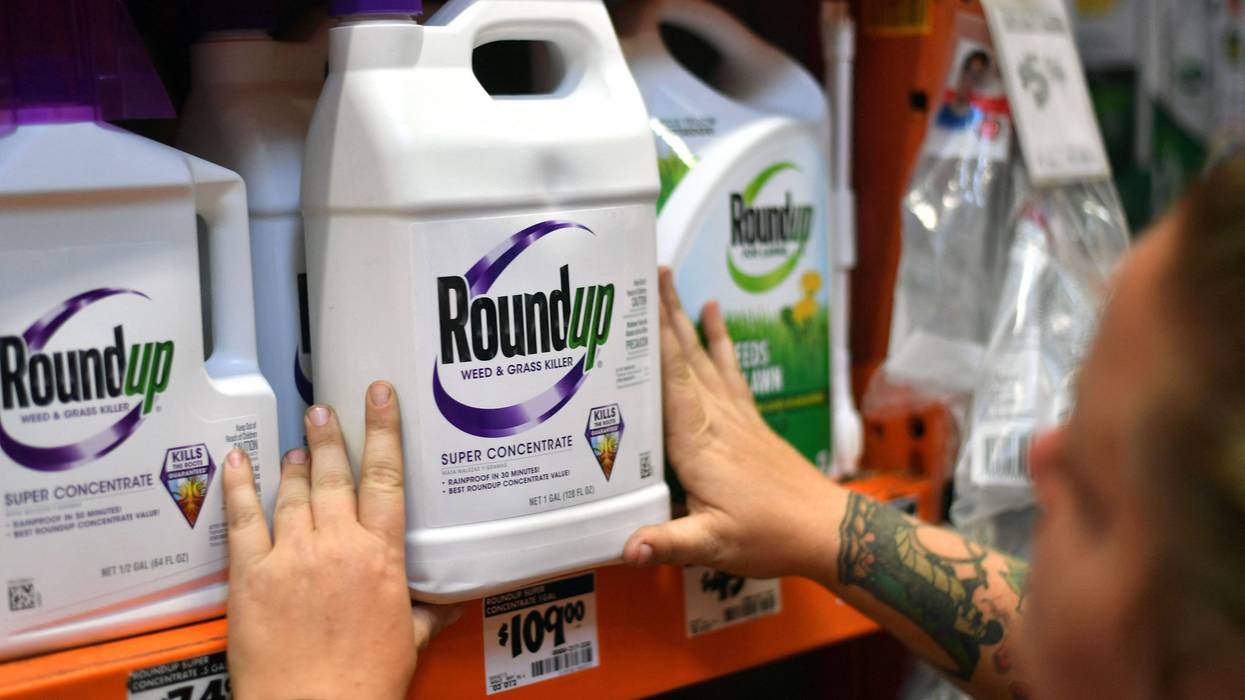
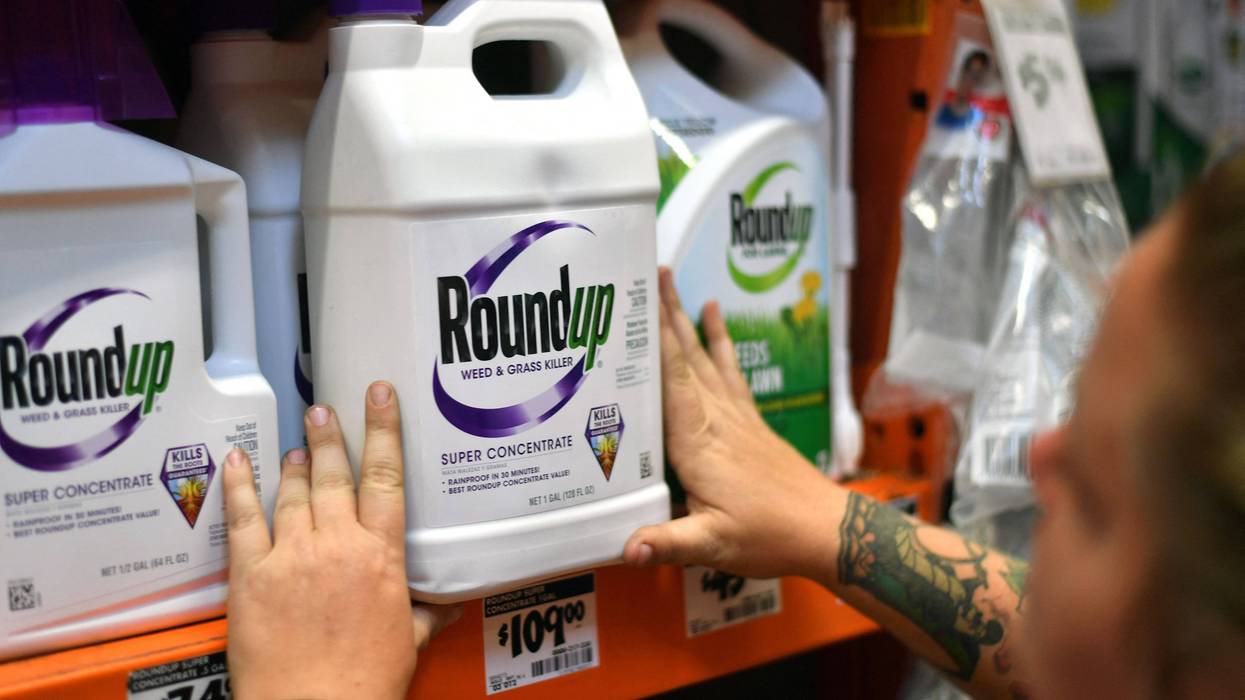
The US Supreme Court on Thursday sided with pesticide manufacturer Bayer in Monsanto Company v. Durnell, ruling that federal law preempts lawsuits brought by cancer patients who allege its Roundup product was to blame for their disease.
With the Trump administration siding with Bayer in the litigation, the devastating ruling by the court extends this legal shield to all pesticide corporations, leaving patients harmed by these toxic agricultural chemicals without the recourse of litigation that has cost Bayer billions of dollars.
Once again, the Supreme Court has sided with big business over people and the environment. This ruling is a disaster for public health—and it has Trump’s name written all over it. If one needed any further proof that the president’s feigned mission to "Make America Healthy Again" was a farce, today’s decision is all the evidence needed. Trump has been all too willing to endorse Bayer’s crusade to pollute with impunity, while the administration doubles down on a failed pesticide regulatory scheme.
Industrial agriculture is poisoning America. The fight against toxic pesticides does not end here. Congress must pass the Pesticide Injury Accountability Act to safeguard access to justice for all harmed by these toxic chemicals, and a Farm Bill that finally puts public health first. Until then, the Supreme Court has shut the courthouse doors to tens of thousands of sick and suffering Americans."
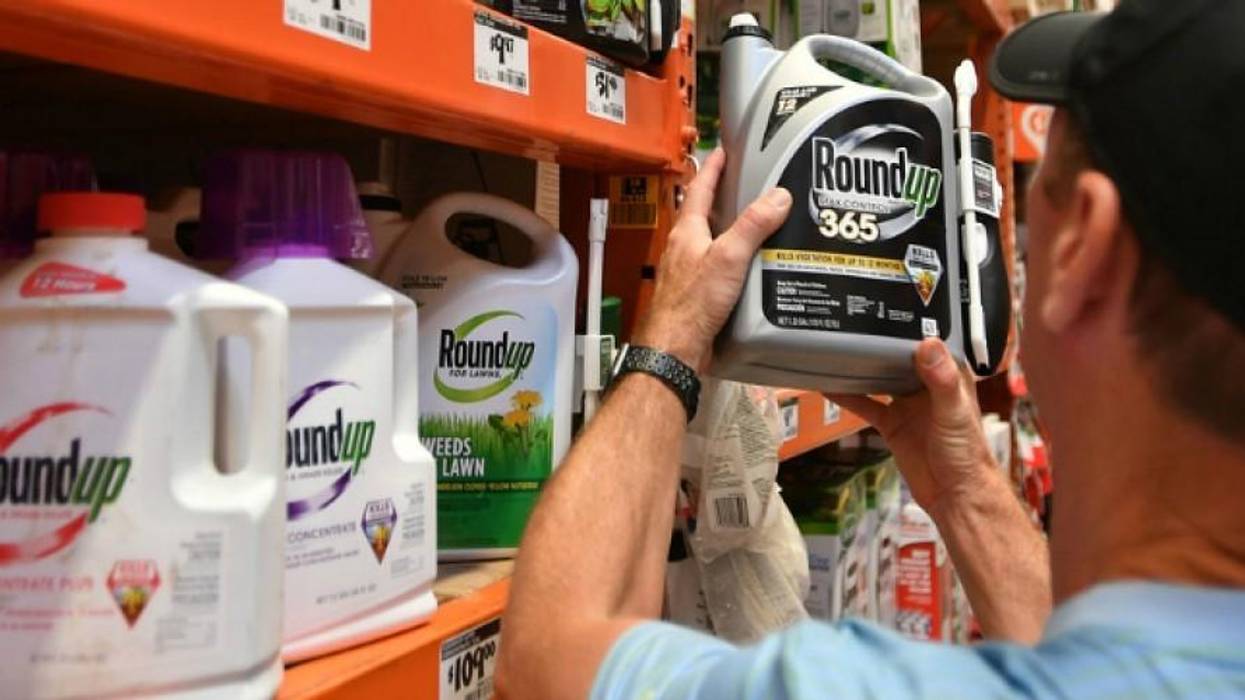
Today’s ruling comes despite a litany of evidence suggesting that glyphosate, the key ingredient in Bayer’s ubiquitous Roundup pesticide, is carcinogenic, and that the Environmental Protection Agency’s pesticide registration process is fatally flawed. The World Health Organization has defined glyphosate as a probable carcinogen since 2015. Roundup is the most widely used pesticide in the United States.
The decision completes Bayer’s years-long, well-financed quest to stifle cancer lawsuits cutting into its bottom line. Since purchasing Monsanto in 2018, Bayer has spent over $11 billion settling over 100,000 cancer lawsuits related to Roundup. Bayer has been pushing widely-opposed Cancer Gag Act bills nationwide, seeking to shield pesticide corporations from health-related lawsuits in multiple states and Congress. So far this year, the immunity legislation has failed in 11 states and was stripped from the House Farm Bill and left out of the Senate version.
There is a better way, including the Pesticide Injury Accountability Act, introduced by Sen. Corey Booker (D-NJ), which would restore the right to sue over pesticide harms. It's a right all Americans deserve.
"People who were exposed, workers who were never warned, consumers who trusted a label—they now have fewer tools to use to fight back. And the corporations responsible for that harm have more protection than ever."
Public health advocates, legal experts, and members of Congress were among those outraged on Thursday by the US Supreme Court's ruling in favor of Monsanto—and, effectively, against thousands of people who argue that its weedkiller Roundup caused their cancer.
Jay Feldman, executive director of the organization Beyond Pesticides, blasted the 7-2 decision as "a tragic setback for public and environmental health, allowing companies that produce toxic pesticides to evade the most basic of responsibilities, warning consumers that their products may cause cancer and other deadly diseases."
"In an age of deregulation, the ability of farmers, farmworkers, and consumers to hold chemical manufacturers accountable for hazard warnings is the keystone to minimum protection of public health, as demand in the market for the safest possible products grows daily," Feldman said in a statement.
The closely watched case stems from a state-level lawsuit and a resulting verdict in favor of John Durnell, a Missouri man who argued that Monsanto's glyphosate-based Roundup caused his non-Hodgkin lymphoma, a blood cancer, which is in remission after multiple rounds of chemotherapy. A jury agreed the herbicide's label should have had a cancer warning.
The World Health Organization's International Agency for Research on Cancer classified glyphosate as probably carcinogenic to humans over a decade ago, but the US Environmental Protection Agency and Bayer still insist it is safe. In a majority opinion penned by Justice Brett Kavanaugh, the country's high court agreed with the company's argument that the Federal Insecticide, Fungicide, and Rodenticide Act (FIFRA) preempts Durnell's failure-to-warn claim under state law.
In a dissent joined by Justice Neil Gorsuch, Justice Ketanji Brown Jackson wrote that "the majority reads into FIFRA a labeling requirement that does not exist, and it reads out of FIFRA the statute's ongoing prohibition on misbranding. This interpretation cannot be squared with the text of FIFRA or our precedents. Ultimately, the effect of the majority's interpretation is both remarkable and regrettable, for it unjustifiably closes the courthouse doors to state tort plaintiffs like Durnell."
Bayer—which bought Monsanto in 2018—similarly noted in a Thursday statement that the ruling "should help significantly contain the Roundup litigation after nearly a decade of legal battles," which the company also said that it will keep trying to resolve by seeking final approval of its proposed $7.25 billion class settlement.
"This case was never just about Bayer," Environmental Working Group president and co-founder Ken Cook emphasized Thursday. "It was about whether states retain the authority to provide stronger protections for their residents when federal regulations fall short, and whether ordinary Americans can hold powerful corporations accountable when their pesticides cause harm."
Despite returning to office with a promise to "Make America Healthy Again" alongside Health and Human Services Secretary Robert F. Kennedy Jr., President Donald Trump's administration "didn't sit on the sidelines—it lobbied the Supreme Court to strip Americans of their right to sue. And its tactics worked," Cook pointed out. "When a president uses the vast power of the federal government to protect a pesticide company from accountability—instead of the people he swore to serve—our system is no longer working for ordinary Americans."
"The ultimate losers are the American people," Cook concluded. "People who were exposed, workers who were never warned, consumers who trusted a label—they now have fewer tools to use to fight back. And the corporations responsible for that harm have more protection than ever."
Federal lawmakers who have fought against GOP efforts to pass a legislative "liability shield" for pesticide companies, including Sen. Cory Booker (D-NJ) and Congressman Thomas Massie (R-Ky.) joined Cook in ripping the ruling, as did Earthjustice senior attorney Patti Goldman, who said that it "allows Monsanto and other chemical companies to avoid responsibility when their labels leave people unprotected from serious harm."
As Farm Action president Angela Huffman also warned that the ruling "sets a dangerous precedent for other corporations seeking similar immunity," Sarah Starman, senior food and agriculture Campaigner at Friends of the Earth, took aim at the Supreme Court for issuing a decision that "sells out farmers, gardeners, and rural communities to multibillion-dollar pesticide corporations."
Food & Water Watch legal director Tarah Heinzen, also condemned the decision, declaring that "once again, the Supreme Court has sided with big business over people and the environment."
"Today's ruling is a disaster for public health—and it has Trump's name written all over it," said Heinzen. "If one needed any further proof that the president's feigned mission to 'Make America Healthy Again' was a farce, today's decision is all the evidence needed. Trump has been all too willing to endorse Bayer's crusade to pollute with impunity, while the administration doubles down on a failed pesticide regulatory scheme."
"Industrial agriculture is poisoning America," she stressed. "The fight against toxic pesticides does not end here. Congress must pass the Pesticide Injury Accountability Act to safeguard access to justice for all harmed by these toxic chemicals, and a Farm Bill that finally puts public health first. Until then, the Supreme Court has shut the courthouse doors to tens of thousands of sick and suffering Americans."
Kayla Hancock, director of Protect Our Care's Public Health Project, also called out Trump for dispatching US Solicitor General D. John Sauer to argue the case on the side of Bayer and its legal team.
"First Donald Trump signed an executive order plowing the field for increased glyphosate production despite the known health risks to help grow profits for his chemical industry donors," Hancock said. "Then Trump dispatched his [US Department of Justice] lawyers to help Big Chemical secure blanket immunity from at least 100,000 glyphosate-related liability claims."
"Sadly, the Supreme Court agreed to give glyphosate makers a free pass to poison Americans without warning," she added. "Donald Trump always has and always will prioritize big money corporate interests that benefit him, even if it means marginalizing the MAHA movement and concerned moms. And whenever Trump sells out public health to the highest industry bidder, there's no bigger apologist than his phony health secretary, RFK Jr."
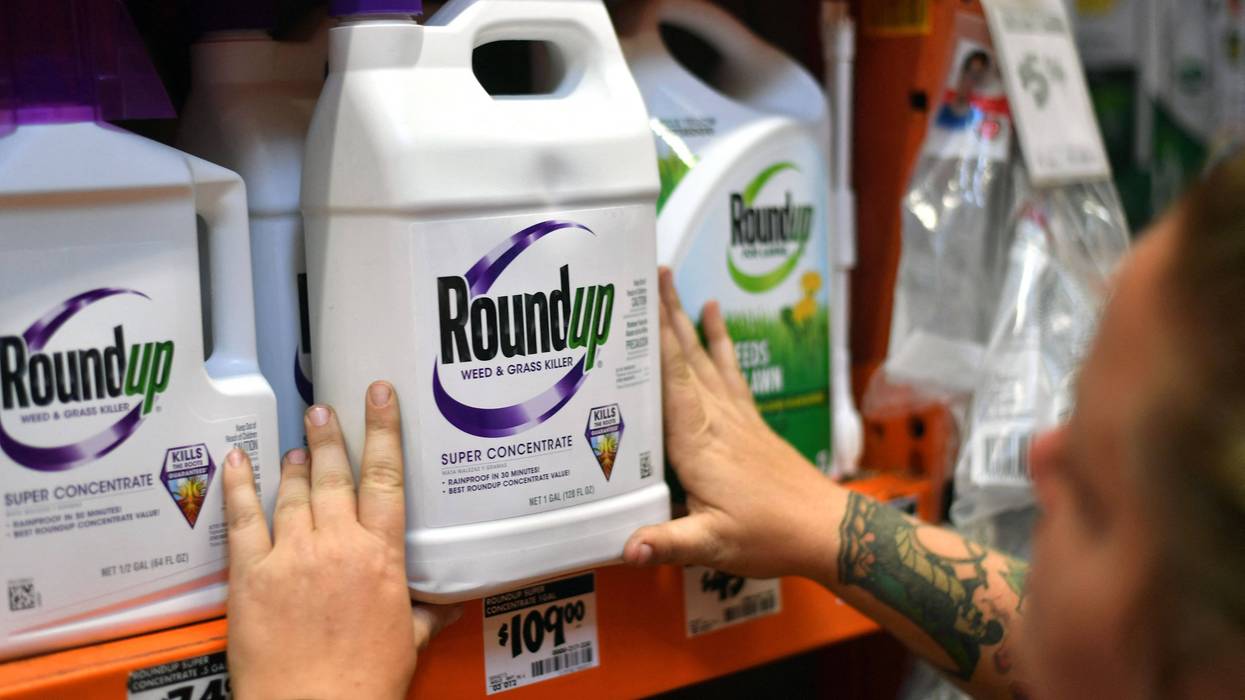
Sen. Cory Booker said it "will overturn President Trump's executive order that prioritizes pesticide company profits over public health and ensure that people who have gotten cancer from glyphosate can seek justice."
On the heels of the US Supreme Court hearing arguments in Monsanto Company v. Durnell, Sens. Martin Heinrich and Cory Booker on Wednesday introduced legislation intended to overturn President Donald Trump's executive order mandating production of the highly contentious weedkiller at the center of that case.
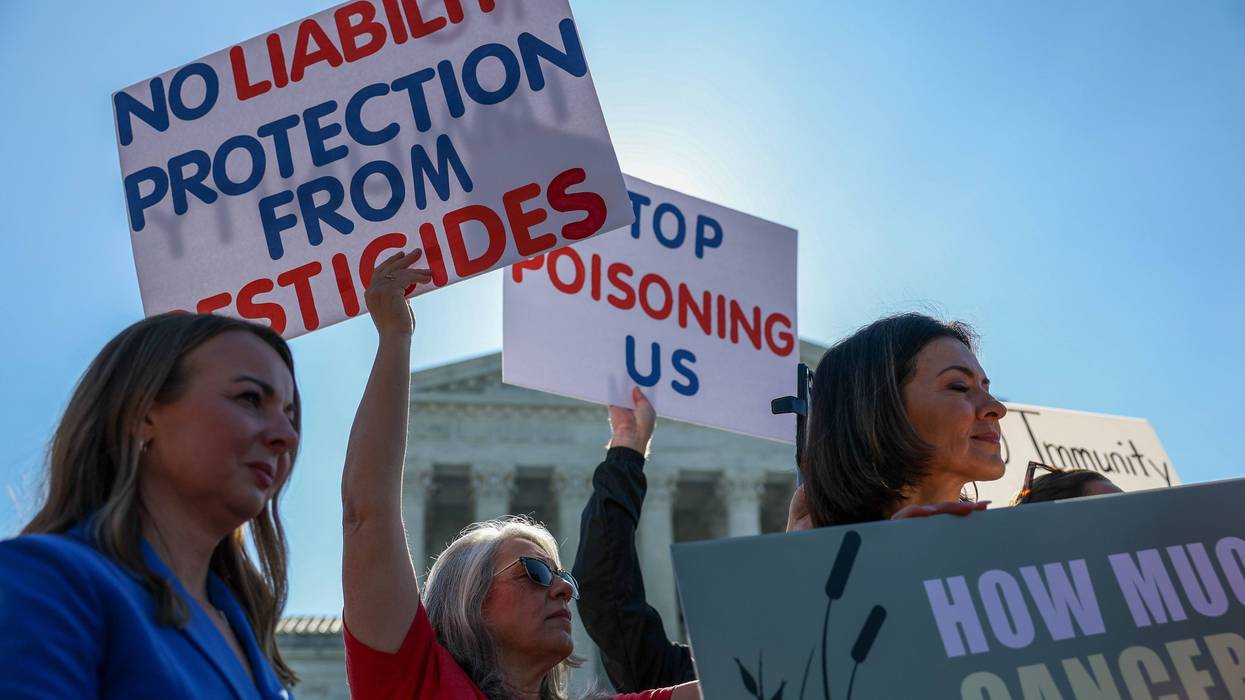
"Since my time serving as a City Council member in Newark, I have seen firsthand the devastating harm caused by toxic chemicals in our communities," Booker (D-NJ) said in a statement. "That is why, this week at a rally in front of the Supreme Court, I stood with cancer survivors, activists, and Make America Healthy Again advocates to protest against providing a liability shield to foreign corporations that are poisoning the American people."
"It is why I filed an amicus brief to the Supreme Court supporting Americans who developed cancer after using a toxic pesticide in a case that will determine whether thousands harmed by glyphosate can have their day in court—and why I am a proud co-sponsor of the No Immunity for Glyphosate Act," he added, "legislation that will overturn President Trump's executive order that prioritizes pesticide company profits over public health and ensure that people who have gotten cancer from glyphosate can seek justice in federal court."
Despite Trump's campaign promise to "Make America Healthy Again," he has frequently served the pesticide industry, including by siding with Bayer—which bought Monsanto in 2018—in the case before the high court, and by signing the February order invoking the Defense Production Act for glyphosate, the active ingredient in Monsanto's Roundup.
Specifically, Trump directed US Secretary of Agriculture Brooke Rollins to ensure "a continued and adequate supply of elemental phosphorus and glyphosate-based herbicides." He also noted that domestic producers are required to comply with his order, and under the federal law he invoked, those doing so have broad legal immunity.
Just before Trump's order, Bayer announced a proposed settlement for the tens of thousands of people who say exposure to Roundup caused their cancer. Still, the company and the US Environmental Protection Agency (EPA) continue to claim glyphosate is safe, despite the World Health Organization's International Agency for Research on Cancer classifying it as probably carcinogenic to humans over a decade ago.
The case before the Supreme Court stems from a lawsuit and a resulting verdict in favor of John Durnell, a Missouri man whose blood cancer is in remission after multiple rounds of chemotherapy. The justices' decision could determine whether many others are able to continue pursuing cases against Bayer. Republicans are also pushing to include a "liability shield" for pesticide manufacturers in the next Farm Bill.
Meanwhile, Booker and Heinrich's (D-NM) bill states that "no federal funds may be obligated or expended to implement, administer, or enforce" Trump's glyphosate order, and "any person, or the estate, survivors, or legal representative of such person, who suffers or has suffered physical injury, illness, disease, or death caused, in whole or in part, by exposure to elemental phosphorus or a glyphosate-based herbicide manufactured, distributed, sold, or supplied within the United States, may bring a civil action in an appropriate district court of the United States against any covered entity."
Heinrich said Wednesday that "juries across the country are looking at the evidence and delivering verdicts: Exposure to glyphosate can cause cancer. The Supreme Court cannot and should not allow these verdicts to be overturned."
"My constituents' health and safety comes first. And I will not stand by while President Trump gives immunity to those who put my constituents' health and safety at risk," he added. "That’s why I’m proud to lead the No Immunity for Glyphosate Act, legislation that will restore accountability, uphold court rulings, and protect the health and well-being of families in New Mexico and across the country."
The bill is also backed by Sens. Ed Markey (D-Mass.), Jeff Merkley (D-Ore.), and Peter Welch (D-Vt.). Reps. Thomas Massie (R-Ky.) and Chellie Pingree (D-Maine) introduced companion legislation in February, just after Trump's order. The lead sponsors in the House of Representatives also are working to strip the immunity shield from the Farm Bill and joined Booker at "The People v. Poison" rally outside the Supreme Court on Monday.
The next day, another House Democrat, Rep. Alexandria Ocasio-Cortez (NY), questioned EPA Administrator Lee Zeldin about the immunity shield in Trump's order, as well as his meeting with Bayer's CEO last year and some related internal emails.
"AOC smoked him in there," Drop Site News reporter Julian Andreone said on social media. "Red-handed."
For decades Roundup has been sold as an effective herbicide, one that was safe for humans and the environment. It isn't.
Mark Twain supposedly once said, "Never let the truth get in the way of a good story," but there is a difference between a good story told in fun and a story (supposedly backed by independent scientific research) that people are led to believe because, well, science is supposed to be true. And so we come to the story of Roundup, the herbicide developed by Monsanto that swept the world because it worked and was the “safe” alternative to widely used weedkillers like Dicamba and 2,4-D,—it was said to be safer than table salt!
Roundup was developed in the 1970s as a non-selective herbicide, meaning it would kill almost any growing plant it touched. It was an effective burn-down herbicide farmers could apply prior to planting, and it assured an almost weed-free field at the beginning of the growing season. Roundup could be used in non-agricultural situations as well, to kill weeds and grass growing in sidewalk and patio cracks, around buildings, etc, but care was needed because, as noted, it was non-target and could kill whatever plant it touched.
For farmers, it worked well, except while it did kill growing weeds, buried weed seeds were not harmed, so a weed-free field at planting time did not ensure a weed-free field throughout the growing season. Weeds would continue to sprout, and more herbicide applications would be needed during the growing season.
Then Monsanto developed their big fix released in 1996, genetically engineered (GE) soybeans resistant to Roundup, followed by GE versions of other commodity crops: corn, cotton, sugar beet, and canola. Over-the-top spraying of these GE crops would kill everything but the crop, and Roundup became one of the most widely used herbicides in the world and GE crops came to dominate world commodity crop production.
Companies like Bayer have to protect their product and their profit even if they have to tell a few lies to do so.
While Monsanto sold Roundup with the slogan, “One spray is all you’ll ever need,” in time, it became clear that some weeds were developing resistance to Roundup and farmers were right back where they started, looking for herbicides that worked consistently. More genetic modifications were made to commodity crops making them resistant to other herbicides, like Dicamba and 2,4-D, the herbicides Roundup was supposed to have replaced. These multiple GE or “stacked” crops could be sprayed with a cocktail of herbicides, hopefully ensuring weed-free fields for the entire growing season.
Farmers are using more herbicide, even on the GE crops, and costs for GE seed have risen much faster than non-GE seed. Of course, the motive was never to reduce the farmer’s production costs or agricultural herbicide use but to increase it—that's where the profit is.
For farmers who didn’t jump on the GE bandwagon, finding non-GE seed is often difficult. Even more onerous, some farmers have found it necessary to plant GE seed as a preventative measure because non-GE crops can be damaged by chemical drift from neighboring GE fields.
So much for effectiveness, what about the safety of Roundup? In 2000 a study was published in the journal Regulatory Toxicology and Pharmacology that deemed the active ingredient in Roundup (glyphosate) was safe and not a human health risk. Since then, that study has been cited consistently as proof of Roundup’s safety. Numerous other studies have shown that glyphosate could cause cancer and that the inert ingredients that are part of the patented Roundup formulation increase the toxicity of glyphosate. Further, the practice of using Roundup as a desiccant on small grain crops (oats, wheat, and barley) prior to harvest puts Roundup directly on grain that enters the human food chain.
Since acquiring Monsanto in 2018, Bayer has paid out about $11 billion to settle almost 100,000 cancer-related lawsuits with approximately 61,000 still pending. In December of 2025 another blow to the claimed safety of Roundup came when the Regulatory Toxicology and Pharmacology journal withdrew the 2000 article that had touted Roundup’s safety. While the study claimed to be independent and peer reviewed, it has come to light that Monsanto's scientists played a significant role in conceiving and writing the article. Oops.
For decades Roundup has been sold as an effective herbicide, one that was safe for humans and the environment, and without which “consequences would be dire.” Companies like Bayer have to protect their product and their profit even if they have to tell a few lies to do so. They claim to produce safe products that help farmers thrive—real independent research refutes that. Bayer and the agribusiness industry may be thriving, but farmers are not and in these times, too few people seem to care that lies are accepted as truth.
"President Trump just gave Bayer a license to poison people," said one public health advocate. "Full stop.”
Less than a decade ago, US Health and Human Services Secretary Robert F. Kennedy Jr. helped win a landmark $289 million verdict against Monsanto, which was found to have distributed a weedkiller containing the carcinogenic chemical glyphosate.
But on Wednesday the nation's top health official could only shrug after President Donald Trump issued an executive order mandating the production of the chemical, which was found in 2015 to be “probably carcinogenic to humans” by the International Agency for Research on Cancer at the World Health Organization.
Trump invoked the Defense Production Act, which has historically been used to spur production of supplies needed for national security, to guarantee the supply of herbicides containing glyphosate, claiming a lack of such weedkillers would "critically jeopardize agricultural productivity, adding pressure to the domestic food system."
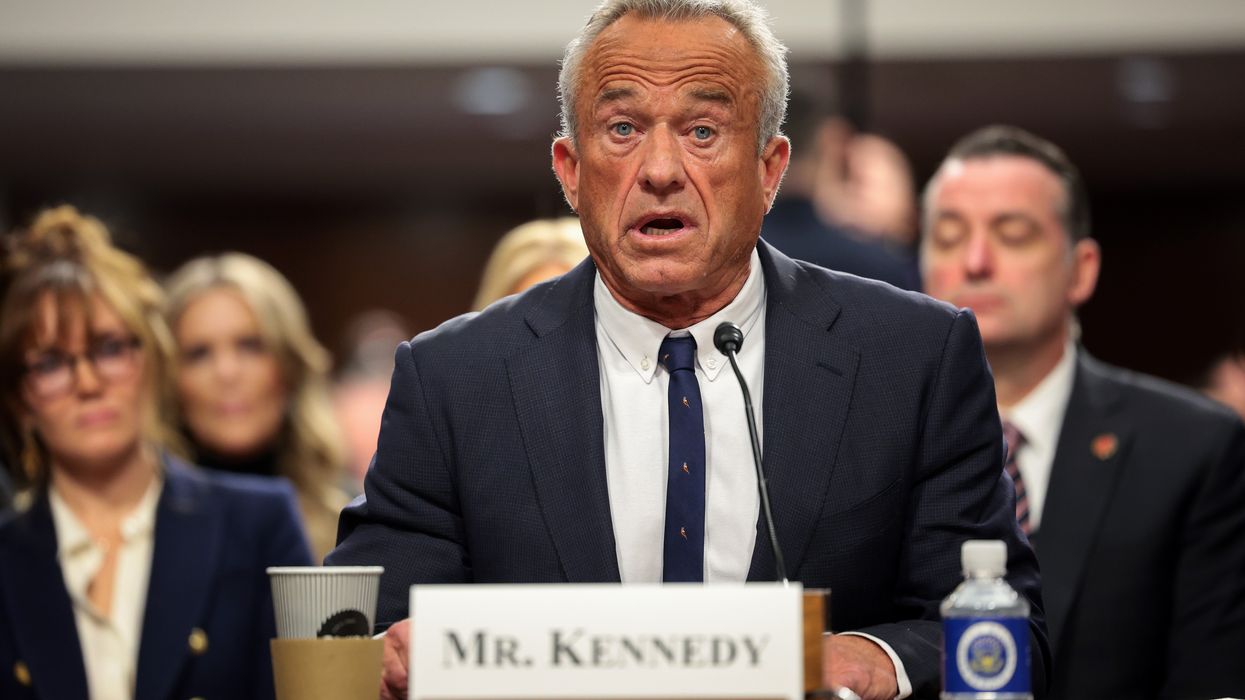
Kennedy, who like Trump promised on the campaign trail to confront dangerous pesticides and chemicals, said in a statement that the executive order "puts America first where it matters most—our defense readiness and our food supply." He also hinted during his confirmation hearing last year that the administration would treat glyphosate as a critical supply for farmers.
Ken Cook, president and co-founder of the Environmental Working Group, which supported some aspects of Kennedy's "Make America Healthy Again" agenda, said he couldn't "envision a bigger middle finger to every MAHA mom than this."
“If anyone still wondered whether ‘Make America Healthy Again’ was a genuine commitment to protecting public health or a scam concocted by President Trump and RFK Jr. to rally health-conscious voters in 2024, today’s decision answers that question,” said Cook. “It’s a shocking betrayal to all of us but especially the people who live and work near farm fields where glyphosate is used."
In addition to being linked to cancer, glyphosate has also been found to cause reproductive harms in some studies.
Zen Honeycutt, founder of the pro-MAHA group Moms Across America, said she was "disgusted" by the executive order.
The use of the Defense Production Act could provide Bayer, the pharmaceutical company that acquired herbicide maker Monsanto in 2018, with legal immunity if it is challenged in court again in public health lawsuits.
The executive order is "clearly designed to offer a broad immunity,” Brett Hartl, director of government affairs for the Center for Biological Diversity, told the New York Times.
The order comes months after a major study that had determined glyphosate was safe for humans was retracted by Regulatory Toxicology and Pharmacology, the scientific journal that had published it. It was found that scientists at Monsanto had participated in gathering data for, writing, and reviewing the paper, and that other authors had received compensation from the company for their work. The journal cited “serious ethical concerns regarding the independence and accountability of the authors" when it retracted the article.
The executive order was also announced a year after Bayer donated $1 million to Trump's inaugural committee.
During Trump's first term in 2017, two years after the WHO cancer agency determined glyphosate was likely carcinogenic, the US Environmental Protection Agency issued a finding that the chemical—which is used widely on soybeans, corn, and wheat and in home gardens—was safe.
This week, Bayer announced it had reached a deal to pay $7.25 billion to settle tens of thousands of health lawsuits regarding Roundup, the product that includes glyphosate as its active ingredient. The company continues to claim the herbicide is safe.
“By granting immunity to the makers of the nation's most widely used pesticide, President Trump just gave Bayer a license to poison people," said Cook. "Full stop.”
This article has been updated to note that International Agency for Research on Cancer, a committee of the World Health Organization, found glyphosate to likely be carcinogenic to humans in 2015.
"Now that much of the research finding glyphosate poses no cancer risk has been undermined, it is especially outrageous that the Trump administration is seeking to bolster Bayer's case," said one campaigner.
Just two days after President Donald Trump's administration sided with the maker of glyphosate-based Roundup over cancer victims in a US Supreme Court case, the scientific journal Regulatory Toxicology and Pharmacology retracted a landmark 25-year-old study on the pesticide's supposed safety, citing various ethical concerns involving Monsanto.
Bayer, which bought Monsanto in 2018, maintains that the weedkiller can be used safely and is not carcinogenic. However, the company faces thousands of lawsuits from people who developed cancer after exposure to its glyphosate products. The retraction stems from the US litigation, which in 2017 revealed Monsanto correspondence about the study.
While Bayer told the New Lede's Carey Gillam that Monsanto's role in the 2000 study was adequately disclosed, the journal's editor-in-chief, Martin van den Berg, does not agree. He wrote in an explanation for the retraction that "the apparent contributions of Monsanto employees as cowriters to this article were not explicitly mentioned as such in the acknowledgments section."
"This article has been widely regarded as a hallmark paper in the discourse surrounding the carcinogenicity of glyphosate and Roundup," he highlighted. "However, the lack of clarity regarding which parts of the article were authored by Monsanto employees creates uncertainty about the integrity of the conclusions drawn."
Of the study's three named authors—Gary M. Williams, Ian Munro, and Robert Kroes—only Williams is still alive. Van den Berg wrote that he reached out seeking an "explanation for the various concerns," but "did not receive any response."
The paper is reliant on company research. As van den Berg detailed, "the article's conclusions regarding the carcinogenicity of glyphosate are solely based on unpublished studies from Monsanto," and "the authors did not include multiple other long-term chronic toxicity and carcinogenicity studies, that were already done at the time of writing their review in 1999."
"Further correspondence with Monsanto disclosed during litigation indicates that the authors may have received financial compensation from Monsanto for their work on this article, which was not disclosed as such in this publication," he noted.
"The paper had a significant impact on regulatory decision-making regarding glyphosate and Roundup for decades," he continued. "Given its status as a cornerstone in the assessment of glyphosate's safety, it is imperative that the integrity of this review article and its conclusions are not compromised. The concerns specified here necessitate this retraction to preserve the scientific integrity of the journal."
It took years, but finally that Roundup paper ghost-written by Monsanto has been retracted. The whole episode is indicative of a terrible rot that is active in corners of scientific publishing.www.lemonde.fr/en/environme...
[image or embed]
— Joe Rojas-Burke (@rojasburke.bsky.social) December 3, 2025 at 11:58 AM
Michael Hansen, senior scientist of advocacy at Consumer Reports, emphasized the years between the retraction and the release of documents exposing Monsanto's role in the study. "What took them so long to retract it?" he asked Stacy Malkan of US Right to Know. "The retraction should have happened right after the documents came out."
Van den Berg, who has been in his role since 2019, told Malkan and Le Monde's Stéphane Foucart that he began reviewing the paper after a September article from Alexander Kaurov of New Zealand's Victoria University of Wellington and Naomi Oreskes of Harvard University.
Kaurov and Oreskes' article in the journal Environmental Science and Policy begins by stressing that "corporate ghostwriting is a form of scientific fraud" and goes on to examine the paper's influence—or as they put it, "how corporate authorship shaped two decades of glyphosate safety discourse."
The Netherlands-based van den Berg said that "it simply never ended [up] on my desk being at first primarily a US situation with litigation. The paper of Oreskes triggered it this summer and these authors made an official request and complaint."
He also told Malkan that "if you have more papers regarding Roundup published in RTP with possible problems, let me know."
Although Bayer on Wednesday pointed to the thousands of other studies on glyphosate and "the consensus among regulatory bodies worldwide," the retraction could affect both regulations and ongoing litigation. As Gillam reported:
Brent Wisner, one of the lead lawyers in the Roundup litigation and a key player in getting the internal documents revealed to the public, said the retraction was "a long time coming."
Wisner said the Williams, Kroes, and Munro study was the "quintessential example of how companies like Monsanto could fundamentally undermine the peer-review process through ghostwriting, cherry-picking unpublished studies, and biased interpretations."
"Faced with undisputed evidence concerning how this study was manufactured and then used, for over two decades, to protect glyphosate sales, the editor-in-chief... did the right thing," Wisner said. "While the damage done to the scientific discourse—and the people who were harmed by glyphosate—cannot be undone, it helps rejuvenate some confidence in the otherwise broken peer-review process that corporations have taken advantage of for decades. This garbage ghostwritten study finally got the fate it deserved. Hopefully, journals will now be more vigilant in protecting the impartiality of science on which so many people depend."
Le Monde's Foucart noted Wednesday that the retracted study "is cited around 40 times in the 2015 European expert report that led to the herbicide's reauthorization in 2017."
In the United States, Nathan Donley, environmental health science director at the Center for Biological Diversity—who has been highly critical of the Trump administration's various decisions favoring the pesticide industry that contradict its so-called Make America Healthy Again promises—urged the Environmental Protection Agency (EPA) to take action in response to the retraction.
"The pesticide industry's decades of efforts to hijack the science and manipulate it to boost its profits is finally being exposed," he said in a statement. "The EPA must take immediate action to reassess its finding that glyphosate is not a carcinogen. That means rather than relying on Monsanto's confidential research of its own product, the agency needs to follow the gold standard of independent science established by the World Health Organization in its finding that glyphosate probably causes cancer."
He also pointed to the Monday briefing in which US Solicitor General D. John Sauer urged the country's top court to hear a challenge to a verdict that awarded $1.25 million to a man who claimed Roundup caused him to develop non-Hodgkin lymphoma.
"Now that much of the research finding glyphosate poses no cancer risk has been undermined, it is especially outrageous that the Trump administration is seeking to bolster Bayer's case," Donley said. "Trump promised the American public his administration would protect Americans from dangerous chemicals and pesticides, but now it's throwing its full weight behind Bayer's desire to deny cancer victims their day in court. This is a massive betrayal of the public and an unabashed prioritization of corporate wealth over public health, plain and simple."
One critic called the report "a slap in the face to the millions of Americans, from health-conscious moms to environmental advocates to farmers, who have been calling for meaningful action on pesticides."
Health and environmental advocates are hammering a new report issued Tuesday by the Trump administration's Make America Health Again Commission for papering over dangers posed by pesticides and replicating the positions of powerful corporate interests.
According to StatNews, the MAHA report takes a "cautious line" on pesticides, and even includes a section recommending that the Environmental Protection Agency work "with food and agricultural stakeholders... to ensure that the public has awareness and confidence in [the Environmental Protection Agency's] pesticide robust review procedures."
As StatNews noted, this section in particular drew the ire of organic food advocate Elizabeth Kucinich—the spouse of Dennis Kucinich, who served as presidential campaign manager for Trump Health and Human Services Secretary Robert F. Kennedy Jr.—who said that it "reads like it was written by Bayer and Monsanto."
Zen Honeycutt, founder of the pro-MAHA group Moms Across America, similarly told StatNews that "we are deeply disappointed that the committee allowed the chemical companies to influence the report," even as she praised other parts of it.
Public interest advocacy groups, meanwhile, slammed the MAHA report, which they called wholly deferential to major industries.
"The MAHA Commission report is a gift to Big Ag," said Food & Water Watch senior policy analyst Rebecca Wolf. "Its deregulatory proposals read like an industry wish list. The truth is, industrial agriculture is making us sick. Making America healthy again will require confronting Big Ag corporations head on—instead, the Trump administration has capitulated."
Wolf added that the MAHA report lacks "any real action on toxic pesticides linked to rising cancer rates nationwide" and called it "shameful but not surprising" that the report barely mentioned so-called "forever chemicals" contaminating drinking water "while disregarding how elsewhere in the administration common-sense water safety rules are being weakened and canceled."
Sarah Starman, senior food and agriculture campaigner at Friends of the Earth, was even more scathing in her assessment of the report, which she called "a slap in the face to the millions of Americans, from health-conscious moms to environmental advocates to farmers, who have been calling for meaningful action on pesticides."
Like other critics, Starman heaped particular scorn upon the report's section on pesticides.
"Laughably, the report calls the EPA's lax, flawed, and notoriously industry-friendly pesticide regulation process 'robust,'" she said. "This, in spite of the fact that EPA currently allows more than 1 billion pounds of pesticide use on US crops each year, including the use of 85 pesticides that are banned in other countries because of the serious risks they pose to human health and the environment."
The Center for Food Safety (CFS) said that the MAHA report offered "a few crumbs" to health advocates, but was mostly filled with "hollow rhetoric."
George Kimbrell, legal director and co-executive director of CFS, also called out the report's claims about the EPA having a "robust" procedure for approving pesticides.
"There is nothing 'robust' about EPA's regulation of pesticides," he said. "In reality it is the antithesis of robust: it is an oversight system filled with data holes and regulation loopholes, lacking in public transparency, which has instead required decades of dogged public interest litigation to get EPA to do its most basic duties."
Environmental Working Group co-founder and president Ken Cook said that the report made a mockery of Kennedy's past promises to use his power to take on powerful industries.
"It looks like pesticide industry lobbyists steamrolled the MAHA Commission's agenda," he commented. "Secretary Kennedy and President Trump cynically convinced millions they'd protect children from harmful farm chemicals—promises now exposed as hollow."
Cook also took aim at the leaders of the MAHA movement, whom he described as "grifters exploiting the hopes and fears of health-conscious Americans in their quest for power jobs in Washington."
"With the new formulations of Roundup, Bayer had the opportunity to make us safer, but it did the opposite," one expert said.
Facing tens of thousands of lawsuits after it acquired Monsanto, Bayer promised to remove cancer-linked glyphosate from its commercial Roundup weed killers by 2023. But an analysis published by Friends of the Earth on Tuesday reveals that the replacement is even more dangerous.
The environmental group found that many residential Roundup products still do contain glyphosate, and those that don't have replaced it with a chemical cocktail that is 45 times more toxic to human health following long-term exposure.
"With the new formulations of Roundup, Bayer had the opportunity to make us safer, but it did the opposite," Kendra Klein, deputy director of science for Friends of the Earth, said in a statement. "Bayer's willingness to deceive the public and disregard our health as it continues to cash in on the Roundup brand name is outrageous."
"In short, the new Roundup is not the old Roundup—it's worse."
Roundup weed killer was first commercially released by Monsanto 50 years ago. Since then, tens of thousands of people say they have come down with Non-Hodgkin lymphoma after repeated use of the product and its active ingredient glyphosate, which the World Health Organization's International Agency for Research on Cancer says is "probably carcinogenic to humans." Despite the risk, it is so widely used that it has been found in 80% of a test of U.S. urine samples.
"The human toll of Roundup is enormous—tens of thousands of people have lost their lives and their health because of this toxic weed killer," Klein said.
In response to both legal challenges and popular pressure, Bayer announced in 2021 that it would remove glyphosate from residential Roundup sold in the U.S. within two years.
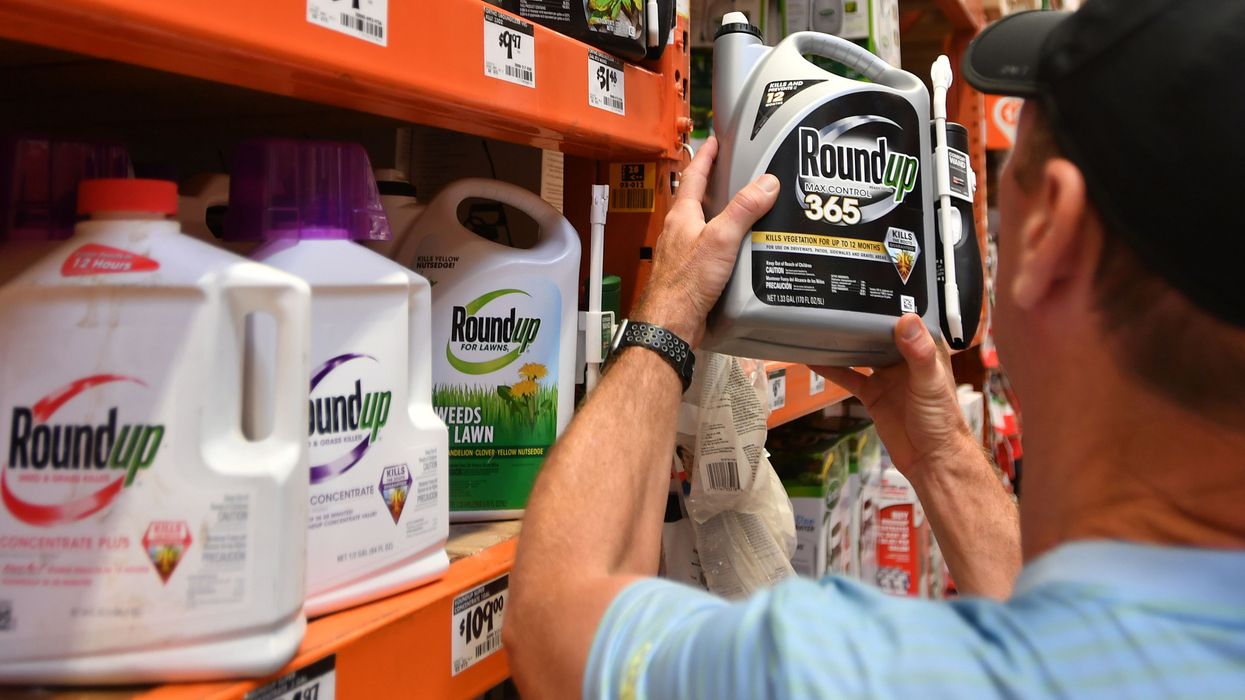
To track how well Bayer kept that promise, Friends of the Earth assessed the Roundup products for sale at Lowe's and Home Depot—the largest home and garden stores in the U.S.—between June and October of 2024.
It found that seven of the Roundup products for sale still contained glyphosate, while the eight that did not used chemicals "of dramatically greater concern."
Bayer has replaced glyphosate with a combination of four chemicals—fluazifop-P-butyl, triclopyr, diquat dibromide, and imazapic—the latter two of which are banned in the European Union. All four chemicals are even more dangerous to health than glyphosate on average following chronic exposure, according to the Environmental Protection Agency's (EPA) analysis of safety studies. The new ingredients have been linked to kidney and liver damage; reproductive, birth, and development problems; and allergic reactions or irritation that impact the eyes, skin, and respiratory system.
While all four are toxic, one stands out: Diquat dibromide is 200 times more toxic than glyphosate and is considered a "highly hazardous pesticide."
The new ingredients also pose a greater risk to the environment. They are, on average, more likely to threaten bees, birds, worms, and fish and other aquatic life. They are also less likely to break down in the environment, and therefore more likely to infiltrate groundwater and pollute rivers and drinking water.
"In short, the new Roundup is not the old Roundup—it's worse," Friends of the Earth concluded in the report.
The environmental group also criticized Bayer for not providing a warning to consumers about the altered ingredients, as well as lax federal law that does not require pesticide makers to alert shoppers when they change the ingredients of a known brand. While pesticide makers do have to list the active ingredients of a pesticide on the container, the average consumer may not be aware of the relative toxicity of these chemicals. A frequent Roundup user is also likely to assume that anything sold under that brand is similarly toxic to products they have used before.
"Drug companies are not allowed to replace the aspirin in a brand-name pain reliever with oxycontin or fentanyl, and for good reason," Friends of the Earth senior campaigner Sarah Starman said. "It is unconscionable that the Environmental Protection Agency allows this toxic sleight of hand and unethical that Bayer is exposing consumers to dramatically greater risks with no warning."
Friends of the Earth called on Bayer to develop safer chemicals and retire toxic brands like Roundup. At the very least, it urged the company to sell the new formulations under a different brand and warn buyers of the new products' health and environmental risks.
Home and garden retailers, the group argued, should also step up by removing all Roundup products from their stores and online catalogs, or at least selling them with clear warnings of the new risks; phase out toxic pesticides; and offer safer and more organic options.
Finally, the group called on the EPA to toughen its regulations by requiring ingredient-specific safety warnings on commercial pesticides, mandating that new formulations be sold under a new brand, and banning chemicals that harm human health and the environment from consumer products.
"Bayer, like other chemical companies, cannot be trusted to protect our health," Starman said. "We need serious reform at the EPA to ensure that the agency does its duty to protect people and the environment from dangerous pesticides."
The U.S. government ignores the trade numbers and misconstrues Mexican policy when it comes to glyphosate and American corn destined for human consumption across the border.
An international battle over tortillas is taking place this week. For an ingredient in tacos, the United States gins up a trade dispute with Mexico. Last year, in a Decree Mexico outlawed genetically modified (GMO) corn for human consumption. The U.S. argues that this violates trade obligations. Worried about its GMO corn exports, it formed a trade panel under the United States Mexico Canada Agreement (USMCA). Hearings started Wednesday.
The controversy is overstuffed and a sloppy mess. So far, American and Mexican legal filings contain 586 pages, 758 exhibits, and nearly 2,000 footnotes. Arguments span over 20 separate USMCA provisions and multiple annexes. Extra submissions come from Canada and non-governmental organizations. It’s hard to follow, whether you’re a trade expert, scientist, or just care about food safety.
The U.S. position has two weaknesses: economic errors and misrepresentations about the Decree. These are basic mistakes, from a Trade 101 class, regarding injuries and policy. The fumbles stand out from the legalese and scientific jargon in the filings. And let's be clear: he U.S. should drop the case.
A good place to start making sense of the fight is the actual Decree. Article 6 outlaws GMO corn for human consumption, precisely defined as corn for tortillas or masa (dough). It stops approvals for GMO corn for these two items. That is it. The Decree is explicit in not touching GMOs in animal feed or industrial use—the kind U.S. corn farmers mostly export.
Decree motivations include protecting human health, biodiversity, and food security. The prohibition responds to risks from glyphosate, an herbicide needed to grow GMO corn. It has been found to be a likely cause of cancer by international health agencies and U.S. courts. Next, Mexico is corn’s center of origin and diversity, a scientific designation indicating extreme genetic vulnerability. In 2021, Mexico’s Supreme Court found that GMOs threaten to permanently damage this biodiversity. More immediate, corn provides half of the daily protein intake for Mexicans.
With Article 6, Mexico reduces these threats by outlawing GMOs in the tortillas and masa, eaten by millions every day. For these scientifically established risks, Mexico tailored the Decree to only impact two food staples.
The U.S. ignores this. Recent economic figures explain. Mexican corn imports from the U.S. have increased since the Decree. Last week, the U.S. Department of Agriculture reported a “record-high” for corn exports to Mexico for 2023 and 2024 and forecasts similar trends next year. This confirms earlier reports citing increases by 20 percent.
Put simply, the Decree has no real impact on trade in corn. Why? Because American farmers overwhelmingly export corn for animal feed and not for human consumption. Mexico has explained this since enacting the Decree. Let’s be clear, the U.S. fights as exports increase. It makes no sense.
Furthermore, the U.S. mispresents the Decree. The U.S. says Mexico imposes a “Tortilla Corn Ban.” Wrong. It suspends approvals for human consumption. GMO corn can still be imported but cannot be destined for tortillas. Mexico describes this as an “End Use Limitation,” since it regulates how corn is used. This applies to GMO corn from anywhere including from Mexican farms.
Next, the U.S. exaggerates what the Decree does. It quibbles about non-issues. What it coins “Substitution Instructions” to force replacing GMO corn in animal feed. The complaint is that instructions are unclear.
Problem: the Decree does not mandate substitution. It does describe future actions and the prerequisites needed to replace GMO feed. Article 7 expressly says Mexico’s commission on sanitary risk will continue approving GMO corn in animal feed, so long as it is not for tortillas. It clarifies that federal agencies will conduct any possible substitution. By implication state governments in Mexico have no role.
Article 8 confirms this, explaining what is necessary before any replacement. It designates the parameters to eventually substitute GMO corn for animals. Pre-conditions include determining national food security and any impacts on human health. In two filings, Mexico explains that the prerequisites have not occurred. As such, it has not set any date for substitution, much less any guidance.
Nowhere does the Decree demand alternatives for GMOs. American complaints miss the mark. There is no there there. The Decree does not touch corn for livestock.
The dispute just started warming up the comal (skillet used to heat tortillas). A final panel report comes in November. Until then, expect a mess with more scientific and legal arguments piled on. In the simplest terms, the U.S. ignores commercial reality and misrepresents the Decree. Basic blunders compounding obstacles in the USMCA’s food safety rules.
All this should inspire resolution versus repeating trade defeats. American farmers and Mexican eaters deserve better. Ending the dispute secures a corn buyer in a neighbor. It promotes public health in Mexico. The current course only produces uncertainty.
There is a mountain of evidence that both GM corn and its accompanying herbicides, including glyphosate, may cause serious health problems.
The three-member trade panel hearing the U.S. complaint over Mexico’s restrictions on the use of genetically modified corn in tortillas will no doubt need some scientific advice to evaluate the technical evidence presented by the Mexican government on the risks associated with GM corn and their accompanying herbicide residues. They got some on April 23 from a panel of experts assembled by the Institute for Agriculture and Trade Policy (IATP) in the first of three webinars on the GM corn dispute.
Their message could not have been clearer. The Mexican government is right to doubt U.S. assurances that GM corn is safe to eat given the lax regulatory processes for GM crops in the U.S. There is a mountain of evidence that both GM corn and its accompanying herbicides, including glyphosate, may cause serious health problems. And those risks are magnified for Mexicans, who eat more than ten times the corn we eat in the U.S. and do so in minimally processed form, not processed foods.
"Has the U.S. government provided sufficient evidence to the Mexican government to assure the safety of GM corn, which is routinely sprayed with multiple herbicides known to be associated with reproductive problems, metabolic syndrome, and cancer?” asked pesticide expert Dr. Charles Benbrook in his remarks during the webinar. “No, because the studies have never been done."
Benbrook and his fellow panelists all were invited to submit formal comments to the trade panel hearing the dispute, a year-long process expected to be resolved by the end of the year. The eight submissions from U.S. and Mexican non-governmental organizations were published by the tribunal earlier this month. They offer a range of evidence that supports Mexico’s presidential decree, issued in February 2023, phasing out glyphosate use in Mexico and restricting the use of GM corn in tortillas and other minimally processed corn products. (The submitted comments are available in English and Spanish on this IATP resource page.)
Dr. Benbrook co-authored technical comments for Friends of the Earth, which focused on the rising toxicity of GM corn, particularly the insecticidal Bt varieties, and the failure of U.S. regulators to test them for safety.
“Mexico is correct to state that it cannot rely on the U.S. government to ensure the safety of GM crops.”
"The first GM corn varieties in the late 1990s expressed 2 ppm to 6 ppm of one or two Bt toxins in corn kernels, the part of the plant people eat,” said Dr. Benbrook. “Today's leading GM corn varieties express four to seven toxins in corn kernels and at much higher levels, 50 ppm to 100 ppm. Why the big increase? Because target insects become more tolerant to Bt toxins over time, and eventually fully resistant. This forces the seed-biotech industry to add in new GM toxins and engineer the plants to express them at much higher levels. That might help kill more insects for a short time, but it also steadily increases human food safety risks."
Bill Freese, Science Director at the U.S.-based Center for Food Safety, emphasized just how weak U.S. regulations are, allowing companies to introduce new products with no required safety testing. He referred to is as a “deregulatory regime” rather than proper regulation.
“U.S. regulation of GM crops does not even comply with the U.S.-Mexico-Canada trade agreement (USMCA) because it is weak and voluntary, not mandatory,” he said, claiming U.S. agencies have facilitated the rising toxicity in fields of GM crops. As Freese explained, “The Environmental Protection Agency has raised the permissible level of glyphosate on corn by 50-fold since the mid-1990s to facilitate introduction of GM corn, which is sprayed directly with glyphosate.”
Monsanto and new parent company Bayer are now paying out billions of dollars in damages to people who have suffered cancer and other ailments from glyphosate exposure.
Lucy Sharratt, coordinator of the Canadian Biotechnology Action Network (CBAN), highlighted Mexico’s strong rationale for its precautionary measures. CBAN was invited to offer comments to the trade panel but was later disinvited because it is a Canadian, not a U.S. or Mexican, organization. CBAN published its technical comments anyway.
"U.S. and Canadian government safety assessments of GM corn do not necessarily transfer readily to an assessment of safety in the Mexican context,” Sharratt explained to the webinar’s large online audience. “The U.S. and Canada argue that there is a long history of safe use of GM corn, but this is not the case in Mexico. The use of white corn in Mexico is entirely different from the history of the use of GM corn in processed food ingredients across North America. Mexico is largely self-sufficient in white corn, which is a staple of the diet, and has been mostly non-GM. Additionally, there is no post-market monitoring to validate safety of any use."
Mexican lawyer Javier Zuñiga, from the NGO Poder del Consumidor (Consumer Power), closed the expert panel, explaining that Mexico’s decree is both justified and legal under existing trade rules. “The Mexican government is obligated by its own constitution to take precautionary and preventive action to ensure the right to health, food, and a clean environment,” Zuñiga said. “Mexico's presidential decree is legal in the Mexican context and also under the USMCA, which includes exceptions for matters of public health.”
This scientific panel urged the trade tribunal to consider the evidence, listen to experts who do not have industry ties or conflicts of interest, and acknowledge that Mexico has the right to take precautionary measures to protect public health and the environment. It has done so in the least trade-distorting manner possible entirely consistent with USMCA guidelines.
As Freese concluded, “Mexico is correct to state that it cannot rely on the U.S. government to ensure the safety of GM crops.”
Two more webinars on other aspects of the trade dispute are scheduled May 2, on biodiversity and cultural rights, and May 7, with farmers’ perspectives on non-GM corn opportunities. The recording of this panel will be available April 25 here