SUBSCRIBE TO OUR FREE NEWSLETTER
Daily news & progressive opinion—funded by the people, not the corporations—delivered straight to your inbox.
5
#000000
#FFFFFF
To donate by check, phone, or other method, see our More Ways to Give page.
Daily news & progressive opinion—funded by the people, not the corporations—delivered straight to your inbox.
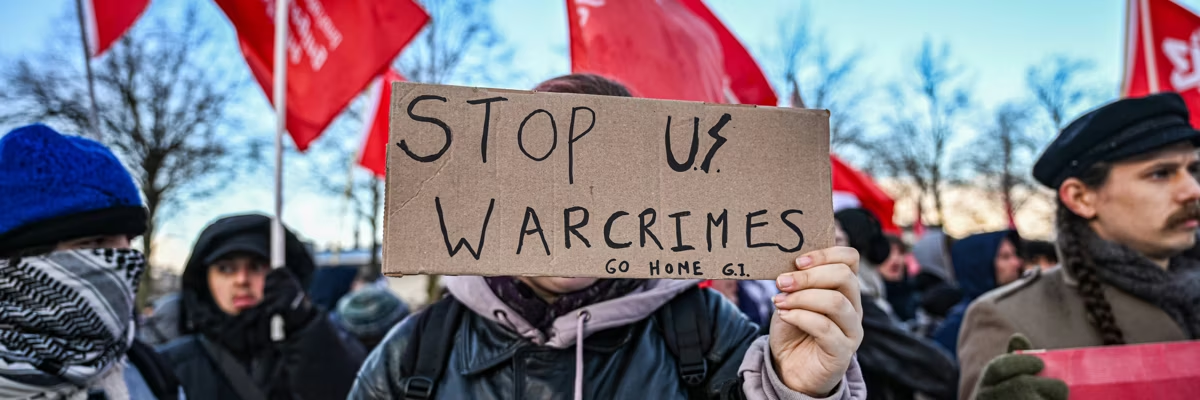
Demonstrators gathered outside the US consulate in Amsterdam, Netherlands to protest the US attack on Venezuela on January 4, 2026.
"International law is not 'dead' just because the most powerful no longer respect it," one expert stressed. "To preserve the rules-based international order, all states need to call out breaches of the law when they occur."
Protests have erupted in the US and around the world following President Donald Trump's attack on Venezuela and abduction of President Nicolás Maduro, and international law experts on Monday joined in rebuking the deadly military operation, with several outlining exactly how Trump's actions were unlawful.
At Just Security, University of Reading professor of international law Michael Schmitt, New York University law professor Ryan Goodman, and NYU Reiss Center on Law and Security senior fellow Tess Bridgeman explained that the US military's bombing of Venezuela and kidnapping of Maduro differs legally from the dozens of boat strikes the US has carried out in the past four months.
The attacks in the Caribbean and eastern Pacific have killed more than 100 people and have also been violations of international law, according to numerous legal experts—but they "have occurred in international waters against stateless vessels," wrote Schmitt, Goodman, and Bridgeman.
In contrast, the operation in the early morning hours on Saturday took place within Venezuelan borders and "is clearly a violation of the prohibition on the use of force in Article 2(4) of the UN Charter," they wrote. "That prohibition is the bedrock rule of the international system that separates the rule of law from anarchy, safeguards small states from their more powerful neighbors, and protects civilians from the devastation of war."
Article 2(4) of the UN Charter, to which both the US and Venezuela are parties, states:
All Members shall refrain in their international relations from the threat or use of force against the territorial integrity or political independence of any state, or in any other manner inconsistent with the Purposes of the United Nations.
The scholars vehemently rejected the narrative the Trump administration has put forward for months about its escalation in the Caribbean and Venezuela: that the White House simply aims to protect Americans from drug trafficking, a claim that officials have repeated despite the fact that US and international law enforcement agencies have not identified the South American country as a significant player in the drug trade.
For Trump's assertions that drug cartels in Venezuela pose an imminent threat to Americans "to make any sense," wrote the authors, "the drug activity must be characterized as an 'armed attack' against the United States... Drug trafficking simply does not qualify as, and has never been considered, an 'armed attack.' In brief, the relationship between drug trafficking and the deaths that eventually result from drugs being purchased and used in the United States is far too attenuated to qualify as an armed attack."
"It is indisputable that drug trafficking is condemnable criminal activity, but it is not the type of activity that triggers the right of self-defense in international law," they continued, adding that any possible involvement by Maduro's government in the drug trade also does not rise "to the level of an armed attack against the United States."
Schmitt, Goodman, and Bridgeman wrote that "Operation Absolute Resolve," as the administration has termed the Saturday attack that killed more than 80 people, "amounts to an unlawful intervention into Venezuela’s internal affairs," and that while officials including Secretary of State Marco Rubio have claimed the kidnapping of Maduro was simply a law enforcement operation and not an act of war, the US does not have jurisdiction to carry out such an action in Venezuela without the government's consent.
"The United States has engaged in governmental activity in Venezuela—law enforcement—that is exclusively the domain of the Venezuelan government," wrote the authors. "Even though the United States does not recognize the Maduro government as legitimate, international law provides that the relevant officials to grant consent are those of the government that exercises 'effective control' over the territory; in this case, officials in the Maduro administration."
As a head of state, Maduro is also subject to protections from enforcement jurisdiction by another state, they wrote, under "customary international law."
"The United States has engaged in governmental activity in Venezuela—law enforcement—that is exclusively the domain of the Venezuelan government."
The authors wrote that, as Maduro said in a statement Monday, the president may be considered a prisoner of war and be "entitled to the extensive protections of the Third Geneva Convention," given his status as commander-in-chief of Venezuela's armed forces. His wife is also "entitled to a robust set of protections afforded to captured civilians" under the Fourth Geneva Convention, they wrote.
The explanation by Schmitt, Goodman, and Bridgeman bolstered remarks by other international law experts including Ben Saul, the UN special rapporteur on human rights and counterterrorism.
Saul on Saturday condemned Trump's "illegal aggression against Venezuela and the illegal abduction of its leader and his wife," and said the president "should be impeached and investigated for the alleged killings," of dozens of Venezuelans in the attack.
“Every Venezuelan life lost is a violation of the right to life," he said.
At the Conversation, Australian National University international law professor Sarah Heathcote emphasized that the UN Security Council, which held an emergency meeting Monday in response to the US strike, had not authorized the attack. Such an authorization, along with consent by Venezuela's government or a credible claim that the US was acting in self-defense, would have made the Trump administration's actions lawful.
Instead, she wrote, "the US intervention in Venezuela was as brazen and unlawful as its military strike on Iran in June last year."
"But international law is not 'dead' just because the most powerful no longer respect it," she said. "To preserve the rules-based international order, all states need to call out breaches of the law when they occur, including in the current instance."
At the Security Council meeting, UN Secretary-General António Guterres emphasized "the imperative of full respect, by all, for international law, including the Charter of the United Nations, which provides the foundation for the maintenance of international peace and security."
"Venezuela has experienced decades of internal instability and social and economic turmoil. Democracy has been undermined. Millions of its people have fled the country," he said. "In situations as confused and complex as the one we now face, it is important to stick to principles. Respect for the UN Charter and all other applicable legal frameworks to safeguard peace and security."
"International law contains tools to address issues such as illicit traffic in narcotics, disputes about resources, and human rights concerns," he added. "This is the route we need to take."
Dear Common Dreams reader, It’s been nearly 30 years since I co-founded Common Dreams with my late wife, Lina Newhouser. We had the radical notion that journalism should serve the public good, not corporate profits. It was clear to us from the outset what it would take to build such a project. No paid advertisements. No corporate sponsors. No millionaire publisher telling us what to think or do. Many people said we wouldn't last a year, but we proved those doubters wrong. Together with a tremendous team of journalists and dedicated staff, we built an independent media outlet free from the constraints of profits and corporate control. Our mission has always been simple: To inform. To inspire. To ignite change for the common good. Building Common Dreams was not easy. Our survival was never guaranteed. When you take on the most powerful forces—Wall Street greed, fossil fuel industry destruction, Big Tech lobbyists, and uber-rich oligarchs who have spent billions upon billions rigging the economy and democracy in their favor—the only bulwark you have is supporters who believe in your work. But here’s the urgent message from me today. It's never been this bad out there. And it's never been this hard to keep us going. At the very moment Common Dreams is most needed, the threats we face are intensifying. We need your support now more than ever. We don't accept corporate advertising and never will. We don't have a paywall because we don't think people should be blocked from critical news based on their ability to pay. Everything we do is funded by the donations of readers like you. When everyone does the little they can afford, we are strong. But if that support retreats or dries up, so do we. Will you donate now to make sure Common Dreams not only survives but thrives? —Craig Brown, Co-founder |
Protests have erupted in the US and around the world following President Donald Trump's attack on Venezuela and abduction of President Nicolás Maduro, and international law experts on Monday joined in rebuking the deadly military operation, with several outlining exactly how Trump's actions were unlawful.
At Just Security, University of Reading professor of international law Michael Schmitt, New York University law professor Ryan Goodman, and NYU Reiss Center on Law and Security senior fellow Tess Bridgeman explained that the US military's bombing of Venezuela and kidnapping of Maduro differs legally from the dozens of boat strikes the US has carried out in the past four months.
The attacks in the Caribbean and eastern Pacific have killed more than 100 people and have also been violations of international law, according to numerous legal experts—but they "have occurred in international waters against stateless vessels," wrote Schmitt, Goodman, and Bridgeman.
In contrast, the operation in the early morning hours on Saturday took place within Venezuelan borders and "is clearly a violation of the prohibition on the use of force in Article 2(4) of the UN Charter," they wrote. "That prohibition is the bedrock rule of the international system that separates the rule of law from anarchy, safeguards small states from their more powerful neighbors, and protects civilians from the devastation of war."
Article 2(4) of the UN Charter, to which both the US and Venezuela are parties, states:
All Members shall refrain in their international relations from the threat or use of force against the territorial integrity or political independence of any state, or in any other manner inconsistent with the Purposes of the United Nations.
The scholars vehemently rejected the narrative the Trump administration has put forward for months about its escalation in the Caribbean and Venezuela: that the White House simply aims to protect Americans from drug trafficking, a claim that officials have repeated despite the fact that US and international law enforcement agencies have not identified the South American country as a significant player in the drug trade.
For Trump's assertions that drug cartels in Venezuela pose an imminent threat to Americans "to make any sense," wrote the authors, "the drug activity must be characterized as an 'armed attack' against the United States... Drug trafficking simply does not qualify as, and has never been considered, an 'armed attack.' In brief, the relationship between drug trafficking and the deaths that eventually result from drugs being purchased and used in the United States is far too attenuated to qualify as an armed attack."
"It is indisputable that drug trafficking is condemnable criminal activity, but it is not the type of activity that triggers the right of self-defense in international law," they continued, adding that any possible involvement by Maduro's government in the drug trade also does not rise "to the level of an armed attack against the United States."
Schmitt, Goodman, and Bridgeman wrote that "Operation Absolute Resolve," as the administration has termed the Saturday attack that killed more than 80 people, "amounts to an unlawful intervention into Venezuela’s internal affairs," and that while officials including Secretary of State Marco Rubio have claimed the kidnapping of Maduro was simply a law enforcement operation and not an act of war, the US does not have jurisdiction to carry out such an action in Venezuela without the government's consent.
"The United States has engaged in governmental activity in Venezuela—law enforcement—that is exclusively the domain of the Venezuelan government," wrote the authors. "Even though the United States does not recognize the Maduro government as legitimate, international law provides that the relevant officials to grant consent are those of the government that exercises 'effective control' over the territory; in this case, officials in the Maduro administration."
As a head of state, Maduro is also subject to protections from enforcement jurisdiction by another state, they wrote, under "customary international law."
"The United States has engaged in governmental activity in Venezuela—law enforcement—that is exclusively the domain of the Venezuelan government."
The authors wrote that, as Maduro said in a statement Monday, the president may be considered a prisoner of war and be "entitled to the extensive protections of the Third Geneva Convention," given his status as commander-in-chief of Venezuela's armed forces. His wife is also "entitled to a robust set of protections afforded to captured civilians" under the Fourth Geneva Convention, they wrote.
The explanation by Schmitt, Goodman, and Bridgeman bolstered remarks by other international law experts including Ben Saul, the UN special rapporteur on human rights and counterterrorism.
Saul on Saturday condemned Trump's "illegal aggression against Venezuela and the illegal abduction of its leader and his wife," and said the president "should be impeached and investigated for the alleged killings," of dozens of Venezuelans in the attack.
“Every Venezuelan life lost is a violation of the right to life," he said.
At the Conversation, Australian National University international law professor Sarah Heathcote emphasized that the UN Security Council, which held an emergency meeting Monday in response to the US strike, had not authorized the attack. Such an authorization, along with consent by Venezuela's government or a credible claim that the US was acting in self-defense, would have made the Trump administration's actions lawful.
Instead, she wrote, "the US intervention in Venezuela was as brazen and unlawful as its military strike on Iran in June last year."
"But international law is not 'dead' just because the most powerful no longer respect it," she said. "To preserve the rules-based international order, all states need to call out breaches of the law when they occur, including in the current instance."
At the Security Council meeting, UN Secretary-General António Guterres emphasized "the imperative of full respect, by all, for international law, including the Charter of the United Nations, which provides the foundation for the maintenance of international peace and security."
"Venezuela has experienced decades of internal instability and social and economic turmoil. Democracy has been undermined. Millions of its people have fled the country," he said. "In situations as confused and complex as the one we now face, it is important to stick to principles. Respect for the UN Charter and all other applicable legal frameworks to safeguard peace and security."
"International law contains tools to address issues such as illicit traffic in narcotics, disputes about resources, and human rights concerns," he added. "This is the route we need to take."
Protests have erupted in the US and around the world following President Donald Trump's attack on Venezuela and abduction of President Nicolás Maduro, and international law experts on Monday joined in rebuking the deadly military operation, with several outlining exactly how Trump's actions were unlawful.
At Just Security, University of Reading professor of international law Michael Schmitt, New York University law professor Ryan Goodman, and NYU Reiss Center on Law and Security senior fellow Tess Bridgeman explained that the US military's bombing of Venezuela and kidnapping of Maduro differs legally from the dozens of boat strikes the US has carried out in the past four months.
The attacks in the Caribbean and eastern Pacific have killed more than 100 people and have also been violations of international law, according to numerous legal experts—but they "have occurred in international waters against stateless vessels," wrote Schmitt, Goodman, and Bridgeman.
In contrast, the operation in the early morning hours on Saturday took place within Venezuelan borders and "is clearly a violation of the prohibition on the use of force in Article 2(4) of the UN Charter," they wrote. "That prohibition is the bedrock rule of the international system that separates the rule of law from anarchy, safeguards small states from their more powerful neighbors, and protects civilians from the devastation of war."
Article 2(4) of the UN Charter, to which both the US and Venezuela are parties, states:
All Members shall refrain in their international relations from the threat or use of force against the territorial integrity or political independence of any state, or in any other manner inconsistent with the Purposes of the United Nations.
The scholars vehemently rejected the narrative the Trump administration has put forward for months about its escalation in the Caribbean and Venezuela: that the White House simply aims to protect Americans from drug trafficking, a claim that officials have repeated despite the fact that US and international law enforcement agencies have not identified the South American country as a significant player in the drug trade.
For Trump's assertions that drug cartels in Venezuela pose an imminent threat to Americans "to make any sense," wrote the authors, "the drug activity must be characterized as an 'armed attack' against the United States... Drug trafficking simply does not qualify as, and has never been considered, an 'armed attack.' In brief, the relationship between drug trafficking and the deaths that eventually result from drugs being purchased and used in the United States is far too attenuated to qualify as an armed attack."
"It is indisputable that drug trafficking is condemnable criminal activity, but it is not the type of activity that triggers the right of self-defense in international law," they continued, adding that any possible involvement by Maduro's government in the drug trade also does not rise "to the level of an armed attack against the United States."
Schmitt, Goodman, and Bridgeman wrote that "Operation Absolute Resolve," as the administration has termed the Saturday attack that killed more than 80 people, "amounts to an unlawful intervention into Venezuela’s internal affairs," and that while officials including Secretary of State Marco Rubio have claimed the kidnapping of Maduro was simply a law enforcement operation and not an act of war, the US does not have jurisdiction to carry out such an action in Venezuela without the government's consent.
"The United States has engaged in governmental activity in Venezuela—law enforcement—that is exclusively the domain of the Venezuelan government," wrote the authors. "Even though the United States does not recognize the Maduro government as legitimate, international law provides that the relevant officials to grant consent are those of the government that exercises 'effective control' over the territory; in this case, officials in the Maduro administration."
As a head of state, Maduro is also subject to protections from enforcement jurisdiction by another state, they wrote, under "customary international law."
"The United States has engaged in governmental activity in Venezuela—law enforcement—that is exclusively the domain of the Venezuelan government."
The authors wrote that, as Maduro said in a statement Monday, the president may be considered a prisoner of war and be "entitled to the extensive protections of the Third Geneva Convention," given his status as commander-in-chief of Venezuela's armed forces. His wife is also "entitled to a robust set of protections afforded to captured civilians" under the Fourth Geneva Convention, they wrote.
The explanation by Schmitt, Goodman, and Bridgeman bolstered remarks by other international law experts including Ben Saul, the UN special rapporteur on human rights and counterterrorism.
Saul on Saturday condemned Trump's "illegal aggression against Venezuela and the illegal abduction of its leader and his wife," and said the president "should be impeached and investigated for the alleged killings," of dozens of Venezuelans in the attack.
“Every Venezuelan life lost is a violation of the right to life," he said.
At the Conversation, Australian National University international law professor Sarah Heathcote emphasized that the UN Security Council, which held an emergency meeting Monday in response to the US strike, had not authorized the attack. Such an authorization, along with consent by Venezuela's government or a credible claim that the US was acting in self-defense, would have made the Trump administration's actions lawful.
Instead, she wrote, "the US intervention in Venezuela was as brazen and unlawful as its military strike on Iran in June last year."
"But international law is not 'dead' just because the most powerful no longer respect it," she said. "To preserve the rules-based international order, all states need to call out breaches of the law when they occur, including in the current instance."
At the Security Council meeting, UN Secretary-General António Guterres emphasized "the imperative of full respect, by all, for international law, including the Charter of the United Nations, which provides the foundation for the maintenance of international peace and security."
"Venezuela has experienced decades of internal instability and social and economic turmoil. Democracy has been undermined. Millions of its people have fled the country," he said. "In situations as confused and complex as the one we now face, it is important to stick to principles. Respect for the UN Charter and all other applicable legal frameworks to safeguard peace and security."
"International law contains tools to address issues such as illicit traffic in narcotics, disputes about resources, and human rights concerns," he added. "This is the route we need to take."