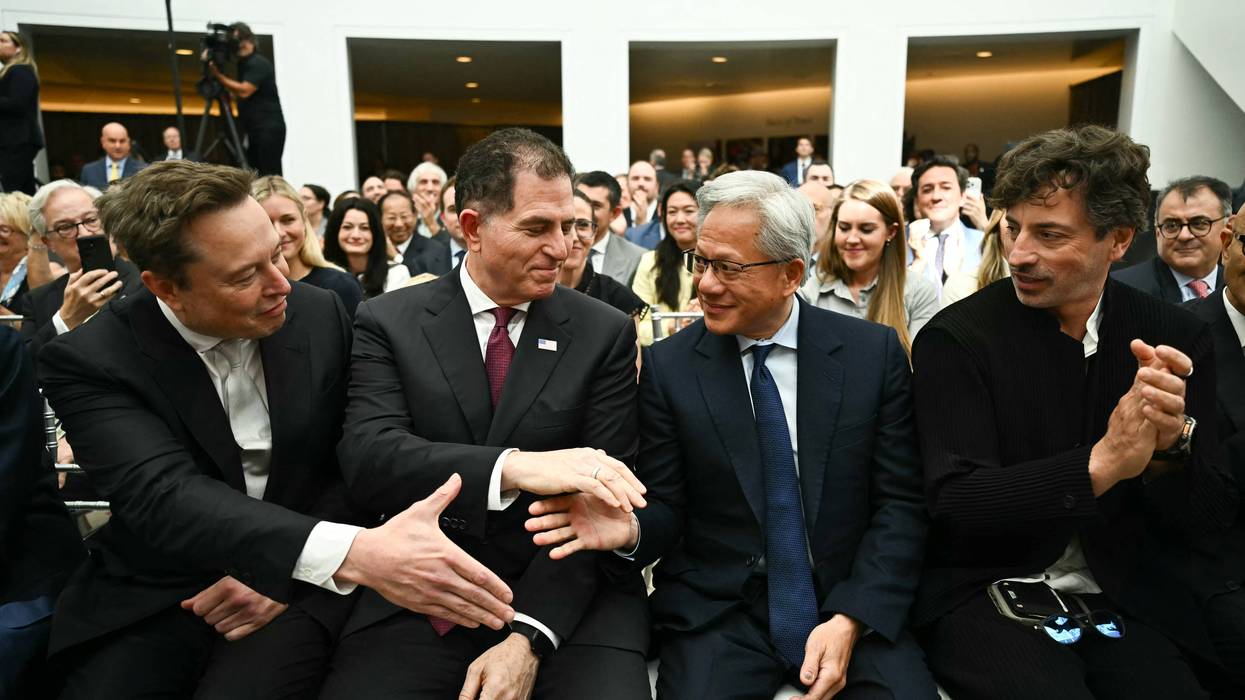
'A Crime of Extreme Inequality': Richest 0.1% Generate More Carbon Pollution Than Half of Humanity
“The ultra-rich are setting the planet on fire and then charging the rest of us for the extinguishers."
The richest 0.1% of humanity generates more planet-heating carbon pollution than nearly half of the global population combined, according to an Oxfam analysis released late Monday as world leaders prepared to gather in Türkiye next month for the United Nations climate summit.
The new analysis provides an updated look at global elites' outsized contribution to a climate crisis that disproportionately impacts the poorest segments of the global population through increasingly devastating heatwaves, droughts, flooding, and other extreme weather, causing death, destruction, and mass displacement worldwide.
Oxfam estimates that a person in the richest 0.1% "has contributed nearly 400 times more to today’s extreme heatwaves than someone in the poorest 50%." The 8 million richest people in the world combined produce "over three times more carbon pollution than the entire population of Sub-Saharan Africa"—around 1.3 billion people.
"The climate crisis is often described as a shared human challenge. It is not," said Amitabh Behar, Oxfam International's executive director. "Those who have done the least to cause it are losing their homes, their harvests and, increasingly, their lives. Meanwhile, the super-rich can buy their way out of danger—by retreating to high-tech underground survival bunkers, hiring private firefighting crews, and securing private insurance—and are actively profiting from the consequences of their pollution. This is not a tragedy of shared fate; it is a crime of extreme inequality."
Oxfam's report notes that the same investors and firms profiting massively from the fossil fuel companies driving the climate crisis are also benefiting from disaster preparedness and recovery. The analysis places those investors in what it calls a "Destroy and Rebuild" index.
"Six major asset managers (including Vanguard, BlackRock, and State Street) make up more than one-quarter of all the Destroy and Rebuild corporations," the report states. "BlackRock and Vanguard are invested in 92% of the corporations in the index: The pair’s total investments in these corporations are more than $1 trillion."
“The ultra-rich are setting the planet on fire and then charging the rest of us for the extinguishers," said Behar. "They profit from the pollution. They profit from the disaster. And they profit again from the clean-up.”
"While ordinary people are forced to grapple with the consequences of emergencies they bear little responsibility in fueling, billionaires are busy outrunning the reality they and their private jets created."
In the United States—where the country's billionaire president has taken a sledgehammer to domestic and international efforts to combat the climate crisis—a person in the richest 0.1% emits 48 times as much carbon dioxide as the average American.
"The country’s richest 0.1% (333,271 people) emit 108 times more CO2 per person than the poorest half of the population (166.6 million people)," Oxfam's analysis shows. "In just under four months (118.3 days), someone in the richest 0.1% emits more CO2 than someone in the poorest half of the U.S. has emitted over the last 30 years."
Rachel Carle, senior advisor on climate justice at Oxfam America, said in a statement that the global climate emergency is "an inequality crisis at its core."
"While ordinary people are forced to grapple with the consequences of emergencies they bear little responsibility in fueling, billionaires are busy outrunning the reality they and their private jets created," said Carle. "Mark Zuckerberg can hunker down in his Hawaiian bunker at the first sign of chaos, but the rest of us don’t have that luxury. Addressing this glaring inequality is the first step to mitigating climate disaster, and that starts with making ultra-rich polluters pay their fair share."
In view of its findings, Oxfam urged governments to use the upcoming COP31 summit in Türkiye to:
- Make rich polluters pay to significantly and rapidly curb their carbon emissions, including through permanent wealth and income taxes, a permanent tax on fossil fuel corporations, and punitive taxes on high-emitting luxury items like private jets;
- Substantially increase climate finance for the Global South, prioritizing public, grant-based finance rather than loans that deepen debt. The amount for adaptation should be tripled by 2035;
- Radically reduce inequality within and between countries, including through climate-resilient public infrastructure and public services; and
- End profiteering from climate disasters. Governments need to curb corporate power in emergency response, reconstruction, and food systems during disasters.
"Another future remains possible," Oxfam's report concludes. "Creating a more equal world would enable emissions to fall rapidly, food systems to become fairer and more resilient, and the creation of public systems to protect people from crisis and adapt to the effects of climate change. Achieving that future will require bold political choices to curb excessive wealth and corporate power while investing in the resilience, rights, and livelihoods of the majority. Climate justice and equality must now become the foundation of climate action."


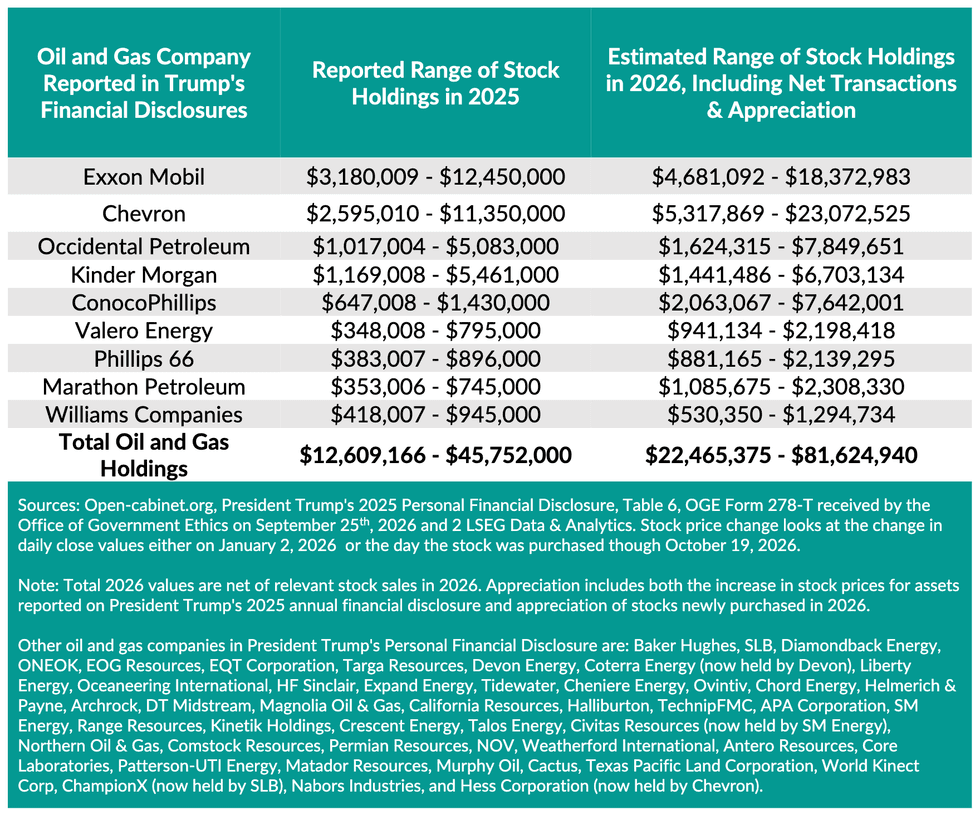 The graph published by the congressional Joint Economic Committee on October 26, 2026 shows US President Donald Trump's stock holdings in oil and gas companies.