

SUBSCRIBE TO OUR FREE NEWSLETTER
Daily news & progressive opinion—funded by the people, not the corporations—delivered straight to your inbox.
5
#000000
#FFFFFF
To donate by check, phone, or other method, see our More Ways to Give page.
Daily news & progressive opinion—funded by the people, not the corporations—delivered straight to your inbox.

“El Niño will come and go; the underlying warming from greenhouse gas emissions will not, unless we bring those emissions down," said one expert.
Climate experts are sounding alarms over recent data showing that the Earth's surface temperature for the, for the first time since record keeping began, exceeded and remained 2°C above preindustrial levels over the span of a full week.
As The Financial Times reported on Friday, preliminary measurements from Copernicus, the European Union's Earth observation agency, reveal that the average surface temperature has exceeded 2°C above preindustrial levels since Nov. 20, a record-breaking streak that came amid the collapse in climate talks at the COP31 summit and the latest impacts of extreme weather events.
The temperature increase is coinciding with an unusually strong El Niño event in the Pacific Ocean that is projected to last through at least next the beginning of 2027.
But Akshay Deoras, senior research scientist at the University of Reading department of meteorology, told The Financial Times that El Niño by itself wouldn't have this large of an impact on the global climate without the help of human-produced greenhouse gases in the atmosphere.
"The more often you see records like this... the more the long-term average rises," said Deoras. "And that is a danger sign."
Samantha Burgess, strategic lead for Climate at the European Centre for Medium-Range Weather Forecasts, similarly told The Financial Times that the record-breaking surface temperature streak was "a stark preview of where our climate is heading" even after El Niño dissipates.
“El Niño will come and go," said Burgess. "The underlying warming from greenhouse gas emissions will not, unless we bring those emissions down."
While El Niño is expected to peak within the next two months, experts warned that its impact likely won't be fully felt until months afterward.
Richard Betts, head of climate impacts research at the Met Office Hadley Center, outlined the negative effects the global temperature streak will have in the near future in an interview with The Guardian published Wednesday.
"The immediate impacts of droughts in places like the Amazon can be severe, leading to forest fires with severe human health impacts through smoke pollution, and also damaging the ecosystems," said Betts. "More widely, there may be risks to food and water supplies."
In an interview with Heatmap published Friday, Daniel Swain, climate scientist at the University of California Agriculture and Natural Resources, pointed to water spouts that recently manifested in San Francisco Bay as an example of the kind of extreme climate phenomena we're likely to see thanks to the combination of El Niño and greenhouse gasses.
"We're really starting to see the profound influence of these extremely warm ocean waters," Swain explained. "I think this was a contributor to the level of buoyancy that enabled the water spouts."
Swain also said that the current El Niño will likely be the strongest one to occur in the last 1,000 years, noting it is producing a "bonkers absurd extreme marine heat wave" off the coast of California.
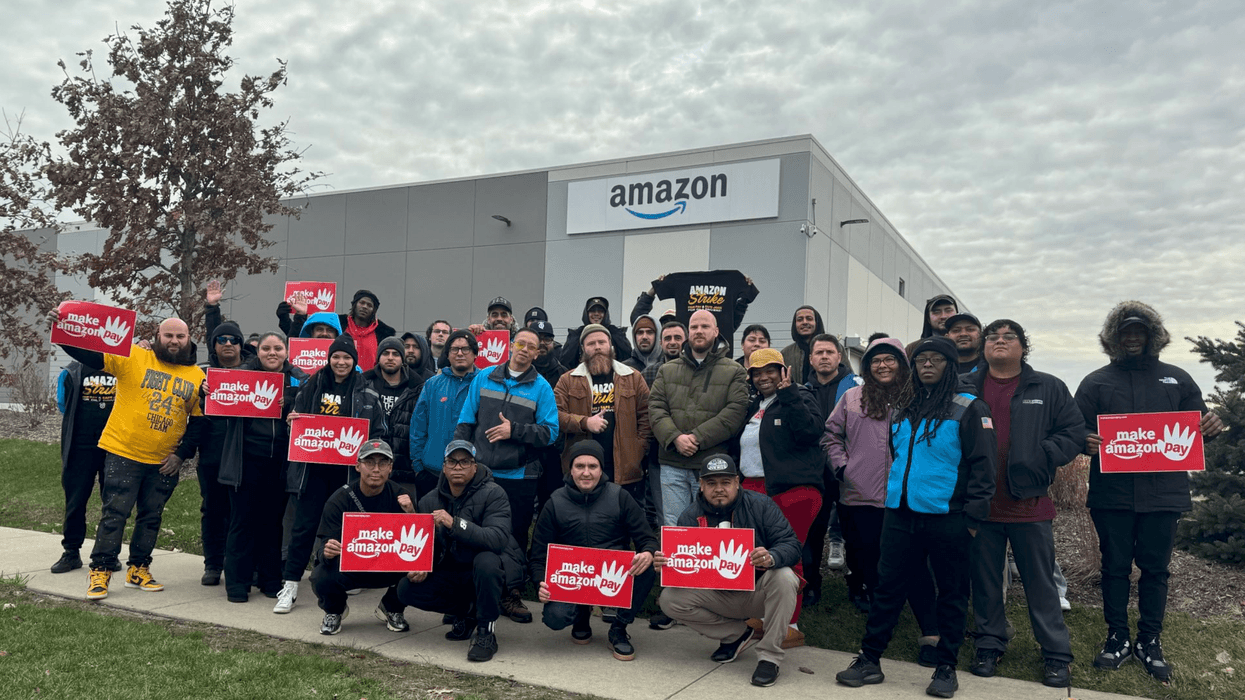
“In this wave of action, Amazon’s workers and their allies show that the corporations building this techno-authoritarian future are not invincible."
From warehouse walkouts in Germany and marches across India to rallies in the United States and a landmark union contract in Canada, Amazon workers and their allies are marking Black Friday with a message for the world's e-commerce giant: Workers everywhere deserve rights, dignity, and their fair share of the wealth they help generate.
The seventh annual #MakeAmazonPay day of action, organized by UNI Global Union and Progressive International, features strikes, protests, and solidarity actions in over 20 nations between Black Friday and Cyber Monday.
The campaign unites trade unions, environmental campaigners, peace groups, and others demanding that Amazon respect workers' rights to organize and bargain collectively, pay decent wages and guarantee safe and healthy working conditions, pay its fair share of taxes, and take responsibility for the environmental and social costs of its businesses.
Participants in this year's day of action had big news to cheer as Amazon workers in British Columbia, Canada won the first binding collective bargaining agreement for the company's workforce anywhere in North America.
The three-year agreement covering approximately 800 workers at Amazon's YVR2 fulfillment center in Delta raises hourly wages to C$29, provides severance protections of up to 18 weeks, and grants an additional week of vacation to employees with a decade of service.
"Amazon told everyone a union contract would never happen, but workers proved them wrong," said Unifor National President Lana Payne. "These workers stood up to one of the most powerful companies on earth and won rights in writing that Amazon cannot take away."
Across Germany, the trade union ver.di has called strikes at a record 11 Amazon facilities, including locations in Leipzig, Dortmund, Bad Hersfeld, and Koblenz.
In India, thousands of warehouse workers, delivery workers, gig workers, small traders, street vendors, and community allies mobilized across 25 cities under the Amazon India Workers Union banner.
In the United States, the Teamsters union is holding rallies in Chicago and Los Angeles.
The Canadian contract isn't the only recent victory for Amazon workers, as UNI Global Union noted:
“Amazon is building a future in which fewer workers produce ever greater profits under ever tighter surveillance," Progressive International co-general coordinator Varsha Gandikota-Nellutla said. "Its data centres consume vast quantities of water and electricity while its technology powers [US President Donald] Trump’s deportation machine, and Israel’s occupation of Palestine."
“In this wave of action, Amazon’s workers and their allies show that the corporations building this techno-authoritarian future are not invincible," Gandikota-Nellutla added. "We can and we will Make Amazon Pay.”

One expert said the Medicaid cuts "will certainly result in layoffs, may result in hospital closures, and will definitely hurt people’s health."
With changes to Medicaid mandated by Republicans' 2025 budget law set to take effect next year, experts are warning that the impacts could be devastating for rural areas in states such as Kentucky and Nebraska.
A report published by The Guardian on Friday highlighted how the cuts to Medicaid in the One Big Beautiful Bill Act are expected to impact Kentucky, where 250,000 residents are estimated to be at risk of losing their coverage and 35 hospitals are at risk of closure.
Dustin Pugel, policy director at the Kentucky Center for Economic Policy, told The Guardian that the Bluegrass State is particularly vulnerable to Republicans' Medicaid cuts, which the Congressional Budget Office projects will kick millions of Americans off their health coverage nationwide.
"These hospitals are very dependent on Medicaid," Pugel explained. "It makes up a really significant part of the economy, particularly in eastern Kentucky. If you look at just Medicaid payments to providers in Kentucky’s 5th congressional district, those payments make up 13.5% of the GDP there."
Pugel pointed to the work requirements in the GOP budget law as especially burdensome for many rural residents, emphasizing that they could send local economies into a tailspin.
"In some of these counties, over two-thirds of their residents are covered by Medicaid," he explained. "If they start losing coverage, particularly where there isn’t a lot of jobs—where people aren’t able to adhere to the work requirement or don’t have broadband so reporting their hours is difficult, you’re looking at a really significant economic headwind. That will certainly result in layoffs, may result in hospital closures, and will definitely hurt people’s health."
A Wednesday report from KFF Health News noted that Nebraska got an early start in implementing the Medicaid work requirements, resulting in 7% of Nebraska Medicaid enrollees who were subject to the new rules losing coverage. Additionally, KFF reported, 14% of new Medicaid applicants were denied coverage thanks to the work requirement rules.
KFF also found that "92% of cases in which existing enrollees lost coverage were due to procedural or paperwork issues rather than state determinations that they did not meet the new work rules," while "many enrollees lost coverage because they did not respond to the state's outreach."
Amy Behnke, CEO of the Health Center Association of Nebraska, told KFF that the increased number of procedural denials for Medicaid seen over the last few months is "definitely a red-flag warning" that many people are needlessly losing their coverage.
As Nebraska Public Media reported on Tuesday, the Nebraska Hospital Association has been sounding the alarm about how these cuts will impact the fiscal health of state healthcare facilities, warning that they "threaten the financial stability of rural hospitals and ultimately harm patient access to essential services across the state."
Jeremy Nordquist, president of the Nebraska Hospital Association, told Nebraska Public Media that the healthcare system under the new Medicaid rules is suffering "a death by 1,000 cuts."
"It really has the potential," Nordquist added, "to be a devastating blow to our already vulnerable healthcare infrastructure here in the state."

"The question is no longer whether Amazon workers can win, but where they win next," said one union leader after first-ever collective bargaining agreement won in North America.
Heralded as an "historic breakthrough" on Black Friday, warehouse workers in British Columbia, Canada, earlier this month became the first ever in Canada, the United States, or Mexico to win a collective bargaining agreement with online retail giant Amazon—a victory celebrated as hopefully the first of many against one of the world's wealthiest and most powerful anti-union corporations.
After a legal battle that included forced arbitration because Amazon refused to accept a deal voluntarily at the bargaining table, workers at Amazon’s YVR2 fulfillment center in Delta, a suburb of Vancouver, won their contract on Nov. 13 after a prolonged fight for recognition and to have their demands met.
"These workers did what many people said could not be done. They stood together, won their union and secured the first collective agreement at Amazon in North America," said Lana Payne, national president of Unifor, Canada's largest private sector union, in a statement on Thursday. "Welcome to the Unifor family. We are proud to stand with you to celebrate this achievement."
The 3-year collective bargaining agreement, the union said in a statement, will raise hourly wages to $29 Canadian dollars per hour by the end of its term, provide up to 18 weeks of severance pay, and add a week of paid vacation for workers with ten years of service.
"A collective agreement means you no longer face the boss alone. You have a contract, a union and thousands of members behind you," said Unifor western regional director Gavin McGarrigle. "This is a foundation to build on, and the workers at YVR2 have shown every Amazon worker in British Columbia what is possible."
Amid Black Friday's consumer onslaught, labor leaders and progressives championed the win as a possible inflection point in the international fight for union strength and the battle against corporate giants like Amazon, founded by mega-billionaire Jeff Bezos, one of the world's richest individuals.
“After years of trying, Amazon workers in North America have finally broken through," said Christy Hoffman, general secretary, UNI Global Union. "Workers in British Columbia now have a union contract. The question is no longer whether Amazon workers can win, but where they win next."
Writing in The Conversation, Bethany Hastie, an associate professor and director of the Center for Law in the Contemporary Workplace at Queen's University in Ontario, explained how the victory for the YVR2 warehouse workers, especially given the aggressive nature of Amazon's opposition to organized workers, illustrates "both the challenges of collective bargaining" in the current environment "and the role Canadian labor laws can play in promoting and protecting workers’ rights."
After Amazon was accused of an unlawful hiring spree designed to disrupt the workers' initial unionization drive in 2024, a series of events exposed the company as operating in bad faith as it maintained its refusal to accept a first contract.
"Having the terms of a collective agreement imposed by an arbitrator is far from ideal, but it’s sometimes necessary," noted Hastie, "particularly when an employer has fostered a hostile relationship with the union it must negotiate with."
Adam D. K. King, an assistant professor in labor studies at the University of Manitoba, was among those celebrating what he termed the "historic breakthrough," writing in a piece posted to the Progressive International website on Friday that the win in British Columbia "has created an institutional foothold inside one of the world’s most powerful corporations."
"Whether that foothold becomes the basis for a wider breakthrough will depend on workers’ ability to turn contractual rights into collective strength," King wrote.
"Amazon has lost an important battle. But its war against unionization is far from over," he concluded. "The next task is to ensure that this first contract becomes not simply a legal victory but the foundation of a durable, militant workplace union capable of challenging Amazon’s power from below."
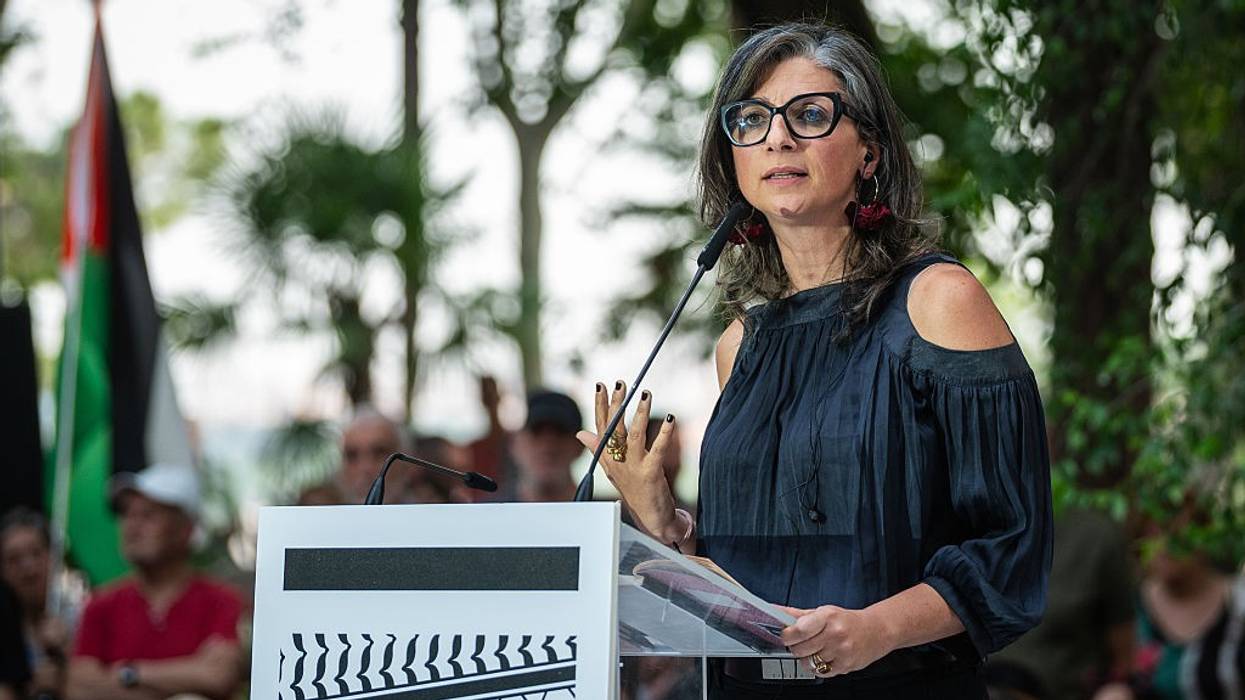
"The political, physical, and material persecution that Francesca Albanese is facing is not normal. Genocide is not normal."
United Nations experts and human rights advocates voiced alarm Friday after the right-wing Costa Rican government denied entry to Francesca Albanese, the UN special rapporteur for the occupied Palestinian territories and a trenchant critic of Israel's genocidal assault on Gaza.
Albanese, an Italian national, was set to receive an honorary doctorate on Friday from the University of Costa Rica. The head of Costa Rica’s immigration authority, Omer Badilla, said Albanese was held at the Juan Santamaria International Airport on Thursday because she was allegedly "subject to an international alert due to links to terrorist acts." Albanese called the terrorism claim "nonsense," writing on social media, "Defending human rights is not terrorism."
Speaking to the local student publication Semanario Universidad, Albanese speculated that the "international alert" may have come from the United States, which—under the administration of President Donald Trump—has targeted her with sanctions for demanding international accountability for Israel and its allies. The Trump administration's sanctions bar Albanese from entering the US and banking there.
Albanese said Friday that she had "a very long discussion, surrounded by several immigration agents," upon being denied entry to Costa Rica.
"It was a rather intimidating situation," said Albanese, who has faced death threats and smear campaigns over her criticism of Israel and defense of Palestinian rights. "Honestly, I’ve never felt so humiliated and threatened in my life."
This is where I will spend my first night in Costa Rica. https://t.co/9DbgdNOqDO
— Francesca Albanese, UN Special Rapporteur oPt (@FranceskAlbs) November 27, 2026
Volker Türk, the UN high commissioner for human rights, said he was "deeply concerned" by the Costa Rican government's decision to bar Albanese and urged officials to reverse course.
"This is difficult to reconcile with Costa Rica’s longstanding commitment to human rights," said Türk.
Agnes Callamard, secretary-general of Amnesty International, called the Costa Rican government's actions "shameful" and "utterly unacceptable."
"Amnesty is calling on the Costa Rica authorities to ensure Francesca Albanese is allowed in Costa Rica to receive her honoris causa doctorate degree from the University of Costa Rica," said Callamard. "This is a big test too for the Costa Rican democracy, for the integrity and independence of its legal processes, for academic freedom."
Costa Rican President Laura Fernández, who took office in May, is a political ally of Trump and has sought closer diplomatic and trade ties with Israel.
Late last year, Albanese denounced the government of Costa Rica for reaching a trade agreement with Israel "in the midst of apartheid, illegal occupation, and genocide, ignoring rulings by the International Court of Justice and UN decisions." She called on Costa Rican lawmakers to pause the deal, which has yet to be ratified.
One member of Costa Rica's ruling party, José Miguel Villalobos, criticized his government's decision to bar Albanese, saying that "she has the right to enter, whether she is wrong or not."
"I don’t want to hear Ms. Albanese, but I defend her right to come in and say what I don’t want to hear, because that is tolerance," he said. "Albanese is not Hamas."
Federica D'Alessio, an Italian journalist and founder of the news outlet Kritica, wrote on social media that "the enormous risk of this historical moment is that we start to see all of this as normal."
"It is not normal," she added. "The political, physical, and material persecution that Francesca Albanese is facing is not normal. Genocide is not normal. Criminalizing those who oppose it and legitimizing those who perpetrate it is not normal. It has happened before in history. It was not normal then either, and it is not normal now."

"One in four kids in our service area are at risk of hunger," said one charity official in Texas. "That's the worst that that stat's ever been in the 16 years that I've been doing food bank work."
Food banks across the United States reported unusually high demand around the Thanksgiving holiday as families squeezed by high grocery prices and federal aid cuts turned to charitable groups to help put food on the table.
Julie Butner, president and CEO of Tarrant Area Food Bank—which serves more than a dozen counties in North Texas—told CBS News on Thursday that "the demand is bigger than I expected." She said the food bank expected 4,000 families to turn out for their annual holiday-season market, but more than 5,400 showed up.
The president of Feeding America, which manages a network of more than 250 food banks nationwide, told NPR that "we are really seeing a new era of elevated and sustained demand across the country."
"We're serving 25% more people than we were pre-pandemic. And the numbers continue to climb," said Linda Nageotte, pointing to the significance of the Supplemental Nutrition Assistance Program (SNAP) cuts enacted by President Donald Trump and congressional Republicans last year.
"For every meal's worth of food your local food bank distributes, the SNAP program has historically provided nine meals," Nageotte observed. "So even if we were to be able to double or triple or quadruple in size as a national food bank network, which we can't, we wouldn't be able to make up the gaps. The SNAP program is so important."
Mark Jackson, chief development officer for the Central Texas Food Bank, said earlier this week that "one in four kids in our service area are at risk of hunger."
"That's the worst that that stat's ever been in the 16 years that I've been doing food bank work," said Jackson.
Just two weeks before Thanksgiving Day, the Trump administration unveiled a proposed rule targeting a policy that allows states to automatically enroll certain people in SNAP if they're receiving other federal benefits. According to the Trump administration's own analysis, the new rule would take SNAP assistance from 6.3 million people in fiscal year 2029, the rule's first year in full effect. Among those impacted would be children who would lose access to free school meals.
Since the summer of 2025, when Trump signed a sprawling Republican budget measure into law, around 5.5 million people have lost SNAP benefits—a number that's expected to keep growing as the GOP law's changes take effect.
"As families struggle with the rising cost of groceries, this administration is making it even harder to put food on the table," Rep. Jim Himes (D-Conn.) wrote in a social media post on Thursday.
A recent analysis by the Groundwork Collaborative and The Century Foundation found that a full Thanksgiving meal cost families around 11% more than last year.
"Some holiday staples are running 30% higher or more, including a box of macaroni pasta (up 40.2%) and green beans (up 36.7%)," the group found.
MS NOW editor Zeeshan Aleem wrote in a column on Thursday that "for the first time since 2022, Americans will see a year-over-year increase in the price of goods for Thanksgiving dinner, according to the American Farm Bureau Federation."
"The Farm Bureau attributes those higher costs in part to higher diesel prices (driven higher by the war in Iran), which make processing and transporting foods like potatoes and cranberries more expensive," Aleem noted. "Every day, the ruse of right-wing populism becomes clearer. Trump claimed to be a champion on behalf of the people, but he spends his energy focusing on helping make the rich richer, and leaves scraps for the poor."
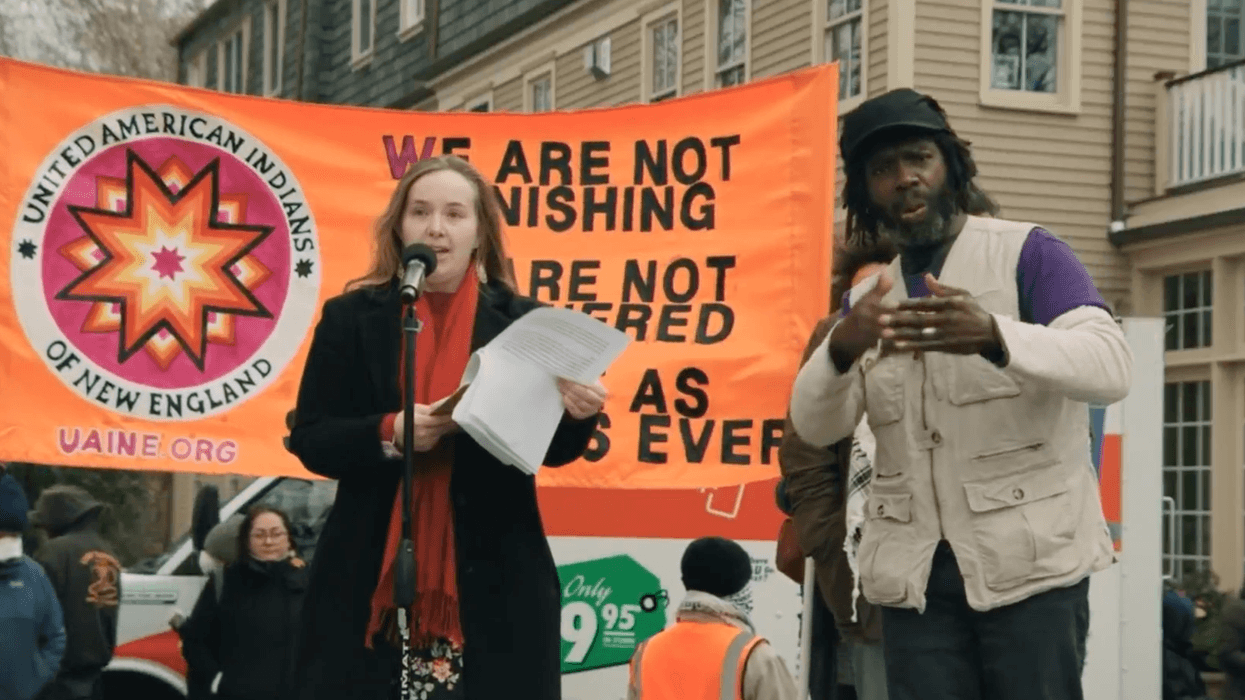
After a legal battle over logistics for the 57th National Day of Mourning between the United American Indians of New England and officials in Plymouth, Massachusetts, UAINE held the annual event at noon on Thursday, or Thanksgiving.
"Native people have no reason to celebrate the arrival of the pilgrims. We want to educate people about the true origins of the first Thanksgiving, which were far bloodier than the 'Pilgrims and Indians' story in the Thanksgiving myth," said UAINE-co-leader Kisha James, who is Aquinnah Wampanoag and Oglala Lakota as well as the granddaughter of Wamsutta Frank James, the founder of the demonstration held each year on the federal holiday.
"The first official day of 'thanksgiving' was declared in Massachusetts in 1637 by Puritan Gov. [John] Winthrop to celebrate the massacre of over 700 Pequot men, women, and children on the banks of the Mystic River in Connecticut," she said. "Wampanoag and other Indigenous people have certainly not lived happily ever after since the arrival of the pilgrims."
"To us, Thanksgiving is a Day of Mourning, because we remember the millions of our ancestors who were murdered by the pilgrims and subsequent generations of settlers," James added. "Today, we and many Indigenous people around the country say, 'No Thanks, No Giving.'"
While the demonstration at Cole's Hill, above Plymouth Rock, is held on a day that serves as "a reminder of the genocide of millions of Native people, the theft of Native lands, and the erasure of Native cultures," as UAINE's flyer promoting the event puts it, the group also expressed "solidarity with Indigenous struggles worldwide."
"From Turtle Island to Palestine, colonization is a crime," declares the flyer, using an Indigenous term for North America. Amid President Donald Trump's weaponization of US Immigration and Customs Enforcement, UAINE also said: "Close the detention centers. Abolish ICE!"
In addition to inviting Native people and allies from across the country to join the gathering in Massachusetts, the event was livestreamed on social media:
Ahead of the event, UAINE co-leader Mahtowin Munro said that "we will mourn and honor the thousands of missing and murdered Indigenous women, girls, two-spirit (#MMIWG2S) and other Indigenous relatives. We demand an end to the vicious federal cuts to food programs, housing, education, and healthcare because those cuts are having a serious impact on Native nations as well as other people. From Peru to British Columbia, from Boston to the Amazon, Indigenous peoples are defending their sovereignty, calling for land back, and insisting that nothing should happen on their lands without their freely given consent."
"Indigenous solidarity and resistance are international," Munro emphasized. "We stand in solidarity with all the Indigenous nations around the world opposing pipelines, mines, resource extraction, and megadams and note that Indigenous people are all too often casualties in frontline efforts to stop extraction. We also support the call of millions to end the ongoing genocide in Gaza and for an end to the ICE raids, detentions, and deportations that are devastating families and communities across the country, many of them Indigenous."
The Day of Mourning event—just one of the Indigenous-led events held across the United States on Thursday—followed Monday arguments before state Superior Court Judge Brian Glenny, after UAINE accused Plymouth officials of violating an agreement that came out of police brutality against participants at the 1997 event.
"In 1998, we agreed to drop a civil rights suit against Plymouth. In exchange, Plymouth dropped the trumped-up charges and agreed that UAINE has a right to rally and march every Thanksgiving without impediment or red tape from the town," Munro said when UAINE took legal action earlier this month, in response to a Select Board vote behind closed doors. "In addition, Plymouth is obligated to provide a few simple supports such as a stage. We have made every effort during the last 28 years to comply with our end of the agreement."
"In 2025, Plymouth tried to back out of the agreement, and we successfully took the town to court. Now, one year later... Plymouth is refusing to provide us with a stage and [is] demanding things that are not in the agreement," Munro continued. "We believe they are throwing up roadblocks because they don't want the tourists to see or hear Native Americans who are speaking about the true history of the Pilgrim invasion and resulting land theft and genocide of Wampanoag and other Native peoples.
While affirming that the agreement remains "binding and valid," the judge ruled Tuesday that "Plymouth has no obligation under the agreement to provide a stage for UAINE," but also "cannot require permits, insurance, financial bond, or any indemnification by the town."
After the ruling, Plymouth Select Board Chair Deb Iaquinto said in a statement that "the town remains committed to supporting the National Day of Mourning."
"The town has tried to work collaboratively to support UAINE's rights to free speech and assembly," Iaquinto added. “However, the town erecting a stage was never promised or mandated under the original 1998 agreement."
UAINE, meanwhile, said that "we are focused on our preparations and moving ahead with what will be our 57th National Day of Mourning. Settlers frequently break their agreements with Indigenous peoples. In fact, the US has broken every single treaty it signed with Native nations."
The group also expressed disagreement about the stage decision and said it "is continuing to review the ruling and evaluate its legal options."

Workers demanding a monthly minimum wage equivalent of about $240 say the government's proposed increase to $138 falls far short as police disperse demonstrators with tear gas and sonic grenades.
Bangladeshi garment workers continued protesting Thursday after rejecting a government-approved minimum-wage increase they contend is inadequate to meet the soaring cost of living, with police attacking demonstrators with "less-lethal" weapons to disperse them.
The latest demonstrations in Gazipur—a major garment manufacturing hub in the country of 178 million people—came a day after a government-appointed panel approved a 36% increase in the monthly minimum wage, from Tk12,500 to Tk17,000, or $100 to $138. Workers have been demanding Tk30,000, or roughly $240 per month.
"Let me be clear: Garment workers are not asking for luxury; they are demanding the right to live with dignity," Sultana Begum, president of the Green Bangla Garments Workers Federation, said earlier in November, the second month of major demonstrations.
On Thursday, police said they deployed tear gas and sound grenades after protesters blocked the Dhaka-Tangail Highway.
Garment worker Nazul Islam explained why he and other demonstrators moved to block the major roadway.
“Our factory declared a holiday," he told Prothom Alo. "After that, everyone was returning home along the highway. At that time, several people armed with sticks attacked us. We then took up positions on the highway and blocked it.”
At a demonstration on Wednesday, worker Kabir Hossain told Prothom Alo that supporting his family on the previous Tk12,500 minimum wage had become increasingly difficult.
After paying rent, buying food, and covering other expenses, he said, virtually nothing remained at the end of the month. He vowed to continue protesting until workers' demand for higher wages was met.
Another worker, Shariful Islam, said prices had risen while workers' incomes remained inadequate.
The garment industry employs more than 4 million people and accounts for the overwhelming majority of Bangladesh's export earnings, making workers' demands central to the country's economy.
The center-right government of Prime Minister Tarique Rahman has responded to the protests in part by arresting and intimidating labor organizers, including Begum and Green Bangla Garment Workers Federation general secretary Md Ilias, who were apprehended after they took part in an international webinar on workers' wage demands.
Other detained union figures included Mostafa Kamal, vice president of the Bangladesh Garments Trade Union Federation, and organizer Rozina Akter Sumi.
Amnesty International South Asia condemned the arrests on social media Wednesday, saying the crackdown "raises concerns about the targeting of workers for exercising their rights to freedom of peaceful assembly, freedom of association, and collective bargaining."
"The government of Bangladesh must immediately stop the arrest, intimidation, and harassment of workers and trade union representatives for participating in peaceful protests or organizing to demand better wages," the group continued. "Where incidents of violence occur, law enforcement authorities must distinguish between peaceful protesters and individuals engaging in violence. Any use of force must comply with international human rights standards."
Amnesty said that the government "must ensure that the minimum wage is fair, nondiscriminatory, and based on the actual cost of living. It must meet international standards and allow workers to support themselves and their families with dignity."
"The government must also protect workers' rights to organize, protest peacefully, and engage in collective bargaining," the group added, "and ensure accountability for human rights violations against those exercising these rights."
As shoppers in the United States once again prepare to descend on retailers for Black Friday bargains, the workers who make much of the world's inexpensive clothing face risks that extend well beyond low wages and long hours. Factory floors in Bangladesh are often crowded, poorly ventilated, and dangerously hot, with workers exposed to high-speed machinery, repetitive-motion injuries, chemical hazards and fire risks.
The low prices of "fast fashion" clothes come at a high price no only for textile workers but also the climate and environment, as manufacturing consumes large quantities of water and energy, while dyeing and finishing generate wastewater that can pollute rivers and groundwater.

The response to the epidemic has been hindered by lack of community trust in authorities, poor infrastructure, and armed conflict.
Three months after the United Nations senior Ebola coordinator warned that the outbreak in the Democratic Republic of Congo was "growing exponentially," government data showed Thursday that confirmed cases have topped 12,000 and left over 5,900 people dead.
The epidemic's figures still rank behind the 2014-16 West African outbreak—which infected more than 28,600 people and killed over 11,000—but it is "the deadliest of Congo's 17 outbreaks and is on track to surpass the death toll" from a decade ago, according to The Associated Press, which published a series of graphs demonstrating how fast-growing this crisis is.
Since the outbreak—caused by the rare Bundibugyo virus—was declared in May, it has spread to eight of the DRC's 26 provinces. Africa Centers for Disease Control and Prevention data recently revealed that just 15% of new cases come from contacts known to health authorities, and a Reuters analysis of satellite imagery found the death toll may be underestimated in two hard-hit areas.
The World Health Organization (WHO) said last Friday that "no new cases have been reported from Kenya or Nigeria; and no new country has reported confirmed cases," but "the high-level transmission in the Democratic Republic of the Congo calls for continued need for readiness in the region, including cross-border surveillance, points of entry monitoring, timely case detection, and coordinated preparedness and response measures."
The response in the DRC has been hindered by lack of community trust in authorities, poor infrastructure, and armed conflict, particularly between the army and the Convention for the Popular Revolution (CRP)—one of dozens of militant groups in the resource-rich eastern part of the country, and led by Thomas Lubanga, who was convicted of conscripting child soldiers by the International Criminal Court in 2012.
Summarizing remarks from Dr. Catherine Smallwood, the WHO's incident manager in the DRC, the AP reported Wednesday that "the fighting between the army and rebel groups has prevented teams from reaching some communities, disrupted monitoring of people exposed to the virus, and left some treatment centers with fewer staff."
According to the AP:
Smallwood said that about a dozen people, including two WHO personnel and Congolese health officials, were evacuated to Bunia on Tuesday after three full days trapped in a hospital in Akwe, northeast of the provincial capital, amid intense crossfire.
“They were caught really in the crossfire, very intense fighting, and we managed to evacuate them,” Smallwood said.
WHO temporarily moved its Mongbwalu team and partner staff to Bunia after fighting disrupted road access, Smallwood said. Mongbwalu, a mining town northwest of Bunia, is where the outbreak was first detected in May.
The United Nations Organization Stabilization Mission in the Democratic Republic of the Congo (MONUSCO) said Wednesday that "the security situation has deteriorated significantly in several localities" due to clashes between DRC forces and the CRP, and Bangladeshi peacekeepers helped with that evacuation of health workers.
UN peacekeepers faced "significant logistical challenges," including "difficult terrain, poor road conditions, and the fragile state of a wooden bridge," before they reached the healthcare workers, who were evacuated by air to Bunia, MONUSCO noted.
"These healthcare workers, who are actively involved in the response to the Ebola outbreak, play a vital role in assisting communities already weakened by violence and displacement," the mission said. "This intervention is part of MONUSCO's support for Ebola response efforts, particularly through the protection of healthcare personnel and the facilitation of safe access to healthcare for populations affected by violence."
After the evacuation, WHO Director-General Tedros Adhanom Ghebreyesus thanked all those involved and stressed that "healthcare, health workers, Ebola responders, and humanitarian [aid] must be protected at all times!"
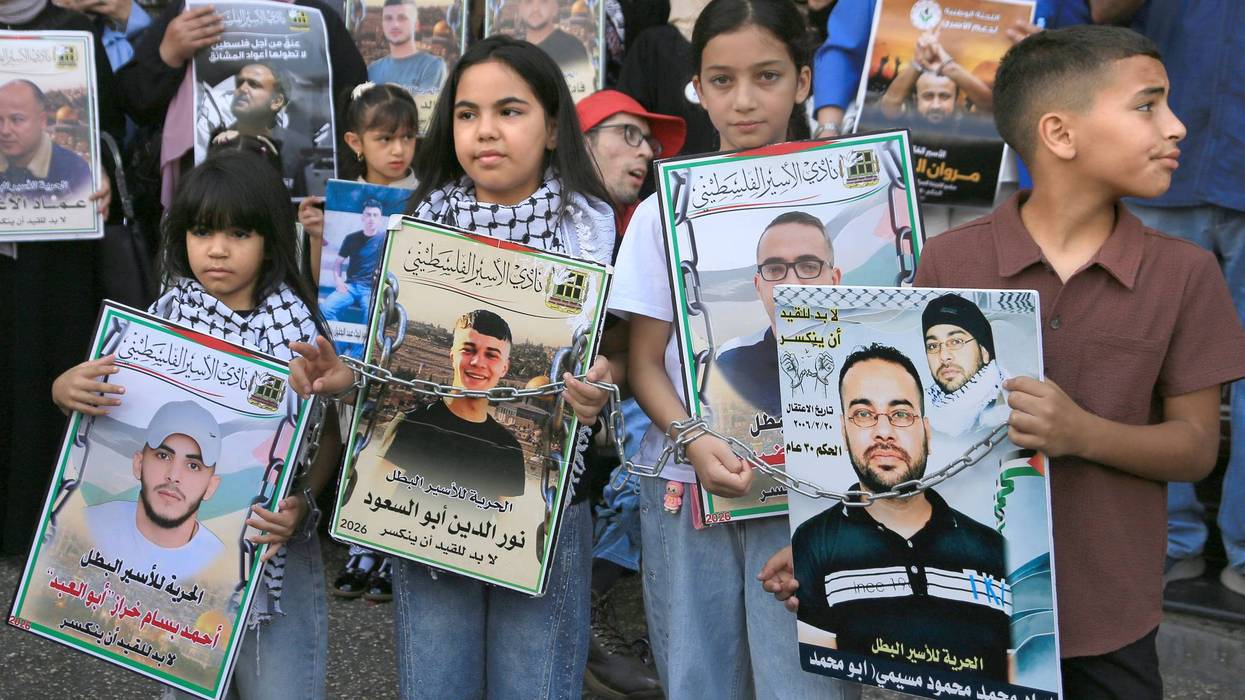
"Israel’s widespread and government-sanctioned use of torture against Palestinians contaminates every aspect of its legal system and means that Palestinians are convicted based on information extracted under torture."
Israeli security forces tortured Palestinian security detainees—and in at least one case, a Jewish Israeli—into confessions subsequently used to secure criminal convictions, according to a report published Wednesday that warns the practice poses a particularly grave threat now that Israel has legalized the death penalty for "terrorism"-related killings.
Israel's systematic torture of Palestinians, both during the Gaza genocide and in the illegally occupied West Bank, is well documented by both Israeli and international organizations. Less examined are allegations that members of Shin Bet, Israel's internal security agency, use torture to extract confessions from so-called "security detainees," who are subjected to a more severe detention regimen that often includes lengthy imprisonment without charge or trial.
A 25-page report, "Tainted by Torture: Palestinian Detainees in the Israeli Legal System," published by the Israeli advocacy group Public Committee Against Torture in Israel (PCATI), notes the general increase in Israeli torture, sometimes deadly, by Israel Prison Service and military personnel following the Hamas-led attack of October 7, 2023: "severe physical, psychological, and sexual violence, including beatings, kicking, attacks with dogs, electric shocks, threats, humiliation, touching and hitting genitals, and rape."
The report specifically examines 42 cases involving Palestinian security detainees who reported torture during interrogations by Shin Bet operatives over the past decade. PCATI also documented one exceptional case involving the alleged torture of a Jewish Israeli suspect.
According to the report, judges and other officials often ignore or dismiss clear and undisputed evidence of torture.
"Israel’s widespread and government-sanctioned use of torture against Palestinians contaminates every aspect of its legal system and means that Palestinians are convicted based on information extracted under torture," PCATI said. "That’s particularly egregious in light of initiatives to impose the death penalty on Palestinians—including based on confessions extracted under torture and irrespective of whether or not they are true."
PCATI documented how interrogation methods such as extreme sleep deprivation, beatings, and painful stress positions are used against security detainees, primarily Palestinians accused of resisting Israeli occupation. Of the 42 cases examined, 35 involved sleep deprivation, 24 involved physical violence, and 23 involved stress positions. In 33 cases, detainees confessed under torture or other illegal abuses.
Of the 29 cases for which PCATI had complete information about legal proceedings, 25 resulted in convictions. The report emphasizes that the cases it covers are not a representative sample of all Shin Bet interrogations, but rather are indicative of broader trends.
One of the most disturbing cases in the report involves a Palestinian lawyer identified as TB, who was arrested in February 2019 and interrogated by Shin Bet for nearly a month. According to official records, TB spent 552 hours under interrogation over more than 27 days—an average of 20 hours every day—with some sessions lasting dozens of consecutive hours. TB suffered severe physical pain, could not sleep, and had his hands and feet shackled in a painful stress position. The judge nevertheless extended his detention without addressing the allegations.
TB was convicted of involvement in shooting attacks targeting Israeli soldiers and buses. Despite his documented torture, the Justice Ministry's oversight division declined to recommend a criminal investigation, concluding that the interrogations had been authorized and conducted according to procedures.
Another Palestinian detainee, identified as R, was subjected to a month of violent interrogations involving physical abuse, humiliation, and threats to harm his family. R repeatedly confessed his alleged crime to his torturers, but then subsequently retracted his confession when brought before police investigators. He was then allegedly tortured anew until he signed a statement in which he said he confessed to make the torture stop.
Prosecutors attempted to use that confession against him, even though it had been extracted through coercion. After spending months behind bars, investigators found video footage proving R had not even been at the scene of the alleged crime. The charges against R and his brother, who had also been indicted, were ultimately dropped.
"This mechanism of torture creates a risk of false confessions, and R’s confession was the rare confession that Israeli authorities acknowledged to be false," the report states.
The report also examines the case of Amiram Ben-Uliel, a far-right Israeli settler-colonist convicted of murdering three members of the Dawabsheh family—including 18-month-old toddler Ali Dawabsheh—in a 2015 arson attack on the Palestinian family's home in the West Bank village of Duma. Shin Bet interrogators subjected the Jewish supremacist to so-called "necessity interrogations" involving methods his torturers acknowledged in court were "painful and perhaps even very painful."
While the court struck one confession made to police a day after the torture, it allowed another admission made 36 hours after the abuse.
"This case is exceptional in that the court accepted the interrogee’s version of events and even excluded some of his testimony because of the use of 'special methods,'" the report notes. "We are not aware of any parallel case involving a Palestinian interrogee."
The Israeli Justice Ministry said it "totally rejects" the report's claims.
"It should be recalled that in most cases the complainants are accused of terrorist offenses, and they therefore are likely to have a clear interest in complaining against the investigators and making claims that may allegedly help them in their criminal trial,” the ministry said. “Therefore, the examination of the complaints requires extra caution and usually additional supporting evidence will be needed."
The report's findings follow Israel's passage earlier this year of a law expanding the death penalty for "terrorism"-related offenses involving Palestinians tried in military courts in the occupied West Bank, with execution by hanging mandated within 90 days and sentences generally barred from commutation.
“When it comes to Palestinian detainees, the Israeli legal system officially sanctions torture as a tool for extracting confessions, regardless of whether the content of those confessions is true,” PCATI executive director Sari Bashi said. “The entire system is contaminated by unlawful violence that violates the rights of the accused and prevents the truth from coming to light."
"Torture as a tool of interrogation is particularly egregious," added Bashi, "given initiatives to impose the death penalty in Israel for the first time since 1962.”

“This approval to deploy a million data centers in space without any thought to the impacts on Earth is just a glimpse of what we’ll see during the next two years of Trump."
The Federal Communications Commission's approval on Wednesday of SpaceX's plan to deploy one million orbital data center satellites into space by 2040 was not "just irresponsible," said one environmental advocate.
"It’s reckless,” said Tim Whitehouse, executive director of Public Employees for Environmental Responsibility. “The potential for these projects to degrade the atmosphere with pollution and debris and harm wildlife needs to be carefully considered before licensing these projects.”
Whitehouse was among the critics who noted that the approval had been granted without an environmental review, which is required by the National Environmental Policy Act (NEPA).
FCC Chairman Brendan Carr said the deployment of one million "orbital space modules," which SpaceX has said would form a new data center constellation called "Starmind," would open "a bold new frontier" and allow the US to lead "the world into the era of super intelligence."
The satellites would process massive amounts of data to be used on Earth, according to SpaceX, the space exploration company led by Republican megadonor Elon Musk.
The environmental legal group Earthjustice said they also risk "changing our atmosphere, disrupting our daily activities that rely on satellites currently operating, disturbing wildlife, and fundamentally altering our night sky," and denounced the commission for releasing the decision as families across the US were preparing to celebrate Thanksgiving.
“Drastically expanding satellites in space has a direct impact on people’s everyday lives as well as the future of our planet,” said Jan Hasselman, senior attorney at Earthjustice. “Agencies that authorize companies looking to space as the next frontier still must operate within the law, and the law requires the FCC to consider all the risks and impacts of these proposals. It is dismaying that the FCC has ignored the law so blatantly and tried to mask the fact with a holiday filing.”
"Agencies that authorize companies looking to space as the next frontier still must operate within the law, and the law requires the FCC to consider all the risks and impacts of these proposals."
The number of satellites in space has already grown rapidly in the last several years, with 15,000 satellites in orbit in 2026—up from 1,400 just over a decade ago.Satellites cause emissions as they are placed in space through rocket launches, and other environmental impacts include debris from potential collisions—especially as the number of satellites grows—degradation of the ozone layer, and light pollution.
Astronomers spoke out against SpaceX's plan earlier this year, saying it would prevent scientists from studying the night sky with modern telescopes, as well as disrupting ecosystems and humans' biological clocks due to extreme light pollution.
On Wednesday, the American Astronomical Society (AAS) said it was "disheartened and dismayed" by the FCC's licensing of Musk's plan.
"The proposed constellation would significantly undermine decades of federal investment in astronomical facilities and the ability of astronomers and the public to enjoy and study the night sky," said the group. "The intended and unintended radio emissions from a constellation of such unprecedented size would imperil radio astronomy research, and the waste heat generated by the data centers would produce a thermal signature that would increase the infrared background of the sky and threaten the efficacy of sensitive instruments used in regular astronomy research. In addition, atmospheric pollution from the launches and reentries of so many satellites, as well as increased collision risks in orbit, remain significant concerns; both of these factors threaten research astronomy."
"The AAS is gravely concerned about the future of federally funded astronomical research under such a fundamentally altered night sky, and the resulting waste of taxpayer dollars invested in astronomical facilities throughout the country and the world," the AAS added.
Earthjustice emphasized that the approval came as Congress is considering the Bipartisan American Affordability and Jobs Act (BAAJA), the permitting reform bill that would prevent future administrations from revoking licenses for projects including data centers and would block courts from enforcing environmental review laws for such projects if they had been violated previously.
“This approval to deploy a million data centers in space without any thought to the impacts on Earth is just a glimpse of what we’ll see during the next two years of [President Donald] Trump,” said Sam Sankar, senior vice president of Earthjustice. “This is great example of why Congress should not pass a flawed bill like BAAJA that would lock in terrible projects like this one. Donald Trump is going to do a lot more dirty and lawless deals over the next years, and BAAJA prevents future presidents from reconsidering them.”