'Bald-Faced Lies': GOP Called Out for Running on Saving the Rural Health System They're Destroying
"Republicans across the country are desperately trying to pull the wool over voters’ eyes."
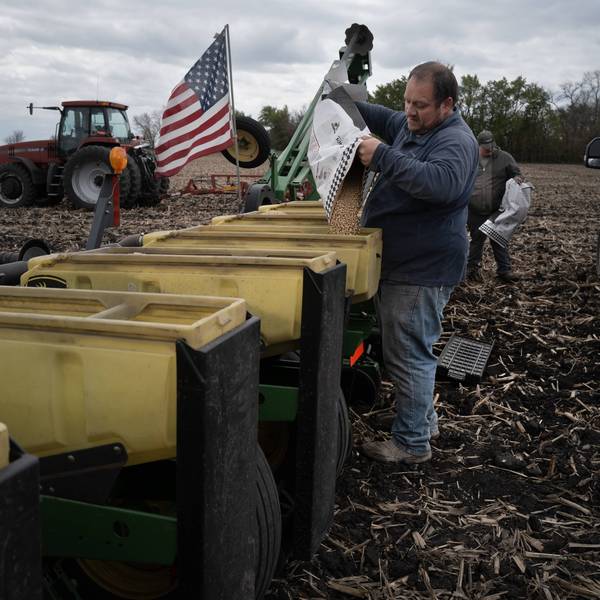
With the US midterm elections less than two weeks away, Republicans across the country are posturing as defenders of the country's ailing rural healthcare system even as hospitals and providers nationwide buckle under the financial strain imposed by President Donald Trump and the GOP's unprecedented cuts to Medicaid.
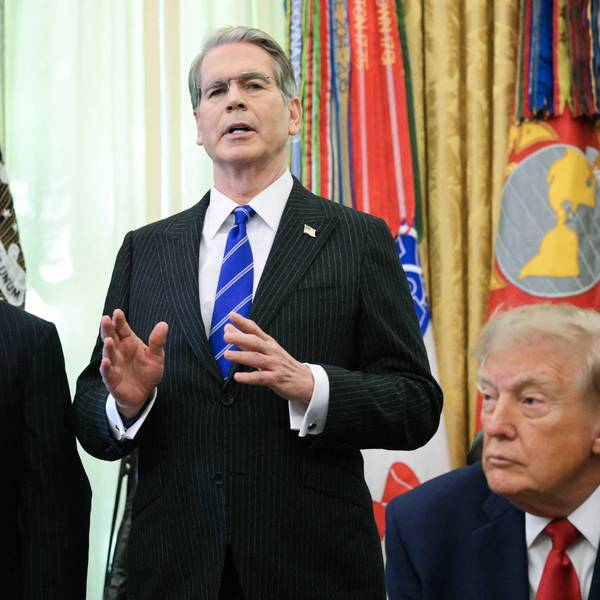
The advocacy group Protect Our Care said Wednesday that Republicans in key congressional races "are touting bald-faced lies" by highlighting their support for a $50 billion rural health fund that pales in comparison to the roughly $900 billion in Medicaid cuts that Trump signed into law last summer. The health policy organization KFF estimates that the Republican law will cut $137 billion in Medicaid spending for rural areas over the next decade.
Protect Our Care calls out multiple Republicans by name for misleadingly promoting their support for rural health funds, including Sens. Roger Marshall of Kansas, Jon Husted of Ohio, Susan Collins of Maine, and Ted Cruz of Texas, as well as Reps. Juan Ciscomani of Arizona, Jeff Crank of Colorado, Mariannette Miller-Meeks of Iowa, Jason Smith of Missouri, and Derrick Van Orden of Wisconsin.
"Republicans across the country are desperately trying to pull the wool over voters’ eyes, touting their so-called 'rural health investments' as if they make up for the $1 trillion they ripped away from Medicaid and the Affordable Care Act. It doesn’t come close," said Protect Our Care. "Rural Americans are rapidly losing the care they need, and over 1,250 hospitals, clinics, and essential service providers are closing, cutting services, or are at risk of doing so."
"These investments," the group said of the $50 billion rural health fund, "will do nothing to stop the gushing wound Republicans hacked in the American healthcare system."
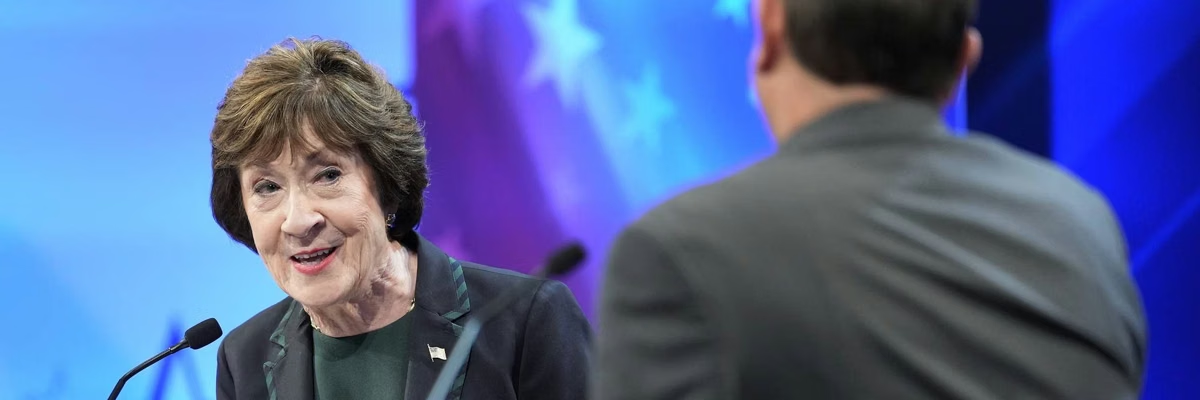
As Common Dreams reported over the summer, Collins—who is running for a sixth term against former Maine Senate President Troy Jackson—has played up her role in securing the Rural Health Transformation Program as part of the sprawling One Big Beautiful Bill Act. Collins voted against final passage of the bill, citing its cuts to Medicaid, but she provided her party with critical support to advance the measure through the Senate.
"Senator Collins is like an arsonist who helped set the fire, and then she wants credit for bringing a cup of water to put it out," Jackson said during a debate earlier this month.
Maine has so far received $190 million from the rural health fund—a fraction of the roughly $3 billion in Medicaid cuts facing the state over the next decade.
Several of Maine’s rural hospitals are at risk of closure thanks to Trump's disastrous One Big Beautiful Bill.Our healthcare system cannot survive another Susan Collins term.https://t.co/cE1Z3ujjfp
— Troy Jackson (@TroyJackson207) August 25, 2026
Sen. Jon Ossoff (D-Ga.), who is running for reelection against Rep. Mike Collins (R-Ga.), similarly homed in on his GOP opponent's support for Medicaid cuts that are wreaking havoc across the country and forcing healthcare facilities to cut back on services—or close entirely.
"Mike Collins and Donald Trump passed the biggest Medicaid cut in history," said Ossoff during an October 8 debate. "A hospital in Mike Collins' own district had to shut down its labor-and-delivery unit, citing those Medicaid cuts. How can a sitting congressman vote to shut down a labor-and-delivery unit in his own district?"
While Republicans have characterized the $50 billion in funding as a key lifeline for rural hospitals, KFF noted in a recent analysis that the money "could mitigate but will not fully offset estimated cuts to federal Medicaid spending in rural areas." The policy group observed that, "unlike most of the federal Medicaid spending cuts, the fund is also time limited." States must spend the funds they receive by the end of fiscal year 2032.
"While the fund was established in part to address concerns about the impact of the reconciliation law on rural hospitals, the funding is being used for a much broader set of purposes, and there are restrictions on how hospitals can benefit," the group said, pointing out that the money cannot be put toward "propping up struggling hospitals with temporary relief."
In a fact sheet released on Wednesday, Protect Our Care pointed to comments made earlier this year by Jed Hansen, the executive director of the Nebraska Rural Health Association, who said in March that the GOP's rural health funding wouldn't go to "rural hospitals, rural clinics, and rural providers in a meaningful way.”
“Rural Health Transformation will not save a single hospital in our state,” said Hansen. “I don’t think it will save a hospital nationally.”
We are at a crossroads
This country and this world are at a monumental crossroads. In a few short weeks, US voters will have an opportunity to beat back the forces of fascism and confront the billionaires who are rigging the economy, our media system, and our democracy, making it increasingly impossible for ordinary people to get by. We’re not just talking about the election. We’re talking about what must be done once these fascist elements are vanquished from power. We need a bolder set of solutions than what either major party has so far been willing to offer and a working-class movement ready to fight like hell for it. Trump didn't emerge from nowhere. The conditions that fueled MAGA authoritarianism were created by decades of radical neoliberal economic policies and a corrupt political system dominated by corporate interests. They slashed taxes on the super-rich, promising that the benefits would trickle down. They said giveaways to the corporate titans would make life more affordable for the rest of us. It was all bullshit. And when a bitter, betrayed populace searches for someone to blame, right-wing demagogues have little trouble finding scapegoats. People know when they're being lied to, but you won't hear any of this from the corporate media. Only independent journalism—powered and funded by people who believe in building a better world—can deliver truly trustworthy daily news. Our Fall Campaign is underway, and we need your help. To power our newsroom through the rest of the year, we need to raise $125,000 by midnight on October 31. So if you share our vision, please contribute whatever you can to sustain our work. |
With the US midterm elections less than two weeks away, Republicans across the country are posturing as defenders of the country's ailing rural healthcare system even as hospitals and providers nationwide buckle under the financial strain imposed by President Donald Trump and the GOP's unprecedented cuts to Medicaid.
The advocacy group Protect Our Care said Wednesday that Republicans in key congressional races "are touting bald-faced lies" by highlighting their support for a $50 billion rural health fund that pales in comparison to the roughly $900 billion in Medicaid cuts that Trump signed into law last summer. The health policy organization KFF estimates that the Republican law will cut $137 billion in Medicaid spending for rural areas over the next decade.
Protect Our Care calls out multiple Republicans by name for misleadingly promoting their support for rural health funds, including Sens. Roger Marshall of Kansas, Jon Husted of Ohio, Susan Collins of Maine, and Ted Cruz of Texas, as well as Reps. Juan Ciscomani of Arizona, Jeff Crank of Colorado, Mariannette Miller-Meeks of Iowa, Jason Smith of Missouri, and Derrick Van Orden of Wisconsin.
"Republicans across the country are desperately trying to pull the wool over voters’ eyes, touting their so-called 'rural health investments' as if they make up for the $1 trillion they ripped away from Medicaid and the Affordable Care Act. It doesn’t come close," said Protect Our Care. "Rural Americans are rapidly losing the care they need, and over 1,250 hospitals, clinics, and essential service providers are closing, cutting services, or are at risk of doing so."
"These investments," the group said of the $50 billion rural health fund, "will do nothing to stop the gushing wound Republicans hacked in the American healthcare system."
As Common Dreams reported over the summer, Collins—who is running for a sixth term against former Maine Senate President Troy Jackson—has played up her role in securing the Rural Health Transformation Program as part of the sprawling One Big Beautiful Bill Act. Collins voted against final passage of the bill, citing its cuts to Medicaid, but she provided her party with critical support to advance the measure through the Senate.
"Senator Collins is like an arsonist who helped set the fire, and then she wants credit for bringing a cup of water to put it out," Jackson said during a debate earlier this month.
Maine has so far received $190 million from the rural health fund—a fraction of the roughly $3 billion in Medicaid cuts facing the state over the next decade.
Several of Maine’s rural hospitals are at risk of closure thanks to Trump's disastrous One Big Beautiful Bill.Our healthcare system cannot survive another Susan Collins term.https://t.co/cE1Z3ujjfp
— Troy Jackson (@TroyJackson207) August 25, 2026
Sen. Jon Ossoff (D-Ga.), who is running for reelection against Rep. Mike Collins (R-Ga.), similarly homed in on his GOP opponent's support for Medicaid cuts that are wreaking havoc across the country and forcing healthcare facilities to cut back on services—or close entirely.
"Mike Collins and Donald Trump passed the biggest Medicaid cut in history," said Ossoff during an October 8 debate. "A hospital in Mike Collins' own district had to shut down its labor-and-delivery unit, citing those Medicaid cuts. How can a sitting congressman vote to shut down a labor-and-delivery unit in his own district?"
While Republicans have characterized the $50 billion in funding as a key lifeline for rural hospitals, KFF noted in a recent analysis that the money "could mitigate but will not fully offset estimated cuts to federal Medicaid spending in rural areas." The policy group observed that, "unlike most of the federal Medicaid spending cuts, the fund is also time limited." States must spend the funds they receive by the end of fiscal year 2032.
"While the fund was established in part to address concerns about the impact of the reconciliation law on rural hospitals, the funding is being used for a much broader set of purposes, and there are restrictions on how hospitals can benefit," the group said, pointing out that the money cannot be put toward "propping up struggling hospitals with temporary relief."
In a fact sheet released on Wednesday, Protect Our Care pointed to comments made earlier this year by Jed Hansen, the executive director of the Nebraska Rural Health Association, who said in March that the GOP's rural health funding wouldn't go to "rural hospitals, rural clinics, and rural providers in a meaningful way.”
“Rural Health Transformation will not save a single hospital in our state,” said Hansen. “I don’t think it will save a hospital nationally.”