

SUBSCRIBE TO OUR FREE NEWSLETTER
Daily news & progressive opinion—funded by the people, not the corporations—delivered straight to your inbox.
5
#000000
#FFFFFF
To donate by check, phone, or other method, see our More Ways to Give page.
Daily news & progressive opinion—funded by the people, not the corporations—delivered straight to your inbox.
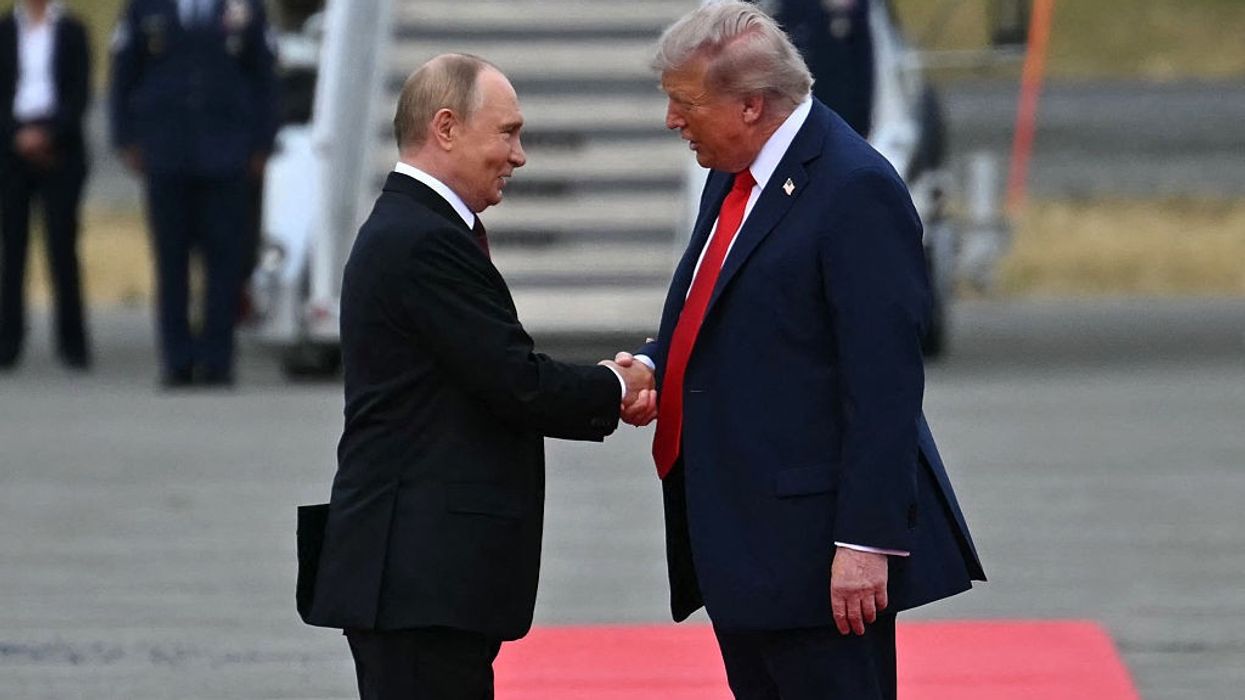
"These waivers have nothing to do with our national security, and everything to do with sucking up to Vladimir Putin," said US Sen. Richard Blumenthal.
President Donald Trump on Friday signed an executive order that waived new sanctions on Russia that were set to take effect thanks to bipartisan legislation signed into law by the president last month.
Trump justified the decision by claiming the sanctions waiver "is in the national interests of the United States," without offering further details. The president said he submitted a report to Congress elaborating on his reasons for waiving the sanctions.
A Friday report in The New York Times described the waiver as "another economic lifeline to Russian President Vladimir V. Putin," as the sanctions had been designed "to target Russian officials, oligarchs, and financial institutions" and "squeeze the financial lifelines sustaining Russia’s war against Ukraine."
Ukrainian President Volodymyr Zelenskyy condemned the sanctions waiver, and urged US lawmakers and voters to speak out against the US president's actions.
"It is important that everyone in America... sees what is really happening," Zelenskyy wrote in a Saturday social media post. "At a time when the Russians have carried out such a massive attack on our energy sector, a decision was unfortunately made in America to completely disregard the [sanctions law], which was supposed to impose truly effective pressure on Russia to bring this war to an end."
Zelenskyy emphasized that the sanctions package could still do a lot of good, but "it needs to actually work, and every voice in support of it matters."
Trump in recent weeks has been pressuring Ukraine to stop its attacks on Russian energy infrastructure in a bid to lower global prices of gas and diesel, both of which have skyrocketed in recent months because of the president's illegal war with Iran.
In addition to pressuring Ukraine, Trump also struck a deal with Russia to import diesel into the US, drawing a bipartisan rebuke from lawmakers who accused the president of funding Putin's war machine.
Rep. Don Beyer (D-Va.) ripped Trump's decision to waive the Russia sanctions in a Friday social media post.
"Trump’s latest surrender to Putin again betrays our Ukrainian partners," Beyer wrote, "and defies clear congressional intent of legislation designed to punish Russia for its illegal war of aggression."
Beyer also pointed to flaws in the sanctions bill that he said gave Trump too much discretionary power to not only waive sanctions on Russia, but to impose further tariffs on US allies.
"Congress must fix this flawed law," he said, "to stop Trump from capitulating to Putin and ensure that it truly supports Ukraine."
Sen. Thom Tillis (R-NC) on Saturday slammed Trump's sanctions waiver as "beyond irresponsible."
"What part of enforcing a law passed 86-11 by the Senate does the President and his advisors not understand?" Tillis asked. "It's unconscionable that this administration is capitulating to a Russian dictator who illegally invaded Ukraine and butchers innocent civilians every single day."
Sen. Richard Blumenthal (D-Conn.), who co-authored the sanctions law with the late Sen. Lindsey Graham (R-SC), said Trump has shown "that he stands on the side of a bloodthirsty thug and the enablers of Russia's war machine and against the majority of Americans, their representatives in both houses of Congress, and our European allies."
"These waivers have nothing to do with our national security, and everything to do with sucking up to Vladimir Putin," Blumenthal added. "I hope my Republican colleagues will join me in condemning this craven, cowardly action."
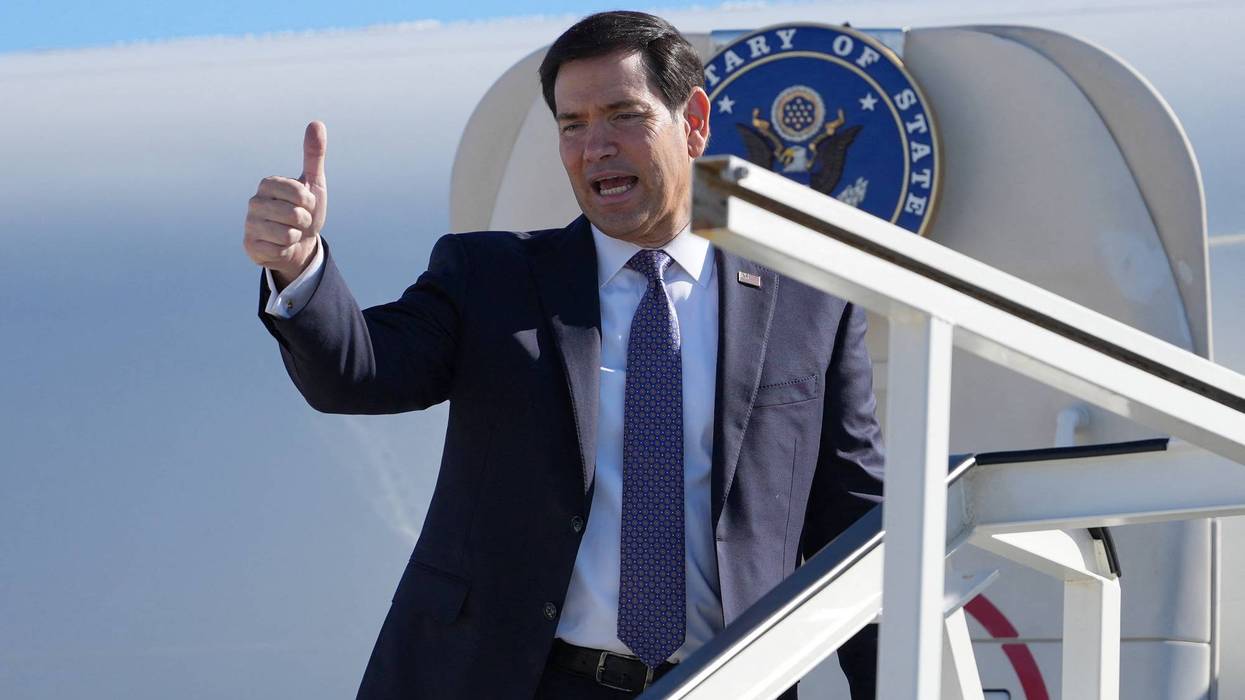
"The US and India have an obligation to promote and defend the rights to freedom of assembly and expression," six Democrats in Congress reminded the top US diplomat.
On the eve of US Secretary of State Marco Rubio's trip to India, six progressives in the House of Representatives on Friday sounded the alarm over the Indian government's response to recent protests, including its alleged spying on American soil.
"We write with concern regarding a pattern of repression, wrongful detention, and excessive use of force by security forces during student protests in Delhi and other localities across India," Democratic Reps. Jesús "Chuy" García (Ill.), Pramila Jayapal (Wash.), Jim McGovern (Mass.), Eleanor Holmes Norton (DC), Ilhan Omar (Minn.), and Rashida Tlaib (Mich.) said in a letter to President Donald Trump's top diplomat.
"The United States-India relationship has historically been rooted in democratic values, constitutional governance, and strong people-to-people ties," they wrote. "As the world's largest democracies and state parties to the International Covenant on Civil and Political Rights, the US and India have an obligation to promote and defend the rights to freedom of assembly and expression. It is in this spirit of shared values and obligations that we raise the following concerns."
As the letter lays out, protests began in June after the leak and subsequent cancellation of India's medical college entrance examination. While the demonstrators initially demanded reforms to the education system, including the resignation of Education Minister Dharmendra Pradhan, the Cockroach Janta Party's (CJP) movement ultimately "grew to give voice to a broader set of grievances, including high levels of youth unemployment, government corruption, and barriers to democratic participation."
In recent weeks, "tens of thousands of demonstrators have taken to the streets of major cities across India to protest... the Election Commission's Special Intensive Revision (SIR), which has purged more than 130 million people from voter rolls since 2025," the letter details, noting that protesters have called for the resignation of Chief Election Commissioner Gyanesh Kumar.
At least "hundreds of people have been detained by police across India since October 10, including CJP movement leaders, protesters, and journalists," the lawmakers highlighted. The government of Prime Minister Narendra Modi and his right-wing Bharatiya Janata Party has also closed some public spaces, used unwarranted force against unarmed demonstrators, and ordered telecommunications companies to shut down mobile internet services in a bid to thwart protests.
However, the Democrats aren't just alarmed by actions across India; they also pointed to "reports that Indian diplomatic missions in the United States hired photographers to surveil protesters on American soil," with members of US human rights groups and the Indian diaspora disclosing that they were recorded at protests in Chicago, San Francisco, and Washington, DC.
"These incidents raise particular alarm in light of India's documented pattern of engaging in transnational repression, including through the weaponization of consular services, harassment, intimidation, and physical violence," the members of Congress wrote. "It is unacceptable that individuals on United States soil may not exercise their rights to freedom of expression and assembly, guaranteed to them by the US Constitution and international law for fear of retribution by a foreign government."
The lawmakers asked Rubio's department to:
Rubio is expected to meet with Indian Foreign Minister S. Jaishankar in Mumbai on October 20. However, Rubio—a former US senator expected to run for president in 2028—and the second Trump administration more broadly have also been widely criticized for authoritarian behavior and their records on human rights.
After Rubio attacked Amnesty International, the globally renowned group argued earlier this week that "as secretary of state, he has launched a wholesale attack on the concept of human rights." Specifically, he has:
Further, "as the head of the National Security Council, he has not ensured the release of investigations into mass killings of civilians in US airstrikes in Yemen and Iran," Amnesty noted. "He's leading US attempts to destroy the international justice system. That includes a campaign to, in his words, 'dismantle' the International Criminal Court."
More broadly, the second Trump administration has repeatedly generated fears of interference in next month's midterm elections, weaponized the federal government against the president's political "enemies," spent taxpayer dollars on far-right propaganda, punished journalists and outlets deemed unfriendly to the GOP agenda, pursued a deadly mass detention and deportation effort, slaughtered hundreds of people by bombing alleged drug-trafficking boats on the high seas, and much more.

"You mean the footage of the Israeli terrorists beating her up isn't clear enough?" one critic sardonically asked.
Israeli Prime Minister Benjamin Netanyahu faced blistering criticism Friday after his office published a statement casting doubt on the circumstances surrounding a brutal attack earlier in the day by settlers in the illegally occupied West Bank that left an American journalist hospitalized.
"The facts surrounding the confrontation near Abu Falah, during which Washington Post photojournalist Heidi Levine was allegedly assaulted, remain unclear and are under investigation," Netanyahu's office said on social media.
As Common Dreams reported, Levine—a 63-year-old Jewish American by birth who has reported from war zones including Afghanistan, Kosovo, Iraq, Lebanon, Libya, and Syria—was covering Palestinian farmers desperately trying to harvest their olives when around 80 masked settler colonists descended upon them.
Armed with rocks, clubs, sticks, assault rifles, and the self-assured belief that their deity figure promised them all the land that was once ruled by Jewish kings millennia ago, the settlers set fire to the olive trees that are the backbone of Palestine's rural economy and a literal symbol of Palestinians' rootedness in their homeland.
The assailants fired guns and threw rocks at the olive harvesters, reportedly wounding at least two Palestinians. While documenting the attack, Levine—who, like other journalists killed or wounded by Israel, was clad in a helmet and a blue vest clearly marked "PRESS"—was set upon by settlers, knocked to the ground, and kicked dozens of times while her equipment was stolen.
"Israel unequivocally condemns violence against anyone—Jews, Arabs, Christians, or journalists," Netanyahu's office claimed. "Those responsible will be held accountable."
"But serious questions remain," the statement continued. "Reports indicate some 200 Arabs and far-left activists confronted approximately 40 Israeli youths. Footage shows masked individuals on both sides hurling objects, amid reports of fireworks fired at Jewish youths. Other footage appears to show Levine knocked down and immediately helped to her feet by the same unidentified individual."
"The investigation must establish the facts, including who initiated the violence," the office added. "We will not allow disputed incidents to be exploited to demonize the hundreds of thousands of law-abiding Jewish residents."
The colonization of the occupied Palestinian territories by Jewish settlers—many of them non-Israelis who are availing themselves of the ethnosupremacist and apartheid policy of allowing any Jew to live in a land whose Palestinian inhabitants have been ethnically cleansed from it for nearly 80 years—is inherently illegal under international law.
Washington Post executive editor Matt Murray pushed back on Netanyahu's statement on social media, saying: "To be clear: Some facts are neither in dispute nor unclear. Our photographer was clearly marked as press. She was clearly beaten. These are not partisan or risible statements, but indisputable. We urge a thorough investigation and accountability."
International observers also criticized Netanyahu's statement.
"They are actually trying to justify an American WaPo journalist being severely beaten by a mob of settler terrorists," US commentator Krystal Ball said on social media, using the syllabic abbreviation for the Post.
Irish journalist Barry Malone responded to Netanyahu's post on X, saying: "Hi. There's video. It's clear."
US physician Amira Dalton said, "Israel lies and then calls you an antisemite for calling out their lies."
The X account Israel Exposed, which has more than 400,000 followers, sardonically asked, "You mean the footage of the Israeli terrorists beating her up isn't clear enough?"
The Israeli veterans' group Breaking the Silence said that "you can see the settlers who attacked Heidi Levine, a journalist for The Washington Post. But what you can’t see is the state behind them: a state that funds them, arms them, and, above all, grants them near-total impunity for their actions. This violence does not happen in a vacuum. Israel enables it."
While Lt. Col. Ariella Mazor, chief international spokesperson for the Israel Defense Forces, claimed the military had sent battalions to the West Bank to contain the outbreak of violence, eyewitnesses said the IDF was involved in the attack on Abu Falah.
“The army did nothing to stop the settlers," Israeli journalist Oren Ziv, who was present during the attack, told The Washington Post.
That's because Israel's far-right government is unapologetically seeking to "finish the job of 1948," as Netanyahu once put it—a reference to the ethnic cleansing of more than 750,000 Palestinians during the creation of the modern Israeli state—and take all of Palestine.
"The entire land is ours," Israeli National Security Minister Itamar Ben-Gvir said earlier this month, in the lead-up to Israel's October 27 elections."This is our country."
Last month, Israeli Finance Minister Bezalel Smotrich vowed to do in the West Bank "what we did in Gaza," where three years of genocidal annihilation have left more than 250,000 Palestinians dead or wounded, nearly 2 million people forcibly displaced, and an estimated 70% of the territory under Israeli control.
According to the United Nations Office for the Coordination of Humanitarian Affairs, at least 1,138 Palestinians—at least 250 of them children—have been killed by Israeli soldiers and settlers in the West Bank since October 2023.
At least nine Americans have been killed by Israeli settlers and security forces in the West Bank since January 2022, including journalists, human rights activists, and Palestinian Americans visiting relatives.
Despite claims by Israel that perpetrators of such attacks will be held accountable, impunity is the general rule.
“Sadly, none of them will be prosecuted,” Levine said of her attackers. “I am sure of it.”
Multiple US senators demanded that Israel bring Levin's assailants to justice.
"The continued lack of accountability for settler violence in the West Bank has allowed attacks on innocent people, including multiple Americans, to go unanswered, and it is eroding what should be a strong alliance between the US and Israel," Sen. Catherine Cortez Masto (D-Nev.) said on social media. "Prime Minister Netanyahu isn't doing nearly enough to stop the violence."
Sen. Chris Van Hollen (D-Md.) also took to social media after Friday's attack, writing, "Today, another American citizen and journalist was brutalized by Israeli settlers attacking Palestinians in the West Bank."
"This repeated violence and brazen impunity for attacks against Americans and Palestinians alike are unacceptable," he added. "When will [President Donald] Trump and [Secretary of State Marco] Rubio DO SOMETHING?"
"Katie Zacharia wasn't fired because she lied," one Democratic strategist said. "It was because she was a bad liar. It's a key distinction.”
The tumultuous tenure of White House press secretary Katie Zacharia has already come to an end just three days after her first press briefing.
After his new hire shambled her way through yet another Fox News appearance the night before, President Donald Trump said on Friday that he'd suggested Zacharia "reconsider" her role as the top White House spokesperson.
"Maybe it's not for her," Trump said, suggesting Zacharia may continue working for him “in some form, but maybe a more pleasant form.”
Zacharia, who stepped into the role formerly held by Karoline Leavitt, lasted a total of five days in the job. That's less than half the tenure of Anthony Scaramucci—who departed his role as White House communications director after just 11 days during Trump's first term.
Her qualifications were in doubt from the moment Trump plucked her from an obscure role as a Fox News commentator for the highly visible job. Journalists dug up old posts in which she promoted the QAnon and Pizzagate conspiracies, as well as Trump's false claims that the 2020 election was stolen.
From the start of Zacharia's disastrous briefing on Tuesday, many observers predicted it could also be her last.
She was relentlessly panned after struggling to read through her fully scripted remarks (and at one point accidentally referring to her husband as "my president"). She cut the briefing short after just 14 minutes, taking only three questions, all from right-wing outlets.
It also became clear that, despite Trump's introduction of her as "an attorney," she'd never actually passed the bar exam and had misrepresented her credentials for years.
Asked by reporters earlier this week in which state she had passed the bar exam, she said, “When I moved to China" before later claiming not to have heard the question.
Even Fox News host Sean Hannity—a longtime Trump loyalist—challenged her explanation, confronting her Thursday with a report documenting “15 social media posts where you identify yourself as an attorney.”
“I think they were retweets,” Zacharia replied, arguing to a flummoxed Hannity that sharing the posts did not constitute endorsing the title.
While Zacharia's inability to do damage control appeared to do her in, Democratic strategist Mike Nellis emphasized that the problem was not her dishonesty—a trait that is practically a prerequisite to serve in the Trump administration.
"Katie Zacharia wasn't fired because she lied," Nellis wrote on social media. "It was because she was a bad liar. It's a key distinction.”
To some, Zacharia's tenure represented a disastrous culmination of Trump's willingness to eschew competence and experience for personal flattery and undying loyalty when appointing officials during his second term.
Zacharia said she got on Trump's radar by scheduling her TV appearances when she knew he'd be watching.
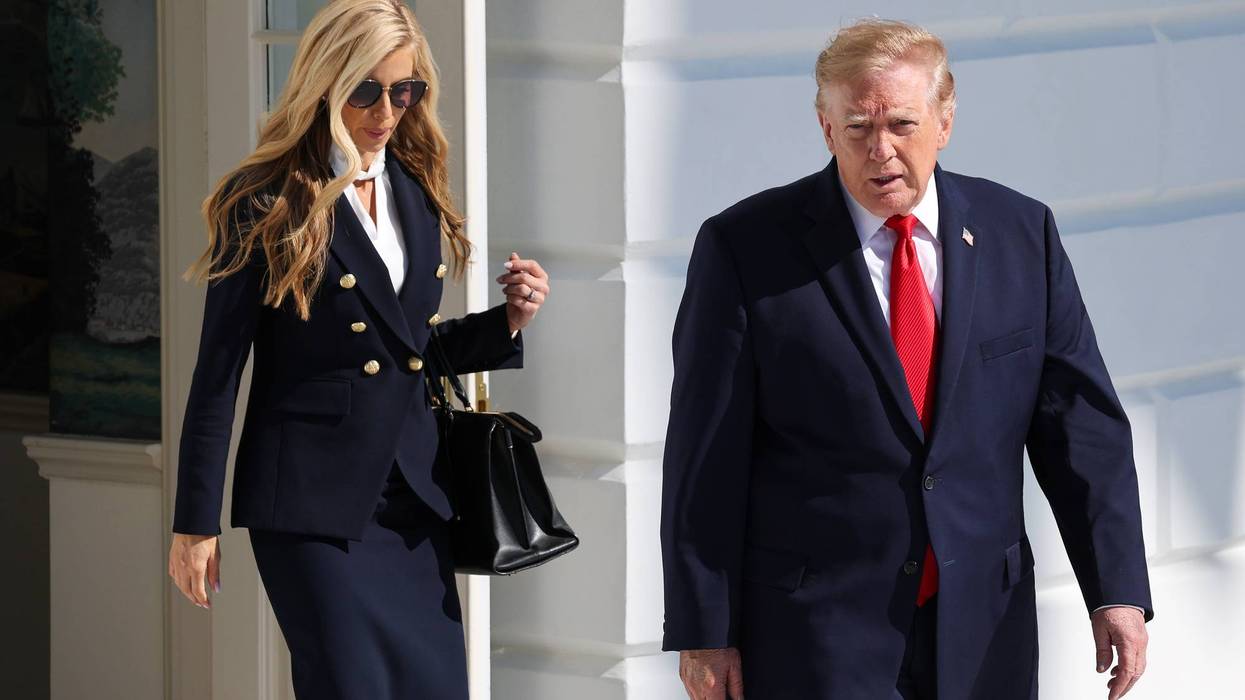
While other advisers questioned the pick, Zacharia's appointment was reportedly championed by Natalie Harp, Trump’s ever-present personal assistant and a fellow blonde conservative television personality.
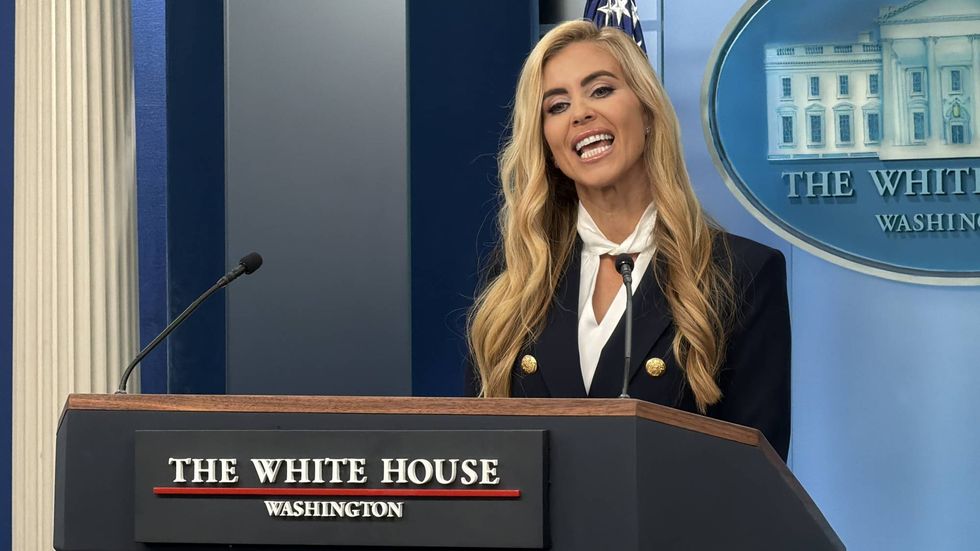 White House press secretary Katie Zacharia speaks during a news briefing in the James S. Brady Press Briefing Room of the White House on October 13, 2026, in Washington, DC. (Photo by Chip Somodevilla/Getty Images)
"She looks nice for him," said former Republican National Committee chairman Michael Steele on MS NOW. "She fits his idea of the blonde white female standing at that podium publicly pronouncing his noise in a way that makes him, when he's watching it, feel good."
Steele emphasized that with just weeks left before a midterm election widely viewed as a referendum on Trump, "the White House is voiceless."
"They do not have a press secretary in place," he said, "because the president picked an incompetent individual to do the job."
Though very few seemed to think Zacharia could turn things around, she did have one person in her corner—perhaps the only other person who could possibly understand her experience: Scaramucci.
While others bet she would not even last "one Scaramucci," The Mooch himself predicted—even after her disastrous Hannity appearance on Thursday—that "she will make it. I have the over."
Following news on Friday that she did not, in fact, make it, Scaramucci wrote: "Records are made to be broken. But I take no pleasure in other people's pain."
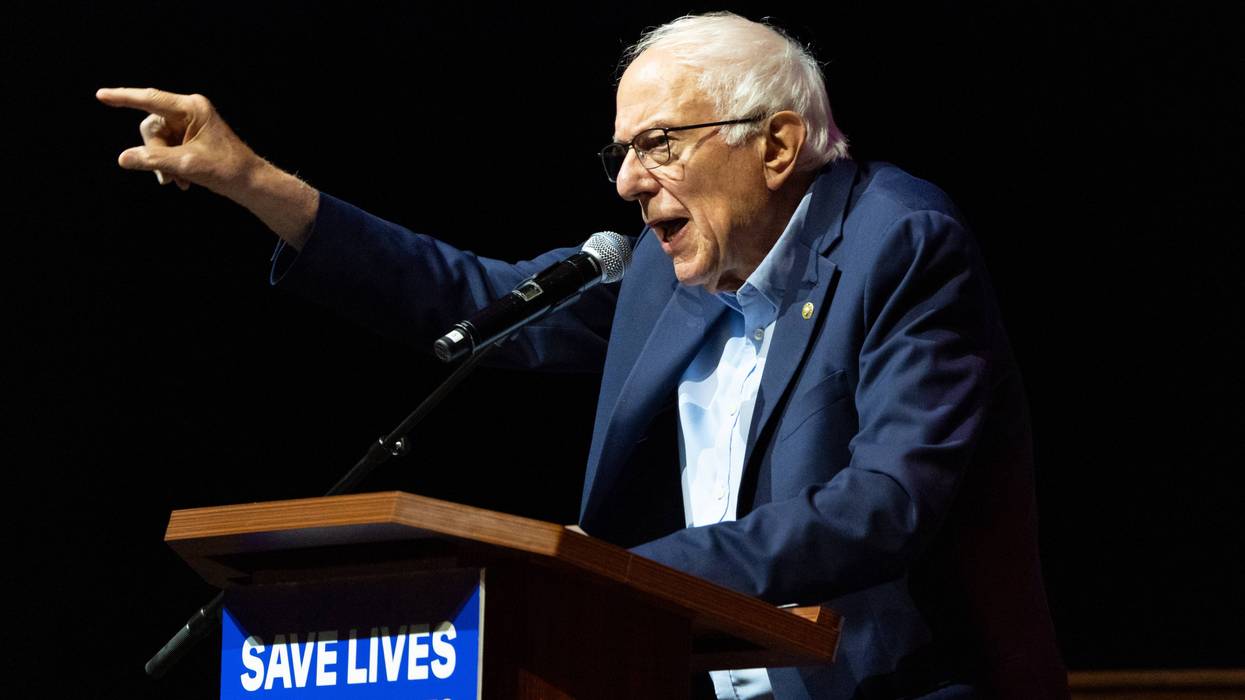
"We have to take Trump on, but we have to do more... You have to implement an agenda that works for the working class of this country."
While polls show Democrats are well positioned to make big gains in next month's midterm elections thanks to President Donald Trump's historic unpopularity, Sen. Bernie Sanders is warning the party that opposition to the president alone isn't enough to guarantee long-term political success.
MS NOW on Friday showed a preview clip of a longer interview with Sanders (I-Vt.) that is scheduled to air on Saturday where he outlines what he'd like to see the party do if it retakes Congress next month.
Sanders—who caucuses with Democrats and twice sought the party's presidential nomination—said it was essential for Democrats to win both the US House of Representatives and the Senate to put a check on Trump, whom he described as "the most dangerous president in the history of the United States."
But Sanders said merely denouncing Trump, however correct, "ain't good enough."
"We have to take Trump on," Sanders said. "But we have to do more... You have to implement an agenda that works for the working class of this country."
The interview with Sanders, conducted by MS NOW senior contributing editor Michele Norris, is part of an hourlong special scheduled to air on the cable news network at 8:00 pm Eastern time on Saturday.
The focus of the special will be on the 85-year-old Sanders' political career and his influence on a younger generation of politicians, two of whom—Rep. Alexandria Ocasio-Cortez (D-NY) and New York City Mayor Zohran Mamdani—will also be interviewed.
Previewing the special, Norris argued that the focus on Sanders is timely because he is "at the heart" of the upcoming 2026 midterm elections.
"He has inspired, endorsed, and supported a roster of progressive, left-leaning candidates who surprised the Democratic establishment in the primary and now face the biggest test yet this November," said Norris. "The stakes are enormous for him, for the Democratic Party, and for the country."

"Every tenth of a degree of warming we avoid gives corals a better chance," said one of the researchers. "So action now really does count.”
Nearly half the world's reef-building coral species are at risk of extinction according to a global assessment released Thursday. Researchers warn that the accelerating climate crisis is making the danger even worse than the most recent data shows.
Coral reefs are among the most important ecosystems on Earth, providing food and shelter for around a quarter of all marine species. Their destruction jeopardizes not only entire marine food webs, but also the millions of people who rely on those species for food.
The study, published in the journal Nature, found that as of 2020, about 44% of coral species were threatened, compared with about one-third in 2008.
David Obura, a marine biologist and lead author of the study, said the new assessment "provides the most comprehensive evaluation to date of global extinction risk among reef-building corals, and a stark warning of the accelerating increase in global threats to coral reefs."
But he said it also "highlights the challenges we face in addressing major data and knowledge gaps on the status of species at global scales, at the same time as having to take urgent decisions to reduce the drivers of global declines in critical species and ecosystems.”
The researchers stressed that the data they analyzed understates the danger. The assessment does not take into account the damage from the devastating bleaching event that began in 2023 and lasted until mid-2025. According to the National Oceanic and Atmospheric Administration (NOAA), it was the largest such event ever recorded, exposing about 84% of the world's coral reef area to bleaching-level heat stress and causing widespread coral deaths.
It also doesn't take into account what meteorologists have projected could be the strongest El Niño ever, which could break ocean temperature records in the coming months, likely leading to another massive die-off of corals.
"It is entirely possible that reassessing the status of corals just after this coming El Niño may show them to have crossed the 50% mark of the proportion of species at elevated risk of extinction," Obura told AFP.
He noted that a previous "super" El Niño, in 1997-98, also caused tremendous damage to reefs.
"That this coming event is worse than that, after three intervening global bleaching events, is a terrifying reality," he said.
 Researchers extract a fossil coral core sample from a massive coral colony in the Galápagos Islands to reconstruct historical climate and El Niño cycles as part of a study published in Science on August 27, 2026. (Photo by Julia Cole/Science)
In the new assessment, researchers found that human-caused climate change is the primary threat to reef-building coral, determining the fate of about 90% of the species at greatest risk.
They emphasized that coral reef health is more complex than simply "survival" versus "disappearance," and that every reduction in global greenhouse gas emissions matters.
“Coral reefs can feel a world away..." said Françoise Cabada-Blanco, a marine ecologist at the University of Portsmouth and co-author of the study. "But they cover a tiny fraction of the ocean floor, while supporting an enormous share of marine life and the food, coastal protection and livelihoods of millions of people."
"What happens to them affects all of us," she said. "The message from this assessment is that every tenth of a degree of warming we avoid gives corals a better chance—so action now really does count.”
A report published last year concluded that the globe had already passed the 1.2°C warming threshold for widespread coral reef dieback and found that unless global temperatures drop substantially, reefs could largely disappear.
“The crisis facing corals is deadly serious,” said Miyoko Sakashita, oceans director at the Center for Biological Diversity. “If we don’t take swift action to curb climate pollution, we could lose half of them forever.”
“We’ve already seen a lot of disruptions to sea life from the much warmer waters El Niño has brought this year, and I’m really worried about what that will do to threatened coral species," she added. "Coral reefs are the backbone of the ocean, and we can’t have a healthy marine ecosystem without them.”

The president hasn't exactly assuaged the worries of those who fear he could go to extreme measures to maintain his party's grip on power.
As President Donald Trump's broken promises to end the affordability crisis and not wage new wars drag Republicans down in the polls ahead of next month's midterm elections, people close to the president are reportedly urging him to declare martial law in the name of preventing voter fraud, an issue that's exceedingly rare and statistically negligible.
Axios' Brittany Gibson reported Friday that Republican activists with Trump's ear are advocating extraordinary measures to prevent what they insist, without evidence, could be a rigged midterm election.
Among them is attorney Peter Ticktin, who has been Trump's friend since high school and who said during a September 30 video call for MAGA election activists that "there would have to be martial law" in the event of "another rigged election."
Ticktin was referring to the 2020 contest, which the Trump administration's own Cybersecurity and Infrastructure Security Agency (CISA) called "the most secure in American history."
Trump's "Big Lie" that Democrats stole the election fueled the deadly January 6, 2021 Capitol insurrection.
Pressed on the matter by Axios, Ticktin doubled down on endorsing extreme measures, saying there will "probably need to be commandeering of ballots and election equipment to make sure that we can get to the bottom of it before anything further occurs."
Ticktin represented former Mesa County, Colorado Clerk Tina Peters, who was convicted in 2024 of seven felony and misdemeanor counts arising from a plot to illegally access her county's election system in an effort to investigate unsubstantiated claims of fraud in the 2020 presidential election.
Peters—whose 9-year prison sentence was commuted in May by Democratic Colorado Gov. Jared Polis—was also on the September 30 call. She has been pushing for the replacement of electronic voting systems with hand-marked paper ballots tallied by manual recounts.
This, despite the Trump-era CISA saying after the 2020 election that "there is no evidence that any voting system deleted or lost votes, changed votes, or was in any way compromised."
Trump fired CISA Director Christopher Krebs after he repeatedly defended the integrity of the election in the face of mounting MAGA misinformation in the weeks before the Capitol attack.
According to a report published Tuesday by Votebeat, Peters has said she traveled to Washington seven times and met with senior officials at the Justice and Commerce departments. She and Ticktin also visited Trump at the White House in June, and Peters met with the president again this month.
Also on the September 20 video call was Cleta Mitchell, who participated in Trump's infamous January 2021 phone call in which the president pressured Georgia Secretary of State Brad Raffensperger to "find" enough votes to reverse his narrow loss in the state. Mitchell now heads the right-wing Election Integrity Network and is pushing the administration to use federal authority to force changes to election procedures.
“I can call the president anytime I want to—and I have,” said Mitchell, who declined to say when she last spoke to Trump. “I told the president this: I wish that the people in your administration knew or cared as much about election integrity as you do.”
Other election deniers, including former Trump adviser Steve Bannon and MyPillow CEO Mike Lindell, have called on Trump to issue a national emergency declaration to ban voting machines or even suspend the election—something most legal experts say he cannot do.
"Emergency powers are not just a blank check for the president to go do whatever they want," Derek Tisler, counsel for the Brennan Center for Justice's elections and government program, told Axios. "The president still has to act within the Constitution and within statutes set by Congress."
Election fraud is an exceptionally rare occurrence. A Brennan Center study of voter fraud research found that studies put the incidence of voter impersonation fraud at between 0.0003% and 0.0025%, while a Washington Post analysis cited by the center found just 31 credible instances of voter impersonation fraud out of more than 1 billion ballots cast between 2000 and 2014.
While isolated instances of election fraud do occur, researchers have repeatedly found that they are nowhere near the scale required to alter the outcome of a national election. Many allegations turn out to be administrative errors, mistaken records, or unsubstantiated claims.
There is also no credible evidence that foreign-manufactured voting machine components have been used to orchestrate the sort of nationwide electoral conspiracy described by Ticktin and other MAGA allies.
Calls for extraordinary election interventions come as Trump and Republicans face deep voter dissatisfaction. A Financial Times–Focaldata poll published earlier this week found Trump's overall approval rating at 34%, with only 25% of registered voters approving of his handling of the economy and roughly 20% approving of his management of inflation.
The president's economic woes have been compounded by the illegal US-Israeli war of choice against Iran, which has driven up consumer costs—especially for fuel—amid an ongoing cost-of-living crisis.
According to Reuters, consumer prices rose 3.7% this year through September, while gasoline prices jumped 9.1% in a single month. A Reuters/Ipsos poll found that 78% of Americans blamed Trump's policies for inflation.
All of this has Republicans increasingly concerned about losing control of Congress.
Citing its own polling, Fox News reported Wednesday that "if the election were today, 54% of voters say they would back the Democratic candidate in their House district and 45% would support the Republican. That is outside the margin of error and is a wider lead than last month, when Democrats were ahead by 51%-44%."
All of this has left numerous election experts worried that the president could resort to extreme measures. He hasn't exactly assuaged their concerns.
In an August interview, conservative broadcaster Wayne Allyn Root on Real America's Voice asked Trump about declaring a national security emergency ahead of the midterms.
"Let me just say that stranger things have happened, OK?" Trump replied. "I'll leave it at that."
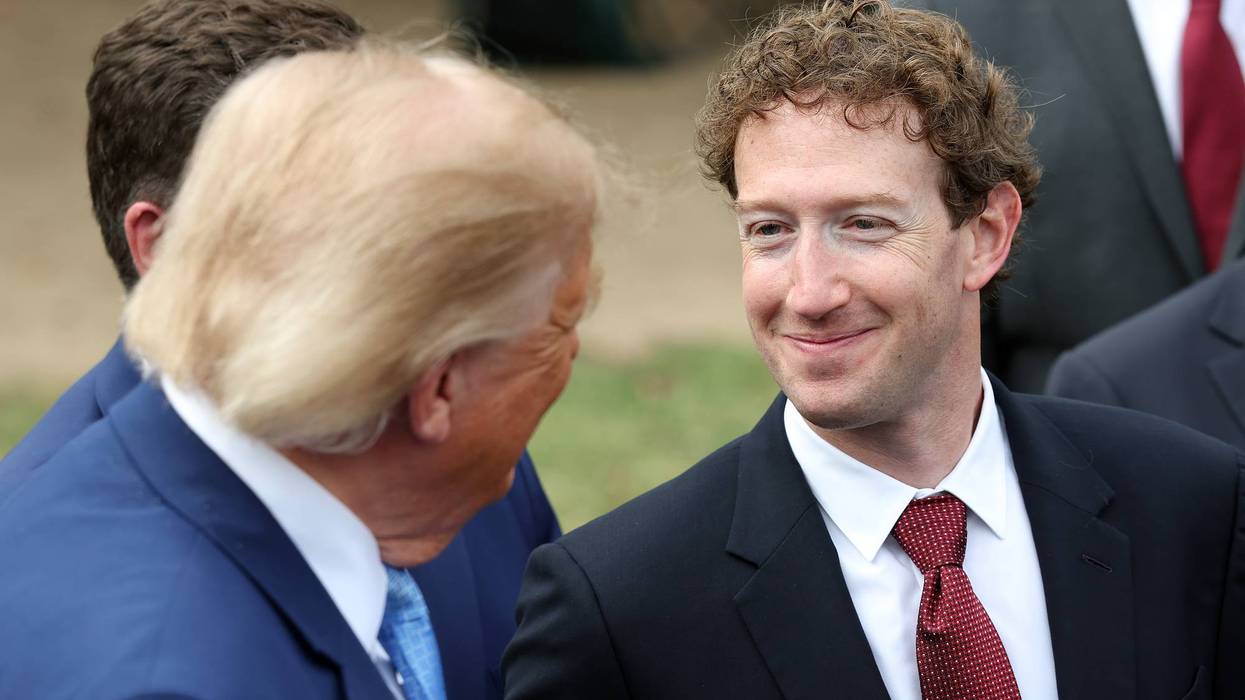
Billionaire Mark Zuckerberg's company was facing a criminal investigation for allegedly enabling and profiting from the sale of illegal drugs on its platforms.
Top officials at the US Department of Justice have reportedly halted a years-long criminal investigation into Facebook parent company Meta for allegedly facilitating—and profiting from—the illegal sale of drugs on its platforms, including to children.
Bloomberg Law reported Thursday that "senior leaders" at the Justice Department "ordered career prosecutors in the Western District of Virginia to cease the criminal investigation following advocacy from Meta‘s legal team." Meta is headed by Mark Zuckerberg, a billionaire who has worked to ingratiate himself with President Donald Trump by helping to bankroll his inauguration and ballroom project.
"This is what Meta's money is buying," Kyle Jacobs-Morse, deputy executive director of the Tech Oversight Project, wrote in response to reports of the halted probe.
The existence of the Meta investigation was first revealed in March 2024 by The Wall Street Journal, which reported at the time that US prosecutors were "sending subpoenas and asking questions as part of a criminal grand jury probe looking into whether the company’s social-media platforms are facilitating and profiting from the illegal sale of drugs."
According to Bloomberg Law, DOJ leaders' decision to sideline the probe came "just after company executives were subpoenaed to testify."
Acting Deputy Attorney General Trent McCotter and Associate Deputy Attorney General Aakash Singh "are considering a civil resolution with a fine or a non-prosecution agreement," Bloomberg Law reported.
"Such a deal would allow the social media giant to avoid charges for its role in creating a market for youth to purchase deadly fentanyl pills and other addictive drugs," the outlet added.
A Justice Department spokesperson declined to comment on the investigation but boasted in a statement to Bloomberg Law that the Trump DOJ has "ended the Biden-era days of aggressively and indiscriminately targeting corporations and businesses."
"Instead, we are focused on following the facts and the law to surgically address corporate wrongdoing," the spokesperson said.
Shelby Knox, tech campaign director with the advocacy group ParentsTogether Action, said in a statement Friday that "when the Justice Department says it wants to ‘surgically address corporate wrongdoing,’ a grand jury investigation into potential drug sales to children should be exactly the kind of case it pursues."
"A criminal investigation does not automatically establish guilt, but prosecutors must be allowed to follow the evidence without political interference," Knox added. "Meta is worth more than a trillion dollars; a fine alone is not meaningful accountability. If the evidence supports charges, file them. If it doesn’t, explain why. Children and families deserve more than apologies or a financial settlement. They deserve the truth, meaningful protections, and accountability under the law."
The Justice Department's reported decision to halt the Meta probe fits a broader pattern of lax corporate enforcement during Trump's second White House term.
The consumer advocacy group Public Citizen released a report earlier this month showing that the administration has cancelled hundreds of enforcement actions involving more than 200 corporations—many of which have donated to Trump's projects.
Rick Claypool, a research director at Public Citizen, wrote on Friday that Meta is "just one of the 200+ corporations benefiting from Trump's enforcement retreat."
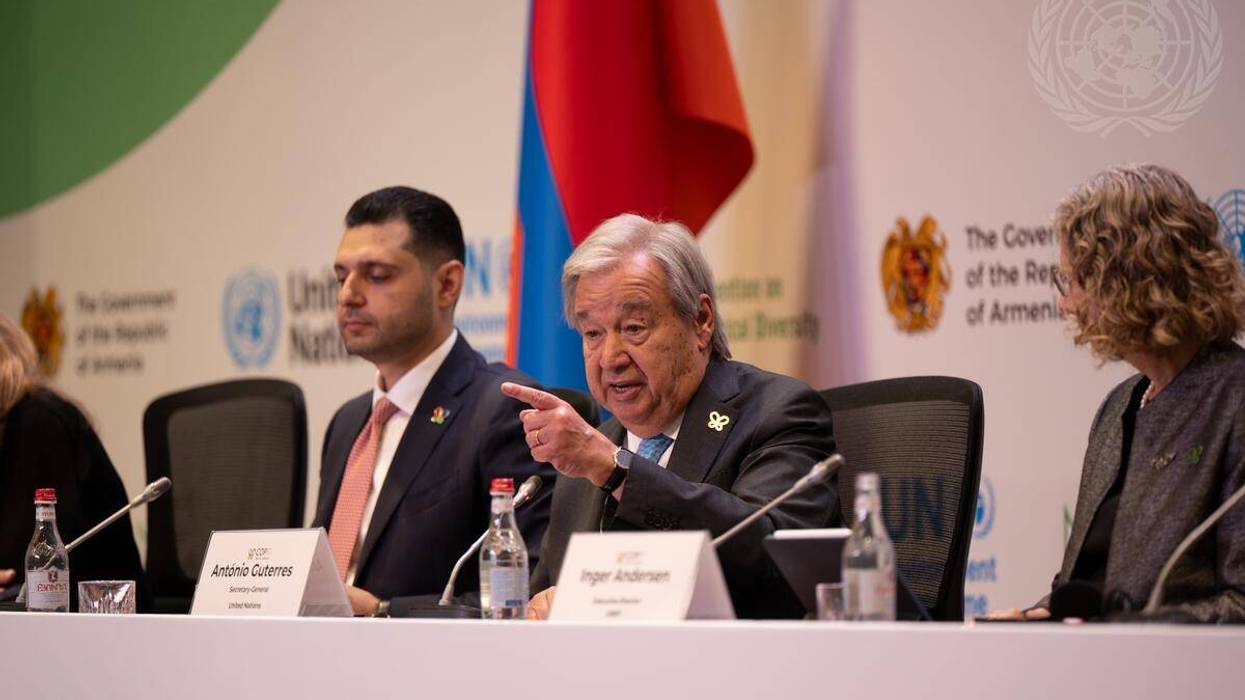
"I urge governments everywhere to end these handouts once and for all, and to use the savings for people and planet instead," said António Guterres.
"The food we eat, the water we drink, the very air we breathe—all are the gifts of biodiversity. Yet every day, humankind saws another branch off the tree of life," outgoing United Nations Secretary-General António Guterres declared Friday, before a key global summit in Armenia.
"Climate chaos. Invasive species. Overgrazing and overfishing. Excessive fertilizers, pesticides, plastics, and heavy metals. All these and more are driving the triple planetary crisis of pollution, biodiversity loss, and climate chaos," he warned. "Over 1 million species now face the risk of extinction, edging us ever closer towards an uninhabitable world."
Guterres advocated for both government and financial leadership, calling out funding for "agribusiness that strips the land" as well as the leading driver of the worsening climate emergency: fossil fuels. According to him, "Subsidizing fossil fuels is subsidizing suicide."
"They are boiling our planet, and are the scourge of biodiversity," said the secretary-general—who has often argued for not only phasing out fossil fuels but also making polluters pay for their damage. "I urge governments everywhere to end these handouts once and for all, and to use the savings for people and planet instead."
Four years ago, at the 15th Conference of the Parties to the Convention on Biological Diversity, world leaders agreed to the Kunming-Montreal Global Biodiversity Framework—which critics called "weak" and "an open invitation to greenwash." With COP17 kicking off in the Armenian capital on Monday, the UN chief said that "Yerevan is our moment of accountability."
The "good news" is that the framework "has inspired action across the globe," with nearly 90% of parties to the convention establishing national biodiversity targets, Guterres said. The "bad news" is that "progress is uneven, and far too slow. Even if current national commitments are met, only 26% of terrestrial, and 12% of marine ecosystems would be protected by 2030."
"That is well short of the promise made in Montreal to protect 30% of land and sea by 2030. Major gaps also remain in targets linked to economic systems, including those focused on reducing harmful incentives," he noted. "And many of the critical elements of progress—including finance, capacity, cooperation and data—are still largely missing in action."
The figures come from the United Nations Environment Program's "State of Biodiversity Action" report, released in preparation for next week's conference. That followed the September publication of the UNEP's "Limiting Overshoot" report, which warns that the world will at least temporarily surpass the Paris Agreement's temperature target for this century: 1.5°C beyond preindustrial levels.
In response to the overshoot report, Stephanie Roe, global climate and energy lead scientist at the international nonprofit WWF, said last month that "overshooting 1.5°C is not a cliff edge, but neither is it harmless. Every fraction of a degree of warming increases risks for people and nature, while every fraction avoided reduces harm."
"What matters now is how far temperatures rise above 1.5°C and how long they stay there," Roe continued. "The science shows that lower and shorter overshoot means fewer impacts on ecosystems, communities, and economies. Limiting peak warming and returning temperatures to safer levels as quickly as possible can help reduce risks, avoid irreversible losses, and improve resilience for the future."
Roe's organization has also released a series of relevant reports in the weeks before the summit, including a Wednesday analysis it commissioned from the Global Cooperation Institute that lays out "major barriers countries face in delivering the Global Biodiversity Framework and what could help unblock it," and urges "decisive action in Yerevan."
WWF International director general Kirsten Schuijt said that that "COP17 must move countries towards action and implementation. The benefits of collective action for nature are clear: stronger ecological resilience, more secure food and water systems, and reduced economic vulnerability. WWF's latest 'Living Planet Report' shows that nature can recover when the right actions are taken."
Released last month, that report found a 73% decline in the average size of monitored wildlife populations over a 52-year period—with an 85% decline in freshwater ecosystems, followed by 69% in terrestrial, and 59% in marine.
"Lasting progress," said Schuijt, "depends on transforming the systems driving nature loss and shifting decision-making from short-term fixes to long-term solutions. For COP17, this requires governments, businesses, Indigenous peoples, local communities, women, youth, and wider society to all participate actively in decision-making that moves agreements into urgent implementation, to shape and deliver nature-positive solutions."
The political declaration released Friday by heads of state in Yerevan for a leaders' summit preceding the conference already has some advocates, like WWF International president Adil Najam, issuing warnings. Najam explained from the Armenian capital that "leaders came together to discuss the promise made in Montreal in 2022 to halt and reverse biodiversity loss by 2030. The declaration acknowledges that progress is insufficient and that implementation must accelerate. It also recognizes that our economies, communities, and peace depend on nature. But recognition alone will not fulfill that promise."
"The declaration lacks explicit commitments to align economic and financial decisions with nature goals, including reforming subsidies that harm nature," he said. "Governments must make these choices if they are serious about delivering on their commitments. At COP17, they must turn the global review into clear implementation pathways backed by finance on the scale needed. The declaration signals a commitment to action across government; the real test is whether it changes decisions back home."

The US Fish and Wildlife Service finalized the polar bear-killing rule despite a near universal negative reception from more than 85,000 public comments.
Oil and gas companies will now be permitted to kill polar bears and Pacific walruses off the northern coast of Alaska so long as such killings are "unintentional," according to a new Trump administration rule.
The US Fish and Wildlife Service (FWS) on Friday finalized a rule change that would shield fossil fuel companies from legal liability if they engage in the "incidental, unintentional" killing of the animals "during year-round oil and gas industry activities in the Beaufort Sea... and adjacent northern coast of Alaska."
Under the rule change, which is scheduled to last through 2031, the FWS "will issue letters of authorization" that sign off on the incidental killing of wildlife upon request by oil and gas companies.
As noted by a report in Bloomberg Law, the proposed rule change "drew more than 85,500 public comments, nearly all in opposition," before the FWS ultimately signed off on it.
The rule change was a major priority for the Alaska Oil and Gas Association, which represents fossil fuel giants and requested the revision in September 2025.
Allowing for the incidental killing of polar bears isn't the only controversial rollback of environmental regulations made by the Trump administration in recent weeks.
In September, The New York Times reported that FWS had gutted a key provision in the Endangered Species Act by arguing that only the intentional killing or wounding of protected species counts as illegal "harm."
Last week, it was revealed that the US Department of the Interior is moving ahead with a plan to let fossil fuel companies conduct specific wintertime operations at the National Petroleum Reserve in Alaska without undergoing reviews mandated by the National Environmental Policy Act.
Even though the Trump administration has prioritized the development of domestic fossil fuel production by gutting environmental standards, these policies have not translated into the promised cheaper oil and gas prices, which have spiked over the last half year thanks to the president's illegal war with Iran.
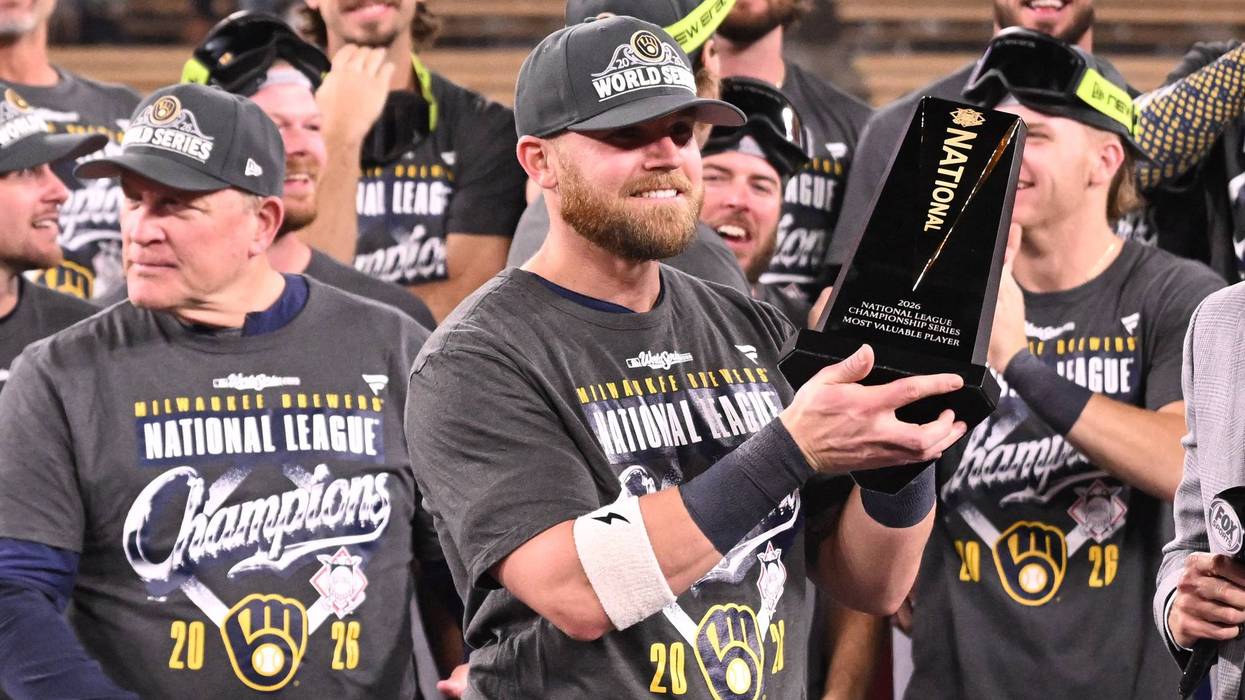
"If even a professional athlete is saying this, maybe healthcare should just be universal and free."
First baseman Jake Bauers of the Milwaukee Brewers helped his team end a 44-year drought Thursday night as they won the National League Championship Series to place them in the World Series, but in the process he kicked off a discussion—whether intentionally or not—about the role of employer-based health insurance that undergirds the for-profit system in the US.
While generating headlines throughout the pennant race due to his outstanding hitting and field play, Bauers journey to the top of Major League Baseball has Cinderella elements. Just two years ago, the Wall Street Journal reported Thursday that Bauers was ready to retire from the sport's highest level.
"He had been playing professional baseball since he was just 17, spending more than a decade bouncing across seven different organizations with little success," the paper reported. "After batting .199 for the Milwaukee Brewers in 2024, he was frustrated, burned out, and ready to move on.”
Life outside baseball intervened, but in a way familiar to millions of American families, not just pro athletes who can earn millions in lucrative contracts and endorsement deals.
“Bauers’ wife, Lauren, learned she was pregnant with the couple’s second child," the WSJ explained. "Suddenly, Jake’s plan to become a stay-at-home dad while Lauren returned to her teaching job no longer seemed viable. They needed health insurance—so Bauers begrudgingly decided to give his floundering athletic career one last chance."
After beating the Los Angeles Dodgers on Wednesday and taking a 3-0 series lead that his team would ultimately clean-sweep the following night, Bauers brought up that decision about his second child and his family's healthcare needs in a post-game interview.
Hahaha! What an awesome country! https://t.co/IYJmu5ZP0y
— Darkwoke Duck (@DylanTweetin) October 15, 2026
While the group of sportscasters conducting the interview laughed at the explanation, others who witnessed it recognized something more profound in what he described.
"If even a professional athlete is saying this, maybe healthcare should just be universal and free," said Luke Savage, a columnist for the left-wing magazine Jacobin.
In a subsequent Substack post published Thursday, Savage expanded on his thoughts about Bauer's situation, writing:
This obviously doesn’t rank anywhere near the top when it comes to horror stories about America’s healthcare system, but I still can’t get over how completely insane it is to hear. This is an elite professional athlete talking! And it’s the guaranteed outcome of a system that links health insurance so tightly to employment. In this case, that meant that a young couple’s desire to start a family was conditional on [squints] the ability of one partner to secure a contract with a professional baseball team (and, to a lesser extent, be good enough at the sport to work his way back up from the minors).
There are only so many ways to repeat the obvious here, but tying health insurance to employment is a Dickensian horror show. It gives employers tremendous power over their workers and forces people to stay in jobs they hate or want to leave. The same is true of private health care in general. It devastates families, burdens them with crippling medical debt, and limits their ability to have children. It stops them from seeking treatment when they’re sick and makes going to the hospital an economic decision. Even among those who can afford insurance, it creates different tiers of care and inevitably means that rich people get it faster and at higher quality — which is just another way of saying the American healthcare system ascribes your life greater or lesser moral weight depending on your bank balance.
Wendell Potter, a former health insurance executive turned whistleblower who now leads the nonprofit Center for Health & Democracy, agreed that Bauers, though his status as a professional athlete makes his situation seem exceptional, is incredibly normal within the nation's broken healthcare system.
"Sometimes it takes a high-profile sports figure or celebrity to help Americans understand how absurd and unfair our healthcare system is," Potter explained to Common Dreams. "If Jake Bauers did everything he could to stay in baseball primarily because he and his wife were terrified of losing health insurance that was tied to his job, imagine how many other Americans stay in jobs they would leave if it weren’t for their employer-sponsored coverage."
While Bauers may have been lucky to stay in the major leagues, said Potter, and even luckier to help his team make it to the World Series, the reality is that he—like millions of American workers—could have potentially been cut at any time, losing his job and his access to the health coverage he received through his employer.
"Millions of Americans are not so lucky. Many get laid off or have their jobs eliminated," Potter continued. "They lose not only their jobs but their family’s health insurance. No other developed country has a system that locks citizens into a job they’d like to leave or are scared to lose. I wish more prominent people in sports and entertainment would speak up as Bauer did about how vulnerable so many of us are to losing both our jobs and our health insurance."
"The reality," said Potter on Friday, "is that almost all Americans who are not covered by traditional Medicare are in danger of losing our health benefits and access to care because of a layoff or cuts to Medicaid that force millions into the ranks of the uninsured."
In 2019, a Business Insider poll showed that most Americans with employer-sponsored health coverage support switching to Medicare for All, undermining the often-repeated right-wing narrative that US workers are wedded to the for-profit insurance plans they receive.
As Common Dreams reported at the time, the survey found that 59% of respondents with employer-provided insurance “said they would support switching their employer-based health insurance to a government plan under Medicare for All” as long as coverage quality was maintained or improved.
In a post on his Health Care Un-Covered blog last month, Potter detailed how nearly 40% of Americans admit they’ve stayed in a job longer than they wanted because they or a family member needed the health coverage that came with it. The term for this dynamic is called "job lock," he notes. And nothing about this "is new to anyone who’s been paying attention," he writes. "What’s changed is how much sharper and more current the evidence has gotten" in recent years.
While Bauer's story about healthcare isn't political or partisan, the scale of the employer-based system in the US is deeply tied to the anxieties individuals and families experience. With Republicans actively undermining and attacking the floundering system that already exists, Savage in his column bemoans leaders from both parties who fail to embrace what has long been recognized by experts and progressives as the only viable solution to the crises: a universal, single-payer model best expressed by the Medicare for All legislation put forth by Sen. Bernie Sanders (I-Vt.) in the US Senate and Rep. Pramila Jayapal and others in the US House.
Exasperated by a political system that has denied US workers and families better healthcare, Savage asks, "What does one even say at this point?"
He said the so-called "debate" over the healthcare system in the US "is nothing of the kind."
"The leadership of both major parties oppose healthcare that’s free, universal, and public because they’re as addicted to dead market dogmas as they are to donations from a powerful industry," he writes. "The dumbest people alive will tell you that healthcare is best delivered by the marketplace and that the ability to purchase it as a commodity like any other is, in fact, the essence of freedom. Nothing could be further from the truth."
In his column from last month, Potter notes that critics of the employer-based system have long existed on the ideological right and left and argues that as long as health coverage remains "tethered to a single employer, job lock isn’t a glitch in the system," but rather "the system working as designed."
"The fact that people across the political spectrum have recognized that for decades," he concludes, "is exactly why it’s worth pressing the case again now."
Go Brewers!