5
#000000
#FFFFFF
To donate by check, phone, or other method, see our More Ways to Give page.
Daily news & progressive opinion—funded by the people, not the corporations—delivered straight to your inbox.
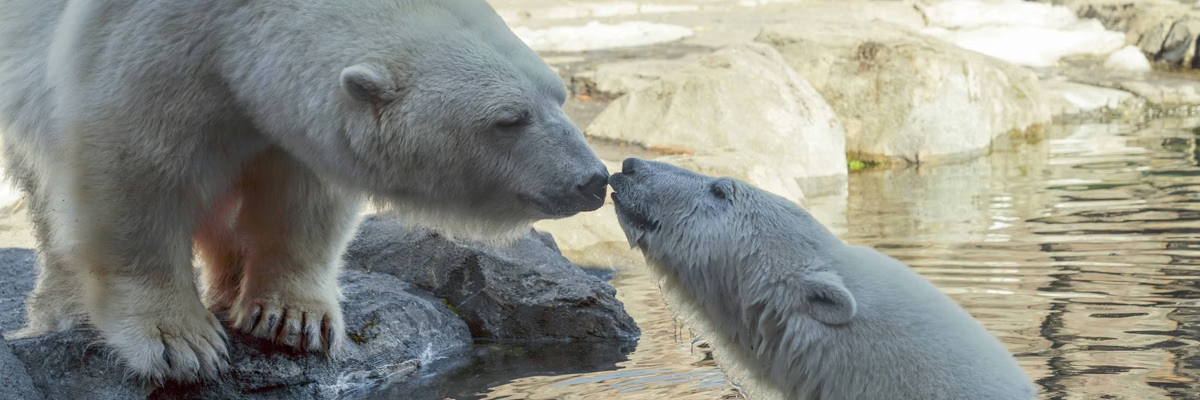
Polar bears play in the water at the Alaska Zoo, one of the places frequented especially by those who want to see polar animals, in Anchorage, Alaska on April 28, 2024.
The US Fish and Wildlife Service finalized the polar bear-killing rule despite a near universal negative reception from more than 85,000 public comments.
Oil and gas companies will now be permitted to kill polar bears and Pacific walruses off the northern coast of Alaska so long as such killings are "unintentional," according to a new Trump administration rule.
The US Fish and Wildlife Service (FWS) on Friday finalized a rule change that would shield fossil fuel companies from legal liability if they engage in the "incidental, unintentional" killing of the animals "during year-round oil and gas industry activities in the Beaufort Sea... and adjacent northern coast of Alaska."
Under the rule change, which is scheduled to last through 2031, the FWS "will issue letters of authorization" that sign off on the incidental killing of wildlife upon request by oil and gas companies.
As noted by a report in Bloomberg Law, the proposed rule change "drew more than 85,500 public comments, nearly all in opposition," before the FWS ultimately signed off on it.
The rule change was a major priority for the Alaska Oil and Gas Association, which represents fossil fuel giants and requested the revision in September 2025.
Allowing for the incidental killing of polar bears isn't the only controversial rollback of environmental regulations made by the Trump administration in recent weeks.
In September, The New York Times reported that FWS had gutted a key provision in the Endangered Species Act by arguing that only the intentional killing or wounding of protected species counts as illegal "harm."
Last week, it was revealed that the US Department of the Interior is moving ahead with a plan to let fossil fuel companies conduct specific wintertime operations at the National Petroleum Reserve in Alaska without undergoing reviews mandated by the National Environmental Policy Act.
Even though the Trump administration has prioritized the development of domestic fossil fuel production by gutting environmental standards, these policies have not translated into the promised cheaper oil and gas prices, which have spiked over the last half year thanks to the president's illegal war with Iran.
Dear Common Dreams reader, It’s been nearly 30 years since I co-founded Common Dreams with my late wife, Lina Newhouser. We had the radical notion that journalism should serve the public good, not corporate profits. It was clear to us from the outset what it would take to build such a project. No paid advertisements. No corporate sponsors. No millionaire publisher telling us what to think or do. Many people said we wouldn't last a year, but we proved those doubters wrong. Together with a tremendous team of journalists and dedicated staff, we built an independent media outlet free from the constraints of profits and corporate control. Our mission has always been simple: To inform. To inspire. To ignite change for the common good. Building Common Dreams was not easy. Our survival was never guaranteed. When you take on the most powerful forces—Wall Street greed, fossil fuel industry destruction, Big Tech lobbyists, and uber-rich oligarchs who have spent billions upon billions rigging the economy and democracy in their favor—the only bulwark you have is supporters who believe in your work. But here’s the urgent message from me today. It's never been this bad out there. And it's never been this hard to keep us going. At the very moment Common Dreams is most needed, the threats we face are intensifying. We need your support now more than ever. We don't accept corporate advertising and never will. We don't have a paywall because we don't think people should be blocked from critical news based on their ability to pay. Everything we do is funded by the donations of readers like you. When everyone does the little they can afford, we are strong. But if that support retreats or dries up, so do we. Will you donate now to make sure Common Dreams not only survives but thrives? —Craig Brown, Co-founder |
Oil and gas companies will now be permitted to kill polar bears and Pacific walruses off the northern coast of Alaska so long as such killings are "unintentional," according to a new Trump administration rule.
The US Fish and Wildlife Service (FWS) on Friday finalized a rule change that would shield fossil fuel companies from legal liability if they engage in the "incidental, unintentional" killing of the animals "during year-round oil and gas industry activities in the Beaufort Sea... and adjacent northern coast of Alaska."
Under the rule change, which is scheduled to last through 2031, the FWS "will issue letters of authorization" that sign off on the incidental killing of wildlife upon request by oil and gas companies.
As noted by a report in Bloomberg Law, the proposed rule change "drew more than 85,500 public comments, nearly all in opposition," before the FWS ultimately signed off on it.
The rule change was a major priority for the Alaska Oil and Gas Association, which represents fossil fuel giants and requested the revision in September 2025.
Allowing for the incidental killing of polar bears isn't the only controversial rollback of environmental regulations made by the Trump administration in recent weeks.
In September, The New York Times reported that FWS had gutted a key provision in the Endangered Species Act by arguing that only the intentional killing or wounding of protected species counts as illegal "harm."
Last week, it was revealed that the US Department of the Interior is moving ahead with a plan to let fossil fuel companies conduct specific wintertime operations at the National Petroleum Reserve in Alaska without undergoing reviews mandated by the National Environmental Policy Act.
Even though the Trump administration has prioritized the development of domestic fossil fuel production by gutting environmental standards, these policies have not translated into the promised cheaper oil and gas prices, which have spiked over the last half year thanks to the president's illegal war with Iran.
Oil and gas companies will now be permitted to kill polar bears and Pacific walruses off the northern coast of Alaska so long as such killings are "unintentional," according to a new Trump administration rule.
The US Fish and Wildlife Service (FWS) on Friday finalized a rule change that would shield fossil fuel companies from legal liability if they engage in the "incidental, unintentional" killing of the animals "during year-round oil and gas industry activities in the Beaufort Sea... and adjacent northern coast of Alaska."
Under the rule change, which is scheduled to last through 2031, the FWS "will issue letters of authorization" that sign off on the incidental killing of wildlife upon request by oil and gas companies.
As noted by a report in Bloomberg Law, the proposed rule change "drew more than 85,500 public comments, nearly all in opposition," before the FWS ultimately signed off on it.
The rule change was a major priority for the Alaska Oil and Gas Association, which represents fossil fuel giants and requested the revision in September 2025.
Allowing for the incidental killing of polar bears isn't the only controversial rollback of environmental regulations made by the Trump administration in recent weeks.
In September, The New York Times reported that FWS had gutted a key provision in the Endangered Species Act by arguing that only the intentional killing or wounding of protected species counts as illegal "harm."
Last week, it was revealed that the US Department of the Interior is moving ahead with a plan to let fossil fuel companies conduct specific wintertime operations at the National Petroleum Reserve in Alaska without undergoing reviews mandated by the National Environmental Policy Act.
Even though the Trump administration has prioritized the development of domestic fossil fuel production by gutting environmental standards, these policies have not translated into the promised cheaper oil and gas prices, which have spiked over the last half year thanks to the president's illegal war with Iran.