
SUBSCRIBE TO OUR FREE NEWSLETTER
Daily news & progressive opinion—funded by the people, not the corporations—delivered straight to your inbox.
5
#000000
#FFFFFF
To donate by check, phone, or other method, see our More Ways to Give page.


Daily news & progressive opinion—funded by the people, not the corporations—delivered straight to your inbox.
I began writing for TomDispatch during Barack Obama’s somewhat disappointing second presidential term, observed with horror Trump’s first time around, slogged through the Biden years, and now find myself reaching for a noun more resonant than “horror” to describe Trump 2.0.
“Tom, I got nothin’.” That’s all I wanted to say to Tom Engelhardt, the kindly and incisive editor of TomDispatch.com. He’d called to check in and see what I was planning for my next piece. I wanted to tell him, “I’m staring at starvation and genocide, the destruction of American democracy and the rule of law, along with the ongoing incineration of our planet. I’m a damp ball of grief, and I’ve got nothing useful to say about any of it.” Furthermore, I wanted to add, “Anything I could say about the present disaster has already been said comprehensively and better by someone else.” That “someone else” includes myriad excellent journalists who have departed (voluntarily or otherwise) from a mainstream media that has repeatedly acquiesced to Trump, succumbing to a malaise of self-censorship at flagship newspapers like the Washington Post and even the New York Times.
People with nothing to say would generally be wise to shut up. Unfortunately, the wisdom to choose to remain silent has never been my most salient characteristic, something even strangers seem to notice about me. Years ago, I was introduced to a woman at a party. Before I’d even opened my mouth, she said, “Oh, good, another short, pushy Jewish dyke from New York!” Must be something in the way I move.
In any case, having nothing for Tom this time around led me to think about all the times I have had something to say and how grateful I am to have had TomDispatch as a place to say it.
So, feeling stuck, I decided to examine my output over all these years. As it happens, there’s a lot of it, 98 pieces in all. I began during Barack Obama’s somewhat disappointing second presidential term, observed with horror Trump’s first time around, slogged through the Biden years, and now find myself reaching for a noun more resonant than “horror” to describe my reaction to the first year (and counting) of Trump 2.0.
It was far too much to read through in one sitting, but not surprisingly, a few general themes did emerge. Most of them had to do with the importance of working to discern—and tell—the truth about the world we live in.
My first TomDispatch piece appeared in 2014. It marked the beginning of an oddly personal chronicle of a time that the poet W.H. Auden might once have called “a low dishonest decade.”
That’s the phrase Auden used to describe the period leading up to September 1, 1939, the day Adolf Hitler’s German army invaded Poland, marking the official beginning of World War II. I think we can fairly say that the Trump years, and even those preceding his first election, constitute a low, dishonest decade.
Of course, Trump himself is an avatar—a human embodiment—of the principle of dishonesty. Indeed, the Washington Post recorded more than 30,000 “false or misleading claims” he made during his first four years as president. This time around, most media outlets have given up counting, although several marked his first 100 days with reports on his 10 (or more) most egregious lies. The purpose of “flooding the zone with shit,” as right-wing podcaster and former Trump adviser Steve Bannon once put it, is not really to convince anyone that any particular lie is true but, as I wrote during Trump’s first term, to convince everyone that it’s impossible to know whether anything is true. As I argued then:
We are used to thinking of propaganda (a word whose Latin roots mean “towards action”) as intended to move people to think or act in a particular way. And indeed that kind of propaganda has long existed, as with, for example, wartime books, posters, and movies designed to inflame patriotism and hatred of the enemy. But there was a different quality to totalitarian propaganda. Its purpose was not just to create certainty (the enemy is evil incarnate), but a curious kind of doubt. ‘In fact,’ as Russian émigrée and New Yorker writer Masha Gessen has put it, "the purpose of totalitarian propaganda is to take away your ability to perceive reality.”
Back in 2019, I was writing about “totalitarian propaganda” in the past tense, speaking of 20th-century authoritarian regimes. But I was already worried about what Trump’s wild epistemological anarchy portended. “Eroding the very ability to distinguish between reality and fantasy has been,” I wrote, “however instinctively, the mode of the Trumpian moment as well, both the presidential one and that of so many right-wing conspiracy theorists now populating the online world.” For many Americans, it was no longer worth the effort to discern the truth. “When everybody lies, anything can indeed be true. And when everybody—or even a significant chunk of everybody—believes this, the effect can be profoundly anti-democratic.”
In fact, I suggested, “this popular belief that nobody really does or can know anything is the perfect soil for an authoritarian leader to take root.” Trump 2.0 has confirmed that intuition.
“September 1, 1939” was the title of W. H. Auden’s most famous poem, the one that began with a reflection on the previous “low, dishonest decade.” It also contained these lines about what he then imagined was to come:
I and the public know
What all schoolchildren learn,
Those to whom evil is done
Do evil in return.
That first article of mine was about the evil done by the administration of George W. Bush and Dick Cheney in response to the terrorist attacks of 9/11. This was not a surprising topic for me, since I had recently published a book on the subject, specifically about institutionalized state torture as practiced by the United States during what came to be known as the “War on Terror.” It was pretty much all I was thinking about in those days.
In that piece, I pointed out that we had never gotten a full accounting of the torture committed in our names in Afghanistan, Iraq, and globally at CIA “black sites” (their secret torture arenas). I blamed that reality in significant part on President Barack Obama’s “belief that we need to look forward as opposed to looking backwards” and pointed out that not “one of the senior government officials responsible for activities that amounted to war crimes has been held accountable, nor were any of the actual torturers ever brought to court.” When, through a 2009 executive order, Obama finally closed those black sites, he argued that, “at the CIA, you’ve got extraordinarily talented people who are working very hard to keep Americans safe. I don’t want them to suddenly feel like they’ve got to spend all their time looking over their shoulders.”
Of course, that “need to look forward” (not over one’s shoulder) effectively tossed the history of torture under George W. Bush and Dick Cheney into an Orwellian memory hole. And to this day, there has never been a full accounting of the Bush torture program. As a result, I pointed out then, “the structure for a torture system remains in place and unpunished,” which meant that the next time an administration chose to invoke and weaponize a public fear of dark, foreign others, we could well see torture’s resurgence.
Of course, that is indeed what happened under Donald Trump. Beginning with his first campaign speech in 2015, in which he inveighed against Mexican migrants as rapists bringing drugs and crime into this country, he has continually escalated his attacks on the foreign-born, particularly those from places he infamously called “shithole countries.” By his third campaign for the presidency in 2024, he (along with his running mate JD Vance) was routinely telling his followers that Haitian immigrants in Springfield, Ohio, were dining on other residents’ cats and dogs. In his second term, eschewing earlier euphemistic dog whistles, President Trump has been making it very clear that what distinguishes the migrants he characterizes as “garbage” (Somalis) from good migrants (“nice Scandinavians”) is their color.
As a result, this year I found myself reflecting again on the scourge of Trump’s vicious authoritarianism, writing that:
“t’s tempting to think of Donald Trump’s second term as a sui generis reign of lawlessness. But sadly, the federal government’s willingness to violate federal and international law with impunity didn’t begin with Trump. If anything, the present incumbent is harvesting a crop of autocratic powers from seeds planted by President George W. Bush and Vice-President Dick Cheney in those war on terror years following the attacks of September 11, 2001. In their wake, the hastily passed Patriot Act granted the federal government vast new detention and surveillance powers. The Homeland Security Act of 2002 established a new cabinet-level department, one whose existence we now take for granted.
Honestly, though, I don’t think any of us could then have imagined a Department of Homeland Security (DHS) run by Kristi Noem. She’s the Trump appointee who posed in her DHS baseball cap and $50,000 Rolex watch in front of hundreds of half-naked prisoners like the ones she’d illegally dispatched to CECOT, the notorious Salvadoran “Terrorist Confinement Center.” In ordering the deportation of immigrants to a penal institution well-known for torturing its inmates, Noem was reprising the Bush-era crime of “extraordinary rendition,” a practice that is, of course, illegal under US and international law.
Because of excellent reporting by outlets like the Guardian, we know that those men, now thankfully freed and repatriated to Venezuela, “suffered systematic and prolonged torture and abuse, including sexual assault.” We also know that the Trump administration tried to tip the whole episode into its capacious memory hole by successfully preventing CBS’"60 Minutes" from airing a segment on the abuse of US deportees at CECOT. (That segment ran briefly in Canada; however, and a full transcript of it is now available, courtesy of The Nation magazine.)
Another theme I’ve returned to over the years is the US penchant for murder-at-a-distance. Indeed, our country pioneered what now appears to be a significant part of the future of warfare: remotely directed attacks on individual human beings. In 2016, I wrote about the increasing use of military drones and the implications for military ethics:
The technical advances embodied in drone technology distract us from a more fundamental change in military strategy. However it is achieved—whether through conventional air strikes, cruise missiles fired from ships, or by drone—the United States has now embraced extrajudicial executions on foreign soil. Successive administrations have implemented this momentous change with little public discussion. And most of the discussion we’ve had has focused more on the new instrument (drone technology) than on its purpose (assassination). It’s a case of the means justifying the end. The drones work so well that it must be all right to kill people with them.
I was still writing about the subject six years later. In 2022, TomDispatch published my piece about the push to develop LAWS (Lethal Autonomous Weapons Systems). This US goal had first emerged in the previous century during the US war in Vietnam with the (expensive and largely unsuccessful) automated battlefield. Half a century later, such automation, including the use of so-called artificial intelligence to make kill decisions, is now available in cheap, easily replaceable drones. Not surprisingly, perhaps, the United States has over the years resisted any attempt to outlaw autonomous weapons. “The European Union, the UN, at least 50 signatory nations, and (according to polls), most of the world population believe that autonomous weapons systems should be outlawed,” I wrote in 2022. “The US, Israel, the United Kingdom, and Russia disagree, along with a few other outliers.” I hardly expect the second Trump administration to take a different position.
In fact, despite what Secretary of Defense Pete Hegseth might think, contemporary American soldiers probably don’t need to do pull-ups. They only need to sit down—in front of a screen—to cause mayhem globally.
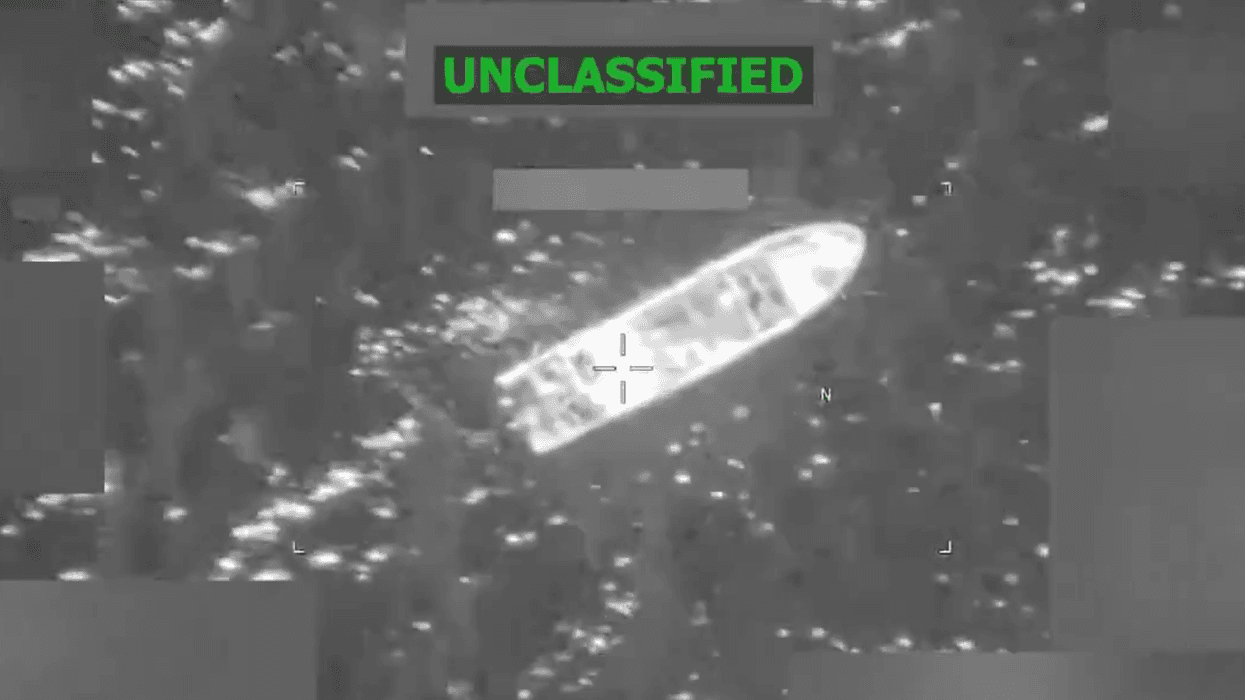
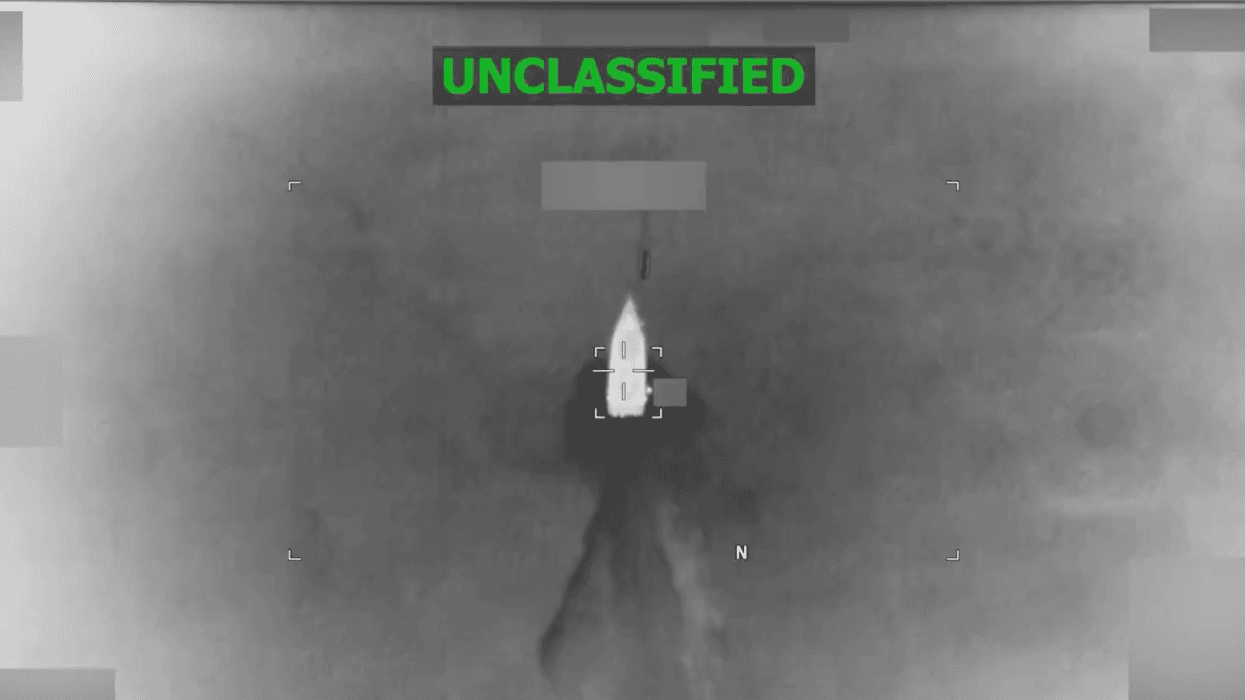
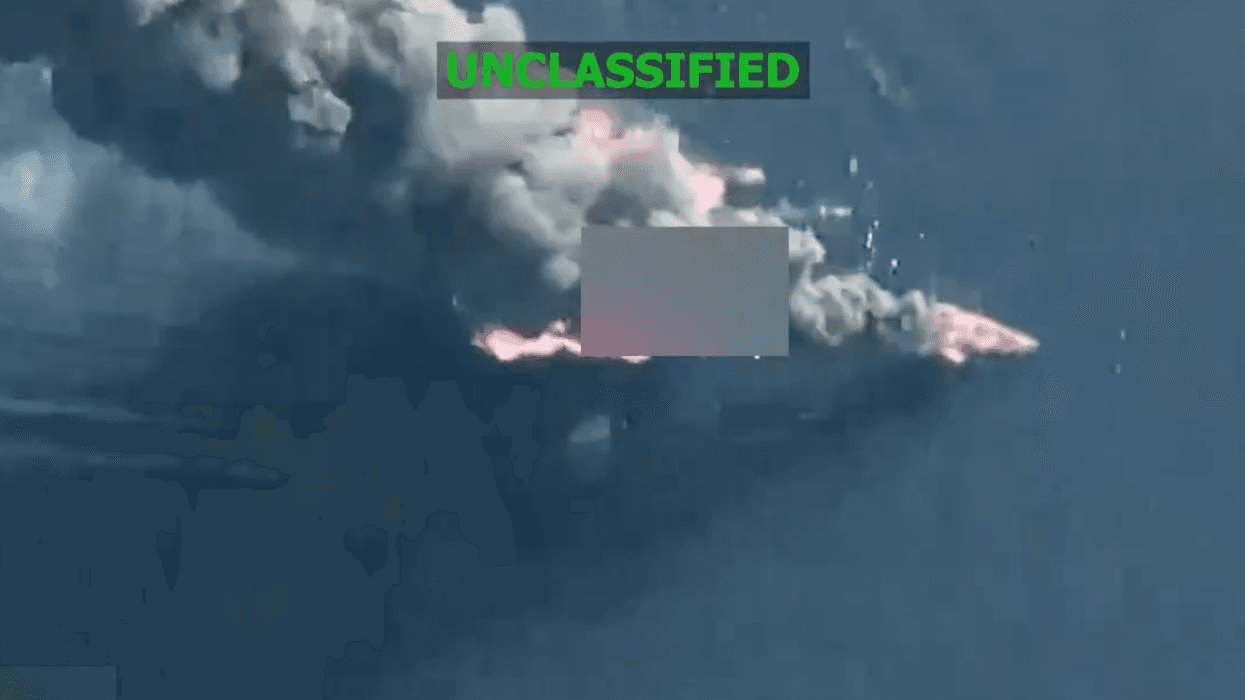
Today, we take our ability to kill at a great distance for granted, as the Trump administration’s actions have demonstrated. We accept with disturbingly little question the now routine murders by drone of more than 100 people in small boats off the Venezuelan coast and in the eastern Pacific Ocean. Only when it emerged that one of those unpiloted aerial attacks on defenseless human beings included a “double-tap”—a second strike to kill two survivors floating in the water by their devastated boat—was there widespread objection, including from members of Congress.
Before the 2016 election, I wrote a piece about how the rest of us needed to learn to claim our victories. “In these dismal days,” I said, “of climate change, imperial decline, endless war, and in my city, a hapless football team, I seem to be experiencing a strange and unaccustomed emotion: hope.” How could that be, I asked. “Maybe it’s because, like my poor San Francisco 49ers, who have been ‘rebuilding’ for the last two decades, I’m fortunate enough to be able to play the long game.”
At that moment, however, I did find one thing especially encouraging: “We seem to have finally reached Peak Trump, and the reason why is important.” Or so I thought.
Calling Mexicans rapists and drug dealers didn’t do it. Promising to bring back waterboarding and commit assorted other war crimes didn’t do it. Flirting with the white supremacist crowd and their little friend Pepe the Frog didn’t do it. But an 11-year-old audio tape of Trump bragging about grabbing women "by the pussy" seems to have been the drop of water that finally cracked the dam and sent even stalwart Republican leaders fleeing a flood of public revulsion.
Well, even Cassandra can get things wrong once in a while and I was certainly wrong about that one. Today, Trump no longer simply “flirts” with white supremacism. He’s all in. And I’d be surprised now if even a demonstrated association with Jeffrey Epstein’s many predatory crimes will be enough to bring him down. In any case, there’s a solid backbench of genuine fascists—Homeland Security Advisor Stephen Miller, Director of the Office of Management and Budget Russell Vought, and of course Vice President JD Vance—to take over, should Trump take one nap too many and fall off his gilt-edged chair.
A few months after the 2016 election had disproved my Peak Trump theory, I wrote about waking up terrified, imagining what might be coming. “I’m an old dyke,” I said, “a little ragged around the edges, and prone to the occasional night terror.” I added, though, that while I might quake occasionally at two in the morning, “I’m too old and too stubborn to cede my country to the forces of hatred and a nihilistic desire to blow the whole thing up just to see where the pieces come down.”
I wasn’t done then and nine years later and all that much older, I don’t consider myself done yet. As I put it at the time, “I’ve fought, and organized, and loved too long to give up now. And Trump and the people who run him can’t shove me—or any of us—back in that bottle.”
I believed that then and I still do today. I’ve watched ordinary people insist on fighting back, organizing, and loving each other and this country for too long to give up now. They can’t shove all of us back in any genie’s bottle.
Auden concluded his poem with the following lines. Almost a century later, they still remain an apt response to our contemporary confrontation with fascism and our latest night terrors:
Defenceless under the night
Our world in stupor lies;
Yet, dotted everywhere,
Ironic points of light
Flash out wherever the Just
Exchange their messages:
May I, composed like them
Of Eros and of dust,
Beleaguered by the same
Negation and despair,
Show an affirming flame.
Maybe I still have something to say after all.
Making a a war “legal” doesn’t make it just or moral. Legal wars still kill and maim innocent people, still destroy communities, still create intense hatred that guarantees future wars.
Oh good. Now we have a war to focus on. Everyone’s tired of Epstein by now, and tired of the possibility that the bad guy may be, ho hum, our own national leader, aka, the commander in chief.
So the commander in chief has stepped in for the sake of the public good, bestowing on America a far more traditional enemy to hate and fear and let dominate the headlines: narco-terrorists.
I’m still trying to grasp the fact that President Donald Trump has actually invaded Venezuela. He’s no longer simply bombing boats in the ocean. The US military bombed Caracas on January 3 and broke into the home of the country’s president, Nicolás Maduro, and his wife Cilia Flores. They were kidnapped and extradited to the United States, where they are now on trial for drug trafficking—as though that was the moral purpose of the invasion.
Obviously it wasn’t. As The Intercept notes:
This is a clear-cut act of military aggression, a brazen violation of international law, and a textbook example of unreconstructed 19th-century colonialism.
Donald Trump now says that the US will "run" Venezuela and "take" the country’s vast oil reserves.
I’m in sync with the enormous outrage over this invasion, both here in the US and around the world. Where I back away slightly, however, is when a critic points out that Trump’s military action was “illegal,” because he invaded Venezuela without congressional approval. When I read this kind of criticism, I feel an inner alarm go off. Making a a war “legal” doesn’t make it just or moral. Legal wars still kill and maim innocent people, still destroy communities, still create intense hatred that guarantees future wars. In other words, war itself is always the core of the wrong.
In no way am I saying I oppose self-defense, or even retaliation. I’m saying, instead, that I believe we need to rethink what self-defense actually means.
What, oh what, is power? We live in a world that is armed against itself with preposterous enormity—nuclear armed against itself, for God’s sake. Violent response is embedded in the way we think, regarded as the nature of protection. Where’s my gun? And it’s likely to be the first response to a perceived threat, especially at the national level. And anyone who dares to question this is easily belittled as crying: “Gosh, can’t we all just get along?”
I took aim, so to speak, at this cynicism in a poem I wrote some years ago, called “Can’t We All Just... Oh Forget It,” which begins:
The cynics
play with their sticks
and knives, mocking
the merciful, the naïve,
the cheek turners.
Can’t we all just . . .
oh, forget it.
But maybe the answer
is yes,
if we undo the language,
the easy smirkwords
that belittle
our evolving...
Belittle our evolving! Disagreement—conflict—is often incredibly complex. Simply “eliminating” it, shooting it out of existence, may be a tempting course of action, but it solves nothing. Instead, we have to understand it. And every time we understand the reasons for a conflict—and figure out how to rectify and transcend those reasons—we evolve.
Consider these words about the Venezuela invasion by Jordan Liz:
Ultimately, whether it’s removing Maduro or invading Cuba, Mexico, or Colombia, none of these actions will solve the drug crisis because they fail to tackle the root cause: public suffering. While there are many reasons people turn to drugs, the lack of adequate healthcare, poverty, homelessness, social stigmas about drug use, and criminalization are the leading factors. People turn to drugs when their governments and communities turn their back on them. Drug cartels, like any other capitalist enterprise, exploit these people’s hopes and desires for their own gain.
...If Trump really cared about the drug crisis, he would be working tirelessly to solve the affordability crisis—not denying its existence or spending billions on battleships.
War is not the answer, even if it’s legal.
Nearly seven in 10 feel the Trump administration has not provided evidence to justify its killing of at least 114 people in the Caribbean and other international waters.
The vast majority of US voters want the Trump administration to be more transparent about its campaign of extrajudicial killings in the Caribbean and other international waters, according to a new poll out Monday.
While it has faded from the headlines over the past week due to President Donald Trump's illegal overthrow of Venezuelan President Nicolas Maduro and atdtempt to commandeer the nation's oil, his bombings of alleged drug-smuggling vessels in the Caribbean and elsewhere have continued into the new year.
As of January 2, the US military had disclosed 35 separate attacks to the public, with a death toll of at least 114 people in total since September. But the administration has provided scant evidence to justify the attacks.
According to an ACLU/YouGov poll released on Monday, which was conducted in late December, 83% of voters believed the administration must release its legal justifications and full, unedited videos of the lethal strikes. This includes 97% of Democrats, but also 82% of independents and 70% of Republicans.
Several media outlets reported in November that the Department of Justice’s Office of Legal Counsel (OLC) authored a still-classified legal opinion justifying the strikes and exempting those involved in directing them from future prosecution. The ACLU and other rights groups filed a Freedom of Information Act (FOIA) request last month for the document.
The poll shows that a majority of voters—87% of Democrats, 53% of independents, and 15% of Republicans—disapproved of the strikes, while nearly seven in 10 felt that the administration has not yet shown evidence to the public justifying the bombings.
Members of both parties in Congress have called for the administration to release video of the strikes, with particular scrutiny on the September 2 "double-tap" strike in which the military bombed two shipwrecked survivors of an earlier attack.
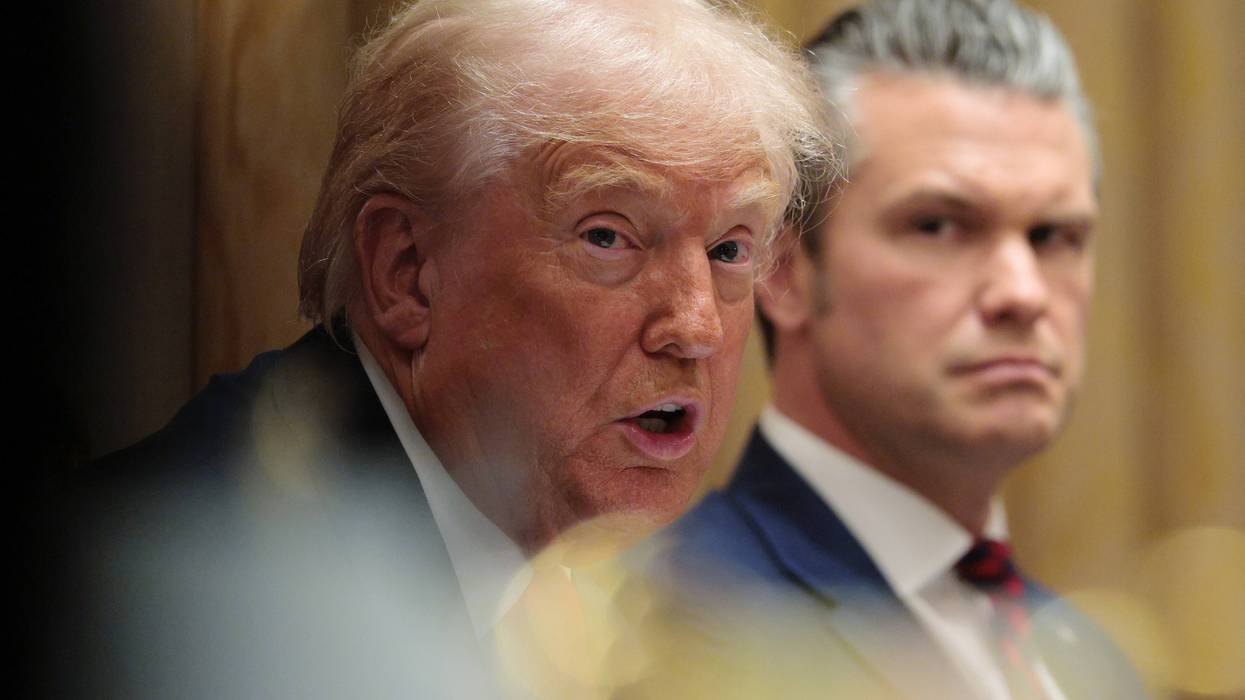
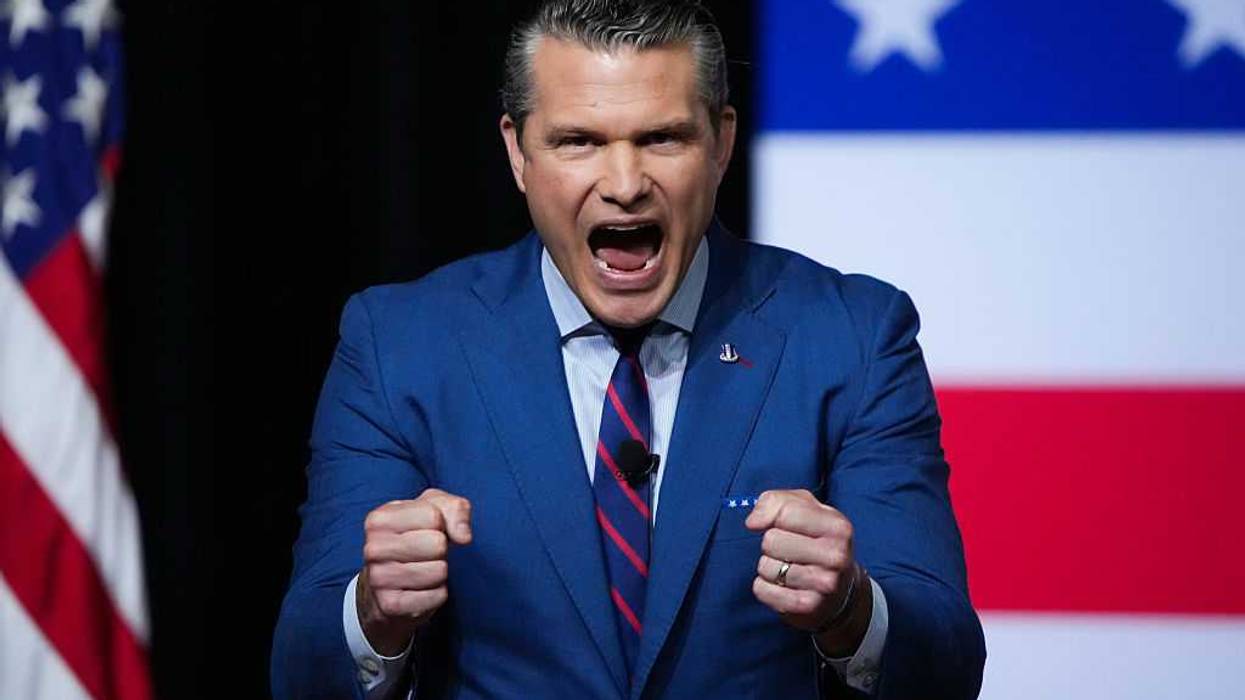
Last month, Hegseth declined a request from Congress to release unedited video footage of the incident to the public. He had previously changed his recounting of the event multiple times, initially boasting of the attack before shunting the blame onto an underling—Adm. Frank M. “Mitch” Bradley—when the second strike was made public and met with outcry.
Trump, meanwhile, has misled the public about what drugs were supposedly on the boats. He has publicly stated that the ships were carrying fentanyl, a drug that has caused hundreds of thousands of overdose deaths in the US, dubbing it a "weapon of mass destruction."
Lawmakers have said they were briefed that the ships were actually carrying cocaine, which is much less deadly, though evidence of this has also not been shown to the public.
One bombed-out ship that washed up on the shores of Colombia in late December with two mangled corpses aboard was found to have only been carrying marijuana, which is legal in more than half of all US states. Other investigations have found that some of those killed in the strikes were fishermen or others not connected to the drug trade.
While the September 2 strikes—which were reportedly given the go-ahead by Defense Secretary Pete Hegseth—have become the subject of a congressional inquiry, the ACLU says the entire bombing campaign is illegal.
"The US military may not, under any circumstances, execute civilians who are merely suspected of smuggling drugs," the group said last month. "Rather, the US government must first pursue non-lethal measures like arrest and demonstrate that lethal force is an absolute last resort to protect against a concrete, specific, and imminent threat of death or serious physical injury."
Two-thirds of respondents to the poll said that rather than carry out extrajudicial executions, they would prefer that the Coast Guard conduct its usual operations, seizing those it suspects of transporting drugs and putting them on trial.
Meanwhile, 58% said they'd support Congress holding a public hearing with officials in charge of the strikes, such as Hegseth, while just 19% said they'd oppose it.
Just over half described killing people suspected of carrying drugs as "murder," with that belief growing even stronger with respect to the double-tap strike.
"Our polling makes clear that an overwhelming number of Americans on both sides of the aisle want Congress to step up and hold the Trump administration publicly accountable for its illegal strikes on civilian boats in the Caribbean,” said Christopher Anders, director of ACLU’s democracy and technology division.
“This means open hearings with the officials responsible for these murders, as well as releasing both the legal justification and unedited videos of the strikes," he continued. "Given the life-or-death stakes of the president’s use of force, it’s imperative that this transparency and accountability comes immediately.”