SUBSCRIBE TO OUR FREE NEWSLETTER
Daily news & progressive opinion—funded by the people, not the corporations—delivered straight to your inbox.
5
#000000
#FFFFFF
To donate by check, phone, or other method, see our More Ways to Give page.
Daily news & progressive opinion—funded by the people, not the corporations—delivered straight to your inbox.
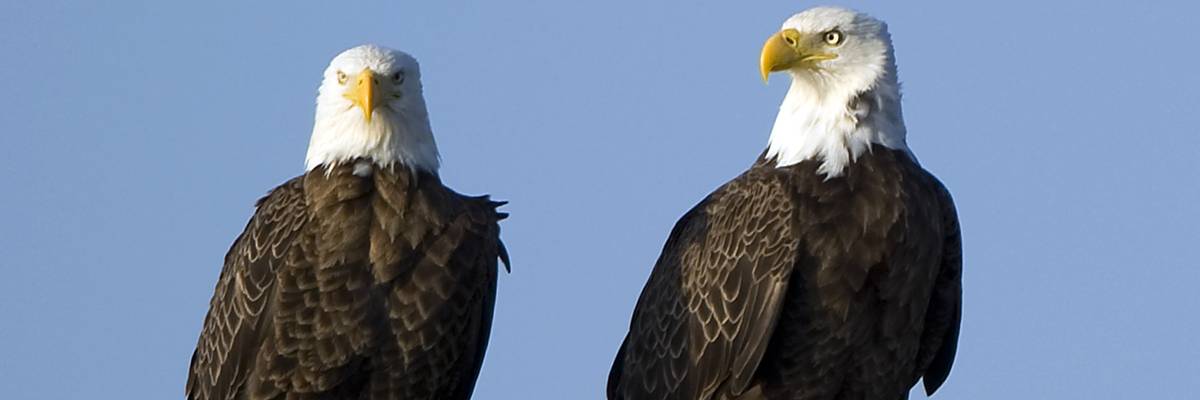
Two American bald eagles are perched on a nesting stand at the Blackwater National Wildlife Refuge on March 13, 2012 in Cambridge, Maryland.
The new interpretation of the 1973 law "is not conservation," warned one critic. "It is a license to destroy habitat, disrupt migration, pollute ecosystems, and drive endangered species toward extinction."
Wildlife defenders continued to call out President Donald Trump on Thursday after The New York Times exposed his administration's latest attack on endangered species and the landmark law intended to protect them.
The Times reported late Wednesday that as the administration's rule rescinding the regulatory definition of "harm" under the Endangered Species Act took effect earlier this week, the US Fish and Wildlife Service (FWS) internally circulated a memo interpreting the ESA to mean that only the intentional killing or wounding of a protected species is illegal.
"This memorandum—and other recent Endangered Species Act regulatory rollbacks such as the rescission of the long-standing interpretation of 'harm'—make clear that the Trump administration has declared an all-out war on America's wildlife," said Andrew Bowman, president and CEO at Defenders of Wildlife.
"The administration's absurdly narrow statutory reinterpretation hamstrings the ESA's effectiveness and makes a mockery of our nation's half-century commitment to saving and recovering America’s imperiled wildlife," Bowman charged. "This reinterpretation flies in the face of the ESA's plain language and common sense, as well as Congress' intent more than 50 years ago in enacting the ESA to achieve the goal of protecting and fully recovering listed species."
Oceana vice president Beth Lowell highlighted that "the proposed changes to the Endangered Species Act will remove the core safeguards that have prevented the extinction of 99% of species protected under the act."
"Federally permitted activities that incidentally injure and kill endangered species currently need to take into account their unintended impacts on wildlife, including nesting beaches for sea turtles or North Atlantic mother and calf pairs as they swim to their feeding grounds," Lowell noted. "These changes upend the Endangered Species Act's balance of economic activity and needed protections, pushing species to the brink of extinction."
The US Department of the Interior, which oversees FWS, told The Hill that the memo "accurately reflects the US Fish and Wildlife Service's guidance for implementing the Endangered Species Act following the final rule rescinding the regulatory definition of 'harm.'"
"Under the guidance, the ESA's prohibition on 'take' continues to prohibit conduct including harassing, pursuing, hunting, shooting, wounding, killing, trapping, capturing or collecting protected wildlife," the department said.
Susan Holmes, executive director of the Endangered Species Coalition—which includes 475 member organizations and over half a million activists—argued that the new interpretation of the law "is not conservation. It is a license to destroy habitat, disrupt migration, pollute ecosystems, and drive endangered species toward extinction."
"The administration has already eliminated habitat protection for endangered species with its extreme ESA 'harm' rule. It is using the so-called 'God Squad' to exempt oil and gas drilling in the Gulf from the ESA, and is threatening to eliminate protections for wolves," she pointed out. "This coordinated effort aims to strip the ESA of its power."
"If the Trump administration has its way, piping plovers will lose the beaches where they nest," Holmes warned. "Salmon will be pushed closer to extinction by dams, pollution, water diversions, and destroyed habitat. Grizzly bears will lose the connected landscapes they need to survive as roads, energy development, logging, and other activities fragment their habitat. Rice's whale—the only whale to live only in American waters—will be lost forever."
The coalition leader added that "the Endangered Species Act is our most popular and effective wildlife law, with support from 84% of Americans. We must not accept the destruction of a law that has protected our natural heritage for generations. The ESA must be defended, strengthened, and fully enforced—not gutted by political appointees acting on behalf of powerful industries."
Humane World for Animals president and CEO Kitty Block and Sara Amundson, head of Humane World Action Fund, also cataloged the administration's various attacks on protected species—and drew attention to a clear pattern regarding "who stands to benefit from these continued assaults on one of America's most popular laws for animals."
"It's certainly not the average American," they wrote in a Thursday blog post. "Instead, the beneficiaries are the massive industries that profit from destroying vital habitat and the animals who depend on it for survival. Oil and gas companies and other developers that have to (horror of horrors!) apply for a permit when their activities [pose] a risk of killing animals with federal endangered species protections—such as North Atlantic right whales, gray wolves, and black-footed ferrets, to name just a few—could be handed a pass."
"If this reinterpretation takes effect, more endangered animals will surely die," the pair declared. "And we will all be worse off for it."
Dear Common Dreams reader, It’s been nearly 30 years since I co-founded Common Dreams with my late wife, Lina Newhouser. We had the radical notion that journalism should serve the public good, not corporate profits. It was clear to us from the outset what it would take to build such a project. No paid advertisements. No corporate sponsors. No millionaire publisher telling us what to think or do. Many people said we wouldn't last a year, but we proved those doubters wrong. Together with a tremendous team of journalists and dedicated staff, we built an independent media outlet free from the constraints of profits and corporate control. Our mission has always been simple: To inform. To inspire. To ignite change for the common good. Building Common Dreams was not easy. Our survival was never guaranteed. When you take on the most powerful forces—Wall Street greed, fossil fuel industry destruction, Big Tech lobbyists, and uber-rich oligarchs who have spent billions upon billions rigging the economy and democracy in their favor—the only bulwark you have is supporters who believe in your work. But here’s the urgent message from me today. It's never been this bad out there. And it's never been this hard to keep us going. At the very moment Common Dreams is most needed, the threats we face are intensifying. We need your support now more than ever. We don't accept corporate advertising and never will. We don't have a paywall because we don't think people should be blocked from critical news based on their ability to pay. Everything we do is funded by the donations of readers like you. When everyone does the little they can afford, we are strong. But if that support retreats or dries up, so do we. Will you donate now to make sure Common Dreams not only survives but thrives? —Craig Brown, Co-founder |
Wildlife defenders continued to call out President Donald Trump on Thursday after The New York Times exposed his administration's latest attack on endangered species and the landmark law intended to protect them.
The Times reported late Wednesday that as the administration's rule rescinding the regulatory definition of "harm" under the Endangered Species Act took effect earlier this week, the US Fish and Wildlife Service (FWS) internally circulated a memo interpreting the ESA to mean that only the intentional killing or wounding of a protected species is illegal.
"This memorandum—and other recent Endangered Species Act regulatory rollbacks such as the rescission of the long-standing interpretation of 'harm'—make clear that the Trump administration has declared an all-out war on America's wildlife," said Andrew Bowman, president and CEO at Defenders of Wildlife.
"The administration's absurdly narrow statutory reinterpretation hamstrings the ESA's effectiveness and makes a mockery of our nation's half-century commitment to saving and recovering America’s imperiled wildlife," Bowman charged. "This reinterpretation flies in the face of the ESA's plain language and common sense, as well as Congress' intent more than 50 years ago in enacting the ESA to achieve the goal of protecting and fully recovering listed species."
Oceana vice president Beth Lowell highlighted that "the proposed changes to the Endangered Species Act will remove the core safeguards that have prevented the extinction of 99% of species protected under the act."
"Federally permitted activities that incidentally injure and kill endangered species currently need to take into account their unintended impacts on wildlife, including nesting beaches for sea turtles or North Atlantic mother and calf pairs as they swim to their feeding grounds," Lowell noted. "These changes upend the Endangered Species Act's balance of economic activity and needed protections, pushing species to the brink of extinction."
The US Department of the Interior, which oversees FWS, told The Hill that the memo "accurately reflects the US Fish and Wildlife Service's guidance for implementing the Endangered Species Act following the final rule rescinding the regulatory definition of 'harm.'"
"Under the guidance, the ESA's prohibition on 'take' continues to prohibit conduct including harassing, pursuing, hunting, shooting, wounding, killing, trapping, capturing or collecting protected wildlife," the department said.
Susan Holmes, executive director of the Endangered Species Coalition—which includes 475 member organizations and over half a million activists—argued that the new interpretation of the law "is not conservation. It is a license to destroy habitat, disrupt migration, pollute ecosystems, and drive endangered species toward extinction."
"The administration has already eliminated habitat protection for endangered species with its extreme ESA 'harm' rule. It is using the so-called 'God Squad' to exempt oil and gas drilling in the Gulf from the ESA, and is threatening to eliminate protections for wolves," she pointed out. "This coordinated effort aims to strip the ESA of its power."
"If the Trump administration has its way, piping plovers will lose the beaches where they nest," Holmes warned. "Salmon will be pushed closer to extinction by dams, pollution, water diversions, and destroyed habitat. Grizzly bears will lose the connected landscapes they need to survive as roads, energy development, logging, and other activities fragment their habitat. Rice's whale—the only whale to live only in American waters—will be lost forever."
The coalition leader added that "the Endangered Species Act is our most popular and effective wildlife law, with support from 84% of Americans. We must not accept the destruction of a law that has protected our natural heritage for generations. The ESA must be defended, strengthened, and fully enforced—not gutted by political appointees acting on behalf of powerful industries."
Humane World for Animals president and CEO Kitty Block and Sara Amundson, head of Humane World Action Fund, also cataloged the administration's various attacks on protected species—and drew attention to a clear pattern regarding "who stands to benefit from these continued assaults on one of America's most popular laws for animals."
"It's certainly not the average American," they wrote in a Thursday blog post. "Instead, the beneficiaries are the massive industries that profit from destroying vital habitat and the animals who depend on it for survival. Oil and gas companies and other developers that have to (horror of horrors!) apply for a permit when their activities [pose] a risk of killing animals with federal endangered species protections—such as North Atlantic right whales, gray wolves, and black-footed ferrets, to name just a few—could be handed a pass."
"If this reinterpretation takes effect, more endangered animals will surely die," the pair declared. "And we will all be worse off for it."
Wildlife defenders continued to call out President Donald Trump on Thursday after The New York Times exposed his administration's latest attack on endangered species and the landmark law intended to protect them.
The Times reported late Wednesday that as the administration's rule rescinding the regulatory definition of "harm" under the Endangered Species Act took effect earlier this week, the US Fish and Wildlife Service (FWS) internally circulated a memo interpreting the ESA to mean that only the intentional killing or wounding of a protected species is illegal.
"This memorandum—and other recent Endangered Species Act regulatory rollbacks such as the rescission of the long-standing interpretation of 'harm'—make clear that the Trump administration has declared an all-out war on America's wildlife," said Andrew Bowman, president and CEO at Defenders of Wildlife.
"The administration's absurdly narrow statutory reinterpretation hamstrings the ESA's effectiveness and makes a mockery of our nation's half-century commitment to saving and recovering America’s imperiled wildlife," Bowman charged. "This reinterpretation flies in the face of the ESA's plain language and common sense, as well as Congress' intent more than 50 years ago in enacting the ESA to achieve the goal of protecting and fully recovering listed species."
Oceana vice president Beth Lowell highlighted that "the proposed changes to the Endangered Species Act will remove the core safeguards that have prevented the extinction of 99% of species protected under the act."
"Federally permitted activities that incidentally injure and kill endangered species currently need to take into account their unintended impacts on wildlife, including nesting beaches for sea turtles or North Atlantic mother and calf pairs as they swim to their feeding grounds," Lowell noted. "These changes upend the Endangered Species Act's balance of economic activity and needed protections, pushing species to the brink of extinction."
The US Department of the Interior, which oversees FWS, told The Hill that the memo "accurately reflects the US Fish and Wildlife Service's guidance for implementing the Endangered Species Act following the final rule rescinding the regulatory definition of 'harm.'"
"Under the guidance, the ESA's prohibition on 'take' continues to prohibit conduct including harassing, pursuing, hunting, shooting, wounding, killing, trapping, capturing or collecting protected wildlife," the department said.
Susan Holmes, executive director of the Endangered Species Coalition—which includes 475 member organizations and over half a million activists—argued that the new interpretation of the law "is not conservation. It is a license to destroy habitat, disrupt migration, pollute ecosystems, and drive endangered species toward extinction."
"The administration has already eliminated habitat protection for endangered species with its extreme ESA 'harm' rule. It is using the so-called 'God Squad' to exempt oil and gas drilling in the Gulf from the ESA, and is threatening to eliminate protections for wolves," she pointed out. "This coordinated effort aims to strip the ESA of its power."
"If the Trump administration has its way, piping plovers will lose the beaches where they nest," Holmes warned. "Salmon will be pushed closer to extinction by dams, pollution, water diversions, and destroyed habitat. Grizzly bears will lose the connected landscapes they need to survive as roads, energy development, logging, and other activities fragment their habitat. Rice's whale—the only whale to live only in American waters—will be lost forever."
The coalition leader added that "the Endangered Species Act is our most popular and effective wildlife law, with support from 84% of Americans. We must not accept the destruction of a law that has protected our natural heritage for generations. The ESA must be defended, strengthened, and fully enforced—not gutted by political appointees acting on behalf of powerful industries."
Humane World for Animals president and CEO Kitty Block and Sara Amundson, head of Humane World Action Fund, also cataloged the administration's various attacks on protected species—and drew attention to a clear pattern regarding "who stands to benefit from these continued assaults on one of America's most popular laws for animals."
"It's certainly not the average American," they wrote in a Thursday blog post. "Instead, the beneficiaries are the massive industries that profit from destroying vital habitat and the animals who depend on it for survival. Oil and gas companies and other developers that have to (horror of horrors!) apply for a permit when their activities [pose] a risk of killing animals with federal endangered species protections—such as North Atlantic right whales, gray wolves, and black-footed ferrets, to name just a few—could be handed a pass."
"If this reinterpretation takes effect, more endangered animals will surely die," the pair declared. "And we will all be worse off for it."