

SUBSCRIBE TO OUR FREE NEWSLETTER
Daily news & progressive opinion—funded by the people, not the corporations—delivered straight to your inbox.
5
#000000
#FFFFFF
To donate by check, phone, or other method, see our More Ways to Give page.
Daily news & progressive opinion—funded by the people, not the corporations—delivered straight to your inbox.
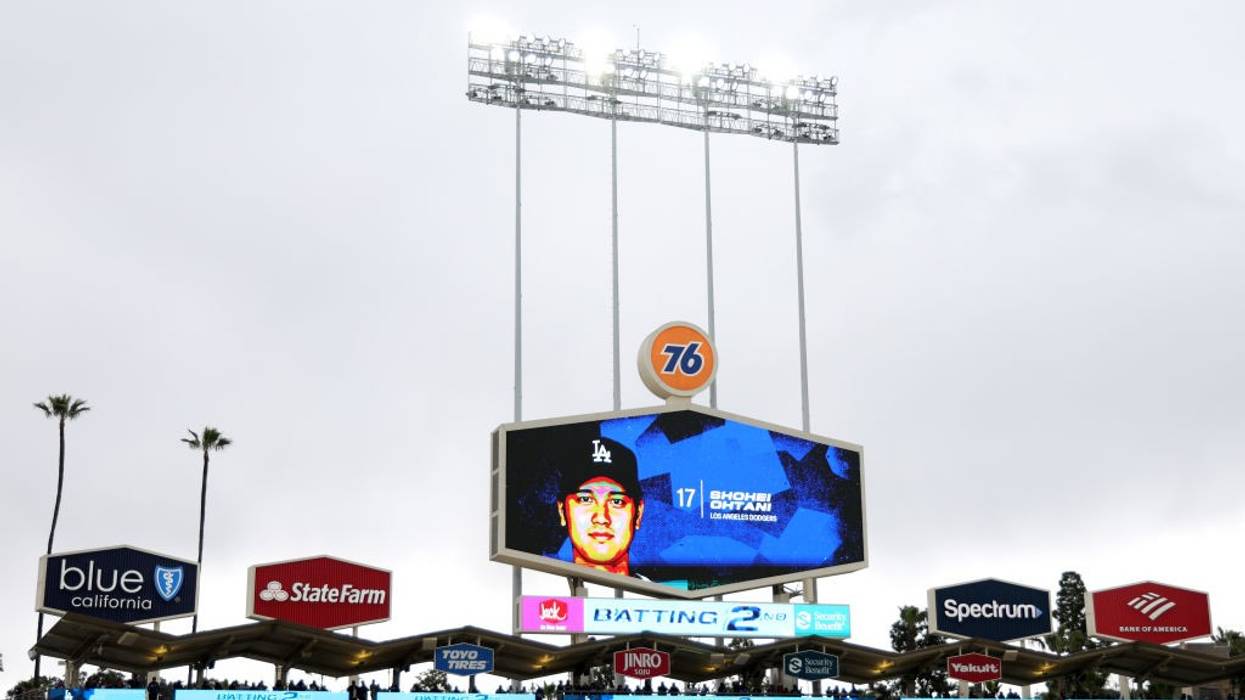
Big banks, oil giants, and powerful utility companies sponsor pro sports teams and leagues to protect what social scientists call their “social license” by assuring fans that they are public-spirited, good corporate citizens. But they are not that.
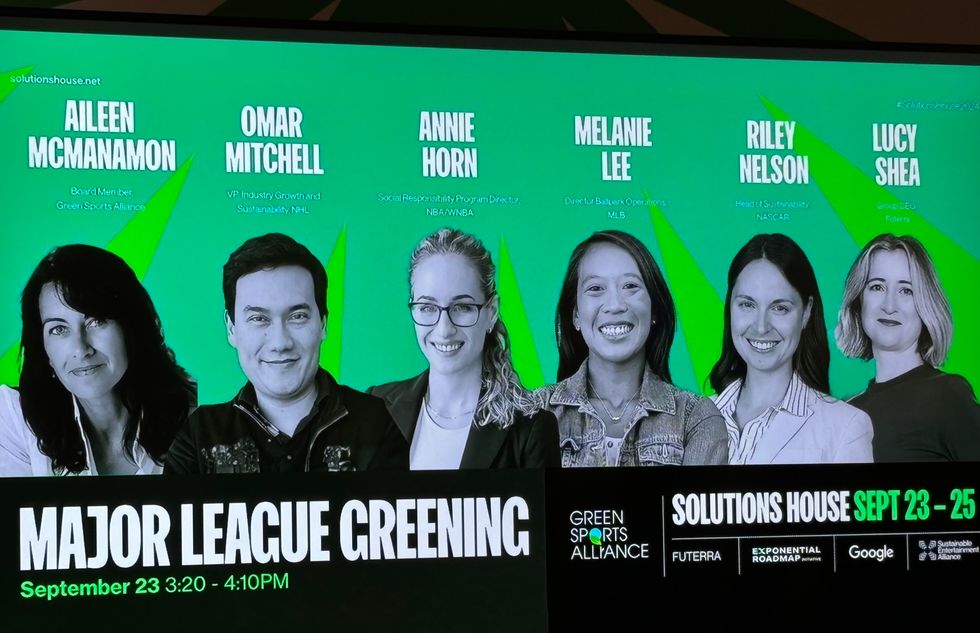
In September, North American professional sports leagues had the opportunity to demonstrate their commitment to protecting the planet during a joint panel at Climate Week NYC, the annual affair cosponsored by the United Nations featuring hundreds of events feting local, national and international efforts to address climate change.
They dropped the ball.
Just three months earlier, U.N. Secretary-General António Guterres castigated coal, oil and gas companies—which he dubbed the “godfathers of climate chaos”—for spreading disinformation and called for a worldwide ban on fossil fuel advertising. Until that happens, Guterres urged ad agencies to refuse fossil fuel clients and companies to stop taking their ads.
The leagues apparently didn’t get the memo. During their panel discussion, titled Major League Greening, representatives from pro baseball (MLB), basketball (NBA) and hockey mainly talked about their long-term goals to shrink their carbon footprint and, to be sure, they have come a long way since I wrote about their initial efforts to reduce their energy, water and paper use back in 2012. They also talked about their budding alliances with climate solution experts. But there was no talk of cutting their commercial ties with the very companies that are largely responsible for the climate crisis.
A recent survey of pro baseball, basketball, football, hockey and soccer leagues by UCLA’s Emmett Institute on Climate Change and the Environment found that they collectively have more than 60 sponsorship deals with three dozen oil companies and utilities that burn fossil fuels or distribute fossil gas. Depending on the deal, the companies get prominently placed billboards in team facilities, logos on team uniforms, partnerships with team community programs, or—if they spend some serious money—stadium naming rights.
Eight of the oil and utility companies identified by the UCLA survey—Chevron, Entergy, ExxonMobil, Marathon Petroleum, NextEra Energy, NRG Energy, Phillips 66 and Xcel Energy—are among the top 25 U.S. carbon polluters. Four of those companies—Chevron, ExxonMobil, Marathon Petroleum and Phillips 66—along with four other companies with sports sponsorships—ConocoPhillips, Hess, Occidental Petroleum and Shell—have been sued by state and local governments across the United States for climate change-related damage and their decades of deception, which has served to delay the necessary transition to clean energy. ExxonMobil is a defendant in all 39 lawsuits, Chevron has been cited in 28, and Phillips 66 has been named in 21.
Banks that are still investing tens of billions of dollars annually in fossil fuel projects also have sponsorship deals with pro sports teams. Besides routine billboard deals, six of the 12 largest fossil fuel investors since the Paris climate agreement was signed in 2016—Bank of America, Barclays, Citigroup, JPMorgan Chase, Scotiabank and Wells Fargo—are all spending a small fortune on facility naming rights.
Corporations sponsor sports for two main reasons: to build public trust and increase exposure. According to a 2021 Nielsen “Trust in Advertising” study, 81 percent of consumers completely or somewhat trust brands that sponsor sport teams, second only to the trust they have for friends and family. By sponsoring a team, corporations increase the chance that fans will form the same emotional connection they have with the team with their brand, especially when fans see it repeatedly during a game and over a season. Jersey patches, which the NBA approved in 2017 and MLB approved last year, especially attract attention. Nielsen estimates that the average value of the live broadcast exposure a baseball patch sponsor would receive over a full regular season would exceed $12.4 million.
Another rationale for banks and oil and utility companies for sponsoring pro sports is to protect what social scientists call their “social license” by assuring fans that they are public-spirited, good corporate citizens. Critics call it “sportswashing”—using sports to burnish a reputation tarnished by wrongdoing, in this case, endangering public health and the environment.
Fans of the two baseball teams that battled it out in this year’s National League Championship Series are crying foul, but thus far have been ignored.
In March 2023, environmental activists joined New York City Public Advocate Jumaane Williams to urge the Mets to change the name of Citi Field because Citibank’s parent company Citigroup has invested $396 billion in fossil fuel projects since 2016, second only to JPMorgan Chase’s $430 billion. “Citi doesn’t represent the values of Mets fans or NYC,” Williams wrote in a tweet. “If they refuse to end their toxic relationship with fossil fuels, the Mets should end their partnership with Citi.”
More recently, more than 80 public interest groups, scientists and environmental advocates signed an open letter calling on the Dodgers to cut its ties to Phillips 66, owner of the Union 76 gas station chain. “Using tactics such as associating a beloved, trusted brand like the Dodgers with enterprises like [Union] 76,” the letter states, “the fossil fuel industry has reinforced deceitful messages that ‘oil is our friend,’ and that ‘climate change isn’t so bad.’” Since August, nearly 22,800 people have signed the letter, which urges the team to end its sponsorship deal with the oil company “immediately.”
Unlike the North American pro sports leagues, advertising and public relations agencies worldwide are heeding U.N. Secretary-General Guterres’s call. More than a thousand have pledged to refuse working for fossil fuel companies, their trade associations, and their front groups. If the leagues were serious about sustainability, they likewise would sever their relationships with the godfathers of climate chaos and the banks that enable them.
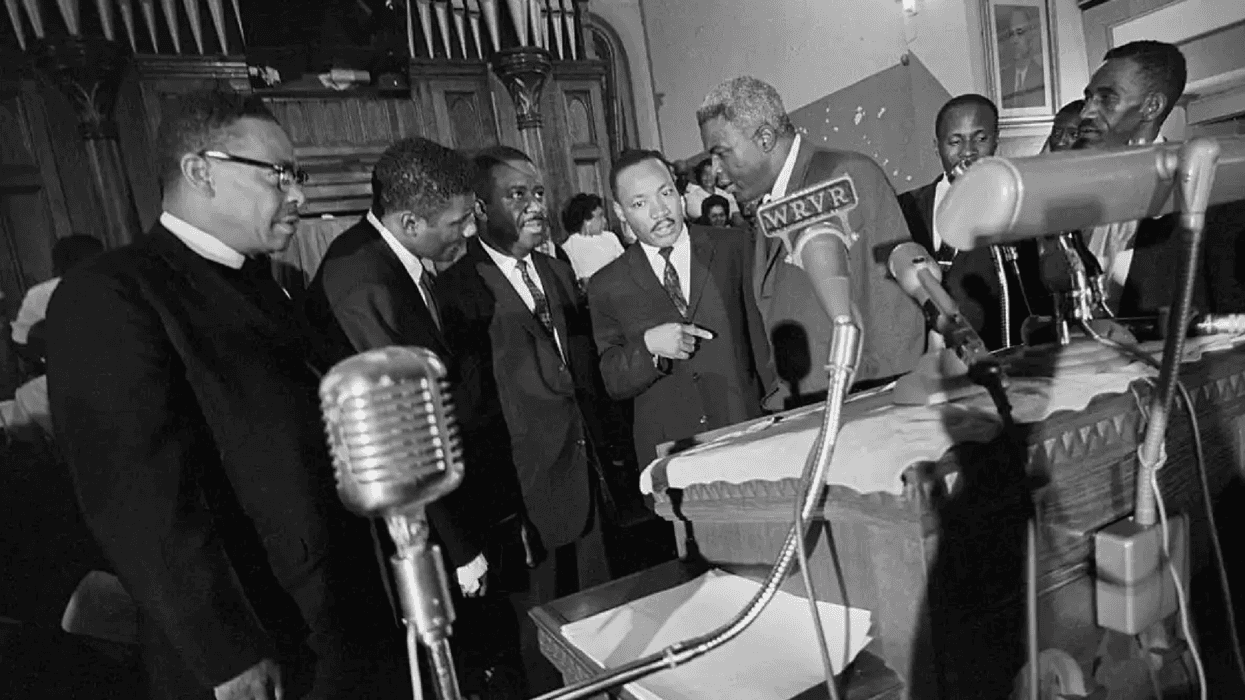
In our new book, "Baseball Rebels: The Players, People, and Social Movements That Shook Up the Game and Changed America," Rob Elias and I profile the many iconoclasts, dissenters and mavericks who defied baseball's and society's establishment.
In the past decade, athletes have become more outspoken on issues of racism, homophobia, sexism, American militarism, immigrant rights and other issues. They all stand on Robinson's shoulders.
But none took as many risks--and had as big an impact--as Jackie Robinson. Though Robinson was a fierce competitor, an outstanding athlete and a deeply religious man, the aspect of his legacy that often gets glossed over is that he was also a radical.
The sanitized version of the Jackie Robinson story goes something like this: He was a remarkable athlete who, with his unusual level of self-control, was the perfect person to break baseball's color line. In the face of jeers and taunts, he was able to put his head down and let his play do the talking, becoming a symbol of the promise of a racially integrated society.
With this April 15 marking the 75th anniversary of Jackie Robinson's breaking baseball's color line, Major League Baseball will celebrate the occasion with great fanfare--with tributes, movies, TV specials, museum exhibits and symposia.
I wonder, however, about the extent to which these celebrations will downplay his activism during and after his playing career. Will they delve into the forces arrayed against Robinson--the players, fans, reporters, politicians and baseball executives who scorned his outspoken views on race? Will any Jackie Robinson Day events mention that, toward the end of his life, he wrote that he had become so disillusioned with the country's racial progress that he couldn't stand for the flag and sing the national anthem?
Laying the groundwork
Robinson was a rebel before he broke baseball's color line.
When he was a soldier during World War II, his superiors sought to keep him out of officer candidate school. He persevered and became a second lieutenant. But in 1944, while assigned to a training camp at Fort Hood in Texas, he refused to move to the back of an army bus when the white driver ordered him to do so.
Robinson faced trumped-up charges of insubordination, disturbing the peace, drunkenness, conduct unbecoming an officer and refusing to obey the orders of a superior officer. Voting by secret ballot, the nine military judges--only one of them Black--found Robinson not guilty. In November, he was honorably discharged from the Army.
Describing the ordeal, Robinson later wrote, "It was a small victory, for I had learned that I was in two wars, one against the foreign enemy, the other against prejudice at home."
Three years later, Robinson would suit up for the Dodgers.
His arrival didn't occur in a vacuum. It marked the culmination of more than a decade of protests to desegregate the national pastime. It was a political victory brought about by a persistent and progressive movement that confronted powerful business interests that were reluctant--even opposed--to bring about change.
Beginning in the 1930s, the movement mobilized a broad coalition of organizations--the Black press, civil rights groups, the Communist Party, progressive white activists, left-wing unions and radical politicians--that waged a sustained campaign to integrate baseball.
Biting his tongue, biding his time
This protest movement set the stage for Brooklyn Dodgers executive Branch Rickey to sign Robinson to a contract in 1945. Robinson spent the 1946 season with the Montreal Royals, the Dodgers' top farm club, where he led the team to the minor league championship. The following season, he was brought up to the big leagues.
Robinson promised Rickey that--at least during his rookie year--he wouldn't respond to the verbal barbs from fans, managers and other players he would face on a daily basis.
His first test took place a week after he joined the Dodgers, during a game against the Philadelphia Phillies. Phillies manager Ben Chapman called Robinson the n-word and shouted, "Go back to the cotton field where you belong."
Though Robinson seethed with anger, he kept his promise to Rickey, enduring the abuse without retaliating.
But after that first year, he increasingly spoke out against racial injustice in speeches, interviews and his regular newspaper columns for The Pittsburgh Courier, New York Post and the New York Amsterdam News.
Many sportswriters and most other players--including some of his fellow Black players--balked at the way Robinson talked about race. They thought he was too angry, too vocal.
Syndicated sports columnist Dick Young of the New York Daily News griped that when he talked to Robinson's Black teammate Roy Campanella, they stuck to baseball. But when he spoke with Robinson, "sooner or later we get around to social issues."
A 1953 article in Sport magazine titled "Why They Boo Jackie Robinson" described the second baseman as "combative," "emotional" and "calculating," as well as a "pop-off," a "whiner," a "showboat" and a "troublemaker." A Cleveland paper called Robinson a "rabble-rouser" who was on a "soapbox." The Sporting News headlined one story "Robinson Should Be a Player, Not a Crusader." Other writers and players called him a "loudmouth," a "sorehead" and worse.
Nonetheless, Robinson's relentless advocacy got the attention of the country's civil rights leaders.
In 1956, the NAACP gave him its highest honor, the Spingarn Medal. He was the first athlete to receive that award. In his acceptance speech, he explained that although many people had warned him "not to speak up every time I thought there was an injustice," he would continue to do so.
'A freedom rider before the Freedom Rides'
After Robinson hung up his cleats in 1957, he stayed true to his word, becoming a constant presence on picket lines and at civil rights rallies.
That same year, he publicly urged President Dwight Eisenhower to send troops to Little Rock, Arkansas, to protect Black students seeking to desegregate its public schools. In 1960, impressed with the resilience and courage of the college students engaging in sit-ins at Southern lunch counters, he agreed to raise bail money for the students stuck in jail cells.
Robinson initially supported the 1960 presidential campaign of Sen. Hubert Humphrey, a Minnesota Democrat and staunch ally of the civil rights movement. But when John F. Kennedy won the party's nomination, Robinson--worried that JFK would be beholden to Southern Democrats who opposed integration--he endorsed Republican Richard Nixon. He quickly regretted that decision after Nixon refused to campaign in Harlem or speak out against the arrest of Martin Luther King Jr. in rural Georgia. Three weeks before Election Day, Robinson said that "Nixon doesn't deserve to win."
In February 1962, Robinson traveled to Jackson, Mississippi, to speak at a rally organized by NAACP leader Medgar Evers. Later that year, at King's request, Robinson traveled to Albany, Georgia, to draw media attention to three Black churches that had been burned to the ground by segregationists. He then led a fundraising campaign that collected $50,000 to rebuild the churches.
In 1963 he devoted considerable time and travel to support King's voter registration efforts in the South. He also traveled to Birmingham, Alabama, as part of King's campaign to dismantle segregation in that city.
"His presence in the South was very important to us," recalled Wyatt Tee Walker, chief of staff of King's Southern Christian Leadership Conference. King called Robinson "a sit-inner before the sit-ins, a freedom rider before the Freedom Rides."
Robinson also consistently criticized police brutality. In August 1968, three Black Panthers in New York City were arrested and charged with assaulting a white police officer. At their hearing two weeks later, about 150 white men, including off-duty police officers, stormed the courthouse and attacked 10 Panthers and two white supporters. When he learned that the police had made no arrests of the white rioters, Robinson was outraged.
"The Black Panthers seek self-determination, protection of the Black community, decent housing and employment and express opposition to police abuse," Robinson said during a press conference at the Black Panthers' headquarters.
He challenged banks for discriminating against Black neighborhoods and condemned slumlords who preyed on Black families.
And Robinson wasn't done holding Major League Baseball to account, either. He refused to participate in a 1969 Old Timers game because he didn't see "genuine interest in breaking the barriers that deny access to managerial and front office positions." At his final public appearance, throwing the ceremonial first pitch before Game 2 of the 1972 World Series, Robinson observed, "I'm going to be tremendously more pleased and more proud when I look at that third base coaching line one day and see a black face managing in baseball."
No major league team had a Black manager until Frank Robinson was hired by the Cleveland Indians in 1975, three years after Jackie Robinson's death. The absence of Black managers and front-office executives is an issue that MLB still grapples with today.
Athlete activism, then and now
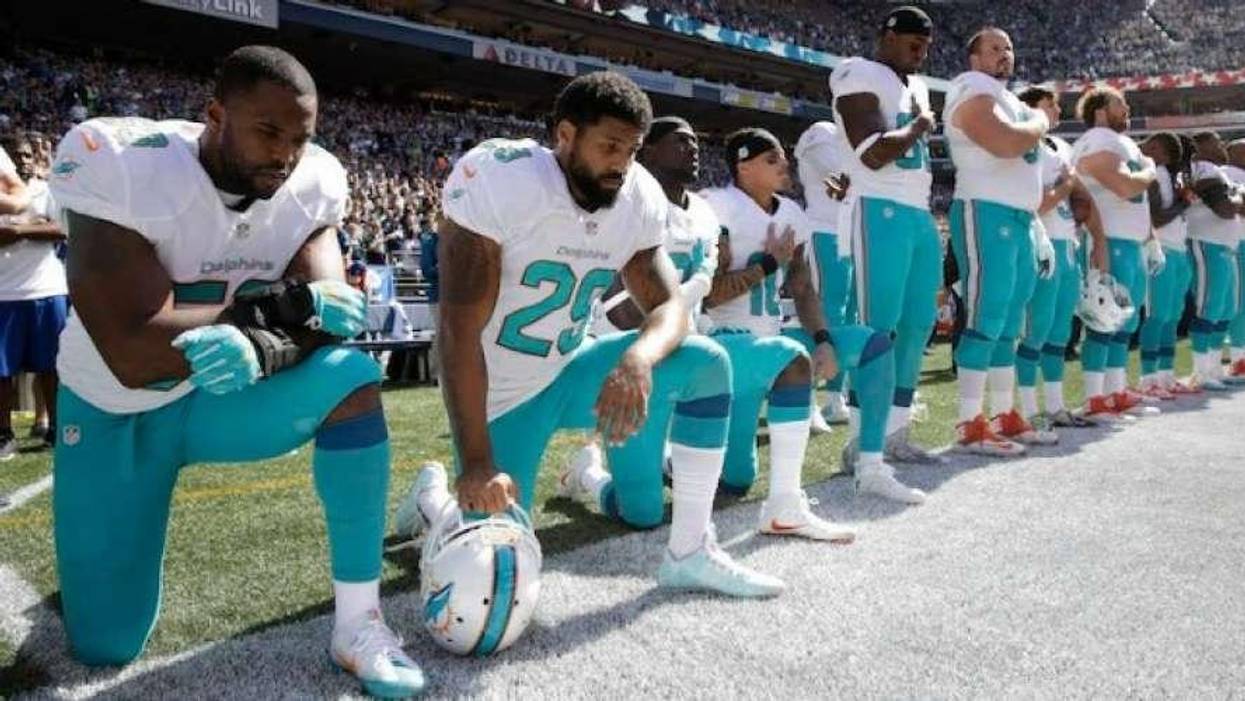
Athletes still face backlash for speaking out. When NFL quarterback Colin Kaepernick protested racism by refusing to stand during the national anthem, then-President Donald Trump said that athletes who followed Kaepernick's example "shouldn't be in the country."
In 2018, after NBA star LeBron James spoke about a racial slur that had been graffitied on his home and criticized Trump, Fox News' Laura Ingraham suggested that he "shut up and dribble."
Even so, in the past decade, athletes have become more outspoken on issues of racism, homophobia, sexism, American militarism, immigrant rights and other issues. They all stand on Robinson's shoulders.
It was Robinson's strong patriotism that led him to challenge America to live up to its ideals. He felt an obligation to use his fame to challenge the society's racial injustice. However, during his last few years--before he died of a heart attack in 1972 at age 53--he grew increasingly disillusioned with the pace of racial progress.
In his 1972 memoir, "I Never Had It Made," he wrote: "I cannot stand and sing the anthem. I cannot salute the flag; I know that I am a Black man in a white world."
As controversies about the "reopening" of America loom over our lives, nothing seems as intrinsically irrelevant--yet possibly as critically important--as how soon major spectator sports return.
If sports don't trump religion as the opiate of the masses, they have, until recently, been at least the background music of most of our lives. So here's my bet on one possible side effect of the Covid-19 pandemic to put in your scorebook: if the National Football League plays regular season games this fall, President Trump stands a good chance of winning reelection for returning America to business as usual--or, at least, to his twisted version of the same.
That's why he announced at a recent daily coronavirus briefing-cum-rally his eagerness to bring professional sports back quickly. Though it was Major League Baseball that he mentioned--"We have to get our sports back. I'm tired of watching baseball games that are 14 years old"--the sport that truly matters to him is football, the only major mass entertainment (other than Trumpism) that endorses tribalism and toxic masculinity so flagrantly and keeps violence in vogue. Football supports Trump in its promotion of racial division, the crushing of dissent, and the spread of misinformation, inequality, and brutality.
Whether or not the president can survive the loss of the 2020 baseball season--already poisoned by last year's Houston Astros sign-stealing scandal -- is up for grabs. Certainly, the proposed plan to turn stadiums in the Phoenix, Arizona, area into the sports equivalent of a vast movie set for the games of all 30 major league teams (to be played without fans) seems far-fetched at best.
But football, now the true national pastime, is another matter.
In sports terms, as in so much else in coronaviral America, these are desperately deprived times, even for casual fans. There will be intense pressure--and not only from the president's base--for that sport's return. For many people, mostly men, it's the sustaining soap opera that has always carried them into the next week and the one after that, a porn-ish escape hatch from work and family, a currency of communication with other men, an eternal connection to a non-demanding hive.
Games for Lives?
Without professional (or even college) sports right now or realistically in the near future, fans feel even more unmoored in lives that, for all of us, are distinctly adrift. As they become edgier, it's a reasonable bet (or at least my hope) that they will also become more open to questioning Trump's mismanagement--or, to put it more bluntly, sacrifice--of their lives. Recent polls already seem to reflect this, with the latest Gallup Poll showing the steepest approval decline of his presidency.
The president, I suspect, fears just this, though perhaps, in the end, the hole in everyday life where sports once was may only reinforce fans' sense (like the president's) that the games are too important not to bring back, safety be damned. Certainly, Trump and other Republican politicians have already been willing enough to forfeit lives to boost their reelection chances.
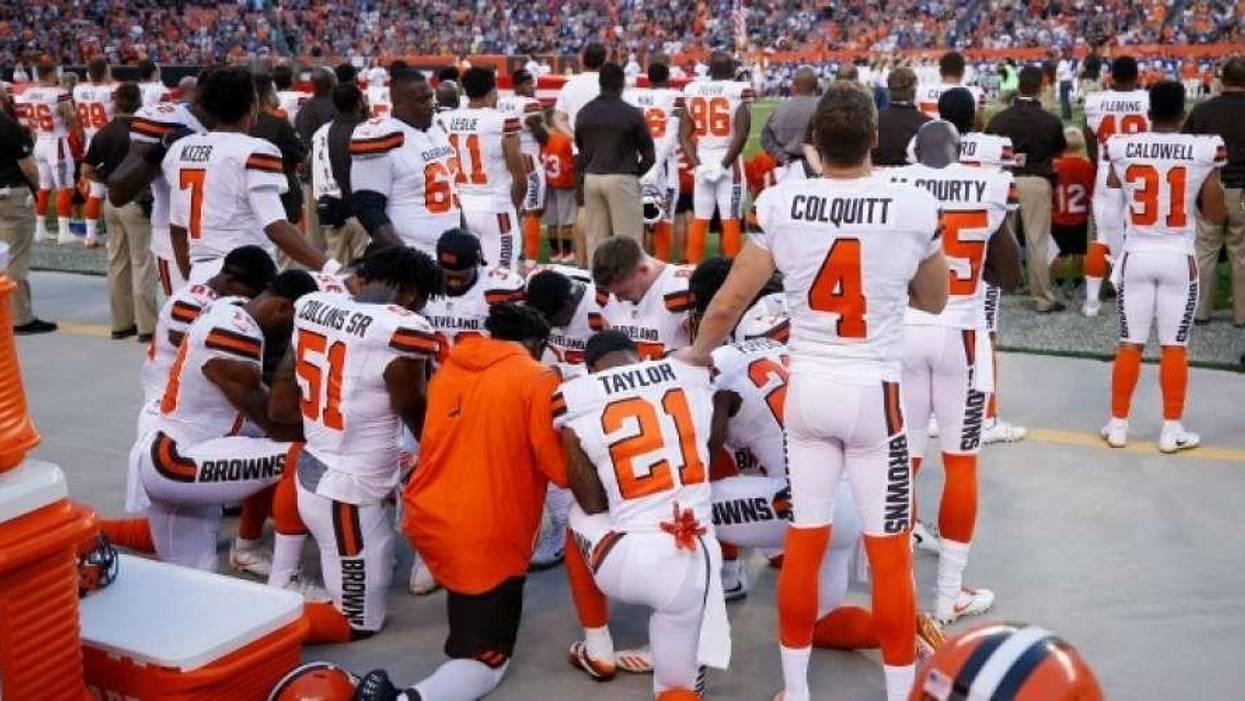
The values and sensibilities of football are, of course, Trumpist in nature. That's why former San Francisco 49ers quarterback Colin Kaepernick's demonstration against racism -- performed in a kind of public isolation--elicited such a harsh reaction from the president in the now-distant pre-pandemic era. That's why the sport's billionaire owners, predominantly Trump donors, shunned Kaepernick (although some of their teams could have used his skills). They didn't dare to, or care to, give him another platform, not in an era when "president" and "racism" were becoming synonymous.
Even more tellingly, in an understandable but still disappointing me-first display, few of Kaepernick's fellow players, most of whom are also African-American, supported him publicly. After years of being celebrated as America's "warriors" and "role models," they came up desperately short when it counted. Compare them to healthcare workers and other front-line heroes of this pandemic and you'll realize just how far short they fell of even the most modest form of everyday bravery.
Not that, when it comes to pro sports, football was such an outlier. As activism goes, baseball, a sport that once produced transcendent progressive heroes like Jackie Robinson, Jim Bouton, and Curt Flood, has been eerily quiet in recent years. It's a sport that the president has paid relatively little attention to--except for suggesting recently that Pete Rose, banned from baseball for life for betting on the Cincinnati Reds while he was that team's manager, should be allowed into its Hall of Fame.
How Trumpian was that? Such betting is, of course, strictly forbidden for active players and managers who are obviously privy to inside information. But, hey, does disregarding inconvenient rules to profit from a privileged position ring any bells these days in Washington?
Trump has, in fact, been uncharacteristically silent on the recent revelation that during the 2017 season, the World Series winners, the Houston Astros, concealed a video camera in center field to steal the pitching signs of opposing teams. That's also illegal. Major League baseball punished the team by suspending its manager and general manager for a year, imposing a $5 million fine on its owners, and taking away its first- and second-round draft picks in 2020 and 2021.
For some fans and commentators, the Astros' punishment was too severe or too mild. Opposing players, feeling victimized by the scheme, thought specific Astros should have been penalized, too. Yet such cheating is hardly new. In 1951, the "shot heard round the world," a famed home-run that won the National League pennant for the New York Giants and sent them to the World Series, was linked to the stealing of signs from the Brooklyn Dodgers through a hand-held telescope. Only the technology has improved.
A Changing National Pastime
Once baseball's opening day passed without a pitch this April, proof that the plague was winning, the Phoenix Plan was floated. It would require all major league players and employees to be sequestered in that area and continually tested at a moment when tests might still not be universally available. But, hey, haven't VIP Jocks always gone to the head of the line? (Actually, a massive study of 10,000 Major League Baseball employees, from players to popcorn vendors, being conducted by Stanford University and the Sports Medicine Research and Testing Laboratory to find out how many contracted and may have recovered from the virus has already gotten access to such testing kits at a time when even some front-line workers can't get them!)
For those who think this country needs baseball now to raise its depressed spirits, you might consider a cautionary historical precedent, the Summer of Swat of 1998. As the country reeled from the revelation of President Bill Clinton's sexual liaison with a White House intern and with his impeachment just around the corner, a feel-good legend was born. A white man and a brown man rose in friendly rivalry to break the 37-year-old record of 61 home runs by Roger Maris, who, in turn, had bested Babe Ruth's famed 60 in 1927.
The good-natured competition between Mark McGwire of the St. Louis Cardinals (who won with 70 homers) and Sammy Sosa of the Chicago Cubs (66) was, at the time, celebrated as a balm that should soothe the country. And perhaps for many fans it did indeed serve as a comforting distraction in a difficult political moment.
But that summer's golden glow soon faded as both players were reported to have taken steroids to muscle up. McGwire would admit it years later; Sosa would not. (A dark-skinned Dominican, he further complicated his legend by bleaching his skin to whiten himself, as if in anticipation of the Trumpian racial preferences to come.) Their contemporary, Barry Bonds of the San Francisco Giants, would eventually become the single-season home run leader with 73, but has never shaken rumors that he, too, used steroids.
Nor did baseball ever fully recover its sense of primacy as the national pastime or its sense of righteousness as one of America's first major institutions to integrate. In fact, the sport is still overwhelmingly white and skewed toward an older audience, as well as slow and outdated in an era of tweeting speed.
Which is why, whether or not baseball opens this season in a vast sports self-isolation experiment, the key to President Trump's future lies in his perverse relationship with the National Football League. That goes back more than 30 years to the moment he tried unsuccessfully (as with so many other business ventures) to elbow his way into the sport. Give him credit, though: ever attuned to the public mood, he did sense the rise of a new national pastime.
Bet On This
One reason for the NFL's growing popularity is the way it uses college football as its minor leagues and early showcase for pro players (though possibly not this fall). For a passionate pro football fan, it's a pleasure to see the stars of tomorrow in the making. Of course, the famously corrupted higher education sports market is a happy NFL partner and crime may pay after all, as it often does in the Trump league. In a recent commentary in the Chronicle of Higher Education, Nathan Kalman-Lamb of Duke opines that high-revenue men's football and basketball "will become more valuable than ever as an enticement to lure steep tuition from students."
And here's an innovation that the president would glory in, one that would make post-pandemic football an even greater success: the addition of real-time nationwide legal gambling on games. Just imagine the sort of Trump-donor dollars that would be stacked up to support such a future industry. After all, estimations are that illegal gambling on pro and college football is already a $93 billion business. Legal or not, it's an integral part of the fan experience (though in the post-pandemic world there will be a lot less money in so many pockets to gamble with).
The dream of easily accessible, high-tech legal gambling has been lurking on the sidelines for years. All that's necessary to make it come true is for Congress to reverse the 1992 Professional & Amateur Sports Protection Act, the federal law that bans it in most states. And the pandemic moment may prove perfect for just that, for "reopening" football in a new and even more Trumpian way, allowing fans to sit at home and bet what money they have left on games in progress: Will that field goal attempt split the uprights? Will Tom Brady in his new Tampa Bay Buccaneers uniform make that crucial third-down conversion?
However, to reopen pro football, as the president would wish, to make life seem "normal" again, stadiums might have to remain empty (or partially empty). Imagine, for instance, if San Francisco had actually beaten Kansas City (which it didn't) in the Super Bowl on the first Sunday in February and the expected championship parade had followed a few days later, drawing a million people to that city's streets. It might have proved an early version of Mardi Gras (a 2020 coronaviral disaster of a get-together).
Of course, social distancing will be inconceivable for football players and the results all too predictable in a world in which Covid-19 is likely to hang around for a long, long time. From the huddle to tackling, the game is, in every way, a potential disease transmitter. The only example of social distancing (besides Kaepernick kneeling alone) I can even remember might have been the 1958 West Point football team, which fielded a "lonesome end," Bill Carpenter. On every play, he set himself up near the far sideline in an innovative formation. He never even joined the huddle and that team went undefeated.
If it proves impossible to stage football games, given social-distancing rules, the inevitable sport of the future is already waiting in the wings. Just under the radar of most of the middle-aged and elderly, especially those without access to children, is a fiercely contested, already commodified, fan-friendly industry with championships, heroes, endorsement contracts, and a ready market for expensive gear. I'm thinking, as you may have guessed, of competitive online video games, or esports. (Think of it as the revenge of the nerds.) No matter what Donald Trump does, sooner rather than later they're likely to replace the old up-close-and-contagious live games.
It's not hard to imagine a future in which individual competitors, regional and national teams, leagues, or even some version of the Olympics, would be watched by millions on streaming platforms on home screens and, once social distancing becomes a historical footnote, on the screens of sports bars as well, if not theaters and arenas. While combat games like Fortnite and Call of Duty, along with sports knock-offs like Madden and NBA Live, currently dominate esports, the future will undoubtedly include brainier fare that will turn art, architecture, banking, diplomacy, music, and maybe even poetry into online competitions even Nike and Google could sponsor.
Esports already supports ESPN-style commentary. There might even be room someday for a new reality show about them hosted by a motor-mouthed, pumpkin-headed former one-term president.
Who needs football after all? It would, in fact, be the definition of madness to launch a football season in a coronaviral world. But that doesn't mean Donald Trump won't push for just that. The advisory board he appointed for the reopening of sports includes, as my colleague Dave Zirin points out, "a group of brigands defined by their lack of care in normal times for the safety and well-being of their employees."
It's Trump's dream team because, to win in November, he needs an America in which the National Football League is back in business big time. For him it's open arms for the NFL, which could mean open season on the rest of us.
As long as I can remember, I've been a sports fan. As long as I can remember, I've been interested in the military. Until recently, I experienced those as two separate and distinct worlds. While I was in the military -- I served for 20 years as an officer in the U.S. Air Force -- I did, of course, play sports. As a young lieutenant, I was in a racquetball tournament at my base in Colorado. At Squadron Officer School in Alabama, I took part in volleyball and flickerball (a bizarre Air Force sport). At the Air Force Academy, I was on a softball team and when we finally won a game, all of us signed the ball. I also enjoyed being in a military bowling league. I even had my own ball with my name engraved on it.
Don't misunderstand me. I was never particularly skilled at any sport, but I did thoroughly enjoy playing partly because it was such a welcome break from work -- a reprieve from wearing a uniform, saluting, following orders, and all the rest. Sports were sports. Military service was military service. And never the twain shall meet.
Since 9/11, however, sports and the military have become increasingly fused in this country. Professional athletes now consider it perfectly natural to don uniforms that feature camouflage patterns. (They do this, teams say, as a form of "military appreciation.") Indeed, for only $39.99 you, too, can buy your own Major League Baseball-sanctioned camo cap at MLB's official site. And then, of course, you can use that cap in any stadium to shade your eyes as you watch flyovers, parades, reunions of service members returning from our country's war zones and their families, and a multitude of other increasingly militarized ceremonies that celebrate both veterans and troops in uniform at sports stadiums across what, in the post-9/11 years, has come to be known as "the homeland."
These days, you can hardly miss moments when, for instance, playing fields are covered with gigantic American flags, often unfurled and held either by scores of military personnel or civilian defense contractors. Such ceremonies are invariably touted as natural expressions of patriotism, part of a continual public expression of gratitude for America's "warfighters" and "heroes." These are, in other words, uncontroversial displays of pride, even though a study ordered by Republican Senators John McCain and Jeff Flake revealed that the U.S. taxpayer, via the Pentagon, has regularly forked over tens of millions of dollars ($53 million between 2012 and 2015 alone) to corporate-owned teams to put on just such displays.
Paid patriotism should, of course, be an oxymoron. These days, however, it's anything but and even when the American taxpayer isn't covering displays like these, the melding of sports and the military should be seen as inappropriate, if not insidious. And I say that as both a lover of sports and a veteran.
I Went to a Military Parade and a Tennis Match Broke Out
Maybe you've heard the joke: I went to the fights and a hockey game broke out. It was meant to poke fun at the fisticuffs in National Hockey League games, though these days there are fewer of them than in the "glory days" of the 1970s. An updated version would, however, fit today's increasingly militarized sports events to a T: I went to a military parade and a baseball (football, hockey) game broke out.
Nowadays, it seems as if professional sports simply couldn't occur without some notice of and celebration of the U.S. military, each game being transformed in some way into yet another Memorial Day or Veterans Day lite.
Consider the pro-military hype that surrounded this year's Major League Baseball All-Star Game. Not so very long ago, when I watched such games I would be transported to my childhood and my fantasies of becoming the next Nolan Ryan or Carl Yastrzemski.
When I watched this year's version of the game, however, I didn't relive my youth; I relived my military career. As a start, the previous night featured a televised home-run derby. Before it even began, about 50 airmen paraded out in camouflage uniforms, setting the stage for everything that would follow. (As they weren't on duty, I couldn't help wondering why they found it appropriate to don such outfits.) Part of T-Mobile's "HatsOff4Heroes" campaign, this mini-parade was justified in the name of raising money to support veterans, but T-Mobile could have simply given the money to charity without any of the militarized hoopla that this involved.
Highlighting the other pre-game ceremonies the next night was a celebration of Medal of Honor recipients. I have deep respect for such heroes, but what were they doing on a baseball diamond? The ceremony would have been appropriate on, say, Veterans Day in November.
Those same pre-game festivities included a militaristic montage narrated by Bradley Cooper (star of "American Sniper"), featuring war scenes and war monuments while highlighting the popular catchphrase "freedom isn't free." Martial music accompanied the montage along with a bevy of flag-waving images. It felt like watching a twisted version of the film Field of Dreams reshot so that soldiers, not baseball players, emerged early on from those rows of Iowa corn stalks and stepped onto the playing field.
What followed was a "surprise" reunion of an airman, Staff Sergeant Cole Condiff, and his wife and family. Such staged reunions have become a regular aspect of major sporting events -- consider this "heart-melting" example from a Milwaukee Brewers game -- and are obviously meant to tug at the heartstrings. They are, as retired Army Colonel Andrew Bacevich wrote at TomDispatch back in 2011, propagandistic versions of "cheap grace."
In addition, Budweiser used this year's game to promote "freedom" beer, again to raise money for veterans and, of course, to burnish its own rep. (Last year, the company was hyping "America" beer.)
And the All-Star game is hardly alone in its militarized celebrations and hoopla. Take the 2017 U.S. Open tennis tournament in New York City, which I happened to watch. With John McEnroe in retirement, tennis is, generally speaking, a quieter sport. Yet before the men's final, a Marine Corps color guard joined a contingent of West Point cadets in a ceremony to remember the victims of 9/11. Naturally, a by-now-obligatory oversized American flag set the scene -- here's a comparable ceremony from 2016 -- capped by a performance of "God Bless America" and a loud flyover by four combat jets. Admittedly, it was a dramatic way to begin anything, but why exactly an international tennis match that happened to feature finalists from Spain and South Africa?
Blending Sports With the Military Weakens Democracy
I'm hardly the first to warn about the dangers of mixing sports with the military, especially in corporate-controlled blenders. Early in 2003, prior to the kick off for the Iraq War (sports metaphor intended), the writer Norman Mailer issued this warning:
"The dire prospect that opens, therefore, is that America is going to become a mega-banana republic where the army will have more and more importance in Americans' lives... [D]emocracy is the special condition -- a condition we will be called upon to defend in the coming years. That will be enormously difficult because the combination of the corporation, the military, and the complete investiture of the flag with mass spectator sports has set up a pre-fascistic atmosphere in America already."
"The dire prospect that opens, therefore, is that America is going to become a mega-banana republic where the army will have more and more importance in Americans' lives... [D]emocracy is the special condition - a condition we will be called upon to defend in the coming years. That will be enormously difficult because the combination of the corporation, the military, and the complete investiture of the flag with mass spectator sports has set up a pre-fascistic atmosphere in America already."
More than 14 years later, that combination -- corporations, the military, and mass spectator sports, all wrapped in a gigantic version of the stars and stripes -- has increasingly come to define what it means to be an American. Now that the country also has its own self-styled strongman president, enabled by a spineless Congress and an increasingly reactionary judiciary, Mailer's mention of a "pre-fascistic atmosphere" seems prescient.
What started as a post-9/11 drive to get an American public to "thank" the troops endlessly for their service in distant conflicts -- stifling criticism of those wars by linking it to ingratitude -- has morphed into a new form of national reverence. And much credit goes to professional sports for that transformation. In conjunction with the military and marketed by corporations, they have reshaped the very practice of patriotism in America.
Today, thanks in part to taxpayer funding, Americans regularly salute grossly oversized flags, celebrate or otherwise "appreciate" the troops (without making the slightest meaningful sacrifice themselves), and applaud the corporate sponsors that pull it all together (and profit from it). Meanwhile, taking a stand (or a knee), being an agent of dissent, protesting against injustice, is increasingly seen as the very definition of what it means to be unpatriotic. Indeed, players with the guts to protest American life as it is are regularly castigated as SOBs by our sports- and military-loving president.
Professional sports owners certainly know that this militarized brand of patriotism sells, while the version embodied in the kinds of controversial stances taken by athletes like former National Football League quarterback Colin Kaepernick (cashiered by his own league) angers and alienates many fans, ultimately threatening profits.
Meanwhile, the military's bottom line is recruiting new bodies for that all-volunteer force while keeping those taxpayer dollars flowing into the Pentagon at increasingly staggering levels. For corporations, you won't be surprised to learn, it's all about profits and reputation.
In the end, it comes down to one thing: who controls the national narrative.
Think about it. A set of corporate-military partnerships or, if you prefer, some version of President Dwight D. Eisenhower's old military-industrial complex has enlisted sports to make militarism look good and normal and even cool. In other words, sports teams now have a powerful set of incentives to appear patriotic, which increasingly means slavishly pro-military. It's getting hard to remember that this country ever had a citizen-soldier tradition as well as sports teams whose athletes actually went almost en masse to serve in war. Consider it paradoxical that militarism is today becoming as American as baseball and apple pie, even as, like so many other citizens, today's athletes vote with their feet to stay out of the military. (The NFL's Pat Tillman was a noble post-9/11 exception.) Indeed, the widespread (if shallow) support of the military by so many athletes may, in some cases, be driven by a kind of guilt.
"Collusion" is a key word in this Trumpian moment. Even though Robert Mueller isn't investigating them, corporate-owned sports teams are now actively colluding with the military to redefine patriotism in ways that work to their mutual advantage. They are complicit in taking a select, jingoistic form of patriotism and weaponizing it to suppress dissent, including against the military-industrial complex and America's never-ending wars.
Driven by corporate agendas and featuring exaggerated military displays, mass-spectator sports are helping to shape what Americans perceive and believe. In stadiums across the nation, on screens held in our hands or dominating our living rooms, we witness fine young men and women in uniform unfurling massive flags on football fields and baseball diamonds, even on tennis courts, as combat jets scream overhead. What we don't see -- what is largely kept from us -- are the murderous costs of empire: the dead and maimed soldiers, the innocents slaughtered by those same combat jets.
The images we do absorb and the narrative we're encouraged to embrace, immersed as we are in an endless round of militarized sporting events, support the idea that massive "national security" investments (to the tune of roughly a trillion dollars annually) are good and right and patriotic. Questioning the same -- indeed, questioning authority in any form -- is, of course, bad and wrong and unpatriotic.
For all the appreciation of the military at sporting events, here's what you're not supposed to appreciate: why we're in our forever wars; the extent to which they've been mismanaged for the last 17 years; how much people, especially in distant lands, have suffered thanks to them; and who's really profiting from them.
Sports should be about having fun; about joy, passion, and sharing; about the thrill of competition, the splendor of the human condition; and so much more. I still remember the few home runs I hit in softball. I still remember breaking 200 for the first time in bowling. I still remember the faces of my teammates in softball and the fun times I had with good people.
But let's be clear: this is not what war is all about. War is horrific. War features the worst of the human condition. When we blur sports and the military, adding corporate agendas into the mix, we're not just doing a disservice to our troops and our athletes; we're doing a disservice to ourselves. We're weakening the integrity of democracy in America.
We can afford to lose a ballgame. We can't afford to lose our country.
This Saturday, April 15, while every Major League Baseball team will be celebrating the 70th anniversary of Jackie Robinson's achievement of breaking baseball's color line, many Americans will be protesting in the streets as part of Tax Day.
This Saturday, April 15, while every Major League Baseball team will be celebrating the 70th anniversary of Jackie Robinson's achievement of breaking baseball's color line, many Americans will be protesting in the streets as part of Tax Day.
Were he alive today, Robinson would understand the connection. He recognized that his trailblazing accomplishment was not only the triumph of one man but also the result of a protest movement. During and after his playing days, Robinson was an activist and a vocal critic of corporate America's mistreatment of African Americans and of racism in general.
On April 15, 1947, Robinson made his debut with the Brooklyn Dodgers, ending baseball's segregation. In 1997, the 50th anniversary of his rookie season, Major League Baseball retired Robinson's number--42--for all teams. Now, every player on every team wears that number once a year, on the anniversary of Robinson's first game. This Saturday, the Los Angeles Dodgers will also unveil a statue of Robinson prior to their game against the Arizona Diamondbacks.
Participants in Saturday's Tax Day March in Washington, D.C., and parallel marches in over 100 cities, will be protesting President Donald Trump's decision not to release his tax returns and to demand changes to the country's economic system, which organizers say favors the rich at the expense of the poor.
In today's America - with a president who was elected and is governing by appealing to racism - it is important to learn the real lessons of Robinson's achievement. And at a time when racial tensions are flaring in America's communities, politics, and workplaces, Robinson's story serves as a reminder of the nation's best impulses--and its worst.
It is difficult today to summon the excitement that greeted Robinson's accomplishment. The dignity with which Robinson handled his encounters with racism--including verbal and physical abuse on the field and in hotels, restaurants, trains, and elsewhere--drew public attention to the issue, stirred the consciences of many white Americans, and gave black Americans a tremendous boost of pride and self-confidence. As Americans readjusted to life after returning from World War II, Robinson's success on the baseball diamond was a symbol of the promise of a racially integrated society. He did more than change the way baseball is played and who plays it. His actions on and off the diamond helped pave the way for America to confront its racial hypocrisy.
Most books, articles, and films (including the 2013 Hollywood movie "42") portray the dismantling of baseball's apartheid system as the tale of one man, Robinson, who triumphed over adversity -- a lone trailblazer who broke baseball's color line on his athletic merits -- with a helping hand from Dodgers president Branch Rickey, the shrewd strategist who recruited Robinson and orchestrated his transition from the Negro Leagues to the all-white Major Leagues, battling the sport's, and society's, bigotry.
We may prefer our heroes to be rugged individualists, but the reality doesn't conform to the popular myth. The truth is that Robinson's achievement was a political victory brought about by a social protest movement.
That story has been told in two outstanding books, Jules Tygiel's Baseball's Great Experiment (1983) and Chris Lamb's Conspiracy of Silence: Sportswriters and the Long Campaign to Desegregate Baseball (2012). As they recount, Rickey's plan came after more than a decade of effort by black and left-wing journalists and activists to desegregate the national pastime.
Beginning in the 1930s, the Negro press, civil rights groups, the Communist Party, progressive white activists, and radical politicians waged a sustained campaign to integrate baseball. It was part of a broader movement to eliminate discrimination in housing, jobs, and other sectors of society. It included protests against segregation within the military, mobilizing for a federal anti-lynching law, marches to open up defense jobs to blacks during World War II, and boycotts against stores that refused to hire African Americans under the banner "don't shop where you can't work." The movement accelerated after the war, when returning black veterans expected that America would open up opportunities for African Americans.
Reporters for African-American papers (especially Wendell Smith of the Pittsburgh Courier, Fay Young of the Chicago Defender, Joe Bostic of the People's Voice in New York, and Sam Lacy of the Baltimore Afro-American), and Lester Rodney, sports editor of the Communist paper, the Daily Worker, took the lead in pushing baseball's establishment to hire black players. They published open letters to owners, polled white managers and players (some of whom were threatened by the prospect of losing their jobs to blacks, but most of whom said that they had no objections to playing with African Americans), brought black players to unscheduled tryouts at spring training centers, and kept the issue before the public. Several white journalists for mainstream papers joined the chorus for baseball integration. (In the film "42," Smith is depicted as Robinson's traveling companion and the ghost-writer for Robinson's newspaper column during his rookie season, ignoring Smith's key role as an agitator and leader of the long crusade to integrate baseball before Robinson became a household name).
Progressive unions and civil rights groups picketed outside Yankee Stadium, the Polo Grounds, and Ebbets Field in New York City, and Comiskey Park and Wrigley Field in Chicago. They gathered more than a million signatures on petitions, demanding that baseball tear down the color barrier erected by team owners and Commissioner Kennesaw Mountain Landis. In July 1940, the Trade Union Athletic Association held an "End Jim Crow in Baseball" demonstration at the New York World's Fair. The next year, liberal unions sent a delegation to meet with Landis to demand that major league baseball recruit black players. In December 1943, Paul Robeson, the prominent black actor, singer, and activist, addressed baseball's owners at their annual winter meeting in New York, urging them to integrate their teams. Under orders from Landis, they ignored Robeson and didn't ask him a single question.
In 1945, Isadore Muchnick, a progressive member of the Boston City Council, threatened to deny the Red Sox a permit to play on Sundays unless the team considered hiring black players. Working with several black sportswriters, Muchnick persuaded the reluctant Red Sox general manager, Eddie Collins, to give three Negro League players--Robinson, Sam Jethroe, and Marvin Williams--a tryout at Fenway Park in April of that year. The Red Sox had no intention of signing any of the players, nor did the Pittsburgh Pirates and Chicago White Sox, who orchestrated similar bogus auditions. But the public pressure and media publicity helped raise awareness and furthered the cause.
Other politicians were allies in the crusade. Running for re-election to the New York City Council in 1945, Ben Davis -- an African-American former college football star, and a Communist -- distributed a leaflet with the photos of two blacks, a dead soldier and a baseball player. "Good enough to die for his country," it said, "but not good enough for organized baseball." That year, the New York State legislature passed the Quinn-Ives Act, which banned discrimination in hiring, and soon formed a committee to investigate discriminatory hiring practices, including one that focused on baseball. In short order, New York City Mayor Fiorello LaGuardia's established a Committee on Baseball to push the Yankees, Giants, and Dodgers to sign black players. Left-wing Congressman Vito Marcantonio, who represented Harlem, called for an investigation of baseball's racist practices.
This protest movement set the stage for Robinson's entrance into the major leagues in 1947. At the time, America was a deeply segregated nation. The previous year, at least six African Americans were lynched in the South. Restrictive covenants were still legal, barring blacks (and Jews) from buying homes in many neighborhoods--not just in the South. Only a handful of blacks were enrolled in the nation's predominantly white colleges and universities. There were only two blacks in Congress. No big city had a black mayor.
The grandson of a slave and the son of a sharecropper, Robinson was fourteen months old in 1920 when his mother moved her five children from Cairo, Georgia, to Pasadena, a wealthy, conservative Los Angeles suburb. During Robinson's youth, black residents, who represented a small proportion of the city's population, were treated like second-class citizens. Blacks were allowed to swim in the municipal pool only on Tuesdays (the day the water was changed) and could use the YMCA only one day a week.
Robinson learned at an early age that athletic success did not guarantee social or political acceptance. When his older brother Mack returned from the 1936 Olympics in Berlin with a silver medal in track, he got no hero's welcome. The only job the college-educated Mack would find was as a street sweeper and ditch digger.
Rickey had long wanted to hire black players, both for moral reasons and because he believed it would increase ticket sales among the growing number of African Americans moving to the big cities. He knew that if the experiment failed, the cause of baseball integration would be set back for many years. Rickey's scouts identified Robinson--who was playing for the Negro League's Kansas City Monarchs after leaving the army--as a potential barrier-breaker.
Robinson's background and personal characteristics played a role in Rickey's decision to select him out of the Negro Leagues to break the sport's color barrier. He could have chosen Negro League stars, like Satchel Paige and Josh Gibson, with greater experience and name recognition as a baseball player, but he wanted someone who could be, in today's terms, a role model. Although Pasadena was deeply segregated, Robinson had lived among and formed friendships with whites growing up there and while attending Pasadena Junior College and UCLA. He was UCLA's first four-sport athlete (football, basketball, track, and baseball), twice led the Pacific Coast League in scoring in basketball, won the NCAA broad jump championship, and was a football All-American. He was well-educated, articulate, and considered one of the greatest all-around athletes in the nation's history.
Ricky knew that Robinson had a hot temper and strong political views. In 1944, while assigned to a training camp at Fort Hood in segregated Texas, Robinson, a second lieutenant, refused to move to the back of an army bus when the white driver ordered him to do so, even though buses had been officially desegregated on military bases. He was court martialed for his insubordination, tried, acquitted, transferred to another military base, and honorably discharged four months later.
But Rickey calculated that Robinson could handle the emotional pressure while helping the Dodgers on the field. Robinson promised Rickey that for at least a year he would not respond to the inevitable verbal barbs and even physical abuse.
In October 1945, Rickey announced that Robinson had signed a contract with the Dodgers. He sent Robinson to the Dodgers' minor-league team in Montreal for the 1946 season, then brought him up to the Brooklyn team on opening day, April 15, 1947.
Rickey could not count on the other team owners or most major league players (many of whom came from southern or small-town backgrounds) to support his plan. But the Robinson experiment succeeded--on the field and at the box office. Within a few years, the Dodgers had hired other black players--pitchers Don Newcombe and Joe Black, catcher Roy Campanella, infielder Jim Gilliam, and Cuban outfielder Sandy Amoros--who helped turn the 1950s Dodgers into one of the greatest teams in baseball history.
Robinson, who spent his entire major league career (1947 to 1956) with the Dodgers, was voted Rookie of the Year in 1947 and Most Valuable Player in 1949, when he won the National League batting title with a .342 batting average. An outstanding base runner and base stealer, with a .311 lifetime batting average, he led the Dodgers to six pennants and was elected to the Hall of Fame in 1962.
Robinson recognized that the dismantling of baseball's color line was a triumph of both a man and a movement. During and after his playing days, he joined the civil rights crusade, speaking out--in speeches, interviews, and his column--against racial injustice. In 1949, testifying before Congress, he said: "I'm not fooled because I've had a chance open to very few Negro Americans."
Robinson viewed his sports celebrity as a platform from which to challenge American racism. Many sportswriters and most other players--including some of his fellow black players, content simply to be playing in the majors--considered Robinson too angry and vocal about racism in baseball and society.
When Robinson retired from baseball in 1956, no team offered him a position as a coach, manager, or executive. Instead, he became an executive with the Chock Full o' Nuts restaurant chain and an advocate for integrating corporate America. He lent his name and prestige to several business ventures, including a construction company and a black-owned bank in Harlem. He got involved in these business activities primarily to help address the shortage of affordable housing and the persistent redlining (lending discrimination against blacks) by white-owned banks. Both the construction company and the bank later fell on hard times and dimmed Robinson's confidence in black capitalism as a strategy for racial integration.
In 1960, Robinson supported Hubert Humphrey, the liberal Senator and civil rights stalwart from Minnesota, in his campaign for president. When John Kennedy won the Democratic nomination, however, Robinson shocked his liberal fans by endorsing Richard Nixon. Robinson believed that Nixon had a better track record than JFK on civil rights issues, but by the end of the campaign--especially after Nixon refused to make an appearance in Harlem--he regretted his choice.
During the 1960s, Robinson was a constant presence at civil rights rallies and picket lines, and chaired the NAACP's fundraising drive.
Martin Luther King Jr. once told Newcombe, "You'll never know what you and Jackie and Roy [Campanella] did to make it possible to do my job."
Angered by the GOP's opposition to civil rights legislation, he supported Humphrey over Nixon in 1968. But he became increasingly frustrated by the pace of change.
"I cannot possibly believe," he wrote in his autobiography, I Never Had It Made, published shortly before he died of a heart attack at age 53 in 1972, "that I have it made while so many black brothers and sisters are hungry, inadequately housed, insufficiently clothed, denied their dignity as they live in slums or barely exist on welfare."
In 1952, five years after Robinson broke baseball's color barrier, only six of major league baseball's 16 teams had a black player. It was not until 1959 that the last holdout, the Boston Red Sox, brought an African American onto its roster.
The black players who followed Robinson shattered the stereotype -- once widespread among many team owners, sportswriters, and white fans -- that there weren't many African Americans "qualified" to play at the major league level. Between 1949 and 1960, black players won 8 out of 12 Rookie of the Year awards, and 9 out of 12 Most Valuable Player awards in the National League, which was much more integrated than the American League. Many former Negro League players, including Willie Mays, Henry Aaron, Ernie Banks, and Newcombe were perennial All-Stars.
But academic studies conducted from the 1960s through the 1990s uncovered persistent discrimination. For example, teams were likely to favor a weak-hitting white player over a weak-hitting black player to be a benchwarmer or a utility man. And even the best black players had fewer and less lucrative commercial endorsements than their white counterparts.
In the 16 years he lived after his retirement in 1956, Robinson pushed baseball to hire blacks as managers and executives. He even refused an invitation to participate in the 1969 Old Timers game because he did not yet see "genuine interest in breaking the barriers that deny access to managerial and front office positions." At his final public appearance, throwing the ceremonial first pitch before Game Two of the 1972 World Series, shortly before he died, Robinson accepted a plaque honoring the 25th anniversary of his MLB debut, then observed: "I'm going to be tremendously more pleased and more proud when I look at that third base coaching line one day and see a black face managing in baseball."
No major league team had a black manager until Frank Robinson was hired by the Cleveland Indians in 1975. The majors' first black general manager--the Atlanta Braves' Bill Lucas--wasn't hired until 1977.
But as Robinson's widow Rachel said last year: "There is a lot more that needs to be done and can be done" in terms of hiring and promoting people of color as managers and top executives in Major League Baseball.
Last season, players of color represented 38.5 percent of Major League rosters, according to a report by the Institute for Diversity and Ethics in Sport (TIDES) at the University of Central Florida. Black athletes represented only 8.3 percent of Major League players--a dramatic decline from the peak of 27 percent in 1975, and less than half the 19 percent of 1995. Their shrinking proportion is due primarily to the growing number of Latino (28.5 percent) and Asian (1.7 percent) players, including many foreign-born athletes (27.5 percent), now populating Major League rosters.
There are also sociological and economic reasons for the decline of black ball players. The semi-pro, sandlot, and industrial teams that once thrived in black communities, serving as feeders to the Negro Leagues and then the Major Leagues, have disappeared. Basketball and football have replaced baseball as the most popular sports in black communities, where funding for public school baseball teams and neighborhood playgrounds with baseball fields has declined. Major League teams more actively recruit young players from Latin America, who are typically cheaper to hire than black Americans, as Adrian Burgos, in Playing America's Game: Baseball, Latinos, and the Color Line (2007) and Rob Ruck, in Raceball: How the Major Leagues Colonized the Black and Latin Game (2012) document.
On opening day this month, 27 of MLB's 30 managers were white. There are only two black managers (Dave Roberts of the Dodgers and Dusty Baker of the Nationals) and one Latino manager (the White Sox' Rick Renteria). This is a big drop from the 10 managers of color who took the field in 2009.
Two people of color own Major League teams--Arturo Moreno, a Latino, who has owned the Los Angeles Angels since 2003, and basketball great Earvin "Magic" Johnson, who is part of the group that purchased the Los Angeles Dodgers in 2012. As the TIDES report documents, there are few African Americans, Latinos, or Asians among MLB teams' top management, including only four general managers.
Like baseball, American society -- including our workplaces, Congress and other legislative bodies, schools, friendships, and even families -- is more integrated than it was in Robinson's day. But there is still an ongoing debate about the magnitude of racial progress, as measured by persistent residential segregation, a significantly higher poverty rate among blacks than whites, ongoing racial discrimination by banks and landlords, and widespread racism within our criminal justice and prison systems.
As Robinson understood, these inequities cannot be solved by individual effort alone. It also requires grassroots activism and protest to attain changes in government policy and business practices.
Traditionally, pro baseball players have been conservative and cautious, but Trump's hostile rhetoric toward immigrants, African Americans, and Muslims has inspired a number of them to speak out.
In January, Houston Astros pitcher Collin McHugh criticized Trump after the president attacked civil rights pioneer and congressman John Lewis, claiming that he represented a "crime infested" district in Atlanta that is "in horrible shape and falling apart." McHugh said, "I live right in the heart of downtown, in District 5. It's a great place to live. I've been there for seven or eight years, I've lived in the metro area pretty much my whole life, and I don't like to see anybody talk bad about it."
That same month, Oakland A's pitcher Sean Doolittle condemned Trump's executive order banning Syrian refugees seeking sanctuary in this country. "These refugees are fleeing civil wars, terrorism, religious persecution, and are thoroughly vetted for 2yrs," he tweeted. "A refugee ban is a bad idea. ... It feels un-American. And also immoral." In February, Cardinals outfielder Dexter Fowler, whose wife is from Iran, told ESPN that he opposed Trump's proposed travel ban from Muslim-majority nations, "Anytime you're not able to see family, it's unfortunate," Fowler said.
On election night, Dodgers pitcher Brandon McCarthy tweeted: "Tonight's result affects me none because I'm rich, white and male. Yet, it'll be a long time until I'm able to sleep peacefully." Two months after Trump's inauguration, McCarthy was back on Twitter poking fun at Trump's campaign pledge to "drain the swamp" of corporate and Wall Street influence-peddlers. "Was the 'swamp' Goldman Sachs itself?" McCarthy tweeted, referring to the powerful investment bank that has provided top officials in Trump's administration.
As we confront the reactionary initiatives from the Trump White House and the Republican Congress, Jackie Robinson's legacy is to remind us of the unfinished agenda of the civil rights revolution and of the important role that protest movements play in moving the country closer to its ideals.
On Sunday in DC, I attended the seventeenth ballpark protest of the Arizona Diamondbacks during the 2011 baseball season. As in the other actions-in cities from Houston to San Francisco to Milwaukee-people chanted a loud and clear message to Major League Baseball commissioner Bud Selig: move the 2011 All-Star Game out of Arizona and make the state pay a price for enacting legislation that sacrifices immigrant families at the altar of election-year politics. But this demonstration was also deeply different from the sixteen others. It was a day of rain, risk-takers, racists and rancor. And it couldn't have been more terrific.
Nationals Security Guards Falls Chasing After Protestershttps://www.casualhoya.com/
First, the protest was publicly threatened by a pugnacious anti-immigrant organization called Help Save Maryland. This past week, I received a series of e-mails from people claiming to be connected to the group in which they threatened to "swamp" the Move the Game demonstration and drive immigrant rights supporters from the park. They also taunted that my writing on the subject had led to them being "overwhelmed with phone calls and volunteers." For the record, we had 100 people march during the two-hour protest. They had seven. The group was so irrelevant that they went unmentioned-from ESPN to politico.com - in the flurry of subsequent media coverage.
Second, the demonstration outside was combined with actions inside the park where four daring activists stormed the field with one out in the fifth inning, unfurling a banner calling for Selig to move the game. In what could morph into a youtube sensation, an overzealous security guard attempting to accost them did a less-than-graceful belly flop across the outfield. It might have been the most exciting moment at a Nats game this season. Rosa Lozano, who spent the evening in custody for taking the movement to the outfield grass, said to me after her release, "I did it because when history reflects this egregious time of civil and human rights violations I want to be able to have pride in saying that I didn't stand idly by and allow human beings to be treated like animals because of their immigration status." Also, as the four were being arrested, two separate banners with similar messages were draped over the outfield walls. These banner bandits daring to display a message that didn't say "Drink Budweiser" or "Buy Season Tickets" were banned from the ballpark for a year
One of them, Brian Ward, said to me afterward, "I find it funny how I am being banned from a stadium that I helped pay for with my tax dollars. I say if that is what it takes to get the All-Star Game moved, let's all do actions like we saw today and show that we are willing to do whatever it takes to move this game and overturn SB 1070."
Another banner bandit, Navid Nasr, described to me a scene in the crowd where "two fans to our left immediately became extremely hostile and attempted to rip the banner away from us. Then something kind of inspiring happened, two or three other fans leapt to our defense, physically put themselves between us and the belligerents and berated them, calling them assholes and telling them to leave us alone and that we weren't harming anyone and that we have the right to free speech."
Free speech at a publicly funded billion-dollar park! What a concept! That description of political polarization mirrored what picketers saw outside the park. Some fans were very supportive, even joining in with the chants and doing a couple of turns marching around in a circle, in full Nationals gear. Others yelled, and heckled with all the zeal of Sarah Palin at a book-burning. Two demanded to see the papers of a 17-year-old picketer, Nate Taitano, who happened by sheer and utter coincidence, to have brown skin. After the demonstration, the young man said to a gathered crowd, "I was born and raised right here in DC. I should be asking them where the hell they're from."
But most critically, thousands of flyers, detailing how people could contact Bud Selig and insist that he move the game, were passed out to open fans. By day's end, protesters were soaked, hoarse and happy. As Gary Nelson, a firefighter from Baltimore who drove an hour to be at the demonstration, said, "Evil flourishes when good people do nothing. Today we did some good."