

SUBSCRIBE TO OUR FREE NEWSLETTER
Daily news & progressive opinion—funded by the people, not the corporations—delivered straight to your inbox.
5
#000000
#FFFFFF
To donate by check, phone, or other method, see our More Ways to Give page.
Daily news & progressive opinion—funded by the people, not the corporations—delivered straight to your inbox.
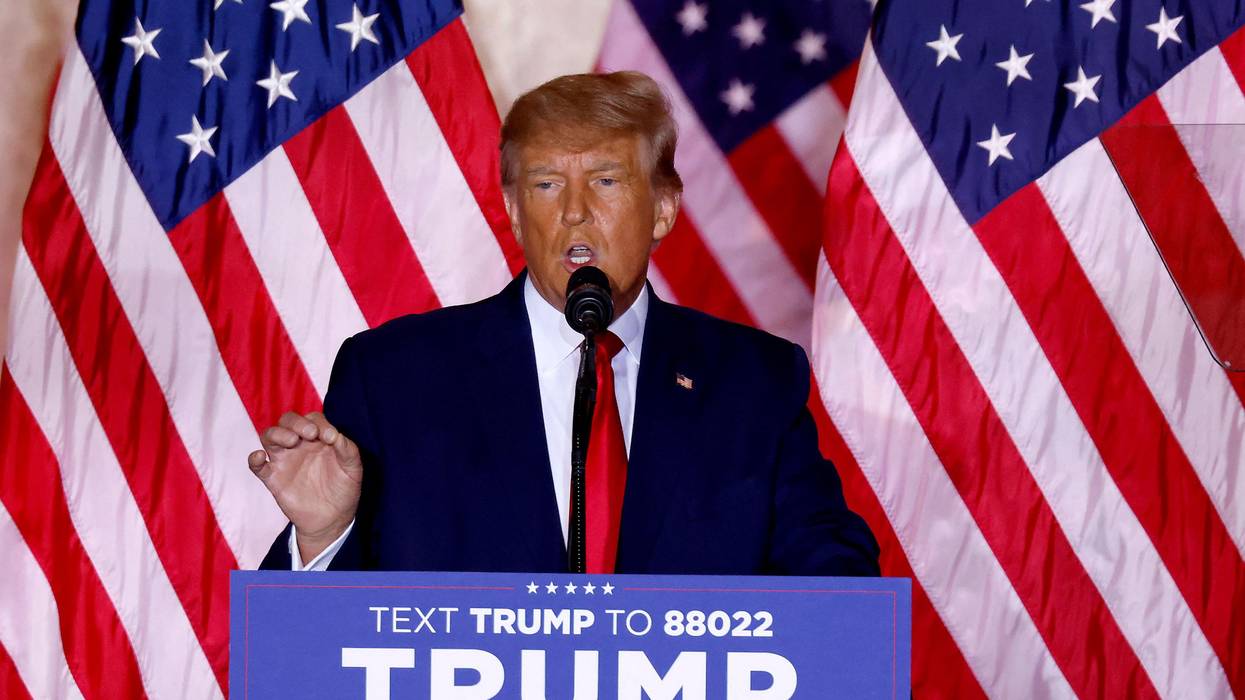
Former President Donald Trump on Friday told Fox News Digital that he won't "partake" after U.S. Attorney General Merrick Garland appointed Jack Smith to serve as special counsel for two ongoing criminal investigations involving the GOP leader, who recently announced his 2024 campaign.
"I have been going through this for six years--for six years I have been going through this, and I am not going to go through it anymore," said Trump, who faces various legal issues at the state and federal level. "And I hope the Republicans have the courage to fight this."
"I have been proven innocent for six years on everything--from fake impeachments to [former Special Counsel Robert] Mueller who found no collusion, and now I have to do it more?" he continued. "It is not acceptable. It is so unfair. It is so political."
The first investigation Smith will oversee focuses on the January 6, 2021 attack on the U.S. Capitol that Trump incited with his "Big Lie" that the 2020 election was stolen from him--which led to his unprecedented second impeachment. The second probe focuses on classified documents and other presidential records.
The ex-president insisted Friday that "I am not going to partake in it... I'm not going to partake in this."
"I have never heard of such a thing. They found nothing. I announce and then they appoint a special prosecutor," he said. "They found nothing, and now they take some guy who hates Trump. This is a disgrace and only happening because I am leading in every poll in both parties."
"It is not even believable that they're allowed to do this. This is the worst politicization of justice in our country," Trump added before taking aim at President Joe Biden's son, Hunter Biden, and again urging his allies to challenge the investigations.
"It is unfair to the country, to the Republican Party, and I don't think people should accept it. I am not going to accept it," he declared. "The Republican Party has to stand up and fight."
Journalist Aaron Rupar took to Twitter to highlight several of Trump's lies in his comments to Fox.
U.S. Sen. Sheldon Whitehouse (D-R.I.) tweeted: "Thing is, with prosecutors you don't have to 'partake.' They and the agents and the grand jurors go about their business without you having to 'partake' at all. You even have a right not to 'partake.'"
Garland did not shy away from Trump's bid to reclaim the White House in his Friday speech announcing the appointment. He said that "based on recent developments, including the former president's announcement that he is a candidate for president in the next election, and the sitting president's stated intention to be a candidate as well, I have concluded that it is in the public interest to appoint a special counsel."
Smith, a former federal prosecutor, said in a statement Friday that "I intend to conduct the assigned investigations, and any prosecutions that may result from them, independently and in the best traditions of the Department of Justice. The pace of the investigations will not pause or flag under my watch. I will exercise independent judgment and will move the investigations forward expeditiously and thoroughly to whatever outcome the facts and the law dictate."
The Biden White House did not receive advance notice of Smith's appointment, according to Press Secretary Karine Jean-Pierre, who said that "the Department of Justice makes their own decision when it relates to criminal investigation. We were not involved."
"We do not politicize the Department of Justice," she added. "That is something that the president said during the campaign. That is something that the president said during his early days of being in the White House, and that continues to be true. We were not involved in this particular issue."
Trump announced on his Truth Social platform that at 8:00 pm ET Friday, he will be "making a statement on the never-ending Witch Hunt" from Mar-a-Lago--his Florida estate where federal agents executed a search warrant in August.
This is a developing story... Please check back for possible updates...
Following a watchdog group's win in court last week, the Biden administration on Wednesday released an unredacted memorandum from 2019 about whether then-President Donald Trump obstructed Special Counsel Robert Mueller's probe of Russia's election interference.
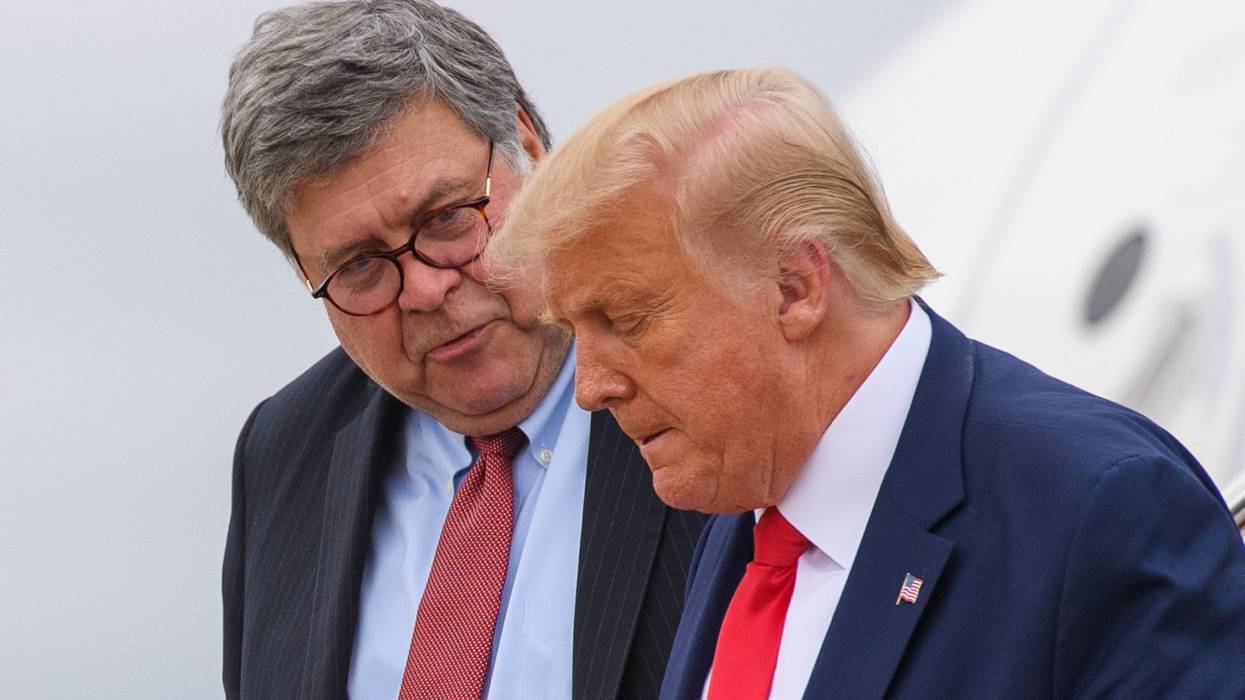
Noah Bookbinder--president of the organization, Citizens for Responsibility and Ethics in Washington (CREW)--highlighted that then-U.S. Attorney General Bill Barr pointed to the memo from the Department of Justice's Office of Legal Counsel to claim there was no justification for charging Trump with obstruction of justice.
"The memo presents a breathtakingly generous view of the law and facts for Donald Trump," Bookbinder said. "It twists the facts and the law to benefit Trump and does not comport with a serious reading of the law of obstruction of justice or the facts as found by Special Counsel Mueller."
As Bookbinder explained: "The memo is premised in large part on the argument that there was no underlying criminal conduct and that it's hard to charge obstruction without an underlying crime. Of course, that's not what Mueller actually found."
"Mueller found there was not sufficient evidence to charge Trump and others with conspiring with Russia," CREW's leader continued. "He didn't find no crime, just not enough evidence for charges. Of course, Trump couldn't know about that future conclusion when he decided whether or not to obstruct."
He also noted that the document "takes an exceedingly cramped view of prior cases" and "relies on Trump's use of open-ended language [about] his 'hope' the investigation would be let go, and his delegation of firing prosecutors or narrowing investigations to others when he could have done it himself, as exonerating Trump."
"The memo is not just wrong; it is dangerous coming from a usually respected office at the Department of Justice," Bookbinder added. "It is clear why Barr did not want the public to see it."
In a series of Wednesday tweets contrasting the memo with Mueller's report, New York Times reporter Charlie Savage said that the newly released document "reads like a defense lawyer's brief."
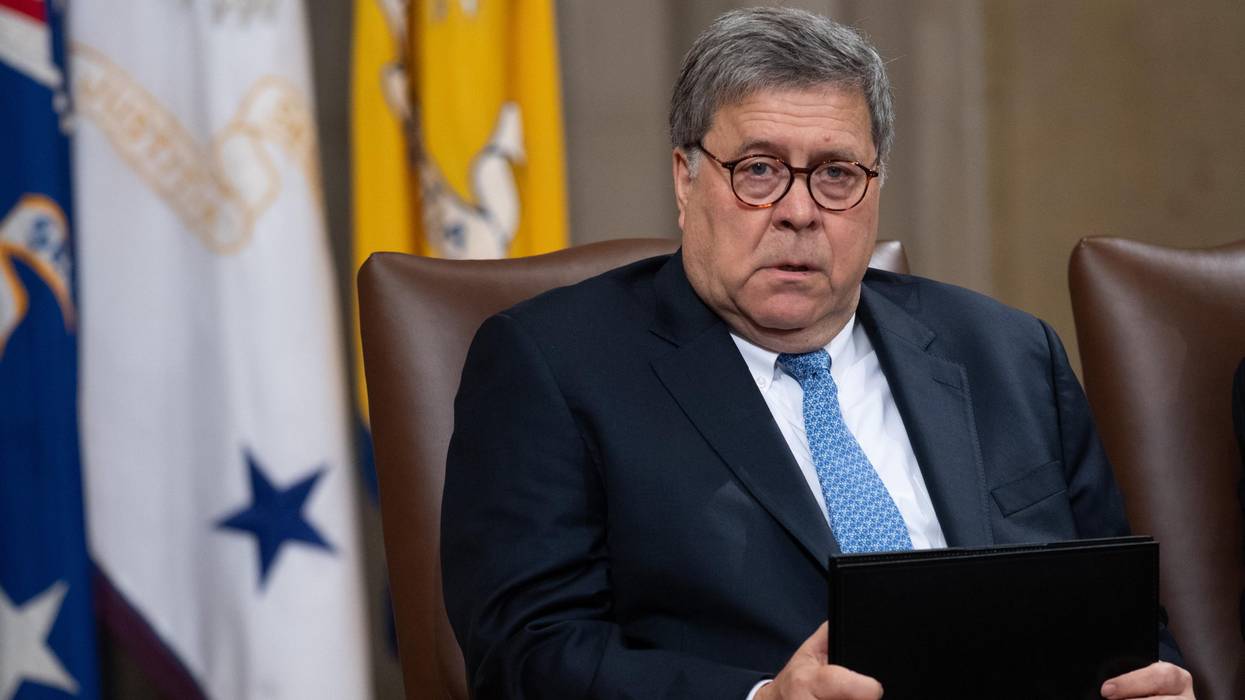
A federal appeals court on Friday ordered the release of a 2019 memorandum about whether then-President Donald Trump obstructed Special Counsel Robert Mueller's investigation into Russian interference in the 2016 presidential election.
Citizens for Responsibility and Ethics in Washington (CREW)--the watchdog fighting to reveal the U.S. Department of Justice (DOJ) memo prepared for then-Attorney General Bill Barr--celebrated the ruling as a win.
"Attorney General Barr cited this memo as a reason not to charge President Trump with obstruction of justice," said CREW spokesperson Jordan Libowitz in a statement. "The American people deserve to know what it says. Now they will."
The unanimous ruling from three judges of the U.S. Court of Appeals for the District of Columbia Circuit affirmed a lower court's opinion about the DOJ Office of Legal Counsel memo--a redacted version of which was made public last year.
D.C. Circuit Chief Judge Sri Srinivasan, joined by Judges Judith Rogers and David Tatel, outlined how the DOJ tried to conceal most of the memo "based on the deliberative process privilege, which protects records documenting an agency's internal deliberations en route to a governmental decision," but the lower court judge, Amy Berman Jackson, rejected that argument.
Jackson determined the DOJ failed to show that the privilege applied--specifically, she found that the department "had not identified a relevant agency decision as to which the memorandum formed part of the deliberations," Friday's ruling highlights.
"The department's submissions, the court explained, indicated that the memorandum conveyed advice about whether to charge the president with a crime. But the court's in camera review of the memorandum revealed that the department in fact never considered bringing a charge," it continues. "Instead, the memorandum concerned a separate decision that had gone entirely unmentioned by the government in its submissions to the court--what, if anything, to say to Congress and the public about the Mueller report."
As Bloomberg detailed:
Srinivasan... wrote that any analysis in the memo about bringing obstruction charges was more like a "thought experiment."
Srinivasan noted that the department expressed "regret" about leaving a "misimpression that an actual charging decision was under consideration," but he wrote that it missed opportunities to address the true purpose of the memo.
The court rejected the government's request for another chance to make the case for keeping the full memo secret. Srinivasan wrote that the Justice Department might have successfully argued to keep the memo sealed if it had revealed the public messaging purpose from the beginning and then tried to invoke what's known as the deliberative process privilege, but that it was too late now.
The DOJ has a week to consider appealing the latest decision. The Washington Post reported that spokespeople for the department and Barr declined to comment.
Politico noted Friday:
Trump was never charged in Mueller's probe and the special prosecutor's final report declined to opine on whether what he did in response to the investigation amounted to a crime.
However, some Trump opponents have called on the Attorney General Merrick Garland to reconsider the issue now that Trump is no longer president. Release of the long-sought DOJ memo could fuel those calls and draw more unwanted attention to Trump's potential criminal liability at a time when he is besieged by a slew of other legal woes relating to his handling of classified government records, his role in inspiring many of those involved in the January 6 attack on the Capitol, and his broader efforts to overturn Joe Biden's win in the 2020 presidential election.
As Common Dreams reported Thursday, a federal judge gave the DOJ a week to propose redactions to the warrant affidavit containing the information that led to last week's search of Mar-a-Lago, Trump's Florida home.
This post has been updated with additional details about the ruling.
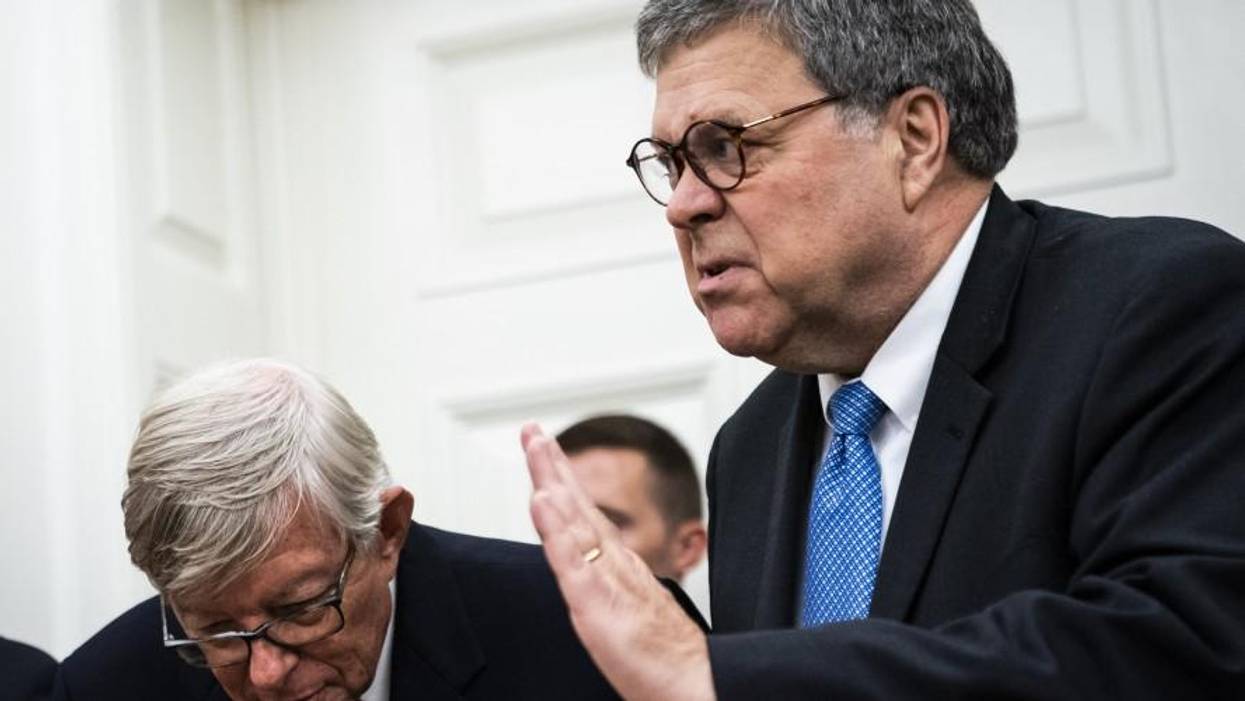
"We live in the age of narrative, not facts," former Attorney General William Barr told NBC News in an interview that aired on March 6, 2022.
He should know. For two years, Barr developed false narratives that protected then-President Donald Trump from incriminating facts, starting with a "distorted" and "misleading" summary of special counsel Robert Mueller's report. Barr diverted the public from Mueller's conclusions that Russia committed crimes to help Trump win the 2016 election, Trump's campaign had embraced the assistance, and Trump himself had obstructed justice during the ensuing investigation.
But now that Trump is at the center of a potential criminal conspiracy to remain in office after losing the election, Barr is promoting his new book and launching a new narrative.
And this time, he's trying to protect himself.
I have a few questions.
Why Did Barr Stop Pushing Trump's Big Lie?
Prior to the election, Barr repeatedly pushed Trump's lie that fraud could infect the outcome. He was still at it on November 9, 2020, when he reversed the Justice Department's longstanding hands-off policy surrounding elections and ordered an investigation into allegations of voting irregularities that, "if true, could potentially impact the outcome a federal election in an individual State."
According to former acting Attorney General Jeffrey Rosen's August 7, 2021 interview with the House committee investigating the January 6 attack, Barr "had been considering it earlier." But for some reason, he decided to announce the policy change two days after every news organization had confirmed Trump's defeat. The head of the Justice Department's Election Crimes Branch resigned from that position in protest.
On the same day and in a seemingly unrelated development, Trump fired Secretary of Defense Mark Esper and appointed Christopher C. Miller as acting secretary. Immediately, Miller replaced three top department officials and named three Trump loyalists to replace them:
Then in a recently revealed mid- to late-November meeting, Trump told Barr that his lawyers said the Justice Department could seize voting machines. Barr rejected the idea. But did he hear that Trump kept exploring the possibility with other federal agencies, including the Defense Department?
Shortly thereafter, Barr abruptly turned on Trump and renounced the Big Lie publicly. On December 1, he told the Associated Press that there was no evidence of voter fraud sufficient to change the election outcome.
Nine days later, Trump signed an executive order revising the Defense Department's line of succession. He moved up his newest departmental loyalists--Tata and Cohen-Watnick--and put them directly behind the deputy secretary and the secretaries of the Army, Navy, and Air Force. It meant that if Trump issued an order that the Pentagon's top four leaders refused to obey, the resulting departmental massacre would leave friendly faces in their stead.
What Did Barr Know about Trump's Phony Electors?
Trump tried to reverse his defeat in key states by litigating popular vote totals and contacting election officials. Many of those efforts were in plain sight at the time, and all of them failed. But recently we learned that Trump's allies were working secretly on another ploy.
On December 9, Boston attorney Kenneth Chesebro--whom the House's January committee subpoenaed on March 1, 2022--outlined a plan to press ahead with Trump's potential electors in six states that he had lost. Their combined electoral votes would swing the Electoral College outcome to Trump.
In accordance with the U.S. Constitution and federal law, the Electoral College voted on December 14 in state capitals throughout the country. Previously chosen electors for each state's winning candidate cast their ballots accordingly and transmitted them to federal officials, including the National Archives.
But in seven states that Biden won--the six states in Chesebro's memo plus New Mexico--Trump's potential electors pretended that Trump had won. They signed phony voting certificates that are now the subject of criminal investigations. Identically prepared as to font and format, the certificates falsely declared Trump the official winner in those states. One of Trump's illegitimate electors from Michigan later said that the request for the false certificates had come from the Trump campaign.
What Did Barr Know about the Defense Department's Involvement?
December 14 was an eventful day:
The following day, Rosen and others met in the Oval Office and told Trump that the Antrim County claims were false. Immediately afterward, Rosen briefed Barr on the session.
"Thanks for the update," Barr responded.
A recently revealed draft executive order dated December 16, 2020, ties together various election-subversion strands. Based on the lies about Antrim County, the order empowered the newly reworked Defense Department to seize voting machines, federalize the National Guard, and prepare an assessment of the situation within 60 days--nearly a month past the January 20 Inauguration Day set forth in the Constitution. The order also appointed a special counsel to investigate voter fraud.
On December 17, Secretary Miller ordered a cessation of transition team meetings between the Defense Department and President-elect Biden's team.
On December 18, an aide to Trump adviser Peter Navarro escorted Mike Flynn and attorney Sidney Powell into the Oval Office where they urged Trump to sign the draft executive order. Other advisers, including Rudy Giuliani, pushed back. So Trump told Giuliani to ask acting Deputy Secretary of Homeland Security Kenneth T. Cuccinelli II if his agency could seize voting machines. Cuccinelli said no.
Still, early on December 21, Navarro appeared on Fox News, proposing that the federal government "seize a lot of those voting machines" and appoint a special counsel before Inauguration Day to investigate. Shortly thereafter, Barr responded to a reporter's question, saying that he saw no basis for either step.
On December 23, Barr left office.
Less than three weeks later, a remarkable bipartisan op-ed appeared in the Washington Post. Evidently inspired by former Vice President Dick Cheney, who had served as secretary of defense for President George H.W. Bush when Barr was attorney general the first time, it issued a stark warning from all 10 living former secretaries of defense to leaders of the armed forces:
"Each of us swore an oath to support and defend the Constitution against all enemies, foreign and domestic. We did not swear it to an individual or a party...
"Efforts to involve the U.S. armed forces in resolving election disputes would take us into dangerous, unlawful and unconstitutional territory. Civilian and military officials who direct or carry out such measures would be accountable, including potentially facing criminal penalties, for the grave consequences of their actions on our republic."
The following day, Trump moved forcefully in a different direction. Along with Chapman University law professor John Eastman, he urged Pence to proceed with the final phase of the phony-electors plot. They wanted Pence to use the false certifications as a pretext to ignore the electoral votes that Biden had won in those seven states.
On the morning of January 6, Pence rejected the plan. The insurrection followed.
William Barr was the nation's top law enforcement officer--twice. He too had sworn an oath to support and defend the Constitution. We now know that after the election and before Barr left office, nefarious plots to undermine democracy swirled throughout the Trump administration. He quashed at least one himself.
What did Barr know and when did he know it?
Before he answers, put him under oath.
The Biden administration on Thursday laid it right out in the open.
It's time to seriously discuss a 60-year problem we've had with treasonous and illegitimate Republican presidents.
When Trump 2016 campaign chairman Paul Manafort was passing secret polling information about swing states like Michigan, Wisconsin, and Pennsylvania to Konstantin Kilimnik, as is laid out in the Mueller Report, it was part of a very specific and successful effort on the part of Russian Intelligence to help put Trump in office.
This was the data they would have used to have troll accounts and ads target individuals in those states via social media, particularly Facebook, to both suppress the vote for Clinton and encourage voters to show up for Trump and other down-ticket Republicans.
This is not the first time a Republican candidate for president has committed treason to get into the White House. In fact, it's been the norm since 1968, and therefore it's time to seriously discuss a 60-year problem we've had with treasonous and illegitimate Republican presidents.
America must stop giving criminal Republican presidents a pass. Every GOP president since Dwight Eisenhower used treason or deception to come to office (or inherited office from one who did), and it needs to end. It's a truly astonishing and horrifying story.
It started in 1968, when President Lyndon Johnson was desperately trying to end the Vietnam War. It had turned into both a personal and political nightmare for him, and his vice president, Hubert Humphrey, was running for president in the election that year against a "reinvented" Richard Nixon.
Johnson spent most of late 1967 and early 1968 working back-channels to North and South Vietnam, and by the summer of 1968 had a tentative agreement from both for what promised to be a lasting peace deal they'd both sign that fall.
But Richard Nixon knew that if he could block that peace deal, it would kill Humphrey's chances of winning the 1968 election. So Nixon sent envoys from his campaign to talk to South Vietnamese leaders to encourage them not to attend upcoming peace talks in Paris.
Nixon promised South Vietnam's corrupt politicians that he'd give them a richer deal when he was president than LBJ could give them then.
The FBI had been wiretapping Nixon's people and told LBJ about his effort to prolong the Vietnam War. Thus, just three days before the 1968 election, Johnson phoned the Republican Senate leader, Everett Dirksen, (you can listen to the entire conversation here):
President Johnson: Some of our folks, including some of the old China lobby, are going to the Vietnamese embassy and saying please notify the [South Vietnamese] president that if he'll hold out 'til November 2nd they could get a better deal. Now, I'm reading their hand. I don't want to get this in the campaign. And they oughtn't to be doin' this, Everett. This is treason.
Sen. Dirksen: I know.
Those tapes were only released by the LBJ library in the past decade, and that's Richard Nixon who Lyndon Johnson was accusing of treason.
At that point, for President Johnson, it was no longer about getting Humphrey elected. By then Nixon's plan had already worked and Humphrey was being wiped out in the polls.
Instead, Johnson was desperately trying to salvage the peace talks to stop the death and carnage as soon as possible. He literally couldn't sleep.
In a phone call to Nixon himself just before the election, LBJ begged him to stop sabotaging the peace process, noting that he was almost certainly going to win the election and inherit the war anyway. Instead, Nixon publicly said LBJ's efforts were "in shambles."
But South Vietnam had taken Nixon's deal and boycotted the peace talks, the war continued, and Nixon won the White House thanks to it.
An additional 22,000 American soldiers, and over an additional million Vietnamese, died because of Nixon's 1968 treason, and he left it to Gerald Ford to end the war and evacuate the American soldiers.
Nixon was never held to account for it, and when the LBJ library released the tapes and documentation it was barely noticed by the American press.
Gerald Ford, who succeeded Nixon, was never elected to the White House (he was appointed to replace VP Spiro Agnew, after Agnew was indicted for decades of taking bribes), and thus would never have been president had it not been for Richard Nixon's treason. He pardoned Nixon.
Next up was Ronald Reagan.
During the Carter/Reagan election battle of 1980, then-President Carter had reached a deal with newly elected Iranian President Abdolhassan Bani-Sadr to release the 52 hostages held by students at the American Embassy in Tehran.
Bani-Sadr was a moderate and, as he explained in an editorial for The Christian Science Monitor, successfully ran for president on the popular position of releasing the hostages:
I openly opposed the hostage-taking throughout the election campaign. ...I won the election with over 76% of the vote. ...Other candidates also were openly against hostage-taking, and overall, 96% of votes in that election were given to candidates who were against it [hostage-taking].
Carter was confident that with Bani-Sadr's help, he could end the embarrassing hostage crisis that had been a thorn in his political side ever since it began in November of 1979.
But behind Carter's back, the Reagan campaign worked out a deal with the leader of Iran's radical faction--Supreme Leader Ayatollah Khomeini--to keep the hostages in captivity until after the 1980 presidential election. Khomeini needed spare parts for American weapons systems the Shah had purchased for Iran, and Reagan was happy to promise them.
This was the second act of treason by a Republican wanting to become president.
The Reagan campaign's secret negotiations with Khomeini--the so-called "October Surprise"-- sabotaged President Carter's and Iranian President Bani-Sadr's attempts to free the hostages. As President Bani-Sadr told The Christian Science Monitor in March of 2013:
"After arriving in France [in 1981], I told a BBC reporter that I had left Iran to expose the symbiotic relationship between Khomeinism and Reaganism.
"Ayatollah Khomeini and Ronald Reagan had organized a clandestine negotiation, later known as the 'October Surprise,' which prevented the attempts by myself and then-U.S. President Jimmy Carter to free the hostages before the 1980 U.S. presidential election took place. The fact that they were not released tipped the results of the election in favor of Reagan."
And Reagan's treason--just like Nixon's treason--worked perfectly.
The Iran hostage crisis continued and torpedoed Jimmy Carter's re-election hopes. And the same day Reagan took the oath of office--to the minute, as Reagan put his hand on the bible, by way of Iran's acknowledging the deal--the American hostages in Iran were released.
Keeping his side of the deal, Reagan began selling the Iranians weapons and spare parts in 1981, and continued until he was busted for it in 1986, producing the so-called "Iran-Contra" scandal.
But, like Nixon, Reagan was never held to account for the criminal and treasonous actions that brought him to office.
After Reagan--Bush senior was elected--but like Jerry Ford--Bush was really only president because he served as vice president under Reagan. And, of course, the naked racism of his Willie Horton ads helped keep him in office.
The criminal investigation into Iran-Contra came to a head with independent prosecutor Lawrence Walsh subpoenaing President George H.W. Bush after having already obtained convictions for Weinberger, Ollie North and others. Bush's attorney general, Bill Barr, suggested he pardon them all to kill the investigation, which Bush did. The screaming headline across the New York Times front page on December 25, 1992, said it all:
THE PARDONS; BUSH PARDONS 6 IN IRAN AFFAIR, ABORTING A WEINBERGER TRIAL; PROSECUTOR ASSAILS 'COVER-UP'
And if the October Surprise hadn't hoodwinked voters in 1980, you can bet Bush senior would never have been elected in 1988. That's four illegitimate Republican presidents.
Which brings us to George W. Bush, the man who was given the White House by five right-wing justices on the Supreme Court.
In the Bush v. Gore Supreme Court decision in 2000 that stopped the Florida recount--and thus handed George W. Bush the presidency--Justice Antonin Scalia wrote in his opinion:
The counting of votes... does in my view threaten irreparable harm to petitioner [George W. Bush], and to the country, by casting a cloud upon what he [Bush] claims to be the legitimacy of his election.
Apparently, denying the presidency to Al Gore, the guy who actually won the most votes in Florida, did not constitute "irreparable harm" to Scalia or the media.
And apparently it wasn't important that Scalia's son worked for a law firm that was defending George W. Bush before the high court (with no Scalia recusal).
Just like it wasn't important to mention that Justice Clarence Thomas's wife worked on the Bush transition team--before the Supreme Court shut down the count in Florida--and was busy accepting resumes from people who would serve in the Bush White House if her husband stopped the recount in Florida... which he did. (No Thomas recusal, either.)
More than a year after the election a consortium of newspapers including The Washington Post, The New York Times, and USA Today did their own recount of the vote in Florida--manually counting every vote in a process that took almost a year--and concluded that Al Gore did indeed win the presidency in 2000.
As the November 12th, 2001 article in The New York Times read:
If all the ballots had been reviewed under any of seven single standards and combined with the results of an examination of overvotes, Mr. Gore would have won.
That little bit of info was slipped into the seventeenth paragraph of the Times story so that it would attract as little attention as possible because the 9/11 attacks had happened just weeks earlier and journalists feared that burdening Americans with the plain truth that George W. Bush actually lost the election would further hurt a nation already in crisis.
To compound the crime, Bush could only have gotten as close to Gore in the election as he did because his brother, Florida Gov. Jeb Bush, had ordered his Secretary of State, Kathrine Harris, to purge at least 57,000 mostly-Black voters from the state's voter rolls just before the election.
So, for the third time in four decades, Republicans took the White House under illegitimate electoral circumstances. Even President Carter was shocked by the brazenness of that one. And Jeb Bush and the GOP were never held to account for that crime against democracy.*
Most recently, in 2016, Trump ally Kris Kobach and Republican secretaries of state across the nation used Interstate Crosscheck to purge millions of legitimate voters--most people of color--from the voting rolls just in time for the Clinton-Trump election.
Meanwhile, Russian oligarchs or the Russian state, and possibly pro-Trump groups or nations in the Middle East, are alleged to have funded a widespread program to flood social media with pro-Trump, anti-Clinton messages from accounts posing as Americans, as documented by Robert Mueller's investigation.
One can only wonder how much better off America would be if six Republican presidents hadn't stolen or inherited a stolen White House and used it to put right-wing cranks on the Supreme Court and other federal benches.
And on top of that, we learned today that Republican campaign data on the 2016 election, including which states needed a little help via phony influencers on Facebook and other social media, was not only given to Konstantin Kilimnik by Paul Manafort, but Kilimnik transferred it to Russian intelligence.
Donald Trump still lost the national vote by nearly three million votes, but came to power through an electoral college designed to keep slavery safe in colonial America.
One can only wonder how much better off America would be if six Republican presidents hadn't stolen or inherited a stolen White House and used it to put right-wing cranks on the Supreme Court and other federal benches.
Now, finally, there may be an opportunity for some accountability for another criminal Republican president.
The depth and breadth of Trump's involvement in the January 6th attempt to destroy our form of government and replace it with single-party strongman rule is becoming more and more obvious. As a result, the pressure is building to hold him and many of those in his administration to account.
America has ignored GOP crimes to seize and hold the White House long enough. It's time, at long last, to put this one in prison.
This piece initially appeared on The Hartmann Report.
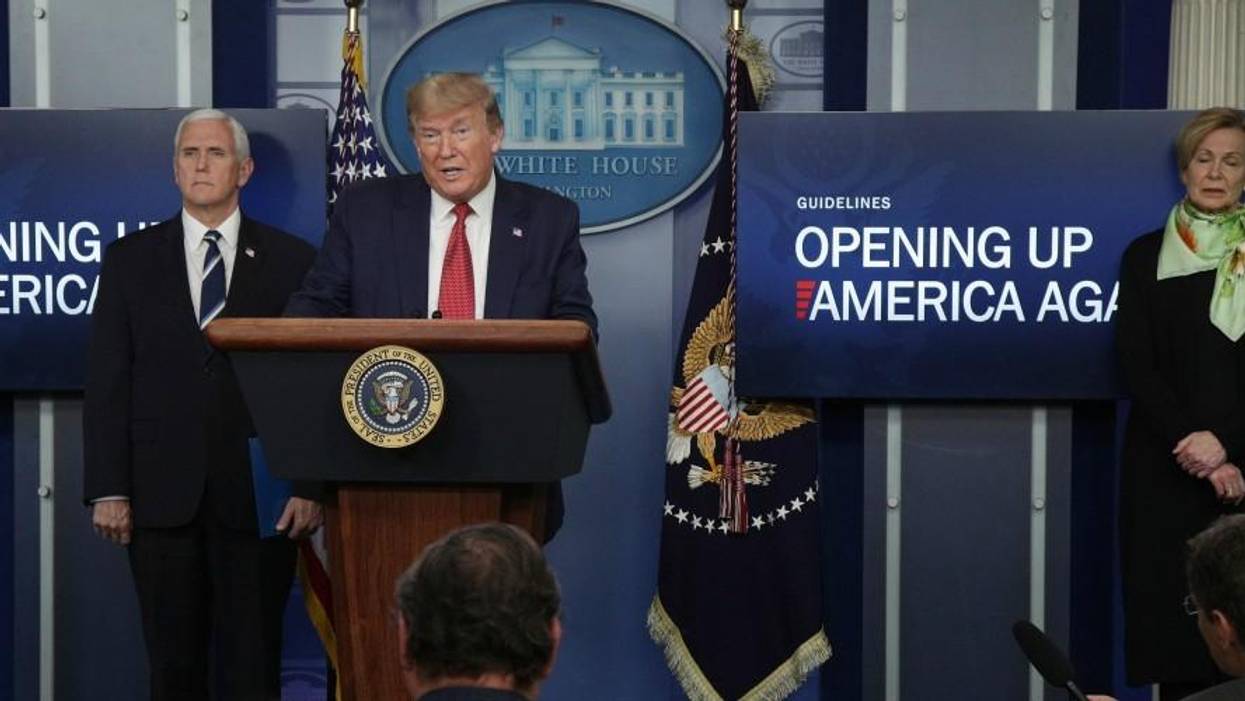
Whether you consider the appalling death toll or the equally unacceptable rising numbers of Covid-19 cases, the United States has one of the worst records worldwide when it comes to the pandemic. Nevertheless, the president has continued to behave just as he promised he would in March when there had been only 40 deaths from the virus here and he said, "I don't take responsibility at all."
In April, when 50,000 Americans had died, he praised himself and his administration, insisting, "I think we've done a great job." In May, as deaths continued to mount nationwide, he insisted, "We have met the moment and we have prevailed." In June, he swore the virus was "dying out," contradicting the views and data of his just-swept-into-the-closet coronavirus task force. In July, he cast the blame for the ongoing disaster on state governors, who, he told the nation, had handled the virus "poorly," adding, "I supplied everybody." It was the governors, he assured the public, who had failed to acquire and distribute key supplies, including protective gear and testing supplies.
"Trump and his team have given lack of accountability a new meaning in America."
All told, he's been a perfect model in deflecting all responsibility, even as the death toll soared over 150,000 with more than four million cases reported nationwide and no end in sight, even as he assured the coronavirus of a splendid future in the U.S. by insisting that all schools reopen this fall (and that the Centers for Disease Control and Prevention back him on that).
In other words, Donald Trump and his team have given lack of accountability a new meaning in America. Their refusal to accept the slightest responsibility for Covid-19's rampage through this country may seem startling (or simply like our new reality) in a land that has traditionally defined itself as dedicated to democratic governance, and the rule of law. It has long seen itself as committed to transparency and justice, through investigations, reports, and checks and balances, notably via the courts and Congress, designed to ensure that its politicians and officials be held responsible for their actions. The essence of democracy -- the election -- was also the essence of accountability, something whose results Donald Trump recently tried to throw into doubt when it comes to the contest this November.
Still, the loss of accountability isn't simply a phenomenon of the Trump years. Its erosion has been coming for a long time at what, in retrospect, should seem an alarmingly inexorable pace.
In August 2020, it should be obvious that America, a still titanic (if fading) power, has largely thrown accountability overboard. With that in mind, here's a little history of how it happened.
The War on Terror
As contemporary historians and political analysts tell it, the decision to go to war in Iraq in the spring of 2003, which cost more than 8,000 American lives and led to more than 200,000 Iraqi deaths, military and civilian, was more than avoidable. It was the result of lies and doctored information engineered to get the U.S. involved in a crucial part of what would soon enough become its "forever wars" across the Greater Middle East and Africa.
As Robert Draper recently reminded us, those in the administration of President George W. Bush who contested information about the presence of weapons of mass destruction in Saddam Hussein's Iraq were ignored or silenced. Worse yet, torture was used to extract a false confession from senior al-Qaeda member Ibn Sheikh al-Libi regarding the terror organization's supposed attempts to acquire such weaponry there. Al-Libi's testimony, later recanted, was used as yet another pretext to launch an invasion that top American officials had long been determined to set in motion.
And it wasn't just a deceitful decision. It was a thoroughly disastrous one as well. There is today something like a consensus among policy analysts that it was possibly the "biggest mistake in American military history" or, as former Senate Majority Leader Harry Reid (D-NV) put it four years after the invasion, "the worst foreign policy mistake in U.S. history," supplanting the Vietnam War in the minds of many.
And that raises an obvious question: Who was held accountable for that still unending disaster? Who was charged with the crime of willfully and intentionally taking the nation to war -- and a failed war at that -- based on manufactured facts? In numerous books, the grim realities of that moment have been laid out clearly. When it comes to any kind of public censure, or trial, or even an official statement of wrongdoing, none was ever forthcoming.
Nor was there any accountability for the policy and practice of torture, "legally" sanctioned then, that took the country back to practices more common in the Middle Ages. (It's worth noting as well that John Yoo, who wrote the memos authorizing such torture then, is now helping the Trump administration find ways to continue evading checks on the presidency.)
More than a decade ago at TomDispatch, I wrote about how the Bush administration supported such acts at the highest levels. As a result, in the early years of the war on terror, in 20 CIA "black sites," located in eight countries, the U.S. government used torture, as a Senate Select Intelligence Committee Report of December 2014 would detail, to elicit information and misinformation from dozens of "high-value detainees."
It should go without saying that torture violates just about every precept of the modern rule of law: the renunciation of adjudication in favor of brutality, the use of dungeon-like chambers and medieval equipment rather than the expertise of intelligence professionals gathering information, and of course the rejection of any conviction that civility and rights are valuable.
Among his first acts on entering the Oval Office, Barack Obama pledged that the United States under his leadership would "not torture." Nonetheless, the lawyers who wrote the memos legally approving those policies were never held accountable, nor were the Bush administration officials who signed off on them (and had such techniques demonstrated to them in the White House); nor, of course, were the actual torturers and the doctors who advised them in any way censured or criminally charged in American courts.
Indeed, many of their careers only advanced as they took jobs like a federal judge, a professor at a prestigious law school, or a well-remunerated author. When suggestions for leveling criminal charges or holding congressional hearings and investigations were raised, the Obama administration decided not to proceed. Attorney General Eric Holder claimed that "the admissible evidence would not be sufficient to obtain and sustain a conviction beyond a reasonable doubt," while President Obama insisted that the administration should "look forward as opposed to looking backwards." Accountability was once again abandoned.
And looming over the war on terror, the invasion of Iraq, and those torture policies was a refusal to hold any agency, administration, or anyone at all responsible for failing to stop 9/11 from happening in the first place. The 9/11 Commission Report might have been an initial step in that process, but as journalist Philip Shenon put it in his book The Commission: The Uncensored History of the 9/11 Investigation, the report "skirt[ed] judgements about people who almost certainly had some blame for failing to prevent September 11."
Evasion Elsewhere
It wasn't only in relation to the war on terror that accountability vanished. The government responded to the 2007-2008 banking crisis with a similar determination to avoid it. At that time, the men who ran the nation's largest banks had played upon the greed of investors to leverage mortgage investments until, lacking government bailouts, their companies would have gone under. In response, both the Bush and Obama administrations bandaged the losses with federal funds. Yet when it came to a classic dive into irresponsible and even illegal financial behavior, they offered stern warnings and nothing else.
Accountability had been similarly elusive for corporate crimes for decades. Take, for instance, the 1989 Exxon Valdez oil spill that covered 1,300 miles of Alaskan coastline with oil, while killing thousands of birds, otters, seals, and whales. Lawsuits brought by that state did result in payments of more than $1 billion after the federal government indicted ExxonMobil for violating the Clean Water Act. However, only the captain of the ship, whom many experts felt had been scapegoated, was convicted of a criminal offense.
A separate lawsuit filed on behalf of local fishermen, native Alaskans, and landowners fared less well. In our post-9/11 era of unaccountability, the penalties that had been leveled against the oil company were reconsidered. In 2008, the Supreme Court reduced a $5 billion punitive damages award by 89% to $507.5 million dollars. And in 2017, in the early months of the Trump administration, 26 years of litigation came to an abrupt end when a federal court in Alaska decided not to pursue a final ExxonMobil payment of $100 million for damages from the spill.
As it turns out, (lack of) accountability is increasingly not just a matter of the law but of politics, as the Mueller investigation of Russian interference in the presidential election of 2016 highlighted. No matter how much information Mueller and his team collected demonstrating violations of both law and policy in future president Donald Trump's dealings with Russia, or how much information a series of career diplomats and national security officials provided on his quid pro quo approach to Ukrainian officials, escaping blame, not to mention impeachment, has proven all too easy for the president.
As Attorney General Barr told the nation, misrepresenting the essence of the Mueller report, the investigation "did not find that the Trump campaign or anyone associated with it conspired or coordinated with Russia in its efforts to influence the 2016 U.S. presidential election." More accurately, the report concluded that the evidence "does not exonerate" the president.
Subsequently, nine individuals, seven of them members of the Trump team, were found guilty and 13 Russian nationals and three Russian companies were indicted (though charges against two of the companies have been dropped by Barr's Department of Justice). And while five of those convicted went to jail, Donald Trump commuted the sentence of his close associate Roger Stone. Meanwhile, the prosecution of his first National Security Advisor Michael Flynn is still in turmoil after the Department of Justice directed and a federal appeals court ordered the case to be dropped. As the Flynn episode demonstrates, even when individuals were held accountable, the president and his administration have, in essence, refused to accept the judgments of the courts.
In other words, the mechanisms for shining a light on government wrongdoing are being systematically undermined and abolished. In that spirit, in April and May at the behest of the president, numerous inspectors general, tasked by law with investigating and reporting on wrongdoing in their agencies, were fired, including those for the State Department and the Intelligence Community, as well as the acting inspectors general for the departments of Defense, Health and Human Services, and Transportation.
In the age of Trump we're reaching the end of the line when it comes to accountability in the halls of government. Increasingly, it's no longer an American concept.
Once Upon a Time
It hasn't always been this way. In the past, when government policy or the officials making it have gone rogue, broken the law, and conspired against the basic tenets of American democracy, they have, at times, paid the price. Nearly a century ago, for instance, President Warren Harding's Secretary of the Interior Albert Fall went to prison for accepting bribes from oil companies in the Teapot Dome Scandal. In fact, the list of former government officials who have been convicted and served time in jail is long.
Fifty years later, in the Watergate scandal of Richard Nixon's presidency, 69 individuals, including several top government officials, were indicted and 48 of them found guilty of burglarizing documents from and wiretapping Democratic Party headquarters, among other things. The trail of illegality and cover-up went right up to the office of the president, ending in impeachment proceedings, which led President Nixon to resign.
During the years of Ronald Reagan's presidency, misuse of power was punished as well. Fourteen people in or close to his administration were convicted for their participation in the Iran-Contra scandal in which the government secretly sold weapons to Iran, an act proscribed by law, with plans to use the funds from those sales to support American-backed Contra rebels in Nicaragua (also in violation of U.S. law). True, of the 14 charged and 11 convicted, only one actually served his sentence in prison. Nonetheless, the convictions stood as a testament to a public acknowledgement of governmental wrongdoing.
"In its own deadly fashion, the pandemic crisis may actually help turn the tide and bring accountability back to American shores. If more than 150,000 deaths, countless numbers of them preventable, don't offer a compelling reason to hold our public officials responsible, then what would?"
Perhaps the saddest part of all is that the Trump administration has not just refused to take responsibility for anything whatsoever, but has blamed others, even those on the front lines of pandemic defense, for things that it did. Since Covid-19 struck American shores and the president and his officials failed to respond, resulting in a catastrophically high -- and climbing -- death toll, accountability has been harnessed to political whims in a new way. The president has, for instance, blamed President Obama whose pandemic office was dismantled by Trump's own national security advisor John Bolton.
Until recently, President Trump refused to wear a mask in public and insisted -- until belatedly canceling the Republican National Convention in Jacksonville, Florida, still rife with the pandemic -- on holding a maskless, unsocial-distanced indoor rally in Tulsa despite overwhelming evidence that indoor transmission is the predominant means by which Covid-19 spreads. In doing so, he also encouraged irresponsible behavior at a local level, while supporting governors ready to imprudently reopen their state economies far too quickly and so condemn Americans there to an explosion of new cases.
It's possible that this abdication of leadership, leading to a disastrously rising death rate, will, in the end, help Americans turn the corner from unaccountability to accountability -- and not just for the disastrous Covid-19 response. Recent street protests from Portland to Manhattan, Chicago to Kansas City, are a sign that accountability is long overdue, not just for the current era, but for this century of American life.
In March, journalist Peter Bergen was the first person to call for a 9/11-style commission to investigate the government's response to the coronavirus, "if only to make sure the nation is prepared for the next pandemic." Recently, Democratic Senator Dianne Feinstein and Democratic Congressman Adam Schiff, both from California, also proposed a Covid-19 Commission "not as a political exercise to cast blame, but to learn from our mistakes so we can prevent the problems we now face from being tragically repeated... An honest analysis is the only way to adequately prepare for the next novel virus or another disaster."
Of course, no such thing is imaginable until Donald Trump is out of office and the Senate in Democratic hands, which does look possible. In the meantime, in its own deadly fashion, the pandemic crisis may actually help turn the tide and bring accountability back to American shores. If more than 150,000 deaths, countless numbers of them preventable, don't offer a compelling reason to hold our public officials responsible, then what would?
Whatever the punishments, however symbolic or cosmetic, crimes of this sort need to be exposed for what they are and those who carried them out officially identified and held to account. This has nothing to do with retribution. It is not about exacting punishment. It's about shining a beam of light on deeds that have been harmful beyond imagination and must never be repeated. We as a nation need to remind ourselves of what morality, justice, and the responsible use of power can mean. The country has to be given a chance to restore its long-faded commitment to accountable government. And perhaps we should acknowledge one more crucial thing: that this may prove to be our last chance.
Fresh demands for the resignation or impeachment of U.S. Attorney General William Barr have started stacking up since the Department of Justice on Thursday dropped its case against former National Security Adviser Michael Flynn, which critics have condemned as a decision designed to politically benefit President Donald Trump.
"We are a nation of laws yet William Barr, the nation's top law enforcement official, has routinely abused the powers of his office to undermine the rule of law for political advantage of the president who appointed him."
-- Karen Hobert Flynn, Common Cause
In a statement Friday, Karen Hobert Flynn, president of the national advocacy group Common Cause, called Barr "a cancer on justice in this nation" and accused him of turning the DOJ "into a political tool of a corrupt presidency."
"Americans expect and deserve an Attorney General who enforces the law impartially," she said, "not one who abuses his office to accommodate the whims of a president who believes he has unlimited power."
The DOJ's decision to drop charges against Flynn, which U.S. Attorney Timothy Shea detailed in a filing Thursday, came after Barr in February installed an outside prosecutor to review the department's case against the former Trump adviser.
In December 2017, Flynn had struck a deal with Special Counsel Robert Mueller, agreeing to plead guilty to lying to the FBI and cooperate with Mueller's Russia investigation. However, Flynn filed a motion to withdraw his plea in January.
Since Barr replaced Jeff Sessions as Trump's attorney general in February 2019, various actions he has taken have prompted government watchdogs groups to call for his removal from office. Hobert Flynn acknowledged that history Friday.
"The unprecedented decision to drop the prosecution of Michael Flynn, despite his guilty plea, is yet another blatant abuse of the powers of his office to cover up the misdeeds and crimes of the Trump administration," she said. "Barr's attempt at a Soviet-style whitewash of the Mueller report and other abuses of his office led Common Cause in December to call on Congress to impeach Attorney General Barr."
"We renew our call to Congress to impeach William Barr before he does irreparable damage to the system of justice in our nation," she added. "We are a nation of laws yet William Barr, the nation's top law enforcement official, has routinely abused the powers of his office to undermine the rule of law for political advantage of the president who appointed him. Congress cannot allow these abuses to stand."
Common Cause was not alone in calling for Barr's ouster over the past day:
Although House Speaker Nancy Pelosi (D-Calif.) on Thursday denounced the DOJ's decision to drop the case against Flynn "to continue to cover up for the president" and declared that "Attorney General Barr's politicization of justice knows no bounds," she did not incidate whether Democratic leaders in Congress plan to take any action.
Witch-hunts and hoaxes. For years, now, Donald Trump has been conjuring them while claiming to 'spot' them. He conjures them as needed, not everywhere, but in places where he sees that his person remains stubbornly un-worshiped; where his brilliance is defied and his personal cause is under threat (the public cause, alas, is irrelevant). As go-to tools in his rhetorical kit, the spotted hoax and the witch-hunt do lots of heavy-lifting for our president. Because they require no meaningful effort on his part, they function as work-saving devices; the golfing president's best friend. Just say the magic word "hoax" or "witch-hunt" and ("POOF!") a real problem is given the slip, and it's off to Mar-a-Lago he goes.
This is an escape act that the president performs over and over again because it gets things done for him and for the moneyed interests who promote his cause: coal gets dug, forests are leveled, and the extraction economy chugs happily along, all the while the planet goes up in flames.
By conjuring these illusions, Donald Trump dodges responsibility. More importantly, by repeatedly dramatizing these acts of evasion in front of audiences who are gladly taken in, he gives his supporters to see exactly what he wants them to see: a devilishly handsome (white-hatted) hero beset by devious, Trump-hating (dark clad) socialists who defy his brilliance because they are bent on our country's demise. Whether we situate ourselves on the left or on the right, climate catastrophe is something none of us wants. We'd all love to make it go away. Enter Donald P. T. Trump with his magician's wand and a silk wizard's purse of his favorite incantational words and the problem disappears in a puff of smoke. A "Chinese hoax".
This is an escape act that the president performs over and over again because it gets things done for him and for the moneyed interests who promote his cause: coal gets dug, forests are leveled, and the extraction economy chugs happily along, all the while the planet goes up in flames. The same might be said of his rhetorical handling of the Mueller investigation, the impeachment trial, the tax returns that he refuses to divulge, and so many other ugly truths that our conjurer in chief would rather not face up to. By invoking the word "witch-hunt" he can make them all disappear.
Such is the late-Victorian carnival act to which we have all been subjected for the last three years going on four, the one where we are asked to believe that he, the flabby, over-the-hill reality t.v. star in the red cape with the tall top-hat on his head is not the one conjuring illusions. No, a secretive cabal of devious others are: climate scientists, environmentalists, career officials in the intelligence community, constitutional lawyers, concerned citizens, activists, mothers who want clean air for their babies to breathe and women who refuse to be groped. All are deep-state conjurers, hucksters and paranoiacs, not to be trusted.
Here's the problem, one of many that I have with the president's spotted hoaxes and witch-hunts. He hasn't a clue what these words actually mean. The basic rule of hoaxes is that they must never actually do what they claim to be doing. To count as a hoax, a climate catastrophe must produce no heat, melt no ice, burn no forests. Hoaxes only fabricate. That is, they fake doing rather than do. A conjurer of illusions cannot say "the beheading of my lovely assistant, Zelda, was just a hoax" and have her actual head, rather than a fake one, rolling around on a blood-soaked floor. That wouldn't be a hoax, it would be murder.
To function as a hoax, a global warming hoax must generate no heat, and yet this one keeps doing exactly that: torching the planet, acidifying oceans, sinking islands, whipping up hurricanes, and toasting baby koalas in their nests. As far as hoaxes go, this one is awfully destructive and un-hoaxy. Still, how relieved the people of Australia must be to know (has the president called to tell them this?) that the fires burning their homes and the smoke choking their lungs are just fabrications; that the dead koalas can't really be dead, because the whole thing is just a fabrication, a liberal hoax.
Then there's the witch-hunt. Here again our president doesn't seem to have a clue about what his favorite catch-phrase actually means. The basic rule of a witch-hunt is that it must never catch a witch. That sounds odd, I realize, but built into the term, in its common negative sense, is the presumption that the "witches" captured in said hunt are not really witches at all, but persons conjured as witches by collective paranoia: unkempt, childless misfits who keep to themselves, eschewing the company of church-going ladies and men, who spend lots of time puttering in their gardens, collecting herbs to stir into their tea. These are the "witches" rounded up by a witch-hunt in its common, negative sense. Should any given collective effort to hunt down a witch ever happen to turn up a real one, catching her red-handed as she stirs the limbs of the village's missing infants into her boiling cauldron, the process of her having been hunted down, interrogated and punished would be a hunt that caught a witch, but it would not be a witch-hunt. For that you need fake witches, not real ones.
That's what President Trump does not seem to realize about his favorite magical phrase. He uses it to say one thing, but it means another. The Mueller investigation did not conjure fake witches. It found real ones at their cauldrons. It found Russians actively interfering in our elections, and key members of the Trump election team engaging in a veritable stew of illegal activities. Paul Manafort, who headed Trump's election team, is in jail now. He was convicted of real crimes, not conjured ones, and the jail where he is spending real time for his crimes has real bars to keep him penned in. It was no witch hunt that sent him to jail. It was his criminal activity, exposed by the Mueller investigation, that sent him to jail.
If there is any takeaway to be had from these considerations, it isn't that Donald Trump is a con man. We've known that since the nineties. It's that we need to have a better sense of how his rhetoric of evasion operates if we are ever to save ourselves from it. As a mythical creature, a spotted hoax can do us no harm. As an instrument of obfuscation, there is no limit to how much damage it can do and, in fact, has already done.
The American people deserve a president who will respect the solemn oath they take to preserve, protect, and defend the Constitution and our democracy. As the U.S. House finishes up its public impeachment hearings, it's clear that President Trump has violated that oath and shown a pattern of deception, obstruction, corruption, and abuse of power. Because of that, the House has no other option than to impeach, and the Senate to convict and remove the president from office.
From abusing his power by soliciting a bribe from the Ukraine government, to obstructing justice in the Russia investigation, to failing to safeguard our elections, to profiting off the presidency, to breaking campaign finance laws, President Trump has misused his office and abuses his power time and time again.
To call for the president's impeachment and removal is not something I, or the 1.2 million supporters of Common Cause, take lightly. We have spent the last three years carefully following the facts, documenting President Trump's violations and abuses of power, and urging members of both parties in Congress to hold the administration accountable. But extraordinary times in history call for extraordinary measures.
The Founding Fathers put impeachment in the Constitution for a reason: to give Congress, as the American people's elected representatives in the federal government, the ability to hold accountable and remove a president from office in between elections. Never in American history has Congress exercising its impeachment powers been more important than now. Trump's actions have jeopardized the integrity of our elections, undermined our democratic norms and institutions, and put at risk our national security and the safety of the American people.
The House's impeachment inquiry into President Trump has focused on Trump demanding a bribe from Ukraine's government (dirt on his 2020 election rival Joe Biden) in exchange for Trump performing an official government act (releasing nearly $400 million of military aid). It also appears Trump obstructed justice by intimidating witnesses and interfering in Congress' Ukraine investigation. But the Ukraine scandal is just the latest in a long list of constitutional desecrations.
Special Counsel Robert Mueller identified 10 separate instances where President Trump seemingly obstructed justice in the federal investigation into Russian interference in the 2016 election, but Mueller left it to Congress to act. To date, Trump has gotten away with these obstructions because he has used his office to protect himself, which constituents an abuse of power.
President Trump has also been in violation of the Constitution's domestic and foreign emoluments clauses since he became president, because he has retained ownership of his businesses and through his businesses received payments from foreign governments and from U.S. federal and state governments. The American people should not have to wonder whether their president's decision making is based on what's best for the country or what's best for the president's personal financial interests.
As foreign governments continue to target our voting systems, President Trump has abused his power by failing to acknowledge Russian interference in our elections and take adequate steps to protect our elections from future foreign attacks. Instead, Trump has explicitly requested that Ukraine interfere in the 2020 election.
Finally, Trump has violated numerous campaign finance laws, including orchestrating hundreds of thousands of dollars in hush payments to individuals to influence the outcome of the 2016 election.
As the U.S. House considers articles of impeachment against Trump, they must remember that this process is not just about Donald Trump - it is about setting a precedent to say nobody, including the president of the United States, is above the law.
If we simply turn a blind eye to Trump's behavior and let him walk clean, we are failing our democracy and country. We would be giving a sign for the next president, and those who follow, that they can get away with abuses of power, obstruction of justice, and violating the Constitution. Staying silent is simply not an option.
This is a time for members of Congress to rise up, put country over party, and act in accordance with our American values and the oath they take. As Senate Majority Leader Mitch McConnell (R-Ky.) said in 1999 during the Clinton impeachment trial, "if we have no truth and we have no justice, then we have no nation of laws. No public official, no president, no man or no woman is important enough to sacrifice the founding principles of our legal system." McConnell and his Republican colleagues need to follow his 1999 comments and confront the facts staring them in the face: we have a president who has no respect for the rule of law and who abuses the power of his office. President Trump must be impeached and removed from office.

The House of Representatives is reportedly investigating whether President Donald Trump lied to former Special Counsel Robert Mueller in written testimony during the Russia probe.
According to CNN, House attorney Douglas Letter told a federal appeals court Monday that House impeachment investigators are examining whether the president lied about his conversations with longtime confidant Roger Stone about WikiLeaks.
"Did the president lie? Was the president not truthful in his responses to the Mueller investigation?" Letter asked the court. "The House is trying to determine whether the current president should remain in office. This is unbelievably serious and it's happening right now, very fast."
Letter's remarks came during a hearing on the House effort to obtain grand jury material Mueller compiled in his investigation. House lawyers argued the materials could help lawmakers determine whether Trump lied to the former special counsel.
As CNN reported:
The House's arguments Monday draw new focus to whether Trump had lied to Mueller following public revelations at Roger Stone's trial [for lying to Congress] this month.
Former Trump deputy campaign chairman Rick Gates testified that Trump and Stone talked about information that was coming that could help the campaign in mid-2016, at a time when Stone was attempting to get secret details about stolen Democratic documents WikiLeaks had.
Gates' account appeared to contradict Trump's written responses to Mueller last November.
Trump told Mueller that he did "not recall discussing WikiLeaks" with Stone.
"Nor do I recall being aware of Mr. Stone having discussed WikiLeaks with individuals associated with my campaign," Trump wrote.
Rep. Ted Lieu (D-Calif.) tweeted Monday that "this is not a complex issue."
"Rick Gates and Donald Trump both made statements under oath that flatly contradict each other," Lieu said. "Either Mr. Gates committed perjury or POTUS committed perjury."
During his testimony before Congress in July, Mueller suggested the president was not truthful in his written answers.
Asked if Trump's "answers showed that he wasn't always being truthful," Mueller replied, "I would say generally."
News of the House investigation into Trump's possible lies to Mueller came as the president said in a tweet Monday that he would "strongly consider" submitting answers to impeachment investigators in writing.
In response to Trump's tweet, progressive advocacy group Stand Up America demanded that Trump testify in the House impeachment probe and allow "all of the other witnesses he has blocked from appearing to testify as well."