

SUBSCRIBE TO OUR FREE NEWSLETTER
Daily news & progressive opinion—funded by the people, not the corporations—delivered straight to your inbox.
5
#000000
#FFFFFF
To donate by check, phone, or other method, see our More Ways to Give page.
Daily news & progressive opinion—funded by the people, not the corporations—delivered straight to your inbox.

"Despite his bluster, Trump has built an economy for billionaires while working families are left in the dust."
Newly released economic data shows that the benefits of President Donald Trump's economy keep accruing to major corporations while US workers get left with scraps.
As noted in an analysis published on Wednesday by Groundwork Collaborative, the latest gross domestic product (GDP) numbers from the Bureau of Economic Analysis (BEA) show that workers' wages in the second quarter of 2026 accounted for just 54.7% of national income, the lowest share ever recorded.
Labor compensation once accounted for 60% or higher of GDP over a span of six decades until the start of the Great Recession in 2008. Since then, wages have only risen above 60% of GDP for one year, in 2020, when the federal government sent people stimulus checks and boosted benefits to help get through the economic shutdown caused by the Covid-19 pandemic.
While workers' wages account for an ever-shrinking share of GDP, corporations have seen their fortunes rise. Groundwork Collaborative pointed out that corporate profits last quarter surged by 9.1%, as companies received refunds for the Trump-enacted tariffs that the Supreme Court ruled were illegal earlier this year.
According to macroeconomic researcher Eric Basmajian, corporate profits accounted for over 12% of GDP on the quarter, which marks a record high.
In addition to its GDP report, the BEA also released its monthly report for personal consumption expenditures (PCE), which showed overall prices posted a yearly rise of 3.7%, above economists' expectations.
Elizabeth Pancotti, vice president of policy, advocacy, and research at Groundwork Collaborative, said Trump's tariffs and his illegal war with Iran were big factors in driving up prices in July.
"Today’s report reveals that corporate bosses and Wall Street investors are cashing in as working families pay the price for the president's economic mismanagement," said Pancotti. "Despite his bluster, Trump has built an economy for billionaires while working families are left in the dust."
A separate report released Wednesday by Oxford Economics warned that Trump's trade war with Canada, America's largest trading partner, is likely to do further damage to the US economy unless quickly reversed.
Economist Bernard Yaros, author of the report, warned that Trump's threatened 50% tariffs on Canadian cars could be particularly painful for US consumers as its "inflationary fallout is unlikely to be benign" if implemented.
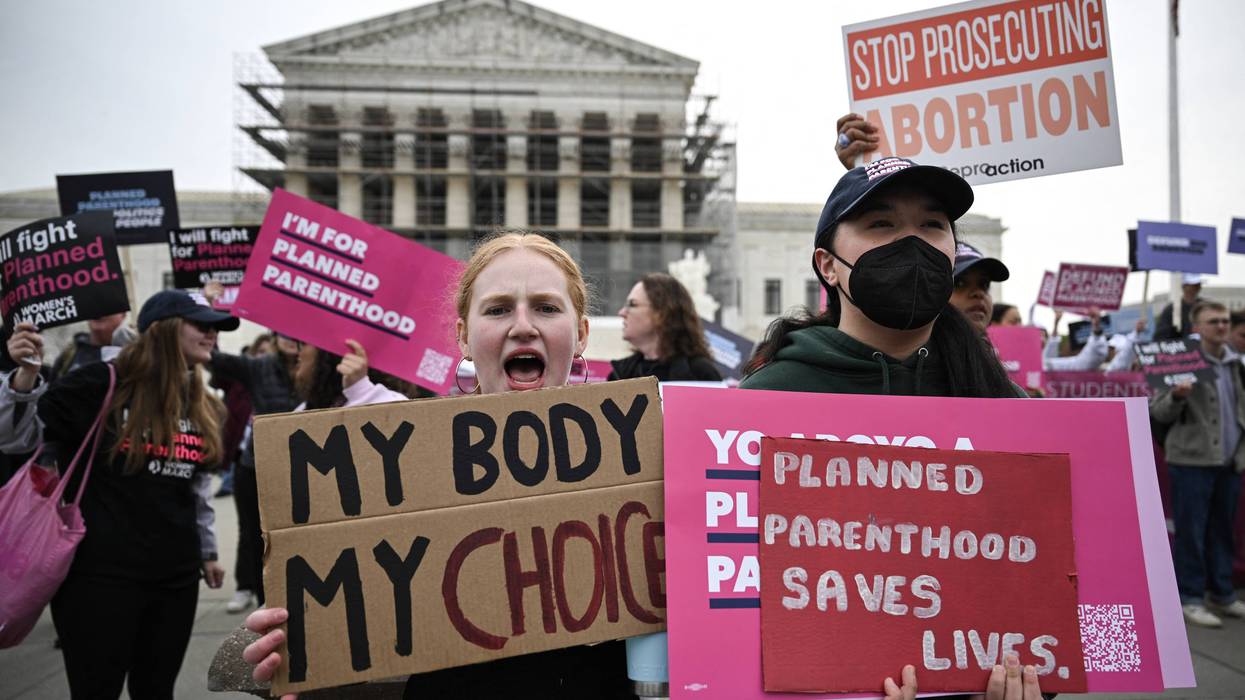
States that deny people's bodily autonomy limit "their ability to pursue the education and career options that are right for them, and to build financial stability," said the Institute for Women's Policy Research president.
Reproductive rights advocates and experts have long highlighted the dangers of abortion bans to people's health, but amid a wave of new state-level restrictions in the wake of Roe v. Wade's reversal, some have also recently emphasized the economic impact, as detailed in an analysis published Tuesday by the Institute for Women's Policy Research.
"IWPR's latest estimates show that states with the most restrictive abortion policies could cost the national economy nearly $68 billion annually in lost earnings, up from $64 billion in last year's estimate," according to the analysis. "Historically, legal abortion access has increased women's labor force participation and earnings. IWPR's analyses suggest that abortion restrictions continue to erode those gains nationwide, reducing women's labor force participation and earnings potential while weakening state and national economies in the process."
"Those losses—amounting to billions of dollars—could otherwise support what families actually need: affordable healthcare, caregiving, higher wages, business growth, and new jobs that strengthen local communities and state economies," the report notes. "This $68 billion estimate reflects only the impact of the most severe restrictions, including total bans and six-week gestational bans, that were in effect in 16 states in 2025."
The publication points out that "many other states may not have banned abortion outright, but still impose barriers that make abortion care harder to access, like waiting periods, mandated counseling, or targeted regulations on abortion providers that delay or deny care altogether. When accounting for all state-level restrictions on abortion access, combined with the federal funding prohibitions and the absence of federal protections, the annual average economic cost now exceeds $140 billion nationwide."
The overall figure is nearly $7 billion more than IWPR's estimate from last year. Putting that figure into context, the report explains that $7 billion "could fund Supplemental Nutrition Assistance Program (SNAP) benefits for about 1 million American families with children for an entire year. This is a striking figure considering the so-called 'One Big Beautiful Bill's' cuts to the program, which are projected to reduce or eliminate benefits for many low-income households."
Removing barriers to reproductive care on a national scale "could mean nearly 325,000 more women participating in the labor force each year, with the largest increases concentrated in states with some of the most restrictive abortion policies," IWPR estimated. For example, in Alabama, Kentucky, and Louisiana, their labor force participation could be over 1.3% higher, while in Mississippi, it could be up 1.5%.
If more women joined the workforce thanks to policies allowing reproductive freedom, IWPR projected that "national gross domestic product (GDP) could rise by 0.5%, and the economic gains would be largest in states such as Alabama, Arkansas, South Carolina, and West Virginia, which rank poorly on both abortion protections and per capita GDP. These states could potentially see their GDP grow by nearly 1% annually."
Like previous analyses, the publication also acknowledges that "Black and Latina women are more likely to experience the consequences of restrictive abortion policies and confront additional economic and structural barriers to accessing care that their White counterparts do not—even as abortion restrictions harm all women and the economy more broadly."
IWPR president and CEO Jamila K. Taylor stressed in a Tuesday statement that "this is fundamentally about human rights and economic justice."
"We know that legal access to abortion care increases women's autonomy to be able to participate in the labor force, which supports the stability of our entire economy," Taylor said. "When states deny people their bodily autonomy, they're also limiting their ability to pursue the education and career options that are right for them and to build financial stability for their family and community. Abortion restrictions don't just harm those who may become pregnant—they harm everyone."
President Donald Trump delivered mixed messages during the last campaign cycle: bragging about being the one to appoint the justices who helped reverse Roe with the Dobbs v. Jackson Women's Health Organization decision, but also suggesting that he wasn't in favor of a nationwide ban on abortion and that the issue doesn't really matter to Americans.
Since returning to the White House, the Republican and his allies in Congress have taken steps to reduce access to reproductive healthcare, and although the right-wing Supreme Court last month declined to restrict access to mifepristone, at least for now, Trump's Food and Drug Administration (FDA) is currently reviewing the medication, which is commonly used in abortion and miscarriage care.
Reproductive rights advocates have sounded the alarm over the FDA review. In response to reporting on it earlier this month, Planned Parenthood CEO Alexis McGill Johnson called it "a politically motivated farce."
"Mifepristone is safe and effective. We know it, the FDA knows it, and the more than 7.5 million people who've used mifepristone for abortion and miscarriage care over the past 25 years know it too," Johnson said. "But the Trump administration is bulldozing the overwhelming body of medical research and evidence to try to make it harder for everyone, everywhere to get an abortion. It's time for every American to take this threat seriously."

Current models "assume the future will behave like the past, even as we push the climate system into uncharted territory," said the lead author of a new report that's based on input from dozens of experts.
In a report published Thursday, UK experts highlighted the "growing gap between real-world climate risk and the economic analysis used to guide policy, supervision, and investment," while also warning that because the "window for preventing catastrophic warming" is narrowing, ambitious action "cannot await perfected models."
Various scientific institutions concur that 2025 was among the hottest years on record—and the ongoing failure of governments across the globe, particularly the Trump administration, to enact policies that would significantly cut planet-heating emissions from fossil fuels is pushing the Paris Agreement's 1.5°C and 2°C goals for this century further out of reach.
The new report from the University of Exeter and the think tank Carbon Tracker Initiative, titled Recalibrating Climate Risk, incorporates the expert opinions of 68 climate scientists from Australia, Austria, Canada, China, France, Germany, the Netherlands, Norway, Spain, Sweden, the United Kingdom, and the United States.
"Our expert elicitation reveals a fundamental disconnect: Climate scientists understand that beyond 2°C, we're not dealing with manageable economic adjustments," said Jesse Abrams, lead author and senior impact fellow at Exeter's Green Futures Solutions, in a statement.
"The climate scientists we surveyed were unambiguous," he explained. "Current economic models systematically underestimate climate damages because they can't capture what matters most—the cascading failures, threshold effects, and compounding shocks that define climate risk in a warmer world and could undermine the very foundations of economic growth."
Abrams said that "for financial institutions and policymakers relying on these models, this isn't a technical problem—it's a fundamental misreading of the risks we face, which current models miss entirely because they assume the future will behave like the past, even as we push the climate system into uncharted territory."
Current economic models miss the mark on climate risks, warning that catastrophic tipping points and extreme weather could crash the global economy, far worse than 2008.As said many times before delaying action will be far costlier than cutting emissions now.www.theguardian.com/environment/...
[image or embed]
— Ian Hall (@ianhall.bsky.social) February 5, 2026 at 12:46 AM
Communities around the world are already contending with devastating droughts, fires, and storms—and, as another report from researchers at Exeter and the UK's Institute and Faculty of Actuaries (IFOA) pointed out last month, "above 1.5°C, we enter the danger zone where multiple climate tipping points may be triggered, such as the collapse of ice sheets in Greenland and Antarctica, permafrost melt, Amazon dieback, and changes in ocean circulation."
The IFOA report "warned that when cascading and systemic risks are taken into account, warming of 2°C by 2050 could result in a 25% hit to projected GDP, rising to a halving of projected economic growth between 2070 and 2090," BusinessGreen editor-in-chief James Murray reported Thursday. "Similarly, a report from consultancy Boston Consulting Group calculated a third of the global economic output could be lost under a scenario where temperatures reach 3°C above preindustrial levels by 2100."
"The studies stand in stark contrast to some mainstream economic models that have suggested warming of 2°C or more will only reduce projected economic growth by a few percentage points—analyses that have been seized upon by opponents of climate action to argue that decarbonization policies can be dropped or delayed," Murray noted.
Abrams told the Guardian that some current economic models "are saying we'll have a 10% GDP loss at between 3°C and 4°C, but the physical climate scientists are saying the economy and society will cease to function as we know it. That's a big mismatch."
Your periodic reminder that the economic models that suggest climate change will knock a couple of percent of future GDP - models that are used widely by governments, investors, and businesses - are almost certainly complete garbage. www.businessgreen.com/news/4525211...
[image or embed]
— James Murray (@james-bg.bsky.social) February 5, 2026 at 7:08 AM
Laurie Laybourn, a Carbon Tracker board member and executive director of Strategic Climate Risks Initiative, cited another recent report that provides a bleak picture of the current moment and what lies ahead.
"As the UK government's landmark security assessment of ecosystem collapse showed last week, we are currently living through a paradigm shift in the speed, scale, and severity of risks driven by the climate-nature crisis," he said. "Yet, beyond this report, there has not been a corresponding paradigm shift in how regulators and government as a whole assess these risks."
"Instead, they're routinely underestimated if not missed entirely, meaning many regulations and government action are dangerously out of touch with reality," he continued. "This threatens disaster when that reality catches up with us. So, it's critical that policymakers change course, providing clear signals and guidance to markets that these risks should be priced accordingly, rather than downplayed."
And, as the experts emphasized Thursday, it's not just policymakers—investors are also still relying on "flawed economic advice," said Carbon Tracker founder and CEO Mark Campanale. The result is "widespread complacency... with many investors viewing climate scenario analysis as a tick-box disclosure exercise."
"Until the gap between scientists and economists' expectations of future climate damages is closed and government bodies act to ensure the integrity of advice upon which investment decisions are made," he added, "financial institutions will continue to chronically underprice climate risks—meaning that pension funds and taxpayers will remain dangerously exposed."
Hetal Patel, head of sustainable investment research at Phoenix Group, the UK's largest and retirement and savings business, said that her firm "supports the report's call for a more robust and coordinated approach to climate‑risk modeling. Underestimating physical risk doesn't just distort financial analysis and investment decisions, it underplays the real‑world consequences that will ultimately affect customer outcomes and society as a whole."
The new report stresses that addressing the "fundamental disconnect between what climate scientists understand about climate impacts and how these impacts are represented in economic models" would require "research investments spanning years," but rather than simply waiting for better modeling, decision-makers "must proceed on the basis of precautionary risk management, physical climate science, and observed impacts."
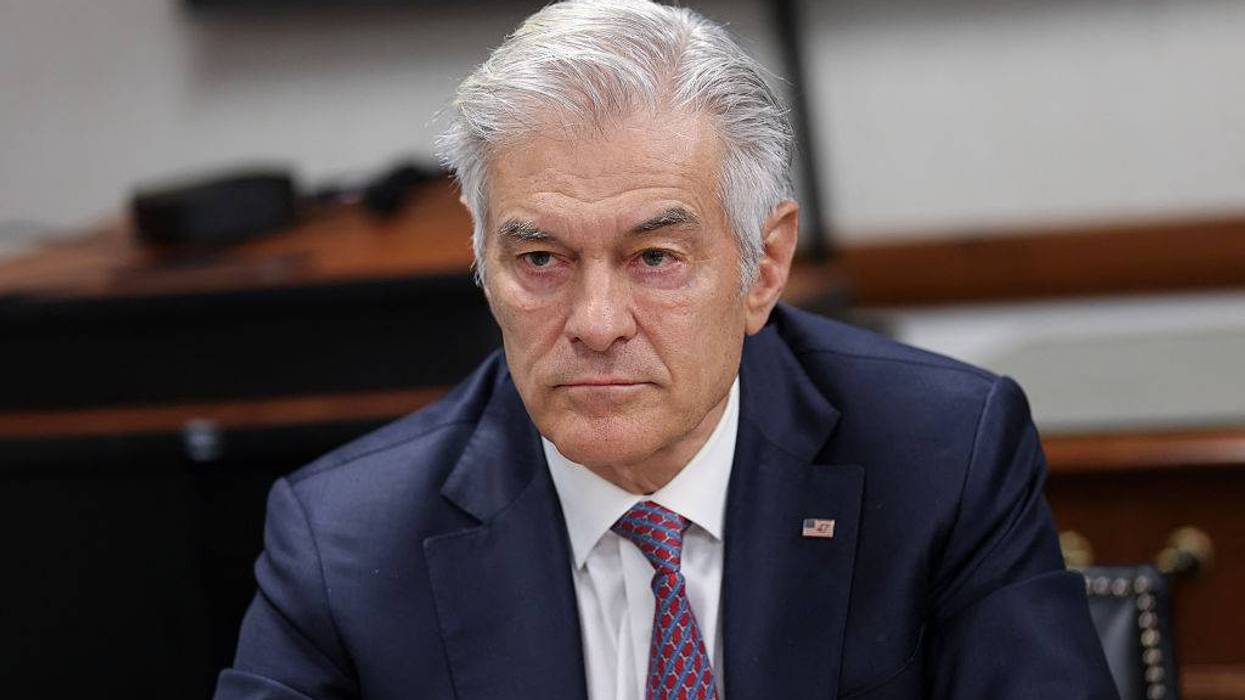
"I'm sure everyone would be happy to work another year if work meant getting paid millions of dollars to spout utter nonsense," responded one critic.
Medicare and Medicaid Administrator Mehmet Oz on Wednesday said that one of the ultimate goals of President Donald Trump's healthcare plan is to get Americans healthy enough so that they're able to work for at least one more year during their lives.
During an interview on Fox Business to tout Trump's recently unveiled and widely derided healthcare plan, Oz explained why it was important for Americans to be healthy so that they could be productive workers and contribute to US gross domestic product (GDP).
"A lot of people watching this segment are thinking we're talking about healthcare expenses," he said. "This is about the value to the US economy if we can get this right. If we can get the average person watching... to work one more year in their whole lifetime, just stay in your workplace for one more year, that is worth about $3 trillion to the US GDP."
"Wow!" exclaimed Fox Business host Maria Bartiromo.
Dr. Oz: "If we can get the average person to work one more year in their whole lifetime -- just stay in your workplace for one more year -- that is worth about $3 trillion to the US GDP. That's the productivity we would unleash ... if you're sick, you can't work." pic.twitter.com/9xixeDm2ux
— Aaron Rupar (@atrupar) January 21, 2026
"That's the productivity we would unleash of people feeling they have agency over their future, like they've got stuff they want to accomplish with their lives," Oz continued. "If you're sick, you can't work. So keep people healthy, they'll want to work, they'll want to produce, not just for one year but for many more... It's worth the investment to get that return."
"I love it," replied Bartiromo.
Oz's statement about getting Americans to work longer to improve national GDP was met with immediate criticism.
Journalist Brian Goldstone, who last year published a book focusing on Americans who are homeless despite having jobs, argued that Oz was simply clueless about the realities of working-class Americans.
"I recently met a widowed 71-year-old woman still working two jobs and living at an extended-stay hotel because even two jobs don't pay her enough to afford rent," he wrote in a post on Bluesky. "This is what 'one more year of work' looks like in America."
Economist Dean Baker of the Center for Economic and Policy Research noted that Oz doesn't seem to understand that most Americans don't have the kinds of cushy gigs he's enjoyed for decades.
"I'm sure everyone would be happy to work another year if work meant getting paid millions of dollars to spout utter nonsense on Fox, CBS, and other right-wing outlets," Baker remarked on X.
Baker also questioned the arithmetic behind Oz's claim about the vast benefits to the US economy of having everyone work for an extra year.
"I'm also curious where the hell he got the $3 trillion (10% of GDP)," he wrote. "I gather it is a Trump number, came straight out of his rear end."
Democratic political strategist Dan Kanninen said that Oz came off as utterly tone deaf about Americans' lives, and sarcastically encouraged the Trump administration to "put Dr. Oz and his 'Matrix' vision of the future where we all batteries for capital on the airwaves as much as possible."
Dell Cameron, a senior writer at Wired, argued that Oz's remarks were a damning indictment of former talkshow host Oprah Winfrey, who regularly featured purported experts of dubious credibility, including Oz, Phil McGraw, and João Teixeira de Faria, a Brazilian "faith healer" and convicted rapist currently serving a lifetime prison sentence.
"Hard to pin down which of the medical hacks platformed by Oprah's network has gone on to do the most harm, which is saying a lot since one is a cult leader who raped hundreds of women," he mused. "Then again, [Oz] is one of the most influential quacks of all time."
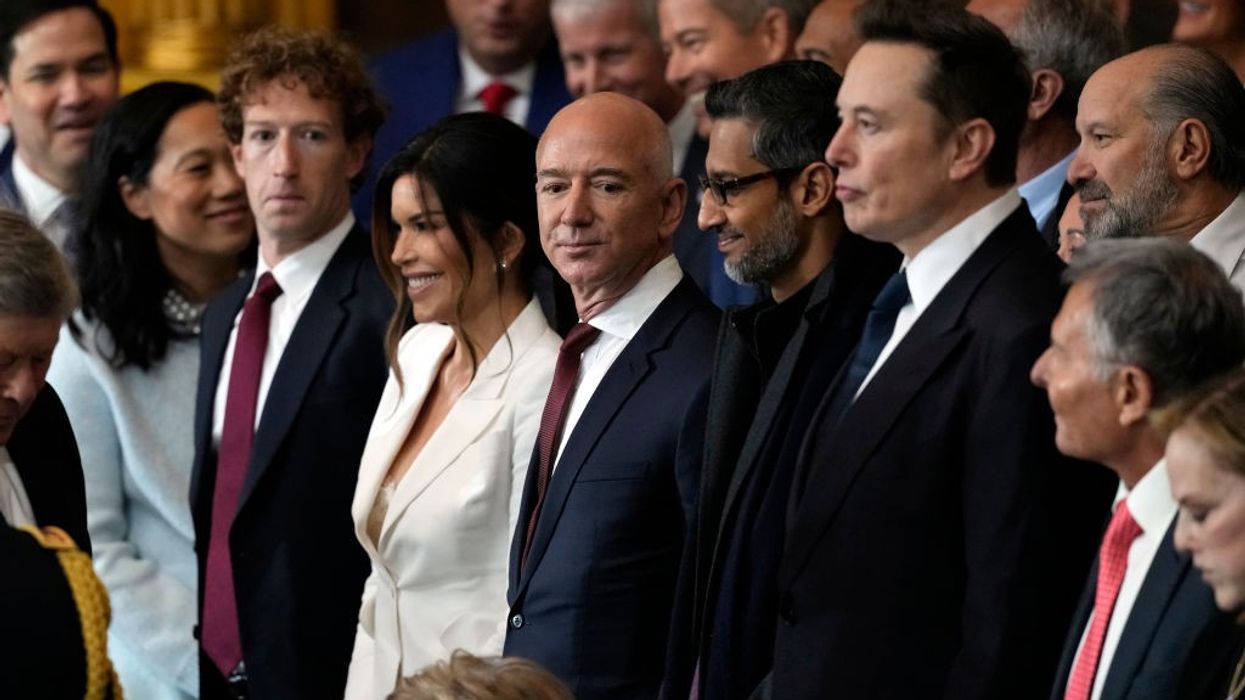
"People at the top are doing fine, people in the middle and lower income brackets are struggling a bit, to say the least."
President Donald Trump's allies this week hyped up newly released data showing that the US economy grew by more than 4% in the third quarter of 2025, but economists and journalists who dove into the report's finer details found some troubling signs.
Ron Insana, a finance reporter and a former hedge fund manager, told MS Now's Stephanie Ruhle on Tuesday night that there is a "split economy" in which growth is being driven primarily by spending from the top 20% of income earners, whom he noted accounted for 63% of all spending in the economy.
On the other side, Insana pointed to retail sales data that painted a very different picture for those on the lower end of the income scale.
"When you look at lower income individuals, nearly half of them are using 'buy-now-pay-later' for their holiday shopping," he said. "So we have this real split... People at the top are doing fine, people in the middle and lower income brackets are struggling a bit, to say the least."
Dean Baker, co-founder and senior economist of the Center for Economic and Policy Research, also took note of this split in the US economy, and he cited the latest data showing that real gross domestic income, which more directly measures worker compensation over total economic output, grew at just 2.4% during the third quarter.
Baker also said that most of the gains in gross domestic income showed up at the top of the income ladder, while workers' income growth remained stagnant.
The theme of a split economy also showed up in an analysis from Politico financial services reporter Sam Sutton published on Wednesday, which cited recent data from Bank of America showing that the bank's "top account holders saw take-home pay climb 4% over the last year, while income growth for poorer households grew just 1.4%."
Sutton said that this divergence in fortunes between America's wealthy and everyone else was showing up in polling that shows US voters sour on the state of the economy.
"In survey after survey, a majority of Americans say they’re straining under the pressure of rising living expenses and a softening job market," Sutton said. "The Federal Reserve Bank of Boston says low-income consumers have 'substantially' higher levels of credit card debt than they did before the pandemic. Even as growth and asset prices soar, Trump’s approval ratings are sagging."
Economist Paul Krugman on Tuesday argued in his Substack newsletter that one reason for this large disparity in economic outcomes has to do with the US labor market, which has ground to a halt in recent months, lowering workers' options for employment and thus lowering their ability to push prospective employers for higher wages.
"Trump may claim that we are economically 'the hottest country in the world,' but the truth is that we last had a hot labor market back in 2023-4," Krugman explained. "At this point, by contrast, we have a 'frozen' job market in which workers who aren’t already employed are having a very hard time finding new jobs, a sharp contrast with the Biden years during which workers said it was very easy to find a new job."
None of these caveats about the latest gross domestic product (GDP) data stopped US Commerce Secretary Howard Lutnick from going on Fox News on Tuesday night and falsely claiming that a 4.3% rise in GDP meant that "Americans overall—all of us—are going to earn 4.3% more money."
Lutnick: The US economy grew 4.3%. What that means is that Americans overall—all of us—are going to earn 4.3% more money. pic.twitter.com/SIFi99NRBX
— Acyn (@Acyn) December 24, 2025
In reality, GDP is a sum of a nation's consumer spending, government spending, net exports, and total investments, and is not directly correlated with individuals' personal income.
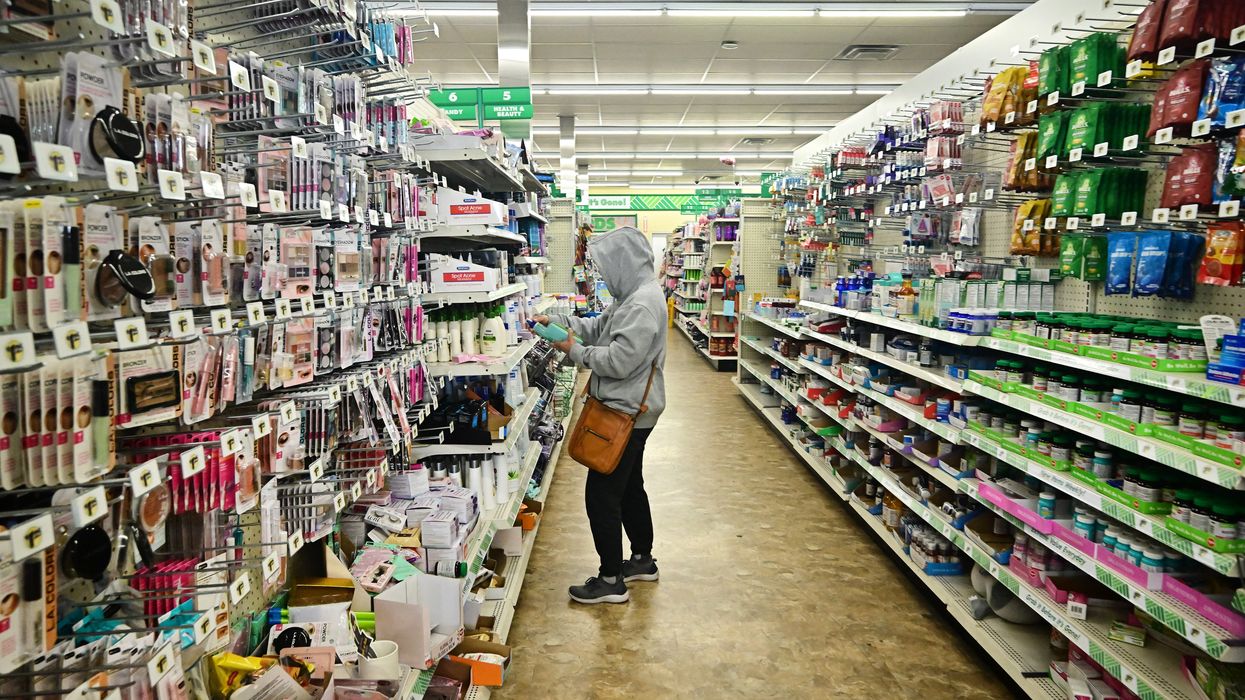
"Our economy is crumbling under President Trump's mismanagement," said the head of one progressive group.
The United States economy decelerated during the first quarter of 2025, as businesses braced for sweeping tariffs from U.S. President Donald Trump, according to a Wednesday "advance estimate" from the U.S. Bureau of Economic Analysis—marking the first contraction of the country's real gross domestic product since 2022.
Real GDP declined at an annual rate of 0.3% in January, February, and March of 2025, according to the report. That headline figure is a dramatic turn around from the final quarter of 2024, when real GDP increased 2.4%.
According to the report, "the decrease in real GDP in the first quarter primarily reflected an increase in imports... and a decrease in government spending." When calculating GDP, imports are subtracted, meaning more imports will yield a lower number.
A number of outlets have cautioned that the 0.3% contraction figure is somewhat misleading. Axios pointed to solid business investment and consumer spending data in the report as evidence "signaling at least some underlying momentum in the economy—at least once volatile measures like trade are stripped out." The New York Times offered similar analysis.
But even with this caveat, the economic picture is less than rosy. "Maybe some of this negativity is due to a rush to bring in imports before the tariffs go up, but there is simply no way for policy advisors to sugar-coat this. Growth has simply vanished," said Chris Rupkey, chief economist at Fwdbonds.
Several observers were quick to point the finger at the Trump administration.
"Our economy is crumbling under President Trump's mismanagement, and today's falling GDP data confirms our slide toward a recession," said Lindsay Owens, the executive director of the progressive group Groundwork Collaborative. "Trump is creating the conditions for a particularly brutal recession."
"It turns out that when you launch a trade war with blanket tariffs, layoff federal workers en masse, cancel federal contracts, and reduce skilled immigration, you will have negative GDP growth," wrote Rep. Ro Khanna (D-Calif.) on X.
Rep. Don Beyer (D-Va.) said that "Trump's chaos is clearly and significantly raising the risk of a recession, and the economic warning lights are all flashing red."
In response to the release, markets slipped on Wednesday.
Trump, for his part, took to his social media site Truth Social on Wednesday to say that "This is Biden's Stock Market, not Trump's." He added that "tariffs will soon start kicking in, and companies are starting to move into the USA in record numbers … This will take a while, has NOTHING TO DO WITH TARIFFS, only that he left us with bad numbers, but when the boom begins, it will be like no other."
Economists say they think Wednesday's numbers are related to tariffs. According to reporting from the Times, the main takeaway from the report is that consumers and businesses started to modify their behavior even prior to Trumps "Liberation Day" tariffs on April 2, which rattled markets.
A surge in the trade deficit edged GDP into negative territory, said Dean Baker, senior economist for the left-leaning economic think tank the Center for Economic and Policy Research, in a statement on Wednesday. "This was due to massive stockpiling of inventories and purchases of durable goods in anticipation of tariffs."
"The negative GDP number could also mean the end of the big upswing in productivity growth under Biden. This is bad news for both real wage growth and inflation," continued Baker.
"No surprise that GDP took a hit in the first quarter, mainly because the balance of trade blew up as companies imported goods like crazy to front-run tariffs. The more telling number for the future of the expansion was consumer spending, and it grew, but at a relatively weak pace," said Robert Frick, corporate economist with Navy Federal Credit Union, according to CNBC.
Wednesday's report also registered increased inflation. The personal consumption expenditures price index, the Federal Reserve's favored inflation gauge, registered a 3.6% gain for Q1, up from 2.4% in the final quarter of last year.
The numbers from the Bureau of Economic Analysis come a day after reports of consumer confidence in April dipping to lows not seen since early in the COVID-19 pandemic.
There is still major economic data set to be released this week. On Friday, the U.S. Bureau of Labor Statistics will release its jobs report for the month of April.
This article was updated with a comment from Rep. Don Beyer (D-Va.).
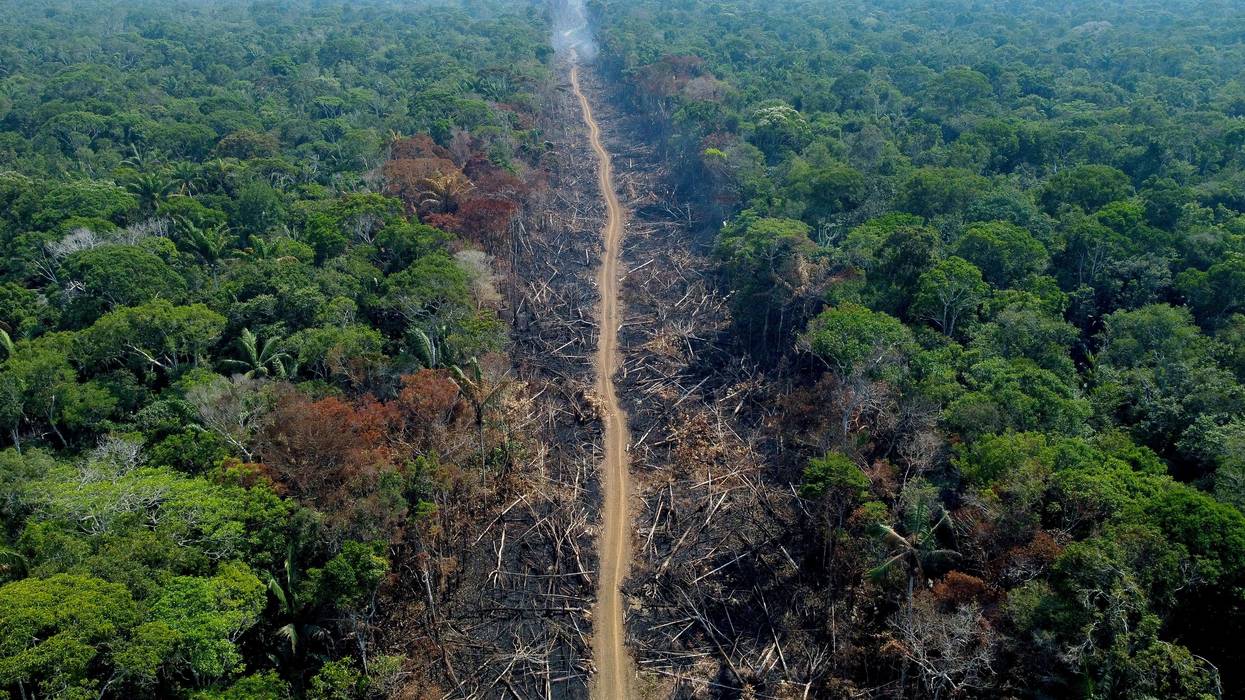
The game of growth has convinced us that the only way we can win is to continue to play.
In Richard Connell’s popular short story “The Most Dangerous Game,” hunter Sanger Rainsford goes overboard while sailing to the Amazon, washing up on an island owned by deceivingly charismatic General Zaroff. Rainsford expects Zaroff to help him off the island, but instead, Zaroff invites him to participate in a hunt.
A hunt, to Rainsford’s utter disbelief, in which he is the prey.
Our reckless pursuit of economic growth has become society’s “most dangerous game.” It keeps us trapped on an island of inequality, environmental degradation, and corporate power, all while convincing us there’s still a chance we can win if we continue to play.
To win this game, we can’t keep playing by the rules, but rewrite them entirely. We can start by challenging one of the most dominant rules of the growth model: Gross Domestic Product (GDP).
But there is no “winning” in a game dependent on the exploitation of people and nature. As long as “growth” is defined by profits and production, people and the planet will always lose.
That is, unless you are one of the few Zaroffs of the world: According to an Oxfam report, the world’s top 1% own more wealth than 95% of humanity, and over the past 30 years, income inequality has steadily risen to the point where many economists believe wealth is more stratified today than any time since the Gilded Age.
If economic growth doesn’t deliver its promised benefits, then why do we continue to play? Because those who preach economic growth as a path to prosperity—usually the same people who bag the most benefit—have engineered a game of forced “choice:” Hunt, or be hunted. As Zaroff explains to Rainsford, “I give him his option, of course.” But if they decline, he hands them over to his servant for torture. “Invariably,” Zaroff muses, “they choose the hunt.”
The same logic is used to silo economic and environmental objectives, perpetuating the false premise that reducing poverty and raising living standards must come at the cost of climate action. Such “choice” is equally manufactured—if economic growth is truly a means of improving societal well-being, shouldn’t actions that secure and sustain access to basic necessities be a vital part of our economy?
Even Americans seem to agree that economic growth is an incomplete measure of prosperity. In a nationally-representative survey of 3,000 participants, conducted by survey organization Verasight between October 21 and November 5, only 12.8% (with a 2.3% margin of error) responded that economic growth is a “mostly accurate” way of assessing societal well-being. The rest were skeptical, with 50.8% calling it “somewhat accurate” and 36.5% deeming it inaccurate altogether.
And yet, despite the dissatisfaction, dissonance, and destruction that our economic model begets, pundits and policymakers “invariably” brandish growth as the hallmark of prosperity. Meanwhile, the Zaroffs of the world continue to indulge their unchecked appetite for profit, capitalizing off the preservation of the status quo.
To win this game, we can’t keep playing by the rules, but rewrite them entirely. We can start by challenging one of the most dominant rules of the growth model: Gross Domestic Product (GDP).
GDP is a measure of aggregate production, not a reflection of progress and well-being. It excludes the costs of pollution and exploitation and ignores 16.4 billion hours of unpaid labor, much of which is performed by women. It also omits many non-materialistic goods (health, family, and equality) that define happiness and quality of life. In fact, economists have always warned against conflating GDP with societal well-being—even one of its founders, Simon Kuznets, told Congress that GDP was a poor tool for policymaking.
As Robert Kennedy put it in his 1968 election speech, GDP “measures everything in short, except that which makes life worthwhile.” By adopting more inclusive measures of progress that consider health, equality, and environmental well-being, we can move beyond the flawed metric of GDP as a measure of prosperity. In doing so, we build economies that prioritize people and the planet instead of outrageous profits.
Such measures are already gaining traction in the U.S. and across the globe. For example, India’s Ease of Living Index assesses the well-being of 114 Indian cities, using a total of 50 indicators that fall under three pillars: Quality of Life, economic ability, and sustainability. At the international scale, the United Nations is working to advance a “Human Rights Economy” that anchors all economic decisions in human rights. In the U.S., Vermont became the first state to adopt an alternative to GDP called the “Genuine Progress Indicator” in 2012, shortly followed by Maryland and 19 other states.
These measures aren’t perfect, nor should they be the only way we address a system that continues to inflict irreparable damage on global ecosystems and communities. However, they play a crucial role in disrupting our current growth paradigm, establishing an economic model where well-being isn’t exclusive to the wealthy, and where societal and environmental objectives are aligned.
It’s time we expose the injustices of our economic system, rewrite the rules, and beat the Zaroffs of the world at their own game.
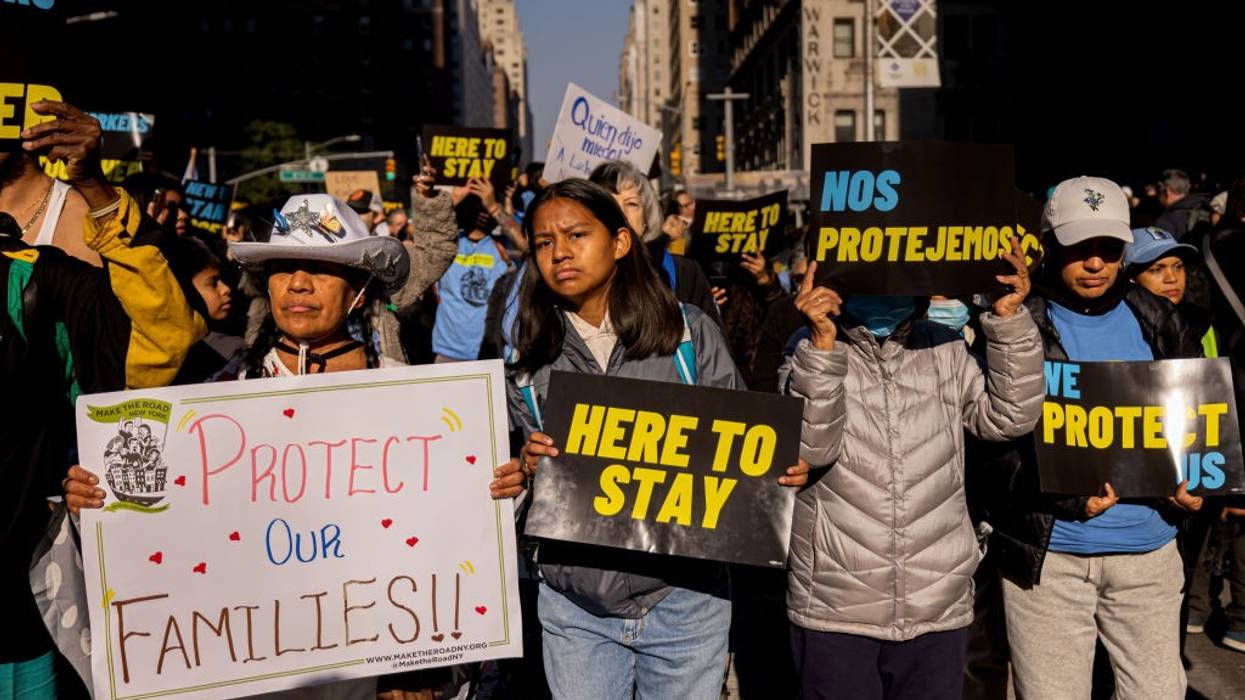
"All it will do is raise grocery prices, destroy jobs, and shrink the economy," JEC Chair Martin Heinrich said of the president-elect's plan to deport millions of immigrants.
Echoing recent warnings from economists, business leaders, news reporting, and immigrant rights groups, Democrats on the congressional Joint Economic Committee detailed Thursday how President-elect Donald Trump's planned mass deportations "would deliver a catastrophic blow to the U.S. economy."
"Though the U.S. immigration system remains broken, immigrants are crucial to growing the labor force and supporting economic output," states the new report from JEC Democrats. "Immigrants have helped expand the labor supply, pay nearly $580 billion a year in taxes, possess a spending power of $1.6 trillion a year, and just last year contributed close to $50 billion each in personal income and consumer spending."
There are an estimated 11.7 million undocumented immigrants in the United States, and Trump—who is set to be sworn in next month—has even suggested he would deport children who are American citizens with their parents who are not and attempt to end birthright citizenship.
Citing recent research by the American Immigration Council and the Peterson Institute for International Economics, the JEC report warns that depending on how many immigrants are forced out of the country, Trump's deportations could:
Highlighting how mass deportations would harm not only undocumented immigrants but also U.S. citizens, the report explains that construction worker losses would "make housing even harder to build, raising its cost," and "reduce the supply of farmworkers who keep Americans fed as well as the supply of home health aides at a time when more Americans are aging and requiring assistance."
In addition to reducing home care labor, Trump's deportation plan would specifically harm seniors by reducing money for key government benefits that only serve U.S. citizens. The report references estimates that it "would cut $23 billion in funds for Social Security and $6 billion from Medicare each year because these workers would no longer pay into these programs."
Sen. Martin Heinrich (D-N.M.), who chairs the JEC, said Thursday that "as a son of an immigrant, I know how hard immigrants work, how much they believe in this country, and how much they're willing to give back. They are the backbone of our economy and the driving force behind our nation's growth and prosperity."
"Trump's plan to deport millions of immigrants does absolutely nothing to address the core problems driving our broken immigration system," Heinrich stressed. "Instead, all it will do is raise grocery prices, destroy jobs, and shrink the economy. His immigration policy is reckless and would cause irreparable harm to our economy."
Along with laying out the economic toll of Trump's promised deportations, the JEC report makes the case that "providing a pathway to citizenship is good economics. Immigrants are helping meet labor demand while also demonstrating that more legal pathways to working in the United States are needed to meet this demand."
"Additionally, research shows that expanding legal immigration pathways can reduce irregular border crossings, leading to more secure and regulated borders," the publication says. "This approach is vital for managing increased migration to the United States, especially as more people flee their home countries due to the continued risk of violence, persecution, economic conditions, natural disasters, and climate change."
The JEC report followed a Senate Judiciary Committee hearing on Tuesday that explored how mass deportations would not only devastate the U.S. economy but also harm the armed forces and tear apart American families.
In a statement, Vanessa Cárdenas, executive director of the advocacy group America's Voice, thanked Senate Judiciary Committee Chair Dick Durbin (D-Ill.) "for calling this important discussion together and shining a spotlight on the potential damage."
Cárdenas pointed out that her group has spent months warning about how Trump's plan would "cripple communities and spike inflation," plus cause "tremendous human suffering as American citizens are ripped from their families, as parents are separated from their children, or as American citizens are deported by their own government."
"Trump and his allies have said it will be 'bloody,' that 'nobody is off the table,' and that 'you have to send them all back,'" she noted, arguing that the Republican plan will "set us back on both border control and public safety."
Cárdenas concluded that "America needs a serious immigration reform proposal—with pathways to legal status and controlled and orderly legal immigration—which recognize[s] immigrants are essential for America's future."

"By focusing mostly on economic statistics that benefit mostly the wealthy... the nation's political and media elites blithely overlook the hard evidence that the economy is still structurally unsound for large swaths of the public."
A U.S. anti-hunger group marked April Fools' Day on Monday with a snarky statement suggesting that hungry Americans "can eat positive economic statistics about the soaring stock market or the growing gross domestic product."
"Let them eat GDP reports," Hunger Free America declared of the 44 million Americans—including 13 million children—who live in food insecure households, according to the U.S. Department of Agriculture.
GDP is the market value of all the finished goods and services produced in a country over a certain time period. Critics have long argued against using it as the premier indicator of how a nation is doing.
"The old school way of the elites fighting hunger was to say, 'let them eat cake,'" said Hunger Free America CEO Joel Berg. "But the more modern approach is to say, 'let them eat a report of the nation's growing GDP, although the report offers empty calories.'"
"By focusing mostly on economic statistics that benefit mostly the wealthy—like stock indexes—the nation's political and media elites blithely overlook that hard evidence that the economy is still structurally unsound for large swaths of the public, and then those same elites are flummoxed as to why the public tells pollsters they are still not satisfied with the economy," Berg explained.
"The country's impoverished multitudes can now get all they can eat—assuming they can digest paper report pages."
"But the good news is that, none of that matters now, because truckloads of positive economic reports are being shipped to food banks, soup kitchens, and food pantries nationwide, and the country's impoverished multitudes can now get all they can eat—assuming they can digest paper report pages and cardboard report covers, and don't mind a bit of poisonous ink," he quipped.
While inflation has eased in the United States over the past two years in the wake of the Covid-19 pandemic, corporations have engaged in price gouging that has kept costs high for Americans, everywhere from gas pumps to grocery stores to fast food restaurants.
"It's one thing for corporations to pass reasonable increased costs to consumers. It's another for them to line their coffers by exploiting Americans who are just trying to get by," the Groundwork Collaborative's Liz Pancotti said in January, as the group released a related report. "It's time to rein in corporate price gouging—or families will continue to pay the price."
Data released last month by the Federal Reserve shows that the top 1% of Americans are the richest they have ever been, with a collective $44.6 trillion in wealth, a record largely driven by the stock market. President Joe Biden and some progressive Democratic lawmakers recently renewed calls for wealth taxes, but such proposals are not expected to pass the divided Congress.
Meanwhile, the federal minimum wage is $7.25 an hour, and has been so since 2009. Although state policymakers have taken action to raise pay for some or all workers, national legislation to boost wages also has not been able to get through Congress.

"So immigrants helped grow our economy? Sure doesn't fit the narrative that Republicans are selling," said Rep. Delia Ramirez.
As members of the U.S. Senate on Wednesday battled over a bipartisan security package containing "chaotic and cruel" border policies, a nonpartisan federal agency highlighted the economic benefits of immigration's impact on the labor force.
Based on 10-year projections, "the labor force in 2033 is larger by 5.2 million people, mostly because of higher net immigration," Congressional Budget Office (CBO) Director Phill Swagel said in a statement. "As a result of those changes in the labor force, we estimate that, from 2023 to 2034, GDP will be greater by about $7 trillion and revenues will be greater by about $1 trillion than they would have been otherwise."
Those are some key takeaways from a new CBO report, The Budget and Economic Outlook: 2024 to 2034.
Although, as The Washington Post's Jeff Stein pointed out, "it does not take into account any legislation that Congress may or may not approve," the immigration-related projection still caught the attention of several politicians and observers.
"Your yearly reminder that undocumented immigrants pay roughly $12 billion in taxes every year—and contribute far more than they receive in benefits!" declared Democratic strategist Sawyer Hackett.
The Institute on Taxation and Economic Policy found in 2017 that undocumented immigrants contribute an estimated $11.74 billion a year to state and local taxes. CNN reported last year that they contribute billions more to federal tax revenue by filing with individual taxpayer identification numbers.
The new CBO report notably contradicts a GOP talking point—as Republicans in Congress are suddenly killing a border package they have demanded for months, seemingly to benefit the presidential campaign of former President Donald Trump.
As legal analyst and former prosecutor Eric Lisann said in response to the report, "To be clear the prevailing discourse when Republicans discuss immigration is that immigration is a significant net drain on the economy."
Democratic New York City Comptroller Brad Lander stressed that "immigration benefits our economy. Immigrant New Yorkers are more likely to be employed and more likely to create jobs by starting businesses. Instead of scapegoating, we need stronger management to help asylum-seekers file asylum applications and get work authorizations."
Democrats in Congress—particularly those who have blasted the GOP's immigration policy demands—were also quick to weigh in.
"Turns out immigrants arent' 'takers' after all—they're givers to the U.S. economy and essential to a sustainable future, especially if we want elder generations to age with dignity," said Congresswoman Alexandria Ocasio-Cortez (D-N.Y.).
Fellow "Squad" member Rep. Ilhan Omar (D-Minn.), a Somali war refugee, suggested the CBO's report "is not helpful to all the fearmongers in the Senate and House. Clearly immigrants have and will always be an asset in our economy."
Sharing the findings on social media, Congressional Progressive Caucus Chair Pramila Jayapal (D-Wash.) wrote, "This is for GOP folks screaming anti-immigrant lies about immigrants draining our economy as well as Dems who should defend immigrants and push for humane immigration reforms rather than GOP enforcement-only strategies: Immigrants strengthen our economy, communities, and country."
U.S. Rep. Delia Ramirez (D-Ill.) also urged her colleagues to circulate the information, saying: "So immigrants helped grow our economy? Sure doesn't fit the narrative that Republicans are selling. Democrats need to start standing on these facts instead of negotiating with extremists who are scapegoating our immigrant communities."
In the upper chamber on Wednesday, Sen. Alex Padilla (D-Calif.) was one of few progressive members who opposed the package—and he made clear his opposition to the border policies also widely decried by rights groups nationwide.
Padilla also noted the CBO report, saying, "Your reminder that while Republicans are hell-bent on villainizing immigrants, immigration is BOOSTING our economy."