

SUBSCRIBE TO OUR FREE NEWSLETTER
Daily news & progressive opinion—funded by the people, not the corporations—delivered straight to your inbox.
5
#000000
#FFFFFF
To donate by check, phone, or other method, see our More Ways to Give page.
Daily news & progressive opinion—funded by the people, not the corporations—delivered straight to your inbox.
"This so-called task force is nothing more than a bullshit distraction."
The Trump administration is planning to boot more than 700,000 people from their Affordable Care Act coverage as part of a purported initiative to root out fraud in the program—an effort that campaigners said is nothing more than a pretext to kick more people off healthcare.
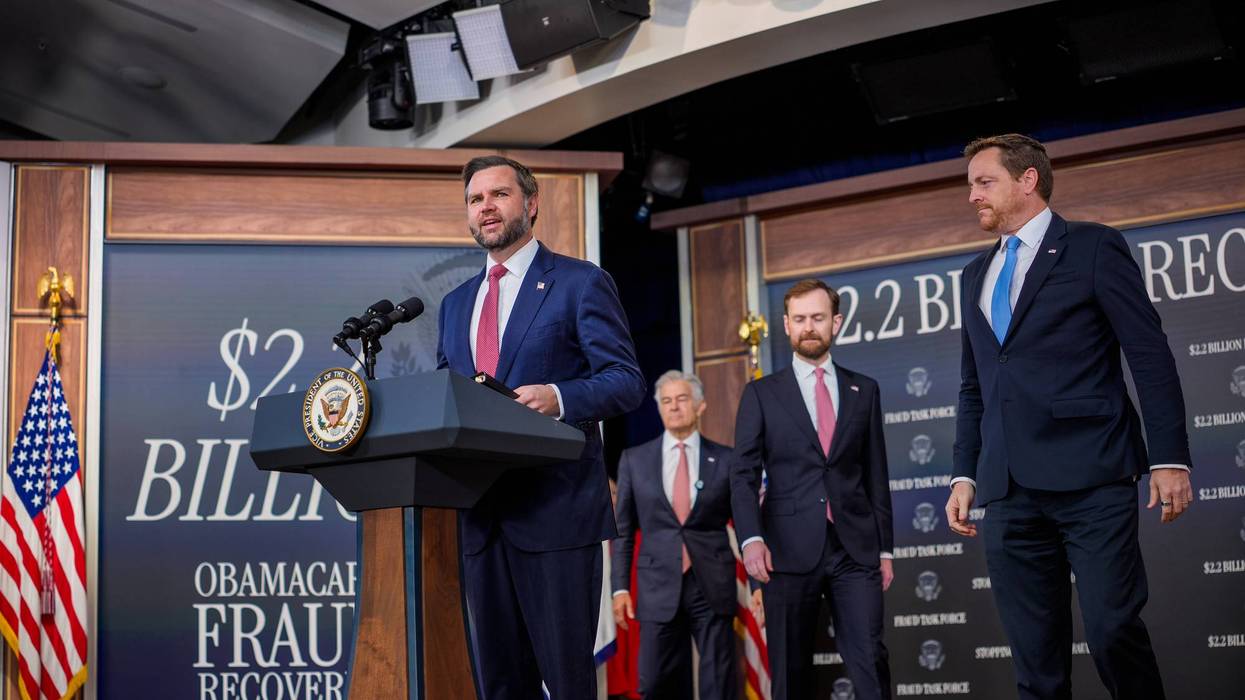
Vice President JD Vance, who is leading the White House's "Task Force to Eliminate Fraud," announced the planned ACA purge during a press conference on Tuesday alongside Centers for Medicare and Medicaid Services Administrator Mehmet Oz, whose agency has touted a right-wing think tank's dubious claim that millions of ACA enrollees are on the program improperly.
Vance insisted during Tuesday's press conference that the administration is putting itself "under an extraordinary burden of proof" to ensure its mass removal doesn't impact people who are eligible for ACA coverage, but advocates were not convinced.
"Vance's task force is a smokescreen for kicking people off coverage," declared the advocacy group Protect Our Care. The organization's president, Brad Woodhouse, said in a statement that Vance's task force "is nothing more than a bullshit distraction—a political stunt designed to throw even more people off their coverage while pretending to save taxpayers’ money."
"At a time when millions of Americans are already losing coverage and facing skyrocketing costs, Vance and this administration are making the crisis exponentially worse," said Woodhouse. "They are piling on more red tape, more confusion, and more opportunities for people to lose the coverage they rely on. Families need coverage they can afford and count on when they get sick. Vance’s task force won’t accomplish that. It’s a smokescreen for an administration whose sole mission is to make it harder to get and stay covered but to shower billionaires with tax breaks instead."
Millions of people have lost ACA and Medicaid coverage since the start of President Donald Trump's second White House term, due in large part to a Republican budget law that cut Medicaid by more than $800 billion and did nothing to extend enhanced ACA subsidies, sending premiums soaring.
Trump administration officials have baselessly claimed that their anti-fraud efforts were the key driver of ACA enrollment declines this year.
The word ‘fraud’ here obscures a lot.
Many of them may have been accidentally committing ‘fraud’ bc they live in a state that didn’t expand Medicaid and earn too little to qualify for ACA subsidies. There have been cases of brokers signing those folks up for the commission. pic.twitter.com/ek8gaVzJ7g
— Jordan Weissmann (@JHWeissmann) September 22, 2026
The mass disenrollment push comes less than two weeks after the Trump administration said it would send $500 rebate checks to some Americans who were allegedly "overcharged" under the ACA. Critics noted that the checks would only go to a small sliver of ACA enrollees and would do virtually nothing to offset premium hikes that are hitting millions of Americans.
Vance indicated Tuesday that the roughly 750,000 individuals who will soon be removed from the ACA due to alleged fraud are just the start of a broader purge. Around 19 million people are currently enrolled in ACA marketplace coverage.
"We're gonna do some additional verification," said Vance, who suggested the administration is using artificial intelligence tools to identify purported fraud. "We expect that most of these people are fraudulently enrolled, but we're gonna do some additional verification on about 419,000 people."
Democrats on the House Energy and Commerce Committee, which has jurisdiction over the ACA, wrote Tuesday that "people losing healthcare isn't a bug, it's [Trump and the GOP's] plan."
"First Republicans stripped Medicaid from millions," the Democrats wrote on social media. "Then they let premiums spike for millions more. Now JD Vance is using claims of 'fraud' to take coverage from hundreds of thousands more."
"They didn’t cheat their way in. They simply can’t afford to stay in the program."
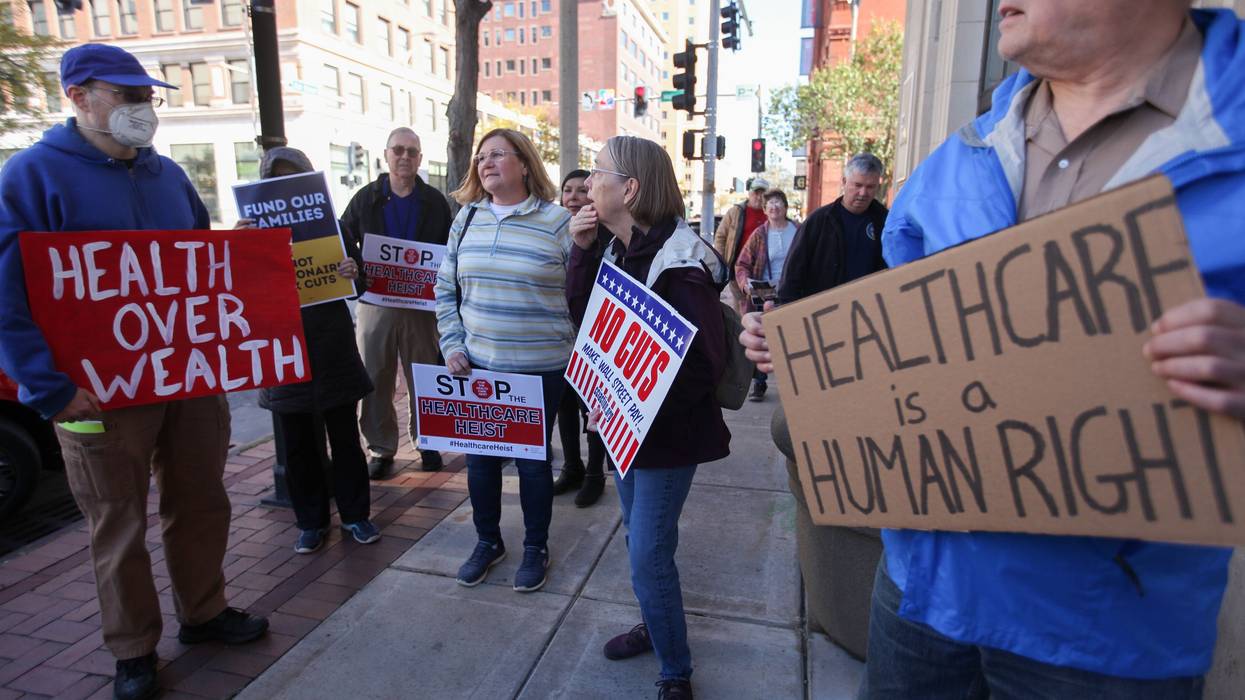
President Donald Trump's administration has tried spinning government data showing millions of people have dropped their health insurance coverage under the Affordable Care Act by claiming these people were defrauding the program.
However, an analysis published Tuesday by Public Citizen refutes this claim, finding that most people who lost their ACA coverage did so because they could not afford to keep it after congressional Republicans let enhanced health insurance subsidies expire last year.
Data released last month showed that nationwide ACA enrollment fell from 22.3 million people in 2025 to just 17.5 million in 2026, a drop of nearly five million people over the span of just a year.
US Health and Human Services Director Robert F. Kennedy Jr. and Centers for Medicare and Medicaid Services Administrator Mehmet Oz have both said this drop is due to the administration's efforts to root out fraud, with Oz even saying that current enrollment in the program is at "too high of a number."
The Public Citizen report, however, finds that "the decline in... enrollment this year has nothing to do with removing deceitful enrollees," as what "the numbers show is that American families are being priced out of coverage."
According to Public Citizen's analysis, the best way for a fraudster to game the system created by the ACA would be to falsely claim to have an income right around the poverty line, which would ensure the fraudulent enrollee would get a higher subsidy to purchase coverage.
In other words, if the administration were really pursuing fraud on a mass scale, it would likely mean a drop in enrollees who are claiming incomes near the poverty line.
"But that’s not what is happening," the report explains. "The people losing coverage are concentrated at incomes well above the poverty line. They are low- and middle-income families whose premiums doubled after subsidies were cut. They didn’t cheat their way in. They simply can’t afford to stay in the program."
In fact, the report finds that enrollment is actually growing among people who claim income right at the poverty line, which could suggest there is more prospective fraud in the program than before.
However, the report authors do not think that this increase is due to fraud, but rather to "people living just below the poverty line in states that refused to expand Medicaid" and whose income is not low enough to qualify for Medicaid, but too high to qualify for ACA subsidies.
"To escape the coverage gap, some have reported incomes just above the poverty line," states the report, "enough to be eligible for the ACA marketplace."
The ACA isn't the only federal healthcare program under pressure from Trump administration and GOP policies, as cuts to Medicaid included in Republicans' 2025 budget law are projected by the Congressional Budget Office to leave more than 10 million fewer people enrolled in the program by 2034.
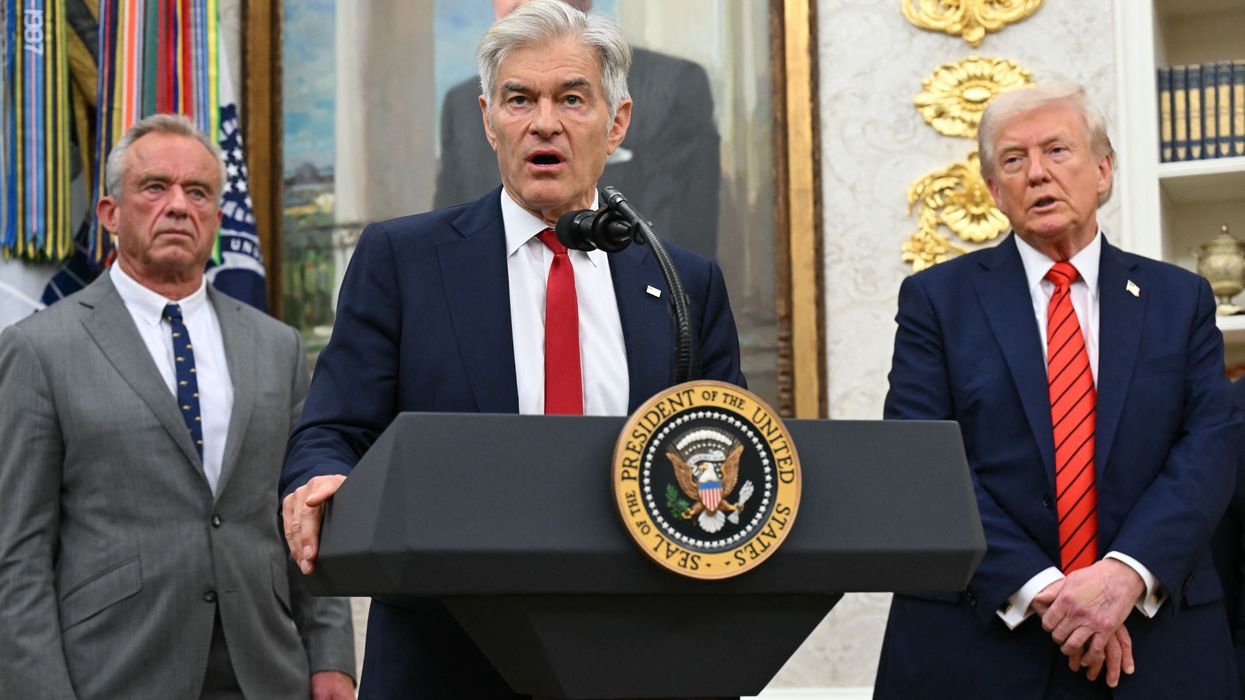
The Trump administration on Monday unveiled a rule that is expected to push millions of low-income people off Medicaid by imposing complex bureaucratic barriers in the form of work reporting requirements, which have proven disastrous at the state level.
The rule, released by the Centers for Medicare and Medicaid Services (CMS), marks a key step toward enacting the Republican budget reconciliation package that President Donald Trump signed into law last summer. That measure included around $900 billion in cuts to Medicaid, with new work requirements projected to account for nearly $330 billion of that total.
The new rule will dictate how states must implement the budget law's Medicaid work mandates and who is exempt from the requirements. States are already spending tens of millions of dollars hiring new staff and upgrading technology in preparation for the mandates taking effect next year.
Broadly, the Trump-GOP law requires adults without disabilities between the ages of 19 and 64 to demonstrate at least 80 hours of work, community service, or other "qualifying activities" per month to keep their Medicaid coverage.
Exemptions to the work reporting requirements include people who are pregnant, caregivers to children under the age of 14, or "medically frail." The CMS rule defines the latter category as those with "physical or behavioral health conditions that significantly impair their ability to consistently work or participate in other community engagement activities."
Advocates warned that the rule will force many sick people off coverage. The rule states that people with HIV/AIDS, end-stage renal disease, and cancer would not necessarily be exempt from the work reporting requirements.
According to The New York Times, "states had expected that people with certain serious diagnoses would qualify for the exception, and they had been developing ways to match applications with existing medical records to identify most such people automatically."
"Nebraska’s Medicaid program, which began enforcing a work requirement last month, developed a list of exempted conditions that is nearly 300 pages long," the Times reported. "The state will now need to adjust."
"When these requirements go into effect at the beginning of next year, it’s going to be a complete train wreck for America."
Anthony Wright, executive director of Families USA, said Monday that "far from protecting the vulnerable, this guidance significantly raises the barrier for demonstrating medical frailty, meaning many patients in the middle of treatment will have the new hassle of proving their condition, over and over, with any mistake or gap being penalized by the loss of their healthcare and coverage."
"Through this rule," said Wright, "CMS is requiring duplicative documentation and prohibiting states from taking full advantage of consumer-friendly tools like self-attestation."
During the first year of the work reporting requirements, which are set to take effect nationwide in January 2027, people will be allowed to attest in Medicaid applications that they meet one of the exemptions, according to administration officials.
"Beginning in 2028, states will be expected to verify the exemptions," NBC News reported. "The temporary flexibility, the officials said, is intended to give states time to build systems that can verify exemptions using claims data and other records."
The advocacy group Protect Our Care warned that the new rule "creates a labyrinth of paperwork, reporting mandates, and rigid eligibility rules designed to ensure people lose healthcare, even when they should qualify to keep it."
“Instead of lowering costs or making care more accessible, Republicans are weaponizing government bureaucracy against the American people," said Brad Woodhouse, the president of Protect Our Care. "They are betting that if they make the process confusing and exhausting enough, millions of people will fall through the cracks and lose the care they depend on to survive. Hospitals will suffer, providers will be pushed further to the brink, and families across the country will pay the price while Republicans once again put wealthy donors and corporate greed ahead of the health and well-being of everyday Americans.”
The nonpartisan Congressional Budget Office has projected that, over the next decade, the Trump-GOP work reporting requirements will push nearly 3 million people off Medicaid.
Sen. Ron Wyden (D-Ore.), the top Democrat on the Senate Finance Committee, said in a statement that the CMS rule "is the dark heart of the Republican plan to kick millions of working Americans and their children off their health insurance by placing a mountain of paperwork in front of them."
"These barriers are designed to prevent Americans from getting affordable healthcare, while providing a profit bonanza for the corporate consultants who get paid millions to build bureaucratic booby traps," Wyden added. "The Republican plan for healthcare is to kick people when they are down, making sick people sicker and hard times even harder. When these requirements go into effect at the beginning of next year, it’s going to be a complete train wreck for America, and not just for the Americans caught in the bureaucratic maze Republicans have created: Every community will be left with worse healthcare."
"Nobody wants that product," said one healthcare expert of the Trump administration's proposed plans.
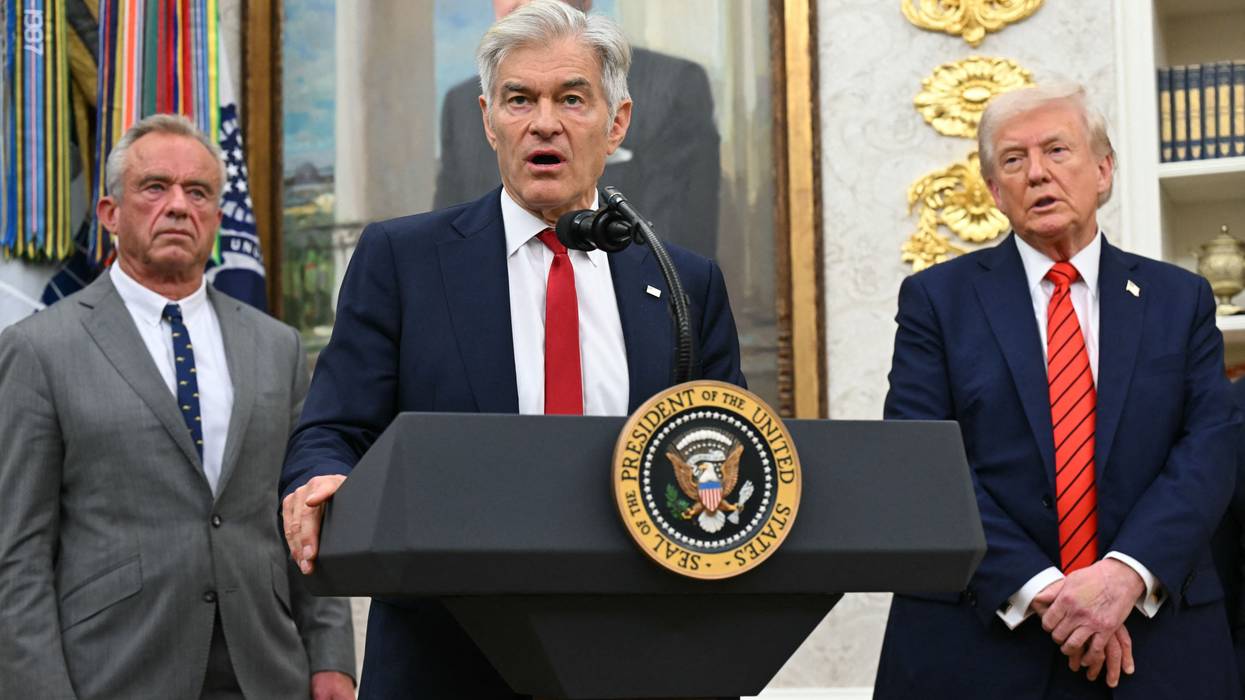
The Trump administration is proposing new regulations for healthcare plans purchased through Affordable Care Act exchanges that, on the surface, could offer patients lower monthly premiums.
However, the New York Times reported on Thursday that these plans would make up for the lower premiums by charging deductibles as high as $15,000 for individuals and $31,000 for families, meaning that people on these plans would have to pay significant up-front costs should they get sick before getting any benefit from having insurance.
For perspective, the Times noted that these deductibles would be "eight times the average for someone with job-based insurance."
Health experts who spoke with the Times were blunt about these plans' prospects for success.
"Nobody wants that product," Harvard health economist Amitabh Chandra said. "It’s going to be a really cheap product that nobody wants."
Dr. Joseph Betancourt, president of the Commonwealth Fund, told the Times that the plans being mulled by the administration would push greater assumption of risk onto patients and away from insurers.
"There's no doubt that we have an affordability crisis," he said. "As we move forward to shifting more of the burden to patients, there’s a chance to really exacerbate the crisis."
Katherine Hempstead, senior policy adviser for the Robert Wood Johnson Foundation, told the Times that the cheaper Trump plans are "normalizing hardship, and... normalizing catastrophe" by creating a form of health insurance that offers even less coverage than the cheapest plans available on the exchanges.
The high-deductible plans are being pushed by Medicare and Medicaid Administrator Mehmet Oz, who made headlines earlier this year by saying the goal of the Trump administration's healthcare policy was to have Americans be healthy enough so they could stay at work for at least an extra year before retiring.
"If we can get the average person... to work one more year in their whole lifetime, just stay in your workplace for one more year," Oz said during an interview on Fox Business, "that is worth about $3 trillion to the US GDP."
Democratic California Gov. Gavin Newsom, who is widely expected to seek the presidency in 2028, pounced on the report about the high-deductible plans.
"[Trump's] economic agenda is simple," Newsom wrote in a social media post, "force hard working families to pay more and give billionaires a tax break."
Johanna Maska, a former aide to President Barack Obama, expressed disbelief that this was Republicans' long-promised replacement plan for the ACA.
"A $31,000 deductible is unacceptable," she wrote. "This is the Republican long awaited plan? This is not healthcare that helps Americans."
"The Constitution clearly gives Congress the power to spend taxpayer funds, and no law allows the president to halt if he feels some US states aren’t being 'good stewards' of the money," said one critic.
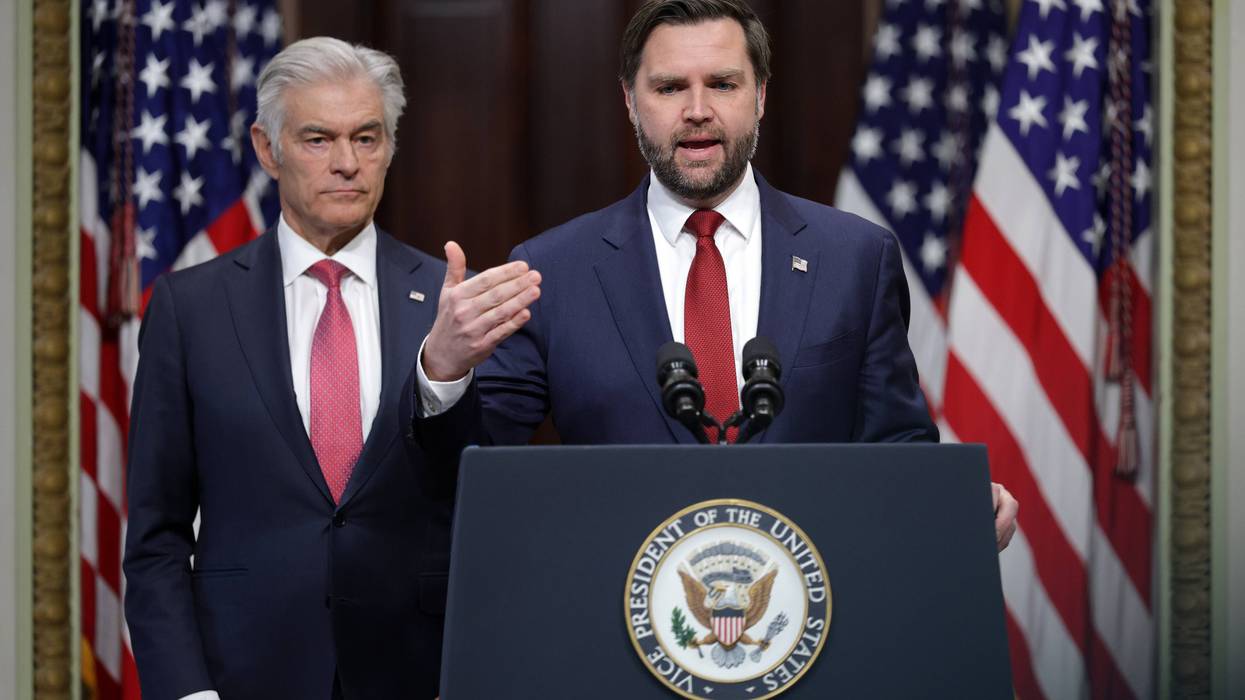
US Vice President JD Vance said Wednesday that the Trump administration will pause some Medicaid funding for Minnesota over fraud concerns—without offering any guarantees that the suspension will not adversely impact the more than 1 million Minnesotans who depend upon the key healthcare program.
"We're announcing today that we have decided to temporarily halt certain amounts of Medicaid funding that is going to the state of Minnesota in order to ensure that the state of Minnesota takes its obligations seriously to be good stewards of the American people's tax money," Vance said at a White House press conference with Centers for Medicare and Medicaid Services (CMS) Administrator Mehmet Oz.
"Now what is this gonna mean?" Vance continued. "What this means is that, first of all, the providers on the ground in Minnesota have actually already been paid... What we're doing is we are stopping the federal payments that will go to the state government until the state government takes it obligations seriously to stop the fraud that's being perpetrated."
They already targeted SNAP in Minnesota. They’ve killed two Minnesotans and injured or kidnapped hundreds more. Now they’re stealing their Medicaid. They’re going to deny people healthcare because of a YouTube video about a Somali daycare scam that wasn’t even true.
[image or embed]
— Kelly (@broadwaybabyto.bsky.social) February 25, 2026 at 3:05 PM
Oz demanded that Democratic Minnesota Gov. Tim Walz determine "who these providers are; make sure they're not already in trouble for doing bad stuff, and then reevaluate all the current providers to make sure they're supposed to be able to provide these services."
Responding to Oz's remarks, Gaia Leadership Project founder Elizabeth Cronise McLaughlin said on Bluesky, "So Minnesota is supposed to review every appointment by a Medicaid recipient with every doctor to get funds already lawfully allocated to the state?"
Asked by a reporter how he intends to ensure that the funding pause "doesn't impact the people who are enrolled in Medicaid," Vance said he is "worried about the justice of it all."
"I think it's offensive that American taxpayers pay into these programs and they're defrauded... and it's really sad that American children who need these services are unable to get them, because they're going to fraudsters," Vance replied.
"Look, we're certainly gonna make sure that our anti-fraud efforts go after the fraudsters and not after anybody who actually benefits from these services," he continued. "But I actually think the question is a little off, in a way, because the problem is not going after the fraud, the problem is that these programs are being defrauded to begin with."
"Our social safety net will disappear unless we take fraud more seriously," added the vice president, whose boss, President Donald Trump, last year signed into law the biggest cuts to Medicaid and the Supplemental Nutrition Assistance Program, or SNAP, in the nation's history as part of the One Big Beautiful Bill Act.
Medicaid is the primary healthcare safety net for lower-income Americans, with nearly 70 million people enrolled nationwide at the end of last year.
While federal prosecutors are investigating Minnesota’s Medicaid system—specifically, 14 high-risk service programs such as housing support and personal-care services—on suspicion of billions of dollars in fraudulent billings since 2018, and dozens of people have been convicted of stealing public money through the state’s social services system, critics noted that Congress, not the president, has the power of the purse.
Some observers noted that Trump has already targeted Minnesota—which voted against him all three times he ran for president—with his deadly crackdown on undocumented immigrants and their defenders and racist attacks on Somali immigrants, including Congresswoman Ilhan Omar (D-Minn.).
The Medicaid freeze follows the Trump administration's $10 billion cut in federal childcare funding to five Democrat-led states, including Minnesota, last month—a move that opponents argue punishes working families who committed no fraud.
University of Illinois professor Nicholas Grossman called the Medicaid pause "taxation without representation."
"The Constitution clearly gives Congress the power to spend taxpayer funds, and no law allows the president to halt if he feels some US states aren’t being 'good stewards' of the money," he said on Bluesky. "In case there’s any confusion on this, the Impoundment Control Act forbids it."
"The people of Minnesota vote for representatives to Congress," Grossman added. "Minnesota representatives and senators were in DC, representing their constituents, when Congress passed laws using proper procedure that allocated Medicaid funding. The president breaking those laws violates the fundamental compact of the republic."
Oz on Wednesday also announced "a six-month national moratorium blocking all new enrollments for durable medical equipment—prosthesis, orthotics—supplies across the board" in the name of fighting fraud. The move targets suppliers, not individual Medicaid beneficiaries.
This from Oz, a promoter of privatized Medicare Advantage programs, which are notorious for overcharging taxpayers and denying patients necessary care. The CMS under Oz increased federal funding for Medicare Advantage plans by more than $25 billion for 2026.
As Common Dreams recently reported, United Health Group (UHG), one of the country's largest for-profit health insurance companies, has been the leading beneficiary of a long-running Medicare Advantage fraud scheme that the Medicare Payment Advisory Commission—an independent, nonpartisan legislative branch agency—warned could cost US taxpayers $1.2 trillion over the next decade.
Some critics said that if Trump really cared about fraud, he'd go after companies like UHG—and stop pardoning so many convicted criminals who committed billions of dollars worth of fraud.
"These guys are despicable," Michigan State University professor Brendan Cantwell said Wednesday in response to Vance and Oz's announcement.
Robert Weissman, co-president of the consumer advocacy group Public Citizen, said in a statement Wednesday that “Medicaid fraud is a serious problem that requires cracking down on fraudsters—not patients."
Weissman continued:
This administration’s anti-fraud rhetoric is itself a fraud. In fact, the administration has gutted anti-fraud government agencies and programs and let fraudsters off the hook. It has issued record-breaking pardons to fraudsters; sought to eliminate the most important anti-consumer fraud agency, the Consumer Financial Protection Bureau; eviscerated the corps of inspectors general whose job is to root out waste, fraud, and abuses; and dropped dozens of fraud and fraud-related investigations against large corporations.
“The Trump administration suspension of Medicaid funding in Minnesota is a bad-faith, punitive, and shameful measure that will punish people in Minnesota as part of the same deceptive story that the Trump administration has told to justify the outrageous [Immigration and Customs Enforcement] invasion of the state," Weissman added.
"I'm sure everyone would be happy to work another year if work meant getting paid millions of dollars to spout utter nonsense," responded one critic.
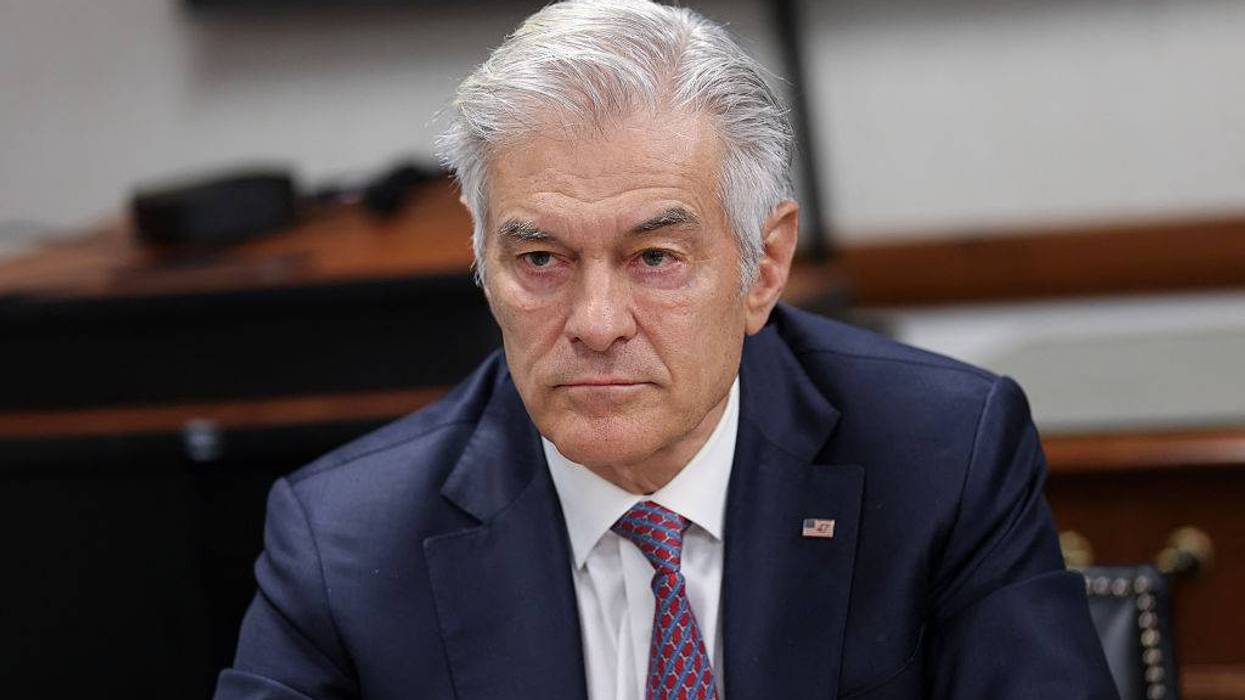
Medicare and Medicaid Administrator Mehmet Oz on Wednesday said that one of the ultimate goals of President Donald Trump's healthcare plan is to get Americans healthy enough so that they're able to work for at least one more year during their lives.
During an interview on Fox Business to tout Trump's recently unveiled and widely derided healthcare plan, Oz explained why it was important for Americans to be healthy so that they could be productive workers and contribute to US gross domestic product (GDP).
"A lot of people watching this segment are thinking we're talking about healthcare expenses," he said. "This is about the value to the US economy if we can get this right. If we can get the average person watching... to work one more year in their whole lifetime, just stay in your workplace for one more year, that is worth about $3 trillion to the US GDP."
"Wow!" exclaimed Fox Business host Maria Bartiromo.
Dr. Oz: "If we can get the average person to work one more year in their whole lifetime -- just stay in your workplace for one more year -- that is worth about $3 trillion to the US GDP. That's the productivity we would unleash ... if you're sick, you can't work." pic.twitter.com/9xixeDm2ux
— Aaron Rupar (@atrupar) January 21, 2026
"That's the productivity we would unleash of people feeling they have agency over their future, like they've got stuff they want to accomplish with their lives," Oz continued. "If you're sick, you can't work. So keep people healthy, they'll want to work, they'll want to produce, not just for one year but for many more... It's worth the investment to get that return."
"I love it," replied Bartiromo.
Oz's statement about getting Americans to work longer to improve national GDP was met with immediate criticism.
Journalist Brian Goldstone, who last year published a book focusing on Americans who are homeless despite having jobs, argued that Oz was simply clueless about the realities of working-class Americans.
"I recently met a widowed 71-year-old woman still working two jobs and living at an extended-stay hotel because even two jobs don't pay her enough to afford rent," he wrote in a post on Bluesky. "This is what 'one more year of work' looks like in America."
Economist Dean Baker of the Center for Economic and Policy Research noted that Oz doesn't seem to understand that most Americans don't have the kinds of cushy gigs he's enjoyed for decades.
"I'm sure everyone would be happy to work another year if work meant getting paid millions of dollars to spout utter nonsense on Fox, CBS, and other right-wing outlets," Baker remarked on X.
Baker also questioned the arithmetic behind Oz's claim about the vast benefits to the US economy of having everyone work for an extra year.
"I'm also curious where the hell he got the $3 trillion (10% of GDP)," he wrote. "I gather it is a Trump number, came straight out of his rear end."
Democratic political strategist Dan Kanninen said that Oz came off as utterly tone deaf about Americans' lives, and sarcastically encouraged the Trump administration to "put Dr. Oz and his 'Matrix' vision of the future where we all batteries for capital on the airwaves as much as possible."
Dell Cameron, a senior writer at Wired, argued that Oz's remarks were a damning indictment of former talkshow host Oprah Winfrey, who regularly featured purported experts of dubious credibility, including Oz, Phil McGraw, and João Teixeira de Faria, a Brazilian "faith healer" and convicted rapist currently serving a lifetime prison sentence.
"Hard to pin down which of the medical hacks platformed by Oprah's network has gone on to do the most harm, which is saying a lot since one is a cult leader who raped hundreds of women," he mused. "Then again, [Oz] is one of the most influential quacks of all time."
"It’s not safe to be an OB-GYN in red states, so they are turning to robots to care for pregnant woman. This is not an innovation success story."
Alabama is among the states that have seen a significant drop in the number of obstetrician-gynecologists working there since Roe v. Wade was overturned and cleared the way for states to ban abortion, resulting in doctors being unable to provide standard care and in a number of cases, placing patients in serious and even deadly danger.
On Friday, at a White House roundtable on healthcare in rural areas—some of the hardest-hit by the lack of OB-GYN care in states with abortion bans—one of President Donald Trump's top health officials suggested the exodus of doctors from Alabama and other crises in healthcare access have resulted in positive innovations as care is outsourced to "robots."
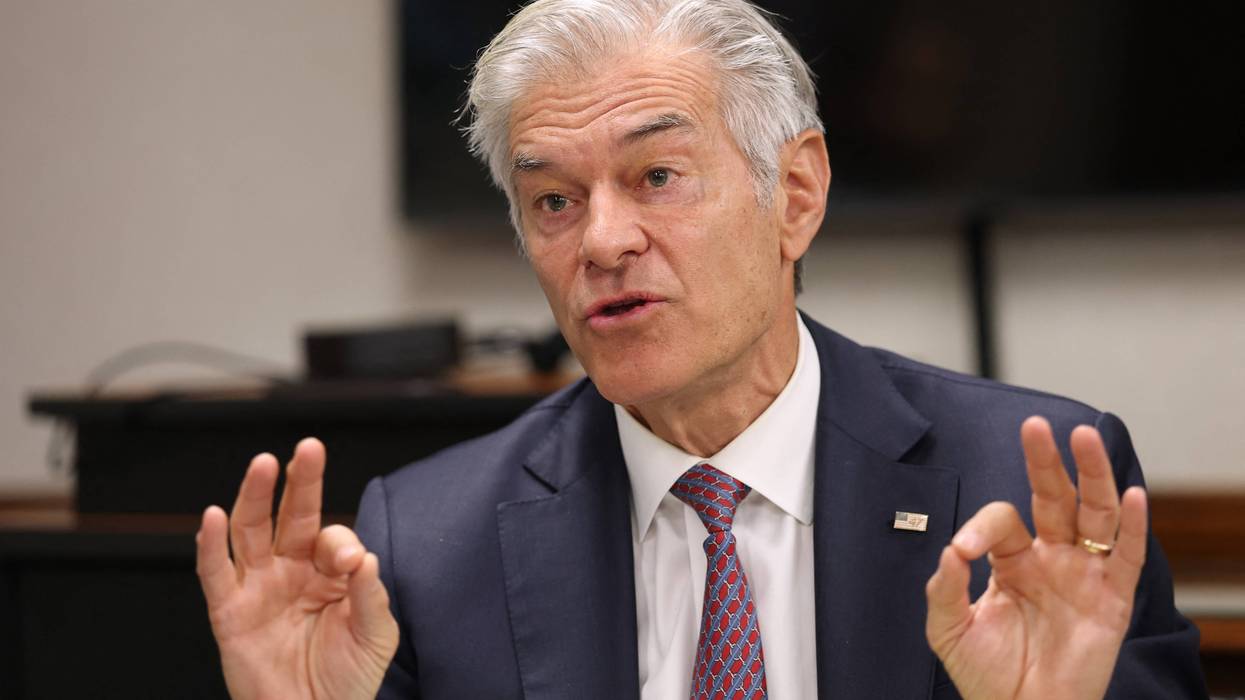
Dr. Mehmet Oz, administrator for the Centers for Medicare and Medicaid Services (CMS), said that since Alabama "has no OB-GYNs in many of their counties," the state is "doing something pretty cool."
"They're actually having robots do ultrasounds on these pregnant moms," said Oz.
Dr Oz: "Alabama has no OBGYNs in many of their counties, so they're doing something pretty cool. They're actually having robots do ultrasounds on these pregnant moms." pic.twitter.com/sEwd4OJss9
— Aaron Rupar (@atrupar) January 16, 2026
CMS, which oversees the new Office of Rural Health Transformation, recently highlighted in a report about rural healthcare Alabama's Maternal and Fetal Health Initiative, which it said "provides digital maternity care by using telerobotic ultrasound devices and labor and delivery carts to rural hospitals."
Oz asserted that robotic ultrasounds will help to reduce Alabama's maternal mortality rate, which is the highest in the United States, as medical centers will be able to detect health issues and abnormalities.
But observers said that praising an outcome of the dearth of maternal healthcare in the state—which has been at least partially caused by Trump's push to overturn Roe and Republicans' efforts to ban abortion—was "horrific."
"The severe lack of OB-GYNs," said the labor-focused media group More Perfect Union, "is a crisis, especially in rural America."
Melanie D'Arrigo, executive director of the Campaign for New York Health, added: "It’s not safe to be an OB-GYN in red states, so they are turning to robots to care for pregnant woman. This is not an innovation success story. It’s a dystopian horror story."
A 2024 analysis by the Association of American Medical Colleges found that in the year following the US Supreme Court's Dobbs v. Jackson Women’s Health Organization decision, applicants for OB-GYN residency programs plummeted 21.2%.
The ruling allowed Alabama's near-total abortion ban—which has only one ostensible "exception" for cases in which a pregnant person faces a serious health risk—to go into effect. Rights groups said that the law, one of the most extreme bans in the US, had been passed by the state's Republican legislature as part of an effort to force the court to reconsider Roe.
Robin Marty, executive director of WAWC Healthcare in the state, told the Alabama Reflector in 2024 that "when it comes to, especially, OB-GYN residencies, nobody wants to come out here because we can’t fulfill all of the requirements, which include being able to do abortions and manage miscarriage."
There had also been a 13.1% drop in applicants for OB-GYN programs in 2019-20 after the approval of the state's Sanctity of Life Act, which recognized “the sanctity of unborn life and the rights of unborn children, including the right to life."
“Legislative interference that imposes restrictions on full-scope reproductive healthcare, including abortion care, discourages medical students from pursuing residency training in states with restrictions, directly hurting patients by reducing the physician workforce in the communities that often need clinicians the most,” AnnaMarie Connolly, chief of education and academic affairs of the American College of Obstetricians and Gynecologists (ACOG), told the Alabama Reflector.
In addition to the state's abortion ban, the worsening lack of prenatal care in rural Alabama has also driven the state's decision to turn to robotics to provide some aspects of healthcare.
Since 2020, more than 100 rural hospitals across the nation have stopped delivering babies; at least three of them have been in Alabama, where just 30% of rural health centers have labor and delivery units. Hospitals have cited staffing shortages and low Medicaid reimbursement payments—which were worsened by the Republicans' One Big Beautiful Bill Act—as reasons for closing obstetric care units. Closures have left many families traveling an hour or more to receive prenatal care, and can worsen maternal mortality rates.
Regarding the robotic ultrasounds heralded by Oz, political analyst Drew Savicki said: "That is interesting but it represents a very small fraction of what an OB-GYN does. What is an ultrasound robot going to do for a woman who is coming in for her post-childbirth examination?"
In his comments, Oz unwittingly described the crisis the Trump administration has helped to make worse: "We have the best healthcare, if you can get to it."
One observer suggested Trump's healthcare officials "explain why no OB-GYNs want to work in Alabama, rather than bragging about robots."
"These proposed actions would put Donald Trump and RFK Jr. in those doctor’s offices, ripping healthcare decisions from the hands of families," said one critic.
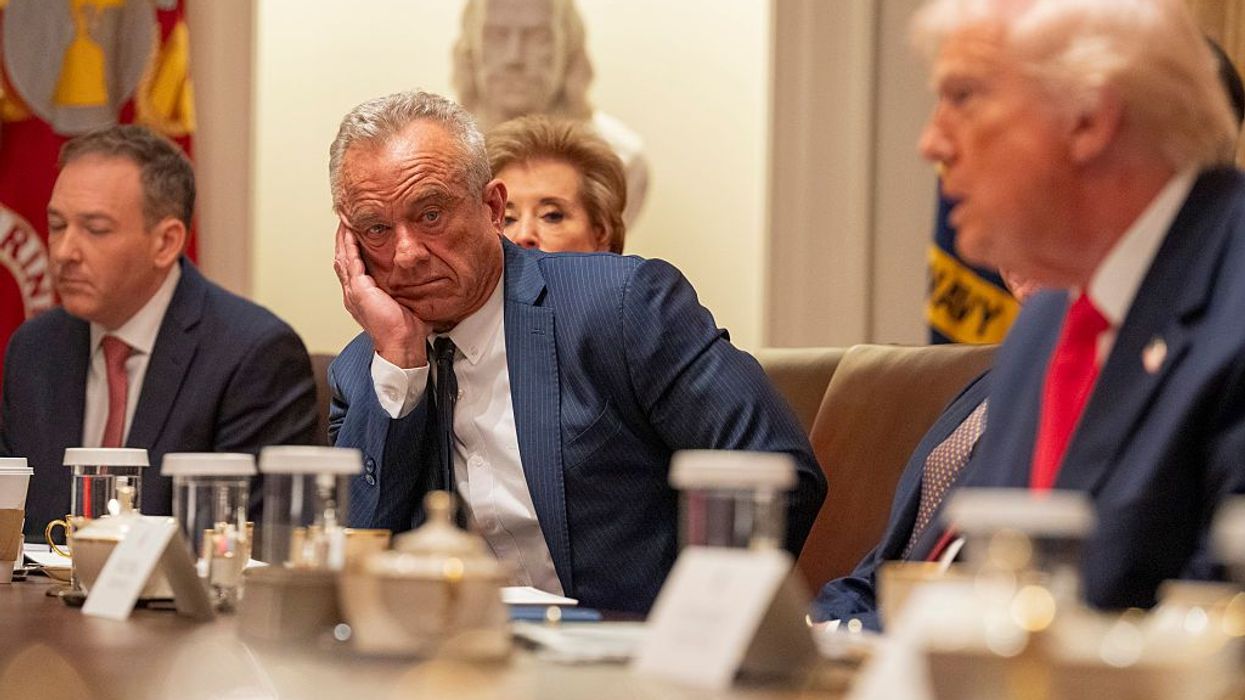
President Donald Trump and Health and Human Services Secretary Robert F. Kennedy Jr. on Thursday unveiled new policies aimed at cutting transgender minors off from gender-affirming care.
As reported by the New York Times, Kennedy announced new proposed rules that would bar Medicare and Medicaid from sending any funds to hospitals that carry out gender-affirming care on transgender minors, a move that would essentially force these facilities to shut down given that spending from those two programs account for nearly half of all spending on hospital care.
Dr. Mehmet Oz, the administrator of the Centers for Medicare and Medicaid Services, warned during a news conference announcing the proposed rules that hospitals are "going to pay a very steep price" if they continue providing gender-affirming care to minors.
Many hospitals throughout the US are already under financial strain while bracing for the impact of the Medicaid cuts in this year's Republican-passed budget law, which are projected to total $1 trillion over the next decade.
Dr. Susan Kressly, president of the American Academy of Pediatrics (AAP), slammed Trump administration health officials for their "unprecedented actions and harmful rhetoric" while announcing the new proposed rules, which she described as a vast overreach by the federal government.
"These rules are a baseless intrusion into the patient-physician relationship," said Kressly. "Patients, their families, and their physician—not politicians or government officials—should be the ones to make decisions together about what care is best for them. The government’s actions today make that task harder, if not impossible, for families of gender-diverse and transgender youth."
Kelley Robinson, president of the Human Rights Campaign, hammered the Trump administration for being "relentless in denying healthcare to this country, and especially the transgender community."
"Families deserve the freedom to go to the doctor and get the care that they need and to have agency over the health and well-being of their children," Robinson added. "But these proposed actions would put Donald Trump and RFK Jr. in those doctor’s offices, ripping healthcare decisions from the hands of families and putting it in the grips of the anti-LGBTQ+ fringe."
The ACLU wasted no time in announcing that it would sue the administration if it goes forward with enacting the proposed rules, which it described as an unconstitutional attack on healthcare practices that have been endorsed by both the the American Medical Association and the AAP.
Chase Strangio, co-director of the ACLU’s LGBTQ and HIV Rights Project, accused the administration of launching "cruel and unconstitutional attacks on the rights of transgender youth and their families."
"By attempting to strip away essential healthcare, the administration is not 'protecting' anyone," Strangio added. "It is weaponizing the federal government to target a vulnerable population for political gain. Healthcare decisions belong to families and their doctors, not politicians. The latest proposals from the administration would force doctors to choose between their ethical obligations to their patients and the threat of losing federal funding."
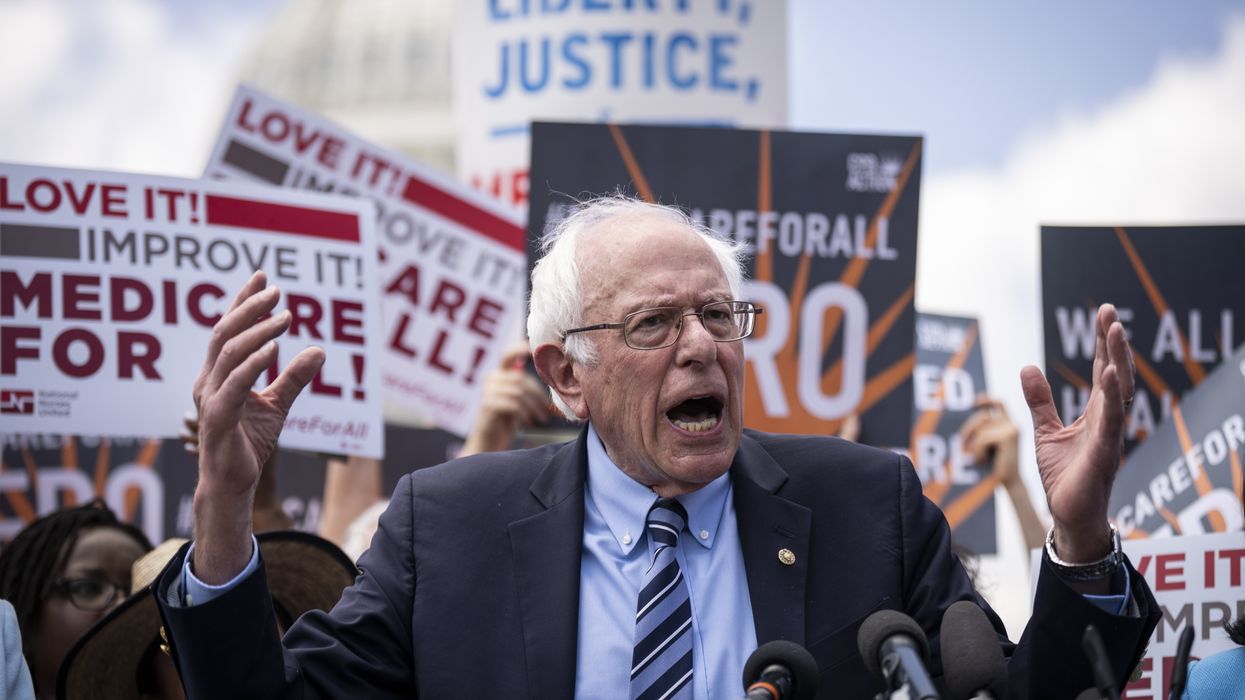
"Healthcare is becoming unsustainable under Trump," says one progressive politician running for US Senate. "Medicare for All would fix it."
The Trump administration came under fire on Sunday after sending Dr. Mehmet Oz, the Administrator of the Centers for Medicare and Medicaid Services, onto CNN's weekend news show to try to explain the Republican Party's elusive "solution" to the nation's healthcare crisis, a topic of much interest in recent weeks amid the longest government shutdown in the nation's history and growing fears over massive premium increases or loss of coverage for tens millions of Americans.
Asked during his appearance to explain what Republicans are considering to address the surging cost of healthcare, Oz talked about direct cash payments—something Trump himself has floated in recent weeks—as well as the idea of health saving accounts (or HSAs) which allow for personalized accounts set up to help pay for out-of-pocket medical needs, though not premium payments.
"If you had a check in the mail, you could buy the insurance you thought was best for you," Oz stated without explaining in what way that is different from people who received tax credits to purchase plans on the insurance exchanges established by the Affordable Care Act signed into law by former President Barack Obama.
Pushing such empty ideas while claiming them as viable solutions to soaring costs is partly what led critics like Sen. Patty Murray (D-Wash.) this week to issue a public service announcement which stated flatly: "There is no Republican health care plan"—despite repeated claims to the contrary by GOP lawmakers, including Speaker of the House Mike Johnson (R-La.).
Dr Oz: "If you had a check in the mail, you could buy the insurance you thought was best for you" pic.twitter.com/rLoMdxhNPV
— Aaron Rupar (@atrupar) November 16, 2025
"Dr. Oz a few years ago was pitching Medicare Advantage for All—a scheme to put every person on the corporate health insurance plans he used to sell," said Andrew Perez, a politics editor for Zeteo, in response to the interview. "Now, he’s saying let’s take away insurance from millions and give them a few bucks for their health care instead. Insane."
In a blog post published last week, Nicole Rapfogel, a senior policy analyst with the Center on Budget and Policy Priorities (CBPP), a nonpartisan policy think tank, explained why expanded HSAs, backed by the government or otherwise, would do little to nothing to improve access or lower costs for healthcare.
"Expanding HSAs has been a consistent theme, including in the House-passed version of the Republican megabill, though those provisions didn’t pass the Senate," explained Rapfogel. "But these policies are misguided and would do little to preserve access to affordable, comprehensive coverage."
She further explains that HSAs generally are better for wealthier people who have spare income to direct into such accounts, but of little use to poorer Americans who are already struggling to make ends meet each month. According to Rapfogel:
Most people do not have spare cash to set aside in HSAs; an estimated 4 in 10 people are in debt due to medical and dental bills.
People in lower tax brackets also benefit less from HSA tax savings. For example, a married couple making $800,000 saves 37 cents for each dollar contributed to an HSA, more than three times the 12 cents per dollar a married couple making $30,000 would save.
Further, HSAs do not promote efficient use of health care services. Research has shown that HSAs do not reduce health care spending, but rather shield more of that spending from taxes.
Given that understanding of the well-known limitations of HSAs or other avenues of government backstopping of private insurance, the level of bullshitting or straight up ignorance by Oz on Sunday morning, for many, was hard to take.
It's "pretty amazing," said economist Dean Baker on Sunday, "that Dr. Oz doesn't know that people choose their insurance under Obamacare, but no one ever said Dr. Oz knew anything about healthcare."
In an interview with Newsmax earlier this month, Johnson—who has argued that the GOP has reams of policy proposals on the topic—accused Democrats of having no reform solutions to the nation's healthcare crisis other than permanently fighting to save the status quo, including the "subsidizing the insurance companies" which is at the heart of the Affordable Care Act.
Taxpayer subsidies for private insurance giants "is not the solution," Johnson admitted at the time, though his party has refused to offer anything resembling a departure from the for-profit model which experts have demonstrated is the central flaw in the US healthcare system, one that spends more money per capita than any other developed nation but with the worst outcomes.
Meanwhile, as Republicans show in word and deed that they have nothing to offer people concerned about healthcare premiums in the nation's for-profit system, only a relative handful of Democratic Party members have matched renewed focus on the nation's long-simmering healthcare crisis with the popular solution that experts and economists have long favored: a single-payer system now commonly known as Medicare for All.
Sen. Bernie Sanders, the Independent from Vermont who caucuses with the Senate Democrats, made the demand for Medicare for All a cornerpost of his two presidential campaigns, first in 2016 and then again in 2020. On the heals of those campaigns, which put the demand for a universal healthcare system before voters in a serious way for the first time in several generations, a growing number of lawmakers in Congress embraced the idea even as the party's establishment leadership treated the idea as toxic.
While a 2018 study by the Political Economy Research Institute (PERI) at the University of Massachusetts at Amherst detailed why it is "easy to pay for something that costs less," people in the United States exposed to the arguments of Medicare for All over the last decade a majority have shown their desire for such a system in poll after poll after poll.
A single-payer system like Medicare for All would nullify the need for private, for-profit insurance plans and the billions of dollars in spending they waste each year in the form of profits, outrageous pay packages for executives, marketing budgets, and administrative inefficiences.
Despite its popularity and the opportunity it presents to show the working class that the Democratic Party is willing to turn its back on corporate interests by putting the healthcare needs of individuals and families first, the party leadership continues to hold back its support.
Lawmakers like Rep. Ro Khanna (D-Calif.), who served as national co-chair to Sanders' second presidential run, has been arguing in recent weeks, amid the government shutdown fight, that Democrats should be "screaming" their support for universal healthcare "from the rooftops" in order to seize on a moment in which voters from across the political spectrum are more atuned than usual to the pervasive and fundamental failures of the for-profit system.
Rep. Pramila Jayapal (D-Wash.), lead sponsor of the Medicare for All Act in the US House, on Thursday reiterated her support for universal coverage by saying, "Instead of raising premiums for millions, how about we just get rid of them? Medicare for All!!"
As former Ohio state senator and progressive organizer Nina Turner said on Saturday, "This is a moment to mobilize for Medicare for All."
I went on Fox News to make the case for national health insurance & Medicare for All.
Democrats need to be screaming this from the rooftops. pic.twitter.com/eq9VO0pAxw
— Ro Khanna (@RoKhanna) November 15, 2025
Dr. Abdul El-Sayed, another former Sanders surrogate now running for the Democratic nomination in Michigan's US Senate race, has been another outspoken champion of Medicare for All in recent weeks.
"While MAGA slowly suffocates our healthcare system, we’re watching corporate health insurance choose profits—and corporate Democrats capitulating," El-Sayed said last week, expressing frustration over how the shutdown fight came to end. "Who suffers? The rest of us. It’s time for a healthcare system that doesn’t leave our insurance in the hands of big corporations—but guarantees health insurance for all of us."
Following Dr. Oz's remarks on Sunday, El-Sayed rebuked the top cabinet official as emblematic of the entire healthcare charade being perpetrated by the Republican Party under President Donald Trump.
"They think we're dumb," said El-Sayed of Oz's convoluted explanation of direct payments. "They know that no check they send will cover even a month of the healthcare Trump bump we can’t afford—but they think we’re not smart enough to know the difference. Healthcare is becoming unsustainable under Trump. Medicare for All would fix it."
In Maine on Sunday, another Democratic candidate running for the US Senate, Graham Platner, also championed the solution of Medicare for All.
After watching Oz's peformance on CNN, Tyler Evans, creative director who works for Rep. Alexandria Ocasio-Cortez (D-N.Y.) declared in a social media post: "If we had Medicare for All, you could simply go to the doctor."

"Millions of Americans who buy their own insurance on Healthcare.gov are unaware of the catastrophic premium hikes barreling towards them," the senators warned.
More than half of the Democratic Party caucus in the US Senate on Monday accused the Trump administration of covering up massive planned premium increases that are going to hit Americans who buy their health insurance through Affordable Care Act exchanges.
In a letter to Centers for Medicare and Medicaid Services (CMS) administrator Mehmet Oz, the senators charged that his agency has "failed to open early window-shopping" the week before the start of open enrollment, which they said has left "millions of Americans who buy their own insurance on Healthcare.gov... unaware of the catastrophic premium hikes barreling towards them."
The senators emphasized that the early window-shopping period is crucial because "the 24 million people who buy insurance on the ACA Marketplace need as much time and information as possible to understand and prepare for these significant premium increases."
The letter also argued that CMS has reduced enrollees' ability to access this crucial information by issuing guidance last summer that "allowed insurance companies to omit premium numbers and tax credit information from the notices they are required to send to enrollees ahead of open enrollment," while also "allowing insurance plans to delay sending information to their enrollees."
As a result of this, the letter continued, "millions of Americans have still not received any information from their insurance plan, or from CMS, about the biggest premium hike in history."
The senators' letter concluded with a demand for CMS to "launch window-shopping immediately and deliver the transparency American families deserve ahead of open enrollment on November 1."
The fight over health insurance premiums is at the heart of the current shutdown of the federal government, as Democrats say they will not vote to fund the government without an extension of enhanced ACA tax credits that were first passed into law under the American Rescue Plan in 2021.
The Washington Post last week reported on leaked documents showing that the most popular healthcare plans purchased on the ACA exchanges are expected to see a 30% hike next year, which would mark the "largest annual premium increases by far in recent years."
Were the enhanced tax credits for these plans allowed to expire, the Post added, this would likely result in millions of Americans seeing their insurance premiums double or triple next year.
The expiring subsidies aren’t the only threat to Americans’ healthcare, as Republicans over the summer passed a massive budget law that cut spending on Medicaid by nearly $1 trillion over the next decade, which the Congressional Budget Office estimated would result in more than 10 million people, among the nation’s poorest, losing their coverage. Congressional Democrats have also demanded undoing some Medicaid cuts in government shutdown negotiations.