SUBSCRIBE TO OUR FREE NEWSLETTER
Daily news & progressive opinion—funded by the people, not the corporations—delivered straight to your inbox.
5
#000000
#FFFFFF
To donate by check, phone, or other method, see our More Ways to Give page.
Daily news & progressive opinion—funded by the people, not the corporations—delivered straight to your inbox.
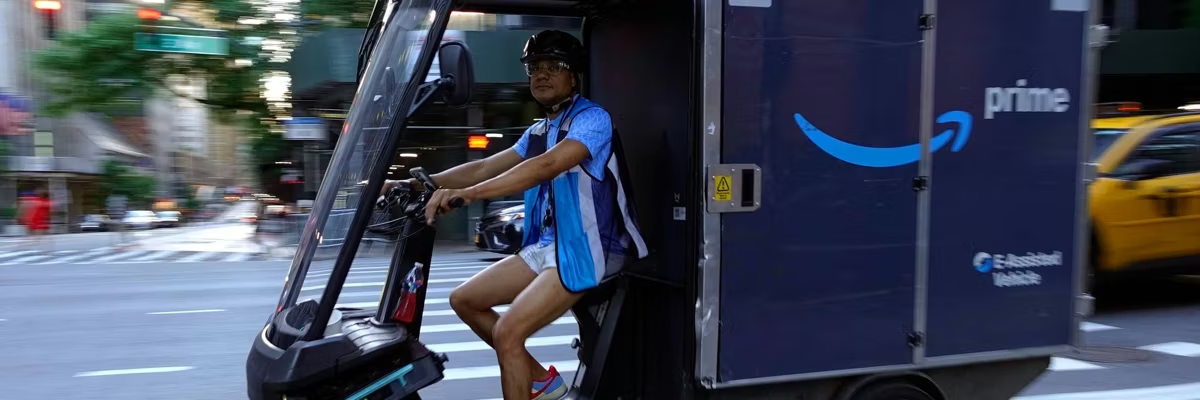
An Amazon delivery person pedals an E-Assisted delivery vehicle as it turns onto 42nd Street on June 15, 2026, in New York City.
If passed, the Delivery Protection Act would be the first law in the US to regulate Amazon's vast network of subcontractors that handle the company's deliveries.
New York City Mayor Zohran Mamdani has thrown his support behind legislation that could become a first-in-the-nation law to regulate Amazon's network of subcontractors that deliver the $3 trillion company's packages—an "exploitative business model" that shields the e-commerce giant from accountability, as Mamdani said Monday.
The Democratic mayor endorsed the Delivery Protection Act, proposed by New York City Council Member Tiffany Cabán, which would establish new safety, training, and labor standards for "last-mile" warehouses and distribution facilities in New York City, and hold the companies that operate the facilities, such as Amazon and FedEx, liable for employing the workers who make hundreds of deliveries per day across the city.
As the mayor's office said Monday, at least 11 last-mile facilities have opened across New York City since 2020, with subcontractors running the warehouses as Amazon directs the hiring of delivery drivers, the routes they use, and requires them to use Amazon-branded vehicles and uniforms.
But while exerting control over the deliveries, Amazon pushes responsibility for the vehicles used onto the subcontractors, as delivery workers explained in a video released on social media by Mamdani on Monday.
"When injuries and worker accidents skyrocket, Amazon says they have nothing to do with it. They can't have it both ways," said the workers.
If it looks like an Amazon delivery and drives like an Amazon delivery, then it's an Amazon delivery, right? Not according to Amazon.
Big companies like Amazon have built a vast network of subcontractors who deliver their packages while shielding them from accountability.
It… pic.twitter.com/6hQVV8GoNH
— Mayor Zohran Kwame Mamdani (@NYCMayor) August 10, 2026
According to a report by the Office of the Comptroller in New York City last year, 78% of areas surrounding last-mile facilities saw an increase in injury-causing crashes after the warehouses opened.
“Corporations like Amazon build billion-dollar business models by insulating themselves from accountability through a system of exploitative subcontracting," said Mamdani in a statement. "As last-mile delivery centers have exploded across New York, so too have traffic accidents and worker injuries. The Delivery Protection Act is commonsense regulation that protects delivery workers, safeguards the communities where these facilities operate, and ensures that the corporations benefiting from workers’ labor are responsible for the consequences of their business practices."
"The people who make these companies run deserve dignity, stability, and a safe workplace," he added. "It's time to end the subcontracting model that puts profits over people and build an economy that works for working New Yorkers.”
By using subcontractors, Amazon can avoid municipal regulations regarding minimum pay and benefits. A nationwide survey by the Shift Project at the Harvard Kennedy School’s Malcolm Wiener Center for Social Policy last year found that Amazon delivery drivers are paid an average of $19 per hour, compared with $35 per hour at UPS and $25 per hour at FedEx. Pay does not rise with tenure at Amazon, as opposed to its delivery competitors, and fewer than half of Amazon drivers have access to health insurance, paid vacation, and retirement plans that are provided to nearly all UPS delivery workers.
In New York City, pay for the drivers who make Amazon's deliveries is higher, starting at about $20 per hour and averaging close to $24 per hour. But one driver in Queens, Luc Rene, told The New York Times that Amazon controls the volume of packages he delivers and has refused to allow the subcontractor he works for, DNA Logistics, to lighten the workload during extreme heat and other inclement weather.
The company could not be reached for a comment to the Times, and Amazon did not address Rene's allegations but claimed it adjusts drivers' routes due to inclement weather.
Amazon has claimed that the Delivery Protection Act—which would require last-mile facilities to obtain licenses from the city's Department of Consumer and Worker Protection, ensure worker protections, and hold companies accountable for delivery quotas, schedules, and routes—would raise costs for people who use delivery services, with one Amazon-commissioned study claiming households would spend $664 more annually if the company had to comply with the law.
But Brendan Griffith, president of the New York City Central Labor Council, AFL-CIO, said the workers and communities in New York City are already "paying the price" for Amazon's reliance on subcontractors.
“The Delivery Protection Act will establish stronger protections for worker safety, employment, and responsible operations while bringing long-overdue oversight to an industry where major operators have too often hidden behind subcontractors," said Griffith. "To be clear: when these companies 'raise the alarm' of fewer jobs, higher prices, or service reductions, they are describing choices that they may make, not in the best interest of consumers and workers but to protect their bottom line. We thank Mayor Mamdani for standing with the Amazon Teamsters and the labor movement in support of this legislation that puts NYC workers—who are also consumers—first, and we urge the City Council to pass it without delay.”
Mamdani's advocacy for the legislation in New York City caught the attention of at least one lawmaker across the country.
"We should pass something like this in Colorado," said state Rep. Javier Mabrey (D-1).
Dear Common Dreams reader, It’s been nearly 30 years since I co-founded Common Dreams with my late wife, Lina Newhouser. We had the radical notion that journalism should serve the public good, not corporate profits. It was clear to us from the outset what it would take to build such a project. No paid advertisements. No corporate sponsors. No millionaire publisher telling us what to think or do. Many people said we wouldn't last a year, but we proved those doubters wrong. Together with a tremendous team of journalists and dedicated staff, we built an independent media outlet free from the constraints of profits and corporate control. Our mission has always been simple: To inform. To inspire. To ignite change for the common good. Building Common Dreams was not easy. Our survival was never guaranteed. When you take on the most powerful forces—Wall Street greed, fossil fuel industry destruction, Big Tech lobbyists, and uber-rich oligarchs who have spent billions upon billions rigging the economy and democracy in their favor—the only bulwark you have is supporters who believe in your work. But here’s the urgent message from me today. It's never been this bad out there. And it's never been this hard to keep us going. At the very moment Common Dreams is most needed, the threats we face are intensifying. We need your support now more than ever. We don't accept corporate advertising and never will. We don't have a paywall because we don't think people should be blocked from critical news based on their ability to pay. Everything we do is funded by the donations of readers like you. When everyone does the little they can afford, we are strong. But if that support retreats or dries up, so do we. Will you donate now to make sure Common Dreams not only survives but thrives? —Craig Brown, Co-founder |
New York City Mayor Zohran Mamdani has thrown his support behind legislation that could become a first-in-the-nation law to regulate Amazon's network of subcontractors that deliver the $3 trillion company's packages—an "exploitative business model" that shields the e-commerce giant from accountability, as Mamdani said Monday.
The Democratic mayor endorsed the Delivery Protection Act, proposed by New York City Council Member Tiffany Cabán, which would establish new safety, training, and labor standards for "last-mile" warehouses and distribution facilities in New York City, and hold the companies that operate the facilities, such as Amazon and FedEx, liable for employing the workers who make hundreds of deliveries per day across the city.
As the mayor's office said Monday, at least 11 last-mile facilities have opened across New York City since 2020, with subcontractors running the warehouses as Amazon directs the hiring of delivery drivers, the routes they use, and requires them to use Amazon-branded vehicles and uniforms.
But while exerting control over the deliveries, Amazon pushes responsibility for the vehicles used onto the subcontractors, as delivery workers explained in a video released on social media by Mamdani on Monday.
"When injuries and worker accidents skyrocket, Amazon says they have nothing to do with it. They can't have it both ways," said the workers.
If it looks like an Amazon delivery and drives like an Amazon delivery, then it's an Amazon delivery, right? Not according to Amazon.
Big companies like Amazon have built a vast network of subcontractors who deliver their packages while shielding them from accountability.
It… pic.twitter.com/6hQVV8GoNH
— Mayor Zohran Kwame Mamdani (@NYCMayor) August 10, 2026
According to a report by the Office of the Comptroller in New York City last year, 78% of areas surrounding last-mile facilities saw an increase in injury-causing crashes after the warehouses opened.
“Corporations like Amazon build billion-dollar business models by insulating themselves from accountability through a system of exploitative subcontracting," said Mamdani in a statement. "As last-mile delivery centers have exploded across New York, so too have traffic accidents and worker injuries. The Delivery Protection Act is commonsense regulation that protects delivery workers, safeguards the communities where these facilities operate, and ensures that the corporations benefiting from workers’ labor are responsible for the consequences of their business practices."
"The people who make these companies run deserve dignity, stability, and a safe workplace," he added. "It's time to end the subcontracting model that puts profits over people and build an economy that works for working New Yorkers.”
By using subcontractors, Amazon can avoid municipal regulations regarding minimum pay and benefits. A nationwide survey by the Shift Project at the Harvard Kennedy School’s Malcolm Wiener Center for Social Policy last year found that Amazon delivery drivers are paid an average of $19 per hour, compared with $35 per hour at UPS and $25 per hour at FedEx. Pay does not rise with tenure at Amazon, as opposed to its delivery competitors, and fewer than half of Amazon drivers have access to health insurance, paid vacation, and retirement plans that are provided to nearly all UPS delivery workers.
In New York City, pay for the drivers who make Amazon's deliveries is higher, starting at about $20 per hour and averaging close to $24 per hour. But one driver in Queens, Luc Rene, told The New York Times that Amazon controls the volume of packages he delivers and has refused to allow the subcontractor he works for, DNA Logistics, to lighten the workload during extreme heat and other inclement weather.
The company could not be reached for a comment to the Times, and Amazon did not address Rene's allegations but claimed it adjusts drivers' routes due to inclement weather.
Amazon has claimed that the Delivery Protection Act—which would require last-mile facilities to obtain licenses from the city's Department of Consumer and Worker Protection, ensure worker protections, and hold companies accountable for delivery quotas, schedules, and routes—would raise costs for people who use delivery services, with one Amazon-commissioned study claiming households would spend $664 more annually if the company had to comply with the law.
But Brendan Griffith, president of the New York City Central Labor Council, AFL-CIO, said the workers and communities in New York City are already "paying the price" for Amazon's reliance on subcontractors.
“The Delivery Protection Act will establish stronger protections for worker safety, employment, and responsible operations while bringing long-overdue oversight to an industry where major operators have too often hidden behind subcontractors," said Griffith. "To be clear: when these companies 'raise the alarm' of fewer jobs, higher prices, or service reductions, they are describing choices that they may make, not in the best interest of consumers and workers but to protect their bottom line. We thank Mayor Mamdani for standing with the Amazon Teamsters and the labor movement in support of this legislation that puts NYC workers—who are also consumers—first, and we urge the City Council to pass it without delay.”
Mamdani's advocacy for the legislation in New York City caught the attention of at least one lawmaker across the country.
"We should pass something like this in Colorado," said state Rep. Javier Mabrey (D-1).
New York City Mayor Zohran Mamdani has thrown his support behind legislation that could become a first-in-the-nation law to regulate Amazon's network of subcontractors that deliver the $3 trillion company's packages—an "exploitative business model" that shields the e-commerce giant from accountability, as Mamdani said Monday.
The Democratic mayor endorsed the Delivery Protection Act, proposed by New York City Council Member Tiffany Cabán, which would establish new safety, training, and labor standards for "last-mile" warehouses and distribution facilities in New York City, and hold the companies that operate the facilities, such as Amazon and FedEx, liable for employing the workers who make hundreds of deliveries per day across the city.
As the mayor's office said Monday, at least 11 last-mile facilities have opened across New York City since 2020, with subcontractors running the warehouses as Amazon directs the hiring of delivery drivers, the routes they use, and requires them to use Amazon-branded vehicles and uniforms.
But while exerting control over the deliveries, Amazon pushes responsibility for the vehicles used onto the subcontractors, as delivery workers explained in a video released on social media by Mamdani on Monday.
"When injuries and worker accidents skyrocket, Amazon says they have nothing to do with it. They can't have it both ways," said the workers.
If it looks like an Amazon delivery and drives like an Amazon delivery, then it's an Amazon delivery, right? Not according to Amazon.
Big companies like Amazon have built a vast network of subcontractors who deliver their packages while shielding them from accountability.
It… pic.twitter.com/6hQVV8GoNH
— Mayor Zohran Kwame Mamdani (@NYCMayor) August 10, 2026
According to a report by the Office of the Comptroller in New York City last year, 78% of areas surrounding last-mile facilities saw an increase in injury-causing crashes after the warehouses opened.
“Corporations like Amazon build billion-dollar business models by insulating themselves from accountability through a system of exploitative subcontracting," said Mamdani in a statement. "As last-mile delivery centers have exploded across New York, so too have traffic accidents and worker injuries. The Delivery Protection Act is commonsense regulation that protects delivery workers, safeguards the communities where these facilities operate, and ensures that the corporations benefiting from workers’ labor are responsible for the consequences of their business practices."
"The people who make these companies run deserve dignity, stability, and a safe workplace," he added. "It's time to end the subcontracting model that puts profits over people and build an economy that works for working New Yorkers.”
By using subcontractors, Amazon can avoid municipal regulations regarding minimum pay and benefits. A nationwide survey by the Shift Project at the Harvard Kennedy School’s Malcolm Wiener Center for Social Policy last year found that Amazon delivery drivers are paid an average of $19 per hour, compared with $35 per hour at UPS and $25 per hour at FedEx. Pay does not rise with tenure at Amazon, as opposed to its delivery competitors, and fewer than half of Amazon drivers have access to health insurance, paid vacation, and retirement plans that are provided to nearly all UPS delivery workers.
In New York City, pay for the drivers who make Amazon's deliveries is higher, starting at about $20 per hour and averaging close to $24 per hour. But one driver in Queens, Luc Rene, told The New York Times that Amazon controls the volume of packages he delivers and has refused to allow the subcontractor he works for, DNA Logistics, to lighten the workload during extreme heat and other inclement weather.
The company could not be reached for a comment to the Times, and Amazon did not address Rene's allegations but claimed it adjusts drivers' routes due to inclement weather.
Amazon has claimed that the Delivery Protection Act—which would require last-mile facilities to obtain licenses from the city's Department of Consumer and Worker Protection, ensure worker protections, and hold companies accountable for delivery quotas, schedules, and routes—would raise costs for people who use delivery services, with one Amazon-commissioned study claiming households would spend $664 more annually if the company had to comply with the law.
But Brendan Griffith, president of the New York City Central Labor Council, AFL-CIO, said the workers and communities in New York City are already "paying the price" for Amazon's reliance on subcontractors.
“The Delivery Protection Act will establish stronger protections for worker safety, employment, and responsible operations while bringing long-overdue oversight to an industry where major operators have too often hidden behind subcontractors," said Griffith. "To be clear: when these companies 'raise the alarm' of fewer jobs, higher prices, or service reductions, they are describing choices that they may make, not in the best interest of consumers and workers but to protect their bottom line. We thank Mayor Mamdani for standing with the Amazon Teamsters and the labor movement in support of this legislation that puts NYC workers—who are also consumers—first, and we urge the City Council to pass it without delay.”
Mamdani's advocacy for the legislation in New York City caught the attention of at least one lawmaker across the country.
"We should pass something like this in Colorado," said state Rep. Javier Mabrey (D-1).