

SUBSCRIBE TO OUR FREE NEWSLETTER
Daily news & progressive opinion—funded by the people, not the corporations—delivered straight to your inbox.
5
#000000
#FFFFFF
To donate by check, phone, or other method, see our More Ways to Give page.
Daily news & progressive opinion—funded by the people, not the corporations—delivered straight to your inbox.

Zoe Woodcraft, zwoodcraft@earthjustice.org
Today, the U.S. Postal Service issued a record of decision for a controversial procurement plan to replace large portions of the postal fleet with a polluting and fuel-guzzling new truck model. Environmental groups reacted with ire to the federal government's costly mistake and missed opportunity to electrify the fleet, which would deliver clean air and climate protections in the middle of a spiraling climate crisis. Reversing course on this procurement plan and electrifying the new mail trucks would prevent the government from burning 110 million gallons of fuel a year.
"DeJoy's plans for the postal fleet will drag us back decades with a truck model that gets laughable fuel economy. We may as well deliver the mail with hummers," said Adrian Martinez, senior attorney on Earthjustice's Right to Zero campaign. "DeJoy's environmental review is rickety, founded on suspect calculations, and fails to meet the standards of the law. We're not done fighting this reckless decision."
The Postal Service plans to purchase up to 165,000 vehicles, replacing a large swath of its fleet of over 200,000 trucks with a new model that gets a harrowing mileage of 8.6 mpg with the air conditioning on. Ninety percent of the new trucks would be combustion vehicles that get worse miles per gallon than a Ford F-150, and a mere ten percent would be zero emissions, electric trucks.
The new combustion model gets worse mileage than the 1988 Grumman postal truck model when new, and is designed to weigh just one pound over the threshold that would have subjected it to more efficient light-duty vehicle standards. On February 7, EPA sent a short letter to the Postal Service pointing out that its modeling for greenhouse gas emissions from the new combustion mail truck was wildly off, and based on a vehicle that gets two to three times better mileage.
If the government were to instead invest in electric mail trucks, the country would avoid burning 110 million gallons of fuel every year.
The Postal Service's fleet makes up a third of the country's entire federal fleet. In January 2021, President Biden issued an executive order to electrify the federal fleet "including vehicles of the United States Postal Service," and committed to planning that would spur "the creation of union jobs in the manufacture of those new vehicles." But the new postal truck model is not slated to be built by American workers with good union jobs. Instead, it appears to be allowing this program to be implemented with non-union labor in South Carolina, sparking opposition from the United Auto Workers, one of the largest unions in the country.
Under the National Environmental Policy Act, federal entities must analyze the consequences of their actions before making them. Here, the Postal Service did a deeply flawed analysis too late. In addition, the Postal Service has thus far avoided holding public hearings on the plans, and says it is rejecting the comments from over 20,000 members of the public who commented on the final plan through Earthjustice's action portal.
Earthjustice is a non-profit public interest law firm dedicated to protecting the magnificent places, natural resources, and wildlife of this earth, and to defending the right of all people to a healthy environment. We bring about far-reaching change by enforcing and strengthening environmental laws on behalf of hundreds of organizations, coalitions and communities.
800-584-6460
Trump also said that the war has continued into its seventh month, “only because I wanted to go further.”
For President Donald Trump, war is peace.
That’s what he suggested during an interview published Thursday by Time magazine when asked by a reporter about his threat to “annihilate” Iran during last week’s United Nations General Assembly.
Over the last seven months, Trump has on numerous occasions threatened apocalyptic destruction of Iran, most infamously in April when he said that if it did not submit to a peace agreement he found favorable, its "whole civilization" would "die."
Trump's threat to annihilate a nation of 90 million people drew worldwide condemnation from human rights groups, lawmakers, and other nations, some of whom described the rhetoric as "genocidal."
Time senior political correspondent Eric Cortellessa and editor-in-chief Sam Jacobs asked Trump about these threats and how they comported with his self-description as a peacemaker.
"You've made versions of that threat before. You've also called yourself the president of peace," they said. "How can the president of peace be calling for the annihilation of an entire people?"
Trump replied: "Because by annihilating Iran, we've created peace in the world. With Iran, I don't think you could ever have peace."
The reporters asked Trump to clarify: "Are you talking specifically about the government, the Islamic Republic regime? What about the innocent people?"
He did not give a clear answer, instead accusing the Iranian government of having "killed 75,000 people in the last number of months," referring to its crackdown on anti-government demonstrations.
Iran has claimed that 3,117 people were killed during the protest wave. But while independent investigations have suggested this is an undercount, the figures they have confirmed are far lower than what Trump suggests.
The US-based Human Rights Activists News Agency (HRANA), for instance, documented a total of 7,007 confirmed deaths, mostly of protesters, between December 2025 and February 2026, and says another 11,744 possible deaths remain under review. Other unverified reports suggest that perhaps as many as 30,000 people were killed.
While seeking to justify continued war with Iran—now into its seventh month—Trump has continued to inflate the number of people supposedly killed well beyond even the highest reported figures. In July, he claimed 52,000 people had been killed, but provided no evidence. He again provided no evidence for the 75,000 figure other than to say it was "documented."
After launching the war at the end of February, Trump initially claimed it would last about six to eight weeks. The reporters asked why the war was now entering its seventh month.
"Only because I wanted to go further," Trump acknowledged.
"I took them out," he said, possibly referring to Iranian nuclear sites, or to Iran's senior leadership, including Supreme Leader Ali Khamenei, who was killed during the initial wave of US-Israeli attacks. "I could have stopped then, but I wanted to go further."
Trump went on to portray Iran as essentially destroyed, claiming its economy, navy, and air force were “gone” and putting inflation at “300%”—assertions that substantially overstated the damage inflicted on the country.
Iran has suffered enormous military and economic damage, but it has continued to launch ballistic missile attacks and threaten further retaliation. Meanwhile, official Iranian data puts September inflation at roughly 90% year over year, a far cry from 300%.
“When I said I was going to be there for a short period of time, I was, and then I decided I wanted to go further than that because I didn’t want to have them come back in some different form," the president said.
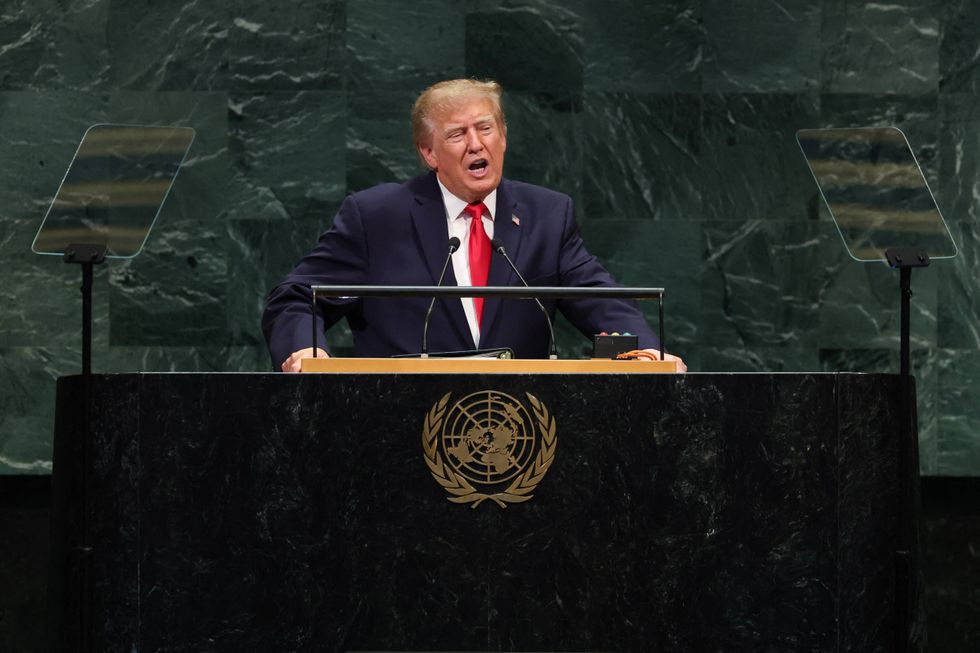 US President Donald Trump addresses the 81st United Nations General Assembly at UN Headquarters in New York on September 22, 2026. (Photo by Timothy A. Clary/AFP via Getty Images)
Trump's threats also come as the US midterm elections loom just over a month away. High gas prices and inflation caused by the war have fueled backlash among American voters, leading to Trump's lowest-ever approval ratings and predictions of an electoral bloodbath for Republicans down the ballot in November.
Last week, Trump rejected a Qatari-mediated ceasefire proposal from Iran that would have involved the US ending its military blockade of Iran in exchange for Iran lifting its restrictions on travel through the Strait of Hormuz. It would also have meant returning to nuclear negotiations for the first time since Trump backed out of the memorandum of understanding agreed upon in June.
With the war deeply unpopular among the American public, Trump has scaled back the tempo of his attacks on Iran in recent months. Reporters asked Trump whether he planned to ramp up the bombing once the elections were over.
He said it was “possible,” adding, “I can’t tell you that because look, you know, you’re asking, 'Where are you going to bomb?'”
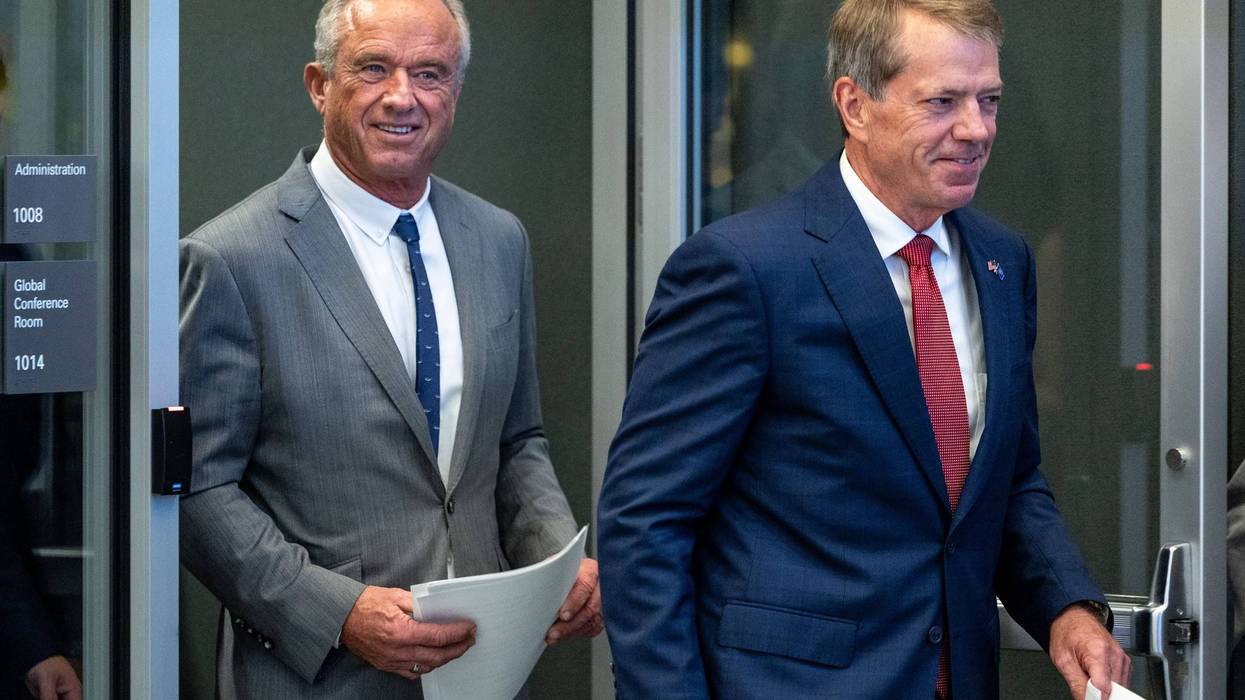
"Medicaid work reporting requirements are a flawed policy if the goal really is to incentivize work, but they are very effective at taking Medicaid coverage away by tangling folks up in red tape," said one expert.
Human rights organizations said Thursday that Nebraska should be seen as a bright red warning sign of what's to come for states across the US as they implement the draconian Medicaid work requirements included in the budget legislation that President Donald Trump signed into law last year.
In early May, Nebraska became the first state to implement the new work reporting mandates, which require certain Medicaid recipients to document at least 80 hours of work or other qualifying activities per month to remain enrolled in the program. Republican Gov. Jim Pillen, announced the state's fast-tracked implementation of the requirements at a celebratory press conference late last year alongside Mehmet Oz, head of the Centers for Medicare and Medicaid Services.
Human Rights Watch (HRW), Oxfam America, and Nebraska Appleseed said in a joint report released Thursday that the rush to impose the mandates has had the predicted results of mass confusion and bureaucratic chaos, previewing what millions of Medicaid recipients across the country can expect in the months ahead.
“Nebraska is the canary in the coal mine for issues that most states will face when they begin implementing these work requirements,” said Matt McConnell, a US researcher on economic, social, and cultural rights at HRW. "As they do, they should make sure red tape doesn’t strip people of healthcare."
The trio of advocacy groups interviewed a dozen Nebraskans who have directly experienced or witnessed the unruly rollout of the expanded work requirements. One 64-year-old man "said he lost his Medicaid coverage while undergoing treatment for kidney cancer and multiple chronic health conditions," the groups noted.
"He said a representative of the health plan that managed his Medicaid coverage informed him he lost access because he was not working, even though he is unable to work due to his condition," the groups added. The man said the loss of Medicaid coverage disrupted his care, including an appointment with a cancer specialist.
The Trump administration has said even people with terminal cancer are not necessarily exempt from the new work reporting requirements.
One Medicaid eligibility worker from the Nebraska Department of Health and Human Services told HRW, Oxfam, and Nebraska Appleseed that "poor training, vague and inconsistent guidance, and technical issues, including unprepared software systems, had caused stress and uncertainty for applicants and for state employees."
“We just sometimes don’t know what we’re doing,” the worker said. "I wish the people who make policies knew what they were doing."
It's unclear exactly how many people have lost Medicaid in Nebraska as a result of the new requirements. Sarah Maresh, healthcare access program director at Nebraska Appleseed, said Thursday that obtaining data from the state has been "like pulling teeth."
"Nebraskans deserve access to this information," said Maresh. "You can’t fix problems you refuse to measure."
Earlier this week, following relentless pressure from advocates, Nebraska's health department released preliminary data showing that more than 1,000 Nebraskans have been deprived of Medicaid coverage due to the expanded work requirements—a figure that's believed to be a significant undercount.
"I have been saying for years that Medicaid work reporting requirements are a flawed policy if the goal really is to incentivize work, but they are very effective at taking Medicaid coverage away by tangling folks up in red tape," Joan Alker, executive director of Georgetown University's Center for Children and Families, wrote in a blog post earlier this week. "Unfortunately, Nebraska’s data only reinforces this point."
Nationwide, millions of people have lost Medicaid coverage since Trump signed the GOP budget package, which includes around $800 billion in cuts to Medicaid over the next decade.
States face a January 1, 2027 deadline to implement the expanded work requirements—though states are allowed to move more quickly. Montana and Arkansas have joined Nebraska in implementing the mandates ahead of the federal deadline, resulting in similar chaos and confusion.
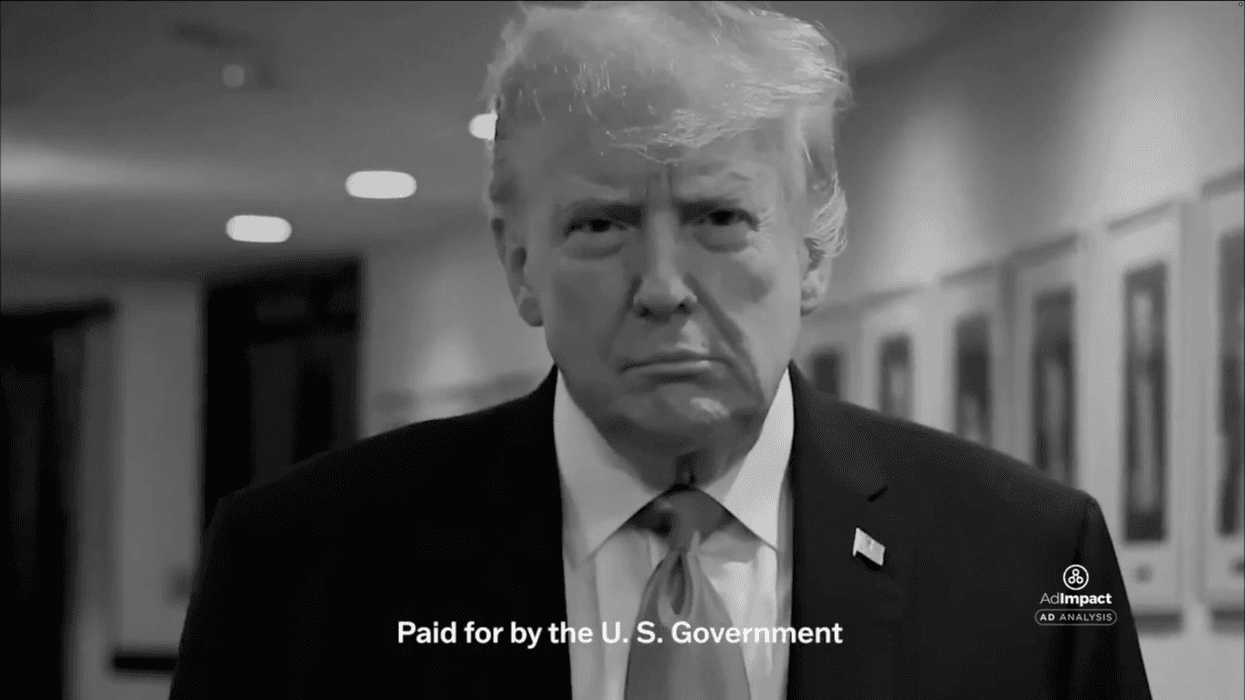
"So your hosts are on air all day saying this is illegal while you are taking the money and running the ads? Just gross," said one MS NOW critic.
CNN and MS NOW are both airing taxpayer-funded ads that promote President Donald Trump, who last month tried to ban the cable news networks from White House grounds.
As The Washington Post reported on Wednesday, two pro-Trump ads have aired on MS NOW and CNN this week in select markets, even though legal experts and government watchdogs say the ads violate laws prohibiting taxpayer funds for political propaganda.
In a statement provided to the Post, MS NOW spokesperson Richard Hudock defended the decision to run the ads.
"We know the size, engagement, and influence of the MS NOW audience, and apparently the White House does, too," said Hudock. "The decision to spend taxpayer dollars to reach our audience speaks for itself."
The MS NOW spokesperson also emphasized that "accepting an advertisement is not an endorsement of its message, and purchasing airtime will never purchase favorable coverage."
This justification drew an angry rebuke from Ron Filipkowski, editor-in-chief of MeidasTouch.
"This is just despicable by MS NOW, which has accepted stolen taxpayers dollars for 38 illegal ads," Filipkowski wrote in a Thursday social media post. "Give me a break with this bullshit statement too. So your hosts are on air all day saying this is illegal while you are taking the money and running the ads? Just gross."
According to a Wednesday report from Status, some MS NOW insiders are "pissed" about the decision to air the Trump ads, with some noting that the network's viewers will "hate" seeing them.
Government watchdog Public Citizen on Tuesday filed complaints with the Federal Communications Commission (FCC) and the Federal Trade Commission (FTC) demanding that the government-funded Trump ads be taken off the air.
However, Trump-appointed Trump FCC Chairman Brendan Carr told reporters on Wednesday that he is not planning any investigation into the ads, which he described as "public service announcements" despite the fact that they feature audio of the president personally vowing to "defeat communism, socialism, and Marxism in America."
"I don’t think there’s anything unique or different about it," said Carr. "There’s nothing in there that strikes me that merit any sort of FCC review."

“This event is the worst we’ve seen and unlike any other botched execution in the modern era,” said Robin Maher, the executive director of the Death Penalty Information Center. “There is no precedent.”
The botched execution of Christa Pike in Tennessee on Wednesday night was met with disgust and outrage by death penalty opponents who have long argued that not only is murder by the state morally wrong, but the government's inability to carry out such punishments humanely has been shown time and time again to result in horrific human rights violations and barbaric scenes of cruelty inside the nation's prison walls.
Pike, sentenced to death in Tennessee over the 1995 murder of 19-year-old Colleen Slemmer, survived two otherwise lethal injections of pentobarbital on Wednesday while strapped to a gurney by prison officials at the Riverbend Maximum Security Institution in Nashville.
"Tonight the State of Tennessee once again failed to carry out a lawful execution," said Pike's attorneys—Randy Spivey and Kelly Gleason from the TN Office of the Post Conviction Defender, and Stephen Ferrell and Luke Ihnen from Federal Defender Services of Eastern Tennessee—in a statement late Wednesday.
"We take no pleasure in being right," her lawyer's continued, "but the concerns raised by Ms. Pike proved to be true: difficult vein access, blown veins, degraded pentobarbital, no emergency medical care available when things inevitably go wrong, all under a protocol that remains veiled in secrecy. Christa is being treated at a nearby hospital. We have not been informed as to her condition."
Pike's legal team said she remained alive after two rounds of the lethal injection, with witnesses reporting confusion after the first dose resulted in Pike raising her head to speak to those who administered the drug and falling into a deep sleep, but audibly snoring and still alive, after the second.
“This event is the worst we’ve seen and unlike any other botched execution in the modern era,” said Robin Maher, the executive director of the Death Penalty Information Center. “There is no precedent.”
It was the second botched execution in Tennessee this year, reports The New York Times. According to the newspaper:
The apparent failure came after dueling court rulings delayed the execution of [Pike] by about nine hours. The state had raced to go ahead with the execution before the day ended and to avoid having to reschedule.
In a pair of emergency legal filings, Ms. Pike’s lawyers said that while two syringes of pentobarbital, the lethal drug, had been administered, Ms. Pike had not lost consciousness. She still had a heartbeat, they said, and was audibly snoring.
The execution of Pike, who court records show was subject to pervasive abuse throughout her childhood and was only 18 years old when she carried out the brutal crime, had been put on hold earlier Wednesday only to be reinstated by the US Supreme Court later in the day.
Amnesty International USA condemned the treatment of Pike and called for an end to all capital punishment in the United States.
"Tennessee’s botched attempt to execute Christa Pike, as witnessed by her attorneys, demonstrates why the death penalty truly is the ultimate cruel, inhuman, and degrading punishment," the group said. "All execution methods are inhumane and unacceptable. The death penalty must be abolished, everywhere."
Republican Tennessee Gov. Bill Lee announced after the botched execution that the state’s other remaining execution for 2026 would be put on hold and ordered “a comprehensive, third-party review to determine exactly what occurred” in the attempted killing of Pike.
Pike, said human rights advocate Evad HaAm, "survived a completed lethal-injection attempt. That is not a stay. It is a botched execution."
While Pike's current medical status and chance for survival remain unknown, further attempts by the state to kill her, he argued, "would violate the Eighth Amendment prohibition on cruel and unusual punishment."

Rep. Greg Casar said progressives' effort to make a leading artificial intelligence super PAC "as toxic as AIPAC" is having an impact.
The chair of the Congressional Progressive Caucus on Wednesday urged all Democrats to reject campaign cash from billionaires whose wealth stems from the artificial intelligence industry, following news that the president of OpenAI abandoned plans to donate millions more to a super PAC that has funneled money to members of both parties.
The OpenAI executive, Greg Brockman, wrote in an internal message obtained by The New York Times that the super PAC, Leading the Future (LTF), "keeps reflecting on the company and [has] become so much of a distraction for people here." Brockman noted that he and his wife have donated $25 million to the super PAC—which opposes strong AI safety regulations—but "have no plans to donate more at this time."
Rep. Greg Casar (D-Texas), a leading supporter of AI regulation in Congress, said in response to Brockman's message that "the pressure is working."
"Progressives have worked hard to make LTF as toxic as AIPAC," Casar wrote, referring to the American Israel Public Affairs Committee. "Now one of its biggest donors is backing out. Democrats need to stand with the people and reject AI billionaires' money."
Super PACs bankrolled by AI companies and billionaires have become some of the biggest spenders in the 2026 midterms amid widespread voter backlash against the construction of resource-draining AI data centers—and against the industry more broadly.
The Times reported on Tuesday that LTF and Public First Action, which is aligned with the AI firm Anthropic, have spent a combined $52.6 million on "safe seats—those that are unlikely to change party hands but that often feature intense intraparty contests."
"The big AI players have also spent more heavily for Democrats than Republicans," the Times noted. "They have boosted candidates who align with their agendas, helped defeat those they see as hostile to it and ingratiated themselves with front-runners who are likely to be in positions of power in the next Congress to make decisions critical to their bottom lines."
"The Times analysis of federal advertising and campaign outreach expenditures made by the four major super PACs during this cycle showed that they have spent far more money in support of Democrats—$28 million to back 21 Democrats and nearly $19 million to boost 30 Republicans—and that the candidates they backed almost always won," the newspaper added.
The Lever reported last month that a five-person commission on AI convened by House Minority Leader Hakeem Jeffries (D-NY) "is filled with Democrats who have received outsized financial support this election cycle from AI-linked super PACs, executives, and investors."
Reps. Ted Lieu (D-Calif.), Valerie Foushee (D-NC), Josh Gottheimer (D-NJ), Frank Pallone Jr. (D-NJ), and Zoe Lofgren (D-Calif.) are the commission's members.
"The spending seems intended to shape the party’s policy response to AI, particularly if Democrats win a majority in November," The Lever observed.
Earlier this week, US President Donald Trump met with leading AI industry executives who have collectively donated more than $220 million to his super PAC and other projects associated with the president, according to a new analysis by the advocacy group Public Citizen. Trump said following the meeting that the AI industry shouldn't have any government guardrails and should be allowed to police itself because "they love our country."
"Big Tech executives have effectively bought themselves a seat at the AI regulatory table," said Robert Weissman, co-president of Public Citizen. "Actually, they have bought the table. As a result, as public anxieties about AI risks—to children, political integrity, jobs, the environment—skyrocket, and as revelations mount of AI company failures to impose adequate safeguards on their own technologies, the Trump administration delivers meaningless agreements that impose no restraints on the out-of-control tech oligarchs."

"A board loaded with defense contractors and one draft-dodging war hawk will decide the future of the US military," said one observer. "What could possibly go wrong?"
US Defense Secretary Pete Hegseth announced Wednesday that three men—none of whom have served in the military and two who make billions of dollars from it—will help lead a new Pentagon project on the “future of warfare," even as he moves to eliminate hundreds of senior armed service leadership position, including many generals and admirals.
Hegseth unveiled Project Meridian during his “State of the Force” address at Marine Corps Base Quantico in Virginia. The 120-day initiative will examine emerging technologies that the Department of Defense believes will be critical in future warfare.
"America's best minds" will be brought together to “reimagine what warfare will look like in the future,” Hegseth said.
To that end, the defense secretary said that "Project Meridian will be co-led by three of our nation's best minds, Elon Musk, Palmer Luckey, and Newt Gingrich."
Musk, the world's wealthiest human, is already deeply involved in US national security infrastructure through SpaceX—the recipient of billions of dollars in Pentagon contracts—and other businesses. He was previously part of the administration as the de facto leader of the Department of Government Efficiency.
Luckey, who like Musk is a major Trump donor, is the co-founder of defense technology company Anduril Industries. Last year, he said that Anduril planned to produce “large numbers" of cruise missiles, fighter jets, and other artificial intelligence-powered weapons systems.
“If we have to fight Iran, and China, and Russia all at the same time, we are screwed,” Luckey said in pushing for more arms production.
Gingrich is a former Republican speaker of the House of Representatives who had been pushing for war with Iran since at least 2005. Like President Donald Trump, he has been accused of dodging the draft during the Vietnam War by receiving numerous deferments; in Trump's case for bone spurs, and for Gingrich because he was a student and a father.
"Those three great Americans are going to be joined by a team of senior leaders, hand-picked private sector leaders, and subject matter experts from across our nation's unmatched innovation, academic, and policy ecosystems," said Hegseth—whose Senate confirmation last year was so contentious due to concerns about him being unfit for office that it required a tie-breaking vote by Vice President JD Vance.
The defense secretary also announced the creation of an Autonomous Warfare Command—or Autowarcom—"a new four-star combatant command with service-like authorities built to scale autonomous and robotic capabilities across the joint force."
The appointments come as Hegseth simultaneously pursues a major reduction in the military’s senior leadership. He announced Wednesday that the Pentagon would eliminate 20% of its roughly 800 general and admiral positions by January—doubling a previously announced 10% reduction. Hegseth described the cuts as necessary to eliminate “redundant force structure” and “unnecessary bureaucratic layers.”
The reductions follow the removal or early departure of more than two dozen senior military and civilian defense officials since Hegseth became defense secretary.
The contrast has drawn criticism from lawmakers and military observers, who expressed alarm at the prospect of removing experienced officers while handing an influential role in planning future war to warfare technology executives and a hawkish former lawmaker who is no longer accountable to the public.
"Interesting. A board loaded with defense contractors and one draft-dodging war hawk will decide the future of the US military," NewBlue USA executive Marty Taylor said on social media. "What could possibly go wrong?"
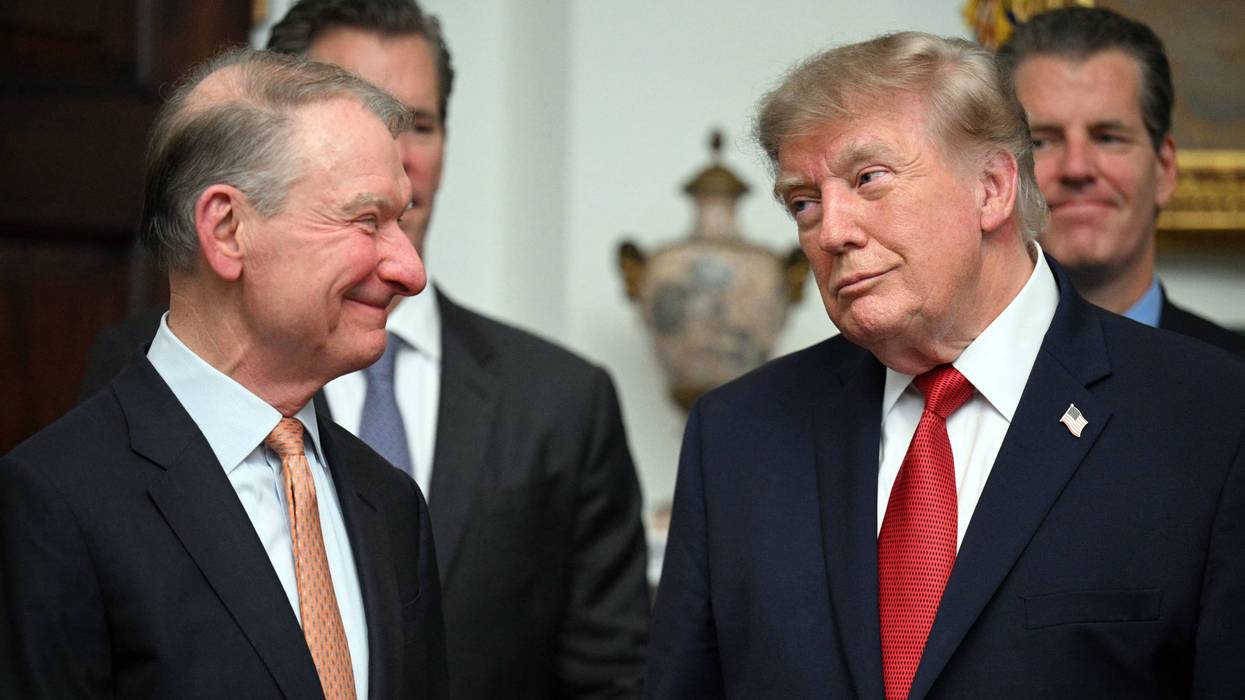
"The Trump SEC is seeking to bail out the struggling private equity and private credit industry with hardworking Americans' retirement savings."
The US Securities and Exchange Commission on Wednesday proposed policies that SEC Chair Paul Atkins framed as an effort to promote private market investments by retail investors—or everyday Americans—while also "protecting those investors from bad actors and fraud," but critics accused the Republican-dominated federal agency of serving Wall Street at the expense of the public.
"Chair Atkins talks about the 'responsible retailization' of the private markets, but the rules the SEC proposed today are irresponsible," declared Benjamin Schiffrin, director of securities policy for the nonprofit Better Markets. "The SEC is supposed to protect retail investors from risky private market assets. Instead, it is encouraging investors saving for college and retirement to direct their savings to private market investments that do not offer greater returns but that do offer less disclosure and more limited legal recourse when harmed."
"Although hedge funds may charge fees based on performance to their investors, the SEC has long prohibited investment advisers from charging retail investors performance-based fees," Schiffrin explained. "This protects them from arrangements that might encourage advisers to take undue risks with retail client funds to increase their compensation. Yet the SEC's proposed rules would make such arrangements permissible. This change would eliminate a limitation on the ability of private funds that charge performance-based fees to sell to retail investors and would incentivize advisers to push retail clients into risky private funds that have performance-based fees."
The new rules would also make it easier to sell interval funds, which "hold complex and illiquid assets and charge high fees," Schiffrin noted. "Given that many interval funds have faced heightened redemption requests from existing investors seeking to exit these funds in recent months, now hardly seems like the time to further expose retail investors to these funds."
“Perhaps most troublingly, the SEC expands the categories of individuals who qualify as so-called 'accredited investors' to whom private market assets may be sold," he continued. Specifically, the agency said it is considering letting individuals with some certificates or licenses—such as certified public accountants, research analysts, and financial analysts and planners—qualify.
"Accredited investors are supposed to be institutions and individuals with enough assets to bear the risk of loss inherent in private market assets," Schiffrin stressed. "Now, the SEC would allow individuals to qualify as accredited investors without regard to their ability to lose money in the private markets."
The expert also highlighted the timing of these proposals, pointing to the agency's Monday statement that "reminded the private funds industry of its obligations regarding valuing assets and providing disclosure to investors," which Schiffrin said was "obviously intended to provide cover for the SEC's desired expansion of the private markets."
"Having previously downplayed the turmoil in the private credit markets, continued redemption requests by private credit investors forced the SEC to acknowledge that private market assets are particularly risky and to reassure investors it was not asleep at the switch," he said. "Yet the statement begs the question of why the SEC would seek to expose retail investors to the private markets at the same time it acknowledges the risks that private market assets pose even to institutional investors."
"The answer is that the SEC has lost its way," he concluded. "Its agenda is now the financial industry's agenda, and private funds need access to retail investors and their savings as institutional investors increasingly pull back from private markets. So the proposed rules the SEC issued today have nothing to do with 'democratizing access' to the private markets and everything to do with allowing the financial industry to prey on unsuspecting retail investors."
The SEC chair said Wednesday that the agency's latest moves "complement efforts undertaken pursuant to" President Donald Trump's August 2025 executive order on Democratizing Access to Alternative Assets for 401(k) Investors—which Schiffrin warned last year "exemplifies the administration's determination to prioritize the interests of Wall Street over the interests of Main Street and retail investors."
"Let's be clear: Neither 401(k) plan sponsors or 401(k) plan participants—regular, hardworking Americans—are asking to replace stocks and bonds in their 401(k)s with risky private assets," Schiffrin said at the time. "Instead, the private funds industry needs a way to get its hands on the $12 trillion in Americans' retirement accounts to boost its profits and make up for the fact that institutional investors are fleeing the private markets due to mediocre returns, higher fees, and more risk."
Despite such criticism of Trump's order, the US Department of Labor unveiled its related proposal in March. Jim Baker, executive director of the nonprofit Private Equity Stakeholder Project, pointed to the pending DOL policy in a Wednesday statement responding to the SEC action.
"With the proposed rules, combined with the DOL's 401(k) rule, the Trump SEC is seeking to bail out the struggling private equity and private credit industry with hardworking Americans' retirement savings," he said. "Private equity funds have lagged public markets while charging much higher fees, and institutional investors are pulling back from the asset class. These rules risk shifting more financial risk onto workers who rely on their retirement savings for long-term security."
"Private equity firms are already under pressure from a backlog of unsold assets and declining distributions to investors," Baker emphasized. “At the same time, policymakers are giving private equity access to retirement savers' 401(k) plans, raising serious questions about whether these investment risks are being shifted onto everyday retirement savers."
"Retirement accounts exist to provide security, not to bail out private market investments by shifting liquidity risk onto workers when markets turn," he added. "At a minimum, the SEC should hold private equity to the same disclosure and transparency standards expected of publicly traded stocks, mutual funds, and [exchange-traded funds], including clear reporting on what funds are investing in, the fees and expenses retirement savers are paying, the amount of debt funds are using, and how these investments are actually performing compared with stocks."
Key members of Congress also responded to the SEC's Wednesday proposals. While Republicans on the US Senate Banking, Housing, and Urban Affairs Committee welcomed the push to expand the accredited investor definition, which aligns with Chair Tim Scott's (R-SC) Empowering Main Street in America Act, Ranking Member Elizabeth Warren (D-Mass.) was critical.
"Today, the SEC proposed a new rule that would override decades-old protections for Americans' retirements to allow Wall Street to start charging high, private equity-level fees on lower-cost retail funds," Warren said. "Americans already struggling to save in Trump's economy shouldn’t be used as piggy banks to boost the profits of Trump’s Wall Street buddies."
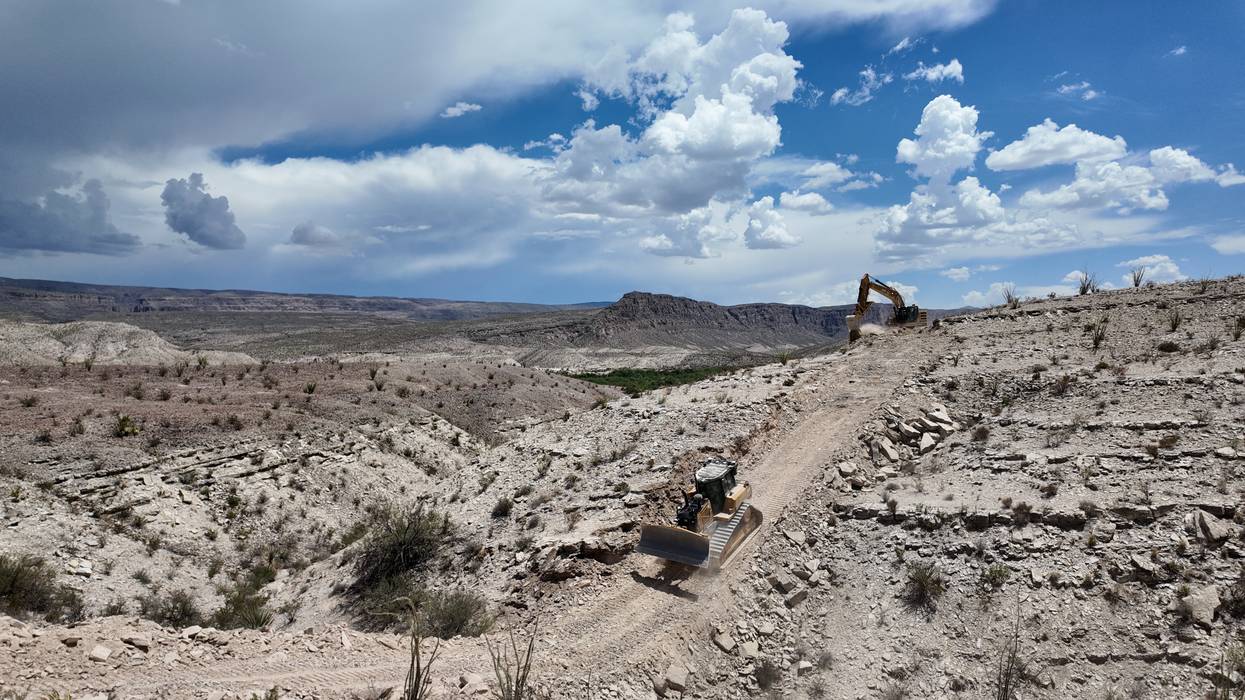
"We won't let them destroy the wildest place in Texas without a fight," the Center for Biological Diversity vowed.
The Trump administration on Wednesday allowed a temporary pause on border construction in and around Big Bend National Park in Texas to expire, prompting renewed vows from conservationists and other opponents to fight the contentious project in court.
Laiken Jordahl, the national public lands advocate at the Center for Biological Diversity (CBD), posted a court document stating that US Customs and Border Protection (CBP)k "will lift the pause on ground-disturbing activities" related to the Department of Homeland Security's (DHS) plan to build border barriers and other destructive infrastructure across one of the most remote and environmentally sensitive stretches of the US-Mexico border.
The government said Tuesday in a court filing that CBP is “actively considering adjustments” to the project “that would reduce its scope and avoid or minimize potential impacts, based on input received from the National Park Service and other stakeholders."
However, those possible changes did not assuage opponents of the project, who span the political spectrum.
“We are disappointed, and urge the Department of Homeland Security to extend this pause,” Emily Thompson, executive director of the Coalition to Protect America’s National Parks, said Wednesday. “Continuing with construction of border barriers, roads, and associated infrastructure inside Big Bend National Park will do unprecedented damage to the park.”
Thompson continued:
Big Bend National Park stands out for its unique desert landscape. With more nesting bird species than any other national park, towering canyon walls, and the largest international dark sky reserve in the entire world, Big Bend is an integral addition to our nation’s natural heritage. The Trump administration's plan to build a border wall through the park threatens all of this, heightening flood risk, inundating the skies with lights, and cutting off migration patterns for wildlife. Building in Big Bend would be mutilating an extraordinary landscape at a massive cost to the taxpayer—with little ultimate benefit.
Bob Krumenaker, chair of Keep Big Bend Wild and a former Big Bend National Park superintendent, asserted that “border security already works" in the park "without the need for intrusive construction."
"The Border Patrol, the National Park Service, and local sheriffs already operate an effective surveillance system with ground and aerial patrols and unobtrusive, wireless sensors," he noted. "The rugged terrain, huge distances, and harsh desert weather in the national park and in Mexico across the Rio Grande make this the least active section of the entire southern border for illegal crossings."
CBD and other plaintiffs are already seeking a preliminary injunction in federal court. US District Judge Kathleen Cardone—an appointee of former President George W. Bush—is scheduled to hear testimony and evidence Friday in El Paso on the request to halt construction while the groups' lawsuit proceeds. The plaintiffs argue that the Trump administration unlawfully waived dozens of federal laws to accelerate construction.
Indigenous peoples and their advocates have criticized DHS for waiving laws, including the Native American Graves Protection and Repatriation Act and the Archaeological and Historic Preservation Act, to enable the project's construction.
In a statement issued Wednesday, CBD described some of the damage already done by construction in service of Trump's deadly immigration crackdown:
Bulldozers started tearing into Big Bend National Park near the iconic Santa Elena Canyon in early August and were documented plowing new routes for vehicle barriers into both the east and west sides of Mariscal Mountain. Contractors have stockpiled heavy equipment across the Big Bend region, where staging yards have been cleared, worker camps built, and water wells drilled.
"We'll be in court... in El Paso demanding a permanent halt to the destruction," CBD said. "We won't let them destroy the wildest place in Texas without a fight.
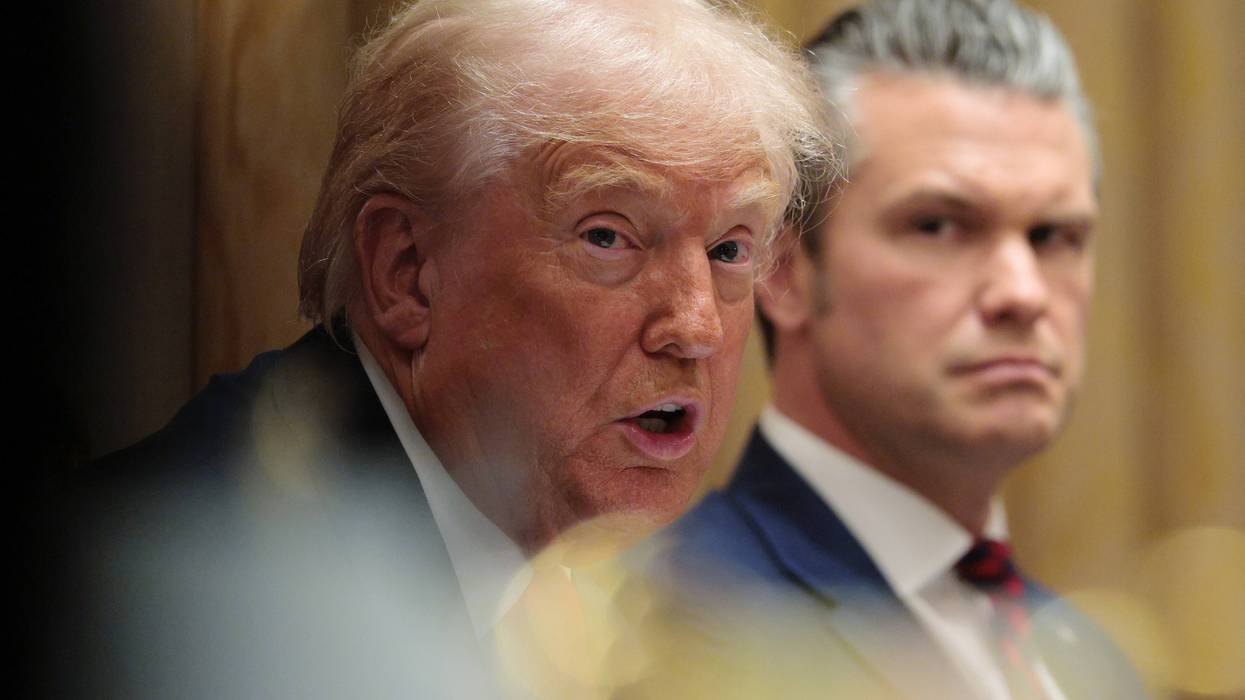
“No president can arbitrarily assassinate people from the sky based on their sole say-so,” said one legal expert.
A key memo from the Office of Legal Counsel at President Donald Trump's Department of Justice has underpinned the administration's yearlong campaign of bombing boats in the Caribbean Sea and eastern Pacific Ocean, and the White House has been adamant that the document should be kept secret.
But on Wednesday, Judge Paul Engelmayer in the US District Court for the Southern District of New York rejected the administration's rationale for keeping the memo hidden, saying that the Department of Defense and US Southern Command have adopted its contents as its "working law" while conducting 70 strikes on boats and killing at least 234 people who officials claimed, without evidence, were "narco-terrorists."
After the ACLU and the Center for Constitutional Rights (CCR) filed a Freedom of Information Act request calling for the release of the 40-page memo, the administration argued it needed to remain secret to protect confidential deliberations and attorney-client communications.
Engelmayer noted that administration officials have repeatedly cited the memo in public statements to explain why it was bombing dozens of boats that it claimed were operated by drug cartels—which experts and family members of some of the victims have called into question.
“The agency defendants cannot claim surprise from this consequence of the executive branch’s repeated public statements embracing the OLC memo—and it only—as setting out the legal parameters for the boat strikes,” Engelmayer wrote.
Jeffrey Stein, staff attorney with the ACLU's National Security Project, called the order "a huge step in the right direction of ensuring that the government does not get to summarily execute people based on secret law."
“The public deserves to know how our government is justifying the cold-blooded murder of hundreds of civilians," said Stein.
The judge ordered the administration to turn the memo over to him so he can determine whether it should be released to the public. He also ordered officials to provide information about who has seen the memo and how they have used it, and called on the administration to provide details on whether the memo could be protected from public view as a "closely held presidential advice document."
Engelmayer gave the administration until October 14 to comply with the order.
The boat strikes have been carried out as part of Trump's stated push to defeat drug cartels in Latin America. Sen. Tim Kaine (D-Va.) has pointed out that there is little evidence the administration is ensuring it is targeting drug boats, as the presence of drugs on a boat has not been identified as "targeting criteria" for the operation in congressional briefings. Some victims have been identified as fishermen and other people who had little, if any, involvement with drug trafficking.
Beyond that, legal experts say that even if the 234 victims were drug traffickers, the boat bombings constitute extrajudicial killings and violations of international law—something Trump himself appeared to brag about last week when he said at the United Nations General Assembly that "we don’t waste our time" addressing alleged drug crimes in the court system.
“No president can arbitrarily assassinate people from the sky based on their sole say-so,” said Baher Azmy, legal director for CCR. “If the OLC opinion seeks to dress up the obvious illegality of these serial murders in legalese to provide Trump cover, the public needs to see that analysis and ultimately hold accountable all those who facilitate murder in the United States’ name.”

"The past almost four years have seen Brazil accomplish a great deal in terms of bringing people out of poverty, creating jobs, curbing hunger, and raising standards of living."
An analysis released Wednesday documents some of the major economic gains that Brazil has made over the past four years during the third term of President Luiz Inácio Lula da Silva, who is currently in a close battle for reelection against rival Flávio Bolsonaro.
The analysis, published by the US-based Center for Economic and Policy Research (CEPR), finds that, between 2022 and 2025, the Brazilian economy grew by a cumulative 8.9%, easily outpacing the average rate of growth in other South American countries.
This growth has been coupled with a drop in the unemployment rate, which has fallen from more than 9% in the second quarter of 2022 to just 5.4% in the second quarter of 2026.
Both poverty and food insecurity fell dramatically in the first two year's of Lula's term, the analysis finds, and in 2025, "Brazil was removed from the Food and Agriculture Organization’s Hunger Map after chronic undernourishment fell below 2.5%."
CEPR's report also gives credit to Lula's policies for improved economic conditions, including a new minimum wage law, an expanded maternity leave program, and increased average payments to low-income families given through the Bolsa Família program.
The economy during Lula's term is far from perfect, however, and the report flags high interest rates set by Brazil's central bank as a key factor in raising consumers' borrowing costs and increasing the rate of household delinquency.
CEPR also noted the negative impact of online betting apps, which Lula has pledged to ban starting next month, on Brazilian workers.
"Brazilian households lost an estimated R$62.5 billion (US$11.2 billion) to online betting in 2025," the report says, "while some 802,000 Bolsa Família households spent more than 2% of their income on betting in January 2025."
Jake Johnston, CEPR's director of international research, said that "the past almost four years have seen Brazil accomplish a great deal in terms of bringing people out of poverty, creating jobs, curbing hunger, and raising standards of living."
"This was done," Johnston added, "despite the lingering impact of the Covid pandemic, external economic shocks that affected the global economy, and excessively high interest rates."
The first round of Brazil's presidential election is set to take place on Sunday, and recent polls show Lula with a narrow lead over Bolsonaro, son of former Brazilian President Jair Bolsonaro, who is still serving a criminal sentence for efforts to instigate a coup after his loss in the 2022 election.