

SUBSCRIBE TO OUR FREE NEWSLETTER
Daily news & progressive opinion—funded by the people, not the corporations—delivered straight to your inbox.
5
#000000
#FFFFFF
To donate by check, phone, or other method, see our More Ways to Give page.
Daily news & progressive opinion—funded by the people, not the corporations—delivered straight to your inbox.

In his new memoir, Mahmoud Khalil describes the moment he realized his detention was bigger than him.
I had the first call with my lawyers four days after my arrest. The guards escorted me to a room across the detention center, a multipurpose hall with scattered chairs and a small table and a phone next to the reinforced window overlooking the inner yard. Several people were already on the call, attorneys whose names and faces I would see on the screen over the next hundred days. They asked me to confirm that I was alone. I did. “Do a visual sweep,” one of them suggested. I scanned the room and checked the corners, beneath the air-conditioning vents, along the ceiling lights, searching for something I couldn’t name. It felt performative. If they wanted to listen, they would listen.
The lawyers filled me in on the court proceedings so far. I had so many questions. They tumbled out of me, one after another, the accumulation of four days of confusion and dread. How could they do this? What are the charges? How is any of this legal? When will I be out? When will I be returned to New York?
They had no conclusive answers, only mostly legal terminology that obscured as much as it revealed. The lawyers were careful with their words, precise in ways that frustrated me. I wanted certainty. They could only offer procedure.
The king wanted to send a message, and I was the messenger, sent to everyone who might consider speaking out.
They explained that they had filed something called a habeas corpus petition on my behalf. It sounded ancient, almost biblical. Baher, one of the lawyers, was generous enough to explain that the Latin phrase dated back to the Magna Carta, to the thirteenth century, when kings could make people disappear and the barons had to invent a mechanism to find them. Habeas corpus was a demand: Produce the body. Show us the prisoner. Justify his detention, or let him go.
I was the body in question, shipped over thirteen hundred miles from New York to Jena, Louisiana.
The habeas corpus petition had been filed in federal court in New York, along with two requests or motions, one for release on bail while the case continued and another to compel my return to New York. Federal court was different from immigration court, I learned. The separate immigration process would start in two weeks, which was indicated in the papers they had handed me in New York. I didn’t understand. It’s all the same country, the same system. What difference does it make which court hears my case, and where?
A huge difference, it turned out—one that would decide the fate of my case in the days to come. “Immigration court is not a real court,” one of the lawyers said. Immigration courts are the president’s courts, where arguments challenging presidential illegality are swallowed by the urgency of an executive campaign of mass deportation. Immigration judges are government employees, appointed by the attorney general, who is appointed by the president—the same president who had tweeted about me. In immigration court, there is no presumption of innocence, no jury or real independence. The process is designed for efficiency, not justice. Federal courts were different. The federal court is a constitutional court, which can hear constitutional claims against the executive branch. The judges are appointed for life. They don’t answer to the administration. They must follow the Constitution and case law. The government wanted my case in immigration court because the outcome was easier to control. In federal court, they would actually have to justify what they had done. In federal court, I might win.
The government had concealed my whereabouts in those first crucial hours, the lawyers said. They hadn’t known where I was. New York? Elsewhere? They had even tried tracking flights to Guantánamo. They had filed an emergency petition at 4:38 in the morning to prevent my deportation, but I had already been moved to New Jersey at that point. By the time everyone figured out I was in Louisiana, the government was arguing that any legal challenge should be heard there, not in New York.
Louisiana’s courts, heavily Republican, would be more favorable to the Trump administration. By moving me here, the government had shifted the fight to terrain they controlled, using geography as a weapon.
But there was another reason. They wanted to isolate me. In New York, I had my wife, friends, community, and the press. In Louisiana, I had nothing. I was alone in a facility in the middle of the woods, cut off from everyone who knew me.
The battle, then, was over two things: Which court system would hear my case, immigration or federal? And which venue, New York or Louisiana? Our argument was simple: I resided and was arrested in New York. This wasn’t really an immigration case. I wasn’t detained for violating immigration law. I was detained for what I said. For protesting and speaking out about Palestine. That made it a constitutional case, one where the First Amendment was crucial, and constitutional questions belong in federal court.
The government’s argument was equally simple: You’re an immigrant, now detained in Louisiana. This is an immigration matter. Stay in your lane.
It all sounded technical. Procedural. The kind of thing that puts people to sleep. But the venue and jurisdiction would determine everything. The government knew it. That’s why they had moved so fast to get me out of New York. That’s why they hid where they were taking me.
My case was the blueprint they wanted to set, and the one we had to tear up.
As the lawyers talked, I began to understand the scope of what I was facing. This was not a mistake. It was not overzealous enforcement. This was deliberate and planned at the highest levels of government. The president had tweeted my picture. The secretary of state had invoked obscure powers. Multiple agencies had worked together to snatch me from my home and transport me across the country in less than a day.
By the end of the call, one thing was clear: The lawyers were as shocked as I was. These were experienced attorneys: Some had worked on landmark Guantánamo cases. They had seen government abuse and overreach. But this was different: the speed, the secrecy, the coordination. The invocation of powers they had never seen used before. They compared it to the Red Scare.
“This provision the secretary of state used,” or the Rubio Determination, as it was called, “we’re not aware of it ever being applied in a case like this,” one of the lawyers said. “It’s unprecedented.” So I was not just a case; I was an experiment, I realized. The government was testing what it could get away with, using me as the test subject or “blueprint,” as the White House would boast. If they succeeded with me, a permanent resident with no criminal history, imagine what they could do to others. To the men sleeping in bunks around me, who had no lawyers, no press, no one watching. We would later learn, from the government’s own court filings, that this law had never before been used against anyone with my status.
My case was the blueprint they wanted to set, and the one we had to tear up.
This was the turning point, the moment when I grasped that this was bigger than me. It was bigger than my case, my green card, my deportation. I had not been detained for a crime I committed. They knew I never committed a crime. I was detained for what I represent, for saying something the king and his courtiers didn’t like.
The king wanted to send a message, and I was the messenger, sent to everyone who might consider speaking out. Every student who might join a protest would get the message, every person who might dare to criticize Israel or question American policy, domestic or foreign. The message was simple: This could be you. Your rights will not protect you. Your innocence will not protect you. We can take you in the night, and there is nothing you can do about it.
If I chose not to fight the case, I could “self-deport,” the lawyers explained, and leave “voluntarily.” But the Rubio Determination came with a lifetime ban against returning to the United States. We ended the call. I made no response to this offer. Maybe I should have.
Lying on my bunk that night, my eyes wrapped in a makeshift blindfold of socks, I knew I couldn’t walk away. If I left, they would call it a victory. They would say I must have been guilty of something. My departure would confirm their accusations without them having to prove anything. Every lie they told about me would be validated by my departure. The smear campaign would become the official record. And it wouldn’t end with me.
If I self-deported, I would be handing them the road map for silencing dissent. Immigrants joining a protest would remember that green cards offer no protection, that years of building a life in this country can be erased if the government doesn’t like their speech. Everyone would understand the new rules: Speak up, and we will find a way to make you disappear.
The Palestine solidarity movement in America was already under siege when I was abducted. Students had been doxxed, smeared, suspended, expelled. Others had lost their jobs for signing letters or joining a protest. During his presidential campaign, Trump vowed to donors who were furious at the student uprising that he would crush the pro-Palestine protests and “set that movement back twenty-five or thirty years.” My case was meant to be the capstone, proof that they could go further than suspensions and firings.
I thought about the students I had met at Columbia, the ones who had risked their careers to pitch tents on the lawn, to demand that the university divest from companies profiting from occupation. If I ran, what message would that send to them? That the fight wasn’t worth it? That when the pressure got real, even the people who told them to speak up would flee?
I thought about the Palestinians who had been waging this struggle for decades, long before it was fashionable, before celebrities posted about it on Instagram or walked red carpets with pins on their lapels. They had faced worse than arbitrary detention. They had faced ethnic cleansing, daily humiliation, dehumanization, imprisonment, the loss of everything. Who was I to give up at the first serious test? I thought of the people in Gaza buried beneath rubble while the world debated the justifications for their deaths. About farmers in the West Bank facing Israeli settlers burning their villages with impunity. About the millions of refugees, scattered across the world, still holding keys to the homes to which they could not return. They couldn’t self-deport out of their suffering. They couldn’t sign a paper to make it stop.
I was the test case. And I refused to comply.
Excerpted from NO LAND TO STAND ON: Notes from Detention by Mahmoud Khalil. Published by Metropolitan Books. Copyright © 2026 by Mahmoud Khalil. All rights reserved.
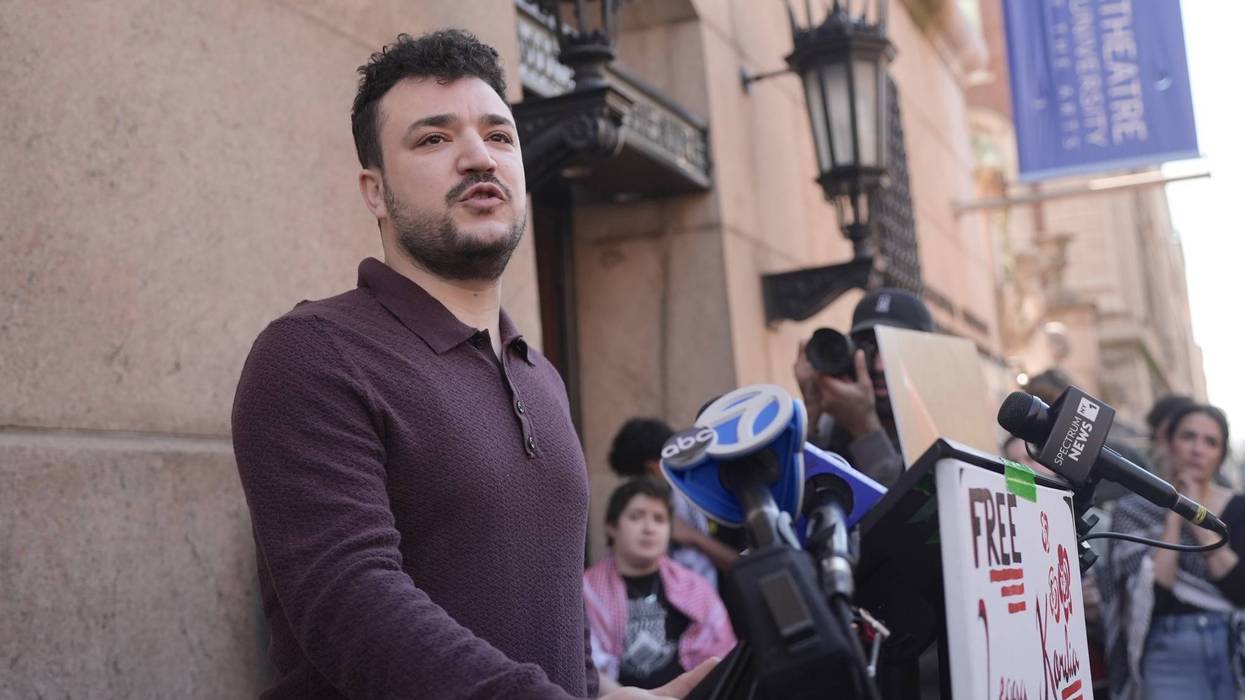
"We are suing because no student should ever have to go through the hell Columbia put us through all these years."
Former Columbia University graduate student Mahmoud Khalil and other Palestine defenders sued the Ivy League institution in federal court on Monday over what Khalil called "gross and systemic discrimination against Palestinian students."
After helping lead pro-Palestinian protests at Columbia, Khalil was forcefully arrested by federal immigration officials at his New York City apartment building in March 2025, despite being a lawful permanent resident married to an American. The Algerian citizen of Palestinian descent was detained at various facilities for more than 100 days, missing the birth of his son.
Khalil—one of several university students targeted by the administration since President Donald Trump returned to power last year—has been involved in a series of legal battles since, including his ongoing fight against deportation. The new suit was filed in the Southern District of New York by him, a student group he led, and the organization's current president, Mohammad Ibrahim Zubairi.
The organization, the Palestine Working Group, was indefinitely suspended from campus last September. The complaint explains that since PWG was formed "at Columbia University's School of International and Public Affairs (SIPA) in 2018, its members have been antagonized and harassed without consequence because of their vocal support of Palestine, perceived shared Arab and/or Muslim ancestry, and status as non-citizens and/or immigrants."
After the Hamas-led October 7, 2023 attack on Israel, which has been followed by Israeli forces' continued genocidal violence against Palestinians in the Gaza Strip, "on-campus harassment and hostility directed towards PWG, its members, and other similarly situated students escalated to an extreme level," according to the suit.
The filing also says that "defendants' deliberate indifference towards this harassment enabled the coordinated, persistent doxxing of multiple PWG members, and directly led to Mr. Khalil's March 8, 2025, illegal detainment and attempted deportation by US Immigration and Customs Enforcement."
Khalil wrote on social media that "we are suing because no student should ever have to go through the hell Columbia put us through all these years," and suggested there is more to come, pledging that "next, I will turn to the hateful individuals at Columbia who were also responsible for what we endured."
The defendants in this case include not only Columbia University and its trustees, but also SIPA Dean Keren Yarhi-Milo, whom the plaintiffs accuse of using her role "to take several actions that caused the on-campus harassment of and hostility towards Muslim and/or Arab, outwardly pro-Palestine students to notably worsen."
University spokesperson Samantha Slater declined to comment on the litigation, but gave a general statement to the campus newspaper, the Columbia Spectator, and various other outlets.
"Creating a campus environment where every member of our community feels welcome, supported, and safe is fundamental to who we are as a university. It is also a responsibility we take seriously," Slater said. "Columbia is committed to protecting our community from discrimination and harassment, and responding promptly and appropriately when concerns arise."
The lawsuit argues that the defendants violated contractual obligations along with multiple laws, including Title VI of the Civil Rights Act of 1964, and seeks injunctive relief. In addition to ending "discriminatory policies, practices, procedures, or protocols," PWG and its members want the group allowed back on campus, plus monetary damages.
According to the Spectator, dozens of people gathered at the university's gates for a Monday press conference during which Khalil, Zubairi, and their attorneys Brittany Finley and William Reynolds announced the suit.
"Columbia laid the groundwork for my targeting by the Trump administration through its deliberate indifference and discrimination aimed at intimidating Palestinian students," said Khalil. "For over two years, we pleaded with Columbia. Columbia did not care."
"Our safety and well-being did not serve the ideological project its board of trustees was protecting," he declared—as The Intercept reported Monday that, based on tax filings, as the university "ramped up its crackdown on pro-Palestine protesters over the past three years, the Ivy League institution was paying hundreds of thousands of dollars to pro-Israel groups," and "gave little or no such funds to pro-Palestine, Arab, or Muslim groups over the same period."
While a spokesperson for the school said that "these grants did not come from Columbia's operating funds and were payments distributed from a donor-advised fund established" in accordance with federal rules, Joseph Howley, a Jewish associate professor of classics at the university, said that "it confirms our worst suspicions since fall of 2023 that pro-Israel and anti-Palestinian politics are the official policy of this institution."
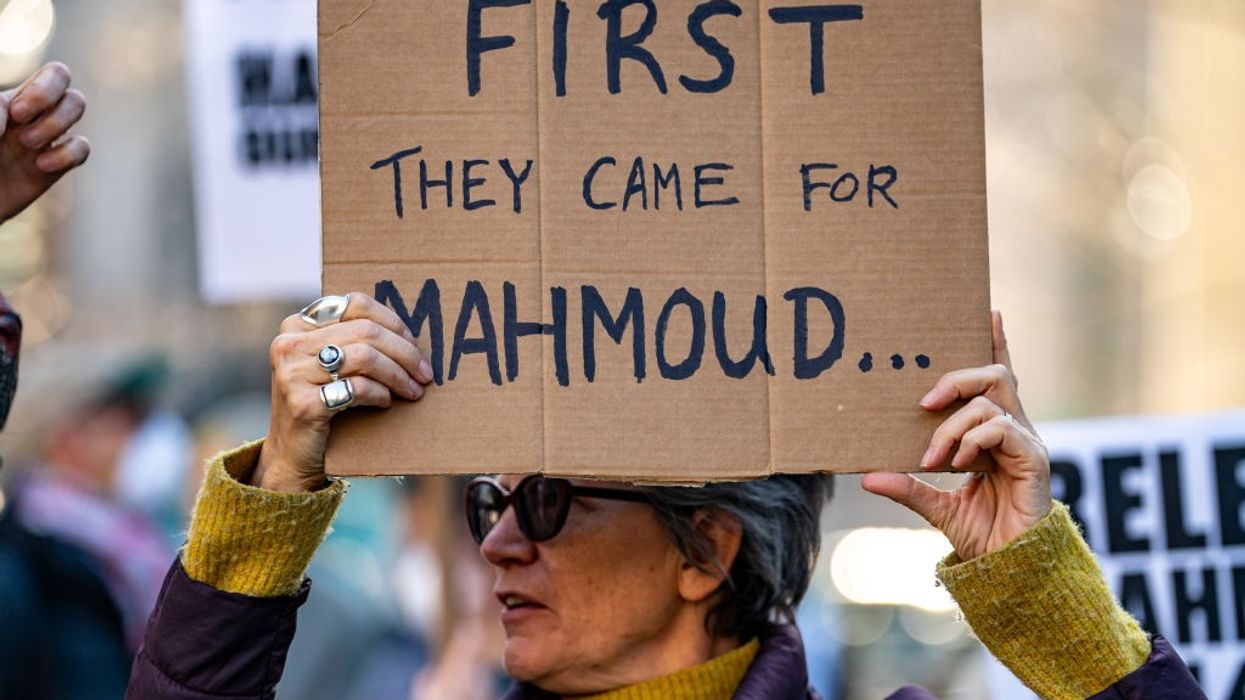
"A federal judge just ruled that the Trump admin's use of immigration law to deport me and other noncitizen students for pro-Palestinian speech is unconstitutional. No one should fear speaking up for Palestine," Mahmoud Khalil said.
The Trump administration violated the Constitution when it moved to deport or rescind visas from international students who spoke up for Palestinian rights and criticized Israel's genocide in Gaza, a federal judge ruled on Friday.
Northern District of California Judge Noël Wise, who was appointed by former President Joe Biden, said that the administration's actions violated both the First Amendment of the Constitution protecting free speech and the Fifth Amendment ensuring due process.
"Stated plainly, in the United States, freedom of speech belongs to the people. It is not the government’s to take," Wise wrote.
Mahmoud Khalil, a Columbia University student who was detained by Immigration and Customs Enforcement early in the second Trump administration despite holding a green card, celebrated the ruling on Saturday.
"A federal judge just ruled that the Trump admin's use of immigration law to deport me and other noncitizen students for pro-Palestinian speech is unconstitutional. No one should fear speaking up for Palestine," Khalil wrote on social media.
The Council on American-Islamic Relations also welcomed the decision in a statement on Saturday:
This ruling reaffirms a fundamental American principle that the government cannot deport people simply because it dislikes their political views. Students do not surrender their constitutional rights at the classroom door, and international students do not surrender their freedom of expression when they come to study in the United States. Criticizing the policies of a foreign government, including the genocidal government of Israel, is protected political speech.
The lawsuit was brought by the Foundation for Individual Rights and Expression (FIRE) in August 2025 on behalf of The Stanford Daily, Stanford University's student newspaper, and an anonymous female plaintiff. The newspaper argued that student reporters on visas refrained from covering pro-Palestinian protests on campus out of fear of being deported, while the Jane Doe was a noncitizen who had spoken out on behalf of Palestine and now was worried about government retaliation.
"The reporters in our newsroom shouldn’t have to fear that writing a story will result in their deportation. Today’s victory means they won’t have to," the paper's editor-in-chief George Porteous wrote on social media on Friday.
In particular, the lawsuit challenged two provisions of the Immigration and Nationality Act that Secretary of State Marco Rubio used to justify seeking the deportations of Khalil, Columbia student Moshen Mahdawi, and Tufts University student Rümeysa Öztürk. The first allows the secretary of state to deport a noncitizen for speech if the secretary “personally determines” the speech “compromises a compelling foreign policy interest.” The second allows the secretary to revoke visas entirely at their own discretion.
Wise agreed that the provisions violated the Constitution and offered a rousing defense of free speech.
“In the United States, free speech, including the freedom to criticize the government and its leaders, is not a sign of our democracy’s fragility. It is evidence of its strength," she wrote. "That strength is diminished when members of our society—citizens and noncitizens alike—must self-censor and ‘behave’ or suffer the government’s retaliation.”
FIRE said the decision was the "first in the country to squarely rule on the constitutionality of these statutes" and that it would "reverberate in similar proceedings around the country."
“In America, free speech doesn’t just belong to the people who say things the government agrees with,” FIRE attorney Conor Fitzpatrick said in a statement Friday. “Today’s ruling proves that free speech isn’t a privilege, but the inalienable right of every man, woman, and child.”
"This case will expose the scheme that sought to criminalize the Palestine solidarity movement in the US."
A lawsuit filed by former Columbia University student organizer Mahmoud Khalil wasn't his first legal challenge stemming from his arrest last year for his Palestinian rights advocacy, but he emphasized that his decision to take members of the Trump administration and private pro-Israel organizations to court was "about far more than what was done to" him when he was detained for 104 days.
"This case will expose the scheme that sought to criminalize the Palestine solidarity movement in the US," said Khalil in a statement. "It is about a coordinated, ongoing plot to punish, silence, and intimidate everyone who dares to dissent and speak out for Palestinian liberation. We will hold them accountable.”
Represented by the Center for Constitutional Rights (CCR) and the law firm Beldock Levine & Hoffman, Khalil sued the Heritage Foundation, Canary Mission, Betar, Trump administration adviser Stephen Miller, Secretary of State Marco Rubio, Secretary of Homeland Security Markwayne Mullin, his predecessor Kristi Noem, acting Attorney General Todd Blanche, and John Armstrong, an official at the State Department’s Bureau of Consular Affairs.
The lawsuit was filed under the Ku Klux Klan Act of 1871, which was passed to stop efforts by vigilante groups like the KKK to coordinate with the government to strip individuals of their constitutional rights.
"Mahmoud is now using this statute to affirmatively challenge the illegal, anti-Palestinian, and anti-democratic public-private conspiracy to harass, intimidate, and punish Palestinians and their allies," said CCR.
Khalil: “I will not stop fighting until everyone who willingly contributed to my missing the birth of my son and to taking 104 days of my life from me answers for what they’ve done.” pic.twitter.com/x6iTgoxsXa
— Erik Uebelacker (@Uebey) July 14, 2026
As the Trump administration continues its efforts to deport Khalil, the lawsuit traces the alleged public-private conspiracy against pro-Palestinian organizers to October 2023, when Miller "vowed to punish Palestinians and their supporters through arrest and deportation."
A year later, the Heritage Foundation published Project Esther, which conflated criticism of Israel with antisemitism, claimed all pro-Palestinian organizers were Hamas supporters, and pledged to execute a plan to deport foreign protesters “when a willing administration occupies the White House.”
The Heritage Foundation said a “public-private partnership" would be required to carry out Project Esther. The lawsuit alleges that Canary Mission, an anonymously run Israeli surveillance and doxing organization, and Betar, a self-described vigilante group with a history of surveilling and harassing supporters of Palestinian rights, provided that partnership.
"Between March and May 2025, Miller, Rubio, Noem, and Armstrong used ICE to arrest or to try to arrest at least nine students or scholars pre-selected by the private groups," said CCR. "The federal defendants continue to seek Mr. Khalil’s deportation and pursue the conspiracy through sham, corrupted immigration proceedings under their control. Working together, the government and private co-conspirators sought to deny Palestinians and their supporters their constitutional rights: to equal protection, to freedom of speech and travel, to freedom from punitive detention, and, ultimately, to exist in this country."
As The New York Times reported, former Heritage Foundation national security director Robert Greenway said two months after Khalil was arrested that it was “no coincidence that we called for a series of actions to take place privately and publicly, and they are now happening.”
CCR pointed to a "range of harms" Khalil has suffered as the result of being targeted by the Trump administration, starting when he was arrested in March 2025. During three months in detention, he was sent to Jena, Louisiana—nearly 1,300 miles away from his family and lawyers—and was forced to miss the birth of his first child. He also faces "an ongoing threat to his lawful immigration status in the United States," with his attorneys preparing to appeal his deportation case to the US Supreme Court.
Baher Azmy, legal director for CCR, said that "the brazenness of this conspiratorial plan is matched only by the exquisitely detailed and shamelessly public record the conspirators produced of a collaborative plan to silence the growing student movement protesting US support for Israel’s genocidal campaign," referring to the country's assault on Gaza that began in October 2023 in retaliation for a Hamas-led attack.
“The conspirators acted through forms of state repression and arbitrary detention that numerous courts have found are blatantly unconstitutional," said Azmy. "They targeted Mr. Khalil, smeared him, and subjected him to the torment of detention for nothing other than being Palestinian and supporting Palestinian rights in order to send a message of terror across the student movement for Palestine."
"The KKK Act was designed to prevent conspiracies to stifle advocacy for political freedom," he added, "and together we are demanding accountability for this outrageous injustice.”
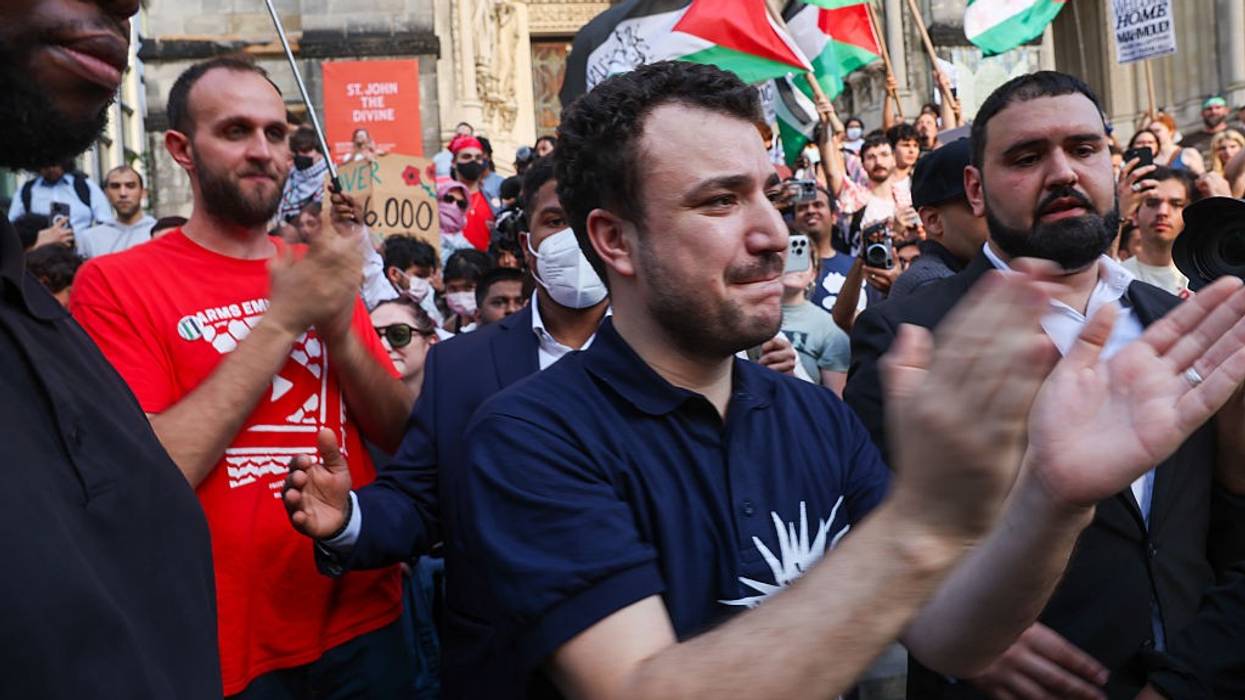
They put me through a sham immigration process while guaranteeing the outcome in advance," Mahmoud Khalil said.
An immigration court decision that could hasten the deportation of Palestinian rights activist Mahmoud Khalil was marked by irregularities, including unusual speed and the recusals of several judges, The New York Times reported Friday.
The Board of Immigration Appeals (BIA), which is housed in the Department of Justice (DOJ) but is legally enjoined to make independent decisions, ruled on April 9 that Khalil could be deported from the US. However, documents obtained by the Times show that the case was fast-tracked in a manner that experts say is unusual.
"This is the due process the administration is offering me, corrupt and unprecedented," Khalil posted on social media Friday in response to the Times' reporting.
Khalil, a student leader of Columbia University protests against the Gaza genocide, was an early target of the Trump administration's crackdown on pro-Palestinian speech when he was abducted by Department of Homeland Security agents while returning to his New York home in March 2025. Despite being a permanent resident married to a US citizen, Khalil was detained in Louisiana for over three months, where he missed the birth of his son.
“In all my decades as an immigration lawyer, I have never seen such a baseless and politically motivated decision."
Despite the BIA's ruling, Khalil cannot be deported while his separate habeas corpus case proceeds through federal courts. However, the Times' reporting raises questions about how fairly he is being treated by the Trump administration and how quickly he could face removal if the federal case falls through.
"This story proves that the Trump administration's treatment of my case has always been corrupt and retaliatory. They put me through a sham immigration process while guaranteeing the outcome in advance," Khalil wrote.
According to the Times:
The case was considered high priority even before the board officially received it. A note from an internal case-tracking file from June said that, even though Mr. Khalil had been released several days earlier, the case was to be handled as if he were still in detention, which would speed it along.
"Please process as quickly as possible,” said another note, from October. Another document shows that the court’s chair—its highest ranking member—oversaw the case from early on.
The decision was made nine days after all the paperwork was submitted, a timeline that Biden BIA appointee Homero López called "unprecedented," as the board often takes years to decide similar cases.
“It’s an insane turnaround, particularly for such a high-profile case on a novel legal issue,” López, who was fired under President Donald Trump, told the Times.
At the same time, people familiar with the situation told the Times that at least three judges had recused themselves from the case, one before it was decided and the others once it became clear it would be published, meaning it would be considered precedent setting.
Former board judge Andrea Sáenz, also fired by Trump, told the Times that judges often recuse themselves because they have somehow been involved with the case before it is appealed.
“How many people touched this case when the immigration judge was handling it the first time?” Sáenz asked.
Former DOJ official David McConnell, who has experience with the immigration appeals process, said that both the quick processing and the recusals were "very unusual." However, he added this did not mean the board necessarily did anything wrong.
However, the BIA's decision was heavily criticized by Khalil's legal team in April, as it upholds Secretary of State Marco Rubio's determination that Khalil could be deported because his activism posed a threat to US foreign policy, which a federal judge in New Jersey said was "likely" unconstitutional and could not be the basis for his detention or deportation. It also justified removal on the grounds that Khalil omitted certain details on green card paperwork, but the government only added those charges after Rubio's foreign policy gambit was challenged.
“In all my decades as an immigration lawyer, I have never seen such a baseless and politically motivated decision. The BIA's decision has absolutely no support in the record, violates a federal court order, and we’ll be fighting it until the end,” Khalil's lead lawyer Marc Van Der Hout said in a statement when the decision was first issued. “Federal courts have already agreed that Mahmoud was targeted for his speech, and there is likely much more evidence of the government’s unlawful retaliation that has yet to come to light. This is a clear continuation of the administration’s retaliation against Mahmoud for exercising his First Amendment rights.”
Responding to the new reporting on Friday, Van Der Hout told the Times that the case's handling suggests it “has been controlled from Day 1 by higher-ups in the administration.”
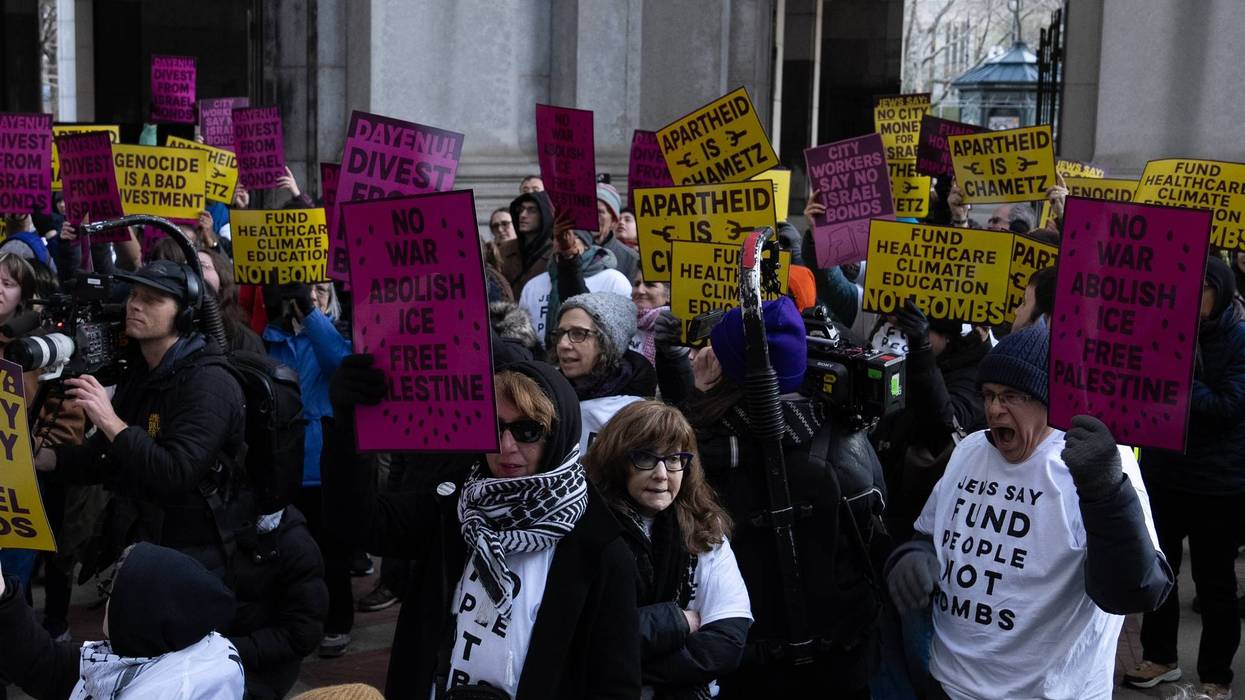
"Passover, our festival of liberation, compels us to ensure that our city’s funds do not underwrite the Israeli government carrying out genocide," said an activist with Jewish Voice for Peace.
More than 500 New Yorkers gathered for an "emergency Passover Seder" outside the office of New York City comptroller Mark Levine on Wednesday, where they called for him to divest the city's pension fund from bonds tied to Israel.
The city's former comptroller, Brad Lander, chose not to renew the nearly $40 million worth of investments in 2023. But in January, Levine reversed course, announcing plans to resume investment in the bonds, describing them as sound assets.
After Israel helped pressure the US to launch a war against Iran and began a new invasion of Lebanon—campaigns that have collectively killed more than 3,000 people—the city's chief fiscal officer is facing renewed pressure to stop what Jewish Voice for Peace (JVP) described as a "plan to fund Israeli bombs with city pensions."i
Protesters with the group stood outside the comptroller's office holding signs reading "Apartheid is chametz" and "Genocide is a bad investment."
"Passover, our festival of liberation, compels us to ensure that our city’s funds do not underwrite the Israeli government carrying out genocide in Gaza, enabling rampant settler violence in the West Bank, bombing Iran, and destroying entire villages in Southern Lebanon," said Jay Saper, an activist with JVP who works as a children's teacher and Yiddish translator. "Comptroller Levine’s plan goes against the will of New Yorkers who do not want our city's money to be used to fund genocide and war."
Levine took office in January after Lander left the post to challenge Democratic Rep. Dan Goldman for his seat representing New York's 10th congressional district.
Mayor Zohran Mamdani has been a vocal opponent of using any city funds to support Israel. But while he has publicly pushed back against the decision to resume purchasing Israeli bonds, he lacks the power, as mayor, to personally overrule it.
"I don’t think we should purchase Israel bonds,” Mamdani said in January. “We don’t purchase bonds for any other sovereign nation’s debt, and the comptroller has also made his position clear, and I continue to stand by mine.”
Though Levine has expressed strong support for Israel, saying he has "very deep personal ties" to the country, the attendees at Wednesday's Seder said the money spent on Israeli bonds could be better used to help New Yorkers.
"New Yorkers deserve to have their city funds in bonds that prioritize financial stability, accountability, and the long-term security for city workers," said New York City Public Advocate Jumaane Williams. "They should invest in life and the livelihoods of our communities, not the complete opposite. We cannot go backward to something financially unstable and, more importantly, morally bankrupt."
Last year's JVP Seder was held to call for the release of Columbia student Mahmoud Khalil, who was imprisoned by immigration agents and threatened with deportation by the Trump administration for activism on campus against Israel's genocide in Gaza. More than 100 JVP activists were arrested after occupying Trump Tower in Manhattan to demand his freedom last spring.
This year, Khalil—released from detention after a judge's order last June—was in attendance at the Seder.
“Just as you prayed for my freedom last year, today let us all pray together that by next Seder the Israeli genocide will have ended,” said Khalil.
(Video by Jewish Voice for Peace)
The Seder comes amid a public reckoning for Israel, including among many American Jews. A Pew Research poll released on Tuesday found that an unprecedented 60% of American adults view Israel negatively, compared to just 37% who view it positively.
A majority of American Jews have expressed disapproval of the war launched by President Donald Trump and Benjamin Netanyahu in Iran. Meanwhile, a poll last year found that around 4 in 10 American Jews believed Israel's actions in Gaza constituted genocide.
Rabbi Abby Stein of the Jewish Voice for Peace Rabbinic Council said the hundreds of Jewish people in attendance on Wednesday were “reclaiming our beautiful, ancient liberation holiday from those who would weaponize it, and Judaism itself, as tools of colonialism and supremacy—ideas that have been historically, and are, the opposite of what Judaism is and should be."
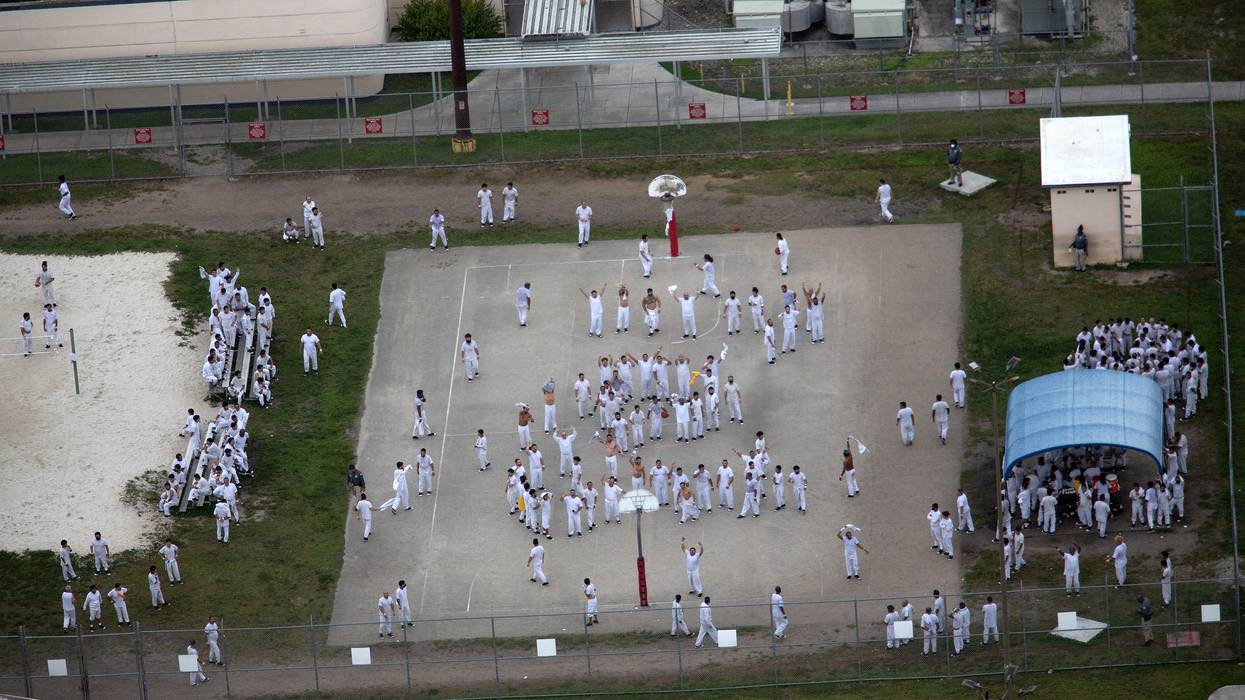
As immigrants are being targeted, cross-movement solidarity is essential in the fight to free all political prisoners.
Incarceration has been used as a core tactic of the United States in upholding racial capitalism and imperialisms through repression, extraction, and violent control. Growing to more than 65,000 people at the start of 2026, more people than ever are being held in immigration detention centers, with 2025 setting a 20-year record for deaths while detained.
The arrest and detention of dissenting people due to political motivations—or, the making of political prisoners—has required alleged charges, manufactured evidence, and the expansion of detention infrastructure. With the creation and rapid expansion of immigration enforcement agencies, the Department of Homeland Security (DHS) is creating another mass category of political prisoners.
The criminalization of protest and dissent has expanded in mission and in agency, as dissenters without citizenship have been targeted, investigated, and detained.
In a letter sent from inside an Immigration and Customs Enforcement (ICE) detention center in 2025, Palestinian activist Mahmoud Khalil declared, “I am a political prisoner,” as he explained the nature of his warrantless arrest by DHS officers after having been the target of an FBI investigation. Khalil stated, “Justice escapes the contours of this nation’s immigration facilities.”
Movements to end mass incarceration, immigrant justice movements, labor movements, environmental justice movements, and all others need to be interconnected in the fight to free all political prisoners.
Leqaa Kordia, a Palestinian with a pending asylum application in the US, was arrested after attending a protest, her charges were dropped, and she was later placed into custody at an ICE detention facility where she has been held despite a judge's orders for her release. Kordia’s family has shared the conditions she has faced, including being chained while hospitalized and barred from access to her attorneys and family.
A federal judge in Massachusetts ruled that people without citizenship have the same free speech rights as citizens, declaring immigration detention for protest and ideological deportation unconstitutional. Yet, the practice of kidnapping and detaining protesters without citizenship continues. Due to the Israeli occupation, seizure of land, and creation of an apartheid state, Palestinian activists like Mahmoud Khalil, Leqaa Kordia, Mohsen Mahdawi, and others are often considered stateless, making them harder to deport and leading to their indefinite apprehension in immigration detention centers as political prisoners.
In a similar pattern to the prison boom in 1980s California, ICE is rapidly expanding its detention infrastructure. Across the country federal funds are being used to purchase warehouses to convert into detention centers and lease offices to conduct operations in efforts to establish mass permanent presence of ICE around every corner. Abroad, the US is invested in political detention at facilities such as the camps in Guantánamo Bay in Cuba and Centro de Confinamiento del Terrorismo (CECOT) in El Salvador.
Alongside political repression, many of these infrastructure-strengthening actions, such as building and staffing for-profit schools in detention facilities and purchasing surveillance technologies, are increasing profits in the billions for developers, tech giants, and stock holders.
Federal funding of these actions by the billions fuels repression. The backing from elected officials, from local jurisdictions to Congress, supplies the infrastructure needed to build a mass system of political prisoners and violent socialeconomic control.
Prisons are a booming business that require a continued supply of people to ensure continued profit. From what Ruth Wilson Gilmore calls “organized abandonment,” people have been politicized by the repression they experience. The survival behaviors necessary to navigate life in this repression have been criminalized to keep facilities and pockets full.
Because of the nature of detention under racial capitalism, all imprisonment has been considered political, making all who are detained—whether that be in jails, prisons, immigration facilities, involuntary mental health facilities, and other sites of hold—political prisoners. The expansion, then, does not require formal conviction for the state to justify detention indefinitely.
Just like borders, immigration enforcement and detention creates political prisoners. For immigrants in the US, living within its borders is a political act, and continuing to live is a form of resistance. Once detained, immigrants are marked for life as a threat. A child born in an immigration detention facility is born a political prisoner.
These processes make political prisoners common, legitimizing their treatment and making it more difficult to unbuild the systems that keep them.
Political prisoners of movement spaces, such as Assata Shakur, Leonard Peltier, and Xinachtli (Alvaro Luna Hernandez), did not allow their detention to stop their resistance efforts. Many have written letters while incarcerated, providing critical texts revealing the use of detention as a method of political repression while exposing their inhumane living conditions. Others have organized from the inside, building power among incarcerated workers and connections to movements on the outside. And, like those held in immigration detention, some have focused on survival as their act of resistance.
On the outside, organizations such as the National Political Prisoner Coalition, Critical Resistance, the National Alliance Against Racist and Political Repression, and Close Guantánamo and the Center for Victims of Torture, have centered their actions around campaigns to free political prisoners. With the expansion of political prisonership under immigration repression, cross-movement solidarity is needed to work in coordination to interrupt and end all carceral tactics used for repression. Movements to end mass incarceration, immigrant justice movements, labor movements, environmental justice movements, and all others need to be interconnected in the fight to free all political prisoners.
Our survival depends on each other.
I hope you can look back on 2025 as the year movements for peace and justice freed political prisoners, slowed the war machine, and helped turn the public against endless wars.
It’s true—2025 has been a hard year. It’s easy to focus on the disasters, and there have been many. But we also had real victories that moved us closer to a better world. Here are some of my highlights from 2025.
In October, a ceasefire agreement was reached in Gaza, though it would be a lie to call it an end to the genocide we’ve all been witnessing for over two years. Still, the pause matters because it reveals what Israel could not achieve. Israel failed to break the Palestinian people or erase them from their land. It was forced to negotiate. It also gave us one of the rare moments where we saw videos coming out of Gaza with Palestinians celebrating in the streets, and feeling a little bit of relief for the first time in a long time. Yes, the Israelis are violating the ceasefire every day, Palestinians continue to suffer, and the “Peace Plan” passed by the United Nations is a sham. But the fact that Israel was unable to accomplish its goal of defeating and expelling the Palestinians—and instead had to negotiate—is in itself a testament to the power of both the Palestinians and their supporters throughout the world.
In June, after months in Immigration and Customs Enforcement (ICE) detention, Palestinian activist Mahmoud Khalil was freed! We got to see him at the People’s Conference for Palestine, and he’s been in action ever since. From the moment he was first detained, the Palestine solidarity movement never stopped demanding his freedom. We knew that if we allowed this to happen to Mahmoud, it could happen to any one of us. His freedom is a testament to the power we all have when we stand together and have a clear demand. The same goes for Turkish student Rümeysa Öztürk, Georgetown scholar Badar Khan Suri, Palestinian student Mohsen Mahdawi, and British Journalist Sami Hamdi—all were freed from ICE’s grip due to mounting public pressure.
Polls came out all year in the US that proved that people inside the belly of the beast are becoming more and more anti-war! Whether the conflicts are in Ukraine, Gaza, or Venezuela, the people of the US are sick and tired of their country going to war. This, if people take action on their beliefs, this will have huge implications for the US war machine! The anti-war movement is growing, and we have the power of the people behind us!
From Washington, DC to Chicago to Los Angeles, people across the country have been rising up to reject the unjust and illegal ICE raids ripping through our communities. As ICE agents terrorized grocery stores, elementary schools, and neighborhoods, communities responded by forming rapid-response networks to document abuses, provide legal support, and protect those being targeted. This collective resistance has been an inspiring expression of humanity in action—proof that when President Donald Trump’s administration pushes fear, racism, and a fascist agenda, people come together in solidarity to defend one another and fight back.
Zohran Mamdani’s victory in the NYC mayoral race was fueled by the Palestine movement and the collective mobilization of hundreds of thousands who are unwilling to be swayed by centrist, big-money interests and are ready for a new system. His win has already inspired others to run for office on a similar platform, showing how campaigns that speak to people’s needs can break through. Mamdani now inherits a seat at the heart of the war economy—presiding over the largest police department in the country and a city with deep political and financial ties to Israel. That reality makes his victory not an endpoint, but an opening: a chance to push demands for divestment and a peace economy to the center of city politics, and to turn the energy of his campaign into sustained, collective action—in the streets, in organizing spaces, and at the ballot box.
For the first time in recent history, the Global Sumud Flotilla sailed into Gaza’s waters and came close to breaking the blockade! I was so inspired by the selfless activists, including my friend Adnaan Stumo and his brother Tor, who set sail to Gaza despite great personal risk. The Global Sumud Flotilla was the largest flotilla in history, and even though Israel arrested and detained dozens of brave humanitarians, their souls weren’t shaken. Another Gaza flotilla will soon set sail again, unintimidated by Israel’s threats!
The American Israel Public Affairs Committee’s grip is starting to crack, with a growing number of candidates openly rejecting its money. Even more striking, some AIPAC-backed members of Congress defied the lobby this year—voting against its positions and infuriating a group long used to unquestioned loyalty. More and more people are waking up to AIPAC’s influence over our government, and are calling for a widespread rejection of it!
Overseas, Claudia Sheinbaum, Mexico’s first woman president, has delivered bold progress at home—expanding public education, investing in clean energy, and strengthening labor rights and social programs that put working families first. When Trump tried to bully Mexico with tariff threats and demanded that Mexico play border cop, Sheinbaum defended Mexico’s sovereignty with competence, dignity, and a refreshing refusal to be intimidated. And when Trump blocked Venezuelan tankers from delivering oil to Cuba, Mexico stepped in to supply its own oil—a clear act of solidarity that showed what principled leadership looks like on the world stage.
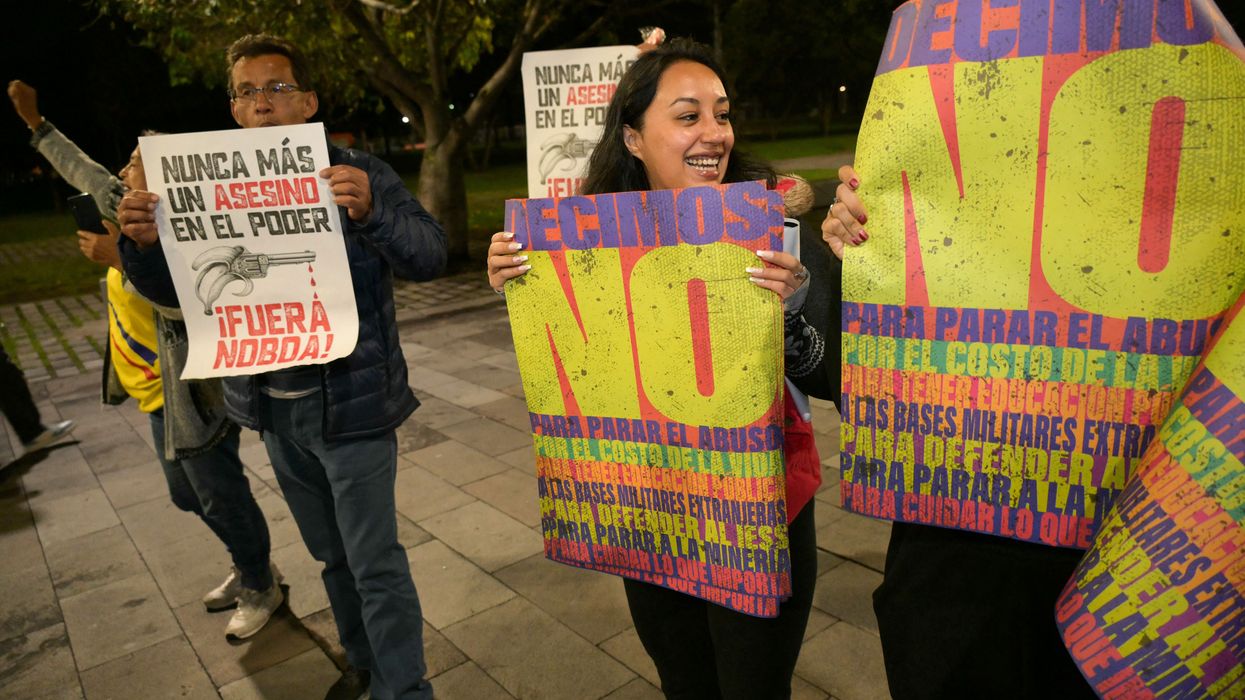
At a moment when the US is openly reviving the Monroe Doctrine in Latin America, Ecuador held a national referendum—and nearly 60% of voters said no to reopening a US military base on Ecuadorian soil. By rejecting a foreign base, Ecuadorians asserted their sovereignty and made clear they refuse to be a launchpad for US wars. Even amid a rightward political swing across the region, this vote shows that organized people can still block militarization and defend their self-determination.
This year offered a rare and hopeful reminder of how quickly walls can fall when people are allowed to meet one another as human beings. From the warmth and curiosity circulating on RedNote to iShowSpeed’s unfiltered encounters, a wave of everyday, people-to-people exchanges cut through political fear-mongering and brought Americans and Chinese together around shared humanity. In these small but powerful connections, the image of China as an “enemy” began to fade, replaced by curiosity and connection—and for the first time in five years, the number of Americans who consider China an enemy has dropped by nearly 10%.
I hope you can look back on 2025 as the year movements for peace and justice freed political prisoners, slowed the war machine, and helped turn the public against endless wars. Even in the hardest moments, that’s how I’ll choose to remember it. And I hope 2026 brings us closer to the world we all want to see.
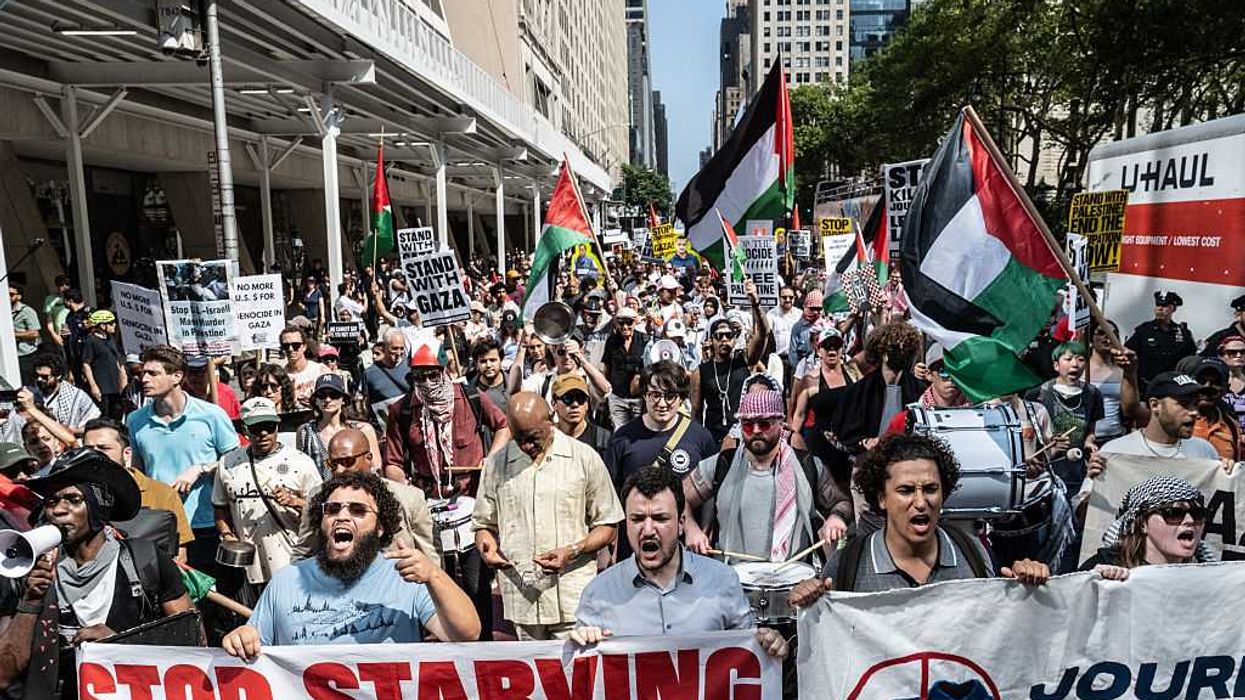
Politico's senior law reporter called it "the most scathing legal rebuke of the Trump era."
A federal judge issued an emphatic ruling Tuesday that the Trump administration acted illegally when it targeted pro-Palestinian student activists for deportation, describing it as part of an effort to "strike fear" into protesters exercising their First Amendment rights.
In the 161-page ruling, US District Judge William Young, who was appointed by former President Ronald Reagan, concluded that the Trump administration undertook illegal efforts "unconstitutionally to chill freedom of speech."
He also launched a broadside against the Trump administration's entire authoritarian ethos, describing President Donald Trump's "palpable misunderstanding that the government simply cannot seek retribution for speech he disdains."
Politico's senior law reporter Kyle Cheney described the ruling as "the most scathing legal rebuke of the Trump era." Young himself called it the most important he's ever issued in over 30 years on the bench.
The first page immediately captures this gravity, containing a scan of an anonymous postcard Young received in June as a prologue: "Trump has pardons and tanks... what do you have?" the sender asked.
Young included his response: "Alone, I have nothing but my sense of duty. Together, We the People ... have our magnificent Constitution. Here's how that works out in a specific case."
The case was launched following a lawsuit from the American Association of University Professors and the Middle East Studies Association, which represent hundreds of college professors around the US who testified that they felt intimidated by what they described as "ideological deportations" by the Trump administration of students who expressed pro-Palestinian views.
Often without warning, the State Department revoked nearly 1,700 visas from lawful immigrants before targeting many of them for deportation under an executive order by Trump that allegedly responds to "antisemitism," but in practice extends far out to encompass any expressions of solidarity with Palestinians or criticisms of Israel.
During the trial, the Department of Homeland Security (DHS) acknowledged that it determined who to target using an anonymously operated pro-Israel "doxxing" website known as the Canary Mission, which publishes dossiers on college students around the country who express unfavorable views about Israel.
One of those students was Mahmoud Khalil, an activist at Columbia who held a green card, who was whisked away from his address in the middle of the night by Immigration and Customs Enforcement (ICE) and sent to a detention facility for months. As Young acknowledged in his ruling, Troy Edgar, the deputy secretary of homeland security, stated plainly in an interview that the effort to deport Khalil was because of "basically pro-Palestinian activity." After a federal judge ordered Khalil's release, the Trump administration began efforts to deport him to Algeria or Syria.
ICE agents also snatched Rümeysa Öztürk, a Turkish PhD student at Tufts, off the street in broad daylight after she co-wrote an op-ed calling for her university to divest from companies participating in Israel's genocidal war in Gaza. Although the administration acknowledged that Öztürk, who had a legal student visa, committed no crime, she remained in an ICE detention facility for more than six weeks before a judge ordered her release.
Young said that Secretary of State Marco Rubio and other officials, such as Homeland Security Secretary Kristi Noem, who oversees ICE, "acted in concert to misuse the sweeping powers of their respective offices to target noncitizen pro-Palestinians for deportation primarily on account of their First Amendment-protected political speech."
He refuted the professors' contention that the administration had waged an "ideological deportation policy," which he said "could have raised a major outcry." Instead, Young said, their intentions were "more invidious—to target a few for speaking out and then use the full rigor of the Immigration and Nationality Act (in ways it had never been used before) to have them publicly deported with the goal of tamping down pro-Palestinian student protests and terrorizing similarly situated noncitizen (and other) pro-Palestinians into silence because their views were unwelcome."
To strip visas "solely on the basis of political speech, and with the intent of chilling such speech," Young said, "is not only unconstitutional, but a thing virtually unknown to our constitutional tradition." The First Amendment of that Constitution, he added, "does not distinguish between citizens and noncitizens."
Young did not order any changes to Trump administration policy with his ruling, but only because Trump "poses a great threat to Americans’ freedom of speech" as a whole, and further proceedings would be necessary in order to rein in those abuses more comprehensively.
He specifically identified the use of masks by ICE agents during arrests, which he described as "disingenuous, squalid and dishonorable."
"ICE goes masked for a single reason: to terrorize Americans into quiescence," Young said. "In all our history, we have never tolerated an armed, masked secret police."
The final 12 pages of the ruling, which American Immigration Council fellow Aaron Reichlin-Melnick described as "truly remarkable," focus on "the nature of our president himself," who Young said "simply ignores" rulings he dislikes.
Young concluded that the courts, which he described as one of the few remaining bulwarks to Trump's excesses, needed to do more than issue nonbinding cease-and-desist orders, but instead issue permanent injunctions that can result in contempt charges if the administration refuses to stop illegal policies.
Trump, he said, is not "entirely lawless," but "has learned that—at least on the civil side of our courts—neither our Constitution nor our laws enforce themselves and he can do most anything until an aggrieved person or entity will stand up to him and say 'Nay.'"
Young also put the responsibility of resistance on the institutions that have capitulated to Trump's demands.
"Our bastions of independent, unbiased free speech–those entities we once thought unassailable—have proven all too often to have only Quaker guns," he warned. "Behold, President Trump’s successes in limiting free speech—law firms cower, institutional leaders in higher education meekly appease the president, media outlets from huge conglomerates to small niche magazines mind the bottom line rather than the ethics of journalism."
"I fear President Trump believes the American people are so divided that today they will not stand up, fight for, and defend our most precious constitutional values so long as they are lulled into thinking their own personal interests are not affected," he wrote in conclusion. "Is he correct?"
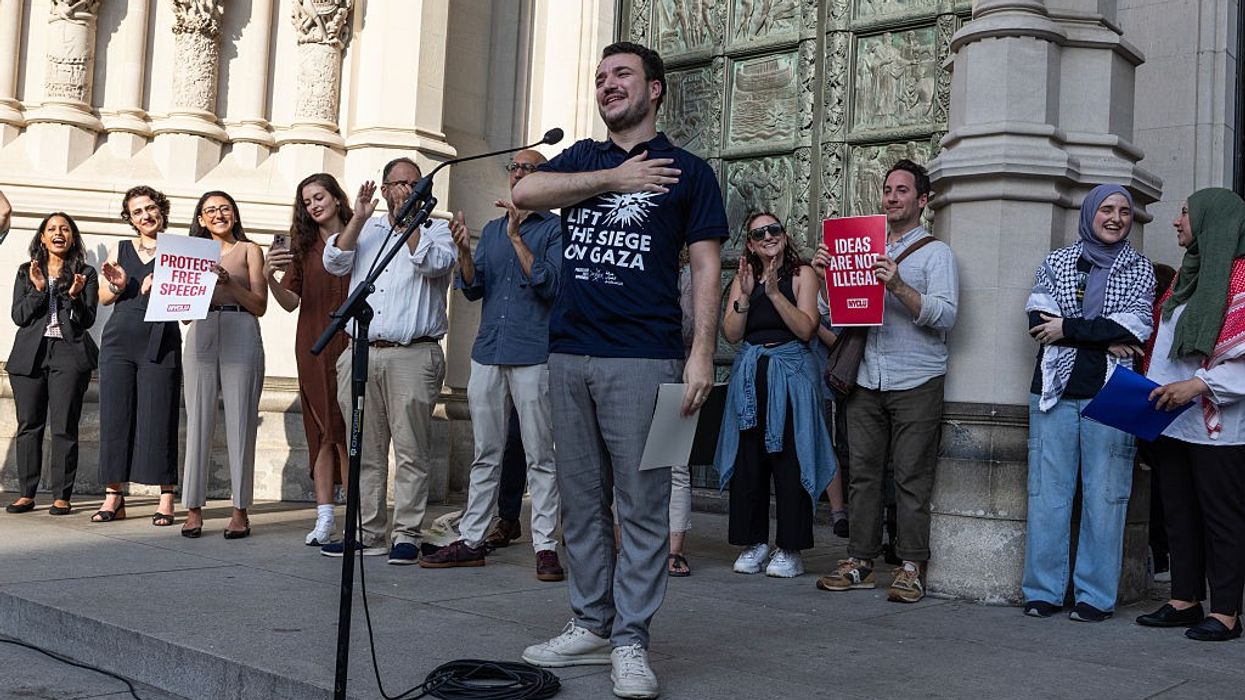
A member of his legal team noted that "the immigration prosecutor, judge, and jailer all answer to Donald Trump, and that one man is eager to weaponize the system in a desperate bid to silence Mahmoud Khalil."
Mahmoud Khalil and his lawyers on Wednesday affirmed their plan to fight an immigration court ruling that paves the way for his deportation, months after plainclothes agents accosted the lawful permanent resident and his US citizen wife outside their home in New York City.
"It is no surprise that the Trump administration continues to retaliate against me for my exercise of free speech. Their latest attempt, through a kangaroo immigration court, exposes their true colors once again," Khalil said in a statement.
"When their first effort to deport me was set to fail, they resorted to fabricating baseless and ridiculous allegations in a bid to silence me for speaking out and standing firmly with Palestine, demanding an end to the ongoing genocide," he continued. "Such fascist tactics will never deter me from continuing to advocate for my people's liberation."
While President Donald Trump has a broad goal of mass deportations, his administration has targeted Khalil, a former Columbia University graduate student with a valid green card, and other foreign scholars in the United States for criticizing Israel's US-backed genocide in the Gaza Strip.
"We have witnessed a constant lack of humanity and allegiance to the law throughout proceedings in this farcical Louisiana immigration court."
Federal agents arrested Khalil, an Algerian citizen of Palestinian descent, in March. He wasn't released from a federal immigration facility until June. During his 104-day detention, his wife, Noor Abdalla, gave birth to their son. Over the past six months, he has been a part of multiple legal battles: his challenge to being deported in a Louisiana immigration court; a civil rights case before US District Judge Michael Farbiarz in New Jersey; and a fight for $20 million in damages.
In a Wednesday letter to Farbiarz—an appointee of former President Joe Biden who has already blocked his deportation while the civil rights case proceeds—Khalil's legal team explained that on September 12, Jamee Comans, an immigration judge (IJ), "issued three separate orders denying petitioner's (1) motion for an extension of time, (2) motion to change venue, and (3) application for a waiver, without conducting an evidentiary hearing."
"In denying petitioner's request for a waiver absent a hearing, as well as his motions for extension of time and for change of venue, the IJ ordered petitioner removed to Algeria or Syria... while reaffirming her decisions denying petitioner any form of relief from removal," the letter says. Khalil now has 30 days from September 12 to start an appeal with the Board of Immigration Appeals (BIA).
Noting "statements targeting petitioner by name for retaliation and deportation made by the president and several senior US government officials," Khalil's lawyers "have ample reason to expect that the BIA process—and an affirmance of the IJ's determination—will be swift," the letter continued. "Upon affirmance by the BIA, petitioner will lose his lawful permanent resident status, including his right to reside and work in the United States, and have a final order of removal against him."
"Compared to other courts of appeals, including those in the 3rd and 2nd Circuits, the 5th Circuit almost never grants stays of removal to noncitizens pursuing petitions for review of BIA decisions. As a result, the only meaningful impediment to petitioner's physical removal from the United States would be this court's important order prohibiting removal during the pendency of his federal habeas case," the letter points out, referring to Farbiarz's previous intervention.
Khalil is represented by Dratel & Lewis, the Center for Constitutional Rights, Creating Law Enforcement Accountability & Responsibility (CLEAR), Van Der Hout LLP, Washington Square Legal Services, and the national, New Jersey, New York, and Louisiana arms of the ACLU.
"When the immigration prosecutor, judge, and jailer all answer to Donald Trump, and that one man is eager to weaponize the system in a desperate bid to silence Mahmoud Khalil, a US permanent resident whose only supposed sin is that he stands against an ongoing genocide in Palestine, this is the result," CLEAR co-director Ramzi Kassem said Wednesday. "A plain-as-day First Amendment violation that also puts on sharp display the rapidly free-falling credibility of the entire US immigration system."
In addition to calling out the Trump administration for its unconstitutional conduct, Khalil's lawyers expressed some optimism.
"We have witnessed a constant lack of humanity and allegiance to the law throughout proceedings in this farcical Louisiana immigration court, and the immigration judge's September 12 decision is just the most recent example of what occurs when the system requires an arbiter that is anything but neutral to do the administration's bidding," said Johnny Sinodis, a partner at Van Der Hout LLP. "As with other illegal efforts by the government, this too will be challenged and overcome."