SUBSCRIBE TO OUR FREE NEWSLETTER
Daily news & progressive opinion—funded by the people, not the corporations—delivered straight to your inbox.
5
#000000
#FFFFFF
To donate by check, phone, or other method, see our More Ways to Give page.
Daily news & progressive opinion—funded by the people, not the corporations—delivered straight to your inbox.
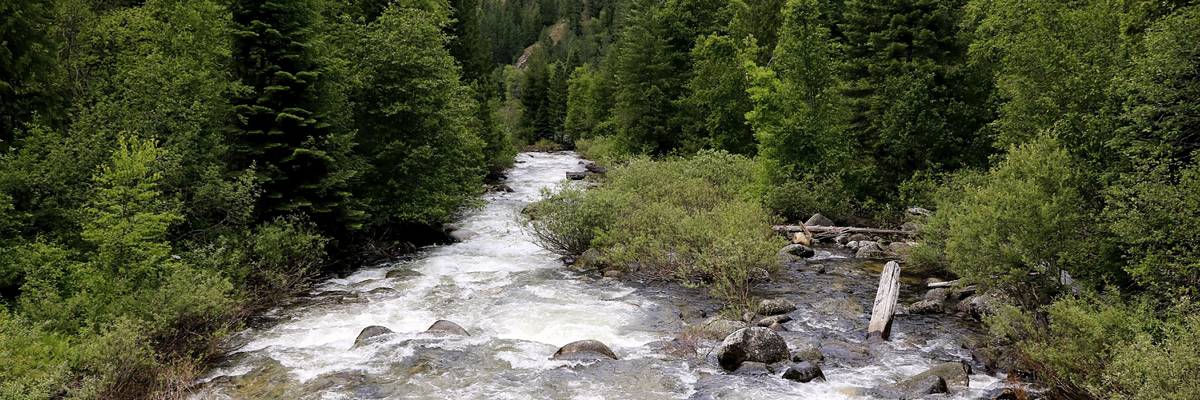
Pristine Boulder Creek flows from the Selway Bitterroot Wilderness toward the Lochsa River in the Clearwater National Forest of northern Idaho.
One critic said the administration clearly plans to weaken restrictions requiring "the Forest Service to carefully manage our natural resources and listen to the public, then open the gates to industry and extraction."
Still under fire for attacking the Roadless Area Conservation Rule this week, President Donald Trump's administration provoked a fresh wave of criticism on Friday by targeting another policy meant to protect public lands.
The US Forest Service announced Friday that it was moving forward with a proposed revision to the Travel Management Rule that "simplifies the regulatory requirements to enhance quicker local decision-making and increase access, including for motorized vehicles, e-bikes, and other mobility devices."
While leaders at the Forest Service and its parent agency, the US Department of Agriculture (USDA), framed the pending changes as progress, Defenders of Wildlife called out the administration for trying to "gut" the rule managing off-road vehicles.
"The USDA's announcement to gut the Travel Management Rule and the roadless rule in the same week is a one-two punch that together deals a tremendous blow to wildlife," said Vera Smith, who directs the advocacy group's national forests and public lands program, in a statement.
"The Travel Management Rule states simply that motorized vehicles must stay on routes and areas designated locally for that use," Smith said. "The Forest Service issued the rule over 20 years ago to curb damage from unmanaged recreation, reduce user conflict, and protect public safety. Rescinding it now is irresponsible and reckless."
Hilary Eisen, federal policy director at the organization Wild Montana, was similarly critical, explaining that "the Travel Management Rule is why dirt bikers and snowmobilers can share national forest lands with hikers and backcountry skiers without conflict. It's why our national forests provide habitat to support thriving wildlife populations. It is built on local decision-making, with a designation process that ensures that no user group gets steamrolled and all our national forest values are protected."
"Just two days after doubling down on repealing the roadless rule, this announcement makes the administration's plan obvious: Gut the rules that require the Forest Service to carefully manage our natural resources and listen to the public, then open the gates to industry and extraction," Eisen warned.
"Forest Service leadership has already shown during the roadless rescission how much it values public input, science, and expert management: not at all," she added. "Agency leadership has lost the public's trust, and should expect the public to hold them accountable."
Agriculture Secretary Brooke Rollins confirmed Tuesday that the administration was working to fully rescind the 2001 roadless rule that blocked road building and commercial logging on about 30% of all national forest land. She attempted to frame it as a move to prevent wildfires, but conservation groups contested her claims.
Josh Hicks, director of conservation campaigns at the Wilderness Society, declared that "opening our backcountry forests to more roads and development, and therefore more ignitions, is... not a wildfire solution, and never will be."
Criticism of that pending rollback had continued throughout the week, with the Wilderness Society's senior director of native lands partnerships, Starlyn Miller, calling out the administration's "failure to engage in meaningful government-to-government consultation with tribal nations," which she said "undermines tribal sovereignty and federal trust responsibilities."
"This failure disregards tribes' deep cultural, historical, and ongoing connections to these roadless lands and the clean water and wildlife they sustain," said Miller, a Little Shell Chippewa citizen who is of Menominee and Mohican descendant. "We stand with tribal nations and Indigenous communities in defending their freedom to shape and manage forests that are vital to their cultures, identities, and future generations."
National Congress of American Indians executive director Larry Wright Jr. also spoke out on Friday, saying that "tribal nations possess an inherent and legally recognized relationship with these lands, which remain the foundation of our cultural identities. Attempting to fast-track the removal of the roadless rule circumvents the mandatory government-to-government consultation process required by federal law."
Wright, who is from the Ponca Tribe of Nebraska, added that "upholding the federal trust responsibility means honoring our treaty rights and ensuring that the protection of sacred sites is recognized as an uncompromisable legal obligation, not an afterthought."
Dear Common Dreams reader, It’s been nearly 30 years since I co-founded Common Dreams with my late wife, Lina Newhouser. We had the radical notion that journalism should serve the public good, not corporate profits. It was clear to us from the outset what it would take to build such a project. No paid advertisements. No corporate sponsors. No millionaire publisher telling us what to think or do. Many people said we wouldn't last a year, but we proved those doubters wrong. Together with a tremendous team of journalists and dedicated staff, we built an independent media outlet free from the constraints of profits and corporate control. Our mission has always been simple: To inform. To inspire. To ignite change for the common good. Building Common Dreams was not easy. Our survival was never guaranteed. When you take on the most powerful forces—Wall Street greed, fossil fuel industry destruction, Big Tech lobbyists, and uber-rich oligarchs who have spent billions upon billions rigging the economy and democracy in their favor—the only bulwark you have is supporters who believe in your work. But here’s the urgent message from me today. It's never been this bad out there. And it's never been this hard to keep us going. At the very moment Common Dreams is most needed, the threats we face are intensifying. We need your support now more than ever. We don't accept corporate advertising and never will. We don't have a paywall because we don't think people should be blocked from critical news based on their ability to pay. Everything we do is funded by the donations of readers like you. When everyone does the little they can afford, we are strong. But if that support retreats or dries up, so do we. Will you donate now to make sure Common Dreams not only survives but thrives? —Craig Brown, Co-founder |
Still under fire for attacking the Roadless Area Conservation Rule this week, President Donald Trump's administration provoked a fresh wave of criticism on Friday by targeting another policy meant to protect public lands.
The US Forest Service announced Friday that it was moving forward with a proposed revision to the Travel Management Rule that "simplifies the regulatory requirements to enhance quicker local decision-making and increase access, including for motorized vehicles, e-bikes, and other mobility devices."
While leaders at the Forest Service and its parent agency, the US Department of Agriculture (USDA), framed the pending changes as progress, Defenders of Wildlife called out the administration for trying to "gut" the rule managing off-road vehicles.
"The USDA's announcement to gut the Travel Management Rule and the roadless rule in the same week is a one-two punch that together deals a tremendous blow to wildlife," said Vera Smith, who directs the advocacy group's national forests and public lands program, in a statement.
"The Travel Management Rule states simply that motorized vehicles must stay on routes and areas designated locally for that use," Smith said. "The Forest Service issued the rule over 20 years ago to curb damage from unmanaged recreation, reduce user conflict, and protect public safety. Rescinding it now is irresponsible and reckless."
Hilary Eisen, federal policy director at the organization Wild Montana, was similarly critical, explaining that "the Travel Management Rule is why dirt bikers and snowmobilers can share national forest lands with hikers and backcountry skiers without conflict. It's why our national forests provide habitat to support thriving wildlife populations. It is built on local decision-making, with a designation process that ensures that no user group gets steamrolled and all our national forest values are protected."
"Just two days after doubling down on repealing the roadless rule, this announcement makes the administration's plan obvious: Gut the rules that require the Forest Service to carefully manage our natural resources and listen to the public, then open the gates to industry and extraction," Eisen warned.
"Forest Service leadership has already shown during the roadless rescission how much it values public input, science, and expert management: not at all," she added. "Agency leadership has lost the public's trust, and should expect the public to hold them accountable."
Agriculture Secretary Brooke Rollins confirmed Tuesday that the administration was working to fully rescind the 2001 roadless rule that blocked road building and commercial logging on about 30% of all national forest land. She attempted to frame it as a move to prevent wildfires, but conservation groups contested her claims.
Josh Hicks, director of conservation campaigns at the Wilderness Society, declared that "opening our backcountry forests to more roads and development, and therefore more ignitions, is... not a wildfire solution, and never will be."
Criticism of that pending rollback had continued throughout the week, with the Wilderness Society's senior director of native lands partnerships, Starlyn Miller, calling out the administration's "failure to engage in meaningful government-to-government consultation with tribal nations," which she said "undermines tribal sovereignty and federal trust responsibilities."
"This failure disregards tribes' deep cultural, historical, and ongoing connections to these roadless lands and the clean water and wildlife they sustain," said Miller, a Little Shell Chippewa citizen who is of Menominee and Mohican descendant. "We stand with tribal nations and Indigenous communities in defending their freedom to shape and manage forests that are vital to their cultures, identities, and future generations."
National Congress of American Indians executive director Larry Wright Jr. also spoke out on Friday, saying that "tribal nations possess an inherent and legally recognized relationship with these lands, which remain the foundation of our cultural identities. Attempting to fast-track the removal of the roadless rule circumvents the mandatory government-to-government consultation process required by federal law."
Wright, who is from the Ponca Tribe of Nebraska, added that "upholding the federal trust responsibility means honoring our treaty rights and ensuring that the protection of sacred sites is recognized as an uncompromisable legal obligation, not an afterthought."
Still under fire for attacking the Roadless Area Conservation Rule this week, President Donald Trump's administration provoked a fresh wave of criticism on Friday by targeting another policy meant to protect public lands.
The US Forest Service announced Friday that it was moving forward with a proposed revision to the Travel Management Rule that "simplifies the regulatory requirements to enhance quicker local decision-making and increase access, including for motorized vehicles, e-bikes, and other mobility devices."
While leaders at the Forest Service and its parent agency, the US Department of Agriculture (USDA), framed the pending changes as progress, Defenders of Wildlife called out the administration for trying to "gut" the rule managing off-road vehicles.
"The USDA's announcement to gut the Travel Management Rule and the roadless rule in the same week is a one-two punch that together deals a tremendous blow to wildlife," said Vera Smith, who directs the advocacy group's national forests and public lands program, in a statement.
"The Travel Management Rule states simply that motorized vehicles must stay on routes and areas designated locally for that use," Smith said. "The Forest Service issued the rule over 20 years ago to curb damage from unmanaged recreation, reduce user conflict, and protect public safety. Rescinding it now is irresponsible and reckless."
Hilary Eisen, federal policy director at the organization Wild Montana, was similarly critical, explaining that "the Travel Management Rule is why dirt bikers and snowmobilers can share national forest lands with hikers and backcountry skiers without conflict. It's why our national forests provide habitat to support thriving wildlife populations. It is built on local decision-making, with a designation process that ensures that no user group gets steamrolled and all our national forest values are protected."
"Just two days after doubling down on repealing the roadless rule, this announcement makes the administration's plan obvious: Gut the rules that require the Forest Service to carefully manage our natural resources and listen to the public, then open the gates to industry and extraction," Eisen warned.
"Forest Service leadership has already shown during the roadless rescission how much it values public input, science, and expert management: not at all," she added. "Agency leadership has lost the public's trust, and should expect the public to hold them accountable."
Agriculture Secretary Brooke Rollins confirmed Tuesday that the administration was working to fully rescind the 2001 roadless rule that blocked road building and commercial logging on about 30% of all national forest land. She attempted to frame it as a move to prevent wildfires, but conservation groups contested her claims.
Josh Hicks, director of conservation campaigns at the Wilderness Society, declared that "opening our backcountry forests to more roads and development, and therefore more ignitions, is... not a wildfire solution, and never will be."
Criticism of that pending rollback had continued throughout the week, with the Wilderness Society's senior director of native lands partnerships, Starlyn Miller, calling out the administration's "failure to engage in meaningful government-to-government consultation with tribal nations," which she said "undermines tribal sovereignty and federal trust responsibilities."
"This failure disregards tribes' deep cultural, historical, and ongoing connections to these roadless lands and the clean water and wildlife they sustain," said Miller, a Little Shell Chippewa citizen who is of Menominee and Mohican descendant. "We stand with tribal nations and Indigenous communities in defending their freedom to shape and manage forests that are vital to their cultures, identities, and future generations."
National Congress of American Indians executive director Larry Wright Jr. also spoke out on Friday, saying that "tribal nations possess an inherent and legally recognized relationship with these lands, which remain the foundation of our cultural identities. Attempting to fast-track the removal of the roadless rule circumvents the mandatory government-to-government consultation process required by federal law."
Wright, who is from the Ponca Tribe of Nebraska, added that "upholding the federal trust responsibility means honoring our treaty rights and ensuring that the protection of sacred sites is recognized as an uncompromisable legal obligation, not an afterthought."