SUBSCRIBE TO OUR FREE NEWSLETTER
Daily news & progressive opinion—funded by the people, not the corporations—delivered straight to your inbox.
5
#000000
#FFFFFF
To donate by check, phone, or other method, see our More Ways to Give page.

Civil Rights Complainants today denounced Green Group Holdings, owners of the Arrowhead Landfill in Uniontown, Ala., for filing a lawsuit Wednesday targeting members of Black Belt Citizens Fighting for Health and Justice. Green Group Holdings' lawsuit was filed in federal court in Mobile, Alabama.

Black Belt Citizens is a community-based volunteer group fighting to protect the health of community residents living in the shadow of a mountain of coal ash dumped in Uniontown after the coal ash breached a dam in Kingston, Tennessee. Four million tons of coal ash were shipped by rail more than 300 miles to Uniontown, one of the poorest towns in the second-poorest county in Alabama. Green Group Holdings' suit, which seeks $30 million in damages, seems calculated to intimidate and silence Uniontown residents who have exercised free speech to voice concerns about the effects of Arrowhead Landfill on their community.
Many residents of the largely poor, African American community believe the Landfill has caused numerous harms to the people who live nearby, some of whom live only feet from a mountain of coal ash and garbage. In 2013, residents filed a civil rights complaint raising concerns about health problems, odor, dust, noise, flies, vultures, and other impacts of the Landfill on the enjoyment of their property. The complaint was filed with EPA's Office of Civil Rights against the Alabama Department of Environmental Management (ADEM), which allows the Landfill to accept waste, including coal ash, from 33 states.
Among the statements highlighted by Green Group Holdings as allegedly false and defamatory were comments by community resident Esther Calhoun, who is quoted as saying that all people should have the right to clean air and clean water. The Landfill's lawsuit quotes Calhoun as saying, "As a black woman, our voices are not heard. EPA hasn't listened and ADEM has not listened. Whether you are white or black, rich or poor, it should still matter and we all should have the right to clean air and clean water."
"This lawsuit is outrageous," said Marianne Engelman Lado of Earthjustice. "I believe this is nothing more than an attempt to quiet those who have lifted their voices in protest. Green Group Holdings should be ashamed of itself for trying to intimidate community members to prevent them from exercising their rights to be heard. This is the latest in a long line of impacts to the community."
"The lawsuit is flatly baseless and totally frivolous, being an effort to try to intimidate these citizens," said Bill Dawson, one of the attorneys representing the individuals on the defamation charges.
Matt Swerdlin, another of the attorneys working on the defense, added: "We will fight the Landfill at every step on its preposterous claims. Threatening and intimidating participants in a Civil Rights Act complaint is illegal, plain and simple."
Earthjustice represents Uniontown community members in a 2013 Title VI Civil Rights Complaint to the Environmental Protection Agency alleging that the Alabama Department of Environmental Management (ADEM) reissued the Landfill's permit without taking actions to avoid disproportionate adverse impacts on the basis of race, and despite the objections of Uniontown residents.
High volumes of coal ash came to Uniontown following the largest coal ash spill in U.S. history, which sent a billion gallons of toxic waste across riverfront property in Kingston, Tennessee. Coal ash was sent from the predominantly white, middle class Kingston community to Uniontown, Alabama, which is 87% African American and has a per capita income of about $8,000. Uniontown is a classic example of a low-income community of color overburdened with an unfair share of environmental hazards, exactly what Title VI of the Civil Rights Act is designed to prevent.
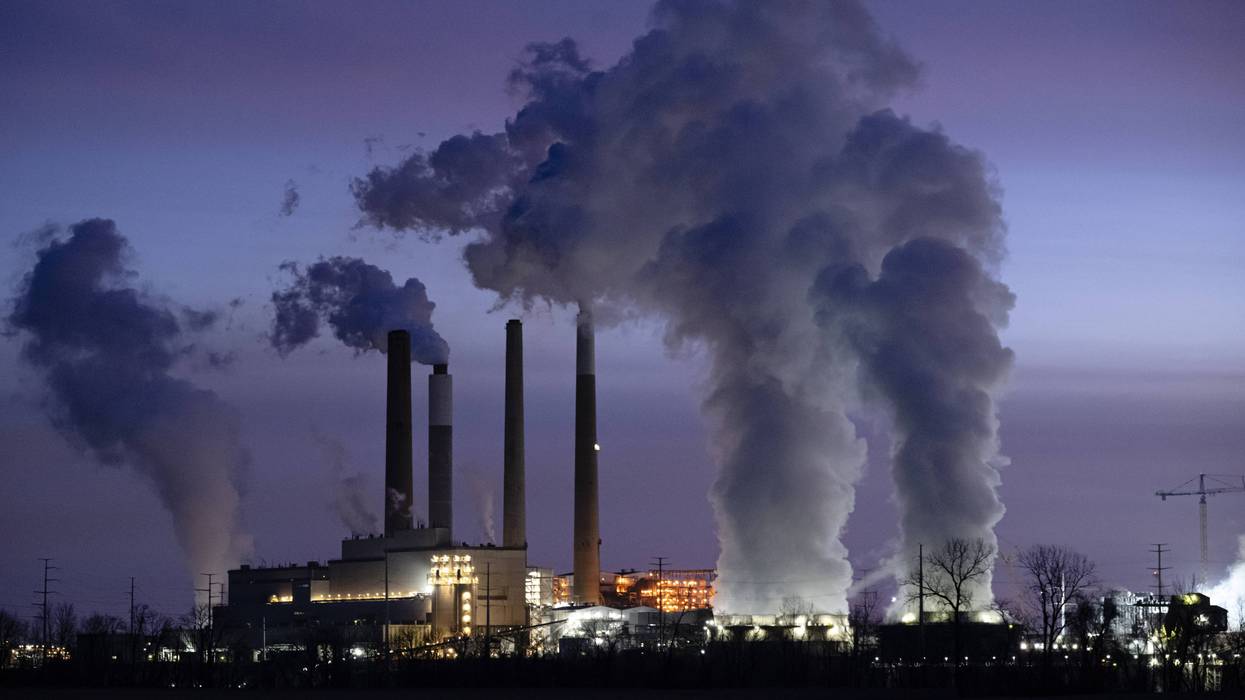
Coal ash is the toxic remnants of coal that is burned in power plants to generate electricity. It contains numerous toxins and carcinogens.
For more, read A Toxic Inheritance, an Earthjustice feature story.
Earthjustice is a non-profit public interest law firm dedicated to protecting the magnificent places, natural resources, and wildlife of this earth, and to defending the right of all people to a healthy environment. We bring about far-reaching change by enforcing and strengthening environmental laws on behalf of hundreds of organizations, coalitions and communities.
800-584-6460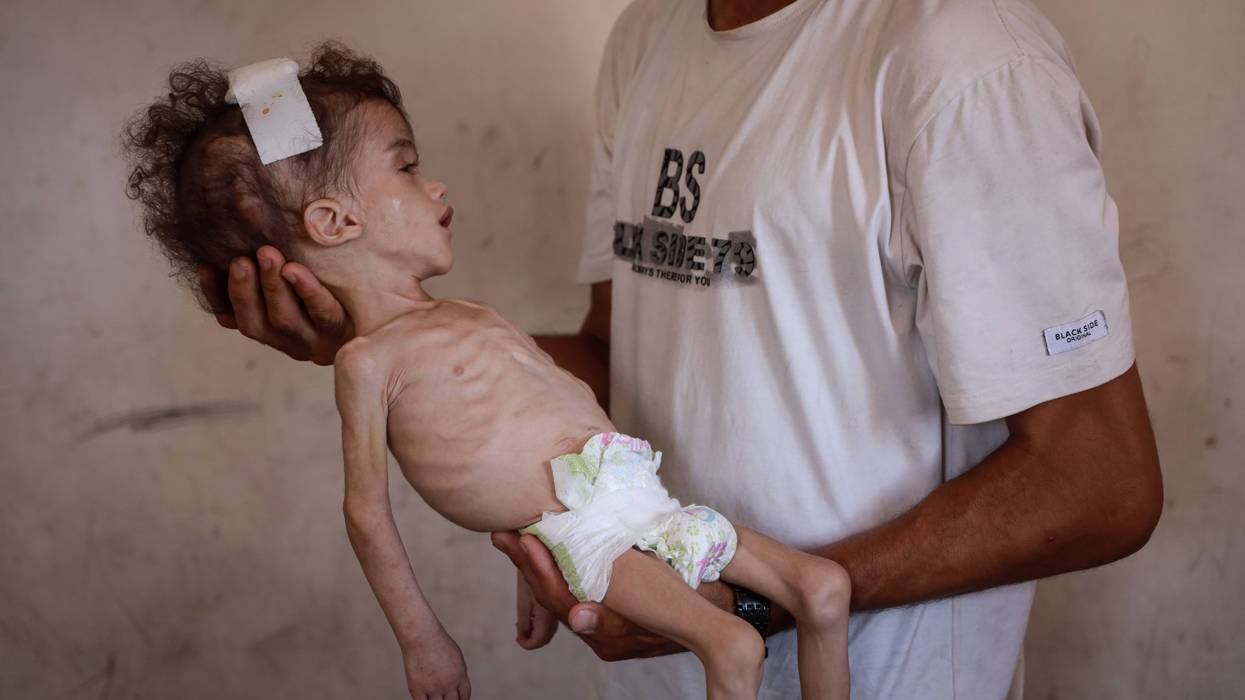
"After two years of conflict, the October 2025 ceasefire has led to measurable gains in humanitarian access and overall conditions across the Gaza Strip," IPC said in a statement. "However, the situation remains deeply fragile, with civilians continuing to endure harsh conditions."
This marks an improvement from a year ago, when a "worst-case scenario" was developing into a Phase 5 (catastrophe) famine that was formally declared by the IPC in August 2025. At least hundreds of Palestinians, many of them children, have died from malnutrition since Israel launched its US-backed war on Gaza in retaliation for the Hamas-led attack of October 7, 2023.
The IPC declared last December that while Gaza was no longer in a famine, the situation remained critical for the war-ravaged Palestinians there. The new IPC report warns that two-thirds of Gaza's population are projected to face Phase 3 crisis conditions by the end of the year.
The organization also said that 74,200 Palestinian children under the age of 5 in Gaza will likely need treatment for acute malnutrition through next April.
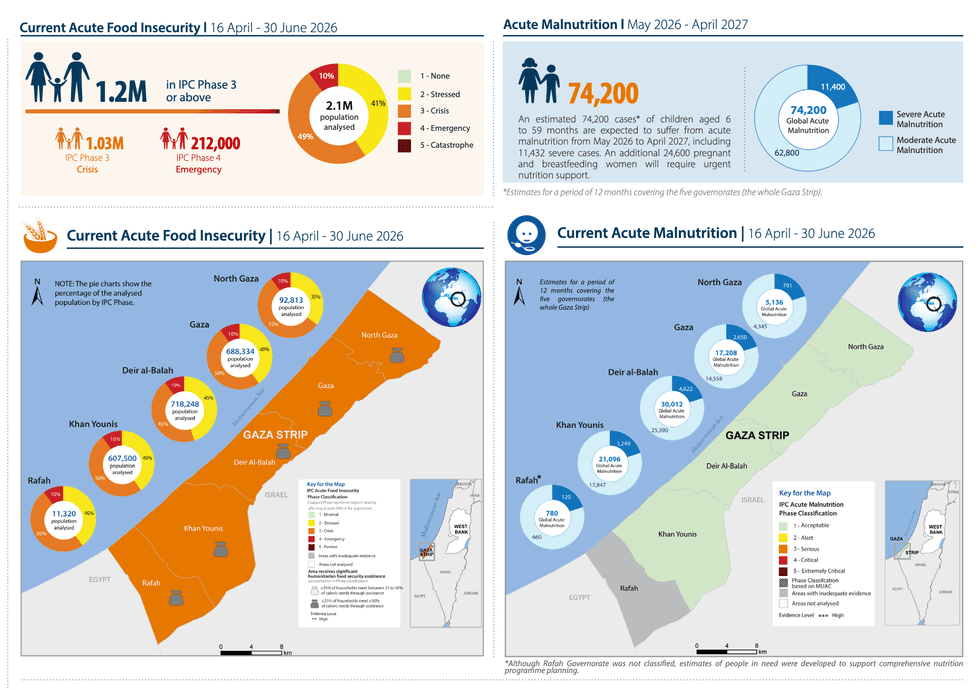 (Image by Integrated Phase Food Security Classification)
Responding to the new IPC data, United Nations Children's Fund Executive Director Catherine Russell said Thursday that “acute malnutrition has fallen, but many children are still going hungry, and some children may never fully recover from prolonged lack of proper nutrition."
"This progress shows that when humanitarian access improves and aid gets through, children can be pulled back from the brink," she added. "But it rests on a supplementary feeding program that doesn’t reach all children, and where funding is running out."
Israeli forces have killed or wounded more than 250,000 Palestinians since then, and forcibly displaced, starved, or sickened over 2 million others since then, resulting in worldwide allegations of genocide embodied in an International Court of Justice case filed by South Africa at the end of 2023 and now formally supported by nearly 20 nations.
Leading global famine experts accused Israel of deliberately starving Palestinians in Gaza. The International Criminal Court arrest warrants issued in late 2024 for Israeli Prime Minister Benjamin Netanyahu and Yoav Gallant, his former defense minister who ordered the "complete siege" of Gaza, accuse the pair of crimes against humanity and war crimes, including murder and forced starvation.
Like many members of their public, Israeli and US officials under both the Biden and Trump administrations initially denied that Israel was starving Gazans. However, Israeli officials warned in private that Gaza was facing starvation, while US President Donald Trump, Vice President JD Vance, and other administration figures have acknowledged that Palestinians were starving to death in the strip. That did not stop them from continuing to give billions of dollars in US armed aid to Israel.
In response to the new IPC report, acting United Nations World Food Program Executive Director Carl Skau said that “there is progress on food security in Gaza, but it is fragile and can easily be reversed."
"The overall humanitarian situation remains brutal: Families lack water, sanitation, and medicine," Skau added. "We need sustained access, funding, and stability so people of Gaza can begin recovery.”
The heads of various United Nations agencies concurred that a lasting peace—which Israel is not allowing as it continues bombing and besieging Gaza despite a nominal nine-month ceasefire—is imperative for that recovery.
“Food security in Gaza cannot recover unless local food production starts again and farmers, herders, fishers, and other producers can rebuild their livelihoods,” UN Food and Agriculture Organization Director-General Qu Dongyu said on Thursday. “Producers need access to farmland and the sea, and to seeds, tools, livestock supplies, and other agricultural inputs, as well as technical support."
"Restrictions on agricultural imports and humanitarian supplies must be lifted," Qu added. "Without these essentials, food production, and security will remain a pressing situation."
The IPC said that "recent gains remain fragile," and that "advancing peace plans is essential to support recovery, enable the safe return of displaced populations, and help households rebuild their livelihoods."