August, 18 2014, 05:15pm EDT

ACLU and Lambda Legal Ask Supreme Court to Reject Motion to Delay Virginia Marriages
Lawyers for Class of All Same-Sex Couples in Virginia Also Seek Speedy Review on Merits if Stay is Granted
RICHMOND, Va.
Today, the American Civil Liberties Union, ACLU of Virginia, and Lambda Legal will ask the U.S. Supreme Court to deny the motion filed Thursday by Prince William County Clerk Michele McQuigg seeking to stay the recent Fourth Circuit Court of Appeals ruling in Schaefer v. Bostic striking down Virginia's discriminatory marriage ban.
"We will do everything we can to ensure that same-sex couples do not have to wait a day longer than necessary to finally receive the dignity and protection that only comes with marriage," said James Esseks, director of the ACLU Lesbian Gay Bisexual and Transgender Project, who argued the case for the class before the federal appeals court. "The historic Supreme Court case that affirmed the right of people of different races to marry started in in Virginia. In the 47 years since then, committed same-sex couples in the commonwealth have been patiently waiting for the freedom to marry the person they love."
The organizations also will request that, if the Court decides to grant the stay, it should accept the case for full review as quickly as possible in order to minimize the harm that would be caused by the delay of the Fourth Circuit decision.
"We will fight these last-ditch desperate attempts to delay the inevitable arrival of the day when same-sex couples can marry in Virginia," Jon Davidson, Legal Director at Lambda Legal, said. "But if the Court grants a stay, we want this issue to be decided as quickly as possible."
"The Fourth Circuit finally ruled to let us get married and we are anxious to finally plan our wedding," said Joanne Harris, who with Jessica Duff is one of the named plaintiff couples in the lawsuit. "Jessi and I are prepared to continue to fight, but we shouldn't have to wait any longer."
The ACLU and Lambda Legal represent a certified class in the lawsuit that includes all Virginia same-sex couples. Harris and Duff of Staunton, who are class representatives, have been together for 11 years and are raising a five-year-old son, Jabari. They had a commitment ceremony in 2011. Christy Berghoff and Victoria Kidd of Winchester, who are also class representatives, were married in Washington, DC two years ago, but are considered single in their home state of Virginia. They have a one-year-old daughter, Lydia.
"Marriage is a fundamental right of all Virginians," said Claire Guthrie Gastanaga, executive director of the ACLU of Virginia. "The Fourth Circuit's decision sent a message to every committed and married couple in the commonwealth that they are equal in the eyes of the law. The Virginia ACLU is proud to be able to say that we were advocates for the Lovings almost 50 years ago and grateful also to have had the privilege of representing the loving couples across Virginia who should not have to wait even one more day before they gain the freedom to marry."
Last month, the U.S. Court of Appeals for the Fourth Circuit affirmed a district court ruling striking down Virginia's ban on marriage for same-sex couples. The decision did not take effect immediately, but is scheduled to go into effect August 21, unless the stay filed with Chief Justice John Roberts, the Circuit Justice for the Fourth Circuit, is granted. If the Supreme Court doesn't grant review of the decision, the appeals court decision is final and all same-sex couples in Virginia who want to get married or want their marriages recognized will be able to do so. The ruling could also impact similar bans in the remaining Fourth Circuit states (North Carolina, South Carolina, and West Virginia) that continue to discriminate against same-sex couples.
The American Civil Liberties Union was founded in 1920 and is our nation's guardian of liberty. The ACLU works in the courts, legislatures and communities to defend and preserve the individual rights and liberties guaranteed to all people in this country by the Constitution and laws of the United States.
(212) 549-2666LATEST NEWS
'Another Trump-Authorized Murder': 1 Dead, 2 Survivors Reported After Latest US Boat Bombing
More than 200 people have been killed in US strikes targeting boats in the Caribbean Sea and Pacific Ocean that the Trump administration claimed—without providing evidence—were smuggling drugs.
Jun 17, 2026
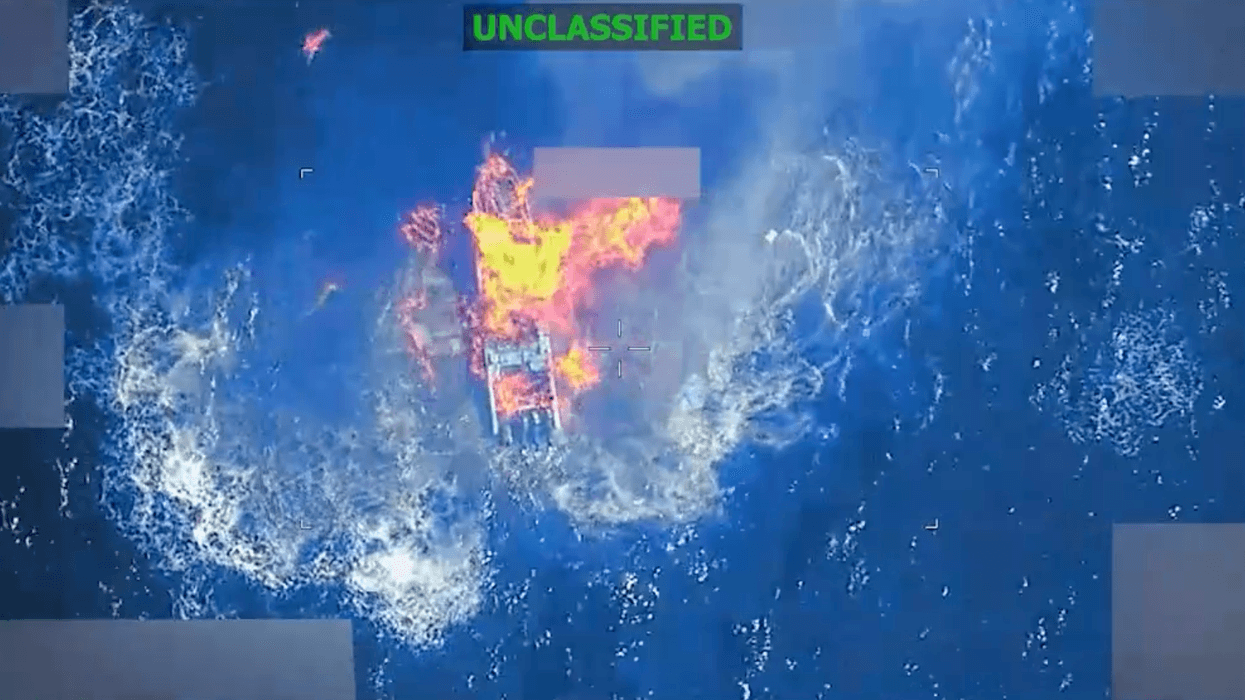
The US military said Tuesday that one person was killed and two others survived the latest attack on a boat that the Trump administration claimed—again without providing concrete evidence—was involved in smuggling drugs in the eastern Pacific Ocean.
"On June 16, at the direction of the commander of US Southern Command Gen. Francis L. Donovan, Joint Task Force Southern Spear conducted a lethal kinetic strike on a vessel operated by Designated Terrorist Organizations," SOUTHCOM said in a statement.
"Intelligence confirmed the vessel was transiting along known narco-trafficking routes in the Eastern Pacific and was engaged in narco-trafficking operations," the statement continued. "One male narco-terrorist was killed during this action, and there were two male survivors."
SOUTHCOM added that it "immediately notified [the] US Coast Guard to activate the Search and Rescue system for the survivors."
It is not known whether the survivors were saved.
The attack—in which no US forces were harmed—was one of more than 60 that have occurred in the Caribbean Sea and Pacific Ocean since US President Donald Trump launched the campaign early last September. More than 200 people have been killed.
Relatives of people killed in some of the boat strikes, as well as officials in Venezuela and Colombia, say that at least some of the victims were fishers who were not part of the illicit drug trade.
Colombian President Gustavo Petro has accused the US of “murder." Venezuelan President Nicolás Maduro was abducted during a US invasion in January and imprisoned in the United States on dubious narco-terrorism charges.
In January, relatives of two Trinidadian fishers killed in the strikes filed a federal wrongful death lawsuit in Massachusetts.
Experts argue that the strikes are illegal. Adam Isacson of the Washington Office on Latin America previously said that even in cases of vessels that were involved in drug trafficking, the bombings were illegal and “the equivalent of straight-up massacring 16-year-old drug dealers on US street corners.”
Just Security editor-in-chief and New York University School of Law professor Ryan Goodman said last month that the “overwhelming consensus of experts, myself included, assess these to be murder because no armed conflict” is occurring, adding that they would be a “war crime if it were armed conflict"—and possibly even a "crime against humanity."
Responding to Tuesday's strike, former Human Rights Watch executive director Kenneth Roth lamented what he called "another Trump-authorized murder" and act of "blatant criminality."
Keep ReadingShow Less
Trump's Iran Disaster an Even Bigger US Strategic Defeat Than Vietnam: Expert
"The United States is inarguably in a weaker position than when it began this war of choice, with core US strategic objectives harmed."
Jun 17, 2026
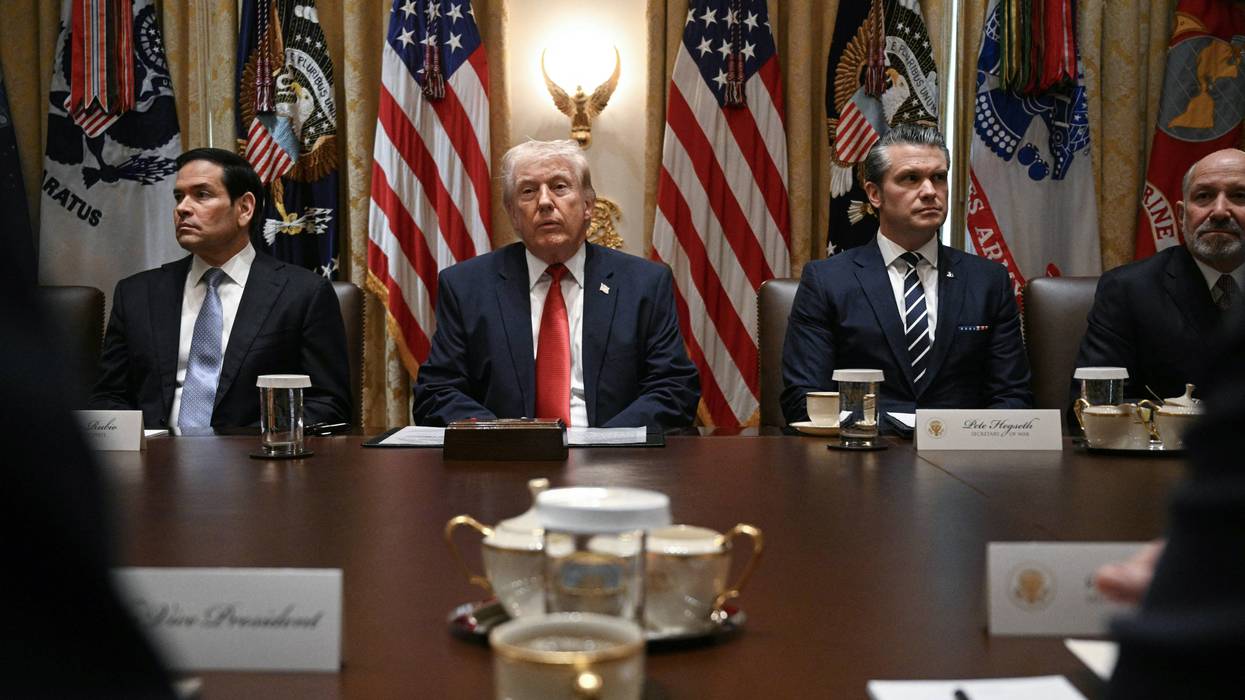
President Donald Trump's illegal war of choice with Iran has dealt the United States an even bigger strategic defeat than the one it suffered in the Vietnam War, according to one expert.
In an essay published on Tuesday by Foreign Policy, Paul Musgrave, associate professor of government at Georgetown University in Qatar, made the case that the damage done to the United States' reputation and credibility in the wake of the Iran war are significantly more severe than anything the country suffered in the wake of Vietnam.
Even though the Vietnam War went on for far longer and resulted in far more deaths than Trump's Iran war, Musgrave argued, the US nonetheless exited it with little long-term damage to its global power.
"Compare that situation with the aftermath of Trump’s war," Musgrave continued. "The United States is inarguably in a weaker position than when it began this war of choice, with core US strategic objectives harmed."
Musgrave noted that while the US and Israel had initial success in decapitating Iran's leadership at the beginning of the conflict, this only left the hardliners in the Islamic Revolutionary Guard Corps (IRGC) to run the country.
By failing to achieve the stated aim of regime change and by empowering even more radical elements within Iran, Musgrave added, Trump has severely damaged other nations' willingness to trust the US for national security protection.
"Regional allies, many of whom reportedly argued against the venture, bore the brunt of the costs of the fighting," the scholar wrote. "Most tellingly, Iran learned that its capacity to throttle the Strait of Hormuz could deliver economic leverage on a worldwide scale."
Writing in The New York Times on Wednesday, national security journalist WJ Hennigan argued that the United States' strategic defeat has laid bare the limits of US military power to bend weaker nations to its will.
In particular, he pointed out that the US, which spent $1 trillion on its military last year, could not take out even a majority of Iran's missile stockpiles.
"Yes, the wonder weapons that American industry cranks out, like cruise missiles and air-defense interceptors, have proven impressive on the battlefield," Hennigan wrote. "But the war has exposed the underlying weaknesses of depending on weaponry that’s extremely expensive and time-consuming to deliver. During an April 30 congressional hearing, Defense Secretary Pete Hegseth estimated it could take 'months and years' to replenish the stocks that had been used in the war."
Matt Duss, executive vice president at the Center for International Policy, similarly said that Trump's Iran war had resulted in a strategic defeat for the US. However, he also expressed hope that this defeat could mark a turning point in US foreign policy circles regarding the applications of American power throughout the world.
"There’s a longstanding US bipartisan consensus around wildly inflating the Iranian threat," Duss wrote in a social media post. "Trump’s war, a strategic defeat, was an expression of that consensus. If... ending the war puts the US and Iran on path to a more normal relationship, that will be a positive thing."
Keep ReadingShow Less
Luigi Mangione—Accused of Murdering UnitedHealth CEO—to Invoke Psychiatric Defense in State Trial
The legal strategy—which is not an insanity defense—would be an admission that Mangione killed UnitedHealth's Brian Thompson, but did so under mitigating circumstances.
Jun 17, 2026
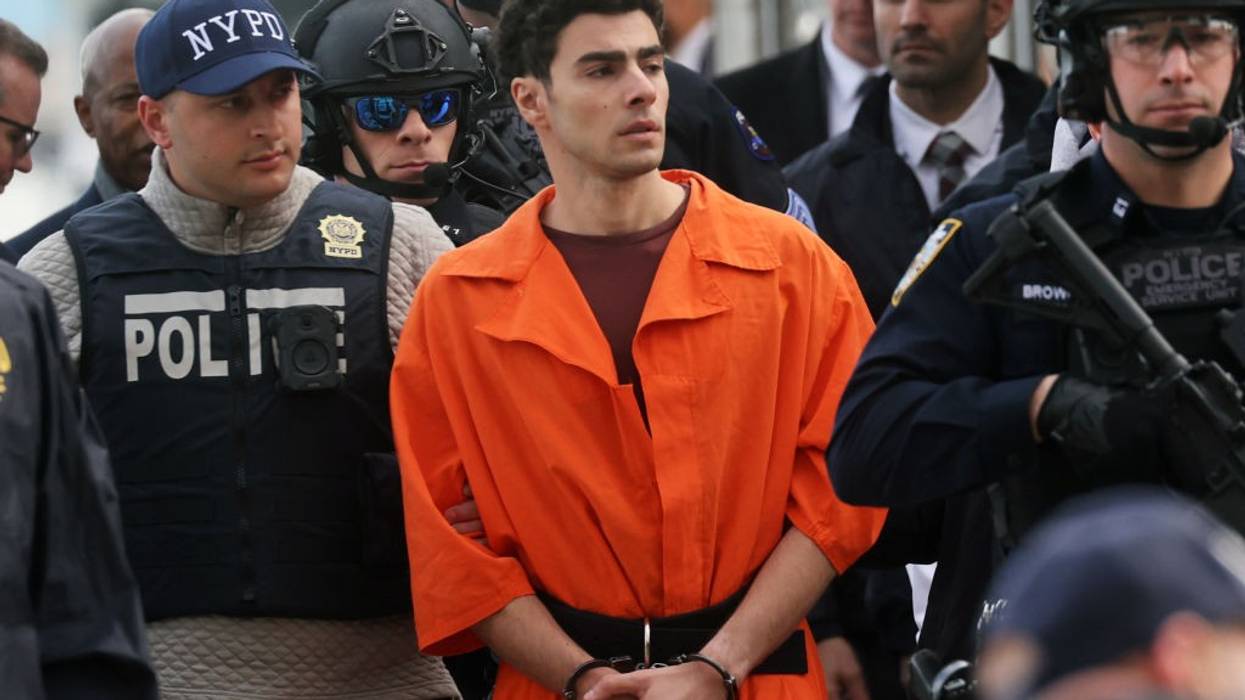
Luigi Mangione, who stands accused of murdering UnitedHealth CEO Brian Thompson in 2024, will assert a psychiatric defense in his state murder trial, the New York judge presiding over the case revealed Wednesday.
The Associated Press reported that Judge Gregory Carro of the New York State Supreme Court in Manhattan said Mangione’s legal team informed him that they will argue that the 28-year-old defendant suffered from “extreme emotional disturbance" when he allegedly gunned down Thompson outside the New York Hilton Midtown Hotel just after dawn on December 4, 2024.
The defense strategy would be an admission that Mangione killed Thompson, but did so due to mitigating circumstances. The precise nature of the claimed psychiatric issue remains under seal, but it has been reported that Mangione suffered chronic back pain for years and harbored deep animosity toward the for-profit health insurance industry that dominate the US system.
Court documents indicate that Mangione's lawyers previously sought additional time to decide whether to pursue a mental health defense.
Extreme emotional disturbance is not the same as pleading guilty by reason of insanity, which would result in a convicted defendant being sent to a psychiatric facility instead of prison.
On Wednesday, Carro revealed that he had held a secret hearing on the matter earlier this month, and that the session's proceedings were sealed "to give the defense an opportunity to determine whether they were going forth" with the extreme emotional disturbance defense.
The June 3 hearing focused on the psychiatric basis for such a defense, its procedural consequences, disclosure obligations, and potential examinations.
Mangione's attorney, Karen Friedman Agnifilo, decried Carro's decision to unseal details of the secret hearing.
“The reason why we asked for the sealing is that this defense is not available federally and Mr. Mangione is being prosecuted federally and this is prejudicial to his defense to the exact same facts,” she said.
Last year, then-US Attorney General Pam Bondi said she would seek the death penalty for Mangione at his federal trial. New York state effectively abolished capital punishment in 2004.
Mangione allegedly shot Thompson, 50, as he walked to the New York Midtown Hilton for UnitedHealth Group’s annual investor conference. Police said the words “delay,” “deny,” and “depose”—a description of how insurance companies avoid paying claims—were engraved in shell casings of bullets used in the attack, which was carried out with a 3D-printed pistol. New York police also said they recovered a three-page handwritten note that expressed "some ill will toward corporate America."
Five days after the shooting, Mangione was arrested after a customer in an Altoona, Pennsylvania McDonald's recognized him and alerted authorities.
Thompson's murder exposed the depth of public rage over corporate greed and a for-profit healthcare system in which thousands of people die each year because they have no insurance, while millions more face financial hardship or bankruptcy.
Mangione is facing state charges of second-degree murder, multiple weapons violations, and possession of a fake ID. More serious charges, including first-degree murder and terrorism, have been dismissed. Mangione's New York trial is set to begin on September 8.
Keep ReadingShow Less
Most Popular