SUBSCRIBE TO OUR FREE NEWSLETTER
Daily news & progressive opinion—funded by the people, not the corporations—delivered straight to your inbox.
5
#000000
#FFFFFF
To donate by check, phone, or other method, see our More Ways to Give page.
Daily news & progressive opinion—funded by the people, not the corporations—delivered straight to your inbox.
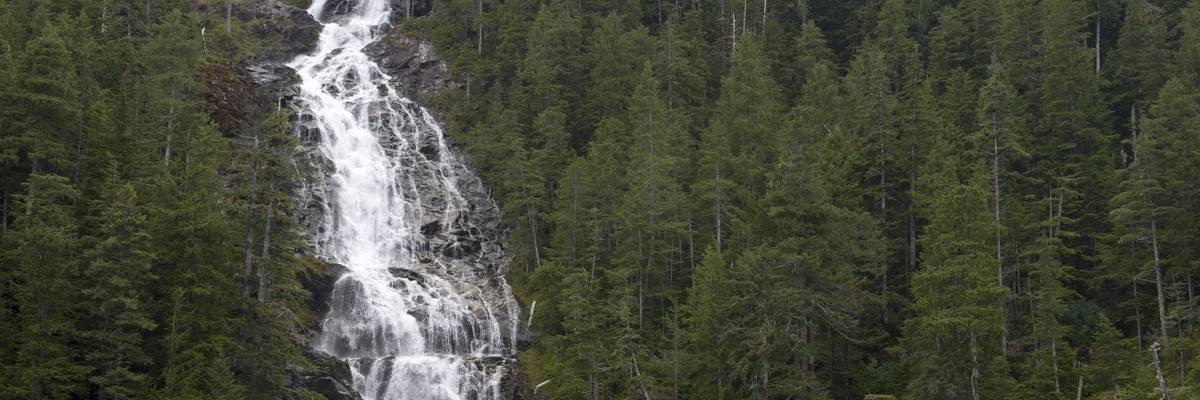
A waterfall on Baranof Island in Tongass National Forest, Southeast Alaska, USA.
Trump has cleared the way for 45 million acres of protected forest to be opened for logging and construction in what one conservation group called the "largest evisceration of public lands protection in American history."
The Trump administration is moving to reverse a decades-old rule that protected 45 million acres of forest lands from logging and construction, in what the Center for Biological Diversity called the "largest evisceration of public lands protection in American history."
On Tuesday, Agriculture Secretary Brooke Rollins announced that the US Forest Service had filed a proposed rule to fully rescind the 2001 Roadless Area Conservation Rule, enacted under former President Bill Clinton, which had prevented road building and commercial logging on about 30% of all national forest land.
Rollins described the "roadless rule" as a barrier to government wildfire prevention efforts. "Across the country, we’ve watched preventable conditions—overgrown stands, insect outbreaks, and disease—turn healthy landscapes into tinderboxes,” she said. "For too long, outdated restrictions have kept tens of millions of forested acres off-limits to the very treatments that improve forest health and reduce wildfire risk to our communities."
But conservation groups argue that the administration's reversal of the roadless rule has little to do with wildfire prevention and everything to do with opening up protected lands to logging interests and other extractive industries, which have long pushed for the rule to be weakened.
Increasing logging on federal lands has been a major goal of Trump's second term, and repealing the roadless rule is part of that effort. An executive order signed in March 2025 calling for the "immediate expansion" of timber production said that federal policies had made the country unable to "fully exploit our domestic timber supply."
In June2025, when the US Department of Agriculture first announced plans to rescind the roadless rule, it said that increasing timber production would be one of the benefits. The USDA said the rule hurt “jobs and economic development” and that repealing it aligned with Trump's goal to eliminate "barriers that hamper American business and innovation."
Earthjustice has argued that, contrary to what the administration says, repealing the roadless rule will actually lead to more wildfires, not fewer.
It points to findings from the Forest Service that 9 in 10 wildfires are caused by human activity, including throwing cigarettes out of windows, leaving campfires abandoned, and driving cars on grassy areas, causing them to ignite.
A peer-reviewed study published in January in the journal Fire Ecology by researchers with the Wilderness Society found that fires are about four times as likely to start near a road as in roadless forests.
Another study by the Forest Service in 2020, during the first Trump administration, examined two decades of data and found that roadless forests actually received more fuel-reduction treatments per square kilometer than areas elsewhere in the National Forest System.
"Speculation that eliminating road prohibitions would improve forest health is not supported by nearly 20 years of monitoring data," the study concluded.
Josh Hicks, director of conservation campaigns at the Wilderness Society, said Tuesday, "Opening our backcountry forests to more roads and development, and therefore more ignitions, is... not a wildfire solution, and never will be."
While doing little to curb the recent increases in wildfires exacerbated by climate change, conservationists argue that repealing the roadless rule will pose other harms to communities and wildlife across the country.
“Roadless forests supply clean drinking water for tens of millions of Americans, are home to irreplaceable wildlife, and store enormous amounts of carbon,” said Gabrielle Berthel, forest advocate at the Natural Resources Defense Council. "Repealing the Roadless Area Conservation Rule would allow for the fragmentation of some of the last intact forest ecosystems in the country, with irreversible consequences for the communities that rely on these forests and the people who seek out these special places for recreation."
The Center for Biological Diversity (CBD) noted that these forests serve as habitats for numerous threatened species that risk being disrupted, including American wolverines, Canada lynx, grizzly bears, and northern spotted owls.
Randi Spivak, the public lands policy director at the CBD, emphasized that "these are some of the last truly wild forests left in the country... Once you start bulldozing roads for commercial logging and industrial development, there’s no getting them back."
More than 625,000 public comments have been submitted to the Forest Service since plans to rescind the roadless rule were announced last June. The USDA will accept public comments on the proposal until September 21, after which the administration is expected to move toward a final rule later this year.
Dear Common Dreams reader, It’s been nearly 30 years since I co-founded Common Dreams with my late wife, Lina Newhouser. We had the radical notion that journalism should serve the public good, not corporate profits. It was clear to us from the outset what it would take to build such a project. No paid advertisements. No corporate sponsors. No millionaire publisher telling us what to think or do. Many people said we wouldn't last a year, but we proved those doubters wrong. Together with a tremendous team of journalists and dedicated staff, we built an independent media outlet free from the constraints of profits and corporate control. Our mission has always been simple: To inform. To inspire. To ignite change for the common good. Building Common Dreams was not easy. Our survival was never guaranteed. When you take on the most powerful forces—Wall Street greed, fossil fuel industry destruction, Big Tech lobbyists, and uber-rich oligarchs who have spent billions upon billions rigging the economy and democracy in their favor—the only bulwark you have is supporters who believe in your work. But here’s the urgent message from me today. It's never been this bad out there. And it's never been this hard to keep us going. At the very moment Common Dreams is most needed, the threats we face are intensifying. We need your support now more than ever. We don't accept corporate advertising and never will. We don't have a paywall because we don't think people should be blocked from critical news based on their ability to pay. Everything we do is funded by the donations of readers like you. When everyone does the little they can afford, we are strong. But if that support retreats or dries up, so do we. Will you donate now to make sure Common Dreams not only survives but thrives? —Craig Brown, Co-founder |
The Trump administration is moving to reverse a decades-old rule that protected 45 million acres of forest lands from logging and construction, in what the Center for Biological Diversity called the "largest evisceration of public lands protection in American history."
On Tuesday, Agriculture Secretary Brooke Rollins announced that the US Forest Service had filed a proposed rule to fully rescind the 2001 Roadless Area Conservation Rule, enacted under former President Bill Clinton, which had prevented road building and commercial logging on about 30% of all national forest land.
Rollins described the "roadless rule" as a barrier to government wildfire prevention efforts. "Across the country, we’ve watched preventable conditions—overgrown stands, insect outbreaks, and disease—turn healthy landscapes into tinderboxes,” she said. "For too long, outdated restrictions have kept tens of millions of forested acres off-limits to the very treatments that improve forest health and reduce wildfire risk to our communities."
But conservation groups argue that the administration's reversal of the roadless rule has little to do with wildfire prevention and everything to do with opening up protected lands to logging interests and other extractive industries, which have long pushed for the rule to be weakened.
Increasing logging on federal lands has been a major goal of Trump's second term, and repealing the roadless rule is part of that effort. An executive order signed in March 2025 calling for the "immediate expansion" of timber production said that federal policies had made the country unable to "fully exploit our domestic timber supply."
In June2025, when the US Department of Agriculture first announced plans to rescind the roadless rule, it said that increasing timber production would be one of the benefits. The USDA said the rule hurt “jobs and economic development” and that repealing it aligned with Trump's goal to eliminate "barriers that hamper American business and innovation."
Earthjustice has argued that, contrary to what the administration says, repealing the roadless rule will actually lead to more wildfires, not fewer.
It points to findings from the Forest Service that 9 in 10 wildfires are caused by human activity, including throwing cigarettes out of windows, leaving campfires abandoned, and driving cars on grassy areas, causing them to ignite.
A peer-reviewed study published in January in the journal Fire Ecology by researchers with the Wilderness Society found that fires are about four times as likely to start near a road as in roadless forests.
Another study by the Forest Service in 2020, during the first Trump administration, examined two decades of data and found that roadless forests actually received more fuel-reduction treatments per square kilometer than areas elsewhere in the National Forest System.
"Speculation that eliminating road prohibitions would improve forest health is not supported by nearly 20 years of monitoring data," the study concluded.
Josh Hicks, director of conservation campaigns at the Wilderness Society, said Tuesday, "Opening our backcountry forests to more roads and development, and therefore more ignitions, is... not a wildfire solution, and never will be."
While doing little to curb the recent increases in wildfires exacerbated by climate change, conservationists argue that repealing the roadless rule will pose other harms to communities and wildlife across the country.
“Roadless forests supply clean drinking water for tens of millions of Americans, are home to irreplaceable wildlife, and store enormous amounts of carbon,” said Gabrielle Berthel, forest advocate at the Natural Resources Defense Council. "Repealing the Roadless Area Conservation Rule would allow for the fragmentation of some of the last intact forest ecosystems in the country, with irreversible consequences for the communities that rely on these forests and the people who seek out these special places for recreation."
The Center for Biological Diversity (CBD) noted that these forests serve as habitats for numerous threatened species that risk being disrupted, including American wolverines, Canada lynx, grizzly bears, and northern spotted owls.
Randi Spivak, the public lands policy director at the CBD, emphasized that "these are some of the last truly wild forests left in the country... Once you start bulldozing roads for commercial logging and industrial development, there’s no getting them back."
More than 625,000 public comments have been submitted to the Forest Service since plans to rescind the roadless rule were announced last June. The USDA will accept public comments on the proposal until September 21, after which the administration is expected to move toward a final rule later this year.
The Trump administration is moving to reverse a decades-old rule that protected 45 million acres of forest lands from logging and construction, in what the Center for Biological Diversity called the "largest evisceration of public lands protection in American history."
On Tuesday, Agriculture Secretary Brooke Rollins announced that the US Forest Service had filed a proposed rule to fully rescind the 2001 Roadless Area Conservation Rule, enacted under former President Bill Clinton, which had prevented road building and commercial logging on about 30% of all national forest land.
Rollins described the "roadless rule" as a barrier to government wildfire prevention efforts. "Across the country, we’ve watched preventable conditions—overgrown stands, insect outbreaks, and disease—turn healthy landscapes into tinderboxes,” she said. "For too long, outdated restrictions have kept tens of millions of forested acres off-limits to the very treatments that improve forest health and reduce wildfire risk to our communities."
But conservation groups argue that the administration's reversal of the roadless rule has little to do with wildfire prevention and everything to do with opening up protected lands to logging interests and other extractive industries, which have long pushed for the rule to be weakened.
Increasing logging on federal lands has been a major goal of Trump's second term, and repealing the roadless rule is part of that effort. An executive order signed in March 2025 calling for the "immediate expansion" of timber production said that federal policies had made the country unable to "fully exploit our domestic timber supply."
In June2025, when the US Department of Agriculture first announced plans to rescind the roadless rule, it said that increasing timber production would be one of the benefits. The USDA said the rule hurt “jobs and economic development” and that repealing it aligned with Trump's goal to eliminate "barriers that hamper American business and innovation."
Earthjustice has argued that, contrary to what the administration says, repealing the roadless rule will actually lead to more wildfires, not fewer.
It points to findings from the Forest Service that 9 in 10 wildfires are caused by human activity, including throwing cigarettes out of windows, leaving campfires abandoned, and driving cars on grassy areas, causing them to ignite.
A peer-reviewed study published in January in the journal Fire Ecology by researchers with the Wilderness Society found that fires are about four times as likely to start near a road as in roadless forests.
Another study by the Forest Service in 2020, during the first Trump administration, examined two decades of data and found that roadless forests actually received more fuel-reduction treatments per square kilometer than areas elsewhere in the National Forest System.
"Speculation that eliminating road prohibitions would improve forest health is not supported by nearly 20 years of monitoring data," the study concluded.
Josh Hicks, director of conservation campaigns at the Wilderness Society, said Tuesday, "Opening our backcountry forests to more roads and development, and therefore more ignitions, is... not a wildfire solution, and never will be."
While doing little to curb the recent increases in wildfires exacerbated by climate change, conservationists argue that repealing the roadless rule will pose other harms to communities and wildlife across the country.
“Roadless forests supply clean drinking water for tens of millions of Americans, are home to irreplaceable wildlife, and store enormous amounts of carbon,” said Gabrielle Berthel, forest advocate at the Natural Resources Defense Council. "Repealing the Roadless Area Conservation Rule would allow for the fragmentation of some of the last intact forest ecosystems in the country, with irreversible consequences for the communities that rely on these forests and the people who seek out these special places for recreation."
The Center for Biological Diversity (CBD) noted that these forests serve as habitats for numerous threatened species that risk being disrupted, including American wolverines, Canada lynx, grizzly bears, and northern spotted owls.
Randi Spivak, the public lands policy director at the CBD, emphasized that "these are some of the last truly wild forests left in the country... Once you start bulldozing roads for commercial logging and industrial development, there’s no getting them back."
More than 625,000 public comments have been submitted to the Forest Service since plans to rescind the roadless rule were announced last June. The USDA will accept public comments on the proposal until September 21, after which the administration is expected to move toward a final rule later this year.