SUBSCRIBE TO OUR FREE NEWSLETTER
Daily news & progressive opinion—funded by the people, not the corporations—delivered straight to your inbox.
5
#000000
#FFFFFF
To donate by check, phone, or other method, see our More Ways to Give page.
Daily news & progressive opinion—funded by the people, not the corporations—delivered straight to your inbox.
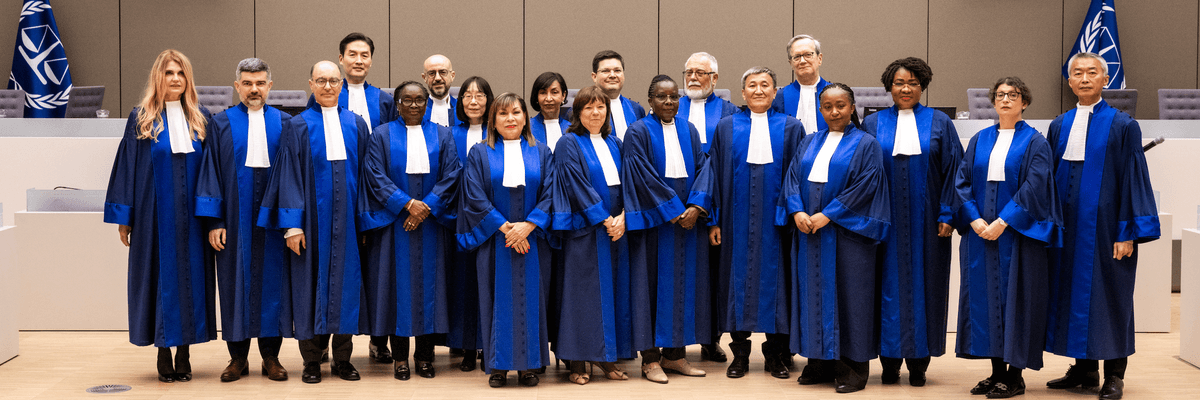
Nine of the International Criminal Court's 18 judges—seen here in a March 8, 2024 photo—are under US sanctions.
“In my country, I prosecuted terrorists and drug lords," said Judge Luz Ibáñez Carranza of Peru. "I will continue my work."
International Criminal Court judges remain steadfast in their pursuit of justice—including for victims of Israel's genocidal war on Gaza—even as they suffer from devastating US sanctions, some of the affected jurists said in recent interviews.
Nine ICC officials are under sanctions imposed in two waves earlier this year by the Trump administration following the Hague-based tribunal's issuance of arrest warrants for Israeli Prime Minister Benjamin Netanyahu and former Israeli Defense Minister Yoav Gallant for alleged crimes against humanity and war crimes in Gaza, including murder and forced starvation. The tribunal also issued warrants for the arrest of three Hamas officials, all of whom have been killed by Israel during the course of the war.
The sanctioned jurists are: Chief Prosecutor Karim Khan (United Kingdom), Deputy Prosecutor Nazhat Shameem Khan (Fiji), Deputy Prosecutor Mame Mandiaye Niang (Senegal), Judge Solomy Balungi Bossa (Uganda), Judge Luz del Carmen Ibáñez Carranza (Peru), Judge Reine Adelaide Sophie Alapini-Gansou (Benin), Judge Beti Hohler (Slovenia), Judge Nicolas Yann Guillou (France), and Judge Kimberly Prost (Canada).
The sanctions followed a February executive order from US President Donald Trump sanctioning Khan and accusing the ICC of “baseless actions targeting America and our close ally Israel.”
The sanctions—which experts have called an act of criminal obstruction—prevent the targeted ICC officials and their relatives from entering the United States; cut off their access to financial services including banking and credit cards; and prohibit the use of online services like email, shopping, and booking sites.
Fearing steep fines and other punitive measures including possible imprisonment for running afoul of US sanctions by providing “financial, material, or technological support" to targeted individuals, businesses and other entities strictly blacklist sanctioned people—who are typically terrorists, organized crime leaders, and political or military leaders accused of serious human rights crimes.
“Your whole world is restricted,” Prost—who was part of an ICC appellate chamber's unanimous 2020 decision to investigate alleged US war crimes and crimes against humanity in Afghanistan—told the Associated Press on Thursday. “I’ve worked all my life in criminal justice, and now I’m on a list with those implicated in terrorism and organized crime."
Ibáñez Carranza said the US sanctions are not deterring her, telling the AP: “In my country, I prosecuted terrorists and drug lords. I will continue my work."
Guillou told Le Monde last week that the sanctions mean he is banned from almost all digital services—including Amazon and PayPal—in a world dominated by US tech giants. This has led to some absurd scenarios, including having a hotel reservation he booked via Expedia in his own country canceled.
"To be under sanctions is like being transported back to the 1990s," he said.
The Trump administration's objective, said Guillou, is "intimidation... permanent fear, and powerlessness."
"European citizens under US sanctions will be wiped out economically and socially within the [European Union]," he added.
Guillou remains defiant in the face of sweeping hardship caused by the sanctions, contending that he is part of a larger struggle for justice as, "empires are hitting back" in response to "three decades of progress in multilateralism."
The US—which, like Israel, is not party to the Rome Statute that governs the ICC—has been at odds with the court for decades. In 2002, Congress passed, and then-President George W. Bush signed, the American Service Members’ Protection Act—also known as the Hague Invasion Act—which authorizes the president to use “all means necessary and appropriate” including military intervention to secure the release of American or allied personnel held by or on behalf of the ICC.
During his first term, Trump sanctioned then-ICC Chief Prosecutor Fatou Bensouda and Prosecution Jurisdiction Division Director Phakiso Mochochoko over the Afghan war crimes probe.
The nine jurists sanctioned this year by the US are seeking relief and are calling on European governments to invoke the EU's so-called "Blocking Statute," which is meant to shield officials of the 27-nation bloc from the extraterritorial application of third country laws.
"States parties [to the Rome Statute] face a choice: Continue to capitulate to the bullying of the US, or meet the challenge posed by the sanctions, past and future, and respond appropriately," Jens Iverson, an assistant professor of international law at Leiden University in the Netherlands, wrote last month for OpinioJuris. "Which choice they make will reveal the actual values of the states who as a matter of law are pledged to combat atrocity and impunity."
Ibáñez Carranza told Middle East Eye in a recent interview: "What we are asking are practical measures. What we are asking is action. We need the support of the entire world. But we are in Europe now, and Europe is a powerful structure. The European Union is a powerful structure. They should react as such. They cannot be subordinated to the American policies."
International Criminal Court (ICC) judge Luz del Carmen Ibanez Carranza has called on the international community to stand with ICC judges following US-imposed sanctions over the court’s arrest warrants for Israeli officials pic.twitter.com/otJfwHgzdw
— Middle East Eye (@MiddleEastEye) December 6, 2025
Ibáñez Carranza said that said measures should be taken "to support the court, not only to support the judges, but to support the system... of Rome."
"It's not only the judges" who are affected by the US sanctions, she asserted. "They want to affect the system of Rome, the system of the court, where we deliver justice for... the most defenseless and vulnerable victims... They are the affected ones with this."
"The work of the International Criminal Court is for humanity," Ibáñez Carranza added. "And this is why we are resilient, and this is why we need not only to stand together as judges, but the entire international community."
Dear Common Dreams reader, It’s been nearly 30 years since I co-founded Common Dreams with my late wife, Lina Newhouser. We had the radical notion that journalism should serve the public good, not corporate profits. It was clear to us from the outset what it would take to build such a project. No paid advertisements. No corporate sponsors. No millionaire publisher telling us what to think or do. Many people said we wouldn't last a year, but we proved those doubters wrong. Together with a tremendous team of journalists and dedicated staff, we built an independent media outlet free from the constraints of profits and corporate control. Our mission has always been simple: To inform. To inspire. To ignite change for the common good. Building Common Dreams was not easy. Our survival was never guaranteed. When you take on the most powerful forces—Wall Street greed, fossil fuel industry destruction, Big Tech lobbyists, and uber-rich oligarchs who have spent billions upon billions rigging the economy and democracy in their favor—the only bulwark you have is supporters who believe in your work. But here’s the urgent message from me today. It's never been this bad out there. And it's never been this hard to keep us going. At the very moment Common Dreams is most needed, the threats we face are intensifying. We need your support now more than ever. We don't accept corporate advertising and never will. We don't have a paywall because we don't think people should be blocked from critical news based on their ability to pay. Everything we do is funded by the donations of readers like you. When everyone does the little they can afford, we are strong. But if that support retreats or dries up, so do we. Will you donate now to make sure Common Dreams not only survives but thrives? —Craig Brown, Co-founder |
International Criminal Court judges remain steadfast in their pursuit of justice—including for victims of Israel's genocidal war on Gaza—even as they suffer from devastating US sanctions, some of the affected jurists said in recent interviews.
Nine ICC officials are under sanctions imposed in two waves earlier this year by the Trump administration following the Hague-based tribunal's issuance of arrest warrants for Israeli Prime Minister Benjamin Netanyahu and former Israeli Defense Minister Yoav Gallant for alleged crimes against humanity and war crimes in Gaza, including murder and forced starvation. The tribunal also issued warrants for the arrest of three Hamas officials, all of whom have been killed by Israel during the course of the war.
The sanctioned jurists are: Chief Prosecutor Karim Khan (United Kingdom), Deputy Prosecutor Nazhat Shameem Khan (Fiji), Deputy Prosecutor Mame Mandiaye Niang (Senegal), Judge Solomy Balungi Bossa (Uganda), Judge Luz del Carmen Ibáñez Carranza (Peru), Judge Reine Adelaide Sophie Alapini-Gansou (Benin), Judge Beti Hohler (Slovenia), Judge Nicolas Yann Guillou (France), and Judge Kimberly Prost (Canada).
The sanctions followed a February executive order from US President Donald Trump sanctioning Khan and accusing the ICC of “baseless actions targeting America and our close ally Israel.”
The sanctions—which experts have called an act of criminal obstruction—prevent the targeted ICC officials and their relatives from entering the United States; cut off their access to financial services including banking and credit cards; and prohibit the use of online services like email, shopping, and booking sites.
Fearing steep fines and other punitive measures including possible imprisonment for running afoul of US sanctions by providing “financial, material, or technological support" to targeted individuals, businesses and other entities strictly blacklist sanctioned people—who are typically terrorists, organized crime leaders, and political or military leaders accused of serious human rights crimes.
“Your whole world is restricted,” Prost—who was part of an ICC appellate chamber's unanimous 2020 decision to investigate alleged US war crimes and crimes against humanity in Afghanistan—told the Associated Press on Thursday. “I’ve worked all my life in criminal justice, and now I’m on a list with those implicated in terrorism and organized crime."
Ibáñez Carranza said the US sanctions are not deterring her, telling the AP: “In my country, I prosecuted terrorists and drug lords. I will continue my work."
Guillou told Le Monde last week that the sanctions mean he is banned from almost all digital services—including Amazon and PayPal—in a world dominated by US tech giants. This has led to some absurd scenarios, including having a hotel reservation he booked via Expedia in his own country canceled.
"To be under sanctions is like being transported back to the 1990s," he said.
The Trump administration's objective, said Guillou, is "intimidation... permanent fear, and powerlessness."
"European citizens under US sanctions will be wiped out economically and socially within the [European Union]," he added.
Guillou remains defiant in the face of sweeping hardship caused by the sanctions, contending that he is part of a larger struggle for justice as, "empires are hitting back" in response to "three decades of progress in multilateralism."
The US—which, like Israel, is not party to the Rome Statute that governs the ICC—has been at odds with the court for decades. In 2002, Congress passed, and then-President George W. Bush signed, the American Service Members’ Protection Act—also known as the Hague Invasion Act—which authorizes the president to use “all means necessary and appropriate” including military intervention to secure the release of American or allied personnel held by or on behalf of the ICC.
During his first term, Trump sanctioned then-ICC Chief Prosecutor Fatou Bensouda and Prosecution Jurisdiction Division Director Phakiso Mochochoko over the Afghan war crimes probe.
The nine jurists sanctioned this year by the US are seeking relief and are calling on European governments to invoke the EU's so-called "Blocking Statute," which is meant to shield officials of the 27-nation bloc from the extraterritorial application of third country laws.
"States parties [to the Rome Statute] face a choice: Continue to capitulate to the bullying of the US, or meet the challenge posed by the sanctions, past and future, and respond appropriately," Jens Iverson, an assistant professor of international law at Leiden University in the Netherlands, wrote last month for OpinioJuris. "Which choice they make will reveal the actual values of the states who as a matter of law are pledged to combat atrocity and impunity."
Ibáñez Carranza told Middle East Eye in a recent interview: "What we are asking are practical measures. What we are asking is action. We need the support of the entire world. But we are in Europe now, and Europe is a powerful structure. The European Union is a powerful structure. They should react as such. They cannot be subordinated to the American policies."
International Criminal Court (ICC) judge Luz del Carmen Ibanez Carranza has called on the international community to stand with ICC judges following US-imposed sanctions over the court’s arrest warrants for Israeli officials pic.twitter.com/otJfwHgzdw
— Middle East Eye (@MiddleEastEye) December 6, 2025
Ibáñez Carranza said that said measures should be taken "to support the court, not only to support the judges, but to support the system... of Rome."
"It's not only the judges" who are affected by the US sanctions, she asserted. "They want to affect the system of Rome, the system of the court, where we deliver justice for... the most defenseless and vulnerable victims... They are the affected ones with this."
"The work of the International Criminal Court is for humanity," Ibáñez Carranza added. "And this is why we are resilient, and this is why we need not only to stand together as judges, but the entire international community."
International Criminal Court judges remain steadfast in their pursuit of justice—including for victims of Israel's genocidal war on Gaza—even as they suffer from devastating US sanctions, some of the affected jurists said in recent interviews.
Nine ICC officials are under sanctions imposed in two waves earlier this year by the Trump administration following the Hague-based tribunal's issuance of arrest warrants for Israeli Prime Minister Benjamin Netanyahu and former Israeli Defense Minister Yoav Gallant for alleged crimes against humanity and war crimes in Gaza, including murder and forced starvation. The tribunal also issued warrants for the arrest of three Hamas officials, all of whom have been killed by Israel during the course of the war.
The sanctioned jurists are: Chief Prosecutor Karim Khan (United Kingdom), Deputy Prosecutor Nazhat Shameem Khan (Fiji), Deputy Prosecutor Mame Mandiaye Niang (Senegal), Judge Solomy Balungi Bossa (Uganda), Judge Luz del Carmen Ibáñez Carranza (Peru), Judge Reine Adelaide Sophie Alapini-Gansou (Benin), Judge Beti Hohler (Slovenia), Judge Nicolas Yann Guillou (France), and Judge Kimberly Prost (Canada).
The sanctions followed a February executive order from US President Donald Trump sanctioning Khan and accusing the ICC of “baseless actions targeting America and our close ally Israel.”
The sanctions—which experts have called an act of criminal obstruction—prevent the targeted ICC officials and their relatives from entering the United States; cut off their access to financial services including banking and credit cards; and prohibit the use of online services like email, shopping, and booking sites.
Fearing steep fines and other punitive measures including possible imprisonment for running afoul of US sanctions by providing “financial, material, or technological support" to targeted individuals, businesses and other entities strictly blacklist sanctioned people—who are typically terrorists, organized crime leaders, and political or military leaders accused of serious human rights crimes.
“Your whole world is restricted,” Prost—who was part of an ICC appellate chamber's unanimous 2020 decision to investigate alleged US war crimes and crimes against humanity in Afghanistan—told the Associated Press on Thursday. “I’ve worked all my life in criminal justice, and now I’m on a list with those implicated in terrorism and organized crime."
Ibáñez Carranza said the US sanctions are not deterring her, telling the AP: “In my country, I prosecuted terrorists and drug lords. I will continue my work."
Guillou told Le Monde last week that the sanctions mean he is banned from almost all digital services—including Amazon and PayPal—in a world dominated by US tech giants. This has led to some absurd scenarios, including having a hotel reservation he booked via Expedia in his own country canceled.
"To be under sanctions is like being transported back to the 1990s," he said.
The Trump administration's objective, said Guillou, is "intimidation... permanent fear, and powerlessness."
"European citizens under US sanctions will be wiped out economically and socially within the [European Union]," he added.
Guillou remains defiant in the face of sweeping hardship caused by the sanctions, contending that he is part of a larger struggle for justice as, "empires are hitting back" in response to "three decades of progress in multilateralism."
The US—which, like Israel, is not party to the Rome Statute that governs the ICC—has been at odds with the court for decades. In 2002, Congress passed, and then-President George W. Bush signed, the American Service Members’ Protection Act—also known as the Hague Invasion Act—which authorizes the president to use “all means necessary and appropriate” including military intervention to secure the release of American or allied personnel held by or on behalf of the ICC.
During his first term, Trump sanctioned then-ICC Chief Prosecutor Fatou Bensouda and Prosecution Jurisdiction Division Director Phakiso Mochochoko over the Afghan war crimes probe.
The nine jurists sanctioned this year by the US are seeking relief and are calling on European governments to invoke the EU's so-called "Blocking Statute," which is meant to shield officials of the 27-nation bloc from the extraterritorial application of third country laws.
"States parties [to the Rome Statute] face a choice: Continue to capitulate to the bullying of the US, or meet the challenge posed by the sanctions, past and future, and respond appropriately," Jens Iverson, an assistant professor of international law at Leiden University in the Netherlands, wrote last month for OpinioJuris. "Which choice they make will reveal the actual values of the states who as a matter of law are pledged to combat atrocity and impunity."
Ibáñez Carranza told Middle East Eye in a recent interview: "What we are asking are practical measures. What we are asking is action. We need the support of the entire world. But we are in Europe now, and Europe is a powerful structure. The European Union is a powerful structure. They should react as such. They cannot be subordinated to the American policies."
International Criminal Court (ICC) judge Luz del Carmen Ibanez Carranza has called on the international community to stand with ICC judges following US-imposed sanctions over the court’s arrest warrants for Israeli officials pic.twitter.com/otJfwHgzdw
— Middle East Eye (@MiddleEastEye) December 6, 2025
Ibáñez Carranza said that said measures should be taken "to support the court, not only to support the judges, but to support the system... of Rome."
"It's not only the judges" who are affected by the US sanctions, she asserted. "They want to affect the system of Rome, the system of the court, where we deliver justice for... the most defenseless and vulnerable victims... They are the affected ones with this."
"The work of the International Criminal Court is for humanity," Ibáñez Carranza added. "And this is why we are resilient, and this is why we need not only to stand together as judges, but the entire international community."