Climate Wars Threaten Billions
More Than 100 Countries face Political Chaos and Mass Migration in Global Warming Catastrophe
A total of 46 nations and 2.7 billion people are now at high risk of being overwhelmed by armed conflict and war because of climate change. A further 56 countries face political destabilization, affecting another 1.2 billion individuals.
This stark warning will be outlined by the peace group International Alert in a report, A Climate of Conflict, this week. Much of Africa, Asia and South America will suffer outbreaks of war and social disruption as climate change erodes land, raises seas, melts glaciers and increases storms, it concludes. Even Europe is at risk.
‘Climate change will compound the propensity for violent conflict, which in turn will leave communities poorer and less able to cope with the consequences of climate change,’ the report states.
The worst threats involve nations lacking resources and stability to deal with global warming, added the agency’s secretary-general, Dan Smith. ‘Holland will be affected by rising sea levels, but no one expects war or strife,’ he told The Observer. ‘It has the resources and political structure to act effectively. But other countries that suffer loss of land and water and be buffeted by increasingly fierce storms will have no effective government to ensure corrective measures are taken. People will form defensive groups and battles will break out.’
Consider Peru, said Smith. Its fresh water comes mostly from glacier meltwater. But by 2015 nearly all Peru’s glaciers will have been removed by global warming and its 27 million people will nearly all lack fresh water. If Peru took action now, it could offset the impending crisis, he added. But the country has little experience of effective democracy, suffers occasional outbreaks of insurgency, and has border disputes with Chile and Ecuador. The result is likely to be ‘chaos, conflict and mass migration’.
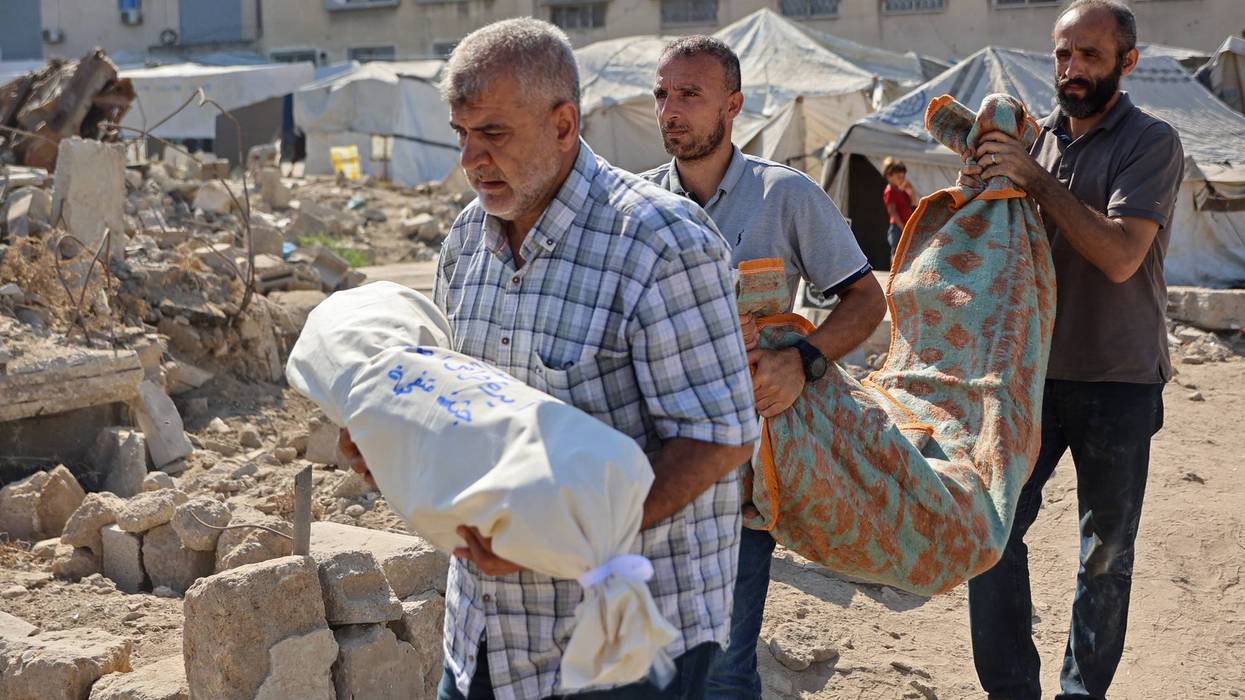
A different situation affects Bangladesh. Here climate-linked migration is already triggering violent conflict, says International Alert. Droughts in summer combined with worsening flooding in coastal zones, triggered by increasingly severe cyclones, are destroying farmland. Millions have already migrated to India, causing increasingly serious conflicts that are destined to worsen.
In Africa, rivers such as the Niger and Monu are key freshwater resources passing through many nations. As droughts worsen and more water is extracted from them conflicts will be inevitable.
In Europe, most countries are currently considered stable enough to cope with global warming, apart from the Balkans; wars have left countries such as Serbia and Montenegro politically weakened. As temperatures rise and farmland is reduced, population pressures will trigger violence that authorities will be unable to contain.
Some nations on the risk map, such as Russia, may cause surprise. ‘Moscow’s control of Russia as a whole will not be undermined by global warming,’ said Smith. ‘But loss of farmland in some regions will lead to local rebellions like those already triggered in Chechnya.’
Conflict triggered by climate change is not a vague threat for coming years, he added. ‘It is already upon us.’
© 2007 The Guardian


It’s time to legalize and spread HEMP all over the world, get solar, wind, tidal, and geothermal up and running in full force and SHUT DOWN Big Oil/Chemical/Tobacco/Cotton/Coal/Nuclear !
How does anyone really know that European countries will remain stable enough to deal with climate change? It seems like a rose-colored assumption to me. I think we are at a global “tipping point”( to use a contemporary popular catch phrase), where political and economic destabilization could follow the “domino effect”(to use a popular catch phrase from the cold war days) and create chaos in even the most affluent countries. Not just climate change, but the increasing ideological tensions and economic injustices will converge to upset the “new world order” in a way that no one can predict the outcome.
More war means more revenue for the military industrial media complex.
The devalueing US dollar is an added bonus. The cheaper the dollar, the more arms the US can sell offshore. Many of those arms will be used against the US, thereby justifying the expenditure of more US taxpayer dollars to buy more arms to fight the people that are using the arms the US sold them to fight the US.
An endless ever-expanding revenue stream for the military industrial media complex.
thnking about georgia, alabama, and florida fighting over water. is the united states included in the 56 countries facing political destablization?
thinking about colorado shutting off the tap and phoenix and tucson turning to dust and blowing away. thinking about subsidence craters between maricopa and pima counties where the groundwater has been sucked dry. thinking about saltwater infiltration in all coastal states. and the i see my neighbors using a hose to “sweep” their driveways…(sigh)
On the outskirts of Moab, Utah is a 90 plus foot high uranium tailings dump on the banks of the Colorado River.. It is located in the 100 year flood plain. While drought is the current forecast, if (when) the area floods from snow melt in the Rockies, the drinking water for nearly 30 million people gets destroyed. Las Vegas, Phoenix, Tucson, Los Angeles, Orange County and San Diego County all get water from the Colorado. Google the information and look at the Yahoo satellite map of the tailings. Such a disaster has already occured on the Rio Puerco in New Mexico nearly 30 years ago. Uranium tailings destroyed the river when it flooded.
“Conflict triggered by climate change is not a vague threat for coming years, he added. ‘It is already upon us.’:
Well, this has already happened “over there.” When it starts happening over here, then we’ll pay attention.
Of course, if we would just vote Democrat all the answers would appear. And, as history shows, they will have the courage to do what is right for us (with a preemptive nod to Daniel David, et al).
Last week Prof James Lovelock author of the Gaia Hypothesis gave a public lecture, titled Climate change on the living Earth, at the Royal Society in London. Details http://www.royalsoc.ac.uk/event.asp?id=7142 The lecture has been archived at this link. http://royalsociety.tv/dpx_live/dpx.php?dpxuser=dpx_v12
The event description runs - Observations from around the Earth suggest that even the gloomiest predictions of climate change from the 2007 IPCC report may underestimate the seriousness of the changes due this century. In this lecture, Professor James Lovelock will discuss the consequences, particularly for the UK and Europe, and how we might respond by an adaptive retreat, whilst at the same time seeking a global solution to what seem to be ineluctable adverse changes in the Earth’s climate.
The Royal Society press release states:
Humans at war with Earth on climate change, says James Lovelock
We could be on the brink of natural disaster and even the gloomiest predictions of the Intergovernmental Panel on Climate Change’s (IPCC) latest report are underestimating the current severity of climate change, Professor James Lovelock will say at a public lecture at the Royal Society the UK National Academy of Science today (Monday 29 October 2007).
Professor James Lovelock will discuss his concerns about the impending consequences of global warming at the lecture Climate change on the living Earth. He will argue that although the scientific language of the IPCC report is “properly cautious”, it gives the impression that the worst consequences of climate change are avoidable, if we take action now.
Instead, his view of the future is much more frightening. Even if we act now Professor Lovelock believes that six to eight billion humans will be faced with ever diminishing supplies of food and water in an increasingly intolerable climate, and wildlife and whole ecosystems will become extinct. He argues that we have set off a vicious cycle of positive feedbacks in the earth system whereby extra heat in the atmosphere from any source is amplified, causing yet more warming.
He will say: We are at war with the Earth, and as in a blitzkrieg, events proceed faster than we can respond. We are in a strange position of living on a planet where climate and compositional change is now so rapid that it happens too fast for us to react to it.
Professor Lovelock’s address will spell out why he believes change is happening faster than many experts had predicted. “The positive feedback on heating from the melting of floating Arctic and Antarctic ice alone is causing an acceleration of system-driven heating whose total will soon or already be greater than that from all of the pollution CO2 that we have so far added,” he says.
According to Professor Lovelock the IPCC’s climate models fail to take account of the Earth as a living system where life in the oceans and land takes an active part in regulating the climate.
He will argue that when a model includes the whole Earth system, it shows that: When the carbon dioxide in the air exceeds 500 parts per million(3) the global temperature suddenly rises 6 degrees Celsius and becomes stable again despite further increases or decreases of atmospheric carbon dioxide. This contrasts with the IPCC models that predict that temperature rises and falls smoothly with increasing or decreasing carbon dioxide.
Professor Lovelock will also warn that cutting back on fossil fuel use could actually exacerbate global warming. This is because current global warming is being partially offset by global dimming the two to three degrees of global cooling caused by aerosol particles in the atmosphere from man made pollution. These reflect sunlight and nucleate clouds that reflect even more sunlight.
He will say: Any economic downturn or planned cut back in fossil fuel use, which lessened the aerosol density, would intensify the heating. If there were a 100 per cent cut in fossil fuel combustion it might get hotter not cooler….We live in a fool’s climate. We are damned if we continue to burn fuel and damned if we stop too suddenly.
However, he will also say: Because it might help slow the pace of global heating, we have to do our best to reduce emissions and lessen our destruction of natural forests to feed and house ourselves; but this is unlikely to be enough and we will have to learn to adapt to the inevitable changes we will soon experience.
Professor Lovelock will say that this does not mean that there is no hope. Instead we should think of the Earth as a live self-regulating system and devise ways to harness the natural processes that regulate the climate in the fight against global warming. This could involve paying indigenous peoples to protect their forests, and develop ways to make the ocean absorb and store carbon from the atmosphere more efficiently.
Professor Lovelock will conclude: We are not merely a disease; we are, through our intelligence and communication, the planetary equivalent of a nervous system. We should be the heart and mind of the Earth, not its malady.
In 1965 Professor Lovelock was responsible for developing the Gaia Hypothesis; this evolved in the 1980s to become the Gaia Theory that says planterary self-regulation is by the whole system, not just life.
Greening your diet is the most effective way you can green your lifestyle… it’s also the best thing you can do for your health, for global warming, and for peace.
Please see and share these important resources:
Meat Eating & Global Warming
www.ivu.org/members/globalwarming.html
Eco-Eating: Eating as if the Earth Matters (it does!)
www.brook.com/veg
It is already too late, no leader will face the unpleasant fact that unpleasant things have to be done. These leaders are the same as those who voted for them. And everything we buy is a vote for that product especially petroleum and it’s by-products. by the time people really stop doing the things that damage our environment it will only be because it is too late, the die off would have begun. This isn’t a prediction but a forecast on what our ideological arrogance has ingrained into our psyche. Most believe technology will outsmart our planet. A planet we can’t do without! Perhaps Pro. Lovelock came a step closer to what was already known by nearly all aboriginal peoples, ruined by industrial expansionism. Perhaps Columbus is an example of what we learn. Discovering a world already discovered by millions of others, several thousand years before he was born, the only difference no one else felt the need to be so self important about it.}
People are not such gluttons naturally. Rather, capital has to first make commodities cheap, which spawns the gluttony. This requires huge investments. None of this is necessary, but after the huge investments are made, the huge systems are up and running, employing huge numbers of people, and the majority of the population is addicted to the output, it becomes part of the establishment - something that must be preserved at all cost.
It’s a “successful” formula, being replicated again and again - it’s behind all the idiotic new initiatives such as fossil methane shipping infrastructure - it’s mind-bogglingly inefficient and destructive but the capitalists build it for new profits and new levers of control.
This is Milton Friedman’s “laissez-faire” capitalism at work. The most sensible approach for progressives seems to be to target the capitalist system itself rather than each of its many destructive outcomes.
I think the third world is the safest place to be. Like here in the Philippines. People know how to fix things instead of throwing them away and buying new. People know how to farm and fish. People know how to live poor and survive.
Can you say that for the west, in particular America? What happens in suburbia when the gas runs out and there is no food in the supermarket? Massive unrest and violence is what happens.
I agree entirely with rtdrury. Artificially cheap prices is one of the main causes of impending global collapse. We consume, waste, and reproduce at an unprecedented rate. The Earth’s resources have been for sale at “going-out-of business” prices for decades. The cheap goods have created this temporary and false wealth. Blowing through 150 million years worth of fossil fuels in a few centuries is just one example of embarrassingly short-sighted greed.
It is time for us to let the consumer economy go…..and transition to one that honors the real work we need—caring for humans and the planet.
Check out Riane Eisler’s….Real Wealth of Nations…creating a caring economics. www.rianeeisler.com, www.realwealtheconomy.com.
This is all about transitioning our global economy, using new parameters to measure what’s valuable, etc. We have a choice–and this is a way to get started. WE CAN NOT CONSUME/BUY OURSELVES OUR OF CLIMATE CHANGE…
The southern hemisphere is going to bear the brunt of this. And it is they who have the persistent high fertility rates. The world population increases by about 200,000 a day, mostly from the South. It’s an implacable tide. Each child born now will have to endure the impacts of this catastrophe.
Capitalist economy is a symptom of population growth. Stabilization of population ushers in Socialist economy. Simple as that.
The comments are better than the article again….
Thanks to commenters.
“But other countries that suffer loss of land and water and be buffeted by increasingly fierce storms will have no effective government to ensure corrective measures are taken. People will form defensive groups and battles will break out.”
Oh, yeah.
It’s those uncivilized NON-WHITE nations that’ll be in trouble.
Not places like the Good Old US of A.
I mean, hell, just look how marvelously we handled Hurricane Katrina, right?
Liberty & Justice,
SJ
www.spartacusjones.com