

SUBSCRIBE TO OUR FREE NEWSLETTER
Daily news & progressive opinion—funded by the people, not the corporations—delivered straight to your inbox.
5
#000000
#FFFFFF
To donate by check, phone, or other method, see our More Ways to Give page.
Daily news & progressive opinion—funded by the people, not the corporations—delivered straight to your inbox.
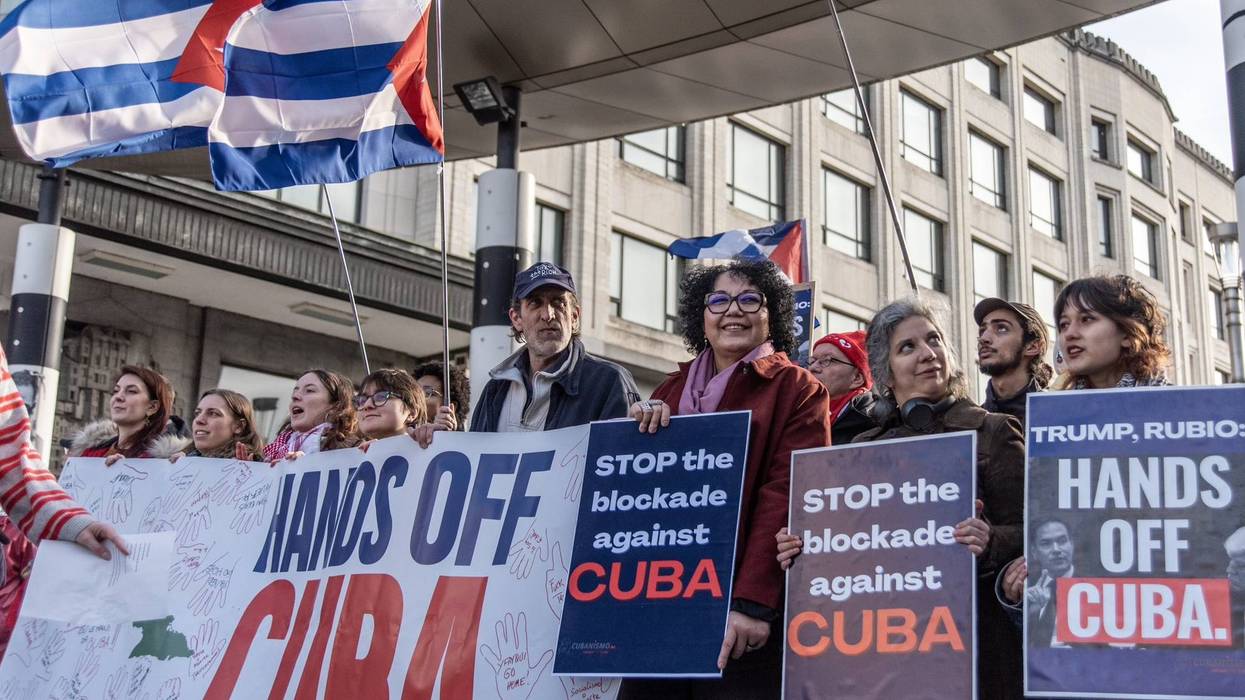
“Those who remain silent in the face of this growing unlawfulness and aggressiveness assume a grave responsibility," said the head of the International Association of Democratic Lawyers.
An international group of leftist lawyers on Tuesday condemned the US blockade, sanctions, and war threats against Cuba, and the mounting repression of solidarity with the long-suffering Cuban people.
The International Association of Democratic Lawyers (IADL) held a virtual press conference "to condemn escalating United States measures against Cuba and to call for renewed international action in defense of international law, Cuban sovereignty, and the rights of the Cuban people."
"The United States continues to threaten Cuba while imposing unilateral coercive economic measures designed to destabilize the country and facilitate regime change," IADL noted. "In recent months, restrictions on fuel shipments have further intensified the hardships faced by the Cuban people, with severe consequences for daily life."
"For more than three decades, the United Nations General Assembly has overwhelmingly called for an end to the US blockade of Cuba, with the United States and Israel consistently standing alone in opposition to the international consensus," the group added. "While these annual resolutions represent a powerful condemnation of the blockade, symbolic measures alone are insufficient. International law imposes obligations on states to act in the face of ongoing violations."
Speakers at the press conference warned that the Trump administration's recent actions—including war threats and a deadly fuel blockade—are serious violations of international law that threaten the rights and well-being of millions of Cubans.
"The illegality of the blockade is not in doubt. What is at stake today is the impunity that allows it to continue," IADL general secretary Micòl Savia said. "What is at stake is the complete disregard of the United States for international law and collective institutions and their contempt for the common values of humankind."
"The actions of successive US administrations against Cuba make it very clear that they do not consider themselves bound by the principles of sovereign equality, peaceful coexistence, and self-determination that form the foundation of the international legal order," she continued.
“Another dimension of the blockade and sanctions against Cuba is the pressure imposed on third countries," Savia said. "The threat of punishment against institutions, banks, companies, and individuals that seek to establish commercial, financial, or diplomatic relations with Cuba is an intervention not only against Cuba, but also into the sovereign sphere of other countries."
"This shows how broad and arbitrary the sanctions policy has become as a tool of coercion," she added. "The threat of sanctions against companies from third countries that trade with Cuba violates their sovereignty.”
Speakers at the event excoriated the Trump administration's escalating war threats and politically motivated indictment of former Cuban President Raúl Castro, a hero of his country's successful revolution against a US-backed dictatorship.
"Cuba is now under the direct threat of [a] US imperialist war of aggression after a long period of economic and financial blockade," said Filipino jurist Edwin De La Cruz of the Amistad Philippines-Cuba Friendship Association and National Union of People's Lawyers.
"Serious transgressions on Cuba’s sovereignty, from failed efforts to foment unrest among the population, to the personal assault on the integrity of Comrade Raúl Castro by [President] Donald Trump intensified, with a threat of armed invasion tweeted by Donald Trump himself," he continued.
"Cuba and the Philippines share a common history of US imperialist domination. We share a common enemy and a common struggle," De La Cruz noted, pointing to the so-called Spanish-American War, in which the United States conquered both countries, along with Puerto Rico and Guam, from Spain under the false pretense of a Spanish attack on the battleship USS Maine. The US colonized the Philippines from 1898-1946, except for a brief period of Japanese occupation during World War II.
Deborah Jackson, president of the US group National Conference of Black Lawyers, called the Castro indictment "a transparently political prosecution that serves no legitimate law enforcement purpose."
Castro—who served as Cuba's president for a decade after his older brother, Fidel Castro, stepped down in 2008—was indicted by the US Department of Justice (DOJ) last month for his alleged role in the 1996 shoot-down of planes operated by Brothers to the Rescue, a counter-revolutionary group founded by a CIA-trained operative and Bay of Pigs veteran, after repeated warnings that they had violated Cuban airspace.
Critics noted Trump's ongoing campaign of illegal boat bombings in the Caribbean Sea and Pacific Ocean, as well as the long history of US state terrorism against Cuba and support for the perpetrators of attacks carried out by right-wing Cuban exiles, including the 1976 bombing of a commercial flight with 73 people aboard.
Jackson said the charges against Castro "are clearly invalid... attempts to criminalize legitimate acts of self-defense by a sovereign nation" that "have been brought nearly three decades after the incident in question against a 94-year-old former head of state who will never be extradited to the United States."
Kerry McLean, an international human rights attorney with the National Lawyers' Guild in the United States, warned that “the indictment of Castro, a foreign leader and former head of state, threatens a repeat of the illegal abduction on January 3, 2026 of Venezuela’s president and his wife."
Trump ordered the invasion and arrest of President Nicolás Maduro and Cilia Flores on dubious drug trafficking, illegal weapons possession, and narco-terrorism charges. The DOJ has since admitted that the cartel which Trump claimed was led by Maduro does not, in fact, exist.
McLean added that the US invasion of Venezuela—during which more than 75 people, including 32 Cuban members of Maduro's security team, were killed—violated the UN Charter, a treaty that, under the US Constitution, is "the supreme law of the land."
Speakers at the IADL event also decried US efforts to intimidate, investigate, and criminalize solidarity organizations.
“Like the designation of Cuba as a 'state supporter of terror' and the designations of many of the leading organizations and figures of the Cuba solidarity movement, these organizations and individuals are designated and targeted to impose state terror on the Palestine and Cuba solidarity movements, divide people from their homelands, and blunt the effectiveness of any opposition to US imperialism," IADL deputy general secretary Charlotte Kates said.
"The aim of such designations is not only to prohibit financial transactions, but to isolate those organizations and individuals that the US views as key networks of solidarity against imperialism and to prevent meaningful action to bring its crimes to an end," she contended.
Savia said, “Those who remain silent in the face of this growing unlawfulness and aggressiveness assume a grave responsibility, particularly when such conduct is carried out by one of the most powerful and heavily armed states in the world."
"By letting these policies continue unabated," she added, "and by applying double standards and selectivity while granting widespread impunity to rich and powerful states, they contribute to the erosion of the international legal order and pave the way for a world without the rule of law."
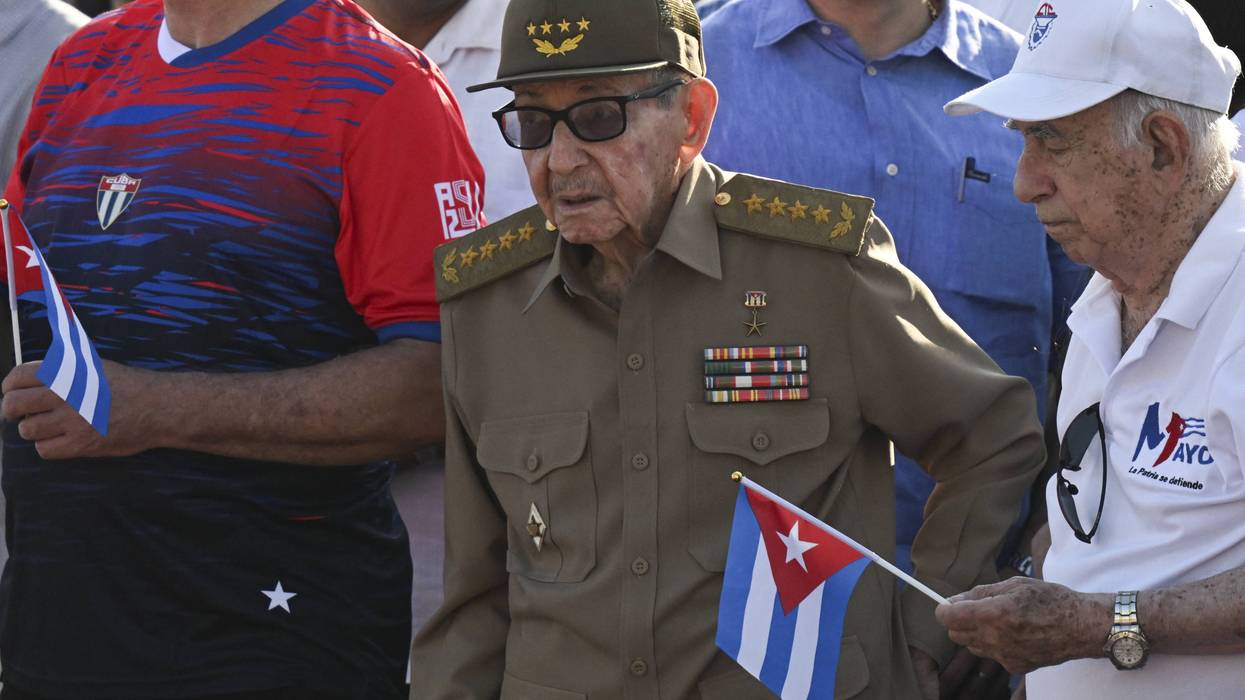
The indictment of Castro is a page taken from Trump’s playbook on Venezuela from earlier this year. And the stage is being set for something much worse to come.
These days, most of Havana’s streets are fairly empty of cars, but full of people walking or riding bicycles, electric bikes, electric “tricycles,” or scooters. Trash has piled up on most corners where regular pick-up has become impossible given that the garbage trucks have no gasoline. The average conversation starts off with comparing who’s gone the longest without electricity. The sympathy flows, as you exchange stories of what else you are going without: water, gas, food, medicine, transportation. People list the family members they haven’t been able to see and the medical appointments they’ve missed. Inevitably, someone will say better days are coming—“because they have to”—and to keep moving forward.
This week alone, the US Department of Justice indicted Raul Castro, the former head of state, who’s now 94 years old and largely out of public life. In addition, the Supreme Court gave a green light to Cuban-American-owned companies with property claims in Cuba from 67 years ago to sue tourist industry actors who “profited” from that land. Secretary of State Marco Rubio continues to grow more and more publicly agitated with Cuba’s refusal to bow to his demands, and Trump’s consistent incoherence shows an absolute lack of any clear policy position towards Cuba, aside from one that may economically benefit him and/or his family.
The indictment of Castro is a page taken from Trump’s playbook on Venezuela from earlier this year. There, the administration indicted a sitting head of state, Nicolas Maduro, as a legal pretext for a military intervention, which was labelled an “emergency” and thus not an act of war that would require Congressional approval. The administration staged a geopolitical coup d’état involving international kidnapping, acts of war in plain violation of international law and the U.N. Charter, and then imprisoned that leader as a message to the world of what happens to those who defy US interests. Such indictments serve as purportedly fixed legal fictions for shifting political pretexts. In Venezuela it was supposedly the state’s support for criminal enterprises and gangs, which was the justification for the Trump administration’s stated reason for the extrajudicial killing of nearly 200 civilians in piracy actions in the Caribbean. Once Maduro was kidnapped and jailed, the administration has stopped talking gangs and narcotrafficking rings.
In Cuba, the Justice Department’s indictment of Raul Castro is a clear response to the political forces that commanded it. As the island nation is not complying rapidly enough to the changes demanded by Washington, the administration has escalated its threats, military preparations, and legal actions, albeit largely symbolic in nature.
For decades, Marco Rubio has pushed for privately what the Cuban-American community in south Florida has not achieved in nearly 70 years: to run Cuba’s political and economic system remotely from Miami and Washington. These remote “owners” of Cuba have driven and financed Rubio’s political career, leading to this moment where he is adamantly (though unsuccessfully) trying to sell the American public that Cuba is a national security threat while simultaneously telling Cubans that their government is too weak to protect them. That inherent contradiction and incoherence, long the basis of US policy towards Cuba, have never been more dangerous than at this moment when Rubio’s rage and blind ambition to cause widespread destruction is bolstered by Trump’s monarchical goals.
The contradictory discourse is present in nearly every aspect of Cuba policy. Just this week, Rubio issued an Orwellian statement in response to the ICE arrest of Adys Lastres Morera, the sister of the head of GAESA, a Cuban entity that is connected to large swaths of the Cuban economy. Rubio was right to point out that “[f]or far too long, the family members of terrorist organizations, repressive anti-American regimes and other bad actors . . . have been given a free pass to enjoy the privileges of living in the United States,” but the United States also has a long tradition of granting sanctuary to terrorists, dictators, and war criminals. In particular, Latin American leaders, generals, and intelligence operatives that have long done the US bidding in propping up violent regimes have been granted refuge in south Florida, the home of Rubio and other elected officials who have promoted violence over diplomacy.
Yet what makes international cooperation, collaboration, and survival possible is not just insisting upon respect for international law and human rights by all governments, but strengthening their ability to do so through dialogue and diplomacy. The Trump-Rubio administration has clearly not been serious about using diplomacy to solve global conflicts, and that holds true in Cuba as well. The administration has tried to identify potential “opposition” I Cuba or political leaders it can “work with” like Delcy Rodriguez in Venezuela. Real US diplomacy looks quite different. Twelve years ago, it brought to Cuba a boom of economic activity, a thriving private sector, better financed public institutions, and riveting cultural exchanges for over a million US residents who found in Cuba a rich cultural, musical, artistic, and academic partner.
Trump and Rubio, though they might articulate the same goals, have different ulterior motives. Their goal is not, and has never been, economic opportunity for Cubans. Instead, they want an economic boon for Cuban-Americans aching to exert political and economic control over a land many have never even visited. Although Florida no longer plays a significant electoral role in US-Cuba policy, Rubio’s recent video talking to the Cuban people—and his messaging in general in escalating threats and aggression towards Cuba—is clearly intended to rally his base. What has caused widespread anxiety and fear among millions in Cuba has nevertheless excited his political base in south Florida.
These days in Havana, Cubans are experiencing a duality that has existed for generations who have lived under the threat of US military aggression and the daily reality of economic warfare. Cubans are exhausted. They are increasingly anxious and have reached the bottom of the well of hope. There is a saying that the last thing you lose is hope, meaning it is what you hold on to until the very end. Cubans are at the very end of their ability to see a hopeful future.
I get asked questions daily. Should I take my kids to a shelter? Will the United States bomb Havana? Where is it safe to go? Why don’t US citizens stop their government?
Cubans are experts at survival, and that’s exactly what they continue to do. As US Southern Command sends the aircraft carrier Nimitz into Caribbean waters, Cubans continue to carry on with daily life like they have done decade after decade. Most days, those around me look for an electric tricycle to take them to work or their child to school or have added a child seat to their bicycles. Cars that run on gasoline have become what one of my friends calls “garage adornments.”
Given the daily threat of military intervention and the four-month long oil blockade, activities like sleep have become a luxury. Many families cook or wash clothes at 3:00 a.m. when they get 1-2 hours of electricity. My friend sleeps on the floor with her son near the front door where air drafts can keep them cool in the sweltering heat and humidity. Most of us go without water for days at a time because lack of electricity makes pumping and distributing water impossible. Another dear friend went 35 days with no water while she, her mother, and her toddler spent weeks traveling from house to house bathing and washing clothes. Cooking and cleaning become infinitely more difficult with no water, gas, or electricity. Some daycare centers use coal to cook lunch for undernourished children.
While we live under the perpetual threat of US military aggression, children continue to play in the street with sticks and deflated balls, families continue to find ways to get to work and buy food, and the deep spiritual and religious traditions that sustain many Cubans are turned to over and over again. War has a name and a face. It’s not just a vague “government.” Here there are millions of people who owe the United States nothing and instead have only demanded to live in peace, in their homeland, however flawed it may be.

“Here we are prepared to fight imperialism," said Cuban lawmaker Mariela Castro, daughter of Raúl Castro. "Cuba is a small and poor country, but one with experience confronting US imperialism."
Tens of thousands of Cubans rallied Friday in Havana to denounce the Trump administration's indictment of former President Raúl Castro and threats to attack the island nation, whose socialist government has been preparing its citizens to defend their homeland and revolution against US aggression.
“No disrespect is shown to the heroes of the homeland!" Cuban President Miguel Díaz-Canel said as people flooded the streets outside the US Embassy in Havana. "History and traditions are not insulted without a response! That does not happen in Cuba!"
The massive rally followed Wednesday's US Department of Justice indictment of revolutionary hero Raúl Castro, who served as president for a decade after his older brother, Fidel Castro, stepped down in 2008. The DOJ indicted Castro for his alleged role in the 1996 shoot-down of planes operated by the counterrevolutionary group Brothers to the Rescue after repeated warnings that they had violated Cuban airspace.
Rallying under the slogan "Raúl is Raúl"—originally popularized during the transitional period of rule between the Castros to highlight the younger brother's reforms—Cubans vowed to defend their revolution in the face of the latest US threats.
“This new aggression has united us more and elevated the honor, dignity, and anti-imperialist spirit of a people already recognized around the world for their brave resistance to any form of subordination to the empire,” Díaz-Canel said.
Cuban legislator Mariela Castro, Raúl's granddaughter, told rallygoers that “we are prepared for combat."
"No one is going to kidnap him. I can assure you of that," she said, alluding to the US invasion and abduction of Venezuelan President Nicolás Maduro on dubious narco-terrorism charges earlier this year. "Neither him nor anyone else."
"My father is very calm, watching and smiling,” Castro added. "Here, we are prepared to fight imperialism. Cuba is a small and poor country, but one with experience confronting US imperialism. We know that as long as there is an anti-imperialist revolution, there will be a gigantic and ruthless enemy."
Critics noted the hypocrisy of the Castro indictment, given the ongoing illegal US bombing of boats that the Trump administration claims—without providing evidence—were smuggling drugs in the Caribbean Sea and Pacific Ocean.
“Washington has no moral authority to judge anyone,” Gerardo Hernández, coordinator of the Committees for the Defense of the Revolution, said, referring to the boat-bombing campaign, which has killed nearly 200 people in close to 60 reported attacks. “Cuba is a people of peace and reaffirms its legitimate right to self-defense."
"Cuba does not constitute a threat to US security," he continued. "On the contrary, Cuba is a state under attack by the United States."
Observers have pointed to the decadeslong US-backed campaign of anti-Castro terrorism against the Cuban people, including the 1976 bombing of Cubana Flight 455, a commercial airliner with 73 people aboard, including 11 Guyanese nationals and 24 teenage members of Cuba's junior Olympic fencing team. Perpetrators of the attack enjoyed safe haven in the United States, mainly in Miami, where the city celebrated a day in honor of one of the bombing's alleged masterminds.
“The Cuban people reaffirm the unwavering decision to defend their homeland and revolution," Hernández added. "With the greatest determination, they reaffirm their absolute and firm support for Army General Raúl Castro."
Mariela Castro said that "my family, like all Cuban families, is waiting for instructions to know where we need to go" in the event of a US attack.
As US Secretary of State Marco Rubio—whose parents immigrated to the United States from Cuba during the US-backed dictatorship that preceded the Castro-led revolution—said Thursday that the chances of a "negotiated and peaceful agreement" with Havana are "not high," Deputy Cuban Foreign Minister Carlos Fernández de Cossío acknowledged that his country is preparing for war, asserting that "we would be naive not to."
Cuban officials have been circulating a pamphlet titled a “Family Guide for Protection Against Military Aggression." The publication warns that the US is preparing "to launch a military assault and destroy our society with the aim of perpetuating capitalism... and annihilating the dream of our Commander-in-Chief, Fidel Castro.”
The pamphlet instructs Cubans to pack survival kits and seek shelter in the event of air-raid alerts. It also contains life-saving first aid instructions.
“Should the enemy attack, our Revolution will defend itself until victory is achieved and the aggressor is expelled," the pamphlet states.
US President Donald Trump recently tightened the internationally condemned 65-year US economic embargo on Cuba, imposing a fuel blockade that has exacerbated an energy emergency characterized by blackouts and deadly suffering among the most vulnerable Cubans, including sick people and children.
Last month, Trump said that “we may stop by Cuba after we’re finished" with the illegal US-Israeli war of choice against Iran. The president has also stated he believes he’ll “be having the honor of taking Cuba,” language echoing the 19th-century US imperialists who conquered the island along with Puerto Rico, Guam, and the Philippines from Spain in another war waged on dubious pretense.
“Whether I free it, take it—I think I can do anything I want,” Trump said of the island and its 11 million inhabitants.
BreakThrough News interviewed Havana residents earlier this week about the specter of US attack.
"We Cubans have to protect ourselves," elderly Havana resident Juan Hernández said. "We're not going to hand any Cuban over to a foreigner, because that would be immoral. It would be treason."
Hernández accused the US of "provocation" in order to "justify invading the country," adding "that would only lead to bloodshed on both sides."
"Besides," he added, "Cuba isn't a threat to them at all. What does Cuba have? Do we have atomic bombs? Do we have anything? We have nothing."
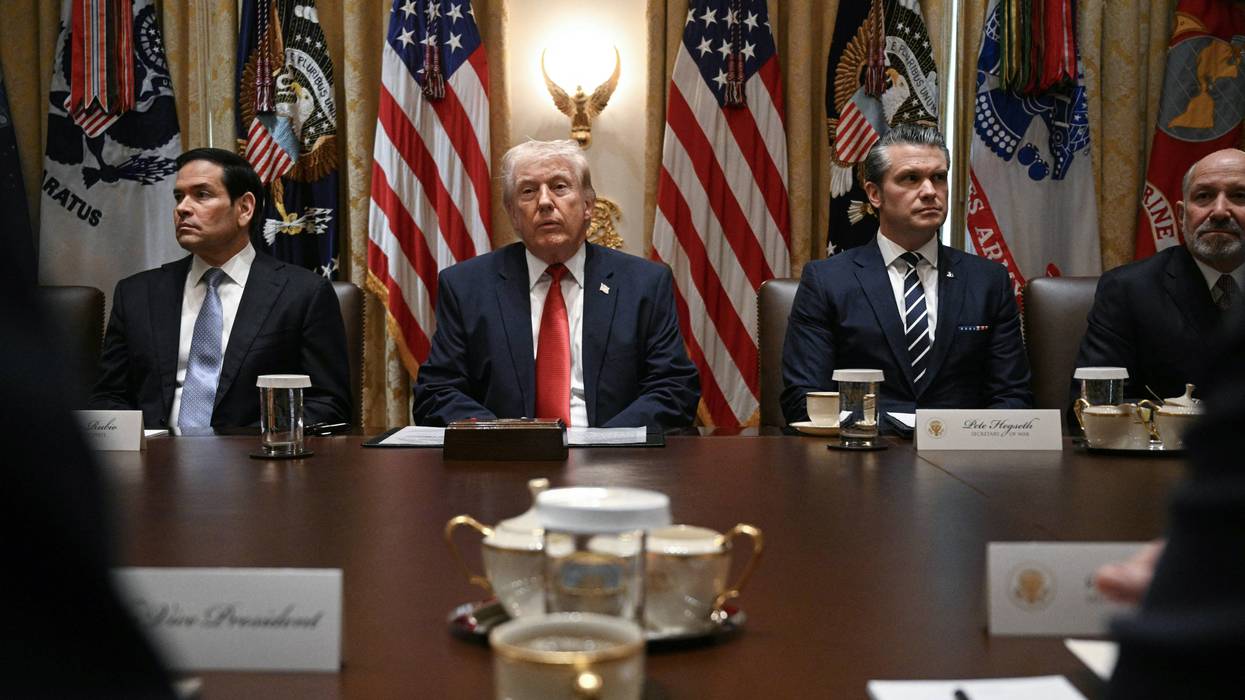
"Apparently you're not allowed to kill people in international waters now?" said one progressive organizer.
Over the last eight months, at the direction of President Donald Trump and Secretary of Defense Pete Hegseth, the US military has bombed at least 57 boats and killed close to 200 people—among them fishermen, a young man known in his town for his indoor soccer playing, and working people who had recently struggled to make ends meet—in what human rights experts have called "murders" and extrajudicial killings.
But the indictment filed this week regarding unlawful killings by government forces in the Caribbean region had nothing to do with Trump's boat bombing spree, which the White House has claimed it aimed at stopping drug trafficking. Instead, the target of the indictment filed by the US Justice Department was 94-year-old former Cuban President Raúl Castro, who was charged with one count of conspiracy for his alleged role in shooting down planes that flew into Cuba's airspace in 1996.
The planes were operated by an anti-Fidel Castro group, Brothers to the Rescue, and four Cuban-Americans were killed in the operation.
In expressing support for the indictment, US Rep. Carlos Giménez (R-Fla.), a Cuban-American immigrant, said that "there will be consequences to pay if you harm American citizens in international waters, in international airspace for no reason at all, and believe me, this was no reason at all."
Michael Galant, a member of the secretariat of the Progressive International, commented with feigned surprise: "Apparently you're not allowed to kill people in international waters now? Someone tell Hegseth."
The organization's co-general coordinator, David Adler, added, "I simply do not understand how we, as a country, tolerate the hypocrisy of indicting Raúl Castro for defending Cuban airspace—while our own government celebrates the extrajudicial assassinations of innocent fishermen sailing across the sea below," while Ryan Grim of Drop Site News noted the indictment also followed the bombing of a school in Iran—an attack that investigators said was likely carried out by the US.
The indictment of Castro, noted the Progressive International, was set to coincide with Cuba's Independence Day and came as Secretary of State Marco Rubio, the son of Cuban immigrants who has long desired regime change in the communist country, mused that the Cuban government has "plundered billions of dollars, but nothing has been used to help the people"—echoing his criticism of Iran, another target of the US military under Trump.
The timing of and ramp-up to the indictment was "a piece of political theater calibrated to one audience only: the Miami exile lobby that has spent decades pursuing its commercial and ideological vendetta against the Cuban Revolution," said the group's Cabinet.
"US officials themselves acknowledge they do not believe Cuba is an imminent threat, nor actively planning to attack American interests—and yet in the same breath, the administration has laundered a set of alarming claims about Cuban drone acquisitions, presented with all the breathless urgency of a casus belli," the Progressive International added, referring to Axios' reporting last weekend on claims from an administration official that Cuba is preparing to attack the US with drones—a report that ultimately acknowledged the Cubans are not planning any preemptive strikes on the US but are rather thought to be strategizing on self-defense as the US intensifies its anti-Cuba rhetoric and continues the oil blockade it imposed in February.
The Cuban embassy in the United Kingdom on Thursday said it rejected US claims about the downing of the Brothers to the Rescue plane, which it called "an irrefutable act of sovereign self-defense" that took place after "25 deliberate, calculated violations of our national airspace" by the exile group.
"To criminalize our nation, the US manipulated the official [International Civil Aviation Organization] investigation, deliberately erasing the first six minutes of radar and radio recordings to conceal the territorial incursion," the embassy asserted. "The narrative of an attack in international waters is an absolute juridical fraud."
In a column at Common Dreams Thursday, Codepink co-counder Medea Benjamin added that she was in Cuba in 1996 when the planes were shot down. The leader of Brothers to the Rescue, José Baulto, she said, openly stated that he was "trained as a terrorist by the United States," and said after one mission in which the group dropped leaflets over Havana that the group was seeking "confrontation.”
"The Cuban government repeatedly warned Washington, the Federal Aviation Administration (FAA), and international aviation authorities that these flights were illegal and dangerous. US officials knew the risks," wrote Benjamin. "The hypocrisy of indicting Raúl Castro nearly 30 years later is staggering, given the long history of anti-Cuban extremists operating from US soil to wreak havoc against the island with bombings, sabotage, and airline terrorism."
Those US-based extremists include the perpetrators of the 1976 midair bombing of Cubana Flight 455, a commercial airliner carrying 73 crew and passengers, many of them teenage members of Cuba’s junior Olympic fencing team.
The Trump administration's boat bombings, meanwhile, have been called likely "war crimes" by some legal experts and "murders" by others. The White House has insisted the US is in an "armed conflict" with drug cartels in Latin America, but no conflict has been officially declared. In at least one instance, US military members were ordered to bomb the survivors of an initial strike—a clear violation of international law.
The US in the past has treated suspected drug trafficking as a criminal issue—not one to be dealt with militarily. Before the boat bombings began, one top military legal adviser warned Pentagon officials, “There is no world where this is legal," and said carrying out the attacks could expose everyone involved, from top White House officials to rank-and-file service members ordered to carry out the strikes, to legal liability.
"The same US government now pursuing charges against Raúl Castro has itself been carrying out deadly strikes on alleged drug-smuggling boats in the Caribbean and Pacific, strikes that have killed at least 193 people since September 2025, with no transparency or due process," wrote Benjamin.
Following the Castro indictment, the Progressive International called on "governments, movements, and peoples of conscience everywhere to call out this escalation for what it is—a naked effort to recolonize Cuba and the hemisphere at large—and to stand firmly against it."
"We have seen this playbook before—in Iraq, in Libya, in Venezuela, and in other sites of manufactured consent for illegal war across the world. The Progressive International will not stand silent as it is deployed against Cuba," said the group. "Hands off Cuba."
This new indictment is simply a cynical escalation in the long US effort to force regime change in Cuba.
So apparently the Trump administration has decided that what Cuba really needs right now—after decades of economic strangulation, CIA assassination attempts, sabotage campaigns, invasions, sanctions, blackouts, shortages, and more than half a century of failed regime-change policy—is the indictment of 94-year-old revolutionary icon Raúl Castro.
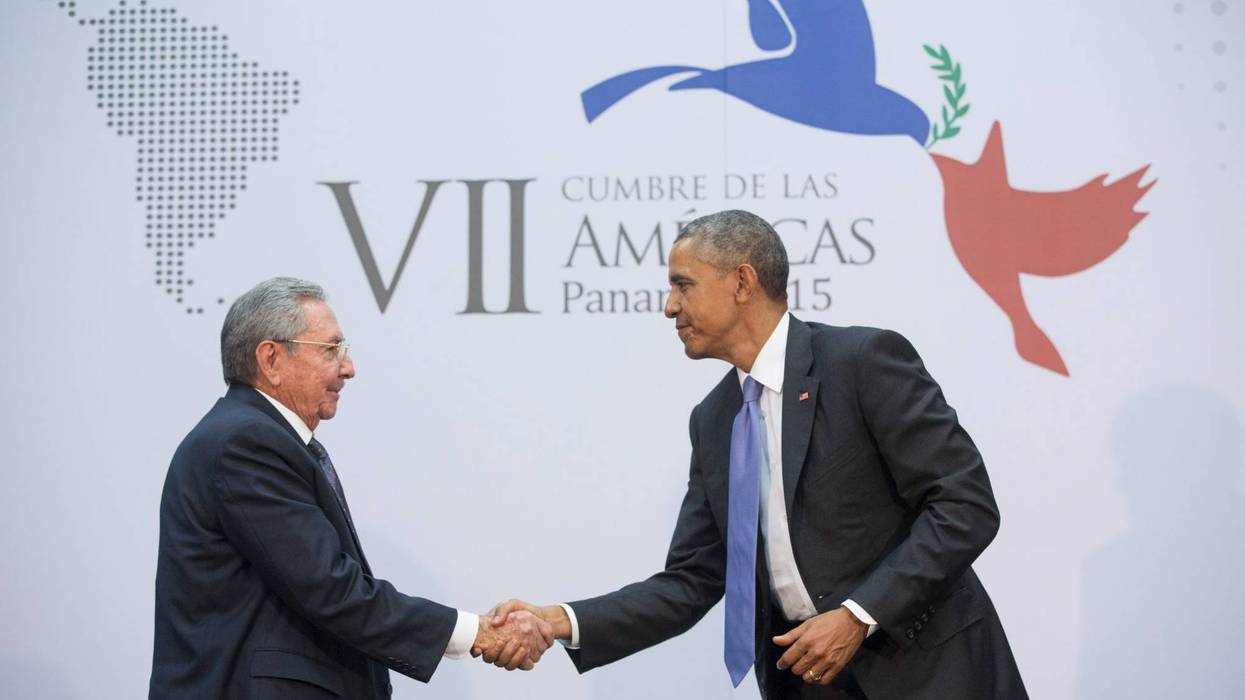
The United States and Cuba do not have to be enemies. In fact, just 10 years ago, the two countries were normalizing relations. I was in Panama City at the 2015 Summit of the Americas when, to the delight of everyone there, former US President Barack Obama and Raúl Castro famously shook hands, marking the first substantial public interaction between leaders of the two countries in decades. Obama said, “The United States is not interested in being prisoners of the past,” while Raúl Castro thanked Obama for taking steps toward normalization and called him “an honest man.” The opening was a win-win for both countries: an influx of US tourists, a flourishing of private businesses, and new openings for civil society. Then came Donald Trump, who sent relations spiraling downward once again.
Fast forward to today, with the indictment of Raúl Castro for allegedly ordering the 1996 shootdown of the Brothers to the Rescue planes that left four men dead. I was in Cuba at the time leading a group of US CEOs interested in investing on the island. The next day, we were supposed to meet with Fidel Castro. But after the planes were shot down, the meeting was canceled and the business executives rushed to take the next flight back to Miami.
It was a tragic and regrettable incident—not only because of the lives lost, but also because it hardened political attitudes toward Cuba for years to come, paving the way for the codification of the US blockade into law.
Despite unfounded allegations to the contrary, Cuba poses no threat to the United States. And the United States has absolutely no right—zero—to interfere in Cuba’s internal affairs.
But it’s critical to understand the context.
The group’s leader, José Basulto, was a veteran of the disastrous 1961 Bay of Pigs invasion with a long history of anti-Cuban militancy. He openly admitted, “I was trained as a terrorist by the United States.” The group repeatedly violated Cuban airspace and dropped anti-government leaflets over Havana. Basulto himself declared after one such mission: “We want confrontation.” Between 1994 and February 1996, the Cuban Ministry of Foreign Affairs and Cuban civil aviation authorities documented more than 25 serious and systematic violations of Cuban airspace by aircraft associated with Brothers to the Rescue.
The Cuban government repeatedly warned Washington, the Federal Aviation Administration (FAA), and international aviation authorities that these flights were illegal and dangerous. US officials knew the risks. The National Security Archive’s declassified records, published on May 19, 2026, reveal that high-level US officials understood that continued Cuban airspace violations could lead to disaster. An FAA email from January 22, 1996—one month before the shootdown—explicitly warned of the “worst case scenario” that “one of these days the Cubans will shoot down one of these planes.” The same document acknowledged that State Department officials understood the overflights could “only be seen as further taunting of the Cuban Government.”
On February 23, 1996, White House Cuba adviser Richard Nuccio warned National Security Adviser Sandy Berger that “tensions are sufficiently high within Cuba… that we fear this may finally tip the Cubans toward an attempt to shoot down or force down the plane.” Yet the FAA refused Nuccio’s request to ground the flights.
While there is disagreement over whether the planes were ultimately shot down in Cuban or international airspace, the pilots had reportedly filed a false flight plan and again approached Cuban airspace despite direct warnings from Cuban controllers.
The hypocrisy of indicting Raúl Castro nearly 30 years later is staggering, given the long history of anti-Cuban extremists operating from US soil to wreak havoc against the island with bombings, sabotage, and airline terrorism. In 1976, terrorists bombed Cubana Flight 455, killing all 73 people onboard, including the entire Cuban national fencing team. In 1997, a 32-year-old Italian tourist was killed in a hotel bombing aimed at destroying Cuba’s tourism industry. Yet men implicated in these horrific acts, including Orlando Bosch and Luis Posada Carriles, were protected by US authorities and allowed to live freely in Miami.
And let’s remember: The same US government now pursuing charges against Raúl Castro has itself been carrying out deadly strikes on alleged drug-smuggling boats in the Caribbean and Pacific, strikes that have killed at least 193 people since September 2025, with no transparency or due process.
This new indictment is simply a cynical escalation in the long US effort to force regime change in Cuba. Will Washington try to use it as a pretext to invade the island and “extract” Raúl Castro, as it did with Nicolás Maduro in Venezuela? Will it once again send US troops to occupy Cuba, as it did in 1898, 1906, and 1912? Will it ignite a civil war? We have no idea.
But we do know this: Despite unfounded allegations to the contrary, Cuba poses no threat to the United States. And the United States has absolutely no right—zero—to interfere in Cuba’s internal affairs.
Raúl Castro is 94 years old. Let him live out his final years in the country where he was born and for which he fought his entire life. Instead of tightening the blockade and pushing Cuba toward greater poverty, instability, migration, and despair, the United States should finally abandon its failed policy of domination, lift the sanctions, and allow Cubans—not Washington politicians or Miami hardliners—to decide Cuba’s future.

"The administration will continue to claim that their actions serve the freedom of Cubans, but history has shown us that peace and democracy has never been realized through US imperialism or unilateral military intervention," said Rep. Delia Ramirez.
A five-minute address to the people of Cuba by US Secretary of State Marco Rubio, a longtime advocate of regime change in the communist country, was called "Orwellian" by one former Obama administration staffer as the diplomat claimed the "unimaginable hardships" Cubans now face are the fault of their own government—not the US blockade on oil that began nearly four months ago.
On the country's 124th Independence Day, Rubio—the son of Cuban immigrants who left the island for the US several years before Fidel Castro took power—said he wanted to "share with you the truth about the reason for your suffering. And I want to tell you what we, in the US, are offering to help you not only alleviate the current crisis, but also to build a better future."
Rolling blackouts have been a frequent occurrence since the Trump administration cut off Cuba's main oil supply after it invaded Venezuela in January, followed by a threat to impose tariffs on any country that supplied Cuba with energy. Rubio insisted that the blackouts are "not due to an oil 'blockade' by the US" and said that Cubans know "better than anyone" that the island has suffered from energy shortages "for years."
The secretary of state didn't mention the embargo the US has imposed on Cuba for more than six decades, exacerbating the country's struggles with its power infrastructure.
🇺🇸🇨🇺 pic.twitter.com/nwEePVJ1lX
— Secretary Marco Rubio (@SecRubio) May 20, 2026
"The real reason you don’t have electricity, fuel, or food is because those who control your country have plundered billions of dollars, but nothing has been used to help the people," said Rubio—echoing comments he made in April about Iran's government, which he said has spent "billions of dollars, supporting terrorists or weapons," instead of "helping the people of Iran."
At the time, Rubio's accusations were ridiculed by progressives who noted the Trump administration had already spent billions of dollars on the Iran War as Americans struggled with rising grocery, healthcare, and gas prices.
On Wednesday, the Republican Party appeared to have adopted Rubio's recycled talking point as tensions with Cuba grew following the US government's indictment of former Cuban President Raúl Castro. On Fox News, Sen. John Kennedy (R-La.) said Cuban officials "take all their money and they give it to the military and the police and themselves, and to hell with the good people."
Rep. Delia Ramirez (D-Ill.) said late Thursday that President Donald Trump and Rubio "are pulling straight from the imperialists' playbook to justify another unauthorized and unlawful military invasion–just as they did in Venezuela and Iran."
"The administration will continue to claim that their actions serve the freedom of Cubans, but history has shown us that peace and democracy has never been realized through US imperialism or unilateral military intervention," said Ramirez.
As Common Dreams reported Wednesday, Rubio also took aim at Grupo de Administración Empresarial S.A. (GAESA), a company founded by Castro which controls an estimated 40-70% of Cuba's economy.
"President Trump is offering a new relationship between the US and Cuba. But it must be directly with you, the Cuban people, not with GAESA," said Rubio, adding that the administration is offering $100 million in food and medicine with the stipulation that it be distributed by the Catholic Church "or other trusted charitable groups."
"In the US we are ready to open a new chapter in the relationship between our people and our countries," said Rubio. "And, currently, the only thing standing in the way of a better future are those who control your country."
Ben Rhodes, who served as deputy national security adviser under former President Barack Obama, noted that the secretary of state "works for a guy who has looted far more billions of dollars for himself and his cronies than even the most corrupt Cuban officials," and condemned his claim that the US oil blockade is not behind Cuba's energy crisis, which has caused a healthcare crisis as hospitals have struggled to provide services.
Democrats on the US House Foreign Affairs Committee noted that as a senator, Rubio worked to "make every effort" to block Obama's push to normalize relations with Cuba—only to claim that he wants to forge a new path with the country after strangling its energy supply.
"Sen. Rubio made it his mission to block every serious effort to build a new relationship with the Cuban people," said the Democrats. "Now, as secretary of state, he's peddling disingenuous rhetoric of a ‘new relationship' while the administration's Cuba policies exacerbate the humanitarian crisis there."
In a speech described as “Orwellian,” US Secretary of State Marco Rubio blamed Cuba’s suffering on the military-run company founded by Fidel Castro’s brother.
As the US Justice Department indicted former Cuban President Raúl Castro on Wednesday in what could be a prelude to military action, the Cuban government denounced the US for "cruel and ruthless aggression."
The 94-year-old Castro, who served as Cuba's leader until 2021 after taking over for his brother Fidel in 2008, was indicted on one count of conspiracy to kill US nationals for his alleged role in the shooting down of planes operated by the anti-Castro Cuban exile group Brothers to the Rescue in 1996, which resulted in the deaths of four Cuban Americans.
“For nearly 30 years, the families of four murdered Americans have waited for justice,” acting Attorney General Todd Blanche said as he announced the charges at Miami’s Freedom Tower. “My message today is clear: The United States and President Trump does not and will not forget its citizens.”
While Blanche described the four men as "unarmed civilians," the Cuban government said the group had repeatedly violated its sovereign airspace and that it had warned the US government before shooting down the plane.
Declassified documents from a month before the incident show that officials in the Federal Aviation Administration (FAA) viewed the Brothers' activities as "taunting" and feared the Cuban government might shoot a plane down.
"Is a sovereign state like Cuba obligated to tolerate illegal and continuous incursions into its territory? Under no circumstances," the Cuban embassy in the US said in a statement published on Wednesday on social media. "International law and global civil aviation conventions protect the sovereignty of nations over their airspace."
"When formal warnings to the [International Civil Aviation Organization], the FAA, and political authorities are sustainedly ignored, the defense of borders and national security becomes an unavoidable duty for the protection of the country."
The indictment comes as the Trump administration issues threats that have been widely interpreted as signals that another military regime change operation could soon be on the horizon, following the administration's attacks on Venezuela and Iran already this year.
"CUBA IS NEXT! Thank you [President Donald Trump] and [Secretary of State Marco Rubio]!" cheered US Rep. Carlos Giminez (R-Fla.), one of many Miami-based politicians who have called for aggressive action by the Trump administration against Cuba in recent days.
He was responding to a video posted by Rubio on Wednesday directed at the Cuban people in which he again denied that the crippling oil blockade imposed on Cuba by Trump bore any responsibility for the economic ruin the island's population currently faces.
After effectively cutting off Cuba’s primary supplier of oil in January when the US conducted its illegal operation to abduct Venezuela's president, Nicolás Maduro, Trump threatened to impose steep tariffs on any country that provided oil to Cuba, scaring off its other main suppliers, including Mexico, Russia, and Algeria. Last week, Cuba’s energy minister announced that the country had “absolutely no fuel oil, no diesel.”
But Rubio told the Cuban people in Spanish on Wednesday: "The reason you are forced to survive 22 hours a day without electricity is not due to an oil 'blockade' by the US. As you know better than anyone else, you have been suffering from blackouts for years. The real reason you don't have electricity, fuel, or food is that those who control your country have plundered billions of dollars, but nothing has been used to help the people."
He specifically laid the blame at the feet of the accused, the military-run company Grupo de Administración Empresarial S.A. (GAESA), founded by Raúl Castro in the 1990s following the collapse of the Soviet Union. The company has come to control large swathes of the Cuban economy, from hotels and grocery stores to gas stations and banks, and is estimated to control between 40-70% of Cuba’s overall economy, according to a recent New York Times report—though the secrecy of the organization makes it difficult to determine its true value.
Rubio said that the entrepreneurs running GAESA "have $18 billion in assets and control 70% of Cuba's economy," which was first reported by the Miami Herald last year based on balance sheets obtained from the company. But the Cuban government and other critics have disputed this figure, arguing that it actually refers to Cuban pesos, which would make its holdings closer to about $746 million.
Regardless, Rubio omitted any mention of the fact that even prior to the oil blockade enacted in January by Trump, the US still had a strict trade embargo in place against Cuba for more than 60 years, which the United Nations Economic Commission for Latin America has estimated cost the country more than $130 billion since it was imposed—more than the total gross domestic product of the entire country in 2020.
Rubio said on Wednesday the US was ready to open a "new chapter" with Cuba, but that the thing getting in the way was "those who control their country."
In light of Trump’s persistent suggestions that he wants to “take” Cuba and “do anything I want with it,” the Cuban government described Rubio’s message as one meant to justify further US coercion.
“The reason why the US secretary of state lies so repeatedly and unscrupulously when referring to Cuba and trying to justify the aggression to which he subjects the Cuban people is not ignorance or incompetence,” said Carlos Fernández de Cossío, the deputy minister for foreign affairs in Cuba, in a social media post on Wednesday. “He knows full well that there is no excuse for such a cruel and ruthless aggression.”
Last week, the US offered to give Cuba $100 million in humanitarian assistance to deal with the crisis it has imposed through its oil blockade, but only if it agrees to “meaningful reforms” and “fundamental changes” to its government that would allow greater access to US companies.
Cuba’s current president, Miguel Díaz-Canel, contended that an easier way to alleviate Cuba’s suffering would be "by lifting or easing the blockade, as it is well known that the humanitarian situation is coldly calculated and induced.”
Update (2:00 pm ET): This story was updated to include comments from acting US Attorney General Todd Blanche following the announcement of a formal indictment on Wednesday.