

SUBSCRIBE TO OUR FREE NEWSLETTER
Daily news & progressive opinion—funded by the people, not the corporations—delivered straight to your inbox.
5
#000000
#FFFFFF
To donate by check, phone, or other method, see our More Ways to Give page.
Daily news & progressive opinion—funded by the people, not the corporations—delivered straight to your inbox.
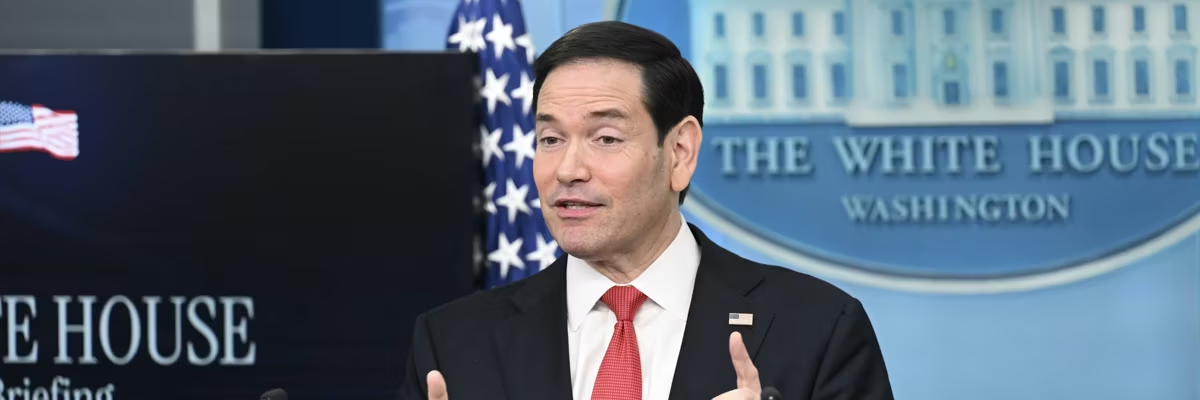
US Secretary of State Marco Rubio held a press briefing at the White House on current issues in Washington, DC on May 5, 2026.
"The secretary knows very well the damage and suffering that the criminal oil siege he himself proposed to his president is causing the Cuban people today," said Cuban Foreign Affairs Minister Bruno Rodríguez.
Peace advocates joined Cuba's top foreign relations official on Wednesday in accusing US Secretary of State Marco Rubio of blatantly lying about the existence of a blockade on oil exports to Cuba, which Rubio denied at a press briefing on Tuesday.
Anti-war group CodePink pointed to comments made by the US chargé d'affairs to Cuba, Mike Hammer, after President Donald Trump signed an executive order on January 29 threatening other countries with tariffs if they provided the communist country with oil and accusing the Cuban government of harboring terrorists—a claim officials have vehemently denied.
"Now there's going to be a real blockade," said the diplomat at the time. "Nothing is getting in. No more oil is coming."
Cuba's primary source of fuel had been cut off earlier in January after the US invaded Venezuela, killed dozens of Venezuelans and Cubans while abducting President Nicolás Maduro, and took control of the country's oil supply.
However, on Tuesday Rubio claimed that Venezuela had freely decided to no longer supply Cuba with "free oil"—an apparent reference to a barter system agreed to by the two countries.
"This is a lie," said CodePink in response to Rubio's comments.
Cuban Foreign Affairs Minister Bruno Rodríguez added that Rubio had "simply chosen to lie" about the Trump administration's policy, contradicting both Trump and White House press secretary Karoline Leavitt.
"In four months, only one fuel tanker has arrived in Cuba. All our suppliers are intimidated and threatened in violation of free trade rules and freedom of navigation," said Rodríguez.
He also pointed to Trump's new executive order, signed last Friday, which imposed new sanctions on Cuba's energy, finance, and security sectors and threatened to further isolate Cuba from international finance systems by authorizing sanctions on foreign banks that conduct major transactions with designated Cuban entities.
"The secretary knows very well the damage and suffering that the criminal oil siege he himself proposed to his president is causing the Cuban people today," said Rodríguez.
In late March, Leavitt said that an oil tanker from Russia had been permitted by Trump to reach Cuba for "humanitarian reasons," but denied there had been any policy change regarding allowing international fuel shipments to be sent to the island.
Decisions about shipments “are being made on a case-by-case basis,” said Leavitt at the time. "There has not been a formal change in sanction policy.”
Since Trump ramped up the blockade in January—intensifying a sanctions policy that the US has imposed on Cuba for more than six decades—nearly 100,000 Cubans, including about 11,000 children, have been left waiting for surgeries as the fuel shortage has led to rationing and frequent blackouts that have impacted the healthcare system. Healthcare workers have reported shortages of syringes, antibiotics, and IV supplies.
The Center for Economic Policy and Research (CEPR) also found last month that Trump's tightened sanctions and policies regarding Cuba, starting in his first term, have contributed to an “unprecedented increase” in the country's infant mortality rate, which soared 148% from 2018-25.
“It is clear that the increase in sanctions is responsible for this huge increase in infant deaths,” said Alex Main, director of international policy at CEPR, on Wednesday. “The oil blockade has been especially inhumane, disrupting the operation of ventilators, inhalers, and other crucial medical equipment and crippling emergency transportation. More than 80% of Cuba’s electricity is based on oil and oil products.”
US lawmakers who visited the island in April denounced the oil blockade as "cruel collective punishment" that has caused a water shortage, forced businesses and schools to shut down, and left cancer patients without lifesaving medications.
"Rubio is willfully lying" about the blockade, said Mexico City-based journalist José Luis Granados Ceja.
At Tuesday's press conference, after denying the blockade exists, Rubio pivoted to the Trump administration's position that Cuba's "economic model doesn't work" and blamed the country—whose healthcare system and literacy rates are frequently ranked higher than those of the US—for the crisis it's facing.
"Incompetent communists run that country. They don’t know how to fix it," said Rubio, the son of Cuban immigrants. "So it’s an unacceptable status quo, and we’ll be addressing it."
While joining Israel in waging war on Iran in recent months, the Trump administration has repeatedly suggested it hopes to take military action against Cuba.
Last Friday, the president said the US military "will be taking [Cuba] over almost immediately."
On Wednesday, CEPR and YouGov released a new poll that found 64% of Americans oppose a US military takeover of Cuba.
"This should make President Trump think twice about another ‘war of choice,’” said Mark Weisbrot, senior economist and co-director of CEPR. “Almost all of the experts on Cuba would laugh at the idea that Cuba presents a security threat to the United States. And the war against Iran has already cost Trump and his party significant support.”
Dear Common Dreams reader, It’s been nearly 30 years since I co-founded Common Dreams with my late wife, Lina Newhouser. We had the radical notion that journalism should serve the public good, not corporate profits. It was clear to us from the outset what it would take to build such a project. No paid advertisements. No corporate sponsors. No millionaire publisher telling us what to think or do. Many people said we wouldn't last a year, but we proved those doubters wrong. Together with a tremendous team of journalists and dedicated staff, we built an independent media outlet free from the constraints of profits and corporate control. Our mission has always been simple: To inform. To inspire. To ignite change for the common good. Building Common Dreams was not easy. Our survival was never guaranteed. When you take on the most powerful forces—Wall Street greed, fossil fuel industry destruction, Big Tech lobbyists, and uber-rich oligarchs who have spent billions upon billions rigging the economy and democracy in their favor—the only bulwark you have is supporters who believe in your work. But here’s the urgent message from me today. It's never been this bad out there. And it's never been this hard to keep us going. At the very moment Common Dreams is most needed, the threats we face are intensifying. We need your support now more than ever. We don't accept corporate advertising and never will. We don't have a paywall because we don't think people should be blocked from critical news based on their ability to pay. Everything we do is funded by the donations of readers like you. When everyone does the little they can afford, we are strong. But if that support retreats or dries up, so do we. Will you donate now to make sure Common Dreams not only survives but thrives? —Craig Brown, Co-founder |
Peace advocates joined Cuba's top foreign relations official on Wednesday in accusing US Secretary of State Marco Rubio of blatantly lying about the existence of a blockade on oil exports to Cuba, which Rubio denied at a press briefing on Tuesday.
Anti-war group CodePink pointed to comments made by the US chargé d'affairs to Cuba, Mike Hammer, after President Donald Trump signed an executive order on January 29 threatening other countries with tariffs if they provided the communist country with oil and accusing the Cuban government of harboring terrorists—a claim officials have vehemently denied.
"Now there's going to be a real blockade," said the diplomat at the time. "Nothing is getting in. No more oil is coming."
Cuba's primary source of fuel had been cut off earlier in January after the US invaded Venezuela, killed dozens of Venezuelans and Cubans while abducting President Nicolás Maduro, and took control of the country's oil supply.
However, on Tuesday Rubio claimed that Venezuela had freely decided to no longer supply Cuba with "free oil"—an apparent reference to a barter system agreed to by the two countries.
"This is a lie," said CodePink in response to Rubio's comments.
Cuban Foreign Affairs Minister Bruno Rodríguez added that Rubio had "simply chosen to lie" about the Trump administration's policy, contradicting both Trump and White House press secretary Karoline Leavitt.
"In four months, only one fuel tanker has arrived in Cuba. All our suppliers are intimidated and threatened in violation of free trade rules and freedom of navigation," said Rodríguez.
He also pointed to Trump's new executive order, signed last Friday, which imposed new sanctions on Cuba's energy, finance, and security sectors and threatened to further isolate Cuba from international finance systems by authorizing sanctions on foreign banks that conduct major transactions with designated Cuban entities.
"The secretary knows very well the damage and suffering that the criminal oil siege he himself proposed to his president is causing the Cuban people today," said Rodríguez.
In late March, Leavitt said that an oil tanker from Russia had been permitted by Trump to reach Cuba for "humanitarian reasons," but denied there had been any policy change regarding allowing international fuel shipments to be sent to the island.
Decisions about shipments “are being made on a case-by-case basis,” said Leavitt at the time. "There has not been a formal change in sanction policy.”
Since Trump ramped up the blockade in January—intensifying a sanctions policy that the US has imposed on Cuba for more than six decades—nearly 100,000 Cubans, including about 11,000 children, have been left waiting for surgeries as the fuel shortage has led to rationing and frequent blackouts that have impacted the healthcare system. Healthcare workers have reported shortages of syringes, antibiotics, and IV supplies.
The Center for Economic Policy and Research (CEPR) also found last month that Trump's tightened sanctions and policies regarding Cuba, starting in his first term, have contributed to an “unprecedented increase” in the country's infant mortality rate, which soared 148% from 2018-25.
“It is clear that the increase in sanctions is responsible for this huge increase in infant deaths,” said Alex Main, director of international policy at CEPR, on Wednesday. “The oil blockade has been especially inhumane, disrupting the operation of ventilators, inhalers, and other crucial medical equipment and crippling emergency transportation. More than 80% of Cuba’s electricity is based on oil and oil products.”
US lawmakers who visited the island in April denounced the oil blockade as "cruel collective punishment" that has caused a water shortage, forced businesses and schools to shut down, and left cancer patients without lifesaving medications.
"Rubio is willfully lying" about the blockade, said Mexico City-based journalist José Luis Granados Ceja.
At Tuesday's press conference, after denying the blockade exists, Rubio pivoted to the Trump administration's position that Cuba's "economic model doesn't work" and blamed the country—whose healthcare system and literacy rates are frequently ranked higher than those of the US—for the crisis it's facing.
"Incompetent communists run that country. They don’t know how to fix it," said Rubio, the son of Cuban immigrants. "So it’s an unacceptable status quo, and we’ll be addressing it."
While joining Israel in waging war on Iran in recent months, the Trump administration has repeatedly suggested it hopes to take military action against Cuba.
Last Friday, the president said the US military "will be taking [Cuba] over almost immediately."
On Wednesday, CEPR and YouGov released a new poll that found 64% of Americans oppose a US military takeover of Cuba.
"This should make President Trump think twice about another ‘war of choice,’” said Mark Weisbrot, senior economist and co-director of CEPR. “Almost all of the experts on Cuba would laugh at the idea that Cuba presents a security threat to the United States. And the war against Iran has already cost Trump and his party significant support.”
Peace advocates joined Cuba's top foreign relations official on Wednesday in accusing US Secretary of State Marco Rubio of blatantly lying about the existence of a blockade on oil exports to Cuba, which Rubio denied at a press briefing on Tuesday.
Anti-war group CodePink pointed to comments made by the US chargé d'affairs to Cuba, Mike Hammer, after President Donald Trump signed an executive order on January 29 threatening other countries with tariffs if they provided the communist country with oil and accusing the Cuban government of harboring terrorists—a claim officials have vehemently denied.
"Now there's going to be a real blockade," said the diplomat at the time. "Nothing is getting in. No more oil is coming."
Cuba's primary source of fuel had been cut off earlier in January after the US invaded Venezuela, killed dozens of Venezuelans and Cubans while abducting President Nicolás Maduro, and took control of the country's oil supply.
However, on Tuesday Rubio claimed that Venezuela had freely decided to no longer supply Cuba with "free oil"—an apparent reference to a barter system agreed to by the two countries.
"This is a lie," said CodePink in response to Rubio's comments.
Cuban Foreign Affairs Minister Bruno Rodríguez added that Rubio had "simply chosen to lie" about the Trump administration's policy, contradicting both Trump and White House press secretary Karoline Leavitt.
"In four months, only one fuel tanker has arrived in Cuba. All our suppliers are intimidated and threatened in violation of free trade rules and freedom of navigation," said Rodríguez.
He also pointed to Trump's new executive order, signed last Friday, which imposed new sanctions on Cuba's energy, finance, and security sectors and threatened to further isolate Cuba from international finance systems by authorizing sanctions on foreign banks that conduct major transactions with designated Cuban entities.
"The secretary knows very well the damage and suffering that the criminal oil siege he himself proposed to his president is causing the Cuban people today," said Rodríguez.
In late March, Leavitt said that an oil tanker from Russia had been permitted by Trump to reach Cuba for "humanitarian reasons," but denied there had been any policy change regarding allowing international fuel shipments to be sent to the island.
Decisions about shipments “are being made on a case-by-case basis,” said Leavitt at the time. "There has not been a formal change in sanction policy.”
Since Trump ramped up the blockade in January—intensifying a sanctions policy that the US has imposed on Cuba for more than six decades—nearly 100,000 Cubans, including about 11,000 children, have been left waiting for surgeries as the fuel shortage has led to rationing and frequent blackouts that have impacted the healthcare system. Healthcare workers have reported shortages of syringes, antibiotics, and IV supplies.
The Center for Economic Policy and Research (CEPR) also found last month that Trump's tightened sanctions and policies regarding Cuba, starting in his first term, have contributed to an “unprecedented increase” in the country's infant mortality rate, which soared 148% from 2018-25.
“It is clear that the increase in sanctions is responsible for this huge increase in infant deaths,” said Alex Main, director of international policy at CEPR, on Wednesday. “The oil blockade has been especially inhumane, disrupting the operation of ventilators, inhalers, and other crucial medical equipment and crippling emergency transportation. More than 80% of Cuba’s electricity is based on oil and oil products.”
US lawmakers who visited the island in April denounced the oil blockade as "cruel collective punishment" that has caused a water shortage, forced businesses and schools to shut down, and left cancer patients without lifesaving medications.
"Rubio is willfully lying" about the blockade, said Mexico City-based journalist José Luis Granados Ceja.
At Tuesday's press conference, after denying the blockade exists, Rubio pivoted to the Trump administration's position that Cuba's "economic model doesn't work" and blamed the country—whose healthcare system and literacy rates are frequently ranked higher than those of the US—for the crisis it's facing.
"Incompetent communists run that country. They don’t know how to fix it," said Rubio, the son of Cuban immigrants. "So it’s an unacceptable status quo, and we’ll be addressing it."
While joining Israel in waging war on Iran in recent months, the Trump administration has repeatedly suggested it hopes to take military action against Cuba.
Last Friday, the president said the US military "will be taking [Cuba] over almost immediately."
On Wednesday, CEPR and YouGov released a new poll that found 64% of Americans oppose a US military takeover of Cuba.
"This should make President Trump think twice about another ‘war of choice,’” said Mark Weisbrot, senior economist and co-director of CEPR. “Almost all of the experts on Cuba would laugh at the idea that Cuba presents a security threat to the United States. And the war against Iran has already cost Trump and his party significant support.”

