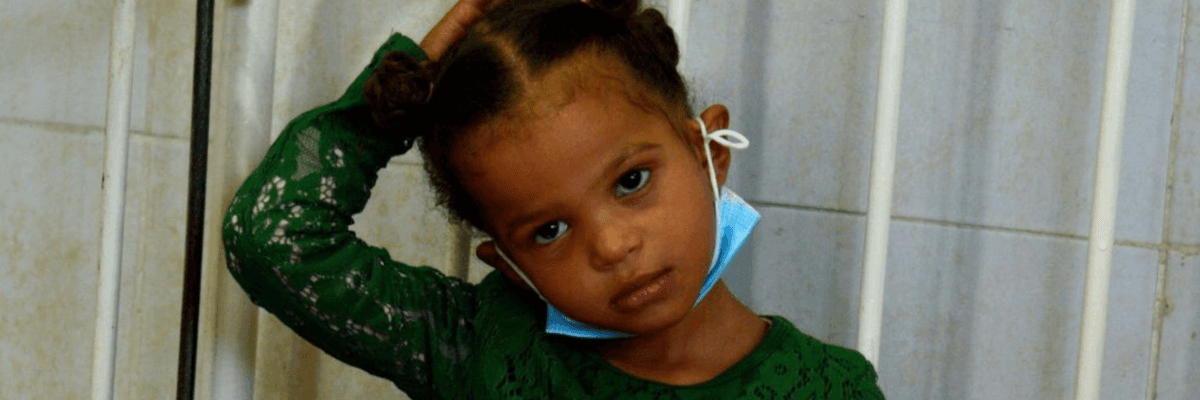
Ariannis César Martínez, age 4, suffers from kidney cancer.
'What Did These Cuban Children Do to Trump?': US Embargo Blamed as Infant Mortality Soars
"Is there anything worse than a child dying of cancer when it was preventable?" asked one observer.
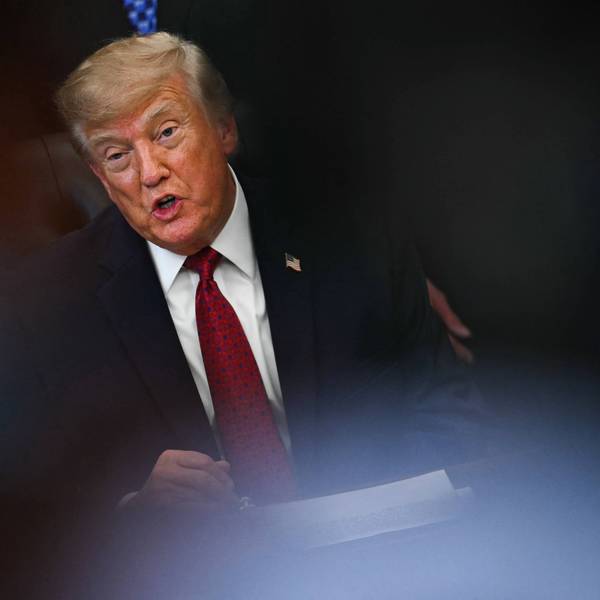
Infant mortality is on the rise in Cuba as the Trump administration tightens a decadeslong economic embargo on the island nation in hopes of toppling a socialist government that's outlasted a dozen US presidents.
According to the United Nations Inter-Agency Group for Child Mortality Estimation, infant mortality in Cuba—which plummeted dramatically in the decades after the 1959 triumph of the Cuban Revolution—has increased from 4 to 7.4 per 1,000 live births since 2018, an 85% increase.
The rise in infant mortality comes amid a deadly surge in mosquito-borne illness, including dengue and chikungunya, that has inundated already struggling hospitals suffering shortages of staff and even basic supplies. Hospitals in Cuba—which in 2015 became the first country in the world to eliminate mother-to-child transmission of HIV and congenital syphilis—are now reliant upon donations and the black market for their needs.
The crisis is particularly dire among children with cancer. Cuba's free healthcare system—which prioritizes the health of the people instead of industry profits, as in the United States—once boasted a pediatric cancer survival rate of 80%, on par with the world's wealthy nations. Now that's down to around 65% as the blockade has forced healthcare providers to modify treatment protocols and medications.
“The situation is very serious at the moment. It was already in terms of acquiring supplies and medicines. But now it is intensifying and complicated with other aspects," Dr. Forteza Saéz, an oncologist at Havana's University of Medical Sciences, told La Jornada in an interview on Wednesday.
Dr. Luis Curbelo Alonso, former longtime director of the National Institute of Oncology and Radiology in Havana, told La Jornada: "You have the knowledge, the expertise, the team to face something that can be curable or can be controllable and yet not have the drug. It's a very lacerating thing as a professional, very cruel."
The situation is also driving Cubans to extreme measures to find treatment. Two-year-old Mía Rey Jiménez and her family left their home in Cardenas, Matanzas last May weeks after the child was diagnosed with metastatic stage 4 neuroblastoma, an extremely aggressive childhood cancer requiring complex treatment.
The family left Cuba to seek treatment in Nicaragua and then Costa Rica, where Jiménez underwent chemotherapy and high-risk surgery. Still left with a tumor in her lung and cancer in her bone marrow, Jiménez's family sought help from Nicklaus Children's Hospital in Miami, one of the world's leading specialized facilities.
The hospital agreed to evaluate Jiménez and estimated her chances of survival with proper care at up to 80%—more than double her prognosis in Costa Rica. However, the humanitarian visa for which Jiménez's family applied was denied by US authorities due to what they claimed was "lack of evidence," even though the girl's father resides legally in the United States.
The family successfully appealed their denial and Jiménez and her mother Liudmila Jiménez Matos arrived in Miami in January.
“I can’t be happier," Jiménez Matos told Cuba Noticias 360 last month. "My daughter will be treated by doctors who have been waiting for her for a long time. That’s a love for the profession and for saving another life."
As President Donald Trump tightens the blockade on Cuba following a similar strangulation of Venezuela that ended with last month's US invasion and kidnapping of Venezuelan President Nicolás Maduro to face dubious "narco-terrorism" charges in the United States, critics are renewing calls to end Washington's embargo.
Imposed in the early 1960s after a successful revolution that overthrew a brutal US-backed dictatorship and replaced it with a socialist government, the blockade—which accompanied a decadeslong campaign of terrorism by US-based Cuban exiles—has claimed thousands of Cuban lives and cost the country's economy more than $1 trillion, according to official estimates.
The United Nations General Assembly has overwhelmingly condemned the blockade 33 times.
UN Secretary-General António Guterres warned Wednesday of a potential "collapse" of Cuba's economy if the US keeps blocking oil from entering the country.
On Thursday, Congresswoman Ilhan Omar (D-Minn.), who visited Cuba in 2024 as part of a delegation of progressive US lawmakers, called the ramped-up embargo, which is now targeting fuel imports, as "cruel and despotic."
Back in Havana, Cuban doctors vowed to do the best they can for their patients under the harrowing circumstances.
“We will continue to resist," Dr. Carlos Alberto Martínez, head of the Ministry of Health's cancer control section, told La Jornada. "We will continue to look for alternatives that allow the sustainability of what has been achieved."
We are at a crossroads
This country and this world are at a monumental crossroads. In a few short weeks, US voters will have an opportunity to beat back the forces of fascism and confront the billionaires who are rigging the economy, our media system, and our democracy, making it increasingly impossible for ordinary people to get by. We’re not just talking about the election. We’re talking about what must be done once these fascist elements are vanquished from power. We need a bolder set of solutions than what either major party has so far been willing to offer and a working-class movement ready to fight like hell for it. Trump didn't emerge from nowhere. The conditions that fueled MAGA authoritarianism were created by decades of radical neoliberal economic policies and a corrupt political system dominated by corporate interests. They slashed taxes on the super-rich, promising that the benefits would trickle down. They said giveaways to the corporate titans would make life more affordable for the rest of us. It was all bullshit. And when a bitter, betrayed populace searches for someone to blame, right-wing demagogues have little trouble finding scapegoats. People know when they're being lied to, but you won't hear any of this from the corporate media. Only independent journalism—powered and funded by people who believe in building a better world—can deliver truly trustworthy daily news. Our Fall Campaign is underway, and we need your help. To power our newsroom through the rest of the year, we need to raise $125,000 by midnight on October 31. So if you share our vision, please contribute whatever you can to sustain our work. |
Infant mortality is on the rise in Cuba as the Trump administration tightens a decadeslong economic embargo on the island nation in hopes of toppling a socialist government that's outlasted a dozen US presidents.
According to the United Nations Inter-Agency Group for Child Mortality Estimation, infant mortality in Cuba—which plummeted dramatically in the decades after the 1959 triumph of the Cuban Revolution—has increased from 4 to 7.4 per 1,000 live births since 2018, an 85% increase.
The rise in infant mortality comes amid a deadly surge in mosquito-borne illness, including dengue and chikungunya, that has inundated already struggling hospitals suffering shortages of staff and even basic supplies. Hospitals in Cuba—which in 2015 became the first country in the world to eliminate mother-to-child transmission of HIV and congenital syphilis—are now reliant upon donations and the black market for their needs.
The crisis is particularly dire among children with cancer. Cuba's free healthcare system—which prioritizes the health of the people instead of industry profits, as in the United States—once boasted a pediatric cancer survival rate of 80%, on par with the world's wealthy nations. Now that's down to around 65% as the blockade has forced healthcare providers to modify treatment protocols and medications.
“The situation is very serious at the moment. It was already in terms of acquiring supplies and medicines. But now it is intensifying and complicated with other aspects," Dr. Forteza Saéz, an oncologist at Havana's University of Medical Sciences, told La Jornada in an interview on Wednesday.
Dr. Luis Curbelo Alonso, former longtime director of the National Institute of Oncology and Radiology in Havana, told La Jornada: "You have the knowledge, the expertise, the team to face something that can be curable or can be controllable and yet not have the drug. It's a very lacerating thing as a professional, very cruel."
The situation is also driving Cubans to extreme measures to find treatment. Two-year-old Mía Rey Jiménez and her family left their home in Cardenas, Matanzas last May weeks after the child was diagnosed with metastatic stage 4 neuroblastoma, an extremely aggressive childhood cancer requiring complex treatment.
The family left Cuba to seek treatment in Nicaragua and then Costa Rica, where Jiménez underwent chemotherapy and high-risk surgery. Still left with a tumor in her lung and cancer in her bone marrow, Jiménez's family sought help from Nicklaus Children's Hospital in Miami, one of the world's leading specialized facilities.
The hospital agreed to evaluate Jiménez and estimated her chances of survival with proper care at up to 80%—more than double her prognosis in Costa Rica. However, the humanitarian visa for which Jiménez's family applied was denied by US authorities due to what they claimed was "lack of evidence," even though the girl's father resides legally in the United States.
The family successfully appealed their denial and Jiménez and her mother Liudmila Jiménez Matos arrived in Miami in January.
“I can’t be happier," Jiménez Matos told Cuba Noticias 360 last month. "My daughter will be treated by doctors who have been waiting for her for a long time. That’s a love for the profession and for saving another life."
As President Donald Trump tightens the blockade on Cuba following a similar strangulation of Venezuela that ended with last month's US invasion and kidnapping of Venezuelan President Nicolás Maduro to face dubious "narco-terrorism" charges in the United States, critics are renewing calls to end Washington's embargo.
Imposed in the early 1960s after a successful revolution that overthrew a brutal US-backed dictatorship and replaced it with a socialist government, the blockade—which accompanied a decadeslong campaign of terrorism by US-based Cuban exiles—has claimed thousands of Cuban lives and cost the country's economy more than $1 trillion, according to official estimates.
The United Nations General Assembly has overwhelmingly condemned the blockade 33 times.
UN Secretary-General António Guterres warned Wednesday of a potential "collapse" of Cuba's economy if the US keeps blocking oil from entering the country.
On Thursday, Congresswoman Ilhan Omar (D-Minn.), who visited Cuba in 2024 as part of a delegation of progressive US lawmakers, called the ramped-up embargo, which is now targeting fuel imports, as "cruel and despotic."
Back in Havana, Cuban doctors vowed to do the best they can for their patients under the harrowing circumstances.
“We will continue to resist," Dr. Carlos Alberto Martínez, head of the Ministry of Health's cancer control section, told La Jornada. "We will continue to look for alternatives that allow the sustainability of what has been achieved."
- Puerto Ricans Continue Protests Against US Militarism and War Threats ›
- An Open Letter to the Washington Office on Latin America on US Effort to Overthrow Venezuelan Government ›
- Cuba Vows to Defend Itself Against Trump to 'The Last Drop of Blood' ›
- Study Shows Trump's Tightened Embargo on Cuba 'Has Killed a Lot of Babies' | Common Dreams ›
- Opinion | Cuba Works Health Miracles While Under US Blockade | Common Dreams ›
Infant mortality is on the rise in Cuba as the Trump administration tightens a decadeslong economic embargo on the island nation in hopes of toppling a socialist government that's outlasted a dozen US presidents.
According to the United Nations Inter-Agency Group for Child Mortality Estimation, infant mortality in Cuba—which plummeted dramatically in the decades after the 1959 triumph of the Cuban Revolution—has increased from 4 to 7.4 per 1,000 live births since 2018, an 85% increase.
The rise in infant mortality comes amid a deadly surge in mosquito-borne illness, including dengue and chikungunya, that has inundated already struggling hospitals suffering shortages of staff and even basic supplies. Hospitals in Cuba—which in 2015 became the first country in the world to eliminate mother-to-child transmission of HIV and congenital syphilis—are now reliant upon donations and the black market for their needs.
The crisis is particularly dire among children with cancer. Cuba's free healthcare system—which prioritizes the health of the people instead of industry profits, as in the United States—once boasted a pediatric cancer survival rate of 80%, on par with the world's wealthy nations. Now that's down to around 65% as the blockade has forced healthcare providers to modify treatment protocols and medications.
“The situation is very serious at the moment. It was already in terms of acquiring supplies and medicines. But now it is intensifying and complicated with other aspects," Dr. Forteza Saéz, an oncologist at Havana's University of Medical Sciences, told La Jornada in an interview on Wednesday.
Dr. Luis Curbelo Alonso, former longtime director of the National Institute of Oncology and Radiology in Havana, told La Jornada: "You have the knowledge, the expertise, the team to face something that can be curable or can be controllable and yet not have the drug. It's a very lacerating thing as a professional, very cruel."
The situation is also driving Cubans to extreme measures to find treatment. Two-year-old Mía Rey Jiménez and her family left their home in Cardenas, Matanzas last May weeks after the child was diagnosed with metastatic stage 4 neuroblastoma, an extremely aggressive childhood cancer requiring complex treatment.
The family left Cuba to seek treatment in Nicaragua and then Costa Rica, where Jiménez underwent chemotherapy and high-risk surgery. Still left with a tumor in her lung and cancer in her bone marrow, Jiménez's family sought help from Nicklaus Children's Hospital in Miami, one of the world's leading specialized facilities.
The hospital agreed to evaluate Jiménez and estimated her chances of survival with proper care at up to 80%—more than double her prognosis in Costa Rica. However, the humanitarian visa for which Jiménez's family applied was denied by US authorities due to what they claimed was "lack of evidence," even though the girl's father resides legally in the United States.
The family successfully appealed their denial and Jiménez and her mother Liudmila Jiménez Matos arrived in Miami in January.
“I can’t be happier," Jiménez Matos told Cuba Noticias 360 last month. "My daughter will be treated by doctors who have been waiting for her for a long time. That’s a love for the profession and for saving another life."
As President Donald Trump tightens the blockade on Cuba following a similar strangulation of Venezuela that ended with last month's US invasion and kidnapping of Venezuelan President Nicolás Maduro to face dubious "narco-terrorism" charges in the United States, critics are renewing calls to end Washington's embargo.
Imposed in the early 1960s after a successful revolution that overthrew a brutal US-backed dictatorship and replaced it with a socialist government, the blockade—which accompanied a decadeslong campaign of terrorism by US-based Cuban exiles—has claimed thousands of Cuban lives and cost the country's economy more than $1 trillion, according to official estimates.
The United Nations General Assembly has overwhelmingly condemned the blockade 33 times.
UN Secretary-General António Guterres warned Wednesday of a potential "collapse" of Cuba's economy if the US keeps blocking oil from entering the country.
On Thursday, Congresswoman Ilhan Omar (D-Minn.), who visited Cuba in 2024 as part of a delegation of progressive US lawmakers, called the ramped-up embargo, which is now targeting fuel imports, as "cruel and despotic."
Back in Havana, Cuban doctors vowed to do the best they can for their patients under the harrowing circumstances.
“We will continue to resist," Dr. Carlos Alberto Martínez, head of the Ministry of Health's cancer control section, told La Jornada. "We will continue to look for alternatives that allow the sustainability of what has been achieved."
- Puerto Ricans Continue Protests Against US Militarism and War Threats ›
- An Open Letter to the Washington Office on Latin America on US Effort to Overthrow Venezuelan Government ›
- Cuba Vows to Defend Itself Against Trump to 'The Last Drop of Blood' ›
- Study Shows Trump's Tightened Embargo on Cuba 'Has Killed a Lot of Babies' | Common Dreams ›
- Opinion | Cuba Works Health Miracles While Under US Blockade | Common Dreams ›