SUBSCRIBE TO OUR FREE NEWSLETTER
Daily news & progressive opinion—funded by the people, not the corporations—delivered straight to your inbox.
5
#000000
#FFFFFF
To donate by check, phone, or other method, see our More Ways to Give page.
Daily news & progressive opinion—funded by the people, not the corporations—delivered straight to your inbox.
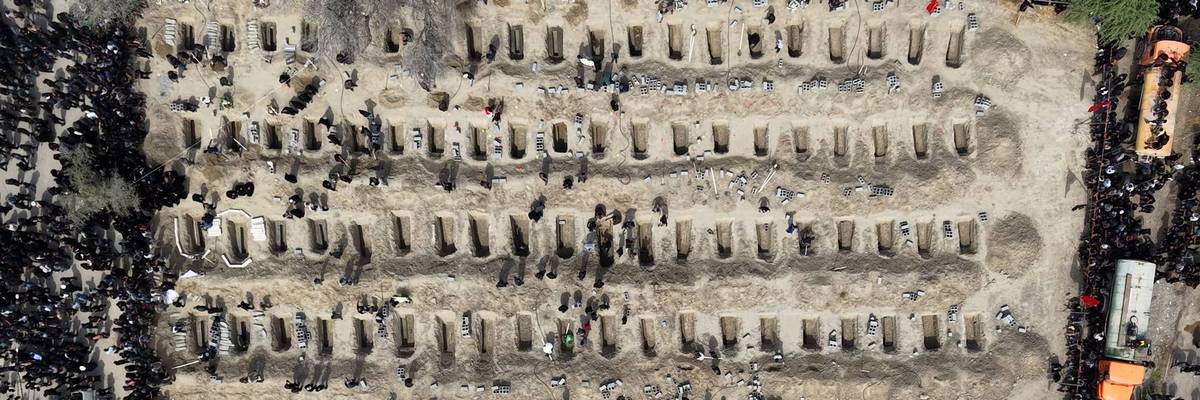
An aerial view of a graveyard as funerals are held for students and staff from a girls' school killed in a likely US strike on March 3, 2026 in Minab, Iran.
"If a US role were to be confirmed, the strike would rank among the worst cases of civilian casualties in decades of US conflicts in the Middle East."
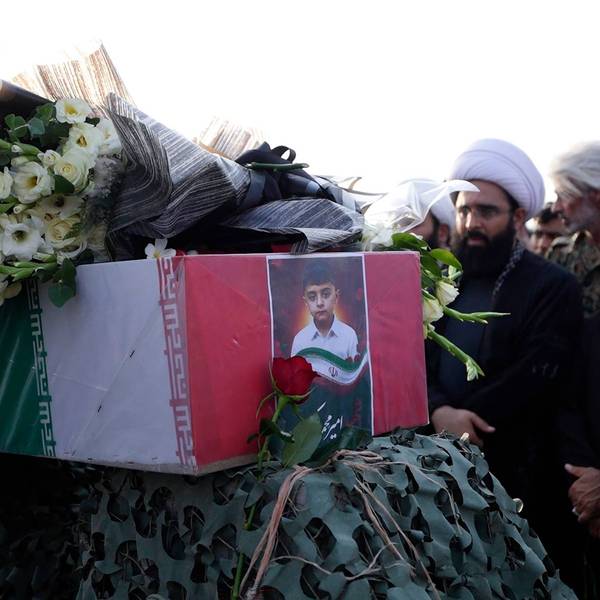
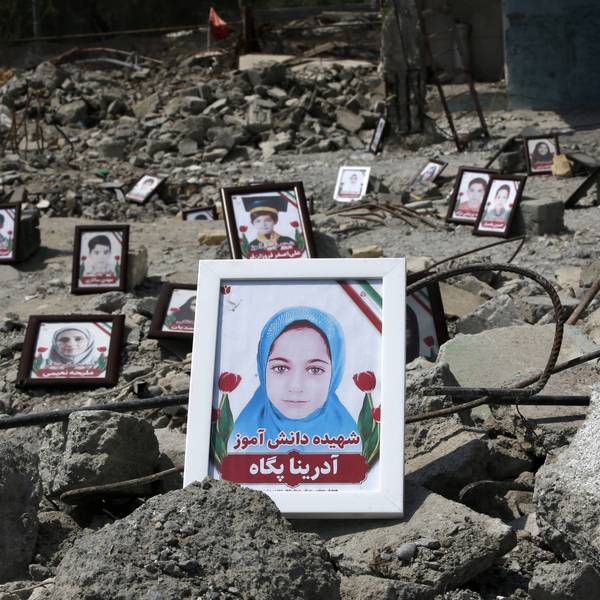
US investigators reportedly believe that American forces were behind the bombing of an Iranian girls' school that killed more than 160 people—mostly young children—during the initial wave of attacks launched Saturday by President Donald Trump in coordination with the Israeli military.
Citing two unnamed officials, Reuters reported Thursday that US military investigators have found it is "likely" that American forces were responsible for the deadly strike on the school in the southern Iranian town of Minab, though the investigation has not yet been completed. Schools are protected under international law, and targeting them is a war crime.
"Reuters was unable to determine more details about the investigation, including what evidence contributed to the tentative assessment, what type of munition was used, who was responsible, or why the U.S. might have struck the school," the outlet noted. "The officials, who spoke on condition of anonymity to discuss sensitive military matters, did not rule out the possibility that new evidence could emerge that absolves the U.S. of responsibility and points to another responsible party in the incident."
"If a US role were to be confirmed," Reuters added, "the strike would rank among the worst cases of civilian casualties in decades of US conflicts in the Middle East."
HuffPost's Akbar Shahid Ahmed echoed Reuters' reporting, writing that Pentagon officials "told Congress in multiple briefings this week that they believed the US was most likely responsible (though probe ongoing)."
The reporting came on the heels of a New York Times analysis that concluded the US was "most likely to have carried out the strike," given that American forces were simultaneously bombarding an adjacent Iranian naval base. The Times also rejected the claim that an Iranian missile hit the elementary school.
"The strikes were first reported on social media shortly after 11:30 am local time," the Times reported. "An analysis of those posts—as well as bystander photos and videos captured within an hour of the strikes—helps corroborate that the school was hit at the same time as the naval base. One video, pinpointed by geolocation experts, showed several large plumes of smoke billowing from the area of the base and the school."
Beth Van Schaack, a former State Department official who currently teaches at Stanford University’s Center for Human Rights and International Justice, told the Times that "given the US' intelligence capabilities, they should have known that a school was in the vicinity."
Trump administration officials have said very little about the Iranian school strike in their triumphant rhetoric about the war, which Pentagon Secretary Pete Hegseth hailed as the "most lethal, most complex, and most precise aerial operation in history." Hegseth has also openly dismissed what he's called "stupid rules of engagement," rejecting constraints on US forces that are designed to prevent the killing of civilians.
Asked about the school strike during a March 4 press conference, Hegseth responded: "All I know—all I can say is that we're investigating that. We, of course, never target civilian targets, but we're taking a look and investigating that."
US Secretary of State Marco Rubio referred reporters to the Pentagon when asked about the attack, but added that "the United States would not target, deliberately target, a school," in purported contrast to the Iranian government, which Rubio claimed is "deliberately targeting civilians" because "they are a terroristic regime."
Two first responders to the scene of the attack, as well as a parent of one of the killed children, told Middle East Eye earlier this week that the school was hit by two strikes, a possible "double-tap" attack. An Al Jazeera investigation concluded the attack on the school was likely deliberate.
Jeremy Konyndyk, president of Refugees International, called the school attack "a horrific US war crime, up there with My Lai," referring to US soldiers' massacre of Vietnamese civilians in 1968. The US military initially covered up the massacre.
"In a sane world, Hegseth would resign, Congress would hold immediate hearings and establish an investigation, and the US would come clean," Konyndyk wrote on social media. "None of that is likely, so international mechanisms should kick in, including the [International Criminal Court]. And Hegseth should probably talk to a lawyer."
On Thursday, as US and Israeli officials vowed to ramp up their assault on Iran, two boys' schools southwest of Tehran were reportedly bombed.
"The targeting of civilians, educational facilities, and medical institutions constitutes a grave violation of international humanitarian law and human rights law," a group of United Nations experts said earlier this week.
Dear Common Dreams reader, It’s been nearly 30 years since I co-founded Common Dreams with my late wife, Lina Newhouser. We had the radical notion that journalism should serve the public good, not corporate profits. It was clear to us from the outset what it would take to build such a project. No paid advertisements. No corporate sponsors. No millionaire publisher telling us what to think or do. Many people said we wouldn't last a year, but we proved those doubters wrong. Together with a tremendous team of journalists and dedicated staff, we built an independent media outlet free from the constraints of profits and corporate control. Our mission has always been simple: To inform. To inspire. To ignite change for the common good. Building Common Dreams was not easy. Our survival was never guaranteed. When you take on the most powerful forces—Wall Street greed, fossil fuel industry destruction, Big Tech lobbyists, and uber-rich oligarchs who have spent billions upon billions rigging the economy and democracy in their favor—the only bulwark you have is supporters who believe in your work. But here’s the urgent message from me today. It's never been this bad out there. And it's never been this hard to keep us going. At the very moment Common Dreams is most needed, the threats we face are intensifying. We need your support now more than ever. We don't accept corporate advertising and never will. We don't have a paywall because we don't think people should be blocked from critical news based on their ability to pay. Everything we do is funded by the donations of readers like you. When everyone does the little they can afford, we are strong. But if that support retreats or dries up, so do we. Will you donate now to make sure Common Dreams not only survives but thrives? —Craig Brown, Co-founder |
US investigators reportedly believe that American forces were behind the bombing of an Iranian girls' school that killed more than 160 people—mostly young children—during the initial wave of attacks launched Saturday by President Donald Trump in coordination with the Israeli military.
Citing two unnamed officials, Reuters reported Thursday that US military investigators have found it is "likely" that American forces were responsible for the deadly strike on the school in the southern Iranian town of Minab, though the investigation has not yet been completed. Schools are protected under international law, and targeting them is a war crime.
"Reuters was unable to determine more details about the investigation, including what evidence contributed to the tentative assessment, what type of munition was used, who was responsible, or why the U.S. might have struck the school," the outlet noted. "The officials, who spoke on condition of anonymity to discuss sensitive military matters, did not rule out the possibility that new evidence could emerge that absolves the U.S. of responsibility and points to another responsible party in the incident."
"If a US role were to be confirmed," Reuters added, "the strike would rank among the worst cases of civilian casualties in decades of US conflicts in the Middle East."
HuffPost's Akbar Shahid Ahmed echoed Reuters' reporting, writing that Pentagon officials "told Congress in multiple briefings this week that they believed the US was most likely responsible (though probe ongoing)."
The reporting came on the heels of a New York Times analysis that concluded the US was "most likely to have carried out the strike," given that American forces were simultaneously bombarding an adjacent Iranian naval base. The Times also rejected the claim that an Iranian missile hit the elementary school.
"The strikes were first reported on social media shortly after 11:30 am local time," the Times reported. "An analysis of those posts—as well as bystander photos and videos captured within an hour of the strikes—helps corroborate that the school was hit at the same time as the naval base. One video, pinpointed by geolocation experts, showed several large plumes of smoke billowing from the area of the base and the school."
Beth Van Schaack, a former State Department official who currently teaches at Stanford University’s Center for Human Rights and International Justice, told the Times that "given the US' intelligence capabilities, they should have known that a school was in the vicinity."
Trump administration officials have said very little about the Iranian school strike in their triumphant rhetoric about the war, which Pentagon Secretary Pete Hegseth hailed as the "most lethal, most complex, and most precise aerial operation in history." Hegseth has also openly dismissed what he's called "stupid rules of engagement," rejecting constraints on US forces that are designed to prevent the killing of civilians.
Asked about the school strike during a March 4 press conference, Hegseth responded: "All I know—all I can say is that we're investigating that. We, of course, never target civilian targets, but we're taking a look and investigating that."
US Secretary of State Marco Rubio referred reporters to the Pentagon when asked about the attack, but added that "the United States would not target, deliberately target, a school," in purported contrast to the Iranian government, which Rubio claimed is "deliberately targeting civilians" because "they are a terroristic regime."
Two first responders to the scene of the attack, as well as a parent of one of the killed children, told Middle East Eye earlier this week that the school was hit by two strikes, a possible "double-tap" attack. An Al Jazeera investigation concluded the attack on the school was likely deliberate.
Jeremy Konyndyk, president of Refugees International, called the school attack "a horrific US war crime, up there with My Lai," referring to US soldiers' massacre of Vietnamese civilians in 1968. The US military initially covered up the massacre.
"In a sane world, Hegseth would resign, Congress would hold immediate hearings and establish an investigation, and the US would come clean," Konyndyk wrote on social media. "None of that is likely, so international mechanisms should kick in, including the [International Criminal Court]. And Hegseth should probably talk to a lawyer."
On Thursday, as US and Israeli officials vowed to ramp up their assault on Iran, two boys' schools southwest of Tehran were reportedly bombed.
"The targeting of civilians, educational facilities, and medical institutions constitutes a grave violation of international humanitarian law and human rights law," a group of United Nations experts said earlier this week.
US investigators reportedly believe that American forces were behind the bombing of an Iranian girls' school that killed more than 160 people—mostly young children—during the initial wave of attacks launched Saturday by President Donald Trump in coordination with the Israeli military.
Citing two unnamed officials, Reuters reported Thursday that US military investigators have found it is "likely" that American forces were responsible for the deadly strike on the school in the southern Iranian town of Minab, though the investigation has not yet been completed. Schools are protected under international law, and targeting them is a war crime.
"Reuters was unable to determine more details about the investigation, including what evidence contributed to the tentative assessment, what type of munition was used, who was responsible, or why the U.S. might have struck the school," the outlet noted. "The officials, who spoke on condition of anonymity to discuss sensitive military matters, did not rule out the possibility that new evidence could emerge that absolves the U.S. of responsibility and points to another responsible party in the incident."
"If a US role were to be confirmed," Reuters added, "the strike would rank among the worst cases of civilian casualties in decades of US conflicts in the Middle East."
HuffPost's Akbar Shahid Ahmed echoed Reuters' reporting, writing that Pentagon officials "told Congress in multiple briefings this week that they believed the US was most likely responsible (though probe ongoing)."
The reporting came on the heels of a New York Times analysis that concluded the US was "most likely to have carried out the strike," given that American forces were simultaneously bombarding an adjacent Iranian naval base. The Times also rejected the claim that an Iranian missile hit the elementary school.
"The strikes were first reported on social media shortly after 11:30 am local time," the Times reported. "An analysis of those posts—as well as bystander photos and videos captured within an hour of the strikes—helps corroborate that the school was hit at the same time as the naval base. One video, pinpointed by geolocation experts, showed several large plumes of smoke billowing from the area of the base and the school."
Beth Van Schaack, a former State Department official who currently teaches at Stanford University’s Center for Human Rights and International Justice, told the Times that "given the US' intelligence capabilities, they should have known that a school was in the vicinity."
Trump administration officials have said very little about the Iranian school strike in their triumphant rhetoric about the war, which Pentagon Secretary Pete Hegseth hailed as the "most lethal, most complex, and most precise aerial operation in history." Hegseth has also openly dismissed what he's called "stupid rules of engagement," rejecting constraints on US forces that are designed to prevent the killing of civilians.
Asked about the school strike during a March 4 press conference, Hegseth responded: "All I know—all I can say is that we're investigating that. We, of course, never target civilian targets, but we're taking a look and investigating that."
US Secretary of State Marco Rubio referred reporters to the Pentagon when asked about the attack, but added that "the United States would not target, deliberately target, a school," in purported contrast to the Iranian government, which Rubio claimed is "deliberately targeting civilians" because "they are a terroristic regime."
Two first responders to the scene of the attack, as well as a parent of one of the killed children, told Middle East Eye earlier this week that the school was hit by two strikes, a possible "double-tap" attack. An Al Jazeera investigation concluded the attack on the school was likely deliberate.
Jeremy Konyndyk, president of Refugees International, called the school attack "a horrific US war crime, up there with My Lai," referring to US soldiers' massacre of Vietnamese civilians in 1968. The US military initially covered up the massacre.
"In a sane world, Hegseth would resign, Congress would hold immediate hearings and establish an investigation, and the US would come clean," Konyndyk wrote on social media. "None of that is likely, so international mechanisms should kick in, including the [International Criminal Court]. And Hegseth should probably talk to a lawyer."
On Thursday, as US and Israeli officials vowed to ramp up their assault on Iran, two boys' schools southwest of Tehran were reportedly bombed.
"The targeting of civilians, educational facilities, and medical institutions constitutes a grave violation of international humanitarian law and human rights law," a group of United Nations experts said earlier this week.