

5
#000000
#FFFFFF
To donate by check, phone, or other method, see our More Ways to Give page.
Daily news & progressive opinion—funded by the people, not the corporations—delivered straight to your inbox.
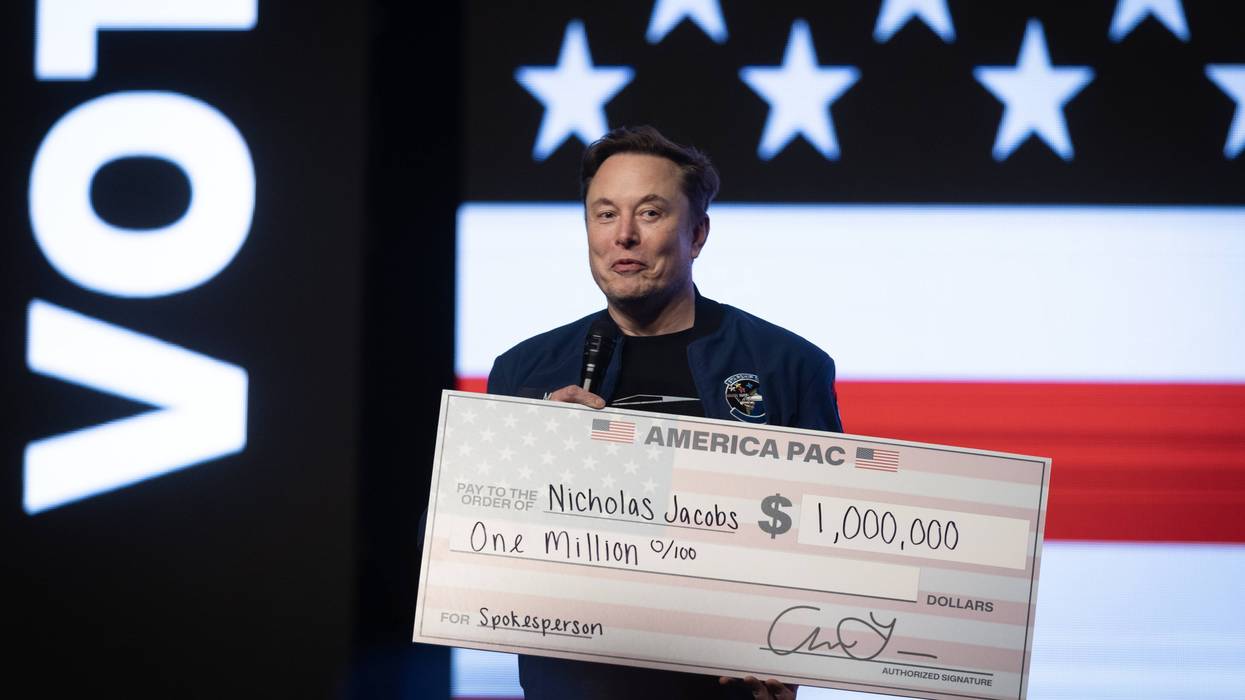
"He's not doing it to make Americans more free. He's doing it to make Americans his serfs," said one critic.
Far-right billionaire Elon Musk is spending an unprecedented fortune helping the Republican Party maintain its majorities in Congress, according to a Monday report in The New York Times.
The Times used filings made with the Federal Election Commission (FEC) to calculate that Musk has funneled at least $276 million to GOP groups and his own super political action committee (PAC) since July alone.
In total, the Times estimated that Musk has given $366 million in campaign contributions during the 2025-26 election cycle, which is even more than the $290 million he gave during the 2023-24 election cycle to return President Donald Trump and the GOP to power.
Much of Musk's giving this cycle has been to help Republicans maintain their majority in the US Senate, as he has donated $158 million to the Senate Leadership Fund, the super PAC charged with helping GOP candidates in Congress' upper chamber.
According to the Times, Musk's donation to the fund is "one of the largest political donations in American history, and more than the group’s Democratic rival raised from all of its donors that quarter."
Since July, Musk has also given $76 million to his America PAC, which is building what the Times described as "a sprawling canvassing program to try to turn out hard-to-reach Republican voters" in the coming elections.
The Times emphasized that the $366 million is only the publicly disclosed amount that Musk has given, and one source told the newspaper that the billionaire "has also made some seven-figure donations to support midterm candidates through groups that are not required to disclose their donors."
In a Monday social media post, journalist Daniel Nichanian described Musk's midterm spending as "absolutely insane," and said the billionaire is "single-handedly destroying records and swamping [Democratic] candidates."
Mark Jacob, former metro editor at the Chicago Tribune, said the massive Musk donations should deeply worry Americans who care about democracy.
"He's not doing it to make Americans more free," Jacob wrote. "He's doing it to make Americans his serfs."
Don Moynihan, professor of public policy at the University of Michigan, argued that Democrats cannot allow Musk's efforts to buy congressional elections go unanswered.
"Dems should promise to minimize contracts with clearly partisan government contractors and to impose more regulatory scrutiny on Musk," Moynihan wrote. "At this point, nothing to lose."
In addition to concerns about the sheer volume of Musk's donations, election officials have been raising alarms about how the money is being used.
As reported by CNN on Saturday, America PAC has been sending text messages to Colorado voters telling them that their request for a mail-in ballot has been received, then inviting them to "confirm now where and when to return it."
Carly Koppes, the Republican election chief in Weld County, told CNN that these messages have been causing significant confusion among voters, who automatically receive mail ballots without having to file a specific request.
“People were like, ‘Wait a second. I didn’t submit that request. Is something fishy going on? Did someone submit something on my behalf?'" said Koppes.
Josh Zygielbaum, the Democratic election chief in Adams County, told CNN that he'd received dozens of calls asking about the America PAC texts, and emphasized "that volume of phone calls is usually a good indicator for us that something’s a bigger issue because people generally don’t pick up the phone these days unless there’s a bigger concern."
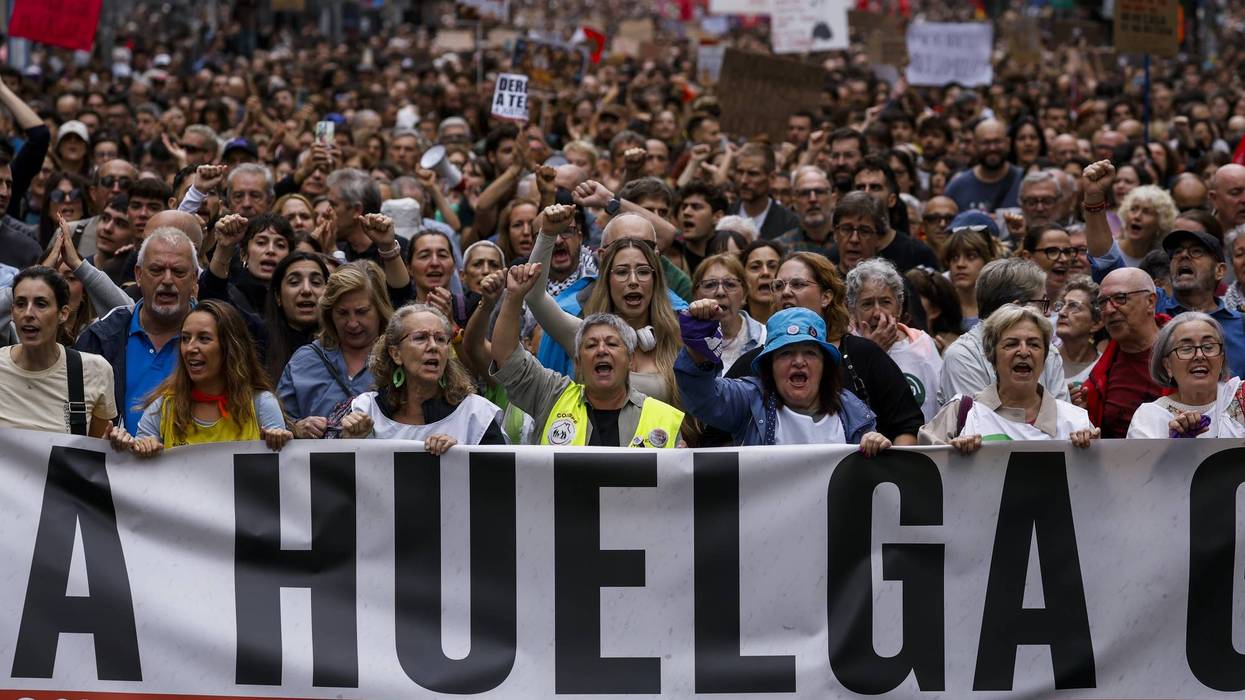
Working people notice when they're getting screwed but a massive right-wing media infrastructure exists to redirect their anger, probably the oligarchs’ greatest achievement.
Will the worldwide revolt against oligarchy reach America before the billionaires buy our elections this fall?
Two weeks ago tomorrow, on September 23rd, Madrid’s police had to cordon off a downtown street to carry an 87-year-old woman named María del Carmen Abascal out of the apartment she’d lived in for seven decades. She normally uses a wheelchair, so they carried her out on a stretcher, which provided some truly inflammatory social media video. All because her landlord wanted to raise the rent, which requires a change of tenants.
The pictures of María being carried out of her apartment lit Spain on fire; she’s become the face of the nation’s housing crisis which has seen average rents nearly double in the past ten years. This past weekend tens of thousands marched again, with about a thousand people camped out in Madrid’s Puerta del Sol: one banner read “Looking for an apartment, selling a kidney.”
While the pressure campaign worked on the landlord, who backed down and agreed to let her go home, it didn’t work on the “conservative” politicians who dominate the Spanish parliament. When Socialist Prime Minister Pedro Sánchez’s government proposed emergency tenant protections, the conservative opposition parties joined forces to kill them in parliament. As a result, Sánchez has pretty much been forced into taking the gamble of calling a snap election for November 29th.
Spain is the microcosm, but this is happening all across the developed world. France is on fire because students are tired of their schools being starved for resources. Populist movements are sweeping the European continent.
Forty-five years of “conservative” neoliberalism and austerity — all specifically designed to make the rich richer at the expense of working class people — have left average citizens furious.
And that fury is driving two parallel movements; the big question before us is which one will prevail both this fall here and over the next few years worldwide.
One movement is reflected in the encampment in Puerta del Sol where people understand that the landlord, land speculators, and the morbidly rich are the cause of their pain. You could call this the New Deal movement, for shorthand.
The other is seen in the far-right parties that have been topping the polls in Germany, France, and Britain by telling those same frightened people that it’s not the billionaires that are the problem; it’s that brown-skinned immigrant with a funny name or the queer kid who lives down the street.
Whichever side wins the argument over who’s the villain in today’s economic crisis for working people will be the one that ends up running these countries, including America.
We’ve seen this movie before here in America, although most people have no memory of it and could only vaguely recognize a quick telling of history.
The last time the morbidly rich held as much of our nation’s wealth and political power as they do today was the Gilded Age from the 1880s to the late 1920s, and popular rage at the oligarchs led to real progressive change:
Then working class people and progressives got complacent, thinking this would be the new normal forever, with a single paycheck being the entrée into the middle class. The oligarchs, however, were just getting started, just like they did during the Industrial Revolution following the Civil War that produced the first Gilded Age.
As I lay out in The Hidden History of American Oligarchy, the counterattack began in 1971 when a corrupt tobacco lawyer named Lewis Powell wrote a memo for the U.S. Chamber of Commerce urging corporate America to step up and use their great wealth to seize control of our courts, campuses, media, low-media-cost low-population states that could be flipped Red, and Congress.
The Heritage Foundation and ALEC followed within two years, as rightwing billionaires started buying radio stations, newspapers, and television networks, while Margaret Thatcher and Ronald Reagan turned the project into government policy.
The regulations and tax rates that had restrained great wealth and political corruption came down, and the money and political power of giant corporations and the morbidly rich have largely controlled both our politics and our economy ever since.
Working people noticed they were getting screwed but by then there was a massive rightwing media infrastructure to redirect their anger, probably the oligarchs’ greatest achievement.
For example, when Bush’s 2008 property- and bank-crash set off real rage at the banks and their oligarch CEOs, Koch-funded front groups organized it into the Tea Party and pointed it at Obama and his attempts to give all Americans healthcare.
It hit its peak of success when Donald Trump came down the escalator in 2015, telling voters he didn’t need anybody’s money because, as he put it, “I’m really rich.” Suddenly it wasn’t the rich who were screwing average Americans: it was the rich who’d save us!
To pull it off, he appropriated New Deal and Great Society language, promising to save and even strengthen Social Security, Medicare, and Medicaid; this is what con men have done throughout history.
The voters wanted their New Deal back with its middle class security on a single paycheck, but, true to Republican form, what they got instead was trillions in tax cuts for billionaires like Trump and his cabinet, paid for with almost a trillion dollars in cuts to Medicaid, an experimental program in six states to further privatize Medicare, and threats to cut Social Security.
One of the most interesting laboratories for finding out whether billionaire money can still buy public opinion the way the Kochs did with the Tea Party is Prop 40 in California, the 5 percent one-time tax on that state’s roughly 230 billionaires that will cover the healthcare shortfall the state will experience because of the Big Beautiful Billionaire’s Bill’s cuts to Medicaid.
A billionaire-backed group has gathered more than $187 million to stop it, while the measure’s backers have only pulled together an estimated $31 million. Google’s Sergey Brin alone has put in over $100 million.
The billionaires’ group even succeeded in getting two decoy measures, Props 41 and 42, on the same ballot, written so that if either one gets more votes than Prop 40, the billionaire tax dies even if a majority of Californians vote for it.
And the ads for the “No on 40” campaign is featuring teachers, firefighters, and the head of the state’s Planned Parenthood affiliates while the “Yes on 40” side says in the official voter guide that actual teachers, nurses, and Planned Parenthood workers support the tax.
It’s the same kind of phony grassroots campaign Reagan used when he promised cutting taxes and killing unions would increase prosperity, and when the Tea Party and GOP warned against “communism” in Obamacare, forcing the end to the possibility of a public option.
This same billionaire and corporate money is now pouring into the Senate races nationwide, using tools the robber barons of the late 19th century could have only dreamed about.
The National Republican Senatorial Committee released a deepfake of Texas Democrat James Talarico in a dress with a disclosure so small and faint that Berkeley digital forensics expert Hany Farid said most people wouldn’t immediately know it was fake. Another group produced a phony “Daisy” ad portraying him as a doctor performing gender surgeries on children.
In Michigan, Republicans greeted Abdul El-Sayed’s primary win with ads built around his full name and the Muslim Brotherhood, and their main super PAC has committed $51 million to that one race. On Sunday, I watched MS NOW play two of the newest deceptive Republican deepfakes, one putting Talarico in a makeup chair and another inventing “terrorists” in El-Sayed’s family.
Spending just on Senate races is projected to pass $3.4 billion this cycle, and most of the big money is just now starting to hit the airwaves and, thus, tightening the races that had seemed were in the bag for Democrats.
And if the lies don’t work, there’s always the power of our currently-billionaire-run government to insert itself in ways that can spin an election out of control. Last September Trump signed a national security memorandum called NSPM-7 that directs the FBI, the Treasury, and the IRS to go after the networks and funders behind what it calls domestic terrorism, and it lists among the “indicators” of that terrorism:
“anti-Americanism, anti-capitalism, and anti-Christianity.”
By that standard, María’s Spanish neighbors camped in a public square to protest a greedy landlord could find themselves under investigation. Add the masked, anonymous, trigger-happy ICE thugs already working our streets with their new electric shock gloves, and the machinery of a “papers, please” society is right here right now.
There’s no way this one single election will settle all this. During the first Gilded Age, it took 45 years to go from the Sherman Act to Social Security — with quite a few lost elections along the way —and the people who won that fight went through it never knowing if they’d prevail or not; the biggest intervention was probably the Republican Great Depression.
But this November is a hinge moment in history. A Congress that can check Trump, a billionaire tax passed in the biggest state in the union, and senators like Talarico and El-Sayed who explicitly have run against the Epstein billionaire class would tell every Republican and the oligarchs who own them that their old trick of pointing at immigrants and trans kids has stopped working.
On the other hand, if the deepfakes, decoy ballot measures, massive rightwing media penetration, algorithmic manipulation on billionaire-owned social media platforms, and billions in ads win out instead, they’ll be used in every election from here on.
The easy lesson here is that if Spain’s protesters got an 87-year-old woman back into her home by showing up, we can do the same for our democracy that’s been so badly battered by 45 years of Republican con men and Democratic neoliberals.
The next No Kings day of action is Saturday, October 17th, and “No Kings” has always meant “No Oligarchs,” too.
Check your registration at vote.org, call your members of Congress through the Capitol Switchboard at 202-224-3121 and tell them you want deepfake political ads outlawed, and if you live in California, vote yes on 40 and no on 41 and 42.
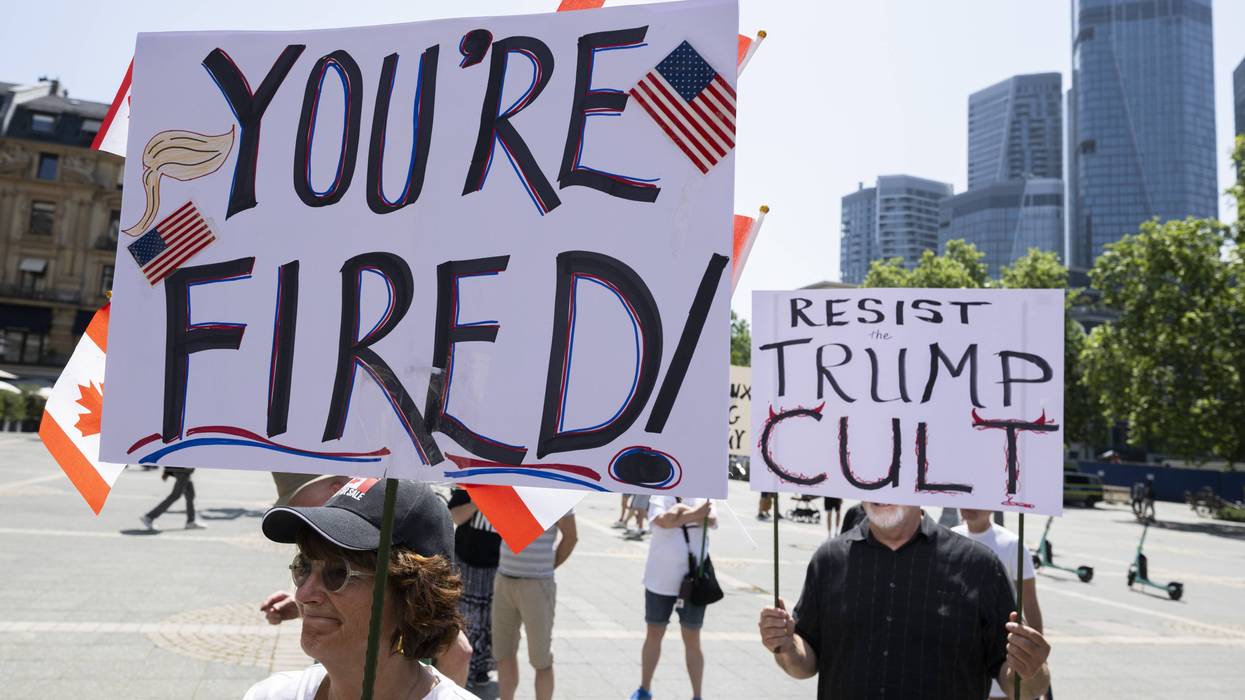
We have built republics where the sword of Damocles hangs over the citizen’s head—not over that of the ruler. Giving people the ability to recall elected presidents could change this.
As Cicero wrote in The Tusculan Disputations (three centuries before Julius Caesar, the dictator who ruled Rome), the tyrant of Syracuse, Dionysius, tired of the flattery and envy of his courtier Damocles, invited him to sit on his throne. Damocles enjoyed the banquet for no more than a few minutes. When he looked up, he saw a sword hanging above his head, suspended by a horsehair. It was a warning: Those in power live under a constant threat. If they are aware of it, they will be alert to the consequences of their decisions.
At that time, the common people were more feared than the city’s wealthy. At that time, it was the wealthiest who had to foot the bill for most of the wars they dared to wage. But Julius Caesar was assassinated a year later, not by his own people, but by a group of senators representing the Roman oligarchy. It was an act of mutual betrayal, since these senators had been his main allies in government. Exactly 30 years later, Plutarch reported on the assassination of Quintus Sertorius in Hispania at the hands of mercenary officers, who did not receive the expected compensation—a classic reminder that “Rome does not pay traitors.”
Two thousand years later, we have achieved the opposite marvel: It is not the rich who pay for the wars they invent, but they are who profits from them. It is the people who provide all the money and all the blood that fuel a system administered by the sect of neo-feudal lords—a system infinitely more corrupt, more degenerate, and more brutal than the Roman Republic and the Roman Empire combined.
A business owner’s “sacred right” to fire someone who, in his judgment, is not meeting expectations does not apply to those at the top.
Systematically, and especially in so-called liberal democracies, the traitors are the Julius Caesars and their oligarchs; they are the Quintus Sertoriuses and his officers. They are the puppets that the puppeteer will make kill one another, to the people’s amusement. They are the Yamandú Orsis and the Delsy Rodríguezes on the left. They are the Javier Mileis, the José Antonio Kasts, the Alberto Fujimoris, the Jair Bolsonaros, and the Abelardo de la Espriellas on the right.
We have built republics where the sword of Damocles hangs over the citizen’s head—not over that of the ruler. Puppet presidents, after having betrayed their people and themselves, sleep soundly. They know—or believe—that for four or eight years, no matter what happens, no one can touch them. As history shows, this is an illusion; but history also shows that justice delayed is justice denied, because we humans cannot wait 100 years. We don’t even have a reserve supply of young people to make up for lost time.
Every four or five years, citizens of countries that perceive themselves as full-fledged democracies—such as Uruguay—sign a blank contract. They elect a president, and if they later discover that the promises were mere window dressing, all that remains for them is therapy, resignation, and republican patience until the circus returns to town.
Uruguay takes pride—with some justification—in its civic tradition, which includes plebiscites and referendums, such as the one in 1989 that confirmed impunity for human rights violators and, in the 1990s, halted privatizations despite the almost unanimous support of politicians in favor of the Washington Consensus. But neither Uruguay, nor Argentina, nor Brazil, nor Chile, nor Paraguay, nor Peru has a mechanism for citizens to recall their presidents. Impeachment proceedings are unreliable, because they are mediated by a representative body invented to ensure “responsible stability” for the major shareholders in each country.
In controlled democracies, laws are written by the powerful—the feudal lords of capital—who are almost always residents of the imperial capitals. When workers’ interests do not offend or inconvenience them due to their modesty, these laws are also passed off as achievements of the organized people. However, a law can be repealed; a term of office cannot—especially when the puppet plays along with those who hold the real power to promote, buy, extort, and remove.
Other societies have this instrument of removal, though it has rarely been used. In California, Gov. Gray Davis was recalled in 2003, while Gavin Newsom survived his recall in 2021. In Venezuela, Bolivia, Ecuador, and Mexico, the recall process has been included in those countries’ constitutions during the presidencies of Hugo Chávez, Evo Morales, Rafael Correa, and Manuel López Obrador. In Colombia (approved by César Gaviria), recall is available for mayors and governors, but the requirements are so high that there are almost no cases.
As is more than obvious, this mechanism is not enough to ensure a more just and direct democracy, but it remains a useful sword of Damocles; however, a democratic instrument is not measured by how often it is used, but by what it prevents. A fire extinguisher isn’t meant to put out fires every day either. Recall is not merely a punishment. It is, above all, a form of political education.
The objections are predictable: The instrument could become a weapon for sore losers; it could lead to a state of perpetual campaigning. Historical experience suggests otherwise, and, moreover, we must always begin a political reflection by asking ourselves whether these arguments serve those who hold the real power or the people. Even generous donations are used to do harm. That is why every reform bill must be carefully worded to guarantee this popular right and prevent good intentions from being hijacked once again.
To prevent abuse, the process might require that a high percentage of citizens sign the petition and that it cannot be initiated in the first or last year of the term. Designing the instrument correctly is the civilized way of ensuring it is not abandoned.
It will also be said that Uruguay already has impeachment and elections every five years. But impeachment is a matter for the elites—resolved among legislators who answer to the same parties that support the president or the opposition, both more or less anointed by the owners of capital. When the gap between campaign promises and government actions is displayed with brazen paternalism, citizens watch as spectators as they are humiliated. The school of resignation and futile complaining has been the mother of this political pornography.
A society that learns that voting is an irrevocable gamble ends up voting with distrust and, in the long run, ceases to participate. The old observation we wrote in 2013 for a legal journal: The worst thing that can happen to a democracy is for its citizens to leave politics in the hands of politicians (Revista Forumul Judecătorilor, No. 1/2014).
After all, in a world shaped by capitalist dogmas, it is always the heads of large corporations and their puppets in the political system who do not abide by their own laws. A business owner’s “sacred right” to fire someone who, in his judgment, is not meeting expectations does not apply to those at the top. The freedom of the powerful is protected by money and the law; the freedom of the powerless, by rights and legitimacy.
Neither can be achieved or defended without some form of radical struggle.
This is critical stuff: no democracy can survive the assault of what Jefferson referred to as “an artificial aristocracy founded on wealth and birth, without either virtue or talents” when only one family or political perspective dominates the media.
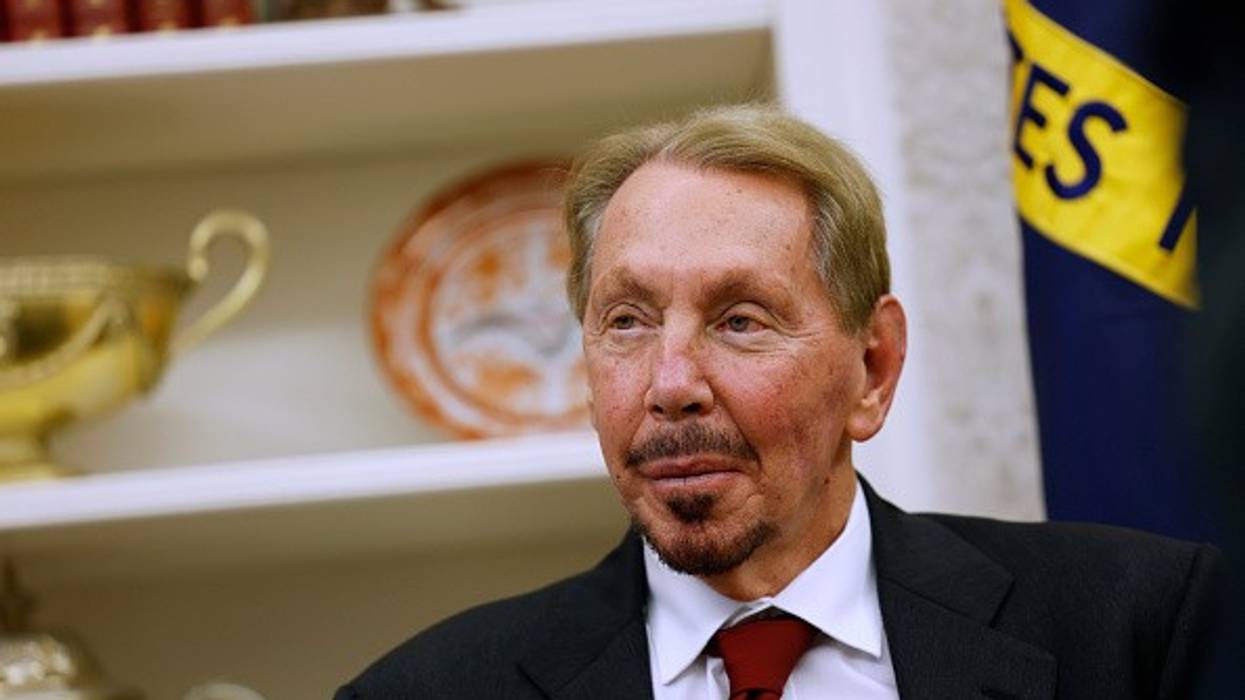
A CNN insider told Variety magazine yesterday that the mood inside CNN right now is “like a funeral.” Nepo-baby David Ellison, bankrolled by his father who’s one of the richest men in the world and a major Trump suck-up and donor (and is in the Epstein Files), is on the verge of taking over the company that owns the news network.
The day-before-yesterday, California Attorney General Rob Bonta and a group of Democratic state attorneys general rolled over and agreed to stop trying to block the $111 billion takover of Warner Bros. Discovery, now to be almost 50% funded by rightwing dictatorships in the Middle East who’ve given billions in gifts, loans, and investments to Trump and his family.
California Governor and presidential hopeful Gavin Newsom hailed the agreement, saying it would both protect California jobs and preserve CNN’s “editorial independence.”
If you believe that, I’ve got a bridge for you in Brooklyn.
As The Lever reported yesterday, the fine print tells the entire story:
Going forward, CNN and CBS will be overseen by an “editorial independence board” composed of people hand-picked by the Ellisons and their agents. When Rupert Murdoch took over The Wall Street Journal from the Bancroft family back in 2007, he ran the same scam, as CBS News then reported:
“As part of the deal package that cemented Rupert Murdoch's longstanding effort to acquire Wall Street Journal publisher Dow Jones & Co., the two sides agreed to create an editorial board that would act as a buffer between the media mogul and the newspaper…”
That worked out real well, right?
There are also squishy promises for movies and jobs that are not backed up with any meaningful enforcement mechanism, and all of Ellison’s commitments can be set aside via a force majeure clause that lets Paramount off the hook in the event of “strikes, labor disruptions, [or] economic recessions.” So, all Trump has to do is extend the Iran war another few months to crash our economy and the oligarchs are free to do what they want!
And if that doesn’t happen, there’s still the sunset clause that ends all their commitments in five years. Lee Hepner of the American Economic Liberties Project called it “a countdown to a cliff.”
These are the same billionaires who handed Trump a check for $16 million to “settle” a frivolous lawsuit against 60 Minutes, then cancelled Stephen Colbert’s show days after he referenced that as a “big fat bribe,” then reportedly offered the Trump White House up to $20 million in free “public service announcements” and installed a Trump-humping “ombudsman” at CBS News to police “bias” at the network.
The simple reality is that in every country that’s slid from democracy into strongman rule over the past half-century, the first step was capture of the media by friends of the regime.
And the FCC, run by Trump’s favorite brown-noser Brendan Carr, has blessed Saudi Arabia, the UAE, and Qatar taking a 49.5 percent equity state in the new entity that will control two of the three most important news networks in America.
Don’t expect any future analysis of Saudi involvement in 9/11, critical exploration of what Trump gave up in exchange for a $400 million 747 jet, or the billions that have gone to Kushner and the Trump boys, Uday and Qusay.
Because of momentous decisions made by presidents Reagan and Clinton, freedom of the press in America is now as much an economic issue as a political one. As I laid out in The Hidden History of Monopolies (with a foreword by Ralph Nader), when Reagan came into office 90 percent of the American media landscape was scattered among over 50 companies; now a mere five conglomerates dominate that 90 percent of the media Americans consume.
Reagan stopped enforcing the Sherman Anti-Trust Act (and others) in 1983, leading to the “M&A Mania” of mergers and acquisitions that characterized the late 1980s and 1990s. As a result, there’s not a single major industry in America that’s not dominated by a handful of companies that generally behave like cartels, and the average American family pays an annual “monopoly tax” — in additional costs for pretty much everything — of around $5,000, according to economist Thomas Philippon.
Cell phone service that costs $15 a month in France or $12 a month in Australia bills out at an average of $61.85 per month in the United States. High-speed broadband that’s a bit over $31 a month in France or $36 in Germany (for higher speeds and better reliability than almost anywhere in the United States) averages nearly $70 per month in the US.
Similar metrics are found with pharmaceuticals, airfares, and medical costs, among dozens of other product and service categories.
But it’s most deadly to democracy when it comes to the media.
Since Bill Clinton signed the Telecommunications Act of 1996 — which eliminated most of the rules about how many outlets one family or company could own — oligarchic monopoly of the media has spread its cancerous tentacles into politics, as well, destroying the ability of government to make policy that allows free people to make their own decisions about their own lives.
As Teddy Roosevelt, the great trust buster, said:
“There can be no effective control of corporations while their political activity remains. To put an end to it will be neither a short nor an easy task...”
And as Adam Smith wrote, in Wealth of Nations,
“...the monopoly which our manufacturers have obtained...like an overgrown standing army, they have become formidable to the government, and upon many occasions intimidate the legislature.”
And this is no small project by billionaires who explicitly distrust democracy and want complete control over America and her people. I’ve seen how this works up-close and personal when a Republican billionaire came after a media business I helped start.
In 2003, Louise and I had sold our last business and were retired in Vermont; that Thanksgiving, we drove to Michigan to visit my family for the holidays and all the way there I kept tuning across the radio dial looking for an intelligent conversation to occupy my mind while driving. In city after city, all I could find was Sean Hannity.
The outcome of that trip was my writing the initial business plan for Air America Radio and starting the radio show I’m still hosting 23 years later as a “proof of concept.” We were leasing stations from Clear Channel and reached over 90 percent of America; many credited Obama’s 2008 victory to our being on the air.
So, of course, billionaire Mitt Romney — with an eye to running for president in 2012 — had his company Bain Capital buy up all of the Clear Channel radio stations and, one at a time, take us off the air until we didn’t have enough of a signal to make money selling advertising. The network died in 2010 (and Romney lost).
The people who own the media pipes, in other words, get to decide what flows through them.
Remember when Uber was offering rides for half the price of taxis, until they’d put so many of the taxi companies out of business? Or Walmart offering goods at little to no margin just to drive local competitors out of business? Monopolists and wannabe monopolists understand exactly how this works.
While Rupert Murdoch reportedly lost an average of $80 to $90 million a year for about five years before Fox News turned a profit, he never viewed that as a loss: it was an investment. Economists Stefano DellaVigna and Ethan Kaplan later did the math and found that Fox News succeeded in shifting 3 to 8 percent of its audience toward the Republican Party, which in Florida alone in the 2000 election was worth more than 10,000 votes for George W. Bush in a state he carried by fewer than 600.
Had there been no Fox “News,” in other words, there would have been no war in Iraq or Afghanistan, and thousands of Americans and millions of Iraqis and Afghans would still be alive. And there would have been no Bush tax cuts, so our national debt would be nowhere near so bad. And Al Gore would have done something about the environment.
This is critical stuff: no democracy can survive the assault of what Jefferson referred to as “an artificial aristocracy founded on wealth and birth, without either virtue or talents” when only one family or political perspective dominates the media.
Franklin D. Roosevelt — the Bernie Sanders of his day — saw all of this coming. On April 29, 1938, in his Message to Congress on the Concentration of Economic Power, he told the country what fascism actually is:
“The first truth is that the liberty of a democracy is not safe if the people tolerate the growth of private power to a point where it becomes stronger than their democratic state itself. That, in its essence, is fascism—ownership of government by an individual, by a group, or by any other controlling private power.”
FDR understood that when a monopolized industry gets big enough, its main rival then becomes the government itself because only the government has enough remaining power to break it up. Adam Smith made the same point in Wealth of Nations in 1776, writing that the East India Company and its allies had, “like an overgrown standing army,” become “formidable to the government” and could “intimidate the legislature.”
The simple reality is that in every country that’s slid from democracy into strongman rule over the past half-century, the first step was capture of the media by friends of the regime.
— Four days after Vladimir Putin was inaugurated in May, 2000, ICE-like masked agents raided the offices of Media-Most, the company that owned Russia’s largest independent national TV network (NTV). They threw its owner, Vladimir Gusinsky, in prison on fraud charges and confiscated his stake in Gazprom, then took over the network with the deal finalized in April of 2001. That same year Boris Berezovsky was forced to sell his share of the ORT network to Roman Abramovich, a fellow oligarch but one who’d pledged his total loyalty to Putin. Within a few years, every national channel in Russia was in the hands of the state or a Putin-friendly billionaire, and still are.
— Viktor Orbán’s people were slightly more sophisticated in 2018, having his oligarch buddies buy up media properties after he sued dissenters into bankruptcy by claiming libel. By the following year, the media monitor Mérték estimated that 77.8 percent of Hungary’s news media was directly or indirectly controlled by Orbán’s party, which is why when Péter Magyar successfully ran against Orbán he had to visit virtually every city and town in the country to get around the media blackout on his candidacy.
— In Egypt, el-Sisi was less elegant in his approach to the media. He had his version of the FBI — the General Intelligence Service — use a front company called Eagle Capital to buy up virtually every TV network, radio station, and newspaper in the country. Reporters Without Borders found that a dozen once-powerful media owners were pushed to sell to intelligence-linked companies, while the handful of businessmen who backed Sisi got to keep theirs. The spy agency’s media group now owns the ON, CBC, Al-Hayah, and DMC networks, and those Egyptian journalists who dared criticize the regime all went to prison.
— Rodrigo Duterte in the Philippines used regulatory power the same way Trump lickspittle Brendan Carr’s FCC does. The country’s largest newspaper, the Philippine Daily Inquirer, was forced to sell to a billionaire Duterte ally under threat of imprisonment for breaking “media rules.” Duterte’s rightwing buddies in Congress then refused to renew the broadcast franchise of ABS-CBN, the nation’s biggest network, which had made the mistake of exposing the extrajudicial killings of his so-called drug war. Eleven thousand people lost their jobs, and Nobel laureate Maria Ressa’s little opposition newspaper The Rappler was ordered shut.
Almost without exception, this is the process autocrats use to destroy democracies, as documented brilliantly by people like Timothy Snyder and Ruth Ben-Ghiat.
First the strongman’s friends acquire the newsrooms, then the coverage softens, then the elections start experiencing “anomalies,” and by the time most people notice, there’s nobody left on the air to expose the oligarchs and fascists.
As Thomas Jefferson wrote in 1786:
“Our liberty depends on the freedom of the press, and that cannot be limited without being lost.”
So, here we are. Bonta and Newsom have caved, and only the attorneys general of New York, Connecticut, Massachusetts, and Minnesota tried to hold out. You may want to call your own state attorney general and ask where they were on this case; you should be able to easily find their number with a quick internet search.
We should also contact our members of Congress (202-224-3121) and demand hearings on the FCC’s corrupt behavior, restoration of our anti-trust laws, and a return to the media ownership limits that Clinton blew up in 1996.
And please share this piece and hartmannreport.com with anyone who still thinks it can’t happen here. It has already happened everywhere else that’s seen their democracy disintegrate, and the first thing to go into oligarchic hands was always the news.
"Standing up to Elon Musk should be an easy layup for any Democrat."
SpaceX CEO Elon Musk reportedly plans to spend at least $100 million to help Republicans in the 2026 midterms, and some critics are questioning why Democrats aren't doing more to highlight the efforts of the far-right billionaire—so central to President Donald Trump's destructive second term—to buy elections and further corrupt the nation's political process.
A Monday report from NBC News highlighted how Musk has taken a quieter approach to campaigning for the GOP than he did in 2024, when he personally appeared at campaign rallies and promised $1 million checks to voters.
Republican operatives who spoke with NBC said they worried that Musk getting more publicly involved in the campaign could backfire, with one consultant saying it could be a "mistake" if the South African-born billionaire became "the story" in the closing weeks of the election.
While Republicans might want to keep Musk's campaign contributions quiet, critics pointed out that Democratic candidates are under no obligation to do the same.
In a Tuesday social media post, Princeton historian Kevin Kruse expressed bewilderment that Musk was not a central issue for many Democratic campaigns, despite the fact that he's spending tens of millions of dollars trying to defeat them.
"Many Democrats just refuse to take the open shot at Musk," wrote Kruse. "He's a ripe, rich target, and an obvious way to dramatize key issues and mobilize key voters, but some of them are still sitting on their hands. Not sure if they're cowards who don't want to take him on or if they're complicit in taking money from him and people like him, but it's staggering."
"Standing up to Elon Musk," Kruse emphasized, "should be an easy layup for any Democrat."
Journalist Julian Sanchez endorsed Kruse's analysis, describing Democrats' reluctance to go all in against Musk as "a weird unforced error," while pointing to polling showing that the SpaceX CEO is "almost as unpopular" as Trump.
Sanchez also offered up a mock response for any Democratic candidate targeted by Musk's money cannon.
"You’ve probably seen some ads lying about my position on trans issues," Sanchez wrote, imagining a Democratic ad. "Maybe you’re wondering why the campaign is about a tiny fraction of the population when a failed illegal war is skyrocketing gas prices. It’s because a weird billionaire hates his trans daughter and can't shut up about it."
As reported by journalist Judd Legum on Tuesday, Musk's super political action committee has been obsessively attacking transgender rights by "blanketing the internet with digital ads falsely accusing Democratic Senate candidates of supporting 'taxpayer-funded sex changes for kids.'"
Daily Kos reporter Oliver Willis argued that Democrats' reluctance to put Musk front and center raises red flags about how they'll govern should they re-take Congress
"The refusal to go after Musk is a serious validator of the notion democrats have no real interest in winning," Willis wrote. "No serious party would let someone like him emerge as a major funder of the opposition and just… not say anything about it."

"If there was ever a time in human history, in our country and throughout the world, that we have got to come together and create a world not based on greed but based on justice, based on decency, now is the time."
US Sen. Bernie Sanders warned in a speech late Monday that the world is hurtling toward "an extremely dangerous global oligarchy" whose unprecedented concentration of wealth and political power endangers democratic institutions, the environment, and humanity's collective future as artificial intelligence rapidly advances.
"The oligarchs of today, worth hundreds and hundreds of billions of dollars, having investments all over the world, fervently believe that they are the masters of the universe, and that they, through their enormous wealth and power, have been ordained to rule the world," Sanders (I-Vt.) said in an address at the historic Riverside Church in Manhattan, where Martin Luther King Jr. delivered a famous speech condemning the Vietnam War. "Today we say to those oligarchs: This country, this world, belongs to all of us, not just you."
Sanders used his remarks, delivered as world leaders arrived in New York City for the United Nations General Assembly, to decry a massively unequal status quo under which political leaders cater to the needs of billionaire donors and corporate interests rather than the broader population, whose wages are being swallowed by rising costs and whose communities are increasingly devastated by pollution and war.
Sanders also warned about the rise of "right-wing demagogues" who are exploiting real material struggles and government failures to advance nefarious agendas that pit "working people against each other based on the color of their skin, where they were born, or their religion."
"Instead of producing more bombs and weapons and seeing the military-industrial complex enjoy huge profits, governments throughout the world need to come together to feed the children, take care of the vulnerable, and protect our planet from the ravages of climate change," said Sanders, calling for an end to US military assistance to Israel, which is using American-made weaponry to carry out its genocidal assault on the Gaza Strip.
"Never before in human history have so few people held so much wealth and so much power, never before in human history have we had such enormous concentration of ownership," the senator said, warning that advancements in AI technology could dramatically intensify the crises facing humanity if control isn't wrested from "a handful of Big Tech oligarchs."
Watch Sanders' full speech:
Sanders called on US President Donald Trump, a billionaire who has dismissed warnings about the threats posed by AI, and Chinese President Xi Jinping to "begin the process of negotiating a comprehensive treaty to establish a pause on advanced AI and a ban on AI superintelligence" when the leaders meet this week.
The progressive senator also cautioned against "despair and depression" in the face of pressing global challenges, saying, "We got to stand up, we got to fight back, we've got to create the kind of nation and world that you and I know we can create."
"If there was ever a time in human history, in our country and throughout the world, that we have got to come together and create a world not based on greed but based on justice, based on decency, now is the time," said Sanders.
"Have I mentioned lately that oligarch-owned media consolidation is bad?" said one critic.
Filmmaker Alex Gibney's scathing four-hour documentary about SpaceX CEO Elon Musk has received rave reviews since its debut at the Venice Film Festival earlier this month, but it could soon be without an international distributor.
According to a Wednesday report from The Hollywood Reporter, Comcast-owned Universal Pictures, which holds distribution rights to the film outside the North American market, is getting "cold feet" about releasing it.
"The company has not dated the movie," explained The Hollywood Reporter, "has not communicated with the filmmaking team about its plans, and generally appears to be rethinking the release of a project that it once showed high enthusiasm for but is now politically sensitive for parts of the Trump administration."
Two sources told the publication that they wouldn't be surprised if Universal decided to not release the movie and returned its distribution rights to the filmmakers, even though doing so would require the studio to pay a kill fee.
The Hollywood Reporter noted, however, that it's unlikely that the film would be without an international distributor for long because "distributors in individual countries have been salivating over the film ever since the four-hour project began gaining buzz in recent weeks."
Slate culture writer Sam Adams pointed out in a social media post that independent distributor Bleecker Street "is holding steady on releasing Musk in the US, and actually moved up the opening to October 9."
Emmy Award-winning sports broadcaster Brian Webber noted that there is past precedent for Hollywood studios coming under pressure to not release a movie that is critical of a wealthy oligarch.
"William Randolph Hearst famously tried to... suppress Citizen Kane from being released," Webber explained in a social media post. "Hollywood had more guts in the 1940s—probably because there was real competition among the studios and not today's oligopoly problem."
Tech journalist Karl Bode reacted with dismay to news that Universal might spike its release of the documentary.
"Have I mentioned lately that oligarch-owned media consolidation is bad?" he asked rhetorically.
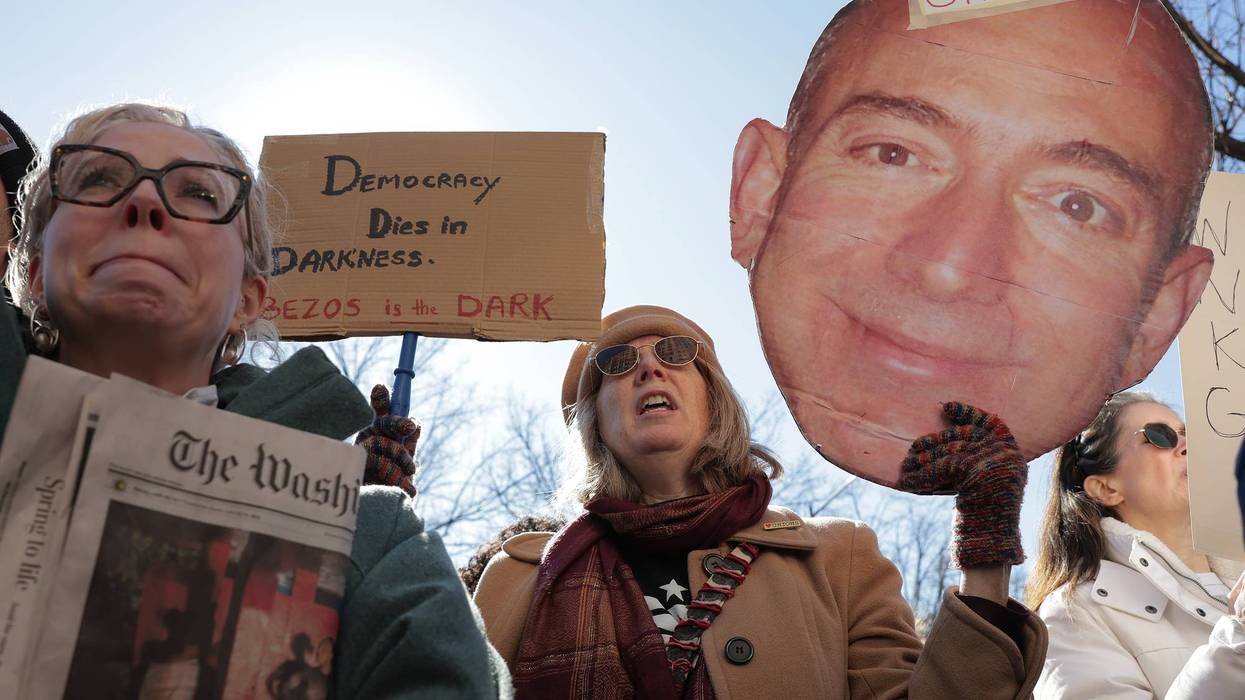
When it comes to media, journalism, and the broader information landscape, there’s a strong practical need to be utopian right now—to give us hope but to also provide clarity as to what we should be fighting for.
The Trump 2.0 era has intensified a deeply entrenched pathology in the American media system: concentrated corporate ownership. During less perilous times, legitimate concerns about a few corporations capturing so much of our news and information have often been dismissed as conspiracy theories and paranoia. But Donald Trump and his coterie of plutocrats have made our media oligarchy problem acutely evident and impossible to ignore.
Constant controversies—from government and corporate censorship of television comedians like Jimmy Kimmel and Stephen Colbert to the algorithmic and editorial abuses of Elon Musk’s X and Jeff Bezos’s Washington Post—remind us why media ownership holds such high stakes for any semblance of democracy. Meanwhile, rightwing nepotistic dynasties like the Murdochs and the Ellisons hold inordinate influence over what millions of people can see, hear, and read in their daily media.
Our current media system is simply incompatible with democracy, making structural media reform an urgent priority. This includes unwinding previously approved and pending mergers—exhibit A being Paramount Skydance’s potential acquisition of Warner Bros. Discovery (which owns CNN and HBO, among other key holdings)—as well as trust-busting corporate media behemoths by forcing them to divest major components of their sprawling conglomerates.
Undoing the wreckage will take time, but we must lay the groundwork now to launch necessary structural reforms the moment we dethrone Trump and his ilk. This project requires a clear analytical framework for understanding exactly why such run-amok media concentration is bad for democracy, and why breaking up media conglomerates is both necessary and insufficient for reconstructing the media we need from the ground up.
Big corporate media mergers are bad for everyone other than those few who stand to profit. They’re harmful for media workers, consumers, local communities, First Amendment freedoms, and democracy writ large. Over the years, the dangers for democracy posed by media concentration have been borne out by empirical evidence. Research shows that media conglomeration can lead to less local news, more advertising, and shifts toward conservative political commentary, especially under the ownership of rightwing companies such as Sinclair.
According to basic democratic theory, ensuring diverse voices, viewpoints, and stories in our media requires a pluralistic range of media owners. However, the hypercommercialized, corporate-dominated US media system wasn’t devised to privilege democracy. In fact, given its weak public media system, oligopolistic media markets, and light public interest regulations—many of which eroded over time or simply were ignored (or weaponized under Trump)—the US media system is almost perfectly designed to not serve democracy.
Within this hypercommercialized media structure, despite many individual journalists’ courageous work to the contrary, profit imperatives too often trump democracy (bad pun intended). Capitalist logics undercut and skew democratic discourse by encouraging clickbait, excluding low-income communities, and degrading the quality of journalism. Capitalist incentive structures also lead to pronounced deficits through sheer cost cutting, and by treating news and information as commodities, not public services, and audiences as passive consumers, not engaged citizens.
Even during the best of times, media corporations often maximize profits by ruthlessly cutting corners and forcing their media workers to do more for less. Too often, costly services like high-quality journalism are dismantled while content that’s cheaply produced and easily replicated—like shouting heads across ubiquitous screens, endlessly capturing our attention for advertisers—gets amplified.
Media conglomeration only intensifies these commercial logics. For example, cost cutting typically accelerates immediately following big mergers when companies take on tremendous debt. New corporate ownership has subjected CBS to such restructuring and would likely do the same to CNN if the pending merger goes through, for which Paramount Skydance is reportedly incurring $79 billion in debt. To compensate, media corporations often combine newsrooms and lay off reporters—or eliminate journalism altogether in favor of opinion and commentary.
In addition to decimating jobs, managing such debt tends to result in outsourcing costs to audiences by raising prices, offering lower-quality programming, and providing less creative cultural fare. This outcome is especially detrimental given a media landscape already riddled with news deserts, in which scarce original journalism and local media content are being produced.
The debasement of our news and entertainment media is bad enough. But media conglomeration also creates private tyrannies wherein oligarchs command broad swaths of our media. Driven by perverse incentives, these media barons wield dangerous control over public discourse, warping how important issues get framed and what stories get told.
Conferring such political economic power onto a small elite is itself a severe democratic threat. Whether through lobbying, campaign contributions, or preferential press coverage of politicians in exchange for regulatory favors, these media oligarchs almost always develop corrupt relationships with those in government, undercutting the press’s much-vaunted “watchdog function” of holding the powerful to account.
Moreover, media consolidation is a structural precondition for authoritarianism. We saw such patterns play out under Hungary’s former Prime Minister Viktor Orbán, who demonstrated how authoritarians needn’t control newsrooms by gunpoint. Rather, they can rely on chummy oligarchs to discipline the media for them, resulting in news feeds and media channels saturated with government-approved talking points and propagandistic narratives that brook little dissent toward those in power.
It shouldn’t surprise us that billionaires are likely to deploy their media assets to advance their class interests. This is especially prevalent in the United States, given devalued media properties and extreme concentrations of wealth. To provide one stark example: Jeff Bezos bought The Washington Post in 2013 for less than half of what he would later pay for his super yacht.
In the final analysis, such concentrated corporate ownership—whereby a tiny elite commands so much power over our media—is antithetical to democratic society. Even if today’s villainous oligarchs had the hearts of angels, it’s far too much power for any individual to wield over our news media. Just as every billionaire is a policy failure, every billionaire-owned media outlet is a profound threat to our democracy.
How did the United States fall under this media oligarchy? Many of our contemporary media failures trace back to specific policies and political decisions. One such inflection point occurred during the 1930s and 1940s, when policymakers established a privatized and highly commercialized broadcast media system tempered by relatively weak public interest protections. The latter included what became known as the Fairness Doctrine, which President Ronald Reagan’s Federal Communications Commission (FCC) jettisoned in 1987.
The United States belatedly established a chronically underfunded public broadcasting system in the late 1960s. But after a period of modest progressive policymaking, we began rolling back media ownership restrictions and “deregulating” our media in the 1980s, leading up to the infamous Telecommunications Act of 1996, when media consolidation began to escalate. In many ways, our oligopolistic media landscape has only worsened since the merger mania of the Clinton-Bush neoliberal heyday.
Particularly alarming is the utter collapse of local journalism, in which more than 40 percent of our newspapers and three-quarters of our local journalists have vanished since the early 2000s. Meanwhile, FCC Chair Brendan Carr is a loyal apparatchik for bullying what’s left of our independent media into capitulation to Trump.
Combined with the federal defunding of our public media, few structural alternatives and countervailing forces can withstand a blasted media landscape dominated by profit imperatives and a handful of media moguls. What’s to be done?
Today we face a dangerous new terrain upon which an authoritarian government weaponizes a hypercommercialized corporate media system against democracy. Yet, the market libertarianism and policy failures over the decades that enabled media oligarchy weren’t inevitable or natural, nor must they be permanent. These were political choices, and politics are subject to human agency and change. But first we must denaturalize this hypercapitalistic system that turns our media against democracy.
To begin, we must recognize that our media pathologies run even deeper than bad billionaire media owners doing bad things. Ownership structures are only part of the problem—a key part, to be sure—downstream from the core root of our media polycrisis: capitalism. Confronting media monopolies requires us to reckon with the underlying conditions that made such concentration possible, specifically the hypercapitalist logics capturing our information and communication infrastructures from root to branch.
Indeed, our media’s systemic problems predate the recent spate of mergers under Trump. While today we must stop mega media mergers, tomorrow we must create an entirely new public media ecosystem in service to local communities. To combat the capitalist capture of the entire American media apparatus that produces various kinds of “market censorship” that would-be autocrats like Trump can exploit, we must create a non-capitalistic system—a truly public and independent media system—that’s owned and controlled by us all.
Fortunately, recent positive signs have already emerged at the state and local levels, ranging from contesting media mergers by state attorneys general to making public investments toward local journalism. Yet we must broaden our political imagination and plan for bold national policy interventions for the post-Trump moment. There’s a strong practical need to be utopian right now—to give us hope but to also provide clarity as to what we should be fighting for. We need a long-term vision firmly planted on our political horizons—we can dare to imagine a media system that privileges democracy over power and profit.
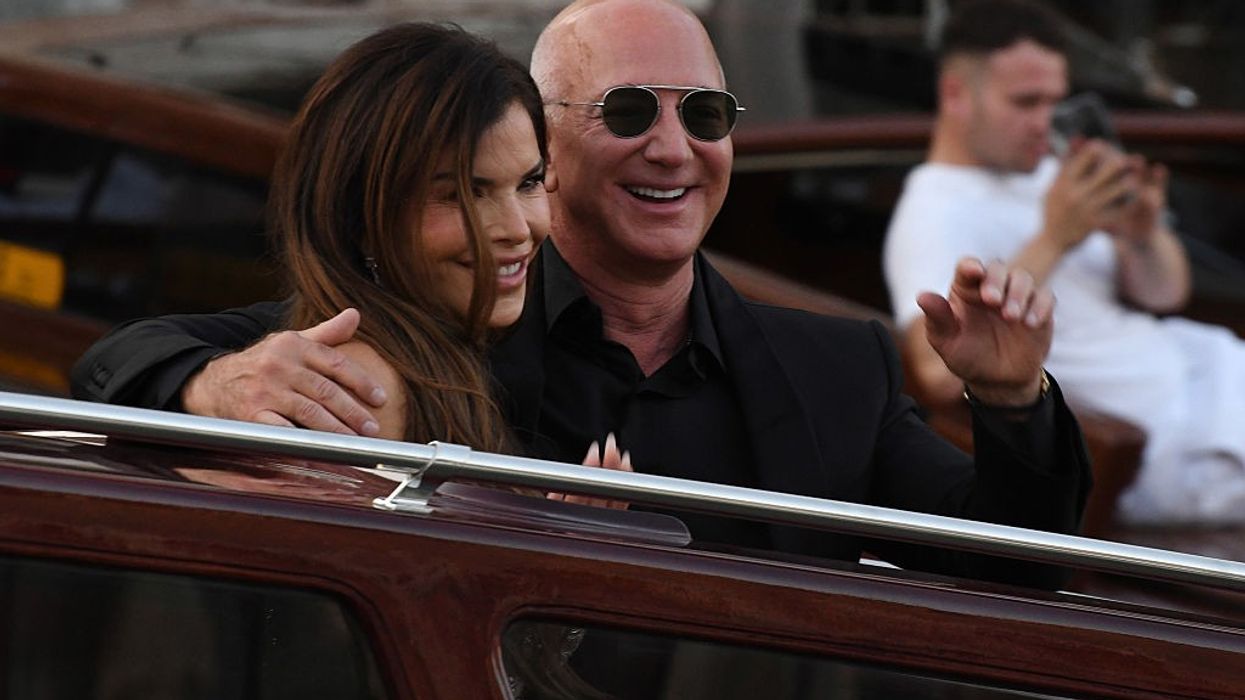
No one should be confused: cutting Social Security and Medicare benefits to reduce the deficit is not a moderate position. It’s one that attacks hundreds of millions of ordinary workers to avoid taxing the rich or reducing waste in our health care system.
An extreme position does not become less extreme just because someone can put forward one that’s even more extreme. Massacring 100 children doesn’t become a moderate position just because someone is advocating killing 200 children.
This is how we should view the line being pushed by “moderate” voices that we have to deal with the $40 trillion debt with both spending cuts and tax hikes. The reality is that, apart from the military and Homeland Security, there is little fat in spending to be cut, as even Elon Musk inadvertently acknowledged. Insofar as we have a deficit problem, the issue is on the tax side, as can be easily shown. The rich have been taking an ever-larger share of national income over the last half-century, and they don’t feel like paying taxes on their winnings.
The major media outlets, which are all controlled by rich people, are pretending to be moderate by saying that we need to both raise taxes and cut spending. But there is nothing moderate about saying that we have to cut programs like Social Security, Medicare, and Medicaid because Republicans have given big tax breaks to their campaign contributors.
Republicans pushed these tax cuts, knowing they would increase the deficit, but did not make any corresponding cuts in spending because the cuts would be incredibly unpopular. Now they are using their control over the media to insist that these cuts are now absolutely necessary to offset all the lost tax revenue from tax cuts put in place by Reagan, Bush II, and Trump.
The Jeff Bezos-owned Washington Post gave us a great example of this fake moderate position in its editorial, “To get the national debt under control, start with the retirement state.” The piece makes its case by taking the example of a two-earner couple, with average earnings of $100,000 a year. It shows that the couple, turning 65 in 2025, can expect lifetime Social Security benefits of $739k compared with tax contributions of just $597k. A couple with the same income retiring in 2045 can expect lifetime benefits of $987k compared to tax contributions of $735k.
After laying out this disparity for Social Security (it has a similar story for Medicare, which I’ll come to), it then makes an argument for reducing Social Security for high-income people. This is three-card Monte level deception.
If the idea is that we should reduce the benefits of high-income workers, honest people would look at the relative taxes and benefits for high-income workers. Social Security is explicitly designed to have a progressive payback structure, which means that relatively moderate-income workers, like the ones highlighted in the WaPo editorial, have higher paybacks relative to their taxes.
If the editors were interested in doing an apples- to-apples comparison, here’s what the picture would look like. (This is taken from the exact same source.)
As can be seen, high-income people pay considerably more in taxes than they get back in benefits. For a high-income woman retiring in 2025, the gap is $263k. For a high-income man, the gap is $336k. (The gap is larger for men than women because their life expectancy is shorter.) For a high-income woman retiring in 2045, the gap is $259k. For a high-income man, the gap is $346k.
If the point is to make an argument for reducing the benefits of high-income retirees, then show the taxes and benefits for high-income retirees. No one disputes that Social Security looks like a pretty good deal for more moderate-income retirees, but these people don’t typically have much income in retirement. I guess Jeff Bezos’ paper would have been too embarrassed to argue that we have to reduce the average monthly Social Security benefit of $2,071.
The Post’s editorial makes the push that while cutting Social Security, we should expect people to be more reliant on private 401(k)s. In addition to increasing risk, this is also enormously inefficient. Private 401(k)s cost more than 40 times as much to administer per dollar of benefits as Social Security. It is understandable that Mr. Bezos would be happy to see more money going to his rich friends in the financial industry, but most of us would rather see the money going to ordinary workers.
Medicare Benefits: Big Bucks to Hospitals and Drug Companies Are Not Benefits to Workers
The Post’s graphs do show a huge imbalance between the taxes paid out for Medicare and the cost of the benefits received. This is also deceptive.
In the United States, we pay almost twice as much per person for healthcare as the average for other wealthy countries. This is not because we get more or better healthcare. Our life expectancy ranks near the bottom for wealthy countries.
The big bucks for healthcare go to the income of drug companies, insurers, hospitals, medical equipment makers, and doctors. In each case, we pay two times as much, or more, than people in other wealthy countries. A paper that was not answerable to one of the richest people in the world would suggest bringing our payments in line with the rest of the world. But instead, the WaPo wants to beat up on the country’s retirees.
No one should be confused: cutting Social Security and Medicare benefits to reduce the deficit is not a moderate position. It’s one that attacks hundreds of millions of ordinary workers to avoid taxing the rich or reducing waste in our health care system. That is extreme, but the rich media owners pushing this position will do everything they can to convince us they are being fair and balanced.

"It's a bad idea to have our society run by people like this who are so far out of touch with reality that they are functionally insane," said one critic.
A top executive at one of the world's biggest artificial intelligence companies drew backlash on Tuesday for describing Social Security as "a kind of accounting fraud" that will have to be dismantled.
Dean Ball, head of strategic futures at OpenAI who previously worked in President Donald Trump's White House, wrote in a social media post that while Social Security may have once been a "reasonable affordance" to people who "were dealing with an economic depression and a world war," it was nonetheless "accounting fraud, whose debt is coming due and is coming due fast."
Ball concluded his post by informing younger generations of Americans that "unwinding the great fraud... is your job, whether you wish it to be or not."
Ball's attack on Social Security drew a swift rebuke from David Segal, a former Democratic Rhode Island State Representative and founder of Demand Progress, who observed that it undercut other AI executives' claims that their technology would create an era of unprecedented abundance.
"AI is gonna shoot productivity to the moon," wrote Segal, "oh and also society can't afford to pay old people $2,000 per month anymore starting today."
Author Lincoln Michel similarly spotted the contradiction between AI industry vows that the technology "is going to give us [universal basic income] and we'll never work again" and Ball's declaration that "our main mission is to destroy Social Security."
Henry Burke, senior researcher at the Revolving Door Project, argued that Ball's analysis of Social Security revealed the true priorities of Big Tech elites.
"It's notable that the Abundance guy turned OpenAI hack considers Social Security to be a 'fraud' that must be remedied," wrote Burke, "and not the reckless tax breaks successive Republican presidents have given away to the wealthy which have exploded the national debt."
Putting aside policy arguments, many critics pointed out that Ball's call to dismantle Social Security was a major political loser.
Polling analyst Lakshya Jain, citing survey data showing vast and bipartisan support for Social Security, informed Ball that his rhetoric about the program is optimal for "anyone who wants to unite the whole of America (against them)."
Josh Orton, president of We Demand Justice, marveled at the politically tone deaf messaging coming from an executive at a company whose own CEO has said that "my job is to help people destroy jobs" with AI.
"These AI guys are not just condescending elitists," wrote Orton, "they're tremendously stupid about politics. It's incredible."
Max Steele, senior communications director at gun safety advocacy group Everytown, made a similar observation.
"Is it possible these guys are doing a performance art piece on the worst possible PR run in recorded history?" Steele asked.
Journalist Jon Schwarz questioned why Big Tech companies have been allowed to amass so much economic and political power in the US if their executives want to destroy the country's most popular social insurance program.
"It's a bad idea," wrote Schwarz, "to have our society run by people like this who are so far out of touch with reality that they are functionally insane."