

SUBSCRIBE TO OUR FREE NEWSLETTER
Daily news & progressive opinion—funded by the people, not the corporations—delivered straight to your inbox.
5
#000000
#FFFFFF
To donate by check, phone, or other method, see our More Ways to Give page.
Daily news & progressive opinion—funded by the people, not the corporations—delivered straight to your inbox.

Loneliness is not an individual pathology. It is a failure of how we have designed our economy, our politics, and our shared spaces.
The holidays can be the loneliest time of year, when isolation, family fractures, and economic strain become especially hard to bear. The shopping frenzy and glittery lights don’t substitute for real belonging—they often make its absence more painful.
Worse, many people blame themselves for not feeling the cheer. Scroll through Instagram or watch a holiday film, and it appears as though everyone else is finding love, meaning, and connection this holiday season. If you’re not, it’s easy to believe you’ve done something wrong.
But loneliness is not an individual pathology. It is a failure of how we have designed our economy, our politics, and our shared spaces.
Self-help culture offers some useful advice about boundaries, rest, and self-care. But it rarely acknowledges the larger truth: Loneliness is not something most people can solve on their own. The answer isn’t “retail therapy” or a vacation in Maui. It’s building belonging into our collective experience.
We were expected to move for work, losing contact with extended family and friends, and compete our way to the top.
That means addressing an economic system that systematically excludes growing numbers of people from security, dignity, and meaning. It means reclaiming political system that have been captured by moneyed insiders. And it’s creating the shared spaces—especially in-person spaces—where people are welcomed to contribute, be known, and find support.
For decades, we were told that rugged individualism was the path to success. We were expected to move for work, losing contact with extended family and friends, and compete our way to the top. Relationships were treated as less important rather than necessities. Capitalism required a flexible labor force, and we reorganized our lives accordingly.
At the same time, political participation has increasingly been reduced to fundraising. Those without wealth are invited to donate or volunteer, but many sense—accurately—that real power belongs to those who can write big checks. The rest of us have little influence over the decisions shaping our lives.
The places that once supported everyday connection have also eroded. Public squares, community centers, and informal gathering places have been replaced by commercial spaces designed for efficiency and extraction, not belonging. And the economy that once supported a middle class has been hollowed out by big corporations with little use for Midwest steel mills or family farms, leaving behind empty downtowns, shuttered factories, and frayed social ties.
During the road trip across the United States that led to my book, The Revolution Where You Live, I encountered small towns and urban neighborhoods that were quiet, even desolate. That experience stayed with me during a visit to Tübingen, a town in Germany, where I asked a friend about a strange noise drifting through the streets. She laughed. “That is the sound of people talking,” she said. The town square had been closed to traffic and was filled with market stalls, laughter, and neighbors greeting each other as they shopped for holiday gifts.
Today’s loneliness epidemic creates vulnerability. When people lack meaningful connection, they are more susceptible to groups that promise belonging, identity, and purpose—whether at political rallies or in online spaces. For some, belonging is created by excluding other identities and even spewing hate. Research suggests isolation can contribute to radicalization, though it does not determine it. Belonging can be mobilized toward many ends.
Isolation also takes a toll on physical and mental health, contributing to higher rates of heart disease, strokes, diabetes, depression and even dementia, according to the Centers for Disease Control and Prevention.
At a time of impending war, political extremism, climate crisis, and Immigration and Customs Enforcement raids, this may seem like the least urgent question to ask. But moments of upheaval are also moments of reinvention. The direction we take depends in part on whether people feel they have a place, a voice, and something to offer.
Designing for belonging starts with economic participation. Workplaces and businesses can be designed to offer participation, dignity, and a shared stake through cooperatives, employee ownership, and models that reward contribution rather than extraction. We can stop giving tax breaks and head starts to corporations that drain communities, and leave behind pollution and unemployment. Instead we can support enterprises with long-term commitments to place: those that make food, housing, healthcare, and childcare affordable and rooted.
People power grows out of connection—the some force that carries us through disasters and makes collective change possible.
It also means rebuilding shared spaces—places where people can simply be, or sing, talk, trade, make art, share food, teach, and support one another. Inviting places where people come to get to know those of different races, generations, ways of life—and where fear and prejudice lose their grip simply because people are no longer strangers.
Political and social movements can use language that invites people in as collaborators, not just donors or spectators. Belonging that is at the center of our work can counter the burnout that plagues so much civic and social change work. When people experience the dignity of having something to offer, the sense of community and mutual support can make participation as joyful as a good party
Belonging may feel like a squishy topic at a time of authoritarianism, war, and corporate dominance. But people power grows out of connection—the some force that carries us through disasters and makes collective change possible. Connection and belonging are easy to overlook when they are present, but when they are missing, our health, sense of purpose, and optimism suffer. Authentic connections are sources not only of well being but of power—and together they form the foundations for a better, more inclusive world.

The Trump economy is truly sh*tty for most Americans. Democrats need to show America that they can be better trusted to bring prices down and real wages up.
President Donald Trump claimed last week on social media that “Our economy is BOOMING, and Costs are coming way down,” and that “grocery prices are way down.
Rubbish.
How do I know he’s lying? Official government statistics haven’t been issued during the shutdown—presumably to Trump’s relief (the White House said Wednesday that the October jobs and Consumer Price Index reports may never come out).
But we can get good estimates of where the economy is now, based on where the economy was heading before the shutdown and recent reports by private data firms.
First, I want to tell you what we know about Trump’s truly sh*tty economy. Then I’ll suggest 10 things that Democrats should pledge to do about it.
While the cost of living isn’t going up as fast as it did in 2022, consumer prices are still up 27% since the onset of the pandemic. Wages haven’t kept up.
Americans know this. In a recent Harris poll, 62% say the cost of everyday items has climbed over the last month, and nearly half say the increases have been difficult to afford.
Much of this is due to Trump’s tariffs, which are import taxes—paid by American corporations that are now passing many of the costs on to consumers. Even Trump knows this, which is why he’s removing tariffs on coffee, bananas, beef, and other agricultural commodities. But his other tariffs will remain, boosting the costs of everything else.
Every time Trump or his lapdogs in Congress tell Americans that the economy is terrific, they seem more out of touch with reality.
As a result, wages—when adjusted for inflation—have been falling, government and private-sector data show. Since the start of the year, inflation has been rising faster than after-tax pay for lower- and middle-income households, according to the Bank of America Institute.
According to the JPMorganChase Institute, the rate of real income growth has slowed to levels last seen in the early 2010s, when the economy was still recovering from the financial crisis and the unemployment rate was roughly double what it is today.
Americans are scared of losing their jobs. In the same recent Harris poll I referred to above, 55% of employed workers say they’re worried they’ll be laid off.
That worry is borne out in the data. Indeed’s job posting index has fallen to its lowest level since February 2021.
The Fed’s Beige Book—which compiles reports from Fed branches all over the country—also shows the job market losing steam.
The latest ADP private-sector data confirms that the labor market continued to weaken in the latter half of October, with more than 11,000 jobs lost per week on average.
Finally, Challenger, Gray & Christmas (a private firm that collects data on workplace reductions) reports that US employers have announced 1.1 million layoffs so far in 2025. That’s the most layoffs since 2020, when the pandemic slammed the economy, and rivals job cuts during the Great Recession of 2008 and 2009.
Nearly 900,000 homeowners (about 1.6% of all mortgage holders) are now underwater on their mortgages, the highest share in three years. Many of these buyers purchased in 2022-24 with low down payments in markets that have since cooled.
At the same time, filings for home foreclosures are up about 17% since the third quarter last year (according to ATTOM Data Solutions), suggesting more borrowers in trouble.
You might think that with all these stresses on American consumers, corporate profits would dip. But in reality, US corporate profits continue to rise, and the stock market continues to hit new highs (although the stock market is wobbly, as I’ll get to in a moment).
As a result, the investor class—the richest 10% of Americans, who own over 90% of the stock market—are reaping big rewards.
How to square this with all the layoffs and so few job openings? Amazon’s profits are through the roof, but it’s laying off 30,000 people.
First, corporations are reluctant to expand and hire because of so much uncertainty about the future, caused in large part by Trump’s tariffs and his expulsion from the US of many workers critical to the agriculture and construction industries.
Secondly, profits are being led by the six major high tech firms, whose monopolistic hold over their markets has given them the power to raise prices.
Third, many corporations are making use of artificial intelligence. AI is boosting business productivity while reducing the demand for workers. We’re seeing that trend mostly in the technology sector, which continues to substitute AI for jobs. But the trend seems to be spreading to other industries.
Put this all together and you get a two-tier economy whose inequality gap is widening.
America has always had a two-tiered economy, but for the last 80 years, the middle class has been in the upper tier along with the wealthy, while the working class and poor have been in the lower one.
Now, the middle class is joining the lower tier. This new reality has huge implications both for the economy and for American politics.
The richest 10% of households—whom I’ve described as the investor class—now account for nearly half of total US spending, thanks to the stock market surge. (Thirty years ago they were responsible for about a third.)
Meanwhile, middle- and lower-income families are pulling back. They’re facing tightening budgets, higher living costs, declining real wages, and a raft of corporate layoffs.
The consequent divergence in spending—with a smaller group of people keeping the economy going—is fueling concerns that the US economy is becoming more fragile.
With the economy so dependent on the richest 10%—who in turn are highly dependent on the stock market—a stock market downturn would raise risk of a serious recession.
The Trump economy is truly sh*tty for most Americans. Every time Trump or his lapdogs in Congress tell Americans that the economy is terrific, they seem more out of touch with reality.
Democrats need to show America that they can be better trusted to bring prices down and real wages up.
This means, in my view, promising the following 10 things. These should constitute the Democrats’ pledge to America:
Trump’s duties on foreign imports will undercut the fiscal foundations of a middle-class American society that we’ve known for more than a century, creating a new age of rising private fortunes and deepening inequality.
Count on one thing: If Mark Twain, the famed American author of Tom Sawyer and Huckleberry Finn, were alive today, he would certainly have written a novel about U.S. President Donald Trump. After all, his 1873 novel, The Gilded Age: A Tale of Today, distinctly caught a 19th-century version of our Trumpian moment, tariffs and all.
“They want me to go in with them on the sly,” says Colonel Sellers, the antihero of that novel. Lowering his voice to a conspiratorial whisper, the colonel explains to his wide-eyed dinner guest how they would “buy a 113 wild cat banks in Ohio, Indiana, Kentucky, Illinois, and Missouri… and then all of sudden… Whiz! the stock of every one of those wildcats would spin… profit on the speculation not a dollar less than 40 millions!”
With Twain’s uncanny insight into the American character, his novel presaged the quarter-century to follow so accurately that, in the end, it lent its name to “the Gilded Age,” that era of rapid industrialization and rising robber-baron fortunes. Ripped from two centuries of Puritan moral moorings by an “inflamed desire for sudden wealth,” the novel’s archetypal American families are caught in a “fever of speculation” that sends them scrambling across the continent in a frenzied search for jackpot profits.
With money then breeding its own morality, the era’s capitalist excess naturally begat Trumpian-style corruption. When unpaid wages stopped the construction of his railroad out West, Twain’s character Colonel Sellers sent the project’s chief engineer to the head office in New York City to find out what had happened to the missing money.
If we combine the social impact of his recent “Big Beautiful” budget bill, which extends the 2017 tax cuts, with his skyrocketing tariffs, Trump seems to be trying to undo the landmark tax legislation of 1913 by reducing or replacing the progressive income tax with tariff revenues that are really a regressive tax on the poor.
“The matter is simple enough,” the company’s president explained matter-of-factly to the astonished engineer. “A Congressional appropriation costs money. A majority of the House Committee, say $10,000 apiece—$40,000; a majority of the Senate Committee, the same each—say $40,000; a little extra to one or two chairmen of two such committees, say $10,000 each—$20,000; and there’s $100,000 of the money gone.”
Beneath the spectacle of soaring stock prices, spreading railroad networks, smoking steel mills, powerful trust monopolies, and conspicuous consumption by the country’s ever-increasing number of millionaires, Twain discerned a deep underlying insecurity to be the very essence of what became known as the Gilded Age. “It is a time,” he wrote, “when one’s spirit is subdued and sad, one knows not why; when the past seems a storm-swept desolation, life a vanity and a burden, and the future but a way to death.”
Looking at contemporary America through Twain’s somber vision can teach us something significant about our own time that has so far eluded the mainstream media—particularly the profound political implications of President Trump’s wild global tariff regime. Those duties on foreign imports will not just raise prices and stoke inflation, as the media has indeed been telling us, but all too crucially undercut the fiscal foundations of a middle-class American society that we’ve known for more than a century, creating a new Gilded Age of rising private fortunes—in our time, billionaires—and deepening social inequality.
And with Donald Trump in mind, let’s take a little trip through a history that’s anything but Tom Sawyeresque.
Give Twain full credit: When writing that novel, he also intuited that the economic juggernaut driving his Gilded Age would come crashing down in what proved to be the devastating panic of 1893. The country had indeed suffered 11 previous panics, most of them regional or relatively short-lived. This one would be different. As New York banks held fire sales of assets to meet a cash crunch, some 340 banks nationwide simply suspended operations, while industrial output shrank by 15%, and unemployment hit an unprecedented 19%. Adding to the difficulties of workers, the McKinley Tariff of 1890, named after then-representative (and not yet president) William McKinley, had imposed record-high duties of 50% on imports and so raised the price of many basic consumer goods, which should sound all too familiar in the age of Trump. The panic then became a full-blown, four-year depression that sent thousands of the unemployed, then called Coxey’s Army, marching on Washington to demand redress from Congress.
Not only was that panic an economic crisis of unprecedented severity, but it was also the first in a boom-and-bust cycle that has marked America’s unbridled capitalism up to the present moment—with each boom producing spectacular private wealth and each bust fostering abject public misery and mass reform movements. Like Icarus of Greek legend, whose wings of wax carried him too close to the sun, the U.S. economy sometimes flies so high that its wax wings melt. The ensuing crash is so searing, immiserating so many for so long, that it can inspire sustained movements for change.
The severity of the protracted 1893 depression that ended the Gilded Age sparked myriad calls for social change and lead to the Progressive Era during which labor unions organized workers, the National Association for the Advancement of Colored People started its struggle for civil rights, and women marched for suffrage. Investigative reporters called “muckrakers” also began publishing exposés of financial power and political corruption in mass-circulation magazines like McClure’s and Collier’s Weekly, thereby setting an agenda for political reform. In major cities, middle-class reformers opened settlement houses for poor immigrants, enacted housing codes to ban cold-water tenements, and set up free public schools. At the state level, progressives like Wisconsin Gov. Robert La Follette battled the railroad monopolies that gouged farmers desperate to get their crops to market.
Meanwhile, at the national level in 1913, Democratic reformers in Congress slashed the country’s high tariffs (long a regressive tax on working-class consumers), replacing them with a progressive income tax whose top rate was then 7% on incomes over $500,000. Since the federal government had long used tariffs as its prime source of revenue, Progressive era legislators fully grasped just how fundamentally regressive they were, and fought successfully to cut the tariff rate from President McKinley’s 29% in 1899 to just 6% by 1917. Typically, the import duties that refiners in Brooklyn and Philadelphia paid on raw Cuban sugar would be passed on to consumers as higher prices. And clearly, the cost of a cup of sugar then took a far more significant slice out of a worker’s wages than it did from the kitchen budget of a millionaire’s chef. Requiring those who had the least to pay the most was a glaring economic injustice that would inspire progressive reformers to fight tariffs with an impassioned intensity that seems almost incomprehensible today.
But all that momentum for change stalled when, in 1917, the United States entered World War I and then segued to a postwar decade of speculative frenzy. At war’s end in 1918, Forbes magazine published its first ranking of the country’s richest men, with oil baron John D. Rockefeller then America’s first and only billionaire, followed by 29 millionaires (whose fortunes, corrected for inflation, would make them billionaires today)—industrial tycoons like Andrew Carnegie (steel), J. Ogden Armour (meat packing), Henry Ford (autos), Daniel Guggenheim (mining), and Pierre Du Pont II (chemicals).
After the stock market started roaring in the 1920s, however, it minted hundreds of new millionaires, while sales of cars, telephones, radios, and appliances boomed. Between 1921 and 1929, the Dow Jones Industrial Average for shares on the New York Stock Exchange surged by 600%.
As a parallel tide of political repression swept the country, American Legion veterans broke up socialist rallies, a young J. Edgar Hoover rounded up radicals for deportation, and bloody race riots swept Chicago and Washington, D.C. While Republican conservatives took control of Congress and the White House, a revived Ku Klux Klan ran the legislatures of a half-dozen states, lobbied Congress to enact immigration restrictions, and presided over some 400 lynchings of African-Americans.
The stock market that came in like a roaring lion at the start of the 1920s went out like a bleating lamb at decade’s end. On Black Monday, October 28, 1929, it suddenly dropped 13%, lost another 12% on Black Tuesday, and kept sliding into the summer of 1932, losing 90% of its value in a fall so steep it wouldn’t reach that peak again until 1954.
By the time President Franklin Delano Roosevelt, or FDR, was inaugurated in 1933, the nation was in dire straits. About 25% of the workforce, or some 13 million people, were unemployed—with thousands of “hobos” riding the rails, long lines snaking outside soup kitchens, and shanty towns (dubbed “Hoovervilles” after the indifferent president who had preceded FDR) huddled outside cities large and small. In the industrial northeast, factories shut down. In the Great Plains, thousands abandoned their farms in the country’s “dust bowl” and headed for California.
By the time the New Deal was done in 1945, the Roosevelt administration had brought high-flying U.S. capitalism down to Earth, with regulations that curbed speculative excess, while preventing spectacular crashes.
So deep and desperate was the Great Depression that President Roosevelt had ample public support to enact a “New Deal” of unprecedented socioeconomic reforms, creating nothing less than the modern federal government. To provide work for the unemployed, FDR formed the Civilian Conservation Corps and the Works Progress Administration that mobilized nearly 9 million people to build 8,000 parks, 75,000 bridges, and 650,000 miles of roads. Private sector workers won the right to form unions and strike under the National Labor Relations Board, largely ending the union-busting and goon violence of decades past. Since the country had no form of retirement savings, FDR formed the Social Security Administration in 1935 (which currently sends benefits to 66 million Americans).
To fully electrify the economy, the New Deal dotted the U.S. with massive hydroelectric projects like the Fort Peck Dam and delivered cheap power to farms through the Rural Electrification Administration. To make air travel affordable, the Roosevelt administration built 800 airports nationwide, notably LaGuardia Airport in New York City.
To end the bank runs that periodically wiped out customers’ deposits, his Banking Act of 1933 created the Federal Deposit Insurance Corporation to enforce restrictions on banking speculation, and a year later formed the Securities and Exchange Commission to protect ordinary investors from fraud.
As the New Deal raised the tax rate for the top income bracket from 79% to a historic high of 94% by 1945, the share of all U.S. income earned by the richest 1% fell from a peak of 24% in 1928 to just 10% after World War II and would remain there until 1980. That change would be foundational for the middle-class democracy that many still regard as archetypally American.
In sum, by the time the New Deal was done in 1945, the Roosevelt administration had brought high-flying U.S. capitalism down to Earth, with regulations that curbed speculative excess, while preventing spectacular crashes.
As the Cold War drew to a close during the 1980s, President Ronald Reagan advanced a conservative agenda of tax cuts and deregulation, sparking the start of a new Gilded Age that, over the next 30-plus years, would produce a level of economic inequality not seen for nearly a century. That era also coincided with a succession of financial crises that could have sparked serious economic depressions had they not been constrained by the regulatory mechanisms the New Deal had put in place.
By slashing the tax rate on the highest incomes from 70% to just 28%, President Reagan catalyzed a steady climb in private wealth that would continue unchecked for decades to come. By 2007, the richest 1% were already earning 24% of the nation’s income, putting them right back where they had been in the 1920s.
Just as railroads were the iconic industry of the original Gilded Age, so the Internet and its corporate spin-offs became the prime driver of our current era of excess. The release of software developer programs like Mosaic combined with a sharp increase in U.S. households with a personal computer—from just 15% in 1990 to 35% by 1997—became the prime ingredients for the “dot-com bubble” of the late 1990s. Growing numbers of Americans started shopping at Amazon.com, searching on Google, and booking travel online at Expedia.
As the Telecommunications Act of 1996 opened up the broadcast spectrum and the Taxpayer Relief Act of 1997 cut capital gains taxes on stock transactions, the Nasdaq stock exchange, which features tech listings, rose by 400% in a five-year frenzy of speculative trading for almost any stock with “.com” in its name. Adding fuel to that blazing fire, in 1999 the White House of President Bill Clinton encouraged Congress to repeal the New Deal’s Banking Act of 1933, allowing financial speculation through the merger of retail and investment banking.
In March 2000, the dot-com bubble finally burst, and the Nasdaq stock index started a sustained fall that virtually wiped out the previous decade’s gains. Over the next two years, markets were also shaken by serious scandals after company officers falsified returns to feed the market frenzy, bankrupting a half-dozen major corporations, including WorldCom, the country’s second-largest telephone company; Enron, a top energy corporation with revenues of $100 billion; and Adelphia, a prominent cable television provider with over two million subscribers. To correct what one leading law firm called “a broader culture of greed and deception that had taken root in the corporate world,” Congress passed the Sarbanes-Oxley Act in 2002 that tightened financial regulations to protect investors from systemic fraud.
Nonetheless, an even greater panic soon followed. Freed from the New Deal Banking Act’s restraint on speculation, investment banks began engaging in predatory lending of subprime mortgages and aggressive marketing of mortgage-backed securities, producing a profit-taking craze that came crashing down in the Great Recession of 2007-2009. As the country’s fourth-largest investment bank, Lehman Brothers, collapsed and its fifth-largest, Bear Sterns, was liquidated in a “fire sale,” the financial system trembled at the brink of collapse. Recognizing the seriousness of the crisis, Congress quickly authorized corporate bailouts funded by a $700 billion appropriation under the Troubled Asset Relief Program. By the time the Great Recession ended in mid-2009, unemployment had doubled to 10% and the Dow Jones Average had fallen by 50%. But the country had indeed been spared another Great Depression.
During those 30 years of boom and bust, however, one trend remained remarkably steady: The rich just kept getting richer. The number of global billionaires listed by Forbes magazine would increase tenfold from 291 in 1992 to 2,781 in 2024, with a total wealth of $14.2 trillion. During the 2016 presidential campaign, Forbes included Donald Trump among them, estimating his wealth at $4.5 billion.
In past periods of conservative Republican rule, Congress and the White House served the interests of the richest 1%, whether industrialists or Internet tycoons. But in 2016, for the very first time, the American people put a genuine billionaire in the White House and, to nobody’s surprise, he soon made it clear that his only consistent concern was serving the interests of his peers.
In the first year of his first term, in fact, Trump enacted the 2017 tax cuts that The New York Times called “the most sweeping tax overhaul in decades.” By cutting the corporate tax rate from 39% to 21%, reducing the top individual income tax rate from 39.6% to 37%, and doubling the size of estates exempt from being taxed to $11.2 million, those Trump tax cuts, economists found, produced a marked increase in “after-tax income for high-income households.” Indeed, the bottom 20% of wage earners saved just $60 each, while the upper 1% gained $51,000 each and the top 0.1% at least $193,000.
Without such mass protests and a determined democratic opposition at the ballot box, the Trump administration will persist with a tax and tariff policy aimed at creating the sorts of social inequity and economic privilege not seen since Mark Twain’s original Gilded Age.
Yet even that landmark legislation would pale before the inequitable impact of Trump’s tax policies in his second term in office, which all too literally sought to overturn the fiscal foundations of the Progressive Era reforms that had shaped American middle-class society for more than a century. If we combine the social impact of his recent “Big Beautiful” budget bill, which extends the 2017 tax cuts, with his skyrocketing tariffs, Trump seems to be trying to undo the landmark tax legislation of 1913 by reducing or replacing the progressive income tax with tariff revenues that are really a regressive tax on the poor. When the budget’s tax cuts for the rich are combined with his escalating tariffs that are bound to raise prices for ordinary consumers, those twinned policies are guaranteed to produce a massive transfer of wealth to the wealthiest 1% of Americans, creating an ever steeper version of social inequality that is fast fostering a new Gilded Age (and the economic disasters that are bound to go with it).
Apart from his trade war with China, in his first term Trump actually had little impact on tariffs. By the time he left office in 2021, he had raised the average import duty only incrementally from 1.4% to 2.8%—a far cry from the record 50% rate of the 1890 McKinley Tariff, and so still an insignificant factor in both Federal revenues and the average American’s cost of living.
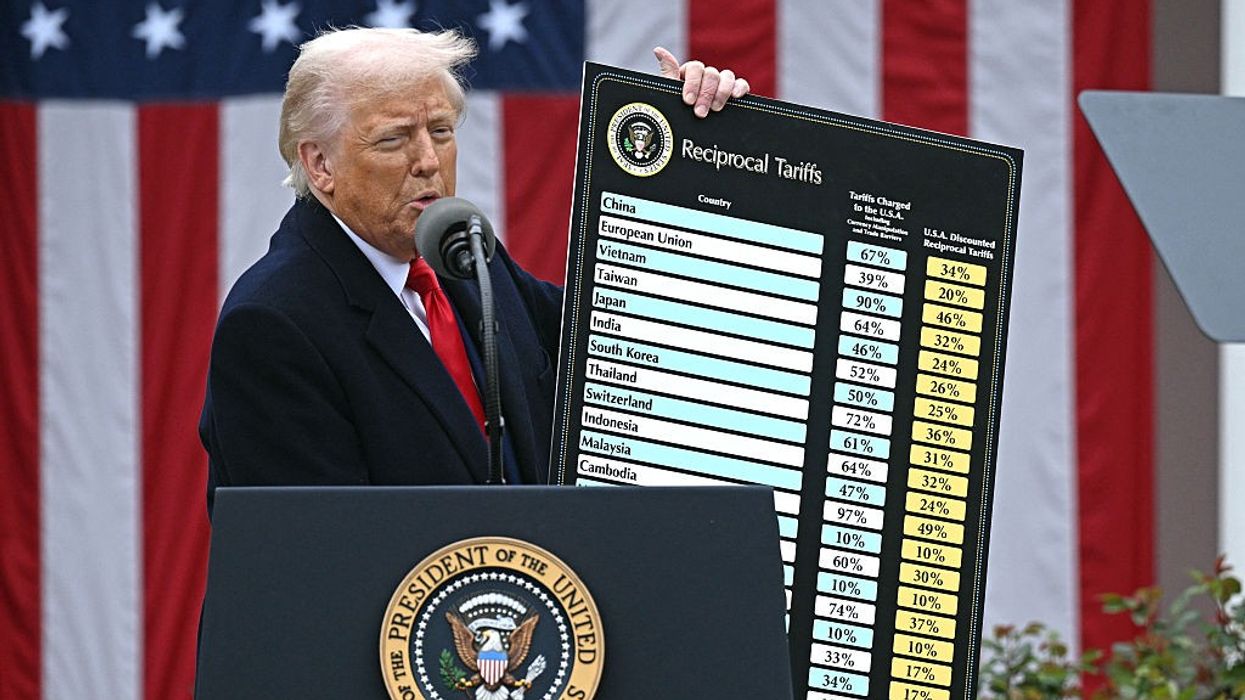
In his inaugural address last January, however, Trump praised his distant predecessor, saying, “President McKinley made our country very rich through tariffs and through talent—he was a natural businessman—and gave Teddy Roosevelt the money for many of the great things he did, including the Panama Canal.” In a Rose Garden ceremony on his April 2 “Liberation Day,” President Trump ordered record-high tariffs for all the world’s nations, with duties of 50% on imports from Lesotho and 84% on those from China. Then, in an interview with Fox News on April 15, the president suggested, “There is a chance that the money from tariffs could be so great that it would replace” the income tax. As the average import duty started climbing to 15%, his trade adviser Peter Navarro projected that Trump’s tariffs could raise $600 billion in revenues, or more than a third of the $1.6 trillion in individual income taxes the Internal Revenue Service collected in 2024.
During the four-month blitz of tariff orders that followed, the Trump White House has insisted on the fiction that other countries will simply pay those import duties. After proclaiming himself a “Tariff man,” during the 2024 election campaign Trump told his rallies that “a tariff is a tax on a foreign country… A lot of people like to say it’s a tax on us. No, no, no, it’s a tax on a foreign country.”
In May, when Walmart’s CEO exposed the transparent falsity of that statement by stating, “Higher tariffs will result in higher prices,” an apoplectic president told the company to “EAT THE TARIFFS.” In mid-July, when Trump announced another round of tariffs that were to reach a McKinleyesque level of 50%, a White House spokesman repeated that exculpatory falsehood, saying: “The Administration has consistently maintained that the cost of tariffs will be borne by foreign exporters who rely on access to the American economy.”
With surprising speed, Americans are starting to see through such sophistry and resistance to the Trump administration is rising. Despite his repeated denials, a Gallup poll taken in April found that 89% of all Americans believe that “higher tariffs will result in… paying more for products.” And in late June, as Trump’s “Big Beautiful” budget bill neared legislative approval with massive cuts to health care for millions of Americans, a Quinnipiac University poll found 55% of the country opposed the bill and only 29% supported it.
Those polls reflected a growing opposition to Trump’s policies. In April, his then-ally Elon Musk poured a record-breaking $25 million into the election for the Wisconsin state Supreme Court, but the opposing Democratic candidate still won a stunning double-digit victory. In June, five million Americans in 2,200 cities and towns across the country marched in anti-Trump “No Kings” rallies, which added up to the largest single day of mass demonstrations in U.S. history.
After only six months of Trump’s term, it is still not clear whether his erratic economic policies—disrupting supply chains, creating labor shortages from mass deportations, and inducing record inflation—will inflict sufficient social pain to inspire a sustained movement for change. But one thing is already quite clear: Without such mass protests and a determined democratic opposition at the ballot box, the Trump administration will persist with a tax and tariff policy aimed at creating the sorts of social inequity and economic privilege not seen since Mark Twain’s original Gilded Age. Consequently, the grim economic results down the line are painfully predictable.
The new House bill would disproportionately benefit the well-off—and harm the financial well-being of millions of working Americans, including Black women like me.
In early 2018, I remember sitting at my kitchen table, trying to make sense of how the 2017 Trump tax law was supposed to help families like mine.
I’d read headlines promising “middle class tax relief.” But when tax season rolled around, there was little relief to be found—especially for me, a Black woman navigating caretaking for elderly parents and a demanding career. My refund was smaller, my deductions had vanished, and the math simply didn’t add up.
It was clear then, as it is now: the Trump tax cuts weren’t designed with people like me in mind.
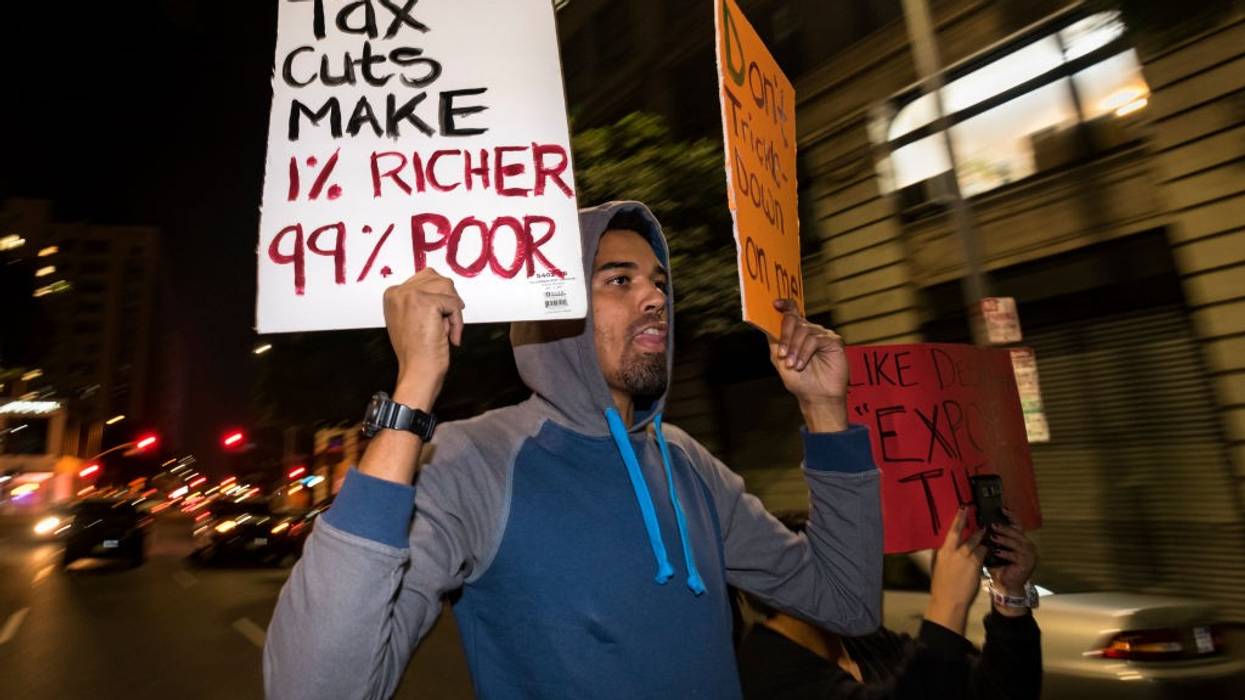
Let’s be clear: The 2017 Trump tax cuts failed Black women—and millions of others—the first time around. They widened inequality, rewarded the wealthy, and ignored the economic realities of everyday families.
Now as more GOP tax cuts for the rich move through Congress, history is poised to repeat itself. The bill would disproportionately benefit the well-off—and harm the financial well-being of millions of working Americans, including Black women like me.
Instead, lawmakers should embrace the “Black Women Best” framework and take a different path. Coined by Janelle Jones, the principle is that when Black women are thriving, then the economy is truly working for everyone.
For example, when the 2017 tax cuts were passed, most of the benefits went to wealthy, white households. Had lawmakers considered the financial realities of Black women, who are typically underpaid, they could have made a package better designed for all those who need the most help—not just Black women, but everyone struggling to make ends meet.
Refundable tax credits like the Child Tax Credit (CTC) are one of the most direct ways the government supports working families. When structured fairly, they give families a much-needed financial boost.
The 2017 tax law increased the CTC from $1,000 to $2,000 per child. But many families receive far less because it restricted the refundable part of the credit for those with modest earnings. That left out many of the lowest-income families—including 45% of Black children (double the share of their white peers)—whose parents didn’t earn enough to qualify.
In 2021, President Joe Biden signed the American Rescue Plan Act, which temporarily restructured the CTC to make it larger and fully refundable. For the first time, all the families at the bottom received the full credit. The results were stunning: Child poverty hit record lows.
But that progress was short-lived. The expanded credit has not been renewed, and child poverty shot right back up.
This time around, the House temporarily boosted the CTC to $2,500. But limits on the refundable portion would be continued, meaning 17 million of the lowest-income children in America will still be left out.
Using the “Black Women Best” framework would make those expanded benefits permanent—not just because it’s the right thing to do for Black families, but because it lifts up the entire economy.
But instead, in this way and others, the bill favors the already wealthy.
Another significant example is the bill’s deduction for income people receive from “pass-through” businesses. Rather than pay a corporate income tax, these business owners pay taxes on their profits through their personal taxes. The 2017 tax law created a 20% deduction for this kind of income—and now lawmakers want to permanently increase it to 23%.
Increasing this deduction means Congress is giving handouts to those already holding the keys to wealth. A Treasury report showed a jarring 90% of the people who received this benefit were white. Only 5% of the benefits went to Hispanic taxpayers—and just 2% to Black taxpayers.
Let’s be clear: The 2017 Trump tax cuts failed Black women—and millions of others—the first time around. They widened inequality, rewarded the wealthy, and ignored the economic realities of everyday families. Repeating those mistakes in 2025 would be more than negligent—it would be a deliberate choice to uphold a broken system.
But there’s another way. When Black women thrive, everyone wins. It’s time for our tax code to reflect that truth.
To win back voters, Democrats should propose a nationwide public fund through a Financial Transaction Tax.
The Alaska Permanent Fund, established by a Republican governor nearly a half-century ago, has allowed Alaskan residents to share in the profits from oil and mineral extraction in the state.
As The New York Times explains, "Similar socialized funds—sometimes called sovereign wealth funds—are common in other conservative states." In fact, The National Interest reports that "the great majority of states that have a domestic sovereign wealth fund are solidly Republican states." Texas, Wyoming, and North Dakota, for example, all maintain multi-billion dollar public wealth funds.
Democrats need to think even bigger if they want to win back respect—and the vote. They need to consider that American productivity goes well beyond oil and gas, that it's the result of 75 years of progress in technology and medicine and finance and numerous other industries, and that it derives from the sweat and inspiration of all of our parents and grandparents. Stock market gains reflect our productive past. All of us should reap some reward from that long-term effort.
All families, rich or poor, would share in America's prosperity.
New wealth should not be taken only by the 10% of Americans who own 93% of the stock market. While the S&P 500 has gained a pre-inflation average of over 10% annually over the past half-century, the returns on that growth have accrued passively to the richest among us.
Large-scale public wealth funds have been proposed to correct the imbalance. Funding will ideally come from a Financial Transaction Tax or some form of levy on market capitalization. The argument for a Financial Transaction Tax has been made for years by Dean Baker and Sen. Elizabeth Warren (D-Mass.) and Sen. Bernie Sanders (I-Vt.). An alternative is a small tax on stock holdings. The Peoples Policy Project noted that "at the end of 2017, the market capitalization of listed domestic companies was $32.1 trillion. A one-off 3% market capitalization tax would thus bring in around $1 trillion of assets."
Current U.S. stock value is over $50 trillion. Just a 2% tax on that amount would return $1 trillion. Each one of America's 127.5 million households would earn nearly $8,000 per year. All families, rich or poor, would share in America's prosperity.
Of course, the millionaires who own almost the entirety of the stock market will resist even a small percentage payback to the country that made them rich. Despite the unlikelihood of getting the super-rich to part with their money, there's a good reason—other than the fairness of recognizing society's contribution to long-term wealth gain—for stockholders to embrace an American Permanent Fund. As noted by reliable financial sources, consumer spending directly influences stock market performance. With the massive trillion-dollar surge in consumer spending, stock market growth is likely to make up that tiny transaction or capital holdings tax, and then some.
It's certainly worth paying a nominal amount to stimulate the economy and boost one's own stock portfolio.
But where is the political will to make this happen? Perhaps a proposal by Democrats for a nationwide public fund through a Financial Transaction Tax will convince a cynical middle-class America that the Democratic vision focuses on the needs of society rather than on rich individuals.
Our population has been shocked and awed, just as intended. Yet we are waking up to great effect, beginning to fight back.
“Someday the wealthiest people, deprived of their ability to extract super-profits from developing countries, will turn their attention inward and gobble up the middle and working classes here in the U.S.”
So predicted my economics professor in 1962 at New York’s New School. These words were unbelievable to my 22-year-old ears. Picket fences were springing up all across America, accompanied by paid vacations, job security, and pensions. Expansion of our rights was the only vision on my horizon.
Riding a postwar economic boom, young people like myself were tearing down entry barriers to the middle class. Legal segregation was about to fall, women were gaining access to traditionally “male” jobs, and unions flourished. We enjoyed complete freedom of speech. No way could we be gobbled up.
Now every sector of public life is on the verge of privatization, with our hobbled Post Office the latest target. While not entirely new, this is an upleveling of the plunder.
“The independence movements exploding in Africa, in India, all over the world, will force the wealthiest Americans to seek the predatory profits they are used to at home,” my professor declared. “They will pauperize the U.S. working and middle classes.”
His words lingered, smoldering in the back of my mind. Could this ever come to pass in “the home of the free”? I knew about our blemished past, with its human slavery and genocide of Indigenous nations, yet still I held fast to our promise of democracy for all. The rule of law would never allow oligarchs to plunder our country the way we had plundered others.
In 1964, when the shockingly conservative Barry Goldwater became the Republican candidate for president, I wondered about the prediction. Could this be the moment we began to tumble? In the early morning hours I voted, praying (and I was not then a praying woman) that Lyndon Johnson, the Democratic incumbent, would prevail. He did in a landslide, winning 61.1% of the popular vote. “That was a trial balloon,” my professor said. “They haven’t gathered enough strength yet.”
Republicans went to work winning local elections, then state level. In 1980, when President Ronald Reagan broke the air controller’s strike, I worried again. And union strength—that hold-the-line power—did decline, but enough folks didn’t fold and we retained our democracy.
Yet today the government disappears people without due process; threatens to cut benefits for working people while installing tax cuts for the wealthy; and demands oversight of universities, our bastions of free thought. What is this but the super-profit power grab my professor predicted so long ago?
Republicans have already narrowed our rights—reproductive and voting—to erase 20th-century gains. They’ve gutted public programs, underfunding education and offering for-profit and nonprofit charter schools instead. Our highly efficient public Medicare program has had to compete with private plans for the last 28 years.
(I always understood that a government plan, without profit, would be more cost-effective. I did not know how much better its coverage was until I needed open-heart surgery and my cardiologist asked, “Do you have original Medicare or an Advantage plan? Oh good, original. I can get you right into the hospital. With Advantage it takes weeks.” The private plans, I learned, often deny prior authorization, knowing that only 11.7% of people reapply despite the vast majority of reapplications gaining approval. In my 20 years with traditional Medicare no physician-requested treatment has ever been denied.)
Now every sector of public life is on the verge of privatization, with our hobbled Post Office the latest target. While not entirely new, this is an upleveling of the plunder.
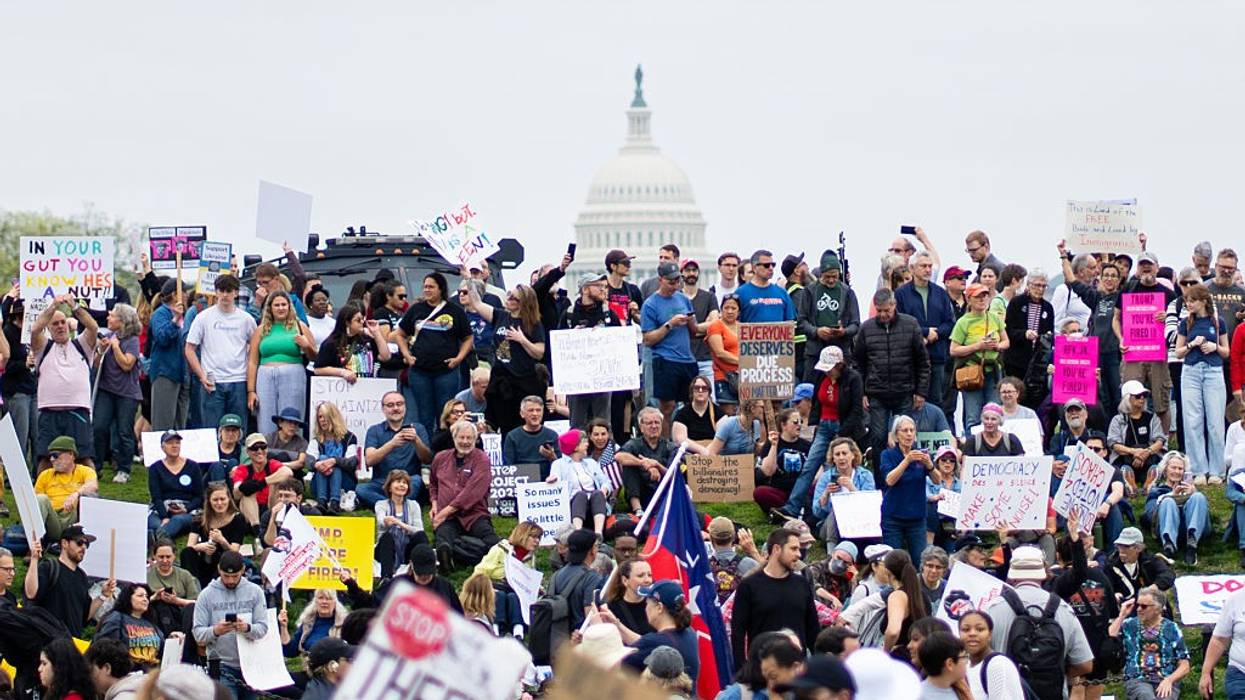
Our population has been shocked and awed, just as intended. Yet we are waking up to great effect, beginning to fight back: Witness the 5.2 million demonstrators in April 5 Hands Off protests. Hundreds of grassroots organizations, taking root in local communities, have been preparing for this moment.
The president of Harvard University, Dr. Alan Garber, has just added the strength of that venerable institution to those holding the line. “The university will not surrender its independence or relinquish its constitutional rights,” he wrote, refusing a federal government demand for oversight. Other respected universities and colleges are rushing to support Harvard, even creating mutual defense pacts to support each other in case of government attack.
Rep. Alexandria Ocasio-Cortez (D-N.Y.) and Sen. Bernie Sanders’ (I-Vt.) Fighting Oligarchy tour is drawing massive, unprecedented crowds, like the 30,000 who lined up for three miles this week, awaiting a rally in conservative-leaning Folsom, California.
The tide is turning, with brave judges, educators, lawyers, courageous fired government whistleblowers, and countless others in every occupation stepping up.
Once more, people are holding the line. Once more, my old professor’s doomsday prophecy will not manifest. Not now. Not on our watch.
We’ve held off the Big Steal this long. We can do it again.
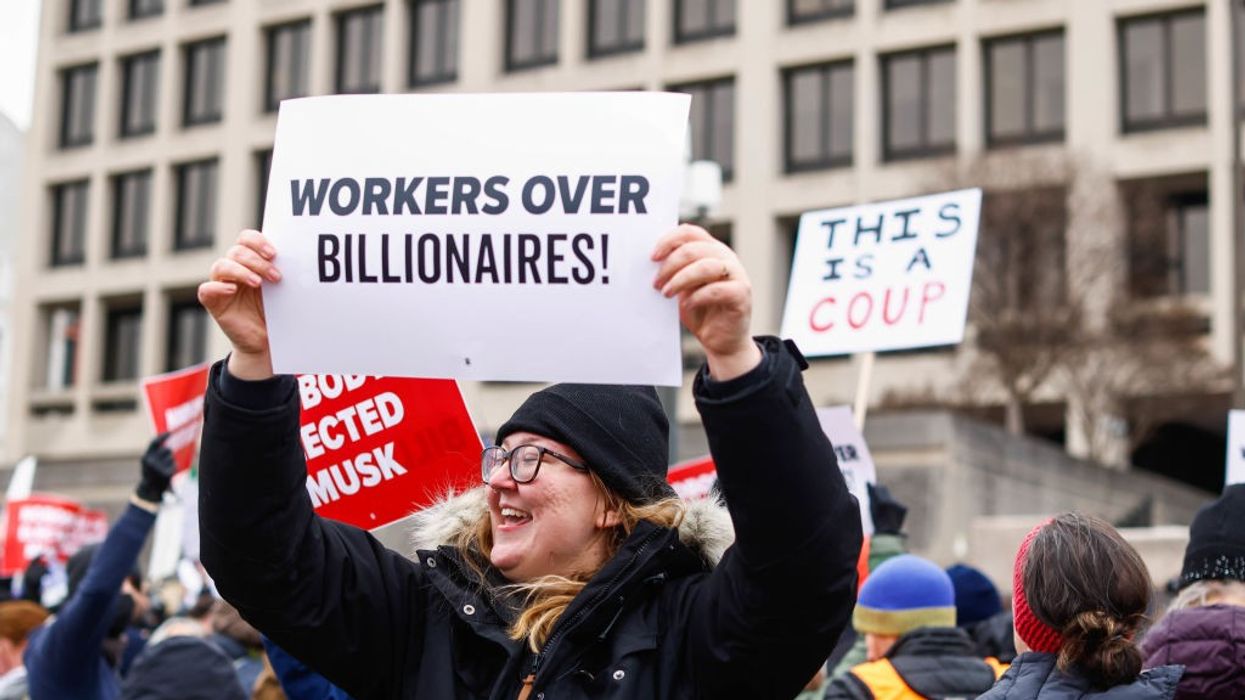
The prevailing issue that demands consensus is the economic exploitation and deprivation of our economic model for working people of all demographics.
The oligarchs are laughing. The corporatists are laughing.
They are laughing at working people as the big con continues. They are laughing at the corporate Democratic Party whose genetic code lacks the heart to challenge the autocracy now unfolding. “Good billionaires vs. bad billionaires.” Really?
The political left spectrum is largely catatonic. Progressives lament the ineffectiveness of their wing of the Democratic Party. “Outsider” leftists are skeptical of both political parties, but too small in numbers yet to pose a threat to corporate Democrats.
The time of milquetoasts is over. It is time to recognize what must be done.
Liberals on the left spectrum are flummoxed; some stalwarts attribute their recent political debacle to the inability of the Democratic Party to distribute a cogent message of their accomplishments.
It was not the message that flopped. Rather economic numbers proved that our economic model continued to squash the interests of working people. They then sent a clear message that they were not buying the corporate Democratic dose of doldrums. They voted for President Donald Trump.
Working people are comprised of the middle-working class and working class. The middle-working class identifies itself as “middle class.” The term is designed to divide working people.
Economic class has nothing to do with salaries or wages; it is about economic power. “Middle class” interests are closer to the working class than the dominant economic class.
Michael Zweig pointed this out in an insightful book in 2000 and revised in 2012. He identified the working class at 63% and the middle class at 35%. The combination presents a significant percentage of Americans who live and work largely by the undemocratic capriciousness of the 2%.
The income disparity in our country is at record levels as reported by the Congressional Budget Office. The income gap between the rich and everyone else is stunning. Income disparities are now so pronounced that America’s richest 1% of households averaged 139 times as much income as the bottom 20% in 2021.
The wealth disparity is just as shameful. Statista reported that in the first quarter of 2024, almost two-thirds of the total wealth in the United States was owned by the top 10%; the lowest 50% only owned 2.5% of the total wealth.
Make no mistake, If Americans do not take seriously the activities of the dominant economic class, it will be too late for working people.
The Ludwig Institute for Shared Prosperity (LISEP) reported an actual unemployment rate. LISEP tracks the percentage of the U.S. labor force that does not have a full-time job, wants one, has no job, or does not earn a living wage, conservatively pegged at $25,000 annually before taxes.
Their actual unemployment rate for this January was 23.3%.
Shadow Government Statistics (SGS) reported another actual unemployment rate. A significant demographic was mysteriously defined out of the Bureau of Labor Statistics (BLS) in 1994. Those discouraged workers who searched for work for more than one year simply vanished from the BLS unemployed numbers.
SGS reported that the actual unemployment rate for this January was 26.8%.
The government’s Consumer Price Index (CPI) is a measure of the cost of maintaining a constant standard of living and measuring the cost of out-of-pocket expenses. However, since the 1980s the BLS has been altering its methodologies to decrease the actual inflation rate provided to the public.
The BLS ignores food and energy prices in “core” inflation numbers as if food and energy are not basic necessities for living.
The BLS transitioned from their historic fixed-weight basket of goods and services to a quasi-substitution-based basket of goods.
It also changed from arithmetic weighting to geometric weighting and to owners’ equivalent rent (OER) numbers.
Another BLS method to decrease the real inflation rate was a transition to hedonic measures, which actually attempts to measure how much enjoyment a person receives from changing from one product to another.
These changes reflected the BLS intentional artificial deflation of accurate CPI numbers from the American public.
SGS reported that the actual inflation rate for this January was 10.81%.
Naturally, working people are seeking relief from this economic suffocation; according to the Council on Foreign Relations we have the largest disparity in wealth and income than any other developed country.
Good paying manufacturing jobs with other benefits left the country in dramatic numbers in the 1960s and 70s. How did this happen?
We can begin with an abysmal fact:
The economic empire of the U.S. is presently over, done, finished.
Our demise began when corporations moved to countries with low wages, regulations were minimal or nonexistent, and unions were absent. This was paradise for the corporate owner class.
This trend is continuing, and those good paying jobs are gone with no reason to return despite the bluster and gibberish emanating from the Trump administration.
The Economic Policy Institute reported that the U.S. lost 5 million manufacturing jobs in the last 25 years. To place our country in an advantageous position again will require transformation to a different economic model with smart negotiations and intelligent diplomacy with other countries.
A troubling result of the massive exodus of manufacturing jobs is the U.S. declining Gross Domestic Product (GDP). Consider in 2024, the GDP of the U.S. grew 2.8%; the GDP of China grew 5%. India, another member of the BRICS economic bloc, grew 5.6%.
It is not that complicated here.
Our economic model is characterized by an economic tree for working people. At the root of the tree is the primary issue of wages and salaries.
Moving up the tree are branches that comprise secondary issues. They are viable employment opportunities; effective, affordable healthcare; comprehensive educational opportunities; comfortable, secure housing opportunities; wholesome nutrition; safe, reliable transportation; environmentally clean water, air, and land.
Will progressive organizations coalesce into a national movement for economic and political democracy and seize the Democratic Party?
The third branch are cultural issues: They are reasonable gun control, effective immigration reform, women’s healthcare rights, and LGBTQ rights. These issues are important to their demographics; however, they have been manipulated into wedge issues that distract working people from the real source of their discontent—that is the political power that maintains the privilege and power of the dominant economic class.
Working people must accept cultural issues without necessarily agreeing with them. The prevailing issue that demands consensus is the economic exploitation and deprivation of our economic model for working people of all demographics.
Emphasizing cultural issues with so called “woke” identity politics over economic class politics has resulted in the grotesque policies of Mr. Trump and the Republican Party cult.
It is these tertiary issues that Mr. Trump used to provoke and frighten MAGA working people. It distracted them into ignoring their economic class malaise.
An effective political party must work to transform primary issues into an inclusive party. Until then, cultural issues will be little but distractions for marginalized groups without actual progress for their causes; Democrats will continue to bay in the wind and lose elections while an autocratic political model is established. Project 2025 is that model and a blueprint financed by the corporate and oligarch class.
The shelf life is over for assorted corporate Democrats and corporate union leaders. Their vapid strategies and tactics unwittingly encouraged working people to support Mr. Trump. Consider that Sen. Bernie Sanders (I-Vt.) defeated Mr. Trump in polls in 2016 and 2020. Yet the Democratic Party corporate sycophants denied Sen. Sanders the nomination.
The time of milquetoasts is over. It is time to recognize what must be done.
The arc of our progressive history includes the abolitionists, labor rights, women’s suffrage, civil rights, anti-war activities, and environmental movements. All had a common theme: They were mass movements that began as large groups of people who knew they could do better.
This may be what it requires to shake us free from the dehumanizing, exploitative crimes and corruption of neofascism that Mr. Trump and his MAGA cabal have been implementing. As contradictions sharpen and immiseration increases, the choices are stark.
Make no mistake, If Americans do not take seriously the activities of the dominant economic class, it will be too late for working people. The flurry of political attacks on our Constitution are not some frivolous actions that will be remedied in two or four years. The Trump cabal is playing the long game. Even the legal foundation of American democracy, Marbury v. Madison, is in jeopardy.
The judicial branch may strike down some of the more absurd legal and constitutional excesses of Mr. Trump’s supporters. However, his cult leaders of Project 2025 are preparing for a permanent autocratic model to replace our democratic republic. It will have the veneer of democracy, but will be an autocracy in form.
Each day, the administration plows ahead with truculent policies chipping away at the lives of working people. Will the time arrive for working people to create a national database of progressive organizations as an informational foundation for an authentic progressive movement? Will it facilitate petitions, mass demonstrations, civil disobedience, and general strikes?
Will progressive organizations coalesce into a national movement for economic and political democracy and seize the Democratic Party? Third-party options, while advancing democracy, are chimerical at this time. ICE is the new Gestapo, and waiting for a new political party to emerge is delusional.
Will our spiritual and secular organizations lead a movement or remain docile?
Pope Paul VI wrote Populorism Progressio in 1967. He stated that the restructuring of society was a welcome possibility. Though he admonished against violent means, he acknowledged a form of violence was an option:
Everyone knows, however, that revolutionary uprisings—except where there is manifest, longstanding tyranny which would do great damage to fundamental personal rights and dangerous harm to the common good of the country—engender new injustices, introduce new inequities, and bring new disasters. The evil situation that exists, and it surely is evil, may not be dealt with in such a way that an even worse situation results.
The question must be asked about a time table for ameliorating the poverty, deprivation, and suffering that will surely follow the scabrous policies of Mr. Trump. Each day is a new attack on our political and social norms; neofascist laws appear like a new head regenerated on a hydra. The courts may strike one down and another one is hatched immediately by the Trump cult.
This is addressed in a quote from Mexican poet Homero Aridjis in 1991: “There are centuries in which nothing happens and years in which centuries pass.”
We will certainly find out soon enough. We must ask ourselves are we Americans willing to take the risk; as Victor Hugo stated in an essay in 1845: “You have enemies, Good. That means you’ve stood up for something, sometime in your life.”
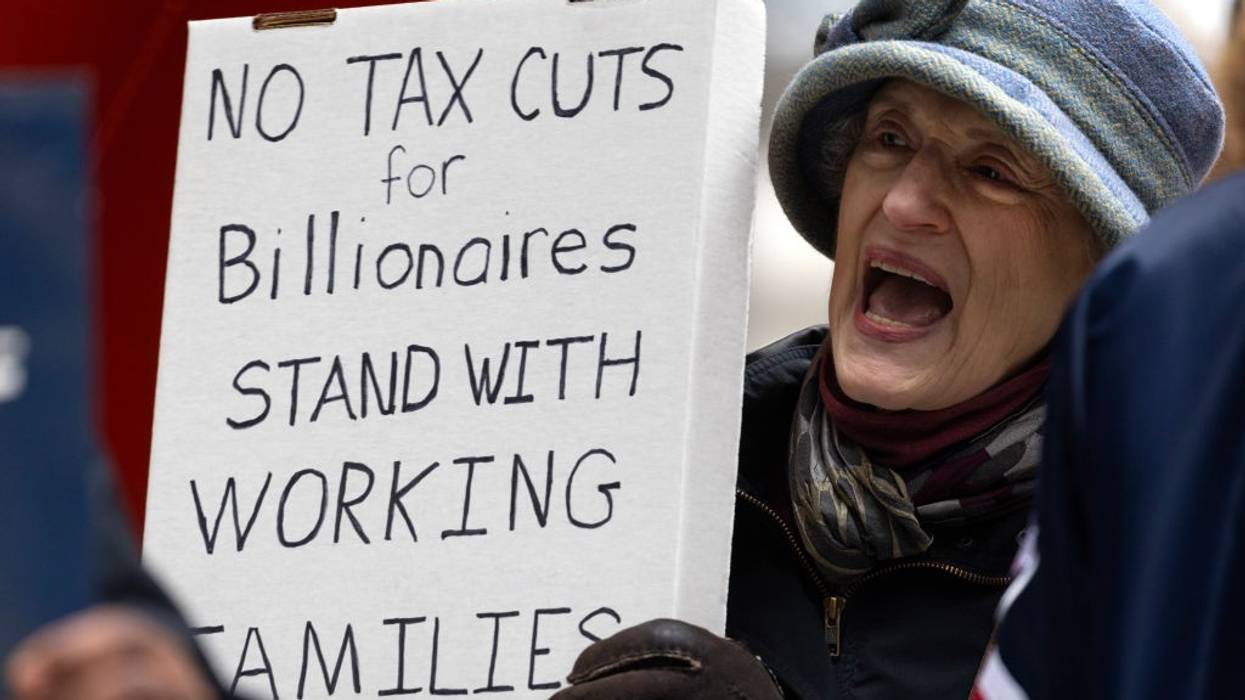
Time is short during a fascist takeover attempt. And Trump and Musk are moving at breakneck speed. The stakes could not be higher.
At what junctures do Elon Musk and Donald Trump, each proceeding from a distinctive starting point, forge a new and hyper-dangerous coalition? Well, the Afrikaner refugee joins an extreme version of neoliberalism to a fascist drive to state takeover, and the fascist orange man, who demands unfettered state power and loves tariffs, nonetheless caters to neoliberal drives to concentrate wealth, income, and power even more extremely at the highest reaches of society. Together, they pursue what is best called oligopolistic fascism.
What's more, while both may have once believed the old Friedrich Hayek story of how market deregulation secures a robust economy of steady growth, each displays active signs today of no longer believing the very ideology he pedals. Musk does so through his project of planetary escapism and his obsession with driving Inspector Generals from governmental institutions; Trump does so through his constant lies and belligerent demonization of vulnerable people who disagree with him. Indeed, each contains within himself a minor voice sliding into the major voice of the other. They both now believe that the old order that has sustained their extreme privileges can now only be protected by fascist means.
So, let's define our terms a bit more closely. Neoliberalism was a market theory, most prominently developed by Friedrich Hayek in the 1960s and 1970s as a series of rejoinders to a Keynesian model of growth and social welfare. Neoliberalism promised rapid and sustained economic growth, if the state would radically reduce regulation of private corporations, subsidize them whenever needed, severely limit the power of labor unions, create a court system committed to neoliberal jurisprudence, and, most importantly (and too often less noted by critics), install a national ideology of regular individuals committed to a market regime--a national ideology saturating schools, unions, churches, the government, the media, think tanks, and universities.
In this ideology each individual and institution sees itself as first and foremost a participant and beneficiary of a privately owned market economy. Hayek himself emphasized these themes in his neoliberal social philosophy, a social philosophy that included an economic theory but extended well beyond it to include all other social and state institutions. This all found elaborate expression, for instance, in his 1970 book Rules and Order. In it he emphasizes how the Supreme Court must set rules beyond the powers of legislative revision to nurture the sinews of a neoliberal economy. And he says a neoliberal ideology "may well be something whose widespread acceptance is the indispensable condition for most of the particular things we strive for." (Rules of Order, p. 58). He knew that minority groups who refused or could not imbibe this ideology had to be controlled by other means. A neoliberal regime along Hayek’s lines, then, is one in which the prison population grows.
In fact the neoliberal order in the United States, supported actively by neoliberal Supreme Court justices, has pushed previously unheard of wealth concentrations to the top of the social hierarchy; supported a unitary President; increased economic insecurity for workers, the poor and mid-level professionals; encouraged hi-tech, super-rich bros to pour vast amounts of money into right wing electoral campaigns; restricted state efforts to fend off climate change and help the poor; and supported media gaslighting to deny the contributions a neoliberal economy makes to accelerating climate wreckage and periodic crises. You can take the 2008 economic meltdown, during the G. W. Bush administration, to be a notable instance of the latter.
What about fascism? Well, fascist movements seek to secure capitalist states by new means during hard times. This was true even in the most extreme instance, when Hitler in Nazi Germany protected large private industrialists as he attacked Jews, social democrats, labor unions, homosexuals, the Romani, and communists. In Mein Kampf, the Jews were defined to be the "red thread" that tied them, social democrats and communists together in one phalanx. To attack the Jews was thus to attack these other organizations and movements too. The regime was inaccurately called "National Socialism"; a closer label would be "National Capitalism," an economic regime of private profit in which a fascist state became the key definer and regulator of life.
How does a distinctive aspiration to fascism proceed today? It does so by promulgating "big lies" to mobilize hatred in its base; fostering an extreme version of white, Christian nationalism; ransacking state regulatory institutions; intimidating the media, courts, unions, localities, and universities; engaging in coups; mobilizing private militia to intimidate vulnerable elements of the populace; treating immigrants of color to be inferior and "vile" people; and joining with other autocratic states to weaken democracy and promote oligarchical rule. Indeed, today Trump treats immigrants of color and their liberal supporters to be the red threads tying all his enemies together. And he never acknowledges how the very anti-climate policies he promotes accelerate the desperate marches from South to North that he castigates so fervently.
As I previewed in a 2017 book, Aspirational Fascism, Trump has profound fascist aspirations, displayed prominently today in promulgating a battery of big lies, fostering a violent coup attempt after he lost an election, aligning with Putin in foreign policy, pardoning all those who participated in his 2021 violent coup attempt, attacking universities, insisting upon the hegemony of a unitary president who sidelines Congress, the states and (increasingly) courts, and unleashing Musk to reshape the state.
Well, Musk shows signs of losing faith in the neoliberal ideology that informed his thinking hitherto, while continuing to deploy it strategically to clean out the federal government of officials—the "Deep State"—who could expose fraud and regulate corporate excesses. To take one instance, he has moved from an earlier stance of concern about accelerating climate wreckage to saying, even as he knows better, that climate change is real but moving at a very slow pace. Even after more extreme hurricanes, the Los Angeles wildfires, and other destructive events.
And Trump, who knew in fact that he had lost the 2020 election, has joined belligerently the project of heaping more and more wealth on the extremely wealthy at the expense of those working and middle class white nationalists who provide a key portion of his political base. The tax cut for the rich he is pushing through Congress shows that. He may well think he will not need to cater to that portion of his base so much, after he has silenced the media, universities, unions, progressive churches, and Democratic Party. He has already silenced critical Republicans and high rolling donors.
What about white working- and middle-class members of the Trump/Musk base? They have displayed signs not so much of believing all the Trumpian lies peddled to them as embracing the lies because of the ways they unsettle liberal elites on both coasts and activate racist impulses already there. Not too many Trump supporters believed the ugly story about Haitian immigrants eating dogs and cats. They merely loved to hear and repeat the story. That is why intense media efforts to expose Trump's lies have not penetrated the armored base. That protective armor itself was forged during a period when the democratic left had lost touch with the needs and insecurities of those constituents, while focusing only on their ugly racist and misogynist tendencies. In fact, curtailments of racism and misogyny need to be pursued in tandem with reductions in class inequality, if either agenda is to succeed. But it remains to be seen whether Democrats can learn this lesson.
Today, the neoliberal/fascist nexus is taking another turn. While it focuses white working class attention on violent immigrant deportations, it also plans to weaken Medicaid, Medicare, and Social Security severely, perhaps even to destroy them. Why? To give yet another huge tax break to the superrich who also finance their campaigns. Increasing numbers of the old base are now beginning to see through this scam by the scammer they used to love. It turns out the "Deep State" contains many essential services and protections, now on the block.
The Trump/Musk team hopes to complete dismantling and then reordering the Deep State before the base catches on. Then, once the media, universities and liberal donors have been intimidated sufficiently, it will be too late to protest effectively. That is the plan.
The urgent task today is to expose this nexus and its plan at every turn, in every possible venue, and by all democratic means necessary, from publicity to protest to electoral mobilization. For time is short during a fascist takeover attempt. And Trump and Musk are moving at breakneck speed. The stakes could not be higher, nor the urgency more acute.
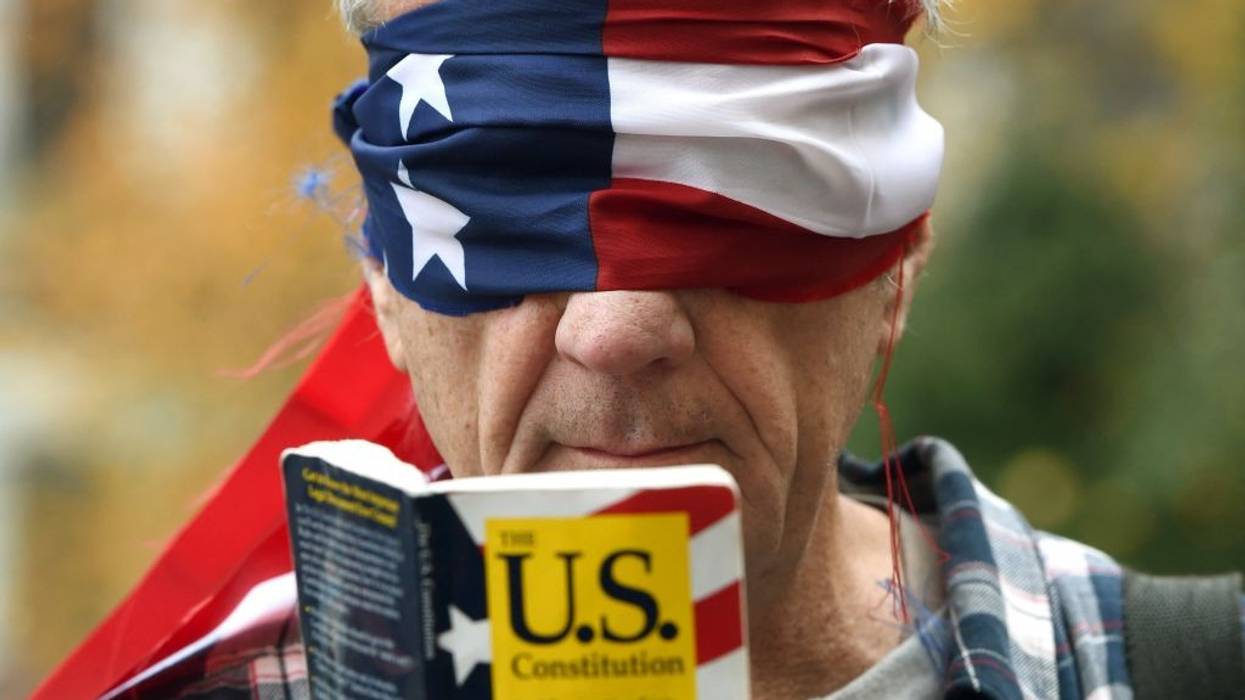
Are we ready to defend our ideals, or have we lost interest in distinguishing virtue from vice and public good from private greed?
Misattributed quotes and next-level gaslighting aside, we find ourselves yet again at a crossroads in time—a moment demanding serious reflection on the foundational principles that shaped our republic. This is not hyperbole.
For far too many years, most of what we have been willing to believe contradicts the ideals of the figures said to be revered by those we have entrusted with our government.
As to misattributed quotes, we could jump right in with Thomas Jefferson's actual words regarding our shared principles, but let's first reflect on the insights of his revolutionary compatriot turned bitter political rival, John Adams. In a letter dated April 16, 1776—less than three months before the signing of the Declaration of Independence—Adams shared this wisdom:
Public Virtue cannot exist in a Nation without private, and public Virtue is the only Foundation of Republics.
Now, recognizing that those working to recreate our nation—in their own oh-so-very perfect image—may not favor the Federalist Adams, our indispensable second president, let us fast forward some 140 years to Theodore Roosevelt. "Teddy" Roosevelt, a man well-versed in the ideas of our Founding Fathers and our foundational principles, had this to say in a letter dated January 1917:
Americanism means the virtues of courage, honor, justice, truth, sincerity, and hardihood—the virtues that made America. The things that will destroy America are prosperity-at-any-price, peace-at-any-price, safety first instead of duty first, the love of soft living and the get-rich-quick theory of life.
The focus on virtue as the foundation of national character contrasts sharply with the narrative we have been fed by those who, in reality, promote "the things that will destroy America." God only knows why we, the people, have been so accepting of their manipulative tactics instead of insisting upon promoting "the virtues that made America." Regardless, we have once again set ourselves up to watch as policies that overwhelmingly benefit a growing cadre of super-rich are implemented.
Yes, they will fuel their economic fire sufficiently so that some of us will enjoy a few crumbs. But regardless of their justifications, the harsh realities facing the shrinking middle class and the most vulnerable will be disregarded. They'll tell us that our best way forward is to be dragged down some technological path by today's Monied Interests, feeding us an amped-up version of the same greed-driven trickle-down bullshit that we've willfully consumed for nearly half a century. And for good measure, they will, this time, destroy as many ballasts of good governance as they possibly can. Then, their blaze will exhaust itself—leaving behind a stunning path of destruction. Never mind the damage done.
We the People should by now recognize their ways.
Let's now acknowledge that many of our antagonists today would prefer that we conclude this essay with the Anti-Federalist Jefferson's 1801 Inaugural Address, wherein he listed his governing principles and said, "These principles form the bright constellation, which has gone before us and guided our steps through an age of revolution and reformation. The wisdom of our sages, and blood of our heroes have been devoted to their attainment..." However, it seems anything but likely that those currently at the helm of government are willing to acknowledge this in context.
For example, we are far removed from Jefferson's agrarian society, our need for a standing army is without question, and the Monied Interests have evolved beyond anything Jefferson could have imagined. So, we'll conclude, in a moment, with another example of Jeffersonian wisdom. Nonetheless, here's an abbreviated look at Thomas Jefferson's "bright constellation":
To close, let's turn to the wisdom of an aging Jefferson, as he penned in an 1819 letter:
Of Liberty then I would say that, in the whole plenitude of its extent, it is unobstructed action according to our will: but rightful liberty is unobstructed action according to our will, within the limits drawn around us by the equal rights of others. I do not add "within the limits of the law"; because law is often but the tyrant's will, and always so when it violates the right of an individual.
We may not yet fully realize it, but we are literally in the process of deliberating (for lack of a better term) our foundational principles, and the chaos to come is going to test our commitment to Jefferson's Rightful Liberty—our foremost foundational principle of liberty and justice for all. We will soon know if we, as a nation, will continue our pursuit of a more perfect union.
The good news is that we, individually and collectively, get to decide which path we will pursue. The choice is ours.
Are we ready to defend our ideals, or have we lost interest in distinguishing virtue from vice and public good from private greed? Are we really to be remembered as the ones who abandoned America's Foundational Principles?

When most people stop believing that they and their children have a fair chance to make it, the tacit social contract begins to unravel, and a nation becomes susceptible to demagogues peddling the politics of hate.
U.S. President-elect Donald Trump isn’t the cause of what ails America. He’s the consequence. The real causes go back four decades.
Let me start with a bit of family history. During the 1950s and 1960s, my father, Ed Reich, owned a shop on the main street from which he sold women’s clothing to the wives of factory workers.
This time of year reminds me of his anxious dependence on holiday sales (and in the days after Christmas, the frantic returns). Between Thanksgiving and Christmas, he needed to earn enough to pay the bills and have a sufficient sum to carry us through the first part of the following year.
It’s crucial that Democrats focus on reversing the staggering inequalities of this era and getting big money out of politics.
We weren’t rich but never felt poor, and our standard of living rose steadily through the 1950s and 1960s—as factory workers and their spouses did better and better.
This was an era when the income of a single factory worker or schoolteacher or baker or salesman or mechanic was enough to buy a home, have two cars, and raise a family.
For three decades after World War II, America created the largest middle class the world had ever seen. During those years, the earnings of the typical American worker doubled, just as the size of the American economy doubled.
Over the last 40 years, by contrast, the size of the economy has more than doubled again, but the earnings of the typical American have barely budged (adjusted for inflation). Most of the gains have gone to the top.
In the 1950s and 1960s, the CEOs of large corporations earned an average of about 20 times the pay of their typical worker. Now they rake in over 300 times the pay of an average worker.
In the 1950s and 1960s, the richest 1% of Americans took home about 10% of the nation’s total income. Today they take home more than the bottom 90% put together.
Then, the economy generated hope. Hard work paid off. The living standards of most people improved through their working lives. Their children enjoyed better lives than they had. Most felt that the rules of the economic game were basically fair.
Although many women, Black people, and Latinos were still blocked from getting a fair share of the economy’s gains, the nation committed itself to changing this. New laws guaranteed equal opportunity, barred discrimination, promoted affirmative action, and expanded educational opportunity for all.
Today, confidence in the economic system has sharply declined. Its apparent arbitrariness and unfairness have undermined the public’s faith in it. Cynicism abounds. Equal opportunity is no longer high on the nation’s agenda.
As you’ll see in “The Big Picture” video above, recent American history can be divided into five periods:
***
When most people stop believing that they and their children have a fair chance to make it, the tacit social contract begins to unravel. And a nation becomes susceptible to demagogues such as Donald Trump peddling the politics of hate.
Many of the most vocal proponents of the “free market”—including Elon Musk, executives of large corporations and their ubiquitous lawyers and lobbyists, denizens of Wall Street and their political lackeys, and numerous multimillionaires and billionaires—have been actively reorganizing the market for their own benefit.
The consequence has been a market created by those with great wealth for the purpose of further increasing their wealth.
This has resulted in ever-larger upward distributions inside the market, from the middle class, working class, and poor to a wealthy minority at the top.
Because these distributions occur inside the market, they have largely escaped notice. We tend to debate only downward “redistributions” that occur outside the market, through taxing the rich and transferring some benefits to the poor and working class.
Musk and Trump want to reduce such redistributions.
But the hidden upward redistributions inside the market are arguably larger.
This is why it’s so important that those of us who care about social justice speak out and explain what has happened. And why it’s crucial that Democrats focus on reversing the staggering inequalities of this era and getting big money out of politics.
Otherwise, the only explanation most Americans receive for what has happened comes from Trump authoritarians who falsely blame immigrants, “socialists,” the “deep state,” “woke”ism, Democrats, Black people, women, and other countries.
And the only agenda most Americans receive for remedying what has occurred is by backing Trump and Musk and their lurch toward fascism.
My friends, the underlying issue is not the size of government. It’s whom the government is for. The fundamental choice is democracy or oligarchy.