

SUBSCRIBE TO OUR FREE NEWSLETTER
Daily news & progressive opinion—funded by the people, not the corporations—delivered straight to your inbox.
5
#000000
#FFFFFF
To donate by check, phone, or other method, see our More Ways to Give page.


Daily news & progressive opinion—funded by the people, not the corporations—delivered straight to your inbox.
Millions of Americans are eager, even desperate, for a political movement that truly challenges the power of Wall Street and the Pentagon. But accommodation has been habit-forming for many left-leaning organizations, which are increasingly taking their cues from the party establishment: deferring to top Democrats in Washington, staying away from robust progressive populism, and making excuses for the Democratic embrace of corporate power and perpetual war.
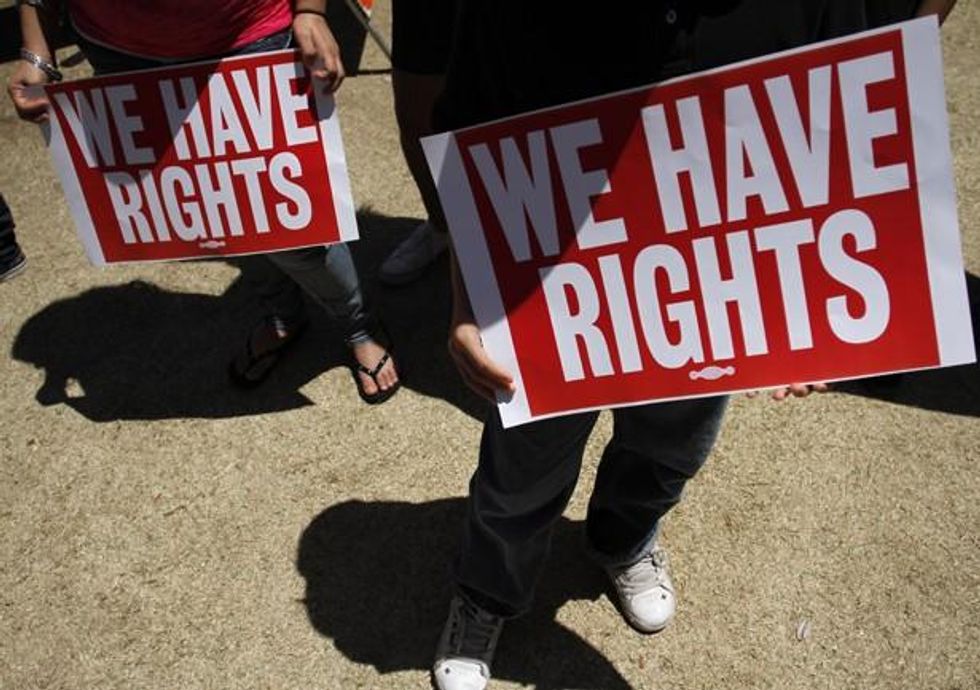
It's true that many left-of-center groups are becoming more sophisticated in their use of digital platforms for messaging, fundraising and other work. But it's also true that President Obama's transactional approach has had demoralizing effects on his base. Even the best resources--mobilized by unions, environmental groups, feminist organizations and the like--can do only so much when many voters and former volunteers are inclined to stay home. A month before the 2010 election, Obama strategist David Axelrod noted that "almost the entire Republican margin is based on the enthusiasm gap." A similar gap made retaking the House a long shot this year.
For people fed up with bait-and-switch pitches from Democrats who talk progressive to get elected but then govern otherwise, the Occupy movement has been a compelling and energizing counterforce. Its often-implicit message: protesting is hip and astute, while electioneering is uncool and clueless. Yet protesters' demands, routinely focused on government action and inaction, underscore how much state power really matters.
To escape this self-defeating trap, progressives must build a grassroots power base that can do more than illuminate the nonstop horror shows of the status quo. To posit a choice between developing strong social movements and strong electoral capacity is akin to choosing between arms and legs. If we want to move the country in a progressive direction, the politics of denunciation must work in sync with the politics of organizing--which must include solid electoral work.
Movements that take to the streets can proceed in creative tension with election campaigns, each one augmenting the other. But even if protests flourish, progressive groups expand and left media outlets thrive, the power to impose government accountability is apt to remain elusive. That power is contingent on organizing, reaching the public and building muscle to exercise leverage over what government officials do--and who they are. Even electing better candidates won't accomplish much unless the base is organized and functional enough to keep them accountable.
Politicians like to envision social movements as tributaries flowing into their election campaigns. But a healthy ecology of progressive politics would mean the flow goes mostly in the other direction. Election campaigns should be subsets of social movements, not the other way around. Vital initiatives to break the cycles of capitulation and lack of accountability will come from the grassroots.
* * *
"Bringing the vibrancy and democracy of activist movement culture to a political campaign is necessary but complicated," said Torie Osborn, a longtime progressive organizer in the Los Angeles area, whose dynamic grassroots campaign for the state legislature nearly advanced to the November ballot. "Activist protest culture is spontaneous, often angry and wildly uncontrollable. Campaigns have to be rigorously disciplined and controllable."
The mismatch takes a toll. "Ultimately one shortfall of our heartbreaking 1 percent loss was that our volunteers did not show up in force until the very end," Osborn told me. "Our field program counted on a 'movement' turnout, but our experience was that the energized volunteers didn't really want to do what the campaign needed. They wanted to be on Facebook, to blog, to go to events, even drive around and put up lawn signs, but not the voter-contact work of walking and phoning--at least not at the scale we were counting on."
Osborn's assessment tracked with my simultaneous experience as a candidate for Congress in California's North Coast district, a mostly liberal area north of the Golden Gate Bridge. Our campaign drew on my four decades of activism and several years of groundwork, including hundreds of speeches and other public appearances in the district. I'd been a member of the state Democratic Party's central committee since 2007, and our campaign had traction inside the party--despite the fact that its hierarchy was hot-wired for my main opponent, Jared Huffman, a five-year state legislator who had boosted his career with major donations from big corporations.
During my run for Congress, I participated in Occupy demonstrations in more than a half-dozen cities across our far-flung district. (Because of my long record as an activist, some local Occupy organizers set aside their aversion to allowing a candidate to speak.) A deft organizer of some of those protests, Pat Johnstone, coordinated much of my campaign's fieldwork. "From the beginning, Occupiers have expressed concern about being 'co-opted' by progressive groups," she observed. "Occupy provided a renewed vision of what is possible when we rise up together. However, the success of any movement depends on building and sustaining capacity. Partnerships and coalitions are an important part of that growth. How strong can any grassroots movement be without the strength of numbers?"
Early on, I announced that our campaign would not accept money from lobbyists or corporate PACs. Instead, we kept our eyes on small donors. I spoke at more than fifty house parties, and we developed a large e-mail list to update supporters while asking for contributions and volunteers. The campaign drew in hundreds of volunteers and more than 7,000 individual donors, raising $750,000. We approached fundraising as an outgrowth of grassroots support--not the other way around.
Our organizing approach and my unabashed progressive positions paid off as our campaign fought for support from unions. The first breakthrough came from the legendary longshore union ILWU, which followed up its endorsement by hosting a fundraiser. I also received solo endorsements from AFSCME locals and the UAW, along with a dual endorsement from the California Federation of Teachers and a triple endorsement from SEIU California. Another major victory came when our campaign jolted expectations by depriving Huffman of a pre-primary endorsement from the California Teachers Association. Those hard-won victories were partly the result of my strong pro-labor commitments, like unequivocal defense of pensions. But sadly, the progressive California Nurses Association stayed out of the race. And the bulk of the labor establishment--including the building trades, the big labor council in the district and the state labor federation (AFL-CIO)--lined up with the garden-variety liberal Democratic politician making his way up the ladder.
I was fortunate to get support from several progressives in Congress. Strong endorsement letters went out from Representatives John Conyers and Raul Grijalva. Days before the June election, Representative Dennis Kucinich campaigned alongside me. But in the district it was a different story with retiring Congresswoman Lynn Woolsey, whose fervent antiwar politics have lost steam when approaching endorsements. In 2010 she went far out of her way to help Jane Harman, a leading pro-war congresswoman and Blue Dog Coalition member, fend off a primary challenge from an antiwar progressive. This year, thirty-six hours after primary election night (with 40,000 votes still uncounted and a small margin between me and the runoff), Woolsey endorsed Huffman--who has never indicated that he will challenge the military-industrial complex. The takeaway: we need to build an independent progressive power base instead of relying on any politician.
After campaigning nonstop for eighteen months, I received more than 25,000 votes in the primary (15 percent) and missed getting into the November runoff by 174 votes. (Huffman finished in first place, with 37.5 percent.) With just two Republicans among the dozen contenders in the "top-two open primary," one of the GOP candidates slipped through to the fall ballot. If I'd gotten past the primary and consolidated progressive support, I would have gone into the general election with an initial base of about 30 percent. At that point, I would have had to pull quite a populist rabbit out of the hat to win.
"Technically, our campaign has ended," I wrote to supporters after the protracted vote count. "Politically, it's continuing--with plans to build an ongoing coalition on the foundation of what we've already done together." Dozens of people involved in my campaign quickly went to work on other ones with heightened skills, knowledge and abilities to draw in volunteers. Meanwhile, our campaign is morphing into a coalition for the long haul (GrassrootsProgress.org), aiding efforts to elect progressives to local office within our district as well as to Congress elsewhere in the country.
* * *
Overall, progressive insurgencies did not perform well in House primaries this year. A few bright spots appeared when David Gill beat the Democratic machine in a central Illinois district and liberal challengers took out centrist incumbents in Texas and Pennsylvania. But even with high-profile support from national netroots groups, progressive candidates--notably Ilya Sheyman in Illinois, Eric Griego in New Mexico and Darcy Burner in Washington State--lost by sizable margins. Each contest had its own dynamics (Burner was outspent six to one by a self-financed opponent who dropped $2.3 million, whereas Griego had a money advantage), but the pattern is grim.
Yes, progressives are usually underfunded, and money matters a lot. But it's hazardous to internalize Mark Hanna's timeworn dictum, "There are two things that are important in politics. The first thing is money, and I can't remember what the second one is." We forget the second thing at our peril. In a word, we need to organize.
For progressives, ongoing engagement with people in communities has vast potential advantages that big money can't buy--and hopefully can't defeat. But few progressive institutions with election goals have the time, resolve, resources or patience to initiate and sustain relationships with communities. For the most part, precinct organizing is a lost art that progressives have failed to revitalize. Until that changes, the electoral future looks bleak.
In my race, basic progress ended up reflected in vote totals to the extent that I was able to reach out and talk with people over the course of years. Yet many of the shortcomings of my campaign were related to fieldwork. Votes slipped through our fingers when we didn't do adequate follow-up with contacts made long before election day. As our campaign grew, so did the dilemmas of time, staff, volunteers and money. By any measure, we ran the strongest grassroots campaign in the race, but it wasn't grassroots enough.
Fragmentation of core constituencies was another problem. From the outset, it was obvious that half of the twelve candidates didn't have a snowball's chance of getting through the primary. With rhetoric that sounded leftish, those six candidates received a combined total of 8.6 percent of the primary vote, while I lost by 0.1 percent. Huffman was no doubt exceedingly grateful to these anemic "protest candidates"; he could go on a cakewalk to the November runoff against a GOP candidate in a heavily Democratic district.
My counsel to prospective candidates: do not launch a campaign unless you can give it your all and plausibly consolidate most of the progressive electorate along the way. Do thorough groundwork for a long time. Keep meeting people and adding to your database of contacts. Listen and learn about political microclimates. Work on building coalitions. Encourage volunteers and treat them with respect. Insist on meticulous, accurate and principled work from staff. Remember that better process is much more likely to result in better decisions; when disagreements flare within the team, strive to assess the clashing outlooks. Keep your eyes on the prize: not only winning but also making progressive activists and groups stronger for the long haul.
A campaign with resonance should keep evolving after the election. Donor files, e-mail lists, working relationships, infrastructure, public good will and more can sustain and expand alliances. High-quality compost from one campaign should invigorate the growth of others.
Winning or losing an election can hinge on the decisions of just one group or even one individual. We may not feel powerful, but an internalized sense of powerlessness represents another triumph for a system that thrives on vast imbalances of power. Let's get more serious--and effective--about gaining progressive power in government, shall we?
Viewing the recent House of Representatives debate on the 2013 Defense Appropriations bill (HR 5856) was as disorienting as if living in an alternate reality with little acknowledgement that while the federal deficit continues to increase, some of the country's once-great cities are in the throes of critical demise. Spending like drunken sailors with no thought of tomorrow, Congress added more than $3 billion beyond what the Obama Administration had requested. The $519 billion spending bill, which was $1 billion over the Pentagon's 2012 budget, was approved on a lopsided bipartisan 326-90 vote with eleven Republicans voting No and 101 Democrats voting Yes.
The Federal government's appropriation process of spending American taxpayer funds began in 1789 when the House Ways and Committee, initially granted broad authority over the essential functions of revenue, banking and all general appropriations, made its first appropriation commitment of $639,000.
By 1865, the oldest committee in Congress split its functions and created an Appropriation Committee with nine Members adopting a $1.3 million appropriation reflecting the costs of the Civil War. In what became a measure for monitoring US war expenditures, appropriations dropped in 1866 to $520,000 with the war's conclusion -- just as appropriations rose in 1899 to fund the Spanish American war at $605,000, dropping to $485,000 by 1902 at the war's end. Gearing up for a more substantial battle, appropriations to fund WWI grew to $18 billion in 1917 before dropping to $2.9 billion in 1927. After WWII and with the rise of the military industrial complex, the Pentagon portion of annual appropriations continues to dominate the US budget.
Immediately prior to consideration of the Pentagon's 2013 budget, it was with little irony that Rep. Jeb Hensarling (R-Tx) introduced the Sequestration Transparency Act requiring the President to report proposed $1.2 trillion program cuts over the next ten years to Congress -- if sequestration becomes automatic on January 2, 2013. Rep. Chris Van Hollen (D-Md), ranking Democrat on the Budget Committee, responded that while Democrats agree to eliminate sequestration, now referred to as a 'fiscal cliff' for domestic spending cuts, increased tax revenues from the country's top 2% would be required. While the STA was presented as a reasonable request seeking information, the Act may be little more than a guise to identify potential military cuts. With a two-thirds vote required, the STA was adopted on a 414-2 vote.
At the same time, defense contractors were on Capitol Hill wringing their hands in front of the House Armed Services Committee predicting doom and gloom if the Pentagon budget was cut 10% as required by the Budget Control Act of 2010 -- just days after former Vice President Dick Cheney visited Congressional Republicans to further drive the point that cuts to the military would be "devastating" with a loss of "1.5 million jobs. " According to Sen. Lindsay Graham (R-SC), Cheney advised Republicans to "keep the money flowing in a predictable way so you can plan for the next war."
Back on the House Floor, opposition to the Defense Appropriation fell to a handful of reliable Democrats and one senior Republican, all veterans of previous legislative battles, undaunted by the prospect of defeat as one amendment after another was ruled 'out of order' or beat back in a Republican controlled House.
Standing guard throughout the debate was Rep. Bill Young (R-Fl), Chair of the Appropriation Subcommittee on Defense who challenged multiple amendments with a fatal 'point of order' thus denying each a debate and an up-or-down vote. One such amendment was Rep. Walter Jones' (R-SC) attempt to bring the Afghanistan Security Agreement approved by President Obama several months ago to Congress. While the Agreement was submitted and approved by the Afghan parliament, it has never been introduced in the U.S. Congress and never debated or voted on. The Agreement would extend US military presence in Afghanistan until 2024.
While Rep. Barbara Lee's (D-Calif) amendment to freeze Pentagon spending at 2010 levels until a financial statement validates the Pentagon as audit-ready with trillions of taxpayer dollars missing and Rep. Ed Markey's (D-Mass) amendment to defund a new nuclear weapons facility that would cost taxpayers almost $6 billion were both deemed 'out of order," Rep. Steve King's (R-Iowa) amendment banning federal funds from violating DOMA (Defense of Marriage Act) on military bases sailed through and was adopted on a 247-166 vote.
Retiring at the end of this Congressional Session did not stop long-time Pentagon critic Rep. Lynn Woolsey (D-Calif) from offering numerous amendments pointing out the need for "shared sacrifice" from the military as domestic programs are taking "a hit." Woolsey's amendments included a $1.7 billion military cut comparable to Republican budget cuts to social service block grants which lost on a 91-328 vote with 14 Republicans voting Yes; a $293 million cut (representing the cost of one day in Afghanistan) comparable to Republican cuts to women's health services lost on a 106-311 vote with 19 Republicans voting Yes; and another that would cut $181 million comparable to Republican cuts to Federal Transportation Administration infrastructure projects lost 114-302 with 28 Republicans voting Yes.
If Democratic amendments such as Rep. Markey's amendment to reduce land based nuclear missiles (ICBM) to 300 that would have saved $360 million or Rep. Mike Quigley's (D-Ill) $988 billion cut for one DDG51 destroyer the Navy did not request or Rep. Steve Cohen's amendment to cut $175 million to build roads in Afghanistan where there are no cars or similar amendments were adopted, American cities like Stockton, California, cited by the FBI as tenth on its "most dangerous city" list and with a budget shortfall of $26 million, would not need to declare bankruptcy.
Amidst the crime, neglect and dire poverty of American cities, the Pentagon budget remains supreme as the majority of States rely on Federal aid for their main source of revenue, the country's civil engineers cite chronic underfunding and delayed maintenance as it rates the nation's crumbling infrastructure (bridges, drinking water, schools, roads and transit) a solid D Grade.
By this fall, the two major political parties in the United States will have spent around $10bn this election cycle to persuade an increasingly skeptical US public that there is more than just a stylistic difference between a Republican and a Democrat. Naturally, this campaign will focus primarily on the superficial (is Mitt Romney too weird to be president? Is Barack Obama too cool? And who loves America/Israel more?), as maintaining the facade of electoral choice requires obscuring the broad areas of bipartisan agreement: bailouts for the rich, prisons for the poor, and drone strikes for the poor and foreign.
And some still dare to call it democracy.
While partisans on both sides claim that the coming election is the most important ever, the truth is that for most in the US, and certainly for most outside it, what happens this November will be as consequential as who wins the World Series. Sure, one team's fans will be happy, for a time, but yesterday's champions soon become tomorrow's overpaid stiffs. But with the game played in Washington, those watching from the cheap seats risk losing more than $8 on a watery beer - they risk losing their homes to a foreclosure or Hellfire missile.
Almost four years after hopes of change were once again dashed by excuses for continuity, it's hard to deny the stacked reality of electoral politics. It doesn't much matter which party or candidate you bet on, the house always seems to win - for the simple reason that everyone's on the house's payroll.
Done with 'democracy'
The sorry state of US democracy has caused many here to write off electoral politics as a waste of time and energy. For some, this has manifested itself in apathy, but increasingly direct action and the boycott are taking the place of the ballot box. Since their politicians have failed them, activists around the country are now helping block dozens of foreclosures, sending a message to capital that it can't seize the commons without a fight. But so long as state power is a thing to be reckoned with, those desirous of radical social change ought to exert at least some energy trying to capture that power for the people.
"When Democrats run, they talk liberal, they talk populist, and as soon as they get elected they govern for the elites," says Jeff Cohen, a long time left-wing activist and founder of the media watchdog group Fairness & Accuracy in Reporting (FAIR).
Rather than challenge the Democrats' corporate, pro-war agenda, Cohen charges traditional left-wing constituencies with capitulating to that agenda in the name of being a lesser evil. The logic goes that so long as there's some Republican, somewhere, saying something terrible, any terrible Democrat can count on labor unions, environmental groups and MoveOn.org turning out the vote come election day.
What if they didn't?
"Those are the groups that have the power to change the Democratic Party and the country," Cohen argues. Rather than serving as the useful idiots of corporate Democrats: "If there were movements ready to primary such elected officials and you beat one or two of them, that sends a strong shockwave through the rest of them."
That's easier said than done. With the help of gerrymandered districts and the sway of financial interests and military contractors, a good lobbyist-approved politician is more liable to publicly denounce motherhood and Jesus than they are to lose an election. Even in an electoral wipe-out, there's a better than eight in ten chance one's congressman will keep their job. And there's a smaller chance that one will even get the opportunity to vote for a candidate running on a platform of peace and social justice, much less one from a major party; even fewer will have the opportunity to support a candidate who follows through on that platform.
"Chances for a left-wing insurgency within the Democratic Party at this point are very slight," says Noam Chomsky, the MIT linguist and libertarian socialist. But, he adds, "that's no reason not to try". Though the focus of the radical ought to be on changing the culture that enables power - the necessary direct action and education that set the stage for a social revolution - voting for reform-minded candidates "should take about five minutes, and then we go back to the important work on the ground to change the conditions in which the mostly farcical election process proceeds".
That was the thinking behind the campaign to elect Norman Solomon, a prominent anti-war activist and author running to replace retiring California Congresswoman Lynne Woolsey, one of the more progressive members of Congress. Cohen, a long-time friend of Solomon, says the campaign was launched with the intention of signaling to the Democratic Party that leftists would no longer be content simply caving to its corporate leadership - that they were there seeking to "empower these social movements and these mass groups of people that object to US corporatism", not exploit them on behalf of corporate Democrats.
"I'm talking about representing these social movements and taking over," says Cohen. And that, he argues, requires taking over one of the major parties, as "you have to deal with the political system you have".
Counter-insurgency
In the narrow terms of electoral politics, that may very well be true. Of course, trying to take over one of the corporate parties comes with its own set of problems, the most problematic being that one is fighting on capital's turf, where the money one raises is a lot more important than the values one holds. Indeed, you don't get far in Washington - or even get to Washington - clinging to tedious principles like "murder is bad" or eccentric notions about empty, soul-crushing consumerism not being the sole purpose for one's existence on this planet we call Earth. In the US political arena, it's about the money, not the morality.
Solomon found that out in one of the most left-leaning districts in the country. Despite years of preparation and endorsements from prominent leftists such as Chomsky and Congressman Dennis Kucinich, Solomon finished third in the June 5 primary. Behind a Republican. Despite doing his best to be a good party Democrat - his campaign told me Solomon was a "strong and steadfast supporter" of the president - he was crushed by the party establishment's preferred empty suit.
Perhaps that's for the best.
"Good men," as Emma Goldman once observed, "if they should be so fortunate as to make it into the halls of power, would either remain true to their political faith and lose their economic support or they would cling to their economic master and be utterly unable to do the slightest good." Indeed, politics leave no alternative.
But even the rogues often prove not to be rogues for long. Senator John Kerry, for instance, went from being one of the country's most outspoken anti-war activists to one of the Senate's most reliable militarists, backing every major war in the past 20 years. Dennis Kucinich, good ol' Dennis Kucinich, backed a health insurance mandate he one week earlier pledged to oppose, not because he changed his mind on its merits, but because he claimed he had a "higher responsibility" to "my president and his presidency". Barack Obama, the guy he pledged his devotion to - well, we know his story.
In a statement conceding his defeat, Solomon pledged to continue his fight to "overcome a status quo of perpetual war, extreme Wall Street power, chronic inequities and environmental degradation". Given the enormity of the task, it's probably best that he continue that fight outside the halls of Congress, where the real power lies: in the hands of the people. The difficult task lies in convincing the people they have it.
UPDATE: The Solomon for Congress campaign says the campaign is not over. Campaign manager Dal Mullen said "I am so proud of what we have achieved. Our campaign has inspired progressive activists and leaders nationwide. We pledge to fight on until every vote is counted. As we get new numbers, we will keep you posted."
The campaign put out the following statement late today:
This campaign is not over.
Here's the latest: The race for 2nd place -- between Norman and Republican Dan Roberts -- is extremely close. We will have greater clarity by Friday. This is not unusual in California elections nowadays, due to the large number of votes-by-mail. Tens of thousands of vote-by-mail ballots have not been counted -- including many from Marin and Sonoma counties, Democratic Party strongholds.
At this point, with 12 candidates in the race, Republican Roberts is at 15.3% and Norman is at 14.2%. They are separated by only 1,379 votes, after numbers trended in our direction all night. (At the beginning of vote-counting, Roberts was 4% ahead of Norman; the gap has shrunk to 1.1%.)
Democrat Jared Huffman is in first with 37%. Roberts and Norman are fighting for 2nd in this top-two primary at roughly 15%, and Democrat Stacey Lawson is in 4th place with about 10%.
This is NOT a recount. The original vote count is simply not finished, and second place is too close to call. We are monitoring the counting of the votes-by-mail in various counties.
* * *
Journalist and activist Norman Solomon, who set aside his writing career and outside agitator status to run for US Congress in California's 2nd District, came up short on Tuesday's primary as Democratic rival Jared Huffman took the party nomination.
Both men were vying for the seat left open by Rep. Lynn Woolsey's seat, who is retiring after 20 years in office.
* * *
The Press Democrat: Huffman finishes first in House race; GOP hopeful Roberts 2nd
Assemblyman Jared Huffman jumped out to a commanding lead in a crowded North Coast congressional district race in early returns Tuesday night, with Republican Dan Roberts holding down second place and possible spot in the November runoff.
Huffman, who raised more than $1 million, led the pack of 12 candidates with 42 percent of the early vote, while Roberts had 14.5 percent.
Analysts had expected that two Democrats likely would vie for the seat in the November general election.
Instead, Norman Solomon, a West Marin activist/author, was third with 11.9 percent, followed by San Rafael businesswoman Stacey Lawson with 9.1 percent.
Lawson, a political newcomer, raised more than $900,000 to finish the campaign donations sweepstakes just behind Huffman.
Solomon was the third leading fund-raiser with $630,000.
Roberts, a political newcomer, raised $184,000, including $160,000 in loans to his own campaign.
Under California's new primary election system, the top two vote-getters, regardless of party, will compete in the November general election.
# # #
Voters in Northern California's 2nd Congressional District head to the polls today in a primary vote to determine the successor to retiring Democratic US Rep. Lynn Woolsey, former chair of the Congressional Progressive caucus. The candidates include the progressive activist and author Norman Solomon, co-founder of FAIR (Fairness and Accuracy in Reporting) and the founder of the Institute for Public Accuracy. The top two vote getters in the 12-candidate race will square off in November for the chance to claim Woolsey's seat.
Voter turnout statewide is projected to be the worst ever in the state's modern era: Only 35 percent of the state's registered voters are expected to vote, according to a Field Poll estimate Tuesday. But the turnout in the heavily contested 2nd Congressional District is expected to be higher - in the 50-55% range based on absentee ballot return rates.
Polling places opened at 7 a.m. PT Tuesday morning and will remain open until 8 p.m. PT. Election returns from the California Secretary of State will be available here.
* * *
# # #
There's a conventional wisdom in Washington that there's nothing we can do politically to stop the U.S. government from killing innocent civilians with drone strikes.

But it ain't necessarily so.
There's a conventional wisdom in Washington that there's nothing we can do politically to stop the U.S. government from killing innocent civilians with drone strikes.

But it ain't necessarily so.
Speaking only for myself, I'm willing to stipulate that killing "high value terrorists" who are known to be actively preparing to kill Americans is wildly popular, regardless of whether it is constitutional and legal.
Here's what's not wildly popular: killing innocent civilians.
This is not a liberal vs. conservative issue. This is an American issue. Go to the reddest of Red America. Stand outside a megachurch or military base in the Deep South. Find me twelve Christian Republicans who are willing to sign their names that they want the U.S. government to kill innocent civilians. I bet you can't do it. Killing innocent civilians is un-American.
Consider: after what widely reported news event did even Newt Gingrich and Rick Santorum say maybe we ought to get our troops out of Afghanistan? After it was reported that a U.S. soldier massacred Afghan civilians.
The historian Howard Zinn suggested that it's a backhanded compliment to the American people that our government lies to us about what it's doing in other people's countries. Because it suggests that if the American people knew, they would never stand for it.
Thanks to a New York Times report this week, we now know. In an echo of the Colombian military's "false positives" scandal, our government is killing people with drone strikes and then decreeing that "military age men" killed by U.S. drone strikes are automatically "combatants." Born a chicken, raised a chicken, now you're a fish.
Some senior U.S. officials are quite unhappy about this, the Times reports.
The C.I.A. accounting has so troubled some administration officials outside the agency that they have brought their concerns to the White House. One called it "guilt by association" that has led to "deceptive" estimates of civilian casualties.
"It bothers me when they say there were seven guys, so they must all be militants," the official said. "They count the corpses and they're not really sure who they are."
So what is producing this conventional wisdom that there's nothing we can do?
A key determinant is what Members of Congress are willing to say and do. If you can't get twelve Members of Congress to say "boo" about something, then the conventional wisdom says it's not an issue.
Well, that just changed. Thirteen Members of Congress are willing to say "boo". Here they are: Dennis Kucinich, John Conyers, Rush Holt, Jesse Jackson, Jr., Maurice Hinchey, Charlie Rangel, Pete Stark, Mike Honda, Raul Grijalva, Bob Filner, Barbara Lee, Jim McGovern, and Lynn Woolsey.
These thirteen Members of Congress - who, one hopes, will soon be joined by others - have signed a letter to the Administration demanding that the Administration come clean with Congress and the American people about its drone strike policy, particularly concerning civilian casualties and so-called "signature strikes" that target unknown people.
This Congressional letter is being supported by the Campaign for Innocent Victims in Conflict, Amnesty International, and other groups who don't want the U.S. government to kill innocent civilians.
If ten thousand Americans would write to their Members of Congress, urging them to sign the Kucinich-Conyers letter, we could get forty Members of Congress to sign it. If we could get forty Members of Congress to sign it, the beltway media would report that Members of Congress are complaining about civilian deaths from drone strikes. If we could get the beltway media to report that Members of Congress are complaining about civilian deaths from drone strikes, the conventional wisdom that there's nothing we can do politically about civilian deaths from drone strikes would be dead.
Sometimes mate in five starts with a pawn move.
As Stephen Colbert put it,
"The administration has developed a brilliant system of ensuring that those building engulfing explosions don't kill non-combatants: they just count all military age males in a strike zone as combatants...This isn't just the president executing innocent people around the world by fiat, there is an appeals process. The men are considered terrorists unless 'there is explicit intelligence posthumously proving them innocent,' in which case, I assume, there is a legal process that un-kills them."
Colbert Nation, to your laptops.
The Colbert Report
Get More: Colbert Report Full Episodes,Political Humor & Satire Blog,Video Archive
We can't devise a successful electoral strategy for "The Left"--meaning the forces of peace, social/economic justice and sustainability--unless we face a simple fact: We're getting our asses kicked.

For three decades, our country's politics have moved steadily rightward and become more corporate-dominated. With few exceptions (gay rights, for example), the right wing has been winning on almost every issue. That's why we have record levels of war-spending, with near record levels of poverty and wealth disparities. Labor is weakened and under attack, while corporate power over government and both major parties keeps increasing. Our earth faces environmental disasters while the mindless "Drill, Baby, Drill" slogan gains popularity. Issues we thought we'd won decades ago--like reproductive rights and separation of church and state--are under constant threat.
There's an essential reason for this sad state of affairs: Rightwing activists have seized one of the two major parties, the GOP, and used that party to amass power and dominate the terms of debate on most issues since Reagan was elected in 1981.
Rightwing activists--not always with corporate backing--have been resolute in taking over local and state Republican organizations and electing movement allies to office at all levels. Unlike many liberal/progressive activists, these conservative activists don't instinctively make apologies for politicians who sell them out or fail to deliver. Instead of apologizing for the GOP elite, rightwing activists keep electing a new crop--ever further right and more closely aligned with their extremist demands and litmus tests.
This determined, strategic electoral activism is the reason that what passes for "mainstream" GOP positions today--denying Darwin and global warming while bestowing personhood on fetuses and ExxonMobil--are more rightwing than 30 years ago. And one can argue that the Tea Party-influenced 2012 Republican presidential frontrunners (including Mr. Etch-A-Sketch) were further right than George W. Bush . . . who was further right than the 1994 Gingrich "revolutionaries" . . . who were further right than Reagan . . . who was further right than the Republican mainstream of previous decades.
A Roadmap for Progressive Power?
Have rightwing activists given progressives a roadmap for political power? If so, why has there not been a concerted effort by progressive movements and activists to enter and transform the Democratic Party into a vehicle that can move our country in a dramatically progressive direction?
Unfortunately, instead of implementing a "remake-the-Democratic-party" strategy, constituency groups like labor and the liberal netroots often function as loyal party operatives, pouring money behind whatever mediocre candidates the Democratic establishment serves up. Some big-spending unions are loath to intervene in primaries--which is where their money and activism could prove decisive in replacing business-as-usual Democrats with genuine progressives.
It should be clear by now that electing Democrats--even Democratic majorities--is not enough. In 2009, Democrats held both Congress and the White House, as they did in 1993-94. How'd that work out for us? We got NAFTA, but no Employee Free Choice Act. It's more than a trivial matter what kinds of Democrats are nominated.
Among hardened leftists, there's a different objection to the "transform-the-Democrats" strategy: a purist rejection of dealing with the Democratic Party--one of the "twin parties of capitalism." So, even in this current period of mass disgust with the powers that be, electoral activism consists of running marginalized protest or third party campaigns that pick up a tiny percentage of votes.
While it's true that today's Democratic Party is a corporate-dominated party bolstering elite rule, it's also the party that most young people, women, people of color and progressive-inclined Americans look to for their choices. The Left needs to offer these groups vastly different choices, and transform the party in the process.
I sure wish rightwingers had spent the last few decades as electoral purists--and instead of working to take over the GOP, they'd confined themselves to "protest politics" and self-marginalizing minor parties. Our country would be much better off.
But the right wing went about seizing a major party, beginning with the failed Goldwater insurgency of 1964. We need to remember that the Republican Party of President Eisenhower was a moderate, status quo party that had acquiesced to the New Deal--with 90% tax rates on the 1 percenters, federal jobs programs and virtually no union-busting.
Perhaps the main excuse for electoral timidity or abstention from progressives of various stripes is: "Rightwing movements have big corporate money behind them, and we don't." Actually, we do now have the ability to raise big money from small donors online. And corporate money doesn't always explain rightwing success: the religious right, which drove much of our country's conservative shift in recent decades, was largely a grassroots movement of middle-class whites, often triumphing over the moneyed Republican Old Guard.
In my view, money is not the main advantage rightwing movements have over progressive ones. It's leadership. And zeal for transformative change. Look at a rightwing leader like the late Paul Weyrich, who coined the term "Moral Majority," founded grassroots religious right organizations and pioneered direct mail fundraising among small donors. (Yes, he also cofounded corporate fronts like Heritage and ALEC.) Thirty years ago, Weyrich remarked: "We are different from previous generations of conservatives. . . . We are no longer working to preserve the status quo. We are radicals, working to overturn the present power structure of this country."
Those who've led rightwing activists to power in recent decades have burned with a passion to radically transform our country. Meanwhile, those who lead large liberal/progressive groups today seem to burn with a passion to have lunch with Democrats in Congress, to hobnob with "our friends on the Hill," to explain to the base why we can't push too fast or demand too much of the Democrats.
In the past century, the two periods of dramatic progressive reform--the 1930s New Deal era and the 1960s Civil Rights/War on Poverty era--were times when independent Left movements made increasingly bold demands on the Democrats. Martin Luther King, Jr. was repeatedly asked by the Kennedys and LBJ to slow down, but he never did--and he went to his grave as a vocal opponent of the Democrats' war in Vietnam.
In those eras of social progress, there were progressive movement leaders who acted with independence--more attuned to the base than to Democratic elites. They weren't prone to constant apologizing for party leaders.
In other words, they acted like left versions of the rightwing leaders of recent decades.
It's not glamorous work for activist movements to try to transform a major party. It's slow and arduous--with more defeats than victories. But rightwing movements have shown it can be done.
To do something similar in the Democratic Party will require coordinated efforts--across issues and movements--to elect progressive activists at every level: from local and state Democratic committees (reforming party platforms along the way) to local public offices to state houses. And ultimately to Congress.
If such a process caught fire, we'd hear a drumbeat from mainstream punditry--not just at Fox News--about the "extremism" of progressive Democrats (despite their own polls showing that ending war, taxing the rich, protecting entitlements, etc., are majority views).
Currently, we do have a Congressional Progressive Caucus of 75 members, the largest and most multiracial caucus in Congress. But it lacks cohesion and teeth. About 60 members pledged to reject any healthcare bill that lacked a public option--and then caved. More powerful than the current caucus might be a cohesive 25-member group ready to vote as a bloc against war and corporate policies, even when it's a Democratic White House promoting such policies.
Getting to a bloc of 25 genuine, principled progressives in Congress is attainable. What's needed is a strategy and resources to develop candidates in dozens of solidly progressive congressional districts nationwide: black, Latino, college town, liberal urban, etc. When an incumbent Democrat sells-out or leaves office, activists in such a district should be able to call upon national organizational and netroots support to get a 100% progressive into Congress. Once elected by the grassroots in such districts, it's hard for corporate or conservative forces to ever get them out. Think Bernie Sanders. Think Barbara Lee.
The Norman Solomon Insurgency
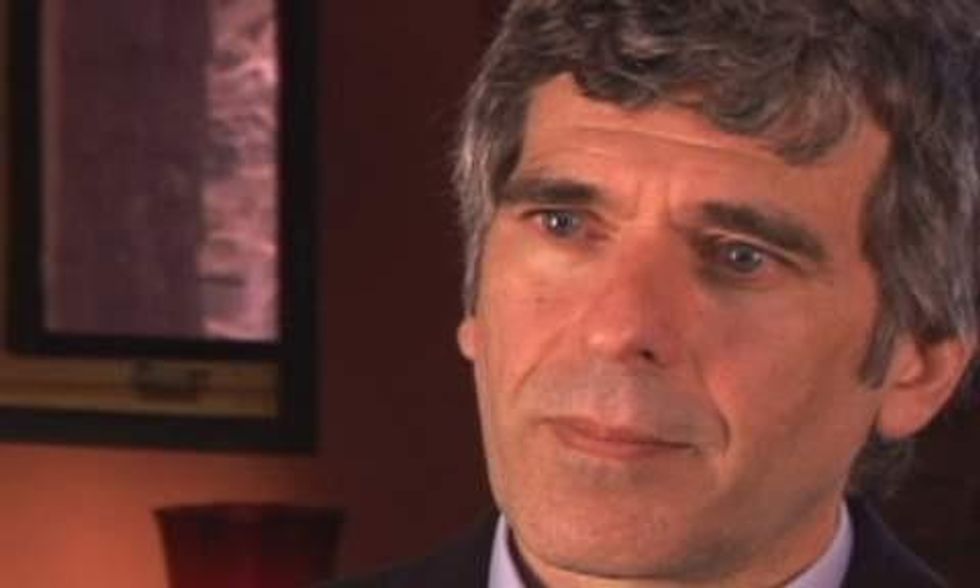
Which brings me to the Congressional campaign of lifelong progressive activist/author Norman Solomon (full disclosure: he's a close friend, with whom I've written three books and hundreds of columns). An acclaimed antiwar leader who led three dramatic trips to Iraq in an effort to avert the U.S. invasion, Norman is running in a new, extremely progressive district on California's North Coast that stretches from the Golden Gate Bridge to the Oregon border. The seat is open due to the retirement of Rep. Lynn Woolsey, a steadfast peace advocate who once co-chaired the Progressive Caucus.
To prepare for this race, Norman paid his dues in local Democratic work. He's been elected three times to be a delegate from the North Bay to the state Democratic central committee (where he coauthored the party's "troops-out-of-Afghanistan" position). In 2008, he was elected as an Obama delegate to the Democratic National Convention--but he has never refrained from criticizing Obama policies that bolster Wall Street or the warfare state.
Norman may or may not win, but he's built one of the strongest, grassroots campaigns for Congress ever--with over 1,000 volunteers and more than 5,000 donors. He's been endorsed by local elected officials in the district (both Democrats and Greens) as he's campaigned on an uncompromising agenda popular with voters: tax Wall Street to fund federal green jobs programs; major military cuts; no attack on Iran; enhanced "Medicare for All"; end nuclear power. The primary is June 5, with voting-by-mail to begin early May.
The good news is that the Solomon campaign raised--in mostly small, grassroots donations--an impressive half-million dollars by the March 31 federal filing deadline. The bad (but expected) news is that two corporate-connected Democrats raised $865,000 and $740,000; both will significantly outspend Norman on TV/radio ads. It's a classic battle of grassroots vs. big bucks. Will his volunteer-based ground game beat the air attack of the moneyed candidates, as Paul Wellstone did when he got into the U.S. Senate after being outspent 7 to 1? (Like Norman, Wellstone had never previously held elected office.)
In a 12-candidate race, experts in the district see Norman as now running second. The frontrunner is the Democratic establishment candidate, a well-funded state assemblyman who has received most of the labor and environmental endorsements--despite having accepted donations in recent years from companies like Walmart and PG&E that are despised by union and green activists. (The Solomon campaign refuses corporate and lobbyist money.)
These membership groups face a choice in primaries: Do they embrace party regulars and the status quo, or back outsider candidates who want to transform the party . . . and the country. Several unions have endorsed the Solomon campaign, including the International Longshore and Warehouse Union (ILWU). One of the strongest unions in the state, SEIU California, hedged its bets by endorsing Norman, along with the state assemblyman and another elected official in the race. Some progressive unions (like the California Nurses Association) have so far stayed out.
National groups like Progressive Democrats of America and Blue America have backed the campaign from the start. Norman won the endorsement of Democracy for America (founded by Howard Dean) by finishing second out of 200 liberal/progressive candidates in DFA's nationwide online straw poll.
The Solomon campaign earns free media coverage each time a notable like Phil Donahue, Daniel Ellsberg or Sean Penn comes into the district to campaign. Other progressive leaders have endorsed, including Barbara Ehrenreich, Dolores Huerta, Rep. John Conyers and Progressive Caucus Co-Chair Raul Grijalva. Musician Tom Morello tweeted his support of the "antiwar, pro-Occupy candidate" to his 200,000 twitter fans. Blogger Glenn Greenwald, known for criticizing both Republican and Democratic politicians, was effusive: "When it comes to Congressional candidates, it just doesn't get any better than Norman Solomon."
The Solomon movement is up against tough odds and big money. But, win or lose, it offers a model--a campaign that inspires activists and challenges power and the Democratic establishment, a campaign promoting the full progressive agenda without settling for a puny number of protest votes.
It's the kind of campaign we need to see in communities across the country in the coming years.
The views expressed here are the author's alone--not those of any organization or campaign.This article is part of a symposium on the elections organized by New Politics.
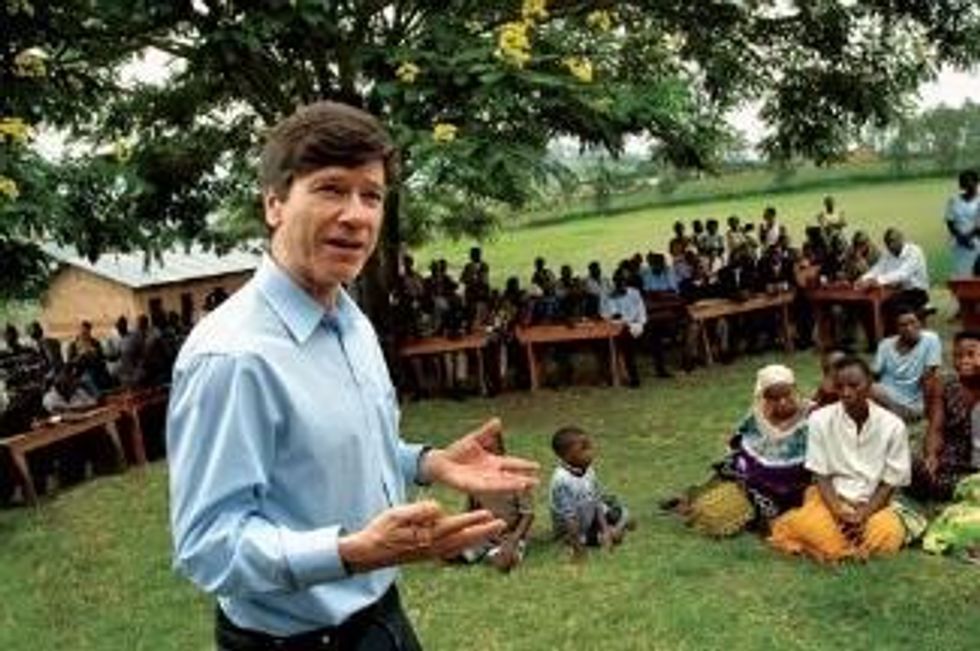
President Obama has a historic opportunity to help reform the World Bank, by nominating development expert Jeffrey Sachs to be the World Bank's next president. Sachs has said that as president he would sharpen the focus of the Bank on achieving the Millennium Development Goals for reducing poverty and extending access to health care and education. Coming from Sachs, this pledge is change you can believe in, because for years Sachs has a leading international advocate of efforts to achieve the world's poverty reduction goals, currently serving as an adviser to UN Secretary General Ban Ki-moon.
Now Members of Congress are starting to speak up.
Michigan Representative John Conyers is circulating a letter to President Obama, urging him to nominate Sachs. Signers of the letter so far include Reps. Hansen Clarke, Jesse Jackson, Jr., Barbara Lee, Zoe Lofgren, Jim McGovern, Lynn Woolsey, Raul Grijalva, and Eleanor Holmes Norton.
Many Members of Congress have worked closely with Sachs for years on initiatives to cancel the crushing external debt burden of poor countries; end the World Bank's imposition of user fees that block access to primary health care and education; compel the World Bank to make grants, rather than loans, in the poorest countries; compel the World Bank to support efforts to make essential medicines available in poor countries; and other pressing development challenges. It is natural that these Members of Congress should support Sachs' candidacy.
Sachs' public and worldwide campaign to lead the World Bank is unprecedented, but is entirely appropriate to our time. Until now, the leadership of the World Bank has been determined behind closed doors by the U.S. Treasury Department and European finance ministries.
But Sachs has taken his case to the public, announcing his candidacy with an op-ed in the Washington Post and with an interview on CNN. His candidacy is supported by Kenya, East Timor, Malyasia, and Jordan.
Since the World Bank was founded, no-one has ever tried to "campaign" for the position of President by trying to get support from the public and from developing countries. That already creates a different dynamic, suggesting that public opinion matters, and that the opinions of developing countries matter.
But Sachs is also trying to get the support of the Obama administration, and that's why Conyers' letter is so important. The default case -- in the absence of public and Congressional engagement -- would likely be that the administration choice would be largely determined by the interests of Wall Street. The two names most cited in press speculation have been Larry Summers and Timothy Geithner. Both Summers and Geithner can be expected to prioritize Wall Street interests -- that's why their names dominate press speculation. Of course, implementing the Millenium Development Goals isn't at the top of Wall Street's agenda.
If Congress and the public want something different, the time to speak up is now, before the Obama administration announces its choice. This is the time of maximum influence. You can ask your Representative to sign Conyers letter in support of Sachs' nomination here.
As we head into a presidential election year, I'd wager a lot the mainstream media will focus their attention on the horse race for the White House and other prime time campaigns. But this is a moment--when we are seeing a real shift in our politics, from Wisconsin to Ohio to Occupy--to be recruiting and supporting what I'd call 99 percenter candidates: those who share the core convictions of Occupy Wall Street and the 99 percent movement.
This space that's been opened by movements provides a real opportunity now for a progressive politics that is strong at the grassroots and strong in principle, and that finds champions inside an electoral system badly in need of reform--reform that will only come if we can elect enough "inside" progressives to help our "outside" movements make it happen.
So it's great to see candidates like Tammy Baldwin, Elizabeth Warren and Mazie Hirono on the campaign trail talking about issues like democracy and equality. It's also good to know Progressive Majority, along with allies like the New Organizing Institute, Rebuild the Dream and Democracy for America, has pledges from over 1,500 candidates to run in 2012.
Many candidates understand the need to seize this moment--not to co-opt it but to genuinely channel it. Here's one good example: Norman Solomon, who speaks eloquently on the need to fuse movement energy and electoral politics, and he was doing so before the eruption of Occupy Wall Street. He's running to represent California's 6th District, the seat being vacated by ten-term progressive stalwart Lynn Woolsey.
The vision of Solomon, founding director of the Institute for Public Accuracy, is aligned with what is now so central to our political discussion and must remain so: action on jobs and income inequality; ending the wars and investing those resources at home; sane and fair taxes on the wealthy and Wall Street; protecting Social Security, Medicare and Medicaid; ending our dependence on fossil fuels and preventing catastrophic climate change.
Solomon is no political opportunist--he's been fighting for these values for decades and describes his approach to campaigning this way: "principle as strategy."
"I intend to stick with principles, what I believe and what I'm willing to fight for," Solomon told Texas A&M journalism professor Robert Jensen. "The quest is not for heightened rhetoric, it's for deeper meaning, with insistence on policies to match--economic populism, human rights, civil liberties, ending wars and working for social equity."
Solomon understands the need to elect people at all levels of government who are truly in spirit and in sync with the grassroots progressive movement.
"I used to say that having a strong progressive movement was much more important than who was in office, but now I'd say that what we really need is a strong progressive movement and much better people in office," he said. "Having John Conyers, Barbara Lee, Dennis Kucinich, Jim McGovern, Raul Grijalva, Lynn Woolsey in Congress is important. We need more of those sorts of legislators as part of the political landscape."
Solomon has been endorsed by both Congressional Progressive Caucus (CPC) co-chair Grijalva and CPC member Conyers, as well as the legendary co-founder of the United Farm Workers Dolores Huerta, the International Longshore and Warehouse Union and Progressive Democrats of America (PDA).
The CPC is eager to introduce legislation that speaks to the 99 percent and Occupy issues, and certainly a member like Solomon could help further that effort. The People's Budget was fully aligned in spirit and substance with the movement, and the Restore the American Dream for the 99% Act will build on that as well.
It's just common sense that progressives who come out of movements have a far better chance of staying connected to the Occupy movement energy and principles than Democrats who don't. Solomon is such a candidate, and there are others.
I've always believed lasting progressive transformation will come from people's movements, the kind now taking root in towns and cities across the nation. But it will also require people on the inside who share those principles and are fully dedicated to fighting for them. In 2012, we have the opportunity to elect those champions.
Conventional politics in the United States focuses on elections, while left activists typically argue that political change comes not from electing better politicians but building movements strong enough to force politicians to accept progressive change.
Norman Solomon has concluded it isn't either/or. A prominent writer and leader in left movements for decades, Solomon is running for Congress in the hopes of being practical and remaining principled.
Conventional politics in the United States focuses on elections, while left activists typically argue that political change comes not from electing better politicians but building movements strong enough to force politicians to accept progressive change.
Norman Solomon has concluded it isn't either/or. A prominent writer and leader in left movements for decades, Solomon is running for Congress in the hopes of being practical and remaining principled.

Solomon argues that when the left has treated elections as irrelevant, the result has been self-marginalization that helps empower the military-industrial complex.
"The view that genuine progressives should leave the electoral field to corporate Democrats and right-wing Republicans no longer makes sense to me. I used to say that having a strong progressive movement was much more important than who was in office, but now I'd say that what we really need is a strong progressive movement AND much better people in office," he said. "Having John Conyers, Barbara Lee, Dennis Kucinich, Jim McGovern, Raul Grijalva, Lynn Woolsey in Congress is important. We need more of those sorts of legislators as part of the political landscape."
The 60-year-old Solomon had been considering such a strategy, and when Woolsey announced she was not running for re-election in her northern California district, he entered the race with the goal of staying true to his left political views, and winning.
"I'm skeptical about election campaigns that abandon principles, but I'm also skeptical about campaigns that have no hope of winning and that are only for protest or public education," he said. "There are more effective ways to protest and to educate."
Solomon said that if elected he would strive to change the relationship between social movements and members of Congress.
"Progressive movements and leaders in Congress should be working in tandem," he said. "I want to strengthen the Congressional Progressive Caucus and help make it more of a force to be reckoned with."
Solomon said that a re-invigorated Progressive Caucus could be more effective in fighting for the human right of quality healthcare for all; ending the perpetual war of the warfare state, what Martin Luther King Jr. called "the madness of militarism"; pushing back against the power of Wall Street; replacing corporate power with people power.
Solomon is most widely known for his media criticism and activism, through his "Media Beat" weekly column that was nationally syndicated and his work with Fairness & Accuracy in Reporting. In 1997 he founded the Institute for Public Accuracy, a national consortium of policy researchers and analysts for which he served as executive director for 13 years.
Solomon became more visible in mainstream media through his trip to Iraq with actor Sean Penn on the eve of the U.S. invasion, part of anti-war efforts to prevent that coming catastrophe. Solomon's 2005 book, War Made Easy: How Presidents and Pundits Keep Spinning Us to Death, and a companion film drew on his media and political expertise to analyze the war machine. (Full disclosure: I found the book and film so compelling that I brought Solomon to my campus to speak.)
Polls indicate that Solomon is competitive in a Democratic primary that includes a state assemblyman, a county supervisor, and two business people. Penn is supporting Solomon's campaign, which has also received endorsement from U.S. Rep. Raul Grijalva, co-chair of the Congressional Progressive Caucus, and Dolores Huerta, co-founder of the United Farm Workers. Fundraising is always a struggle, especially since he committed to "corporate-free fundraising."
"By raising more than $250,000 from more than 2,000 different people, we've shown that we can raise the needed funds without a single dollar from corporate PACs," Solomon said. "But we need to raise a lot more, and the month of December will be crucial -- end-of-year totals will be seen by many as a self-fulfilling gauge of our capacity to gain enough support to win."
Solomon believes that citizen frustration with concentrated wealth, and the political dominance that big money buys, is opening up new possibilities for progressive candidates.
"Our campaign is very much in sync with Occupy Wall Street," he said. "Issues that I've been talking about from the outset of this campaign last January, and for many years before that, are part of the OWS focus -- Wall Street's undemocratic power, the widening disparities between the rich and the rest of us, the need to eject corporate money from politics."
Solomon has described his politics as "green New Deal," arguing for a vigorous government role in providing quality education, adequate health care, consumer protection, civil liberties, and environmental safeguards. For leftists, two questions hover: Can a candidate go beyond liberal positions and articulate anti-capitalist and anti-empire politics during a campaign? If elected, can a member of Congress stay true to those principles? Movement activists are wary of left/liberal politicians who push their rhetoric toward the center to get elected and then end up advocating centrist policies.
Solomon said he identifies with a phrase Penn used at a campaign rally: "principle as strategy."
"I intend to stick with principles, what I believe and what I'm willing to fight for," Solomon said. "The quest is not for heightened rhetoric, it's for deeper meaning, with insistence on policies to match -- economic populism, human rights, civil liberties, ending wars, and working for social equity."
Though that agenda suggests radical change, Solomon said he doesn't use the term "radical," opting instead for terms such as "genuine progressive," "progressive populism," and "independent progressive" to describe himself and his campaign.