

SUBSCRIBE TO OUR FREE NEWSLETTER
Daily news & progressive opinion—funded by the people, not the corporations—delivered straight to your inbox.
5
#000000
#FFFFFF
To donate by check, phone, or other method, see our More Ways to Give page.
Daily news & progressive opinion—funded by the people, not the corporations—delivered straight to your inbox.

While the dramatic arrest of dissident journalist Roman Protasevich by the Belarusian government over the weekend was fiercely condemned worldwide, press freedom advocates on Monday not only called for the reporter's release but also highlighted how the actions taken by Belarus were eerily similar to an effort in 2013 by the U.S. and other Western governments to capture NSA whistleblower Edward Snowden.
"Downing aircraft to pursue the arrest of dissidents has always been outrageous... and should be opposed no matter the flag under which it occurs."
--Edward Snowden
Protasevich, a well-known critic of Belarus' authoritarian President Alexander Lukashenko, was taken into custody after the plane that he and 122 other passengers were traveling on--en route from Athens, Greece to Vilnius, Lithuania, where Protasevich lives in exile--was forced to land.
Although they readily admitted that Lukashenko's government had violated international treaties governing airspace and was deserving of condemnation, critics of the corporate media and U.S. foreign policy were eager to point out that Belarus' behavior was not unprecedented; in fact, they said, some of the same Western officials denouncing Belarus' arrest of Protasevich were complicit in the 2013 plot to intercept Snowden.
"For anyone shocked at the Belarus plane grounding, remember, the U.S. did the same thing to the president of Bolivia in an attempt to kidnap Edward Snowden," journalist Alan MacLeod said Monday.
In 2013, the plane carrying then-Bolivian President Evo Morales from Russia was rerouted to and stuck in Vienna for 13 hours at the suspected behest of the U.S., which believed that Morales, who was returning to Bolivia following a summit in Moscow, had clandestinely helped Snowden, then stranded at the city's international airport, on board.
The whistleblower--who has lived in Russia for almost eight years since being granted temporary asylum, followed by permanent residency last October--was not found on the flight.
Snowden on Monday weighed in on the parallels between the repressive scheme that the U.S. and key European Union states used in their failed attempt to capture him and Belarus' recent hunt for Protasevich, arguing that "downing aircraft to pursue the arrest of dissidents has always been outrageous... and should be opposed no matter the flag under which it occurs."
The hypocrisy of Western officials--including Jen Psaki, now the White House press secretary but in 2013 the spokesperson for the Obama State Department who admitted that the U.S. had been in contact with multiple countries in an effort to track down Snowden--was the subject of an essay published Monday by journalist Glenn Greenwald, who famously reported on materials leaked to him by Snowden and shed light on the Obama administration's persecution of the whistleblower.
"News accounts in the West which are depicting [Belarus' arrest of Protasevich] as some sort of unprecedented assault on legal conventions governing air travel and basic decency observed by law-abiding nations are whitewashing history," Greenwald wrote.
"No journalist, especially Western ones, should be publishing articles or broadcasting stories falsely depicting Sunday's incident as an unprecedented assault that could be perpetrated only by a Russian-allied autocrat," he added. "The tactic was pioneered by the very countries who today are most vocally condemning what happened."
Greenwald continued:
Illustrating how little the U.S. cares about even pretending to abide by the standards it imposes on others, the Biden administration on Monday sent out Psaki herself to condemn Belarus' conduct as "a shocking act" and "a brazen affront to international freedom and peace and security by the regime." It would not even occur to Biden officials--just for the sake of appearances if nothing else--to try to find someone to do this other than the same person who, in 2013, obfuscated and defended the actions of the U.S. and E.U. in doing the same thing to Bolivia's presidential plane. U.S. officials simply do not believe that they are bound by the same standards to which its adversaries must be subjected.
[...]
The only two differences between these situations that one can locate are factors against the Western nations responsible for the downing of Morales' plane. Unlike what Belarus did, the U.S. and its European allies obviously had no confirmation of Snowden's presence on the plane. They forced it to land based on a guess, on rumor, on speculation, which turned out to be utterly false. The second difference is that there are obviously additional international and diplomatic implications from forcing the plane of a democratically elected president to land as opposed to a standard passenger jet: that is, at the very least, a profound attack on the sovereignty of that country. Again, there are no valid justifications for what Belarus did, but to the extent one wants to distinguish its actions from what U.S./E.U. nations did in 2013, those are the only identifiable differences.
Others chimed in to draw attention to British and U.S. complicity in the plight of WikiLeaks founder Julian Assange and demand that he be released in addition to Protasevich.
In his essay, Greenwald wrote that "the blatant double standards the U.S. and Europe have endlessly tried to impose upon the world--whereby they are freely permitted to do exactly what they condemn when done by others--is not just a matter of standard lawlessness and hypocrisy."
"In Western media discourse, only Bad Countries are capable of bad acts; the U.S. and its allies are capable, at worst, only of well-intentioned mistakes," Greenwald continued.
"When the U.S. media helps to perpetuate this narrative, it deceives and misleads the audience they purportedly inform by concealing the bad acts of the U.S. and implying if not stating that such acts are the sole province of the Bad Countries who are adverse to the U.S.," he added. "Doing so both enables rogue nation behavior by Western powers and implants jingoistic propaganda."
My talk at the International Festival of Whistleblowing, Dissent and Accountability on May 8. Transcript below.
I wanted to use this opportunity to talk about my experiences over the past two decades working with new technology as an independent freelance journalist, one who abandoned--or maybe more accurately, was abandoned by--what we usually call the "mainstream" media.
Looking back over that period, I have come to appreciate that I was among the first generation of journalists to break free of the corporate media--in my case, the Guardian--and ride this wave of new technology. In doing so, we liberated ourselves from the narrow editorial restrictions such media imposes on us as journalists and were still able to find an audience, even if a diminished one.
More and more journalists are following a similar path today--a few out of choice, and more out of necessity as corporate media becomes increasingly unprofitable. But as journalists seek to liberate themselves from the strictures of the old corporate media, that same corporate media is working very hard to characterise the new technology as a threat to media freedoms.
This self-serving argument should be treated with a great deal of scepticism. I want to use my own experiences to argue that quite the reverse is true. And that the real danger is allowing the corporate media to reassert its monopoly over narrating the world to us.
Watch:
'Mainstream' consensus
I left my job at the Guardian newspaper group in 2001. Had I tried to become an independent journalist 10 years earlier than I did, it would have been professional suicide. In fact, it would have been a complete non-starter. I certainly would not be here telling you what it was like to have spent 20 years challenging the "mainstream" western consensus on Israel-Palestine.
Before the Noughties, without a platform provided by a corporate media outlet, journalists had no way to reach an audience, let alone create one. We were entirely beholden to our editors, and they in turn were dependent on billionaire owners--or in a few cases like the BBC's, a government--and on advertisers.
When I arrived in Nazareth as a freelance journalist, though one with continuing connections to the Guardian, I quickly found myself faced with a stark choice.
Newspapers would accept relatively superficial articles from me, ones that accorded with a decades-old, western, colonial mindset about Israel-Palestine. Had I contributed such pieces for long enough, I would probably have managed to reassure one of the papers that I was an obliging and safe pair of hands. Eventually, when a position fell vacant, I might have landed myself a well-paid correspondent's job.
Instead I preferred to write authentically--for myself, reporting what I observed on the ground, rather than what was expected of me by my editors. That meant antagonising and gradually burning bridges with the western media.
Even in a digital era of new journalistic possibilities, there were few places to publish. I had to rely on a couple of what were then newly emerging websites that were prepared to publish very different narratives on Israel-Palestine from the western corporate media's.
Level playing field
The most prominent at the time, which became the first proper home for my journalism, was Al-Ahram Weekly, an English-language sister publication of the famous Cairo daily newspaper. Few probably remember or read Al-Ahram Weekly today, because it was soon overshadowed by other websites. But at the time it was a rare online refuge for dissident voices, and included a regular column from the great public intellectual Edward Said.
It is worth pausing to think about how foreign correspondents operated in the pre-digital world. They not only enjoyed a widely read, if tightly controlled, platform in an establishment media outlet, but they had behind them a vitally important support structure.
Their newspaper provided an archive and library service so that they could easily research historical and newsworthy events in their region. There were local staff who could help with locating sources and offering translations. They had photographers who contributed visuals to their pieces. And they had satellite phones to file breaking news from remote locations.
None of this came cheap. A freelance journalist could never have afforded any of this kind of support.
All that changed with the new technology, which rapidly levelled the playing field. A Google search soon became more comprehensive than even the best newspaper library. Mobile phones made it easy to track down and speak to people who were potential sources for stories. Digital cameras, and then the same mobile phones, meant it was possible to visually record events without needing a photographer alongside you. And email meant it was easy to file copy from anywhere in the world, to anywhere, virtually free.
Documentary evidence
The independent journalism I and others were developing in the early Noughties was assisted by a new kind of political activist who was using similarly novel digital tools.
After I arrived in Nazareth, I had little use for the traditional "access journalism" my corporate colleagues chiefly relied on. Israeli politicians and military generals dissembled to protect Israel's image. Far more interesting to me were the young western activists who had begun embedding--before that term got corrupted by the behaviour of corporate journalists--in Palestinian communities.
Today we remember names like Rachel Corrie, Tom Hurndall, Brian Avery, Vittorio Arrigoni and many others for the fact that in the early Noughties they were either killed or wounded by Israeli soldiers. But they were part of a new movement of political activists and citizen journalists--many of them with the International Solidarity Movement--who were offering a different kind of access.
They used digital cameras to record and protest the Israeli army's abuses and war crimes from up close inside Palestinian communities--crimes that had previously had gone unrecorded for western audiences. They then sent their documentary evidence and their eye-witness accounts to journalists by email or published them on "alternative" websites. For independent journalists like me, their work was gold-dust. We could challenge Israel's implausible accounts with clear-cut evidence.
Sadly most corporate journalists paid little attention to the work of these activists. In any case, their role was quickly snuffed out. That was partly because Israel learnt that shooting a few of them served as a very effective deterrent, warning others to keep away.
But it was also because as technology became cheaper and more accessible--eventually ending up in mobile phones that everyone was expected to have--Palestinians could record their own suffering more immediately and without mediation.
Israel's dismissal of the early, grainy images of the abuse of Palestinians by soldiers and settlers--as "Pallywood" (Palestinian Hollywood)--became ever less plausible, even to its own supporters. Soon Palestinians were recording their mistreatment in high definition and posting it directly to YouTube.
Unreliable allies
There was a parallel evolution in journalism. For my first eight years in Nazareth, I struggled to make any kind of living by publishing online. Egyptian wages were far too low to support me in Israel, and most alternative websites lacked the budget to pay. For the first years I lived a spartan life and dug into savings from my former, well-paid job at the Guardian. During this period I also wrote a series of books because it was so difficult to find places to publish my news reporting.
It was in the late Noughties that Arab media in English, led by Al-Jazeera, really took off, with Arab states making the most of the new favourable conditions provided by the internet. These outlets flourished for a time by feeding the appetite among sections of the western public for more critical coverage of Israel-Palestine and of western foreign policy more generally. At the same time, Arab states exploited the revelations provided by dissident journalists to gain more leverage in Washington policymaking circles.
My time with Al-Ahram came to an abrupt end after a few years, as the paper grew less keen on running hard-hitting pieces that showed Israel as an apartheid state or that explained the nature of its settler colonial ideology. Rumours reached me that the Americans were leaning on the Egyptian government and its media to tone down the bad news about Israel.
It would be the first of several exits I had to make from these English-language Arab media outlets. As their western readership and visibility grew, they invariably attracted hostile attention from western governments and sooner or later capitulated. They were never more than fickle, unreliable allies to western dissidents.
Editors as sheepdogs
Again, I would have been forced to abandon journalism had it not been for another technological innovation--the rise of social media. Facebook and Twitter soon rivalled the corporate media as platforms for news dissemination.
There are minor differences of opinion and emphasis between conservative publications and liberal ones, but they all ultimately serve the same corporate, business-friendly, colonial, war-mongering agenda.
For the first time, it was possible for journalists to grow their own audiences independently of an outlet. In a few cases, that dramatically changed the power relations in favour of those journalists. Glenn Greenwald is probably the most prominent example of this trend. He was chased after first by the Guardian and then by the billionaire Pierre Omidyar, to set up the Intercept. Now he's on his own, using the editorially hands-off online platform Substack.
In a news environment driven chiefly by shares, journalists with their own large and loyal followings were initially prized.
But they were also an implicit threat. The role of corporate media is to serve as a figurative sheep-dog, herding journalists each day into an ideological pen--the publication they write for. There are minor differences of opinion and emphasis between conservative publications and liberal ones, but they all ultimately serve the same corporate, business-friendly, colonial, war-mongering agenda.
It is the publication's job, not the journalists', to shape the values and worldview of its readers, over time limiting the range of possible thoughts they are likely to entertain.
Readers to the rescue
In the new environment of social media, that began to change. Not only have some journalists become more influential than the papers they write for, but others have abandoned the employee-servant model completely. They have reached the conclusion that they no longer need a corporate outlet to secure an audience. They can publish themselves, build their own readership, and generate their own income--freeing themselves from corporate servitude.
In the last few years, this is a path I have pursued myself--becoming mostly reader-financed. For most of us, it is a precarious option. But it is liberating too--in a way that no previous generation of journalists could ever have imagined possible.
We are subject to no editorial oversight or control, apart from our own self-imposed sense of what is right and fair, or in some cases what we think our readers are ready to hear. We have no bosses or advertisers to please or appease. Our owner are the readers. And with an owner that diverse and diffuse, we have been freed of the tyranny of billionaires and corporations.
This new model of journalism is revolutionary. It is genuinely pluralistic media. It allows a much wider spectrum of thought to reach the mainstream than ever before. And perhaps even more importantly, it allows independent journalists to examine, critique and expose the corporate media in real time, showing how little pluralism they allow and how often they resort to blatant falsehood and propaganda techniques.
The fact that a few journalists and activists can so convincingly and easily tear apart the coverage of corporate media outlets reveals how little relationship that coverage often bears to reality.
Reporters for hire
Corporate media took none of this lying down, of course, even if it was slow to properly gauge the dangers.
Dissident journalists are a problem not only because they have broken free of the controls of the billionaire class and are often doing a better job of building audiences than their corporate counterparts. Worse, dissident journalists are also educating readers so that they are better equipped to understand what corporate journalism is: that it is ideological prostitution. It is reporting and commentary for hire, by an establishment class.
The backlash from the corporate media to this threat was not long coming. Criticism--narratively managed by corporate outlets--has sought to character-assassinate dissident journalists and browbeat the social media platforms that host them. Reality has been inverted. Too often it is the critical thinking of dissident journalists that is maligned as "fake news", and it is the genuine pluralism social media corporations have inadvertently allowed that is repudiated as the erosion of democratic values.
Social media platforms have put up only the most feeble resistance to the traditional corporate media-led campaign demanding they crack down on the dissidents they host. They are, after all, media corporations too, and have little interest in promoting free speech, critical thinking or pluralism.
Manipulated algorithms
What resistance they did muster, for a short time, largely reflected the fact that their early business model was to replace top-down traditional media with a new bottom-up media that was essentially led by readers. But as social media has gradually been merged into the traditional media establishment, it has preferred to join in with the censorship and to marginalise dissident journalists.
Some of this is done out in the open, with the banning of individuals or alternative sites. But more often it is done covertly, through the manipulation of algorithms making dissident journalists all but impossible to find. We have seen our page views and shares plummet over the past two years, as we lose the online battle against the same, supposedly "authoritative sources"--the establishment media--we have been exposing as fraudsters.
The perverse, self-serving discourse from establishment media about new media is currently hard to miss in the relentless attacks on Substack. This open platform hosts journalists and writers who wish to build their own audiences and fund themselves from reader donations. Substack is the logical conclusion of a path I and other have been on for two decades. It not only gets rid of the media's sheepdog-editors, it dispenses with the ideological pens into which journalists are supposed to be herded.
Sordid history
James Ball, whose sordid history includes acting as the Guardian's hatchet man on Wikileaks founder Julian Assange, was a predictable choice as the Guardian Group tried this month to discredit Substack. Here is Ball ridiculously fretting about how greater freedom for journalists might damage western society by stoking so-called "culture wars":
"Concerns are emerging about what Substack is now, exactly. Is it a platform for hosting newsletters and helping people discover them? Or is it a new type of publication, one that relies on stoking the culture wars to help divisive writers build devoted followings? ...
"Being on Substack has for some become a tacit sign of being a partisan in the culture wars, not least because it's a lot easier to build a devoted and paying following by stressing that you're giving readers something the mainstream won't."
Ball is the kind of second-rate stenographer who would have had no journalistic career at all were he not a hired gun for a corporate publication like the Guardian. Buried in his piece is the real reason for his--and the Guardian's--concern about Substack:
"Such is Substack's recent notoriety that people are now worrying that it might be the latest thing that might kill traditional media."
Notice the heavy-lifting that word "people" is doing in the quoted sentence. Not you or I. "People" refers to James Ball and the Guardian.
Severe price
But the gravest danger to media freedom lies beyond any supposed "culture wars." As the battle for narrative control intensifies, there is much more at stake than name-calling and even skewed algorithms.
In a sign of how far the political and media establishment are willing to go to stop dissident journalism--a journalism that seeks to expose corrupt power and hold it to account--they have been making examples of the most significant journalists of the new era by prosecuting them.
Wikileaks founder Julian Assange has been out of sight for a decade--first as a political asylum seeker, then as an inmate of a British prison--subjected to endlessly shifting pretexts for his incarceration. First, it was a rape investigation that no one wanted to pursue. Then, it was for a minor bail infraction. And more recently--as the other pretexts have passed their sellby date--it has been for exposing US war crimes in Iraq and Afghanistan. Assange could languish in jail for years to come.
Former UK ambassador Craig Murray, a chronicler through his blog of the legal abuses Assange has suffered, has faced his own retribution from the establishment. He has been prosecuted and found guilty in a patently nonsensical "jigsaw identification" case relating to the Alex Salmond trial.
My talk has been recorded too early to know the outcome of Murray's sentence hearing, which was due to take place the day before this festival [and was later postponed to Tuesday May 11]. But the treatment of Assange and Murray has sent a clear message to any journalist inspired by their courage and their commitment to hold establishment power to account: "You will pay a severe price. You will lose years of your life and mountains of money fighting to defend yourself. And ultimately we can and will lock you away."
Peek behind the curtain
The west's elites will not give up the corrupt institutions that uphold their power without a fight. We would be foolish to think otherwise. But new technology has offered us new tools in our struggle and it has redrawn the battleground in ways that no one could have predicted even a decade ago.
The establishment are being forced into a game of whack-a-mole with us. Each time they bully or dismantle a platform we use, another one--like Substack--springs up to replace it. That is because there will always be journalists determined to find a way to peek behind the curtain to tell us what they found there. And there will always be audiences who want to learn what is behind the curtain. Supply and demand are on our side.
The constant acts of intimidation and violence by political and media elites to crush media pluralism in the name of "democratic values" will serve only to further expose the hypocrisy and bad faith of the corporate media and its hired hands.
We must keep struggling because the struggle itself is a form of victory.

Brazil's political stability was in doubt Tuesday after the heads of all three military branches resigned following President Jair Bolsonaro's dismissal of his defense minister, one of six Cabinet officials who have recently left or been forced out of an administration whose popularity has plummeted amid soaring Covid-19 deaths in South America's largest nation.
"We must save Brazil from Covid-19. Brazil will not withstand it if this man continues to govern in this way."
-- Luiz Inacio Lula da Silva,
presidential candidate
Folha de Sao Paulo reports Gen. Edson Leal Pujol, Adm. Ilques Barbosa, and Lt.-Brig. Antonio Carlos Bermudez--respectively commanders of the army, navy, and air force--resigned a day after Bolsonaro fired Defense Minister Gen. Fernando Azevedo e Silva.
The Guardian, citing local reporting, said Bolsonaro demanded Pujol's dismissal because the general resisted the far-right president's efforts to politicize the military. Bolsonaro is an open admirer of Brazil's former U.S.-backed military dictatorship--under which tens of thousands of people were tortured, murdered, and disappeared--and has praised a leading military torturer from that period as a "national hero."
Pujol had also criticized Bolsonaro's handling of the coronavirus pandemic, which according to Johns Hopkins University has claimed nearly 314,000 lives in Brazil, the world's second-highest death toll after the United States.
Ernesto Araujo, Bolsonaro's erstwhile foreign minister, also resigned Monday. The far-right diplomat--known for his fondness for former U.S. President Donald Trump and his disparagement of China--had increasingly alarmed progressives and much of the international community by denying the climate crisis and attacking reproductive and other human rights.
Under Bolsonaro and Araujo, the international standing of Brazil--which, since the restoration of democracy, has been widely viewed as a "soft power superpower"--has deteriorated dramatically.
The BBC reports Bolsonaro has replaced the six departed Cabinet ministers with people linked to a coalition of right-wing parties that support the president in Congress.
Journalist Glenn Greenwald, who lives in Brazil, decribed the complex and still-developing situation as a "major political crisis" for the country.
Bolsonaro--often called "Trump of the Tropics" for his political and philosophical closeness with the former U.S. president--has dismissed Covid-19 as a "little flu," and has refused to follow or promote mask-wearing, quarantine measures, and social distancing, despite having contracted the virus last year. He has also encouraged large gatherings and disparaged vaccines.
Last week, Bolsonaro lied on national television about his actions--or lack thereof--to control the pandemic on a day health authorities recorded 3,158 Covid-19 deaths across the country. Calls for the impeachment of the embattled president over his handling of the pandemic have grown louder in recent months.
"We can't overcome this crisis with Bolsonaro, he is the crisis incarnate," tweeted Gleisi Hoffman, a federal deputy from Parana state and president of the Workers' Party (PT), the main opposition party. "There is no doubt that this is a crime against life and against public health," she added.
"There is no doubt that this is a crime against life and against public health."
--Gleisi Hoffman,
Workers' Party
With presidential elections looming in 2022, Bolsonaro also faces the threat of a challenge from Luiz Inacio Lula da Silva, the former president and PT leader whose political rights were restored earlier this month after a Supreme Court justice annulled several criminal convictions related to the wide-ranging Car Wash corruption scandal.
Da Silva, popularly known as "Lula," is widely viewed as a favorite to wrest the presidency from the flagging Bolsonaro. At a rally earlier this month, da Silva said that Brazil "is disorganized and falling apart because it has no government."
The former president had even stronger words for the Bolsonaro administration after Brazil passed the grim milestone of 300,000 Covid-19 deaths last week, calling the coronavirus pandemic "the biggest genocide in our history."
"We must save Brazil from Covid-19," argued da Silva. "Brazil will not withstand it if this man continues to govern in this way."

A Brazilian Supreme Court justice on Monday annulled several criminal convictions against former President Luiz Inacio Lula da Silva, restoring the leftist icon's political rights and opening the door for a 2022 bid to unseat far-right President Jair Bolsonaro.
"The decision today affirms the incompetence of the Curitiba federal court and recognizes that we have always been right."
--Attorneys' statement
Folha de Sao Paulo reports Edson Fachin of the Supreme Federal Tribunal ruled that da Silva--commonly called "Lula"--should not have been prosecuted in the city of Curitiba for alleged corruption in the infamous Operation Car Wash scandal. Fachin's ruling was not an acquittal. The justice warned da Silva could still be tried in the capital Brasilia if prosecutors there decide to pursue one of the three other corruption cases in which no verdicts have yet been reached.
In a statement, da Silva's lawyers blasted the "incompetence" and "lawfare" of the Curitiba federal court and the "irreparable damage" caused by Sergio Moro, a judge in the case who allegedly colluded with prosecutors and would later serve as Bolsonaro's justice minister until a falling out with the president led to his firing last April.
Da Silva greeted Monday's news by tweeting that "the decision today affirms the inompetence of the Curitiba federal court and recognizes that we have always been right in this long legal battle."
The restoration of da Silva's political rights means he is likely to run against Bolsonaro in next year's election. "Lula is back in the game," declared the leading Brazilian financial daily Valor Economico.
"The election starts today," Brazilian journalist Thomas Traumann told The Guardian. "It's virtually impossible Lula won't be a candidate. In American terms, it's going to be like [Bernie] Sanders versus [Donald] Trump."
Bolsonaro is a far-right bigot and misogynist who is a climate change and coronavirus skeptic and has praised Brazil's former U.S.-backed dictatorship, under which both da Silva and his successor Dilma Rousseff were jailed. Rousseff was tortured.
Da Silva, a member of the leftist Workers' Party who served as president from 2003 to 2011, is a former labor organizer and an icon of the Brazilian left adored by millions of his compatriots for his lifelong advocacy for the poor, workers, minorities, and rural and Indigenous people. As president, he lifted millions of Brazilians from poverty through sweeping social programs including Fome Zero (Zero Hunger) and Bolsa Familia (Family Allowance), while presiding over Brazil's rise into the top tier of world economies.
However, da Silva's focus on social uplift at the expense of the oligarchy earned him powerful enemies at home, and his solidarity with leftist Latin American leaders and opposition to U.S. imperialism roiled Washington and Wall Street.
Da Silva, who served 580 days behind bars after he was sentenced to over 12 years' imprisonment for Car Wash-related corruption, was released from prison in November 2019 after the Supreme Court found his incarceration unlawful. Both da Silva and Rousseff--who in 2016 was impeached and forced to resign over the scandal--maintain their innocence and accuse right-wing adversaries of perpetrating a political coup.
Rousseff's successor, right-wing President Michel Temer, was also arrested and charged in connection with Car Wash.

A broad coalition of progressive organizations on Monday sent an open letter to the Justice Department urging it to undo a "grave threat to press freedom" by ending efforts to extradite jailed journalist Julian Assange from Britian to the U.S. and dropping the charges against him.
"We are deeply concerned about the way that a precedent created by prosecuting Assange could be leveraged--perhaps by a future administration--against publishers and journalists of all stripes."
--Open letter
The letter--organized by the Freedom of the Press Foundation and signed by two dozen groups including Amnesty International USA, the Committee to Protect Journalists, Human Rights Watch, Knight First Amendment Institute, and Reporters Without Borders--expresses "profound concern about the ongoing criminal and extradition proceedings relating to Julian Assange, the founder of WikiLeaks, under the Espionage Act and the Computer Fraud and Abuse Act."
It continues:
The indictment of Mr. Assange threatens press freedom because much of the conduct described in the [U.S. government's] indictment is conduct that journalists engage in routinely--and that they must engage in inorder to do the work the public needs them to do. Journalists at major news publications regularly speak with sources, ask for clarification or more documentation, and receive and publish documents the government considers secret. In our view, such a precedent in this case could effectively criminalize these common journalistic practices.
In addition, some of the charges included in the indictment turn entirely on Mr. Assange's decision to publish classified information. News organizations frequently and necessarily publish classified information in order to inform the public of matters of profound public significance.
"The Trump administration positioned itself as an antagonist to the institution of a free and unfettered press in numerous ways," the letter states. "Its abuse of its prosecutorial powers was among the most disturbing. We are deeply concerned about the way that a precedent created by prosecuting Assange could be leveraged--perhaps by a future administration--against publishers and journalists of all stripes."
Noting that major news organizations as well as some senior Obama administration officials concurred--and that Obama-era Attorney General Eric Holder declined to indict Assange--the letter asserts that "now more than ever, it is crucial that we protect a robust and adversarial press."
In a blog post accompanying the letter, Freedom of the Press Foundation advocacy director Parker Higgins calls the charges against Assange "among the most disastrous press freedom issues in the country."
"The Biden administration's Department of Justice now has an opportunity and an obligation to end this dangerous charade," adds Higgins. "As we outline in the letter, the appropriate path forward is to stop pursuing the appeal of the extradition and to drop the charges."
Assange--who is in poor health--is currently languishing in London's notorious Belmarsh Prison after a British judge denied him bail last month, despite another judge's rejection of the U.S. extradition request on January 4.
"The Biden administration's Department of Justice now has an opportunity and an obligation to end this dangerous charade."
--Parker Higgins, Freedom of the Press Foundation
Following Britain's refusal to extradite Assange, Mexican President Andres Manuel Lopez Obrador said his country would offer him political asylum.
Assange was first arrested in December 2010. Since then he has been subjected to house arrest, imprisonment in London, and seven years in political asylum in the Ecuadorian Embassy in the British capital.

Republican Rep. Matt Gaetz of Florida claimed Sunday the President Donald Trump, who has just over a month left in office, "is listening to the many of us who are urging him" to pardon National Security Agency whistleblower Edward Snowden, who has been exiled in Russia since he exposed U.S. government mass surveillance in 2013.
The congressman's comment caught the attention of Snowden, who recently secured permanent residency rights in Russia but has long said his ultimate goal is to return to the United States if he is guaranteed a fair trial. Under then-President Barack Obama, the ex-contractor was charged with theft of government property and violating the Espionage Act for leaking classified materials on surveillance to journalists.
Snowden shared Gaetz's tweet on Sunday, noting that he is a member of Congress:
As Common Dreams has previously reported, a diverse group of lawmakers, civil liberties advocates, and other public figures have called for Trump to pardon Snowden. Various other members of Congress and rights advocates on Sunday reiterated calls for Trump to grant the whistleblower a pardon:
After Trump floated the possibility in August--before his loss to President-elect Joe Biden, Obama's vice president, in November--the U.S.-based Freedom of the Press Foundation, for which Snowden serves as board president, emphasized that "no matter your feelings on Trump, a Snowden pardon would be a major win for those who care about fighting back against mass surveillance in the digital age."
Following Trump's remarks, a U.S. federal court ruled that Snowden has to pay over $5 million in book royalties and speaking fees to the U.S. government because his 2019 memoir, Permanent Record, violated nondisclosure agreements he signed while working for the NSA and CIA. The ruling came in response to a lawsuit filed by the Justice Department.
Gaetz's comment Sunday were prompted by a Twitter thread from Glenn Greenwald, who was one of the first journalists to report on leaked materials from Snowden and has long called for him to be pardoned. Greenwald noted in the series of tweets that Snowden--who announced in October that he and his wife Lindsay Mills, an American who lives with him in Russia, are expecting their first child--has used his platform to urge the president to pardon WikiLeaks founder Julian Assange:
Earlier this month, Snowden tweeted a message directed at Trump: "Mr. President, if you grant only one act of clemency during your time in office, please: free Julian Assange. You alone can save his life."
The detention of Assange at London's Belmarsh Prison since April 2019 has drawn intense condemnation from human rights and press freedom advocates. The Australian journalist and publisher, who famously exposed U.S. war crimes, could soon be extradited to the United States, where he faces 17 counts of espionage and one count of computer fraud.
This week, United Nations Special Rapporteur on Torture Nils Melzer called on British authorities to release Assange or place him under house arrest, citing the risk of him catching Covid-19 in prison. Melzer, who has described Assange's detention conditions as "torture," also said that his "rights have been severely violated for more than a decade."
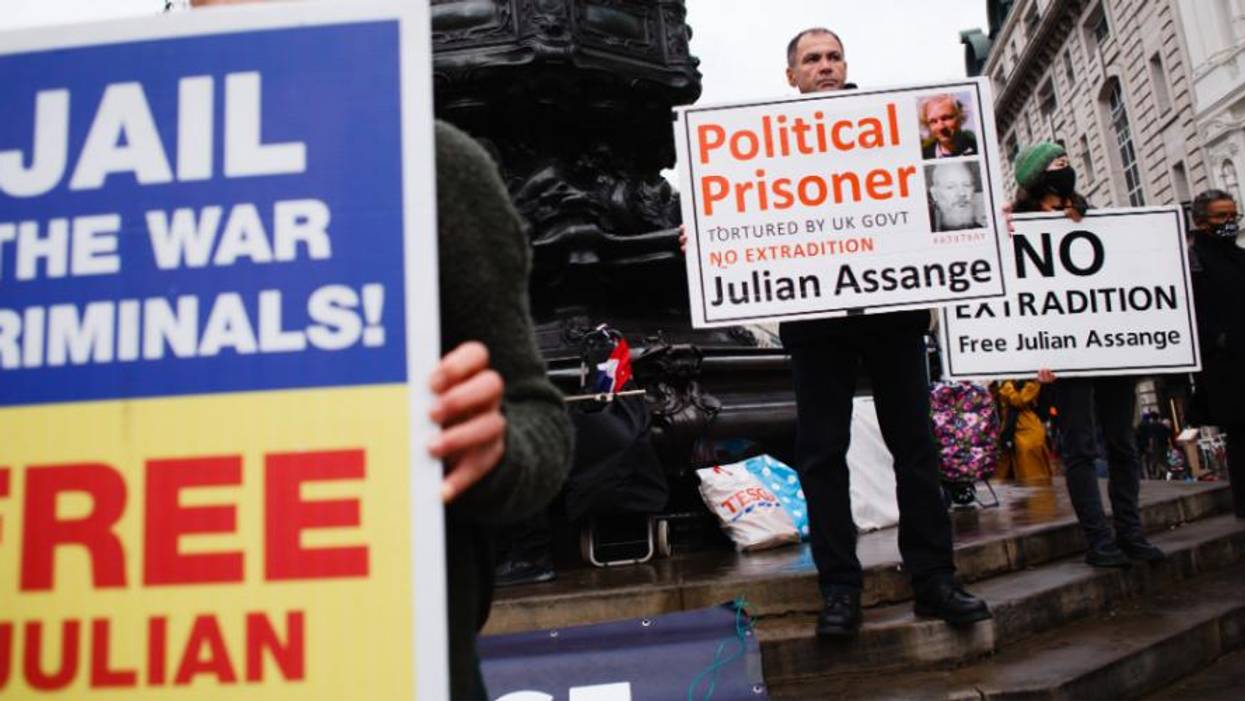
In Steven Spielberg's 2017 historical thriller The Post, the Washington Post's publisher Katharine Graham (Meryl Streep) wrestles with a harrowing choice: should she authorize further publication of the "Pentagon Papers"--and risk financial ruin and possible prison time? Spoiler alert: Graham takes the courageous path and informs the public of systematic government lies regarding one of America's bloodiest and most polarizing conflicts. Near the end of the film, as the Supreme Court rules in favor of "a free and unrestrained press," Graham confides to the paper's editor (a hardboiled Ben Bradlee played by Tom Hanks), "I don't think I could ever live through something like this again." Spielberg concludes The Post with a wink, reminding us that Watergate lurks right around the corner.
Although if we consider Mark Twain's adage about "history not repeating itself but often rhyming," the situation that most closely rhymes with the "Pentagon Papers" would not be the ensuing Watergate scandal, but the alarming plight of WikiLeaks founder Julian Assange, who is currently in London's notorious Belmarsh prison. Like Graham and The Washington Post, and The New York Times which broke the story of the "Pentagon Papers" in 1971, Assange's WikiLeaks has also released leaked, classified materials that in 2010 exposed a vast range of staggering U.S. government misdeeds.
"Assange is charged with asking for information, with receiving information, and with publishing information... If that's allowed to stand, there's absolutely no reason why it couldn't be used against The Washington Post or The New York Times or CNN."
--Barton Gellman, Pulitzer Prize-winning journalist
For these revelations, President Barack Obama's Department of Justice (DOJ) convened a grand jury in 2011 to explore the possibility of indicting Assange and prosecuting him for espionage. But despite years of rigorous investigation, and the interrogation and imprisonment of Assange's source, Army intelligence analyst Chelsea Manning, the Obama administration opted not to prosecute Assange for fear it would overturn the press freedom precedent established with the "Pentagon Papers."
The Trump administration, by contrast--and with no new evidence since the time of Obama--has dashed across that red line with its charges against Assange.
In an unprecedented attempt to exercise universal jurisdiction to extradite a foreign national for publishing newsworthy information in the public interest, the Trump DOJ has created the false perception that Assange conspired with Manning to hack into government systems to obtain classified documents.
But through her position with the U.S. Army, Manning already had access to all the documents she would give to Assange. In fact, underpinning the Trump DOJ's initial allegations is the charge that Assange told Manning he might be able to help her crack a password that would have given her administrative privileges, allowing her to evade detection. But even if Assange had attempted this--there is no evidence he did--helping one's source not get caught, as Pulitzer Prize-winning journalist Glenn Greenwald reminds, "is not only the right of journalists, it's the duty of journalists."
Piling on to their flimsy password gambit, which carries a maximum sentence of five years, the Trump DOJ issued a chilling superseding indictment in May of 2019. Assange now faces 175 years imprisonment.
Barton Gellman, who has won three Pulitzer Prizes with The Washington Post, sums up the current charges against Assange this way: "Assange is charged with asking for information, with receiving information, and with publishing information... exactly the things that I do... If that's allowed to stand, there's absolutely no reason why it couldn't be used against The Washington Post or The New York Times or CNN." Gellman's assessment is undoubtedly shared by over 1,500 journalists and writers--including "Pentagon Papers" whistleblower Daniel Ellsberg--and more than 40 press freedom, human rights, and privacy rights organizations who are all calling for the U.S. and U.K. governments to release Assange without delay.
Earlier this year, when Brazilian prosecutors charged Glenn Greenwald in a case that mirrors the U.S. case against Assange, the world got its first unwelcome taste of how Assange's continued prosecution poses an extreme danger to journalists everywhere. And there has never been any evidence that WikiLeaks' 2010 publications have harmed a single person; yet, despite garnering a trove of prestigious journalism awards, they are the sole reason for which Assange is behind bars.
President Trump has a golden opportunity to pardon Assange, which would go a long way toward transforming the outgoing president into a defender of American values. President-elect Biden, for his part, will have to decide whether he follows the footsteps of Obama, or, to this point, Trump. Leaders across political divides should be pressured by the public to free Assange and defend press freedom. Recognizing the crucial role of journalists, Hanks' Bradlee in The Post perhaps said it best: "We have to be the check on their power. If we don't hold them accountable, I mean my God, who will?"
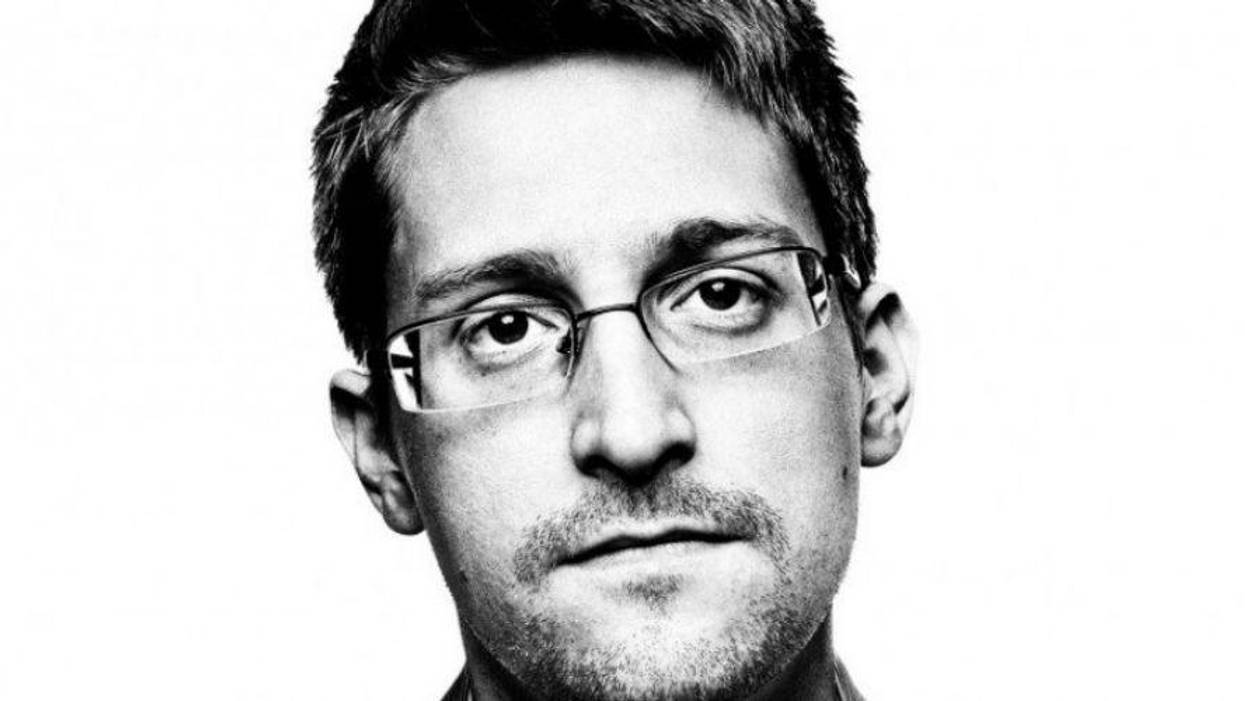
After President Donald Trump suggested in an interview published Thursday night by the New York Post that he is open to pardoning Edward Snowden, civil liberties advocates issued a fresh wave of calls urging the president to follow through and allow the American whistleblower to return to the United States.
The U.S.-based Freedom of the Press Foundation--for which Snowden serves as board president--tweeted a link to the Post report along with a "long and varied" list of individuals who have demanded a presidential pardon for Snowden, the NSA whistleblower who famously exposed U.S. government mass surveillance by leaking classified materials in 2013.
The ACLU on Friday also responded to the report on Twitter, sharing a Los Angeles Times op-ed from September 2016 that was authored by the group's executive director Anthony Romero. He argued that "cases like Edward Snowden's are precisely the reason the president's constitutional pardon power exists."
According to the Post, Trump polled his aides in the Oval Office on Thursday about whether he should allow Snowden to return from Russia--where the former intelligence contractor has lived in exile since 2013--without the risk of being imprisoned in the U.S., and the president said he was open to it.
"There are a lot of people that think that he is not being treated fairly. I mean, I hear that," Trump said of Snowden. As the Post reported:
Trump's comments reflect a remarkable softening in his views about the man he once deemed a "traitor" worthy of execution. Republican lawmakers and the Justice Department's inspector general recently highlighted misuse of the Foreign Intelligence Surveillance Act and the secret FISA court to surveil former Trump adviser Carter Page.
"Snowden is one of the people they talk about. They talk about numerous people, but he is certainly one of the people that they do talk about," Trump said on Thursday, before turning to his aides. "I guess the DOJ is looking to extradite him right now? ...It's certainly something I could look at. Many people are on his side, I will say that. I don't know him, never met him. But many people are on his side."
"How do you feel about that, Snowden? Haven't heard the name in a long time," Trump reportedly asked his staff. "I've heard it both ways. From traitor to he's being, you know, persecuted. I've heard it both ways."
Snowden pointed out in a Friday tweet that "the last time we heard a White House considering a pardon was 2016, when the very same attorney general who once charged me conceded that, on balance, my work in exposing the NSA's unconstitutional system of mass surveillance had been 'a public service.'"
That comment came from Eric Holder during a May 2016 interview with David Alexrod. Holder, who also called Snowden's actions "inappropriate and illegal," ran the Justice Department under President Barack Obama in 2013, when Snowden was charged with theft of government property and violating the Espionage Act.
Journalist Matt Taibbi tweeted in response to Snowden that the fact that the whistleblower "has been in permanent exile while the creators/defenders of the illegal surveillance program he exposed have not only gone unpunished, but have been feted and given high-profile media jobs, is an ongoing outrage."
Even some right-wing politicians joined the calls for Trump to pardon Snowden. Michigan Congressman Justin Amash--who became an Independent and then a Libertarian after leaving the Republican Party last summer--tweeted his support for the whistleblower Friday:
Rep. Thomas Massie (R-Ky.) also said in a series of tweets Friday that the president should pardon Snowden--prompting a response from Cenk Uyger of The Young Turks: "Wow. I agree. Do you believe in miracles?"
The Intercept's Glenn Greenwald, who was was among the first journalists to report on leaked documents from Snowden, wrote in a long thread of tweets Friday that Trump talking about a pardon for Snowden and Massie expressing his support for one "should not obscure that this is not a right-wing view."
Greenwald also shared the ideologically diverse list of signatories to the Stand with Snowden pledge and said it is "good to see" that Trump is "now open to the view of the ACLU and the New York Times, among others, that Snowden is a heroic whistleblower."

Public health experts, unaccustomed to the spotlight, have really taken a beating lately. As they tirelessly work to unravel the mysteries of the Covid pandemic (and are increasingly burning out), the president of our country has constantly attacked and undermined them--and, lately, so have corporate media.
In a July 6 report, the New York Times seemed bizarrely eager to cast doubt on those experts' intentions. "Are Protests Dangerous? What Experts Say May Depend on Who's Protesting What," read the headline over Michael Powell's report. The subhead continued the framing of the experts as hypocrites:
Public health experts decried the anti-lockdown protests as dangerous gatherings in a pandemic. Health experts seem less comfortable doing so now that the marches are against racism.
Many readers wouldn't be terribly surprised at the story, since it's a curiously late addition to the small flurry of coverage around a letter circulated more than a month ago, signed by more than 1,200 public health experts, that supported the wave of anti-racist protests that erupted around the country after the police killing of George Floyd in Minneapolis.
The letter--which the Times notably did not link to, though it did link to two negative media responses to it--began by recognizing that many public health experts had condemned the white armed protesters who took over the Michigan State Capitol building, who were "protesting stay-home orders and calls for widespread public masking to prevent the spread of Covid-19."
After explaining that "white supremacy is a public health issue that predates and contributes to Covid-19," they wrote that while they support staying at home, social distancing and public masking, they
do not condemn [anti-racism] gatherings as risky for Covid-19 transmission. We support them as vital to the national public health and to the threatened health specifically of Black people in the United States.
The letter carefully distinguished this from the protests against stay-at-home orders, which "not only oppose public health interventions, but are also rooted in white nationalism and run contrary to respect for Black lives." It continued by offering guidance for protesters and allies to minimize transmission risk at protests, like wearing masks, maintaining distance where possible, staying home when sick and providing hand sanitizer to protesters.
It seems pretty clear: Black people and other people of color are disproportionately hospitalized and dying of the disease, not as a result of some biological difference but because of the ways that systemic racism has put them at greater risk. Therefore, racism is a vital public health issue--both in general, as people of color suffer worse overall health outcomes than white people, and specifically concerning Covid-19.
So it's clearly not a question of "who" is protesting, as the Times' headline suggests. It does matter very much "what" is being protested. In the case of the anti-lockdown protesters, the entire goal was to make government officials flout public health experts' recommendations for infection control. Obviously, those actions couldn't be supported from a public health perspective--not to mention that, given their agenda, most protesters were not wearing masks or keeping distance.
It's worth noting, too, that experts' understanding of the novel coronavirus' transmission has played a role in shifting recommendations. Early on, less was understood about transmission, which is why full lockdowns were encouraged: If people aren't near each other, they can't pass the virus to each other, whatever its preferred mode of transmission.
As more research has emerged showing that outdoor activities are far less dangerous, and that masks seem to make a big difference in preventing transmission, experts can make finer-grained recommendations about which activities are higher and lower risk. Since anti-racism protesters were largely compliant with mask wearing, moving around rather than staying in one place, and in many cases attempting to keep distance from others, many experts judged that their outdoor activities were relatively low risk, particularly when weighed against the potential benefits from any outcomes that worked to dismantle systemic racism.
(Note that public health experts are not a monolith--they are individuals with individual perspectives and judgments--and not infallible. The public health experts at the WHO, in the most obvious example of both of these points, clung to their recommendation against universal mask wearing until well after the pandemic was underway--CNN, 3/30/20--and likewise refused to acknowledge mounting evidence pointing to airborne transmission until just this week, under pressure from hundreds of other health experts around the world--Reuters, 7/7/20.)
But like many who came before him (FAIR.org, 6/10/20), the Times' Powell was eager to skim over all these nuances, erasing the public health distinctions between the two kinds of protests. He played up the political distinctions to paint epidemiologists and other health experts as hypocritical, feeding the media narrative that they were "politicizing science."
At the time of the letter, other outlets similarly cried foul. "Suddenly, Public Health Officials Say Social Justice Matters More Than Social Distance," huffed Politico (6/4/20). "The Protesters Deserve the Truth About the Coronavirus; Public Health Experts Should Strive to Provide a Neutral Accounting of Risk," scolded the Atlantic (6/4/20). The right wing, which has been attacking public health experts since the beginning of the pandemic, went predictably nuts; Jonah Goldberg (Dispatch, 6/5/20) went so far as to accuse epidemiologists of "treason."
Some on the left, too, offered up false arguments to condemn the public health experts who supported the anti-racist protests, arguing that if they counseled everyone to stay at home in the face of the pandemic, at extreme economic and psychological cost, they certainly couldn't say it's okay for some to now go out and protest. In a widely-cited essay in the Guardian (6/8/20), Thomas Chatterton Williams (who later spearheaded a letter at Harper's decrying so-called cancel culture and the "vogue for public shaming" on the left) leaned on ideas of political correctness gone amok to argue that "two weeks ago we shamed people for being in the street; today we shame them for not being in the street." Public health experts, he wrote, are "politicizing science" and "have hemorrhaged credibility and authority."
Glenn Greenwald in the Intercept (6/11/20) was similarly outraged, calling the letter's distinction between the two kinds of protests
plainly political judgments, not scientific ones, and the shoddy, glaring conflation of them is nothing less than a manipulation, an abuse, of public health credentials. For scientists to purport to dictate which citizens can and cannot safely choose to leave their house -- based not on health judgments but on their political ideology -- is repressive, and certain to erode the credibility of their profession. Yet this is exactly what they are doing: explicitly and shamelessly.
Again, it's not about "which citizens" can leave their house, it's about the purpose of the leaving: Why would public health experts not condemn efforts to pressure governments to rescind public health measures? And it expressly is about health judgments--both about the relatively low risks of sporadic, masked outdoor protests versus the high risks of people going about their normal business, and about the health judgment that protests against racism could improve health outcomes for people of color, during and beyond Covid-19.
Moreover, Greenwald, like Williams, the Atlantic's Conor Friesendorf and others, seems convinced that public health ought to be somehow objective, scientific and neutral, not political. But public health can't avoid being political. Managing the health of an entire population is done through policy decisions, many of which people will disagree about. Gun control, smoking, obesity--so many of our major public health issues are highly politicized. If we want public health experts to tell us how to maximize our health, we can't at the same time insist that they only tell us about certain narrow kinds of health outcomes, or health outcomes for certain kinds of people.
Williams and Greenwald appeared less concerned about hypocrisy concerning different kinds of protests and mostly upset about--as Greenwald put it--the apparently sudden deviation from the previous "dictate" from public health experts "that we could not go outside for any reason." Greenwald wrote:
One of two things is true; either 1) these protests will lead to a significant spike in coronavirus infections and deaths, in which case public health experts should reconcile that outcome with how they could have encouraged and endorsed them; or 2) it will not lead to such a spike, in which case it will appear that the months of extreme, draconian lockdowns--which caused great suffering and deprivation around the world--were excessive, misguided and unwarranted.
First of all, stay-at-home orders were not intended to keep people locked up inside; since the beginning of the pandemic, health experts have been recommending that people continue to get outdoor exercise while maintaining social distance (NPR, 4/1/20).
Perhaps more importantly, the economic hardship caused by lockdowns does not happen in an apolitical bubble; as public health experts Julia Marcus and Gregg Gonsalves pointed out in the Atlantic (6/11/20), they and many other such experts have long been pushing for massive economic assistance to help forestall such fallout, as has been done quite successfully in many other countries. In other words, lockdowns do not have to lead to the kind of suffering and deprivation being experienced right now in this country, and no public health expert is advocating that.
There's now been more than enough time to judge the impact of the protests on infections--and, despite nefarious police tactics that raised risks of transmission (like kettling, using tear gas, and not letting arrested protesters wear masks while they were held for long periods in police custody), there is no evidence that the protests spurred outbreaks; no increases in infection rates in places that saw some of the biggest protests, like Minneapolis, New York City and Washington, DC, and in fact an increase in social distancing in places where protests took place, which presumably helped drive down transmission (NEBR, 6/20). On the other hand, in several US states that have relaxed their "draconian" lockdowns in a manner at odds with public health experts' recommendations, infections are beginning to escalate exponentially.
So, in fact, neither of Greenwald's two things are true: Public health experts did not recklessly abet a spike in protest-related infections, nor have their recommendations for lockdowns in the face of increasing transmission been proven unfounded.
Which brings us back to the Times article, which came a full month after the letter was first published, and well after the outcome was clear. Perhaps to justify the existence of his article, Powell left open a wide berth for alternate interpretations of the data: "There is as of yet no firm evidence that protests against police violence led to noticeable spikes in infection rates." But of course, it's not just no "firm" evidence--Powell offered no evidence, period. So why run this story, framed in this way, now? With nothing new to contribute, the article serves only to further erode trust in the very people we have to rely on to get us out of the disaster we're currently in.

Brazil is now second only to the United States in terms of both Covid-19 cases and deaths, and its daily death toll is the highest in the world--conditions that public health officials within and beyond the South American country continue to partly blame on far-right President Jair Bolsonaro's "reckless" response to the pandemic.
As of Sunday afternoon, Brazil--home to an estimated 211 million people--had more than 850,500 confirmed Covid-19 cases and over 42,700 deaths, according to the Johns Hopkins global tracker. Journalists have repeatedly pointed out that the nation's official numbers are likely too low due to insufficient testing.
"This is the worst public health crisis we've faced--and it has come at a time when we have the worst government in the world," Daniel Dourado, a public health expert and lawyer from the University of Sao Paulo, told the Guardian. Dourado, who believes thousands of Brazilians could have been saved by a better government response, said, "The country is adrift."
Bolsonaro has faced months of criticism for downplaying the threat posed by the virus--dismissing it as a "little flu," refusing to wear a face mask or engage in social distancing, and challenging city and state lockdown restrictions that aimed to stop its spread. As the New York Times reported Saturday, the president has also come under fire for "his promotion of unproven remedies" such as the anti-malaria drugs chloroquine and hydroxychloroquine.
"Decisions are being made not based on evidence and empirical data but rather on anecdotal reports," Denise Garrett, a Brazilian-American epidemiologist who worked at the Centers for Disease Control and Prevention for more than 20 years, told the Times. "Bolsonaro invested a huge amount of money into an action that has not been proven to be effective at the expense of increasing testing and contact tracing."
As the death toll continued to grow in Sao Paulo--Brazil's biggest city and a Covid-19 hot spot--the municipal funeral service announced Friday that it would begin digging up the bones of people who died at least three years ago, placing them in numbered bags, and temporarily storing them in large metal containers before sending the remains to several cemeteries to make space for new bodies.
Reporting on the conditions in Sao Paulo Saturday, the Associated Press noted that "some health experts are worried about a new surge now that a decline in intensive care bed occupancy to about 70% prompted Mayor Bruno Covas to authorize a partial reopening of business this week. The result has been crowded public transport, long lines at malls, and widespread disregard for social distancing."
Adenilson Costa, one of the workers who was exhuming remains in a blue protective suit at Sao Paulo's Vila Formosa cemetery on Friday, told the AP that "with this opening of malls and stores we get even more worried... This isn't over." Costa, who knows multiple people who have died from the virus, added: "People say nothing scares gravediggers. Covid does."
Drauzio Varella--a 77-year-old oncologist and broadcaster famous for his decades of public health activism--told the Guardian that "Brazil's situation is so worrying and so unique because if you look at the path the epidemic took--from China, through Asia, and then Europe and on to the U.S., Brazil was its first encounter with a country suffering from the kind of severe social inequality ours does."
"We are seeing this play out now in a country where 13 or 14 million people live in precarious conditions and great poverty," said Varella, who has previously criticized Bolsonaro's handling of the crisis. "The biggest problem we are seeing across Brazil right now is the epidemic spreading through the outskirts of cities and their rundown centers where you have tenements and the homeless live."
Although Covid-19 cases and deaths in the country have mostly been concentrated in cities, the Washington Post reported Friday that "Indigenous leaders say nearly 230 Indigenous people have already died, many in Brazil's most isolated reaches, and they expect that number to rise."
The Post detailed how the Kokama people in Brazil's Alto Solimoes region, where "the only hope for advanced care is a plane ride to the faraway state capital of Manaus," are struggling to battle the virus with little help from any level of government:
The first Indigenous person in Alto Solimoes to test positive for the novel coronavirus was infected by a government doctor who'd carried the disease back with him from vacation. Officials then ignored Indigenous requests that pandemic aid be delivered to them, leaving people no alternative than to leave the isolation of the forest to travel to cities and wait in lines to collect the $120 stipend. Dozens... returned to their villages coughing and feverish. The coronavirus soon ripped through the population. "The $120 of death," people now call the aid.
But the government didn't flood the villages with medical equipment, meal rations, coronavirus tests, and health professionals. Instead, it all but abandoned them, according to nine indigenous leaders, a review of official complaints and government officials who spoke on the condition of anonymity. With little guidance on how to proceed, and less medical equipment, the communities have been left to treat their sick and dying with herbal teas, lemon syrups and other traditional medicines.
"Help from the government? We've received nothing, nothing, nothing," said Sinesio Tikuna Trovao, leader of the Tikuna people. "We need oxygen. We need equipment. Our medicinal plants cure only some of the symptoms... We need more doctors to teach us. It isn't easy. We need rapid tests."
Officials from the Amazonas state healthcare system and the federal Special Secretary for Indigenous Health "defended their responses--and blamed other agencies for any failings" in the region, according to the Post. Indigenous peoples in others states such as Para and Roraima have "begun complaining the government had abandoned them, too."
Meanwhile, the United States, with a population of about 332 million people, remains the global leader in both confirmed Covid-19 cases and deaths. As of Sunday afternoon, over 2,090,000 people in the U.S. had confirmed cases and over 115,000 people had died.
Michael Osterholm, director of the Center for Infectious Disease Research and Policy at the University of Minnesota, told "Fox News Sunday" the impacts of ongoing protests against police brutality and easing lockdown restrictions, in terms of the cases, are not yet clear.
"I think that what we have here today is, we're not sure what's happening. We have 22 states where we have cases increasing, eight where it's level, and 21 states where its decreasing," he said. "We just have to be humble and say we're in an unsure moment right now."